

Evolutionary constraints on yeast protein size
Open accessThe DOI matches its Crossref record; 43 of the 43 references it cites were found in a registry or an index.
Abstract
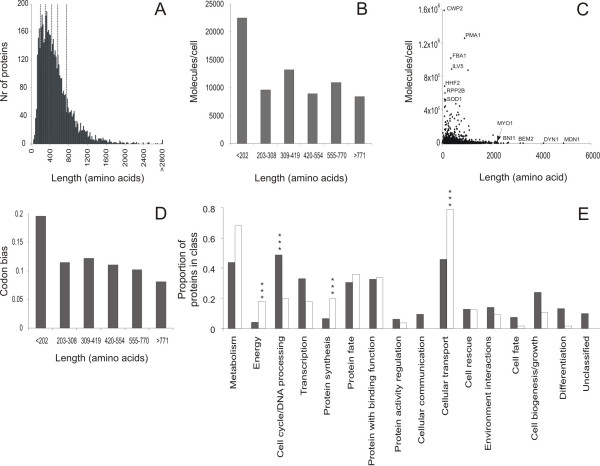
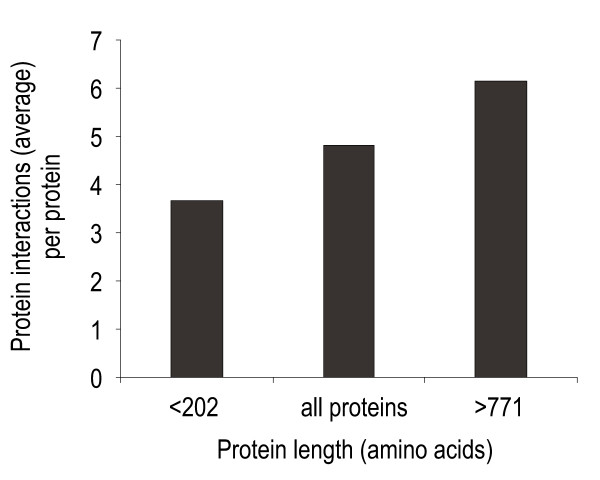
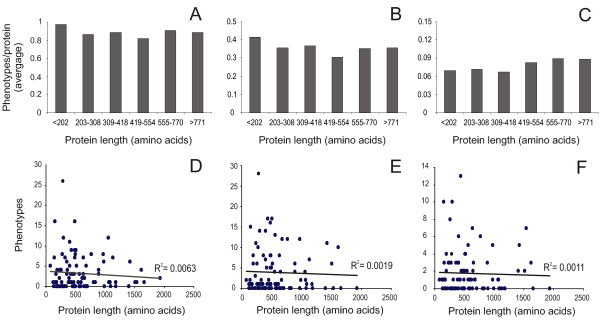
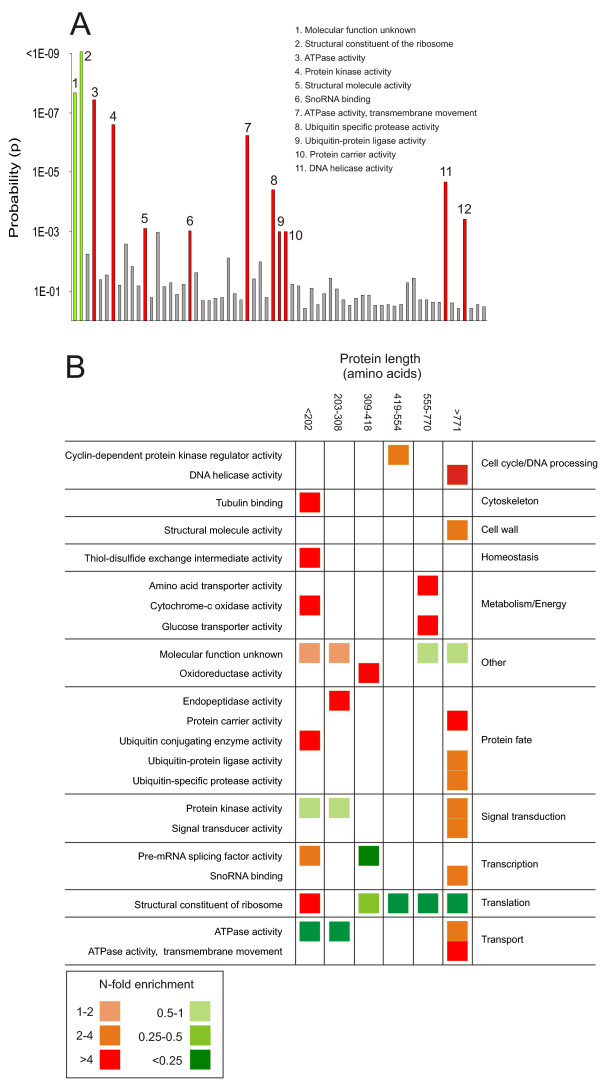
BACKGROUND: Despite a strong evolutionary pressure to reduce genome size, proteins vary in length over a surprisingly wide range also in very compact genomes. Here we investigated the evolutionary forces that act on protein size in the yeast Saccharomyces cerevisiae utilizing a system-wide bioinformatics approach. Data on yeast protein size was compared to global experimental data on protein expression, phenotypic pleiotropy, protein-protein interactions, protein evolutionary rate and biochemical classification. RESULTS: Comparing the experimentally determined abundance of individual proteins, highly expressed proteins were found to be consistently smaller than lowly expressed proteins, in accordance with the biosynthetic cost minimization hypothesis. Yeast proteins able to maintain a high expression level despite a large size tended to belong to a very distinct set of protein families, notably nuclear transport and translation initiation/elongation. Large proteins have significantly more protein-protein interactions than small proteins, suggesting that a requirement for multiple interaction domains may constitute a positive selective pressure for large protein size in yeast. The higher frequency of protein-protein interactions in large proteins was not accompanied by a higher phenotypic pleiotropy. Hence, the increase in interactions may not reflect an increase in function differentiation. Proteins of different sizes also evolved at similar rates. Finally, whereas the biological process involved was found to have little influence on protein size the biochemical activity exerted by the protein represented a dominant factor. More than one third of all biochemical activity classes were enriched in one or more size intervals. CONCLUSION: In yeast, there is an inverse relationship between protein size and protein expression such that highly expressed proteins tend to be of smaller size. Also, protein size is moderately affected by protein connectivity and strongly affected by biochemical activity. Phenotypic pleiotropy does not seem to affect protein size.
Overview
The claims and statistics of this paper haven’t been checked yet.
Free: it reads the open-access text and checks the first 5 claims that cite a source we can check. Create a free account to check every claim.
Integrity signals
Registry
Cites
Statistics
Figures
Verification
Claims the paper makes
The claims and statistics of this paper haven’t been checked yet.
Free: it reads the open-access text and checks the first 5 claims that cite a source we can check. Create a free account to check every claim.
Claims other papers make about this one
Each is checked against this paper’s own text: does it say what the citing paper says it does?
In the citing paper
“This dependence was observed in earlier studies and is thought to reflect the evolutionary advantage of decreasing the size of abundant proteins for reasons of biosynthetic cost (38).”
From A “Proteomic Ruler” for Protein Copy Number and Concentration Estimation without Spike-in Standards (2014) · cites this paper as [38]
Self-check
Percentages, sums and reported differences re-computed from the paper’s own numbers.
The self-check needs the paper’s full text.
Citations
Cites
Initial sequencing and comparative analysis of the mouse genome
Mouse Genome Sequencing Consortium (2002) · Nature · doi:10.1038/nature01262 · Cited by 7,187 · cited 1×
“In lower organisms such as yeast where intergenic DNA comprise less than 30% of the genome [13] – as opposed to 98% in human [14] – it may be argued that reducing the size of coding DNA significantly affects genome size.”
BackgroundLethality and centrality in protein networks
Jeong, H., Mason, S. P., Barabási, A.-L., & Oltvai, Z. N. (2001) · Nature · doi:10.1038/35075138 · Cited by 5,287 · cited 1×
“Protein connectivity is widely known to affect the functional importance of proteins [35] which in turn is known to correlate positively with protein size [30], supporting the plausibility of such a hypothesis.”
BackgroundFunctional Characterization of the S. cerevisiae Genome by Gene Deletion and Parallel Analysis
Winzeler, E. A., Shoemaker, D. D., Astromoff, A., Liang, H., Anderson, K., Andre, B., Bangham, R., Benito, R., Boeke, J. D., Bussey, H., et al. (1999) · Science · doi:10.1126/science.285.5429.901 · Cited by 3,953 · cited 1×
“cerevisiae open reading frame has been completed [26], enabling the evaluation of this hypothesis.”
MethodGlobal analysis of protein expression in yeast
Ghaemmaghami, S., Huh, W.-K., Bower, K., Howson, R. W., Belle, A., Dephoure, N., O'Shea, E. K., & Weissman, J. S. (2003) · Nature · doi:10.1038/nature02046 · Cited by 3,750 · cited 5×
“cerevisiae we compared recently re-annotated yeast protein lengths to data on protein abundance (molecules/cell) during exponential growth in optimal conditions [24].”
BackgroundMethodResultInfluentialMolecular Chaperones in the Cytosol: from Nascent Chain to Folded Protein
Hartl, F. U., & Hayer-Hartl, M. (2002) · Science · doi:10.1126/science.1068408 · Cited by 3,347 · cited 1×
“In addition it has been suggested [1] that a reduction in protein size vastly reduces protein biosynthetic costs, directly by decreasing the energetic costs of translation [15] and indirectly by reducing the cost of chaperones required to fold large multi-domain proteins [16].”
BackgroundSelfish DNA: the ultimate parasite
Orgel, L. E., & Crick, F. H. C. (1980) · Nature · doi:10.1038/284604a0 · Cited by 2,156 · cited 1×
“The latter hypothesis stems from the observation that much of the junk DNA is selfish in nature [4,5] making it more likely that its accumulation has little to do with the fitness of the organism itself [2].”
BackgroundThe economics of ribosome biosynthesis in yeast
Warner, J. R. (1999) · Trends in Biochemical Sciences · doi:10.1016/s0968-0004(99)01460-7 · Cited by 1,933 · cited 1×
“In a rapidly growing yeast cell as much as 50% of RNA polymerase II transcription is devoted to ribosomal proteins [32]; thus, the biosynthetic cost constraints that limit the size of highly expressed proteins are expected be extremely strong for these proteins.”
BackgroundSelfish genes, the phenotype paradigm and genome evolution
Doolittle, W. F., & Sapienza, C. (1980) · Nature · doi:10.1038/284601a0 · Cited by 1,829 · cited 1×
“The latter hypothesis stems from the observation that much of the junk DNA is selfish in nature [4,5] making it more likely that its accumulation has little to do with the fitness of the organism itself [2].”
BackgroundSequencing and comparison of yeast species to identify genes and regulatory elements
Kellis, M., Patterson, N., Endrizzi, M., Birren, B., & Lander, E. S. (2003) · Nature · doi:10.1038/nature01644 · Cited by 1,753 · cited 4×
“In lower organisms such as yeast where intergenic DNA comprise less than 30% of the genome [13] – as opposed to 98% in human [14] – it may be argued that reducing the size of coding DNA significantly affects genome size.”
BackgroundMethodInfluentialFinding Functional Features in Saccharomyces Genomes by Phylogenetic Footprinting
Cliften, P., Sudarsanam, P., Desikan, A., Fulton, L., Fulton, B., Majors, J., Waterston, R., Cohen, B. A., & Johnston, M. (2003) · Science · doi:10.1126/science.1084337 · Cited by 815 · cited 1×
“cerevisiae genome which has been re-annotated [13,23] and is essentially definite with regards to protein size annotation and for which there is ample genome-wide, experimental data on available.”
BackgroundAkashi, H., & Gojobori, T. (2002) · Proceedings of the National Academy of Sciences · doi:10.1073/pnas.062526999 · Cited by 665 · cited 3×
“A negative correlation has been reported in eukaryotes between codon usage [17-20] and protein size as well as between frequencies of amino acids usage and their biosynthetic costs [21,22].”
BackgroundResultTHE GENETIC ORGANIZATION OF CHROMOSOMES
Thomas, C. A. (1971) · Annual Review of Genetics · doi:10.1146/annurev.ge.05.120171.001321 · Cited by 540 · cited 1×
“In addition it has been suggested [1] that a reduction in protein size vastly reduces protein biosynthetic costs, directly by decreasing the energetic costs of translation [15] and indirectly by reducing the cost of chaperones required to fold large multi-domain proteins [16].”
BackgroundThe Large Genome Constraint Hypothesis: Evolution, Ecology and Phenotype
KNIGHT, C. A. (2005) · Annals of Botany · doi:10.1093/aob/mci011 · Cited by 538 · cited 4×
“Furthermore, genera with large genome sizes tend to contain fewer species and species with large genomes tend to be underrepresented in harsh environments [2].”
BackgroundInfluentialA Single Determinant Dominates the Rate of Yeast Protein Evolution
Drummond, D. A., Raval, A., & Wilke, C. O. (2006) · Molecular Biology and Evolution · doi:10.1093/molbev/msj038 · Cited by 418 · cited 1×
“Protein evolutionary rate is known to be strongly influenced by protein expression level [29], however, even controlling for this variable (protein absolute abundance) no correlation was found between evolutionary rate and protein size (partial correlation, p = 0.”
BackgroundProtein length in eukaryotic and prokaryotic proteomes
Brocchieri, L. (2005) · Nucleic Acids Research · doi:10.1093/nar/gki615 · Cited by 414 · cited 1×
“showed that proteins involved in "metabolism" and "cellular processes" tended to be longer than expected [37].”
BackgroundCAVALIER-SMITH, T. (2005) · Annals of Botany · doi:10.1093/aob/mci010 · Cited by 396 · cited 1×
“Several hypothesizes has also been put forward to explain the variation in the size of intergenic DNA, ranging from the notion that the unnecessary "junk" DNA is not really unnecessary at all [3] to the suggestion that the evolutionary cost of carrying junk DNA is so minimal that the negative selective consequences ma…”
BackgroundA global view of pleiotropy and phenotypically derived gene function in yeast
Dudley, A. M., Janse, D. M., Tanay, A., Shamir, R., & Church, G. M. (2005) · Molecular Systems Biology · doi:10.1038/msb4100004 · Cited by 342
Genome size and developmental complexity
Ryan Gregory, T. (2002) · Genetica · doi:10.1023/a:1016032400147 · Cited by 280 · cited 1×
“A large genome size tends to correlate with delayed mitotic and meiotic division [6-8] decreased plant invasiveness of disturbed sites [9] lower maximum photosynthetic rates in plants [2] and lower metabolic rates in mammals [10] and birds [11,12].”
BackgroundRelationship of codon bias to mRNA concentration and protein length inSaccharomyces cerevisiae
Coghlan, A., & Wolfe, K. H. (2000) · Yeast · doi:10.1002/1097-0061(20000915)16:12 · Cited by 275
Functional genomic analysis of the rates of protein evolution
Wall, D. P., Hirsh, A. E., Fraser, H. B., Kumm, J., Giaever, G., Eisen, M. B., & Feldman, M. W. (2005) · Proceedings of the National Academy of Sciences · doi:10.1073/pnas.0501761102 · Cited by 274
Warringer, J., & Blomberg, A. (2003) · Yeast · doi:10.1002/yea.931 · Cited by 265 · cited 1×
“two separate sets of phenotypic data was used [27,39]: i) phenotypic data on 96 deletion strains, randomly chosen with regards to protein size and cultivated in 40 diverse conditions of environmental stress ii) phenotypic data on all 4,220 deletion strains cultivated in optimal conditions as well as during four condit…”
MethodThe Bigger the C-Value, the Larger the Cell: Genome Size and Red Blood Cell Size in Vertebrates
Gregory, T. R. (2001) · Blood Cells, Molecules, and Diseases · doi:10.1006/bcmd.2001.0457 · Cited by 251 · cited 1×
“A large genome size tends to correlate with delayed mitotic and meiotic division [6-8] decreased plant invasiveness of disturbed sites [9] lower maximum photosynthetic rates in plants [2] and lower metabolic rates in mammals [10] and birds [11,12].”
BackgroundGregory, T. R. (2002) · Evolution · doi:10.1111/j.0014-3820.2002.tb00854.x · Cited by 250 · cited 1×
“A large genome size tends to correlate with delayed mitotic and meiotic division [6-8] decreased plant invasiveness of disturbed sites [9] lower maximum photosynthetic rates in plants [2] and lower metabolic rates in mammals [10] and birds [11,12].”
BackgroundHigh-resolution yeast phenomics resolves different physiological features in the saline response
Warringer, J., Ericson, E., Fernandez, L., Nerman, O., & Blomberg, A. (2003) · Proceedings of the National Academy of Sciences · doi:10.1073/pnas.2435976100 · Cited by 237 · cited 3×
“We have earlier introduced an approach for the precise quantification of phenotype/fitness changes in yeast by automated micro-Cultivation of isogenic populations [27].”
BackgroundMethodMoriyama, E. (1998) · Nucleic Acids Research · doi:10.1093/nar/26.13.3188 · Cited by 230 · cited 4×
“A negative correlation has been reported in eukaryotes between codon usage [17-20] and protein size as well as between frequencies of amino acids usage and their biosynthetic costs [21,22].”
BackgroundResultInfluentialDictionary of Microbiology and Molecular Biology
Singleton, P., & Sainsbury, D. (2006) · Wiley eBooks · doi:10.1002/9780470056981 · Cited by 182
The relationship of protein conservation and sequence length
Lipman, D. J., Souvorov, A., Koonin, E. V., Panchenko, A. R., & Tatusova, T. A. (2002) · BMC Evolutionary Biology · doi:10.1186/1471-2148-2-20 · Cited by 161 · cited 3×
“In an idealized situation the length of a protein would be completely dependent on its function and the variance in the lengths of an organism's proteins would reflect the diversity of functions in the particular organism [30].”
BackgroundCost-Minimization of Amino Acid Usage
Seligmann, H. (2003) · Journal of Molecular Evolution · doi:10.1007/s00239-002-2388-z · Cited by 158 · cited 4×
“A negative correlation has been reported in eukaryotes between codon usage [17-20] and protein size as well as between frequencies of amino acids usage and their biosynthetic costs [21,22].”
BackgroundResultInfluentialVinogradov, A. E. (1995) · Evolution · doi:10.1111/j.1558-5646.1995.tb04451.x · Cited by 152
Jansen, R. (2000) · Nucleic Acids Research · doi:10.1093/nar/28.6.1481 · Cited by 151 · cited 1×
“Also, it has been reported that mRNA abundance restricts maximum protein length [31].”
BackgroundSynonymous Codon Usage, Accuracy of Translation, and Gene Length in Caenorhabditis elegans
Marais, G. A. B., & Duret, L. (2001) · Journal of Molecular Evolution · doi:10.1007/s002390010155 · Cited by 146 · cited 3×
“A negative correlation has been reported in eukaryotes between codon usage [17-20] and protein size as well as between frequencies of amino acids usage and their biosynthetic costs [21,22].”
BackgroundResultVinogradov, A. E. (1997) · Evolution · doi:10.1111/j.1558-5646.1997.tb02403.x · Cited by 110
Genome-wide analysis of mRNA lengths in Saccharomyces cerevisiae
Hurowitz, E. H., & Brown, P. O. (2003) · Genome Biology · doi:10.1186/gb-2003-5-1-r2 · Cited by 107 · cited 1×
“Some of the biochemical activity categories here revealed to contain disproportionably many large proteins, notably protein kinases and transcription factors had earlier been noted to produce above average-sized transcripts [36].”
BackgroundGenetic Code Synonym Quotas and Amino Acid Complexity: Cutting the Cost of Proteins?
Dufton, M. J. (1997) · Journal of Theoretical Biology · doi:10.1006/jtbi.1997.0443 · Cited by 92 · cited 1×
“In addition it has been suggested [1] that a reduction in protein size vastly reduces protein biosynthetic costs, directly by decreasing the energetic costs of translation [15] and indirectly by reducing the cost of chaperones required to fold large multi-domain proteins [16].”
BackgroundDictionary of microbiology and molecular biology
(2002) · Choice Reviews Online · doi:10.5860/choice.40-0030 · Cited by 74 · cited 1×
“the ability of a mutation in a single gene to give rise to multiple phenotypic outcomes [33], has been shown to be surprisingly wide-spread in yeast and to correlate to a variety of protein features, such as function and chromosomal position [25,34].”
BackgroundVinogradov, A. E. (1995) · Evolution · doi:10.2307/2410449 · Cited by 61
Vinogradov, A. E. (1997) · Evolution · doi:10.2307/2410975 · Cited by 48
Genome size and developmental parameters in the homeothermic vertebrates
Gregory, T. R. (2002) · Genome · doi:10.1139/g02-050 · Cited by 47 · cited 1×
“A large genome size tends to correlate with delayed mitotic and meiotic division [6-8] decreased plant invasiveness of disturbed sites [9] lower maximum photosynthetic rates in plants [2] and lower metabolic rates in mammals [10] and birds [11,12].”
BackgroundRelationship between G+C content, ORF‐length and mRNA concentration in Saccharomyces cerevisiae
Marín, A., Gallardo, M., Kato, Y., Shirahige, K., Gutiérrez, G., Ohta, K., & Aguilera, A. (2003) · Yeast · doi:10.1002/yea.992 · Cited by 45 · cited 3×
“A negative correlation has been reported in eukaryotes between codon usage [17-20] and protein size as well as between frequencies of amino acids usage and their biosynthetic costs [21,22].”
BackgroundResultPROPHECY--a database for high-resolution phenomics
Fernandez-Ricaud, L. (2004) · Nucleic Acids Research · doi:10.1093/nar/gki126 · Cited by 40 · cited 1×
“Phenotypic data for all genes in question can be accessed at the Prophecy database [40].”
BackgroundGenetic pleiotropy in Saccharomyces cerevisiae quantified by high-resolution phenotypic profiling
Ericson, E., Pylvänäinen, I., Fernandez-Ricaud, L., Nerman, O., Warringer, J., & Blomberg, A. (2006) · Molecular Genetics and Genomics · doi:10.1007/s00438-006-0112-1 · Cited by 25 · cited 1×
“the ability of a mutation in a single gene to give rise to multiple phenotypic outcomes [33], has been shown to be surprisingly wide-spread in yeast and to correlate to a variety of protein features, such as function and chromosomal position [25,34].”
BackgroundGregory, T. R. (2002) · Evolution · doi:10.1554/0014-3820(2002)056[0121:absevo]2.0.co;2 · Cited by 23
Dictionary of Microbiology and Molecular Biology, 3rd Edition
Singleton, P., & Sainsbury, D. (2001) · Cited by 13
Research works printed but not linked: 1
- [9]Grotkopp E Stoltenberg R Rejmanek M Rost TL The effect of genome size on invasiveness American Journal of Botany 1998 85 34
Cited by
Global signatures of protein and mRNA expression levels
de Sousa Abreu, R., Penalva, L. O., Marcotte, E. M., & Vogel, C. (2009) · Molecular BioSystems · doi:10.1039/b908315d · Cited by 1,248
A “Proteomic Ruler” for Protein Copy Number and Concentration Estimation without Spike-in Standards
Wiśniewski, J. R., Hein, M. Y., Cox, J., & Mann, M. (2014) · Molecular & Cellular Proteomics · doi:10.1074/mcp.m113.037309 · Cited by 690
Wiśniewski, J. R., & Rakus, D. (2014) · Journal of Proteomics · doi:10.1016/j.jprot.2014.07.012 · Cited by 222
“Blomberg [23], who found an inverse relationship between protein size and protein expression such as highly expressed proteins tend to be of smaller size.”
BackgroundA Network of Multiple Regulatory Layers Shapes Gene Expression in Fission Yeast
Lackner, D. H., Beilharz, T. H., Marguerat, S., Mata, J., Watt, S., Schubert, F., Preiss, T., & Bähler, J. (2007) · Molecular Cell · doi:10.1016/j.molcel.2007.03.002 · Cited by 204
“In budding yeast, mRNA length and protein size are inversely correlated with ribosome density and protein levels, respectively (Arava et al., 2003; Warringer and Blomberg, 2006), and proteins present at high copies per mRNA tend to be of low molecular weight (Lu et al., 2007).”
Guo, Y. (2013) · The Plant Journal · doi:10.1111/tpj.12089 · Cited by 162
“In yeast, there is an inverse relationship between protein size and protein expression level (Warringer and Blomberg, 2006).”
Background
Metadata
- Authors
- Warringer
- Venue
- BMC Evolutionary Biology
- Published
- 2006
- Volume
- 6
- Issue
- 1
- Pages
- 61
- ISSN
- 1471-2148 (ISSN-L)
- PMC
- PMC1560397
- OpenAlex
- W1540866880
- Cited by
- 71
- References
- 41
- Citations by year
- 2025: 3 · 2024: 2 · 2023: 1 · 2022: 1 · 2021: 1 · 2020: 2 · 2019: 2 · 2018: 1 · 2017: 4 · 2016: 1 · 2015: 4 · 2014: 5 · 2013: 3 · 2012: 9
- FWCI
- 3.80
- Type
- journal article
- Language
- en
- Open access
- gold
- doi.org
- Licence
- cc-by
- Locations
- BMC Evolutionary Biology (publishedVersion, cc-by)
- PubMed (publishedVersion)
- DOAJ (DOAJ: Directory of Open Access Journals) (submittedVersion, cc-by-sa)
- Topics
- Life Sciences › Biochemistry, Genetics and Molecular Biology › Genetics › Evolution and Genetic Dynamics
- Life Sciences › Biochemistry, Genetics and Molecular Biology › Molecular Biology › Fungal and yeast genetics research
- Life Sciences › Biochemistry, Genetics and Molecular Biology › Molecular Biology › Bioinformatics and Genomic Networks
- Keywords
- protein size, Saccharomyces cerevisiae, protein expression, protein-protein interaction, protein evolutionary rate, biochemical activity, protein connectivity, genome size reduction
- MeSH terms
- Amino Acid Sequence, Molecular Sequence Data, Protein Binding, Saccharomyces cerevisiae, Gene Expression Regulation, Fungal, Genome, Fungal, Evolution, Molecular, Saccharomyces cerevisiae Proteins
About these checks
Registry, retraction, Cites and statistics results are computed, not judged, with one exception: a printed reference that no index lists is read once by a model before it counts as a citation error. Claims are extracted by a model and kept only when their quote appears verbatim in the text; each cited source is then checked, with a model’s help, for whether it says what the claim relies on. Those verdicts can be wrong — read the claim’s quote and the cited source before relying on one.
Statistics and arithmetic are recomputed, not judged.
Confidence bands are shown only for fields calibrated on our annotated test set. None is calibrated yet, so no band is shown.
What counts as a claim ›How we measure confidence ›How we check this ›
Are you an author, or do you see a problem with this page? Request a review
Data sources
Bibliographic data: Semantic Scholar, OpenAlex, Crossref.
Contains information from the Semantic Scholar Academic Graph Datasets, made available under the ODC Attribution License (ODC-BY 1.0).
Semantic Scholar’s data is described in: Kinney, R., et al. (2023). The Semantic Scholar Open Data Platform. arXiv:2301.10140.
