

Low-frequency intermediate penetrance variants in the ROCK1 gene predispose to Tetralogy of Fallot
Open accessThe DOI matches its Crossref record; 26 of the 26 references it cites were found in a registry or an index.
Abstract
Background: Epidemiological studies indicate a substantial excess familial recurrence of non-syndromic Tetralogy of Fallot (TOF), implicating genetic factors that remain largely unknown. The Rho induced kinase 1 gene (ROCK1) is a key component of the planar cell polarity signalling pathway, which plays an important role in normal cardiac development. The aim of this study was to investigate the role of genetic variation in ROCK1 on the risk of TOF. Results: ROCK1 was sequenced in a discovery cohort of 93 non-syndromic TOF probands to identify rare variants. TagSNPs were selected to capture commoner variation in ROCK1. Novel variants and TagSNPs were genotyped in a discovery cohort of 458 TOF cases and 1331 healthy controls, and positive findings were replicated in a further 209 TOF cases and 1290 healthy controls. Association between genotypes and TOF was assessed using LAMP. A rare SNP (c.807C > T; rs56085230) discovered by sequencing was associated with TOF risk (p = 0.006) in the discovery cohort. The variant was also significantly associated with the risk of TOF in the replication cohort (p = 0.018). In the combined cohorts the odds ratio for TOF was 2.61 (95% CI 1.58-4.30); p < 0.0001. The minor allele frequency of rs56085230 in the cases was 0.02, and in the controls it was 0.007. The variant accounted for 1% of the population attributable risk (PAR) of TOF. We also found significant association with TOF for an uncommon TagSNP in ROCK1, rs288979 (OR 1.64 [95% CI 1.15-2.30]; p = 1.5x10⁻⁵). The minor allele frequency of rs288979 in the controls was 0.043, and the variant accounted for 11% of the PAR of TOF. These association signals were independent of each other, providing additional internal validation of our result. Conclusions: Low frequency intermediate penetrance (LFIP) variants in the ROCK1 gene predispose to the risk of TOF.
Overview
The claims and statistics of this paper haven’t been checked yet.
Free: it reads the open-access text and checks the first 5 claims that cite a source we can check. Create a free account to check every claim.
Integrity signals
Registry
Cites
Statistics
Figures
Verification
Claims the paper makes
The claims and statistics of this paper haven’t been checked yet.
Free: it reads the open-access text and checks the first 5 claims that cite a source we can check. Create a free account to check every claim.
Claims other papers make about this one
Each is checked against this paper’s own text: does it say what the citing paper says it does?
The cited source says what the claim attributes to it.
In the citing paper
“About 80% of TOF cases are non-syndromic, and display no indication of familial Mendelian CHD segregation, with no identified aetiology (Goodship et al., 2012; Palomino Doza et al., 2013).”
From Genetic insights into non-syndromic Tetralogy of Fallot (2022) · cites this paper as Palomino Doza et al., 2013
Self-check
Percentages, sums and reported differences re-computed from the paper’s own numbers.
The self-check needs the paper’s full text.
Citations
Cites
The positive false discovery rate: a Bayesian interpretation and the q-value
Storey, J. D. (2003) · The Annals of Statistics · doi:10.1214/aos/1074290335 · Cited by 2,204 · cited 2×
“To make some allowance for the risk of false-positive findings due to multiple comparisons, the results were interpreted based on the false discovery rate (FDR) using the program QVALUE [19].”
InfluentialESEfinder: a web resource to identify exonic splicing enhancers
Cartegni, L. (2003) · Nucleic Acids Research · doi:10.1093/nar/gkg616 · Cited by 1,603
Are Rare Variants Responsible for Susceptibility to Complex Diseases?
Pritchard, J. K. (2001) · The American Journal of Human Genetics · doi:10.1086/321272 · Cited by 1,197 · cited 1×
“Prior to the modern cardiac surgical era, some 80% of children born with TOF died prior to the age of ten years, suggesting that any variant that significantly increased the risk of TOF would be subject to purifying selection in the population and thus (in the absence of balancing positive selection for some other cha…”
The UCSC Genome Browser database: extensions and updates 2013
Meyer, L. R., Zweig, A. S., Hinrichs, A. S., Karolchik, D., Kuhn, R. M., Wong, M., Sloan, C. A., Rosenbloom, K. R., Roe, G., Rhead, B., et al. (2012) · Nucleic Acids Research · doi:10.1093/nar/gks1048 · Cited by 900
The allelic architecture of human disease genes: common disease-common variant... or not?
Pritchard, J. K. (2002) · Human Molecular Genetics · doi:10.1093/hmg/11.20.2417 · Cited by 711 · cited 1×
“Prior to the modern cardiac surgical era, some 80% of children born with TOF died prior to the age of ten years, suggesting that any variant that significantly increased the risk of TOF would be subject to purifying selection in the population and thus (in the absence of balancing positive selection for some other cha…”
Apitz, C., Webb, G. D., & Redington, A. N. (2009) · The Lancet · doi:10.1016/s0140-6736(09)60657-7 · Cited by 653
Kryukov, G. V., Pennacchio, L. A., & Sunyaev, S. R. (2007) · The American Journal of Human Genetics · doi:10.1086/513473 · Cited by 598 · cited 1×
“inversely related, consistent with the operation of selective pressure: whereas rs288979 has a higher mAF it confers a modest OR, and the rarer variant rs56085230 confers a correspondingly higher risk of TOF [25].”
PEDSTATS: descriptive statistics, graphics and quality assessment for gene mapping data
Wigginton, J. E., & Abecasis, G. R. (2005) · Bioinformatics · doi:10.1093/bioinformatics/bti529 · Cited by 408 · cited 1×
“The conformation of genotypes to Hardy-Weinberg equilibrium was checked and allele frequencies determined using PEDSTATS software [17].”
De novo copy number variants identify new genes and loci in isolated sporadic tetralogy of Fallot
Greenway, S. C., Pereira, A. C., Lin, J. C., DePalma, S. R., Israel, S. J., Mesquita, S. M., Ergul, E., Conta, J. H., Korn, J. M., McCarroll, S. A., et al. (2009) · Nature Genetics · doi:10.1038/ng.415 · Cited by 403 · cited 1×
“Recently, association between rare copy number variants [6,7] and between commoner genetic variation and TOF has been demonstrated [8] but the associations discovered so far account for only a small proportion of the estimated heritability of the condition.”
Burn, J., Brennan, P., Little, J., Holloway, S., Coffey, R., Somerville, J., Dennis, N., Allan, L., Arnold, R., Deanfield, J., et al. (1998) · The Lancet · doi:10.1016/s0140-6736(97)06486-6 · Cited by 399 · cited 1×
“Recurrence risk studies in the remaining ~80% of “sporadic” cases indicate a significant familial predisposition, implicating genetic factors [2,3].”
NKX2.5 Mutations in Patients With Tetralogy of Fallot
Goldmuntz, E., Geiger, E., & Benson, D. W. (2001) · Circulation · doi:10.1161/hc4601.098427 · Cited by 346
Shimizu, Y., Thumkeo, D., Keel, J., Ishizaki, T., Oshima, H., Oshima, M., Noda, Y., Matsumura, F., Taketo, M. M., & Narumiya, S. (2005) · The Journal of Cell Biology · doi:10.1083/jcb.200411179 · Cited by 304 · cited 1×
“Although the ROCK1 knockout mouse does not show a cardiac phenotype, possibly due to functional redundancy between ROCK family members in the mouse [13], phenotypic correspondence between mouse models of heart development and human disease is known to be imperfect.”
Public health methods--attributable risk as a link between causality and public health action.
Northridge, M. E. (1995) · American Journal of Public Health · doi:10.2105/ajph.85.9.1202 · Cited by 208 · cited 1×
“Notwithstanding these figures, neither variant can be considered as having an optimal combination of moderate allele frequency and high risk to carriers to be of potential use in population screening [26].”
Ruiz-Perez, V. L., Blair, H. J., Rodriguez-Andres, M. E., Blanco, M. J., Wilson, A., Liu, Y.-N., Miles, C., Peters, H., & Goodship, J. A. (2007) · Development · doi:10.1242/dev.007542 · Cited by 175 · cited 1×
“For example, cardiovascular malformation is not seen in EVC −/− mice which are deficient in the gene causing human Ellis van Creveld syndrome, a multisystem malformation disorder in which cardiovascular malformation is a prominent feature [14].”
Self-citationThe role of Wnt signalling in cardiac development and tissue remodelling in the mature heart
Brade, T., Männer, J., & KUHL, M. (2006) · Cardiovascular Research · doi:10.1016/j.cardiores.2006.06.025 · Cited by 165 · cited 1×
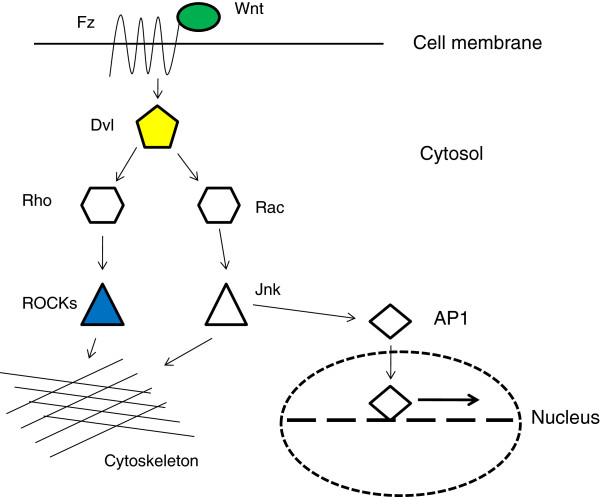
“The non-canonical Wnt signalling pathway, also known as the planar cell polarity (PCP) pathway, plays a key role in cardio genesis [9,10].”
Soemedi, R., Topf, A., Wilson, I. J., Darlay, R., Rahman, T., Glen, E., Hall, D., Huang, N., Bentham, J., Bhattacharya, S., et al. (2012) · Human Molecular Genetics · doi:10.1093/hmg/ddr589 · Cited by 158 · cited 2×
“Recently, association between rare copy number variants [6,7] and between commoner genetic variation and TOF has been demonstrated [8] but the associations discovered so far account for only a small proportion of the estimated heritability of the condition.”
Self-citationAutomated splicing mutation analysis by information theory
Nalla, V. K., & Rogan, P. K. (2005) · Human Mutation · doi:10.1002/humu.20151 · Cited by 147 · cited 1×
“Analysis using ESEfinder [20] and Spliceview [21] showed that rs56085230 decreases the strength of the splicing acceptor site at the end of the exon and produces disappearance of a SrP40 binding site.”
Joint Modeling of Linkage and Association: Identifying SNPs Responsible for a Linkage Signal
Li, M., Boehnke, M., & Abecasis, G. R. (2005) · The American Journal of Human Genetics · doi:10.1086/430277 · Cited by 128
Vang-like 2 and Noncanonical Wnt Signaling In Outflow Tract Development
Henderson, D. J., Phillips, H. M., & Chaudhry, B. (2006) · Trends in Cardiovascular Medicine · doi:10.1016/j.tcm.2005.11.005 · Cited by 82 · cited 1×
“The non-canonical Wnt signalling pathway, also known as the planar cell polarity (PCP) pathway, plays a key role in cardio genesis [9,10].”
Self-citationZhao, Z., & Rivkees, S. A. (2002) · Developmental Dynamics · doi:10.1002/dvdy.10212 · Cited by 82 · cited 2×
“Inhibition of ROCKs in murine embryos induces defects in cardiac looping and septation, possibly due to effects on mesodermal cell migration [11,12].”
Griffin, H. R., Töpf, A., Glen, E., Zweier, C., Stuart, A. G., Parsons, J., Peart, I., Deanfield, J., O'Sullivan, J., Rauch, A., et al. (2010) · Heart · doi:10.1136/hrt.2010.200121 · Cited by 71
Self-citationThe North Cumbria Community Genetics Project.
Chase, D. S., Tawn, E. J., Parker, L., Jonas, P. A., Parker, C., & Burn, J. (1998) · Journal of Medical Genetics · doi:10.1136/jmg.35.5.413 · Cited by 52 · cited 1×
“Controls were British Caucasians free of self-reported CHD recruited to two previously described populationbased studies [15,16].”
Gaukrodger, N., Mayosi, B. M., Imrie, H., Avery, P., Baker, M., Connell, J. M. C., Watkins, H. C., Farrall, M., & Keavney, B. D. (2005) · Journal of Medical Genetics · doi:10.1136/jmg.2004.027631 · Cited by 46
Self-citationA Common Variant in the PTPN11 Gene Contributes to the Risk of Tetralogy of Fallot
Goodship, J. A., Hall, D., Topf, A., Mamasoula, C., Griffin, H., Rahman, T. J., Glen, E., Tan, H., Palomino Doza, J., Relton, C. L., et al. (2012) · Circulation: Cardiovascular Genetics · doi:10.1161/circgenetics.111.962035 · Cited by 38 · cited 1×
“Recently, association between rare copy number variants [6,7] and between commoner genetic variation and TOF has been demonstrated [8] but the associations discovered so far account for only a small proportion of the estimated heritability of the condition.”
Self-citationA family study of Fallot's tetralogy.
Boon, A. R., Farmer, M. B., & Roberts, D. F. (1972) · Journal of Medical Genetics · doi:10.1136/jmg.9.2.179 · Cited by 36 · cited 1×
“Recurrence risk studies in the remaining ~80% of “sporadic” cases indicate a significant familial predisposition, implicating genetic factors [2,3].”
Sakabe, M., Ikeda, K., Nakatani, K., Kawada, N., Imanaka‐Yoshida, K., Yoshida, T., Yamagishi, T., & Nakajima, Y. (2005) · Developmental Dynamics · doi:10.1002/dvdy.20648 · Cited by 34 · cited 1×
“Inhibition of ROCKs in murine embryos induces defects in cardiac looping and septation, possibly due to effects on mesodermal cell migration [11,12].”
Cited by
Rho Kinases in Health and Disease: From Basic Science to Translational Research
Loirand, G. (2015) · Pharmacological Reviews · doi:10.1124/pr.115.010595 · Cited by 194
“Two rare frequency variants of ROCK1 (rs56085230 and rs288979) were thus found to significantly increase the risk of tetralogy de Fallot in a test cohort including 458 cases and 1331 controls (Palomino Doza et al., 2013).”
Whole exome sequencing reveals the major genetic contributors to nonsyndromic tetralogy of Fallot
Page, D. J., Miossec, M. J., Williams, S. G., Monaghan, R. M., Fotiou, E., Cordell, H. J., Sutcliffe, L., Topf, A., Bourgey, M., Bourque, G., et al. (2019) · Circulation Research · doi:10.1161/circresaha.118.313250 · Cited by 189
Self-citationGenetic insights into non-syndromic Tetralogy of Fallot
Althali, N. J., & Hentges, K. E. (2022) · Frontiers in Physiology · doi:10.3389/fphys.2022.1012665 · Cited by 32
Vicente‐Steijn, R., Kelder, T. P., Tertoolen, L. G. J., Wisse, L. J., Pijnappels, D. A., Poelmann, R. E., Schalij, M. J., DeRuiter, M. C., Groot, A. C. G., & Jongbloed, M. R. M. (2017) · Cardiovascular Research · doi:10.1093/cvr/cvx104 · Cited by 22
López‐Escobar, B., Cano, D. A., Rojas, A., de Felipe, B., Palma, F., Sánchez-Alcázar, J. A., Henderson, D. J., & Ybot‐González, P. (2014) · Disease Models & Mechanisms · doi:10.1242/dmm.017723 · Cited by 19
Self-citation
Metadata
- Authors
- Palomino Doza, J., Topf, A., Bentham, J., Bhattacharya, S., Cosgrove, C., Brook, J. D., Granados-Riveron, J., Bu’Lock, F. A., O’Sullivan, J., Stuart, A. G., Parsons, J., Relton, C., Goodship, J., Henderson, D. J., & Keavney, B.
- Affiliations
- University of Oxford (GB)
- University of Nottingham (GB)
- Newcastle upon Tyne Hospitals NHS Foundation Trust (GB)
- Leeds Teaching Hospitals NHS Trust (GB)
- Newcastle University (GB)
- ORCID
- Venue
- BMC Genetics
- Published
- 2013-06-19
- Volume
- 14
- Issue
- 1
- Pages
- 57-57
- ISSN
- 1471-2156 (ISSN-L)
- PMC
- PMC3734041
- OpenAlex
- W2054724656
- Cited by
- 14
- References
- 26
- Citations by year
- 2024: 1 · 2023: 1 · 2022: 1 · 2021: 1 · 2019: 1 · 2018: 3 · 2017: 2 · 2016: 1 · 2015: 1 · 2014: 2
- FWCI
- 0.60
- Type
- journal article
- Language
- en
- Open access
- gold
- doi.org
- Licence
- cc-by
- creativecommons.org/licenses/by/2.0 (tdm)
- creativecommons.org/licenses/by/2.0 (vor)
- Locations
- BMC Genetics (publishedVersion, cc-by)
- Europe PMC (PubMed Central) (publishedVersion, cc-by)
- PubMed Central (publishedVersion, cc-by)
- PubMed (publishedVersion)
- Bristol Research (University of Bristol) (publishedVersion)
- Research Explorer (The University of Manchester) (submittedVersion)
- Explore Bristol Research (submittedVersion)
- Newcastle University ePrints (Newcastle Univesity) (cc-by)
- Funders
- Wellcome Trust (090532)
- British Heart Foundation (RG/13/10/30376, RG/07/010/23676, RG/10/17/28553, PG/11/76/29108, PG/07/045/22690)
- Heart Research UK
- Topics
- Life Sciences › Biochemistry, Genetics and Molecular Biology › Molecular Biology › Congenital heart defects research
- Health Sciences › Medicine › Cardiology and Cardiovascular Medicine › Congenital Heart Disease Studies
- Health Sciences › Medicine › Cardiology and Cardiovascular Medicine › Cardiac electrophysiology and arrhythmias
- Keywords
- tetralogy of Fallot, ROCK1, genetic susceptibility, rare variants, heart development, familial recurrence, tag SNPs, population attributable risk
- MeSH terms
- Haplotypes, Humans, Tetralogy of Fallot, Cohort Studies, Case-Control Studies, Genetic Predisposition to Disease, Polymorphism, Single Nucleotide, rho-Associated Kinases
About these checks
Registry, retraction, Cites and statistics results are computed, not judged, with one exception: a printed reference that no index lists is read once by a model before it counts as a citation error. Claims are extracted by a model and kept only when their quote appears verbatim in the text; each cited source is then checked, with a model’s help, for whether it says what the claim relies on. Those verdicts can be wrong — read the claim’s quote and the cited source before relying on one.
Statistics and arithmetic are recomputed, not judged.
Confidence bands are shown only for fields calibrated on our annotated test set. None is calibrated yet, so no band is shown.
What counts as a claim ›How we measure confidence ›How we check this ›
Are you an author, or do you see a problem with this page? Request a review
Data sources
Bibliographic data: Semantic Scholar, OpenAlex, Crossref.
Contains information from the Semantic Scholar Academic Graph Datasets, made available under the ODC Attribution License (ODC-BY 1.0).
Semantic Scholar’s data is described in: Kinney, R., et al. (2023). The Semantic Scholar Open Data Platform. arXiv:2301.10140.
