

Next-generation pyrosequencing of gonad transcriptomes in the polyploid lake sturgeon (Acipenser fulvescens): the relative merits of normalization and rarefaction in gene discovery
Open accessThe DOI matches its Crossref record; 43 of the 43 references it cites were found in a registry or an index.
Abstract
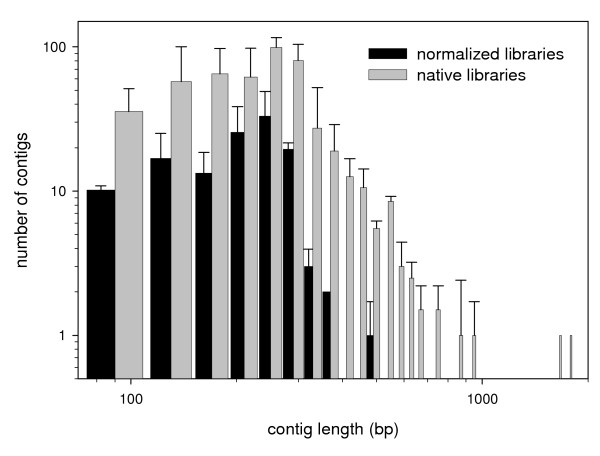
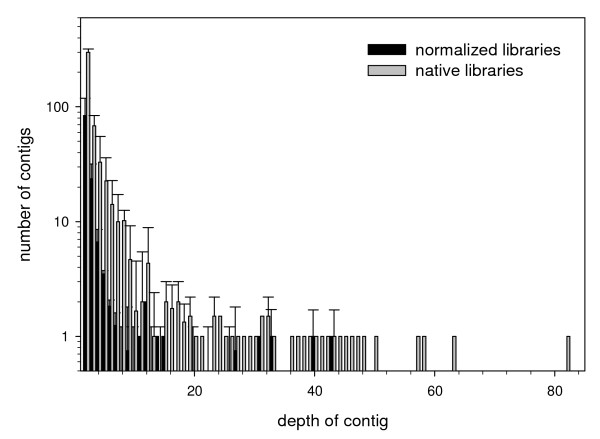
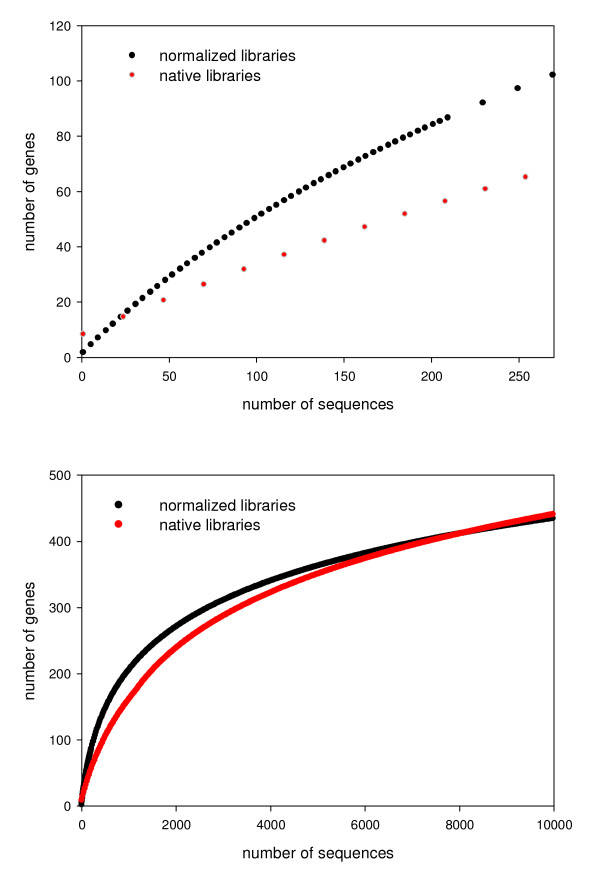
BACKGROUND: Next-generation sequencing technologies have been applied most often to model organisms or species closely related to a model. However, these methods have the potential to be valuable in many wild organisms, including those of conservation concern. We used Roche 454 pyrosequencing to characterize gene expression in polyploid lake sturgeon (Acipenser fulvescens) gonads. RESULTS: Titration runs on a Roche 454 GS-FLX produced more than 47,000 sequencing reads. These reads represented 20,741 unique sequences that passed quality control (mean length = 186 bp). These were assembled into 1,831 contigs (mean contig depth = 4.1 sequences). Over 4,000 sequencing reads (approximately 19%) were assigned gene ontologies, mostly to protein, RNA, and ion binding. A total of 877 candidate SNPs were identified from > 50 different genes. We employed an analytical approach from theoretical ecology (rarefaction) to evaluate depth of sequencing coverage relative to gene discovery. We also considered the relative merits of normalized versus native cDNA libraries when using next-generation sequencing platforms. Not surprisingly, fewer genes from the normalized libraries were rRNA subunits. Rarefaction suggests that normalization has little influence on the efficiency of gene discovery, at least when working with thousands of reads from a single tissue type. CONCLUSION: Our data indicate that titration runs on 454 sequencers can characterize thousands of expressed sequence tags which can be used to identify SNPs, gene ontologies, and levels of gene expression in species of conservation concern. We anticipate that rarefaction will be useful in evaluations of gene discovery and that next-generation sequencing technologies hold great potential for the study of other non-model organisms.
Overview
The claims and statistics of this paper haven’t been checked yet.
Free: it reads the open-access text and checks the first 5 claims that cite a source we can check. Create a free account to check every claim.
Integrity signals
Registry
Cites
Statistics
Figures
Verification
Claims the paper makes
The claims and statistics of this paper haven’t been checked yet.
Free: it reads the open-access text and checks the first 5 claims that cite a source we can check. Create a free account to check every claim.
Claims other papers make about this one
Each is checked against this paper’s own text: does it say what the citing paper says it does?
The source backs part of the claim, not all of it — or backs it for a different population, condition or comparison.
In the citing paper
“The newly developed high throughput sequencing technology, i.e. Next Generation Sequencing (NGS), including the Roche/454 Genome Sequencer FLX Instrument, the ABI SOLiD System, and the Illumina Genome Analyser, is a powerful and cost-efficient tool for advanced research in many areas, including re-sequencing, microRNA expression profiling, DNA methylation, especially de novo transcriptome”
From De novo assembly and characterization of root transcriptome using Illumina paired-end sequencing and development of cSSR markers in sweetpotato (Ipomoea batatas) (2010) · cites this paper as [18]
Experimental — accuracy not yet measuredThe cited source says what the claim attributes to it.
In the citing paper
“According to previous publication, there is no real advantage to normalization when thousands of sequences were generated [18].”
Self-check
Percentages, sums and reported differences re-computed from the paper’s own numbers.
The self-check needs the paper’s full text.
Citations
Cites
Gene Ontology: tool for the unification of biology
Ashburner, M., Ball, C. A., Blake, J. A., Botstein, D., Butler, H., Cherry, J. M., Davis, A. P., Dolinski, K., Dwight, S. S., Eppig, J. T., et al. (2000) · Nature Genetics · doi:10.1038/75556 · Cited by 43,206 · cited 2×
“(page number not for citation purposes) BLAST results were then imported into Blast2GO [40], a software package that retrieves GO terms, allowing the function of ESTs to be determined and compared [40,41].”
Genome sequencing in microfabricated high-density picolitre reactors
Margulies, M., Egholm, M., Altman, W. E., Attiya, S., Bader, J. S., Bemben, L. A., Berka, J., Braverman, M. S., Chen, Y.-J., Chen, Z., et al. (2005) · Nature · doi:10.1038/nature03959 · Cited by 7,693 · cited 4×
“For example, we documented only 16 indels despite the susceptibility of 454 sequencing technology to indel-type errors [1].”
InfluentialThe Nonconcept of Species Diversity: A Critique and Alternative Parameters
Hurlbert, S. H. (1971) · Ecology · doi:10.2307/1934145 · Cited by 4,183
Devlin, R. H., & Nagahama, Y. (2002) · Aquaculture · doi:10.1016/s0044-8486(02)00057-1 · Cited by 2,588 · cited 1×
“, evolutionary labile) than in mammals and birds [19,22,23].”
Hedrick, P. W. (1983) · Cited by 1,580
Gotelli, N. J., & Graves, G. R. (1996) · Cited by 1,382
Zhu, Y. Y., Machleder, E. M., Chenchik, A., Li, R., & Siebert, P. D. (2001) · BioTechniques · doi:10.2144/01304pf02 · Cited by 776 · cited 1×
“All other primers were unmodified from the ClonTech protocol [37].”
Rapid transcriptome characterization for a nonmodel organism using 454 pyrosequencing
VERA, J. C., WHEAT, C. W., FESCEMYER, H. W., FRILANDER, M. J., CRAWFORD, D. L., HANSKI, I., & MARDEN, J. H. (2008) · Molecular Ecology · doi:10.1111/j.1365-294x.2008.03666.x · Cited by 714 · cited 5×
“Mean length of lake sturgeon reads after removing primers, linkers, and substandard bases was 190 bp, in between the 111 bp and 209 bp reported in similar non-model 454 studies [9,10].”
InfluentialADZE: a rarefaction approach for counting alleles private to combinations of populations
Szpiech, Z. A., Jakobsson, M., & Rosenberg, N. A. (2008) · Bioinformatics · doi:10.1093/bioinformatics/btn478 · Cited by 707 · cited 1×
“It has more recently been adopted in population genetics [29-31] and it has potential utility in genomics, particularly with regard to gene discovery as a function of effort.”
The utility of single nucleotide polymorphisms in inferences of population history
Brumfield, R. T., Beerli, P., Nickerson, D. A., & Edwards, S. V. (2003) · Trends in Ecology & Evolution · doi:10.1016/s0169-5347(03)00018-1 · Cited by 695 · cited 1×
“The identification of SNPs is especially appealing in nonmodel species because as genetic markers, SNPs can illuminate population structure, sex ratios, and genetic variability [15].”
Estimating allelic richness: Effects of sample size and bottlenecks
Leberg, P. L. (2002) · Molecular Ecology · doi:10.1046/j.1365-294x.2002.01612.x · Cited by 606 · cited 1×
“It has more recently been adopted in population genetics [29-31] and it has potential utility in genomics, particularly with regard to gene discovery as a function of effort.”
Ospina-Álvarez, N., & Piferrer, F. (2008) · PLoS ONE · doi:10.1371/journal.pone.0002837 · Cited by 557 · cited 1×
“, evolutionary labile) than in mammals and birds [19,22,23].”
The molecular ecologist's guide to expressed sequence tags
BOUCK, A., & VISION, T. (2007) · Molecular Ecology · doi:10.1111/j.1365-294x.2006.03195.x · Cited by 509 · cited 2×
“Pyrosequencing of ESTs can be used to characterize gene expression [6], QTL [13], single nucleotide polymorphisms (SNPs; [9,14]), and patterns of selection [9].”
High-throughput gene and SNP discovery in Eucalyptus grandis, an uncharacterized genome
Novaes, E., Drost, D. R., Farmerie, W. G., Pappas, G. J., Grattapaglia, D., Sederoff, R. R., & Kirst, M. (2008) · BMC Genomics · doi:10.1186/1471-2164-9-312 · Cited by 493 · cited 8×
“Likewise, our mean contig length (218 bp) and depth (4.1 reads) were similar to the fritillary assembly (197 bp and 2.9 reads) and the Eucalypt assembly (353 bp and 9.9 sequences).”
MethodInfluentialSNP discovery via 454 transcriptome sequencing
Barbazuk, W. B., Emrich, S. J., Chen, H. D., Li, L., & Schnable, P. S. (2007) · The Plant Journal · doi:10.1111/j.1365-313x.2007.03193.x · Cited by 405 · cited 3×
“grandis [14,9] demonstrating the power of pyrosequencing for SNP discovery.”
Sequencing breakthroughs for genomic ecology and evolutionary biology
HUDSON, M. E. (2008) · Molecular Ecology Resources · doi:10.1111/j.1471-8286.2007.02019.x · Cited by 376 · cited 1×
“These studies illustrate the potential of 454 pyrosequencing to rapidly characterize expressed genes that can be used to address pertinent questions regarding a species' ecology, life history, and evolution [11,12].”
Sampling the Arabidopsis Transcriptome with Massively Parallel Pyrosequencing
Weber, A. P. M., Weber, K. L., Carr, K., Wilkerson, C., & Ohlrogge, J. B. (2007) · Plant Physiology · doi:10.1104/pp.107.096677 · Cited by 366 · cited 2×
“, Newbler assembler) performs poorly with nonmodel species that lack a reference genome sequence [3,38].”
THE BULLETIN OF THE ECOLOGICAL SOCIETY OF AMERICA
Solomon, A. M. (2004) · Bulletin of the Ecological Society of America · doi:10.1890/0012-9623(2004)85[173a:tbotes]2.0.co;2 · Cited by 339
Rapid and accurate pyrosequencing of angiosperm plastid genomes.
Moore, M. J., Dhingra, A., Soltis, P. S., Shaw, R., Farmerie, W. G., Folta, K. M., & Soltis, P. S. (2006) · BMC Plant Biology · doi:10.1186/1471-2229-6-17 · Cited by 298 · cited 1×
“For the most part, pyrosequencing has so far been restricted to model organisms [3-6] or species closely related to a model [7] because of the short reads which make de novo genome sequencing difficult without a scaffold [8].”
Wasp Gene Expression Supports an Evolutionary Link Between Maternal Behavior and Eusociality
Toth, A. L., Varala, K., Newman, T. C., Miguez, F. E., Hutchison, S. K., Willoughby, D. A., Simons, J. F., Egholm, M., Hunt, J. H., Hudson, M. E., et al. (2007) · Science · doi:10.1126/science.1146647 · Cited by 290 · cited 3×
“cDNA normalization is often employed when gene discovery (as opposed to gene dosage) is the primary consideration [ 7 ,10].”
InfluentialPCAP: A Whole-Genome Assembly Program
Huang, X., Wang, J., Aluru, S., Yang, S.-P., & Hillier, L. (2003) · Genome Research · doi:10.1101/gr.1390403 · Cited by 288 · cited 1×
“Thus, sequence assembly was conducted using the default parameters in PCAP, a free program that works well with next-generation sequence datasets [ 39 ].”
MethodLudwig, A., Belfiore, N. M., Pitra, C., Svirsky, V., & Jenneckens, I. (2001) · Genetics · doi:10.1093/genetics/158.3.1203 · Cited by 285
454 sequencing put to the test using the complex genome of barley
Wicker, T., Schlagenhauf, E., Graner, A., Close, T. J., Keller, B., & Stein, N. (2006) · BMC Genomics · doi:10.1186/1471-2164-7-275 · Cited by 255 · cited 1×
“The 454 approach provides more accurate base calling and deeper sequencing coverage than is possible with conventional Sanger sequencing while dramatically decreasing labor [ 1- 3 ]. For the most part, pyrosequencing has so far been restricted to model organisms [3-6] or species closely related to a model [7] because…”
Gene expression profiling by massively parallel sequencing
Torres, T. T., Metta, M., Ottenwälder, B., & Schlötterer, C. (2008) · Genome Research · doi:10.1101/gr.6984908 · Cited by 248 · cited 2×
“Pyrosequencing of ESTs can be used to characterize gene expression [6], QTL [13], single nucleotide polymorphisms (SNPs; [9,14]), and patterns of selection [9].”
Sequencing Medicago truncatula expressed sequenced tags using 454 Life Sciences technology
Cheung, F., Haas, B. J., Goldberg, S. M., May, G. D., Xiao, Y., & Town, C. D. (2006) · BMC Genomics · doi:10.1186/1471-2164-7-272 · Cited by 247 · cited 1×
“, Newbler assembler) performs poorly with nonmodel species that lack a reference genome sequence [3,38].”
Bainbridge, M. N., Warren, R. L., Hirst, M., Romanuik, T., Zeng, T., Go, A., Delaney, A., Griffith, M., Hickenbotham, M., Magrini, V., et al. (2006) · BMC Genomics · doi:10.1186/1471-2164-7-246 · Cited by 222 · cited 1×
“For the most part, pyrosequencing has so far been restricted to model organisms [3-6] or species closely related to a model [7] because of the short reads which make de novo genome sequencing difficult without a scaffold [8].”
Macnair, M. R. (2000) · Heredity · doi:10.1046/j.1365-2540.2000.0819a.x · Cited by 214
Governing Sex Determination in Fish: Regulatory Putsches and Ephemeral Dictators
Volff, J.-N., Nanda, I., Schmid, M., & Schartl, M. (2007) · Sexual Development · doi:10.1159/000100030 · Cited by 190 · cited 1×
“, sex determining genes) it may not be clear a priori if dosage is important [35].”
Sequencing goes 454 and takes large‐scale genomics into the wild
Ellegren, H. (2008) · Molecular Ecology · doi:10.1111/j.1365-294x.2008.03699.x · Cited by 133 · cited 1×
“These studies illustrate the potential of 454 pyrosequencing to rapidly characterize expressed genes that can be used to address pertinent questions regarding a species' ecology, life history, and evolution [11,12].”
Morton, B. R., Bi, I. V., McMullen, M. D., & Gaut, B. S. (2005) · Genetics · doi:10.1534/genetics.105.049916 · Cited by 82 · cited 1×
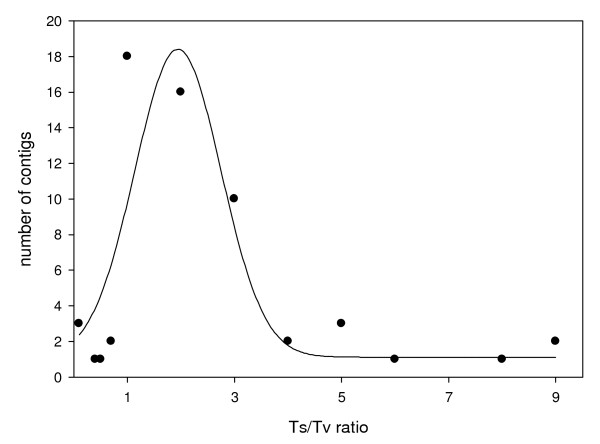
“SNP density varied across genes, this may be due in part to strong historical selection, and the Ts/Tv ratio can help identify such genes [25,26].”
Jackson, J. R., VanDeValk, A. J., Brooking, T. E., van Keeken, O. A., & Rudstam, L. G. (2002) · Journal of Applied Ichthyology · doi:10.1046/j.1439-0426.2002.00394.x · Cited by 70 · cited 2×
“Based on stocking records and established length-at-age relationships [33], lake sturgeon collected in 2007 were most likely 12 years of age and those in 2008 were 13.”
Self-citationWuertz, S., Gaillard, S., Barbisan, F., Carle, S., Congiu, L., Forlani, A., Aubert, J., Kirschbaum, F., Tosi, E., Zane, L., et al. (2006) · Aquaculture · doi:10.1016/j.aquaculture.2006.03.042 · Cited by 67 · cited 1×
“However, the search for sturgeon sex determining genes has so far been unsuccessful [18,20,21].”
Parasite-Induced Collapse of Populations of a Dominant Grazer in Michigan Streams
Kohler, S. L., & Wiley, M. J. (1992) · Oikos · doi:10.2307/3545561 · Cited by 53 · cited 1×
“In the Glanville Fritillary butterfly, 454 transcriptomics provided evidence of microsporidia, intracellular parasites that affect insect population dynamics [32,10].”
Transcribed Tc1-like transposons in salmonid fish
Krasnov, A., Koskinen, H., Afanasyev, S., & Mölsä, H. (2005) · BMC Genomics · doi:10.1186/1471-2164-6-107 · Cited by 51 · cited 2×
“Of these, Tc1-like transposase may be of interest as studies on salmon have found similar signatures of selection on this gene [34].”
The RAPD technique failed to identify sex-specific sequences in beluga (Huso huso)
Keyvanshokooh, S., Pourkazemi, M., & Kalbassi, M. R. (2007) · Journal of Applied Ichthyology · doi:10.1111/j.1439-0426.2006.00798.x · Cited by 49 · cited 1×
“However, the search for sturgeon sex determining genes has so far been unsuccessful [18,20,21].”
Noakes, D. L. G., Beamish, F. W. H., & Rossiter, A. (1999) · Environmental Biology of Fishes · doi:10.1023/a:1007548322480 · Cited by 41 · cited 1×
“In particular, we are interested in lake sturgeon (Acipenser fulvescens), a species of conservation concern in North America due to historical overharvest, pollution and habitat fragmentation [17].”
A method for the preparation of normalized cDNA libraries enriched with full-length sequences
Zhulidov, P. A., Bogdanova, E. A., Shcheglov, A. S., Shagina, I. A., Wagner, L. L., Khazpekov, G. L., Kozhemyako, V. V., Lukyanov, S. A., & Shagin, D. A. (2005) · Russian Journal of Bioorganic Chemistry · doi:10.1007/s11171-005-0023-7 · Cited by 41 · cited 1×
“If the relative abundance of transcripts is not critical, normalization can enhance the identification of rare transcripts by reducing the number of overabundant transcripts [16].”
Genetic Parentage in Large Half-Sib Clutches: Theoretical Estimates and Empirical Appraisals
DeWoody, J. A., Walker, D., & Avise, J. C. (2000) · Genetics · doi:10.1093/genetics/154.4.1907 · Cited by 38
Self-citationMcCormick, C. R., Bos, D. H., & DeWoody, J. A. (2008) · Journal of Applied Ichthyology · doi:10.1111/j.1439-0426.2008.01156.x · Cited by 30 · cited 2×
“The restoration of lake sturgeon populations is complicated by their biology, namely delayed sexual maturity (between 10 and 30 years of age), infrequent spawning (every few years), and sexual monomorphism [18].”
Self-citationData handling strategies for high throughput pyrosequencers
Trombetti, G., Bonnal, R. J. P., Rizzi, E., Bellis, G. D., & Milanesi, L. (2007) · BMC Bioinformatics · doi:10.1186/1471-2105-8-s1-s22 · Cited by 25 · cited 1×
“For the most part, pyrosequencing has so far been restricted to model organisms [3-6] or species closely related to a model [7] because of the short reads which make de novo genome sequencing difficult without a scaffold [8].”
Colombo, R. E., Garvey, J. E., & Wills, P. S. (2007) · Journal of Applied Ichthyology · doi:10.1111/j.1439-0426.2007.00898.x · Cited by 22 · cited 1×
“The two male fish expressed milt during handling and were apparently ready to mate, whereas gametes from the two females were not fully developed [36].”
Shaw, Ashburner, M., Blake, J., Baldarelli, R. M., Botstein, D., Davis, A. L., Cherry, J. M., Lewis, S., Lutz, C. G., Richardson, J., et al. (1999) · The American Journal of Human Genetics · Cited by 10
DeWoody, J. A., Hale, M. C., & Avise, J. C. (2010) · Cambridge University Press eBooks · doi:10.1017/cbo9780511777592.005 · Cited by 7 · cited 2×
“, evolutionary labile) than in mammals and birds [19,22,23].”
Self-citation
Cited by
Applications of next generation sequencing in molecular ecology of non-model organisms
Ekblom, R., & Galindo, J. (2011) · Heredity · doi:10.1038/hdy.2010.152 · Cited by 1,074
“…Solexa X Collins et al., 2008 Copperhead snake (Agkistrodon contortrix) 454 X Castoe et al., 2009 Lake sturgeon (Acipenser fulvescens) 454 X X X Hale et al., 2009 Eelpout (Zoarces viviparous) 454 X X X X Kristiansson et al., 2009 California poppy (Eschscholzia californica) 454 X Wall et al.,…”
BackgroundLi, A., Zhang, J., & Zhou, Z. (2014) · BMC Bioinformatics · doi:10.1186/1471-2105-15-311 · Cited by 792
“A large number of studies have been performed on these two kinds of sequencers [32-38].”
Amberg, J. J., Goforth, R. R., & Sepúlveda, M. S. (2013) · Sexual Development · doi:10.1159/000354280 · Cited by 477
Wang, Z., Fang, B., Chen, J., Zhang, X., Luo, Z., Huang, L., Chen, X., & Li, Y. (2010) · BMC Genomics · doi:10.1186/1471-2164-11-726 · Cited by 433
“According to previous publication, there is no real advantage to normalization when thousands of sequences were generated [18].”
BackgroundMethodConservation genetics in transition to conservation genomics
Ouborg, N. J., Pertoldi, C., Loeschcke, V., Bijlsma, R. (., & Hedrick, P. W. (2010) · Trends in Genetics · doi:10.1016/j.tig.2010.01.001 · Cited by 407
Metadata
- Authors
- Hale, M. C., McCormick, C. R., Jackson, J. R., & DeWoody, J. A.
- Affiliations
- Purdue University West Lafayette (US)
- Cornell University (US)
- Corresponding author
- Hale, Matthew C
- Venue
- BMC Genomics
- Published
- 2009
- Volume
- 10
- Issue
- 1
- Pages
- 203
- ISSN
- 1471-2164 (ISSN-L)
- PMC
- PMC2688523
- OpenAlex
- W1977759371
- Cited by
- 163
- References
- 43
- Citations by year
- 2024: 1 · 2023: 1 · 2022: 3 · 2021: 16 · 2020: 16 · 2019: 1 · 2018: 5 · 2017: 5 · 2016: 10 · 2015: 9 · 2014: 12 · 2013: 18 · 2012: 21
- FWCI
- 8.85
- Type
- journal article
- Language
- en
- Open access
- gold
- doi.org
- Licence
- cc-by
- Locations
- BMC Genomics (publishedVersion, cc-by)
- Europe PMC (PubMed Central) (publishedVersion, cc-by)
- PubMed Central (publishedVersion, cc-by)
- PubMed (publishedVersion)
- Purdue e-Pubs (Purdue University System) (submittedVersion)
- DOAJ (DOAJ: Directory of Open Access Journals) (submittedVersion)
- Funders
- Great Lakes Fishery Trust
- Indiana Department of Natural Resources
- Topics
- Life Sciences › Biochemistry, Genetics and Molecular Biology › Molecular Biology › Genomics and Phylogenetic Studies
- Life Sciences › Biochemistry, Genetics and Molecular Biology › Physiology › Reproductive biology and impacts on aquatic species
- Life Sciences › Biochemistry, Genetics and Molecular Biology › Genetics › Chromosomal and Genetic Variations
- Keywords
- lake sturgeon, Acipenser fulvescens, polyploidy, gonad transcriptome, gene discovery, rarefaction, expressed sequence tags, single nucleotide polymorphisms, Gene Ontology, conservation genetics, non-model organisms, sequencing depth
- MeSH terms
- Animals, Female, Fishes, Gonads, Male, Pilot Projects, Gene Library, Sequence Analysis, DNA, Expressed Sequence Tags, Polymorphism, Single Nucleotide, Gene Expression Profiling
About these checks
Registry, retraction, Cites and statistics results are computed, not judged, with one exception: a printed reference that no index lists is read once by a model before it counts as a citation error. Claims are extracted by a model and kept only when their quote appears verbatim in the text; each cited source is then checked, with a model’s help, for whether it says what the claim relies on. Those verdicts can be wrong — read the claim’s quote and the cited source before relying on one.
Statistics and arithmetic are recomputed, not judged.
Confidence bands are shown only for fields calibrated on our annotated test set. None is calibrated yet, so no band is shown.
What counts as a claim ›How we measure confidence ›How we check this ›
Are you an author, or do you see a problem with this page? Request a review
Data sources
Bibliographic data: Semantic Scholar, OpenAlex, Crossref.
Contains information from the Semantic Scholar Academic Graph Datasets, made available under the ODC Attribution License (ODC-BY 1.0).
Semantic Scholar’s data is described in: Kinney, R., et al. (2023). The Semantic Scholar Open Data Platform. arXiv:2301.10140.
