

Construction of a plant-transformation-competent BIBAC library and genome sequence analysis of polyploid Upland cotton (Gossypium hirsutumL.)
Open accessThe DOI matches its Crossref record; 68 of the 70 references it cites were found in a registry or an index.
Abstract
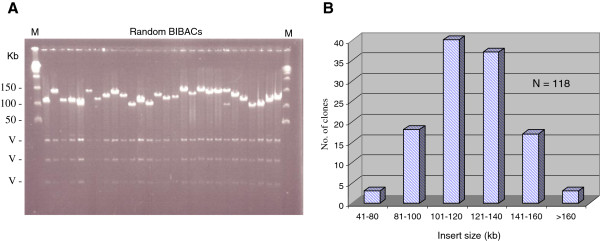
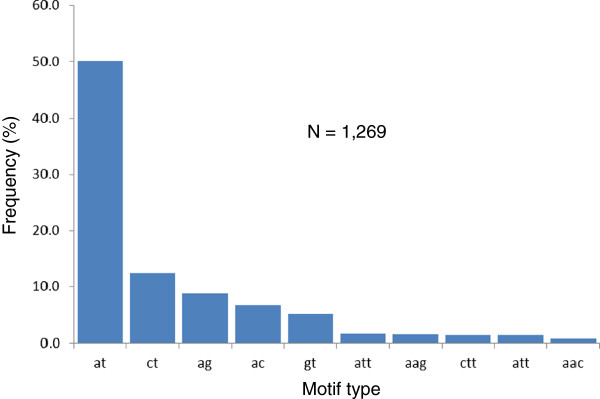
Background: Cotton, one of the world’s leading crops, is important to the world’s textile and energy industries, and is a model species for studies of plant polyploidization, cellulose biosynthesis and cell wall biogenesis. Here, we report the construction of a plant-transformation-competent binary bacterial artificial chromosome (BIBAC) library and comparative genome sequence analysis of polyploid Upland cotton (Gossypium hirsutum L.) with one of its diploid putative progenitor species, G. raimondii Ulbr. Results: We constructed the cotton BIBAC library in a vector competent for high-molecular-weight DNA transformation in different plant species through either Agrobacterium or particle bombardment. The library contains 76,800 clones with an average insert size of 135 kb, providing an approximate 99% probability of obtaining at least one positive clone from the library using a single-copy probe. The quality and utility of the library were verified by identifying BIBACs containing genes important for fiber development, fiber cellulose biosynthesis, seed fatty acid metabolism, cotton-nematode interaction, and bacterial blight resistance. In order to gain an insight into the Upland cotton genome and its relationship with G. raimondii, we sequenced nearly 10,000 BIBAC ends (BESs) randomly selected from the library, generating approximately one BES for every 250 kb along the Upland cotton genome. The retroelement Gypsy/DIRS1 family predominates in the Upland cotton genome, accounting for over 77% of all transposable elements. From the BESs, we identified 1,269 simple sequence repeats (SSRs), of which 1,006 were new, thus providing additional markers for cotton genome research. Surprisingly, comparative sequence analysis showed that Upland cotton is much more diverged from G. raimondii at the genomic sequence level than expected. There seems to be no significant difference between the relationships of the Upland cotton D- and A-subgenomes with the G. raimondii genome, even though G. raimondii contains a D genome (D 5). Conclusions: The library represents the first BIBAC library in cotton and related species, thus providing tools useful for integrative physical mapping, large-scale genome sequencing and large-scale functional analysis of the Upland cotton genome. Comparative sequence analysis provides insights into the Upland cotton genome, and a possible mechanism underlying the divergence and evolution of polyploid Upland cotton from its diploid putative progenitor species, G. raimondii.
Overview
The claims and statistics of this paper haven’t been checked yet.
Free: it reads the open-access text and checks the first 5 claims that cite a source we can check. Create a free account to check every claim.
Integrity signals
Registry
Cites
Statistics
Figures
Verification
Claims the paper makes
The claims and statistics of this paper haven’t been checked yet.
Free: it reads the open-access text and checks the first 5 claims that cite a source we can check. Create a free account to check every claim.
Claims other papers make about this one
Each is checked against this paper’s own text: does it say what the citing paper says it does?
In the citing paper
“The presence of ortholog CDK genes in cotton, affirms the evolution of tetraploid cotton, G. hirsutum, which emerged due to a whole genome duplication of the A and D genome [32].”
Self-check
Percentages, sums and reported differences re-computed from the paper’s own numbers.
The self-check needs the paper’s full text.
Citations
Cites
Molecular cloning: A laboratory manual
Deininger, P. (1990) · Analytical Biochemistry · doi:10.1016/0003-2697(90)90595-z · Cited by 84,682
Analysis of the genome sequence of the flowering plant Arabidopsis thaliana
Initiative, T. A. G. (2000) · Nature · doi:10.1038/35048692 · Cited by 9,301
<tt>BLAT</tt> —The <tt>BLAST</tt> -Like Alignment Tool
Kent, W. J. (2002) · Genome Research · doi:10.1101/gr.229202 · Cited by 8,480 · cited 1×
“php) by a local Blat server [64] with a continuously minimal match of 100 bp and a sequence identity of 100%, 95%, 90%, 80%, 70% and 60%, respectively.”
BackgroundBase-Calling of Automated Sequencer Traces Using Phred. I. Accuracy Assessment
Ewing, B., Hillier, L., Wendl, M. C., & Green, P. (1998) · Genome Research · doi:10.1101/gr.8.3.175 · Cited by 6,967 · cited 3×
“Ewing B, Green P: Base calling of automated sequencer traces using Phred.”
MethodInfluentialBase-Calling of Automated Sequencer Traces Using Phred. II. Error Probabilities
Ewing, B., & Green, P. (1998) · Genome Research · doi:10.1101/gr.8.3.186 · Cited by 5,439
Prediction of complete gene structures in human genomic DNA
Burge, C., & Karlin, S. (1997) · Journal of Molecular Biology · doi:10.1006/jmbi.1997.0951 · Cited by 4,228 · cited 1×
“We also predicted the genes/ exons contained in the BESs using Genscan [62] and GeneMark [63] against Arabidopsis model/smat using the default settings.”
MethodGene identification in novel eukaryotic genomes by self-training algorithm
Lomsadze, A. (2005) · Nucleic Acids Research · doi:10.1093/nar/gki937 · Cited by 975 · cited 1×
“We also predicted the genes/ exons contained in the BESs using Genscan [62] and GeneMark [63] against Arabidopsis model/smat using the default settings.”
MethodPolyploidy and the evolutionary history of cotton
Wendel, J. F., & Cronn, R. C. (2003) · Advances in Agronomy · doi:10.1016/s0065-2113(02)78004-8 · Cited by 826 · cited 12×
“The cultivated cottons, Upland cotton (G. hirsutum L.) and Sea Island cotton (G. barbadanse L.), are allotetraploids containing two homoeologous genomes defined A- and D-subgenomes.”
BackgroundMethodInfluentialMilligan, S. B., Bodeau, J., Yaghoobi, J., Kaloshian, I., Zabel, P., & Williamson, V. M. (1998) · The Plant Cell · doi:10.1105/tpc.10.8.1307 · Cited by 803 · cited 1×
“2 [43,57] and is closely linked to the B2 gene of the cotton bacterial blight (X.”
BackgroundPear, J. R., Kawagoe, Y., Schreckengost, W. E., Delmer, D. P., & Stalker, D. M. (1996) · Proceedings of the National Academy of Sciences · doi:10.1073/pnas.93.22.12637 · Cited by 756 · cited 1×
“Therefore, cotton research is of significance not only for the world’s textile and energy industries, but also for understanding the mechanism underlying cellulose biosynthesis and cell wall biogenesis [6-9] that are applicable to the entire plant kingdom.”
BackgroundCELLULOSE BIOSYNTHESIS: Exciting Times for A Difficult Field of Study
Delmer, D. P. (1999) · Annual Review of Plant Physiology and Plant Molecular Biology · doi:10.1146/annurev.arplant.50.1.245 · Cited by 654 · cited 1×
“Therefore, cotton research is of significance not only for the world’s textile and energy industries, but also for understanding the mechanism underlying cellulose biosynthesis and cell wall biogenesis [6-9] that are applicable to the entire plant kingdom.”
BackgroundThe Cellulose Synthase Superfamily
Richmond, T. A., & Somerville, C. R. (2000) · Plant Physiology · doi:10.1104/pp.124.2.495 · Cited by 622 · cited 1×
“Therefore, cotton research is of significance not only for the world’s textile and energy industries, but also for understanding the mechanism underlying cellulose biosynthesis and cell wall biogenesis [6-9] that are applicable to the entire plant kingdom.”
BackgroundEncyclopedia of molecular cell biology and molecular medicine
Meyers, R. A. (2004) · Cited by 613
Sequence and analysis of rice chromosome 4
Feng, Q., Zhang, Y., Hao, P., Wang, S., Fu, G., Huang, Y., Li, Y., Zhu, J., Liu, Y., Hu, X., et al. (2002) · Nature · doi:10.1038/nature01183 · Cited by 498
Self-citationSmall, R. L., Ryburn, J. A., Cronn, R. C., Seelanan, T., & Wendel, J. F. (1998) · American Journal of Botany · doi:10.2307/2446640 · Cited by 464 · cited 2×
“darwinii), have been studied extensively [1-5].”
BackgroundStable transfer of intact high molecular weight DNA into plant chromosomes.
Hamilton, C. M., Frary, A., Lewis, C., & Tanksley, S. D. (1996) · Proceedings of the National Academy of Sciences · doi:10.1073/pnas.93.18.9975 · Cited by 419 · cited 8×
“BIBAC libraries have all of the functionality of BAC libraries, but also can be used as a vehicle of large DNA fragments containing a number of genes and QTLs for direct transformation in plants via either Agrobacterium [17-21] or biolistic bombardment [22] because they have their own selection markers for plant trans…”
BackgroundInfluentialHawkins, J. S., Kim, H., Nason, J. D., Wing, R. A., & Wendel, J. F. (2006) · Genome Research · doi:10.1101/gr.5282906 · Cited by 409 · cited 1×
“[51] estimated for the genomes of its diploid putative progenitor species, G.”
BackgroundSelf-citationCongruence and Consensus in the Cotton Tribe (Malvaceae)
Seelanan, T., Schnabel, A., & Wendel, J. F. (1997) · Systematic Botany · doi:10.2307/2419457 · Cited by 369 · cited 2×
“darwinii), have been studied extensively [1-5].”
BackgroundJones, J. D. G., Shlumukov, L., Carland, F., English, J., Scofield, S. R., Bishop, G. J., & Harrison, K. (1992) · Transgenic Research · doi:10.1007/bf02525170 · Cited by 298 · cited 1×
“We successfully constructed a high-quality BIBAC library for Upland cotton using the TM-1 megabase-sized nuclear DNA partially digested with BamH I (Invitrogen, Carlsbad, CA) in pCLD04541 [26,27], a widely-used, Agrobacteriummediated plant-transformation-competent BIBAC vector [22,28-35].”
MethodWendel, J. F., & Albert, V. A. (1992) · Systematic Botany · doi:10.2307/2419069 · Cited by 290 · cited 2×
“darwinii), have been studied extensively [1-5].”
BackgroundPreparation of megabase‐size DNA from plant nuclei
Zhang, H., Zhao, X., Ding, X., Paterson, A. H., & Wing, R. A. (1995) · The Plant Journal · doi:10.1046/j.1365-313x.1995.07010175.x · Cited by 287 · cited 3×
“Furthermore, we washed the nuclei two more times than the original procedure for megabase-sized DNA preparation [37,39,40].”
BackgroundMethodSelf-citationLiu, Y.-G., Shirano, Y., Fukaki, H., Yanai, Y., Tasaka, M., Tabata, S., & Shibata, D. (1999) · Proceedings of the National Academy of Sciences · doi:10.1073/pnas.96.11.6535 · Cited by 250 · cited 9×
“BIBAC libraries have all of the functionality of BAC libraries, but also can be used as a vehicle of large DNA fragments containing a number of genes and QTLs for direct transformation in plants via either Agrobacterium [17-21] or biolistic bombardment [22] because they have their own selection markers for plant trans…”
BackgroundMethodInfluentialComparative genetic mapping of allotetraploid cotton and its diploid progenitors
Brubaker, C. L., Paterson, A. H., & Wendel, J. F. (1999) · Genome · doi:10.1139/g98-118 · Cited by 239 · cited 1×
“raimondii was previously proposed to be the closest diploid progenitor [4,45].”
BackgroundRecent Advances in Cotton Genomics
Zhang, H.-B., Li, Y., Wang, B., & Chee, P. W. (2008) · International Journal of Plant Genomics · doi:10.1155/2008/742304 · Cited by 188 · cited 2×
“A number of molecular genetic maps and several thousands of DNA markers have been developed, hundreds of genes and QTLs (quantitative trait loci) of agronomic importance have been mapped, and a large collection of expressed sequence tags (ESTs) have been generated from a variety of tissues collected at different growt…”
BackgroundSelf-citationEstimation of the Nuclear DNA Content of Gossypium Species
HENDRIX, B. (2005) · Annals of Botany · doi:10.1093/aob/mci078 · Cited by 173 · cited 4×
“In this study, we constructed a large-insert BIBAC library from Upland cotton (G. hirsutum) cv. “Texas Marker-1” (TM-1) having a genome size of 2,425 Mb/1C [25], sequenced the ends of a large number of the BIBACs and preliminarily compared the genome of Upland cotton with the D genome of G. raimondii.”
BackgroundInfluentialThe cellulose synthase superfamily in fully sequenced plants and algae
Yin, Y., Huang, J., & Xu, Y. (2009) · BMC Plant Biology · doi:10.1186/1471-2229-9-99 · Cited by 168 · cited 1×
“Therefore, cotton research is of significance not only for the world’s textile and energy industries, but also for understanding the mechanism underlying cellulose biosynthesis and cell wall biogenesis [6-9] that are applicable to the entire plant kingdom.”
BackgroundZhang, H.-B., Choi, S., Woo, S., Li, Z., & Wing, R. A. (1996) · Molecular Breeding · doi:10.1007/bf00171348 · Cited by 153 · cited 3×
“4% probability of obtaining at least one positive clone from the library using a single-copy probe [41,42].”
BackgroundMethodSelf-citationWright, R., Thaxton, P. M., El‐Zik, K. M., & Paterson, A. H. (1998) · Genetics · doi:10.1093/genetics/149.4.1987 · Cited by 137
Zhang, M., Zhang, Y., Scheuring, C. F., Wu, C. C., Dong, J. J., & Zhang, H. (2012) · Nature Protocols · doi:10.1038/nprot.2011.455 · Cited by 129 · cited 2×
“Furthermore, we washed the nuclei two more times than the original procedure for megabase-sized DNA preparation [37,39,40].”
BackgroundMethodSelf-citationTao, Q., Chang, Y.-L., Wang, J., Chen, H., Islam‐Faridi, M. N., Scheuring, C. F., Wang, B., Stelly, D. M., & Zhang, H. (2001) · Genetics · doi:10.1093/genetics/158.4.1711 · Cited by 104
Self-citationSteuernagel, B., Taudien, S., Gundlach, H., Seidel, M., Ariyadasa, R., Schulte, D., Petzold, A., Felder, M., Graner, A., Scholz, U., et al. (2009) · BMC Genomics · doi:10.1186/1471-2164-10-547 · Cited by 94
Tao, Q. (1998) · Nucleic Acids Research · doi:10.1093/nar/26.21.4901 · Cited by 91 · cited 2×
“The BIBAC vector pCLD04541 [27] was used for the construction of the BIBAC library.”
MethodMeksem, K., Zobrist, K., Ruben, E. A., Hyten, D. L., Quanzhou, T., Zhang, H.-B., & Lightfoot, D. A. (2000) · Theoretical and Applied Genetics · doi:10.1007/s001220051540 · Cited by 78 · cited 2×
“This vector has been widely used in the construction of BIBAC libraries for a number of species [22,28-35].”
MethodSelf-citationThe Handbook of Plant Genome Mapping
(2005) · Wiley eBooks · doi:10.1002/3527603514 · Cited by 68
Zhang, M., Wu, Y.-H., Lee, M.-K., Liu, Y.-H., Rong, Y., Santos, T. S., Wu, C., Xie, F., Nelson, R. L., & Zhang, H. B. (2010) · Nucleic Acids Research · doi:10.1093/nar/gkq524 · Cited by 66
Self-citationHe, L., Du, C., Covaleda, L. M., Xu, Z., Robinson, A. F., Yu, J. Z., Kohel, R. J., & Zhang, H.-B. (2004) · Molecular Plant-Microbe Interactions · doi:10.1094/mpmi.2004.17.11.1234 · Cited by 61
Self-citationEfficiency and Stability of High Molecular Weight DNA Transformation: an Analysis in Tomato
Frary, A., & Hamilton, C. M. (2001) · Transgenic Research · doi:10.1023/a:1008924726270 · Cited by 59 · cited 7×
“BIBAC libraries have all of the functionality of BAC libraries, but also can be used as a vehicle of large DNA fragments containing a number of genes and QTLs for direct transformation in plants via either Agrobacterium [17-21] or biolistic bombardment [22] because they have their own selection markers for plant trans…”
BackgroundInfluentialA draft physical map of a D-genome cotton species (Gossypium raimondii)
Lin, L., Pierce, G. J., Bowers, J., Estill, J. C., Compton, R. O., Rainville, L. K., Kim, C., Lemke, C., Rong, J., Tang, H., et al. (2010) · BMC Genomics · doi:10.1186/1471-2164-11-395 · Cited by 57 · cited 1×
“A draft physical map [16] and draft genome sequences (http://www.”
BackgroundAn Integrated Map of Arabidopsis thaliana for Functional Analysis of Its Genome Sequence
Chang, Y.-L., Tao, Q., Scheuring, C. F., Ding, K., Meksem, K., & Zhang, H. (2001) · Genetics · doi:10.1093/genetics/159.3.1231 · Cited by 56
Self-citationLiu, Y., Liu, H., Chen, L., Qiu, W., Zhang, Q., Wu, H., Yang, C., Su, J., Wang, Z., Tian, D., et al. (2002) · Gene · doi:10.1016/s0378-1119(01)00849-6 · Cited by 49
Tomkins, J. P., Peterson, D. G., Yang, T., Main, D., Wilkins, T. A., Paterson, A. H., & Wing, R. A. (2001) · Molecular Breeding · doi:10.1023/a:1013798716098 · Cited by 48 · cited 2×
“Bacterial artificial chromosome (BAC) libraries have been demonstrated to be crucial for different aspects of advanced genomics and genetics research, and have been constructed for some genotypes of Upland cotton [11-14] and Sea Island cotton [15].”
BackgroundTao, Q., Wang, A., & Zhang, H.-B. (2002) · Theoretical and Applied Genetics · doi:10.1007/s00122-002-1057-3 · Cited by 48
Self-citationExpression of the sorghum 10-member kafirin gene cluster in maize endosperm
Song, R. (2004) · Nucleic Acids Research · doi:10.1093/nar/gnh183 · Cited by 47 · cited 5×
“The plant transformability of the BIBAC library streamlines the map-based cloning of cotton genes and QTLs (Introduction) and large-scale functional analysis of the cotton genome through high-throughput BIBAC transformation [22,24].”
BackgroundMethodInfluentialHandbook of Nucleic Acid Purification
Liu, D. (2009) · CRC Press eBooks · doi:10.1201/9781420070972 · Cited by 46
Feng, J., Vick, B. A., Lee, M., Zhang, H., & Jan, C. C. (2006) · Theoretical and Applied Genetics · doi:10.1007/s00122-006-0265-7 · Cited by 36 · cited 3×
“This vector has been widely used in the construction of BIBAC libraries for a number of species [22,28-35].”
MethodSelf-citationOrtíz‐Vázquez, E., Kaemmer, D., Zhang, H.-B., Muth, J. R., Rodríguez-Mendiola, M. A., Arias-Castro, C., & James, A. (2005) · Theoretical and Applied Genetics · doi:10.1007/s00122-004-1896-1 · Cited by 35
Self-citationHe, R., Wang, Y., Shi, Z., Ren, X., Zhu, L., Weng, Q., & He, G. (2003) · Gene · doi:10.1016/j.gene.2003.08.009 · Cited by 33 · cited 7×
“BIBAC libraries have all of the functionality of BAC libraries, but also can be used as a vehicle of large DNA fragments containing a number of genes and QTLs for direct transformation in plants via either Agrobacterium [17-21] or biolistic bombardment [22] because they have their own selection markers for plant trans…”
BackgroundInfluentialConstruction of BIBAC and BAC libraries from a variety of organisms for advanced genomics research
Zhang, H., Scheuring, C. F., Zhang, M., Zhang, Y., Wu, C., Dong, J. J., & Li, Y. (2012) · Nature Protocols · doi:10.1038/nprot.2011.456 · Cited by 32 · cited 9×
“[38], and 375 volts were used for electroporation.”
BackgroundMethodSelf-citationA BAC/BIBAC-based physical map of chickpea, Cicer arietinum L
Zhang, X., Scheuring, C. F., Zhang, M., Dong, J. J., Zhang, Y., Huang, J. J., Lee, M., Abbo, S., Sherman, A., Shtienberg, D., et al. (2010) · BMC Genomics · doi:10.1186/1471-2164-11-501 · Cited by 32
Self-citationPeng, Z., Elango, N., Wildman, D. E., & Yi, S. V. (2009) · BMC Genomics · doi:10.1186/1471-2164-10-247 · Cited by 32
Men, A. E., Meksem, K., Kassem, M. A., Lohar, D. P., Stiller, J., Lightfoot, D. A., & Gresshoff, P. M. (2001) · Molecular Plant-Microbe Interactions · doi:10.1094/mpmi.2001.14.3.422 · Cited by 29 · cited 8×
“BIBAC libraries have all of the functionality of BAC libraries, but also can be used as a vehicle of large DNA fragments containing a number of genes and QTLs for direct transformation in plants via either Agrobacterium [17-21] or biolistic bombardment [22] because they have their own selection markers for plant trans…”
BackgroundMethodInfluentialWang, X. F., Ma, J., Wang, W. S., Zheng, Y., Zhang, G. Y., Liu, C., & Ma, Z. (2006) · Genome · doi:10.1139/g06-113 · Cited by 26
Moore, D. D. (1988) · Current Protocols in Molecular Biology · doi:10.1002/0471142727.mb0502s01 · Cited by 26
Genomic DNA Libraries and Physical Mapping
Ren, C., Xu, Z., Sun, S., Lee, M., Wu, C. C., Scheuring, C. F., & Zhang, H. (2005) · Wiley eBooks · doi:10.1002/3527603514.ch8 · Cited by 25
Self-citationZhang, Y., Zhang, X., O’Hare, T. H., Payne, W. S., Dong, J. J., Scheuring, C. F., Zhang, M., Huang, J. J., Lee, M.-K., Delany, M. E., et al. (2011) · BMC Genomics · doi:10.1186/1471-2164-12-447 · Cited by 25 · cited 1×
“DNA was extracted using the alkaline lysis method [53] with modifications [59].”
MethodSelf-citationFang, X., Gu, S., Xu, Z., Chen, F., Guo, D., Zhang, H., & Wu, N. (2004) · Theoretical and Applied Genetics · doi:10.1007/s00122-003-1566-8 · Cited by 20 · cited 2×
“This vector has been widely used in the construction of BIBAC libraries for a number of species [22,28-35].”
MethodSelf-citation454 sequencing of pooled BAC clones on chromosome 3H of barley
Sato, K., Motoi, Y., Yamaji, N., & Yoshida, H. (2011) · BMC Genomics · doi:10.1186/1471-2164-12-246 · Cited by 17 · cited 1×
“These STSs will facilitate integrative physical and genetic mapping, and sequencing of the Upland cotton genome using the next-generation sequencing technology [47,48].”
MethodLi, Y., Uhm, T., Ren, C., Wu, C. C., Santos, T. S., Lee, M., Yan, B., Santos, F., Zhang, A., Scheuring, C. F., et al. (2007) · Genome · doi:10.1139/g07-006 · Cited by 16
Self-citationHu, Y., Guo, W., & Zhang, T. (2008) · Journal of Integrative Plant Biology · doi:10.1111/j.1744-7909.2008.00773.x · Cited by 16
Wu, Y., Tulsieram, L., Tao, Q., Zhang, H.-B., & Rothstein, S. J. (2000) · Genome · doi:10.1139/g99-104 · Cited by 15
Self-citationChang, Y.-L., Chuang, H., Meksem, K., Wu, F.-C., Chang, C.-Y., Zhang, M., & Zhang, H. (2011) · Genome · doi:10.1139/g11-011 · Cited by 14
Self-citationZhang, M., Zhang, Y., Huang, J. J., Zhang, X., Lee, M.-K., Stelly, D. M., & Zhang, H. (2012) · PLoS ONE · doi:10.1371/journal.pone.0033644 · Cited by 14
Self-citationMap-based Cloning of Genes and Quantitative Trait Loci
Zhang, H. (2024) · CRC Press eBooks · doi:10.1201/9781003579298-8 · Cited by 11
Self-citationYin, J., Guo, W., & Zhang, T. (2006) · Journal of Integrative Plant Biology · doi:10.1111/j.1744-7909.2006.00169.x-i1 · Cited by 10 · cited 2×
“Bacterial artificial chromosome (BAC) libraries have been demonstrated to be crucial for different aspects of advanced genomics and genetics research, and have been constructed for some genotypes of Upland cotton [11-14] and Sea Island cotton [15].”
BackgroundA simple method for isolation of megabase DNA from cotton
Zhao, X., Zhang, H.-B., Wing, R. A., & Paterson, A. H. (1994) · Plant Molecular Biology Reporter · doi:10.1007/bf02668372 · Cited by 9
Self-citationWu, Y., Tulsieram, L., Tao, Q., et al. (2000) · Genome · doi:10.1139/gen-43-1-102 · Cited by 7
Ma, Z. (2006) · Mianhua xuebao · Cited by 6
Jianmei, Yin, Y., Wang-Zhen, et al. (2006) · Acta Scientiarum Naturalium Universitatis Sunyatseni · Cited by 6
Isolation of Megabase-Sized DNA Fragments from Plants
Zhang, M., Li, Y., & Zhang, H. (2009) · CRC Press eBooks · doi:10.1201/9781420070972.ch22 · Cited by 5 · cited 1×
“Furthermore, we washed the nuclei two more times than the original procedure for megabase-sized DNA preparation [37,39,40].”
MethodSelf-citationPrinciples and Practices of Plant Genomics, Vol. 1
Kole, C., & Abbott, A. G. (2024) · CRC Press eBooks · doi:10.1201/9781003579298 · Cited by 4
Research works printed but not linked: 1
- Zhang H-B Manual: Construction and Manipulation of Large-insert Bacterial Clone Libraries 2000 College Station, Texas: Texas A&M University
Cited by
Magwanga, R. O., Lu, P., Kirungu, J. N., Lu, H., Wang, X., Cai, X., Zhou, Z., Zhang, Z., Salih, H., Wang, K., et al. (2018) · BMC Genetics · doi:10.1186/s12863-017-0596-1 · Cited by 285
“hirsutum emerged through hybridization mechanism between A and D genome [51].”
BackgroundMagwanga, R. O., Lu, P., Kirungu, J. N., Cai, X., Zhou, Z., Wang, X., Diouf, L., Xu, Y., Hou, Y., Hu, Y., et al. (2018) · International Journal of Molecular Sciences · doi:10.3390/ijms19092625 · Cited by 88
Engineering synthetic regulatory circuits in plants
Kassaw, T. K., Donayre-Torres, A. J., Antunes, M. S., Morey, K. J., & Medford, J. I. (2018) · Plant Science · doi:10.1016/j.plantsci.2018.04.005 · Cited by 66
Saski, C. A., Scheffler, B. E., Hulse‐Kemp, A. M., Liu, B., Song, Q., Ando, A., Stelly, D. M., Scheffler, J., Grimwood, J., Jones, D. C., et al. (2017) · Scientific Reports · doi:10.1038/s41598-017-14885-w · Cited by 30
Self-citationWang, C., Shi, X., Liu, L., Li, H., Ammiraju, J. S. S., Kudrna, D. A., Xiong, W., Wang, H., Dai, Z., Zheng, Y., et al. (2013) · Genetics · doi:10.1534/genetics.113.157115 · Cited by 21
Metadata
- Authors
- Lee, M.-K., Zhang, Y., Zhang, M., Goebel, M., Kim, H. J., Triplett, B. A., Stelly, D. M., & Zhang, H.-B.
- Affiliations
- Texas A&M University (US)
- Jilin Agricultural University (CN)
- Agricultural Research Service (US)
- Corresponding author
- Zhang, Hong-Bin
- Venue
- BMC Genomics
- Published
- 2013-03-28
- Volume
- 14
- Issue
- 1
- Pages
- 208-208
- ISSN
- 1471-2164 (ISSN-L)
- PMC
- PMC3623804
- OpenAlex
- W1987745451
- Cited by
- 20
- References
- 70
- Citations by year
- 2023: 2 · 2021: 2 · 2018: 7 · 2017: 1 · 2016: 1 · 2015: 5 · 2013: 1
- FWCI
- 2.81
- Type
- journal article
- Language
- en
- Open access
- gold
- doi.org
- Licence
- cc-by
- Locations
- BMC Genomics (publishedVersion, cc-by)
- Europe PMC (PubMed Central) (publishedVersion, cc-by)
- PubMed Central (publishedVersion, cc-by)
- PubMed (publishedVersion)
- OakTrust (Texas A&M University Libraries) (submittedVersion)
- Funders
- Texas AgriLife Research
- Topics
- Life Sciences › Agricultural and Biological Sciences › Plant Science › Research in Cotton Cultivation
- Life Sciences › Biochemistry, Genetics and Molecular Biology › Genetics › Chromosomal and Genetic Variations
- Life Sciences › Biochemistry, Genetics and Molecular Biology › Molecular Biology › Genomics and Phylogenetic Studies
- Keywords
- Gossypium hirsutum, plant transformation, Gossypium raimondii, polyploidy, genome sequence, transposable elements, microsatellite markers
- MeSH terms
- Gossypium, Polyploidy, Gene Library, Sequence Analysis, DNA, Genome, Plant, Microsatellite Repeats, Chromosomes, Artificial, Bacterial
About these checks
Registry, retraction, Cites and statistics results are computed, not judged, with one exception: a printed reference that no index lists is read once by a model before it counts as a citation error. Claims are extracted by a model and kept only when their quote appears verbatim in the text; each cited source is then checked, with a model’s help, for whether it says what the claim relies on. Those verdicts can be wrong — read the claim’s quote and the cited source before relying on one.
Statistics and arithmetic are recomputed, not judged.
Confidence bands are shown only for fields calibrated on our annotated test set. None is calibrated yet, so no band is shown.
What counts as a claim ›How we measure confidence ›How we check this ›
Are you an author, or do you see a problem with this page? Request a review
Data sources
Bibliographic data: Semantic Scholar, OpenAlex, Crossref.
Contains information from the Semantic Scholar Academic Graph Datasets, made available under the ODC Attribution License (ODC-BY 1.0).
Semantic Scholar’s data is described in: Kinney, R., et al. (2023). The Semantic Scholar Open Data Platform. arXiv:2301.10140.
