

Transcriptional profiling of sweetpotato (Ipomoea batatas) roots indicates down-regulation of lignin biosynthesis and up-regulation of starch biosynthesis at an early stage of storage root formation
Open accessThe DOI matches its Crossref record; 62 of the 62 references it cites were found in a registry or an index; 9 of the 46 sources its claims cite were checked for support.
Abstract
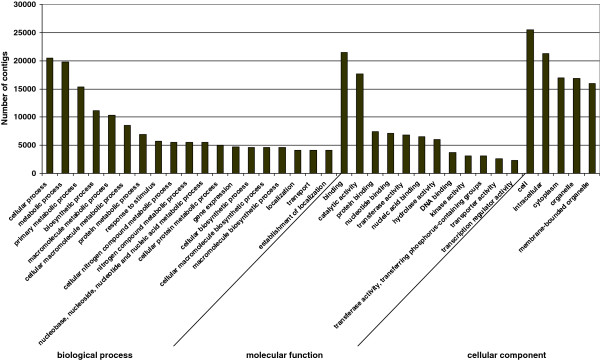
BACKGROUND: The number of fibrous roots that develop into storage roots determines sweetpotato yield. The aim of the present study was to identify the molecular mechanisms involved in the initiation of storage root formation, by performing a detailed transcriptomic analysis of initiating storage roots using next-generation sequencing platforms. A two-step approach was undertaken: (1) generating a database for the sweetpotato root transcriptome using 454-Roche sequencing of a cDNA library created from pooled samples of two root types: fibrous and initiating storage roots; (2) comparing the expression profiles of initiating storage roots and fibrous roots, using the Illumina Genome Analyzer to sequence cDNA libraries of the two root types and map the data onto the root transcriptome database. RESULTS: Use of the 454-Roche platform generated a total of 524,607 reads, 85.6% of which were clustered into 55,296 contigs that matched 40,278 known genes. The reads, generated by the Illumina Genome Analyzer, were found to map to 31,284 contigs out of the 55,296 contigs serving as the database. A total of 8,353 contigs were found to exhibit differential expression between the two root types (at least 2.5-fold change). The Illumina-based differential expression results were validated for nine putative genes using quantitative real-time PCR. The differential expression profiles indicated down-regulation of classical root functions, such as transport, as well as down-regulation of lignin biosynthesis in initiating storage roots, and up-regulation of carbohydrate metabolism and starch biosynthesis. In addition, data indicated delicate control of regulators of meristematic tissue identity and maintenance, associated with the initiation of storage root formation. CONCLUSIONS: This study adds a valuable resource of sweetpotato root transcript sequences to available data, facilitating the identification of genes of interest. This resource enabled us to identify genes that are involved in the earliest stage of storage root formation, highlighting the reduction in carbon flow toward phenylpropanoid biosynthesis and its delivery into carbohydrate metabolism and starch biosynthesis, as major events involved in storage root initiation. The novel transcripts related to storage root initiation identified in this study provide a starting point for further investigation into the molecular mechanisms underlying this process.
Overview
CoChat Summary
TL;DR
Transcriptomic comparison of initiating storage roots (ISRs) and fibrous roots (FRs) in sweetpotato var. Georgia Jet identified large-scale expression shifts at early storage root formation, notably down-regulation of lignin/phenylpropanoid biosynthesis and up-regulation of carbohydrate metabolism and starch biosynthesis. The study provides a root transcriptome resource and candidate genes for storage root initiation.
Key findings
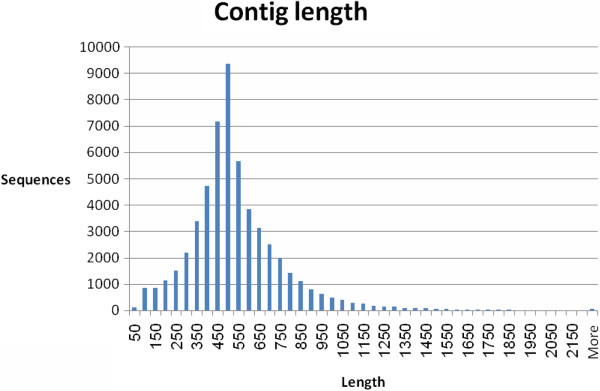
- 454-Roche sequencing generated 524,607 reads; 85.6% clustered into 55,296 contigs, of which 40,278 (73%) matched known genes. Illumina reads mapped to 31,284 contigs (56.6% of the database).
- 8,353 contigs were differentially expressed between ISRs and FRs; 4,075 (48.8%) were up-regulated in ISRs and 4,278 (51.2%) were up-regulated in FRs.
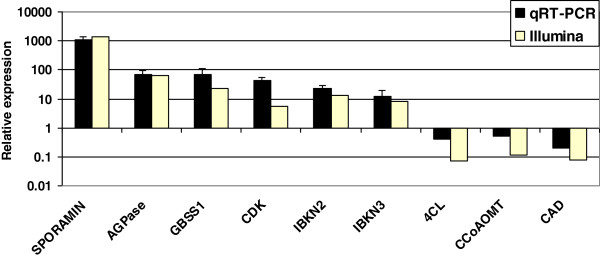
- ISRs showed up-regulation of sporamin and β-amylase genes (174- to 1,467-fold in top contigs), starch biosynthesis genes such as ADP-glucose pyrophosphorylase (e.g., 4,080 and 1,394 reads for specific β and α members), and cell-division/meristem regulators.
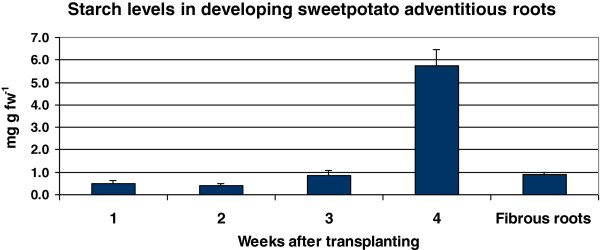
- FRs showed enrichment of phenylpropanoid/lignin-related pathways; lignin biosynthesis genes were down-regulated in ISRs, and starch accumulation peaked over fivefold between 3 and 4 weeks after transplanting.
Methods
- Two-step design: (1) built a sweetpotato root transcriptome database by 454-Roche sequencing of a normalized cDNA library pooled from ISRs and FRs; (2) compared ISR and FR expression by Illumina GA-IIx sequencing of non-normalized cDNA libraries and mapping reads onto the 55,296-contig database.
- Plant material: Georgia Jet grown in greenhouse; roots sampled 3–4 weeks after transplanting, sectioned and classified microscopically as ISRs or FRs, then pooled.
- Differential expression required ≥10 reads in at least one sample and no reads in the other or ≥2.5-fold change; DESeq was used for normalization. Nine genes were validated by qRT-PCR, and starch content was measured in root samples pooled from five to seven plants at 1–4 weeks after transplanting.
Limitations
- The paper states that Illumina-based expression results came from one biological replicate per root type (each pooled from 30 plants), while qRT-PCR used at least four biological replicates; independent validations are still required for individual genes.
- The paper notes that additional work is needed to characterize spatial expression of cell-division genes during and after storage root initiation.
- Evident from the text: findings are from a single cultivar, Georgia Jet, and rely on pooled root samples; many differentially expressed contigs were unannotated, and the study reports expression associations rather than direct functional tests.
Model-written summary. Check it against the paper before relying on it.
Integrity signals
Registry
Cites
Statistics
Figures
Verification
Claims the paper makes
3 Valid · 3 Not valid · 28 Not checked · 87 Own results and interpretations
The cited sources support only part of this claim — read each source’s verdict below.
In the paper
“Repeated division of these cambium cells leads to the formation of rows of thin-walled parenchyma cells that will form the storage tissue of the SR [7].”
§ Transcriptional profiling of sweetpotato (Ipomoea batatas) roots indicates down-regulation of lignin biosynthesis and up-regulation of starch biosynthesis at an early stage of storage root formation > Results and discussion > Early transcriptome changes in sweetpotato adventitious roots upon initiation of SR formation
What the sources say
- Partly supportedcites [7] Villordon AQ La Bonte DR Firon N Kfir Y Schwartz A Pressman E Characterization of adventitious root development in sweetpotato Hortscience 2009 44 651 655 sourceExperimental — accuracy not yet measured
The Results sections on root thickening and cambium proliferation report continuous cambial activity in storage roots and division of primary cambium cells. They do not say that this division produces rows of thin-walled parenchyma cells that become storage tissue. Page numbers are unavailable in our copy. (LLM, conf=0.83)
plainstates a cause- Asserted: passes — The authors put it forward as true.
- Checkable: passes — It can be checked against evidence.
- Load-bearing: unclear — It is unclear whether the paper’s conclusions depend on it.
- Based: passes — The paper gives a reason why it holds.
- Partly supported
The cited sources support only part of this claim — read each source’s verdict below.
In the paper
“As indicated previously by Wilson and Lowe [5], and as demonstrated by us [7] for both the leading Israeli sweetpotato variety Georgia Jet and an important USA variety, Beauregard, initiation of SR formation is marked by the development of AC cells adjacent to xylem elements, starting 3 to 4 weeks after transplanting.”
§ Transcriptional profiling of sweetpotato (Ipomoea batatas) roots indicates down-regulation of lignin biosynthesis and up-regulation of starch biosynthesis at an early stage of storage root formation > Results and discussion > Early transcriptome changes in sweetpotato adventitious roots upon initiation of SR formation
What the sources say
- Not checked — no full text of the sourcecites [5] Wilson LA Lowe SB The anatomy of the root system in West Indian sweet potato [Ipomoea batatas (L.) Lam.] cultivars Ann Bot (Lond) 1973 37 633 643 source
- Partly supportedcites [7] Villordon AQ La Bonte DR Firon N Kfir Y Schwartz A Pressman E Characterization of adventitious root development in sweetpotato Hortscience 2009 44 651 655 sourceExperimental — accuracy not yet measured
The Results section (page unavailable) reports anomalous secondary cambia around xylem elements, and the Discussion identifies their appearance as a marker of transition toward storage-root formation. But this paper examines cv. ‘Jinhongmi’, not Georgia Jet and Beauregard, and does not establish that the change begins 3–4 weeks after transplanting. (LLM, conf=0.88)
boostedstates an association- Asserted: passes — The authors put it forward as true.
- Checkable: passes — It can be checked against evidence.
- Load-bearing: unclear — It is unclear whether the paper’s conclusions depend on it.
- Based: passes — The paper gives a reason why it holds.
The cited sources that could be checked couldn’t confirm or dispute this claim.
In the paper
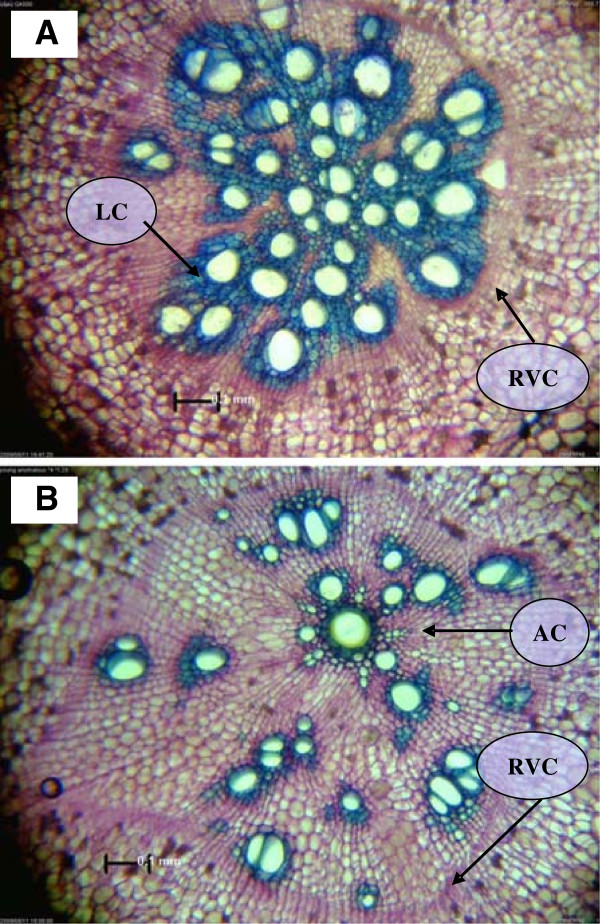
“This gene-expression pattern parallels the reduced lignification observed in tissue sections of ISRs compared to FRs (Figure 1; [7] and data not shown).”
§ Transcriptional profiling of sweetpotato (Ipomoea batatas) roots indicates down-regulation of lignin biosynthesis and up-regulation of starch biosynthesis at an early stage of storage root formation > Results and discussion > Early transcriptome changes in sweetpotato adventitious roots upon initiation of SR formation
What the sources say
- Could not verifycites [7] Villordon AQ La Bonte DR Firon N Kfir Y Schwartz A Pressman E Characterization of adventitious root development in sweetpotato Hortscience 2009 44 651 655 sourceExperimental — accuracy not yet measured
The Results section on fibrous, thick, and storage roots describes differences in their transverse sections, but does not report reduced lignification in storage roots compared with fibrous roots. Searches for “lignification” and “lignin” found no passage establishing that comparison; the paper’s SRD1 expression results do not establish it either. No page numbers were available in our copy. (LLM, conf=0.76)
plainstates an association- Asserted: passes — The authors put it forward as true.
- Checkable: passes — It can be checked against evidence.
- Load-bearing: passes — The paper’s conclusions depend on it.
- Based: passes — The paper gives a reason why it holds.
- Could not verify
None of the sources cited for this claim have been checked yet.
In the paper
“The relationship between stele lignification and inability of adventitious roots to develop into SRs has also been observed by Wilson and Lowe [5], Belehu et al. [6] and Villordon et al. [7].”
§ Transcriptional profiling of sweetpotato (Ipomoea batatas) roots indicates down-regulation of lignin biosynthesis and up-regulation of starch biosynthesis at an early stage of storage root formation > Results and discussion > Early transcriptome changes in sweetpotato adventitious roots upon initiation of SR formation
What the sources say
- Not checked — no full text of the sourcecites [5] Wilson LA Lowe SB The anatomy of the root system in West Indian sweet potato [Ipomoea batatas (L.) Lam.] cultivars Ann Bot (Lond) 1973 37 633 643 source
- Not checked yetcites [6] Belehu T Hammes PS Robbertse PJ The origin and structure of adventitious roots in sweetpotato (Ipomoea batatas) Aust J Bot 2004 52 551 558 10.1071/BT03152 source
- Could not verifycites [7] Villordon AQ La Bonte DR Firon N Kfir Y Schwartz A Pressman E Characterization of adventitious root development in sweetpotato Hortscience 2009 44 651 655 sourceExperimental — accuracy not yet measured
The Results and Discussion describe stele anatomy, cambial activity, and storage-root thickening, but do not link stele lignification to an inability of adventitious roots to become storage roots. Searches for lignification and that proposed relationship found no passage addressing it; the paper's mentions of Wilson and Lowe concern other anatomical features. (LLM, conf=0.73)
plainstates an association- Asserted: passes — The authors put it forward as true.
- Checkable: passes — It can be checked against evidence.
- Load-bearing: unclear — It is unclear whether the paper’s conclusions depend on it.
- Based: passes — The paper gives a reason why it holds.
A result the paper reports from its own data — it cites no other source for it, so there is none to check. The quote shows it is in the paper.
In the paper
“An interesting group of enriched functional terms (FDR ≤ 0.032) included: “meristem determinacy” (GO:0010022), “meristem maintenance” (GO:0010073) and “inflorescence meristem growth” (GO:0010450), which contained several contigs representing at least three ultrapetala 1-like proteins.”
§ Transcriptional profiling of sweetpotato (Ipomoea batatas) roots indicates down-regulation of lignin biosynthesis and up-regulation of starch biosynthesis at an early stage of storage root formation > Results and discussion > Early transcriptome changes in sweetpotato adventitious roots upon initiation of SR formation
plain- Asserted: passes — The authors put it forward as true.
- Checkable: passes — It can be checked against evidence.
- Load-bearing: unclear — It is unclear whether the paper’s conclusions depend on it.
- Based: passes — The paper gives a reason why it holds.
41 more claims
Create a free account to see all 121 claims and to verify the 27 references still open.
- It may state two separate claims as one. 42
- Probably not a substantial claim. 47
- The quote only partly states this claim. 2
Claims other papers make about this one
Each is checked against this paper’s own text: does it say what the citing paper says it does?
The cited source doesn’t support the claim as written.
In the citing paper
“RNA-seq data have shown that genes involved in lignin synthesis, such as the coumaroyl-CoA synthase gene, caffeoyl-CoA O-methyltransferase gene and cinnamyl alcohol dehydrogenase gene, are expressed at higher levels in storage roots at the initial stage than in fibrous roots [5].”
From RNA-Seq and iTRAQ reveal multiple pathways involved in storage root formation and development in sweet potato (Ipomoea batatas L.) (2019) · cites this paper as [5]
Checked by a reasoning model — may be wrong.
Experimental — accuracy not yet measuredThe source backs part of the claim, not all of it — or backs it for a different population, condition or comparison.
In the citing paper
“For example, the expression of the cell division-regulator genes Cyclin A-like and Cyclin D-like in storage roots at the initial stage is significantly higher than that in the fibrous roots [5].”
From RNA-Seq and iTRAQ reveal multiple pathways involved in storage root formation and development in sweet potato (Ipomoea batatas L.) (2019) · cites this paper as [5]
Experimental — accuracy not yet measuredThe source backs part of the claim, not all of it — or backs it for a different population, condition or comparison.
In the citing paper
“Three KNOXI homeobox genes, Ibkn1, Ibkn2 and Ibkn3 are abundantly found to be expressed at the initial stage [5, 6]”
From RNA-Seq and iTRAQ reveal multiple pathways involved in storage root formation and development in sweet potato (Ipomoea batatas L.) (2019) · cites this paper as [5]
Experimental — accuracy not yet measuredThe source backs part of the claim, not all of it — or backs it for a different population, condition or comparison.
In the citing paper
“After this development, the storage roots exhibit continuous expansion, and large amounts of photosynthates, particularly starch, fill in the parenchyma cells of the developed roots [5]”
From RNA-Seq and iTRAQ reveal multiple pathways involved in storage root formation and development in sweet potato (Ipomoea batatas L.) (2019) · cites this paper as [5]
Experimental — accuracy not yet measured
Self-check
Percentages, sums and reported differences re-computed from the paper’s own numbers.
Each contradiction between two passages listed here was confirmed by an independent check.
Rated minor: it would not touch a result — a value no result rests on, a p-value that stays on the same side of the significance level, or a conflict that is clerical, resolved elsewhere in the paper, or outside its own findings.
In the paper
§ Transcriptional profiling of sweetpotato (Ipomoea batatas) roots indicates down-regulation of lignin biosynthesis and up-regulation of starch biosynthesis at an early stage of storage root formation > Results and discussion > Early transcriptome changes in sweetpotato adventitious roots upon initiation of SR formation
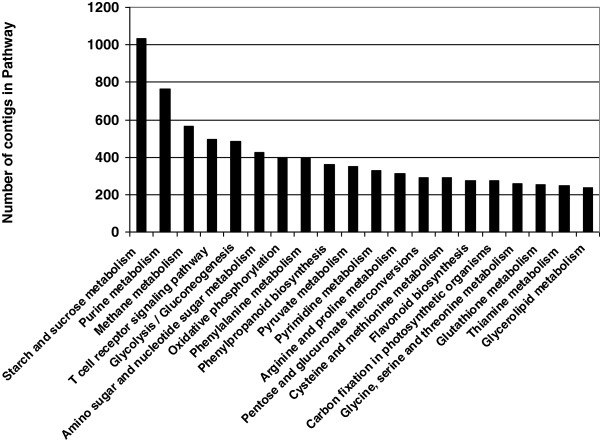
“The glycolysis/gluconeogenesis pathway was also found to be significantly enriched in ISRs (FDR = 0.051; Table 4).”
§ Transcriptional profiling of sweetpotato (Ipomoea batatas) roots indicates down-regulation of lignin biosynthesis and up-regulation of starch biosynthesis at an early stage of storage root formation > Results and discussion > Early transcriptome changes in sweetpotato adventitious roots upon initiation of SR formation
“Four and fifteen pathways were found to be significantly enriched (FDR ≤ 0.05) in ISR and FR, respectively.”
Rated minor: it would not touch a result — a value no result rests on, a p-value that stays on the same side of the significance level, or a conflict that is clerical, resolved elsewhere in the paper, or outside its own findings.
In the paper
§ Transcriptional profiling of sweetpotato (Ipomoea batatas) roots indicates down-regulation of lignin biosynthesis and up-regulation of starch biosynthesis at an early stage of storage root formation > Results and discussion > Early transcriptome changes in sweetpotato adventitious roots upon initiation of SR formation
“In this list, expression values in the ISR sample, expressed as normalized read number, range between 49 and 4,080 reads per contig”
§ Transcriptional profiling of sweetpotato (Ipomoea batatas) roots indicates down-regulation of lignin biosynthesis and up-regulation of starch biosynthesis at an early stage of storage root formation > Results and discussion > Early transcriptome changes in sweetpotato adventitious roots upon initiation of SR formation
“including 4 contigs (S_PBL_c1016, S_PBL_c6536, S_PBL_c1824, S_PBL_c6257) that showed high read number (4362, 3066, 1547 and 1446 reads, respectively; Table 1).”
Rated minor: it would not touch a result — a value no result rests on, a p-value that stays on the same side of the significance level, or a conflict that is clerical, resolved elsewhere in the paper, or outside its own findings.
In the paper
§ Transcriptional profiling of sweetpotato (Ipomoea batatas) roots indicates down-regulation of lignin biosynthesis and up-regulation of starch biosynthesis at an early stage of storage root formation > Results and discussion > Early transcriptome changes in sweetpotato adventitious roots upon initiation of SR formation
“Four and fifteen pathways were found to be significantly enriched (FDR ≤ 0.05) in ISR and FR, respectively.”
§ Transcriptional profiling of sweetpotato (Ipomoea batatas) roots indicates down-regulation of lignin biosynthesis and up-regulation of starch biosynthesis at an early stage of storage root formation > Results and discussion > Early transcriptome changes in sweetpotato adventitious roots upon initiation of SR formation
“| | Betalain biosynthesis | 5.2E-02 | map00965 |”
Citations
Cites
Analysis of Relative Gene Expression Data Using Real-Time Quantitative PCR and the 2−ΔΔCT Method
Livak, K. J., & Schmittgen, T. D. (2001) · Methods · doi:10.1006/meth.2001.1262 · Cited by 180,860
Controlling the False Discovery Rate: A Practical and Powerful Approach to Multiple Testing
Benjamini, Y., & Hochberg, Y. (1995) · Journal of the Royal Statistical Society Series B: Statistical Methodology · doi:10.1111/j.2517-6161.1995.tb02031.x · Cited by 109,482
Use of Dinitrosalicylic Acid Reagent for Determination of Reducing Sugar
Miller, G. L. (1959) · Analytical Chemistry · doi:10.1021/ac60147a030 · Cited by 28,963
Differential expression analysis for sequence count data
Anders, S., & Huber, W. (2010) · Genome Biology · doi:10.1186/gb-2010-11-10-r106 · Cited by 15,581
Conesa, A., Götz, S., García-Gómez, J. M., Terol, J., Talón, M., & Robles, M. (2005) · Bioinformatics · doi:10.1093/bioinformatics/bti610 · Cited by 11,495
Genome sequencing in microfabricated high-density picolitre reactors
Margulies, M., Egholm, M., Altman, W. E., Attiya, S., Bader, J. S., Bemben, L. A., Berka, J., Braverman, M. S., Chen, Y.-J., Chen, Z., et al. (2005) · Nature · doi:10.1038/nature03959 · Cited by 7,693
agriGO: a GO analysis toolkit for the agricultural community
Du, Z., Zhou, X., Ling, Y., Zhang, Z., & Su, Z. (2010) · Nucleic Acids Research · doi:10.1093/nar/gkq310 · Cited by 2,396
VAN LOON, L. C., & VAN STRIEN, E. A. (1999) · Physiological and Molecular Plant Pathology · doi:10.1006/pmpp.1999.0213 · Cited by 1,950
Genome Sequence Assembly Using Trace Signals and Additional Sequence Information.
Chevreux, B., Wetter, T. C., & Suhai, S. (1999) · German Conference on Bioinformatics · Cited by 1,036
Genome-Wide Characterization of the Lignification Toolbox in Arabidopsis
Raes, J., Rohde, A., Christensen, J. H., Van de Peer, Y., & Boerjan, W. (2003) · Plant Physiology · doi:10.1104/pp.103.026484 · Cited by 821
Research works printed but not linked: 1
- Woolfe J Sweetpotato, an Untapped Food Source 1992 Cambridge: Cambridge University Press
Cited by
Haplotype-resolved sweet potato genome traces back its hexaploidization history
Yang, J., Moeinzadeh, M.-H., Kuhl, H., Helmuth, J., Xiao, P., Haas, S., Liu, G., Zheng, J., Sun, Z., Fan, W., et al. (2017) · Nature Plants · doi:10.1038/s41477-017-0002-z · Cited by 370
Root System Architecture and Abiotic Stress Tolerance: Current Knowledge in Root and Tuber Crops
Khan, M. A., Gemenet, D. C., & Villordon, A. (2016) · Frontiers in Plant Science · doi:10.3389/fpls.2016.01584 · Cited by 245
“Storage root development in sweetpotato is enhanced when an expansin gene (IbEXP1) is down-regulated (Noh et al., 2012), but lignin biosynthesis is inhibited as starch biosynthesis is enhanced during early storage root formation (Firon et al., 2013).”
BackgroundResultSelf-citationTuber and Tuberous Root Development
Zierer, W., Rüscher, D., Sonnewald, U., & Sonnewald, S. (2021) · Annual Review of Plant Biology · doi:10.1146/annurev-arplant-080720-084456 · Cited by 218
Root architecture and root and tuber crop productivity
Villordon, A. Q., Ginzberg, I., & Firon, N. (2014) · Trends in Plant Science · doi:10.1016/j.tplants.2014.02.002 · Cited by 170
Self-citationMuthamilarasan, M., Singh, N. K., & Prasad, M. (2019) · Advances in genetics · doi:10.1016/bs.adgen.2019.01.001 · Cited by 170
Improvement for agronomically important traits by gene engineering in sweetpotato
Liu, Q. (2017) · Ikushugaku zasshi · doi:10.1270/jsbbs.16126 · Cited by 145
Li, X., Wang, C., Cheng, J., et al. (2014) · BMC Plant Biology · doi:10.1186/s12870-014-0358-4 · Cited by 132
Dong, T., Zhu, M., Yu, J., Han, R., Tang, C., Xu, T., Liu, J., & Li, Z. (2019) · BMC Plant Biology · doi:10.1186/s12870-019-1731-0 · Cited by 109
Zhang, H., Zhang, Q., Zhai, H., Li, Y., Wang, X., Liu, Q., & He, S. (2017) · Scientific Reports · doi:10.1038/srep40819 · Cited by 121
Gibberellin Promotes Sweetpotato Root Vascular Lignification and Reduces Storage-Root Formation
Singh, V., Sergeeva, L. I., Ligterink, W., Aloni, R., Zemach, H., Doron‐Faigenboim, A., Yang, J. M., Zhang, P., Shabtai, S., & Firon, N. (2019) · Frontiers in Plant Science · doi:10.3389/fpls.2019.01320 · Cited by 107
Self-citationWadl, P. A., Olukolu, B. A., Branham, S. E., Jarret, R. L., Yencho, G. C., & Jackson, D. M. (2018) · Frontiers in Plant Science · doi:10.3389/fpls.2018.01166 · Cited by 111
Zhang, K., Wu, Z., Tang, D., Luo, K., Lu, H., Liu, Y., Dong, J., Wang, X., Lv, C., Wang, J., et al. (2017) · Frontiers in Plant Science · doi:10.3389/fpls.2017.00914 · Cited by 88
He, S., Wang, H., Hao, X., Wu, Y., Bian, X., Yin, M., Zhang, Y., Fan, W., Dai, H., Yuan, L., et al. (2021) · The Plant Journal · doi:10.1111/tpj.15478 · Cited by 95
Expanding frontiers in plant transcriptomics in aid of functional genomics and molecular breeding
Agarwal, P., Parida, S. K., Mahto, A., Das, S., Mathew, I. E., Malik, N., & Tyagi, A. K. (2014) · Biotechnology Journal · doi:10.1002/biot.201400063 · Cited by 91
Zhang, C., Zhang, H., Zhan, Z., Liu, B., ZhenTai, C., & Liang, Y. (2016) · Frontiers in Plant Science · doi:10.3389/fpls.2016.01425 · Cited by 83
Ding, Z., Fu, L., Tie, W., Yan, Y., Wu, C., Dai, J., Zhang, J., & Hu, W. (2020) · Journal of Experimental Botany · doi:10.1093/jxb/eraa369 · Cited by 77
Wang, H., Yang, J. M., Zhang, M., Fan, W., Firon, N., Pattanaik, S., Yuan, L., & Zhang, P. (2016) · Scientific Reports · doi:10.1038/srep18645 · Cited by 79
Self-citationWang, X., Chang, L., Zheng, T., Wang, D., Yin, Q., Wang, D., Jin, X., Yang, Q., Wang, L., Sun, Y., et al. (2016) · Scientific Reports · doi:10.1038/srep19643 · Cited by 84
Roles of Abscisic Acid and Gibberellins in Stem/Root Tuber Development
Chen, P., Yang, R., Bartels, D., Dong, T., & Duan, H. (2022) · International Journal of Molecular Sciences · doi:10.3390/ijms23094955 · Cited by 69
Auxin signaling and vascular cambium formation enable storage metabolism in cassava tuberous roots
Rüscher, D., Corral, J. M., Carluccio, A. V., Klemens, P. A. W., Gisel, A., Stavolone, L., Neuhaus, H. E., Ludewig, F., Sonnewald, U., & Zierer, W. (2021) · Journal of Experimental Botany · doi:10.1093/jxb/erab106 · Cited by 58
Yu, Y., Xu, T., Li, X., Tang, J., Ma, D., Li, Z., & Sun, J. (2015) · Environmental and Experimental Botany · doi:10.1016/j.envexpbot.2015.12.006 · Cited by 68
Lyu, R., Ahmed, S., Fan, W., Yang, J. M., Wu, X., Zhou, W., Zhang, P., Yuan, L., & Wang, H. (2021) · International Journal of Molecular Sciences · doi:10.3390/ijms22179533 · Cited by 75
Hoang, N. V., Park, C., Kamran, M., & Lee, J. (2020) · Frontiers in Plant Science · doi:10.3389/fpls.2020.00762 · Cited by 52
ThMYC4E, candidate Blue aleurone 1 gene controlling the associated trait in Triticum aestivum
Li, N., Li, S., Zhang, K., et al. (2017) · PLoS ONE · doi:10.1371/journal.pone.0181116 · Cited by 56
Genome-wide analysis reveals phytohormone action during cassava storage root initiation
Sojikul, P., Saithong, T., Kalapanulak, S., Pisuttinusart, N., Limsirichaikul, S., Tanaka, M., Utsumi, Y., Sakurai, T., Seki, M., & Narangajavana, J. (2015) · Plant Molecular Biology · doi:10.1007/s11103-015-0340-z · Cited by 52
Zhu, H., Zhou, Y., Zhai, H., Shao-zhen, H. E., Zhao, N., & Liu, Q. (2019) · Journal of Integrative Agriculture · doi:10.1016/s2095-3119(18)61934-3 · Cited by 49
Molecular Regulation of Storage Root Formation and Development in Sweet Potato
Ravi, V., Chakrabarti, S. K., Makeshkumar, T., & Saravanan, R. (2014) · Horticultural Reviews: Volume 42 · doi:10.1002/9781118916827.ch03 · Cited by 53
Overexpression of IbPAL1 promotes chlorogenic acid biosynthesis in sweetpotato
Yu, Y., Wang, Y., Yu, Y., Ma, P., Jia, Z., Guo, X., Xie, Y., & Bian, X. (2020) · The Crop Journal · doi:10.1016/j.cj.2020.06.003 · Cited by 55
Wang, G., Huang, Y., Zhang, X., et al. (2016) · Plant Cell Reports · doi:10.1007/s00299-016-1992-0 · Cited by 51
Arisha, M. H., Ahmad, M. Q., Tang, W., Liu, Y., Yan, H., Kou, M., Wang, X., Zhang, Y., & Li, Q. (2020) · Scientific Reports · doi:10.1038/s41598-020-69232-3 · Cited by 60
Ponniah, S. K., Thimmapuram, J., Bhide, K. P., Kalavacharla, V. K., & Manoharan, M. (2017) · BMC Plant Biology · doi:10.1186/s12870-016-0950-x · Cited by 51
Wang, Y., Teng, R., Wang, W., Wang, Y., Shen, W., & Zhuang, J. (2018) · PROTOPLASMA · doi:10.1007/s00709-018-1299-9 · Cited by 48
Miao, Y., Zhu, Z., Guo, Q., Yang, X., Liu, L., Sun, Y., & Wang, C. (2016) · Journal of Plant Biology · doi:10.1007/s12374-016-0456-y · Cited by 48
Wang, Z., Fang, B., Chen, X., Liao, M., Chen, J., Zhang, X., Huang, L., Luo, Z., Yao, Z., & Li, Y. (2015) · BMC Plant Biology · doi:10.1186/s12870-015-0567-5 · Cited by 42
“For example, lignin biosynthesis and fatty acid biosynthesis in fibrous root elongation, and starch synthesis in later tuberous root thickening [28, 33].”
BackgroundZong, Y., Li, S., Xi, X., et al. (2019) · International Journal of Molecular Sciences · doi:10.3390/ijms20205123 · Cited by 42
Bararyenya, A., Olukolu, B. A., Tukamuhabwa, P., Grüneberg, W. J., Ekaya, W. N., Low, J. W., Ochwo‐Ssemakula, M., Odong, T. L., Talwana, H. L., Badji, A., et al. (2020) · BMC Plant Biology · doi:10.1186/s12870-019-2217-9 · Cited by 46
Liu, M., Bassetti, N., Petrasch, S., Zhang, N., Bucher, J., Shen, S., Zhao, J., & Bonnema, G. (2019) · Horticulture Research · doi:10.1038/s41438-019-0119-5 · Cited by 51
Cai, Z., Cai, Z., Huang, J., Wang, A., Ntambiyukuri, A., Chen, B., Zheng, G., Li, H., Huang, Y., Zhan, J., et al. (2022) · BMC Genomics · doi:10.1186/s12864-022-08670-x · Cited by 45
Lin, Y., Zou, W., Lin, S., Onofua, D., Yang, Z., Chen, H., Wang, S., & Chen, X. (2017) · PLoS ONE · doi:10.1371/journal.pone.0187838 · Cited by 43
Zhang, Y.-F., Li, G., Wang, X., Sun, Y., & Zhang, S. (2017) · PLoS ONE · doi:10.1371/journal.pone.0175454 · Cited by 42
Mobile RNAs and proteins: Prospects in storage organ development of tuber and root crops
Natarajan, B., Kondhare, K. R., Hannapel, D. J., & Banerjee, A. K. (2019) · Plant Science · doi:10.1016/j.plantsci.2019.03.019 · Cited by 41
Sun, P., Xiao, X.-G., Duan, L., Guo, Y., Qi, J., Liao, D., Zhao, C., Liu, Y., Zhou, L., & Li, X. (2015) · Frontiers in Plant Science · doi:10.3389/fpls.2015.00396 · Cited by 37
Han, H., Sun, X., Xie, Y., Feng, J., & Zhang, S. (2014) · BMC Plant Biology · doi:10.1186/s12870-014-0305-4 · Cited by 35
Gu, L., Wu, Y., Li, M., Wang, F., Li, Z., Yuan, F., & Zhang, Z. (2021) · Plant Physiology and Biochemistry · doi:10.1016/j.plaphy.2021.05.010 · Cited by 23
Lee, J. J., Kim, Y., Kwak, Y., An, J. Y., Kim, P. J., Lee, B. H., Kumar, V., Park, K. W., Chang, E.-S., Jeong, J. C., et al. (2014) · Plant Physiology and Biochemistry · doi:10.1016/j.plaphy.2014.12.010 · Cited by 28
Adventitious root formation in crops—Potato as an example
Joshi, M., & Ginzberg, I. (2020) · Physiologia Plantarum · doi:10.1111/ppl.13305 · Cited by 29
Li, M., Yang, Y., Li, X., Gu, L., Wang, F., Feng, F., Tian, Y., Wang, F., Wang, X., Lin, W., et al. (2015) · Journal of Experimental Botany · doi:10.1093/jxb/erv288 · Cited by 38
Yao, S., Lan, Z., Huang, R., Tan, Y. H., Huang, D., Gu, J., & Pan, C. (2021) · Scientific Reports · doi:10.1038/s41598-020-76633-x · Cited by 42
Gregory, P. J., & Wojciechowski, T. (2020) · Advances in agronomy · doi:10.1016/bs.agron.2020.01.001 · Cited by 50
Xu, L., Wang, J., Lei, M., Li, L., Fu, Y., Wang, Z., Ao, M., & Li, Z. (2016) · PLoS ONE · doi:10.1371/journal.pone.0160338 · Cited by 33
Li, R., Zhai, H., Chen, K., Liu, D., He, S., & Liu, Q. (2015) · International Journal of Genomics · doi:10.1155/2015/843802 · Cited by 38
Zhang, K., Wu, Z., Tang, D., Lv, C., Luo, K., Zhao, Y., Liu, X., Huang, Y., & Wang, J. (2016) · Frontiers in Plant Science · doi:10.3389/fpls.2016.00223 · Cited by 32
“…SRR329935, SRR331947, and SRR335407 pair-end reads, and the ERR297372, ERR297373, and ERR297371 single-end reads obtained by 454 sequencing (Firon et al., 2013), resulting in 90,751 transcripts, with an N50 size of 683 bp and total base pair count of 47.56 Mb. (4) To enhance the efficiency…”
BackgroundInfluentialMiao, Y., Zhu, Z., Guo, Q., Zhu, Y., Yang, X., & Sun, Y. (2016) · Frontiers in Plant Science · doi:10.3389/fpls.2016.00409 · Cited by 33
Yang, Y., Zhu, J., Sun, L. J., Kong, Y., Chen, J., Zhu, M., Xu, T., Li, Z., & Dong, T. (2022) · Scientia Horticulturae · doi:10.1016/j.scienta.2022.111588 · Cited by 32
Transcriptome Analysis of Purple Pericarps in Common Wheat (Triticum aestivum L.)
Liu, D., Li, S., Chen, W., et al. (2016) · PLoS ONE · doi:10.1371/journal.pone.0155428 · Cited by 29
Xiang, Q., Hu, S., Ligaba‐Osena, A., Yang, J., Tong, F., & Guo, W. (2021) · Frontiers in Plant Science · doi:10.3389/fpls.2021.659645 · Cited by 26
Singh, V., Zemach, H., Shabtai, S., Aloni, R., Yang, J. M., Zhang, P., Sergeeva, L. I., Ligterink, W., & Firon, N. (2021) · Frontiers in Plant Science · doi:10.3389/fpls.2020.609923 · Cited by 32
Self-citationDing, Y., Jin, Y., He, K., Yi, Z., Tan, L., Liu, L., Tang, M., Du, A., Fang, Y., & Zhao, H. L. (2020) · Frontiers in Microbiology · doi:10.3389/fmicb.2020.00678 · Cited by 32
Recent Progress in Molecular Studies on Storage Root Formation in Sweetpotato (Ipomoea batatas)
Tanaka, M. (2016) · Japan Agricultural Research Quarterly JARQ · doi:10.6090/jarq.50.293 · Cited by 33
Li, J., Ding, Q., Wang, F., Zhang, Y., Li, H., & Gao, J. (2015) · PLoS ONE · doi:10.1371/journal.pone.0137983 · Cited by 29
Liu, B. C., Xv, B.-J., Si, C., Shi, W., Ding, G.-Z., Tang, L.-X., Xv, M., Shi, C.-Y., & Liu, H.-J. (2024) · Frontiers in Plant Science · doi:10.3389/fpls.2023.1298739 · Cited by 33
Lee, C.-J., Park, S.-U., Kim, S.-E., Lim, Y.-H., Ji, C. Y., Kim, Y., Kim, H. S., & Kwak, S. (2021) · Plant Physiology and Biochemistry · doi:10.1016/j.plaphy.2021.08.041 · Cited by 30
Du, X., Lingcong, K., Min, X., & Xin-yue, Z. (2019) · Field Crops Research · doi:10.1016/j.fcr.2019.04.021 · Cited by 27
Cao, Q., Li, A., Chen, J., Sun, Y., Tang, J., Zhang, A., Zhou, Z., Zhao, D., Ma, D., & Gao, S. (2016) · Tropical Plant Biology · doi:10.1007/s12042-016-9162-7 · Cited by 25
Parallel evolution of storage roots in morning glories (Convolvulaceae)
Eserman, L. A., Jarret, R. L., & Leebens-Mack, J. H. (2018) · BMC Plant Biology · doi:10.1186/s12870-018-1307-4 · Cited by 25
Kim, N., Jeong, Y., Jeong, S., Kim, G.-B., Baek, S., Kwon, Y.-E., Cho, A., Choi, S., Kim, J., Lim, W.-J., et al. (2016) · Theoretical and Applied Genetics · doi:10.1007/s00122-016-2741-z · Cited by 27
Tanabe, N., Tamoi, M., & Shigeoka, S. (2015) · Gene · doi:10.1016/j.gene.2015.05.006 · Cited by 26
Zhou, Z., Tang, J., Cao, Q., Li, Z., & Ma, D. (2022) · PLoS ONE · doi:10.1371/journal.pone.0264847 · Cited by 26
Set up from the beginning: The origin and early development of cassava storage roots
Carluccio, A. V., David, L. C., Claußen, J., Sulley, M., Adeoti, S. R., Abdulsalam, T., Gerth, S., Zeeman, S. C., Gisel, A., & Stavolone, L. (2022) · Plant Cell & Environment · doi:10.1111/pce.14300 · Cited by 24
Jung, W. Y., Lee, S. S., Kim, C. W., Kim, H., Min, S. R., Moon, J. S., Kwon, S., Jeon, J.-H., & Cho, H. S. (2014) · PLoS ONE · doi:10.1371/journal.pone.0111982 · Cited by 25
Liu, L., Song, J., Li, Y., Li, P., & Wang, H. (2019) · Biotechnology for Biofuels · doi:10.1186/s13068-019-1464-1 · Cited by 24
Plant Vascular Tissues—Connecting Tissue Comes in All Shapes
Hellmann, E., Ko, D., Ruonala, R., & Helariutta, Y. (2018) · Plants · doi:10.3390/plants7040109 · Cited by 26
Wei, C., Tao, X., Li, M., et al. (2015) · Molecular Genetics and Genomics · doi:10.1007/s00438-015-1034-6 · Cited by 21
Bian, X., Kim, H. S., Kwak, S., Zhang, Q., Liu, S., Ma, P., Jia, Z., Xie, Y., Zhang, P., & Yu, Y. (2022) · Frontiers in Plant Science · doi:10.3389/fpls.2022.820450 · Cited by 22
Ji, C. Y., Bian, X., Lee, C.-J., Kim, H. S., Kim, S.-E., Park, S., Xie, Y., Guo, X., & Kwak, S. (2019) · Gene · doi:10.1016/j.gene.2019.02.097 · Cited by 25
Hearn, D. J., O’Brien, P., & Poulsen, S. M. (2018) · PLoS ONE · doi:10.1371/journal.pone.0197166 · Cited by 21
Yang, Y., Wang, Y., Jia, L., et al. (2018) · PLoS ONE · doi:10.1371/journal.pone.0193193 · Cited by 21
Si, C., Shi, C., Liu, H., Zhan, X., Liu, Y., Wang, D., Meng, D., & Tang, L. (2018) · Crop Science · doi:10.2135/cropsci2018.01.0067 · Cited by 21
Kondhare, K. R., Kumar, A., Hannapel, D. J., & Banerjee, A. K. (2018) · BMC Genomics · doi:10.1186/s12864-018-4502-7 · Cited by 22
Zhou, Y.-X., Chen, Y.-X., Tao, X., Cheng, X.-J., & Wang, H.-Y. (2016) · Molecular Genetics and Genomics · doi:10.1007/s00438-015-1134-3 · Cited by 19
“Sweet potato is the world’s seventh most important food crop and the third most important root/tuber crop after potato and cassava (Firon et al. 2013).”
BackgroundInfluentialSi, C., Liang, Q.-G., Liu, H., Wang, N., Kumar, S., Chen, Y., & Zhu, G. (2022) · Frontiers in Plant Science · doi:10.3389/fpls.2022.872422 · Cited by 24
Lee, C.-J., Kim, S.-E., Park, S.-U., Lim, Y.-H., Choi, H.-Y., Kim, W., Ji, C. Y., Kim, H. S., & Kwak, S. (2021) · Plant Physiology and Biochemistry · doi:10.1016/j.plaphy.2021.06.024 · Cited by 19
Liang, Q., Chen, H., Chang, H., et al. (2023) · Plants · doi:10.3390/plants12102039 · Cited by 18
Villordon, A. Q., Gregorie, J. C., & LaBonte, D. (2020) · HortScience · doi:10.21273/hortsci15358-20 · Cited by 22
Self-citationDiverse antioxidant enzyme levels in different sweetpotato root types during storage root formation
Kim, Y., Park, S., Ji, C. Y., Lee, J. J., Jeong, J. C., Haeng-Soon, L. E. E., & Kwak, S. (2014) · Plant Growth Regulation · doi:10.1007/s10725-014-9940-x · Cited by 18
Transcriptomics: illuminating the molecular landscape of vegetable crops: a review
P, P., V, Bidaramali, V., Lata, S., & Yadav, R. K. (2024) · Journal of Plant Biochemistry and Biotechnology · doi:10.1007/s13562-023-00871-z · Cited by 18
Sun, J., Hui, K., Guo, Z., Li, Y., & Fan, X. (2022) · Journal of Plant Growth Regulation · doi:10.1007/s00344-022-10573-w · Cited by 17
Duan, W., Zhang, H., Xie, B., Wang, B., Hou, F., Li, A., Dong, S., Qin, Z., Wang, Q., & Zhang, L. (2021) · Physiologia Plantarum · doi:10.1111/ppl.13504 · Cited by 16
Li, C., Yao, W., Wang, J., Wang, J., Ai, Y., Ma, H., & Zhang, Y. (2019) · Plant Physiology and Biochemistry · doi:10.1016/j.plaphy.2019.10.012 · Cited by 18
Impact of paclobutrazol on storage root number and yield of sweet potato (Ipomoea batatas L.)
Si, C., Li, Y., Liu, H., Zhang, H.-Y., Meng, Y., Wang, N., & Shi, C. (2023) · Field Crops Research · doi:10.1016/j.fcr.2023.109011 · Cited by 20
Yang, S., Liu, X., Qiao, S., Tan, W., Li, M., Feng, J., Zhang, C., Kang, X., Huang, T., Zhu, Y., et al. (2018) · Functional & Integrative Genomics · doi:10.1007/s10142-018-0611-2 · Cited by 18
Solis, J., Baisakh, N., Brandt, S. R., Villordon, A. Q., & Bonte, D. R. L. (2016) · PLoS ONE · doi:10.1371/journal.pone.0147398 · Cited by 16
Self-citationZhou, Y., Li, A., Du, T., Qin, Z., Zhang, L., Wang, Q., Li, Z., & Hou, F. (2024) · Genes · doi:10.3390/genes15060760 · Cited by 15
Abugu, M. N., Allan, M. C., Johanningsmeier, S. D., Iorizzo, M., & Yencho, G. C. (2025) · Comprehensive Reviews in Food Science and Food Safety · doi:10.1111/1541-4337.70172 · Cited by 21
Ibrahim, R. M., Sedeek, M. S., Wareth, A. A., et al. (2024) · Food Chemistry · doi:10.1016/j.foodchem.2024.141125 · Cited by 14
Meng, X., Dong, T., Li, Z., & Zhu, M. (2024) · Frontiers in Plant Science · doi:10.3389/fpls.2024.1428975 · Cited by 22
Mathura, S. R. (2023) · AoB Plants · doi:10.1093/aobpla/plad027 · Cited by 14
Yang, Y., Li, M. J., Yi, Y., Li, R. F., Dong, C., & Zhang, Z. Y. (2018) · Plant Cell Reports · doi:10.1007/s00299-018-2255-z · Cited by 14
The haplotype-resolved genome sequence of hexaploid Ipomoea batatas reveals its evolutionary historyPreprint
Yang, J. M., Moeinzadeh, M.-H., Kuhl, H., et al. (2016) · bioRxiv (Cold Spring Harbor Laboratory) · doi:10.1101/064428 · Cited by 14
Fan, W., Wang, Y., Zhang, L., Fang, Y., Yan, M., Yuan, L., Yang, J. M., & Wang, H. (2023) · Plant Physiology and Biochemistry · doi:10.1016/j.plaphy.2023.107796 · Cited by 17
Metadata
- Authors
- Firon, N., LaBonte, D., Villordon, A., Kfir, Y., Solis, J., Lapis, E., Perlman, T., Doron-Faigenboim, A., Hetzroni, A., Althan, L., & Nadir, L.
- Affiliations
- Agricultural Research Organization (IL)
- Louisiana State University (US)
- Hadassah Medical Center (IL)
- Corresponding author
- Firon, Nurit
- Venue
- BMC Genomics
- Published
- 2013
- Volume
- 14
- Issue
- 1
- Pages
- 460
- ISSN
- 1471-2164 (ISSN-L)
- PMC
- PMC3716973
- OpenAlex
- W2147508884
- Cited by
- 182
- References
- 62
- Citations by year
- 2026: 5 · 2025: 13 · 2024: 19 · 2023: 14 · 2022: 15 · 2021: 15 · 2020: 16 · 2019: 15 · 2018: 16 · 2017: 12 · 2016: 18 · 2015: 12 · 2014: 12
- FWCI
- 16.87
- Type
- journal article
- Language
- en
- Open access
- gold
- doi.org
- Licence
- cc-by
- Locations
- BMC Genomics (publishedVersion, cc-by)
- Europe PMC (PubMed Central) (publishedVersion, cc-by)
- PubMed Central (publishedVersion, cc-by)
- PubMed (publishedVersion)
- Civil War Book Review (submittedVersion)
- Topics
- Life Sciences › Agricultural and Biological Sciences › Plant Science › Plant Molecular Biology Research
- Life Sciences › Biochemistry, Genetics and Molecular Biology › Molecular Biology › Plant Gene Expression Analysis
- Life Sciences › Agricultural and Biological Sciences › Horticulture › Cocoa and Sweet Potato Agronomy
- Keywords
- Ipomoea batatas, storage root formation, fibrous roots, root transcriptome, lignin biosynthesis, starch biosynthesis, phenylpropanoid biosynthesis, carbohydrate metabolism, differential gene expression, carbon allocation
- MeSH terms
- Cell Division, Lignin, Starch, Time Factors, Transcription, Genetic, Down-Regulation, Sequence Analysis, DNA, Complementary, Plant Roots, Gene Expression Profiling, Ipomoea batatas, Databases, Genetic, Molecular Sequence Annotation
About these checks
Registry, retraction, Cites and statistics results are computed, not judged, with one exception: a printed reference that no index lists is read once by a model before it counts as a citation error. Claims are extracted by a model and kept only when their quote appears verbatim in the text; each cited source is then checked, with a model’s help, for whether it says what the claim relies on. Those verdicts can be wrong — read the claim’s quote and the cited source before relying on one.
The claim verdicts this report counts are experimental: their accuracy is not yet measured.
A language model drew the claims from the paper on 2026-10-10, under version 3 of the claim definition (model deepseek-v4.1-flash, prompt extract-v3).
A second model labelled each claim on 2026-10-10 (model jev-1.13-20260917, definition revision gold-guideline-v0.2).
Cited sources are checked with a language model’s help (gpt-6-sol).
Statistics and arithmetic are recomputed, not judged.
Confidence bands are shown only for fields calibrated on our annotated test set. None is calibrated yet, so no band is shown.
What counts as a claim ›How we measure confidence ›How we check this ›
Are you an author, or do you see a problem with this page? Request a review
Data sources
Bibliographic data: Semantic Scholar, OpenAlex, Crossref.
Contains information from the Semantic Scholar Academic Graph Datasets, made available under the ODC Attribution License (ODC-BY 1.0).
Semantic Scholar’s data is described in: Kinney, R., et al. (2023). The Semantic Scholar Open Data Platform. arXiv:2301.10140.
