

The DOI matches its Crossref record; 56 of the 56 references it cites were found in a registry or an index.
Gene expressions and copy numbers associated with metastatic phenotypes of uterine cervical cancer
Open accessAbstract
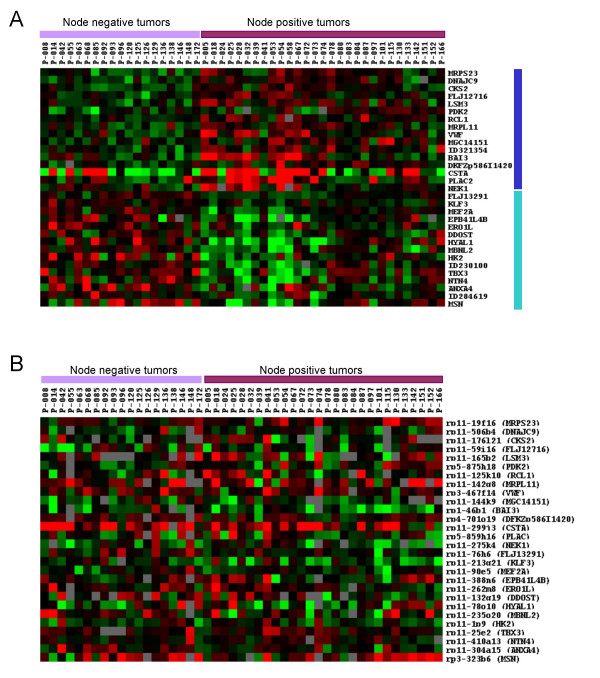
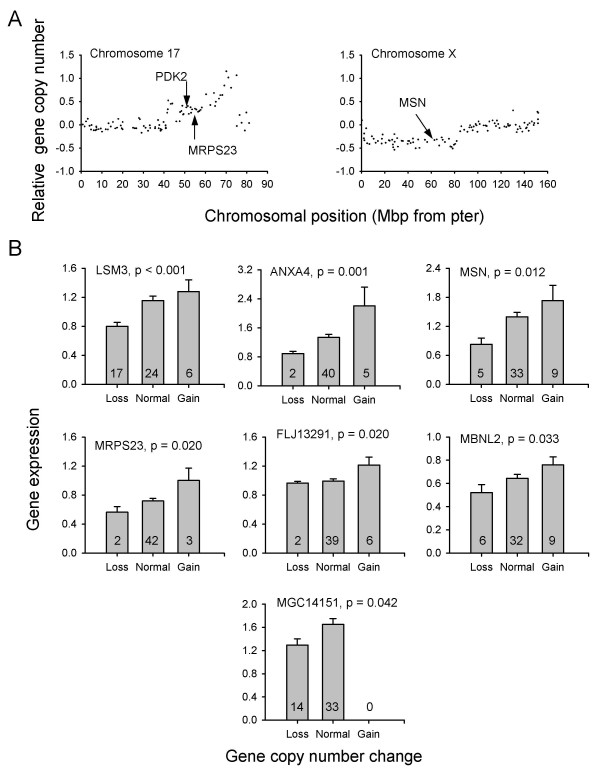
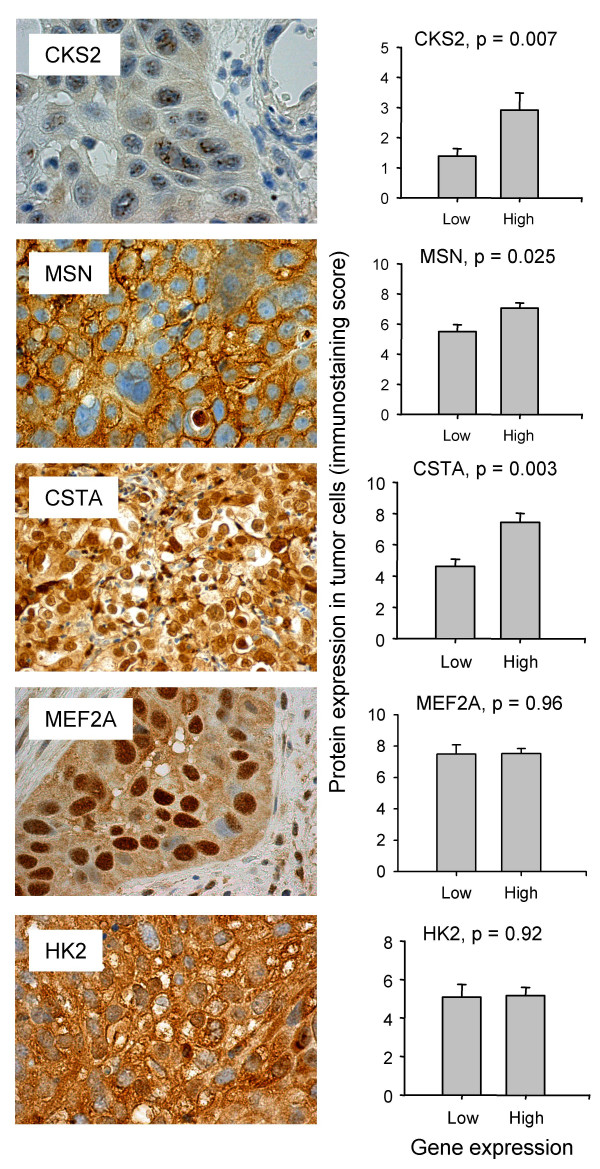
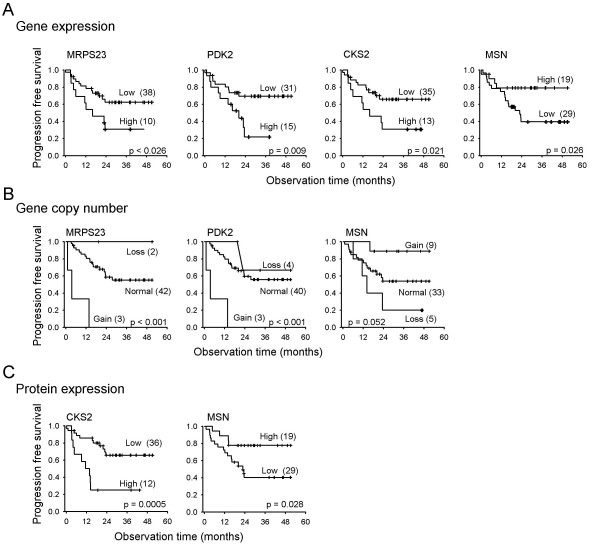
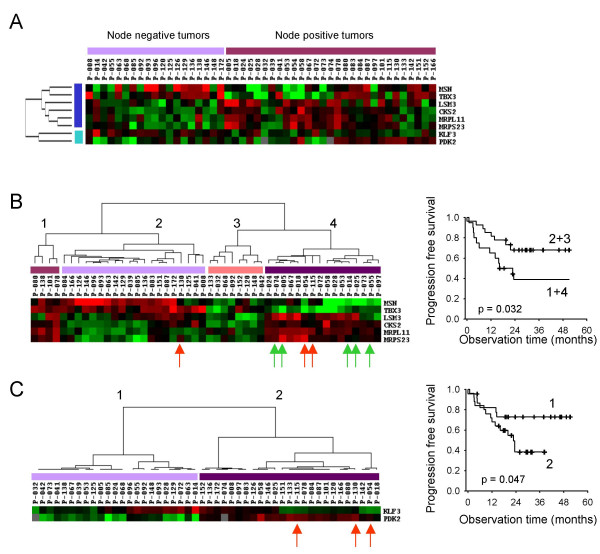
BACKGROUND: A better understanding of the development of metastatic disease and the identification of molecular markers for cancer spread would be useful for the design of improved treatment strategies. This study was conducted to identify gene expressions associated with metastatic phenotypes of locally advanced cervical carcinomas and investigate whether gains or losses of these genes could play a role in regulation of the transcripts. Gene expressions and copy number changes were determined in primary tumors from 29 patients with and 19 without diagnosed lymph node metastases by use of cDNA and genomic microarray techniques, respectively. RESULTS: Thirty-one genes that differed in expression between the node positive and negative tumors were identified. Expressions of eight of these genes (MRPL11, CKS2, PDK2, MRPS23, MSN, TBX3, KLF3, LSM3) correlated with progression free survival in univariate analysis and were therefore more strongly associated with metastatic phenotypes than the others. Immunohistochemistry data of CKS2 and MSN showed similar relationships to survival. The prognostic genes clustered into two groups, suggesting two major metastatic phenotypes. One group was associated with rapid proliferation, oxidative phosphorylation, invasiveness, and tumor size (MRPS23, MRPL11, CKS2, LSM3, TBX3, MSN) and another with hypoxia tolerance, anaerobic metabolism, and high lactate content (PDK2, KLF3). Multivariate analysis identified tumor volume and PDK2 expression as independent prognostic variables. Gene copy number changes of the differentially expressed genes were not frequent, but correlated with the expression level for seven genes, including MRPS23, MSN, and LSM3. CONCLUSION: Gene expressions associated with known metastatic phenotypes of cervical cancers were identified. Our findings may indicate molecular mechanisms underlying development of these phenotypes and be useful as markers of cancer spread. Gains or losses of the genes may be involved in development of the metastatic phenotypes in some cases, but other mechanisms for transcriptional regulation are probably important in the majority of tumors.
Overview
The claims and statistics of this paper haven’t been checked yet.
Run the check — free, no account needed. It reads the open-access text and checks the sources it cites.
Integrity signals
Registry
Cites
Statistics
Figures
Verification
Claims the paper makes
The claims and statistics of this paper haven’t been checked yet.
Run the check — free, no account needed. It reads the open-access text and checks the sources it cites.
Claims other papers make about this one
Each is checked against this paper’s own text: does it say what the citing paper says it does?
The source backs part of the claim, not all of it — or backs it for a different population, condition or comparison.
In the citing paper
“As Tbx3 is involved in the carcinogenesis of multiple types of human cancers, our findings suggest an important target for anti-cancer drug development.”
From Novel HDAC5-interacting motifs of Tbx3 are essential for the suppression of E-cadherin expression and for the promotion of metastasis in hepatocellular carcinoma (2018) · cites this paper as [31]
Experimental — accuracy not yet measured
Self-check
Percentages, sums and reported differences re-computed from the paper’s own numbers.
The self-check needs the paper’s full text.
Citations
Cites
Analysis of Relative Gene Expression Data Using Real-Time Quantitative PCR and the 2−ΔΔCT Method
Livak, K. J., & Schmittgen, T. D. (2001) · Methods · doi:10.1006/meth.2001.1262 · Cited by 180,860
Cluster analysis and display of genome-wide expression patterns
Eisen, M. B., Spellman, P. T., Brown, P. O., & Botstein, D. (1998) · Proceedings of the National Academy of Sciences · doi:10.1073/pnas.95.25.14863 · Cited by 16,184
In silico prediction of protein-protein interactions in human macrophages
Souiai, O., Guerfali, F. Z., Miled, S. B., Brun, C., & Benkahla, A. (2014) · BMC Research Notes · doi:10.1186/1756-0500-7-157 · Cited by 10,785
Significance analysis of microarrays applied to the ionizing radiation response
Tusher, V. G., Tibshirani, R., & Chu, G. (2001) · Proceedings of the National Academy of Sciences · doi:10.1073/pnas.091062498 · Cited by 10,568
Mutation of the mouse klotho gene leads to a syndrome resembling ageing
Kuro-o, M., Matsumura, Y., Aizawa, H., Kawaguchi, H., Suga, T., Utsugi, T., Ohyama, Y., Kurabayashi, M., Kaname, T., Kume, E., et al. (1997) · Nature · doi:10.1038/36285 · Cited by 3,837
A molecular signature of metastasis in primary solid tumors
Ramaswamy, S., Ross, K. N., Lander, E. S., & Golub, T. R. (2002) · Nature Genetics · doi:10.1038/ng1060 · Cited by 2,469
Sp1 and krüppel‐like factor family of transcription factors in cell growth regulation and cancer
Black, A. R., Black, J. D., & Azizkhan‐Clifford, J. (2001) · Journal of Cellular Physiology · doi:10.1002/jcp.1111 · Cited by 1,048
Walenta, S., Wetterling, M., Lehrke, M., Schwickert, G., Sundfør, K., Rofstad, E. K., & Mueller‐Klieser, W. (2000) · PubMed · Cited by 817
Self-citationRoepman, P., Wessels, L. F. A., Kettelarij, N., Kemmeren, P., Miles, A. J., Lijnzaad, P., Tilanus, M. G. J., Koole, R., Hordijk, G. J., van der Vliet, P. C., et al. (2005) · Nature Genetics · doi:10.1038/ng1502 · Cited by 512
Muscleblind proteins regulate alternative splicing
Ho, T. H., Charlet‐Berguerand, N., Poulos, M. G., Singh, G., Swanson, M. S., & Cooper, T. A. (2004) · The EMBO Journal · doi:10.1038/sj.emboj.7600300 · Cited by 494
Research works printed but not linked: 1
- NCBI UniGene database. [ http://www.ncbi.nlm.nih.gov/UniGene ]
Cited by
Sorted by citations
Genome-wide association analysis identifies three new breast cancer susceptibility loci
Netherlands Collaborative Group on Hereditary Breast and Ovarian Cancer (HEBON), Ghoussaini, M., (FBCS), F. B. C. S., The Gene Environment Interaction of Breast Cancer in Germany (GENICA) Network, kConFab Investigators, Australian Ovarian Cancer Study Group, Fletcher, O., Michailidou, K., Turnbull, C., Schmidt, M. K., et al. (2012) · Nature Genetics · doi:10.1038/ng.1049 · Cited by 285
Gatza, M. L., Silva, G. O., Parker, J. S., Fan, C., & Perou, C. M. (2014) · Nature Genetics · doi:10.1038/ng.3073 · Cited by 261
Saunier, E. F., Benelli, C., & Bortoli, S. (2015) · International Journal of Cancer · doi:10.1002/ijc.29564 · Cited by 217
Glucose Oxidation Modulates Anoikis and Tumor Metastasis
Kamarajugadda, S., Stemboroski, L. N., Cai, Q., Simpson, N. E., Nayak, S., Tan, M., & Lu, J. (2012) · Molecular and Cellular Biology · doi:10.1128/mcb.06248-11 · Cited by 222
Mitochondrial ribosomes in cancer
Kim, H. J., Maiti, P., & Barrientos, A. (2017) · Seminars in Cancer Biology · doi:10.1016/j.semcancer.2017.04.004 · Cited by 181
Metadata
- Authors
- Lyng, H., Brøvig, R. S., Svendsrud, D. H., Holm, R., Kaalhus, O., Knutstad, K., Oksefjell, H., Sundfør, K., Kristensen, G. B., & Stokke, T.
- Affiliations
- University of Oslo (NO)
- Corresponding author
- Lyng, Heidi
- Venue
- BMC Genomics
- Published
- 2006-10-20
- Volume
- 7
- Issue
- 1
- Pages
- 268-268
- ISSN
- 1471-2164 (ISSN-L)
- PMC
- PMC1626467
- OpenAlex
- W2170540646
- Cited by
- 158
- References
- 56
- Citations by year
- 2026: 5 · 2025: 4 · 2024: 4 · 2023: 8 · 2022: 7 · 2021: 5 · 2020: 6 · 2019: 5 · 2018: 13 · 2017: 12 · 2016: 3 · 2015: 11 · 2014: 8 · 2013: 10 · 2012: 11
- FWCI
- 5.39
- Type
- journal article
- Language
- en
- Open access
- gold
- doi.org
- Licence
- Locations
- BMC Genomics (publishedVersion, cc-by)
- Europe PMC (PubMed Central) (publishedVersion, cc-by)
- PubMed (publishedVersion)
- DOAJ (DOAJ: Directory of Open Access Journals) (submittedVersion)
- NORA - Norwegian Open Research Archives (submittedVersion, cc-by)
- Funders
- Norges Forskningsråd
- Topics
- Health Sciences › Medicine › Epidemiology › Cervical Cancer and HPV Research
- Health Sciences › Medicine › Obstetrics and Gynecology › Endometrial and Cervical Cancer Treatments
- Life Sciences › Biochemistry, Genetics and Molecular Biology › Cancer Research › Breast Cancer Treatment Studies
- Keywords
- cervical cancer, lymph node metastasis, metastatic phenotype, gene expression, copy number alterations, prognostic genes, PDK2, MSN, CKS2, TBX3, KLF3, progression-free survival, tumor volume, hypoxia tolerance, oxidative phosphorylation, anaerobic metabolism, metastasis markers
- MeSH terms
- Analysis of Variance, Carcinoma, Squamous Cell, Carrier Proteins, Uterine Cervical Neoplasms, Female, Humans, Immunohistochemistry, Lymphatic Metastasis, Microfilament Proteins, Phenotype, Protein Kinases, Regression Analysis, Ribosomal Proteins, Gene Expression Regulation, Neoplastic, Cluster Analysis, Proportional Hazards Models, Survival Analysis, Protein Serine-Threonine Kinases, Gene Dosage, Cell Cycle Proteins, Oligonucleotide Array Sequence Analysis, T-Box Domain Proteins, Gene Expression Profiling, CDC2-CDC28 Kinases, Kruppel-Like Transcription Factors, 3-Phosphoinositide-Dependent Protein Kinases
About these checks
Registry, retraction, Cites and statistics results are computed, not judged, with one exception: a printed reference that no index lists is read once by a model before it counts as a citation error. Claims are extracted by a model and kept only when their quote appears verbatim in the text; each cited source is then checked, with a model’s help, for whether it says what the claim relies on. Those verdicts can be wrong — read the claim’s quote and the cited source before relying on one.
Statistics and arithmetic are recomputed, not judged.
Confidence bands are shown only for fields calibrated on our annotated test set. None is calibrated yet, so no band is shown.
What counts as a claim ›How we measure confidence ›How we check this ›
Are you an author, or do you see a problem with this page? Request a review
