

Highly conserved gene order and numerous novel repetitive elements in genomic regions linked to wing pattern variation in Heliconius butterflies
Open accessThe DOI matches its Crossref record; 43 of the 44 references it cites were found in a registry or an index, and 1 are not checked yet.
Abstract
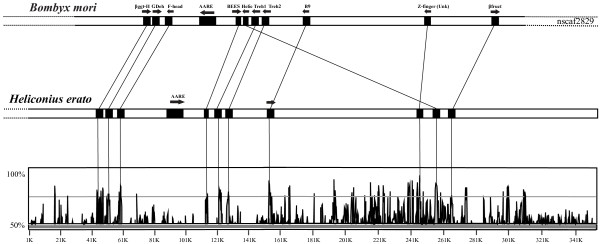
BACKGROUND: With over 20 parapatric races differing in their warningly colored wing patterns, the butterfly Heliconius erato provides a fascinating example of an adaptive radiation. Together with matching races of its co-mimic Heliconius melpomene, H. erato also represents a textbook case of Müllerian mimicry, a phenomenon where common warning signals are shared amongst noxious organisms. It is of great interest to identify the specific genes that control the mimetic wing patterns of H. erato and H. melpomene. To this end we have undertaken comparative mapping and targeted genomic sequencing in both species. This paper reports on a comparative analysis of genomic sequences linked to color pattern mimicry genes in Heliconius. RESULTS: Scoring AFLP polymorphisms in H. erato broods allowed us to survey loci at approximately 362 kb intervals across the genome. With this strategy we were able to identify markers tightly linked to two color pattern genes: D and Cr, which were then used to screen H. erato BAC libraries in order to identify clones for sequencing. Gene density across 600 kb of BAC sequences appeared relatively low, although the number of predicted open reading frames was typical for an insect. We focused analyses on the D- and Cr-linked H. erato BAC sequences and on the Yb-linked H. melpomene BAC sequence. A comparative analysis between homologous regions of H. erato (Cr-linked BAC) and H. melpomene (Yb-linked BAC) revealed high levels of sequence conservation and microsynteny between the two species. We found that repeated elements constitute 26% and 20% of BAC sequences from H. erato and H. melpomene respectively. The majority of these repetitive sequences appear to be novel, as they showed no significant similarity to any other available insect sequences. We also observed signs of fine scale conservation of gene order between Heliconius and the moth Bombyx mori, suggesting that lepidopteran genome architecture may be conserved over very long evolutionary time scales. CONCLUSION: Here we have demonstrated the tractability of progressing from a genetic linkage map to genomic sequence data in Heliconius butterflies. We have also shown that fine-scale gene order is highly conserved between distantly related Heliconius species, and also between Heliconius and B. mori. Together, these findings suggest that genome structure in macrolepidoptera might be very conserved, and show that mapping and positional cloning efforts in different lepidopteran species can be reciprocally informative.
Overview
The claims and statistics of this paper haven’t been checked yet.
Free: it reads the open-access text and checks the first 5 claims that cite a source we can check. Create a free account to check every claim.
Integrity signals
Registry
Cites
Statistics
Figures
Verification
Claims the paper makes
The claims and statistics of this paper haven’t been checked yet.
Free: it reads the open-access text and checks the first 5 claims that cite a source we can check. Create a free account to check every claim.
Claims other papers make about this one
Each is checked against this paper’s own text: does it say what the citing paper says it does?
The source backs part of the claim, not all of it — or backs it for a different population, condition or comparison.
In the citing paper
“the carbonaria region is orthologous to a major wing patterning locus controlling mimicry forms in Heliconius butterflies (Papa et al. , 2008; Joron et al. , 2011).”
From The peppered moth and industrial melanism: evolution of a natural selection case study (2013) · cites this paper as Papa et al. , 2008
Experimental — accuracy not yet measured
Self-check
Percentages, sums and reported differences re-computed from the paper’s own numbers.
The self-check needs the paper’s full text.
Citations
Cites
Basic local alignment search tool
Altschul, S. F., Gish, W., Miller, W., Myers, E. W., & Lipman, D. J. (1990) · Journal of Molecular Biology · doi:10.1006/jmbi.1990.9999 · Cited by 98,669 · cited 10×
“BLASTn was also used to search two additional databases for sequences similar to the core motifs.”
MethodInfluentialAFLP: a new technique for DNA fingerprinting
Vos, P., Hogers, R., Bleeker, M., Reijans, M., Lee, T. V. D., Hornes, M., Friters, A., Pot, J., Paleman, J., Kuiper, M., et al. (1995) · Nucleic Acids Research · doi:10.1093/nar/23.21.4407 · Cited by 12,401
R: A Language for Data Analysis and Graphics
Ihaka, R., & Gentleman, R. (1996) · Journal of Computational and Graphical Statistics · doi:10.1080/10618600.1996.10474713 · Cited by 11,220
Michelmore, R. W., Paran, I., & Kesseli, R. V. (1991) · Proceedings of the National Academy of Sciences · doi:10.1073/pnas.88.21.9828 · Cited by 4,535 · cited 1×
“modification of the "bulk segregant analysis" method [ 36 ].”
MethodR: A Language for Data Analysis and Graphics
Ihaka, R., & Gentleman, R. C. (1996) · Journal of Computational and Graphical Statistics · doi:10.2307/1390807 · Cited by 4,245
Repbase Update, a database of eukaryotic repetitive elements
Jurka, J., Kapitonov, V. V., Pavlicek, A., Klonowski, P., Kohany, O., & Walichiewicz, J. (2005) · Cytogenetic and Genome Research · doi:10.1159/000084979 · Cited by 3,370 · cited 2×
“We also searched all arthropod transposable elements available in the Repbase library of transposable elements [ 19 ].”
MethodVISTA: computational tools for comparative genomics
Frazer, K. A., Pachter, L., Poliakov, A., Rubin, E. M., & Dubchak, I. (2004) · Nucleic Acids Research · doi:10.1093/nar/gkh458 · Cited by 2,798 · cited 2×
“We used VISTA [ 21 ] to identify similarities between H. erato, H. melpomene, and B. mori genomic sequences.”
BackgroundMethodSequencing and comparison of yeast species to identify genes and regulatory elements
Kellis, M., Patterson, N., Endrizzi, M., Birren, B., & Lander, E. S. (2003) · Nature · doi:10.1038/nature01644 · Cited by 1,753 · cited 1×
“Foremost, conservation should greatly facilitate the identification of functional genes and the discovery of some regulatory elements associated with these genes [31, 32 ].”
BackgroundLAGAN and Multi-LAGAN: Efficient tools for large-scale multiple alignment of genomic DNA
Brudno, M., Do, C. B., Cooper, G. M., Kim, M. F., Davydov, E., Program, N. C. S., Green, E. D., Sidow, A., & Batzoglou, S. (2003) · Genome Research · doi:10.1101/gr.926603 · Cited by 1,115
A new DNA sequence assembly program
Bonfield, J. K., Smith, K. F., & Staden, R. (1995) · Nucleic Acids Research · doi:10.1093/nar/23.24.4992 · Cited by 973 · cited 2×
“To identify novel repetitive sequences in the BACs, we used the RepeatFinder software [42,48].”
MethodNickerson, D. (1997) · Nucleic Acids Research · doi:10.1093/nar/25.14.2745 · Cited by 931 · cited 1×
“Data were assembled using PHRAP [41] and edited in a GAP4 [42] database.”
MethodReproductive isolation caused by colour pattern mimicry
Jiggins, C. D., Naisbit, R. E., Coe, R. L., & Mallet, J. (2001) · Nature · doi:10.1038/35077075 · Cited by 714 · cited 1×
“The wing color patterns of Heliconius are adaptations that warn potential predators of the butterflies' unpalatability [3] and also play an important role in speciation [4].”
BackgroundSelf-citationEncyclopedia of molecular cell biology and molecular medicine
Meyers, R. A. (2004) · Cited by 613
Phylogenetic Shadowing of Primate Sequences to Find Functional Regions of the Human Genome
Boffelli, D., McAuliffe, J., Ovcharenko, D., Lewis, K. D., Ovcharenko, I., Pachter, L., & Rubin, E. M. (2003) · Science · doi:10.1126/science.1081331 · Cited by 516 · cited 1×
“Foremost, conservation should greatly facilitate the identification of functional genes and the discovery of some regulatory elements associated with these genes [31,32].”
BackgroundThe Biology of Heliconius and Related Genera
Brown, K. S. (1981) · Annual Review of Entomology · doi:10.1146/annurev.en.26.010181.002235 · Cited by 376 · cited 1×
“The wing color patterns of Heliconius are adaptations that warn potential predators of the butterflies' unpalatability [3] and also play an important role in speciation [4].”
BackgroundA Conserved Supergene Locus Controls Colour Pattern Diversity in Heliconius Butterflies
Joron, M., Papa, R., Beltrán, M., Chamberlain, N., Mavárez, J., Baxter, S., Abanto, M., Bermingham, E., Humphray, S. J., Rogers, J., et al. (2006) · PLoS Biology · doi:10.1371/journal.pbio.0040303 · Cited by 294 · cited 6×
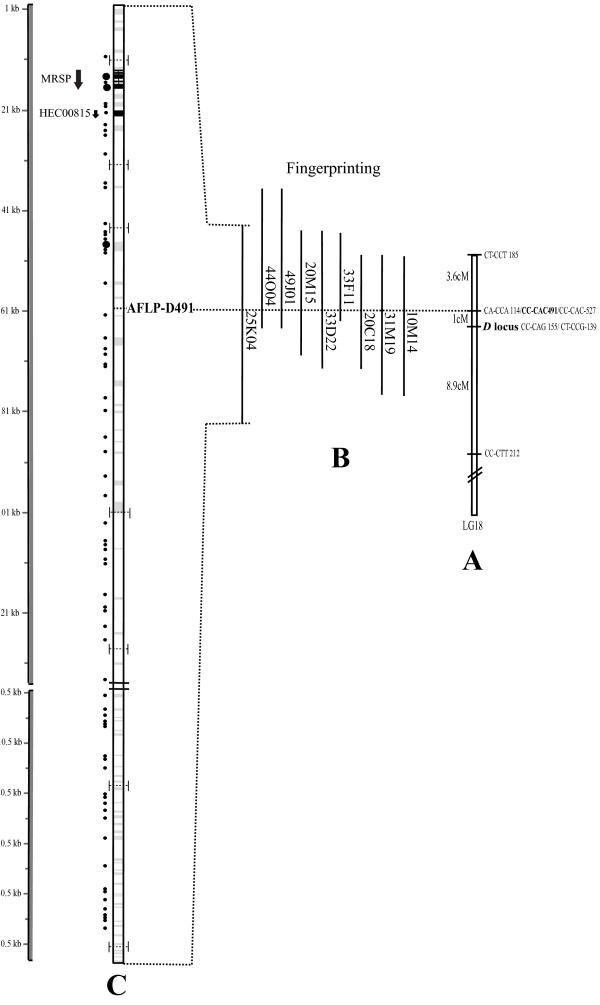
“Identification of BAC clones containing color patternlinked AFLPs We screened the H. erato BAC library with D-linked (MI_EcoCC-MseCAC-527 bp) and Cr-linked ("βggt-II" – Rab geranylgeranyl transferase beta subunit, βggt-II gene [ 15 ]) probes.”
BackgroundMethodResultInfluentialSelf-citationGenetics and the evolution of muellerian mimicry in heliconius butterflies
Sheppard, P. M., Turner, J. R. G., Brown, K. S., Benson, W. W., & Singer, M. C. (1985) · Philosophical Transactions of the Royal Society of London. B, Biological Sciences · doi:10.1098/rstb.1985.0066 · Cited by 283
Short Retroposons in Eukaryotic Genomes
KRAMEROV, D., & VASSETZKY, N. (2005) · International Review of Cytology · doi:10.1016/s0074-7696(05)47004-7 · Cited by 262 · cited 1×
“This pattern is consistent with a process of motif replication and insertion followed by mutational degradation, suggesting these novel repeat motifs likely represent some sort of transposable element such as short interspersed nuclear elements (SINEs) or miniature inverted-repeat terminal elements (MITEs) [28].”
BackgroundThe Release 5.1 Annotation of Drosophila melanogaster Heterochromatin
Smith, C. D., Shu, S., Mungall, C. J., & Karpen, G. H. (2007) · Science · doi:10.1126/science.1139815 · Cited by 185 · cited 1×
“... were more than twice as many predicted proteins of aminoacid length greater than 150 across, all but one of which showed strong homology to known proteins or to Heliconius ESTs (Table 2, Figure 2). Overall, the gene density we observed in H. erato is similar to what has been observed in the repeat-rich heterochrom…”
ResultInfluentialVan Zandt Brower, A. (1994) · Molecular Phylogenetics and Evolution · doi:10.1006/mpev.1994.1018 · Cited by 184
Beltrán, M., Jiggins, C. D., Brower, A. V. Z., Bermingham, E., & Mallet, J. (2007) · Biological Journal of the Linnean Society · doi:10.1111/j.1095-8312.2007.00830.x · Cited by 168 · cited 1×
“The two species are distantly related within the genus and never hybridize [2,6, 7 ], yet, where they co-occur, local races possess nearly identical wing patterns and have undergone parallel and congruent radiations into over 20 geographic races [5,8].”
BackgroundSelf-citationDNA loss and evolution of genome size in Drosophila
Petrov, D. A. (2002) · Genetica · doi:10.1023/a:1016076215168 · Cited by 152 · cited 1×
“It has been suggested that the insertion and replication of repetitive elements, as well as indel biases, can lead to profound differences in genome size [ 24 ,25].”
BackgroundA clustering method for repeat analysis in DNA sequences
Volfovsky, N., Haas, B. J., & Salzberg, S. L. (2001) · Genome Biology · doi:10.1186/gb-2001-2-8-research0027 · Cited by 149
Heliconius wing patterns: an evo-devo model for understanding phenotypic diversity
Joron, M., Jiggins, C. D., Papanicolaou, A., & McMillan, W. O. (2006) · Heredity · doi:10.1038/sj.hdy.6800873 · Cited by 142
Self-citationDevelopment and evolution on the wing
McMillan, W. O., Monteiro, A., & Kapan, D. D. (2002) · Trends in Ecology & Evolution · doi:10.1016/s0169-5347(01)02427-2 · Cited by 137
Self-citationA Genetic Linkage Map of the Mimetic ButterflyHeliconius melpomene
Jiggins, C. D., Mavárez, J., Beltrán, M., McMillan, W. O., Johnston, J. S., & Bermingham, E. (2004) · Genetics · doi:10.1534/genetics.104.034686 · Cited by 134
Self-citationBrugmans, B. (2003) · Nucleic Acids Research · doi:10.1093/nar/gng055 · Cited by 127
Synteny and Chromosome Evolution in the Lepidoptera: Evidence From Mapping in Heliconius melpomene
Pringle, E. G., Baxter, S. W., Webster, C. L., Papanicolaou, A., Lee, S. F., & Jiggins, C. D. (2007) · Genetics · doi:10.1534/genetics.107.073122 · Cited by 107 · cited 3×
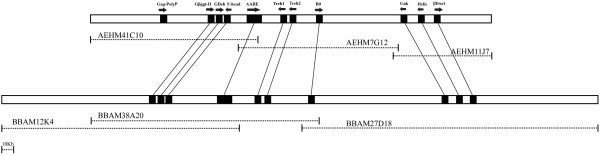
“The observed fine scale synteny within Heliconius complements a recent study showing that patterns of macrosynteny are strongly conserved across the Macrolepidoptera [11].”
BackgroundInfluentialSelf-citationThe genetics of warning colour in Peruvian hybrid zones of Heliconius erato and H. melpomene
Mallet, J. (1989) · Proceedings of the Royal Society B Biological Sciences · doi:10.1098/rspb.1989.0019 · Cited by 103 · cited 2×
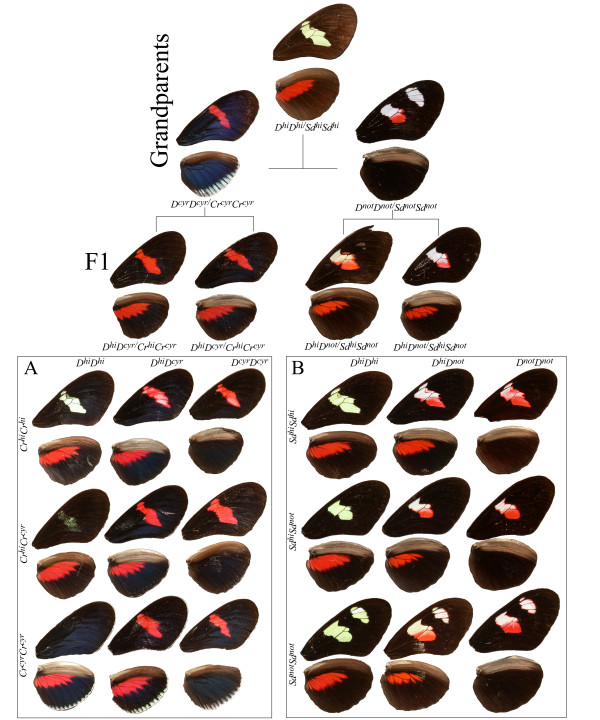
“melpomene control most of the variation in yellow and white pattern elements in different mimic races of the two species [9,10,17].”
BackgroundReed, R. D., McMillan, W. O., & Nagy, L. M. (2008) · Proceedings of the Royal Society B: Biological Sciences · doi:10.1098/rspb.2007.1115 · Cited by 102
Self-citationThe genetic basis of an adaptive radiation: warning colour in two Heliconius species
Jiggins, C. D., & McMillan, W. O. (1997) · Proceedings of the Royal Society B Biological Sciences · doi:10.1098/rspb.1997.0161 · Cited by 87 · cited 2×
“Our strategy relies on the fact that large phenotypic differences within species are caused by a handful of major effect loci [ 8 ] and that crosses can be designed that allow researchers to unambiguously follow the segregation of alleles at these loci [9,10].”
BackgroundMethodSelf-citationButterflyBase: a platform for lepidopteran genomics
Papanicolaou, A., Gebauer-Jung, S., Blaxter, M., McMillan, W. O., & Jiggins, C. D. (2007) · Nucleic Acids Research · doi:10.1093/nar/gkm853 · Cited by 84 · cited 1×
“All putative open reading frames were also compared directly to our database of Heliconius Expressed Sequence Tags (ESTs) located in ButterflyBase [45] using BLAST [46].”
MethodSelf-citationAbsence of crossing-over in female butterflies (Heliconius)
TURNER, J. R. G., & Sheppard, P. M. (1975) · Heredity · doi:10.1038/hdy.1975.29 · Cited by 80
What controls the length of noncoding DNA?
Comeron, J. M. (2001) · Current Opinion in Genetics & Development · doi:10.1016/s0959-437x(00)00249-5 · Cited by 71
Achiasmatic oogenesis in the Heliconiine butterflies
Suomalainen, E., Cook, L. M., & TURNER, J. R. G. (2009) · Hereditas · doi:10.1111/j.1601-5223.1973.tb01134.x · Cited by 69 · cited 1×
“There is no crossing over during the oogenesis in Lepidoptera [37, 38 ] and FI markers on the same chromosome are inherited as a linkage block [10].”
BackgroundLocalization of Müllerian Mimicry Genes on a Dense Linkage Map ofHeliconius erato
Kapan, D. D., Flanagan, N. S., Tobler, A., Papa, R., Reed, R. D., Acevedo‐Gonzalez, J. P., Restrepo, M. R., Martinez, L., Maldonado, K., Ritschoff, C., et al. (2006) · Genetics · doi:10.1534/genetics.106.057166 · Cited by 66 · cited 7×
“Our strategy relies on the fact that large phenotypic differences within species are caused by a handful of major effect loci [8] and that crosses can be designed that allow researchers to unambiguously follow the segregation of alleles at these loci [9,10].”
BackgroundMethodResultInfluentialSelf-citationFirst-generation linkage map of the warningly colored butterfly Heliconius erato
Tobler, A., Kapan, D. D., Flanagan, N. S., González, C., Peterson, E., Jiggins, C. D., Johntson, J. S., Heckel, D. G., & McMillan, W. O. (2004) · Heredity · doi:10.1038/sj.hdy.6800619 · Cited by 63
Self-citationPapa, R., Troggio, M., Ajmone‐Marsan, P., & Marzano, F. N. (2005) · Journal of Animal Breeding and Genetics · doi:10.1111/j.1439-0388.2004.00476.x · Cited by 60
Self-citationParallel Genetic Architecture of Parallel Adaptive Radiations in Mimetic Heliconius Butterflies
Kronforst, M. R., Kapan, D. D., & Gilbert, L. E. (2006) · Genetics · doi:10.1534/genetics.106.059527 · Cited by 55 · cited 1×
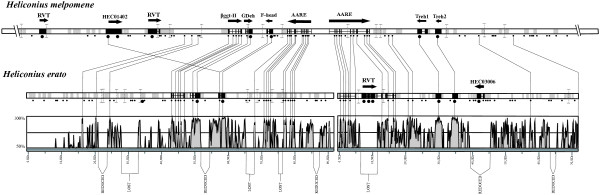
“Indeed, there were numerous conserved regions that were not simply protein coding regions (Figure 3). Even though this analysis covers only a small portion of the Heliconius genome, it confirms, for the first time, at a fine scale level what has been seen in comparative mapping projects concerning gene order conservat…”
Self-citationMoore, D. D. (1988) · Current Protocols in Molecular Biology · doi:10.1002/0471142727.mb0502s01 · Cited by 26
The genome size evolution of medaka (Oryzias latipes) and fugu (Takifugu rubripes)
Imai, S., Sasaki, T., Shimizu, A., Asakawa, S., Hori, H., & Shimizu, N. (2007) · Genes & Genetic Systems · doi:10.1266/ggs.82.135 · Cited by 20 · cited 1×
“It has been suggested that the insertion and replication of repetitive elements, as well as indel biases, can lead to profound differences in genome size [24,25].”
BackgroundGanesan, K., & Mathavan, S. (2004) · Insect Molecular Biology · doi:10.1111/j.0962-1075.2004.00483.x · Cited by 16 · cited 3×
“We have identified regions of the Heliconius genome tightly linked to genes that modulate pattern variation and, for one of these regions, we have demonstrated the fine-scale preservation of gene order between distantlyrelated Heliconius species and across Lepidoptera (Heliconius and B. mori).”
BackgroundCharacterization of the P25 silk gene and associated insertion elements in Galleria mellonella
Yang, C., Teng, X., Žurovec, M., Scheller, K., & Sehnal, F. (1998) · Gene · doi:10.1016/s0378-1119(98)00029-8 · Cited by 12 · cited 1×
“Both SINEs and MITEs have been reported from Lepidoptera [ 29 ,30].”
BackgroundLocalization of Müllerian mimicry genes on a dense linkage map of Heliconius erato
Kapan, D. D., Flanagan, N. S., Tobler, A., Reed, R. D., Acevedo Gonzalez, J., Ramirez Restrepo, M., Martinez, L., Maldonado, K., Ritschoff, C., Heckel, D. G., et al. (2006) · Max Planck Institute for Plasma Physics · Cited by 3
Self-citation
Research works printed but not linked: 2
- [18]Baxter SW Papa R Chamberlain N Humphray SJ Joron M french-Constant R McMillan WO Jiggins CD Parallel evolution in the genetic basis of Müllerian mimicry in Heliconius butterflies Genetics 2008 PMC2581958 18791259
- [44]Shimomura M Shimizu Y Sasanuma S-i Antonio BA Nagamura Y Mita K Sasaki T KAIKOGAAS: An automated annotation System for silkworm genome Genome Inform 181 2004. Out of Press.
Cited by
Chromosomal rearrangements maintain a polymorphic supergene controlling butterfly mimicry
Joron, M., Frezal, L., Jones, R. T., Chamberlain, N. L., Lee, S. F., Haag, C. R., Whibley, A., Becuwe, M., Baxter, S. W., Ferguson, L., et al. (2011) · Nature · doi:10.1038/nature10341 · Cited by 574
Self-citationNymphalid butterflies diversify following near demise at the Cretaceous/Tertiary boundary
Wahlberg, N., Leneveu, J., Kodandaramaiah, U., Peña, C., Nylin, S., Freitas, A. V. L., & Brower, A. V. Z. (2009) · Proceedings of the Royal Society B: Biological Sciences · doi:10.1098/rspb.2009.1303 · Cited by 453
optix Drives the Repeated Convergent Evolution of Butterfly Wing Pattern Mimicry
Reed, R. D., Papa, R., Martin, A., Hines, H. M., Counterman, B. A., Pardo-Diaz, C., Jiggins, C. D., Chamberlain, N. L., Kronforst, M. R., Chen, R., et al. (2011) · Science · doi:10.1126/science.1208227 · Cited by 459
Self-citationThe probability of genetic parallelism and convergence in natural populations
Conte, G. L., Arnegard, M. E., Peichel, C. L., & Schluter, D. (2012) · Proceedings of the Royal Society B: Biological Sciences · doi:10.1098/rspb.2012.2146 · Cited by 432
Diversification of complex butterfly wing patterns by repeated regulatory evolution of a Wnt ligand
Martin, A., Papa, R., Nadeau, N. J., Hill, R. I., Counterman, B. A., Halder, G., Jiggins, C. D., Kronforst, M. R., Long, A. D., McMillan, W. O., et al. (2012) · Proceedings of the National Academy of Sciences · doi:10.1073/pnas.1204800109 · Cited by 266
Self-citation
Metadata
- Authors
- Papa, R., Morrison, C. M., Walters, J. R., Counterman, B. A., Chen, R., Halder, G., Ferguson, L., Chamberlain, N., ffrench-Constant, R., Kapan, D. D., Jiggins, C. D., Reed, R. D., & McMillan, W. O.
- Affiliations
- University of Puerto Rico at Río Piedras (PR)
- Baylor College of Medicine (US)
- Cornell University (US)
- North Carolina State University (US)
- The University of Texas MD Anderson Cancer Center (US)
- University of Cambridge (GB)
- Harvard University (US)
- University of Hawaiʻi at Mānoa (US)
- University of California, Irvine (US)
- Corresponding author
- Papa, Riccardo
- ORCID
- Venue
- BMC Genomics
- Published
- 2008
- Volume
- 9
- Issue
- 1
- Pages
- 345
- ISSN
- 1471-2164 (ISSN-L)
- PMC
- PMC2515155
- OpenAlex
- W2148663544
- Semantic Scholar
- b3cb6132e0070fb74ad3d4200b6070f29546d739
- Cited by
- 50
- References
- 43
- Citations by year
- 2024: 1 · 2023: 3 · 2021: 1 · 2019: 3 · 2018: 2 · 2016: 4 · 2015: 3 · 2014: 1 · 2013: 4 · 2012: 6
- FWCI
- 4.19
- Type
- journal article
- Language
- en
- Open access
- gold
- doi.org
- Licence
- cc-by
- Locations
- BMC Genomics (publishedVersion, cc-by)
- PubMed Central (publishedVersion, cc-by)
- PubMed (publishedVersion)
- Lirias (submittedVersion, cc-by)
- Digital Access to Scholarship at Harvard (DASH) (Harvard University) (submittedVersion, cc-by)
- DOAJ (DOAJ: Directory of Open Access Journals) (submittedVersion)
- eScholarship (California Digital Library) (submittedVersion, cc-by)
- Figshare (submittedVersion, cc-by)
- Figshare (submittedVersion)
- KU ScholarWorks (The University of Kansas) (submittedVersion, other-oa)
- Open Research Exeter (University of Exeter) (submittedVersion, cc-by)
- Funders
- National Science Foundation (0208388, 0344705, 0715096)
- Microsoft
- Biotechnology and Biological Sciences Research Council (BB/E011845/1)
- Topics
- Life Sciences › Agricultural and Biological Sciences › Insect Science › Lepidoptera: Biology and Taxonomy
- Life Sciences › Biochemistry, Genetics and Molecular Biology › Genetics › Chromosomal and Genetic Variations
- Life Sciences › Biochemistry, Genetics and Molecular Biology › Genetics › Genetic Mapping and Diversity in Plants and Animals
- Keywords
- Heliconius erato, Heliconius melpomene, Müllerian mimicry, D gene, comparative mapping, microsynteny, gene order conservation, repetitive elements, Bombyx mori, adaptive radiation, AFLP markers
- MeSH terms
- Animals, Base Sequence, Butterflies, DNA, Genetic Markers, Genetic Linkage, Phenotype, Pigmentation, Repetitive Sequences, Nucleic Acid, Wings, Animal, Chromosome Walking, Conserved Sequence, Genes, Insect, Sequence Analysis, Chromosomes, Artificial, Bacterial, Gene Order, Synteny, Amplified Fragment Length Polymorphism Analysis
About these checks
Registry, retraction, Cites and statistics results are computed, not judged, with one exception: a printed reference that no index lists is read once by a model before it counts as a citation error. Claims are extracted by a model and kept only when their quote appears verbatim in the text; each cited source is then checked, with a model’s help, for whether it says what the claim relies on. Those verdicts can be wrong — read the claim’s quote and the cited source before relying on one.
Statistics and arithmetic are recomputed, not judged.
Confidence bands are shown only for fields calibrated on our annotated test set. None is calibrated yet, so no band is shown.
What counts as a claim ›How we measure confidence ›How we check this ›
Are you an author, or do you see a problem with this page? Request a review
Data sources
Bibliographic data: Semantic Scholar, OpenAlex, Crossref.
Contains information from the Semantic Scholar Academic Graph Datasets, made available under the ODC Attribution License (ODC-BY 1.0).
Semantic Scholar’s data is described in: Kinney, R., et al. (2023). The Semantic Scholar Open Data Platform. arXiv:2301.10140.
