

Persistence drives gene clustering in bacterial genomes
Open accessThe DOI matches its Crossref record; 56 of the 56 references it cites were found in a registry or an index.
Abstract
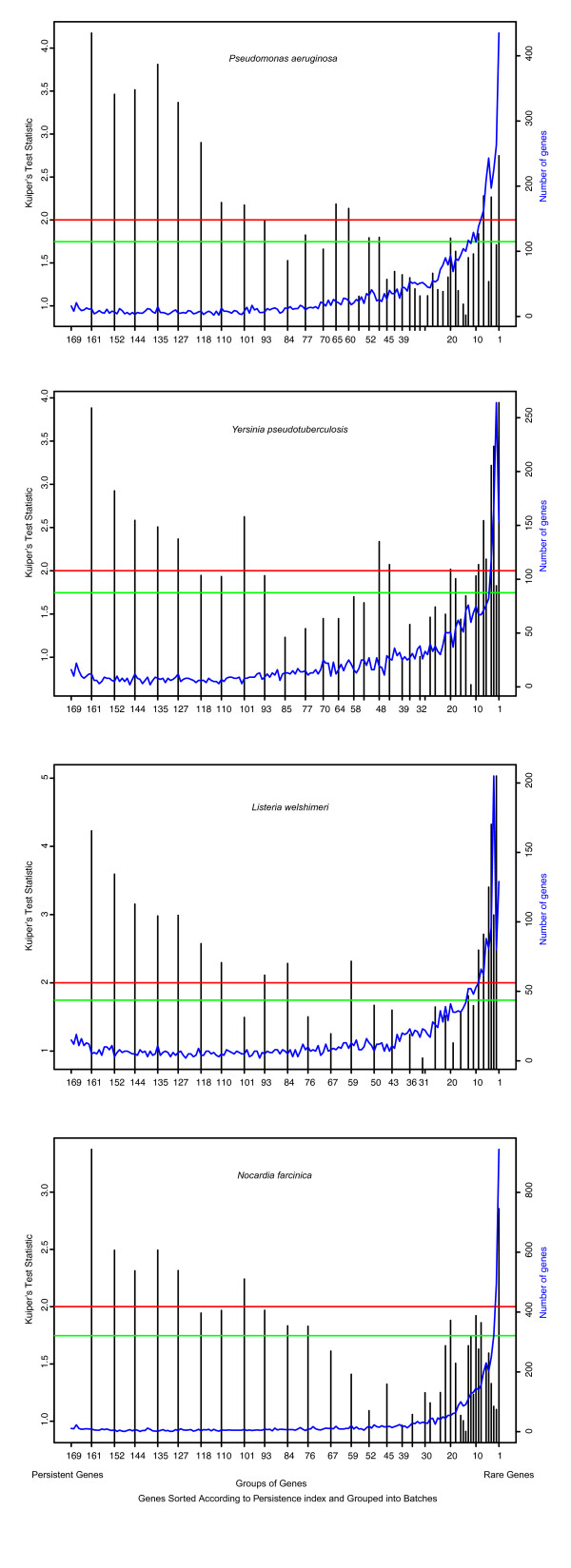
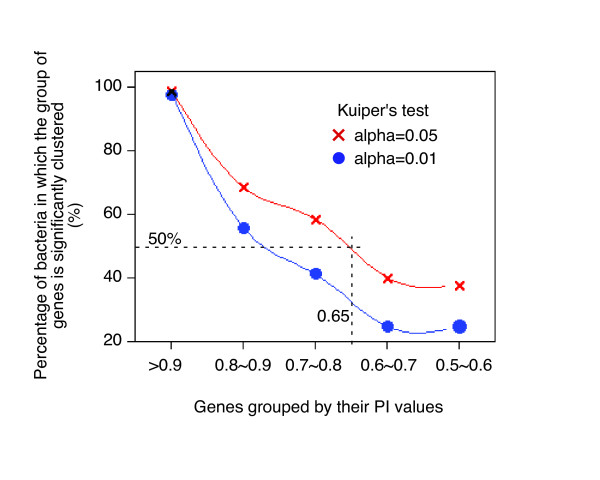
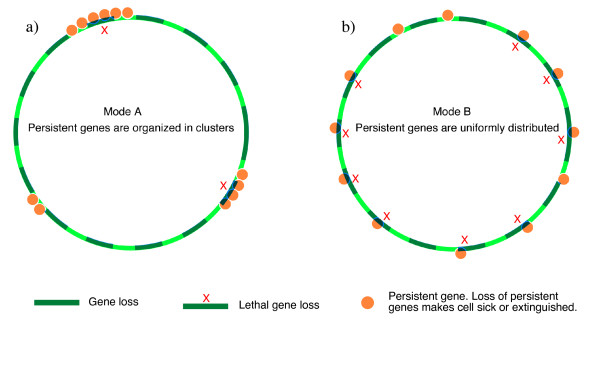
Background: Gene clustering plays an important role in the organization of the bacterial chromosome and several mechanisms have been proposed to explain its extent. However, the controversies raised about the validity of each of these mechanisms remind us that the cause of this gene organization remains an open question. Models proposed to explain clustering did not take into account the function of the gene products nor the likely presence or absence of a given gene in a genome. However, genomes harbor two very different categories of genes: those genes present in a majority of organisms – persistent genes – and those present in very few organisms – rare genes. Results: We show that two classes of genes are significantly clustered in bacterial genomes: the highly persistent and the rare genes. The clustering of rare genes is readily explained by the selfish operon theory. Yet, genes persistently present in bacterial genomes are also clustered and we try to understand why. We propose a model accounting specifically for such clustering, and show that indispensability in a genome with frequent gene deletion and insertion leads to the transient clustering of these genes. The model describes how clusters are created via the gene flux that continuously introduces new genes while deleting others. We then test if known selective processes, such as co-transcription, physical interaction or functional neighborhood, account for the stabilization of these clusters. Conclusion: We show that the strong selective pressure acting on the function of persistent genes, in a permanent state of flux of genes in bacterial genomes, maintaining their size fairly constant, that drives persistent genes clustering. A further selective stabilization process might contribute to maintaining the clustering.
Overview
The claims and statistics of this paper haven’t been checked yet.
Free: it reads the open-access text and checks the first 5 claims that cite a source we can check. Create a free account to check every claim.
Integrity signals
Registry
Cites
Statistics
Figures
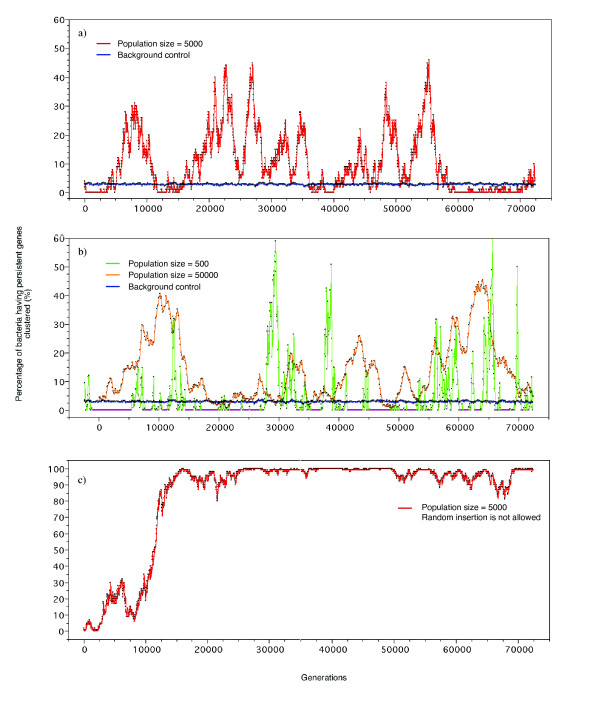
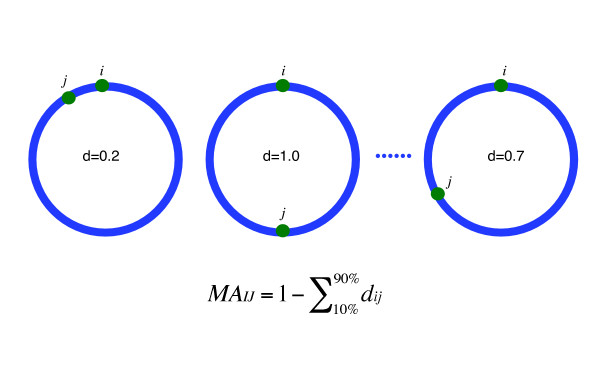
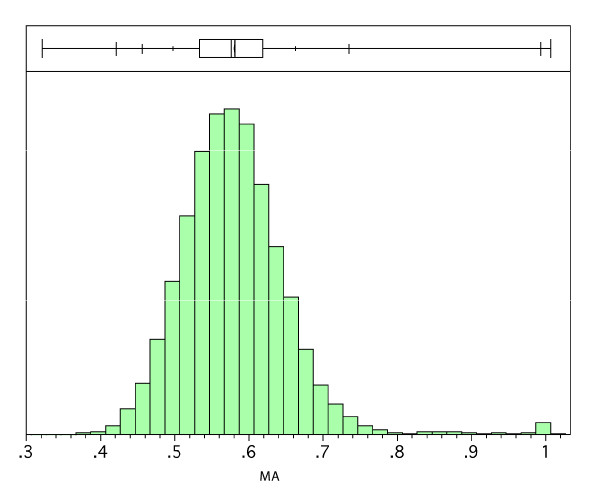
Verification
Claims the paper makes
The claims and statistics of this paper haven’t been checked yet.
Free: it reads the open-access text and checks the first 5 claims that cite a source we can check. Create a free account to check every claim.
Claims other papers make about this one
Each is checked against this paper’s own text: does it say what the citing paper says it does?
The cited source says what the claim attributes to it.
In the citing paper
“In conjunction with this, biological insight into genome locality (i.e., operonal or transcription unit structure) of related bacterial organisms can assist in clarifying the function of unknown JCVI-syn3A genes since genome architecture/gene locality is often significantly conserved in related organisms.47,48”
From Toward the Complete Functional Characterization of a Minimal Bacterial Proteome (2022) · cites this paper as [48]
Self-check
Percentages, sums and reported differences re-computed from the paper’s own numbers.
The self-check needs the paper’s full text.
Citations
Cites
Baltosser, W. H., & Zar, J. H. (1996) · Ecology · doi:10.2307/2265725 · Cited by 35,166
Genetic regulatory mechanisms in the synthesis of proteins.
Jacob, F., & Monod, J. (1961) · Journal of Molecular Biology · doi:10.1016/s0022-2836(61)80072-7 · Cited by 5,300 · cited 1×
“The role of co-transcription, which is at the core of the concept of operon [21,22], is supported by several lines of evidence [23-25].”
A Genomic Perspective on Protein Families
Tatusov, R. L., Koonin, E. V., & Lipman, D. J. (1997) · Science · doi:10.1126/science.278.5338.631 · Cited by 3,590 · cited 1×
“From each bacterium, we selected the genes with PI >=65% and grouped all the putative orthologs together using the COG method [46].”
Jammalamadaka, S. R., & SenGupta, A. (2001) · Series on Multivariate Analysis · doi:10.1142/4031 · Cited by 1,779
Assigning protein functions by comparative genome analysis: Protein phylogenetic profiles
Pellegrini, M., Marcotte, E. M., Thompson, M. J., Eisenberg, D., & Yeates, T. O. (1999) · Proceedings of the National Academy of Sciences · doi:10.1073/pnas.96.8.4285 · Cited by 1,585
Changeux, J.-P., & Danchin, A. (1976) · Nature · doi:10.1038/264705a0 · Cited by 1,448 · cited 1×
“Selective stabilization is operating at most levels of integration of biological processes [42].”
Self-citationEssential Bacillus subtilis genes
Kobayashi, K., Ehrlich, S. D., Albertini, A., Amati, G., Andersen, K. K., Arnaud, M., Asai, K., Ashikaga, S., Aymerich, S., Bessieres, P., et al. (2003) · Proceedings of the National Academy of Sciences · doi:10.1073/pnas.0730515100 · Cited by 1,328 · cited 1×
“The systematic gene inactivation programs defined gene essentiality as whether a gene's inactivation leads to a dead end or not under laboratory growth conditions [34,35].”
Self-citationThe use of gene clusters to infer functional coupling
Overbeek, R., Fonstein, M., D’Souza, M., Pusch, G. D., & Maltsev, N. (1999) · Proceedings of the National Academy of Sciences · doi:10.1073/pnas.96.6.2896 · Cited by 1,241 · cited 3×
“This clustering property has long been used to predict gene function through the annotations of its neighborhoods, with the assumption that conservation of gene proximity is coupled with their functional relevance [9-11].”
Interaction network containing conserved and essential protein complexes in Escherichia coli
Butland, G., Peregrín-Alvarez, J. M., Li, J., Yang, W., Yang, X., Canadien, V., Starostine, A., Richards, D., Beattie, B., Krogan, N., et al. (2005) · Nature · doi:10.1038/nature03239 · Cited by 1,201 · cited 1×
“A modest proportion of interacting proteins genes in E. coli are co-localized in the chromosome [40].”
Conservation of gene order: a fingerprint of proteins that physically interact
Dandekar, T. (1998) · Trends in Biochemical Sciences · doi:10.1016/s0968-0004(98)01274-2 · Cited by 1,041 · cited 3×
“…many genes correspond to complex functions requiring the simultaneous presence of several components, the need for protein complexes cooperating in a given cellular function was therefore suggested as a selective driving force for gene clustering and formation and/or maintenance of operons [23,27].”
Cited by
Items 101–106 of 106
From Minimal to Minimized Genomes: Functional Design of Microbial Cell Factories
Lubrano, P., Danchin, A., & Acevedo‐Rocha, C. G. (2019) · Springer eBooks · doi:10.1007/978-3-030-31897-0_7 · Cited by 1
Self-citationMultiple Clocks in the Evolution of Living Organisms
Danchin, A. (2018) · Grand challenges in biology and biotechnology · doi:10.1007/978-3-319-69078-0_4 · Cited by 2
Self-citationThe Cellular Chassis as the Basis for New Functionalities: Shortcomings and Requirements
Danchin, A. (2014) · Risk engineering · doi:10.1007/978-3-319-02783-8_8 · Cited by 2
Self-citationKosaka, T., & Matsutani, M. (2025) · Microbes and Environments · doi:10.1264/jsme2.me25018
“In bacteria and archaea, gene clusters related to the function of specific genes, such as subunits and matura‐ tion factors, have an operon structure (Lawrence and Roth, 1996; Fang et al. , 2008; Fondi et al. , 2024).”
LifeStyle-Specific-Islands (LiSSI): Integrated Bioinformatics Platform for Genomic Island Analysis
Barbosa, E., Röttger, R., Hauschild, A.-C., Soares, S. D. C., Böcker, S., Azevedo, V., & Baumbach, J. (2017) · Berichte aus der medizinischen Informatik und Bioinformatik/Journal of integrative bioinformatics · doi:10.1515/jib-2017-0010 · Cited by 1
A challenge to vaccinology: Living organisms trap information
Danchin, A. (2009) · Vaccine · doi:10.1016/j.vaccine.2009.10.071
“In a nutshell, bacterial genomes are split into two categories of genes, which both tend to stick together when they belong to different species [7] .”
BackgroundSelf-citation
Metadata
- Authors
- Fang, G., Rocha, E. P., & Danchin, A.
- Affiliations
- Institut Pasteur (FR)
- Corresponding author
- Danchin, Antoine
- Venue
- BMC Genomics
- Published
- 2008-01-07
- Volume
- 9
- Issue
- 1
- Pages
- 4-4
- ISSN
- 1471-2164 (ISSN-L)
- PMC
- PMC2234087
- OpenAlex
- W2065442831
- Cited by
- 112
- References
- 52
- Citations by year
- 2026: 1 · 2025: 4 · 2024: 4 · 2023: 3 · 2022: 7 · 2021: 6 · 2020: 9 · 2019: 2 · 2018: 10 · 2017: 5 · 2016: 7 · 2015: 4 · 2014: 5 · 2013: 9 · 2012: 10
- FWCI
- 3.57
- Type
- journal article
- Language
- en
- Open access
- gold
- doi.org
- Licence
- cc-by
- Locations
- BMC Genomics (publishedVersion, cc-by)
- PubMed Central (publishedVersion, cc-by)
- PubMed (publishedVersion)
- DOAJ (DOAJ: Directory of Open Access Journals) (submittedVersion)
- Funders
- European Commission
- Topics
- Life Sciences › Biochemistry, Genetics and Molecular Biology › Molecular Biology › Genomics and Phylogenetic Studies
- Life Sciences › Biochemistry, Genetics and Molecular Biology › Genetics › Bacterial Genetics and Biotechnology
- Life Sciences › Biochemistry, Genetics and Molecular Biology › Genetics › Genome Rearrangement Algorithms
- Keywords
- gene clustering, bacterial genomes, cotranscription, genome organization, selection pressure
- MeSH terms
- Algorithms, Bacteria, Chromosomes, Bacterial, DNA Replication, DNA, Bacterial, Genes, Bacterial, Multigene Family, Models, Genetic, Operon, Phylogeny, Genetic Variation, Gene Expression Regulation, Bacterial, Genome, Bacterial, Evolution, Molecular, Computational Biology, Gene Order, Databases, Genetic
About these checks
Registry, retraction, Cites and statistics results are computed, not judged, with one exception: a printed reference that no index lists is read once by a model before it counts as a citation error. Claims are extracted by a model and kept only when their quote appears verbatim in the text; each cited source is then checked, with a model’s help, for whether it says what the claim relies on. Those verdicts can be wrong — read the claim’s quote and the cited source before relying on one.
Statistics and arithmetic are recomputed, not judged.
Confidence bands are shown only for fields calibrated on our annotated test set. None is calibrated yet, so no band is shown.
What counts as a claim ›How we measure confidence ›How we check this ›
Are you an author, or do you see a problem with this page? Request a review
Data sources
Bibliographic data: Semantic Scholar, OpenAlex, Crossref.
Contains information from the Semantic Scholar Academic Graph Datasets, made available under the ODC Attribution License (ODC-BY 1.0).
Semantic Scholar’s data is described in: Kinney, R., et al. (2023). The Semantic Scholar Open Data Platform. arXiv:2301.10140.
