

Development and antimicrobial susceptibility studies of in vitro monomicrobial and polymicrobial biofilm models with Aspergillus fumigatus and Pseudomonas aeruginosa
Open accessThe DOI matches its Crossref record; 70 of the 70 references it cites were found in a registry or an index.
Abstract
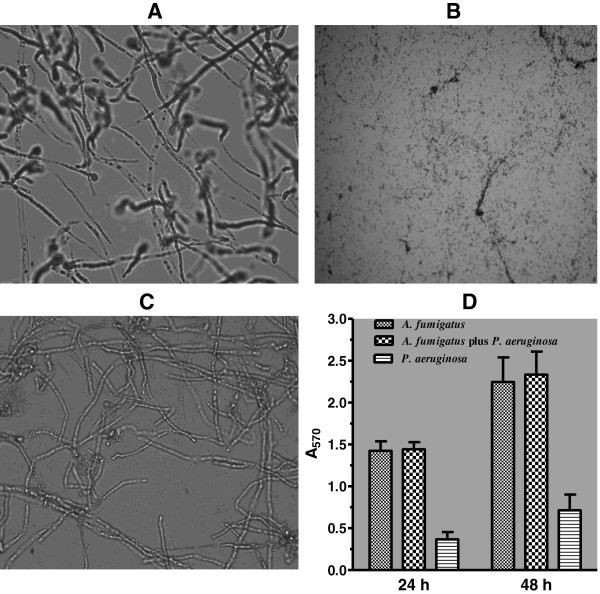
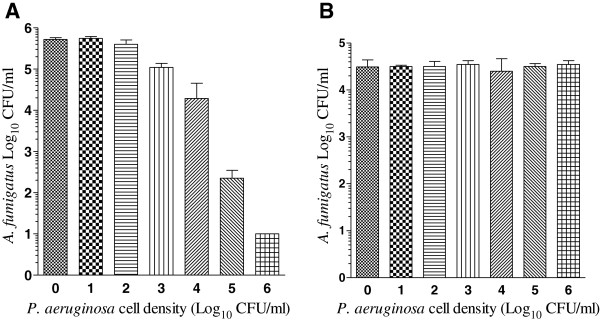
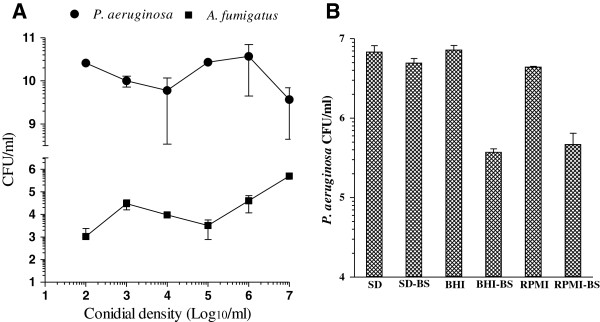
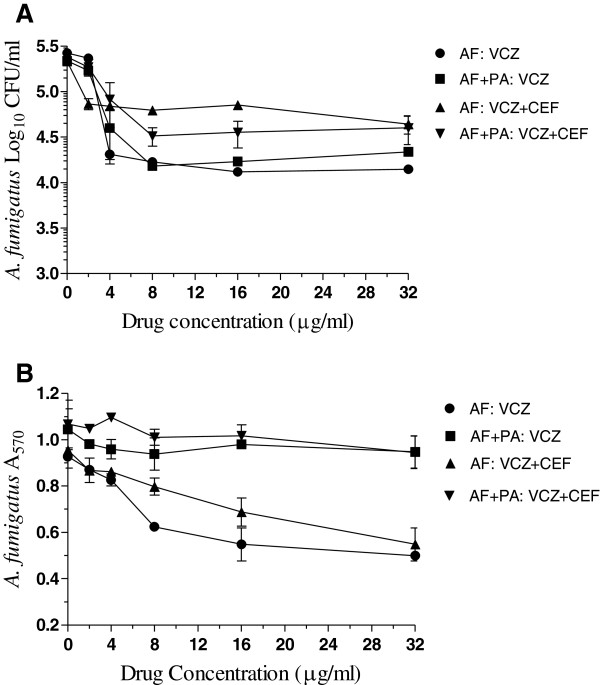
Background: Mixed microbial infections of the respiratory tracts with P. aeruginosa and A. fumigatus capable of producing biofilms are commonly found in cystic fibrosis patients. The primary objective of this study was to develop an in vitro model for P. aeruginosa and A. fumigatus polymicrobial biofilm to study the efficacy of various antimicrobial drugs alone and in combinations against biofilm-embedded cells. Simultaneous static cocultures of P. aeruginosa and sporelings were used for the development of in vitro P. aeruginosa-A. fumigatus polymicrobial biofilm in SD broth in 24-well cell culture plates at 35°C, and the biofilm formation was monitored microscopically and spectrophotometrically. Using P. aeruginosa-A. fumigatus sporelings cocultures we examined the effects of various antimicrobial drugs alone and in combination against polymicrobial biofilm by CFU and tetrazolium reduction assays. Results: In simultaneous static cocultures P. aeruginosa cells killed A. fumigatus conidia, whereas the bacterial cells showed no substantial fungicidal effect on sporelings grown for 12 h or longer at 35°C. Monospecies cultures of P. aeruginosa produced loosely adhered monomicrobial biofilm and addition of 10% bovine serum to the growth medium inhibited the formation of monomicrobial biofilm by P. aeruginosa whereas it produced tightly adhered polymicrobial biofilm in the presence of A. fumigatus mycelial growth.A. fumigatus produced firmly adherent monomicrobial and polymicrobial biofilms. A comparison of CFU and MTT assays showed that the latter is unsuitable for studying the effectiveness of antimicrobial treatment against polymicrobial biofilm. Tobramycin alone and in combination with posaconazole was highly effective against monomicrobial and polymicrobial biofilms of P. aeruginosa whereas cefepime alone and in combination with posaconazole showed excellent activity against monomicrobial biofilm of P. aeruginosa but was less effective against polymicrobial biofilm. Monomicrobial and polymicrobial biofilms of A. fumigatus showed similar susceptibility to posaconazole with and without the antibacterial drug. Conclusions: Simultaneous static coculture of A. fumigatus sporelings grown for 12 h or longer was superior to ungerminated conidia with P. aeruginosa for the development of A. fumigatus-P. aeruginosa biofilm.P. aeruginosa-A. fumigatus polymicrobial biofilm shows differential susceptibility to antimicrobial drugs whereas the susceptibility of A. fumigatus to antimicrobial drugs was unchanged.
Overview
The claims and statistics of this paper haven’t been checked yet.
Free: it reads the open-access text and checks the first 5 claims that cite a source we can check. Create a free account to check every claim.
Integrity signals
Registry
Cites
Statistics
Figures
Verification
Claims the paper makes
The claims and statistics of this paper haven’t been checked yet.
Free: it reads the open-access text and checks the first 5 claims that cite a source we can check. Create a free account to check every claim.
Claims other papers make about this one
Each is checked against this paper’s own text: does it say what the citing paper says it does?
In the citing paper
“Most studies have found that these bacterial molecules inhibit the fungal biofilm (573–576).”
From Aspergillus fumigatus and Aspergillosis in 2019 (2019) · cites this paper as [573]
Self-check
Percentages, sums and reported differences re-computed from the paper’s own numbers.
The self-check needs the paper’s full text.
Citations
Cites
Mechanisms of biofilm resistance to antimicrobial agents
Mah, T.-F. C., & O'Toole, G. A. (2001) · Trends in Microbiology · doi:10.1016/s0966-842x(00)01913-2 · Cited by 3,921 · cited 1×
“aeruginosa is a well known biofilm producer both in the laboratory and in clinical settings, especially in chronic infections [51-59].”
BackgroundAntibiotic resistance of bacterial biofilms
Høiby, N., Bjarnsholt, T., Givskov, M., Molin, S., & Ciofu, O. (2010) · International Journal of Antimicrobial Agents · doi:10.1016/j.ijantimicag.2009.12.011 · Cited by 3,225 · cited 1×
“The biofilm-embedded cells are highly resistant to antimicrobial drug therapy [37-40], difficult to eradicate and often develop chronic infection that acts as a reservoir causing serious life-threatening infection in individuals with debilitated immune function.”
BackgroundPseudomonas biofilm formation and antibiotic resistance are linked to phenotypic variation
Drenkard, E., & Ausubel, F. M. (2002) · Nature · doi:10.1038/416740a · Cited by 997 · cited 1×
“aeruginosa is a well known biofilm producer both in the laboratory and in clinical settings, especially in chronic infections [51-59].”
BackgroundAnalysis of the lung microbiome in the “healthy” smoker and in COPD.
Erb-Downward, J. R., Thompson, D. L., Han, M. K., Freeman, C. M., McCloskey, L., Schmidt, L. A., Young, V. B., Toews, G. B., Curtis, J. L., Sundaram, B., et al. (2011) · PLoS ONE · doi:10.1371/journal.pone.0016384 · Cited by 973
Biofilm bacteria: formation and comparative susceptibility to antibiotics.
Olson, M. E., Ceri, H., Morck, D. W., Buret, A. G., & Read, R. R. (2002) · Europe PMC (PubMed Central) · Cited by 918
The Changing Microbial Epidemiology in Cystic Fibrosis
LiPuma, J. J. (2010) · Clinical Microbiology Reviews · doi:10.1128/cmr.00068-09 · Cited by 806 · cited 1×
“The epidemiology and clinical significance of Aspergillus infection in cystic fibrosis patients have been recently reviewed [25-27].”
BackgroundMulcahy, L. R., Burns, J. L., Lory, S., & Lewis, K. (2010) · Journal of Bacteriology · doi:10.1128/jb.01651-09 · Cited by 631 · cited 1×
“aeruginosa is a well known biofilm producer both in the laboratory and in clinical settings, especially in chronic infections [51-59].”
BackgroundThe Lung Tissue Microbiome in Chronic Obstructive Pulmonary Disease
Sze, M. A., Dimitriu, P. A., Hayashi, S., Elliott, W. M., McDonough, J. E., Gosselink, J. V., Cooper, J., Sin, D. D., Mohn, W. W., & Hogg, J. C. (2012) · American Journal of Respiratory and Critical Care Medicine · doi:10.1164/rccm.201111-2075oc · Cited by 552 · cited 1×
“Background Polymicrobial infection caused by multiple species of microorganisms belonging to markedly different taxonomic groups is a common occurrence in severely immunocompromised patients [1-5] as well as in individuals suffering from persistent diabetic wounds [6-9], chronic pulmonary obstructive disease [10-13],…”
BackgroundOur Current Understanding of Fungal Biofilms
Ramage, G., Mowat, E., Jones, B., Williams, C., & Lopez-Ribot, J. (2009) · Critical Reviews in Microbiology · doi:10.3109/10408410903241436 · Cited by 483 · cited 1×
“antimicrobial drugs and microbiocidal agents while the individual cells of the biofilm community are highly drug susceptible in planktonic cultures [38,40,42,60,61].”
BackgroundThe lung microbiome in moderate and severe chronic obstructive pulmonary disease
Pragman, A. A., Kim, H. B., Reilly, C. S., Wendt, C., & Isaacson, R. E. (2012) · PLoS ONE · doi:10.1371/journal.pone.0047305 · Cited by 437
Research works printed but not linked: 2
- Foundation CF Patient Registry 2008: Annual Data Report to the Center Directors 2008 Bethesda, MD: Cystic Fibrosis Foundation
- Software SC SPOT Basic Software User Guide (Version 4.7) 2008, SPOT Imaging Solutions, A Division of Diagnostic Instruments, Inc Sterling Heights, MI 48314, USA
Cited by
Aspergillus fumigatus and Aspergillosis in 2019
Latgé, J.-P., & Chamilos, G. (2019) · Clinical Microbiology Reviews · doi:10.1128/cmr.00140-18 · Cited by 1,400
Fungal Biofilms and Polymicrobial Diseases
Costa-Orlandi, C., Sardi, J., Pitangui, N., De Oliveira, H., Scorzoni, L., Galeane, M., Medina-Alarcón, K., Melo, W., Marcelino, M., Braz, J., et al. (2017) · Journal of Fungi · doi:10.3390/jof3020022 · Cited by 231
“[108] when using MTT to determine the effects of antimicrobials on polymicrobial biofilms of A.”
BackgroundMethodPolymicrobial Infections and Biofilms: Clinical Significance and Eradication Strategies
Anju, V. T., Busi, S., Imchen, M., Kumavath, R., Mohan, M. S., Salim, S. A., Subhaswaraj, P., & Dyavaiah, M. (2022) · Antibiotics · doi:10.3390/antibiotics11121731 · Cited by 177
“Thus, the in vitro biofilm static model enabled studies of the effect of antibiotics and combinations thereof (cefepime, tobramycin and posaconazole) [101].”
BackgroundBiofilms: Microbial Shelters Against Antibiotics
Hathroubi, S., Mekni, M. A., Domenico, P., Nguyen, D., & Jacques, M. (2017) · Microbial Drug Resistance · doi:10.1089/mdr.2016.0087 · Cited by 167
“83 Biofilm matrices and EPS that sequester antibiotics may confer cross-species shelter.”
Bacterial Adaptation during Chronic Respiratory Infections
Cullen, L., & McClean, S. (2015) · Pathogens · doi:10.3390/pathogens4010066 · Cited by 159
“fumigatus biofilm structure alone [113].”
Biofilm Models of Polymicrobial Infection
Gabrilska, R. A., & Rumbaugh, K. P. (2015) · Future Microbiology · doi:10.2217/fmb.15.109 · Cited by 181
Zheng, H., Kim, J., Liew, M., Yan, J. K., Herrera, O., Bok, J. W., Kelleher, N. L., Keller, N. P., & Wang, Y. (2015) · Current Biology · doi:10.1016/j.cub.2014.11.018 · Cited by 96
“fumigatus, and non-fumigatus Aspergillus are often found to cocolonize the lungs of cystic fibrosis (CF) patients, the open skin wounds in burn patients, and cardiac implants [1, 2], and models to assess coculture biofilm for these two microbes have been described [5].”
BackgroundFerreira, J. A. G., Penner, J. C., Moss, R. B., Haagensen, J. A. J., Clemons, K. V., Spormann, A. M., Nazik, H., Cohen, K., Banaei, N., Carolino, E., et al. (2015) · PLOS ONE · doi:10.1371/journal.pone.0134692 · Cited by 92
“However, others have indicated Af is, in fact, killed by Pa [64].”
InfluentialReichhardt, C., Ferreira, J. A. G., Joubert, L.-M., Clemons, K. V., Stevens, D. A., & Cegelski, L. (2015) · Eukaryotic Cell · doi:10.1128/ec.00050-15 · Cited by 91
“fumigatus, recent evidence suggests that the ECM may provide the infrastructure for enhancing cell density, controlling disaggregation, and altering nutritional needs, as well as providing a protective physical and chemical barrier that can decrease sensitivity to competitors and to antifungal drugs and the immune res…”
BackgroundPenner, J. C., Ferreira, J. A. G., Secor, P. R., Sweere, J. M., Birukova, M., Joubert, L., Haagensen, J. A. J., Garcia, O. S., Malkovskiy, A. V., Kaber, G., et al. (2016) · Microbiology · doi:10.1099/mic.0.000344 · Cited by 89
“However, others have shown that Pa is lethal to Af http://mic.microbiologyresearch.org 1591 Downloaded from www.microbiologyresearch.org by IP: 54.70.40.11 On: Sun, 04 Nov 2018 02:20:07 (Manavathu et al., 2014).”
BackgroundInfluentialMultiplexed CRISPR-Cas9-Based Genome Editing of Rhodosporidium toruloides
Otoupal, P. B., Ito, M., Arkin, A. P., Magnuson, J. K., Gladden, J. M., & Skerker, J. M. (2019) · mSphere · doi:10.1128/msphere.00099-19 · Cited by 86
Gardnerella and vaginal health: the truth is out there
Rosca, A. S., Castro, J., Sousa, L. G. V., & Cerca, N. (2019) · FEMS Microbiology Reviews · doi:10.1093/femsre/fuz027 · Cited by 97
Briard, B., Mislin, G. L. A., Latgé, J.-P., & Beauvais, A. (2019) · Journal of Fungi · doi:10.3390/jof5020048 · Cited by 69
“aeruginosa biofilm extracellular matrix [30], as observed with C.”
MethodFungal biofilm formation and its regulatory mechanism
Wang, D., Zeng, N., Li, C., Li, Z., Zhang, N., & Li, B. (2024) · Heliyon · doi:10.1016/j.heliyon.2024.e32766 · Cited by 90
“Manavathu et al. showed that airways of patients infected with Pseudomonas aeruginosa and Aspergillus fumigatus isolated mixed microbial biofilms distinct from Pseudomonas aeruginosa biofilms [158].”
BackgroundCoinfection with Pseudomonas aeruginosa and Aspergillus fumigatus in cystic fibrosis
Keown, K., Reid, A. J. M., Moore, J. E., Taggart, C. C., & Downey, D. G. (2020) · European Respiratory Review · doi:10.1183/16000617.0011-2020 · Cited by 69
Reece, E., Bettio, P. H. D. A., & Renwick, J. (2021) · Antibiotics · doi:10.3390/antibiotics10070827 · Cited by 58
“aeruginosa growth, and this is largely due to the production of gliotoxin [21,134].”
BackgroundInfluentialNazir, R., Mazurier, S. I., Yang, P., Lemanceau, P., & van Elsas, J. D. (2017) · Frontiers in Microbiology · doi:10.3389/fmicb.2017.00038 · Cited by 62
“In another study, P. aeruginosa suppressed proliferation of, and killed, Aspergilus fumigatus, involving contact-mediated as well as soluble bacterial factors in hyphal killing (Manavathu et al., 2014).”
BackgroundZinc oxide nanoparticles hinder fungal biofilm development in an ancient Egyptian tomb
Gambino, M., Ahmed, M. A., Villa, F., & Cappitelli, F. (2017) · International Biodeterioration & Biodegradation · doi:10.1016/j.ibiod.2017.05.011 · Cited by 54
Pekmezovic, M. G., Aleksić, I., Barac, A. M., Arsić-Arsenijević, V. S., Vasiljević, B., Nikodinović‐Runić, J., & Šenerović, L. (2016) · Pathogens and Disease · doi:10.1093/femspd/ftw102 · Cited by 52
Biofilm formation in clinically relevant filamentous fungi: a therapeutic challenge
Roudbary, M., Vahedi‐Shahandashti, R., dos Santos, A. L. S., Mohammadi, S. R., Aslani, P., Lass‐Flörl, C., & Rodrigues, C. F. (2021) · Critical Reviews in Microbiology · doi:10.1080/1040841x.2021.1950121 · Cited by 51
Melloul, É., Luiggi, S., Anaïs, L., Arné, P., Costa, J., Fihman, V., Briard, B., Dannaoui, É., Guillot, J., Decousser, J., et al. (2016) · PLoS ONE · doi:10.1371/journal.pone.0166325 · Cited by 50
Current Approaches for Exploration of Nanoparticles as Antibacterial Agents
Karaman, D. Ş., Manner, S., Fallarero, A., & Rosenholm, J. M. (2017) · InTech eBooks · doi:10.5772/68138 · Cited by 52
“However, the amount of reductase enzyme produced by cells is dependent on metabolic activity [100, 101].”
BackgroundKaur, J., Pethani, B. P., Kumar, S. S., Kim, M. K., Sunna, A., Kautto, L., Penesyan, A., Paulsen, I. T., & Nevalainen, H. K. M. (2015) · Frontiers in Microbiology · doi:10.3389/fmicb.2015.00866 · Cited by 49
“…interactions in vitro have been performed with bacterial laboratory reference strains using either fungus-specific culture media (PDA, SABD) and/or minimal salts medium (Kerr et al., 1999; Hogan and Kolter, 2002; McAlester et al., 2008; Bandara et al., 2010; Manavathu et al., 2014).”
BackgroundMethodChatterjee, P., Sass, G., Świętnicki, W., & Stevens, D. A. (2020) · Journal of Fungi · doi:10.3390/jof6020081 · Cited by 44
Reduced bacterial adhesion on ceramics used for arthroplasty applications
Sorrentino, R., Cochis, A., Azzimonti, B., Caravaca, C., Chevalier, J., Kuntz, M., Porporati, A. A., Streicher, R., & Rimondini, L. (2017) · Journal of the European Ceramic Society · doi:10.1016/j.jeurceramsoc.2017.10.008 · Cited by 44
Peng, Y., Bi, J., Shi, J. C., Li, Y., Ye, X., Chen, X., & Yao, Z. (2014) · American Journal of Infection Control · doi:10.1016/j.ajic.2014.08.006 · Cited by 42
“Duration of hospital stay, median (range) (days) 39 (5-697) 24 (1-262) <.”
Fungal Biofilm Composition and Opportunities in Drug Discovery
Reichhardt, C., Stevens, D. A., & Cegelski, L. (2016) · Future Medicinal Chemistry · doi:10.4155/fmc-2016-0049 · Cited by 36
Joubert, L., Ferreira, J. A. G., Stevens, D. A., Nazik, H., & Cegelski, L. (2016) · Journal of Microbiological Methods · doi:10.1016/j.mimet.2016.11.002 · Cited by 33
“The extracellular matrix (ECM) includes the extracellular polymeric substances (EPS) that surround resident cells, and serves as a physical and chemical barrier to antimicrobials, competitors and immune responses (Manavathu et al., 2014; Xiao et al., 2012).”
BackgroundInteraction betweenPseudomonas aeruginosaandAspergillus fumigatusin cystic fibrosis
Zhao, J., & Yu, W. (2018) · PeerJ · doi:10.7717/peerj.5931 · Cited by 33
Reen, F. J., Phelan, J. P., Woods, D. F., Shanahan, R., Cano, R., Clarke, S., McGlacken, G. P., & O’Gara, F. (2016) · Frontiers in Microbiology · doi:10.3389/fmicb.2016.02074 · Cited by 28
“Several reasons have been proposed to explain this increased tolerance, such as biofilm specific upregulation of efflux proteins, the presence of extracellular matrices, and persister cells that are inherently drug resistant/tolerant due to their low metabolic rate (Manavathu et al., 2014).”
BackgroundGrowth of Aspergillus fumigatus in Biofilms in Comparison to Candida albicans
Subroto, E., van Neer, J., Valdes, I., & de Cock, H. (2022) · Journal of Fungi · doi:10.3390/jof8010048 · Cited by 29
Alanzi, A. R., Elhawary, E. A., Ashour, M. L., & Moussa, A. Y. (2023) · Archives of Pharmacal Research · doi:10.1007/s12272-023-01442-5 · Cited by 26
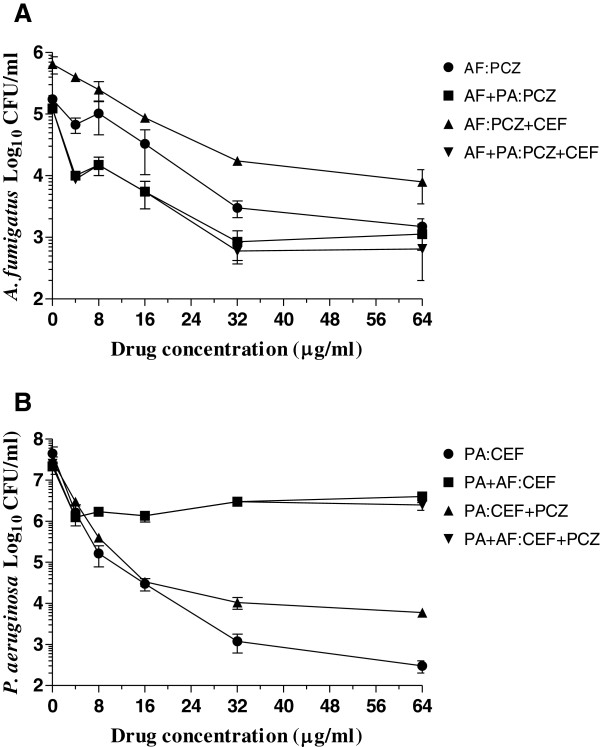
“5 logs CFU reduction at a drug concentration of 64 μg/ml) with and without the antibacterial drug (Manavathu et al. 2014).”
BackgroundNguyen, L. D. N., Deschaght, P., Merlin, S., Loywick, A., Audebert, C., daele, S. V., Viscogliosi, É., Vaneechoutte, M., & Delhaès, L. (2016) · PLoS ONE · doi:10.1371/journal.pone.0168860 · Cited by 32
Drug treatments for prosthetic joint infections in the era of multidrug resistance
Pérez‐Jorge, C., Gómez‐Barrena, E., Horcajada, J. P., Puig, L., & Esteban, J. (2016) · Expert Opinion on Pharmacotherapy · doi:10.1080/14656566.2016.1176142 · Cited by 31
Effect of acute predation with bacteriophage on intermicrobial aggression by Pseudomonas aeruginosa
Secor, P. R., Sass, G., Nazik, H., & Stevens, D. A. (2017) · PLoS ONE · doi:10.1371/journal.pone.0179659 · Cited by 25
Rosca, A. S., Castro, J., Sousa, L. G. V., França, Â., Vaneechoutte, M., & Cerca, N. (2022) · Journal of Antimicrobial Chemotherapy · doi:10.1093/jac/dkac155 · Cited by 28
Reichhardt, C., Joubert, L., Clemons, K. V., Stevens, D. A., & Cegelski, L. (2019) · Medical Mycology · doi:10.1093/mmy/myy140 · Cited by 24
Aspergillus Is Inhibited by Pseudomonas aeruginosa Volatiles
Nazik, H., Sass, G., Déziel, É., & Stevens, D. A. (2020) · Journal of Fungi · doi:10.3390/jof6030118 · Cited by 29
Gupta, L., Sen, P., Bhattacharya, A. K., & Vijayaraghavan, P. (2022) · Archives of Microbiology · doi:10.1007/s00203-022-02817-w · Cited by 24
Bacterial Interactions with Aspergillus fumigatus in the Immunocompromised Lung
Margalit, A., Carolan, J. C., & Kavanagh, K. A. (2021) · Microorganisms · doi:10.3390/microorganisms9020435 · Cited by 22
“fumigatus conidia, but not of preformed hyphae [17].”
BackgroundHoda, S., Gupta, L., Agarwal, H., Raj, G., Vermani, M., & Vijayaraghavan, P. (2019) · Journal of Pure and Applied Microbiology · doi:10.22207/jpam.13.2.61 · Cited by 26
Ye, W.-H., Yeghiasarian, L., Cutler, C. W., Bergeron, B. E., Sidow, S. J., Xu, H. H. K., Niu, L., Ma, J.-Z., & Tay, F. R. (2019) · Journal of Dentistry · doi:10.1016/j.jdent.2019.103231 · Cited by 22
Sartini, S., Permana, A. D., Mitra, S., Tareq, A. M., Salim, E., Ahmad, I., Harapan, H., Emran, T. B., & Nainu, F. (2021) · Pathogens · doi:10.3390/pathogens10020245 · Cited by 24
The Fungal and Bacterial Interface in the Respiratory Mycobiome with a Focus on Aspergillus spp.
Rozaliyani, A., Antariksa, B., Nurwidya, F., Zaini, J., Setianingrum, F., Hasan, F. N., Nugrahapraja, H., Yusva, H., Wibowo, H., Bowolaksono, A., et al. (2023) · Life · doi:10.3390/life13041017 · Cited by 22
Коzlovska, І. М., Romanjuk, N. Y., Romanjuk, L. M., Kukhtyn, M., Horiuk, Y., & Karpyk, H. (2017) · Regulatory Mechanisms in Biosystems · doi:10.15421/021789 · Cited by 28
“Це пов’язано з тим, що мікроорганізми у біоплівці в 10–100 разів стійкіші до антибактеріальних препаратів за свої планктонні форми (Hоiby et al., 2010; Fuente-Nunez et al., 2013; Manavathu et al., 2014; Kukhtyn et al., 2017).”
Microbiota and fungal-bacterial interactions in the cystic fibrosis lung
Santos-Fernandez, E., Martin–Souto, L., Antoran, A., Areitio, M., Aparicio-Fernandez, L., Bouchara, J., Schwarz, C., Rementería, A., Buldain, I., & Ramirez‐Garcia, A. (2023) · FEMS Microbiology Reviews · doi:10.1093/femsre/fuad029 · Cited by 17
Luo, J., Wang, K., Li, G. S., Lei, D. Q., Huang, Y. J., Li, W. D., Chen, Y. Q., & Kong, J. L. (2018) · Medical Science Monitor · doi:10.12659/msm.908068 · Cited by 17
“It is the most common species recovered from the respiratory tracts of cystic fibrosis patients in Europe, with a prevalence of up to 80% [4].”
BackgroundRoisin, L., Melloul, É., Woerther, P., Royer, G., Decousser, J., Guillot, J., Dannaoui, É., & Botterel, F. (2020) · Frontiers in Cellular and Infection Microbiology · doi:10.3389/fcimb.2020.574028 · Cited by 18
“To our knowledge, only (Manavathu et al., 2014; Manavathu and Vazquez, 2015) described the antimicrobial susceptibility of an in vitro filamentous fungal (A.”
BackgroundShivaji, S., Banka, N., & Ranjith, K. (2023) · Microorganisms · doi:10.3390/microorganisms11020413 · Cited by 15
Sen, P., Gupta, L., Vijay, M., Sarin, M. V., Shankar, J., Hameed, S., & Vijayaraghavan, P. (2023) · Frontiers in Cellular and Infection Microbiology · doi:10.3389/fcimb.2023.1103957 · Cited by 14
“In contrast, B19, B15, and RT28 isolates showed BEC80 of >1000 µg/mL. CLSM analysis of the untreated azole-resistant isolates and wild type ATCC 46645 showed aggregated multicellular hyphae enclosed within ECM.”
BackgroundMethodInfluentialIwahashi, J., Kamei, K., & Watanabe, H. (2020) · Journal of Infection and Chemotherapy · doi:10.1016/j.jiac.2020.03.015 · Cited by 17
Polymicrobial biofilms of ocular bacteria and fungi on ex vivo human corneas
Ranjith, K., Banka, N., & Shivaji, S. (2022) · Scientific Reports · doi:10.1038/s41598-022-15809-z · Cited by 17
Kumavath, R. (2017) · InTech eBooks · doi:10.5772/65630 · Cited by 15
Harriott, M. M. (2019) · Elsevier eBooks · doi:10.1016/b978-0-12-801238-3.62124-4 · Cited by 16
The Hyphosphere of Leaf-Cutting Ant Cultivars Is Enriched with Helper Bacteria
Martiarena, M. J. S., Deveau, A., Montoya, Q. V., Flórez, L. V., & Rodrigues, A. L. (2023) · Microbial Ecology · doi:10.1007/s00248-023-02187-w · Cited by 12
Chen, P., Sebastian, E. A., Karna, S. L. R., & Leung, K. P. (2024) · Antibiotics · doi:10.3390/antibiotics13121159 · Cited by 12
“However, the current ex vivo model could be adapted for studying biofilm-mediated wound infections by lengthening the duration of incubation after inoculation and before treatment to allow biofilm formation to occur on the skin wounds.”
Fortes, B. N., Scheunemann, G. S., Melo, A. S. D. A., & Ishida, K. (2022) · Research in Microbiology · doi:10.1016/j.resmic.2022.103993 · Cited by 13
Methods to Grow and Measure In Vitro Static Biofilms
Sung, K., Park, M., Chon, J., & Khan, S. A. (2021) · Elsevier eBooks · doi:10.1016/b978-0-12-818731-9.00167-1 · Cited by 17
Tetz, G. V., Cynamon, M. H., Hendricks, G. M., Vikina, D., & Tetz, V. (2017) · International Journal of Antimicrobial Agents · doi:10.1016/j.ijantimicag.2017.02.011 · Cited by 9
The Functional Resistance of Biofilms
Manavathu, E. K., & Vázquez, J. A. (2017) · Springer eBooks · doi:10.1007/978-3-319-46718-4_11 · Cited by 9
Self-citationDebourgogne, A., Monpierre, L., Sy, K. A., Valsecchi, I., Decousser, J., & Botterel, F. (2023) · Journal of Fungi · doi:10.3390/jof9090900 · Cited by 7
Aspergillus fumigatus branching complexity in vitro: 2D images and dynamic modeling
Rajković, K., Milošević, N. T., Otašević, S., Jeremić, S., & Arsić-Arsenijević, V. S. (2018) · Computers in Biology and Medicine · doi:10.1016/j.compbiomed.2018.11.022 · Cited by 7
Interspecies interactions alter the antibiotic sensitivity of Pseudomonas aeruginosa
Koumans, C. I. M., Tandar, S. T., Liakopoulos, A., & van Hasselt, J. G. C. (2024) · Microbiology Spectrum · doi:10.1128/spectrum.02012-24 · Cited by 8
“These examples illustrate how the PD parameters used cover the full range of the antibiotic response.”
Polymicrobial biofilms: Impact on fungal pathogenesis
Costa-Orlandi, C. B., Bila, N. M., Vaso, C. O., Pires, A. C. M. D. S., Silva, S. D. M., Medina‐Alarcón, K. P., Marcos, C. M., Fusco‐Almeida, A. M., & Mendes‐Giannini, M. J. S. (2023) · Elsevier eBooks · doi:10.1016/b978-0-323-99977-9.00040-5 · Cited by 9
Manavathu, E. K. (2015) · Journal of Microbiology & Experimentation · doi:10.15406/jmen.2015.02.00057 · Cited by 6
“We recently described an in vitro Pa/Af polymicrobial biofilm model for studying the antimicrobial drug susceptibility of this mixed microbial biofilm [40].”
BackgroundSelf-citationEuterpe Oleracea Mart. Inhibits Virulence Factors of Aspergillus Fumigatus
Borges, K. R. A., Rodrigues, I. V. P., Pereira, L. A., Silva, G. X., Filho, W. E. M., da Silva, M. A. D. S., Alves, R. D. N. S., Bezerra, C. R. F., Rosa, I. G., Brito, L. M., et al. (2019) · Future Microbiology · doi:10.2217/fmb-2019-0028 · Cited by 3
de Mello, T. P., Barcellos, I. C., Lackner, M., Branquinha, M. H., & dos Santos, A. L. S. (2023) · Journal of Fungi · doi:10.3390/jof9050502 · Cited by 3
“fumigatus conidia, but has minor effects on germinated conidia and mature biofilms [34,51].”
BackgroundFungal Biofilms: Formation, Resistance and Pathogenicity
Sardi, J. D. C. O., de Souza, N., Gullo, F. P., Fusco‐Almeida, A. M., & Mendes‐Giannini, M. J. S. (2015) · CRC Press eBooks · doi:10.1201/b18707-17 · Cited by 3
Costa, P. S. B., Oliveira, L. T., Pedroso, R. D. S., Tosta, P. O., Martins, C. H. G., Jamur, M. C., & Pires, R. H. (2019) · Diagnostic Microbiology and Infectious Disease · doi:10.1016/j.diagmicrobio.2019.114870 · Cited by 6
Huang, Y., Li, J., Liang, T., Zhao, Z., Xu, J., & Chen, W. (2023) · Antibiotics · doi:10.3390/antibiotics12091422 · Cited by 2
“Mixed microbial infections usually occur in the lungs and can lead to airway inflammation and the worsening of lung function [46,47].”
Das, D., & Panda, P. K. (2024) · BMJ Case Reports · doi:10.1136/bcr-2023-259285 · Cited by 2
Thymus vulgaris L. (Thyme): A herbal remedy against fungal infections
Kumar, D., Ansari, A., Bajpai, A. B., Rai, N., & Kumar, N. (2025) · Environment Conservation Journal · doi:10.36953/ecj.30233158 · Cited by 2
“Most pathogens live in close relationships with other pathogens and form a polymicrobial biofilm; this enhances the resistance mechanism against several classes of anti - microbial agents (Manavathu et al. , 2014).”
Ferreira, J. A. G., & Stevens, D. A. (2025) · Springer series on biofilms · doi:10.1007/978-3-031-93315-8_13 · Cited by 1
In Vitro, In Vivo, and Ex Vivo Models to Study Mixed Bacterial and Fungal Biofilms
Azevedo, A. S., Allkja, J., Kumar, S., Kumar, A., Brás, S., & Rodrigues, C. F. (2022) · Springer series on biofilms · doi:10.1007/978-3-031-15349-5_3 · Cited by 2
Super Glue Production by Dermatophytes: Review
Yassein, S. N. (2023) · International Journal of Current Science Research and Review · doi:10.47191/ijcsrr/v6-i6-09 · Cited by 1
“The inability to distinguish between each microorganism's contribution to the MTT compound decrease when mixed biofilms were assessed, This was a disadvantage of this method [29].”
MethodBIOFILM AND RELATED ANTIMICROBIAL RESISTANCE
(2021) · Webology · doi:10.29121/web/v18i2/47 · Cited by 2
Mace, M. A. M., Krummenauer, M. E., Lopes, W., & Vainstein, M. H. (2024) · Current Tropical Medicine Reports · doi:10.1007/s40475-024-00332-0 · Cited by 2
Săndulescu, O., & Săndulescu, M. (2017) · Recent clinical techniques, results, and research in wounds · doi:10.1007/15695_2017_4 · Cited by 1
Li, J., Liu, Y., Xu, T., Ma, H., Zhang, Q., & Xiong, L. (2025) · Frontiers in Cellular and Infection Microbiology · doi:10.3389/fcimb.2025.1523233
Metadata
- Authors
- Manavathu, E. K., Vager, D. L., & Vazquez, J. A.
- Affiliations
- Augusta University (US)
- Henry Ford Hospital (US)
- Venue
- BMC Microbiology
- Published
- 2014-03-03
- Volume
- 14
- Issue
- 1
- Pages
- 53-53
- ISSN
- 1471-2180 (ISSN-L)
- PMC
- PMC3973989
- OpenAlex
- W2088330635
- Cited by
- 80
- References
- 70
- Citations by year
- 2025: 3 · 2024: 5 · 2023: 11 · 2022: 7 · 2021: 7 · 2020: 5 · 2019: 9 · 2018: 4 · 2017: 11 · 2016: 9 · 2015: 7 · 2014: 2
- FWCI
- 3.96
- Type
- journal article
- Language
- en
- Open access
- gold
- doi.org
- Licence
- cc-by
- Locations
- BMC Microbiology (publishedVersion, cc-by)
- Europe PMC (PubMed Central) (publishedVersion, cc-by)
- PubMed Central (publishedVersion, cc-by)
- PubMed (publishedVersion)
- Topics
- Life Sciences › Biochemistry, Genetics and Molecular Biology › Molecular Biology › Bacterial biofilms and quorum sensing
- Health Sciences › Medicine › Infectious Diseases › Antifungal resistance and susceptibility
- Health Sciences › Medicine › Pulmonary and Respiratory Medicine › Cystic Fibrosis Research Advances
- Keywords
- Aspergillus fumigatus, Pseudomonas aeruginosa, polymicrobial biofilms, cystic fibrosis, in vitro biofilm model, antimicrobial susceptibility, posaconazole, tobramycin, cefepime, bovine serum, biofilm dispersal
- MeSH terms
- Anti-Bacterial Agents, Aspergillus fumigatus, Microbial Sensitivity Tests, Microscopy, Pseudomonas aeruginosa, Spectrophotometry, Staining and Labeling, Tetrazolium Salts, Thiazoles, Colony Count, Microbial, Biofilms, Microbial Viability
About these checks
Registry, retraction, Cites and statistics results are computed, not judged, with one exception: a printed reference that no index lists is read once by a model before it counts as a citation error. Claims are extracted by a model and kept only when their quote appears verbatim in the text; each cited source is then checked, with a model’s help, for whether it says what the claim relies on. Those verdicts can be wrong — read the claim’s quote and the cited source before relying on one.
Statistics and arithmetic are recomputed, not judged.
Confidence bands are shown only for fields calibrated on our annotated test set. None is calibrated yet, so no band is shown.
What counts as a claim ›How we measure confidence ›How we check this ›
Are you an author, or do you see a problem with this page? Request a review
Data sources
Bibliographic data: Semantic Scholar, OpenAlex, Crossref.
Contains information from the Semantic Scholar Academic Graph Datasets, made available under the ODC Attribution License (ODC-BY 1.0).
Semantic Scholar’s data is described in: Kinney, R., et al. (2023). The Semantic Scholar Open Data Platform. arXiv:2301.10140.
