

The DOI matches its Crossref record; 49 of the 49 references it cites were found in a registry or an index.
Cinnamaldehyde and cinnamaldehyde derivatives reduce virulence in Vibrio spp. by decreasing the DNA-binding activity of the quorum sensing response regulator LuxR
Open accessAbstract
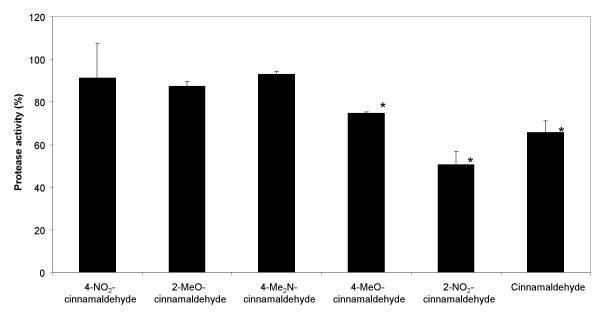
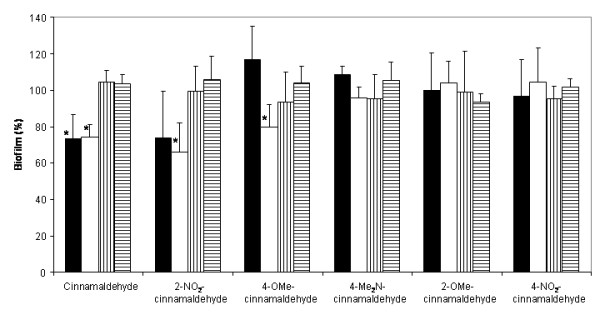
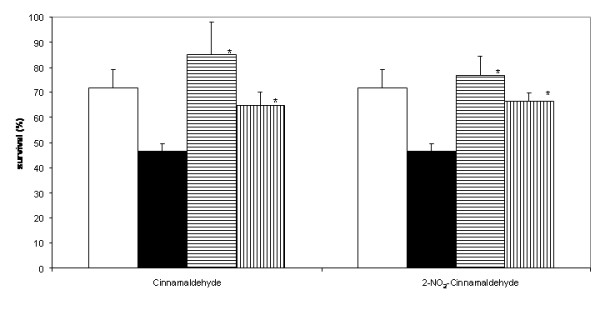
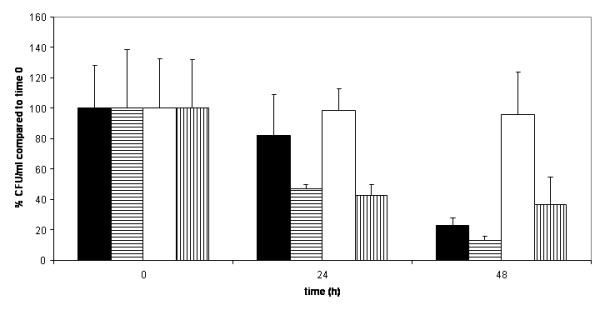
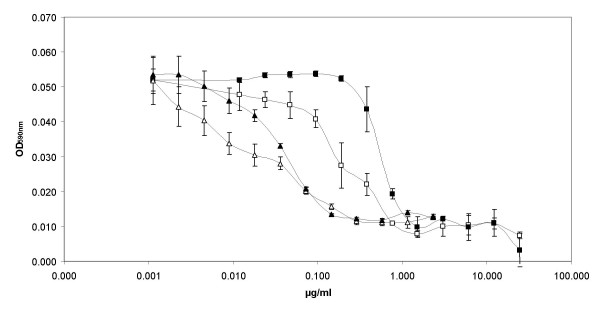
BACKGROUND: To date, only few compounds targeting the AI-2 based quorum sensing (QS) system are known. In the present study, we screened cinnamaldehyde and substituted cinnamaldehydes for their ability to interfere with AI-2 based QS. The mechanism of QS inhibition was elucidated by measuring the effect on bioluminescence in several Vibrio harveyi mutants. We also studied in vitro the ability of these compounds to interfere with biofilm formation, stress response and virulence of Vibrio spp. The compounds were also evaluated in an in vivo assay measuring the reduction of Vibrio harveyi virulence towards Artemia shrimp. RESULTS: Our results indicate that cinnamaldehyde and several substituted derivatives interfere with AI-2 based QS without inhibiting bacterial growth. The active compounds neither interfered with the bioluminescence system as such, nor with the production of AI-2. Study of the effect in various mutants suggested that the target protein is LuxR. Mobility shift assays revealed a decreased DNA-binding ability of LuxR. The compounds were further shown to (i) inhibit biofilm formation in several Vibrio spp., (ii) result in a reduced ability to survive starvation and antibiotic treatment, (iii) reduce pigment and protease production in Vibrio anguillarum and (iv) protect gnotobiotic Artemia shrimp against virulent Vibrio harveyi BB120. CONCLUSION: Cinnamaldehyde and cinnamaldehyde derivatives interfere with AI-2 based QS in various Vibrio spp. by decreasing the DNA-binding ability of LuxR. The use of these compounds resulted in several marked phenotypic changes, including reduced virulence and increased susceptibility to stress. Since inhibitors of AI-2 based quorum sensing are rare, and considering the role of AI-2 in several processes these compounds may be useful leads towards antipathogenic drugs.
Overview
The claims and statistics of this paper haven’t been checked yet.
Run the check — free, no account needed. It reads the open-access text and checks the sources it cites.
Integrity signals
Registry
Cites
Statistics
Figures
Verification
Claims the paper makes
The claims and statistics of this paper haven’t been checked yet.
Run the check — free, no account needed. It reads the open-access text and checks the sources it cites.
Claims other papers make about this one
Each is checked against this paper’s own text: does it say what the citing paper says it does?
In the citing paper
“Using the nematode model Caenorhabditis elegans, Brackman and colleagues [133,134] demonstrated the ability of 3,4-dichlorocinnamaldehyde to decrease the virulence of V. anguillarum, V. harveyi and V. vulnificus by affecting the DNA-binding ability of LuxR.”
From Effect of essential oils on pathogenic bacteria (2013) · cites this paper as [134]
Self-check
Percentages, sums and reported differences re-computed from the paper’s own numbers.
The self-check needs the paper’s full text.
Citations
Cites
Comparison of multiple methods for quantification of microbial biofilms grown in microtiter plates
Peeters, E., Nelis, H. J. C. F., & Coenye, T. (2007) · Journal of Microbiological Methods · doi:10.1016/j.mimet.2007.11.010 · Cited by 1,148
Self-citationSurette, M. G., Miller, M. B., & Bassler, B. L. (1999) · Proceedings of the National Academy of Sciences · doi:10.1073/pnas.96.4.1639 · Cited by 980
Lenz, D. H., Mok, K. C., Lilley, B. N., Kulkarni, R., Wingreen, N. S., & Bassler, B. L. (2004) · Cell · doi:10.1016/j.cell.2004.06.009 · Cited by 959
Zogaj, X., Nimtz, M., Rohde, M., Bokranz, W., & Römling, U. (2001) · Molecular Microbiology · doi:10.1046/j.1365-2958.2001.02337.x · Cited by 956
Vibrio harveyi: a significant pathogen of marine vertebrates and invertebrates
Austin, B. P., & Zhang, X.-H. (2006) · Letters in Applied Microbiology · doi:10.1111/j.1472-765x.2006.01989.x · Cited by 797
Cross-species induction of luminescence in the quorum-sensing bacterium Vibrio harveyi
Bassler, B. L., Greenberg, E. P., & Stevens, A. M. (1997) · Journal of Bacteriology · doi:10.1128/jb.179.12.4043-4045.1997 · Cited by 763
LuxS quorum sensing: more than just a numbers game
Xavier, K. B., & Bassler, B. L. (2003) · Current Opinion in Microbiology · doi:10.1016/s1369-5274(03)00028-6 · Cited by 750
Bassler, B. L., Wright, M. E., Showalter, R. E., & Silverman, M. R. (1993) · Molecular Microbiology · doi:10.1111/j.1365-2958.1993.tb01737.x · Cited by 749
Pharmacological inhibition of quorum sensing for the treatment of chronic bacterial infections
Hentzer, M., & Givskov, M. (2003) · Journal of Clinical Investigation · doi:10.1172/jci20074 · Cited by 705
Mass mortality of Penaeus monodon larvae due to antibiotic-resistant Vibrio harveyi infection
Karunasagar, I., Pai, R., Gr, M., & Karunasagar, I. (1994) · Aquaculture · doi:10.1016/0044-8486(94)90309-3 · Cited by 606
Cited by
Sorted by citations
Items 101–200 of 318
Banu, S. F., Rubini, D., Rakshitaa, S., Sekar, K. C., Murugan, R., Aruni, W., Gowrishankar, S., Pandian, S. K., & Nithyanand, P. (2017) · Frontiers in Microbiology · doi:10.3389/fmicb.2017.01144 · Cited by 57
QStatin, a Selective Inhibitor of Quorum Sensing in Vibrio Species
Kim, B. S., Jang, S. Y., Bang, Y., Hwang, J., Koo, Y., Jang, K. K., Lim, D., Kim, M. H., & Choi, S. H. (2018) · mBio · doi:10.1128/mbio.02262-17 · Cited by 57
Zhang, W., & Li, C. (2021) · Reviews in Aquaculture · doi:10.1111/raq.12555 · Cited by 55
Anti-quorum sensing activity of essential oils from Colombian plants
Jaramillo-Colorado, B. E., Olivero‐Verbel, J., Stashenko, E. E., Wagner‐Döbler, I., & Kunze, B. (2011) · Natural Product Research · doi:10.1080/14786419.2011.557376 · Cited by 53
Trans-Cinnamaldehyde Attenuates Enterococcus faecalis Virulence and Inhibits Biofilm Formation
Ali, I. A. A., Matinlinna, J. P., Levesque, C. M., & Neelakantan, P. (2021) · Antibiotics · doi:10.3390/antibiotics10060702 · Cited by 54
Inhibiting quorum sensing pathways to mitigate seawater desalination RO membrane biofouling
Katebian, L., Gomez, E., Skillman, L. C., Li, D., Ho, G., & Jiang, S. C. (2016) · Desalination · doi:10.1016/j.desal.2016.01.013 · Cited by 52
Frederix, M., Edwards, A., Świderska, A., Stanger, A., Karunakaran, R., Williams, A., Abbruscato, P., Sánchez-Contreras, M., Poole, P. S., & Downie, J. A. (2014) · Molecular Microbiology · doi:10.1111/mmi.12670 · Cited by 51
Nature to the natural rescue: Silencing microbial chats
PAUL, D. Z., Gopal, J., Kumar, M., & Manikandan, M. (2017) · Chemico-Biological Interactions · doi:10.1016/j.cbi.2017.12.018 · Cited by 51
Shafreen, R. B., Selvaraj, C., Singh, S. K., & Pandian, S. K. (2014) · Journal of Molecular Recognition · doi:10.1002/jmr.2339 · Cited by 51
Li, X., Yang, Q., Dierckens, K. R., Milton, D. L., & Defoirdt, T. (2014) · PLoS ONE · doi:10.1371/journal.pone.0111801 · Cited by 50
Self-citationSeawater Reverse Osmosis Desalination: Assessment and Pre-treatment of Fouling and Scaling
Salinas-Rodríguez, S. G., Schippers, J. C., Amy, G. L., Kim, I. S., & Kennedy, M. D. (2021) · IWA Publishing eBooks · doi:10.2166/9781780409863 · Cited by 52
Park, S., Kim, S., So, Y., Park, H. Y., Li, X., Yeom, D. H., Lee, M., Lee, B., & Lee, J. (2014) · Molecular Microbiology · doi:10.1111/mmi.12830 · Cited by 48
Ulbricht, C. E., Seamon, E., Windsor, R. C., Armbruester, N., Bryan, J. K., Costa, D., Giese, N., Gruenwald, J., Iovin, R. C., Isaac, R., et al. (2011) · Journal of Dietary Supplements · doi:10.3109/19390211.2011.627783 · Cited by 52
Latha, M. S., Priyanka, M., Rajasekar, P., Manikandan, R., & Prabhu, N. M. (2016) · Microbial Pathogenesis · doi:10.1016/j.micpath.2016.01.013 · Cited by 48
A clash of quorum sensing vs quorum sensing inhibitors: an overview and risk of resistance
Patel, R., Soni, M., Soyantar, B., Shivangi, S., Sutariya, S., Saraf, M. S., & Goswami, D. (2023) · Archives of Microbiology · doi:10.1007/s00203-023-03442-x · Cited by 47
Cyanidin inhibits quorum signalling pathway of a food borne opportunistic pathogen
Gopu, V., & Shetty, P. H. (2016) · Journal of Food Science and Technology · doi:10.1007/s13197-015-2031-9 · Cited by 47
Swain, S. S., Paidesetty, S. K., Padhy, R. N., & Hussain, T. (2022) · OpenNano · doi:10.1016/j.onano.2022.100115 · Cited by 48
Kim, J., Shin, M., Song, W., Park, S.-H., Ryu, J., Jung, J., Choi, S.-Y., Yu, Y., Kweon, J., & Lee, J. (2020) · Separation and Purification Technology · doi:10.1016/j.seppur.2020.117736 · Cited by 45
Blanchette, K. A., & Wenke, J. C. (2018) · Journal of Bone and Joint Infection · doi:10.7150/jbji.23423 · Cited by 47
Santhakumari, S., & Ravi, A. V. (2018) · South African Journal of Botany · doi:10.1016/j.sajb.2018.09.028 · Cited by 44
Wang, Y., Wang, Y., Chen, J., Koseki, S., Yang, Q. S., Yu, H., & Fu, L. (2021) · LWT · doi:10.1016/j.lwt.2021.111749 · Cited by 43
Zhang, D., Hu, H., Rao, Q., & Zhao, Z. (2011) · Foodborne Pathogens and Disease · doi:10.1089/fpd.2010.0817 · Cited by 43
Salini, R., Santhakumari, S., Ravi, A. V., & Pandian, S. K. (2018) · Aquaculture · doi:10.1016/j.aquaculture.2018.08.038 · Cited by 43
Faleye, O. S., Sathiyamoorthi, E., Lee, J., & Lee, J. (2021) · Pharmaceutics · doi:10.3390/pharmaceutics13122176 · Cited by 43
Pd-catalyzed cascade Heck–Saegusa: direct synthesis of enals from aryl iodides and allyl alcohol
Liu, J., Zhu, J., Jiang, H., Wang, W., & Li, J. (2009) · Chemical Communications · doi:10.1039/b922351g · Cited by 43
Synthesis and Spectrum of Biological Activities of Novel N-arylcinnamamides
Pospíšilová, Š., Kos, J., Michnová, H., Kapustíková, I., Strhársky, T., Oravec, M., Móricz, Á. M., Bakonyi, J., Kauerová, T., Kollár, P., et al. (2018) · International Journal of Molecular Sciences · doi:10.3390/ijms19082318 · Cited by 42
Molecular Identification of Vibrio alginolyticus Causing Vibriosis in Shrimp and Its Herbal Remedy
Hannan, A., RAHMAN, M. M., Mondal, M., CHANDRA, D. S., Chowdhury, G., & Islam, T. (2019) · Polish Journal of Microbiology · doi:10.33073/pjm-2019-042 · Cited by 42
Rajkhowa, S., Hussain, S., Agarwal, M., Zaheen, A., Al‐Hussain, S. A., & Zaki, M. E. A. (2024) · Pharmaceutics · doi:10.3390/pharmaceutics16091160 · Cited by 43
Metabolomic analysis of quorum sensing inhibitor hordenine on Pseudomonas aeruginosa
Zhou, J., Junaid, M., Bing, S., Yang, R., Wadood, A., Wang, J., & Jia, A. (2019) · Applied Microbiology and Biotechnology · doi:10.1007/s00253-019-09878-w · Cited by 41
Julyantoro, P. G. S., Scheie, A. A., Benneche, T., Wille, M., Sorgeloos, P., Bossier, P., & Defoirdt, T. (2013) · Aquaculture · doi:10.1016/j.aquaculture.2013.05.015 · Cited by 41
Self-citationUse of Essential Oils and Their Components against Multidrug-Resistant Bacteria
Faleiro, M. L., & Miguel, M. G. (2013) · Elsevier eBooks · doi:10.1016/b978-0-12-398539-2.00006-9 · Cited by 42
Onohuean, H., Agwu, E., & Nwodo, U. U. (2022) · Environmental Health Insights · doi:10.1177/11786302221099406 · Cited by 38
Qin, X., Engwer, C., Desai, S., Vila-Sanjurjo, C., & Goycoolea, F. M. (2016) · Colloids and Surfaces B Biointerfaces · doi:10.1016/j.colsurfb.2016.10.031 · Cited by 38
Betulin inhibits cariogenic properties of Streptococcus mutans by targeting vicRK and gtf genes
Viszwapriya, D., Ganapathy, A. S., Radhika, S., & Pandian, S. K. (2016) · Antonie van Leeuwenhoek · doi:10.1007/s10482-016-0785-3 · Cited by 38
Antolak, H., Czyżowska, A., & Kręgiel, D. (2016) · Journal of Food Protection · doi:10.4315/0362-028x.jfp-16-134 · Cited by 37
Phenolic Compounds with Anti-virulence Properties
Muñoz-Cázares, N., García‐Contreras, R., Pérez-López, M., & Castillo‐Juárez, I. (2017) · InTech eBooks · doi:10.5772/66367 · Cited by 37
Kim, Y., Kim, S., Cho, K., Lee, J., & Lee, J. (2022) · International Journal of Molecular Sciences · doi:10.3390/ijms23137225 · Cited by 37
Sharifian, P., Yaslianifard, S., Fallah, P., Aynesazi, S., Bakhtiyari, M., & Mohammadzadeh, M. (2020) · Infection and Drug Resistance · doi:10.2147/idr.s263387 · Cited by 36
Mukherji, R., & Prabhune, A. A. (2015) · World Journal of Microbiology and Biotechnology · doi:10.1007/s11274-015-1822-5 · Cited by 35
Banu, S. F., Rubini, D., Murugan, R., Vadivel, V., Gowrishankar, S., Pandian, S. K., & Nithyanand, P. (2018) · LWT · doi:10.1016/j.lwt.2018.04.070 · Cited by 34
Changing facades of Vibrio cholerae
Lekshmi, N., Joseph, I., Ramamurthy, T., & Thomas, S. (2018) · The Indian Journal of Medical Research · doi:10.4103/ijmr.ijmr_280_17 · Cited by 40
Current advances in Vibrio harveyi quorum sensing as drug discovery targets
Chen, J., Lu, Y., Ye, X., Emam, M., Zhang, H., & Wang, H. (2020) · European Journal of Medicinal Chemistry · doi:10.1016/j.ejmech.2020.112741 · Cited by 34
Anti-quorum sensing potential of the mangrove Rhizophora annamalayana
Musthafa, K. S., Sahu, S. K., Ravi, A. V., & Kathiresan, K. (2013) · World Journal of Microbiology and Biotechnology · doi:10.1007/s11274-013-1347-8 · Cited by 34
Defoirdt, T. (2013) · PLoS Pathogens · doi:10.1371/journal.ppat.1003603 · Cited by 33
Self-citationDispersal and inhibition of biofilms associated with infections
Yan, Z., Huang, M., Melander, C., & Kjellerup, B. V. (2019) · Journal of Applied Microbiology · doi:10.1111/jam.14491 · Cited by 33
Medicinal Plants and Phytocompounds: A Potential Source of Novel Antibiofilm Agents
Ahmad, I., Husain, F. M., Maheshwari, M., & Zahin, M. (2014) · Springer series on biofilms · doi:10.1007/978-3-642-53833-9_10 · Cited by 33
Alves, V. F., Tadielo, L. E., Pires, A. C. M. D. S., Pereira, M. G., Bersot, L. D. S., & Martinis, E. C. P. D. (2024) · Foods · doi:10.3390/foods13243994 · Cited by 34
Sellegounder, D., Vigneshwari, L., & Balamurugan, K. (2013) · Journal of Applied Microbiology · doi:10.1111/jam.12335 · Cited by 32
Karnjana, K., Nobsathian, S., Soowannayan, C., Zhao, W. M., Ya-jie Tang, A., & Wongprasert, K. (2020) · Marine Drugs · doi:10.3390/md18020080 · Cited by 31
Rossi, B., Esteban, M. Á., Beltrán, J. M. G., Giovagnoni, G., Cuesta, A., Piva, A., & Grilli, E. (2021) · Microorganisms · doi:10.3390/microorganisms9050966 · Cited by 31
Ari, M. M., Scholz, K. J., Cieplik, F., & Al‐Ahmad, A. (2025) · Frontiers in Cellular and Infection Microbiology · doi:10.3389/fcimb.2025.1533768 · Cited by 30
Making Sense of Quorum Sensing at the Intestinal Mucosal Interface
Uhlig, F., & Hyland, N. P. (2022) · Cells · doi:10.3390/cells11111734 · Cited by 30
Gupta, D., & Kumar, M. S. (2022) · Journal of Microbiological Methods · doi:10.1016/j.mimet.2022.106602 · Cited by 30
Can Infectious Biofilm be Controlled by Blocking Bacterial Communication?
Macêdo, A. J., & Abraham, W. (2009) · Medicinal Chemistry · doi:10.2174/157340609790170515 · Cited by 30
Li, J., Lu, T.-Y., Chu, Y.-F., Zhang, Y., Zhang, J., Fu, W., Sun, J. G., Liu, Y.-H., Liao, X., & Zhou, Y. (2024) · mLife · doi:10.1002/mlf2.12121 · Cited by 29
Song, X., Song, A., Zhang, F., Li, H., & Wang, W. (2011) · Nature Communications · doi:10.1038/ncomms1541 · Cited by 29
Katebian, L., Hoffmann, M. R., & Jiang, S. C. (2018) · Environmental Engineering Science · doi:10.1089/ees.2017.0129 · Cited by 29
Essential Oils and Microbial Communication
Nazzaro, F., Fratianni, F., d’Acierno, A., Coppola, R., Ayala-Zavala, J. F., da Cruz, A. G., & Feo, V. D. (2019) · IntechOpen eBooks · doi:10.5772/intechopen.85638 · Cited by 30
Gemiarto, A. T., Ninyio, N. N., Lee, S. W., Logis, J., Fatima, A., Chan, E. W. C., & Lim, C. S. Y. (2015) · Antonie van Leeuwenhoek · doi:10.1007/s10482-015-0503-6 · Cited by 29
Li, S., Zhou, S., Yang, Q., Liu, Y., Yang, Y., Xu, N., Ai, X., & Dong, J. (2023) · Fishes · doi:10.3390/fishes8030122 · Cited by 28
Guzman, J. P. M. D., Yatip, P., Soowannayan, C., & Maningas, M. B. B. (2021) · Aquaculture · doi:10.1016/j.aquaculture.2021.737452 · Cited by 27
The Antiadenovirus Activities of Cinnamaldehyde In Vitro
Liu, L., Wei, F., Qu, Z., Wang, S., Chen, G., Gao, H., Zhang, H., Shang, L., Yuan, X., & Wang, Y. (2009) · Laboratory Medicine · doi:10.1309/lmf0u47xndkbztrq · Cited by 28
Eberl, L., & Riedel, K. (2011) · PROTEOMICS · doi:10.1002/pmic.201000814 · Cited by 26
Burleigh, A. E., Benck, S. M., McAchran, S. E., Reed, J. D., Krueger, C. G., & Hopkins, W. J. (2013) · Nutrition Journal · doi:10.1186/1475-2891-12-139 · Cited by 26
Jiang, X., Kang, R., Yu, T., Jiang, X., Chen, H., Zhang, Y., Li, Y., & Wang, H. (2023) · Microbiology Spectrum · doi:10.1128/spectrum.00300-23 · Cited by 25
Singh, R. P. (2014) · MedChemComm · doi:10.1039/c4md00363b · Cited by 25
Liyanage, N. M. N., Bandusekara, B. S., Kanchanamala, R. W. M. K., Hathurusinghe, B. M., Rathnayaka, A. M. R. W. S. D., Pushpakumara, D. K. N. G., Samita, S., Wijesinghe, K. G. G., Jayasinghe, G. G., Liyanage, W. K., et al. (2020) · Journal of Food Composition and Analysis · doi:10.1016/j.jfca.2020.103747 · Cited by 25
Rajamanikandan, S., Jeyakanthan, J., & Srinivasan, P. (2016) · Journal of Biomolecular Structure and Dynamics · doi:10.1080/07391102.2016.1166455 · Cited by 24
Appraisal of Cinnamaldehyde Analogs as Dual-Acting Antibiofilm and Anthelmintic Agents
Khadke, S. K., Lee, J., Kim, Y., Raj, V., & Lee, J. (2022) · Frontiers in Microbiology · doi:10.3389/fmicb.2022.818165 · Cited by 23
Antibacterial activity of essential oils for combating colistin-resistant bacteria
Foda, A. M., Kalaba, M. H., El-Sherbiny, G. M., Moghannem, S. A. M., & El‐Fakharany, E. M. (2022) · Expert Review of Anti-infective Therapy · doi:10.1080/14787210.2022.2101997 · Cited by 23
Li, X., Bossier, P., Dierckens, K. R., Laureau, S., & Defoirdt, T. (2014) · Veterinary Microbiology · doi:10.1016/j.vetmic.2014.10.033 · Cited by 23
Self-citationXu, J., Yan, B., Du, X., Xiong, J., Zhou, M., Wang, H., & Du, Z. (2019) · Polymer Chemistry · doi:10.1039/c8py01518j · Cited by 23
Ramanathan, S., Jin, X., Lin, X., & Zhao, Z. (2025) · Reviews in Aquaculture · doi:10.1111/raq.70065 · Cited by 24
Liu, Y., Dong, P., Zhu, L., Zhang, Y., & Luo, X. (2020) · LWT · doi:10.1016/j.lwt.2020.110020 · Cited by 22
Rafey, A., Amin, A., Kamran, M., Haroon, U., Farooq, K., Foubert, K., & Pieters, L. A. C. (2021) · Antibiotics · doi:10.3390/antibiotics10121504 · Cited by 22
Quorum‐sensing interference in vibrios
Zhang, S., Yang, Q., Eggermont, M., & Defoirdt, T. (2023) · Reviews in Aquaculture · doi:10.1111/raq.12787 · Cited by 22
Self-citationHa, C., Kim, S.-K., Lee, M., & Lee, J. (2014) · Microbial Pathogenesis · doi:10.1016/j.micpath.2014.04.001 · Cited by 22
Vibrio cholerae infection, novel drug targets and phage therapy
Fazil, M. H. U. T., & Singh, D. V. (2011) · Future Microbiology · doi:10.2217/fmb.11.93 · Cited by 22
Qin, X., Kräft, T., & Goycoolea, F. M. (2018) · Colloids and Surfaces B Biointerfaces · doi:10.1016/j.colsurfb.2018.05.054 · Cited by 22
Essential oils mediated antivirulence therapy against vibriosis in Penaeus vannamei
Domínguez-Borbor, C., Sánchez‐Rodríguez, A., Sonnenholzner, S., & Rodríguez, J. A. (2020) · Aquaculture · doi:10.1016/j.aquaculture.2020.735639 · Cited by 21
Petunidin as a competitive inhibitor of acylated homoserine lactones in Klebsiella pneumoniae
Gopu, V., Meena, C. K., Murali, A., & Shetty, P. H. (2015) · RSC Advances · doi:10.1039/c5ra20677d · Cited by 21
Small-molecule inhibitor of HlyU attenuates virulence of Vibrio species
Lee, Z.-W., Kim, B. S., Jang, K. K., Bang, Y., Kim, S., Ha, N., Jung, Y. H., Lee, H. J., Han, H. J., Kim, J., et al. (2019) · Scientific Reports · doi:10.1038/s41598-019-39554-y · Cited by 21
Sela, R., Hammer, B. K., & Halpern, M. (2020) · Molecular Ecology · doi:10.1111/mec.15662 · Cited by 21
Uncommon secondary metabolites from Etlingera pavieana rhizomes
Tachai, S., & Nuntawong, N. (2016) · Natural Product Research · doi:10.1080/14786419.2016.1146884 · Cited by 21
Pandey, D. K., Chaudhary, R., Dey, A., Nandy, S., Banik, R. M., Malik, T., & Dwivedi, P. (2020) · Springer eBooks · doi:10.1007/978-981-15-1394-7_3 · Cited by 20
Extremophilic Natrinema versiforme Against Pseudomonas aeruginosa Quorum Sensing and Biofilm
Başaran, T. I., Berber, D., Gökalsın, B., Tramice, A., Tommonaro, G., Abbamondi, G. R., Erginer, M., Öner, E. T., Iodice, C., & Sesal, N. C. (2020) · Frontiers in Microbiology · doi:10.3389/fmicb.2020.00079 · Cited by 20
Activity of Essential Oils Against Multidrug-Resistant Salmonella enteritidis
Alibí, S., Ben-Selma, W., Mansour, H. B., & Navas, J. (2022) · Current Microbiology · doi:10.1007/s00284-022-02938-x · Cited by 19
Capper-Parkin, K., Nichol, T., Smith, T. J., Lacey, M. M., & Forbes, S. (2023) · Journal of Hospital Infection · doi:10.1016/j.jhin.2023.02.004 · Cited by 19
Ahn, S., Kim, E., Lee, K., & Lee, D. (2016) · International Immunopharmacology · doi:10.1016/j.intimp.2016.06.018 · Cited by 19
Impact of long-term quorum sensing inhibition on uropathogenic Escherichia coli
Henly, E. L., Norris, K., Rawson, K. M., Zoulias, N., Jaques, L. M., Chirila, P. G., Capper-Parkin, K., Kadirvel, M., Whiteoak, C. J., Lacey, M. M., et al. (2020) · Journal of Antimicrobial Chemotherapy · doi:10.1093/jac/dkaa517 · Cited by 19
Potential of polyphenols in curbing quorum sensing and biofilm formation in Gram-negative pathogens
Lal, A. F., Singh, S., Franco, F. C., & Bhatia, S. (2021) · Asian Pacific Journal of Tropical Biomedicine · doi:10.4103/2221-1691.314044 · Cited by 19
Lee, M., Kim, S.-K., Li, X., & Lee, J. (2014) · The Journal of General and Applied Microbiology · doi:10.2323/jgam.60.169 · Cited by 19
Qin, X., Vila-Sanjurjo, C., Singh, R., Philipp, B., & Goycoolea, F. M. (2020) · Pharmaceuticals · doi:10.3390/ph13090263 · Cited by 17
Regulation of anti-phage defense mechanisms by using cinnamaldehyde as a quorum sensing inhibitor
Barrio-Pujante, A., Bleriot, I., Blasco, L., Fernández-García, L., Pacios, O., Ortiz-Cartagena, C., López, M. C., Cuenca, F.-F., Oteo, J., & Tomás, M. (2024) · Frontiers in Microbiology · doi:10.3389/fmicb.2024.1416628 · Cited by 17
Kang, J., Zhang, X., Huang, Y., Zhu, Y., Liu, L., Sun, B., Qu, M., & Zhu, X. (2025) · Food Bioscience · doi:10.1016/j.fbio.2025.106314 · Cited by 16
Zhao, W., Lorenz, N., Jung, K., & Sieber, S. A. (2015) · Angewandte Chemie International Edition · doi:10.1002/anie.201508052 · Cited by 16
Newman, J. D., Chopra, J., Shah, P., Shi, E., McFadden, M. E., Horness, R. E., Brown, L. C. W., & van Kessel, J. C. (2021) · Molecular Microbiology · doi:10.1111/mmi.14804 · Cited by 16
Cinnamaldehyde for the Treatment of Microbial Infections: Evidence Obtained from Experimental Models
Figueiredo, C. S. S. E. S., de Oliveira, P. V., Ferreira, L. D. R., de Sousa, T. J. D., do Nascimento, M. D. S., dos Santos, J. R. A., Zagmignan, A., Holanda, R. A., Galvão, L. C. D. C., & da Silva, L. C. N. (2022) · Current Medicinal Chemistry · doi:10.2174/0929867329666221005105108 · Cited by 16
Heteroorganic molecules and bacterial biofilms: Controlling biodeterioration of cultural heritage
Alexander, S.-A., & Schiesser, C. H. (2016) · ARKIVOC · doi:10.3998/ark.5550190.p009.765 · Cited by 16
Islam, S. S., Zhang, S., Eggermont, M., Bruto, M., Roux, F. L., & Defoirdt, T. (2021) · Aquaculture · doi:10.1016/j.aquaculture.2021.737414 · Cited by 16
Self-citation
Metadata
- Authors
- Brackman, G., Defoirdt, T., Miyamoto, C., Bossier, P., Van Calenbergh, S., Nelis, H., & Coenye, T.
- Affiliations
- Ghent University (BE)
- McGill University (CA)
- Corresponding author
- Coenye, Tom
- Venue
- BMC Microbiology
- Published
- 2008-09-16
- Volume
- 8
- Issue
- 1
- Pages
- 149-149
- ISSN
- 1471-2180 (ISSN-L)
- PMC
- PMC2551610
- OpenAlex
- W2087415918
- Cited by
- 317
- References
- 49
- Citations by year
- 2026: 11 · 2025: 15 · 2024: 12 · 2023: 18 · 2022: 24 · 2021: 22 · 2020: 25 · 2019: 20 · 2018: 25 · 2017: 14 · 2016: 22 · 2015: 25 · 2014: 24 · 2013: 19 · 2012: 10
- FWCI
- 4.25
- Type
- journal article
- Language
- en
- Open access
- gold
- doi.org
- Licence
- cc-by
- Locations
- BMC Microbiology (publishedVersion, cc-by)
- Flanders Marine Institute (Flanders Marine Institute) (publishedVersion, other-oa)
- PubMed Central (publishedVersion, cc-by)
- PubMed (publishedVersion)
- Ghent University Academic Bibliography (Ghent University) (submittedVersion, other-oa)
- DOAJ (DOAJ: Directory of Open Access Journals) (submittedVersion, cc-by-sa)
- Funders
- Fonds Wetenschappelijk Onderzoek
- Vlaamse regering
- Topics
- Life Sciences › Biochemistry, Genetics and Molecular Biology › Molecular Biology › Bacterial biofilms and quorum sensing
- Life Sciences › Immunology and Microbiology › Microbiology › Vibrio bacteria research studies
- Life Sciences › Immunology and Microbiology › Immunology › Aquaculture disease management and microbiota
- Keywords
- cinnamaldehyde, cinnamaldehyde derivatives, quorum sensing inhibition, autoinducer-2, LuxR, Vibrio harveyi, Vibrio anguillarum, virulence reduction, biofilm formation, stress response, DNA-binding activity, bioluminescence
- MeSH terms
- Acrolein, Animals, Anti-Bacterial Agents, Artemia, DNA, Mutation, Peptide Hydrolases, Pigments, Biological, Repressor Proteins, Vibrio, Virulence, Trans-Activators, Biofilms, Luminescence, Quorum Sensing
About these checks
Registry, retraction, Cites and statistics results are computed, not judged, with one exception: a printed reference that no index lists is read once by a model before it counts as a citation error. Claims are extracted by a model and kept only when their quote appears verbatim in the text; each cited source is then checked, with a model’s help, for whether it says what the claim relies on. Those verdicts can be wrong — read the claim’s quote and the cited source before relying on one.
Statistics and arithmetic are recomputed, not judged.
Confidence bands are shown only for fields calibrated on our annotated test set. None is calibrated yet, so no band is shown.
What counts as a claim ›How we measure confidence ›How we check this ›
Are you an author, or do you see a problem with this page? Request a review
