

The DOI matches its Crossref record; 49 of the 49 references it cites were found in a registry or an index.
Cinnamaldehyde and cinnamaldehyde derivatives reduce virulence in Vibrio spp. by decreasing the DNA-binding activity of the quorum sensing response regulator LuxR
Open accessAbstract
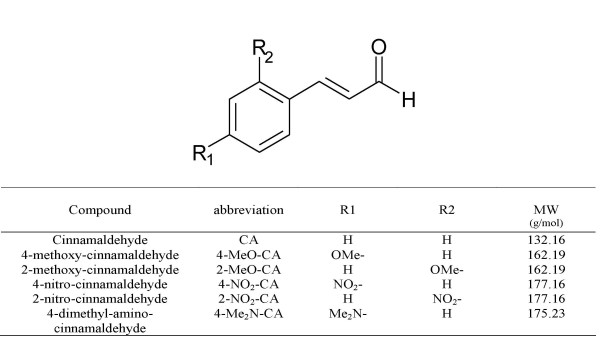
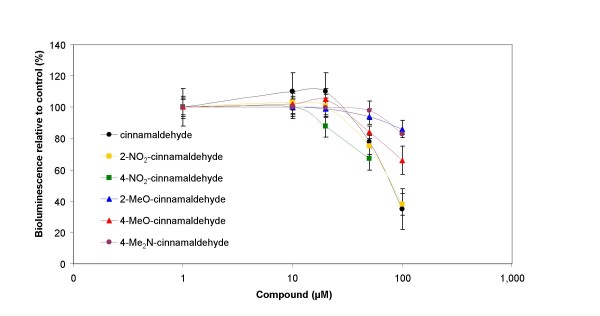
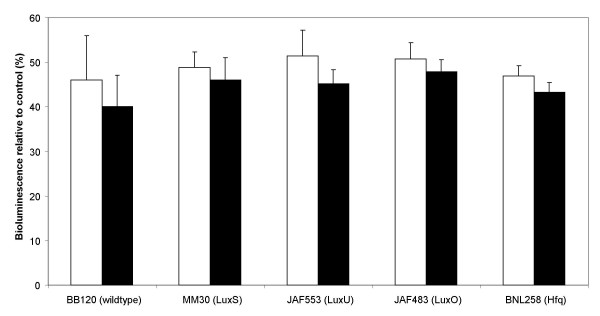
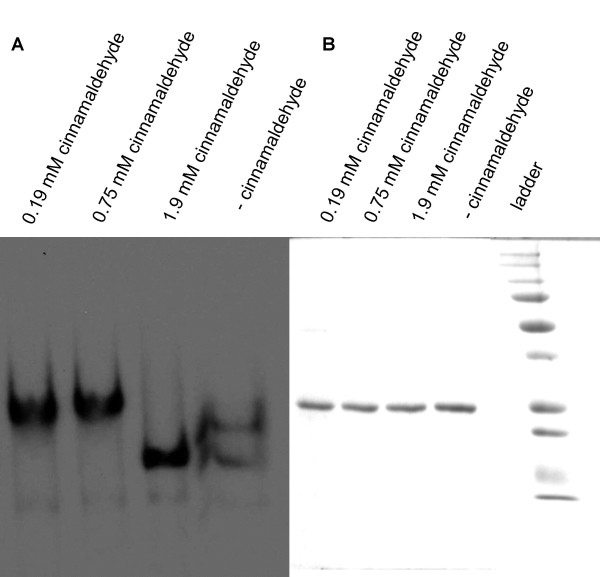
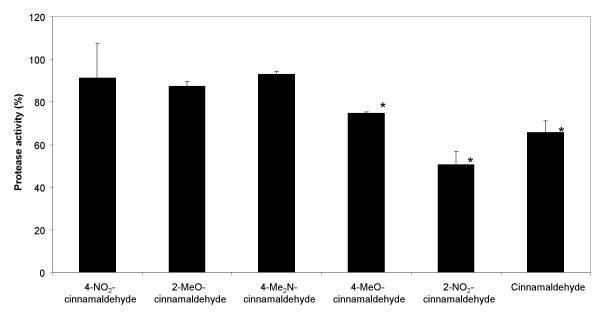
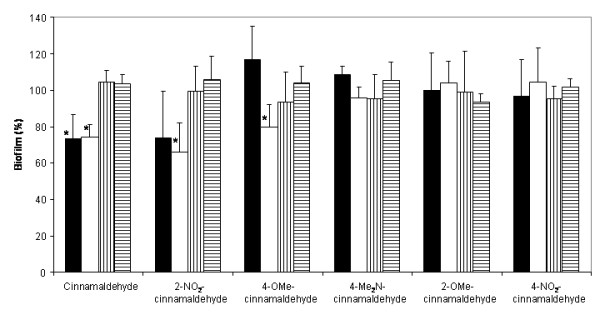
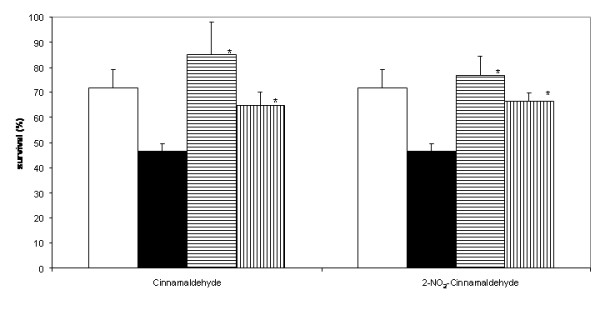
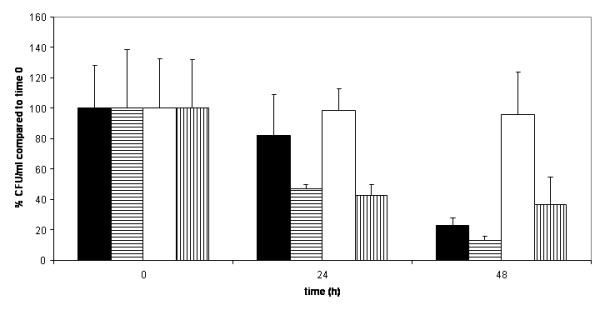
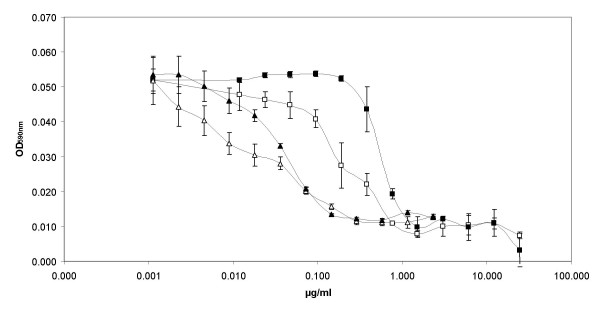
BACKGROUND: To date, only few compounds targeting the AI-2 based quorum sensing (QS) system are known. In the present study, we screened cinnamaldehyde and substituted cinnamaldehydes for their ability to interfere with AI-2 based QS. The mechanism of QS inhibition was elucidated by measuring the effect on bioluminescence in several Vibrio harveyi mutants. We also studied in vitro the ability of these compounds to interfere with biofilm formation, stress response and virulence of Vibrio spp. The compounds were also evaluated in an in vivo assay measuring the reduction of Vibrio harveyi virulence towards Artemia shrimp. RESULTS: Our results indicate that cinnamaldehyde and several substituted derivatives interfere with AI-2 based QS without inhibiting bacterial growth. The active compounds neither interfered with the bioluminescence system as such, nor with the production of AI-2. Study of the effect in various mutants suggested that the target protein is LuxR. Mobility shift assays revealed a decreased DNA-binding ability of LuxR. The compounds were further shown to (i) inhibit biofilm formation in several Vibrio spp., (ii) result in a reduced ability to survive starvation and antibiotic treatment, (iii) reduce pigment and protease production in Vibrio anguillarum and (iv) protect gnotobiotic Artemia shrimp against virulent Vibrio harveyi BB120. CONCLUSION: Cinnamaldehyde and cinnamaldehyde derivatives interfere with AI-2 based QS in various Vibrio spp. by decreasing the DNA-binding ability of LuxR. The use of these compounds resulted in several marked phenotypic changes, including reduced virulence and increased susceptibility to stress. Since inhibitors of AI-2 based quorum sensing are rare, and considering the role of AI-2 in several processes these compounds may be useful leads towards antipathogenic drugs.
Overview
The claims and statistics of this paper haven’t been checked yet.
Run the check — free, no account needed. It reads the open-access text and checks the sources it cites.
Integrity signals
Registry
Cites
Statistics
Figures
Verification
Claims the paper makes
The claims and statistics of this paper haven’t been checked yet.
Run the check — free, no account needed. It reads the open-access text and checks the sources it cites.
Claims other papers make about this one
Each is checked against this paper’s own text: does it say what the citing paper says it does?
In the citing paper
“Using the nematode model Caenorhabditis elegans, Brackman and colleagues [133,134] demonstrated the ability of 3,4-dichlorocinnamaldehyde to decrease the virulence of V. anguillarum, V. harveyi and V. vulnificus by affecting the DNA-binding ability of LuxR.”
From Effect of essential oils on pathogenic bacteria (2013) · cites this paper as [134]
Self-check
Percentages, sums and reported differences re-computed from the paper’s own numbers.
The self-check needs the paper’s full text.
Citations
Cites
Comparison of multiple methods for quantification of microbial biofilms grown in microtiter plates
Peeters, E., Nelis, H. J. C. F., & Coenye, T. (2007) · Journal of Microbiological Methods · doi:10.1016/j.mimet.2007.11.010 · Cited by 1,148
Self-citationSurette, M. G., Miller, M. B., & Bassler, B. L. (1999) · Proceedings of the National Academy of Sciences · doi:10.1073/pnas.96.4.1639 · Cited by 980
Lenz, D. H., Mok, K. C., Lilley, B. N., Kulkarni, R., Wingreen, N. S., & Bassler, B. L. (2004) · Cell · doi:10.1016/j.cell.2004.06.009 · Cited by 959
Zogaj, X., Nimtz, M., Rohde, M., Bokranz, W., & Römling, U. (2001) · Molecular Microbiology · doi:10.1046/j.1365-2958.2001.02337.x · Cited by 956
Vibrio harveyi: a significant pathogen of marine vertebrates and invertebrates
Austin, B. P., & Zhang, X.-H. (2006) · Letters in Applied Microbiology · doi:10.1111/j.1472-765x.2006.01989.x · Cited by 797
Cross-species induction of luminescence in the quorum-sensing bacterium Vibrio harveyi
Bassler, B. L., Greenberg, E. P., & Stevens, A. M. (1997) · Journal of Bacteriology · doi:10.1128/jb.179.12.4043-4045.1997 · Cited by 763
LuxS quorum sensing: more than just a numbers game
Xavier, K. B., & Bassler, B. L. (2003) · Current Opinion in Microbiology · doi:10.1016/s1369-5274(03)00028-6 · Cited by 750
Bassler, B. L., Wright, M. E., Showalter, R. E., & Silverman, M. R. (1993) · Molecular Microbiology · doi:10.1111/j.1365-2958.1993.tb01737.x · Cited by 749
Pharmacological inhibition of quorum sensing for the treatment of chronic bacterial infections
Hentzer, M., & Givskov, M. (2003) · Journal of Clinical Investigation · doi:10.1172/jci20074 · Cited by 705
Mass mortality of Penaeus monodon larvae due to antibiotic-resistant Vibrio harveyi infection
Karunasagar, I., Pai, R., Gr, M., & Karunasagar, I. (1994) · Aquaculture · doi:10.1016/0044-8486(94)90309-3 · Cited by 606
Cited by
Sorted by citations
Items 201–300 of 318
Non-Microbicidal Control of Bacterial Biofilms with Small Molecules
Worthington, R. J., Richards, J. J., & Melander, C. (2014) · Anti-Infective Agents · doi:10.2174/22113525113119990107 · Cited by 15
Carette, J., Nachtergael, A., Duez, P., Jaziri, M. E., & Rasamiravaka, T. (2020) · IntechOpen eBooks · doi:10.5772/intechopen.90833 · Cited by 15
Natural Phenolics Disrupt Microbial Communication by Inhibiting Quorum Sensing
Helcman, M., Šmejkal, K., Čulenová, M., Béreš, T., & Treml, J. (2025) · Microorganisms · doi:10.3390/microorganisms13020287 · Cited by 14
Syahputra, G., Gustini, N., Bustanussalam, B., Hapsari, Y., Sari, M., Ardiansyah, A., Bayu, A., & Putra, M. Y. (2021) · Pharmacia · doi:10.3897/pharmacia.68.e68432 · Cited by 14
Microbial management for bacterial pathogen control in invertebrate aquaculture hatcheries
Goulden, E. F., Høj, L., & Hall, M. R. (2013) · Elsevier eBooks · doi:10.1533/9780857097460.1.246 · Cited by 14
Newman, J. D., Russell, M. M., Fan, L., Wang, Y., González-Gutiérrez, G., & van Kessel, J. C. (2021) · Nucleic Acids Research · doi:10.1093/nar/gkab387 · Cited by 13
Musthafa, K. S., Shunmugiah, K. P., & Arumugam, V. R. (2011) · Annals of Microbiology · doi:10.1007/s13213-011-0262-1 · Cited by 12
Hoa, T. T. T., Fagnon, M. S., Thy, Đ. T. M., Chabrillat, T., Nguyen, B. T., & Kerros, S. (2023) · Animals · doi:10.3390/ani13213320 · Cited by 11
Abrar, A., Zafar, A., Fatima, M., Muntaqua, D., Naz, I., Fatima, H., & Haq, I. U. (2023) · Saudi Pharmaceutical Journal · doi:10.1016/j.jsps.2023.101893 · Cited by 11
Sun, J., Gao, X., Jiang, Q., Du, X., Bi, K., Zhang, X., & Lin, L. (2016) · FEMS Microbiology Letters · doi:10.1093/femsle/fnw250 · Cited by 11
Angusamy, A., Balasubramanian, V., Arunmurugan, B., Arunachalam, K., Issac Abraham, S. V. P., Murugesan, S., Krishnasamy, B., Sundaram, J., & Arumugam, V. R. (2023) · World Journal of Microbiology and Biotechnology · doi:10.1007/s11274-023-03578-4 · Cited by 10
Quorum Sensing and Quorum Sensing Inhibitors of Natural Origin
Naga, N. G., & Shaaban, M. I. (2023) · Springer eBooks · doi:10.1007/978-3-031-35205-8_13 · Cited by 10
Danzi, D., Thomas, M., Cremonesi, S., Sadeghian, F., Staniscia, G., Andreolli, M., Bovi, M., Polverari, A., Tosi, L., Bonaconsa, M., et al. (2025) · Chemical and Biological Technologies in Agriculture · doi:10.1186/s40538-025-00743-9 · Cited by 10
Guzman, J. P. M. D., Yatip, P., Soowannayan, C., & Maningas, M. B. B. (2022) · Aquaculture Research · doi:10.1111/are.15995 · Cited by 10
Bové, M., Kolpen, M., Lichtenberg, M., Bjarnsholt, T., & Coenye, T. (2023) · Microbiology · doi:10.1099/mic.0.001278 · Cited by 10
Self-citationPhytochemicals in biofilm inhibition
Khanashyam, A. C., Shanker, M. A., Thomas, P. E., Babu, K. S., & Nirmal, N. P. (2023) · Elsevier eBooks · doi:10.1016/b978-0-443-19143-5.00018-9 · Cited by 10
High-Throughput, Quantitative Screening of Quorum-Sensing Inhibitors Based on a Bacterial Biosensor
Zhang, J., Guo, C., Xuan, C.-G., Gu, J., Cui, Z., Zhang, J., Zhang, L., Jiang, W., & Zhang, L. (2023) · ACS Chemical Biology · doi:10.1021/acschembio.3c00537 · Cited by 10
Paswan, U., Basak, H. K., Saha, S., & Chatterjee, A. (2024) · ChemistrySelect · doi:10.1002/slct.202402317 · Cited by 10
Mai, T., Toullec, J., Wynsberge, S. V., Besson, M., Soulet, S., Petek, S., Aliotti, E., Ekins, M., Hall, K., Erpenbeck, D., et al. (2019) · Fisheries and aquatic sciences · doi:10.1186/s41240-019-0145-0 · Cited by 10
Natural Approaches for Controlling Urinary Tract Infections
Amalaradjou, M. A. R., & Venkitanaray, K. (2011) · InTech eBooks · doi:10.5772/25079 · Cited by 10
Myszka, K., SCHMIDT, M. T., Olejnik‐Schmidt, A., Leja, K., & Czaczyk, K. (2014) · Journal of Bioscience and Bioengineering · doi:10.1016/j.jbiosc.2014.05.029 · Cited by 9
Vila-Sanjurjo, C., Engwer, C., Qin, X., Hembach, L., Verdía-Cotelo, T., Remuñán‐López, C., Vila‐Sanjurjo, A., & Goycoolea, F. M. (2016) · bioRxiv (Cold Spring Harbor Laboratory) · doi:10.1101/074369 · Cited by 9
Phytochemicals as Antibacterial Agents: Current Status and Future Perspective
Nag, S., Singh, N., & Kumaria, S. (2022) · Springer eBooks · doi:10.1007/978-981-19-1854-4_2 · Cited by 8
Christodoulou, M. S., Villa, F., Pinto, A., & Cappitelli, F. (2022) · Antioxidants · doi:10.3390/antiox11122451 · Cited by 8
Biofilm Inhibition by Nanoparticles
Bakkiyaraj, D., & Pandian, S. K. (2014) · Springer series on biofilms · doi:10.1007/978-3-642-53833-9_17 · Cited by 9
Gupta, K., Daroch, P., Harjai, K., & Chhibber, S. (2019) · Microbiology · doi:10.1099/mic.0.000826 · Cited by 8
Quorum Quenching for Sustainable Environment: Biology, Mechanisms, and Applications
Maddela, N. R., Cruzatty, L. G., ALVARADO, D. A. L., Olaya, J. R. C., Chakraborty, S., & Mukherjee, A. (2020) · Microorganisms for sustainability · doi:10.1007/978-981-15-2679-4_4 · Cited by 8
Caigoy, J. C., Xedzro, C., Kusalaruk, W., & Nakano, H. (2022) · FEMS Microbiology Letters · doi:10.1093/femsle/fnac076 · Cited by 7
Sharma, A., Ference, C. M., Shantharaj, D., Baldwin, E. A., Manthey, J. A., & Jones, J. B. (2021) · European Journal of Plant Pathology · doi:10.1007/s10658-021-02394-6 · Cited by 7
Chenia, H. Y. (2015) · African Journal of Traditional Complementary and Alternative Medicines · doi:10.21010/ajtcam.v12i3.7 · Cited by 7
Zhao, W., Lorenz, N., Jung, K., & Sieber, S. A. (2015) · Angewandte Chemie · doi:10.1002/ange.201508052 · Cited by 7
Sasikala, D., Jeyakanthan, J., & Srinivasan, P. (2016) · Journal of Molecular Structure · doi:10.1016/j.molstruc.2016.07.118 · Cited by 7
Plant Quorum Sensing Inhibitors: Food, Medicinal Plants, and Others
Viswanathan, P., Rathinam, P., & Suneeva, S. C. (2014) · Springer eBooks · doi:10.1007/978-81-322-1982-8_22 · Cited by 7
Anti‐infective Agents: The Example of Antibacterial Drug Leads
de Macedo, M. B., Clais, S., Lanckacker, E. A., Maes, L. J. R. M., Lima, É. S., & Cos, P. (2015) · Wiley eBooks · doi:10.1002/9781118930717.ch11 · Cited by 7
Improvement of chlorination and sterilization of pathogenic bacteria by natural products
Guo, J., Wang, B., Qiu, X., Ren, S., & Wang, Y. (2023) · Journal of Hazardous Materials Advances · doi:10.1016/j.hazadv.2023.100318 · Cited by 6
Potential of Phytomolecules in Countering Biofilm Formation and Quorum Sensing
De, A., Sarkar, A., Mukherjee, S., Das, A., Banerjee, T., Paul, P., Bhowmik, R., Karmakar, S., & Ghosh, N. (2025) · Current Indian Science · doi:10.2174/012210299x355078241230061234 · Cited by 6
Saranya, M., Ryu, B., Jose, S., Silpa, B., Ameer, A., Naman, C. B., Glukhov, E., Sajeevan, T. P., Singh, I. S. B., Gerwick, W. H., et al. (2025) · World Journal of Microbiology and Biotechnology · doi:10.1007/s11274-025-04378-8 · Cited by 6
Vibrio Dynamics and Health Status of Pacific White Shrimp Fed with Cinnamaldehyde-Containing Feed
Ramadhani, D. E., Hendriana, A., Wahjuningrum, D., & Mulya, M. A. (2022) · Jurnal Ilmiah Perikanan dan Kelautan · doi:10.20473/jipk.v14i2.34394 · Cited by 6
Qaralleh, H. (2023) · Journal of pharmacopuncture · doi:10.3831/kpi.2023.26.4.307 · Cited by 6
Zhang, D., Dong, Q., & Ross, T. (2017) · Journal of Food Quality · doi:10.1155/2017/5767925 · Cited by 6
Menanteau‐Ledouble, S., van Sorgen, F., Gonçalves, R. A., & El‐Matbouli, M. (2018) · Fish & Shellfish Immunology · doi:10.1016/j.fsi.2018.11.019 · Cited by 6
Approaches Towards Microbial Biofilm Disruption by Natural Bioactive Agents
Sharma, R., Bajpai, P., Sayyed, U., & Ahmad, I. Z. (2019) · Springer eBooks · doi:10.1007/978-3-030-30757-8_15 · Cited by 6
Zhang, X., Hu, L., Liu, H.-W., Song, D., Shen, Y., Liu, L., Hu, Y., & Chen, J. (2023) · Aquaculture · doi:10.1016/j.aquaculture.2023.739761 · Cited by 6
Perspective Uses of Essential Oils in Functional Foods and Antimicrobial Packaging Material
Malik, T. (2016) · Advances in environmental engineering and green technologies book series · doi:10.4018/978-1-5225-0607-2.ch010 · Cited by 6
Oder, M., Piletić, K., Fink, R., Marijanović, Z., Krištof, R., Bićanić, L., Linšak, D. T., & Gobin, I. (2024) · Biofouling · doi:10.1080/08927014.2024.2310482 · Cited by 5
Rasal, T. A., Mallery, C. P., Liang, B., Brockley, M. W., Simpson, C. A., Padgett, A., Geyman, L. J., Andrew, F. J., Brown, L. C. W., Paczkowski, J. E., et al. (2026) · mBio · doi:10.1128/mbio.03445-25 · Cited by 5
Biotechnological Applications of Quorum-Sensing Inhibitors in Aquacultures
Hamza, F., Kumar, A. R., & Zinjarde, S. (2014) · Springer eBooks · doi:10.1007/978-81-322-1982-8_30 · Cited by 5
Natural Products: Strategic Tools for Modulation of Biofilm Formation
Řezanka, T., Čejková, A., & Masák, J. (2012) · Studies in natural products chemistry · doi:10.1016/b978-0-444-59530-0.00010-1 · Cited by 6
Kothari, V., Patel, P., & Joshi, C. (2017) · Springer eBooks · doi:10.1007/978-3-319-52669-0_10 · Cited by 5
Quorum Sensing Inhibition: Current Advances of the Natural Antimicrobial Agents
Asif, M., & Imran, M. (2019) · Russian Journal of Bioorganic Chemistry · doi:10.1134/s1068162019060049 · Cited by 5
Zhu, X., Gu, Y., & Xiao, Z. (2022) · Frontiers in Genetics · doi:10.3389/fgene.2022.799349 · Cited by 5
Narendrakumar, L., Das, B., Balasubramanian, P., Jayabalan, R., & Thomas, S. (2018) · Springer eBooks · doi:10.1007/978-981-10-9026-4_4 · Cited by 5
Current Strategy to Target Bacterial Quorum Sensing and Virulence by Phytocompounds
Husain, F. M., Al‐Shabib, N. A., Noor, S., Khan, R. A., Khan, M. S., Ansari, F. A., Khan, M. S., Khan, A., & Ahmad, I. (2018) · Elsevier eBooks · doi:10.1016/b978-0-12-814619-4.00012-4 · Cited by 6
Zhang, H., Si, L., Liu, C., & Liu, Y. (2025) · Journal of Pharmacy and Pharmacology · doi:10.1093/jpp/rgaf019 · Cited by 4
Qiu, X., Wang, B., & Wang, Y. (2026) · ENGINEERING Environment · doi:10.1007/s11783-026-2185-x · Cited by 4
Wang, H.-C., Kumar, R., Ayenero, M. E., Hsu, K., Lo, C.-F., Lin, S.-J., & Wang, H.-C. (2026) · PLoS Pathogens · doi:10.1371/journal.ppat.1013980 · Cited by 4
Yousuf, B., Adachi, K., & Nakayama, J. (2018) · Springer eBooks · doi:10.1007/978-981-10-9026-4_9 · Cited by 4
Antimicrobial Bioactive Polymer Coatings
Förch, R., Duque, L., & Lotz, A. (2014) · Elsevier eBooks · doi:10.1016/b978-0-08-096532-1.00422-2 · Cited by 5
Inhibition of biofilm formation on FO membrane surface by plant-oriented organic molecules
Choi, S.-J., Park, D.-K., Yun, Y., & Kang, S. (2017) · Desalination and Water Treatment · doi:10.5004/dwt.2017.21664 · Cited by 4
Aguayo-Acosta, A., Franco-Frías, E., Heredia, N. L., Merino-Mascorro, J. Á., Dávila-Aviña, J., Vidal, J. E., & García, S. (2021) · Folia Microbiologica · doi:10.1007/s12223-021-00891-z · Cited by 4
Perspective Uses of Essential Oils in Functional Foods and Antimicrobial Packaging Material
Malik, T. (2018) · IGI Global eBooks · doi:10.4018/978-1-5225-5207-9.ch012 · Cited by 4
Biofouling Control in Water Filtration Systems
Møllebjerg, A., & Meyer, R. L. (2022) · Springer series on biofilms · doi:10.1007/978-3-031-10992-8_20 · Cited by 4
Novel and Future Treatment Strategies for Biofilm-Associated Infections
Ghosh, S., Turner, R. J., Bhagwat, T., & Webster, T. J. (2021) · Springer eBooks · doi:10.1007/978-981-16-0745-5_10 · Cited by 4
Florentine, M. C. N. F., Nyegue, M. A., Sylvain, L. S. K., S, H. R. E., & Xavier, E. F. (2016) · AFRICAN JOURNAL OF BIOTECHNOLOGY · doi:10.5897/ajb2015.15070 · Cited by 4
Effect of essential oils on gut bacteria and functionality in the pig
Michiels, J. (2009) · Ghent University Academic Bibliography (Ghent University) · Cited by 4
Ayrapetyan, M., Williams, T. C., & Oliver, J. D. (2016) · Wiley eBooks · doi:10.1002/9781119004813.ch130 · Cited by 4
Advances in quorum-sensing inhibitors as novel therapeutic targets
Ansari, I., Sindgi, R. P., Srivastava, A. K., Kushmitha, B., Chaudhary, R., Singh, J., & Kumar, A. (2026) · Microbial Pathogenesis · doi:10.1016/j.micpath.2026.108628 · Cited by 3
Ravi, A. V., Santhakumari, S., Packiavathy, I. A. S. V., & Jeyaraj, G. P. (2021) · Environmental science and engineering · doi:10.1007/978-3-030-64122-1_20 · Cited by 3
Scope of Pathogenesis-Related Proteins Produced by Plants in Interrupting Quorum Sensing Signaling
Chinnappan, P., Rajan, S., Thondanure, S., Champalal, L., & Pachaiappan, R. (2018) · Springer eBooks · doi:10.1007/978-981-10-9026-4_18 · Cited by 3
Paliya, B. S., Mathew, J., & Singh, B. N. (2021) · Journal of Pharmaceutical Research International · doi:10.9734/jpri/2021/v33i24b31443 · Cited by 3
Natural QSIs for Biofilm Control in Pathogenic Bacteria
Kameswaran, S., & Ramesh, B. (2023) · Royal Society of Chemistry eBooks · doi:10.1039/bk9781837671380-00105 · Cited by 3
Li, X., Defoirdt, T., & Bossier, P. (2015) · Journal of Applied Microbiology · doi:10.1111/jam.12813 · Cited by 3
Self-citationMINIREVIEW ON SUSTAINABLE ANTIVIRULENCE STRATEGY FOR AQUACULTURE
Julyantoro, P. G. S., Bossier, P., & Defoirdt, T. (2024) · Jurnal Riset Akuakultur · doi:10.15578/jra.19.2.2024.157-176 · Cited by 2
Self-citationQuorum quenching as an emerging management tool for food contamination control
Zhao, N., Fan, X., Liu, Z., Jiang, Y., Chen, X., Tang, Y., Yu, T., & Yan, F. (2025) · Critical Reviews in Food Science and Nutrition · doi:10.1080/10408398.2025.2566864 · Cited by 2
Saranya, M., Kannukkarathi, T., Soumya, B., Ameer, A., Suresh, K., Keerthana, P. V., Dominic, D. V. D., Singh, I. S. B., & Joseph, V. (2025) · Algal Research · doi:10.1016/j.algal.2025.104364 · Cited by 2
Quorum sensing inhibitors of plant origin: structure–activity relationships
Sadieva, L. K., Grzhegorzhevskii, K. V., Platonov, V. A., Santra, S., Zyryanov, G. V., & Rusinov, V. L. (2025) · Russian Chemical Reviews · doi:10.59761/rcr5192 · Cited by 2
Computational approaches for identifying quorum sensing inhibitors
Zhong, L., Patil, S., Lakshmi, B., Singh, P., Rajasekharan, S. K., Rath, S. L., & Ravichandran, V. (2026) · Molecular Diversity · doi:10.1007/s11030-026-11606-2 · Cited by 2
Yang, H., Zhu, L., Zhi, J., & Zhong, Q. (2026) · Journal of Agricultural and Food Chemistry · doi:10.1021/acs.jafc.5c17992 · Cited by 2
ANTIMICROBIAL PROPERTIES IN BARK AND LEAF EXTRACTS OF FOUR CINNAMOMUM SPECIES
Keloth, S., Subraya, K. K., Janardhanan, J., & Azeez, S. (2018) · Journal of Evolution of Medical and Dental Sciences · doi:10.14260/jemds/2018/155 · Cited by 2
Role of Natural Product in Modulation of Drug Transporters and New Delhi Metallo-β Lactamases
Chandar, B., & Bhattacharya, D. (2019) · Current Topics in Medicinal Chemistry · doi:10.2174/1871529x19666190415110724 · Cited by 2
The Significant Role of Quorum Sensing in the Control of Vibrio Cholerae Virulence
Abubakar, B. M. (2014) · Advances in Bioscience and Bioengineering · doi:10.11648/j.abb.20140201.11 · Cited by 2
Banu, R. N. I. M. A. N. (2015) · International Journal of Pharma and Bio Sciences · Cited by 2
Haichour, N., Mezaache-Aichour, S., Khenchouche, A., Melouli, H., Natrah, F. M. I., & Zerroug, M. M. (2021) · Phytothérapie · doi:10.3166/phyto-2021-0283 · Cited by 2
New approaches to antibacterial drug discovery
Turan, N. B. (2020) · Elsevier eBooks · doi:10.1016/b978-0-12-818480-6.00008-4 · Cited by 2
Antimicrobial Adaptation in Uropathogenic Escherichia coli
Henly, E. L. (2019) · Sheffield Hallam University · doi:10.7190/shu-thesis-00276 · Cited by 2
Quorum sensing inhibitors from natural sources
Tonelli, F. M. P., & Tonelli, F. C. P. (2025) · Elsevier eBooks · doi:10.1016/b978-0-443-34178-6.00006-3 · Cited by 1
Wan, L., Lee, C.-Y., Jung, W., Zhou, H., Zheng, Y., & Park, K.-S. (2026) · Antioxidants · doi:10.3390/antiox15050574 · Cited by 1
Sudan, P., Kumar, A., Kumar, N. P., Parida, S. N., Rout, A. K., Singh, P., Tripathy, P. S., Behera, B. K., Pandey, P. K., & Tyagi, A. (2026) · Frontiers in Systems Biology · doi:10.3389/fsysb.2026.1861713 · Cited by 1
Rajaselvi, H. R., Balachandar, D., Karthikeyan, S., Thirunavukkarasu, M., Geetha, P. V., Raghu, R., Thankappan, S., & Anandham, R. (2026) · Discover Food · doi:10.1007/s44187-026-01108-3 · Cited by 1
Review article Use of phytochemicals as emerging strategy for control of biofilm formed by pathogens
Kanwar, K., Thakur, P., & Azmi, W. (2018) · Annals of Phytomedicine An International Journal · doi:10.21276/ap.2018.7.2.4 · Cited by 1
Organic and biological fouling
Kim, I. S., Alayande, A. B., & Nguyen, T.-T. (2021) · IWA Publishing eBooks · doi:10.2166/9781780409863_0125 · Cited by 1
Kim, C., & Shin, S. (2012) · Annals of Microbiology · doi:10.1007/s13213-012-0481-0 · Cited by 1
Kumar, S., Shandilya, S., & Singh, K. S. (2020) · Sustainable agriculture reviews · doi:10.1007/978-3-030-53024-2_8 · Cited by 1
Phytochemicals as Antimicrobial Agents
Oladele, O. T., Aladejana, O. M., Adewole, T. S., Olowookere, B. D., & Oladele, J. O. (2022) · Advances in medical diagnosis, treatment, and care (AMDTC) book series · doi:10.4018/978-1-6684-5129-8.ch011 · Cited by 1
Strategies for Prevention of Device‐Related Nosocomial Infections
Shunmugaperumal, T. (2010) · Wiley eBooks · doi:10.1002/9780470640463.ch9
Quorum Sensing na Prática Clínica: Mito ou Realidade
da Saúde, F. C. (2013)
Evaluation of Intercellular Signaling in Legionella pneumophila
Zeigler-Ballerstein, S. D. (2009)
Santiago, A. J. (2022) · Digital Archive @ GSU · doi:10.57709/9431702
Encapsulation of essential oils in food grade materials
Rashid, M., & Ahmed, S. K. (2016) · White Rose eTheses Online (University of Leeds, The University of Sheffield, University of York)
Omar, A. M. (2016) · Al-Azhar Journal of Pharmaceutical Sciences/Al-Azhar Journal of Pharmaceutical Sciences · doi:10.21608/ajps.2016.6893
Metadata
- Authors
- Brackman, G., Defoirdt, T., Miyamoto, C., Bossier, P., Van Calenbergh, S., Nelis, H., & Coenye, T.
- Affiliations
- Ghent University (BE)
- McGill University (CA)
- Corresponding author
- Coenye, Tom
- Venue
- BMC Microbiology
- Published
- 2008-09-16
- Volume
- 8
- Issue
- 1
- Pages
- 149-149
- ISSN
- 1471-2180 (ISSN-L)
- PMC
- PMC2551610
- OpenAlex
- W2087415918
- Cited by
- 317
- References
- 49
- Citations by year
- 2026: 11 · 2025: 15 · 2024: 12 · 2023: 18 · 2022: 24 · 2021: 22 · 2020: 25 · 2019: 20 · 2018: 25 · 2017: 14 · 2016: 22 · 2015: 25 · 2014: 24 · 2013: 19 · 2012: 10
- FWCI
- 4.25
- Type
- journal article
- Language
- en
- Open access
- gold
- doi.org
- Licence
- cc-by
- Locations
- BMC Microbiology (publishedVersion, cc-by)
- Flanders Marine Institute (Flanders Marine Institute) (publishedVersion, other-oa)
- PubMed Central (publishedVersion, cc-by)
- PubMed (publishedVersion)
- Ghent University Academic Bibliography (Ghent University) (submittedVersion, other-oa)
- DOAJ (DOAJ: Directory of Open Access Journals) (submittedVersion, cc-by-sa)
- Funders
- Fonds Wetenschappelijk Onderzoek
- Vlaamse regering
- Topics
- Life Sciences › Biochemistry, Genetics and Molecular Biology › Molecular Biology › Bacterial biofilms and quorum sensing
- Life Sciences › Immunology and Microbiology › Microbiology › Vibrio bacteria research studies
- Life Sciences › Immunology and Microbiology › Immunology › Aquaculture disease management and microbiota
- Keywords
- cinnamaldehyde, cinnamaldehyde derivatives, quorum sensing inhibition, autoinducer-2, LuxR, Vibrio harveyi, Vibrio anguillarum, virulence reduction, biofilm formation, stress response, DNA-binding activity, bioluminescence
- MeSH terms
- Acrolein, Animals, Anti-Bacterial Agents, Artemia, DNA, Mutation, Peptide Hydrolases, Pigments, Biological, Repressor Proteins, Vibrio, Virulence, Trans-Activators, Biofilms, Luminescence, Quorum Sensing
About these checks
Registry, retraction, Cites and statistics results are computed, not judged, with one exception: a printed reference that no index lists is read once by a model before it counts as a citation error. Claims are extracted by a model and kept only when their quote appears verbatim in the text; each cited source is then checked, with a model’s help, for whether it says what the claim relies on. Those verdicts can be wrong — read the claim’s quote and the cited source before relying on one.
Statistics and arithmetic are recomputed, not judged.
Confidence bands are shown only for fields calibrated on our annotated test set. None is calibrated yet, so no band is shown.
What counts as a claim ›How we measure confidence ›How we check this ›
Are you an author, or do you see a problem with this page? Request a review
