

The DOI matches its Crossref record; 29 of the 29 references it cites were found in a registry or an index.
IGF-1 enhances cell proliferation and survival during early differentiation of mesenchymal stem cells to neural progenitor-like cells
Open accessAbstract
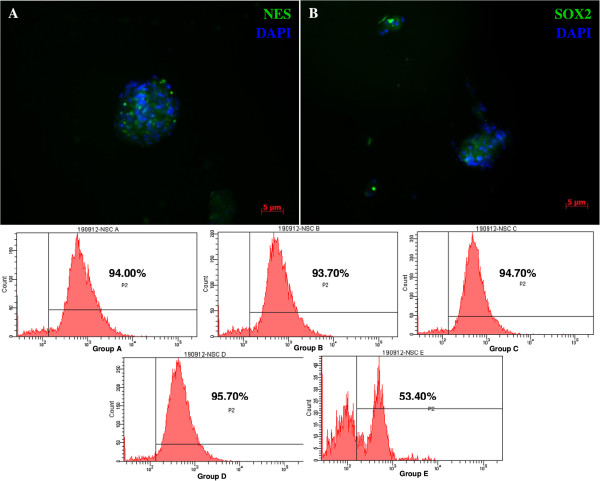
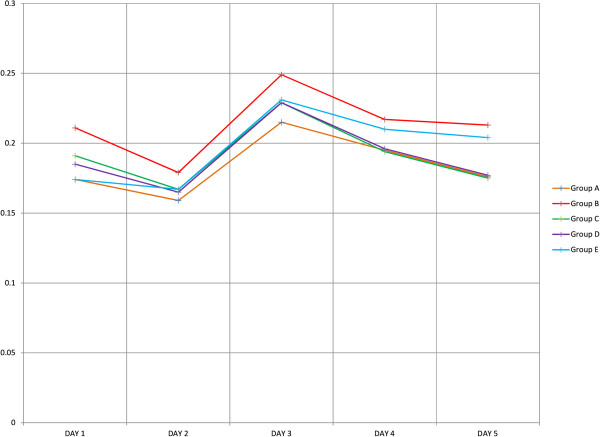
BACKGROUND: There has been increasing interest recently in the plasticity of mesenchymal stem cells (MSCs) and their potential to differentiate into neural lineages. To unravel the roles and effects of different growth factors in the differentiation of MSCs into neural lineages, we have differentiated MSCs into neural lineages using different combinations of growth factors. Based on previous studies of the roles of insulin-like growth factor 1 (IGF-1) in neural stem cell isolation in the laboratory, we hypothesized that IGF-1 can enhance proliferation and reduce apoptosis in neural progenitor-like cells (NPCs) during differentiation of MSCs into NCPs.We induced MSCs differentiation under four different combinations of growth factors: (A) EGF + bFGF, (B) EGF + bFGF + IGF-1, (C) EGF + bFGF + LIF, (D) EGF + bFGF + BDNF, and (E) without growth factors, as a negative control. The neurospheres formed were characterized by immunofluorescence staining against nestin, and the expression was measured by flow cytometry. Cell proliferation and apoptosis were also studied by MTS and Annexin V assay, respectively, at three different time intervals (24 hr, 3 days, and 5 days). The neurospheres formed in the four groups were then terminally differentiated into neuron and glial cells. RESULTS: The four derived NPCs showed a significantly higher expression of nestin than was shown by the negative control. Among the groups treated with growth factors, NPCs treated with IGF-1 showed the highest expression of nestin. Furthermore, NPCs derived using IGF-1 exhibited the highest cell proliferation and cell survival among the treated groups. The NPCs derived from IGF-1 treatment also resulted in a better yield after the terminal differentiation into neurons and glial cells than that of the other treated groups. CONCLUSIONS: Our results suggested that IGF-1 has a crucial role in the differentiation of MSCs into neuronal lineage by enhancing the proliferation and reducing the apoptosis in the NPCs. This information will be beneficial in the long run for improving both cell-based and cell-free therapy for neurodegenerative diseases.
Overview
The claims and statistics of this paper haven’t been checked yet.
Run the check — free, no account needed. It reads the open-access text and checks the sources it cites.
Integrity signals
Registry
Cites
Statistics
Figures
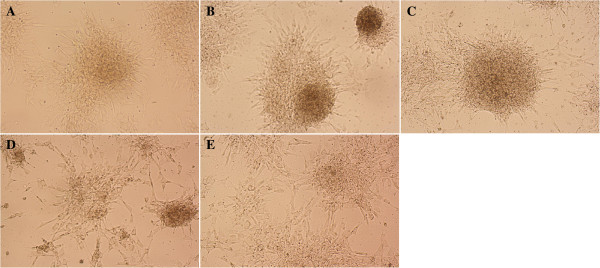
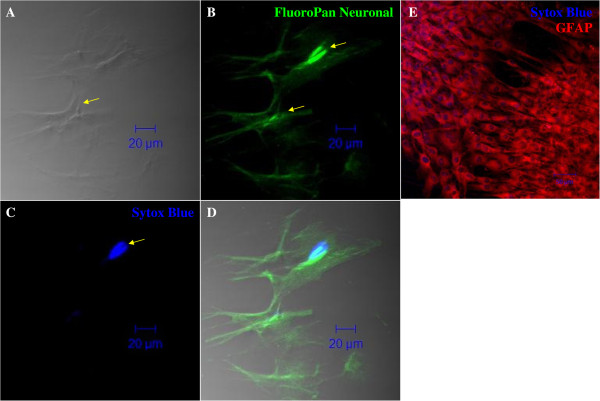
Verification
Claims the paper makes
The claims and statistics of this paper haven’t been checked yet.
Run the check — free, no account needed. It reads the open-access text and checks the sources it cites.
Claims other papers make about this one
Each is checked against this paper’s own text: does it say what the citing paper says it does?
In the citing paper
“There are also data that show that BDNF participates in the regulation of neuron metabolism, development, and proper functioning in cooperation with insulin-like growth factor-1 (IGF-1) [201].”
From BDNF as a Promising Therapeutic Agent in Parkinson’s Disease (2020) · cites this paper as [201]
Self-check
Percentages, sums and reported differences re-computed from the paper’s own numbers.
The self-check needs the paper’s full text.
Citations
Cites
Mesenchymal and haematopoietic stem cells form a unique bone marrow niche
Méndez‐Ferrer, S., Michurina, T. V., Ferraro, F., Mazloom, A. R., MacArthur, B. D., Lira, S. A., Scadden, D. T., Ma’ayan, A., Enikolopov, G., & Frenette, P. S. (2010) · Nature · doi:10.1038/nature09262 · Cited by 3,381 · cited 1×
“ESCs are pluripotent cells derived from the inner cell mass of the blastocyst [4], whereas ASCs are isolated from adult tissues and defined as multipotent, since they are determined to produce cell types within their niche [5].”
BackgroundWagner, W., Wein, F., Seckinger, A., Frankhauser, M., Wirkner, U., Krause, U., Blake, J., Schwager, C., Eckstein, V., Ansorge, W. J., et al. (2005) · Experimental Hematology · doi:10.1016/j.exphem.2005.07.003 · Cited by 1,257 · cited 1×
“MSCs have also been found in most postnatal organs such as the umbilical cord, adipose tissue, peripheral blood, and amniotic fluid [9-11].”
BackgroundLee, J. S., Hong, J. M., Moon, G. J., Lee, P. H., Ahn, Y. H., & Bang, O. Y. (2010) · Stem Cells · doi:10.1002/stem.430 · Cited by 775 · cited 1×
“Autologous transplantation of MSCs in stroke patients was proven therapeutically effective [13].”
BackgroundDezawa, M., Kanno, H., Hoshino, M., Cho, H., Matsumoto, N., Itokazu, Y., Tajima, N., Yamada, H., Sawada, H., Ishikawa, H., et al. (2004) · Journal of Clinical Investigation · doi:10.1172/jci20935 · Cited by 684 · cited 1×
“has been reported that MSCs can be induced into neural lineage through several methods such as incubation with cytokines [19], co-culture with nerve cells [1,6], and transfection with known factors [20].”
Efficient generation of neural stem cell-like cells from adult human bone marrow stromal cells
Hermann, A., Gastl, R., Liebau, S., Popa, M. O., Fiedler, J., Boehm, B. O., Maisel, M., Lerche, H., Schwarz, J., Brenner, R. E., et al. (2004) · Journal of Cell Science · doi:10.1242/jcs.01307 · Cited by 449 · cited 2×
“This is consistent with the previous finding that one third of MSCs died after induction [14].”
BackgroundResultWislet‐Gendebien, S., Hans, G. A., Leprince, P., Rigo, J., Moonen, G., & Rogister, B. (2005) · Stem Cells · doi:10.1634/stemcells.2004-0149 · Cited by 427
Hsieh, J.-Y., Wang, H., Chang, S., Liao, K., Lee, I., Lin, W., Wu, C., Lin, W., & Cheng, S. (2013) · PLoS ONE · doi:10.1371/journal.pone.0072604 · Cited by 324 · cited 1×
“Autologous transplantation of MSCs extracted from Wharton’s jelly has been reported to be free from immunogenic rejection [18].”
BackgroundWilkins, A., Kemp, K. C., Ginty, M., Hares, K. M., Mallam, E., & Scolding, N. J. (2009) · Stem Cell Research · doi:10.1016/j.scr.2009.02.006 · Cited by 290 · cited 1×
“However, recent studies suggested that ASCs, especially mesenchymal stem cells (MSCs) derived from bone marrow (BM), have intrinsic neurogenic potential and may be differentiated into mature cells of ectodermal origin [6-8].”
BackgroundMesenchymal stem cells: A promising candidate in regenerative medicine
Chen, Y., Shao, J., Xiang, L., Dong, X.-J., & Zhang, G. (2008) · The International Journal of Biochemistry & Cell Biology · doi:10.1016/j.biocel.2008.01.007 · Cited by 254 · cited 1×
“The trans-lineage differentiation capability and unique immunogenic properties of MSCs have made them a potential alternative for cellular transplantation use in regenerative medicine [12].”
BackgroundYang, C., Shih, Y., Ko, M., Hsu, S.-Y., Cheng, H., & Fu, Y.-S. (2008) · PLoS ONE · doi:10.1371/journal.pone.0003336 · Cited by 231 · cited 1×
“MSCs may even release certain neurotrophic factors such as BDNF, nerve growth factor, and glial-derived neurotrophic factors [26,27], and it is well known that the neurotrophic factors are important for maintaining cellular survival of neuronal cells both in vitro and in vivo.”
Background
Cited by
Sorted by citations
Items 101–129 of 129
Barry, C. V., Chrysanthopoulou, S. A., Tallo, V. L., Jarilla, B. R., Vargas, Z., McDonald, E. A., Gündoğan, F., & Friedman, J. F. (2024) · The Journal of Pediatrics · doi:10.1016/j.jpeds.2024.113977 · Cited by 3
Sharlow, E. R., Köseoğlu, M. M., Bloom, G. S., & Lazo, J. S. (2019) · Assay and Drug Development Technologies · doi:10.1089/adt.2019.914 · Cited by 3
Isolation and Expansion of Adult Canine Hippocampal Neural Precursors
Duncan, T., Lowe, A., Dalton, M. A., & Valenzuela, M. (2016) · Journal of Visualized Experiments · doi:10.3791/54953 · Cited by 3
Effects of IGFBP-2 on proliferation and differentiation in neural stem cell line C17.2
Deng, Y., Wang, L., Ge, L., Duan, D., Zhuo, Y., Yuan, T., yan, W., Huang, P.-Q., teng, X., & Lü, M. (2017) · Journal of Neurorestoratology · doi:10.2147/jn.s134363 · Cited by 3
“…that IGF can promote the proliferation of NSCs, which can induce NSCs to differentiate into oligo-dendrocytes after transducing IGF gene into NSCs. 41 Many other studies have shown that IGF plays an important role in the differentiation of neuron like cells in NSCs and MSCs. 42,43 Therefore, the…”
InfluentialKörpe, D. A., Güler, S., Aydın, H. M., & Duman, M. (2021) · International Journal of Polymeric Materials · doi:10.1080/00914037.2021.2014484 · Cited by 2
“IGF-1 increases cartilaginous matrix production([4]) and cell proliferation([5]).”
BackgroundResearch advances in insulin-like growth factor
Zhang, B. (2024) · New discovery. · doi:10.61958/ndpg8384 · Cited by 2
Effect of Skeletal Paracrine Signals on the Proliferation of Interzone Cells
Thampi, P., Dubey, R., Lowney, R., Adam, E., Janse, S., Wood, C. L., & MacLeod, J. N. (2019) · Cartilage · doi:10.1177/1947603519841680 · Cited by 2
Fan, X., Chen, Y., Ma, Y., Li, L., Zhang, M., & Zhan, J. (2020) · Pharmacognosy Magazine · doi:10.4103/pm.pm_541_19 · Cited by 2
Proteomic landscape of porcine induced neural stem cell reprogramming and differentiation
Ploypetch, S., Phochantachinda, S., Chakritbudsabong, W., Sakcamduang, W., Chaisilp, N., Chaiwattanarungruengpaisan, S., Pannengpetch, S., Nakorn, P. N., Muangthong, T., & Rungarunlert, S. (2025) · PeerJ · doi:10.7717/peerj.20120 · Cited by 1
“…in our piNSCs could represent a combination of signals: both from early spontaneously differentiating cells and potentially from an intrinsic upregulation re fl ecting early neural commitment within the progenitor state itself, consistent with these gene expression fi ndings ( Huat et al., 2014 ).”
Fang, Y., Cao, D., Lee, C., Chiu, P. C. N., Ng, E. H. Y., Yeung, W. S. B., & Chan, R. (2025) · Stem Cell Research & Therapy · doi:10.1186/s13287-025-04803-7 · Cited by 1
Neuroscience and Brain Science Special Issue begins in the Malaysian Journal of Medical Sciences.
Abdullah, J. M. (2014) · PubMed Central · Cited by 1
Self-citationDisturbances of consciousness in patients subjected to orthopaedic procedure
Malinowska-Kubiak, M., Kubiak, K. P., Habrych, M., Baranowski, B., Osip, P., & Permoda‐Osip, A. (2017) · Neuropsychiatria i Neuropsychologia · doi:10.5114/nan.2017.74147 · Cited by 1
Suppression of IGF1R in Melanoma Cells by an Adenovirus-Mediated One-Step Knockdown System
Xin, H., Lei, M., Zhang, Z., Li, J., Zhang, H., Luo, X., Wang, A., & Deng, F. (2018) · Molecular Therapy — Nucleic Acids · doi:10.1016/j.omtn.2018.08.004 · Cited by 1
“Previous study showed enhanced cell proliferation during early differentiation of mesenchymal stem cells to neural progenitor-like cells after IGF1 overexpression.(24) IGF also acts as a key regulator in inhibiting cell apoptosis by controlling Bcl2 family proteins, caspases, and signaling of death-inducing receptors.”
BackgroundLittlejohn, E. L. (2018) · UKnowledge (University of Kentucky) · doi:10.13023/etd.2018.292
Wei, P., Xu, Y., Gu, Y., Yao, Q., Li, J., & Wang, L. (2020) · doi:10.21203/rs.3.rs-28605/v1
Liu, A., Zhu, F., Zhu, X., Wang, Y., Ihsan, A., Liu, Z., Dai, M., & Wang, X. (2020) · doi:10.21203/rs.3.rs-26866/v1
“As known, the increase of IGF-1 expression can promote cell proliferation and differentiation in cells [48, 49].”
BackgroundKelty, T. J. (2021) · MOspace Institutional Repository (University of Missouri) · doi:10.32469/10355/85789
Alketbi, F. S., Khan, A. A., Gul, M. T., Khattak, M. N. K., Jayakumar, M. N., & Samsudin, A. R. (2023) · Advances in Biomedical and Health Sciences · doi:10.4103/abhs.abhs_53_22
Self-citationPérez-Revuelta, L. (2023) · Gredos (University of Salamanca) · doi:10.14201/gredos.153257
Hanotte, J. L. (2023) · El Servicio de Difusión de la Creación Intelectual (National University of La Plata) · doi:10.35537/10915/161150
Neural Stem Cell Intervention in Traumatic Brain Injury
Morris, A. R., Morris, H., Barquet, G. Z., Patel, S. R., Amhaz, N. A., Kenyon, O. C., Shakkour, Z., Zhu, J., Dakroub, F., & Kobeissy, F. H. (2024) · Stem cell biology and regenerative medicine · doi:10.1007/978-3-031-49744-5_3
Simone, U. D., Caloni, F., Pignatti, P., Gaetano, C., Locatelli, C., & Coccini, T. (2024) · Toxicology Mechanisms and Methods · doi:10.1080/15376516.2024.2435351
“…factors, were able to differentiate into the three main neural phenotypes: astroglia, oligodendroglia, and neurons (hermann et al. 2004, 2006; huat et al. 2014). lately, the research trend has focused on finding more convenient sources of Mscs as an alternative to conventional ones (e.g.…”
Rodrigues, R. S., Moreira, J. B., Dias, P., Sebastião, A. M., & Xapelli, S. (2025) · Journal of Neurochemistry · doi:10.1111/jnc.70091 · Cited by 1
“Regarding IGF-1, it has been shown that it has a proliferative effect in adult progenitor cells and is necessary for NSPC proliferation (Arsenijevic et al. 2001; Åberg et al. 2003; Huat et al. 2014).”
Receptor Tyrosine Kinase Signaling and Mitochondrial Dynamics in Cancer
Kumari, S., Gupta, K. B., Gupta, S. K., Thangaraju, M., & Kumar, K. (2025) · Cancer drug discovery and develogment/Cancer drug discovery and development · doi:10.1007/978-3-031-93894-8_7
Huang, X., Li, T., Liu, H., Luo, H., & Guo, Y. (2025) · Molecular and Cellular Biochemistry · doi:10.1007/s11010-025-05435-4
“Insulin-like growth factor-1 (IGF-1) plays a pivotal role in tissue remodeling and development and profoundly affects cell growth, differentiation, proliferation and apop - tosis [11–13 ].”
Khan, A. A., Huat, T. J., Al Mutery, A., El-Serafi, A. T., Kacem, H. H., Abdallah, S. H., Reza, M. F., Abdullah, J. M., & Jaafar, H. (2020) · Figshare · doi:10.6084/m9.figshare.13161651
Self-citationMesenchymal stem cell-related therapies for neurological diseases and disorders
Tebo, E. D., Zehra, M., & Nguyen, H. (2025) · Elsevier eBooks · doi:10.1016/b978-0-443-27414-5.00007-5
Khan, A. A., Huat, T. J., Al Mutery, A., El-Serafi, A. T., Kacem, H. H., Abdallah, S. H., Reza, M. F., Abdullah, J. M., & Jaafar, H. (2020) · Figshare · doi:10.6084/m9.figshare.13161648
Self-citationLiu, X., Huang, L., Guo, Y., Mu, J., Zhu, X., Liu, Z., & Fu, R. (2026) · Frontiers in Oncology · doi:10.3389/fonc.2026.1960550
Metadata
- Authors
- Huat, T. J., Khan, A. A., Pati, S., Mustafa, Z., Abdullah, J. M., & Jaafar, H.
- Affiliations
- Universiti Sains Malaysia (MY)
- Corresponding author
- Huat, Tee Jong
- Venue
- BMC Neuroscience
- Published
- 2014-07-22
- Volume
- 15
- Issue
- 1
- Pages
- 91-91
- ISSN
- 1471-2202 (ISSN-L)
- PMC
- PMC4117972
- OpenAlex
- W2045159954
- Cited by
- 129
- References
- 29
- Citations by year
- 2026: 1 · 2025: 10 · 2024: 9 · 2023: 7 · 2022: 7 · 2021: 13 · 2020: 20 · 2019: 13 · 2018: 9 · 2017: 14 · 2016: 14 · 2015: 9 · 2014: 3
- FWCI
- 6.68
- Type
- journal article
- Language
- en
- Open access
- gold
- doi.org
- Licence
- cc-by
- Locations
- BMC Neuroscience (publishedVersion, cc-by)
- PubMed Central (publishedVersion, cc-by)
- PubMed (publishedVersion)
- Greater South Information System
- Funders
- Universiti Sains Malaysia
- Topics
- Life Sciences › Biochemistry, Genetics and Molecular Biology › Cell Biology › Mesenchymal stem cell research
- Life Sciences › Neuroscience › Developmental Neuroscience › Neurogenesis and neuroplasticity mechanisms
- Life Sciences › Biochemistry, Genetics and Molecular Biology › Molecular Biology › Pluripotent Stem Cells Research
- Keywords
- insulin-like growth factor I, mesenchymal stem cells, neural progenitor-like cells, neuronal differentiation, cell proliferation, apoptosis, growth factor combination, epidermal growth factor, basic fibroblast growth factor, LiF, brain-derived neurotrophic factor, nestin, neurospheres, neurodegenerative disease treatment
- MeSH terms
- Animals, Cell Survival, Cells, Cultured, Insulin-Like Growth Factor I, Neuroglia, Neurons, Rats, Sprague-Dawley, Apoptosis, Intercellular Signaling Peptides and Proteins, Cell Proliferation, Neurogenesis, Neural Stem Cells, Mesenchymal Stem Cells, Nestin
About these checks
Registry, retraction, Cites and statistics results are computed, not judged, with one exception: a printed reference that no index lists is read once by a model before it counts as a citation error. Claims are extracted by a model and kept only when their quote appears verbatim in the text; each cited source is then checked, with a model’s help, for whether it says what the claim relies on. Those verdicts can be wrong — read the claim’s quote and the cited source before relying on one.
Statistics and arithmetic are recomputed, not judged.
Confidence bands are shown only for fields calibrated on our annotated test set. None is calibrated yet, so no band is shown.
What counts as a claim ›How we measure confidence ›How we check this ›
Are you an author, or do you see a problem with this page? Request a review
