

Plasma membrane protein OsMCA1 is involved in regulation of hypo-osmotic shock-induced Ca2+influx and modulates generation of reactive oxygen species in cultured rice cells
Open accessThe DOI matches its Crossref record; 46 of the 47 references it cites were found in a registry or an index.
Abstract
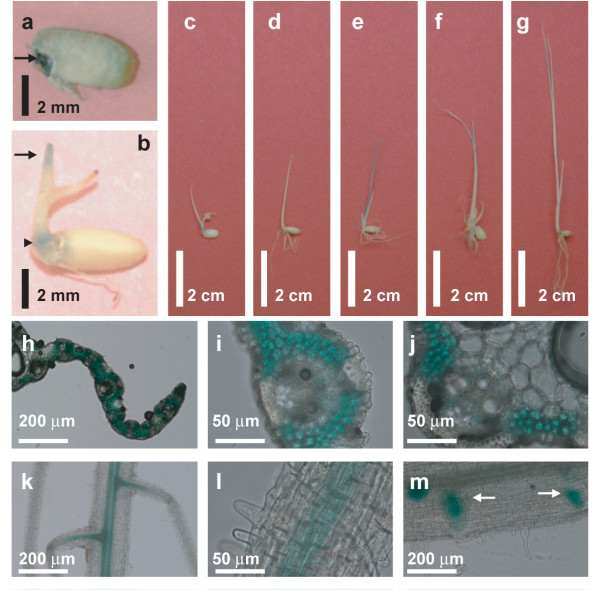
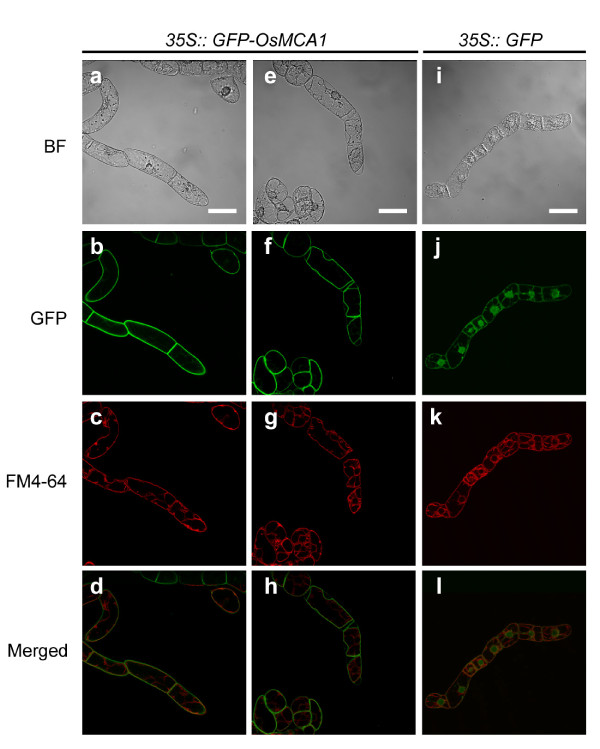
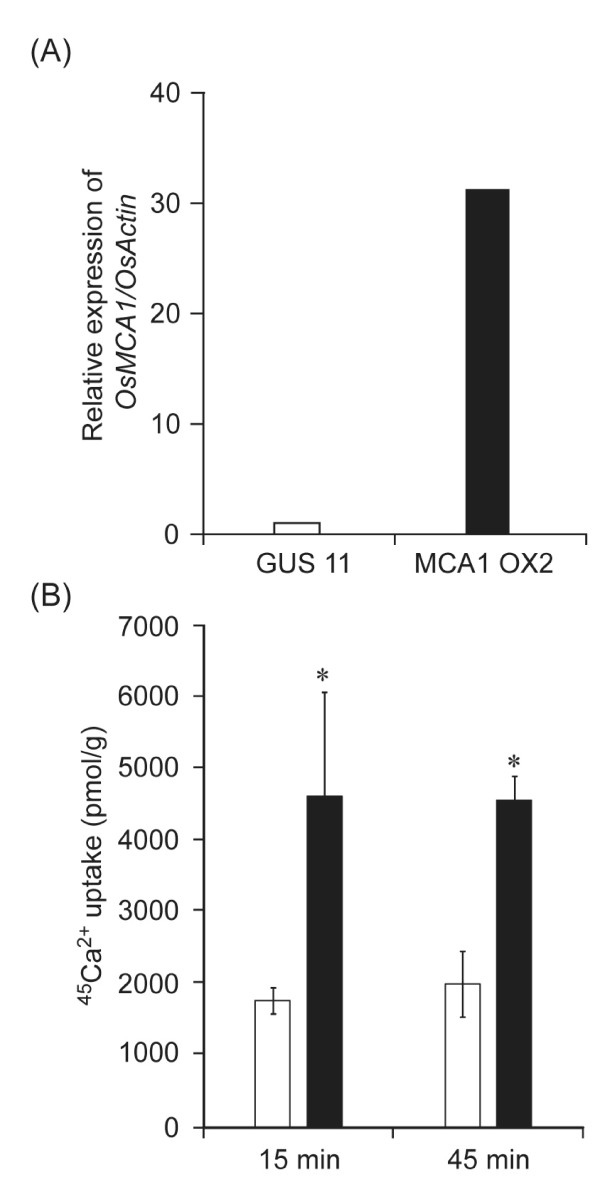
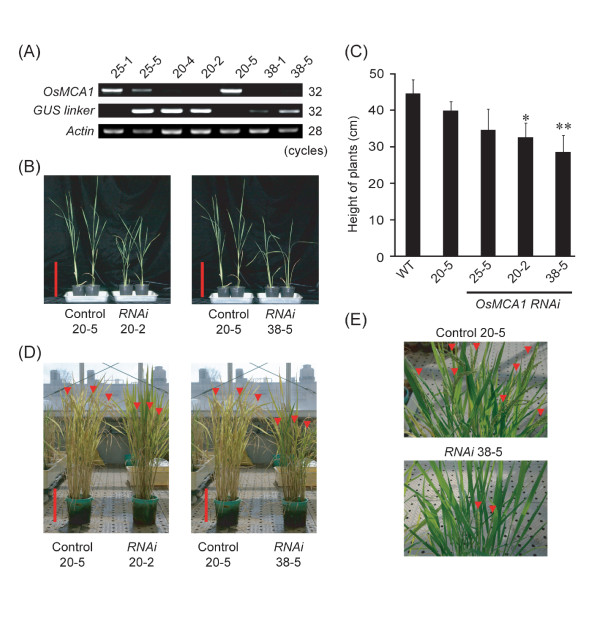
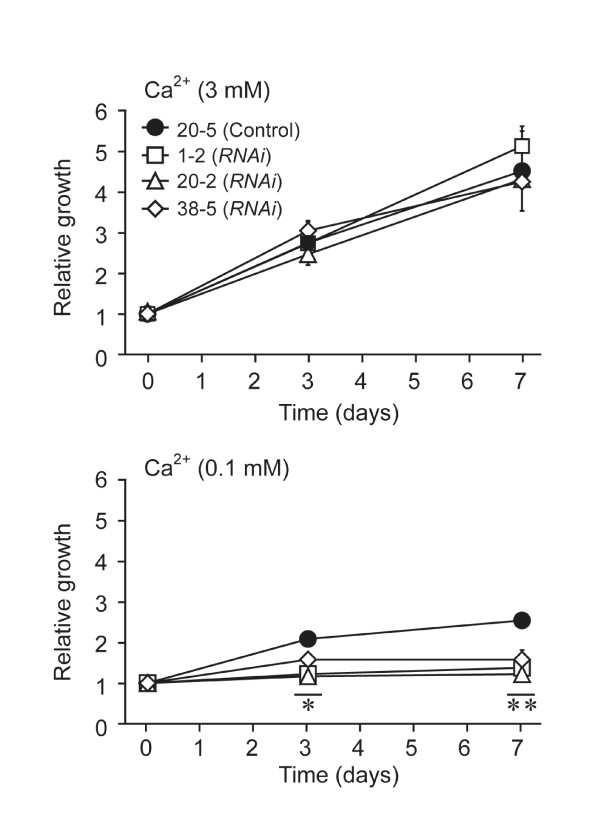
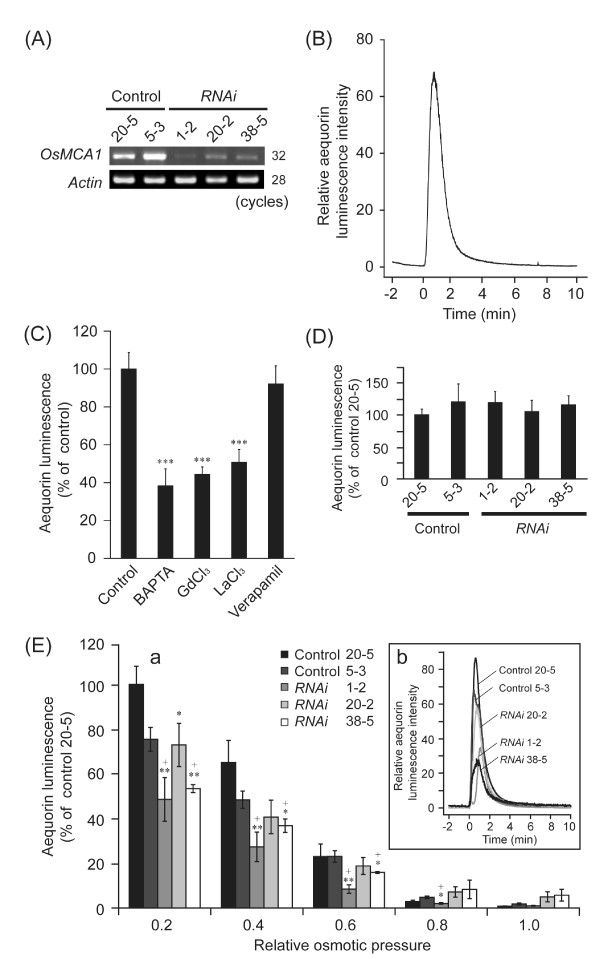
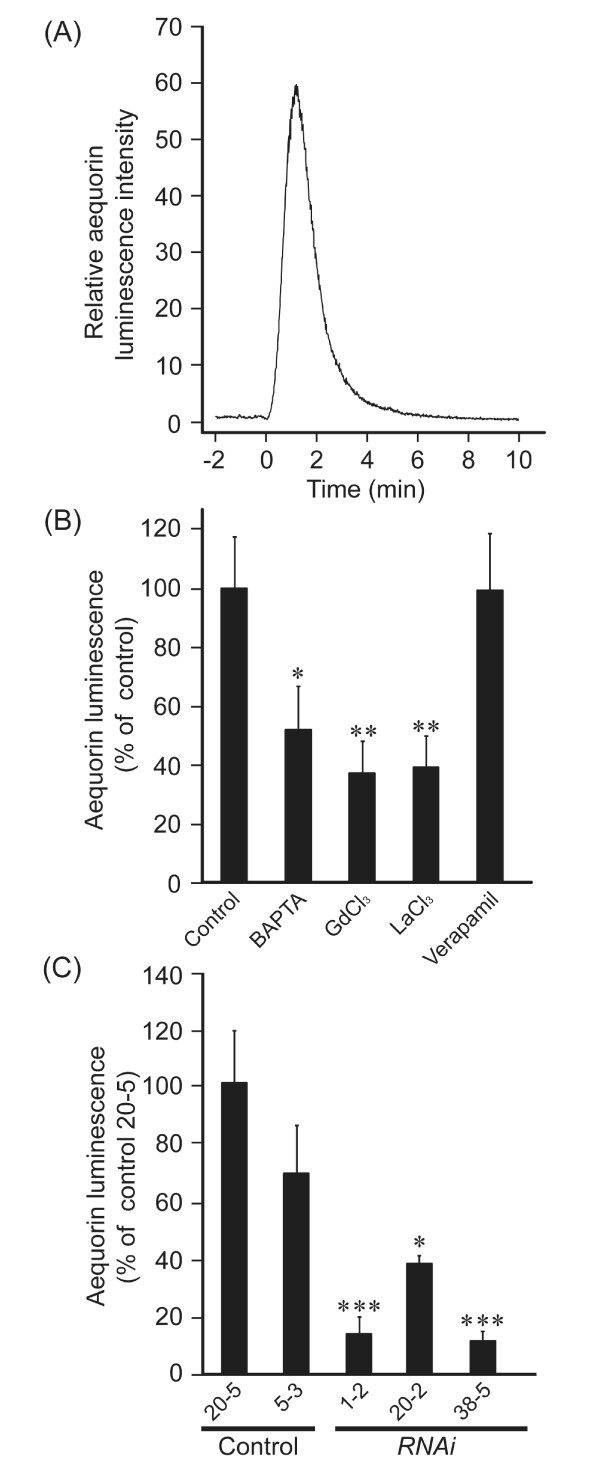
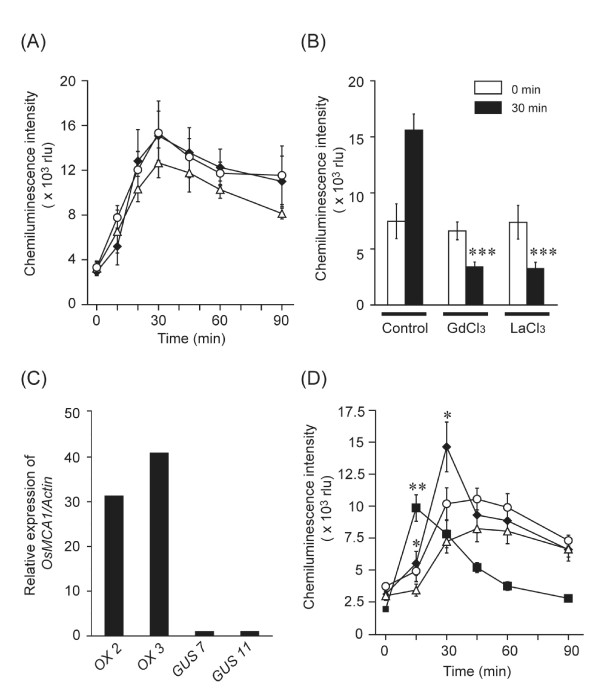
Background: Mechanosensing and its downstream responses are speculated to involve sensory complexes containing Ca 2+-permeable mechanosensitive channels. On recognizing osmotic signals, plant cells initiate activation of a widespread signal transduction network that induces second messengers and triggers inducible defense responses. Characteristic early signaling events include Ca 2+ influx, protein phosphorylation and generation of reactive oxygen species (ROS). Pharmacological analyses show Ca 2+ influx mediated by mechanosensitive Ca 2+ channels to influence induction of osmotic signals, including ROS generation. However, molecular bases and regulatory mechanisms for early osmotic signaling events remain poorly elucidated. Results: We here identified and investigated OsMCA1, the sole rice homolog of putative Ca 2+-permeable mechanosensitive channels in Arabidopsis (MCAs). OsMCA1 was specifically localized at the plasma membrane. A promoter-reporter assay suggested that OsMCA1 mRNA is widely expressed in seed embryos, proximal and apical regions of shoots, and mesophyll cells of leaves and roots in rice. Ca 2+ uptake was enhanced in OsMCA1-overexpressing suspension-cultured cells, suggesting that OsMCA1 is involved in Ca 2+ influx across the plasma membrane. Hypo-osmotic shock-induced ROS generation mediated by NADPH oxidases was also enhanced in OsMCA1-overexpressing cells. We also generated and characterized OsMCA1-RNAi transgenic plants and cultured cells; OsMCA1-suppressed plants showed retarded growth and shortened rachises, while OsMCA1-suppressed cells carrying Ca 2+-sensitive photoprotein aequorin showed partially impaired changes in cytosolic free Ca 2+ concentration ([Ca 2+]cyt) induced by hypo-osmotic shock and trinitrophenol, an activator of mechanosensitive channels. Conclusions: We have identified a sole MCA ortholog in the rice genome and developed both overexpression and suppression lines. Analyses of cultured cells with altered levels of this putative Ca 2+-permeable mechanosensitive channel indicate that OsMCA1 is involved in regulation of plasma membrane Ca 2+ influx and ROS generation induced by hypo-osmotic stress in cultured rice cells. These findings shed light on our understanding of mechanical sensing pathways.
Overview
The claims and statistics of this paper haven’t been checked yet.
Free: it reads the open-access text and checks the first 5 claims that cite a source we can check. Create a free account to check every claim.
Integrity signals
Registry
Cites
Statistics
Figures
Verification
Claims the paper makes
The claims and statistics of this paper haven’t been checked yet.
Free: it reads the open-access text and checks the first 5 claims that cite a source we can check. Create a free account to check every claim.
Claims other papers make about this one
Each is checked against this paper’s own text: does it say what the citing paper says it does?
In the citing paper
“The nucleus is integral in the coordination of various cellular activities geared at improving the performance under abiotic stress conditions [51].”
Self-check
Percentages, sums and reported differences re-computed from the paper’s own numbers.
The self-check needs the paper’s full text.
Citations
Cites
A Revised Medium for Rapid Growth and Bio Assays with Tobacco Tissue Cultures
Murashige, T., & Skoog, F. (1962) · Physiologia Plantarum · doi:10.1111/j.1399-3054.1962.tb08052.x · Cited by 67,392
GATEWAY™ vectors for Agrobacterium-mediated plant transformation
Karimi, M., Inzé, D., & Depicker, A. (2002) · Trends in Plant Science · doi:10.1016/s1360-1385(02)02251-3 · Cited by 3,635
CERK1, a LysM receptor kinase, is essential for chitin elicitor signaling in Arabidopsis
Miya, A., Albert, P., Shinya, T., Desaki, Y., Ichimura, K., Shirasu, K., Narusaka, Y., Kawakami, N., Kaku, H., & Shibuya, N. (2007) · Proceedings of the National Academy of Sciences · doi:10.1073/pnas.0705147104 · Cited by 1,427 · cited 1×
“On the other hand, increased [Ca]cyt triggered by Nacetylchito-oligosaccharides, a major microbe-associated molecular pattern (MAMP) recognized by plasma membrane receptors in rice [23,24], was not affected by OsMCA1 expression levels Figure 4 Effects of OsMCA1 suppression on growth and development in planta.”
BackgroundThe Language of Calcium Signaling
Dodd, A. N., Kudla, J., & Sanders, D. (2010) · Annual Review of Plant Biology · doi:10.1146/annurev-arplant-070109-104628 · Cited by 1,317 · cited 2×
“Discussion It has been suggested that Ca plays a crucial role in mechanical sensing [7,25].”
BackgroundCalcium at the Crossroads of Signaling
Sanders, D., Pelloux, J., Brownlee, C., & Harper, J. F. (2002) · The Plant Cell · doi:10.1105/tpc.002899 · Cited by 1,214 · cited 2×
“Plants need to sense and respond to mechanical stresses, such as wind, touch, and changes in osmotic pressure [1-3].”
BackgroundKnight, M. R., Campbell, A. K., Smith, S. M., & Trewavas, A. J. (1991) · Nature · doi:10.1038/352524a0 · Cited by 1,169 · cited 1×
“To express cytoplasm-targeted apoaequorin cDNA [41] in OsMCA1-suppressed plants, sequences were cloned into a Ti-based vector pSMAB704 [42] downstream of a CaMV 35S promoter, and Agrobacteriummediated transformation of rice calli was performed.”
MethodPlant cells recognize chitin fragments for defense signaling through a plasma membrane receptor
Kaku, H., Nishizawa, Y., Ishii-Minami, N., Akimoto-Tomiyama, C., Dohmae, N., Takio, K., Minami, E., & Shibuya, N. (2006) · Proceedings of the National Academy of Sciences · doi:10.1073/pnas.0508882103 · Cited by 1,166 · cited 1×
“On the other hand, increased [Ca]cyt triggered by Nacetylchito-oligosaccharides, a major microbe-associated molecular pattern (MAMP) recognized by plasma membrane receptors in rice [23,24], was not affected by OsMCA1 expression levels Figure 4 Effects of OsMCA1 suppression on growth and development in planta.”
BackgroundKojima, S., Takahashi, Y., Kobayashi, Y., Monna, L., Sasaki, T., Araki, T., & Yano, M. (2002) · Plant and Cell Physiology · doi:10.1093/pcp/pcf156 · Cited by 1,158
Evolutionary Ecology of Plant Adaptation to Serpentine Soils
Brady, K. U., Kruckeberg, A. R., & Bradshaw Jr., H. D. (2005) · Annual Review of Ecology, Evolution, and Systematics · doi:10.1146/annurev.ecolsys.35.021103.105730 · Cited by 733
In touch: plant responses to mechanical stimuli
Braam, J. (2005) · New Phytologist · doi:10.1111/j.1469-8137.2004.01263.x · Cited by 676
Research works printed but not linked: 1
- Tanaka H Kayano T Ugaki M Shiobara F Onodera H Ono K Tagiri A Nishizawa Y Shibuya N Ultra-fast transformation technique for monocotyledons. International Patent Application 2001 No. WO 01/06844 A1
Cited by
Items 101–137 of 137
Fromm, H., & Fichman, Y. (2019) · Springer eBooks · doi:10.1007/978-981-13-8922-1_4 · Cited by 6
Mapping QTLs for yield component traits using overwintering cultivated rice
Chen, J., Tai, L., Luo, L., XIANG, J., & Zhao, Z. (2021) · Journal of Genetics · doi:10.1007/s12041-021-01279-1 · Cited by 5
Liu, J., Zhang, C., Su, W., Wu, G., Fu, X., Que, Y., & Luo, J. (2021) · Agronomy · doi:10.3390/agronomy11112153 · Cited by 5
Knockout of a rice K5.2 gene increases Ca accumulation in the grain
Wang, P., Yamaji, N., Mitani‐Ueno, N., Ge, J., & Feng, J. X. (2023) · Journal of Integrative Plant Biology · doi:10.1111/jipb.13587 · Cited by 4
Zhang, H., Dai, Z., Zhang, X., Shang, M., Gao, X., Ma, R., Zhao, L., Zhang, X., Liu, Q., Zhai, H., et al. (2025) · Advanced Science · doi:10.1002/advs.202415202 · Cited by 11
Osmosensing and Signalling in Plants: Potential Role in Crop Improvement Under Climate Change
Pandita, D., & Wani, S. H. (2021) · Springer eBooks · doi:10.1007/978-3-030-80674-3_2 · Cited by 5
Pan, Y., Huang, L., Song, S., Hu, M., Chang, S., Lv, Q., Li, Y., Wang, T., Ouyang, X., Xiao, Y., et al. (2019) · Molecular Breeding · doi:10.1007/s11032-019-0973-8 · Cited by 4
Schlegel, A. M., & Haswell, E. S. (2020) · Methods in cell biology · doi:10.1016/bs.mcb.2020.02.007 · Cited by 4
Role of phytohormones in regulating abiotic stresses in wheat
Talaat, N. B. (2023) · Elsevier eBooks · doi:10.1016/b978-0-323-95368-9.00019-9 · Cited by 6
Yan, W., Zhang, H., Fan, W., Liu, X., Huang, Z., Wang, Y., Zhu, Y., Wang, C., & Zhang, B. (2026) · Genes · doi:10.3390/genes17010115 · Cited by 2
Zhang, J., Enujioke, G., Ruan, X., Yu, Y., Song, W., Jin, P., Chen, F., Zhang, Z., & Liu, X. (2026) · Biology · doi:10.3390/biology15151282 · Cited by 2
“OsMCA1 , together with NtMCA1 and NtMCA2 , participates in the regulation of plasma membrane Ca 2+ uptake and ROS (Reactive Oxygen Species) accumulation under hypoosmotic stress [16,17].”
Huang, X. Y., Maisch, J., Hayashi, K., & Nick, P. (2022) · International Journal of Molecular Sciences · doi:10.3390/ijms23158593 · Cited by 2
“15 μM NAA, which is consistent with the physiological data on NAA effects on tobacco BY-2 cells [42].”
ResultPhysiological roles of Arabidopsis MCA1 and MCA2 based on their dynamic expression patterns
Kubota, M., Mori, K., & Iida, H. (2024) · Journal of Plant Research · doi:10.1007/s10265-024-01575-8 · Cited by 3
“Similarly, a rice homolog and a maize homolog of Arabidopsis MCAs reportedly participate in cell division and expansion, which may contribute to the growth of plant organs and bodies (Kurusu et al. 2012; Liang et al. 2020; Liu et al. 2015; Rosa et al. 2017).”
BackgroundSelf-citationQu, J., Liu, L., Zheng, C., Guo, Z., Sun, D., Pan, F., Lu, J., & Yin, L. (2025) · Molecular Plant Pathology · doi:10.1111/mpp.70095 · Cited by 2
“The PvRXLR10 (without signal peptide) construct fused with GFP at the C-terminus or N-terminus was transiently expressed in N. benthamiana leaves with an ER marker (Mravec et al. 2009) and a plasma membrane (Kurusu et al. 2012) marker protein to determine the subcellular localisation of PvRXLR10.”
Liu, Q. (2014) · Repository KITopen (Karlsruhe Institute of Technology) · doi:10.5445/ir/1000040488 · Cited by 2
Yan, W., Zhang, H., Fan, W., Liu, X., Huang, Z., Wang, Y., Wang, C., & Zhang, B. (2025) · Plant Stress · doi:10.1016/j.stress.2025.101154 · Cited by 1
Annexin and Mechanosensitive Channel
Pandey, G. K., & Sanyal, S. K. (2020) · SpringerBriefs in plant science · doi:10.1007/978-3-030-58502-0_8 · Cited by 1
Yokoyama, K. (2019) · Faculty Opinions – Post-Publication Peer Review of the Biomedical Literature · doi:10.3410/f.734529827.793560694
Feng, X., Wang, Y., Zhang, N., Gao, S., Wu, J., Liu, R., Huang, Y., Zhang, J., & Qi, Y. (2021) · Figshare · doi:10.6084/m9.figshare.16417591
Feng, X., Wang, Y., Zhang, N., Gao, S., Wu, J., Liu, R., Huang, Y., Zhang, J., & Qi, Y. (2021) · Figshare · doi:10.6084/m9.figshare.16417588
Feng, X., Wang, Y., Zhang, N., Gao, S., Wu, J., Liu, R., Huang, Y., Zhang, J., & Qi, Y. (2021) · Figshare · doi:10.6084/m9.figshare.16417579
Feng, X., Wang, Y., Zhang, N., Gao, S., Wu, J., Liu, R., Huang, Y., Zhang, J., & Qi, Y. (2021) · Figshare · doi:10.6084/m9.figshare.16417594
Feng, X., Wang, Y., Zhang, N., Gao, S., Wu, J., Liu, R., Huang, Y., Zhang, J., & Qi, Y. (2021) · Figshare · doi:10.6084/m9.figshare.16417582
Feng, X., Wang, Y., Zhang, N., Gao, S., Wu, J., Liu, R., Huang, Y., Zhang, J., & Qi, Y. (2021) · Figshare · doi:10.6084/m9.figshare.16417585
Follow the calcium road: Conserved mechanisms of growth and development in Marchantia polymorpha
Chen, J., & Cullen, E. (2024) · PLANT PHYSIOLOGY · doi:10.1093/plphys/kiae622
“In rice, mca mutants exhibit developmental defects and decreased growth in rice cell cultures (Kurusu et al. 2012).”
Wang, J., Wang, K., Li, D., Sun, Q., Zhang, L., Hao, D., Li, L., Chen, J., Liu, J., Zhang, B., et al. (2025) · Plant Physiology and Biochemistry · doi:10.1016/j.plaphy.2025.110335 · Cited by 1
Mechanoperception and mechanoreceptors in plant systems
Samanta, S., & Roychoudhury, A. (2025) · Elsevier eBooks · doi:10.1016/b978-0-443-30244-2.00020-8
Feng, X., Wang, Y., Zhang, N., Gao, S., Wu, J., Liu, R., Huang, Y., Zhang, J., & Qi, Y. (2021) · Figshare · doi:10.6084/m9.figshare.16417576
TaGAD2 is a potential downstream effector of Rht5 in controlling wheat plant height
Kong, X., Lei, Y., Wang, A., Cai, X., Zhe, L., Cui, C., Lu, Q., Zhao, Z., Shayakhmetova, A., Huang, L., et al. (2026) · Theoretical and Applied Genetics · doi:10.1007/s00122-026-05338-y
“Subcellular localization analysis showed that both full-length and C-terminal-truncated TaGAD2 proteins were predominantly localized at the plasma membrane and co-localized with the plasma membrane marker mCherry-OsPAD (Kurusu et al. 2012) (Fig.”
Allelic expression and subgenome bias influence plant height in cultivated hybrid sugarcane
Dong, A., Jiang, M., Chen, S., Xia, Z., Qin, Y., & Zhang, X. (2026) · aBIOTECH · doi:10.1016/j.abiote.2026.100052
“Suppressed MCA1 expression led to a dwarf phenotype in rice [45].”
Yadav, P., Taneja, D., Nehra, A., Ansari, M. W., Tuteja, N. K., Singh, B., Gill, R., & Gill, S. S. (2026) · Journal of Plant Growth Regulation · doi:10.1007/s00344-026-12210-2
“Rice cell suspension cultures and Arabidopsis seedlings experience a rapid rise in cytoplasmic Ca 2+ levels induced by hypo-osmotic shock and increased uptake of Ca 2+ upon ectopic expres - sion of MCA proteins (Nakagawa et al. 2007; Kurusu et al. 2012 ).”
qPSR10 positively regulates pectin demethylesterification and cold tolerance in rice
Chen, Z., Zhu, S., Shi, W., Wang, Z., CunHong, P., Li, Y., Cai, Y., Zhang, X., Wu, Y., Yu, L., et al. (2026) · PLANT PHYSIOLOGY · doi:10.1093/plphys/kiag521
Muavia, H., Ali, S., Javed, S. A., Zainuddin, Z., Balal, R. M., Amin, J., Siddiqui, A. R., Iqbal, S., & Elatafi, E. (2026) · Applied Fruit Science · doi:10.1007/s10341-026-02015-8
“The increased activity of SOD, POD, and CAT enzymes in response to stress reduced oxidative damage by scavenging ROS species and increased tolerance against drought stress in plants (Fujita and Hasanuzzaman 2022).”
InfluentialXu, M., Bai, G., He, Y., Long, J., Li, D., Li, P., Chen, Z., Yang, Z., Hu, J., Zhou, S., et al. (2026) · PLANT PHYSIOLOGY · doi:10.1093/plphys/kiag743
Metadata
- Authors
- Kurusu, T., Nishikawa, D., Yamazaki, Y., Gotoh, M., Nakano, M., Hamada, H., Yamanaka, T., Iida, K., Nakagawa, Y., Saji, H., Shinozaki, K., Iida, H., & Kuchitsu, K.
- Affiliations
- Tokyo University of Science (JP)
- Tokyo Gakugei University (JP)
- Tokyo Metropolitan Institute of Medical Science (JP)
- National Institute for Environmental Studies (JP)
- RIKEN (JP)
- Corresponding author
- Kuchitsu, Kazuyuki
- Venue
- BMC Plant Biology
- Published
- 2012-01-23
- Volume
- 12
- Issue
- 1
- Pages
- 11-11
- ISSN
- 1471-2229 (ISSN-L)
- PMC
- PMC3313898
- OpenAlex
- W2001346525
- Cited by
- 130
- References
- 47
- Citations by year
- 2026: 7 · 2025: 7 · 2024: 8 · 2023: 11 · 2022: 11 · 2021: 15 · 2020: 12 · 2019: 9 · 2018: 18 · 2017: 9 · 2016: 3 · 2015: 3 · 2014: 6 · 2013: 6 · 2012: 5
- FWCI
- 7.29
- Type
- journal article
- Language
- en
- Open access
- gold
- doi.org
- Licence
- cc-by
- Locations
- BMC Plant Biology (publishedVersion, cc-by)
- Europe PMC (PubMed Central) (publishedVersion, cc-by)
- PubMed Central (publishedVersion, cc-by)
- PubMed (publishedVersion)
- DOAJ (DOAJ: Directory of Open Access Journals) (submittedVersion, cc-by-sa)
- Funders
- Japan Society for the Promotion of Science (21200068, 23658061, 21200067, 23380027, 21370017)
- Japan Science and Technology Agency (CREST)
- Core Research for Evolutional Science and Technology
- Topics
- Life Sciences › Agricultural and Biological Sciences › Plant Science › Plant Stress Responses and Tolerance
- Life Sciences › Agricultural and Biological Sciences › Plant Science › Plant and Biological Electrophysiology Studies
- Life Sciences › Biochemistry, Genetics and Molecular Biology › Molecular Biology › Ion channel regulation and function
- Keywords
- mechanosensitive ion channels, calcium influx, hypo-osmotic shock, reactive oxygen species, NADPH oxidase, rice, plasma membrane, picric acid, aequorin, intracellular calcium, RNAi suppression, overexpression
- MeSH terms
- Calcium, Cell Membrane, Osmotic Pressure, Plant Proteins, Oryza, Reactive Oxygen Species
About these checks
Registry, retraction, Cites and statistics results are computed, not judged, with one exception: a printed reference that no index lists is read once by a model before it counts as a citation error. Claims are extracted by a model and kept only when their quote appears verbatim in the text; each cited source is then checked, with a model’s help, for whether it says what the claim relies on. Those verdicts can be wrong — read the claim’s quote and the cited source before relying on one.
Statistics and arithmetic are recomputed, not judged.
Confidence bands are shown only for fields calibrated on our annotated test set. None is calibrated yet, so no band is shown.
What counts as a claim ›How we measure confidence ›How we check this ›
Are you an author, or do you see a problem with this page? Request a review
Data sources
Bibliographic data: Semantic Scholar, OpenAlex, Crossref.
Contains information from the Semantic Scholar Academic Graph Datasets, made available under the ODC Attribution License (ODC-BY 1.0).
Semantic Scholar’s data is described in: Kinney, R., et al. (2023). The Semantic Scholar Open Data Platform. arXiv:2301.10140.
