

Plasma membrane protein OsMCA1 is involved in regulation of hypo-osmotic shock-induced Ca2+influx and modulates generation of reactive oxygen species in cultured rice cells
Open accessThe DOI matches its Crossref record; 46 of the 47 references it cites were found in a registry or an index.
Abstract
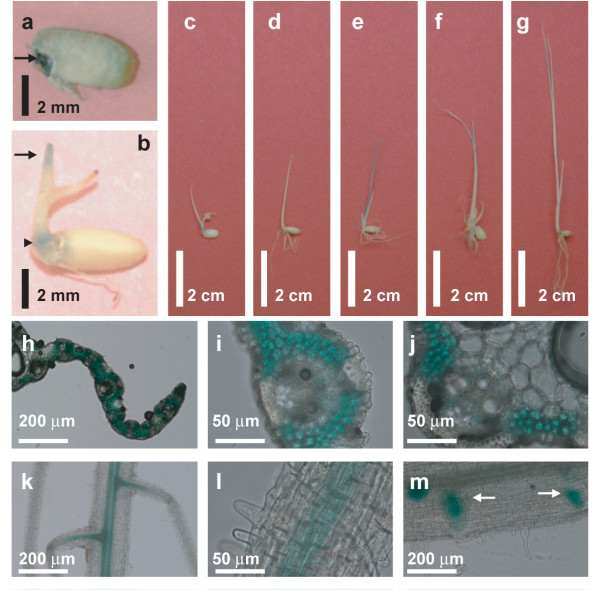
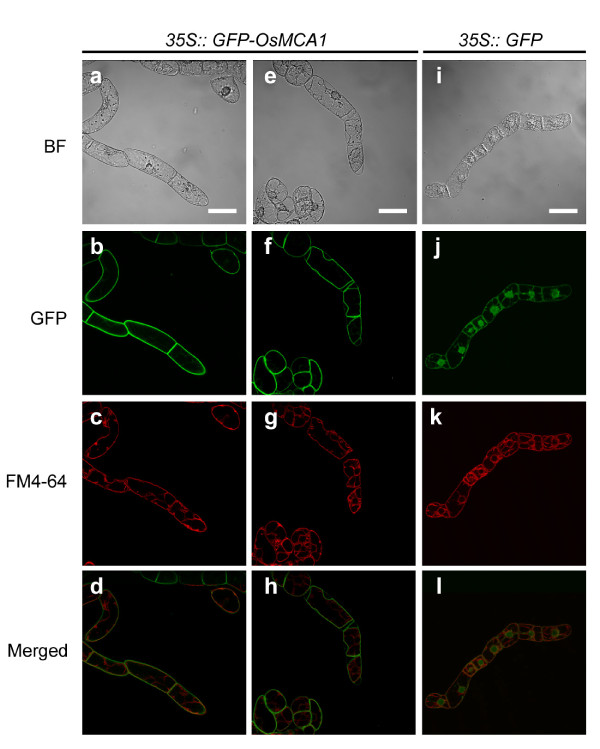
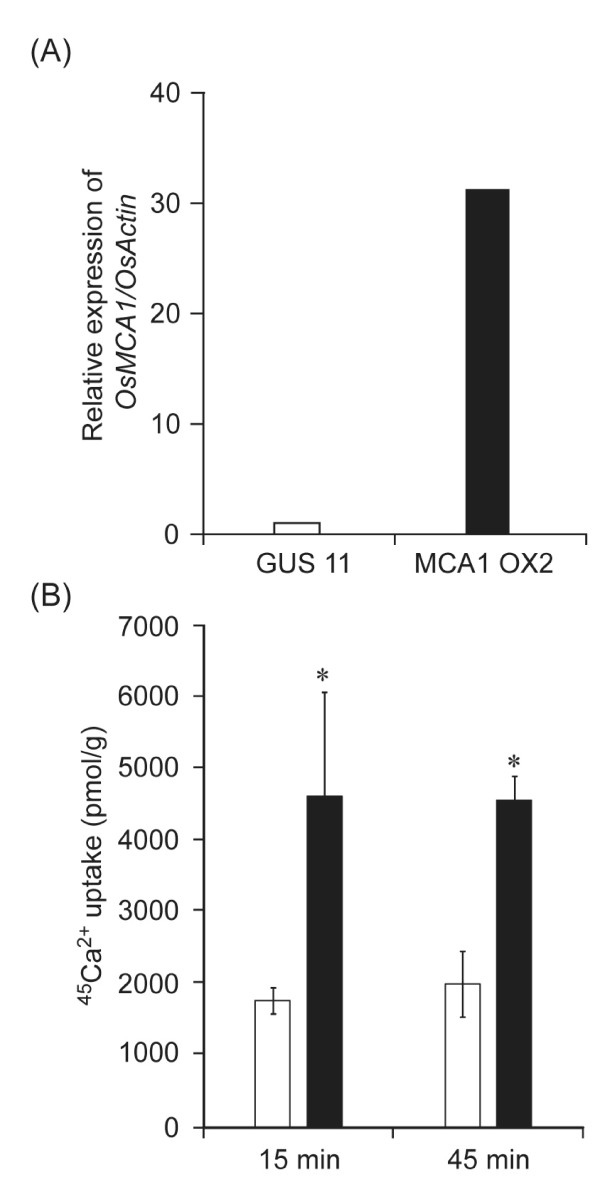
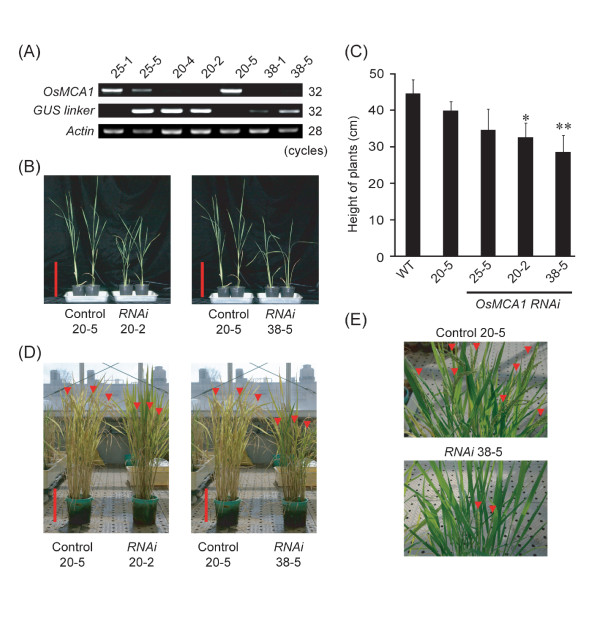
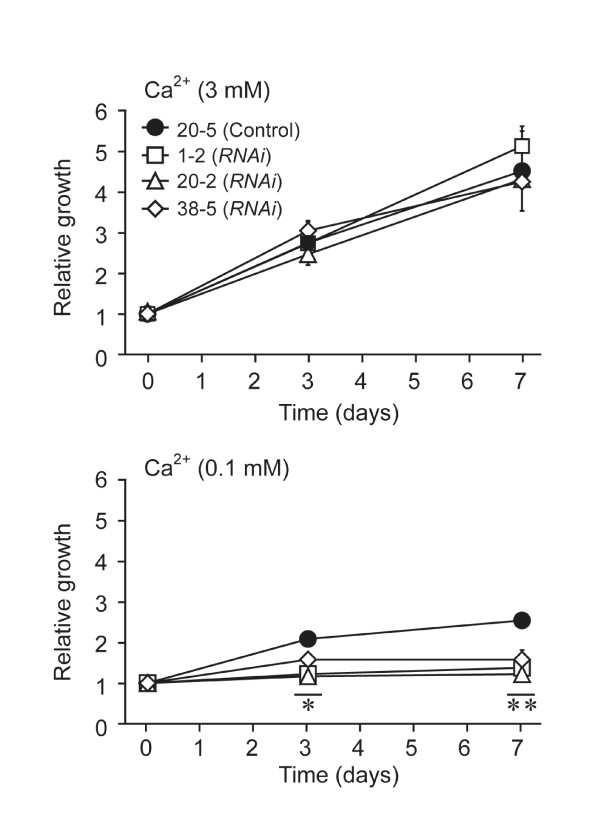
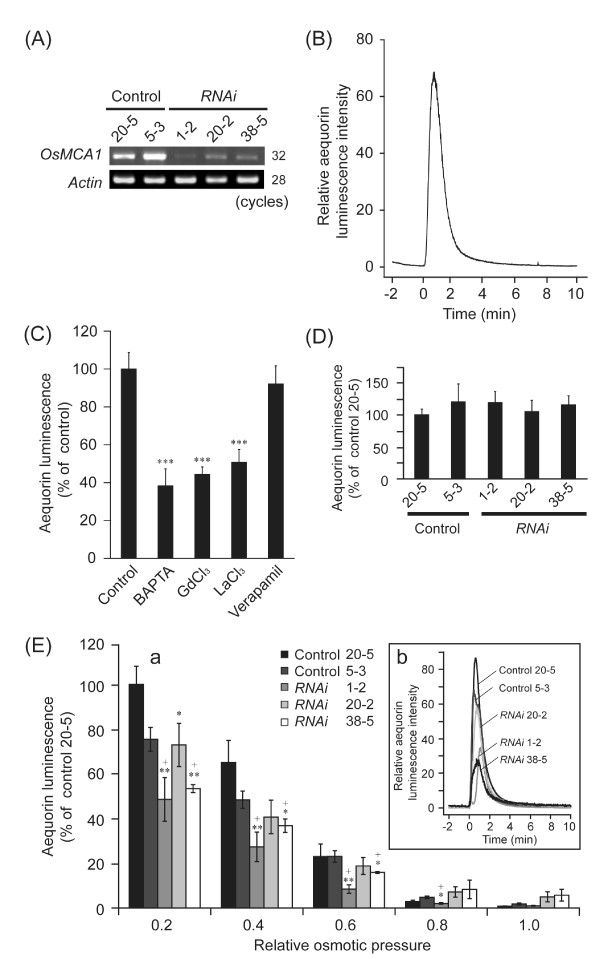
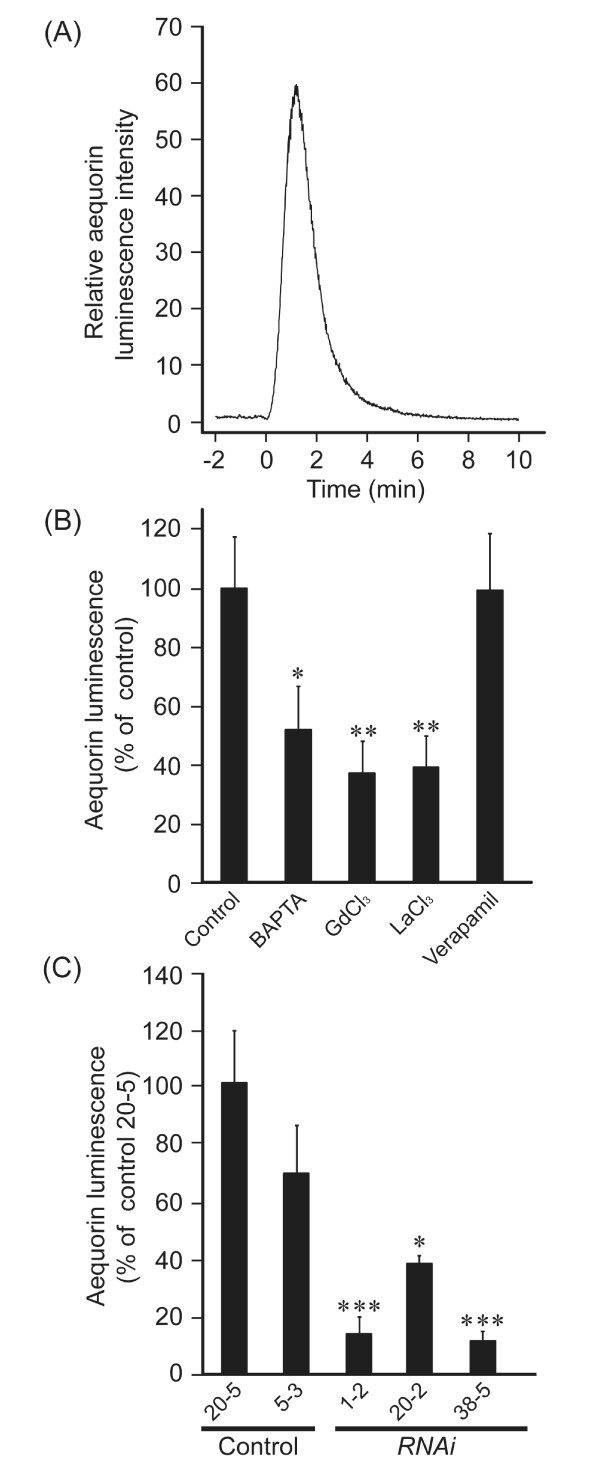
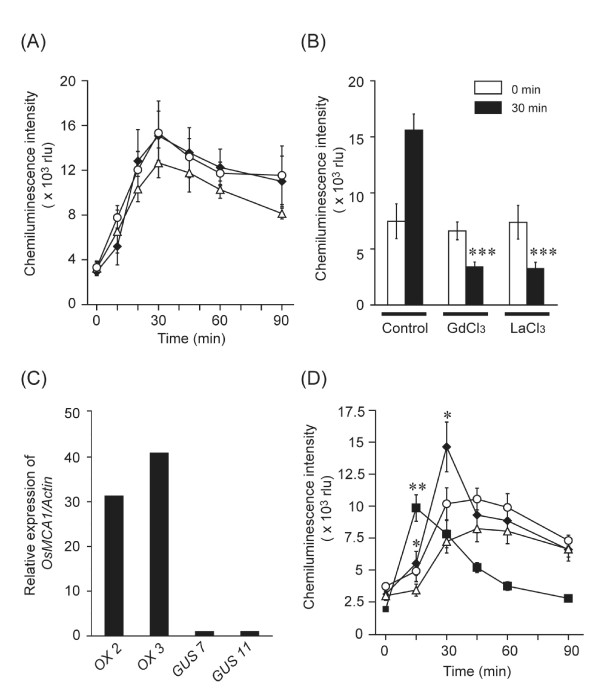
Background: Mechanosensing and its downstream responses are speculated to involve sensory complexes containing Ca 2+-permeable mechanosensitive channels. On recognizing osmotic signals, plant cells initiate activation of a widespread signal transduction network that induces second messengers and triggers inducible defense responses. Characteristic early signaling events include Ca 2+ influx, protein phosphorylation and generation of reactive oxygen species (ROS). Pharmacological analyses show Ca 2+ influx mediated by mechanosensitive Ca 2+ channels to influence induction of osmotic signals, including ROS generation. However, molecular bases and regulatory mechanisms for early osmotic signaling events remain poorly elucidated. Results: We here identified and investigated OsMCA1, the sole rice homolog of putative Ca 2+-permeable mechanosensitive channels in Arabidopsis (MCAs). OsMCA1 was specifically localized at the plasma membrane. A promoter-reporter assay suggested that OsMCA1 mRNA is widely expressed in seed embryos, proximal and apical regions of shoots, and mesophyll cells of leaves and roots in rice. Ca 2+ uptake was enhanced in OsMCA1-overexpressing suspension-cultured cells, suggesting that OsMCA1 is involved in Ca 2+ influx across the plasma membrane. Hypo-osmotic shock-induced ROS generation mediated by NADPH oxidases was also enhanced in OsMCA1-overexpressing cells. We also generated and characterized OsMCA1-RNAi transgenic plants and cultured cells; OsMCA1-suppressed plants showed retarded growth and shortened rachises, while OsMCA1-suppressed cells carrying Ca 2+-sensitive photoprotein aequorin showed partially impaired changes in cytosolic free Ca 2+ concentration ([Ca 2+]cyt) induced by hypo-osmotic shock and trinitrophenol, an activator of mechanosensitive channels. Conclusions: We have identified a sole MCA ortholog in the rice genome and developed both overexpression and suppression lines. Analyses of cultured cells with altered levels of this putative Ca 2+-permeable mechanosensitive channel indicate that OsMCA1 is involved in regulation of plasma membrane Ca 2+ influx and ROS generation induced by hypo-osmotic stress in cultured rice cells. These findings shed light on our understanding of mechanical sensing pathways.
Overview
The claims and statistics of this paper haven’t been checked yet.
Free: it reads the open-access text and checks the first 5 claims that cite a source we can check. Create a free account to check every claim.
Integrity signals
Registry
Cites
Statistics
Figures
Verification
Claims the paper makes
The claims and statistics of this paper haven’t been checked yet.
Free: it reads the open-access text and checks the first 5 claims that cite a source we can check. Create a free account to check every claim.
Claims other papers make about this one
Each is checked against this paper’s own text: does it say what the citing paper says it does?
In the citing paper
“The nucleus is integral in the coordination of various cellular activities geared at improving the performance under abiotic stress conditions [51].”
Self-check
Percentages, sums and reported differences re-computed from the paper’s own numbers.
The self-check needs the paper’s full text.
Citations
Cites
A Revised Medium for Rapid Growth and Bio Assays with Tobacco Tissue Cultures
Murashige, T., & Skoog, F. (1962) · Physiologia Plantarum · doi:10.1111/j.1399-3054.1962.tb08052.x · Cited by 67,392
GATEWAY™ vectors for Agrobacterium-mediated plant transformation
Karimi, M., Inzé, D., & Depicker, A. (2002) · Trends in Plant Science · doi:10.1016/s1360-1385(02)02251-3 · Cited by 3,635
CERK1, a LysM receptor kinase, is essential for chitin elicitor signaling in Arabidopsis
Miya, A., Albert, P., Shinya, T., Desaki, Y., Ichimura, K., Shirasu, K., Narusaka, Y., Kawakami, N., Kaku, H., & Shibuya, N. (2007) · Proceedings of the National Academy of Sciences · doi:10.1073/pnas.0705147104 · Cited by 1,427 · cited 1×
“On the other hand, increased [Ca]cyt triggered by Nacetylchito-oligosaccharides, a major microbe-associated molecular pattern (MAMP) recognized by plasma membrane receptors in rice [23,24], was not affected by OsMCA1 expression levels Figure 4 Effects of OsMCA1 suppression on growth and development in planta.”
BackgroundThe Language of Calcium Signaling
Dodd, A. N., Kudla, J., & Sanders, D. (2010) · Annual Review of Plant Biology · doi:10.1146/annurev-arplant-070109-104628 · Cited by 1,317 · cited 2×
“Discussion It has been suggested that Ca plays a crucial role in mechanical sensing [7,25].”
BackgroundCalcium at the Crossroads of Signaling
Sanders, D., Pelloux, J., Brownlee, C., & Harper, J. F. (2002) · The Plant Cell · doi:10.1105/tpc.002899 · Cited by 1,214 · cited 2×
“Plants need to sense and respond to mechanical stresses, such as wind, touch, and changes in osmotic pressure [1-3].”
BackgroundKnight, M. R., Campbell, A. K., Smith, S. M., & Trewavas, A. J. (1991) · Nature · doi:10.1038/352524a0 · Cited by 1,169 · cited 1×
“To express cytoplasm-targeted apoaequorin cDNA [41] in OsMCA1-suppressed plants, sequences were cloned into a Ti-based vector pSMAB704 [42] downstream of a CaMV 35S promoter, and Agrobacteriummediated transformation of rice calli was performed.”
MethodPlant cells recognize chitin fragments for defense signaling through a plasma membrane receptor
Kaku, H., Nishizawa, Y., Ishii-Minami, N., Akimoto-Tomiyama, C., Dohmae, N., Takio, K., Minami, E., & Shibuya, N. (2006) · Proceedings of the National Academy of Sciences · doi:10.1073/pnas.0508882103 · Cited by 1,166 · cited 1×
“On the other hand, increased [Ca]cyt triggered by Nacetylchito-oligosaccharides, a major microbe-associated molecular pattern (MAMP) recognized by plasma membrane receptors in rice [23,24], was not affected by OsMCA1 expression levels Figure 4 Effects of OsMCA1 suppression on growth and development in planta.”
BackgroundKojima, S., Takahashi, Y., Kobayashi, Y., Monna, L., Sasaki, T., Araki, T., & Yano, M. (2002) · Plant and Cell Physiology · doi:10.1093/pcp/pcf156 · Cited by 1,158
Evolutionary Ecology of Plant Adaptation to Serpentine Soils
Brady, K. U., Kruckeberg, A. R., & Bradshaw Jr., H. D. (2005) · Annual Review of Ecology, Evolution, and Systematics · doi:10.1146/annurev.ecolsys.35.021103.105730 · Cited by 733
In touch: plant responses to mechanical stimuli
Braam, J. (2005) · New Phytologist · doi:10.1111/j.1469-8137.2004.01263.x · Cited by 676
Calcium/calmodulin-mediated signal network in plants
Yang, T., & Poovaiah, B. W. (2003) · Trends in Plant Science · doi:10.1016/j.tplants.2003.09.004 · Cited by 594
Local Positive Feedback Regulation Determines Cell Shape in Root Hair Cells
Takeda, S., Gapper, C., Kaya, H., Bell, E., Kuchitsu, K., & Dolan, L. (2008) · Science · doi:10.1126/science.1152505 · Cited by 518 · cited 1×
“Binding Ca to the EF-hand regions of cytosolic regulatory domains of plant NADPH oxidases directly activates them [28-30].”
BackgroundSelf-citationSimple RNAi Vectors for Stable and Transient Suppression of Gene Function in Rice
Miki, D., & Shimamoto, K. (2004) · Plant and Cell Physiology · doi:10.1093/pcp/pch048 · Cited by 504 · cited 1×
“CACC CTCTTATCCAAACTTGCCAT-3’ and RNAiRV, 5’- AATGTTCCACAGGGGAAAAAGAATGTTCTC-3’ as specific primers, subcloned into a pENTR/D-TOPO cloning vector, and cloned into a Ti-based RNAi vector, pANDA [38] using the LR clonase reaction.”
MethodSynergistic Activation of the Arabidopsis NADPH Oxidase AtrbohD by Ca2+ and Phosphorylation
Ogasawara, Y., Kaya, H., Hiraoka, G., Yumoto, F., Kimura, S., Kadota, Y., Hishinuma, H., Senzaki, E., Yamagoe, S., Nagata, K., et al. (2008) · Journal of Biological Chemistry · doi:10.1074/jbc.m708106200 · Cited by 495
Self-citationHigh Efficiency Transformation of Cultured Tobacco Cells
An, G. (1985) · Plant Physiology · doi:10.1104/pp.79.2.568 · Cited by 456 · cited 2×
“Transformation of BY-2 cells was carried out in accor- dance with An (1985) [43] with minor modifications as follows: 4 mL of 3-day-old exponentially growing culture was transferred to 90-mm Petri dishes and incubated at 28°C with 100 μL of fresh overnight-culture of Agrobacterium tumefaciens…”
MethodArabidopsis plasma membrane protein crucial for Ca 2+ influx and touch sensing in roots
Nakagawa, Y., Katagiri, T., Shinozaki, K., Qi, Z., Tatsumi, H., Furuichi, T., Kishigami, A., Sokabe, M., Kojima, I., Sato, S., et al. (2007) · Proceedings of the National Academy of Sciences · doi:10.1073/pnas.0607703104 · Cited by 405
Self-citationCa2+ Regulates Reactive Oxygen Species Production and pH during Mechanosensing in Arabidopsis Roots
Monshausen, G. B., Bibikova, T. N., Weisenseel, M. H., & Gilroy, S. (2009) · The Plant Cell · doi:10.1105/tpc.109.068395 · Cited by 389 · cited 1×
“A functional NADPH oxidase AtrbohC/RHD2 reportedly affects mechanical stressinduced ROS generation in a Ca-dependent manner [31].”
BackgroundCalcium: silver bullet in signaling
Reddy, A. S. N. (2001) · Plant Science · doi:10.1016/s0168-9452(00)00386-1 · Cited by 388 · cited 1×
“Plants need to sense and respond to mechanical stresses, such as wind, touch, and changes in osmotic pressure [1-3].”
BackgroundA unified hypothesis of mechanoperception in plants
Telewski, F. W. (2006) · American Journal of Botany · doi:10.3732/ajb.93.10.1466 · Cited by 339
Two MscS Homologs Provide Mechanosensitive Channel Activities in the Arabidopsis Root
Haswell, E. S., Peyronnet, R., Barbier-Brygoo, H., Meyerowitz, E. M., & Frachisse, J.-M. (2008) · Current Biology · doi:10.1016/j.cub.2008.04.039 · Cited by 283
Lee, D., Polisensky, D. H., & Braam, J. (2005) · New Phytologist · doi:10.1111/j.1469-8137.2004.01238.x · Cited by 238 · cited 1×
“Elevation of cytosolic free Ca concentration ([Ca]cyt) is induced in response to various stimuli, such as chemical, physical, and mechanical stimuli [2,4-7].”
BackgroundIida, H., Yagawa, Y., & Anraku, Y. (1990) · Journal of Biological Chemistry · doi:10.1016/s0021-9258(19)38311-5 · Cited by 222
Self-citationMCA1 and MCA2 That Mediate Ca2+ Uptake Have Distinct and Overlapping Roles in Arabidopsis
Yamanaka, T., Nakagawa, Y., Mori, K., Nakano, M., Imamura, T., Kataoka, H., Terashima, A., Iida, K., Kojima, I., Katagiri, T., et al. (2010) · Plant Physiology · doi:10.1104/pp.109.147371 · Cited by 209
Self-citationGenes for calcium-permeable channels in the plasma membrane of plant root cells
White, P. J., Bowen, H. C., Demidchik, V., Nichols, C., & Davies, J. M. (2002) · Biochimica et Biophysica Acta (BBA) - Biomembranes · doi:10.1016/s0005-2736(02)00509-6 · Cited by 197 · cited 1×
“Electrophysiological and bioinformatic studies have revealed the existence of plasma membrane Ca-permeable channels activated by mechanical stimuli, although the structural entity involved and their physiological functions remain largely unknown [8-12].”
BackgroundKimura, S., Kaya, H., Kawarazaki, T., Hiraoka, G., Senzaki, E., Michikawa, M., & Kuchitsu, K. (2012) · Biochimica et Biophysica Acta (BBA) - Molecular Cell Research · doi:10.1016/j.bbamcr.2011.09.011 · Cited by 195
Self-citationMechanical signalling, calcium and plant form
Trewavas, A., & Knight, M. (1994) · Plant Molecular Biology · doi:10.1007/bf00016478 · Cited by 189 · cited 1×
“Discussion It has been suggested that Ca plays a crucial role in mechanical sensing [7,25].”
BackgroundCation channels in the Arabidopsis plasma membrane
Véry, A.-A., & Sentenac, H. (2002) · Trends in Plant Science · doi:10.1016/s1360-1385(02)02262-8 · Cited by 188 · cited 1×
“Electrophysiological and bioinformatic studies have revealed the existence of plasma membrane Ca-permeable channels activated by mechanical stimuli, although the structural entity involved and their physiological functions remain largely unknown [8-12].”
BackgroundIdentification and Characterization of Stretch-Activated Ion Channels in Pollen Protoplasts
Dutta, R., & Robinson, K. R. (2004) · Plant Physiology · doi:10.1104/pp.104.041483 · Cited by 174
Ionic Signaling in Plant Responses to Gravity and Touch
Fasano, J. M., Massa, G. D., & Gilroy, S. (2002) · Journal of Plant Growth Regulation · doi:10.1007/s003440010049 · Cited by 158 · cited 1×
“Elevation of cytosolic free Ca concentration ([Ca]cyt) is induced in response to various stimuli, such as chemical, physical, and mechanical stimuli [2,4-7].”
BackgroundTi-Plasmid Vectors Useful for Functional Analysis of Rice Genes.
FUSE, T., SASAKI, T., & YANO, M. (2001) · Plant Biotechnology · doi:10.5511/plantbiotechnology.18.219 · Cited by 142 · cited 1×
“To overexpress OsMCA1 and GUS cDNAs, sequences were cloned into a Ti-based vector pPZP2H-lac [40] downstream of the maize Ubiquitin promoter, and Agrobacterium-mediated transformation of rice calli was performed.”
MethodKurusu, T., Yagala, T., Miyao, A., Hirochika, H., & Kuchitsu, K. (2005) · The Plant Journal · doi:10.1111/j.1365-313x.2005.02415.x · Cited by 141 · cited 2×
“To monitor H2O2 produced in extracellular medium, cells (80 mg mL-1) were washed and resuspended in 5 mM MES buffer (pH 7.0) containing 0.5 mM CaCl2, 0.5 mM K2SO4 and with or without 175 mM mannitol (Kurusu et al. 2005).”
MethodSelf-citationKuchitsu, K., Kikuyama, M., & Shibuya, N. (1993) · PROTOPLASMA · doi:10.1007/bf01404046 · Cited by 137 · cited 1×
“Calli were suspension-cultured at 25°C in a liquid L medium [34] containing 2,4-D (0.”
MethodSelf-citationKurusu, T., Hamada, J., Nokajima, H., Kitagawa, Y., Kiyoduka, M., Takahashi, A., Hanamata, S., Ohno, R., Hayashi, T., Okada, K., et al. (2010) · PLANT PHYSIOLOGY · doi:10.1104/pp.109.151852 · Cited by 133 · cited 2×
“Real-time RT-PCR assays were performed as described by Kurusu et al. (2010) [36].”
MethodSelf-citationOxidative Burst and Hypoosmotic Stress in Tobacco Cell Suspensions
Cazalé, A., Rouet‐Mayer, M., Barbier‐Brygoo, H., Mathieu, Y., & Laurière, C. (1998) · PLANT PHYSIOLOGY · doi:10.1104/pp.116.2.659 · Cited by 125 · cited 3×
“Hypo-osmotic shock triggers ROS generation following a [Ca]cyt increase [18,20,22].”
BackgroundInfluentialOsmoregulation of leaf motor cells
Moran, N. (2007) · FEBS Letters · doi:10.1016/j.febslet.2007.04.002 · Cited by 122 · cited 1×
“These downstream events are often prevented when Ca(2) + influx is compromised by either Ca chelators, such as ethylene glycol-bis-(2-aminoethylether)-N, N, N’, N’tetra acetic acid (EGTA), or Ca-channel blockers, such as La [21].”
BackgroundToyota, M., Furuichi, T., Tatsumi, H., & Sokabe, M. (2007) · PLANT PHYSIOLOGY · doi:10.1104/pp.107.106450 · Cited by 114
Ji, X., Raveendran, M., Oane, R. H., Ismail, A. M., Lafitte, R. H., Bruskiewich, R., Cheng, S., & Bennett, J. (2005) · Plant Molecular Biology · doi:10.1007/s11103-005-2415-8 · Cited by 86 · cited 1×
“These phenotypes are frequently observed under drought-stress conditions [26].”
BackgroundBeffagna, N., Buffoli, B., & Busi, C. (2005) · Plant and Cell Physiology · doi:10.1093/pcp/pci142 · Cited by 63
Hayashi, T., Harada, A., Sakai, T., & Takagi, S. (2005) · Plant Cell & Environment · doi:10.1111/j.1365-3040.2005.01447.x · Cited by 46
AtMSL9 and AtMSL10: Sensors of plasma membrane tension in Arabidopsis roots
Peyronnet, R., Haswell, E. S., Barbier‐Brygoo, H., & Frachisse, J. (2008) · Plant Signaling & Behavior · doi:10.4161/psb.3.9.6487 · Cited by 45 · cited 2×
“It has been suggested that Arabidopsis MSL9 and MSL10, homologs of the bacterial mechanosensitive channel MscS, are required for mechanosensitive channel activity in root cell plasma membranes, and are able to translocate cations including Ca [13,14].”
BackgroundA Mechanosensitive Anion Channel in Arabidopsis thaliana Mesophyll Cells
Qi, Z., Kishigami, A., Nakagawa, Y., Iida, H., & Sokabe, M. (2004) · Plant and Cell Physiology · doi:10.1093/pcp/pch194 · Cited by 42 · cited 1×
“Electrophysiological and bioinformatic studies have revealed the existence of plasma membrane Ca-permeable channels activated by mechanical stimuli, although the structural entity involved and their physiological functions remain largely unknown [8-12].”
BackgroundSelf-citationRoles of calcineurin B-like protein-interacting protein kinases in innate immunity in rice
Kurusu, T., Hamada, J., Hamada, H., Hanamata, S., & Kuchitsu, K. (2010) · Plant Signaling & Behavior · doi:10.4161/psb.5.8.12407 · Cited by 40 · cited 1×
“Real-time RT-PCR assays were performed as described by Kurusu et al. (2010) [36].”
MethodSelf-citationRouet-Mayer, M.-A., Mathieu, Y., Barbier‐Brygoo, H., & Laurière, C. (2006) · Journal of Experimental Botany · doi:10.1093/jxb/erj107 · Cited by 37 · cited 2×
“Peroxidase-catalyzed reactions have been also proposed for osmotic shock-induced ROS generation in cultured tobacco and Arabidopsis cells [19].”
BackgroundZingarelli, L., Marrè, M. T., Massardi, F., & LADO, P. (1999) · Physiologia Plantarum · doi:10.1034/j.1399-3054.1999.106305.x · Cited by 27
Transformation of Populus alba and Direct Selection of Transformants with the Herbicide Bialaphos
Igasaki, T., Ishida, Y., Mohri, T., Ichikawa, H., & Shinohara, K. (2002) · Cited by 19
Kurusu, T., Hamada, H., Sugiyama, Y., Yagala, T., Kadota, Y., Furuichi, T., Hayashi, T., Umemura, K., Komatsu, S., Miyao, A., et al. (2010) · Journal of Plant Research · doi:10.1007/s10265-010-0388-4 · Cited by 18 · cited 2×
“Aliquots of individual PCR products were resolved by agarose gel electrophoresis and visualized using ethidium bromide staining and exposure to UV light.”
MethodSelf-citation
Research works printed but not linked: 1
- Tanaka H Kayano T Ugaki M Shiobara F Onodera H Ono K Tagiri A Nishizawa Y Shibuya N Ultra-fast transformation technique for monocotyledons. International Patent Application 2001 No. WO 01/06844 A1
Cited by
Calcium transport across plant membranes: mechanisms and functions
Demidchik, V., Shabala, S., Isayenkov, S., Cuin, T. A., & Pottosin, I. (2018) · New Phytologist · doi:10.1111/nph.15266 · Cited by 459
Reactive oxygen species in cell wall metabolism and development in plants
Kärkönen, A., & Kuchitsu, K. (2015) · Phytochemistry · doi:10.1016/j.phytochem.2014.09.016 · Cited by 385
Self-citationDesigning salt stress‐resilient crops: Current progress and future challenges
Liang, X., Li, J., Yang, Y., Jiang, C., & Guo, Y. (2024) · Journal of Integrative Plant Biology · doi:10.1111/jipb.13599 · Cited by 292
Paniagua, C., Bilkova, A., Jackson, P., Dabravolski, S., Riber, W., Didi, V., Houser, J., Gigli-Bisceglia, N., Wimmerova, M., Budínská, E., et al. (2017) · Journal of Experimental Botany · doi:10.1093/jxb/erx141 · Cited by 287
“…plant species including crops such as rice and strawberry, as well as P. patens (N. Gigli-Bisceglia and J. Antsiferova, personal communication), suggesting that the mechanism they are involved in exists throughout the plant kingdom (Kurusu et al., 2012; Nguyen et al., 2015; Zhang et al., 2016).”
BackgroundAbhinandan, K., Skori, L., Stanic, M., Hickerson, N. M. N., Jamshed, M., & Samuel, M. A. (2018) · Frontiers in Plant Science · doi:10.3389/fpls.2018.00734 · Cited by 252
“Heat stress changes membrane fluidity which leads to rapid generation of ROS and increased Ca2+ influx (Los and Murata, 2004; Horváth et al., 2012; Kurusu et al., 2012).”
Background
Metadata
- Authors
- Kurusu, T., Nishikawa, D., Yamazaki, Y., Gotoh, M., Nakano, M., Hamada, H., Yamanaka, T., Iida, K., Nakagawa, Y., Saji, H., Shinozaki, K., Iida, H., & Kuchitsu, K.
- Affiliations
- Tokyo University of Science (JP)
- Tokyo Gakugei University (JP)
- Tokyo Metropolitan Institute of Medical Science (JP)
- National Institute for Environmental Studies (JP)
- RIKEN (JP)
- Corresponding author
- Kuchitsu, Kazuyuki
- Venue
- BMC Plant Biology
- Published
- 2012-01-23
- Volume
- 12
- Issue
- 1
- Pages
- 11-11
- ISSN
- 1471-2229 (ISSN-L)
- PMC
- PMC3313898
- OpenAlex
- W2001346525
- Cited by
- 130
- References
- 47
- Citations by year
- 2026: 7 · 2025: 7 · 2024: 8 · 2023: 11 · 2022: 11 · 2021: 15 · 2020: 12 · 2019: 9 · 2018: 18 · 2017: 9 · 2016: 3 · 2015: 3 · 2014: 6 · 2013: 6 · 2012: 5
- FWCI
- 7.29
- Type
- journal article
- Language
- en
- Open access
- gold
- doi.org
- Licence
- cc-by
- Locations
- BMC Plant Biology (publishedVersion, cc-by)
- Europe PMC (PubMed Central) (publishedVersion, cc-by)
- PubMed Central (publishedVersion, cc-by)
- PubMed (publishedVersion)
- DOAJ (DOAJ: Directory of Open Access Journals) (submittedVersion, cc-by-sa)
- Funders
- Japan Society for the Promotion of Science (21200068, 23658061, 21200067, 23380027, 21370017)
- Japan Science and Technology Agency (CREST)
- Core Research for Evolutional Science and Technology
- Topics
- Life Sciences › Agricultural and Biological Sciences › Plant Science › Plant Stress Responses and Tolerance
- Life Sciences › Agricultural and Biological Sciences › Plant Science › Plant and Biological Electrophysiology Studies
- Life Sciences › Biochemistry, Genetics and Molecular Biology › Molecular Biology › Ion channel regulation and function
- Keywords
- mechanosensitive ion channels, calcium influx, hypo-osmotic shock, reactive oxygen species, NADPH oxidase, rice, plasma membrane, picric acid, aequorin, intracellular calcium, RNAi suppression, overexpression
- MeSH terms
- Calcium, Cell Membrane, Osmotic Pressure, Plant Proteins, Oryza, Reactive Oxygen Species
About these checks
Registry, retraction, Cites and statistics results are computed, not judged, with one exception: a printed reference that no index lists is read once by a model before it counts as a citation error. Claims are extracted by a model and kept only when their quote appears verbatim in the text; each cited source is then checked, with a model’s help, for whether it says what the claim relies on. Those verdicts can be wrong — read the claim’s quote and the cited source before relying on one.
Statistics and arithmetic are recomputed, not judged.
Confidence bands are shown only for fields calibrated on our annotated test set. None is calibrated yet, so no band is shown.
What counts as a claim ›How we measure confidence ›How we check this ›
Are you an author, or do you see a problem with this page? Request a review
Data sources
Bibliographic data: Semantic Scholar, OpenAlex, Crossref.
Contains information from the Semantic Scholar Academic Graph Datasets, made available under the ODC Attribution License (ODC-BY 1.0).
Semantic Scholar’s data is described in: Kinney, R., et al. (2023). The Semantic Scholar Open Data Platform. arXiv:2301.10140.
