

Plasma membrane protein OsMCA1 is involved in regulation of hypo-osmotic shock-induced Ca2+influx and modulates generation of reactive oxygen species in cultured rice cells
Open accessThe DOI matches its Crossref record; 46 of the 47 references it cites were found in a registry or an index.
Abstract
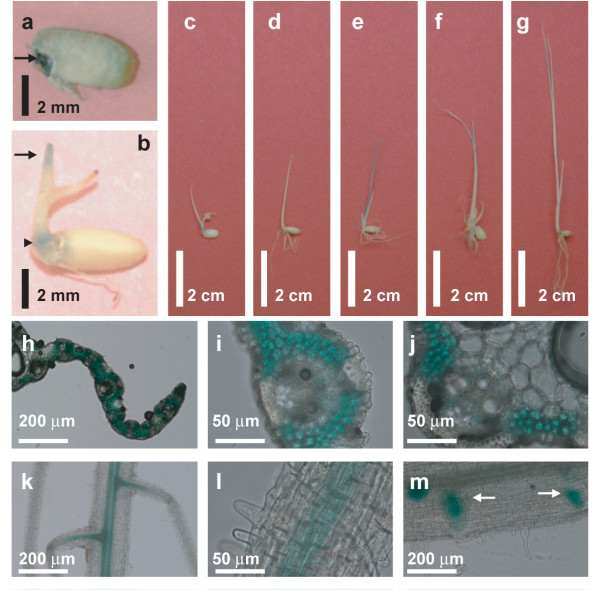
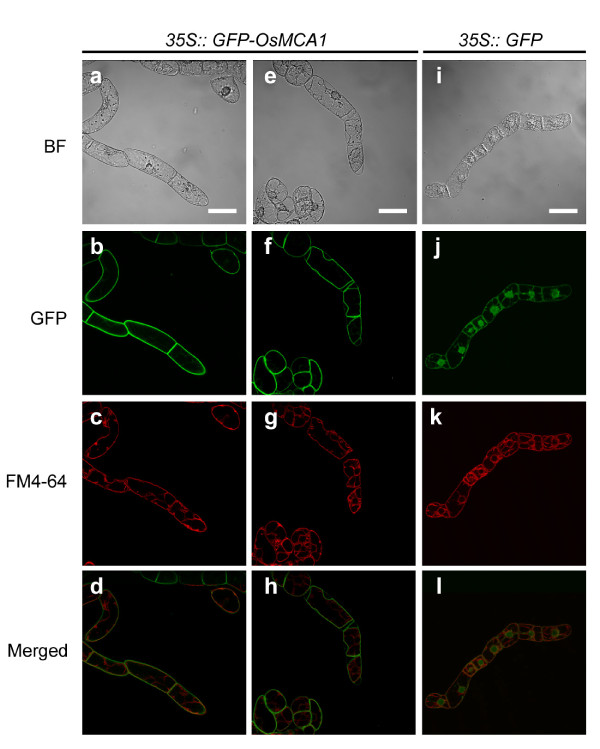
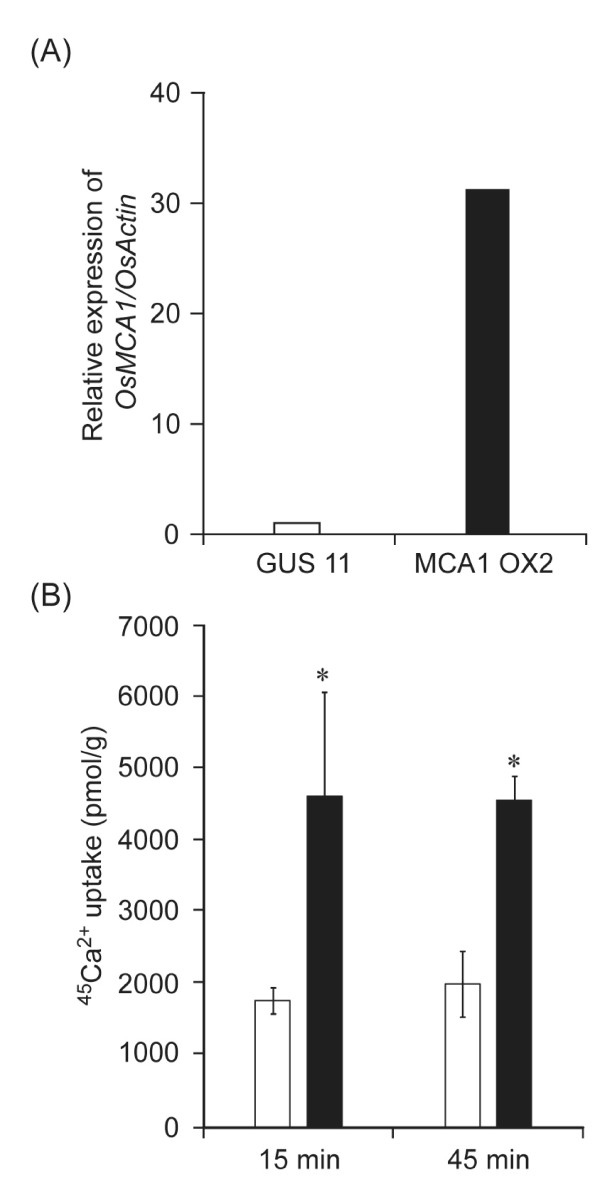
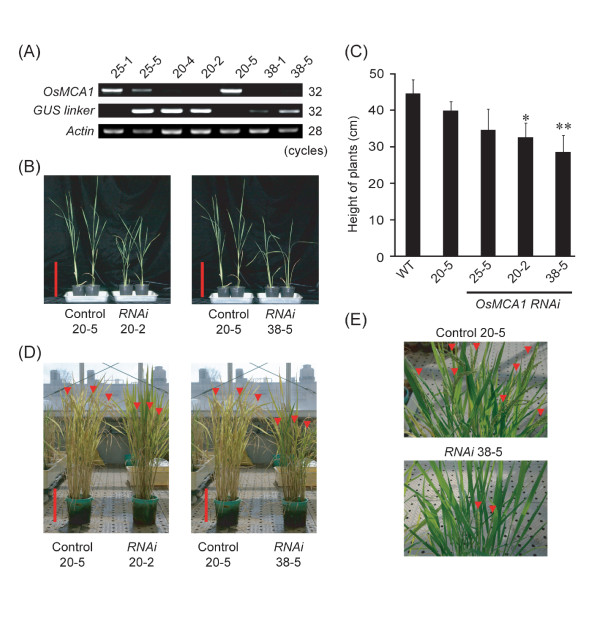
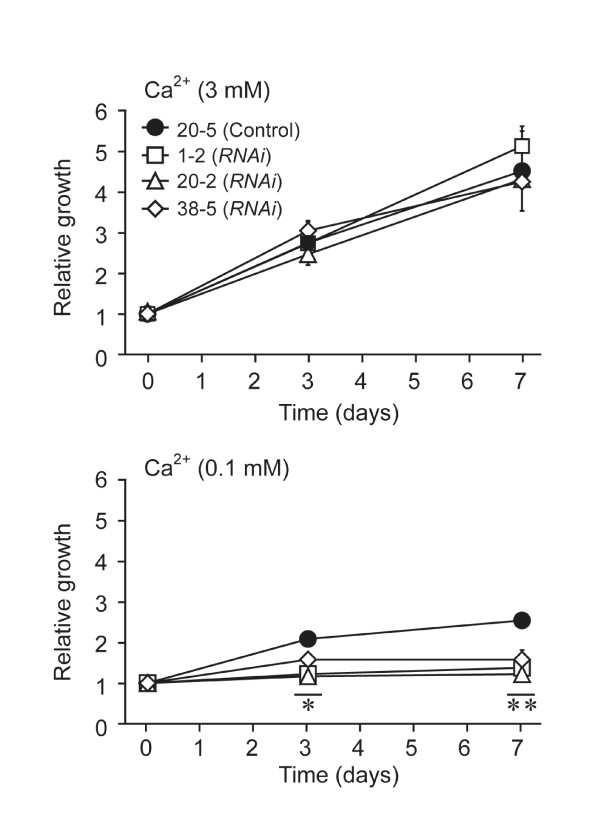
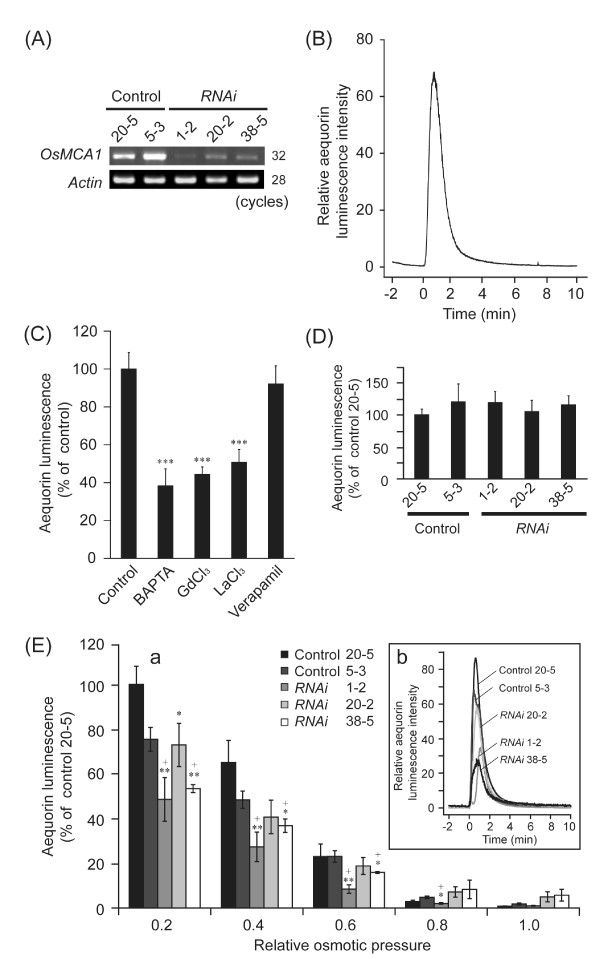
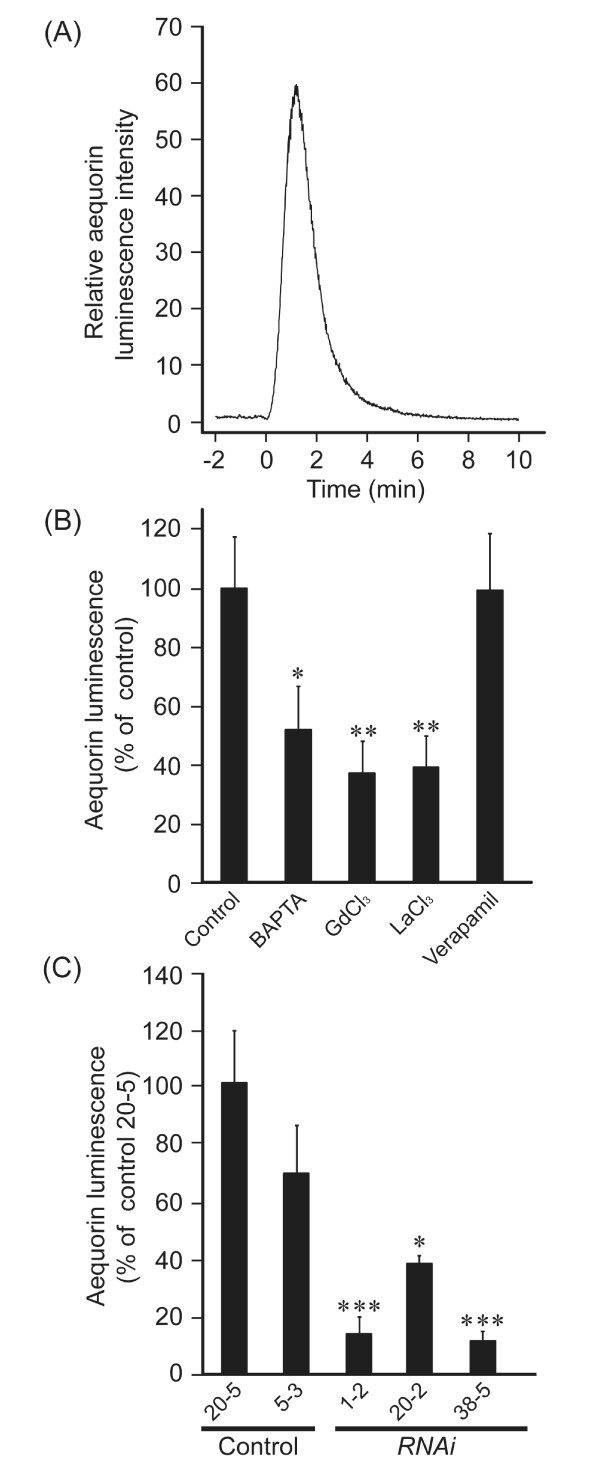
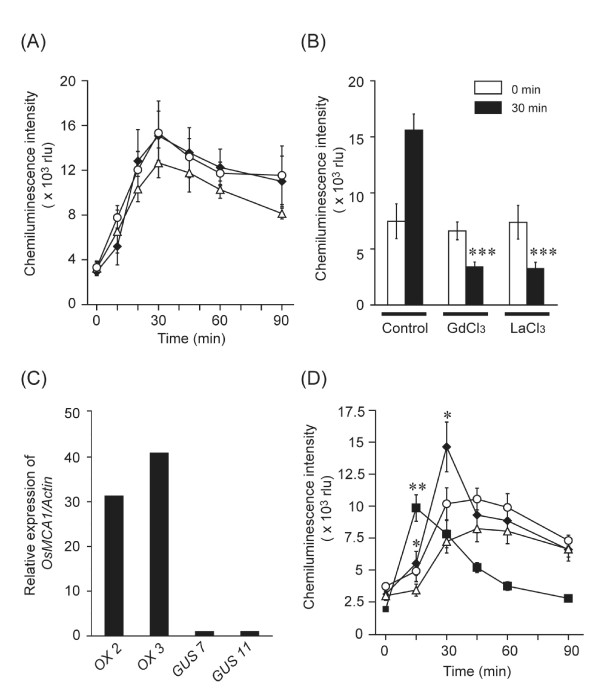
Background: Mechanosensing and its downstream responses are speculated to involve sensory complexes containing Ca 2+-permeable mechanosensitive channels. On recognizing osmotic signals, plant cells initiate activation of a widespread signal transduction network that induces second messengers and triggers inducible defense responses. Characteristic early signaling events include Ca 2+ influx, protein phosphorylation and generation of reactive oxygen species (ROS). Pharmacological analyses show Ca 2+ influx mediated by mechanosensitive Ca 2+ channels to influence induction of osmotic signals, including ROS generation. However, molecular bases and regulatory mechanisms for early osmotic signaling events remain poorly elucidated. Results: We here identified and investigated OsMCA1, the sole rice homolog of putative Ca 2+-permeable mechanosensitive channels in Arabidopsis (MCAs). OsMCA1 was specifically localized at the plasma membrane. A promoter-reporter assay suggested that OsMCA1 mRNA is widely expressed in seed embryos, proximal and apical regions of shoots, and mesophyll cells of leaves and roots in rice. Ca 2+ uptake was enhanced in OsMCA1-overexpressing suspension-cultured cells, suggesting that OsMCA1 is involved in Ca 2+ influx across the plasma membrane. Hypo-osmotic shock-induced ROS generation mediated by NADPH oxidases was also enhanced in OsMCA1-overexpressing cells. We also generated and characterized OsMCA1-RNAi transgenic plants and cultured cells; OsMCA1-suppressed plants showed retarded growth and shortened rachises, while OsMCA1-suppressed cells carrying Ca 2+-sensitive photoprotein aequorin showed partially impaired changes in cytosolic free Ca 2+ concentration ([Ca 2+]cyt) induced by hypo-osmotic shock and trinitrophenol, an activator of mechanosensitive channels. Conclusions: We have identified a sole MCA ortholog in the rice genome and developed both overexpression and suppression lines. Analyses of cultured cells with altered levels of this putative Ca 2+-permeable mechanosensitive channel indicate that OsMCA1 is involved in regulation of plasma membrane Ca 2+ influx and ROS generation induced by hypo-osmotic stress in cultured rice cells. These findings shed light on our understanding of mechanical sensing pathways.
Overview
The claims and statistics of this paper haven’t been checked yet.
Free: it reads the open-access text and checks the first 5 claims that cite a source we can check. Create a free account to check every claim.
Integrity signals
Registry
Cites
Statistics
Figures
Verification
Claims the paper makes
The claims and statistics of this paper haven’t been checked yet.
Free: it reads the open-access text and checks the first 5 claims that cite a source we can check. Create a free account to check every claim.
Claims other papers make about this one
Each is checked against this paper’s own text: does it say what the citing paper says it does?
In the citing paper
“The nucleus is integral in the coordination of various cellular activities geared at improving the performance under abiotic stress conditions [51].”
Self-check
Percentages, sums and reported differences re-computed from the paper’s own numbers.
The self-check needs the paper’s full text.
Citations
Cites
A Revised Medium for Rapid Growth and Bio Assays with Tobacco Tissue Cultures
Murashige, T., & Skoog, F. (1962) · Physiologia Plantarum · doi:10.1111/j.1399-3054.1962.tb08052.x · Cited by 67,392
GATEWAY™ vectors for Agrobacterium-mediated plant transformation
Karimi, M., Inzé, D., & Depicker, A. (2002) · Trends in Plant Science · doi:10.1016/s1360-1385(02)02251-3 · Cited by 3,635
CERK1, a LysM receptor kinase, is essential for chitin elicitor signaling in Arabidopsis
Miya, A., Albert, P., Shinya, T., Desaki, Y., Ichimura, K., Shirasu, K., Narusaka, Y., Kawakami, N., Kaku, H., & Shibuya, N. (2007) · Proceedings of the National Academy of Sciences · doi:10.1073/pnas.0705147104 · Cited by 1,427 · cited 1×
“On the other hand, increased [Ca]cyt triggered by Nacetylchito-oligosaccharides, a major microbe-associated molecular pattern (MAMP) recognized by plasma membrane receptors in rice [23,24], was not affected by OsMCA1 expression levels Figure 4 Effects of OsMCA1 suppression on growth and development in planta.”
BackgroundThe Language of Calcium Signaling
Dodd, A. N., Kudla, J., & Sanders, D. (2010) · Annual Review of Plant Biology · doi:10.1146/annurev-arplant-070109-104628 · Cited by 1,317 · cited 2×
“Discussion It has been suggested that Ca plays a crucial role in mechanical sensing [7,25].”
BackgroundCalcium at the Crossroads of Signaling
Sanders, D., Pelloux, J., Brownlee, C., & Harper, J. F. (2002) · The Plant Cell · doi:10.1105/tpc.002899 · Cited by 1,214 · cited 2×
“Plants need to sense and respond to mechanical stresses, such as wind, touch, and changes in osmotic pressure [1-3].”
BackgroundKnight, M. R., Campbell, A. K., Smith, S. M., & Trewavas, A. J. (1991) · Nature · doi:10.1038/352524a0 · Cited by 1,169 · cited 1×
“To express cytoplasm-targeted apoaequorin cDNA [41] in OsMCA1-suppressed plants, sequences were cloned into a Ti-based vector pSMAB704 [42] downstream of a CaMV 35S promoter, and Agrobacteriummediated transformation of rice calli was performed.”
MethodPlant cells recognize chitin fragments for defense signaling through a plasma membrane receptor
Kaku, H., Nishizawa, Y., Ishii-Minami, N., Akimoto-Tomiyama, C., Dohmae, N., Takio, K., Minami, E., & Shibuya, N. (2006) · Proceedings of the National Academy of Sciences · doi:10.1073/pnas.0508882103 · Cited by 1,166 · cited 1×
“On the other hand, increased [Ca]cyt triggered by Nacetylchito-oligosaccharides, a major microbe-associated molecular pattern (MAMP) recognized by plasma membrane receptors in rice [23,24], was not affected by OsMCA1 expression levels Figure 4 Effects of OsMCA1 suppression on growth and development in planta.”
BackgroundKojima, S., Takahashi, Y., Kobayashi, Y., Monna, L., Sasaki, T., Araki, T., & Yano, M. (2002) · Plant and Cell Physiology · doi:10.1093/pcp/pcf156 · Cited by 1,158
Evolutionary Ecology of Plant Adaptation to Serpentine Soils
Brady, K. U., Kruckeberg, A. R., & Bradshaw Jr., H. D. (2005) · Annual Review of Ecology, Evolution, and Systematics · doi:10.1146/annurev.ecolsys.35.021103.105730 · Cited by 733
In touch: plant responses to mechanical stimuli
Braam, J. (2005) · New Phytologist · doi:10.1111/j.1469-8137.2004.01263.x · Cited by 676
Research works printed but not linked: 1
- Tanaka H Kayano T Ugaki M Shiobara F Onodera H Ono K Tagiri A Nishizawa Y Shibuya N Ultra-fast transformation technique for monocotyledons. International Patent Application 2001 No. WO 01/06844 A1
Cited by
Calcium transport across plant membranes: mechanisms and functions
Demidchik, V., Shabala, S., Isayenkov, S., Cuin, T. A., & Pottosin, I. (2018) · New Phytologist · doi:10.1111/nph.15266 · Cited by 459
Reactive oxygen species in cell wall metabolism and development in plants
Kärkönen, A., & Kuchitsu, K. (2015) · Phytochemistry · doi:10.1016/j.phytochem.2014.09.016 · Cited by 385
Self-citationDesigning salt stress‐resilient crops: Current progress and future challenges
Liang, X., Li, J., Yang, Y., Jiang, C., & Guo, Y. (2024) · Journal of Integrative Plant Biology · doi:10.1111/jipb.13599 · Cited by 292
Paniagua, C., Bilkova, A., Jackson, P., Dabravolski, S., Riber, W., Didi, V., Houser, J., Gigli-Bisceglia, N., Wimmerova, M., Budínská, E., et al. (2017) · Journal of Experimental Botany · doi:10.1093/jxb/erx141 · Cited by 287
“…plant species including crops such as rice and strawberry, as well as P. patens (N. Gigli-Bisceglia and J. Antsiferova, personal communication), suggesting that the mechanism they are involved in exists throughout the plant kingdom (Kurusu et al., 2012; Nguyen et al., 2015; Zhang et al., 2016).”
BackgroundAbhinandan, K., Skori, L., Stanic, M., Hickerson, N. M. N., Jamshed, M., & Samuel, M. A. (2018) · Frontiers in Plant Science · doi:10.3389/fpls.2018.00734 · Cited by 252
“Heat stress changes membrane fluidity which leads to rapid generation of ROS and increased Ca2+ influx (Los and Murata, 2004; Horváth et al., 2012; Kurusu et al., 2012).”
BackgroundEngelsdorf, T., Gigli-Bisceglia, N., Veerabagu, M., McKenna, J. F., Vaahtera, L., Augstein, F., Van der Does, D., Zipfel, C., & Hamann, T. (2018) · Science Signaling · doi:10.1126/scisignal.aao3070 · Cited by 256
A force of nature: molecular mechanisms of mechanoperception in plants
Monshausen, G. B., & Haswell, E. S. (2013) · Journal of Experimental Botany · doi:10.1093/jxb/ert204 · Cited by 227
United in Diversity: Mechanosensitive Ion Channels in Plants
Hamilton, E. S., Schlegel, A. M., & Haswell, E. S. (2015) · Annual Review of Plant Biology · doi:10.1146/annurev-arplant-043014-114700 · Cited by 221
Plant signaling networks involving Ca2+ and Rboh/Nox-mediated ROS production under salinity stress
Kurusu, T., Kuchitsu, K., & Tada, Y. (2015) · Frontiers in Plant Science · doi:10.3389/fpls.2015.00427 · Cited by 207
Self-citationSeybold, H., Trempel, F., Ranf, S., Scheel, D., Romeis, T., & Lee, J. (2014) · New Phytologist · doi:10.1111/nph.13031 · Cited by 211
Calcium-Mediated Abiotic Stress Signaling in Roots
Wilkins, K. A., Matthus, E., Swarbreck, S. M., & Davies, J. M. (2016) · Frontiers in Plant Science · doi:10.3389/fpls.2016.01296 · Cited by 195
“It is present in the root and mediates hypoosmotic shock-induced [Ca2+]cyt expression in cultured cells, probably lying upstream of NADPH oxidase activity (Kurusu et al., 2012).”
Novaković, L., Guo, T., Bacic, A., Sampathkumar, A., & Johnson, K. L. (2018) · Plants · doi:10.3390/plants7040089 · Cited by 195
Life behind the wall: sensing mechanical cues in plants
Hamant, O., & Haswell, E. S. (2017) · BMC Biology · doi:10.1186/s12915-017-0403-5 · Cited by 195
Structure of the hyperosmolality-gated calcium-permeable channel OSCA1.2
Liu, X., Wang, J., & Sun, L. (2018) · Nature Communications · doi:10.1038/s41467-018-07564-5 · Cited by 178
The Amino Acid Permease 5 (OsAAP5) Regulates Tiller Number and Grain Yield in Rice
Wang, J., Wu, B., Lu, K., Wei, Q., Qian, J., Chen, Y., & Fang, Z. (2019) · Plant Physiology · doi:10.1104/pp.19.00034 · Cited by 173
“The plasma membrane colocalized marker was the rice homolog of putative Ca2+-permeable mechanosensitive channels in Arabidopsis (Arabidopsis thaliana), (OsMCA1) fused with mCherry (Kurusu et al., 2012).”
BackgroundPlant mechanosensing and Ca2+ transport
Kurusu, T., Kuchitsu, K., Nakano, M., Nakayama, Y., & Iida, H. (2013) · Trends in Plant Science · doi:10.1016/j.tplants.2012.12.002 · Cited by 167
Self-citationA high activity zinc transporter OsZIP9 mediates zinc uptake in rice
Yang, M., Li, Y., Liu, Z., Tian, J., Liang, L., Qiu, Y., Wang, G., Du, Q., Cheng, D., Cai, H., et al. (2020) · The Plant Journal · doi:10.1111/tpj.14855 · Cited by 162
The calcium‐dependent protein kinase ZmCDPK7 functions in heat‐stress tolerance in maize
Zhao, Y., Du, H., Wang, Y., Wang, H., Yang, S., Li, C., Chen, N., Yang, H., Zhang, Y., Zhu, Y., et al. (2021) · Journal of Integrative Plant Biology · doi:10.1111/jipb.13056 · Cited by 162
Emerging Roots Alter Epidermal Cell Fate through Mechanical and Reactive Oxygen Species Signaling
Steffens, B., Kovalev, A., Gorb, S. N., & Sauter, M. (2012) · The Plant Cell · doi:10.1105/tpc.112.101790 · Cited by 163
Demidchik, V., & Shabala, S. (2018) · Functional Plant Biology · doi:10.1071/fp16420 · Cited by 159
Plant mechanosensitive ion channels: an ocean of possibilities
Basu, D., & Haswell, E. S. (2017) · Current Opinion in Plant Biology · doi:10.1016/j.pbi.2017.07.002 · Cited by 171
Molecular Mechanisms of Plant Responses to Salt Stress
Ma, L., Liu, X., Lv, W., & Yang, Y. (2022) · Frontiers in Plant Science · doi:10.3389/fpls.2022.934877 · Cited by 185
Mori, K., Renhu, N., Naito, M., Nakamura, A., Shiba, H., Yamamoto, T., Suzaki, T., Iida, H., & Miura, K. (2018) · Scientific Reports · doi:10.1038/s41598-017-17483-y · Cited by 149
Self-citationCalcium signaling and transport machinery: Potential for development of stress tolerance in plants
Ghosh, S., Bheri, M., Bisht, D., & Pandey, G. K. (2022) · Current Plant Biology · doi:10.1016/j.cpb.2022.100235 · Cited by 153
Maksaev, G. I., & Haswell, E. S. (2012) · Proceedings of the National Academy of Sciences · doi:10.1073/pnas.1213931109 · Cited by 141
Calcium signaling in plant immunity: a spatiotemporally controlled symphony
Jiang, Y., & Ding, P. (2022) · Trends in Plant Science · doi:10.1016/j.tplants.2022.11.001 · Cited by 133
ROS Regulation of Polar Growth in Plant Cells
Mangano, S., Denita-Juárez, S. P., & Estevez, J. M. (2016) · PLANT PHYSIOLOGY · doi:10.1104/pp.16.00191 · Cited by 168
Sensing Mechanisms: Calcium Signaling Mediated Abiotic Stress in Plants
Xu, T., Niu, J., & Jiang, Z. (2022) · Frontiers in Plant Science · doi:10.3389/fpls.2022.925863 · Cited by 148
Xu, F., Wang, K., Yuan, W., Xu, W., Liu, S., Kronzucker, H. J., Chen, G., Miao, R., Zhang, M., Ding, M., et al. (2018) · Journal of Experimental Botany · doi:10.1093/jxb/ery386 · Cited by 123
“OsMCA1 was used as a plasma membrane localization marker (Takamitsu et al., 2012).”
MethodGenome-Wide Identification and Expression Analysis of NRAMP Family Genes in Soybean (Glycine Max L.)
Qin, L., Han, P., Chen, L., Walk, T. C., Li, Y., Hu, X., Xie, L., Liao, H., & Liao, X. (2017) · Frontiers in Plant Science · doi:10.3389/fpls.2017.01436 · Cited by 118
“Subsequent to this computational analysis, subcellular localization for six selected GmNRAMPs proteins was empirically observed though transient expression of GFP: GmNRAMP fusions in Arabidopsis protoplasts containing the membrane marker OsMCA1 (Kurusu et al., 2012) or the tonoplast marker AtTPK1 (Voelker et al.”
BackgroundInfluentialBasu, D., & Haswell, E. S. (2020) · Current Biology · doi:10.1016/j.cub.2020.05.015 · Cited by 112
Wang, L., Yao, L., Hao, X., Li, N., Qian, W., Yue, C., Ding, C., Zeng, J., Yang, Y., & Wang, X. (2018) · Plant Molecular Biology · doi:10.1007/s11103-018-0716-y · Cited by 103
Programmed cell death (PCD) control in plants: New insights from the Arabidopsis thaliana deathosome
Valandro, F., Menguer, P. K., Cabreira-Cagliari, C., Margis-Pinheiro, M. M. A. N., & Cagliari, A. (2020) · Plant Science · doi:10.1016/j.plantsci.2020.110603 · Cited by 95
Magwanga, R. O., Lu, P., Kirungu, J. N., Cai, X., Zhou, Z., Wang, X., Diouf, L., Xu, Y., Hou, Y., Hu, Y., et al. (2018) · International Journal of Molecular Sciences · doi:10.3390/ijms19092625 · Cited by 88
Plant electrical signals: A multidisciplinary challenge
Li, J., Fan, L., Zhao, D., Zhou, Q., Yao, J.-P., Wang, Z., & Huang, L. (2021) · Journal of Plant Physiology · doi:10.1016/j.jplph.2021.153418 · Cited by 90
Huang, W., Bai, G., Wang, J., Zhu, W., Zeng, Q., Lu, K., Sun, S., & Fang, Z. (2018) · Frontiers in Plant Science · doi:10.3389/fpls.2018.00300 · Cited by 75
“The co-expressed markers were plasma membrane protein OsMCA1 fusing with mCherry (Kurusu et al., 2012) and vacuole membrane protein AtTPK fusing with mkate (Voelker et al., 2006).”
MethodYang, H., Zhao, Y., Chen, N., Liu, Y., Yang, S., Du, H., Wang, W., Wu, J., Tai, F., Chen, F., et al. (2020) · Journal of Experimental Botany · doi:10.1093/jxb/eraa431 · Cited by 73
Increased Autophagy of Rice Can Increase Yield and Nitrogen Use Efficiency (NUE)
Yu, J., Zhen, X., Li, X., Li, N., & Xu, F. (2019) · Frontiers in Plant Science · doi:10.3389/fpls.2019.00584 · Cited by 76
“Subcellular localization analysis with rice protoplasts showed that the eGFP-OsATG8a fusion protein was predominantly localized to the cytoplasm, with autophagosome-like structures seen as fluorescence puncta in rice protoplasts (Figure 1A), while the colocalization assay with a cell membrane marker OsMCA1-RFP (Kurusu…”
MethodInfluentialYao, L., Ding, C., Hao, X., Zeng, J., Yang, Y., Wang, X., & Wang, L. (2020) · Plant and Cell Physiology · doi:10.1093/pcp/pcaa091 · Cited by 73
Calcium signaling-mediated transcriptional reprogramming during abiotic stress response in plants
Ren, H., Zhang, Y., Zhong, M., Hussian, J., Tang, Y., Liu, S., & Qi, G. (2023) · Theoretical and Applied Genetics · doi:10.1007/s00122-023-04455-2 · Cited by 76
Furuichi, T., Iida, H., Sokabe, M., & Tatsumi, H. (2012) · Plant Signaling & Behavior · doi:10.4161/psb.20783 · Cited by 68
Self-citationRosa, M., Abraham‐Juárez, M. J., Lewis, M. W., Fonseca, J. P., Tian, W., Ramírez, V., Luan, S., Pauly, M., & Hake, S. (2017) · The Plant Cell · doi:10.1105/tpc.16.00878 · Cited by 73
“YFP signal was apparent at the plasma membrane of epidermal cells (Figure 5E), confirming previous MCA localization data (Nakagawa et al., 2007; Yamanaka et al., 2010; Kurusu et al., 2012a, 2012c).”
BackgroundResultInfluentialProle, D. L., & Taylor, C. W. (2013) · PLoS ONE · doi:10.1371/journal.pone.0066068 · Cited by 65
Golani, Y., Kaye, Y., Gilhar, O., Ercetin, M. E., Gillaspy, G. E., & Levine, A. (2013) · Molecular Plant · doi:10.1093/mp/sst072 · Cited by 79
“Bar = 60 μm. at M em orial U niversity of N ew foundland on A ugust 3, 2014 http://m plant.oxfordjournals.org/ D ow nloaded from cultures of tobacco and rice cells (Cazale et al., 1998; Kurusu et al., 2012).”
BackgroundBisceglia, N. G., Engelsdorf, T., Strnad, M., Vaahtera, L., Khan, G. A., Yamoune, A., Alipanah, L., Novák, O., Persson, S., Hejátko, J., et al. (2018) · Development · doi:10.1242/dev.166678 · Cited by 71
“The CWI maintenance mechanism could be conserved as homologs for MCA1 have been identified in Zea mays (NOD) and Oryza sativa (OsMCA1) and for THE1 in Marchantia polymorpha (MpTHE) (Honkanen et al., 2016; Kurusu et al., 2012; Rosa et al., 2017).”
BackgroundGao, Q., Li, G., Sun, H., Xu, M., Wang, H., Ji, J., Wang, D., Yuan, C., & Zhao, X. (2020) · International Journal of Molecular Sciences · doi:10.3390/ijms21030809 · Cited by 62
Plant cell mechanobiology: Greater than the sum of its parts
Codjoe, J. M., Miller, K., & Haswell, E. S. (2021) · The Plant Cell · doi:10.1093/plcell/koab230 · Cited by 63
Cazzonelli, C. I., Nisar, N., Roberts, A. C., Murray, K., Borevitz, J., & Pogson, B. J. (2014) · Frontiers in Plant Science · doi:10.3389/fpls.2014.00533 · Cited by 62
“Interestingly, the expression of TCH3 was up-regulated by overexpressors of Ca2+-permeable mechanosensitive channels (MCAs), suggesting that MCA1 stimulates the expression and activity of TCH3 through Ca2 influx (Nakagawa et al., 2007; Kurusu et al., 2012b, 2013).”
BackgroundMolecular Physiology of Osmotic Stress in Plants
Upadhyaya, H., Sahoo, L., & Panda, S. K. (2013) · Springer eBooks · doi:10.1007/978-81-322-0807-5_7 · Cited by 61
Sussmilch, F. C., & McAdam, S. A. M. (2017) · Plants · doi:10.3390/plants6040054 · Cited by 51
Ca2+ channels and Ca2+ signals involved in abiotic stress responses in plant cells: recent advances
Liu, J., Niu, Y., Zhang, J., Zhou, Y., Ma, Z., & Huang, X. (2017) · Plant Cell Tissue and Organ Culture (PCTOC) · doi:10.1007/s11240-017-1350-0 · Cited by 51
Salinity survival: molecular mechanisms and adaptive strategies in plants
Zhang, H., Yu, C., Zhang, Q., Qiu, Z., Zhang, X., Hou, Y., & Zang, J. (2025) · Frontiers in Plant Science · doi:10.3389/fpls.2025.1527952 · Cited by 64
Pharmacological Strategies for Manipulating Plant Ca2+ Signalling
Vriese, K. D., Costa, A., Beeckman, T., & Vanneste, S. (2018) · International Journal of Molecular Sciences · doi:10.3390/ijms19051506 · Cited by 43
Delineating Calcium Signaling Machinery in Plants: Tapping the Potential through Functional Genomics
Ghosh, S., Bheri, M., & Pandey, G. K. (2021) · Current Genomics · doi:10.2174/1389202922666211130143328 · Cited by 41
“The OsMCA1-RNAi transgenic plants exhibited growth retardation and shorter rachises [180].”
BackgroundMechanotransduction in the spotlight of mechano-sensitive channels
Guichard, M., Thomine, S., & Frachisse, J. (2022) · Current Opinion in Plant Biology · doi:10.1016/j.pbi.2022.102252 · Cited by 40
“MSLs: Redox homeostasis and Membrane potential dissipation [101], Osmoprotection [102] [54], [103], Pollen rehydration [59], Root mechanosensitivity [31], Modulation of the susceptibility to Pseudomonas [58] [104], Long distance wound-induced electrical and Ca signaling [63],Cell swelling [60], Amplification of oscill…”
BackgroundA receptor-like kinase controls the amplitude of secondary cell wall synthesis in rice
Cai, W., Hong, J., Liu, Z., Wang, W., Zhang, J., An, G., Liang, W., Persson, S., & Zhang, D. (2023) · Current Biology · doi:10.1016/j.cub.2022.12.035 · Cited by 38
Xu, D., Jia, C., Lyu, X., Yang, T., Qin, H., Wang, Y., Hao, Q., Liu, W., Dai, X., Zeng, J., et al. (2023) · The Crop Journal · doi:10.1016/j.cj.2023.05.007 · Cited by 35
Kamano, S., Kume, S., Iida, K., Lei, K.-J., Nakano, M., Nakayama, Y., & Iida, H. (2015) · Journal of Biological Chemistry · doi:10.1074/jbc.m115.692574 · Cited by 35
“Rice and tobacco MCA proteins are also shown to mediate an increase in [Ca(2) ]cyt upon hypo-osmotic shock (16, 17).”
BackgroundSelf-citationAlova, A. V., Erofeev, A. S., Gorelkin, P. V., Bibikova, T. N., Korchev, Y. E., Majouga, A. G., & Bulychev, A. A. (2019) · Journal of Experimental Botany · doi:10.1093/jxb/erz433 · Cited by 33
Zhou, Z., Zhu, Y., Tian, Y., Yao, J., Bian, S., Zhang, H., Zhang, R., Gao, Q., & Yan, Z. (2021) · Journal of Plant Physiology · doi:10.1016/j.jplph.2021.153390 · Cited by 34
OsNPF5.16, a nitrate transporter gene with natural variation, is essential for rice growth and yield
Wang, J., Wan, R., Nie, H., Xue, S., & Fang, Z. (2021) · The Crop Journal · doi:10.1016/j.cj.2021.08.005 · Cited by 34
Liu, X., Guo, L.-X., Luo, L., Liu, Y.-Z., & Peng, S. (2019) · Plant Molecular Biology · doi:10.1007/s11103-019-00924-9 · Cited by 27
Iida, H., Furuichi, T., Nakano, M., Toyota, M., Sokabe, M., & Tatsumi, H. (2013) · Plant Biology · doi:10.1111/plb.12044 · Cited by 27
Self-citationiJAZ-based approach to engineer lepidopteran pest resistance in multiple crop species
Mo, H., Chang, H., Zhao, G., Hu, G., Luo, X., Jia, X., Xu, Z., Ren, G., Li, F., Wendel, J. F., et al. (2024) · Nature Plants · doi:10.1038/s41477-024-01682-3 · Cited by 27
NADP-dependent enzymes are involved in response to salt and hypoosmotic stress in cucumber plants
Hýsková, V., Plisková, V., Červený, V., & Ryšlavá, H. (2017) · General Physiology and Biophysics · doi:10.4149/gpb_2016053 · Cited by 26
“The metabolic changes accompanying hypoosmotic stress-induced ROS generation mediated by NADPHoxidases (Kurusu et al. 2012), hypoosmotic stress-induced increase in membrane fluidity, increased tonoplast proton pumps activity and possible inhibition of aerobic metabolism (Ozolina et al. 2011) have not been fully clarif…”
BackgroundZeng, H., Zhao, B., Wu, H., Zhu, Y., & Chen, H. (2020) · Agronomy · doi:10.3390/agronomy10101539 · Cited by 31
Cabreira-Cagliari, C., Dias, N. D. C., Bohn, B., Fagundes, D. G. D. S., Margis-Pinheiro, M. M. A. N., Bodanese‐Zanettini, M. H., & Cagliari, A. (2018) · Genome · doi:10.1139/gen-2018-0035 · Cited by 24
Intracellular localization and physiological function of a rice Ca2+-permeable channel OsTPC1
Kurusu, T., Hamada, H., Koyano, T., & Kuchitsu, K. (2012) · Plant Signaling & Behavior · doi:10.4161/psb.22086 · Cited by 25
“FM4-64 was used as a VM marker.(23,25) When GFP alone was expressed, it is localized to the nucleus and the cytoplasm (Fig.”
MethodSelf-citationFeng, X., Wang, Y., Zhang, N., Gao, S., Wu, J., Liu, R., Huang, Y., Zhang, J., & Qi, Y. (2021) · BMC Plant Biology · doi:10.1186/s12870-021-03175-3 · Cited by 32
In silico identification and expression analysis of MscS like gene family in rice
Saddhe, A. A., & Kumar, K. (2015) · Plant Gene · doi:10.1016/j.plgene.2014.12.001 · Cited by 21
Liu, X., Shen, Y. H., Liu, D.-H., Liu, J., Zhang, J., Wei, J., & Wang, C.-L. (2022) · Plant Science · doi:10.1016/j.plantsci.2022.111179 · Cited by 20
Pavement cells distinguish touch from letting go
Howell, A. H., Völkner, C., McGreevy, P., Jensen, K. H., Waadt, R., Gilroy, S., Kunz, H., Peters, W. S., & Knoblauch, M. (2023) · Nature Plants · doi:10.1038/s41477-023-01418-9 · Cited by 20
An, N., Huang, J., Xue, Y., Liu, P., Liu, G., Zhu, S., & Chen, Z. (2022) · Plant Physiology and Biochemistry · doi:10.1016/j.plaphy.2022.12.021 · Cited by 19
Nishii, K., Möller, M., & Iida, H. (2021) · PLoS ONE · doi:10.1371/journal.pone.0249735 · Cited by 23
Self-citationLi, C., Zhang, S., Li, J., Huang, S.-H., Zhao, T., Lv, S., Liu, J., Wang, S., Liu, X., He, S., et al. (2023) · New Phytologist · doi:10.1111/nph.19469 · Cited by 18
“OsMCA1-mKate used as the membrane co-localization protein (Kurusu et al ., 2012).”
Zhou, T., Yue, C., Liu, Y., Zhang, T., Huang, J., & Hua, Y. (2021) · Journal of Experimental Botany · doi:10.1093/jxb/erab215 · Cited by 23
A SNP in OsMCA1 responding for a plant architecture defect by deactivation of bioactive GA in rice
Liu, Z., Cheng, Q., Sun, Y., Dai, H., Song, G., Guo, Z., Qu, X., Jiang, D., Liu, C., Wang, W., et al. (2014) · Plant Molecular Biology · doi:10.1007/s11103-014-0257-y · Cited by 19
Su, P., Gao, L., Tong, Y., Guan, H., Liu, S., Zhang, Y., Zhao, Y., Wang, J., Hu, T., Tu, L., et al. (2019) · Plant Science · doi:10.1016/j.plantsci.2019.05.013 · Cited by 17
Kurusu, T., Iida, H., & Kuchitsu, K. (2012) · Plant Signaling & Behavior · doi:10.4161/psb.20521 · Cited by 15
Self-citationZmCIPK32 positively regulates germination of stressed seeds via gibberellin signal
Liang, B., Cao, J., Wang, R., Fan, C., Wang, W., Hu, X., He, R., & Tai, F. (2023) · Plant Physiology and Biochemistry · doi:10.1016/j.plaphy.2023.107716 · Cited by 14
Ali, S., Tyagi, A., Park, S., & Bae, H. (2023) · Journal of Advanced Research · doi:10.1016/j.jare.2023.12.011 · Cited by 15
Miodek, A., Gizińska, A., Klisz, M., Wojda, T., Ukalski, K., & Kojs, P. (2019) · IAWA Journal - KU Leuven/IAWA Journal · doi:10.1163/22941932-00002106 · Cited by 14
Nguyen, H. T. H., Umemura, K., & Kawano, T. (2016) · Bioscience Biotechnology and Biochemistry · doi:10.1080/09168451.2016.1179094 · Cited by 12
“[19] Kurusu T, Nishikawa D, Yamazaki Y, et al.”
Background6-Methyl-5-hepten-2-one promotes programmed cell death during superficial scald development in pear
Niu, J., Xu, M., Zhang, X., Li, L., Luo, W., Ma, M., Zhu, L., Tian, D., Zhang, S., Xie, B., et al. (2024) · Molecular Horticulture · doi:10.1186/s43897-024-00107-1 · Cited by 11
“The constructs were then co-transformed with plasma membrane marker OsMCA1-mcherry into the protoplasts of O. sativa etiolated seedling (Kurusu et al. 2012; Ma et al. 2020).”
MethodIwano, M., Suetsugu, N., Nishihama, R., Ishida, S., Horie, T., Costa, A., Katsuno, T., Kimura, M., Iida, K., Iida, H., et al. (2024) · PLANT PHYSIOLOGY · doi:10.1093/plphys/kiae613 · Cited by 8
“…of dicot mca mutant plants, including Arabidopsis and N. tabacum , are mild under stress-free conditions, and growth defects appear only under severe stress conditions (Nakagawa et al. 2007; Yamanaka et al. 2010; Kurusu et al. 2012b; Mori et al. 2018; Hattori et al. 2020; Okamoto et al. 2021).”
InfluentialSelf-citationA DUF966 gene family member OsDSR3 positively regulates alkali stress tolerance in rice
Lu, X., Li, Y., Akhtar, M., Liu, C., Ma, T., Min, W., Bai, X., She, Y., Chen, L., Tian, L., et al. (2024) · Plant Science · doi:10.1016/j.plantsci.2024.112072 · Cited by 13
OsCOPT7 is involved in copper accumulation and transport through xylem
Guan, M. Y., Cao, Z., Yu, X., Xv, P., Lin, X., & Chen, M. X. (2024) · Journal of Hazardous Materials · doi:10.1016/j.jhazmat.2024.135245 · Cited by 14
Zou, X., Huang, R., Wang, L., Wang, G., Miao, Y., Rao, I. M., Liu, G., & Chen, Z. (2022) · Frontiers in Plant Science · doi:10.3389/fpls.2022.1027551 · Cited by 10
Liang, J., He, Y., Zhang, Q., Wang, W., & Zhang, Z. (2020) · International Journal of Molecular Sciences · doi:10.3390/ijms21031097 · Cited by 10
“Kurusu et al. (2012a) revealed that OsMCA1 is expressed throughout different developmental stages, and OsMCA1-suppressed lines exhibited slower growth in transgenic plants [31].”
BackgroundResultInfluentialChen, H., Liu, Y., Zhang, J., Chen, Y., Dai, C., Tian, R., Liu, T., Chen, M., Yang, G., Wang, Z., et al. (2022) · Planta · doi:10.1007/s00425-022-03978-0 · Cited by 10
Structure, Function, and Applications of Soybean Calcium Transporters
Jia, B., Li, Y., Sun, X., & Sun, M. (2022) · International Journal of Molecular Sciences · doi:10.3390/ijms232214220 · Cited by 9
Hyperosmotic versus Hypoosmotic Stress in Plants
Hýsková, V., & Ryšlavá, H. (2018) · Biochemistry & Analytical Biochemistry · doi:10.4172/2161-1009.1000e170 · Cited by 9
“Although the hypo-osmotic stress is at the edge of interest, still considered as “physiological conditions”, it can increase membrane fluidity and tonoplast proton pumps activity [16] and also induce reactive oxygen species generation mediated by NADPH-oxidases [17].”
BackgroundDing, L., Huang, W., Li, Z., & Fang, Z. (2025) · Plant Science · doi:10.1016/j.plantsci.2025.112398 · Cited by 8
RsRbohD1 Plays a Significant Role in ROS Production during Radish Pithiness Development
Gong, Q., Wang, C., Fan, W., Li, S., Zhang, H., Huang, Z., Liu, X., Ma, Z., Wang, Y., & Zhang, B. (2024) · Plants · doi:10.3390/plants13101386 · Cited by 7
Functional Analysis of the Blackberry Sucrose Transporter Gene RuSUT2
Yan, Z., Yang, H., Zhang, C., Wu, W., & Li, W. (2021) · Russian Journal of Plant Physiology · doi:10.1134/s1021443721020217 · Cited by 7
Nguyen, H. T. H., Bouteau, F., Mazars, C., Kuse, M., & Kawano, T. (2018) · Bioscience Biotechnology and Biochemistry · doi:10.1080/09168451.2018.1533801 · Cited by 7
Siddiqui, Z. S., Oh, S., Kim, E., Jang, Y., Lee, S.-K., Yun, D., Kwon, T.-R., Wajid, D., Ansari, H. H., Park, S.-C., et al. (2021) · Plant Physiology and Biochemistry · doi:10.1016/j.plaphy.2021.07.038 · Cited by 6
Molecular Mechanisms of Mechanosensing and Mechanotransduction
Toyota, M., Furuichi, T., & Iida, H. (2018) · Springer eBooks · doi:10.1007/978-3-319-79099-2_17 · Cited by 7
Self-citationNguyen, H. T. H., Bouteau, F., Mazars, C., Kuse, M., & Kawano, T. (2018) · Plant Signaling & Behavior · doi:10.1080/15592324.2018.1494467 · Cited by 6
Jia, L., Li, L., Luo, W., Zhang, X., Zhu, L., Qian, M., Gu, P., Xie, Y., Yang, B., Qiao, X., et al. (2023) · Scientia Horticulturae · doi:10.1016/j.scienta.2023.112705 · Cited by 6
Metadata
- Authors
- Kurusu, T., Nishikawa, D., Yamazaki, Y., Gotoh, M., Nakano, M., Hamada, H., Yamanaka, T., Iida, K., Nakagawa, Y., Saji, H., Shinozaki, K., Iida, H., & Kuchitsu, K.
- Affiliations
- Tokyo University of Science (JP)
- Tokyo Gakugei University (JP)
- Tokyo Metropolitan Institute of Medical Science (JP)
- National Institute for Environmental Studies (JP)
- RIKEN (JP)
- Corresponding author
- Kuchitsu, Kazuyuki
- Venue
- BMC Plant Biology
- Published
- 2012-01-23
- Volume
- 12
- Issue
- 1
- Pages
- 11-11
- ISSN
- 1471-2229 (ISSN-L)
- PMC
- PMC3313898
- OpenAlex
- W2001346525
- Cited by
- 130
- References
- 47
- Citations by year
- 2026: 7 · 2025: 7 · 2024: 8 · 2023: 11 · 2022: 11 · 2021: 15 · 2020: 12 · 2019: 9 · 2018: 18 · 2017: 9 · 2016: 3 · 2015: 3 · 2014: 6 · 2013: 6 · 2012: 5
- FWCI
- 7.29
- Type
- journal article
- Language
- en
- Open access
- gold
- doi.org
- Licence
- cc-by
- Locations
- BMC Plant Biology (publishedVersion, cc-by)
- Europe PMC (PubMed Central) (publishedVersion, cc-by)
- PubMed Central (publishedVersion, cc-by)
- PubMed (publishedVersion)
- DOAJ (DOAJ: Directory of Open Access Journals) (submittedVersion, cc-by-sa)
- Funders
- Japan Society for the Promotion of Science (21200068, 23658061, 21200067, 23380027, 21370017)
- Japan Science and Technology Agency (CREST)
- Core Research for Evolutional Science and Technology
- Topics
- Life Sciences › Agricultural and Biological Sciences › Plant Science › Plant Stress Responses and Tolerance
- Life Sciences › Agricultural and Biological Sciences › Plant Science › Plant and Biological Electrophysiology Studies
- Life Sciences › Biochemistry, Genetics and Molecular Biology › Molecular Biology › Ion channel regulation and function
- Keywords
- mechanosensitive ion channels, calcium influx, hypo-osmotic shock, reactive oxygen species, NADPH oxidase, rice, plasma membrane, picric acid, aequorin, intracellular calcium, RNAi suppression, overexpression
- MeSH terms
- Calcium, Cell Membrane, Osmotic Pressure, Plant Proteins, Oryza, Reactive Oxygen Species
About these checks
Registry, retraction, Cites and statistics results are computed, not judged, with one exception: a printed reference that no index lists is read once by a model before it counts as a citation error. Claims are extracted by a model and kept only when their quote appears verbatim in the text; each cited source is then checked, with a model’s help, for whether it says what the claim relies on. Those verdicts can be wrong — read the claim’s quote and the cited source before relying on one.
Statistics and arithmetic are recomputed, not judged.
Confidence bands are shown only for fields calibrated on our annotated test set. None is calibrated yet, so no band is shown.
What counts as a claim ›How we measure confidence ›How we check this ›
Are you an author, or do you see a problem with this page? Request a review
Data sources
Bibliographic data: Semantic Scholar, OpenAlex, Crossref.
Contains information from the Semantic Scholar Academic Graph Datasets, made available under the ODC Attribution License (ODC-BY 1.0).
Semantic Scholar’s data is described in: Kinney, R., et al. (2023). The Semantic Scholar Open Data Platform. arXiv:2301.10140.
