

Arabidopsis mutant sk156 reveals complex regulation of SPL15 in a miR156-controlled gene network
Open accessThe DOI matches its Crossref record; 61 of the 61 references it cites were found in a registry or an index.
Abstract
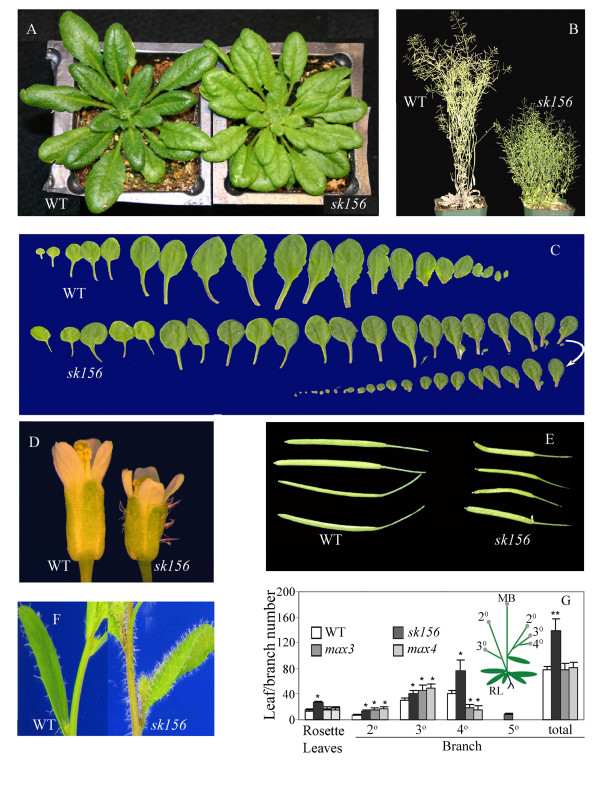
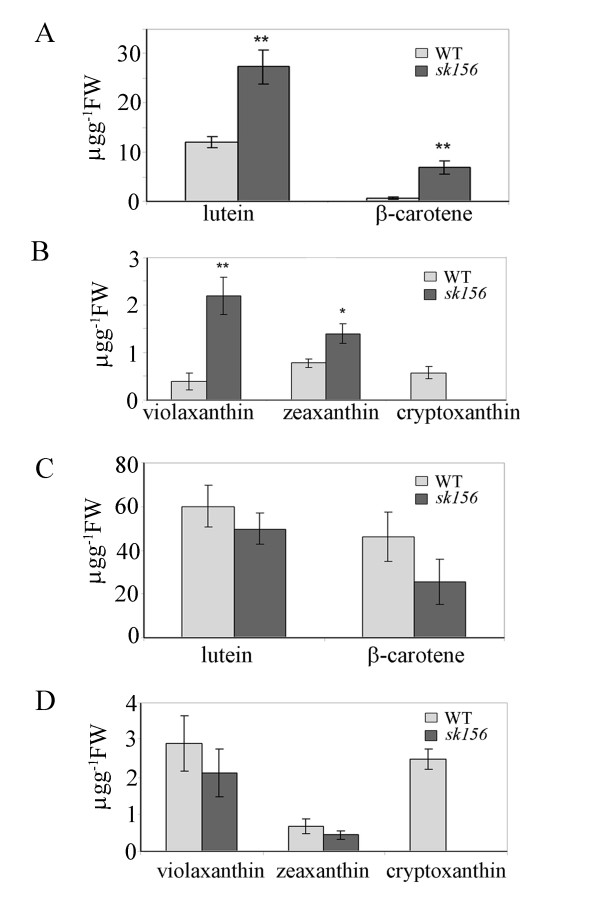
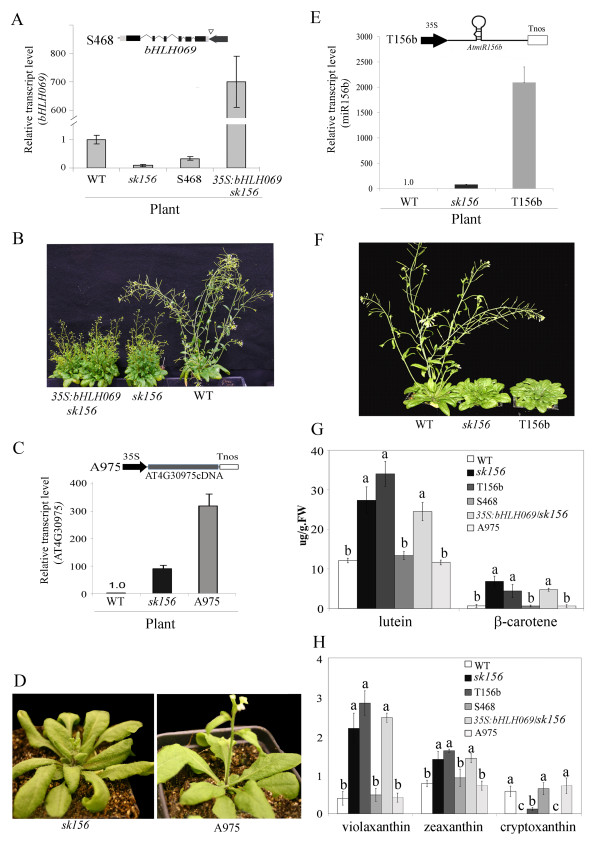
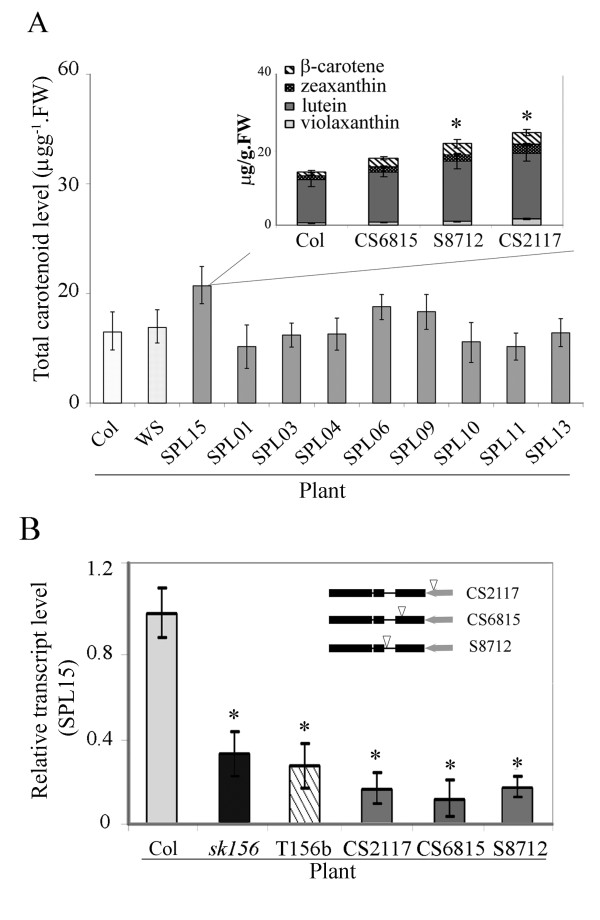
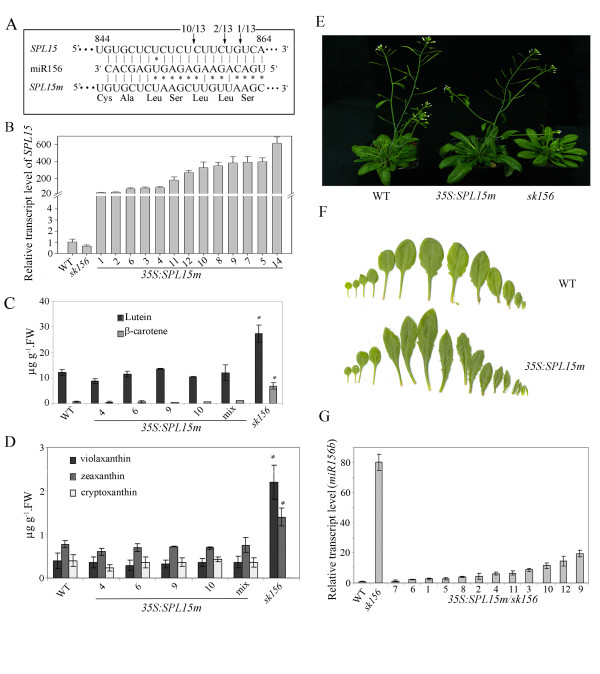
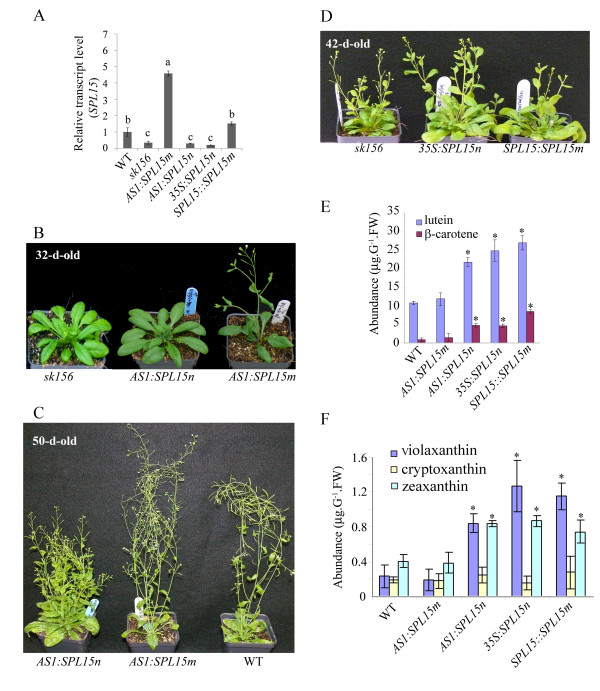
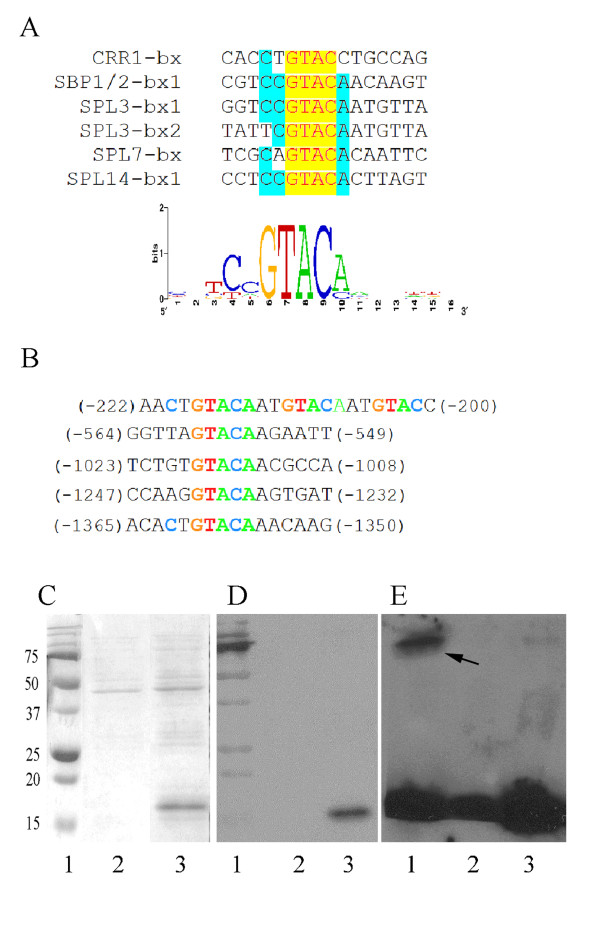
Background: The Arabidopsis microRNA156 (miR156) regulates 11 members of the SQUAMOSA PROMOTER BINDING PROTEIN LIKE (SPL) family by base pairing to complementary target mRNAs. Each SPL gene further regulates a set of other genes; thus, miR156 controls numerous genes through a complex gene regulation network. Increased axillary branching occurs in transgenic Arabidopsis overexpressing miR156b, similar to that observed in loss-of-function max3 and max4 mutants with lesions in carotenoid cleavage dioxygenases. Arabidopsis miR156b was found to enhance carotenoid levels and reproductive shoot branching when expressed in Brassica napus, suggesting a link between miR156b expression and carotenoid metabolism. However, details of the miR156 regulatory network of SPL genes related to carotenoid metabolism are not known. Results: In this study, an Arabidopsis T-DNA enhancer mutant, sk156, was identified due to its altered branching and trichome morphology and increased seed carotenoid levels compared to wild type (WT) ecovar Columbia. Enhanced miR156b expression due to the 35S enhancers present on the T-DNA insert was responsible for these phenotypes. Constitutive and leaf primodium-specific expression of a miR156-insensitive (mutated) SPL15 (SPL15m) largely restored WT seed carotenoid levels and plant morphology when expressed in sk156. The Arabidopsis native miR156-sensitive SPL15 (SPL15n) and SPL15m driven by a native SPL15 promoter did not restore the WT phenotype in sk156. Our findings suggest that SPL15 function is somewhat redundant with other SPL family members, which collectively affect plant phenotypes. Moreover, substantially decreased miR156b transcript levels in sk156 expressing SPL15m, together with the presence of multiple repeats of SPL-binding GTAC core sequence close to the miR156b transcription start site, suggested feedback regulation of miR156b expression by SPL15. This was supported by the demonstration of specific in vitro interaction between DNA-binding SBP domain of SPL15 and the proximal promoter sequence of miR156b. Conclusions: Enhanced miR156b expression in sk156 leads to the mutant phenotype including carotenoid levels in the seed through suppression of SPL15 and other SPL target genes. Moreover, SPL15 has a regulatory role not only for downstream components, but also for its own upstream regulator miR156b.
Overview
The claims and statistics of this paper haven’t been checked yet.
Free: it reads the open-access text and checks the first 5 claims that cite a source we can check. Create a free account to check every claim.
Integrity signals
Registry
Cites
Statistics
Figures
Verification
Claims the paper makes
The claims and statistics of this paper haven’t been checked yet.
Free: it reads the open-access text and checks the first 5 claims that cite a source we can check. Create a free account to check every claim.
Self-check
Percentages, sums and reported differences re-computed from the paper’s own numbers.
The self-check needs the paper’s full text.
Citations
Cites
WebLogo: A Sequence Logo Generator: Figure 1
Crooks, G. E., Hon, G., Chandonia, J.-M., & Brenner, S. E. (2004) · Genome Research · doi:10.1101/gr.849004 · Cited by 12,386
Czechowski, T., Stitt, M., Altmann, T., Udvardi, M. K., & Scheible, W.-R. (2005) · Plant Physiology · doi:10.1104/pp.105.063743 · Cited by 3,203
Arabidopsis Transcription Factors: Genome-Wide Comparative Analysis Among Eukaryotes
Riechmann, J. L., Heard, J., Martin, G., Reuber, L., Jiang, C.-Z., Keddie, J., Adam, L., Pineda, O., Ratcliffe, O. J., Samaha, R. R., et al. (2000) · Science · doi:10.1126/science.290.5499.2105 · Cited by 2,807 · cited 1×
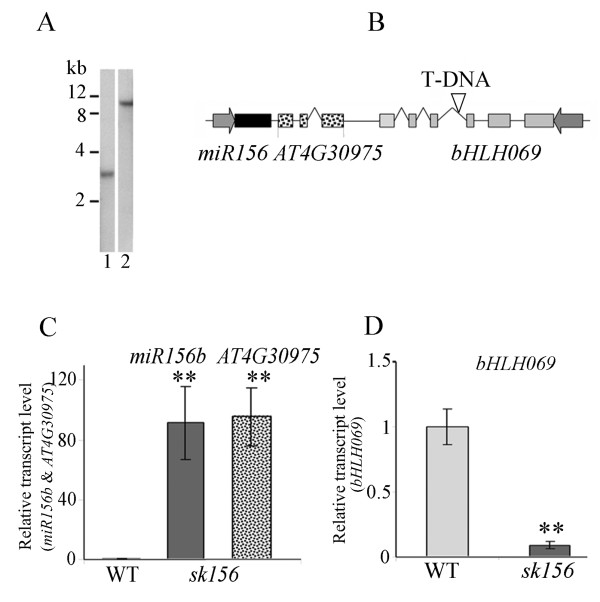
“Sequencing of the TDNA-flanking regions indicated that the T-DNA was located in AT4G30980 (Figure 3B), which encodes a basic helix-loop-helix (bHLH) family protein bHLH069 [25,26].”
Prediction of Plant MicroRNA Targets
Rhoades, M. W., Reinhart, B. J., Lim, L. P., Burge, C. B., Bartel, B., & Bartel, D. P. (2002) · Cell · doi:10.1016/s0092-8674(02)00863-2 · Cited by 2,283 · cited 4×
“This is consistent with previous findings that the shoot apex is a predominant expression site for some SPL genes [2,5,13] and that AS1 promoter-driven miR156 promotes leaf initiation by suppressing SPL genes at the shoot apical meristem [14].”
InfluentialStrigolactone inhibition of shoot branching
Gomez-Roldan, V., Fermas, S., Brewer, P. B., Puech-Pagès, V., Dun, E. A., Pillot, J.-P., Letisse, F., Matusova, R., Danoun, S., Portais, J.-C., et al. (2008) · Nature · doi:10.1038/nature07271 · Cited by 2,281 · cited 2×
“This was largely due to the effect on the biosynthesis of carotenoid-derived strigolactone branching inhibitors [20,21].”
Inhibition of shoot branching by new terpenoid plant hormones
Umehara, M., Hanada, A., Yoshida, S., Akiyama, K., Arite, T., Takeda-Kamiya, N., Magome, H., Kamiya, Y., Shirasu, K., Yoneyama, K., et al. (2008) · Nature · doi:10.1038/nature07272 · Cited by 2,105 · cited 2×
“This was largely due to the effect on the biosynthesis of carotenoid-derived strigolactone branching inhibitors [20,21].”
The Sequential Action of miR156 and miR172 Regulates Developmental Timing in Arabidopsis
Wu, G., Park, M. Y., Conway, S. R., Wang, J.-W., Weigel, D., & Poethig, R. S. (2009) · Cell · doi:10.1016/j.cell.2009.06.031 · Cited by 1,678 · cited 4×
“Moreover, SPL genes (represented by SPL9) regulate trichome development via direct interaction with miR172 [9] and the MYB transcription factor genes TRICHOMELESS1 (TCL1) and TRIPTYCHON (TRY) [16].”
InfluentialWang, J.-W., Czech, B., & Weigel, D. (2009) · Cell · doi:10.1016/j.cell.2009.06.014 · Cited by 1,489 · cited 6×
“(Additional file 5) according to Wang et al [8], while a 3 kb”
InfluentialSpecific effects of microRNAs on the plant transcriptome
Schwab, R., Palatnik, J. F., Riester, M., Schommer, C., Schmid, M., & Weigel, D. (2005) · Developmental Cell · doi:10.1016/j.devcel.2005.01.018 · Cited by 1,467 · cited 5×
“These results confirm the role for miR156b in seed carotenoid accumulation, and are in agreement with morphological changes reported in earlier studies [3,6,12,14,35].”
InfluentialA MicroRNA Feedback Circuit in Midbrain Dopamine Neurons
Kim, J., Inoue, K., Ishii, J., Vanti, W. B., Voronov, S. V., Murchison, E., Hannon, G., & Abeliovich, A. (2007) · Science · doi:10.1126/science.1140481 · Cited by 1,187 · cited 1×
“Feedback loops, in which a miRNA-targeted transcription factor either increases or decreases the expression of its cognate miRNA, have been reported in animals [50,51].”
Cited by
Xu, M., Hu, T., Zhao, J., Park, M.-Y., Earley, K. W., Wu, G., Yang, L., & Poethig, R. S. (2016) · PLOS Genetics · doi:10.1371/journal.pgen.1006263 · Cited by 586
Wang, H., & Wang, H. (2015) · Molecular Plant · doi:10.1016/j.molp.2015.01.008 · Cited by 356
Multiple pathways regulate shoot branching
Rameau, C., Bertheloot, J., Leduc, N., Andrieu, B., Foucher, F., & Sakr, S. (2015) · Frontiers in Plant Science · doi:10.3389/fpls.2014.00741 · Cited by 357
To Bloom or Not to Bloom: Role of MicroRNAs in Plant Flowering
Teotia, S., & Tang, G. (2015) · Molecular Plant · doi:10.1016/j.molp.2014.12.018 · Cited by 344
Xie, Y., Liu, Y., Wang, H., Ma, X., Wang, B., Wu, G., & Wang, H. (2017) · Nature Communications · doi:10.1038/s41467-017-00404-y · Cited by 209
Micro RNA 156 as a promising tool for alfalfa improvement
Aung, B., Gruber, M. Y., Amyot, L., Omari, K., Bertrand, A., & Hannoufa, A. (2015) · Plant Biotechnology Journal · doi:10.1111/pbi.12308 · Cited by 179
Self-citationTransitioning to the Next Phase: The Role of Sugar Signaling throughout the Plant Life Cycle
Wingler, A. (2018) · Plant Physiology · doi:10.1104/pp.17.01229 · Cited by 168
Strigolactone regulates shoot development through a core signalling pathway
Bennett, T., Liang, Y., Seale, M., Ward, S. P., Müller, D., & Leyser, O. (2016) · Biology Open · doi:10.1242/bio.021402 · Cited by 172
The interplay between miR156/SPL13 and DFR/WD40–1 regulate drought tolerance in alfalfa
Feyissa, B. A., Arshad, M. A., Gruber, M. Y., Kohalmi, S. E., & Hannoufa, A. (2019) · BMC Plant Biology · doi:10.1186/s12870-019-2059-5 · Cited by 154
Self-citationGao, R., Wang, Y., Gruber, M. Y., & Hannoufa, A. (2018) · Frontiers in Plant Science · doi:10.3389/fpls.2017.02226 · Cited by 131
Self-citationMolecular Mechanisms of Plant Trichome Development
Han, G., Li, Y., Yang, Z., Wang, C., Zhang, Y., & Wang, B. (2022) · Frontiers in Plant Science · doi:10.3389/fpls.2022.910228 · Cited by 125
“SPL is targeted by microRNA 156 (miR156); overexpression of miR156 results in ectopic trichomes on the stem and flower organs of plants, while an increased SPL expression level in plants results in less trichomes than that in the wild type (Yu et al., 2010; Wei et al., 2012).”
BackgroundSPL13 regulates shoot branching and flowering time in Medicago sativa
Gao, R., Gruber, M. Y., Amyot, L., & Hannoufa, A. (2017) · Plant Molecular Biology · doi:10.1007/s11103-017-0683-8 · Cited by 97
Self-citationEnvironmental impacts on carotenoid metabolism in leaves
Dhami, N., & Cazzonelli, C. I. (2020) · Plant Growth Regulation · doi:10.1007/s10725-020-00661-w · Cited by 97
Wang, Z., Wang, Y., Kohalmi, S. E., Amyot, L., & Hannoufa, A. (2016) · Plant Molecular Biology · doi:10.1007/s11103-016-0536-x · Cited by 76
“Keywords miR156 · SPL2 · AS2 · Floral organs · Siliques · Fertility”
Self-citationWu, Z., Cao, Y., Yang, R., Qi, T., Hang, Y., Lin, H., Zhou, G., Wang, Z., & Fu, C. (2016) · Biotechnology for Biofuels · doi:10.1186/s13068-016-0516-z · Cited by 91
“Additionally, although the detailed regulation mechanism is not well understood yet, mutation of AtSPL15 can clearly affect carotenoid biosynthesis in Arabidopsis [18].”
BackgroundWang, Y., Wang, Z., Amyot, L., Tian, L., Xu, Z., Gruber, M. Y., & Hannoufa, A. (2014) · Molecular Genetics and Genomics · doi:10.1007/s00438-014-0931-4 · Cited by 75
“Such phenotypes have been reported as a result of ectopic expression of miR156 in the dicot species, Arabidopsis thaliana (Wei et al. 2012), Brassica napus (Wei et al. 2010), Oryza sativa (Xie et al. 2012), Zea mays (Chuck et al. 2007), Solanum lycopersicum (Zhang et al. 2011), and a monocot…”
BackgroundResultSelf-citationTripathi, R. K., Goel, R., Kumari, S., & Dahuja, A. (2017) · Development Genes and Evolution · doi:10.1007/s00427-017-0574-7 · Cited by 81
“Similarly, carotenoid level is also regulated by the SPL/miR156 module in Arabidopsis (Wei et al. 2012), but the sesquiterpene biosynthesis is positively regulated by SPL9 and negatively regulated by miR156 (Yu et al. 2015).”
InfluentialGao, R., Austin, R. S., Amyot, L., & Hannoufa, A. (2016) · BMC Genomics · doi:10.1186/s12864-016-3014-6 · Cited by 72
“AtSPL9 and AtSPL15 mainly promote shoot maturation, delayed flowering, increased anthocyanin accumulation, and sensitivity to stress treatment, as well as enhanced carotenoid accumulation in the seed [14–17].”
Self-citationMicroRNAs Roles in Plants Secondary Metabolism
Adjei, M. O., Zhou, X., Mao, M., Rafique, F., & Ma, J. (2021) · Plant Signaling & Behavior · doi:10.1080/15592324.2021.1915590 · Cited by 77
“106 miRNA-156 is upregulated by 24epibrassinolide, a high-lightening link between SDG8 regulation, shot branching, and carotenoids.(32,105) Another analysis of the lycopene β-cyclase gene targeted by miR-1857 is involved in carotenoid biosynthesis.”
BackgroundZhang, X., Dou, L., Pang, C., Song, M., Wei, H., Fan, S., Wang, C., & Yu, S. (2014) · Molecular Genetics and Genomics · doi:10.1007/s00438-014-0901-x · Cited by 56
“The miRNA-regulated SBP-box genes, AtSPL9 and AtSPL15, control shoot maturation (Schwarz et al. 2008; Wei et al. 2012).”
BackgroundAung, B., Gruber, M. Y., Amyot, L., Omari, K., Bertrand, A., & Hannoufa, A. (2015) · Plant Biotechnology Reports · doi:10.1007/s11816-015-0375-2 · Cited by 55
“…been shown to affect a number of important traits in plants, ranging from shoot branching, plant height, and floral organs, to crop yield and quality (Wu and Poethig 2006; Gandikota et al. 2007; Martin et al. 2010a, b; Wei et al. 2010, 2012; Xing et al. 2010; Fu et al. 2012; Curaba et al. 2014).”
BackgroundMethodInfluentialSelf-citationManipulating micro RNA s for improved biomass and biofuels from plant feedstocks
Trumbo, J. L., Zhang, B., & Stewart, C. N. (2015) · Plant Biotechnology Journal · doi:10.1111/pbi.12319 · Cited by 52
“Additionally, in B. distachyon and Arabidopsis, miR414 is predicted to target the transcript that encodes for the MYB110 transcription factor, which is involved in abiotic stress regulation (Li et al., 2014; Su et al., 2013; Unver and Budak, 2009).”
InfluentialLi, J., Tang, B., Li, Y., Li, C., Guo, M., Chen, H., Han, S., Li, J., Lou, Q., Sun, W., et al. (2021) · Journal of Integrative Plant Biology · doi:10.1111/jipb.13140 · Cited by 49
Zhou, Q., Shi, J., Li, Z., Zhang, S., Zhang, S., Zhang, J., Bao, M., & Liu, G. (2021) · Plant and Cell Physiology · doi:10.1093/pcp/pcab041 · Cited by 46
Genetic enhancement of Brassica napus seed quality
Hannoufa, A., Pillai, B., & Chellamma, S. (2013) · Transgenic Research · doi:10.1007/s11248-013-9742-3 · Cited by 56
“Over-expression of microRNA156 in B. napus and Arabidopsis led to enhanced carotenoid levels in seeds, while also increasing vegetative shoot branching, although leaf carotenoids were not significantly affected (Wei et al. 2010, 2012).”
BackgroundSelf-citationUnlocking the Multifaceted Mechanisms of Bud Outgrowth: Advances in Understanding Shoot Branching
Yuan, Y., Khourchi, S., Li, S., Du, Y., & Delaplace, P. (2023) · Plants · doi:10.3390/plants12203628 · Cited by 45
“Overaccumulation of miR156 leads to a considerably bushy phenotype [74,75].”
BackgroundThe MicroRNA156 system: A tool in plant biotechnology
Aung, B., Gruber, M. Y., & Hannoufa, A. (2015) · Biocatalysis and Agricultural Biotechnology · doi:10.1016/j.bcab.2015.08.002 · Cited by 48
“In the latter plant, analysis of the miR156 promoter region revealed SPL binding sites with three repeated GTAC core sequences between 200 bp and 220 bp, suggesting that SPL15 is directly (rather than indirectly) controlling miR156 expression (Wei et al., 2012).”
Self-citationCarotenoid Biosynthesis and Regulation in Plants
Barański, R., & Cazzonelli, C. I. (2016) · Wiley eBooks · doi:10.1002/9781118622223.ch10 · Cited by 42
Zhou, B. O., Fan, P., Li, Y., Yan, H., & Xu, Q. (2016) · BMC Plant Biology · doi:10.1186/s12870-016-0799-z · Cited by 39
“Overexpression of miR156 in switchgrass (Panicum virgatum) [48], Arabidopsis [49] and Brassica napus [50] led to reduced SPL15 expression, increased shoot branching or enhanced carotenoid content [48–50].”
BackgroundNon-coding RNAs as emerging targets for crop improvement
Summanwar, A., Basu, U., Rahman, H., & Kav, N. N. V. (2020) · Plant Science · doi:10.1016/j.plantsci.2020.110521 · Cited by 38
Liu, H. W., Luo, L., Liang, C., Jiang, N., Liu, P. F., & Li, J. Q. (2015) · PLoS ONE · doi:10.1371/journal.pone.0129002 · Cited by 38
“Previous studies of these homologues have shown miRNA156 to be associated with 11 members of the SQUAMOSA promoter binding protein like (SPL) family, which can cause altered carotenoid levels in seeds via the suppression of SPL genes [42].”
BackgroundYu, R., Wang, Y., Xu, L., Zhu, X., Zhang, W., Wang, R., Gong, Y., Limera, C., & Liu, L. (2015) · BMC Plant Biology · doi:10.1186/s12870-015-0427-3 · Cited by 36
“Of these predicted targets, many of them are transcription factors (SPLs, NF-YA2, ILR1 and bHLH74) and regulate hormone accumulation (ARFs, NACs), and they were identified to be involved in plant root formation and development process [14,15,43-46].”
BackgroundLiu, Q., Shen, G., Peng, K., Huang, Z., Tong, J., Kabir, M. H., Wang, J., Zhang, J., Qin, G., & Xiao, L. (2015) · Journal of Integrative Plant Biology · doi:10.1111/jipb.12340 · Cited by 36
“Being regarded as universal regulators of gene expression, many miRNAs have been proved to be essential in regulating plant architecture (Schwab et al. 2005; Xie et al. 2006; Chen 2008; Wang et al. 2011a; Fu et al. 2012; Wei et al. 2012).”
BackgroundShao, F., Zhang, Q., Liu, H., Lu, S., & Qiu, D. (2016) · PLoS ONE · doi:10.1371/journal.pone.0166099 · Cited by 30
Epigenetic Control of Carotenogenesis During Plant Development
Anwar, S., Brenya, E., Alagoz, Y., & Cazzonelli, C. I. (2021) · Critical Reviews in Plant Sciences · doi:10.1080/07352689.2020.1866829 · Cited by 30
“…to the miR156 cleavage could not be identified in any of the carotenoid biosynthetic genes and nor were their expression miss-regulated (Wei et al., 2012), revealing that the increased carotenoid content could be due to a reduction in carotenoid catabolism rather than increased…”
BackgroundInfluentialCarotenoids: resources, knowledge, and emerging tools to advance apocarotenoid research
Beltrán, J., & Wurtzel, E. T. (2024) · Plant Science · doi:10.1016/j.plantsci.2024.112298 · Cited by 27
Seasonal Regulation of Petal Number
McKim, S. M., Routier‐Kierzkowska, A., Monniaux, M., Kierzkowski, D., Pieper, B., Smith, R. S., Tsiantis, M., & Hay, A. (2017) · PLANT PHYSIOLOGY · doi:10.1104/pp.17.00563 · Cited by 29
“AP1 is activated by the floral regulator LEAFY (LFY;Weigel et al., 1992;Wagner et al., 1999), which also activates the expression of AP3, PISTILLATA, and AG (Parcy et al., 1998), such that SEP3 and LFY coordinately regulate the expression of floral organ identity genes.”
BackgroundArshad, M. A., & Hannoufa, A. (2022) · Genome · doi:10.1139/gen-2021-0099 · Cited by 30
Self-citationKaur, R., Bhunia, R. K., & Rajam, M. V. (2020) · Journal of Biosciences · doi:10.1007/s12038-020-00084-9 · Cited by 24
“…developmental functions such as floral patterning, branching, juvenile/ adult phase transition, leaf plastochron length, trichome morphology and organ size in Arabidopsis as well as in rice (Xie et al. 2006; Shikata et al. 2009; Wei et al. 2012; Liu et al. 2015; Wang and Wang 2015; Wang 2016).”
BackgroundmiR156b from Soybean CMS Line Modulates Floral Organ Development
Ding, X., Ruan, H., Yu, L., Li, Q., Song, Q., Yang, S., & Gai, J. (2020) · Journal of Plant Biology · doi:10.1007/s12374-020-09237-7 · Cited by 20
Jorgensen, S. A., & Preston, J. C. (2014) · Molecular Phylogenetics and Evolution · doi:10.1016/j.ympev.2014.01.029 · Cited by 21
Yang, K., Wen, X., Mudunuri, S. B., Varma, G. P. S., & Sablok, G. (2019) · Scientific Reports · doi:10.1038/s41598-019-38932-w · Cited by 14
Identification and Analysis of microRNAs in Chlorella sorokiniana Using High-Throughput Sequencing
Azaman, S. N. A., Satharasinghe, D. A., Tan, S. W., Nagao, N., Yusoff, F. M., & Yeap, S. K. (2020) · Genes · doi:10.3390/genes11101131 · Cited by 14
“[31] demonstrated that the expression of Arabidopsis miR156 in Brassica napus caused an increased level of carotenoid production and reproductive shoot branching, suggesting a link between miR156 expression and carotenoid metabolism.”
BackgroundNayidu, N. K., Kagale, S., Taheri, A., Withana-Gamage, T. S., Parkin, I. A. P., Sharpe, A., & Gruber, M. Y. (2014) · PLoS ONE · doi:10.1371/journal.pone.0095877 · Cited by 14
Self-citationMi, L., Ma, D., Lv, S., Xu, S., Zhong, B., Peng, T., Liu, D., & Liu, Y. (2022) · Genes · doi:10.3390/genes13101706 · Cited by 12
Evidence of Epigenetic Mechanisms Affecting Carotenoids
Arango, J., Beltrán, J., Núñez, J., & Chavarriaga, P. (2016) · Sub-cellular biochemistry/Subcellular biochemistry · doi:10.1007/978-3-319-39126-7_11 · Cited by 13
Nasrollahi, V., Yuan, Z., Lu, Q. S. M., McDowell, T. W., Kohalmi, S. E., & Hannoufa, A. (2022) · Plant Molecular Biology · doi:10.1007/s11103-022-01303-7 · Cited by 12
Self-citationLu, G., Tian, Z., Hao, Y., Xu, M., Lin, Y., Wei, J., & Zhao, Y. (2023) · Scientific Reports · doi:10.1038/s41598-023-27847-2 · Cited by 11
Zhang, C., Fu, F., Lin, C., Ding, X., Zhang, J., Yan, H., Wang, P., Zhang, W., Peng, B., & Zhao, L. (2021) · Frontiers in Genetics · doi:10.3389/fgene.2021.654146 · Cited by 10
“Previous research confirmed that sRNAs, including miRNAs, can modulate anther and pollen development, leading to male sterility (Chambers and Shuai, 2009; Grant-Downton et al., 2009; Wang et al., 2009; Xing et al., 2010; Shen et al., 2011; Wei et al., 2012; Yang J. et al., 2013).”
BackgroundXue, Y., Zheng, T., Han, Y., Cong, T., Li, P., Liu, W., Ding, A., Cheng, T., Wang, J., & Zhang, Q. (2022) · International Journal of Molecular Sciences · doi:10.3390/ijms231911976 · Cited by 9
“In addition, their expression can be regulated by each other [3,9].”
BackgroundFlowering time regulation by the miRNA156 in the beet (Beta vulgaris ssp. maritima)
Asgari, M., Mirzaie-Asl, A., Abdollahi, M. R., & Khodaei, L. (2022) · Plant Cell Tissue and Organ Culture (PCTOC) · doi:10.1007/s11240-022-02285-6 · Cited by 8
miRNAs and genes as molecular regulators of rice grain morphology and yield
Kumar, S., Sharma, N., Sopory, S. K., & Mishra, N. S. (2024) · Plant Physiology and Biochemistry · doi:10.1016/j.plaphy.2024.108363 · Cited by 12
Geng, M., Li, H., Jin, C., Liu, Q., Chen, C., Song, W., & Wang, C. (2013) · Planta · doi:10.1007/s00425-013-1986-x · Cited by 8
Rodríguez-Bolaños, M., Martínez, T., Juárez, S., Quiroz, S., Domínguez, A., Garay‐Arroyo, A., Sánchez, M. D. L. P., Alvarez-Buylla, E. R., & García‐Ponce, B. (2023) · International Journal of Molecular Sciences · doi:10.3390/ijms241612773 · Cited by 7
Taheri, A., Gao, P., Yu, M., Cui, D.-J., Regan, S., Parkin, I. A. P., & Gruber, M. Y. (2014) · Plant Biology · doi:10.1111/plb.12230 · Cited by 7
Self-citationFaria, D. V., Freitas, D. M. S., Duarte, M. B. S., Machado, K. L. D. G., de Matos, E. M., Batista, D. S., Costa, M. G. C., Viccini, L. F., Nogueira, F. T. S., & Otoni, W. C. (2021) · Plant Cell Tissue and Organ Culture (PCTOC) · doi:10.1007/s11240-021-02211-2 · Cited by 4
Mallet, J., Laufs, P., Leduc, N., & Gourrierec, J. L. (2022) · Frontiers in Plant Science · doi:10.3389/fpls.2021.770363 · Cited by 5
Effects of microRNA156 on Flowering Time and Plant Architecture in Medicago sativa
Aung, B. (2014) · Scholarship@Western (Western University) · Cited by 6
Kormendi, A., Amyot, L., Omari, K. W., McDowell, T. W., & Hannoufa, A. (2016) · Analytical Methods · doi:10.1039/c6ay01026a · Cited by 4
Self-citationmiR156 Is a Negative Regulator of Aluminum Response in Medicago sativa
Allam, G., Sakariyahu, S. K., McDowell, T. W., Pitambar, T. A., Papadopoulos, Y. A., Bernards, M. A., & Hannoufa, A. (2025) · Plants · doi:10.3390/plants14060958 · Cited by 4
“This inconsistency of MsmiR156-dependent MsSPL transcript levels suggests the involvement of additional regulatory mechanisms beyond the direct MsmiR156-SPL interaction, as previously noted in other species [61].”
InfluentialSelf-citationUncovering the Molecular Link Between miR156.SPL15 and Carotenoid Accumulation in Arabidopsis
Meybodi, D. E. (2013) · Scholarship@Western (Western University) · Cited by 4
Carotenoids: Biotechnological Improvements for Human Health and Sustainable Development
Khachatourians, G. G. (2017) · doi:10.1002/9781119079972.ch7 · Cited by 3
Self-citationMIR156 Participates in Iron Homeostasis Through Targeting SPL9/SPL15 in Arabidopsis Thaliana
Wang, Y. (2015) · Scholarship@Western (Western University) · Cited by 2
Junquera-Martínez, S., Cerna-Pantoja, D., Arellano-Perusquia, A., & Cruz–Hernández, A. (2020) · International Electronic Conference on Plant Science (IECPS) · doi:10.3390/iecps2020-08886 · Cited by 1
The RhSPL4-RhPRR5L module positively regulates flowering time in rose (Rosa hybrida)
Huang, Z., Liu, G., Chen, R., Zhang, H., Wang, D., Li, D., Zhang, Y., Yan, H., Tang, K., Gao, J., et al. (2025) · Horticultural Plant Journal · doi:10.1016/j.hpj.2025.03.012 · Cited by 2
Characterizing the Role of the miR156-SPL Network in Heat Stress Response in Medicago sativa
Matthews, C. J. (2018) · Scholarship@Western (Western University) · Cited by 2
Ma, L., Zhou, L., Quan, S., Xu, H., Yang, J., & Niu, J. (2019) · The Journal of Horticultural Science and Biotechnology · doi:10.1080/14620316.2019.1681907 · Cited by 1
“Weigel, & Wang, 2011), floral organ development (Wei et al., 2012), heat stress and abiotic stress (Cui, Shan, Shi, Gao, & Lin, 2014; Stief et al.”
BackgroundDo Strigolactones Regulate BudWinter Dormancy and Charactrisitc Secondary Metabolism in Tea?
Lin, F., Gong, Z., Liu, G., & Liu, Y. (2020) · Phyton · doi:10.32604/phyton.2020.012303 · Cited by 3
The module mir156/spl affects bixin biosynthesis pathway in annatto (Bixa orellana L.)
Machado, K. L. D. G. (2022) · doi:10.47328/ufvbbt.2022.323 · Cited by 2
Functional Analysis of the miR156 Regulatory Network in Arabidopsis Siliques
Wang, Z. (2015) · Scholarship@Western (Western University) · Cited by 1
Azaman, S. N. A. (2016) · Universiti Putra Malaysia Institutional Repository (Universiti Putra Malaysia) · Cited by 2
Sorghum-encoded microRNAs: current status and future prospects
Yadav, R., & Singh, C. P. (2024) · Plant Biotechnology Reports · doi:10.1007/s11816-024-00914-4
“MiR156 operates by suppressing the transcripts that encode for the Squamosa Promotor Binding Protein-Like (SPL) transcription factors in numerous plant species (Gandikota et al. 2007; Wang 2014; Wei et al. 2012).”
Yang, Y., Liu, X., Guo, T., Hu, W., & Xu, J. (2026) · Physiologia Plantarum · doi:10.1111/ppl.70957
“In Arabidopsis, different members of the SPL family are transcriptionally regulated by miR156 (Rhoades et al. 2002), and overac-cumulation of miR156 leads to a bushy phenotype with excessive branching (Schwab et al. 2005; Wei et al. 2012).”
Metadata
- Authors
- Wei, S., Gruber, M. Y., Yu, B., Gao, M.-J., Khachatourians, G. G., Hegedus, D. D., Parkin, I. A., & Hannoufa, A.
- Affiliations
- Agriculture and Agri-Food Canada (CA)
- University of Saskatchewan (CA)
- Corresponding author
- Gruber, Margaret Y
- Hannoufa, Abdelali
- Venue
- BMC Plant Biology
- Published
- 2012-09-18
- Volume
- 12
- Issue
- 1
- Pages
- 169-169
- ISSN
- 1471-2229 (ISSN-L)
- PMC
- PMC3520712
- OpenAlex
- W2106250466
- Cited by
- 73
- References
- 61
- Citations by year
- 2026: 1 · 2025: 2 · 2024: 3 · 2023: 3 · 2022: 8 · 2021: 6 · 2020: 7 · 2019: 3 · 2018: 2 · 2017: 6 · 2016: 11 · 2015: 11 · 2014: 7 · 2013: 3
- FWCI
- 7.68
- Type
- journal article
- Language
- en
- Open access
- gold
- doi.org
- Licence
- cc-by
- Locations
- BMC Plant Biology (publishedVersion, cc-by)
- Europe PMC (PubMed Central) (publishedVersion, cc-by)
- PubMed Central (publishedVersion, cc-by)
- PubMed (publishedVersion)
- NPARC (submittedVersion)
- DOAJ (DOAJ: Directory of Open Access Journals) (submittedVersion)
- Funders
- University of Pennsylvania
- Genome Canada
- RIKEN
- Topics
- Life Sciences › Agricultural and Biological Sciences › Plant Science › Plant Molecular Biology Research
- Life Sciences › Agricultural and Biological Sciences › Plant Science › Plant Parasitism and Resistance
- Life Sciences › Biochemistry, Genetics and Molecular Biology › Molecular Biology › Plant biochemistry and biosynthesis
- Keywords
- miR156, SQUAMOSA PROMOTER BINDING PROTEIN-LIKE, carotenoid metabolism, axillary branching, trichome morphology, feedback regulation, Arabidopsis thaliana, gene redundancy
- MeSH terms
- Base Sequence, Carotenoids, DNA, Bacterial, Molecular Sequence Data, Mutation, Phenotype, Promoter Regions, Genetic, Protein Binding, Suppression, Genetic, Transcription Factors, Transcription, Genetic, Reproducibility of Results, Down-Regulation, Mutagenesis, Insertional, Genes, Plant, Arabidopsis, Protein Structure, Tertiary, Gene Expression Regulation, Plant, Plant Stems, Transgenes, Arabidopsis Proteins, Plants, Genetically Modified, MicroRNAs, Gene Regulatory Networks, Nucleotide Motifs
About these checks
Registry, retraction, Cites and statistics results are computed, not judged, with one exception: a printed reference that no index lists is read once by a model before it counts as a citation error. Claims are extracted by a model and kept only when their quote appears verbatim in the text; each cited source is then checked, with a model’s help, for whether it says what the claim relies on. Those verdicts can be wrong — read the claim’s quote and the cited source before relying on one.
Statistics and arithmetic are recomputed, not judged.
Confidence bands are shown only for fields calibrated on our annotated test set. None is calibrated yet, so no band is shown.
What counts as a claim ›How we measure confidence ›How we check this ›
Are you an author, or do you see a problem with this page? Request a review
Data sources
Bibliographic data: Semantic Scholar, OpenAlex, Crossref.
Contains information from the Semantic Scholar Academic Graph Datasets, made available under the ODC Attribution License (ODC-BY 1.0).
Semantic Scholar’s data is described in: Kinney, R., et al. (2023). The Semantic Scholar Open Data Platform. arXiv:2301.10140.
