

Arabidopsis mutant sk156 reveals complex regulation of SPL15 in a miR156-controlled gene network
Open accessThe DOI matches its Crossref record; 61 of the 61 references it cites were found in a registry or an index.
Abstract
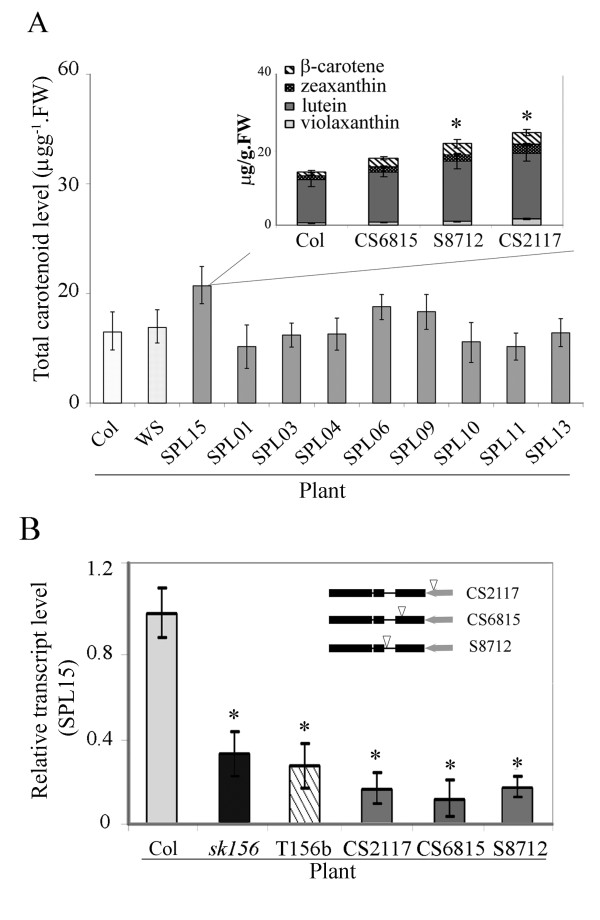
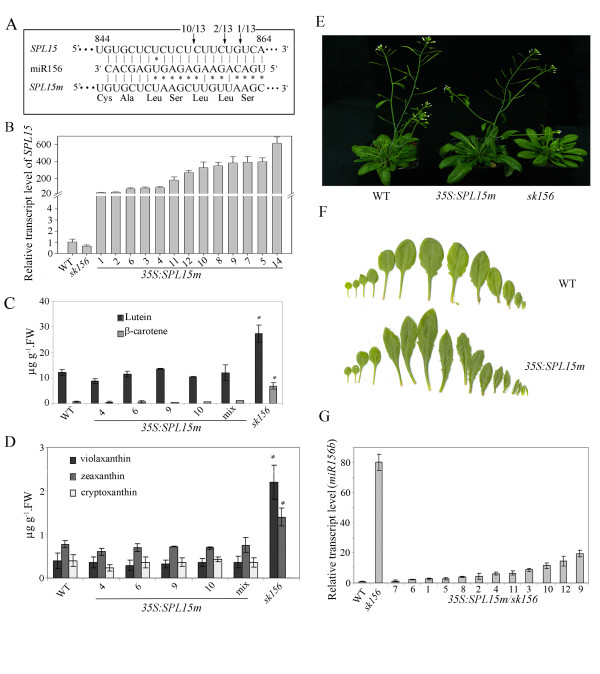
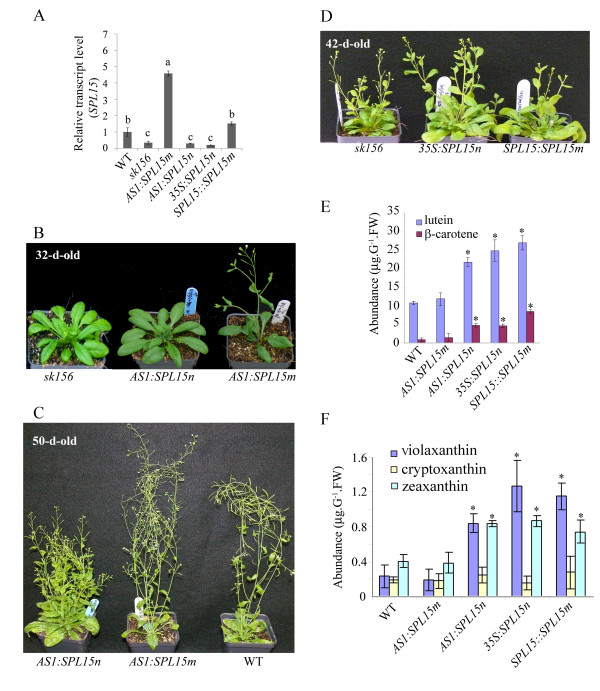
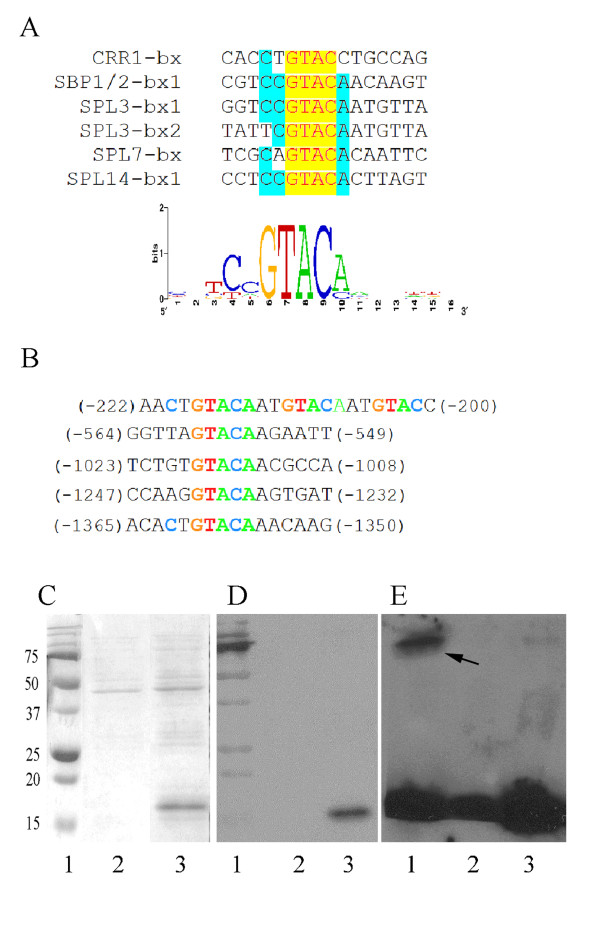
Background: The Arabidopsis microRNA156 (miR156) regulates 11 members of the SQUAMOSA PROMOTER BINDING PROTEIN LIKE (SPL) family by base pairing to complementary target mRNAs. Each SPL gene further regulates a set of other genes; thus, miR156 controls numerous genes through a complex gene regulation network. Increased axillary branching occurs in transgenic Arabidopsis overexpressing miR156b, similar to that observed in loss-of-function max3 and max4 mutants with lesions in carotenoid cleavage dioxygenases. Arabidopsis miR156b was found to enhance carotenoid levels and reproductive shoot branching when expressed in Brassica napus, suggesting a link between miR156b expression and carotenoid metabolism. However, details of the miR156 regulatory network of SPL genes related to carotenoid metabolism are not known. Results: In this study, an Arabidopsis T-DNA enhancer mutant, sk156, was identified due to its altered branching and trichome morphology and increased seed carotenoid levels compared to wild type (WT) ecovar Columbia. Enhanced miR156b expression due to the 35S enhancers present on the T-DNA insert was responsible for these phenotypes. Constitutive and leaf primodium-specific expression of a miR156-insensitive (mutated) SPL15 (SPL15m) largely restored WT seed carotenoid levels and plant morphology when expressed in sk156. The Arabidopsis native miR156-sensitive SPL15 (SPL15n) and SPL15m driven by a native SPL15 promoter did not restore the WT phenotype in sk156. Our findings suggest that SPL15 function is somewhat redundant with other SPL family members, which collectively affect plant phenotypes. Moreover, substantially decreased miR156b transcript levels in sk156 expressing SPL15m, together with the presence of multiple repeats of SPL-binding GTAC core sequence close to the miR156b transcription start site, suggested feedback regulation of miR156b expression by SPL15. This was supported by the demonstration of specific in vitro interaction between DNA-binding SBP domain of SPL15 and the proximal promoter sequence of miR156b. Conclusions: Enhanced miR156b expression in sk156 leads to the mutant phenotype including carotenoid levels in the seed through suppression of SPL15 and other SPL target genes. Moreover, SPL15 has a regulatory role not only for downstream components, but also for its own upstream regulator miR156b.
Overview
The claims and statistics of this paper haven’t been checked yet.
Free: it reads the open-access text and checks the first 5 claims that cite a source we can check. Create a free account to check every claim.
Integrity signals
Registry
Cites
Statistics
Figures
Verification
Claims the paper makes
The claims and statistics of this paper haven’t been checked yet.
Free: it reads the open-access text and checks the first 5 claims that cite a source we can check. Create a free account to check every claim.
Self-check
Percentages, sums and reported differences re-computed from the paper’s own numbers.
The self-check needs the paper’s full text.
Citations
Cites
WebLogo: A Sequence Logo Generator: Figure 1
Crooks, G. E., Hon, G., Chandonia, J.-M., & Brenner, S. E. (2004) · Genome Research · doi:10.1101/gr.849004 · Cited by 12,386
Czechowski, T., Stitt, M., Altmann, T., Udvardi, M. K., & Scheible, W.-R. (2005) · Plant Physiology · doi:10.1104/pp.105.063743 · Cited by 3,203
Arabidopsis Transcription Factors: Genome-Wide Comparative Analysis Among Eukaryotes
Riechmann, J. L., Heard, J., Martin, G., Reuber, L., Jiang, C.-Z., Keddie, J., Adam, L., Pineda, O., Ratcliffe, O. J., Samaha, R. R., et al. (2000) · Science · doi:10.1126/science.290.5499.2105 · Cited by 2,807 · cited 1×
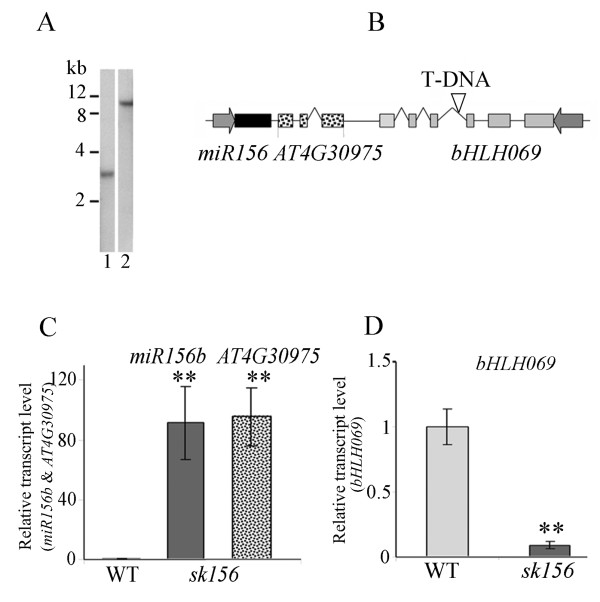
“Sequencing of the TDNA-flanking regions indicated that the T-DNA was located in AT4G30980 (Figure 3B), which encodes a basic helix-loop-helix (bHLH) family protein bHLH069 [25,26].”
Prediction of Plant MicroRNA Targets
Rhoades, M. W., Reinhart, B. J., Lim, L. P., Burge, C. B., Bartel, B., & Bartel, D. P. (2002) · Cell · doi:10.1016/s0092-8674(02)00863-2 · Cited by 2,283 · cited 4×
“This is consistent with previous findings that the shoot apex is a predominant expression site for some SPL genes [2,5,13] and that AS1 promoter-driven miR156 promotes leaf initiation by suppressing SPL genes at the shoot apical meristem [14].”
InfluentialStrigolactone inhibition of shoot branching
Gomez-Roldan, V., Fermas, S., Brewer, P. B., Puech-Pagès, V., Dun, E. A., Pillot, J.-P., Letisse, F., Matusova, R., Danoun, S., Portais, J.-C., et al. (2008) · Nature · doi:10.1038/nature07271 · Cited by 2,281 · cited 2×
“This was largely due to the effect on the biosynthesis of carotenoid-derived strigolactone branching inhibitors [20,21].”
Inhibition of shoot branching by new terpenoid plant hormones
Umehara, M., Hanada, A., Yoshida, S., Akiyama, K., Arite, T., Takeda-Kamiya, N., Magome, H., Kamiya, Y., Shirasu, K., Yoneyama, K., et al. (2008) · Nature · doi:10.1038/nature07272 · Cited by 2,105 · cited 2×
“This was largely due to the effect on the biosynthesis of carotenoid-derived strigolactone branching inhibitors [20,21].”
The Sequential Action of miR156 and miR172 Regulates Developmental Timing in Arabidopsis
Wu, G., Park, M. Y., Conway, S. R., Wang, J.-W., Weigel, D., & Poethig, R. S. (2009) · Cell · doi:10.1016/j.cell.2009.06.031 · Cited by 1,678 · cited 4×
“Moreover, SPL genes (represented by SPL9) regulate trichome development via direct interaction with miR172 [9] and the MYB transcription factor genes TRICHOMELESS1 (TCL1) and TRIPTYCHON (TRY) [16].”
InfluentialWang, J.-W., Czech, B., & Weigel, D. (2009) · Cell · doi:10.1016/j.cell.2009.06.014 · Cited by 1,489 · cited 6×
“(Additional file 5) according to Wang et al [8], while a 3 kb”
InfluentialSpecific effects of microRNAs on the plant transcriptome
Schwab, R., Palatnik, J. F., Riester, M., Schommer, C., Schmid, M., & Weigel, D. (2005) · Developmental Cell · doi:10.1016/j.devcel.2005.01.018 · Cited by 1,467 · cited 5×
“These results confirm the role for miR156b in seed carotenoid accumulation, and are in agreement with morphological changes reported in earlier studies [3,6,12,14,35].”
InfluentialA MicroRNA Feedback Circuit in Midbrain Dopamine Neurons
Kim, J., Inoue, K., Ishii, J., Vanti, W. B., Voronov, S. V., Murchison, E., Hannon, G., & Abeliovich, A. (2007) · Science · doi:10.1126/science.1140481 · Cited by 1,187 · cited 1×
“Feedback loops, in which a miRNA-targeted transcription factor either increases or decreases the expression of its cognate miRNA, have been reported in animals [50,51].”
Frank, H. A., & Cogdell, R. J. (1996) · Photochemistry and Photobiology · doi:10.1111/j.1751-1097.1996.tb03022.x · Cited by 1,184
Temporal regulation of shoot development in Arabidopsis thaliana by miR156 and its target SPL3
Wu, G., & Poethig, R. S. (2006) · Development · doi:10.1242/dev.02521 · Cited by 1,074 · cited 11×
“These results confirm the role for miR156b in seed carotenoid accumulation, and are in agreement with morphological changes reported in earlier studies [3,6,12,14,35].”
InfluentialHeim, M. A. (2003) · Molecular Biology and Evolution · doi:10.1093/molbev/msg088 · Cited by 1,060 · cited 1×
“Sequencing of the TDNA-flanking regions indicated that the T-DNA was located in AT4G30980 (Figure 3B), which encodes a basic helix-loop-helix (bHLH) family protein bHLH069 [25,26].”
Activation Tagging in Arabidopsis
Weigel, D., Ahn, J. H., Blázquez, M. A., Borevitz, J. O., Christensen, S. K., Fankhauser, C., Ferrándiz, C., Kardailsky, I., Malancharuvil, E. J., Neff, M. M., et al. (2000) · Plant Physiology · doi:10.1104/pp.122.4.1003 · Cited by 971 · cited 1×
“The population was generated at the AAFC Saskatoon Research Centre using the pSKI015 binary vector containing a T-DNA with a Bar gene and 4 tandem CaMV enhancers [54].”
Gou, J.-Y., Felippes, F. F., Liu, C.-J., Weigel, D., & Wang, J.-W. (2011) · The Plant Cell · doi:10.1105/tpc.111.084525 · Cited by 953 · cited 2×
“[8-10].”
Frangioni, J. V., & Neel, B. G. (1993) · Analytical Biochemistry · doi:10.1006/abio.1993.1170 · Cited by 879
Asymmetric leaves1 mediates leaf patterning and stem cell function in Arabidopsis
Byrne, M. E., Barley, R., Curtis, M., Arroyo, J. M., Dunham, M., Hudson, A., & Martienssen, R. A. (2000) · Nature · doi:10.1038/35050091 · Cited by 816 · cited 2×
“For recombinant protein expression in Escherichia coli, a coding sequence fragment encoding the SPL15 SBP domain (80 amino acid residues) plus 5 amino acid residues both upstream and downstream [48] was amplified by PCR using the primers p15SBP-BamHI-F and p15SBP-SalI-R with addition of BamHI at the 5’ end and SalI an…”
Conservation and divergence of plant microRNA genes
Zhang, B., Pan, X., Cannon, C. H., Cobb, G. P., & Anderson, T. A. (2006) · The Plant Journal · doi:10.1111/j.1365-313x.2006.02697.x · Cited by 725 · cited 1×
“It has been identified in 45 plant species [1].”
Xie, K., Wu, C., & Xiong, L. (2006) · Plant Physiology · doi:10.1104/pp.106.084475 · Cited by 680 · cited 2×
“These results confirm the role for miR156b in seed carotenoid accumulation, and are in agreement with morphological changes reported in earlier studies [3,6,12,14,35].”
The heterochronic maize mutant Corngrass1 results from overexpression of a tandem microRNA
Chuck, G., Cigan, A. M., Saeteurn, K., & Hake, S. (2007) · Nature Genetics · doi:10.1038/ng2001 · Cited by 652 · cited 1×
“These results confirm the role for miR156b in seed carotenoid accumulation, and are in agreement with morphological changes reported in earlier studies [3,6,12,14,35].”
Establishment of polarity in lateral organs of plants
Eshed, Y., Baum, S. F., Perea, J. V., & Bowman, J. L. (2001) · Current Biology · doi:10.1016/s0960-9822(01)00392-x · Cited by 641 · cited 1×
“Since constitutive expression of SPL15m predominantly restored sk156 phenotypes, native SPL15n and mutated SPL15m under the control of the young leaf primordia promoter from the ASYMMETRIC LEAVES 1 (AS1) gene [27] were used to generate two additional complemented sets of sk156 lines.”
Gandikota, M., Birkenbihl, R. P., Höhmann, S., Cardon, G. H., Saedler, H., & Huijser, P. (2007) · The Plant Journal · doi:10.1111/j.1365-313x.2006.02983.x · Cited by 615 · cited 4×
“35S/AS1:SPL15m point to functional redundancy of SPL15 with at least SPL9 and SPL10 on plastochron length [8], SPL9 on shoot development [13], and SPL3, SPL4, and SPL5 on flowering stage transition [4,12].”
InfluentialSorefan, K., Booker, J., Haurogné, K., Goussot, M., Bainbridge, K., Foo, E., Chatfield, S., Ward, S., Beveridge, C., Rameau, C., et al. (2003) · Genes & Development · doi:10.1101/gad.256603 · Cited by 604 · cited 3×
“For comparison, we examined the phenotypes of max3-9 [17] and max4-1 [19] mutants, which had been confirmed previously to contain defective CCD7 and CCD8 genes, respectively (Additional file 1).”
Booker, J., Auldridge, M., Wills, S., McCarty, D., Klee, H., & Leyser, O. (2004) · Current Biology · doi:10.1016/j.cub.2004.06.061 · Cited by 600 · cited 4×
“For comparison, we examined the phenotypes of max3-9 [17] and max4-1 [19] mutants, which had been confirmed previously to contain defective CCD7 and CCD8 genes, respectively (Additional file 1).”
InfluentialBooker, J., Sieberer, T., Wright, W., Williamson, L., Willett, B., Stirnberg, P., Turnbull, C., Srinivasan, M., Goddard, P., & Leyser, O. (2005) · Developmental Cell · doi:10.1016/j.devcel.2005.01.009 · Cited by 561 · cited 1×
“Increased axillary branching occurs in transgenic Arabidopsis lines expressing miR156b under the control of a cauliflower mosaic virus 35S promoter (CaMV35S) [6], similar to that observed in loss-of-function max3 and max4 mutants with lesions in carotenoid cleavage dioxygenases, CCD7 and CCD8, respectively [17-19].”
SQUAMOSA Promoter Binding Protein–Like7 Is a Central Regulator for Copper Homeostasis in Arabidopsis
Yamasaki, H., Hayashi, M., Fukazawa, M., Kobayashi, Y., & Shikanai, T. (2009) · The Plant Cell · doi:10.1105/tpc.108.060137 · Cited by 535 · cited 4×
“SBP2 in Antirrhinum majus [30]; SPL3-bx1 and -bx2 [5,11], SPL7-bx [32]; and SPL14-bx [31] represents the GTAC motif binding to corresponding”
InfluentialThe microRNA regulated SBP-box genes SPL9 and SPL15 control shoot maturation in Arabidopsis
Schwarz, S., Grande, A. V., Bujdoso, N., Saedler, H., & Huijser, P. (2008) · Plant Molecular Biology · doi:10.1007/s11103-008-9310-z · Cited by 520 · cited 4×
“35S/AS1:SPL15m point to functional redundancy of SPL15 with at least SPL9 and SPL10 on plastochron length [8], SPL9 on shoot development [13], and SPL3, SPL4, and SPL5 on flowering stage transition [4,12].”
InfluentialWang, J.-W., Schwab, R., Czech, B., Mica, E., & Weigel, D. (2008) · The Plant Cell · doi:10.1105/tpc.108.058180 · Cited by 513
A high-throughput method to monitor the expression of microRNA precursors
Schmittgen, T. D. (2004) · Nucleic Acids Research · doi:10.1093/nar/gnh040 · Cited by 483 · cited 1×
“[57] (Additional file 5).”
Carotenoid accumulation and function in seeds and non‐green tissues
HOWITT, C. A., & POGSON, B. J. (2006) · Plant, Cell & Environment · doi:10.1111/j.1365-3040.2005.01492.x · Cited by 478
Molecular characterisation of the Arabidopsis SBP-box genes
Cardon, G., Höhmann, S., Klein, J., Nettesheim, K., Saedler, H., & Huijser, P. (1999) · Gene · doi:10.1016/s0378-1119(99)00308-x · Cited by 450
Prediction and identification of Arabidopsis thaliana microRNAs and their mRNA targets
Wang, X.-J., Reyes, J. L., Chua, N.-H., & Gaasterland, T. (2004) · Genome Biology · doi:10.1186/gb-2004-5-9-r65 · Cited by 430 · cited 1×
“5’RACE was carried out using the FirstChoice RLM RACE Kit (Ambion) following the manufacturer's instructions specially for the detection of miRNA degradation products [56].”
Klein, J., Saedler, H., & Huijser, P. (1996) · Molecular and General Genetics MGG · doi:10.1007/bf02191820 · Cited by 376 · cited 3×
“To define the consensus sequence, we compared cis elements previously identified as SBP box interacting sequences in Chlamydomonas reinhardtii [28,29], Antirrhinum majus [30] and A.”
Auldridge, M. E., Block, A., Vogel, J. T., Dabney‐Smith, C., Mila, I., Bouzayen, M., Magallanes‐Lundback, M., DellaPenna, D., McCarty, D. R., & Klee, H. J. (2006) · The Plant Journal · doi:10.1111/j.1365-313x.2006.02666.x · Cited by 371 · cited 1×
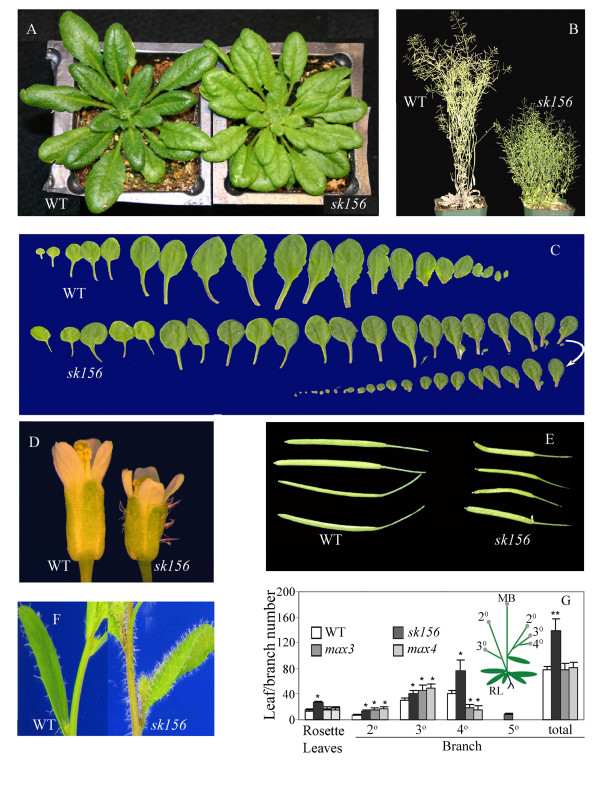
“In our hands, these max mutants showed increased secondary and tertiary branches (Figure 1G), which was consistent with an earlier report that max mutants showed increased inflorescence number compared to WT plants [24].”
Birkenbihl, R. P., Jach, G., Saedler, H., & Huijser, P. (2005) · Journal of Molecular Biology · doi:10.1016/j.jmb.2005.07.013 · Cited by 362 · cited 2×
“Support for this finding comes from reports by Birkenbihl et al [52] and Yamasaki et al [32] which indicated that such an interaction also exists between the SBP domain for SPL1, -3, -7 and -8 and the GTAC element.”
Temporal Control of Trichome Distribution by MicroRNA156-Targeted SPL Genes in Arabidopsis thaliana
Yu, N., Cai, W.-J., Wang, S., Shan, C.-M., Wang, L.-J., & Chen, X.-Y. (2010) · The Plant Cell · doi:10.1105/tpc.109.072579 · Cited by 343
Cardon, G. H., Höhmann, S., Nettesheim, K., Saedler, H., & Huijser, P. (1997) · The Plant Journal · doi:10.1046/j.1365-313x.1997.12020367.x · Cited by 335 · cited 2×
“SBP2 in Antirrhinum majus [30]; SPL3-bx1 and -bx2 [5,11], SPL7-bx [32]; and SPL14-bx [31] represents the GTAC motif binding to corresponding”
(1993) · Springer eBooks · doi:10.1007/978-94-011-2124-8 · Cited by 321
Kropat, J., Tottey, S., Birkenbihl, R. P., Depège, N., Huijser, P., & Merchant, S. (2005) · Proceedings of the National Academy of Sciences · doi:10.1073/pnas.0507693102 · Cited by 312 · cited 3×
“To define the consensus sequence, we compared cis elements previously identified as SBP box interacting sequences in Chlamydomonas reinhardtii [28,29], Antirrhinum majus [30] and A.”
PlantProm: a database of plant promoter sequences
Shahmuradov, I. A. (2003) · Nucleic Acids Research · doi:10.1093/nar/gkg041 · Cited by 286 · cited 1×
“promoter’ regions [55] was amplified by PCR using the”
Shikata, M., Koyama, T., Mitsuda, N., & Ohme-Takagi, M. (2009) · Plant and Cell Physiology · doi:10.1093/pcp/pcp148 · Cited by 280 · cited 1×
“SPL2, SPL10 and SPL11 were each able to control leaf lamina shape in association with shoot maturation in the reproductive phase [15].”
Römer, S., Lübeck, J., Kauder, F., Steiger, S., Adomat, C., & Sandmann, G. (2002) · Metabolic Engineering · doi:10.1006/mben.2002.0234 · Cited by 260
Lopez, A. B., Van Eck, J., Conlin, B. J., Paolillo, D. J., O'Neill, J., & Li, L. (2008) · Journal of Experimental Botany · doi:10.1093/jxb/erm299 · Cited by 246 · cited 1×
“Different mechanisms control carotenoid metabolism in green and non-green tissues, including seeds [42-44].”
Rodríguez‐Villalón, A., Gas, E., & Rodríguez‐Concepción, M. (2009) · The Plant Journal · doi:10.1111/j.1365-313x.2009.03966.x · Cited by 245 · cited 1×
“However, we cannot exclude the possibility of changes to seed carotenoid enzyme activities in the absence of transcription changes, such as occured with phytoene synthase in etiolated Arabidopsis [37].”
Guo, A.-Y., Zhu, Q.-H., Gu, X., Ge, S., Yang, J., & Luo, J. (2008) · Gene · doi:10.1016/j.gene.2008.03.016 · Cited by 240 · cited 3×
“The SPL genes targeted by miR156 can be grouped into four major clades: SPL3/SPL4/SPL5, SPL2/ SPL10/SPL11, SPL9/SPL15, and SPL6/SPL13 [7].”
Galpaz, N., Ronen, G., Khalfa, Z., Zamir, D., & Hirschberg, J. (2006) · The Plant Cell · doi:10.1105/tpc.105.039966 · Cited by 237
Carotenoid sequestration in plants: the role of carotenoid-associated proteins
Vishnevetsky, M. (1999) · Trends in Plant Science · doi:10.1016/s1360-1385(99)01414-4 · Cited by 233 · cited 1×
“seeds, carotenoids are stored in elaioplasts (lipid storing plastids) or amyloplasts (starch storing plastids) [42,47].”
Cazzonelli, C. I., Cuttriss, A. J., Cossetto, S. B., Pye, W., Crisp, P., Whelan, J., Finnegan, E. J., Turnbull, C., & Pogson, B. J. (2009) · The Plant Cell · doi:10.1105/tpc.108.063131 · Cited by 226 · cited 1×
“A link between altered carotenoid profiles and branching was previously observed in max mutants [17,19] and in an Arabidopsis histone methyltransferase (SDG8)-defective mutant [36].”
Usami, T., Horiguchi, G., Yano, S., & Tsukaya, H. (2009) · Development · doi:10.1242/dev.028613 · Cited by 210 · cited 1×
“A role for SPL15 in leaf morphological traits was also revealed by Usami et al [49].”
Varghese, J., & Cohen, S. M. (2007) · Genes & Development · doi:10.1101/gad.439807 · Cited by 196 · cited 1×
“Feedback loops, in which a miRNA-targeted transcription factor either increases or decreases the expression of its cognate miRNA, have been reported in animals [50,51].”
Moseley, J. L., Page, M. D., Alder, N. P., Eriksson, M., Quinn, J. M., Soto, F., Theg, S. M., Hippler, M., & Merchant, S. (2002) · The Plant Cell · doi:10.1105/tpc.010420 · Cited by 136 · cited 1×
“Moreover, DNA sequences in promoters of SPL-regulated genes contain a GTAC core [5,28,29,31,32,52], which is a key element for transcription regulation [53].”
Quinn, J. M., Barraco, P., Eriksson, M., & Merchant, S. (2000) · Journal of Biological Chemistry · doi:10.1074/jbc.275.9.6080 · Cited by 121 · cited 3×
“To define the consensus sequence, we compared cis elements previously identified as SBP box interacting sequences in Chlamydomonas reinhardtii [28,29], Antirrhinum majus [30] and A.”
Tian, L., & DellaPenna, D. (2001) · Plant Molecular Biology · doi:10.1023/a:1011623907959 · Cited by 108
The chromoplasts of Or mutants of cauliflower (Brassica oleracea L. var. botrytis)
Paolillo, D. J., Garvin, D. F., & Parthasarathy, M. V. (2004) · PROTOPLASMA · doi:10.1007/s00709-004-0059-1 · Cited by 91
Robinson, S. J., Tang, L., Mooney, B. A., McKay, S., Clarke, W. E., Links, M. G., Karcz, S. R., Regan, S., Wu, Y.-Y., Gruber, M. Y., et al. (2009) · BMC Plant Biology · doi:10.1186/1471-2229-9-101 · Cited by 80 · cited 2×
“The sk156 mutant was isolated from a T-DNA activation-tagged mutant population of Arabidopsis Col-4 [23].”
Self-citationLiang, X., Nazarenus, T. J., & Stone, J. M. (2008) · Biochemistry · doi:10.1021/bi701431y · Cited by 77
Wei, S., Yu, B., Gruber, M. Y., Khachatourians, G. G., Hegedus, D. D., & Hannoufa, A. (2010) · Journal of Agricultural and Food Chemistry · doi:10.1021/jf102635f · Cited by 68 · cited 2×
“napus expressing AtmiR156b under the control of the CaMV35S promoter [22].”
Self-citationLi, Q., Farré, G., Naqvi, S., Breitenbach, J., Sanahuja, G., Bai, C., Sandmann, G., Capell, T., Christou, P., & Zhu, C. (2010) · Transgenic Research · doi:10.1007/s11248-010-9381-x · Cited by 68 · cited 1×
“For example, in Zea mays, a β-carotene hydroxylase variant, ZmBCH1, converts β-carotene to β-cryptoxanthin and zeaxanthin, whereas ZmBCH2 can only convert βcarotene to β-cryptoxanthin [39].”
Factors that affect the carotenoid composition of higher plants and algae
Young, A. J. (1993) · Springer eBooks · doi:10.1007/978-94-011-2124-8_6 · Cited by 51 · cited 1×
“In developing chloroplasts, the synthesis of carotenoids, such as lutein, β-carotene, zeaxanthin and violaxanthin, is regulated in concert with the light-regulated assembly of light-receiving antennae and photosystem centers into which the carotenoids are integrated [45,46].”
Yu, B., Lydiate, D. J., Schäfer, U., & Hannoufa, A. (2006) · Planta · doi:10.1007/s00425-006-0455-1 · Cited by 40 · cited 2×
“Carotenoid extraction and HPLC quantitative analysis were carried out as previously described for seeds [41].”
Self-citationFunctions and target selection of Arabidopsis microRNAs
Schwab, R. (2006) · Max Planck Institute for Plasma Physics · Cited by 2
Cited by
Xu, M., Hu, T., Zhao, J., Park, M.-Y., Earley, K. W., Wu, G., Yang, L., & Poethig, R. S. (2016) · PLOS Genetics · doi:10.1371/journal.pgen.1006263 · Cited by 586
Wang, H., & Wang, H. (2015) · Molecular Plant · doi:10.1016/j.molp.2015.01.008 · Cited by 356
Multiple pathways regulate shoot branching
Rameau, C., Bertheloot, J., Leduc, N., Andrieu, B., Foucher, F., & Sakr, S. (2015) · Frontiers in Plant Science · doi:10.3389/fpls.2014.00741 · Cited by 357
To Bloom or Not to Bloom: Role of MicroRNAs in Plant Flowering
Teotia, S., & Tang, G. (2015) · Molecular Plant · doi:10.1016/j.molp.2014.12.018 · Cited by 344
Xie, Y., Liu, Y., Wang, H., Ma, X., Wang, B., Wu, G., & Wang, H. (2017) · Nature Communications · doi:10.1038/s41467-017-00404-y · Cited by 209
Metadata
- Authors
- Wei, S., Gruber, M. Y., Yu, B., Gao, M.-J., Khachatourians, G. G., Hegedus, D. D., Parkin, I. A., & Hannoufa, A.
- Affiliations
- Agriculture and Agri-Food Canada (CA)
- University of Saskatchewan (CA)
- Corresponding author
- Gruber, Margaret Y
- Hannoufa, Abdelali
- Venue
- BMC Plant Biology
- Published
- 2012-09-18
- Volume
- 12
- Issue
- 1
- Pages
- 169-169
- ISSN
- 1471-2229 (ISSN-L)
- PMC
- PMC3520712
- OpenAlex
- W2106250466
- Cited by
- 73
- References
- 61
- Citations by year
- 2026: 1 · 2025: 2 · 2024: 3 · 2023: 3 · 2022: 8 · 2021: 6 · 2020: 7 · 2019: 3 · 2018: 2 · 2017: 6 · 2016: 11 · 2015: 11 · 2014: 7 · 2013: 3
- FWCI
- 7.68
- Type
- journal article
- Language
- en
- Open access
- gold
- doi.org
- Licence
- cc-by
- Locations
- BMC Plant Biology (publishedVersion, cc-by)
- Europe PMC (PubMed Central) (publishedVersion, cc-by)
- PubMed Central (publishedVersion, cc-by)
- PubMed (publishedVersion)
- NPARC (submittedVersion)
- DOAJ (DOAJ: Directory of Open Access Journals) (submittedVersion)
- Funders
- University of Pennsylvania
- Genome Canada
- RIKEN
- Topics
- Life Sciences › Agricultural and Biological Sciences › Plant Science › Plant Molecular Biology Research
- Life Sciences › Agricultural and Biological Sciences › Plant Science › Plant Parasitism and Resistance
- Life Sciences › Biochemistry, Genetics and Molecular Biology › Molecular Biology › Plant biochemistry and biosynthesis
- Keywords
- miR156, SQUAMOSA PROMOTER BINDING PROTEIN-LIKE, carotenoid metabolism, axillary branching, trichome morphology, feedback regulation, Arabidopsis thaliana, gene redundancy
- MeSH terms
- Base Sequence, Carotenoids, DNA, Bacterial, Molecular Sequence Data, Mutation, Phenotype, Promoter Regions, Genetic, Protein Binding, Suppression, Genetic, Transcription Factors, Transcription, Genetic, Reproducibility of Results, Down-Regulation, Mutagenesis, Insertional, Genes, Plant, Arabidopsis, Protein Structure, Tertiary, Gene Expression Regulation, Plant, Plant Stems, Transgenes, Arabidopsis Proteins, Plants, Genetically Modified, MicroRNAs, Gene Regulatory Networks, Nucleotide Motifs
About these checks
Registry, retraction, Cites and statistics results are computed, not judged, with one exception: a printed reference that no index lists is read once by a model before it counts as a citation error. Claims are extracted by a model and kept only when their quote appears verbatim in the text; each cited source is then checked, with a model’s help, for whether it says what the claim relies on. Those verdicts can be wrong — read the claim’s quote and the cited source before relying on one.
Statistics and arithmetic are recomputed, not judged.
Confidence bands are shown only for fields calibrated on our annotated test set. None is calibrated yet, so no band is shown.
What counts as a claim ›How we measure confidence ›How we check this ›
Are you an author, or do you see a problem with this page? Request a review
Data sources
Bibliographic data: Semantic Scholar, OpenAlex, Crossref.
Contains information from the Semantic Scholar Academic Graph Datasets, made available under the ODC Attribution License (ODC-BY 1.0).
Semantic Scholar’s data is described in: Kinney, R., et al. (2023). The Semantic Scholar Open Data Platform. arXiv:2301.10140.
