

Questions asked and answered in pilot and feasibility randomized controlled trials
Open accessThe DOI matches its Crossref record; 71 of the 71 references it cites were found in a registry or an index.
Abstract
Background: In the last decade several authors have reviewed the features of pilot and feasibility studies and advised on the issues that should be addressed within them. We extend this literature by examining published pilot/feasibility trials that incorporate random allocation, examining their stated objectives, results presented and conclusions drawn, and comparing drug and non-drug trials. Methods: A search of EMBASE and MEDLINE databases for 2000 to 2009 revealed 3652 papers that met our search criteria. A random sample of 50 was selected for detailed review. Results: Most of the papers focused on efficacy: those reporting drug trials additionally addressed safety/toxicity; while those reporting non-drug trials additionally addressed methodological issues. In only 56% (95% confidence intervals 41% to 70%) were methodological issues discussed in substantial depth, 18% (95% confidence interval 9% to 30%) discussed future trials and only 12% (95% confidence interval 5% to 24%) of authors were actually conducting one. Conclusions: Despite recent advice on topics that can appropriately be described as pilot or feasibility studies the large majority of recently published papers where authors have described their trial as a pilot or addressing feasibility do not primarily address methodological issues preparatory to planning a subsequent study, and this is particularly so for papers reporting drug trials. Many journals remain willing to accept the pilot/feasibility designation for a trial, possibly as an indication of inconclusive results or lack of adequate sample size.
Overview
The claims and statistics of this paper haven’t been checked yet.
Free: it reads the open-access text and checks the first 5 claims that cite a source we can check. Create a free account to check every claim.
Integrity signals
Registry
Cites
Statistics
Figures
Verification
Claims the paper makes
The claims and statistics of this paper haven’t been checked yet.
Free: it reads the open-access text and checks the first 5 claims that cite a source we can check. Create a free account to check every claim.
Claims other papers make about this one
Each is checked against this paper’s own text: does it say what the citing paper says it does?
The cited source doesn’t support the claim as written.
In the citing paper
“Indeed, so important is evidence of acceptability and feasibility that it is often prioritized in pilot trials of new interventions, even before robust evidence of efficacy is sought (Arain et al., 2010;Shanyinde et al., 2011).”
From Acceptability and Feasibility of an Intervention to Enhance Social Group Belonging: Evidence From Three Trials of Groups 4 Health (2022) · cites this paper as Shanyinde et al., 2011
Checked by a reasoning model — may be wrong.
Experimental — accuracy not yet measuredThe source backs part of the claim, not all of it — or backs it for a different population, condition or comparison.
In the citing paper
“Within the research literature, there is considerable divergence over what exploratory studies should be called, what they should achieve, what they should entail, whether and how they should determine progression to future studies and how they should be reported [7, 8, 19–21].”
From Exploratory studies to decide whether and how to proceed with full-scale evaluations of public health interventions: a systematic review of guidance (2018) · cites this paper as [21]
Experimental — accuracy not yet measuredThe source backs part of the claim, not all of it — or backs it for a different population, condition or comparison.
In the citing paper
“Sources considering this issue suggested that if ‘extensive changes’ or ‘major modifications’ are made to either (note they did not specify what qualified as such), researchers should return to the exploratory [21, 30] or intervention development phases [15].”
From Exploratory studies to decide whether and how to proceed with full-scale evaluations of public health interventions: a systematic review of guidance (2018) · cites this paper as [21]
Experimental — accuracy not yet measuredThe source backs part of the claim, not all of it — or backs it for a different population, condition or comparison.
In the citing paper
“In some guidance, it was not mentioned whether changes should be made during the course of an exploratory study or afterwards, in order to get the best possible design for the future evaluation [6, 7, 21].”
From Exploratory studies to decide whether and how to proceed with full-scale evaluations of public health interventions: a systematic review of guidance (2018) · cites this paper as [21]
Experimental — accuracy not yet measuredThe source backs part of the claim, not all of it — or backs it for a different population, condition or comparison.
In the citing paper
“The development of the extension was motivated by the growing number of studies described as feasibility or pilot studies and by research that has identified weaknesses in their reporting and conduct.”
From CONSORT 2010 statement: extension to randomised pilot and feasibility trials. (2016) · cites this paper as [12]
Experimental — accuracy not yet measured
8 more claims about this paper
Create a free account to see every claim other papers make about this one.
Self-check
Percentages, sums and reported differences re-computed from the paper’s own numbers.
The self-check needs the paper’s full text.
Citations
Cites
CONSORT 2010 Statement: updated guidelines for reporting parallel group randomised trials
the CONSORT Group, Schulz, K. F., Altman, D. G., & Moher, D. (2010) · BMC Medicine · doi:10.1186/1741-7015-8-18 · Cited by 13,371
Developing and evaluating complex interventions: the new Medical Research Council guidance
Craig, P., Dieppe, P., Macintyre, S., Michie, S., Nazareth, I., & Petticrew, M. (2008) · BMJ · doi:10.1136/bmj.a1655 · Cited by 10,995 · cited 3×
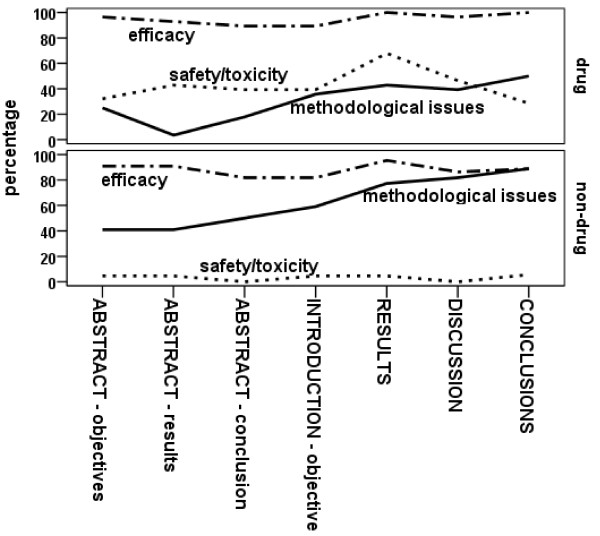
“In other papers it was impossible to be sure what a priori objectives were from the published paper alone, but since methodological issues were discussed to greater depth in the non-drug trials, they are more likely to fall into Loscalzo’s class of a priori pilot trials.”
MethodResultCONSORT 2010 Statement: updated guidelines for reporting parallel group randomised trials
Schulz, K. F., Altman, D. G., Moher, D., & for the CONSORT Group (2010) · BMJ · doi:10.1136/bmj.c332 · Cited by 9,329
Moher, D., Hopewell, S., Schulz, K. F., Montori, V., Gotzsche, P. C., Devereaux, P. J., Elbourne, D., Egger, M., & Altman, D. G. (2010) · BMJ · doi:10.1136/bmj.c869 · Cited by 8,883
Framework for design and evaluation of complex interventions to improve health
Campbell, M. (2000) · BMJ · doi:10.1136/bmj.321.7262.694 · Cited by 3,474 · cited 1×
“The MRC guidelines for the evaluation of complex interventions published in 2000 [8] and revised in 2009 [9] emphasize the importance of testing procedures before planning an evaluation, and also the circular nature of development, feasibility and piloting, evaluation, implementation, and further development.”
MethodA tutorial on pilot studies: the what, why and how
Thabane, L., Ma, J., Chu, R., Cheng, J., Ismaila, A., Rios, L. P., Robson, R., Thabane, M., Giangregorio, L., & Goldsmith, C. H. (2010) · BMC Medical Research Methodology · doi:10.1186/1471-2288-10-1 · Cited by 3,384
Design and analysis of pilot studies: recommendations for good practice
Lancaster, G. A., Dodd, S., & Williamson, P. R. (2004) · Journal of Evaluation in Clinical Practice · doi:10.1111/j..2002.384.doc.x · Cited by 2,572 · cited 5×
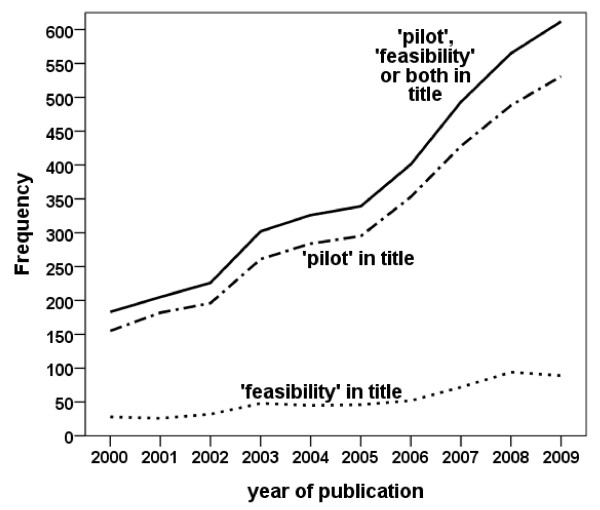
“Lancaster et al [2] could find no guidance on how to search MEDLINE for pilot/feasibility trials, and restricted their search to papers in six top ranking medical journals with the words ‘pilot’ or ‘feasibility’ in the title, abstract or keywords: of the 115 hits retrieved 25 (22%) were not suitable for a variety of r…”
BackgroundResultInfluentialCONSORT 2010 statement: Updated guidelines for reporting parallel group randomised trials
Schulz, K. F., Altman, D. G., & Moher, D. (2010) · Journal of Pharmacology and Pharmacotherapeutics · doi:10.4103/0976-500x.72352 · Cited by 2,165
The importance of pilot studies
Teijlingen, E. V., & Hundley, V. (2002) · Nursing Standard · doi:10.7748/ns.16.40.33.s1 · Cited by 1,648
What is a pilot or feasibility study? A review of current practice and editorial policy
Arain, M., Campbell, M. J., Cooper, C. L., & Lancaster, G. A. (2010) · BMC Medical Research Methodology · doi:10.1186/1471-2288-10-67 · Cited by 1,483 · cited 8×
“Arain et al [4] repeated Lancaster et al’s search procedure seven years later with a rate of unsuitable papers (30%) similar to ours of 33%.”
BackgroundResultInfluential
Research works printed but not linked: 1
- Cytel Software Corporation StatXact: Version 8 2007 Cambridge, MA 02139
Cited by
Items 101–200 of 253
Validity and Reliability Testing of the Adapted Foreign Language Classroom Anxiety Scale (FLCAS)
Paneerselvam, A., & Yamat, H. (2021) · International Journal of Academic Research in Business and Social Sciences · doi:10.6007/ijarbss/v11-i4/9027 · Cited by 12
Chen, W., Huang, Y., Chen, W., Liu, Y.-P., Shih, C., Shiao, Y.-C., & Wang, C. (2022) · BMC Health Services Research · doi:10.1186/s12913-022-08909-z · Cited by 9
Referral pathways for patients with TIA avoiding hospital admission: a scoping review
Evans, B. A., Ali, K., Bulger, J. K., Ford, G. A., Jones, M., Moore, C., Porter, A. M., Pryce, A., Quinn, T., Seagrove, A. C., et al. (2017) · BMJ Open · doi:10.1136/bmjopen-2016-013443 · Cited by 9
Albrecht, L., Scott, S. D., & Hartling, L. (2018) · Pilot and Feasibility Studies · doi:10.1186/s40814-018-0318-0 · Cited by 9
Monroe, C. M., Geraci, M., Larsen, C. A., & West, D. S. (2019) · Obesity Science & Practice · doi:10.1002/osp4.352 · Cited by 9
“The target sample size (N = 36) was primarily dictated by practical considerations, including budgetary constraints (35), and corresponds with observed median sample sizes of previous pilot and feasibility randomized controlled trials (36).”
Hubbard, E. A., Motl, R. W., & Elmer, D. J. (2020) · Trials · doi:10.1186/s13063-020-04887-x · Cited by 9
The Team to Address Bariatric Care in Canadian Children (Team ABC3): Team Grant Research Proposal
Team ABC (2017) · BMC Research Notes · doi:10.1186/s13104-017-2506-z · Cited by 9
“The aim is to provide robust estimates of the likely rates of recruitment and retention, and to yield estimates of the variability of the primary and secondary outcomes to inform power calculations for a future large-scale trial [103, 104].”
BackgroundKirwan, C., Hynes, L., Hart, N. D., Mulligan, S., Leathem, C. S., McQuillan, L., Maxwell, M., Carr, E., Roche, K. F., Walkin, S., et al. (2022) · Pilot and Feasibility Studies · doi:10.1186/s40814-022-01107-y · Cited by 10
“Discussion Feasibility studies [9, 15], supported by the ADePT framework [39], are a critical step in identifying potential problems and solutions when considering progression to a definitive trial.”
MethodMelia, R., Francis, K., Duggan, J., Bogue, J., O’Sullivan, M., Young, K. L., Chambers, D., McInerney, S. J., O'Dea, E., & Bernert, R. A. (2023) · JMIR Research Protocols · doi:10.2196/44205 · Cited by 10
“Shanyinde et al [54] reported 14 issues that needed to be evaluated in feasibility studies or pilot trials.”
BackgroundLawrence, M., Davis, B., Clark, N. E., Booth, J., Donald, G., Dougall, N. J., Grealy, M., Jani, B., MacDonald, J., Mason, H., et al. (2024) · Pilot and Feasibility Studies · doi:10.1186/s40814-024-01545-w · Cited by 8
“Study objectives focused on determining feasibility and acceptability of recruitment, retention, adherence, outcome measures and the intervention itself, assessed using mixed methods [16, 19–21].”
MethodKhan, M. I. U., Holek, M., Bdair, F., Mbuagbaw, L. C. E., Eldridge, S. M., Chan, C. L., Campbell, M. J., Bond, C. M., Hopewell, S., Lancaster, G., et al. (2020) · BMJ Open · doi:10.1136/bmjopen-2019-036226 · Cited by 8
Torrens, I., Esteva, M., Vicens, C., Pizá-Portell, M. R., Vidal-Thomàs, M. C., Vidal-Ribas, C., Lorente, P., & Torres-Solera, E. (2021) · BMC Family Practice · doi:10.1186/s12875-021-01429-5 · Cited by 8
Do radiological research articles apply the term “pilot study” correctly? Systematic review
Kenis, S. F., Abeyakoon, O., Plumb, A., & Halligan, S. (2019) · Clinical Radiology · doi:10.1016/j.crad.2019.11.010 · Cited by 9
Newlands, R. S. N., Ntessalen, M., Clark, J., Fielding, S., Hoddinott, P., Heys, S. D., McNeill, G., & Craig, L. C. A. (2019) · Pilot and Feasibility Studies · doi:10.1186/s40814-019-0405-x · Cited by 7
“target population and large enough to estimate parameters for a future trial [40, 41].”
McPherson, A. C., Biddiss, E., Chen, L., Church, P. T., de Groot, J. F., Keenan, S., King, G., Lui, T., Maltais, D. B., Mérette, C., et al. (2019) · BMJ Open · doi:10.1136/bmjopen-2018-025119 · Cited by 7
“Response: We deliberately called this a feasibility study because we wanted to answer the question “Can this be done?” using a priori definitions of success (Shanyinde et al 2011).”
MethodSkogberg, M., Mackiewicz, K., Mänd, K., Tuuling, L., Urdziņa-Merca, I., Salanterä, S., & Pakarinen, A. (2022) · PLoS ONE · doi:10.1371/journal.pone.0265355 · Cited by 7
“Rather, the aim was to gain understanding about the intervention in real-life settings with various people that best represent the intended group of end-users [57, 58].”
BackgroundPapatzikis, E., ElHalik, M. S., Inocencio, S. A. M., Agapaki, M., Selvan, R. N., Muhammed, F. S., Haroon, N. A., Dash, S. K., Sofologi, M., & Bezoni, A. (2021) · Brain Sciences · doi:10.3390/brainsci11121562 · Cited by 9
“In general literature, the terms ‘pilot’ and ‘feasibility’ have been used interchangeably [8] as according to [9] both of these study designs assess the potential for successful implementation of the proposed main intervention.”
Tubb, M. R., Meulen, M. B. V., Pallerla, H., Regan, S. L., & Doarn, C. R. (2019) · mHealth · doi:10.21037/mhealth.2019.06.03 · Cited by 7
Martorella, G., Hanley, A. W., Tong, H., Miao, H., Worts, P. R., Bellamy, D., & Ahn, H. B. (2024) · Mindfulness · doi:10.1007/s12671-024-02329-2 · Cited by 9
“Although pilot studies are not meant to test hypotheses and intervention’s efficacy (Arain et al., 2010; Lancaster et al., 2004; Shanyinde et al., 2011), we anticipated that participants in the Mini MORE group would experience reduced pain intensity, pain interference and pain medication use when…”
Ribeiro, D. C., Tangrood, Z. J., Sole, G., & Abbott, J. H. (2019) · BMJ Open · doi:10.1136/bmjopen-2018-028261 · Cited by 9
Beebeejaun, Y., Bakalova, D. N., Mania, A., Copeland, T. P., Sarris, I., Nicolaides, K. H., Capalbo, A., & Sunkara, S. K. (2025) · Journal of Clinical Medicine · doi:10.3390/jcm14145166 · Cited by 7
“Based on the methodological considerations for feasibility and the pilot study recommended by Shanyinde et al. [30], we established the following feasibility criteria:”
Richmond, J. P., Johnston, A., Kelly, M. G., Roche, K. F., Murphy, P. J., & Murphy, A. W. (2022) · European Journal of Cancer Care · doi:10.1111/ecc.13733 · Cited by 9
Hargreaves, E. A., Haszard, J. J., Shaw, S., & Peddie, M. C. (2021) · Pilot and Feasibility Studies · doi:10.1186/s40814-021-00903-2 · Cited by 6
Swales, B., Ryde, G. C., & Phillips, A. C. (2024) · Journal of Aging and Physical Activity · doi:10.1123/japa.2022-0170 · Cited by 6
“…for qualitative and quantitative feasibility studies, which suggest that even small samples of fi ve to 20 individuals may be informative for decisions relating to acceptability and practicality (Hertzog, 2008; O ’ Cathain et al., 2015) and that it depends on circumstances (Shanyinde et al., 2011).”
Self-administration of medication during hospitalization—a randomized pilot study
Sørensen, C. A., Olesen, C., Lisby, M., Enemark, U., & de Thurah, A. L. (2020) · Pilot and Feasibility Studies · doi:10.1186/s40814-020-00665-3 · Cited by 6
Elkington, K. S., Robson, G., Sichel, C. E., Lee, J. G., & Wasserman, G. A. (2022) · Criminal Justice and Behavior · doi:10.1177/00938548221121130 · Cited by 6
Crispi, V., Peat, S., Bolton, W. S., Chapman, S. J., Rousseau, N. S., Mushtaq, F., & Mathew, R. K. (2025) · Journal of Neuro-Oncology · doi:10.1007/s11060-025-05047-4 · Cited by 5
“Methodological issues in this feasibility study were assessed using the 14 common methodological issues in feasibility studies identified by Shanyinde et al. [23, 24].”
Roth, E. A. (2025) · Frontiers in Psychiatry · doi:10.3389/fpsyt.2025.1648873 · Cited by 7
Li, Y., Liu, Y., Leung, A. Y. M., & Montayre, J. (2025) · JMIR Serious Games · doi:10.2196/67250 · Cited by 5
“The average number of participants was 60 [93] and was not only typically seen in all pilot RCTs (studies 1, 2, 4, and 5), but most of the RCTs (studies 3, 6-9, 11, 14, and 16-18 There are some positive aspects to highlight.”
Evaluation of Interventions: Feasibility, Efficacy and Effectiveness Trials
Kwakkenbos, L. (2021) · Elsevier eBooks · doi:10.1016/b978-0-12-818697-8.00219-3 · Cited by 5
Santiago, R. J., Esteves, J. E., Baptista, J. S., Magalhães, A., & Costa, J. T. (2021) · Complementary Therapies in Clinical Practice · doi:10.1016/j.ctcp.2021.101507 · Cited by 6
Thabane, L., Hopewell, S., Lancaster, G. A., Bond, C. M., Coleman, C. L., Campbell, M. J., & Eldridge, S. M. (2016) · Pilot and Feasibility Studies · doi:10.1186/s40814-016-0078-7 · Cited by 4
Ruangsomboon, O., Lima, J. P., Eltorki, M., & Worster, A. (2024) · BMJ Open · doi:10.1136/bmjopen-2023-082648 · Cited by 4
“We cate-gorised included trials into two groups: those from the five top-ranked journals and those from the other Q1 journals excluding the top five, in order to compare their standards.”
MethodMallick, R. B., Thabane, L., Borhan, S., & Kathard, H. (2018) · South African Journal of Communication Disorders · doi:10.4102/sajcd.v65i1.583 · Cited by 5
“za Open Access (determining the treatment effect) (Evans, 2003; Leon et al., 2011; Oakley et al., 2006; Shanyinde et al., 2011).”
BackgroundCousins, S., Gormley, A., Chalmers, K. A., Campbell, M., Beard, D. J., Blencowe, N., & Blazeby, J. M. (2023) · BMJ Open · doi:10.1136/bmjopen-2022-071094 · Cited by 4
Sremanakova, J., Sowerbutts, A. M., Todd, C. J., Cooke, R. W. I., Pearce, L., Leiberman, D., McLaughlin, J. T., Hill, J., Ashby, H. L., Ramesh, A., et al. (2024) · European Journal of Clinical Nutrition · doi:10.1038/s41430-024-01491-z · Cited by 4
“Additionally, the diet and physical activity were assessed using validated tools.”
InfluentialEl-Khechen, H. A., Khan, M. I. U., Leenus, S., Olaiya, O. R., Durrani, Z. H., Masood, Z., Leenus, A., Akhter, S., & Mbuagbaw, L. C. E. (2021) · Pilot and Feasibility Studies · doi:10.1186/s40814-021-00934-9 · Cited by 4
Wanner, M., Schönherr, G. S., Kiechl, S. J., Knoflach, M., Müller, C. F., & Seebacher, B. (2022) · BMJ Open · doi:10.1136/bmjopen-2021-051504 · Cited by 5
Yoshioka‐Maeda, K., Katayama, T., Shiomi, M., Hosoya, N., Fujii, H., & Mayama, T. (2022) · Pilot and Feasibility Studies · doi:10.1186/s40814-022-01054-8 · Cited by 4
“Sample size The sample size has not yet been calculated using a power analysis due to feasibility and a limited research budget [29].”
MethodRichmond, J. P., Kelly, M. G., Johnston, A., Murphy, P. J., O’Connor, L. L., Gillespie, P., Hobbins, A. P., Alvarez‐Iglesias, A., & Murphy, A. W. (2024) · Pilot and Feasibility Studies · doi:10.1186/s40814-024-01461-z · Cited by 4
“Methodological issues were the central focus of this pilot, using the list of 14 methodological issues suggested to be examined in feasibility research [29].”
BackgroundKuruppu, N. R., Chaboyer, W. P., Tobiano, G., Abayadeera, A., & Ranse, K. (2024) · Intensive and Critical Care Nursing · doi:10.1016/j.iccn.2024.103891 · Cited by 3
Leary, M., Skinner, J. A., Hutchesson, M., Teychenne, M. J., Whatnall, M. C., Hay, P., & Burrows, T. L. (2025) · Journal of Human Nutrition and Dietetics · doi:10.1111/jhn.70102 · Cited by 3
“A total sample size of 50 (i.e., 25/group) was set based on available time for recruitment, study funding, and to allow for greater diversity within the sample by exceeding the median sample size of 30.5 among previous pilot trials [44 – 46].”
InfluentialLygre, R. B., Gjestad, R., Norekvål, T. M., Mercer, S. W., & Elgen, I. B. (2023) · BMC Health Services Research · doi:10.1186/s12913-023-10250-y · Cited by 4
“In addition, the feasibility of the study was evaluated using Shanyinde et al. [33] suggestion of methodological issues that should be evaluated in the context of a future RCT, and Bugge et al.s [34] algorithm for decision-making after pilot and feasibility trials (ADePT) to suggest possible…”
MethodMorrissey, E. C., O’Grady, L., Murphy, P. J., Byrne, M., Casey, M., Doheny, H. C., Dolan, E., Duane, S., Durand, H., Gillespie, P., et al. (2024) · BMC Family Practice · doi:10.1186/s12875-024-02635-7 · Cited by 4
Bolton, W. S., Sinha, R., Cooper, S., Adebola, O., Stephenson, E., Ewan, S., Hunsley, R., Kearton, V., Stevens, D., & Mathew, R. K. (2025) · Journal of NeuroEngineering and Rehabilitation · doi:10.1186/s12984-024-01499-3 · Cited by 3
“The reporting followed guidance from the 2016 CONSORT extension statement and a subsequent editorial for non-randomised feasibility studies [14, 15].”
Poolman, M., Wright, S., Hendry, A., Goulden, N., Holmes, E., Byrne, A., Perkins, P., Hoare, Z., Nelson, A., Hiscock, J., et al. (2025) · BMJ Open · doi:10.1136/bmjopen-2024-084476 · Cited by 3
“20 Then, we used the A Process for Decision-making after Pilot and feasibility Trials framework to assess the identified problems and suggest solutions.”
Faisal, H., Masud, F. N., Sabawi, M. M., Bui, N., Butt, S., & Taffet, G. E. (2025) · Journal of Clinical Medicine · doi:10.3390/jcm14134390 · Cited by 3
Lee, H.-Y., Kim, J.-E., Kim, A., Kim, A.-R., Park, H., Kwon, O., Cho, J.-H., Chung, S.-Y., & Kim, J. (2018) · Trials · doi:10.1186/s13063-017-2399-0 · Cited by 4
“rationale of feasibility [25] and considered the study period and research budget [26, 27].”
BackgroundLi, G., Wu, D., Chen, X., Zeng, J., Li, Z., & Thabane, L. (2020) · Pilot and Feasibility Studies · doi:10.1186/s40814-020-00602-4 · Cited by 3
Gill, J., Pucci, M., Samudio, A. M., Ahmed, T., Siddiqui, R., Edwards, N., Marticorena, R. M., Donnelly, S. M., Lok, C. E., Wentlandt, K., et al. (2024) · BMJ Open · doi:10.1136/bmjopen-2023-080712 · Cited by 4
McKenzie, Y. A., Kelman, L., O’Connor, M., Todd, C. J., Walters, J. R. F., & Burden, S. T. (2025) · BMJ Open · doi:10.1136/bmjopen-2024-097973 · Cited by 2
“65 If appropriate to progress, initial estimates of sample size will be calculated for a fully powered RCT.”
Oviedo, V., Alegría, L., Leonard, D., Cádiz, R., Brockmann, P., Repetto, P. B., Henríquez, M., Gonzalo Labarca, T., Carrasco, M., Moya, A. G., et al. (2026) · Intensive and Critical Care Nursing · doi:10.1016/j.iccn.2026.104349 · Cited by 2
French, C., Sawyer, C. S., Fabian, H., Hassan, L., Sainsbury, J., Scrivano, L., Stubbs, B., Bucci, S., Torous, J. B., & Firth, J. (2026) · Schizophrenia Research · doi:10.1016/j.schres.2026.03.018 · Cited by 3
Murphy, C. K., Kemps, L., McDonough, C., & McDonough, S. (2022) · Irish Journal of Occupational Therapy · doi:10.1108/ijot-03-2022-0014 · Cited by 2
“The aim of this study was to test the feasibility, using National Institute for Health and Care Research criteria (Shanyinde et al., 2011), of this multicomponent lifestyle intervention for individuals with FEP.”
MethodBarrett, E., Gillespie, P., Newell, J., & Casey, D. (2023) · Journal of Aging and Physical Activity · doi:10.1123/japa.2022-0429 · Cited by 3
Reynolds, P. S. (2023) · Wiley eBooks · doi:10.1002/9781119800002.ch4 · Cited by 2
Haddeland, K., Slettebø, Å., Svensson, E., Carstens, P. K., & Fossum, M. (2019) · Journal of Advanced Nursing · doi:10.1111/jan.14077 · Cited by 2
Donald, G., Lorimer, K., Lawrence, M., Stringer, J., Wong, R., Winter, A., & Flowers, P. (2020) · European Journal of Integrative Medicine · doi:10.1016/j.eujim.2020.101088 · Cited by 2
Strength for Task Training: a novel intervention to improve locomotor ability following stroke
Signal, N. (2014) · Tuwhera (Auckland University of Technology) · Cited by 8
Pilot Studies in Clinical Research
Whitehead, A. L., & Julious, S. A. (2020) · Wiley eBooks · doi:10.1002/9781118445112.stat08205 · Cited by 2
Addicks, S. H. (2018) · The Research Repository @ WVU (West Virginia University) · doi:10.33915/etd.5028 · Cited by 3
Recommendations for optimising pilot and feasibility work in surgery
Fairhurst, K., Potter, S., Blazeby, J. M., & AVERY, K. N. L. (2024) · Pilot and Feasibility Studies · doi:10.1186/s40814-024-01489-1 · Cited by 1
“However, the well-documented issues with inappropriate reporting of both underpow-ered RCTs as PAFS and vice versa [43–45] indicate a widespread misunderstanding of the value and purpose of PAFS.”
BackgroundChung, Z., Mbuagbaw, L. C. E., Mokete, L., Bhandari, M., & Thabane, L. (2024) · BMJ Open · doi:10.1136/bmjopen-2024-085441 · Cited by 1
Gale, J. T., Hargreaves, E. A., Haszard, J. J., & Peddie, M. C. (2025) · Pilot and Feasibility Studies · doi:10.1186/s40814-025-01719-0 · Cited by 1
“Drawing on suggested criteria [63], in order to determine whether or not an effectiveness trial is warranted, the following criteria will be assessed: (1) acceptability of the intervention, the usefulness of the intervention components, and the potential for any barriers participants experienced…”
Kip, H., Haneveld, L. K., ten Klooster, I., & Kelders, S. M. (2026) · Digital Health · doi:10.1177/20552076261415917 · Cited by 1
“30,31 For a pilot RCT, a sample size of 10 to 25 per condition is suggested.”
Physical Therapy Following Shoulder Rotator Cuff Repair
Appunni, R. (2012) · Scholarship@Western (Western University) · Cited by 1
Heslehurst, N., McParlin, C., Sniehotta, F. F., Rankin, J. M., Crowe, L., & McColl, E. (2024) · Pilot and Feasibility Studies · doi:10.1186/s40814-024-01450-2 · Cited by 1
“We also used existing frameworks to interpret findings and identify solutions [46, 47].”
BackgroundMethodPettey, D. (2015) · uO Research (University of Ottawa) · doi:10.20381/ruor-4306 · Cited by 1
Evaluation of an internet based weight loss intervention
Sherrington, A. M. (2015) · Cited by 1
An exploration of treatment for young people with at risk mental state: experience and feasibility
Burton, E. J. (2018) · UEA Digital Repository (University of East Anglia) · Cited by 1
An mHealth Walking Intervention for Pregnant Women with Obesity
Senek, M. (2018) · Sheffield Hallam University · doi:10.7190/shu-thesis-00181 · Cited by 2
“Therefore, the outcomes of feasibility trials are measured with descriptive statistics and qualitative analysis (91), (92), which is why a power calculation was not appropriate for this feasibility study design.”
BackgroundRajendraya, S. (2024) · DUT Open Scholar (Durban University of Technology) · doi:10.51415/10321/5370 · Cited by 1
Woodrow, A. (2022) · Edinburgh Napier Research Repository (Edinburgh Napier University) · doi:10.17869/enu.2022.2851957 · Cited by 1
Transformational Strategic Choice: The Generational Succession Effect on Small Businesses
Williams, E. (2015) · ScholarWorks (Walden University) · Cited by 2
Power, V. (2014) · University of Limerick Institutional Repository (University of Limerick) · doi:10.34961/7848
Exploring the measurement properties and effectiveness of a postural monitor and feedback device
Ribeiro, D. C. (2012) · Otago University Research Archive (University of Otago)
Badroodien, R. (2015) · Open University of Cape Town (University of Cape Town) · Cited by 2
Physical The rapy Following Shoulder Rotator Cuff
Appunni, R., & MacDermid, J. C. (2012)
Nice, L. (2016) · University of Birmingham Institutional Research Archive (University of Birmingham) · Cited by 1
Harris, S. (2017) · Figshare · Cited by 2
Sharma, B. (2014) · TSpace (University of Toronto)
Haines, M. R. (2017) · University of Huddersfield Repository (University of Huddersfield)
Feasibility of psychosocial intervention for children exposed to ethnic violence in Kenya
Getanda, E. M. (2018) · Figshare
Lennon, O. C., Logeswaran, K., Mistry, S., Moore, T., Severini, G., Cornall, C., O'Sullivan, C. M., & Persson, U. M. (2019) · Physiotherapy Canada · doi:10.3138/ptc-2018-0012
Ketogenic Diets as an Adjuvant Therapy for Patients with Glioblastoma
Martin-Mcgill, K. (2019) · University of Liverpool · doi:10.17638/03052121
Gaspar, M. P. (2019) · Scholarship@Western (Western University)
Boulos, M. (2019) · TSpace (University of Toronto) · Cited by 2
Bell, I. (2019) · Minerva Access (University of Melbourne)
Lackenbauer, W. (2026) · e-space (Manchester Metropolitan University) · doi:10.83056/mmu.32477547
Grettenberger, M. (2020) · Cited by 1
Brown, S. R. (2020) · Cited by 1
Oblasser, C. (2018) · City Research Online (City University London) · Cited by 2
Jerosch‐Herold, C. (2012) · Hand Therapy · doi:10.1258/ht.2012.012012
OZONIOTERAPIA E LASERTERAPIA NO TRATAMENTO DE FERIDAS: ESTUDO PILOTO
Girondi, J. B. R., Calegari, M. R., Duarte, F. O., Soares, C. F., Amante, L. N., & Ávila, M. F. (2023) · Revista Destaques Acadêmicos · doi:10.22410/issn.2176-3070.v15i3a2023.3534
Bolton, W. S., Aruparayil, N., Bundu, I., Cundill, B., Pike, T., Darwood, R., Scott, J., Brown, J. M., & Jayne, D. G. (2023) · Journal of Surgical Simulation · doi:10.1102/2051-7726.2023.0008
Chen, A. T., Behroozian, T., Levit, T., Quadri, F., Kim, P., Gallo, L., Chen, J., Zhou, T., Cohen, D., Dunn, E., et al. (2024) · Annals of Plastic Surgery · doi:10.1097/sap.0000000000004182
Chappell, K. D., Chinbaatar, O., Goodman, K. J., & Kroeker, K. I. (2025) · Journal of Digestive Diseases · doi:10.1111/1751-2980.13342
Mahdi, S., Chilcott, J., & Buckland, N. J. (2025) · BMC Public Health · doi:10.1186/s12889-025-23400-0
“Preliminary inferential statistics were conducted at the 5% significance level for exploratory purposes only [52], whilst acknowledging that hypothesis testing is a contentious issue within the reporting of pilot and feasibility studies as they are usually underpowered to detect statistical…”
InfluentialPaiva, E. M. D. C., Moura, C. D. C., Fonseca, N. D. S. M., & Garcia, A. C. M. (2025) · Advances in Integrative Medicine · doi:10.1016/j.aimed.2025.100559
Metadata
- Authors
- Shanyinde, M., Pickering, R. M., & Weatherall, M.
- Affiliations
- Southampton General Hospital (GB)
- University of Otago (NZ)
- Corresponding author
- Pickering, Ruth M
- Venue
- BMC Medical Research Methodology
- Published
- 2011-08-16
- Volume
- 11
- Issue
- 1
- Pages
- 117-117
- ISSN
- 1471-2288 (ISSN-L)
- PMC
- PMC3170294
- OpenAlex
- W2150063271
- Semantic Scholar
- f168f28a8848a7938d4a9224f9d4f61bb13e83b3
- Cited by
- 229
- References
- 71
- Citations by year
- 2026: 9 · 2025: 13 · 2024: 29 · 2023: 17 · 2022: 20 · 2021: 19 · 2020: 25 · 2019: 20 · 2018: 20 · 2017: 15 · 2016: 11 · 2015: 13 · 2014: 8 · 2013: 6 · 2012: 4
- FWCI
- 5.04
- Type
- journal article
- Language
- en
- Open access
- gold
- doi.org
- Licence
- Locations
- BMC Medical Research Methodology (publishedVersion, cc-by)
- PubMed Central (publishedVersion, cc-by)
- PubMed (publishedVersion)
- ePrints Soton (University of Southampton) (acceptedVersion)
- DOAJ (DOAJ: Directory of Open Access Journals) (submittedVersion)
- Topics
- Physical Sciences › Mathematics › Statistics and Probability › Statistical Methods in Clinical Trials
- Social Sciences › Decision Sciences › Statistics, Probability and Uncertainty › Meta-analysis and systematic reviews
- Health Sciences › Nursing › Research and Theory › Methodologies in Health Research and Practice
- Keywords
- pilot study, feasibility study, randomized controlled trials, trial design, methodological issues, drug trials, trial reporting quality, publication practices
- MeSH terms
- Drug Evaluation, Feasibility Studies, Humans, Pilot Projects, Randomized Controlled Trials as Topic, Drug-Related Side Effects and Adverse Reactions
About these checks
Registry, retraction, Cites and statistics results are computed, not judged, with one exception: a printed reference that no index lists is read once by a model before it counts as a citation error. Claims are extracted by a model and kept only when their quote appears verbatim in the text; each cited source is then checked, with a model’s help, for whether it says what the claim relies on. Those verdicts can be wrong — read the claim’s quote and the cited source before relying on one.
Statistics and arithmetic are recomputed, not judged.
Confidence bands are shown only for fields calibrated on our annotated test set. None is calibrated yet, so no band is shown.
What counts as a claim ›How we measure confidence ›How we check this ›
Are you an author, or do you see a problem with this page? Request a review
Data sources
Bibliographic data: Semantic Scholar, OpenAlex, Crossref.
Contains information from the Semantic Scholar Academic Graph Datasets, made available under the ODC Attribution License (ODC-BY 1.0).
Semantic Scholar’s data is described in: Kinney, R., et al. (2023). The Semantic Scholar Open Data Platform. arXiv:2301.10140.
