

The DOI matches its Crossref record; 34 of the 34 references it cites were found in a registry or an index.
A worked example of “best fit” framework synthesis: a systematic review of views concerning the taking of some potential chemopreventive agents
Open accessAbstract
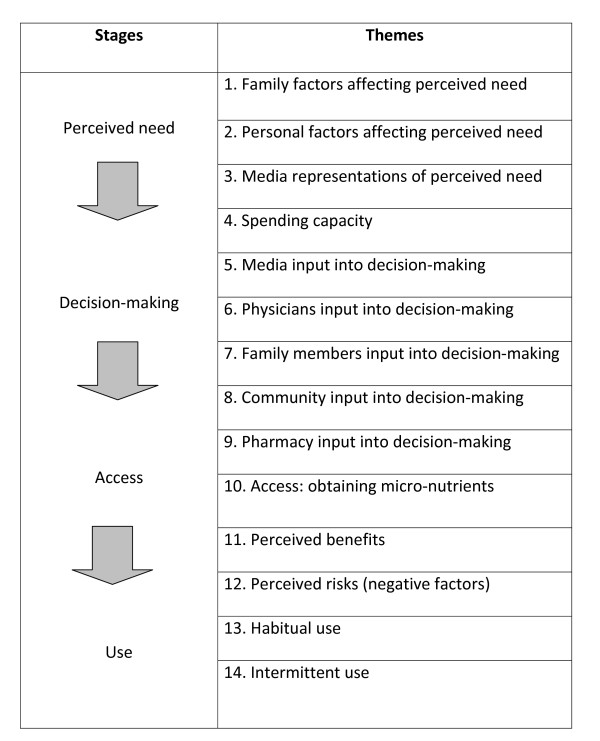
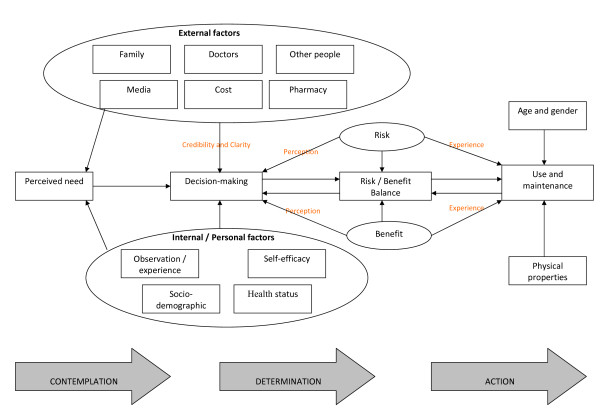
BACKGROUND: A variety of different approaches to the synthesis of qualitative data are advocated in the literature. The aim of this paper is to describe the application of a pragmatic method of qualitative evidence synthesis and the lessons learned from adopting this "best fit" framework synthesis approach. METHODS: An evaluation of framework synthesis as an approach to the qualitative systematic review of evidence exploring the views of adults to the taking of potential agents within the context of the primary prevention of colorectal cancer. RESULTS: Twenty papers from North America, Australia, the UK and Europe met the criteria for inclusion. Fourteen themes were identified a priori from a related, existing conceptual model identified in the literature, which were then used to code the extracted data. Further analysis resulted in the generation of a more sophisticated model with additional themes. The synthesis required a combination of secondary framework and thematic analysis approaches and was conducted within a health technology assessment timeframe. CONCLUSION: The novel and pragmatic "best fit" approach to framework synthesis developed and described here was found to be fit for purpose. Future research should seek to test further this approach to qualitative data synthesis.
Overview
The claims and statistics of this paper haven’t been checked yet.
Run the check — free, no account needed. It reads the open-access text and checks the sources it cites.
Integrity signals
Registry
Cites
Statistics
Figures
Verification
Claims the paper makes
The claims and statistics of this paper haven’t been checked yet.
Run the check — free, no account needed. It reads the open-access text and checks the sources it cites.
Claims other papers make about this one
Each is checked against this paper’s own text: does it say what the citing paper says it does?
The cited source says what the claim attributes to it.
In the citing paper
“At the third level, framework synthesis (Carroll et al., 2011) was applied to map the synthesized evidence onto the fourdomain conceptual architecture, epistemological, pedagogical, sociotechnical, and civic-democratic, developed in the conceptual background of the review.”
From Between cognitive offloading and critical autonomy: A systematic review of the epistemic implications of generative AI in higher education. (2026) · cites this paper as Carroll et al., 2011
Self-check
Percentages, sums and reported differences re-computed from the paper’s own numbers.
The self-check needs the paper’s full text.
Citations
Cites
Tong, A., Sainsbury, P., & Craig, J. (2007) · International Journal for Quality in Health Care · doi:10.1093/intqhc/mzm042 · Cited by 42,509
Pharmacological interventions for somatoform disorders in adults
Kleinstäuber, M., Witthöft, M., Steffanowski, A., van Marwijk, H., Hiller, W., & Lambert, M. J. (2014) · Cochrane Database of Systematic Reviews · doi:10.1002/14651858.cd010628.pub2 · Cited by 11,369
Qualitative Data Analysis: A Sourcebook of New Methods
Lotto, L. S., Miles, M. B., & Huberman, A. M. (1986) · Educational Evaluation and Policy Analysis · doi:10.3102/01623737008003329 · Cited by 10,357
Methods for the thematic synthesis of qualitative research in systematic reviews
Thomas, J., & Harden, A. (2008) · BMC Medical Research Methodology · doi:10.1186/1471-2288-8-45 · Cited by 9,312
Qualitative research in health care: Analysing qualitative data
Pope, C. (2000) · BMJ · doi:10.1136/bmj.320.7227.114 · Cited by 8,131
The Transtheoretical Model of Health Behavior Change.
Prochaska, J. O., & Velicer, W. F. (1997) · American Journal of Health Promotion · doi:10.4278/0890-1171-12.1.38 · Cited by 7,782
Understanding Reliability and Validity in Qualitative Research
Golafshani, N. (2015) · The Qualitative Report · doi:10.46743/2160-3715/2003.1870 · Cited by 5,182
Health behavior and health education
(1990) · Choice Reviews Online · doi:10.5860/choice.28-2173 · Cited by 2,919
Champion, V. L., & Skinner, C. S. (2008) · Cited by 2,727
Noblit, G., & Hare, R. (1988) · doi:10.4135/9781412985000 · Cited by 2,723
A Meta‐Analysis of Research on Protection Motivation Theory
Floyd, D. L., Prentice‐Dunn, S., & Rogers, R. W. (2000) · Journal of Applied Social Psychology · doi:10.1111/j.1559-1816.2000.tb02323.x · Cited by 2,527
Methods for the synthesis of qualitative research: a critical review
Barnett-Page, E., & Thomas, J. (2009) · BMC Medical Research Methodology · doi:10.1186/1471-2288-9-59 · Cited by 2,386
MILNE, S., Sheeran, P., & Orbell, S. (2000) · Journal of Applied Social Psychology · doi:10.1111/j.1559-1816.2000.tb02308.x · Cited by 1,461
Handbook for Synthesizing Qualitative Research
Sandelowski, M., & Barroso, J. V. (2006) · Medical Entomology and Zoology · Cited by 1,096
Haussler, S. C., & Cloutterbuck, J. (2008) · The Journal of Continuing Education in Nursing · doi:10.3928/00220124-20080101-07 · Cited by 941
Campbell, R., Pound, P., Pope, C., Britten, N., Pill, R., Morgan, M., & Donovan, J. (2003) · Social Science & Medicine · doi:10.1016/s0277-9536(02)00064-3 · Cited by 921
Horne, R., & Weinman, J. A. (2002) · Psychology and Health · doi:10.1080/08870440290001502 · Cited by 865
How can systematic reviews incorporate qualitative research? A critical perspective
Dixon-Woods, M., Bonas, S., Booth, A., Jones, D. R., Miller, T., Sutton, A. J., Shaw, R. L., Smith, J. A., & Young, B. (2006) · Qualitative Research · doi:10.1177/1468794106058867 · Cited by 860
Self-citationThe problem of appraising qualitative research
Dixon-Woods, M. (2004) · Quality and Safety in Health Care · doi:10.1136/qshc.2003.008714 · Cited by 653
Nilsen, E. S., Myrhaug, H. T., Johansen, M., Oliver, S. R., & Oxman, A. D. (2006) · Cochrane Database of Systematic Reviews · doi:10.1002/14651858.cd004563.pub2 · Cited by 565
Dixon-Woods, M., Sutton, A., Shaw, R., Miller, T., Smith, J., Young, B., Bonas, S., Booth, A., & Jones, D. (2007) · Journal of Health Services Research & Policy · doi:10.1258/135581907779497486 · Cited by 546
Self-citationIntegrating qualitative research with trials in systematic reviews
Thomas, J., Harden, A., Oakley, A., Oliver, S., Sutcliffe, K., Rees, R., Brunton, G., & Kavanagh, J. (2004) · BMJ · doi:10.1136/bmj.328.7446.1010 · Cited by 515 · cited 1×
“including qualitative data describing people’s attitudes and beliefs from satisfaction surveys as well as more traditional qualitative study designs [6,15].”
BackgroundA multidimensional conceptual framework for analysing public involvement in health services research
Oliver, S. R., Rees, R. W., Clarke‐Jones, L., Milne, R., Oakley, A., Gabbay, J., Stein, K., Buchanan, P., & Gyte, G. M. (2008) · Health Expectations · doi:10.1111/j.1369-7625.2007.00476.x · Cited by 360
Papaioannou, D., Sutton, A., Carroll, C., Booth, A., & Wong, R. (2010) · Health Information & Libraries Journal · doi:10.1111/j.1471-1842.2009.00863.x · Cited by 318
Self-citationChemoprevention of colorectal cancer: systematic review and economic evaluation
Cooper, K. L., Squires, H., Carroll, C., Papaioannou, D. E., Booth, A., Logan, R., Maguire, C., Hind, D., & Tappenden, P. (2010) · Health Technology Assessment · doi:10.3310/hta14320 · Cited by 218
Self-citationCritical Appraisal of Qualitative Research
Hannes, K. (2011) · Lirias · Cited by 156
Search Strategies for Identifying Qualitative Studies in CINAHL
Wilczynski, N. L., Marks, S., & Haynes, R. B. (2007) · Qualitative Health Research · doi:10.1177/1049732306294515 · Cited by 124
Meta-Ethnography: Synthesizing Qualitative Studies
Agar, M. (1990) · The Journal of Nervous and Mental Disease · doi:10.1097/00005053-199007000-00016 · Cited by 99
Women's views on chemoprevention of breast cancer: qualitative study.
Heisey, R., Pimlott, N., Clemons, M. J., Cummings, S. R., & Drummond, N. (2006) · Europe PMC (PubMed Central) · Cited by 65
Brunton, Oliver, S. R., & Lorenc (2006) · Cited by 42
Rotstein, D., & Laupacis, A. (2004) · International Journal of Technology Assessment in Health Care · doi:10.1017/s0266462304000959 · Cited by 40
Brunton, G., Oliver, S. R., Oliver, K. A., & Lorenc, T. (2011) · LSHTM Research Online (London School of Hygiene and Tropical Medicine) · doi:10.17037/pubs.00002605 · Cited by 13
The role of aspirin in the prevention of polyp recurrence: What is the right dose?
Lynch, P. M. (2007) · Current Colorectal Cancer Reports · doi:10.1007/s11888-007-0012-8 · Cited by 1
Demark-Wahnefried, W., Peterson, B., McBride, C., Lipkus, I., & Clipp, E. (2000) · Cancer · doi:10.1002/(sici)1097-0142(20000201)88:3
Research works printed but not linked: 2
- Grayson L, Gomersall A: A difficult business: finding the evidence for social science reviews. ESRC UK Centre for Evidence Based Policy and Practice. Working paper 19. 2003
- Huffman S: Can Marketing Of Multiple Vitamin/Mineral Supplements Reach the Poor?. 2002, The Vitaldía Project, Bolivia, [ http://www.phishare.org/files/338_Can%20Marleting...Vitaldia.pdf ]
Cited by
Sorted by citations
Beyond PICO: The SPIDER Tool for Qualitative Evidence Synthesis
Cooke, A., Smith, D., & Booth, A. (2012) · Qualitative Health Research · doi:10.1177/1049732312452938 · Cited by 2,608
Self-citationSustainability‐oriented Innovation: A Systematic Review
Adams, R. J., Jeanrenaud, S., Bessant, J., Denyer, D., & Overy, P. (2015) · International Journal of Management Reviews · doi:10.1111/ijmr.12068 · Cited by 1,870
Clarifying differences between review designs and methods
Gough, D., Thomas, J., & Oliver, S. (2012) · Systematic Reviews · doi:10.1186/2046-4053-1-28 · Cited by 1,063
Pfadenhauer, L. M., Gerhardus, A., Mozygemba, K., Lysdahl, K. B., Booth, A., Hofmann, B., Wahlster, P., Polus, S., Burns, J., Brereton, L., et al. (2017) · Implementation Science · doi:10.1186/s13012-017-0552-5 · Cited by 1,016
Self-citation“Best fit” framework synthesis: refining the method
Carroll, C., Booth, A., Leaviss, J., & Rick, J. (2013) · BMC Medical Research Methodology · doi:10.1186/1471-2288-13-37 · Cited by 649
Self-citation
Metadata
- Authors
- Carroll, C., Booth, A., & Cooper, K.
- Affiliations
- University of Sheffield (GB)
- Corresponding author
- Carroll, Christopher
- Venue
- BMC Medical Research Methodology
- Published
- 2011-03-16
- Volume
- 11
- Issue
- 1
- Pages
- 29-29
- ISSN
- 1471-2288 (ISSN-L)
- PMC
- PMC3068987
- OpenAlex
- W2068075745
- Cited by
- 461
- References
- 34
- Citations by year
- 2026: 53 · 2025: 31 · 2024: 51 · 2023: 54 · 2022: 35 · 2021: 58 · 2020: 40 · 2019: 21 · 2018: 27 · 2017: 20 · 2016: 22 · 2015: 12 · 2014: 6 · 2013: 15 · 2012: 14
- FWCI
- 2.90
- Type
- journal article
- Language
- en
- Open access
- gold
- doi.org
- Licence
- Locations
- BMC Medical Research Methodology (publishedVersion, cc-by)
- PubMed Central (publishedVersion, cc-by)
- PubMed (publishedVersion)
- White Rose Research Online (University of Leeds, The University of Sheffield, University of York) (acceptedVersion)
- DOAJ (DOAJ: Directory of Open Access Journals) (submittedVersion, cc-by-sa)
- Topics
- Social Sciences › Decision Sciences › Statistics, Probability and Uncertainty › Meta-analysis and systematic reviews
- Social Sciences › Education › Qualitative Research Methods and Applications
- Social Sciences › Sociology and Political Science › Delphi Technique in Research
- Keywords
- qualitative evidence synthesis, chemopreventive agents, patient perspectives, conceptual model, thematic analysis, health technology assessment
- MeSH terms
- Adult, Evaluation Studies as Topic, Humans, Models, Psychological, Research Design, Colorectal Neoplasms, Anticarcinogenic Agents, Chemoprevention
About these checks
Registry, retraction, Cites and statistics results are computed, not judged, with one exception: a printed reference that no index lists is read once by a model before it counts as a citation error. Claims are extracted by a model and kept only when their quote appears verbatim in the text; each cited source is then checked, with a model’s help, for whether it says what the claim relies on. Those verdicts can be wrong — read the claim’s quote and the cited source before relying on one.
Statistics and arithmetic are recomputed, not judged.
Confidence bands are shown only for fields calibrated on our annotated test set. None is calibrated yet, so no band is shown.
What counts as a claim ›How we measure confidence ›How we check this ›
Are you an author, or do you see a problem with this page? Request a review
