

The Global Evidence Mapping Initiative: Scoping research in broad topic areas
Open accessThe DOI matches its Crossref record; 24 of the 25 references it cites were found in a registry or an index.
Abstract
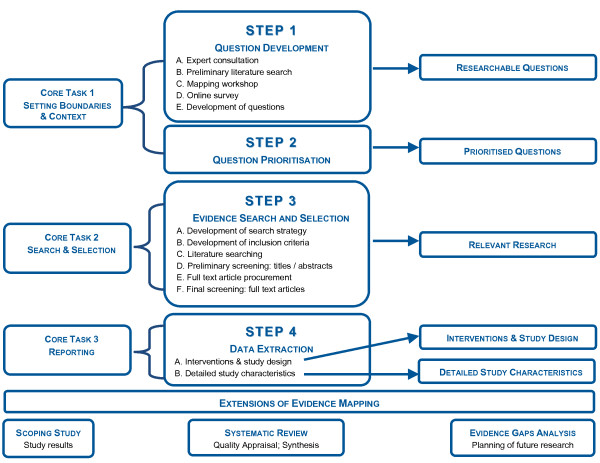
BACKGROUND: Evidence mapping describes the quantity, design and characteristics of research in broad topic areas, in contrast to systematic reviews, which usually address narrowly-focused research questions. The breadth of evidence mapping helps to identify evidence gaps, and may guide future research efforts. The Global Evidence Mapping (GEM) Initiative was established in 2007 to create evidence maps providing an overview of existing research in Traumatic Brain Injury (TBI) and Spinal Cord Injury (SCI). METHODS: The GEM evidence mapping method involved three core tasks:1. Setting the boundaries and context of the map: Definitions for the fields of TBI and SCI were clarified, the prehospital, acute inhospital and rehabilitation phases of care were delineated and relevant stakeholders (patients, carers, clinicians, researchers and policymakers) who could contribute to the mapping were identified. Researchable clinical questions were developed through consultation with key stakeholders and a broad literature search. 2. Searching for and selection of relevant studies: Evidence search and selection involved development of specific search strategies, development of inclusion and exclusion criteria, searching of relevant databases and independent screening and selection by two researchers. 3. Reporting on yield and study characteristics: Data extraction was performed at two levels - 'interventions and study design' and 'detailed study characteristics'. The evidence map and commentary reflected the depth of data extraction. RESULTS: One hundred and twenty-nine researchable clinical questions in TBI and SCI were identified. These questions were then prioritised into high (n = 60) and low (n = 69) importance by the stakeholders involved in question development. Since 2007, 58 263 abstracts have been screened, 3 731 full text articles have been reviewed and 1 644 relevant neurotrauma publications have been mapped, covering fifty-three high priority questions. CONCLUSIONS: GEM Initiative evidence maps have a broad range of potential end-users including funding agencies, researchers and clinicians. Evidence mapping is at least as resource-intensive as systematic reviewing. The GEM Initiative has made advancements in evidence mapping, most notably in the area of question development and prioritisation. Evidence mapping complements other review methods for describing existing research, informing future research efforts, and addressing evidence gaps.
Overview
The claims and statistics of this paper haven’t been checked yet.
Free: it reads the open-access text and checks the first 5 claims that cite a source we can check. Create a free account to check every claim.
Integrity signals
Registry
Cites
Statistics
Figures
Verification
Claims the paper makes
The claims and statistics of this paper haven’t been checked yet.
Free: it reads the open-access text and checks the first 5 claims that cite a source we can check. Create a free account to check every claim.
Claims other papers make about this one
Each is checked against this paper’s own text: does it say what the citing paper says it does?
The cited source says what the claim attributes to it.
In the citing paper
“CADIMA is also suitable for assisting in the process of conducting other forms of evidence synthesis, including systematic maps [8, 9] and rapid reviews [26]”
From Online tools supporting the conduct and reporting of systematic reviews and systematic maps: a case study on CADIMA and review of existing tools (2018) · cites this paper as [9]
Self-check
Percentages, sums and reported differences re-computed from the paper’s own numbers.
The self-check needs the paper’s full text.
Citations
Cites
Scoping studies: towards a methodological framework
Arksey, H., & O'Malley, L. (2005) · International Journal of Social Research Methodology · doi:10.1080/1364557032000119616 · Cited by 36,742 · cited 9×
“[3] discussed the importance of defining key question parameters and recommended framing such parameters to maximise breadth of literature coverage.”
BackgroundMethodInfluentialCochrane Handbook for Systematic Reviews of Interventions: Cochrane Book Series
(2008) · doi:10.1002/9780470712184 · Cited by 25,048
Evidence-Based Medicine: How to Practice and Teach EBM
Sackett, D. L. (2000) · Cited by 5,950
Alternative Therapies in Health and Medicine
Bick, D. (1996) · JAMA: The Journal of the American Medical Association · doi:10.1001/jama.1996.03530370072040 · Cited by 1,734
Evidence-based medicine : how to practice and teach EBM
Straus, S. E. (2005) · Cited by 1,367
How to read a paper: Papers that summarise other papers (systematic reviews and meta-analyses)
Greenhalgh, T. (1997) · BMJ · doi:10.1136/bmj.315.7109.672 · Cited by 578
Nominal Versus Interacting Group Processes for Committee Decision-Making Effectiveness.
Van De, A., & Delbecq, A. L. (1971) · Academy of Management Journal · doi:10.2307/255307 · Cited by 502
4: Rehabilitation after traumatic brain injury
Khan, F., Baguley, I. J., & Cameron, I. D. (2003) · Medical Journal of Australia · doi:10.5694/j.1326-5377.2003.tb05199.x · Cited by 318
Conducting a systematic review
Jones, T., & Evans, D. J. (2000) · Australian Critical Care · doi:10.1016/s1036-7314(00)70624-2 · Cited by 126
The Effect of Abdominal Massage on Bowel Function in Patients with Spinal Cord Injury
Ayaş, Ş., Leblebici, B., Sözay, S., Bayramoğlu, M., & Niron, E. A. (2006) · American Journal of Physical Medicine & Rehabilitation · doi:10.1097/01.phm.0000247649.00219.c0 · Cited by 116
Research works printed but not linked: 4
- 2. Peersman G. EPPI Research Report. London: EPI-Centre; 1996. A Descriptive Mapping of Health Promotion Studies in Young People.
- 10. World Health Organization. Towards a Common Language for Functioning, Disability and Health: ICF The International Classification of Functioning, Disability and Health. Geneva: World Health Organization; 2002.
- 14. The Cochrane Collaboration. Cochrane handbook for systematic reviews of interventions. Chichester, England: John Wiley & Sons; 2008.
- 20. Parkhill A, Clavisi O, Pattuwage L, Bragge P, Tavender E, Gruen R. Is the highly sensitive search worth the effort? [Poster presentation] 17th Cochrane Colloquium 11 - 14 October 2009, Singapore. 2009.
Cited by
Items 101–200 of 313
What is Known About Students and Sleep: Systematic Review and Evidence Map
Bjørnnes, A. K., Torbjørnsen, A., Valeberg, B. T., Sparboe-Nilsen, B., Sandbekken, I. H., Almendingen, K., Leegaard, M., Ravn, I. H., Sæterstrand, M. T., Løyland, B., et al. (2021) · SAGE Open · doi:10.1177/21582440211032162 · Cited by 38
“Evidence mapping is an emerging review methodology which facilitates scoping research in broad topic areas (Bragge et al., 2011).”
BackgroundTakata, J., Sondo, P., Humphreys, G. S., Burrow, R., Maguire, B., Hossain, M. S., Das, D., Commons, R. J., Price, R. N., & Guerin, P. J. (2020) · American Journal of Tropical Medicine and Hygiene · doi:10.4269/ajtmh.19-0706 · Cited by 31
Ballesteros, M., Montero‐Oleas, N., Pousa, A. L., Urrútia, G., Solà, I., Gabriel Rada, G., Hernandez, H. P., & Bonfill, X. (2017) · BMC Medical Research Methodology · doi:10.1186/s12874-017-0402-9 · Cited by 32
“(DOCX 18 kb) Abbreviations AMSTAR: Assessing the Methodological Quality of Systematic Reviews; GEM: Global Evidence Mapping Initiative; GIST: Gastrointestinal Stromal Tumours; PDGFR alpha: Platelet Derived Growth Factor Receptor Alpha; PICO: Population, Intervention, Comparison, Outcome; RCT: Randomized Controlled Tri…”
BackgroundMethodInfluentialEvidence maps: a tool to guide research agenda setting
Alahdab, F., & Murad, M. H. (2019) · BMJ Evidence-Based Medicine · doi:10.1136/bmjebm-2018-111137 · Cited by 29
“One of the main definitions of evidence maps is that they are the systematic organisation and illustration of a broad field of research evidence with the intent to characterise the breadth, depth and methodology of relevant evidence and identify gaps.(19) 20 Other times, an evidence map was defined as an approach to p…”
BackgroundKeshava, C., Davis, J. A., Stanek, J., Thayer, K. A., Galizia, A., Keshava, N., Gift, J. S., Vulimiri, S. V., Woodall, G. M., Gigot, C., et al. (2020) · Environment International · doi:10.1016/j.envint.2020.105956 · Cited by 28
“Although the definition of an evidence map has not always been clear or consistently used (Miake-Lye et al., 2016; Polisena et al., 2015; Khangura et al., 2014; Bragge et al., 2011), one definition that captures current sentiments is “A comprehensive summary of the characteristics and Keshava et al.”
BackgroundMaking the Most of What We Already Know: A Three-Stage Approach to Systematic Reviewing
Silva, N. R. D., Zaranyika, H., Langer, L., Randall, N., Muchiri, E., & Stewart, R. J. (2016) · Evaluation Review · doi:10.1177/0193841x16666363 · Cited by 25
“Identifying and mapping the overlaps and gaps within these reviews and studies meant that we were able to better understand the state of the smallholder farming evidence base (Arksey & O’Malley, 2005; Bates, Clapton, & Coren, 2007; Bragge et al., 2011; Gough & Thomas, 2012).”
BackgroundRaman, G., Shams‐White, M., Avendano, E. E., Chen, F., Novotny, J. A., & Cassidy, A. (2018) · Systematic Reviews · doi:10.1186/s13643-018-0764-z · Cited by 26
Machaczek, K. K., Allmark, P., Goyder, E., Grant, G., Ricketts, T., Pollard, N., Booth, A., Harrop, D., de-la Haye, S., Collins, K., et al. (2018) · BMC Public Health · doi:10.1186/s12889-018-5270-7 · Cited by 24
Requeijo, C., Bracchiglione, J., Meza, N., Acosta‐Dighero, R., Salazar, J., Santero, M., Meade, A.-G., Quintana, M. J., Rodríguez-Grijalva, G., Selva, A., et al. (2023) · Clinical Epidemiology · doi:10.2147/clep.s431498 · Cited by 24
“We conducted a mapping review and evidence gap map, 18,19 adhering to the Preferred Reporting Items for Systematic reviews and Meta-Analyses extension for Scoping Reviews (PRISMA-ScR) guidelines.”
MethodSpagnoli, P., Jacxsens, L., & Vlerick, P. (2022) · Food Control · doi:10.1016/j.foodcont.2022.109398 · Cited by 37
Duan‐Porter, W., Goldstein, K. M., McDuffie, J. R., Hughes, J. M., Clowse, M. E. B., Klap, R. S., Masilamani, V., LaPointe, N. M. A., Nagi, A., Gierisch, J. M., et al. (2016) · Annals of Internal Medicine · doi:10.7326/m15-2877 · Cited by 26
Yan, M., Chen, L., Yang, M., Zhang, L., Niu, M., Wu, F., Chen, Y., Song, Z., Zhang, Y., Jiang, L., et al. (2022) · European Child & Adolescent Psychiatry · doi:10.1007/s00787-022-01958-z · Cited by 24
“[14, 15].”
Multicomponent, nonpharmacological delirium interventions for older inpatients: A scoping review
Eckstein, C., & Burkhardt, H. (2019) · Zeitschrift für Gerontologie und Geriatrie · doi:10.1007/s00391-019-01627-y · Cited by 30
Evidence mapping and quality assessment of systematic reviews in dental traumatology
Tewari, N., Mathur, V. P., Kaur, A., Sardana, D., Rahul, M., Tamchos, R., Ritwik, P., Goel, S., & Schiavo, J. H. (2020) · Dental Traumatology · doi:10.1111/edt.12606 · Cited by 22
Non-syndromic craniosynostosis in children: Scoping review
Garrocho‐Rangel, A., Manriquez-Olmos, L., Flores-Velázquez, J., Rosales-Berber, M., Martinez-Rider, R., & Pozos‐Guillén, A. (2018) · Medicina oral, patología oral y cirugía bucal · doi:10.4317/medoral.22328 · Cited by 22
“Only one study [16] mentions in detail the main oral features/dental manifestations reported in pediatric patients with NSCS.”
BackgroundOpen‐access evidence database of controlled trials and systematic reviews in youth mental health
Silva, S. D., Bailey, A. P., Parker, A. G., Montague, A. E., & Hetrick, S. E. (2017) · Early Intervention in Psychiatry · doi:10.1111/eip.12423 · Cited by 22
“Comprehensive online databases of intervention studies in neurotrauma (Bragge et al., 2011) and physiotherapy (Sherrington, Herbert, Maher, & Moseley, 2000) have generated considerable interest in their respective fields.”
BackgroundNnaji, C. A., Wiysonge, C. S., Okeibunor, J., Malinga, T., Adamu, A. A., Tumusiime, P., & Karamagi, H. C. (2021) · BMC Health Services Research · doi:10.1186/s12913-021-06449-6 · Cited by 31
“methods that are transparent and reproducible, using pre-defined search strategies and inclusion criteria [38, 39].”
MethodKoivu, A. M., Hunter, P., Näsänen-Gilmore, P. K., Muthiani, Y., Isojärvi, J., Pörtfors, P., Ashorn, U., & Ashorn, P. (2021) · BMC Medical Research Methodology · doi:10.1186/s12874-021-01463-y · Cited by 28
“Furthermore, neither original research nor traditional systematic reviews will easily find evidence gaps [7].”
BackgroundA New Approach to Evidence Synthesis in Traumatic Brain Injury: A Living Systematic Review
Synnot, A., Gruen, R. L., Menon, D. K., Steyerberg, E. W., Büki, A., Peul, W. C., Elliott, J., & Maas, A. I. R. (2015) · Journal of Neurotrauma · doi:10.1089/neu.2015.4124 · Cited by 25
“9,10 Rapid reviews have emerged in recent years as a possible solution, but the necessary methodological shortcuts may leave these reviews open to bias.”
Self-citationTrans fatty acids and cholesterol levels: An evidence map of the available science
Liska, D. J., Cook, C. M., Wang, D. D., Gaine, P. C., & Baer, D. J. (2016) · Food and Chemical Toxicology · doi:10.1016/j.fct.2016.07.002 · Cited by 26
Evidence-based dental management in the new era of sickle cell disease
Hsu, L. L.-Y., & Fan-Hsu, J. (2020) · The Journal of the American Dental Association · doi:10.1016/j.adaj.2020.05.023 · Cited by 22
Yu, Z.-Y., Peng, R., Han, M., Grant, S. J., Yang, G., Liu, J., & Cao, H. (2021) · Journal of Ethnopharmacology · doi:10.1016/j.jep.2021.114538 · Cited by 20
Global Healthcare Needs Related to COVID-19: An Evidence Map of the First Year of the Pandemic
Betancourt, M. A., Duarte‐Díaz, A., Vall‐Roqué, H., Seils, L., Orrego, C., Perestelo‐Pérez, L., Cortés, J. B., Martínez, M. T. B., Serrano, A. M., Bermejo‐Caja, C. J., et al. (2022) · International Journal of Environmental Research and Public Health · doi:10.3390/ijerph191610332 · Cited by 24
“, patient preferences [34], central nervous system injury [35], environmental management [36]).”
BackgroundCombination of conditional random field with a rule based method in the extraction of PICO elements.
Chabou, S., & Iglewski, M. (2018) · BMC Medical Informatics and Decision Making · doi:10.1186/s12911-018-0699-2 · Cited by 19
de Menezes, A. J. O., Barbosa, L. D. N., Leite, J. V. C., Barbosa, L. M. M., Montenegro, R. V., Dantas, R. V. F., Souza, G. M. D., de Andrade, A. K. M., & Lima, R. B. W. E. (2024) · Journal of Esthetic and Restorative Dentistry · doi:10.1111/jerd.13339 · Cited by 26
Systematic review of the quantity and quality of randomized clinical trials in pancreatic surgery
Hüttner, F. J., Capdeville, L., Pianka, F., Ulrich, A. B., Hackert, T., Büchler, M. W., Probst, P., & Diener, M. K. (2018) · British journal of surgery · doi:10.1002/bjs.11030 · Cited by 20
Bragge, P., Piccenna, L. G., Middleton, J. W., Williams, S., Creasey, G. H., Dunlop, S. A., Brown, D., & Gruen, R. L. (2015) · Spinal Cord · doi:10.1038/sc.2015.85 · Cited by 24
Self-citationWearing masks to reduce the spread of respiratory viruses: a systematic evidence mapping
Li, Y., Wei, Z., Zhang, J., Li, R., Li, H., Cao, L., Hou, L., Zhang, W., Chen, N., Guo, K., et al. (2021) · Annals of Translational Medicine · doi:10.21037/atm-20-6745 · Cited by 20
“We are, therefore, based our study on the methodology of Global Evidence Mapping (23), Campbell evidence and gap maps (24), and our previous findings (17) concerning EM and evidence and gap map methodology, and made necessary expansion on this basis (25,26).”
MethodGreen, S., Bosch, M., McKenzie, J. E., O’Connor, D. A., Tavender, E. J., Bragge, P., Chau, M., Pitt, V. J., Rosenfeld, J. V., & Gruen, R. L. (2012) · Implementation Science · doi:10.1186/1748-5908-7-74 · Cited by 19
“org) [22], which identified priority research questions relevant to TBI via key stakeholder involvement and produced evidence maps to illustrate the breadth and depth of available research addressing these questions.”
BackgroundSelf-citationMiddleton, J. W., Piccenna, L. G., Gruen, R. L., Williams, S., Creasey, G. H., Dunlop, S. A., Brown, D., Batchelor, P., Berlowitz, D. J., Coates, S., et al. (2015) · Spinal Cord · doi:10.1038/sc.2015.87 · Cited by 17
Self-citationLong-term non-invasive ventilation therapies in children: a scoping review protocol
Castro‐Codesal, M. L., Featherstone, R. M., Carrasco, C. M., Katz, S. L., Chan, E., Bendiak, G. N., Almeida, F. R., Young, R., Olmstead, D., Waters, K. A., et al. (2015) · BMJ Open · doi:10.1136/bmjopen-2015-008697 · Cited by 19
“The methodology of this scoping review is based on the methodological frameworks developed by Bragge et al 62 and Arksey and O ’ Malley.”
MethodSawicki, C. M., Livingston, K. A., Ross, A. B., Jacques, P. F., Koecher, K. J., & McKeown, N. M. (2018) · Nutrients · doi:10.3390/nu10081052 · Cited by 20
“…of three main steps: (i) clearly defining a topic area of interest; (2) systematically searching and screening relevant studies based on pre-defined criteria; and (3) extracting and reporting on study characteristics or other questions of interest, creating a “map” of available evidence [15–17].”
Osseointegration Pharmacology: A Systematic Mapping Using Artificial Intelligence
Mahri, M., Shen, N., Berrizbeitia, F., Rodan, R., Daer, A., Faigan, M., Taqi, D., Wu, K. Y., Ahmadi, M., Ducret, M., et al. (2020) · Acta Biomaterialia · doi:10.1016/j.actbio.2020.11.011 · Cited by 18
Budarick, A. R., & Moyer, R. F. (2021) · Clinical Rheumatology · doi:10.1007/s10067-021-05995-y · Cited by 17
“Evidence maps were created using the framework presented by the Global Evidence Mapping (GEM) Initiative [36].”
BackgroundMethodInfluentialSantero, M., Sequeira, R. O., Paixao, M. C., Martinez, M. M., Mazorra, P., Chantada, G. L., Madrid, A. M. L., & Ilbawi, A. (2025) · EJC Paediatric Oncology · doi:10.1016/j.ejcped.2025.100422 · Cited by 29
Sexual Function in Women with Breast Cancer: An Evidence Map of Observational Studies
Rodrigues-Machado, N., Quintana, M. J., Gómez-Gómez, R., & Bonfill, X. (2022) · International Journal of Environmental Research and Public Health · doi:10.3390/ijerph192113976 · Cited by 19
“The Global Evidence Mapping (GEM) initiative was established in 2007 to provide a general overview of the existing research on traumatic brain and spinal cord injuries [10].”
MethodMarshall, Z., Welch, V. A., Thomas, J., Brunger, F., Swab, M., Shemilt, I., & Kaposy, C. (2017) · Systematic Reviews · doi:10.1186/s13643-017-0427-5 · Cited by 28
“As part of the process of developing evidence maps, it is recommended that researchers clarify concepts and engage key stakeholders in considering the potential scope of the review [27].”
BackgroundMarshall, Z., Brunger, F., Welch, V. A., Asghari, S., & Kaposy, C. (2018) · Journal of Medical Internet Research · doi:10.2196/jmir.8787 · Cited by 16
“As part of the process of constructing evidence maps, it is recommended that researchers clarify concepts and engage key stakeholders in considering the potential scope of the review [22].”
Synnot, A., Bragge, P., Lunny, C., Menon, D. K., Clavisi, O., Pattuwage, L., Volovici, V., Mondello, S., Cnossen, M. C., Donoghue, E., et al. (2018) · PLoS ONE · doi:10.1371/journal.pone.0198676 · Cited by 18
“Evidence maps describe the quantity, design and characteristics of research in broad topic areas; providing a snapshot of what it is known and where evidence is lacking [21, 22].”
BackgroundInfluentialSelf-citationEvidence map of pancreatic surgery: protocol for a living systematic review and meta-analysis
Probst, P., Hüttner, F. J., Meydan, Ö., Kalkum, E., Kretschmer, R., Jensen, K., Kenngott, H., Mihaljević, A. L., Hackert, T., Büchler, M. W., et al. (2019) · BMJ Open · doi:10.1136/bmjopen-2019-032353 · Cited by 18
“Evidence mapping is also an emerging approach to systematic assessment of quantitative and qualitative aspects.(11) Although there is no universally applied definition of evidence mapping yet, its aim is usually to summarise evidence and identify gaps in the body of knowledge regarding a specific area of research.”
BackgroundMacDonald, S., & Shumway, E. (2022) · International Journal of Language & Communication Disorders · doi:10.1111/1460-6984.12817 · Cited by 21
Jung, K., Choi, S., Song, H., Kwak, K., Anh, S., Jung, J. H., Kim, B., Ahn, J., Kim, J., Hwang, J., et al. (2023) · Therapeutic Advances in Medical Oncology · doi:10.1177/17588359231175441 · Cited by 15
Tracheostomy and long‐term invasive ventilation decision‐making in children: A scoping review
Mack, C., Mailo, J. A., Ofosu, D., Hinai, A. A., Keto‐Lambert, D., Soril, L. J. J., van Manen, M., & Castro‐Codesal, M. L. (2024) · Pediatric Pulmonology · doi:10.1002/ppul.26884 · Cited by 20
Online Age Verification: Government Legislation, Supplier Responsibilization, and Public Perceptions
Jarvie, C., & Renaud, K. (2024) · Children · doi:10.3390/children11091068 · Cited by 35
“Methods of identifying and collating research evidence [37].”
BackgroundOccupational therapy for elderly: Evidence mapping of randomised controlled trials from 2004–2012
Voigt-Radloff, S., Ruf, G., Vogel, A., van Nes, F., & Hüll, M. (2013) · Zeitschrift für Gerontologie und Geriatrie · doi:10.1007/s00391-013-0540-6 · Cited by 17
“The objective of the current systematic review was to map the evidence [6] on occupational therapy with older persons by analysing RCTs on occupational therapy with older persons with or without diseases or disabilities published from 2004–2012.”
BackgroundYang, Y., Cao, Z., Zhao, P., Zeng, D. D., Zhang, Q., & Luo, Y. (2021) · Journal of Safety Science and Resilience · doi:10.1016/j.jnlssr.2021.08.002 · Cited by 16
“We follow a process in line with international practices [39] to construct evidence mapping.”
Murphy, A. L., & Gardner, D. M. (2016) · Canadian Pharmacists Journal / Revue des Pharmaciens du Canada · doi:10.1177/1715163516651242 · Cited by 22
Thayer, K. A., Shaffer, R. M., Angrish, M. M., Arzuaga, X., Carlson, L. M., Davis, A., Dishaw, L. V., Druwe, I. L., Gibbons, C. F., Glenn, B. S., et al. (2022) · Environment International · doi:10.1016/j.envint.2022.107363 · Cited by 14
Traditional Chinese medicine for gastric cancer: An evidence mapping
Dai, Z., Tan, C., Wang, J., Wang, Q., Wang, Y., He, Y., Peng, Y., Gao, M., Zhang, Y., Liu, L., et al. (2024) · Phytotherapy Research · doi:10.1002/ptr.8155 · Cited by 14
“As a relatively new technique, evidence mapping provides an overview of the quantity, characteristics and outcomes of related research broadly, unlike systematic reviews, which usually focus on narrower research topics (Bragge et al., 2011).”
MethodChristie, J., Gray, T. A., Dumville, J. C., & Cullum, N. A. (2018) · PLoS ONE · doi:10.1371/journal.pone.0190045 · Cited by 15
Potato consumption and risk of cardio-metabolic diseases: evidence mapping of observational studies
So, J., Avendano, E. E., Raman, G., & Johnson, E. J. (2020) · Systematic Reviews · doi:10.1186/s13643-020-01519-y · Cited by 18
Professional learning and development of postdoctoral scholars: a scoping review protocol
Nowell, L. S., Hayden, A., Berenson, C., Kenny, N., Chick, N. L., & Emery, C. A. (2018) · Systematic Reviews · doi:10.1186/s13643-018-0892-5 · Cited by 18
A Systematic Mapping Review of Family Perspectives About Received Mental Health Interventions
Walters, C., & Petrakis, M. (2021) · Research on Social Work Practice · doi:10.1177/10497315211010950 · Cited by 15
“This review has followed the core tasks and steps outlined by Bragge et al. (2011), which include setting the boundaries and context of the mapping through question development, searching for and selecting evidence, reporting on the number, depth and characteristics of studies, and data extraction…”
BackgroundMethodHealth effects of liquid and gaseous fuels for household energy use: systematic evidence mapping
Nix, E., Fleeman, N., Lorenzetti, F., Lewis, J., Shen, G., Abebe, L., Li, Y., Xing, R., Maden, M., Duarte, R. V., et al. (2022) · Environmental Research Letters · doi:10.1088/1748-9326/aca1d2 · Cited by 13
“Evidence mapping is an emerging method that systematically identifies, organises, and describes the quantity and characteristics of available literature (Bragge et al 2011, Lam et al 2019).”
MethodSalazar, J., Bracchiglione, J., Acosta‐Dighero, R., Meza, N., Meade, A.-G., Quintana, M. J., Requeijo, C., Rodríguez-Grijalva, G., Santero, M., Selva, A., et al. (2023) · Supportive Care in Cancer · doi:10.1007/s00520-022-07564-8 · Cited by 12
“We conducted a comprehensive scoping review and evidence mapping [15], adhering to the Preferred Reporting Items for Systematic reviews and Meta-Analyses extension for Scoping Reviews (PRISMA-ScR) checklist [16].”
MethodLi, Z., Ke, G. U. O., Yongqi, Y. A. N. G., Shuai, Y., Rui, F. A. N., Li, Y., Jiawei, D. U., Niu, J., & Yang, K. (2024) · European Journal of Physical and Rehabilitation Medicine · doi:10.23736/s1973-9087.23.08165-0 · Cited by 16
Zang, Y., Zhang, Y., Lai, X., Yang, Y., Guo, J., Gu, S., & Zhu, Y. (2021) · Evidence-based Complementary and Alternative Medicine · doi:10.1155/2021/3671800 · Cited by 12
“*is evidence mapping is based on the methodology proposed by GEM [15] and previous key studies [16–18].”
MethodTurk, T., Liu, C., Fujiwara, E., Straube, S., Hagtvedt, R., Dennett, L., Abba‐Aji, A., & Dytoc, M. T. (2023) · Journal of Cutaneous Medicine and Surgery · doi:10.1177/12034754231155888 · Cited by 15
Murphy, A. L., Curran, J., Newton, A. S., Emberly, D. J., McRae, C., & MacPhee, S. (2017) · Pediatric Emergency Care · doi:10.1097/pec.0000000000001037 · Cited by 11
Search strategies (filters) to identify systematic reviews in MEDLINE and Embase
Franco, J. V. A., Garrote, V., Vietto, V., Liquitay, C. M. E., & Solà, I. (2020) · Cochrane Database of Systematic Reviews · doi:10.1002/14651858.mr000054 · Cited by 11
Jenkins, H. J., Ferreira, G. E., Downie, A., Maher, C. G., Buchbinder, R., & Hancock, M. J. (2022) · European Journal of Pain · doi:10.1002/ejp.1974 · Cited by 12
“Evidence mapping has been used in a number of different disciplines (Bragge et al., 2011; Miake- Lye et al., 2016; Nyanchoka et al., 2019; O'Leary et al., 2017; Saran & White, 2018) to provide an overview and summary of the quantity of available evidence for a particular research question, with the intention of identi…”
MethodSearch strategies (filters) to identify systematic reviews in MEDLINE and Embase
Liquitay, C. M. E., Garegnani, L., Garrote, V., Solà, I., & Franco, J. V. A. (2023) · Cochrane Database of Systematic Reviews · doi:10.1002/14651858.mr000054.pub2 · Cited by 24
Welch, V. A., Howe, T. E., Marcus, S., Mathew, C. M., Sadana, R., Rogers, M., Sheehy, L., Borg, J., Pottie, K. C., Coon, J. T., et al. (2019) · Campbell Systematic Reviews · doi:10.1002/cl2.1054 · Cited by 12
“We will adapt evidence gap map methods from various key papers (Bragge et al., 2011; Lum, Koper Christopher, & Telep Cody, 2011; Snilstveit et al., 2013, 2016) and will adopt a five‐ stage process:”
MethodInterventions to improve the quality of maternal care in Ethiopia: a scoping review
Birhane, B. M., Assefa, Y. A., Belay, D. M., Mihretie, G. N., Aytenew, T. M., Liyeh, T. M., Gelaw, K. A., & Tiruneh, Y. M. (2024) · Frontiers in Global Women s Health · doi:10.3389/fgwh.2024.1289835 · Cited by 13
“A scoping review was used because of the broader nature (32) of quality maternal and neonatal care interventions.”
Emotional Dysregulation in Anorexia Nervosa: Scoping Review of Psychological Treatments
Cogodi, E., Ranieri, J., Martelli, A., & Giacomo, D. D. (2024) · Healthcare · doi:10.3390/healthcare12141388 · Cited by 10
“The framework outlined by the Global Evidence Mapping (GEM) Initiative [27] in their methodological paper on scoping studies was adopted.”
MethodQin, Y., Xu, J., & Ng, S. S. M. (2025) · Systematic Reviews · doi:10.1186/s13643-025-02795-2 · Cited by 13
“This study was based on the methodology of Global Evidence Mapping and Campbell evidence and gap map [16, 17].”
Evidence Mapping of the Treatments for Breast Cancer–related Lymphedema
Al-Sakkaf, A. M., Masià, J., Auladell-Rispau, A., Shamardal, A. I., Vasconcello-Castillo, L., Solà, I., & Bonfill, X. (2022) · Plastic & Reconstructive Surgery Global Open · doi:10.1097/gox.0000000000004045 · Cited by 11
“Countries During the last 20 years, RCTs have been published in many different countries, the main ones being Australia (12), the USA (11), Turkey (8), South Korea (8), the UK (7), China (5), and Poland (5).”
BackgroundEvidence map of recommendations on diabetic foot ulcers care:A systematic review of 22 guidelines
Sun, Y., Ma, L., Ji, M., & Wang, Z. (2022) · Journal of Tissue Viability · doi:10.1016/j.jtv.2022.03.001 · Cited by 15
Suñol, R., González‐González, A. I., Valli, C., Ballester, M., Seils, L., Heijmans, M., Poortvliet, R., van der Gaag, M., Rocha, C., León‐García, M., et al. (2023) · Patient Education and Counseling · doi:10.1016/j.pec.2023.107647 · Cited by 13
Lamina, T., Abdi, H. I., Behrens, K. L., Parikh, R. R., Call, K. T., Claussen, A. M., Dill, J., Grande, S. W., Houghtaling, L. M., Jones‐Webb, R., et al. (2024) · Annals of Internal Medicine · doi:10.7326/annals-24-01262 · Cited by 13
“Evidence maps systematically identify and describe the quantity, design, and characteristics of research within broad topics and help to inform research priorities and guide evidence synthesis (such as systematic reviews) when an abundant and diverse research base is available (14, 15).”
Taylor, H. M., Pennington, L., Craig, D., Morris, C., McConachie, H., Cadwgan, J., Sellers, D., Andrew, M., Smith, J., Garland, D., et al. (2021) · BMJ Paediatrics Open · doi:10.1136/bmjpo-2021-001095 · Cited by 9
Occurrence of Multiple Sclerosis After Drug Exposure: Insights From Evidence Mapping
Antonazzo, I. C., Raschi, E., Vignatelli, L., Baldin, E., Riise, T., D’Alessandro, R., Ponti, F. D., & Poluzzi, E. (2017) · Drug Safety · doi:10.1007/s40264-017-0551-0 · Cited by 14
“The systematic search of the literature was performed by adapting the methodology reported by the Global Evidence Mapping Initiative [11].”
MethodA practical guide to living evidence: reducing the knowledge-to-practice gap
Allida, S. M., Hackett, M. L., Lindley, R. I., Hill, K. M., & Ferguson, C. (2024) · European Journal of Cardiovascular Nursing · doi:10.1093/eurjcn/zvae048 · Cited by 8
Policy coordination and development in a VUCA world
Mintrom, M., & O’Connor, R. (2024) · Global Policy · doi:10.1111/1758-5899.13430 · Cited by 21
A mapping review of adolescent identity after TBI: what clinicians need to know
Kakonge, L., Charron, V. P., Vedder, J., Wormald, K., & Turkstra, L. S. (2022) · Neuropsychological Rehabilitation · doi:10.1080/09602011.2022.2071299 · Cited by 14
“…guidelines, the protocol for the mapping review was a modification of the Hetrick et al. (2010) framework, using the Y-shaped model (Gracey et al., 2009) as the underlying conceptual framework, in lieu of development of a framework with stakeholders (Bragge et al., 2011; Hetrick et al., 2010).”
BackgroundMethodDean, C., Nijsten, K., Spijker, R., O’Hara, M. E., Roseboom, T. J., & Painter, R. C. (2022) · BMJ Open · doi:10.1136/bmjopen-2021-052687 · Cited by 11
O’Connor, N., Thomson, K. H., Gill, S., Jackson, S., Wallace, S. A., & Pearson, F. (2022) · Journal of Clinical Epidemiology · doi:10.1016/j.jclinepi.2022.11.021 · Cited by 9
Kennedy, C. J., Woodin, E. M., Schmidt, J., Biagioni, J. B., & García-Barrera, M. A. (2024) · Health Expectations · doi:10.1111/hex.14136 · Cited by 9
“Several large organizations have established approaches with this purpose in mind, such as the James Lind Alliance [34] or the Global Evidence Mapping (GEM) Initiative [35, 36].”
BackgroundMethodInfluentialZhang, R., Zhu, C., Chen, S., Tian, F., & Chen, Y. (2025) · Clinical Cardiology · doi:10.1002/clc.70117 · Cited by 8
Nigenda, G., Torres, M., Jáuregui, A., Silverman-Retana, O., Casas, A., & Servan-Mori, E. E. (2016) · Journal of Public Health Policy · doi:10.1057/s41271-016-0014-3 · Cited by 14
Evidence Mapping Based on Systematic Reviews of Cognitive Behavioral Therapy for Neuropathic Pain
Li, C., Hou, W., Ding, D., Yang, Y., Gu, S., & Zhu, Y. (2023) · Neural Plasticity · doi:10.1155/2023/2680620 · Cited by 10
“This study was conducted following the methodology of Global Evidence Mapping (GEM).”
MethodInfluentialSrivastav, S., Tewari, N., Antonarakis, G. S., Duggal, R., Saji, S., Lokade, A. K., & Yadav, R. (2023) · Journal of Clinical Medicine · doi:10.3390/jcm12186002 · Cited by 8
“It helps in identifying, organizing, and summarizing the available scientific evidence on a broad topic [6].”
BackgroundMethodInfluentialConsuming responsibly: Prioritising responsible consumption behaviours in Australia
Borg, K., Macklin, J., Kaufman, S., & Curtis, J. (2024) · Cleaner and Responsible Consumption · doi:10.1016/j.clrc.2024.100181 · Cited by 15
Evidence mapping of traditional Chinese medicine in diabetic peripheral neuropathy treatment
Fu, Y., Wang, Y., Li, Z., Huang, K., Gao, Y., Xu, S., Li, Q., Liu, X., & Zhang, G. (2024) · Frontiers in Pharmacology · doi:10.3389/fphar.2024.1325607 · Cited by 8
“This serves researchers, guideline creators, clinical physicians, and other stakeholders (Bragge et al., 2011; Miake-Lye et al., 2016; Li et al., 2019).”
BackgroundTitle analysis of (systematic) scoping review studies: Chaos or consistency?
Chrastina, J. (2020) · Nursing and Health Sciences · doi:10.1111/nhs.12694 · Cited by 10
Blueberry Consumption and Exercise: Gap Analysis Using Evidence Mapping
Avendano, E. E., & Raman, G. (2020) · The Journal of Alternative and Complementary Medicine · doi:10.1089/acm.2020.0236 · Cited by 7
“8 In general, evidence mapping has been used as a tool to systematically summarize the available scientific evidence on a topic and to plan for future research where additional research is needed.”
Gates, A., Rahman, S., Sim, S., Pillay, J., Ismail, S. J., Tunis, M. C., Keto‐Lambert, D., & Hartling, L. (2021) · Vaccine · doi:10.1016/j.vaccine.2021.05.054 · Cited by 9
Riley, S. P., Swanson, B. T., Shaffer, S. M., & Cook, C. E. (2022) · Journal of Manual & Manipulative Therapy · doi:10.1080/10669817.2022.2119528 · Cited by 8
Self-management of cardiac pain in women: an evidence map
Parry, M. J. E., Bjørnnes, A. K., Clarke, H. A., Cooper, L., GORDON, A. S., Harvey, P., Lalloo, C., Leegaard, M., LeFort, S. M., McFetridge-Durdle, J., et al. (2017) · BMJ Open · doi:10.1136/bmjopen-2017-018549 · Cited by 8
“36 Six steps were used to construct an evidence map of cardiac pain in women 37 : (1) identify the scope of the evidence map; (2) define the key variables; (3) establish a comprehensive search strategy; (4) identify study inclusion and exclusion criteria; (5) systematically retrieve, screen and…”
MethodCoren, E., Hossain, R., Pardo, J. P., & Bakker, B. (2016) · Campbell Systematic Reviews · doi:10.4073/csr.2016.5 · Cited by 12
Santero, M., Meade, A.-G., Selva, A., Roberto, A., Nicolas, M., Quintana, M. J., Bracchiglione, J., Requeijo, C., Josefina, S., Rodríguez-Grijalva, G., et al. (2023) · Journal of Evidence-Based Medicine · doi:10.1111/jebm.12539 · Cited by 7
Song, Y., Puerta, J. B., Medina‐Aedo, M., Canelo‐Aybar, C., Valli, C., Ballester, M., Rocha, C., León‐García, M., Salas-Gama, K., Kaloteraki, C., et al. (2023) · Healthcare · doi:10.3390/healthcare11243156 · Cited by 11
“The user-friendly format of evidence maps facilitates communication with various stakeholders, such as policymakers, researchers, and health professionals [14].”
BackgroundInvestigating innovations in outpatient services: a mixed-methods rapid evaluation
Sherlaw‐Johnson, C., Georghiou, T., Reed, S., Hutchings, R., Appleby, J., Bagri, S., Crellin, N. E., Kumpunen, S., Lobont, C., Negus, J., et al. (2024) · Health and Social Care Delivery Research · doi:10.3310/vgqd4611 · Cited by 6
Effects of acupuncture on musculoskeletal pain: an evidence map
Ang, L., Song, E., Choi, T., Jun, J. H., Lee, B., Yim, M. H., Lee, H. W., & Lee, M. S. (2025) · Frontiers in Medicine · doi:10.3389/fmed.2025.1575226 · Cited by 8
Protective factors for adverse childhood experiences: Scoping review and evidence gap map.
Valrie, C. R., Kliewer, W. L., Gary, K. W., Cyrus, J. W. W., Hood, K. B., Williams, C. D., Lytle, L., & Shipman-Lacewell, J. R. (2025) · Psychological Trauma Theory Research Practice and Policy · doi:10.1037/tra0001676 · Cited by 10
Véras, M. M. S., Pardo, J. P., Lê, M., Jussup, C., Tatmatsu-Rocha, J. C., & Welch, V. A. (2025) · Journal of Personalized Medicine · doi:10.3390/jpm15010029 · Cited by 7
“…five-step method with AI Extension was adapted from the five-step method proposed by Welch et al., 2021 [14], which had been adapted from other researchers (Bragge et al., 2011 [15]; Lum, Koper Christopher, & Telep Cody, 2011 [16]; Snilstveit et al., 2013 [17], 2016 [18]) (Figure 1).”
From policy to practice: prioritizing person-centred healthcare actions in the state of Victoria
Bragge, P., Horvat, L., McKinlay, L., Borg, K., MacLeod-Smith, B. J., & Wright, B. (2021) · Health Research Policy and Systems · doi:10.1186/s12961-021-00782-2 · Cited by 6
Self-citationSystematic mapping review of orthognathic surgery
Bendersky, J., Uribe, M., Bravo, M., Díaz, V., Flores, E., Agüero, I., Julio Villanueva, M., Urrútia, G., & Bonfill, X. (2022) · Journal of Stomatology Oral and Maxillofacial Surgery · doi:10.1016/j.jormas.2022.05.011 · Cited by 6
Li, Y., Yu, Q., Chen, N., Ge, L., Wang, Q., Aboudou, T., Han, J., Hou, L., Cao, L., Li, R., et al. (2023) · Frontiers in Pharmacology · doi:10.3389/fphar.2023.1069879 · Cited by 9
“This study was based on the methodology of Global Evidence Mapping (Katz et al., 2003; Bragge et al., 2011) and Campbell evidence and gap map (White et al., 2020) with some modifications (Yang et al., 2018; Li et al., 2020; Li et al., 2021a; Li et al., 2021b).”
MethodBendersky, J., Uribe, M., Bravo, M., Vargas, J., Julio Villanueva, M., Urrútia, G., & Bonfill, X. (2023) · Medicina oral, patología oral y cirugía bucal · doi:10.4317/medoral.25530 · Cited by 6
“Even though the evidence mapping methodology does not include a quality assessment of SRs (10), we performed this analysis.”
Method
Metadata
- Authors
- Bragge, P., Clavisi, O., Turner, T., Tavender, E., Collie, A., & Gruen, R. L.
- Affiliations
- Monash University (AU)
- National Trauma Research Institute (AU)
- Institute for Safety, Compensation and Recovery Research (AU)
- Corresponding author
- Bragge, Peter
- Venue
- BMC Medical Research Methodology
- Published
- 2011-06-17
- Volume
- 11
- Issue
- 1
- Pages
- 92-92
- ISSN
- 1471-2288 (ISSN-L)
- PMC
- PMC3141802
- OpenAlex
- W2019022980
- Cited by
- 310
- References
- 25
- Citations by year
- 2026: 19 · 2025: 20 · 2024: 41 · 2023: 35 · 2022: 37 · 2021: 28 · 2020: 22 · 2019: 17 · 2018: 19 · 2017: 17 · 2016: 19 · 2015: 9 · 2014: 14 · 2013: 8 · 2012: 3
- FWCI
- 9.19
- Type
- journal article
- Language
- en
- Open access
- gold
- doi.org
- Licence
- cc-by
- creativecommons.org/licenses/by/2.0 (tdm)
- Locations
- BMC Medical Research Methodology (publishedVersion, cc-by)
- PubMed Central (publishedVersion, cc-by)
- PubMed (publishedVersion)
- Rare & Special e-Zone (The Hong Kong University of Science and Technology) (submittedVersion)
- DOAJ (DOAJ: Directory of Open Access Journals) (submittedVersion)
- Minerva Access (University of Melbourne) (submittedVersion, cc-by)
- ANU Open Research (Australian National University) (submittedVersion)
- Funders
- National Institute of Clinical Studies
- Monash University
- University of Melbourne
- Medical Research Council
- National Health and Medical Research Council
- Topics
- Social Sciences › Decision Sciences › Statistics, Probability and Uncertainty › Meta-analysis and systematic reviews
- Health Sciences › Medicine › Clinical Neurology › Traumatic Brain Injury Research
- Health Sciences › Health Professions › General Health Professions › Health Sciences Research and Education
- Keywords
- evidence mapping, traumatic brain injury, spinal cord injury, research question formulation, evidence gaps, stakeholder engagement, prehospital care, rehabilitation
- MeSH terms
- Brain Injuries, Humans, Surveys and Questionnaires, Research, Review Literature as Topic, Spinal Cord Injuries
About these checks
Registry, retraction, Cites and statistics results are computed, not judged, with one exception: a printed reference that no index lists is read once by a model before it counts as a citation error. Claims are extracted by a model and kept only when their quote appears verbatim in the text; each cited source is then checked, with a model’s help, for whether it says what the claim relies on. Those verdicts can be wrong — read the claim’s quote and the cited source before relying on one.
Statistics and arithmetic are recomputed, not judged.
Confidence bands are shown only for fields calibrated on our annotated test set. None is calibrated yet, so no band is shown.
What counts as a claim ›How we measure confidence ›How we check this ›
Are you an author, or do you see a problem with this page? Request a review
Data sources
Bibliographic data: Semantic Scholar, OpenAlex, Crossref.
Contains information from the Semantic Scholar Academic Graph Datasets, made available under the ODC Attribution License (ODC-BY 1.0).
Semantic Scholar’s data is described in: Kinney, R., et al. (2023). The Semantic Scholar Open Data Platform. arXiv:2301.10140.
