

The Global Evidence Mapping Initiative: Scoping research in broad topic areas
Open accessThe DOI matches its Crossref record; 24 of the 25 references it cites were found in a registry or an index.
Abstract
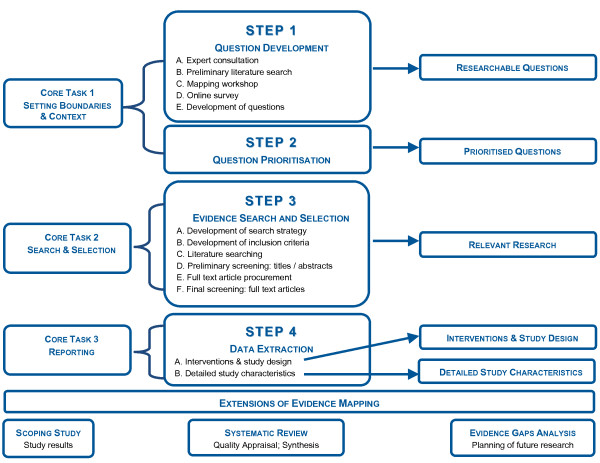
BACKGROUND: Evidence mapping describes the quantity, design and characteristics of research in broad topic areas, in contrast to systematic reviews, which usually address narrowly-focused research questions. The breadth of evidence mapping helps to identify evidence gaps, and may guide future research efforts. The Global Evidence Mapping (GEM) Initiative was established in 2007 to create evidence maps providing an overview of existing research in Traumatic Brain Injury (TBI) and Spinal Cord Injury (SCI). METHODS: The GEM evidence mapping method involved three core tasks:1. Setting the boundaries and context of the map: Definitions for the fields of TBI and SCI were clarified, the prehospital, acute inhospital and rehabilitation phases of care were delineated and relevant stakeholders (patients, carers, clinicians, researchers and policymakers) who could contribute to the mapping were identified. Researchable clinical questions were developed through consultation with key stakeholders and a broad literature search. 2. Searching for and selection of relevant studies: Evidence search and selection involved development of specific search strategies, development of inclusion and exclusion criteria, searching of relevant databases and independent screening and selection by two researchers. 3. Reporting on yield and study characteristics: Data extraction was performed at two levels - 'interventions and study design' and 'detailed study characteristics'. The evidence map and commentary reflected the depth of data extraction. RESULTS: One hundred and twenty-nine researchable clinical questions in TBI and SCI were identified. These questions were then prioritised into high (n = 60) and low (n = 69) importance by the stakeholders involved in question development. Since 2007, 58 263 abstracts have been screened, 3 731 full text articles have been reviewed and 1 644 relevant neurotrauma publications have been mapped, covering fifty-three high priority questions. CONCLUSIONS: GEM Initiative evidence maps have a broad range of potential end-users including funding agencies, researchers and clinicians. Evidence mapping is at least as resource-intensive as systematic reviewing. The GEM Initiative has made advancements in evidence mapping, most notably in the area of question development and prioritisation. Evidence mapping complements other review methods for describing existing research, informing future research efforts, and addressing evidence gaps.
Overview
The claims and statistics of this paper haven’t been checked yet.
Free: it reads the open-access text and checks the first 5 claims that cite a source we can check. Create a free account to check every claim.
Integrity signals
Registry
Cites
Statistics
Figures
Verification
Claims the paper makes
The claims and statistics of this paper haven’t been checked yet.
Free: it reads the open-access text and checks the first 5 claims that cite a source we can check. Create a free account to check every claim.
Claims other papers make about this one
Each is checked against this paper’s own text: does it say what the citing paper says it does?
The cited source says what the claim attributes to it.
In the citing paper
“CADIMA is also suitable for assisting in the process of conducting other forms of evidence synthesis, including systematic maps [8, 9] and rapid reviews [26]”
From Online tools supporting the conduct and reporting of systematic reviews and systematic maps: a case study on CADIMA and review of existing tools (2018) · cites this paper as [9]
Self-check
Percentages, sums and reported differences re-computed from the paper’s own numbers.
The self-check needs the paper’s full text.
Citations
Cites
Scoping studies: towards a methodological framework
Arksey, H., & O'Malley, L. (2005) · International Journal of Social Research Methodology · doi:10.1080/1364557032000119616 · Cited by 36,742 · cited 9×
“[3] discussed the importance of defining key question parameters and recommended framing such parameters to maximise breadth of literature coverage.”
BackgroundMethodInfluentialCochrane Handbook for Systematic Reviews of Interventions: Cochrane Book Series
(2008) · doi:10.1002/9780470712184 · Cited by 25,048
Evidence-Based Medicine: How to Practice and Teach EBM
Sackett, D. L. (2000) · Cited by 5,950
Alternative Therapies in Health and Medicine
Bick, D. (1996) · JAMA: The Journal of the American Medical Association · doi:10.1001/jama.1996.03530370072040 · Cited by 1,734
Evidence-based medicine : how to practice and teach EBM
Straus, S. E. (2005) · Cited by 1,367
How to read a paper: Papers that summarise other papers (systematic reviews and meta-analyses)
Greenhalgh, T. (1997) · BMJ · doi:10.1136/bmj.315.7109.672 · Cited by 578
Nominal Versus Interacting Group Processes for Committee Decision-Making Effectiveness.
Van De, A., & Delbecq, A. L. (1971) · Academy of Management Journal · doi:10.2307/255307 · Cited by 502
4: Rehabilitation after traumatic brain injury
Khan, F., Baguley, I. J., & Cameron, I. D. (2003) · Medical Journal of Australia · doi:10.5694/j.1326-5377.2003.tb05199.x · Cited by 318
Conducting a systematic review
Jones, T., & Evans, D. J. (2000) · Australian Critical Care · doi:10.1016/s1036-7314(00)70624-2 · Cited by 126
The Effect of Abdominal Massage on Bowel Function in Patients with Spinal Cord Injury
Ayaş, Ş., Leblebici, B., Sözay, S., Bayramoğlu, M., & Niron, E. A. (2006) · American Journal of Physical Medicine & Rehabilitation · doi:10.1097/01.phm.0000247649.00219.c0 · Cited by 116
Research works printed but not linked: 4
- 2. Peersman G. EPPI Research Report. London: EPI-Centre; 1996. A Descriptive Mapping of Health Promotion Studies in Young People.
- 10. World Health Organization. Towards a Common Language for Functioning, Disability and Health: ICF The International Classification of Functioning, Disability and Health. Geneva: World Health Organization; 2002.
- 14. The Cochrane Collaboration. Cochrane handbook for systematic reviews of interventions. Chichester, England: John Wiley & Sons; 2008.
- 20. Parkhill A, Clavisi O, Pattuwage L, Bragge P, Tavender E, Gruen R. Is the highly sensitive search worth the effort? [Poster presentation] 17th Cochrane Colloquium 11 - 14 October 2009, Singapore. 2009.
Cited by
Items 201–300 of 313
Guo, L., Li, J., White, H., Xu, Z., Ren, J., Huang, X., Chen, Y., & Yang, K. (2023) · Campbell Systematic Reviews · doi:10.1002/cl2.1308 · Cited by 5
“Britton et al. (2021) collected evidence on mindfulness‐based interventions for depression and interpreted its mechanisms with the self‐related processes, including self‐concept, rumination, self‐compassion, self‐efficacy, and self‐esteem.”
BackgroundWhy do ‘Trustworthy’ Living Systematic Reviews Matter?
Riley, S. P., Swanson, B. T., Shaffer, S. M., Flowers, D. W., Cook, C. E., & Brismée, J. (2023) · Journal of Manual & Manipulative Therapy · doi:10.1080/10669817.2023.2229610 · Cited by 7
MacPherson, M., & Rourke, S. (2024) · Journal of Medical Internet Research · doi:10.2196/54821 · Cited by 5
“This type of early and continued engagement of knowledge users in research endeavors has been increasingly recognized as pivotal for establishing research priorities and enhancing the utility of research findings in real-world health care contexts [50,51].”
BackgroundXie, K., Jing, H., Guan, S.-N., Kong, X., Ji, W., Du, C., Jia, M., & Wang, H. (2024) · European journal of medical research · doi:10.1186/s40001-024-01837-0 · Cited by 6
“Even without research retrieval and data extraction, evidence mapping can generate a comprehensive list of priority research issues in a topic area, which has the potential to serve as a foundation for study, policy development, and research funding [39].”
BackgroundZang, Y., Zhang, Y., Lai, X., Yang, Y., Guo, J., Gu, S., & Zhu, Y. (2022) · Frontiers in Human Neuroscience · doi:10.3389/fnhum.2021.743846 · Cited by 6
Hobbs, A. J., Moller, A., Carvajal–Aguirre, L., Amouzou, A., Chou, D., & Say, L. (2017) · BMJ Open · doi:10.1136/bmjopen-2017-017229 · Cited by 7
Nalder, E. J., Putnam, M., Salvador‐Carulla, L., Spindel, A., Batliwalla, Z., & Lenton, E. (2017) · BMJ Open · doi:10.1136/bmjopen-2017-016741 · Cited by 10
“One challenge for conducting a knowledge synthesis in this area is that it is a topic drawing on knowledge from multiple fields (eg, ageing, disability, knowledge translation and health services).(31) Different terminology, particularly pertaining to concepts like ‘disability’ makes identifying articles challenging.”
Evidence mapping based on systematic reviews of therapeutic interventions for soft tissue sarcomas
Ballesteros, M., Montero‐Oleas, N., Pousa, A. L., Urrútia, G., Solà, I., Rada, G., Hernandez, H. P., & Bonfill, X. (2019) · Clinical & Translational Oncology · doi:10.1007/s12094-019-02069-z · Cited by 6
“Methods We carried out an evidence map according to the methodology of Global Evidence Mapping (GEM) [10] and adding some new components: an exhaustive search strategy and the assessment of methodological quality of the included systematic reviews (SRs).”
MethodBragge, P., Bayley, M. T., Velikonja, D., Togher, L., Ponsford, J. L., Janzen, S. E., Harnett, A., Kua, A., Patsakos, E., McIntyre, A., et al. (2023) · Journal of Head Trauma Rehabilitation · doi:10.1097/htr.0000000000000836 · Cited by 5
Self-citationExercise Interventions in Cardio-Oncology Populations: A Scoping Review of the Literature
Wang, H., Cousin, L., Fradley, M. G., Donovan, K. A., Smith, B. A., Szalacha, L. A., Smith, E. M. L., & Buck, H. G. (2020) · The Journal of Cardiovascular Nursing · doi:10.1097/jcn.0000000000000664 · Cited by 7
“In keeping with the scoping review methodology, we identified 2 major contextual areas—the actual exercise intervention components and the effect of those components on patient outcomes without conducting a detailed quality appraisal as required by systematic review methodology.(18) Two research questions proposed wer…”
MethodBragge, P., Angus, S. D., Fischer, A., Lennox, A., Piquero, A. R., Reddel, T., Smith, L. D. G., Walsh, L., Wickes, R. L., Wild, A., et al. (2024) · Australian Journal of Social Issues · doi:10.1002/ajs4.322 · Cited by 4
Self-citationSleep‐related hypermotor epilepsy—No longer controversial
Bisulli, F., Berkovic, S. F., Scheffer, I. E., Hirsch, É., Nobili, L., Provini, F., Tinuper, P., & Vignatelli, L. (2025) · Epilepsia · doi:10.1111/epi.18364 · Cited by 3
“…process that included predefined research questions, a systematic review for each question, an independent systematic mapping of the evidence, 20 an assessment of the literature's quality with reliable tools, 21,22 and an open, structured debate of 2 days involving a workgroup of experts for…”
Perspective: Towards Automated Tracking of Content and Evidence Appraisal of Nutrition Research
Yang, C., Hawwash, D., Baets, B. D., Bouwman, J., & Lachat, C. K. (2020) · Advances in Nutrition · doi:10.1093/advances/nmaa057 · Cited by 5
“A systematic review of published research articles is an essential process to summarize the evidence, but involves time-consuming processes such as literature retrieval, review, and data extraction (3).”
Young, V. M., Hill, J. R., Patrini, M., Négrini, S., & Arienti, C. (2022) · Journal of Clinical Medicine · doi:10.3390/jcm11102691 · Cited by 6
“Evidence maps represent a novel approach that can be employed to detect broader issues, lead to research synthesis, and guide researchers in formulating both future research and studies with a narrower focus [42,43].”
BackgroundKnowledge gaps in diabetes research: an evidence mapping of the literature
Esmaeili, S., Bandarian, F., Gharishvandi, F., Razi, F., Hosseinkhani, S., Namazi, N., Esmaeili, B., Sanjari, M., Tootee, A., Saeedi, S., et al. (2022) · Journal of Diabetes & Metabolic Disorders · doi:10.1007/s40200-022-01037-9 · Cited by 5
“Moreover, various emerging reviews, such as scoping reviews and evidence mapping, are useful to summarize the available literature and avoid unnecessary and duplicate research [11, 12, 14, 23].”
BackgroundInfluentialInfodemic in Public health a reemerging public health threat: a scoping review
Pai, M. B., Yellapurkar, S., & shetty, A. S. (2023) · F1000Research · doi:10.12688/f1000research.130687.1 · Cited by 5
“Evidence mapping on the other hand provides a brief summary of the range, distribution and scope of evidence in a field of interest broadly.(6) Evidence synthesis are formulated on an explicit research question concerning the field of interest, which are not in depth analysis of a question but rather a systematic accu…”
BackgroundPrioritising research funding for cardiovascular disease and diabetes in Australia
Grundy, E. A. C., Kelly, L. E., Kneipp, E., Clynes, L., Saeri, A. K., & Bragge, P. (2023) · Journal of Public Health Policy · doi:10.1057/s41271-023-00441-6 · Cited by 4
“We designed the study using a mixed method application of structured prioritisation principles that have been applied in numerous research policy settings [7, 8, 12–15].”
MethodSelf-citationLi, Y., Tian, J., Cheng, L., Lecturer, J. N., Li, L., Zhang, J., Zhao, L., Zou, J., Wei, W., & Cai, D. (2025) · International Journal of Nursing Sciences · doi:10.1016/j.ijnss.2025.06.009 · Cited by 6
“…the Appraisal of Guidelines for Research & Evaluation II (AGREE II) [31] and AGREE-Recommendations Excellence (AGREE-REX) [32], employing 7-point Likert scales (1 = strongly disagree; 7 = strongly agree), with domain scores calculated as standardized percentages against the maximum benchmarks [27].”
Gates, M., Elliott, S. A., Gates, A., Sebastianski, M., Pillay, J., Bialy, L. M., & Hartling, L. (2021) · Systematic Reviews · doi:10.1186/s13643-021-01665-x · Cited by 4
Rahul, M., Tewari, N., Mathur, V. P., Goel, S., & Jain, G. (2021) · National Journal of Maxillofacial Surgery · doi:10.4103/njms.njms_237_20 · Cited by 3
“METHODS This systematic review was carried out according to the PRISMA guidelines and principles of Global Evidence Mapping.[17,18] The protocol was registered with https://osf.”
MethodXu, Z., Tang, J., & Yi, W. (2024) · Complementary Therapies in Medicine · doi:10.1016/j.ctim.2024.103065 · Cited by 3
Ling, J., Xie, Z., Luo, X., Hu, M. Y., Glujovsky, D., zhuang, J., Wang, Y., Zhou, J., & HongYong, D. (2025) · Systematic Reviews · doi:10.1186/s13643-025-02755-w · Cited by 4
“Therefore, we adopted the Global Evidence Mapping methodology [8], along with previous EM research [9– 11] and evidence gap mapping methodologies to guide our study.”
Tewari, N., Devi, P., Nehta, H., Wadhwani, E., Tamchos, R., Tsilingaridis, G., Mathur, V. P., & Rahul, M. (2025) · Dental Traumatology · doi:10.1111/edt.13073 · Cited by 4
Kalibatienė, D., & Miliauskaitė, J. (2025) · Computer Standards & Interfaces · doi:10.1016/j.csi.2025.104073 · Cited by 5
Al-Sakkaf, A. M., Bonfill, X., Ardiles-Ruesjas, S., Bendersky, J., Solà, I., & Masià, J. (2023) · Journal of Plastic Reconstructive & Aesthetic Surgery · doi:10.1016/j.bjps.2023.05.002 · Cited by 3
Hörold, M., Heytens, H., Debbeler, C. M., Ehrentreich, S., Rauwolf, T., Schmeißer, A., Gottschalk, M., Bitzer, E. M., Braun-Dullaeus, R. C., & Apfelbacher, C. (2023) · Systematic Reviews · doi:10.1186/s13643-023-02227-z · Cited by 5
“As visual representation, this evidence map summarise the evolving research on outpatient care for people with chronic heart diseases: We only used published systematic reviews for our overview and evidence mapping [18].”
MethodNnaji, C. A., Wiysonge, C. S., Okeibunor, J., Malinga, T., Adamu, A. A., Tumusiime, P., & Karamagi, H. C. (2021) · BMJ Open · doi:10.1136/bmjopen-2020-041721 · Cited by 3
Developing a good practice for the review of evidence relevant to GMO risk assessment
Kohl, C., Craig, W., Frampton, G. K., Garcia-Yi, J., van Herck, K., Kleter, G. A., Krogh, P. H., Meissle, M., Romeis, J., Spök, A., et al. (2013) · Wageningen University & Research Publications · Cited by 6
Living Systematic Reviews: A Novel Approach to Create a Living Evidence Base
Maas, A. I. R. (2018) · Journal of Neurotrauma · doi:10.1089/neu.2018.6059 · Cited by 4
The berry health tool chest – an evidence map and interactive resource
Kay, K. L., Strauch, R. C., Granillo, C. D., Bame, M. W., Xiong, J., Mast, A. C., Burton‐Freeman, B. M., Kay, C. D., & Lila, M. A. (2021) · Nutrition Reviews · doi:10.1093/nutrit/nuab011 · Cited by 3
What Happens Next? Traumatic Brain Injury in the Community
Bragge, P., Wright, B., Grundy, E., Goodwin, D. M., Gozt, A., Clynes, L., Calabritto, M., & Fitzgerald, M. (2022) · Journal of Head Trauma Rehabilitation · doi:10.1097/htr.0000000000000824 · Cited by 5
Self-citationMeta-epidemiology and reporting characteristics of mapping reviews: a scoping review
Li, Y., Ghogomu, E., Khalil, H., Hui, X., E, F., Campbell, F., Li, X., Gaarder, M., Nduku, P. M., White, H., et al. (2025) · Journal of Clinical Epidemiology · doi:10.1016/j.jclinepi.2024.111648 · Cited by 2
Leading a scoping review on L2 pronunciation: Some key elements of methodology
Terrier, L., Garnier, M., & Ali, S. (2025) · Research Methods in Applied Linguistics · doi:10.1016/j.rmal.2025.100216 · Cited by 4
Drążek, J., Bliźniak, F., Lubecka, K., Wołoszyn, J., Kęska, M., Chęciński, M. A., Szuta, M., & Sikora, M. (2026) · Journal of Clinical Medicine · doi:10.3390/jcm15020911 · Cited by 2
“This study was designed and conducted as a scoping review, following the methodological framework provided by the Joanna Briggs Institute (JBI) and the PRISMA-ScR (Preferred Reporting Items for Systematic Reviews and Meta-Analyses extension for Scoping Reviews) guidelines [18–20].”
Zhu, Q., Zhang, H., Zhao, H., Lu, J., Su, S., & Zheng, Z. (2026) · Complementary Therapies in Medicine · doi:10.1016/j.ctim.2026.103357 · Cited by 3
Physiologic Effects of Isolated or Synthetic Dietary Fiber in Children: A Scoping Review
Chen, L., Avendano, E. E., Valderrama, A. V., Lan, J. J., Tye, D., Morin, R. A., Livingston, K. A., McKeown, N. M., & Nirmala, N. (2024) · Current Developments in Nutrition · doi:10.1016/j.cdnut.2023.102074 · Cited by 3
“This scoping review followed current published guidance [26, 28] by de fi ning PCC (population, concept, and context) for the review and mapping them to PICO (population, intervention, comparison, and outcomes) criteria [29] for future use in a systematic review.”
MethodTeoh, L., Solebo, A. L., & Rahi, J. S. (2017) · Systematic Reviews · doi:10.1186/s13643-017-0564-x · Cited by 2
“To ensure that the evidence map produced is useful and easily interpretable to stakeholders, the framework suggested by Bragge and colleagues produced for the global evidence mapping initiative was followed [17, 18].”
The Human Behaviour-Change Project: Developing a Behaviour Change Intervention Ontology.
Norris, E., Finnerty, A. N., Marques, M. M., West, R., Thomas, J., Aonghusa, P. M., Johnston, M., Kelly, M. P., & Michie, S. (2017) · UCL Discovery (University College London) · Cited by 2
Public Participation in Health Care: Exploring the Co-Production of Knowledge
Green, G., Boaz, A., & Stuttaford, M. C. (2020) · Frontiers research topics · doi:10.3389/978-2-88963-298-5 · Cited by 6
Systematic Mapping Review of Orthognathic Surgery (Protocol)
Bendersky, J., Uribe, M., Bravo, M., Díaz, V., Julio Villanueva, M., Urrútia, G., & Bonfill, X. (2022) · Craniomaxillofacial Trauma & Reconstruction · doi:10.1177/19433875221078385 · Cited by 2
“As a user-friendly and didactic approach to displaying available evidence in extensive research areas, it systematically characterizes existing evidence, identifies knowledge gaps, and highlights research gaps.(11-14) It is therefore a possible first step to developing systematic reviews (SRs) or frameworks for inform…”
BackgroundMethodLadevig, D., Veloso, V., & Ávila, C. (2024) · Medwave · doi:10.5867/medwave.2024.04.2759 · Cited by 1
Welch, V. A., Mathew, C. M., Marins, L. M., Ghogomu, E. T., Dowling, S., Abdisalam, S., Madani, M. T., Murphy, E., Kebedom, K., Ogborogu, J., et al. (2020) · Campbell Systematic Reviews · doi:10.1002/cl2.1126 · Cited by 4
“We will adapt EGM methods from key methods papers (Bragge et al., 2011; Lum et al., 2011; Snilstveit et al., 2013, 2016) and will adopt the suggested five ‐ stage process: 1.”
Chung, Y., Bailey, B. A., Bowden-Reid, E., Csolle, M. P., Docken, S. S., Jachno, K., Khoury, D. S., McDonald, S. J., Pattuwage, L., White, H., et al. (2026) · medRxiv · doi:10.64898/2026.05.22.26353826 · Cited by 2
Self-citationResearch on severe mental illness in Indonesia: A scoping review
Cristea, F., Aryani, P., Duchow, S., Semedi, P., & Stodulka, T. (2025) · Transcultural Psychiatry · doi:10.1177/13634615251342638 · Cited by 4
Gender-inclusive assessment design (GIAD): A scoping review
Annabi, C. A. (2026) · International Journal of Assessment Tools in Education · doi:10.21449/ijate.1742006 · Cited by 1
Li, J., Cao, Z., Cui, S., Tang, W., Gao, X., & Li, Y. (2026) · Frontiers in Nutrition · doi:10.3389/fnut.2026.1811252 · Cited by 2
Lam, J., Elmore, R., Howard, B. E., & Shah, R. (2022) · BMC Research Notes · doi:10.1186/s13104-022-05926-3 · Cited by 2
Ongolo-Zogo, C., El-Khechen, H. A., Morfaw, F., Djiadeu, P., Zani, B., Darzi, A., Wankah, P., Nyambi, A., Youta, A., Zaman, F., et al. (2023) · Health Research Policy and Systems · doi:10.1186/s12961-023-01007-4 · Cited by 2
“Our methodology was guided by the mapping protocol established by the Global Evidence Mapping Initiative [31].”
BackgroundMethodInfluentialShort Review on srBERT: Automatic Article Classification Model for Systematic Review Using BERT
Choe, S., Aum, S., & Kim, J. H. (2022) · Asian Journal of Complementary and Alternative Medicine · doi:10.53043/2347-3894.acam90025 · Cited by 2
“Despite suggestions to support parts of the SR process using advanced machine-learning (ML) techniques [9–14], such models are still unable to achieve high precision scores, focusing more on comparatively simple and intuitive tasks [15–18].”
Non-Syndromic Craniosynostosis in Children: Scoping Review
Исмайлович, Х. Д., & Югай, И. А. (2022) · Asian Pacific Journal of Environment and Cancer · doi:10.31557/apjec.2022.5.s1.61-65 · Cited by 1
Intervenções de prevenção positiva: uma revisão de literatura
Rocco, F. V. D. C. (2018) · Digital Library of Theses and Dissertations (Universidade de São Paulo) · doi:10.11606/d.47.2018.tde-18042018-152430 · Cited by 1
Xie, K., Jing, H., Guan, S.-N., Kong, X., Ji, W., Du, S., Jia, M., & Wang, H. (2023) · Research Square · doi:10.21203/rs.3.rs-2949787/v1 · Cited by 1
Zhang, Y., Liang, S., Feng, Y., Wang, Q., Sun, F., Chen, S., Yang, Y., He, X., Zhu, H., & Pan, H. (2020) · Research Square · doi:10.21203/rs.3.rs-62316/v1
Mapping evidence of Iran diabetes research: protocol for a scoping review
Esmaeili, S., Bandarian, F., Razi, F., Namazi, N., Esmaeili, B., Sanjari, M., Tootee, A., Saeedi, S., Rambod, C., Aalaa, M., et al. (2022) · Journal of Diabetes & Metabolic Disorders · doi:10.1007/s40200-021-00932-x
Saira Siraj, E., George, B., & Sherin Susan Paul, N. (2024) · Journal of Research and Health · doi:10.32598/jrh.14.3.2338.1
Evidence map of liver surgery: study protocol of a living systematic review
Heersche, S., Giron, H., Uldry, É., Joliat, G., Hüttner, F. J., Probst, P., Melloul, E., & Labgaa, I. (2025) · BMJ Open · doi:10.1136/bmjopen-2024-086096
“It will not only provide a precise mapping of the field and facilitate literature search, but it will also identify gaps within the available literature 18 : domains that must be further investigated and/or questions with available RCTs for which MA were not conducted yet.”
Rethinking Post-COVID-19 Behavioral Science: Old Questions, New Insights
Daovisan, H., Mamom, J., Choowan, P., & Suwanwong, C. (2025) · Behavioral Sciences · doi:10.3390/bs15060831
Evidence map of oesophageal surgery: protocol for a living systematic review and meta-analysis
Benignus, C., Schiedeck, T. H. K., Avramovska, I., Evers, L. M., Giulini, L., Heger, P., Diener, M. K., & Hüttner, F. J. (2025) · BMJ Open · doi:10.1136/bmjopen-2025-105457
“…clinicians and researchers to identify existing high-quality evidence more efficiently, recognise research gaps where additional studies are needed, 31 detect areas where MAs have not yet been performed despite the availability of RCTs, and facilitate evidence-based decision-making by presenting a…”
Zhou, L., Wang, Z., Wang, Y., Wu, M., Zou, Y.-M., Ma, Y., Liu, W., Zhao, J., Zhou, D., & Li, P. (2025) · Clinical Cosmetic and Investigational Dermatology · doi:10.2147/ccid.s552325
“20 Notably, scoping reviews have previously been utilized in psoriasis research to clarify existing evidence on specific topics and identify future research directions.”
Cantao, A. B., & Levin, L. (2025) · Dental Traumatology · doi:10.1111/edt.70031 · Cited by 3
Fear factor: a scoping study of the role of fear in news media management during crises
Nel, F., Bernhard, M., Brylska, K., Císařová, L. W., & Sidyk, D. (2025) · Journal of Media Business Studies · doi:10.1080/16522354.2025.2593761
“Various authors have recently adapted and/or further developed the approach (e.g. Anderson et al., 2008; Bragge et al., 2011; Daudt et al., 2013; Levac et al., 2010).”
Salimi, D., Bush, P. L., Baradaran, A., Lacasse, A., Talla, P. K., Poder, T. G., Laberge, M., Lussier, S., Groulx, A., Archambault, P. M., et al. (2025) · Research Square · doi:10.21203/rs.3.rs-8380425/v1 · Cited by 1
Mielke, J., Brunkert, T., Zúñiga, F., Simon, M., Zullig, L. L., & De Geest, S. (2024) · Figshare · doi:10.6084/m9.figshare.26554382
Khan, G., Kagwanja, N., Whyle, E. B., Gilson, L., Molyneux, S., Schaay, N., Tsofa, B., Barasa, E., & Olivier, J. (2021) · Figshare · doi:10.6084/m9.figshare.14526330
Goldstein, K. M., Kung, L. C. Y., Dailey, S. A., Kroll‐Desrosiers, A., Burke, C. A., Shepherd‐Banigan, M. E., Lumsden, R. H., Sims, C., Schexnayder, J. K., Patel, D., et al. (2024) · Figshare · doi:10.6084/m9.figshare.26657917
Goldstein, K. M., Kung, L. C. Y., Dailey, S. A., Kroll‐Desrosiers, A., Burke, C. A., Shepherd‐Banigan, M. E., Lumsden, R. H., Sims, C., Schexnayder, J. K., Patel, D., et al. (2024) · Figshare · doi:10.6084/m9.figshare.24934514
Mielke, J., Brunkert, T., Zúñiga, F., Simon, M., Zullig, L. L., & De Geest, S. (2024) · Figshare · doi:10.6084/m9.figshare.26554373
Xu, M., Yang, C., Nian, T., Tian, C., Zhou, L., Wu, Y., Li, Y., Deng, X., Li, X., & Yang, K. (2024) · Figshare · doi:10.6084/m9.figshare.26581403
Mielke, J., Brunkert, T., Zúñiga, F., Simon, M., Zullig, L. L., & De Geest, S. (2024) · Figshare · doi:10.6084/m9.figshare.26554376
Bragge, P., Horvat, L., McKinlay, L., Borg, K., MacLeod-Smith, B. J., & Wright, B. (2021) · Figshare · doi:10.6084/m9.figshare.16880335
Self-citationGoldstein, K. M., Kung, L. C. Y., Dailey, S. A., Kroll‐Desrosiers, A., Burke, C. A., Shepherd‐Banigan, M. E., Lumsden, R. H., Sims, C., Schexnayder, J. K., Patel, D., et al. (2024) · Figshare · doi:10.6084/m9.figshare.26657914
Hörold, M., Heytens, H., Debbeler, C. M., Ehrentreich, S., Rauwolf, T., Schmeißer, A., Gottschalk, M., Bitzer, E. M., Braun-Dullaeus, R. C., & Apfelbacher, C. (2023) · Figshare · doi:10.6084/m9.figshare.22775966
Goldstein, K. M., Kung, L. C. Y., Dailey, S. A., Kroll‐Desrosiers, A., Burke, C. A., Shepherd‐Banigan, M. E., Lumsden, R. H., Sims, C., Schexnayder, J. K., Patel, D., et al. (2024) · Figshare · doi:10.6084/m9.figshare.24934247
Mielke, J., Brunkert, T., Zúñiga, F., Simon, M., Zullig, L. L., & De Geest, S. (2024) · Figshare · doi:10.6084/m9.figshare.26554370
Goldstein, K. M., Kung, L. C. Y., Dailey, S. A., Kroll‐Desrosiers, A., Burke, C. A., Shepherd‐Banigan, M. E., Lumsden, R. H., Sims, C., Schexnayder, J. K., Patel, D., et al. (2024) · Figshare · doi:10.6084/m9.figshare.26657932
Lam, J., Elmore, R., Howard, B. E., & Shah, R. (2022) · Figshare · doi:10.6084/m9.figshare.19204287
Lam, J., Elmore, R., Howard, B. E., & Shah, R. (2022) · Figshare · doi:10.6084/m9.figshare.19204284
Mielke, J., Brunkert, T., Zúñiga, F., Simon, M., Zullig, L. L., & De Geest, S. (2024) · Figshare · doi:10.6084/m9.figshare.26554379
Khan, G., Kagwanja, N., Whyle, E. B., Gilson, L., Molyneux, S., Schaay, N., Tsofa, B., Barasa, E., & Olivier, J. (2021) · Figshare · doi:10.6084/m9.figshare.14526327
Gates, M., Elliott, S. A., Gates, A., Sebastianski, M., Pillay, J., Bialy, L., & Hartling, L. (2021) · Figshare · doi:10.6084/m9.figshare.14450851
Mielke, J., Brunkert, T., Zúñiga, F., Simon, M., Zullig, L. L., & De Geest, S. (2024) · Figshare · doi:10.6084/m9.figshare.26554367
So, J., Avendano, E. E., Raman, G., & Johnson, E. J. (2020) · Figshare · doi:10.6084/m9.figshare.13316905
Goldstein, K. M., Kung, L. C. Y., Dailey, S. A., Kroll‐Desrosiers, A., Burke, C. A., Shepherd‐Banigan, M. E., Lumsden, R. H., Sims, C., Schexnayder, J. K., Patel, D., et al. (2024) · Figshare · doi:10.6084/m9.figshare.26657929
Lam, J., Elmore, R., Howard, B. E., & Shah, R. (2022) · Figshare · doi:10.6084/m9.figshare.19204278
Lam, J., Elmore, R., Howard, B. E., & Shah, R. (2022) · Figshare · doi:10.6084/m9.figshare.19204275
Hörold, M., Heytens, H., Debbeler, C. M., Ehrentreich, S., Rauwolf, T., Schmeißer, A., Gottschalk, M., Bitzer, E. M., Braun-Dullaeus, R. C., & Apfelbacher, C. (2023) · Figshare · doi:10.6084/m9.figshare.22775972
Lam, J., Elmore, R., Howard, B. E., & Shah, R. (2022) · Figshare · doi:10.6084/m9.figshare.19204281
Goldstein, K. M., Kung, L. C. Y., Dailey, S. A., Kroll‐Desrosiers, A., Burke, C. A., Shepherd‐Banigan, M. E., Lumsden, R. H., Sims, C., Schexnayder, J. K., Patel, D., et al. (2024) · Figshare · doi:10.6084/m9.figshare.26657926
Mielke, J., Brunkert, T., Zúñiga, F., Simon, M., Zullig, L. L., & De Geest, S. (2024) · Figshare · doi:10.6084/m9.figshare.26554364
Hörold, M., Heytens, H., Debbeler, C. M., Ehrentreich, S., Rauwolf, T., Schmeißer, A., Gottschalk, M., Bitzer, E. M., Braun-Dullaeus, R. C., & Apfelbacher, C. (2023) · Figshare · doi:10.6084/m9.figshare.22775963
Hörold, M., Heytens, H., Debbeler, C. M., Ehrentreich, S., Rauwolf, T., Schmeißer, A., Gottschalk, M., Bitzer, E. M., Braun-Dullaeus, R. C., & Apfelbacher, C. (2023) · Figshare · doi:10.6084/m9.figshare.22775969
Goldstein, K. M., Kung, L. C. Y., Dailey, S. A., Kroll‐Desrosiers, A., Burke, C. A., Shepherd‐Banigan, M. E., Lumsden, R. H., Sims, C., Schexnayder, J. K., Patel, D., et al. (2024) · Figshare · doi:10.6084/m9.figshare.26657920
Goldstein, K. M., Kung, L. C. Y., Dailey, S. A., Kroll‐Desrosiers, A., Burke, C. A., Shepherd‐Banigan, M. E., Lumsden, R. H., Sims, C., Schexnayder, J. K., Patel, D., et al. (2024) · Figshare · doi:10.6084/m9.figshare.26657923
Watson, D., Mhlaba, M., Molelekeng, G., Chauke, T. A., Simao, S. C., Jenner, S., Ware, L. J., & Barker, M. (2023) · Figshare · doi:10.6084/m9.figshare.22599733
Zhang, Y., Liang, S., Feng, Y., Wang, Q., Sun, F., Chen, S., Yang, Y., He, X., Zhu, H., & Pan, H. (2022) · Figshare · doi:10.6084/m9.figshare.18462027
Additional file 1 of srBERT: automatic article classification model for systematic review using BERT
Aum, S., & Choe, S. (2021) · Figshare · doi:10.6084/m9.figshare.16909956
Ongolo-Zogo, C., El-Khechen, H. A., Morfaw, F., Djiadeu, P., Zani, B., Darzi, A., Wankah, P., Nyambi, A., Youta, A., Zaman, F., et al. (2024) · Figshare · doi:10.6084/m9.figshare.26598233
Traditional Chinese medicine for non-small cell lung carcinoma: An evidence mapping
Dai, Z., Chen, X., Li, N., Tan, C., Zhang, Y., Wang, Y., Zhao, R., Li, K., Clarke, M. J., Liu, L., et al. (2025) · Integrative Medicine Research · doi:10.1016/j.imr.2025.101281 · Cited by 1
“24 Although no standard definition of evidence mapping has emerged, 25 reviews that use this technique share some common characteristics: (a) they are appropriate for addressing broad topics that are often too expansive for an individual systematic review; (b) they involve experts in the area of…”
Sowerby, C., Landsteiner, A. M. K., Ullman, K. E., Anthony, M., Kalinowski, C., Spoont, M. R., Sponheim, S., Lim, K. O., Pardo, J. V., Wilt, T. J., et al. (2026) · BMC Psychiatry · doi:10.1186/s12888-025-07429-4 · Cited by 1
“An evidence map is well suited to characterize the current evidence base, particularly when it may consist largely of exploratory studies [7, 8].”
Metadata
- Authors
- Bragge, P., Clavisi, O., Turner, T., Tavender, E., Collie, A., & Gruen, R. L.
- Affiliations
- Monash University (AU)
- National Trauma Research Institute (AU)
- Institute for Safety, Compensation and Recovery Research (AU)
- Corresponding author
- Bragge, Peter
- Venue
- BMC Medical Research Methodology
- Published
- 2011-06-17
- Volume
- 11
- Issue
- 1
- Pages
- 92-92
- ISSN
- 1471-2288 (ISSN-L)
- PMC
- PMC3141802
- OpenAlex
- W2019022980
- Cited by
- 310
- References
- 25
- Citations by year
- 2026: 19 · 2025: 20 · 2024: 41 · 2023: 35 · 2022: 37 · 2021: 28 · 2020: 22 · 2019: 17 · 2018: 19 · 2017: 17 · 2016: 19 · 2015: 9 · 2014: 14 · 2013: 8 · 2012: 3
- FWCI
- 9.19
- Type
- journal article
- Language
- en
- Open access
- gold
- doi.org
- Licence
- cc-by
- creativecommons.org/licenses/by/2.0 (tdm)
- Locations
- BMC Medical Research Methodology (publishedVersion, cc-by)
- PubMed Central (publishedVersion, cc-by)
- PubMed (publishedVersion)
- Rare & Special e-Zone (The Hong Kong University of Science and Technology) (submittedVersion)
- DOAJ (DOAJ: Directory of Open Access Journals) (submittedVersion)
- Minerva Access (University of Melbourne) (submittedVersion, cc-by)
- ANU Open Research (Australian National University) (submittedVersion)
- Funders
- National Institute of Clinical Studies
- Monash University
- University of Melbourne
- Medical Research Council
- National Health and Medical Research Council
- Topics
- Social Sciences › Decision Sciences › Statistics, Probability and Uncertainty › Meta-analysis and systematic reviews
- Health Sciences › Medicine › Clinical Neurology › Traumatic Brain Injury Research
- Health Sciences › Health Professions › General Health Professions › Health Sciences Research and Education
- Keywords
- evidence mapping, traumatic brain injury, spinal cord injury, research question formulation, evidence gaps, stakeholder engagement, prehospital care, rehabilitation
- MeSH terms
- Brain Injuries, Humans, Surveys and Questionnaires, Research, Review Literature as Topic, Spinal Cord Injuries
About these checks
Registry, retraction, Cites and statistics results are computed, not judged, with one exception: a printed reference that no index lists is read once by a model before it counts as a citation error. Claims are extracted by a model and kept only when their quote appears verbatim in the text; each cited source is then checked, with a model’s help, for whether it says what the claim relies on. Those verdicts can be wrong — read the claim’s quote and the cited source before relying on one.
Statistics and arithmetic are recomputed, not judged.
Confidence bands are shown only for fields calibrated on our annotated test set. None is calibrated yet, so no band is shown.
What counts as a claim ›How we measure confidence ›How we check this ›
Are you an author, or do you see a problem with this page? Request a review
Data sources
Bibliographic data: Semantic Scholar, OpenAlex, Crossref.
Contains information from the Semantic Scholar Academic Graph Datasets, made available under the ODC Attribution License (ODC-BY 1.0).
Semantic Scholar’s data is described in: Kinney, R., et al. (2023). The Semantic Scholar Open Data Platform. arXiv:2301.10140.
