

The Global Evidence Mapping Initiative: Scoping research in broad topic areas
Open accessThe DOI matches its Crossref record; 24 of the 25 references it cites were found in a registry or an index.
Abstract
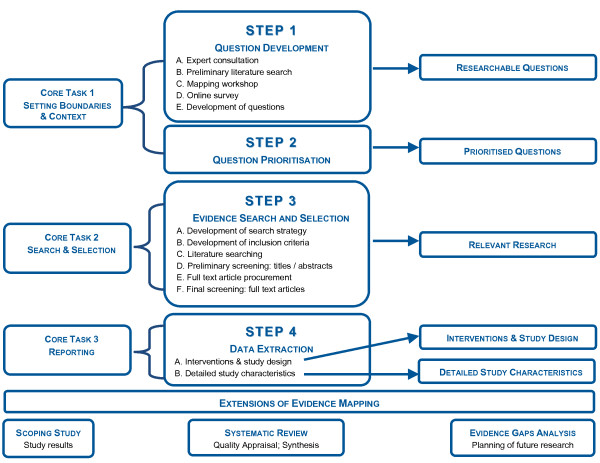
BACKGROUND: Evidence mapping describes the quantity, design and characteristics of research in broad topic areas, in contrast to systematic reviews, which usually address narrowly-focused research questions. The breadth of evidence mapping helps to identify evidence gaps, and may guide future research efforts. The Global Evidence Mapping (GEM) Initiative was established in 2007 to create evidence maps providing an overview of existing research in Traumatic Brain Injury (TBI) and Spinal Cord Injury (SCI). METHODS: The GEM evidence mapping method involved three core tasks:1. Setting the boundaries and context of the map: Definitions for the fields of TBI and SCI were clarified, the prehospital, acute inhospital and rehabilitation phases of care were delineated and relevant stakeholders (patients, carers, clinicians, researchers and policymakers) who could contribute to the mapping were identified. Researchable clinical questions were developed through consultation with key stakeholders and a broad literature search. 2. Searching for and selection of relevant studies: Evidence search and selection involved development of specific search strategies, development of inclusion and exclusion criteria, searching of relevant databases and independent screening and selection by two researchers. 3. Reporting on yield and study characteristics: Data extraction was performed at two levels - 'interventions and study design' and 'detailed study characteristics'. The evidence map and commentary reflected the depth of data extraction. RESULTS: One hundred and twenty-nine researchable clinical questions in TBI and SCI were identified. These questions were then prioritised into high (n = 60) and low (n = 69) importance by the stakeholders involved in question development. Since 2007, 58 263 abstracts have been screened, 3 731 full text articles have been reviewed and 1 644 relevant neurotrauma publications have been mapped, covering fifty-three high priority questions. CONCLUSIONS: GEM Initiative evidence maps have a broad range of potential end-users including funding agencies, researchers and clinicians. Evidence mapping is at least as resource-intensive as systematic reviewing. The GEM Initiative has made advancements in evidence mapping, most notably in the area of question development and prioritisation. Evidence mapping complements other review methods for describing existing research, informing future research efforts, and addressing evidence gaps.
Overview
The claims and statistics of this paper haven’t been checked yet.
Free: it reads the open-access text and checks the first 5 claims that cite a source we can check. Create a free account to check every claim.
Integrity signals
Registry
Cites
Statistics
Figures
Verification
Claims the paper makes
The claims and statistics of this paper haven’t been checked yet.
Free: it reads the open-access text and checks the first 5 claims that cite a source we can check. Create a free account to check every claim.
Claims other papers make about this one
Each is checked against this paper’s own text: does it say what the citing paper says it does?
The cited source says what the claim attributes to it.
In the citing paper
“CADIMA is also suitable for assisting in the process of conducting other forms of evidence synthesis, including systematic maps [8, 9] and rapid reviews [26]”
From Online tools supporting the conduct and reporting of systematic reviews and systematic maps: a case study on CADIMA and review of existing tools (2018) · cites this paper as [9]
Self-check
Percentages, sums and reported differences re-computed from the paper’s own numbers.
The self-check needs the paper’s full text.
Citations
Cites
Scoping studies: towards a methodological framework
Arksey, H., & O'Malley, L. (2005) · International Journal of Social Research Methodology · doi:10.1080/1364557032000119616 · Cited by 36,742 · cited 9×
“[3] discussed the importance of defining key question parameters and recommended framing such parameters to maximise breadth of literature coverage.”
BackgroundMethodInfluentialCochrane Handbook for Systematic Reviews of Interventions: Cochrane Book Series
(2008) · doi:10.1002/9780470712184 · Cited by 25,048
Evidence-Based Medicine: How to Practice and Teach EBM
Sackett, D. L. (2000) · Cited by 5,950
Alternative Therapies in Health and Medicine
Bick, D. (1996) · JAMA: The Journal of the American Medical Association · doi:10.1001/jama.1996.03530370072040 · Cited by 1,734
Evidence-based medicine : how to practice and teach EBM
Straus, S. E. (2005) · Cited by 1,367
How to read a paper: Papers that summarise other papers (systematic reviews and meta-analyses)
Greenhalgh, T. (1997) · BMJ · doi:10.1136/bmj.315.7109.672 · Cited by 578
Nominal Versus Interacting Group Processes for Committee Decision-Making Effectiveness.
Van De, A., & Delbecq, A. L. (1971) · Academy of Management Journal · doi:10.2307/255307 · Cited by 502
4: Rehabilitation after traumatic brain injury
Khan, F., Baguley, I. J., & Cameron, I. D. (2003) · Medical Journal of Australia · doi:10.5694/j.1326-5377.2003.tb05199.x · Cited by 318
Conducting a systematic review
Jones, T., & Evans, D. J. (2000) · Australian Critical Care · doi:10.1016/s1036-7314(00)70624-2 · Cited by 126
The Effect of Abdominal Massage on Bowel Function in Patients with Spinal Cord Injury
Ayaş, Ş., Leblebici, B., Sözay, S., Bayramoğlu, M., & Niron, E. A. (2006) · American Journal of Physical Medicine & Rehabilitation · doi:10.1097/01.phm.0000247649.00219.c0 · Cited by 116
Research works printed but not linked: 4
- 2. Peersman G. EPPI Research Report. London: EPI-Centre; 1996. A Descriptive Mapping of Health Promotion Studies in Young People.
- 10. World Health Organization. Towards a Common Language for Functioning, Disability and Health: ICF The International Classification of Functioning, Disability and Health. Geneva: World Health Organization; 2002.
- 14. The Cochrane Collaboration. Cochrane handbook for systematic reviews of interventions. Chichester, England: John Wiley & Sons; 2008.
- 20. Parkhill A, Clavisi O, Pattuwage L, Bragge P, Tavender E, Gruen R. Is the highly sensitive search worth the effort? [Poster presentation] 17th Cochrane Colloquium 11 - 14 October 2009, Singapore. 2009.
Cited by
Munn, Z., Peters, M. D. J., Stern, C., Tufanaru, C., McArthur, A., & Aromataris, E. (2018) · BMC Medical Research Methodology · doi:10.1186/s12874-018-0611-x · Cited by 11,385
Traumatic brain injury: integrated approaches to improve prevention, clinical care, and research
Maas, A. I. R., Menon, D. K., Adelson, P. D., Andelic, N., Bell, M. J., Belli, A., Bragge, P., Brazinova, A., Büki, A., Chesnut, R. M., et al. (2017) · The Lancet Neurology · doi:10.1016/s1474-4422(17)30371-x · Cited by 2,609
Self-citationA methodology for systematic mapping in environmental sciences
James, K. L., Randall, N. P., & Haddaway, N. R. (2016) · Environmental Evidence · doi:10.1186/s13750-016-0059-6 · Cited by 769
“[43].”
Miake-Lye, I. M., Hempel, S., Shanman, R., & Shekelle, P. G. (2016) · Systematic Reviews · doi:10.1186/s13643-016-0204-x · Cited by 660
“GEM, one provides the overview of the initiative and lays out the GEM mapping method [16], one discusses”
BackgroundMethodInfluentialLiving Systematic Reviews: An Emerging Opportunity to Narrow the Evidence-Practice Gap
Elliott, J. H., Turner, T., Clavisi, O., Thomas, J., Higgins, J. P. T., Mavergames, C., & Gruen, R. L. (2014) · PLoS Medicine · doi:10.1371/journal.pmed.1001603 · Cited by 596
“5 years (Figure 1) [7].”
Self-citationSystematic review automation technologies
Tsafnat, G., Glasziou, P., Choong, M. K., Dunn, A., Galgani, F., & Coiera, E. (2014) · Systematic Reviews · doi:10.1186/2046-4053-3-74 · Cited by 472
“Current systems Global evidence maps [18,19] and scoping studies [20] are both literature review methods designed to complement systematic review and identify research gaps.”
BackgroundKohl, C., McIntosh, E. J., Unger, S., Haddaway, N. R., Kecke, S., Schiemann, J., & Wilhelm, R. (2018) · Environmental Evidence · doi:10.1186/s13750-018-0115-5 · Cited by 471
Campbell, F., Tricco, A. C., Munn, Z., Pollock, D., Saran, A., Sutton, A., White, H., & Khalil, H. (2023) · Systematic Reviews · doi:10.1186/s13643-023-02178-5 · Cited by 345
“(2011) [22] who suggests that a scoping review is distinguished from mapping by the inclusion of research results in the description of relevant evidence, whereas maps simply describe what is there without collating and summarizing the results of the studies.”
BackgroundMichie, S., Thomas, J., Johnston, M., Aonghusa, P. M., Shawe-Taylor, J., Kelly, M. P., Deleris, L. A., Finnerty, A. N., Marques, M. M., Norris, E., et al. (2017) · Implementation Science · doi:10.1186/s13012-017-0641-5 · Cited by 338
“5 years [4] and only a minority of reviews are updated within 2 years of publication [5].”
BackgroundEvidence & Gap Maps: A tool for promoting evidence informed policy and strategic research agendas
Snilstveit, B., Vojtkova, M., Bhavsar, A., Stevenson, J., & Gaarder, M. (2016) · Journal of Clinical Epidemiology · doi:10.1016/j.jclinepi.2016.05.015 · Cited by 323
O’Brien, K. K., Colquhoun, H., Levac, D., Baxter, L., Tricco, A. C., Straus, S., Wickerson, L., Nayar, A., Moher, D., & O’Malley, L. (2016) · BMC Health Services Research · doi:10.1186/s12913-016-1579-z · Cited by 282
“Scoping studies involve mapping the evidence describing the quantity, design and characteristics in a field opposed to systematic reviews which tend to address a specific narrowly defined research question [23].”
BackgroundTogher, L., Wiseman-Hakes, C., Douglas, J., Stergiou-Kita, M., Ponsford, J., Teasell, R., Bayley, M., & Turkstra, L. S. (2014) · Journal of Head Trauma Rehabilitation · doi:10.1097/htr.0000000000000071 · Cited by 225
The benefits of systematic mapping to evidence-based environmental management
Haddaway, N. R., Bernes, C., Jonsson, B.-G., & Hedlund, K. (2016) · Ambio · doi:10.1007/s13280-016-0773-x · Cited by 191
“Systematic mapping has now been adopted in a range of disciplines beyond the social sciences, and is the subject of considerable coordinated research effort within specific topics (e.g. spinal and brain injury research; Bragge et al. 2011).”
BackgroundEvidence and gap maps: a comparison of different approaches
Saran, A., & White, H. (2018) · Campbell Systematic Reviews · doi:10.4073/cmdp.2018.2 · Cited by 185
Smartwatches in healthcare medicine: assistance and monitoring; a scoping review
Masoumian Hosseini, M., Masoumian Hosseini, S. T., Qayumi, K., Hosseinzadeh, S., & Sajadi Tabar, S. S. (2023) · BMC Medical Informatics and Decision Making · doi:10.1186/s12911-023-02350-w · Cited by 177
“A scoping review can collect different types of evidence from different areas, including both empirical and non-empirical sources [23].”
BackgroundCreating a literature database of low-calorie sweeteners and health studies: evidence mapping
Wang, D. D., Shams-White, M., Bright, O. J. M., Parrott, J. S., & Chung, M. (2016) · BMC Medical Research Methodology · doi:10.1186/s12874-015-0105-z · Cited by 174
“tially provide a cost-effective methodology to facilitate evidence-based decision-making [2, 3, 6, 11].”
BackgroundDietary Fiber and the Human Gut Microbiota: Application of Evidence Mapping Methodology
Sawicki, C., Livingston, K., Obin, M., Roberts, S., Chung, M., & McKeown, N. (2017) · Nutrients · doi:10.3390/nu9020125 · Cited by 169
Tate, R., Kennedy, M., Ponsford, J., Douglas, J., Velikonja, D., Bayley, M., & Stergiou-Kita, M. (2014) · Journal of Head Trauma Rehabilitation · doi:10.1097/htr.0000000000000068 · Cited by 155
Stridor in multiple system atrophy: Consensus statement on diagnosis, prognosis, and treatment
Cortelli, P., Buonaura, G. C., Benarroch, E. E., Giannini, G., Iranzo, Á., Low, P. A., Martinelli, P., Provini, F., Quinn, N. P., TOLOSA, E. S., et al. (2019) · Neurology · doi:10.1212/wnl.0000000000008208 · Cited by 136
Boniol, M., Dragomir, M., Autier, P., & Boyle, P. (2017) · Acta Diabetologica · doi:10.1007/s00592-017-1037-3 · Cited by 154
INCOG Guidelines for Cognitive Rehabilitation Following Traumatic Brain Injury: Methods and Overview
Bayley, M. T., Tate, R., Douglas, J. M., Turkstra, L. S., Ponsford, J., Stergiou-Kita, M., Kua, A., & Bragge, P. (2014) · Journal of Head Trauma Rehabilitation · doi:10.1097/htr.0000000000000070 · Cited by 123
Self-citationBragge, P., Synnot, A., Maas, A. I., Menon, D. K., Cooper, D. J., Rosenfeld, J. V., & Gruen, R. L. (2016) · Journal of Neurotrauma · doi:10.1089/neu.2015.4233 · Cited by 122
“Such overviews also are critical for research synthesis, planning, translation, and clinical decision support.(17) Existing TBI research overviews are limited in use of systematic search(18,19) and/or scope.”
BackgroundSelf-citationPonsford, J., Bayley, M., Wiseman-Hakes, C., Togher, L., Velikonja, D., McIntyre, A., Janzen, S., & Tate, R. (2014) · Journal of Head Trauma Rehabilitation · doi:10.1097/htr.0000000000000072 · Cited by 116
INCOG Recommendations for Management of Cognition Following Traumatic Brain Injury, Part V: Memory
Velikonja, D., Tate, R., Ponsford, J., McIntyre, A., Janzen, S., & Bayley, M. (2014) · Journal of Head Trauma Rehabilitation · doi:10.1097/htr.0000000000000069 · Cited by 117
Evidence Gap Maps — A Tool for Promoting Evidence-Informed Policy and Prioritizing Future Research
Snilstveit, B., Vojtkova, M., Bhavsar, A., & Gaarder, M. (2013) · World Bank, Washington, DC eBooks · doi:10.1596/1813-9450-6725 · Cited by 115
“…reported etc.) (b) descriptive summary of findings (c) analysis of results (d) synthesis of findings 5 Gaarder (2010) 6 Parkhill et al. (2011); Bragge et al. (2011); http://www.evidencemap.org 7 Arksey & O'Malley (2005); Anderson et al. (2008);Davis et al. (2009); Grant et al. (2009); Levac…”
BackgroundInfluentialDeprescribing benzodiazepines and Z-drugs in community-dwelling adults: a scoping review
Pollmann, A. S., Murphy, A. L., Bergman, J. C., & Gardner, D. M. (2015) · BMC Pharmacology and Toxicology · doi:10.1186/s40360-015-0019-8 · Cited by 114
“[32] and others [33, 36–39].”
Ponsford, J. L., Janzen, S. E., McIntyre, A., Bayley, M. T., Velikonja, D., & Tate, R. L. (2014) · Journal of Head Trauma Rehabilitation · doi:10.1097/htr.0000000000000074 · Cited by 131
Li, Y., Cao, L., Zhang, Z., Hou, L., Yu, Q., Xu, H., Li, J., Zhao, H., Cui, G., Cui, X., et al. (2021) · Journal of Clinical Epidemiology · doi:10.1016/j.jclinepi.2021.02.021 · Cited by 116
Adoption of Clinical Decision Support in Multimorbidity: A Systematic Review
Fraccaro, P., Arguello Castelerio, M., Ainsworth, J., & Buchan, I. (2015) · JMIR Medical Informatics · doi:10.2196/medinform.3503 · Cited by 110
“Knowing other researchers who were also conducting systematic reviews in the area of CDS, we thought of a search intended for a global evidence map [57] (ie, a search that sought to address broader questions about a particular area rather than focused clinical questions).”
Preventive Treatments for Psychosis: Umbrella Review (Just the Evidence)
Fusar-Poli, P., Davies, C., Solmi, M., Brondino, N., De Micheli, A., Kotlicka-Antczak, M., Shin, J. I., & Radua, J. (2019) · Frontiers in Psychiatry · doi:10.3389/fpsyt.2019.00764 · Cited by 108
Edwards, A., Zweigenthal, V., & Olivier, J. (2019) · Health Research Policy and Systems · doi:10.1186/s12961-019-0419-0 · Cited by 118
Raschi, E., Mazzarella, A., Antonazzo, I. C., Bendinelli, N., Forcesi, E., Tuccori, M., Moretti, U., Poluzzi, E., & De Ponti, F. (2019) · Targeted Oncology · doi:10.1007/s11523-019-00632-w · Cited by 101
Tricco, A. C., Zarin, W., Rios, P., Nincic, V., Khan, P. A., Ghassemi, M., Diaz, S., Pham, B., Straus, S. E., & Langlois, E. V. (2018) · Implementation Science · doi:10.1186/s13012-018-0717-x · Cited by 100
“Early engagement of knowledge users in the research process may help establish research priorities and increase relevance of findings [7, 8].”
BackgroundMontero‐Oleas, N., Arévalo-Rodríguez, I., Núñez-González, S., Viteri-García, A. A., & Simancas‐Racines, D. (2020) · BMC Complementary Medicine and Therapies · doi:10.1186/s12906-019-2803-2 · Cited by 123
Systematic Evidence Map for Over One Hundred and Fifty Per- and Polyfluoroalkyl Substances (PFAS)
Carlson, L. M., Angrish, M., Shirke, A. V., Radke, E. G., Schulz, B., Kraft, A., Judson, R., Patlewicz, G., Blain, R., Lin, C., et al. (2022) · Environmental Health Perspectives · doi:10.1289/ehp10343 · Cited by 96
Hirano, M., Carelli, V., GIORGIO, R. D., Pironi, L., Accarino, A. M., Cenacchi, G., D’Alessandro, R., Filosto, M., Martí, R., Nonino, F., et al. (2020) · Journal of Inherited Metabolic Disease · doi:10.1002/jimd.12300 · Cited by 104
Using Evidence Mapping to Examine Motivations for Following Plant-Based Diets
Miki, A. J., Livingston, K. A., Karlsen, M. C., Folta, S. C., & McKeown, N. M. (2020) · Current Developments in Nutrition · doi:10.1093/cdn/nzaa013 · Cited by 113
“We followed the 3 main steps of evidence mapping outlined by previous studies employing this technique (69, 70, 72, 73, 76).”
BackgroundMethodHealth system responsiveness: a systematic evidence mapping review of the global literature
Khan, G., Kagwanja, N., Whyle, E. B., Gilson, L., Molyneux, S. C., Schaay, N., Tsofa, B., Barasa, E., & Olivier, J. (2021) · International Journal for Equity in Health · doi:10.1186/s12939-021-01447-w · Cited by 133
“We also conducted HPSR topic-expert consultations in the first phase (n = 6, [blinded]) – including experts in responsiveness, governance and accountability, in order to clarify topic scope and foci [45].”
BackgroundMethodZang, Y., Lai, X., Li, C., Ding, D., Wang, Y., & Zhu, Y. (2023) · Mediators of Inflammation · doi:10.1155/2023/5127157 · Cited by 103
“This study was conducted on the basis of the methodology proposed by global evidence mapping [16].”
Coren, E., Hossain, R., Pardo Pardo, J., & Bakker, B. (2016) · Cochrane Database of Systematic Reviews · doi:10.1002/14651858.cd009823.pub3 · Cited by 86
Probst, P., Hüttner, F. J., Meydan, Ö., Hilal, M. A., Adham, M., Barreto, S. G., Besselink, M. G., Busch, O. R., Bockhorn, M., Chiaro, M. D., et al. (2021) · Surgery · doi:10.1016/j.surg.2021.04.023 · Cited by 95
Long-term non-invasive ventilation therapies in children: A scoping review
Castro‐Codesal, M. L., DeHaan, K., Featherstone, R. M., Bedi, P. K., Carrasco, C. M., Katz, S. L., Chan, E., Bendiak, G. N., Almeida, F. R., Olmstead, D., et al. (2017) · Sleep Medicine Reviews · doi:10.1016/j.smrv.2017.02.005 · Cited by 82
Feasibility and acceptability of living systematic reviews: results from a mixed-methods evaluation
Millard, T., Synnot, A., Elliott, J., Green, S., McDonald, S., & Turner, T. (2019) · Systematic Reviews · doi:10.1186/s13643-019-1248-5 · Cited by 77
Self-citationMethoden des Evidence Mappings: Eine systematische Übersichtsarbeit
Schmucker, C., Motschall, E., Antes, G., & Meerpohl, J. J. (2013) · Bundesgesundheitsblatt - Gesundheitsforschung - Gesundheitsschutz · doi:10.1007/s00103-013-1818-y · Cited by 77
Marshall, Z., Welch, V. A., Minichiello, A., Swab, M., Brunger, F., & Kaposy, C. (2019) · Transgender Health · doi:10.1089/trgh.2018.0020 · Cited by 86
Boeni, F., Spinatsch, E., Suter, K., Hersberger, K. E., & Arnet, I. (2014) · Systematic Reviews · doi:10.1186/2046-4053-3-29 · Cited by 86
“We proceeded by following the evidence mapping methodology in four steps: question development, question prioritization, evidence search and selection, and data extraction [21].”
MethodBui, D. D. A., Del Fiol, G., Hurdle, J. F., & Jonnalagadda, S. (2016) · Journal of Biomedical Informatics · doi:10.1016/j.jbi.2016.10.014 · Cited by 70
“(6) Sentence Filtering: In this step, we attempt to filter all sentences that discuss background knowledge and therefore are not relevant to the extraction goal.”
BackgroundWillis, N., Hill, S., Kaufman, J., Lewin, S. A., Kis‐Rigo, J., Freire, S. B. D. C., Bosch‐Capblanch, X., Glenton, C., Lin, V. K., Robinson, P. M., et al. (2013) · BMC International Health and Human Rights · doi:10.1186/1472-698x-13-23 · Cited by 81
“Fourth, and following from this, researchers will be able to use this taxonomy to facilitate evidence mapping, a relatively new method of identifying where evidence is located and where future research should be conducted to close evidence gaps [23].”
BackgroundMethodClavisi, O., Bragge, P., Tavender, E. J., Turner, T., & Gruen, R. L. (2012) · Journal of Clinical Epidemiology · doi:10.1016/j.jclinepi.2012.04.002 · Cited by 67
Self-citationFeng, Y., Liang, S., Zhang, Y., Chen, S., Wang, Q., Huang, T., Sun, F., Liu, X., Zhu, H., & Pan, H. (2022) · Journal of the American Medical Informatics Association · doi:10.1093/jamia/ocac066 · Cited by 59
Scoping Review of Mindfulness Research: a Topic Modelling Approach
Kee, Y. H., Li, C., Kong, L. C., Tang, C. J., & Chuang, K.-L. (2019) · Mindfulness · doi:10.1007/s12671-019-01136-4 · Cited by 68
Advancing the methodology of mapping reviews: A scoping review
Khalil, H., Campbell, F., Danial, K., Pollock, D., Munn, Z., Welsh, V., Saran, A., Hoppe, D., & Tricco, A. C. (2024) · Research Synthesis Methods · doi:10.1002/jrsm.1694 · Cited by 59
Mapping the evidence for the prevention and treatment of eating disorders in young people
Bailey, A. P., Parker, A. G., Colautti, L. A., Hart, L., Liu, P., & Hetrick, S. E. (2014) · Journal of Eating Disorders · doi:10.1186/2050-2974-2-5 · Cited by 99
“The key difference from a systematic review is that the purpose of evidence mapping is to provide a broad overview of existing research, with the view to identifying evidence, and therefore does not include an in-depth quality appraisal and synthesis of the findings [30].”
Xu, M., Yang, C., Nian, T., Tian, C., Zhou, L., Wu, Y., Li, Y., Deng, X., Li, X., & Yang, K. (2023) · Chinese Medicine · doi:10.1186/s13020-023-00743-7 · Cited by 71
“Methods This evidence mapping was in accordance with the Preferred Reporting Items for Systematic Reviews and MetaAnalyses for Scoping Reviews (PRISMA-ScR) [15] and was conducted following the methodology proposed by Global Evidence Mapping [16, 17].”
MethodInfluentialAn evidence map of yoga for low back pain
Goode, A. P., Coeytaux, R. R., McDuffie, J. R., Duan‐Porter, W., Sharma, P., Mennella, H., Nagi, A., & Williams, J. W. (2016) · Complementary Therapies in Medicine · doi:10.1016/j.ctim.2016.02.016 · Cited by 63
Dysphagia in multiple system atrophy consensus statement on diagnosis, prognosis and treatment
Buonaura, G. C., Alfonsi, E., Vignatelli, L., Benarroch, E. E., Giannini, G., Iranzo, Á., Low, P. A., Martinelli, P., Provini, F., Quinn, N. P., et al. (2021) · Parkinsonism & Related Disorders · doi:10.1016/j.parkreldis.2021.03.027 · Cited by 59
Evidence Map of Yoga for Depression, Anxiety, and Posttraumatic Stress Disorder
Duan-Porter, W., Coeytaux, R. R., McDuffie, J. R., Goode, A. P., Sharma, P., Mennella, H., Nagi, A., & Williams, J. W. (2016) · Journal of Physical Activity and Health · doi:10.1123/jpah.2015-0027 · Cited by 53
De Silva, S., Parker, A., Purcell, R., Callahan, P., Liu, P., & Hetrick, S. (2013) · Crisis · doi:10.1027/0227-5910/a000190 · Cited by 53
“Its purpose is to provide an overview of existing research, with the view toward identifying evidence gaps (Bragge et al., 2011).”
BackgroundLunny, C., Brennan, S. E., McDonald, S., & McKenzie, J. E. (2016) · Systematic Reviews · doi:10.1186/s13643-015-0178-0 · Cited by 53
“Bragge [6] defines evidence mapping as describing the yield, design and characteristics of research in broad topic areas, in contrast to systematic reviews, which usually address narrowly focused research questions.”
BackgroundPDF text classification to leverage information extraction from publication reports
Bui, D. D. A., Del Fiol, G., & Jonnalagadda, S. (2016) · Journal of Biomedical Informatics · doi:10.1016/j.jbi.2016.03.026 · Cited by 52
“About 23% of SRs have not been updated with new evidence within 2 years after the first publication (6), and many clinical questions are not addressed in existing SRs (7).”
BackgroundInfluentialEvidence mapping and overview of systematic reviews of the effects of acupuncture therapies
Lu, L., Zhang, Y., Ge, S., Wen, H., Tang, X., Zeng, J. C., Wang, L., Zhao, Z., Gabriel Rada, G., Ávila, C., et al. (2022) · BMJ Open · doi:10.1136/bmjopen-2021-056803 · Cited by 51
Improving the quality of maternal and newborn care in the Pacific region: A scoping review.
Wilson, A. N., Spotswood, N., Hayman, G. S., Vogel, J. P., Narasia, J., Elijah, A., Morgan, C., Morgan, A., Beeson, J., & Homer, C. S. E. (2020) · The Lancet Regional Health - Western Pacific · doi:10.1016/j.lanwpc.2020.100028 · Cited by 30
“[20] Bragge P , Clavisi O , Turner T , et al.”
BackgroundWaddell, A., Kunstler, B., Lennox, A., Pattuwage, L., Grundy, E. A. C., Tsering, D., Olivier, P. L., & Bragge, P. (2023) · Scandinavian Journal of Work Environment & Health · doi:10.5271/sjweh.4087 · Cited by 84
“Evidence mapping aims to provide an overview of an entire research field ( 21, 22).”
BackgroundSelf-citationsrBERT: automatic article classification model for systematic review using BERT
Aum, S., & Choe, S. (2021) · Systematic Reviews · doi:10.1186/s13643-021-01763-w · Cited by 48
Synnot, A., Tong, A., Bragge, P., Lowe, D. B., Nunn, J., O’Sullivan, M., Horvat, L., Kay, D., Ghersi, D., McDonald, S. J., et al. (2019) · Health Research Policy and Systems · doi:10.1186/s12961-019-0444-z · Cited by 46
Self-citationBeňová, L., Moller, A., Hill, K. E., Vaz, L. M. E., Morgan, A., Hanson, C., Semrau, K. E. A., Arifeen, S., & Moran, A. C. (2020) · PLoS ONE · doi:10.1371/journal.pone.0233969 · Cited by 53
“We conducted interviews with key informants, a review of the published literature [23, 24], and a review of key indicator guidance documents, which were used to construct a framework of typologies of validation studies and provide examples of various types of indicator validation work.”
Lewin, S. A., Hill, S., Abdullahi, L. H., Freire, S. B. D. C., Bosch‐Capblanch, X., Glenton, C., Hussey, G. D., Jones, C. M., Kaufman, J., Lin, V. K., et al. (2011) · Implementation Science · doi:10.1186/1748-5908-6-125 · Cited by 49
“Systematic maps draw on the same rigorous and transparent methods used for systematic reviews of effects, but focus on documenting and describing the range of interventions available rather than their effects [27,28].”
BackgroundWelch, V. A., Mathew, C. M., Babelmorad, P., Li, Y., Ghogomu, E. T., Borg, J., Conde, M., Kristjansson, E., Lyddiatt, A., Marcus, S., et al. (2021) · Campbell Systematic Reviews · doi:10.1002/cl2.1175 · Cited by 58
Zhang, Y., Liang, S., Feng, Y., Wang, Q., Sun, F., Chen, S., Yang, Y., He, X., Zhu, H., & Pan, H. (2022) · Systematic Reviews · doi:10.1186/s13643-021-01881-5 · Cited by 39
Whyle, E. B., & Olivier, J. (2020) · Health Policy and Planning · doi:10.1093/heapol/czaa038 · Cited by 57
“The approach is commonly used to describe the extent and distribution of literature on a topic, identify gaps and indicate areas for future research but can also be used to describe the range of study designs and methodological approaches used, and the topical areas covered, giving readers a base-line understanding of…”
BackgroundBayley, M. T., Teasell, R. W., Wolfe, D. L., Gruen, R. L., Eng, J. J., Ghajar, J., Tavender, E., Kua, A., & Bragge, P. (2014) · Journal of Head Trauma Rehabilitation · doi:10.1097/htr.0000000000000053 · Cited by 42
Self-citationEvidence Review—Social Determinants of Health for Veterans
Duan‐Porter, W., Martinson, B. C., Greer, N. L., Taylor, B. C., Ullman, K. E., McKenzie, L. G., Rosebush, C. E., MacDonald, R. H., Falde, S., & Wilt, T. J. (2018) · Journal of General Internal Medicine · doi:10.1007/s11606-018-4566-8 · Cited by 46
Watson, D., Mhlaba, M., Molelekeng, G., Chauke, T. A., Simao, S. C., Jenner, S., Ware, L. J., & Barker, M. E. (2023) · International Journal for Equity in Health · doi:10.1186/s12939-022-01794-2 · Cited by 62
“Such methods used with adults include Dialogue methods (Netherlands) [16], Deep Inclusion (United States) [17], Choosing All Together (United States) [18], and Global Evidence Mapping (Australia and New Zealand) [27].”
BackgroundMethodNian, T., Guo, K., Liu, W., Deng, X., Hu, X., Xu, M., Fenfen, E., Wang, Z., Song, G., Yang, K., et al. (2023) · BMC Medicine · doi:10.1186/s12916-023-03087-z · Cited by 52
“…method that systematically collects existing evidence in relevant research fields, conducts comprehensive analysis and scientific evaluation, and integrates, condenses, and concisely and intuitively presents the research status, existing problems, development direction, and evidence gap [9, 10].”
MethodAlthuis, M. D., & Weed, D. L. (2013) · American Journal of Clinical Nutrition · doi:10.3945/ajcn.113.058917 · Cited by 45
Madera, M., Franco, J. V. A., Ballesteros, M., Solà, I., Urrútia, G., & Bonfill, X. (2018) · Cancer Management and Research · doi:10.2147/cmar.s186700 · Cited by 37
“The referenced methodology includes three core tasks: setting the boundaries and context of the topic area in question, searching and selecting relevant studies and reporting on search results and study characteristics.(9) Moreover, we added two uncommon components in evidence mapping, which were previously reported:…”
BackgroundMethodInfluentialMielke, J., Brunkert, T., Zúñiga, F., Simon, M., Zullig, L. L., & Geest, S. D. (2022) · BMC Medical Research Methodology · doi:10.1186/s12874-022-01772-w · Cited by 57
“To draft an evidence gap map (EGM) we reviewed and categorized the methodologies applied to contextual analyses in the identified studies.”
BackgroundInfluentialMultilevel models from biology to psychology: Mission impossible?
Bilder, R. M., Howe, A. G., & Sabb, F. W. (2013) · Journal of Abnormal Psychology · doi:10.1037/a0032263 · Cited by 36
Tembo, D., Morrow, E. M., Worswick, L., & Lennard, D. (2019) · Frontiers in Sociology · doi:10.3389/fsoc.2019.00050 · Cited by 42
“to identify evidence gaps and may guide future research efforts (Bragge et al., 2011)”
BackgroundHobbs, A. J., Moller, A., Kachikis, A. B., Carvajal–Aguirre, L., Say, L., & Chou, D. (2019) · PLoS ONE · doi:10.1371/journal.pone.0211576 · Cited by 46
Translations of Developmental Screening Instruments: An Evidence Map of Available Research
El‐Behadli, A. F., Neger, E. N., Perrin, E. C., & Sheldrick, R. C. (2015) · Journal of Developmental & Behavioral Pediatrics · doi:10.1097/dbp.0000000000000193 · Cited by 41
Sundaram, G., & Berleant, D. (2023) · Lecture notes in networks and systems · doi:10.1007/978-981-99-3243-6_7 · Cited by 48
Jaramillo, A., Welch, V. A., Ueffing, E., Gruen, R. L., Bragge, P., Lyddiatt, A., & Tugwell, P. (2012) · Journal of Clinical Epidemiology · doi:10.1016/j.jclinepi.2012.06.017 · Cited by 35
Self-citationStrategies for enhancing the representation of women in clinical trials: an evidence map
Goldstein, K. M., Kung, L. C. Y., Dailey, S. A., Kroll‐Desrosiers, A., Burke, C. A., Shepherd‐Banigan, M. E., Lumsden, R. H., Sims, C. A., Schexnayder, J. K., Patel, D., et al. (2024) · Systematic Reviews · doi:10.1186/s13643-023-02408-w · Cited by 46
“We selected evidence mapping methodology as it is appropriate for reviews that seek to describe the breadth of a body of literature and identify areas for future research rather than focus on the specific effects of a narrow, defined intervention [14, 15].”
MethodGuidelines for the development and validation of patient-reported outcome measures: a scoping review
Jung, A., Challoumas, D., Pagels, L., Armijo-Olivo, S. L., Braun, T., & Luedtke, K. (2024) · BMJ Evidence-Based Medicine · doi:10.1136/bmjebm-2023-112681 · Cited by 43
Garcia-Yi, J., Lapikanonth, T., Vionita, H., Vu, H., Yang, S., Zhong, Y., Li, Y., Nagelschneider, V., Schlindwein, B., & Wesseler, J. (2014) · Environmental Evidence · doi:10.1186/2047-2382-3-24 · Cited by 26
“The breadth of the evidence captured in a systematic map helps to clearly identify potential research gaps and guide future research efforts [5].”
BackgroundLow-calorie sweeteners and health outcomes: A demonstration of rapid evidence mapping (rEM)
Lam, J., Howard, B. E., Thayer, K. A., & Shah, R. (2019) · Environment International · doi:10.1016/j.envint.2018.11.070 · Cited by 33
A scoping review of community pharmacists and patients at risk of suicide
Murphy, A. L., Hillier, K., Ataya, R., Thabet, P., Whelan, A. M., O’Reilly, C. L., & Gardner, D. M. (2017) · Canadian Pharmacists Journal / Revue des Pharmaciens du Canada · doi:10.1177/1715163517733482 · Cited by 34
Research into Australian emergency services personnel mental health and wellbeing: An evidence map
Varker, T., Metcalf, O., Forbes, D., Chisolm, K., Harvey, S., Van Hooff, M., McFarlane, A., Bryant, R., & Phelps, A. J. (2018) · Australian & New Zealand Journal of Psychiatry · doi:10.1177/0004867417738054 · Cited by 31
“Evidence maps are a relatively new method for identifying, organising and summarising scientific evidence on a broad topic (Bragge et al., 2011; Miake-Lye et al., 2016).”
MethodExposure to outdoor air pollution and its human-related health outcomes: an evidence gap map
Sun, Z., & Zhu, D. (2019) · BMJ Open · doi:10.1136/bmjopen-2019-031312 · Cited by 31
Wang, Y., Chen, N., Guo, K., Li, Y., Fenfen, E., Yang, C., Shang, X., Li, X., & Yang, K. (2022) · Journal of Clinical Epidemiology · doi:10.1016/j.jclinepi.2022.11.004 · Cited by 31
Althuis, M. D., Weed, D. L., & Frankenfeld, C. L. (2014) · Systematic Reviews · doi:10.1186/2046-4053-3-80 · Cited by 30
“This work is guided by previously published evidence maps whose focus was research priority setting [14-23] and the existing standards for conducting and reporting of systematic reviews of observational research [4,24].”
MethodEvidence Map of Yoga for High-Impact Conditions Affecting Veterans
Coeytaux, R. R., McDuffie, J. R., Goode, A. P., Cassel, S., Porter, W. D., Sharma, P., Meleth, S., Minnella, H., Nagi, A., & Williams, J. W. (2014) · PubMed · Cited by 33
Pattuwage, L., Olver, J., Martin, C., Lai, F. Y. X., Piccenna, L. G., Gruen, R. L., & Bragge, P. (2016) · Journal of Head Trauma Rehabilitation · doi:10.1097/htr.0000000000000234 · Cited by 38
“21 The AGREE II instrument is comprised of 23 quality appraisal items in 6 domains: (1) scope and purpose, (2) stakeholder involvement, (3) rigor of development, (4) clarity of presentation, (5) applicability, and (6) editorial independence.”
MethodSelf-citationClark, L., Fida, R., Skinner, J. S., Murdoch, J., Rees, N., Williams, J., Foster, T., & Sanderson, K. A. (2021) · British Paramedic Journal · doi:10.29045/14784726.2021.3.5.4.25 · Cited by 35
“Evidence maps are a relatively new method for identifying, organising and summarising scientific evidence on a broad topic (Bragge et al., 2011; Miake-Lye et al., 2016; Schmucker et al., 2013).”
Method‘Omics in environmental epidemiological studies of chemical exposures: A systematic evidence map
Kim, S. M., Hollinger, H., & Radke, E. G. (2022) · Environment International · doi:10.1016/j.envint.2022.107243 · Cited by 32
“The field of human health risk assessment is utilizing practices of evidence mapping in order to systematically identify relevant studies to a given topic of interest (Bragge et al., 2011; Wolffe et al., 2019).”
BackgroundLee, J.-C., Ahn, S., Cho, I. K., Lee, J.-C., Kim, J., & Hwang, J. (2018) · BMJ Open · doi:10.1136/bmjopen-2017-017249 · Cited by 30
Bragge, P., Chau, M., Pitt, V. J., Bayley, M. T., Eng, J. J., Teasell, R. W., Wolfe, D. L., & Gruen, R. L. (2011) · Journal of Neurotrauma · doi:10.1089/neu.2011.2193 · Cited by 30
“…can be used by funding agencies to evaluate research needs and identify priorities; by researchers to aid research planning by gaining an overview of what has been done in a range of topic areas; and by clinicians to rapidly access research evidence in a given topic area (Bragge et al., 2011).”
Self-citationAmrhein, T. J., Williams, J. W., Gray, L. L., Malinzak, M. D., Cantrell, S. E., Deline, C., Carr, C. M., Kim, D. K., Goldstein, K. M., & Kranz, P. G. (2023) · American Journal of Neuroradiology · doi:10.3174/ajnr.a7880 · Cited by 28
Livingston, K. A., Chung, M., Sawicki, C. M., Lyle, B. J., Wang, D. D., Roberts, S. B., & McKeown, N. M. (2016) · PLoS ONE · doi:10.1371/journal.pone.0156961 · Cited by 34
Metadata
- Authors
- Bragge, P., Clavisi, O., Turner, T., Tavender, E., Collie, A., & Gruen, R. L.
- Affiliations
- Monash University (AU)
- National Trauma Research Institute (AU)
- Institute for Safety, Compensation and Recovery Research (AU)
- Corresponding author
- Bragge, Peter
- Venue
- BMC Medical Research Methodology
- Published
- 2011-06-17
- Volume
- 11
- Issue
- 1
- Pages
- 92-92
- ISSN
- 1471-2288 (ISSN-L)
- PMC
- PMC3141802
- OpenAlex
- W2019022980
- Cited by
- 310
- References
- 25
- Citations by year
- 2026: 19 · 2025: 20 · 2024: 41 · 2023: 35 · 2022: 37 · 2021: 28 · 2020: 22 · 2019: 17 · 2018: 19 · 2017: 17 · 2016: 19 · 2015: 9 · 2014: 14 · 2013: 8 · 2012: 3
- FWCI
- 9.19
- Type
- journal article
- Language
- en
- Open access
- gold
- doi.org
- Licence
- cc-by
- creativecommons.org/licenses/by/2.0 (tdm)
- Locations
- BMC Medical Research Methodology (publishedVersion, cc-by)
- PubMed Central (publishedVersion, cc-by)
- PubMed (publishedVersion)
- Rare & Special e-Zone (The Hong Kong University of Science and Technology) (submittedVersion)
- DOAJ (DOAJ: Directory of Open Access Journals) (submittedVersion)
- Minerva Access (University of Melbourne) (submittedVersion, cc-by)
- ANU Open Research (Australian National University) (submittedVersion)
- Funders
- National Institute of Clinical Studies
- Monash University
- University of Melbourne
- Medical Research Council
- National Health and Medical Research Council
- Topics
- Social Sciences › Decision Sciences › Statistics, Probability and Uncertainty › Meta-analysis and systematic reviews
- Health Sciences › Medicine › Clinical Neurology › Traumatic Brain Injury Research
- Health Sciences › Health Professions › General Health Professions › Health Sciences Research and Education
- Keywords
- evidence mapping, traumatic brain injury, spinal cord injury, research question formulation, evidence gaps, stakeholder engagement, prehospital care, rehabilitation
- MeSH terms
- Brain Injuries, Humans, Surveys and Questionnaires, Research, Review Literature as Topic, Spinal Cord Injuries
About these checks
Registry, retraction, Cites and statistics results are computed, not judged, with one exception: a printed reference that no index lists is read once by a model before it counts as a citation error. Claims are extracted by a model and kept only when their quote appears verbatim in the text; each cited source is then checked, with a model’s help, for whether it says what the claim relies on. Those verdicts can be wrong — read the claim’s quote and the cited source before relying on one.
Statistics and arithmetic are recomputed, not judged.
Confidence bands are shown only for fields calibrated on our annotated test set. None is calibrated yet, so no band is shown.
What counts as a claim ›How we measure confidence ›How we check this ›
Are you an author, or do you see a problem with this page? Request a review
Data sources
Bibliographic data: Semantic Scholar, OpenAlex, Crossref.
Contains information from the Semantic Scholar Academic Graph Datasets, made available under the ODC Attribution License (ODC-BY 1.0).
Semantic Scholar’s data is described in: Kinney, R., et al. (2023). The Semantic Scholar Open Data Platform. arXiv:2301.10140.
