

The DOI matches its Crossref record; 61 of the 63 references it cites were found in a registry or an index.
A mobile phone application for the assessment and management of youth mental health problems in primary care: a randomised controlled trial
Open accessAbstract
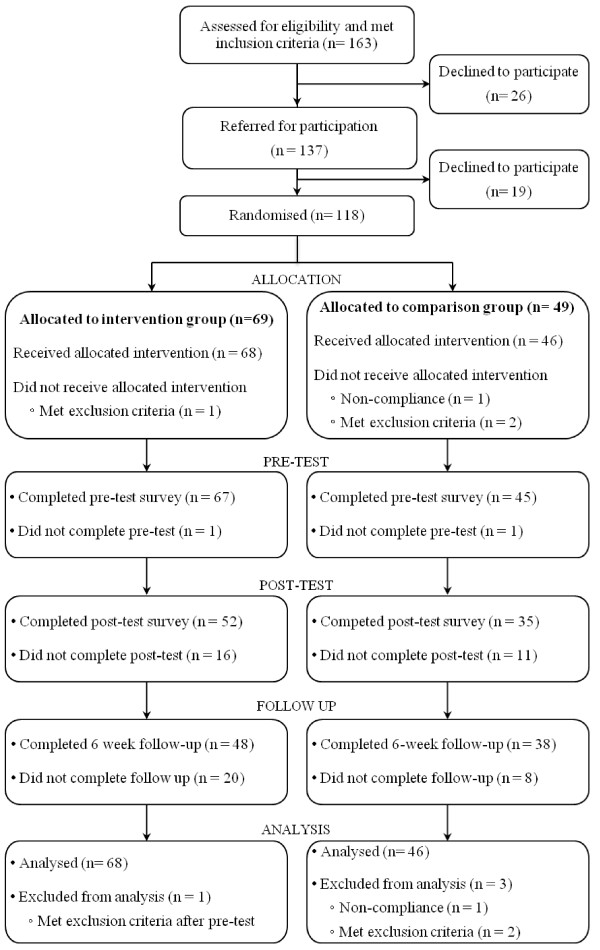
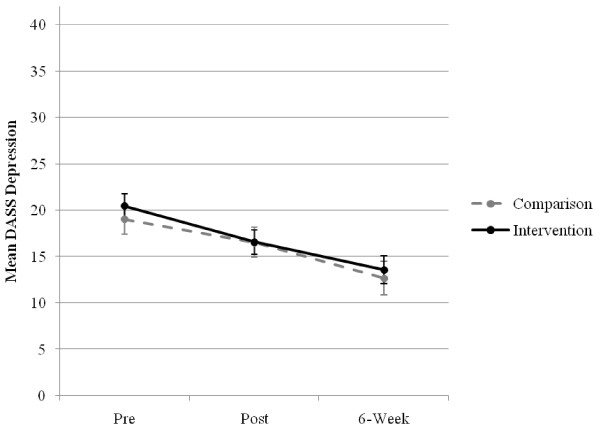
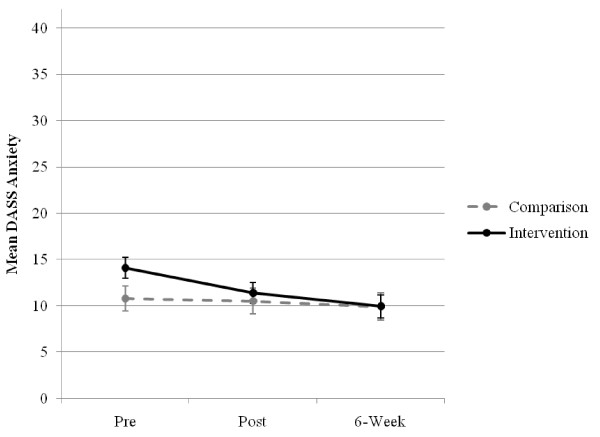
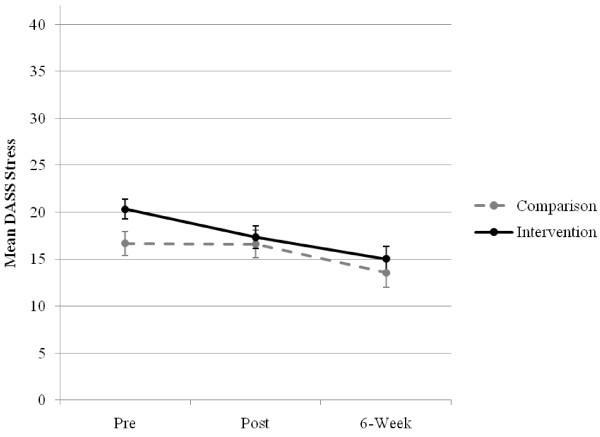
BACKGROUND: Over 75% of mental health problems begin in adolescence and primary care has been identified as the target setting for mental health intervention by the World Health Organisation. The mobiletype program is a mental health assessment and management mobile phone application which monitors mood, stress, coping strategies, activities, eating, sleeping, exercise patterns, and alcohol and cannabis use at least daily, and transmits this information to general practitioners (GPs) via a secure website in summary format for medical review. METHODS: We conducted a randomised controlled trial in primary care to examine the mental health benefits of the mobiletype program. Patients aged 14 to 24 years were recruited from rural and metropolitan general practices. GPs identified and referred eligible participants (those with mild or more mental health concerns) who were randomly assigned to either the intervention group (where mood, stress, and daily activities were monitored) or the attention comparison group (where only daily activities were monitored). Both groups self-monitored for 2 to 4 weeks and reviewed the monitoring data with their GP. GPs, participants, and researchers were blind to group allocation at randomisation. Participants completed pre-, post-, and 6-week post-test measures of the Depression, Anxiety, Stress Scale and an Emotional Self Awareness (ESA) Scale. RESULTS: Of the 163 participants assessed for eligibility, 118 were randomised and 114 participants were included in analyses (intervention group n = 68, comparison group n = 46). Mixed model analyses revealed a significant group by time interaction on ESA with a medium size of effect suggesting that the mobiletype program significantly increases ESA compared to an attention comparison. There was no significant group by time interaction for depression, anxiety, or stress, but a medium to large significant main effect for time for each of these mental health measures. Post-hoc analyses suggested that participation in the RCT lead to enhanced GP mental health care at pre-test and improved mental health outcomes. CONCLUSIONS: Monitoring mental health symptoms appears to increase ESA and implementing a mental health program in primary care and providing frequent reminders, clinical resources, and support to GPs substantially improved mental health outcomes for the sample as a whole. TRIAL REGISTRATION: ClinicalTrials.gov NCT00794222.
Overview
The claims and statistics of this paper haven’t been checked yet.
Run the check — free, no account needed. It reads the open-access text and checks the sources it cites.
Integrity signals
Registry
Cites
Statistics
Figures
Verification
Claims the paper makes
The claims and statistics of this paper haven’t been checked yet.
Run the check — free, no account needed. It reads the open-access text and checks the sources it cites.
Claims other papers make about this one
Each is checked against this paper’s own text: does it say what the citing paper says it does?
The source backs part of the claim, not all of it — or backs it for a different population, condition or comparison.
In the citing paper
“The effect size for depression was moderate though smaller than the four published studies [23-26] that describe three other mobile app interventions targeting depression.”
From Delivering Cognitive Behavior Therapy to Young Adults With Symptoms of Depression and Anxiety Using a Fully Automated Conversational Agent (Woebot): A Randomized Controlled Trial (2017) · cites this paper as [24]
Experimental — accuracy not yet measuredThe source backs part of the claim, not all of it — or backs it for a different population, condition or comparison.
In the citing paper
“an EMI using self-monitoring on mobile phones 38 was not effective relative to an attention control in reducing stress ( d = −0.08 at post-test).”
From Effectiveness of mobile technologies delivering Ecological Momentary Interventions for stress and anxiety: A systematic review (2016) · cites this paper as [38]
Experimental — accuracy not yet measuredThe cited source says what the claim attributes to it.
In the citing paper
“In the present research, the study conducted by Reid et al.38 was the only study evaluating an interactive EMI using mobile phones which failed to yield significant effects in reducing stress relative to an attention control.”
From Effectiveness of mobile technologies delivering Ecological Momentary Interventions for stress and anxiety: A systematic review (2016) · cites this paper as [38]
In the citing paper
“Trials of mobile BITs have found some positive short-term benefits for anxiety disorders (39), eating disorders (40), bipolar disorder (41), and schizophrenia (42), although others have not been effective at treating depression (43).”
From Behavioral Intervention Technologies: Evidence review and recommendations for future research in mental health (2013) · cites this paper as [43]
In the citing paper
“and that mobile self-monitoring is a useful tool [41-43].”
From Do online mental health services improve help-seeking for young people? A systematic review (2014) · cites this paper as [43]
In the citing paper
“Kauer et al [53] and Reid et al [54] found no differences in the Depression, Anxiety, and Stress Scale scores between a mobile app with ecological momentary assessment (EMA)-based emotional self-awareness training and feedback and an attention control condition.”
From MoodHacker Mobile Web App With Email for Adults to Self-Manage Mild-to-Moderate Depression: Randomized Controlled Trial (2016) · cites this paper as [54]
Self-check
Percentages, sums and reported differences re-computed from the paper’s own numbers.
The self-check needs the paper’s full text.
Citations
Cites
Statistical Power Analysis for the Behavioral Sciences
Muller, K. E., & Cohen, J. (1989) · Technometrics · doi:10.2307/1270020 · Cited by 99,603
Statistical power analysis for the behavioral sciences
Cohen, J. (1990) · Computers Environment and Urban Systems · doi:10.1016/0198-9715(90)90050-4 · Cited by 65,417
Kessler, R. C., Berglund, P., Demler, O., Jin, R., Merikangas, K. R., & Walters, E. E. (2005) · Archives of General Psychiatry · doi:10.1001/archpsyc.62.6.593 · Cited by 20,391
WARE, J. E., KOSINSKI, M., & KELLER, S. D. (1996) · Medical Care · doi:10.1097/00005650-199603000-00003 · Cited by 17,392
Lovibond, P. F., & Lovibond, S. H. (1995) · Behaviour Research and Therapy · doi:10.1016/0005-7967(94)00075-u · Cited by 14,523
SAUNDERS, J. B., AASLAND, O. G., BABOR, T. F., DE LA FUENTE, J. R., & GRANT, M. (1993) · Addiction · doi:10.1111/j.1360-0443.1993.tb02093.x · Cited by 13,597 · cited 2×
“Saunders JB, Aasland OG, Babor TF, de la Fuente JR, Grant M: Development of the Alcohol Use Disorders Identification Test (AUDIT): WHO Collaborative Project on Early Detection of Persons with Harmful Alcohol Consumption–II.”
MethodBeyond Baron and Kenny: Statistical Mediation Analysis in the New Millennium
Hayes, A. F. (2009) · Communication Monographs · doi:10.1080/03637750903310360 · Cited by 9,757
Cohen, J. (1992) · Psychological Bulletin · doi:10.1037//0033-2909.112.1.155 · Cited by 8,771
Required sample size to detect the mediated effect
Fritz, M. S., & MacKinnon, D. P. (2007) · Psychological Science · doi:10.1111/j.1467-9280.2007.01882.x · Cited by 4,810
The Revised CONSORT Statement for Reporting Randomized Trials: Explanation and Elaboration
Altman, D. G., Schulz, K. F., Moher, D., Egger, M., Davidoff, F., Elbourne, D., Gøtzsche, P. C., Lang, T., & for the CONSORT Group (2001) · Annals of Internal Medicine · doi:10.7326/0003-4819-134-8-200104170-00012 · Cited by 3,835
Rumination reconsidered: a psychometric analysis.
Treynor, W., Gonzalez, R., & Nolen-Hoeksema, S. (2003) · Cognitive Therapy and Research · doi:10.1023/a:1023910315561 · Cited by 3,808
The world health report 2001 - Mental health: new understanding, new hope
Sayers, J. (2001) · Europe PMC (PubMed Central) · doi:10.1590/s0042-96862001001100014 · Cited by 3,307
Mental health literacy: Public knowledge and beliefs about mental disorders
Jorm, A. F. (2000) · British Journal of Psychiatry · doi:10.1192/bjp.177.5.396 · Cited by 2,114
Interpreting scores on the Kessler Psychological Distress Scale (K10)
Andrews, G., & Slade, T. (2001) · Australian and New Zealand Journal of Public Health · doi:10.1111/j.1467-842x.2001.tb00310.x · Cited by 2,021
Identity construction on Facebook: Digital empowerment in anchored relationships.
Zhao, S., Grasmuck, S., & Martin, J. (2008) · Computers in Human Behavior · doi:10.1016/j.chb.2008.02.012 · Cited by 1,848
“The Medical Journal of Australia”
(1923) · The Medical Journal of Australia · doi:10.5694/j.1326-5377.1923.tb64467.x · Cited by 1,549
Lewinsohn, P. M., Hops, H., Roberts, R. E., Seeley, J. R., & Andrews, J. A. (1993) · Journal of Abnormal Psychology · doi:10.1037/0021-843x.102.1.133 · Cited by 1,547
Biological, clinical, and ethical advances of placebo effects
Finniss, D. G., Kaptchuk, T. J., Miller, F. G., & Benedetti, F. (2010) · The Lancet · doi:10.1016/s0140-6736(09)61706-2 · Cited by 1,309
Wells, K. B., Sherbourne, C., Schoenbaum, M., Duan, N., Meredith, L., Unützer, J., Miranda, J., Carney, M. F., & Rubenstein, L. V. (2000) · JAMA · doi:10.1001/jama.283.2.212 · Cited by 1,021
Is there an epidemic of child or adolescent depression?
Jane Costello, E., Erkanli, A., & Angold, A. (2006) · Journal of Child Psychology and Psychiatry · doi:10.1111/j.1469-7610.2006.01682.x · Cited by 983 · cited 1×
“7% of adolescents are diagnosed with major depressive disorder [8] and up to 30% of young people experience mild depressive symptoms [9,10].”
BackgroundApplication of random-effects pattern-mixture models for missing data in longitudinal studies.
Hedeker, D., & Gibbons, R. D. (1997) · Psychological Methods · doi:10.1037/1082-989x.2.1.64 · Cited by 907
Integrating Mental Health Into Primary Care. A Global Perspective
(2009) · The Journal of Nervous and Mental Disease · doi:10.1097/01.nmd.0000362204.63479.6b · Cited by 801
THE SELF-REFLECTION AND INSIGHT SCALE: A NEW MEASURE OF PRIVATE SELF-CONSCIOUSNESS
Grant, A. M., Franklin, J., & Langford, P. (2002) · Social Behavior and Personality: an international journal · doi:10.2224/sbp.2002.30.8.821 · Cited by 772
Gilbody, S., Whitty, P., Grimshaw, J., & Thomas, R. (2003) · JAMA · doi:10.1001/jama.289.23.3145 · Cited by 749
Stice, E., Shaw, H., Bohon, C., Marti, C. N., & Rohde, P. (2009) · Journal of Consulting and Clinical Psychology · doi:10.1037/a0015168 · Cited by 553
Kauer, S. D., Reid, S. C., Crooke, A. H. D., Khor, A., Hearps, S. J. C., Jorm, A. F., Sanci, L., & Patton, G. (2012) · Journal of Medical Internet Research · doi:10.2196/jmir.1858 · Cited by 404
Self-citationBoys play sport and girls turn to others: age, gender and ethnicity as determinants of coping
Frydenberg, E., & Lewis, R. (1993) · Journal of Adolescence · doi:10.1006/jado.1993.1024 · Cited by 368
Puffer, S., Torgerson, D., & Watson, J. (2003) · BMJ · doi:10.1136/bmj.327.7418.785 · Cited by 351
Hollon, S. D., Muñoz, R. F., Barlow, D. H., Beardslee, W. R., Bell, C. C., Bernal, G., Clarke, G. N., Franciosi, L. P., Kazdin, A. E., Kohn, L. P., et al. (2002) · Biological Psychiatry · doi:10.1016/s0006-3223(02)01384-7 · Cited by 327
Walsh, S. P., White, K. M., & Young, R. M. (2007) · Journal of Adolescence · doi:10.1016/j.adolescence.2007.04.004 · Cited by 324
Lewinsohn, P. M., Hops, H., ROBERTS, R. E., Seeley, J. R., & Andrews, J. A. (1993) · Journal of Abnormal Psychology · doi:10.1037/0021-843x.102.4.517 · Cited by 282
Adolescent coping: the different ways in which boys and girls cope
Frydenberg, E., & Lewis, R. (1991) · Journal of Adolescence · doi:10.1016/0140-1971(91)90025-m · Cited by 237
An Emerging Understanding of the Reflective (Meta-) Experience of Mood
Mayer, J. D., & Stevens, A. A. (1994) · Journal of Research in Personality · doi:10.1006/jrpe.1994.1025 · Cited by 213
The General Practice Assessment Questionnaire (GPAQ) – Development and psychometric characteristics
Mead, N., Bower, P., & Roland, M. O. (2008) · BMC Family Practice · doi:10.1186/1471-2296-9-13 · Cited by 148
Evidence-Based Care For Depression In Managed Primary Care Practices
Rubenstein, L. V., Jackson‐Triche, M., Unützer, J., de Miranda, J. V. M., Minnium, K., Pearson, M. L., & Wells, K. B. (1999) · Health Affairs · doi:10.1377/hlthaff.18.5.89 · Cited by 135
Reid, S. C., Kauer, S. D., Dudgeon, P., Sanci, L. A., Shrier, L. A., & Patton, G. C. (2009) · Social Psychiatry and Psychiatric Epidemiology · doi:10.1007/s00127-008-0455-5 · Cited by 122
Self-citationDesign of Control‐Group Conditions in Clinical Trials of Behavioral Interventions
Lindquist, R. D., Wyman, J. F., Talley, K. M., Findorff, M. J., & Gross, C. R. (2007) · Journal of Nursing Scholarship · doi:10.1111/j.1547-5069.2007.00171.x · Cited by 121
Health promotion for adolescents in primary care: randomised controlled trial
Walker, Z., Townsend, J., Oakley, L., Donovan, C., Smith, H., Hurst, Z., Bell, J., & Marshall, S. (2002) · BMJ · doi:10.1136/bmj.325.7363.524 · Cited by 115
Educating Young People about Mental Health and Mental Illness: Evaluating a School - Based Programme
Rickwood, D., Cavanagh, S., Curtis, L., & Sakrouge, R. (2004) · International Journal of Mental Health Promotion · doi:10.1080/14623730.2004.9721941 · Cited by 111
Trial of Computerized Screening for Adolescent Behavioral Concerns
Stevens, J. H., Kelleher, K. J., Gardner, W. P., Chisolm, D. J., McGeehan, J., PAJER, K. A., & Buchanan, L. (2008) · PEDIATRICS · doi:10.1542/peds.2007-1878 · Cited by 107
Power to detect homework effects in psychotherapy outcome research.
Kazantzis, N. (2000) · Journal of Consulting and Clinical Psychology · doi:10.1037/0022-006x.68.1.166 · Cited by 101
PUBLIC KNOWLEDGE AND BELIEFS ABOUT MENTAL DISORDERS
Jorme, A. F. (2000) · Cited by 101
An analysis of the re-test artefact in longitudinal studies of psychiatric symptoms and personality
Jorm, A. F., Duncan‐Jones, P., & Scott, R. (1989) · Psychological Medicine · doi:10.1017/s0033291700012514 · Cited by 98
Australian mental health reform: time for real outcomes
Hickie, I. B., Davenport, T. A., Luscombe, G. M., Groom, G. L., & McGorry, P. D. (2005) · Medical Journal of Australia · doi:10.5694/j.1326-5377.2005.tb06759.x · Cited by 98
Stepped care for depression in primary care: what should be offered and how?
van Straten, A., Seekles, W., Veer-Tazelaar, N. V. ’., Beekman, A. T. F., & Cuijpers, P. J. (2010) · The Medical Journal of Australia · doi:10.5694/j.1326-5377.2010.tb03691.x · Cited by 96
Use of Inexpensive Technology to Enhance Adolescent Health Screening and Counseling
Olson, A. L., Gaffney, C. A., Hedberg, V. A., & Gladstone, G. R. (2009) · Archives of Pediatrics and Adolescent Medicine · doi:10.1001/archpediatrics.2008.533 · Cited by 88
Churchill, D., Allen, J., Denman, S. J., Williams, D., Fielding, K., & von Fragstein, M. (2000) · Europe PMC (PubMed Central) · Cited by 74
The Prevention of Depressive Symptoms in Rural School Children: A Follow-up Study
Roberts, C. M., Kane, R. T., Bishop, B. J., Matthews, H., & Thomson, H. (2004) · International Journal of Mental Health Promotion · doi:10.1080/14623730.2004.9721934 · Cited by 66
The identification of young people's emotional distress: a study in primary care
Haller, D. M., Sanci, L. A., Sawyer, S. M., & Patton, G. C. (2009) · British Journal of General Practice · doi:10.3399/bjgp09x419510 · Cited by 65
Self-citationPreventing major depression in young people
Andrews, G., Szabó, M., & Burns, J. M. (2002) · The British Journal of Psychiatry · doi:10.1192/bjp.181.6.460 · Cited by 64
Hickie, I. B., Fogarty, A. S., Davenport, T. A., Luscombe, G. M., & Burns, J. M. (2007) · The Medical Journal of Australia · doi:10.5694/j.1326-5377.2007.tb01337.x · Cited by 63
Longwell, B., & Truax, P. A. (2005) · Behavior Therapy · doi:10.1016/s0005-7894(05)80075-9 · Cited by 53
Kauer, S. D., Reid, S., Sanci, L. A., & Patton, G. C. (2009) · Drug and Alcohol Review · doi:10.1111/j.1465-3362.2008.00002.x · Cited by 51
Self-citationGeorge, J. T., Warriner, D. A., Anthony, J., Rozario, K. S., Xavier, S., Jude, E. B., & McKay, G. A. (2008) · BMC Medical Education · doi:10.1186/1472-6920-8-22 · Cited by 41
Patterns of common drug use in teenagers
Patton, G. C., Hibbert, M., Rosier, M. J., Carlin, J. B., Caust, J., & Bowes, G. (1995) · Australian Journal of Public Health · doi:10.1111/j.1753-6405.1995.tb00392.x · Cited by 39
Self-citationHickie, I. B., Davenport, T. A., Naismith, S. L., Scott, E. M., & Secretariat, S. N. (2001) · The Medical Journal of Australia · doi:10.5694/j.1326-5377.2001.tb143791.x · Cited by 29
Patient determinants of mental health interventions in primary care.
Raine, R., Lewis, L., Sensky, T., Hutchings, A., Hirsch, S., & Black, N. A. (2000) · Europe PMC (PubMed Central) · Cited by 22
Abueg, F. R., Colletti, G., & Kopel, S. A. (1985) · Cognitive Therapy and Research · doi:10.1007/bf01183851 · Cited by 11
Self-observation in natural environments: Reactive effects of behavior desirability and goal-setting
Ewart, C. K. (1978) · Cognitive Therapy and Research · doi:10.1007/bf01172511 · Cited by 11
Does drinking carrot juice affect cancer of the prostate?
Vitetta, L., Sali, A., & Reavley, N. J. (2001) · The Medical Journal of Australia · doi:10.5694/j.1326-5377.2001.tb143518.x · Cited by 10
General practice and e‐health reform
Weyden, M. B. V. D. (2010) · The Medical Journal of Australia · doi:10.5694/j.1326-5377.2010.tb03799.x · Cited by 5
Reid, S. M., Patton, G. C., Sanci, L. A., & Kauer, S. D. (2006) · Acta Neuropsychiatrica · doi:10.1017/s0924270800030738 · Cited by 2
Self-citation
Research works printed but not linked: 3
- Kauer S, Reid S, Jackson H, Jorm T: The phenomenon of insight and preliminary findings for preventing depression: self-monitoring via mobile phones. 'ASPR Poster Presentations' Australian and New Zealand Journal of Psychiatry. 2007, 41: A496-
- Reid S, Kauer S, Sanci L, Patton G: Please turn your mobiles on in our clinic: a mobile phone mental health monitoring program and website interface for detection and management of adolescent mental health in clinical settings. 'ASPR Poster Presentations' Australian and New Zealand Journal of Psychiatry. 2007, 41: A499-
- Fritz MS, MacKinnon DP: Required sample sizr to detect the mediated effect. Psychological Science. 2007, 18 (3): 233-239. 10.1111/j.1467-9280.2007.01882.x. · DOI · Paper page
Cited by
Sorted by citations
Fitzpatrick, K. K., Darcy, A., & Vierhile, M. (2017) · JMIR Mental Health · doi:10.2196/mental.7785 · Cited by 2,730
Smartphones for smarter delivery of mental health programs: A systematic review
Donker, T., Petrie, K., Proudfoot, J., Clarke, J., Birch, M.-R., & Christensen, H. (2013) · Journal of Medical Internet Research · doi:10.2196/jmir.2791 · Cited by 1,136
“Three studies [11,23,25] had a high risk of other sources of bias (eg, absence of a control group, possible treatment infidelity) while for 5 studies [19-22,24] the risk of bias from other sources was unclear (due to significant difference at baseline for stress outcome, unequal number of participants in intervention…”
BackgroundMethodResultInfluentialFirth, J., Torous, J., Nicholas, J., Carney, R., Rosenbaum, S., & Sarris, J. (2017) · Journal of Affective Disorders · doi:10.1016/j.jad.2017.04.046 · Cited by 675
Fulmer, R., Joerin, A., Gentile, B., Lakerink, L., & Rauws, M. (2018) · doi:10.2196/preprints.9782 · Cited by 715
Mohr, D. C., Burns, M. N., Schueller, S. M., Clarke, G., & Klinkman, M. (2013) · General Hospital Psychiatry · doi:10.1016/j.genhosppsych.2013.03.008 · Cited by 693
“others have not been effective at treating depression [43].”
Metadata
- Authors
- Reid, S. C., Kauer, S. D., Hearps, S. J., Crooke, A. H., Khor, A. S., Sanci, L. A., & Patton, G. C.
- Affiliations
- The University of Melbourne (AU)
- Royal Children's Hospital (AU)
- Corresponding author
- Reid, Sophie C
- Venue
- BMC Family Practice
- Published
- 2011-11-29
- Volume
- 12
- Issue
- 1
- Pages
- 131-131
- ISSN
- 1471-2296 (ISSN-L)
- PMC
- PMC3247177
- OpenAlex
- W2154306466
- Cited by
- 192
- References
- 63
- Citations by year
- 2026: 6 · 2025: 8 · 2024: 8 · 2023: 3 · 2022: 22 · 2021: 17 · 2020: 14 · 2019: 17 · 2018: 26 · 2017: 18 · 2016: 14 · 2015: 9 · 2014: 13 · 2013: 13 · 2012: 3
- FWCI
- 12.76
- Type
- journal article
- Language
- en
- Open access
- gold
- doi.org
- Licence
- Locations
- BMC Family Practice (publishedVersion, cc-by)
- Europe PMC (PubMed Central) (publishedVersion, cc-by)
- PubMed Central (publishedVersion, cc-by)
- PubMed (publishedVersion)
- Minerva Access (University of Melbourne) (submittedVersion, cc-by)
- DOAJ (DOAJ: Directory of Open Access Journals) (submittedVersion, cc-by-sa)
- Funders
- Telstra Foundation
- Australian Rotary Health
- State Government of Victoria
- Shepherd Foundation
- Topics
- Social Sciences › Psychology › Applied Psychology › Digital Mental Health Interventions
- Health Sciences › Health Professions › General Health Professions › Mobile Health and mHealth Applications
- Social Sciences › Psychology › Experimental and Cognitive Psychology › Mental Health Research Topics
- Keywords
- mobile application, youth mental health, adolescent mental health, primary care, self-monitoring, mood tracking, stress, coping strategies, emotional self-awareness, depression, anxiety, general practitioners, general practitioner referral, mobile health intervention
- MeSH terms
- Adolescent, Mental Disorders, Female, Humans, Male, Primary Health Care, Single-Blind Method, Cell Phone, Young Adult
About these checks
Registry, retraction, Cites and statistics results are computed, not judged, with one exception: a printed reference that no index lists is read once by a model before it counts as a citation error. Claims are extracted by a model and kept only when their quote appears verbatim in the text; each cited source is then checked, with a model’s help, for whether it says what the claim relies on. Those verdicts can be wrong — read the claim’s quote and the cited source before relying on one.
Statistics and arithmetic are recomputed, not judged.
Confidence bands are shown only for fields calibrated on our annotated test set. None is calibrated yet, so no band is shown.
What counts as a claim ›How we measure confidence ›How we check this ›
Are you an author, or do you see a problem with this page? Request a review
