

A systematic review and meta-analysis: probiotics in the treatment of irritable bowel syndrome
Open accessThe DOI matches its Crossref record; 36 of the 36 references it cites were found in a registry or an index.
Abstract
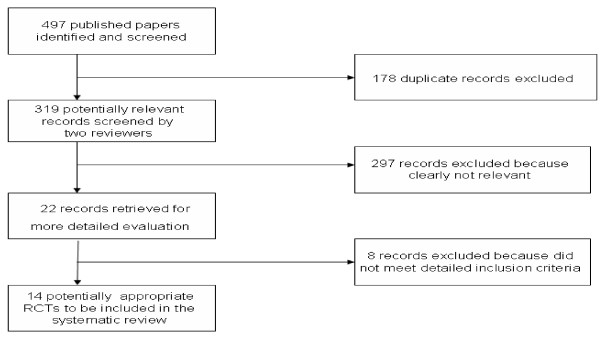
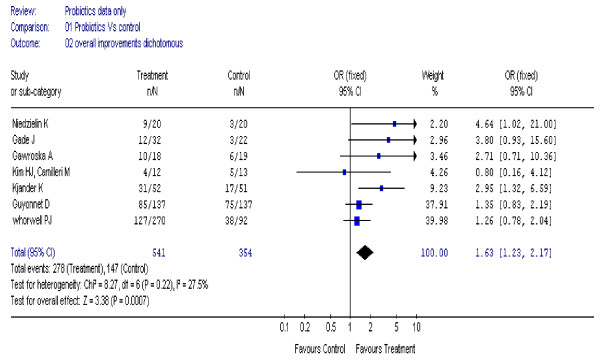
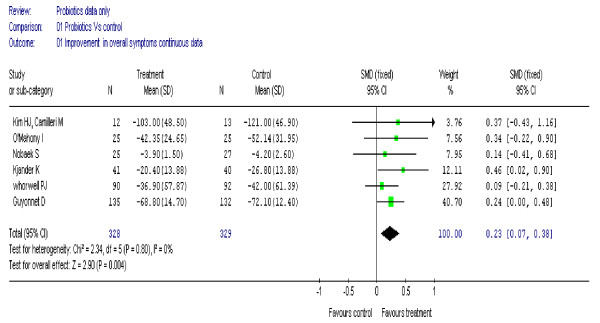
BACKGROUND: Irritable Bowel Syndrome (IBS) is a common chronic gastrointestinal disorder and the evidence for efficacy of most drug therapies in the treatment of IBS is weak. A popular alternative is probiotics, which have been used in several conditions. including IBS. Probiotics are live microbial food supplements.The aim of this systematic review and meta-analysis of randomized trials study was to evaluate the efficacy of probiotics in alleviating symptoms in patients with irritable bowel syndrome. We searched Ovid versions of MEDLINE (1950-2007), EMBASE (1980-2007), CINAHL (1982-2007), AMED (1985-2007), the Cochrane library and hand searched retrieved papers. RESULTS: We identified 14 randomized placebo controlled trials. Combined data suggested a modest improvement in overall symptoms after several weeks of treatment: for dichotomous data from seven trials the overall Odds Ratio (OR) was 1.6 (95% CI, 1.2 to 2.2); for continuous data from six trials the standardised mean difference (SMD) was 0.23 (95% CI, 0.07 to 0.38).For individual symptoms the results differed between the pooled dichotomous and pooled continuous data. Trials varied in relation to the length of treatment (4-26 weeks), dose, organisms and strengths of probiotics used. CONCLUSION: Probiotics may have a role in alleviating some of the symptoms of IBS, a condition for which currently evidence of efficacy of drug therapies is weak. However, as IBS is a condition that is chronic and usually intermittent longer term trials are recommended. Such research should focus on the type, optimal dose of probiotics and the subgroups of patients who are likely to benefit the most.
Overview
The claims and statistics of this paper haven’t been checked yet.
Free: it reads the open-access text and checks the first 5 claims that cite a source we can check. Create a free account to check every claim.
Integrity signals
Registry
Cites
Statistics
Figures
Verification
Claims the paper makes
The claims and statistics of this paper haven’t been checked yet.
Free: it reads the open-access text and checks the first 5 claims that cite a source we can check. Create a free account to check every claim.
Claims other papers make about this one
Each is checked against this paper’s own text: does it say what the citing paper says it does?
The cited source says what the claim attributes to it.
In the citing paper
“Based on the international consensus and existing evidence, probiotics are beneficial in improving overall symptoms in patients with IBS [29,30,31,32,33,34,35], but there are still contradictory reports on improvements in specific symptoms [36,37,38].”
In the citing paper
“Several systematic reviews and meta-analyses suggest that modulation of intestinal microbiota with probiotics may improve some of the symptoms of IBS (22, 79, 110, 147, 148).”
From Intestinal microbiota and immune function in the pathogenesis of irritable bowel syndrome (2013) · cites this paper as [79]
Self-check
Percentages, sums and reported differences re-computed from the paper’s own numbers.
The self-check needs the paper’s full text.
Citations
Cites
Moher, D., Cook, D. J., Eastwood, S., Olkin, I., Rennie, D., & Stroup, D. F. (1999) · The Lancet · doi:10.1016/s0140-6736(99)04149-5 · Cited by 4,826
The rand 36‐item health survey 1.0
Hays, R. D., Sherbourne, C. D., & Mazel, R. M. (1993) · Health Economics · doi:10.1002/hec.4730020305 · Cited by 2,884
O’Mahony, L., McCarthy, J., Kelly, P., Hurley, G., Luo, F., Chen, K., O’Sullivan, G. C., Kiely, B., Collins, J. K., Shanahan, F., et al. (2005) · Gastroenterology · doi:10.1053/j.gastro.2004.11.050 · Cited by 1,448
Whorwell, P. J., Altringer, L., Morel, J., Bond, Y., Charbonneau, D., O'Mahony, L., Kiely, B., Shanahan, F., & Quigley, E. M. M. (2006) · The American Journal of Gastroenterology · doi:10.1111/j.1572-0241.2006.00734.x · Cited by 799 · cited 10×
“Using continuous data in five studies [21-23,26,30] (388 participants), there was no statistically significant improvement in symptoms of flatulence, SMD 0.”
BackgroundMethodInfluentialProbiotics in prevention of antibiotic associated diarrhoea: meta-analysis
D'Souza, A. L., Rajkumar, C., Cooke, J., & Bulpitt, C. J. (2002) · BMJ · doi:10.1136/bmj.324.7350.1361 · Cited by 664 · cited 2×
“Probiotics have been used previously in different conditions [10,11].”
BackgroundNobaek, S., Johansson, M.-L., Molin, G., Ahrné, S., & Jeppsson, B. (2000) · American Journal of Gastroenterology · doi:10.1111/j.1572-0241.2000.02015.x · Cited by 653 · cited 8×
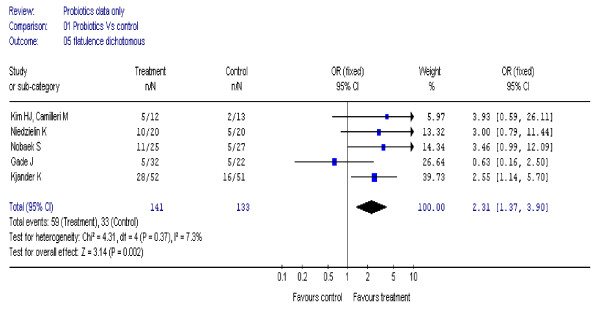
“Five studies [18,21,22,24,26] (274 participants) reported a significant improvement in symptoms of flatulence, OR 2.”
BackgroundInfluentialIrritable bowel syndrome: A technical review for practice guideline development
Drossman, D., Whitehead, W., & Camilleri, M. (1997) · Gastroenterology · doi:10.1053/gast.1997.v112.agast972120 · Cited by 566 · cited 1×
“In the West, about 15% of the population is affected at some time during their life, and it is more common in females [2].”
BackgroundNiedzielin, K., Kordecki, H., & Birkenfeld, B. (2001) · European Journal of Gastroenterology & Hepatology · doi:10.1097/00042737-200110000-00004 · Cited by 506 · cited 7×
“Five studies [18,21,22, 24 ,26] (274 participants) reported a significant improvement in symptoms of flatulence, OR 2.31 (95%CI, 1.37 to 3.9), I2 = 7% (figure 5). Using continuous data in five studies [21-23,26,30] (388 participants), there was no statistically significant improvement in symptoms of flatulence, SMD 0.…”
BackgroundInfluentialKim, H. J., Camilleri, M., Mckinzie, S., Lempke, M. B., Burton, D. D., Thomforde, G. M., & Zinsmeister, A. R. (2003) · Alimentary Pharmacology & Therapeutics · doi:10.1046/j.1365-2036.2003.01543.x · Cited by 468 · cited 10×
“There was also variation in the definition of overall symptoms in different studies: two studies included only subcategories of the IBS population (constipation – [20] or diarrhea-predominant participants [22].”
BackgroundResultInfluentialFurther validation of the IBS-QOL: a disease-specific quality-of-life questionnaire
Drossman, D. A., Patrick, D. L., Whitehead, W. E., Toner, B. B., Diamant, N. E., Hu, Y., Jia, H., & Bangdiwala, S. I. (2000) · The American Journal of Gastroenterology · doi:10.1111/j.1572-0241.2000.01941.x · Cited by 424 · cited 1×
“Whorwell [30] and O'Mahony [27] used IBS specific quality of life questionnaire [33].”
Method
Research works printed but not linked: 2
- Akehurst RL Burden of illness of irritable bowel syndrome. An interim report on behalf of Novartis Pharma AG, Basel, Switzerland 1999 Sheffield: ScHARR, University of Sheffield
- Chang L From Rome to Los Angeles – The Rome III Criteria for the Functional GI Disorders Medscape 2006 http://www.romecriteria.org/pdfs/RomeCritieraLaunch.pdf
Cited by
Items 201–300 of 334
Zhou, S., Liu, X., Wang, X., Xi, F., Luo, X., Yao, L., & Tang, H. (2019) · Medicine · doi:10.1097/md.0000000000016446 · Cited by 8
“No specific probiotic strain was found to be superior to another.([9,13])”
BackgroundPrebiotics and Probiotics in Infant Nutrition
Zuppa, A. A., Alighieri, G., Scorrano, A., & Catenazzi, P. (2015) · Elsevier eBooks · doi:10.1016/b978-0-12-802189-7.00008-3 · Cited by 8
Gafurova S.Sh., Y. S. T. (2023) · Zenodo (CERN European Organization for Nuclear Research) · doi:10.5281/zenodo.7668833 · Cited by 7
Oranusi, S. U., Madu, S. A., Braide, W., & Oguoma, O. I. (2011) · Covenant University Repository (Covenant University) · doi:10.5897/jma.9000035 · Cited by 7
Probiotic effect and dietary correlations on faecal microbiota profiles in irritable bowel syndrome
Stevenson, C., Blaauw, R., Fredericks, E., Visser, J., & Roux, S. (2019) · South African Journal of Clinical Nutrition · doi:10.1080/16070658.2019.1697038 · Cited by 7
Moludi, J., Saber, A., Arab‐Zozani, M., Moradi, S., Azamian, Y., Hajiahmadi, S., Pasdar, Y., & Moradi, F. (2024) · Preventive Nutrition and Food Science · doi:10.3746/pnf.2024.29.3.237 · Cited by 6
“Because of their effectiveness in preventing and treating GI disorders, probiotics are being increasingly used in various foods or supplements to improve the microbiome (Fuller and Gibson, 1998; McFarland, 2006; McFarland and Dublin, 2008; Hoveyda et al., 2009).”
BackgroundThe Role of Probiotics in the Treatment of Irritable Bowel Syndrome
Parkes, G. C. (2010) · Elsevier eBooks · doi:10.1016/b978-0-12-374938-3.00030-x · Cited by 6
Probiotics, with special emphasis on their role in the management of irritable bowel syndrome
Stevenson, C., & Blaauw, R. (2011) · South African Journal of Clinical Nutrition · doi:10.1080/16070658.2011.11734353 · Cited by 7
Probiotics in current medical practice: From myths to scientific evidence
Plotnikova, E. Y., & Zakharova, Y. V. (2025) · Meditsinskiy sovet = Medical Council · doi:10.21518/ms2025-278 · Cited by 5
Hilal, R. E., Mitchell, P., Guerra, E., Jr., & Burnett, B. P. (2014) · Open Journal of Gastroenterology · doi:10.4236/ojgas.2014.410046 · Cited by 5
“The Rome Foundation has defined three classes of IBS including irritable bowel syndrome with constipation (IBS-C), IBS-D, and alternating or mixed populations termed IBS-M [14].”
BackgroundProbióticos, prebióticos y simbióticos en el síndrome de intestino irritable
Calderón, E. G., Montes, P., & Monge, E. (2012) · ACTA MEDICA PERUANA · Cited by 6
Niriella, M. A., Jayasundara, H., Samarawickrama, V. T., Prabagar, K., & de Silva, H. J. (2025) · Expert Review of Gastroenterology & Hepatology · doi:10.1080/17474124.2025.2514239 · Cited by 4
“Opioid agents and substances that reduce gas or enhance fluid secretion are being explored but are not routinely used due to limited evidence [77][78].”
Probiotics for Gastrointestinal Diseases
Akpınar, H. (2013) · CRC Press eBooks · doi:10.1201/b15561-16 · Cited by 4
Probiotics – panacea or placebo?
Dąbrowska, A., Słotwiński, R., & Kędziora, S. (2010) · Gastroenterology Review · doi:10.5114/pg.2010.18475 · Cited by 4
Olayanju, A. (2019) · ChesterRep (University of Chester) · Cited by 4
Hanna-Jairala, I., Leal, G. A. P., Madrid, A. M., Aguilar-Paiz, L., Suazo-Barahona, J., Remes-Troche, J. M., Coss‐Adame, E., Bustos-Fernández, L. M., Solé, L., Gudiño‐Zayas, M., et al. (2025) · Revista de Gastroenterología de México (English Edition) · doi:10.1016/j.rgmxen.2025.10.001 · Cited by 3
Ballena-Caicedo, J., Zuzunaga-Montoya, F. E., Acosta-Porzoliz, R. P. E., García-Ahumada, F. S., Rivera-Lozada, O., Valladares-Garrido, M. J., & Vera-Ponce, V. J. (2026) · Journal of Clinical Medicine · doi:10.3390/jcm15051727 · Cited by 3
“…productivity intensified, with four reviews in 2020 [11–13, 32], four in Regarding diagnostic criteria, Rome criteria were the most frequently used across reviews, followed by Manning criteria (reported in 10 reviews) [6,7,21,25,26,29,31,32,36,39] and Kruis criteria (4 reviews) [12,29,31,36].”
InfluentialNot a miracle, not a myth: The role of probiotics in periodontal health
Teughels, W., Saghi, M., Lauwens, K., Cheah, C. W., Pisha, P., Ana, C., Temmerman, A., Zayed, N., & Holm, W. V. (2026) · Periodontology 2000 · doi:10.1111/prd.70039 · Cited by 3
The Various Healthcare Applications of the Genus Lactobacillus
Narasimha, S. V., Zackria, R., Chadha, R., Gheriani, A. G., Johnson, L., Pattison, R., Kim, A., Chen, G., Ryan, J., & Shih, D. Q. (2025) · IntechOpen eBooks · doi:10.5772/intechopen.115299 · Cited by 3
Hanna-Jairala, I., Leal, G. A. P., Madrid, A. M., Aguilar-Paiz, L., Suazo-Barahona, J., Remes-Troche, J. M., Coss‐Adame, E., Bustos-Fernández, L. M., Solé, L., Gudiño‐Zayas, M., et al. (2025) · Revista de Gastroenterología de México · doi:10.1016/j.rgmx.2025.03.005 · Cited by 3
“…la forma en que gastroenterólogos generales, internistas y médicos generales estudian esta entidad, y establecer guías prácticas para el diagnóstico y tratamiento del SII que per-mitan una óptima aplicación de recursos de acuerdo con la disponibilidad local y con las evidencias de mayor cali-dad”
Troche, J. M. R., Ga, S. M., & Franco, M. A. T. (2010) · PubMed · Cited by 3
Praktyczne zastosowanie probiotyków
Szajewska, H. (2014) · Gastroenterologia Kliniczna. Postępy i Standardy · Cited by 3
Infektionsschutz und spezielle Hygienemaßnahmen in klinischen Disziplinen
(2016) · Elsevier eBooks · doi:10.1016/b978-3-437-22312-9.00005-6 · Cited by 3
Investigation of the brain–gut axis
Sasegbon, A., Xiang, X., Vasant, D. H., & Hamdy, S. (2019) · Elsevier eBooks · doi:10.1016/b978-0-12-813037-7.00009-1 · Cited by 3
Azzopardi, N., Fenech, M., & Piscopo, T. V. (2012) · InTech eBooks · doi:10.5772/49962 · Cited by 3
“Targeting the intestinal flora with probiotics has been an attractive potential treatment and has shown some promise in several meta-analyses.[170-174] These studies showed a modest improvement in the patients’ symptoms when using strains like S.”
BackgroundStructure and Function of the Human Microbiome
Ritchie, M. L. (2012) · Library and Archives Canada (Government of Canada) · Cited by 3
Probiotics in gastroenterology – from a different angle
Buzás, G. M. (2013) · Orvosi Hetilap · doi:10.1556/oh.2013.29547 · Cited by 3
Gastrointestinal Benefits of Probiotics
Ouwehand, A. C. (2019) · CRC Press eBooks · doi:10.1201/9780429057465-25 · Cited by 3
Saccharomyces Cerevisiae Var. Boulardii In Irritable Bowel Syndrome
Gałązka, P., Baska, A., Kazik, J., & Leis, K. (2020) · Postępy Mikrobiologii - Advancements of Microbiology · doi:10.21307/pm-2020.59.1.004 · Cited by 3
Clinical Roundup: How Do You Treat Irritable Bowel Syndrome in Your Practice?
(2011) · Alternative and Complementary Therapies · doi:10.1089/act.2011.17110 · Cited by 3
Koning, C. J. (2010) · Research Publications (Maastricht University) · doi:10.26481/dis.20100604ck · Cited by 3
Plants and herbs for therapy of diabetes
Pramono, L. A. (2015) · Medical Journal of Indonesia · doi:10.13181/mji.v24i2.1260 · Cited by 3
Strindmo, I. (2016) · NVA (Nasjonalt vitenarkiv) · Cited by 3
Abouelala, F. M. (2021) · Assiut Scientific Nursing Journal · doi:10.21608/asnj.2021.55747.1095 · Cited by 2
“Lack of exercises, lack of food intake, lack intake of fiber diet, and lack of appropriate time to defecate, they can contribute to developing of IBS, specially (IBS-C), therefore, increasing fibers in diet and performing regular exercise may benefit IBS patients who suffer from constipation (Hoveyda et al., 2009).”
BackgroundPROBIOTYKI A ZDROWIE - DZIŚ I JUTRO
Winiarz, D., Domanska, K., Paluch, K., & Skrajnowska, D. (2017) · Prospects in Pharmaceutical Sciences · doi:10.56782/pps.82 · Cited by 2
“- Zespół jelita drażliwego - nie ma podstaw do stosowania probiotyków w leczeniu tego schorzenia [45,46].”
Orel, R. (2013) · DOAJ (DOAJ: Directory of Open Access Journals) · Cited by 2
Wong, S. L. (2016) · SpringerBriefs in biochemistry and molecular biology · doi:10.1007/978-3-319-45791-8_5 · Cited by 2
Soman, R. J., Singh, K., & Swamy, M. V. (2022) · International Journal of Health Sciences and Research · doi:10.52403/ijhsr.20220336 · Cited by 2
“Bacillus-based probiotics, specifically, have also been shown to relieve symptoms of general abdominal discomfort, bloating, flatulence, indigestion, nausea, and irregular bowel patterns.([33,34]) The improvement in SODA scores, and most participants treated with SNZ1969 not reporting bloating (75,9% vs.”
ResultModulation of the Gut Ecosystem in Irritable Bowel Syndrome
König, J., & Brummer, R. J. (2014) · AAPS advances in the pharmaceutical sciences series · doi:10.1007/978-3-319-06151-1_4 · Cited by 2
Probiotics for irritable bowel syndrome: Should we give them full names?
Álvarez-Sánchez, Á., & Rey, E. (2013) · Revista Española de Enfermedades Digestivas · doi:10.4321/s1130-01082013000100001 · Cited by 2
Complementary and Alternative Medicine in Gastroenterology
Lembo, A. J., & Bollom, A. (2015) · Wiley eBooks · doi:10.1002/9781118512074.ch130 · Cited by 2
The Microbiome in Neurogastroenterology
Preidis, G. A., Chumpitazi, B. P., & Shulman, R. J. (2016) · Springer eBooks · doi:10.1007/978-3-319-43268-7_5 · Cited by 2
König, J., Rangel, I., & Brummer, R. J. (2013) · Food and Nutrition Sciences · doi:10.4236/fns.2013.411a005 · Cited by 2
“Several meta-analyses concluded that probiotics in general improve IBS symptoms [32-34].”
Shahrokhabadi, M. S., Kazemnejad, A., Zayeri, F., & Vahedi, M. (2013) · Bushehr University of Medical Sciences Repository (Bushehr University of Medical Sciences) · Cited by 2
Antibiotic Resistance in Poultry Gastrointestinal Microbiota and Targeted Mitigation
Zhou, Y. (2016) · OhioLink ETD Center (Ohio Library and Information Network) · Cited by 2
Komplementärmedizin im Krankenhaus: Strategien, Konzepte, Umsetzung
Hoefert, H.-W., & Michalsen, A. (2014) · Medizinisch Wissenschaftliche Verlagsgesellschaft eBooks · doi:10.32745/9783954664573 · Cited by 2
Actual issues of diagnosis and treatment of irritable bowel syndrome
Трухан, Д. И., Goloshubina, V. V., & Ivanova, D. S. (2019) · Meditsinskiy sovet = Medical Council · doi:10.21518/2079-701x-2018-21-110-116 · Cited by 3
Bibliometric Analysis of Studies on “Probiotics and Prebiotics” With VOSviewer
Can, S., & Can, H. (2025) · IGI Global eBooks · doi:10.4018/979-8-3693-8699-6.ch007 · Cited by 1
Shrikhande, A., Hall, J. F., Orbuch, I. K., Advincula, A. P., Wolfrum, K., Sarrel, S., Drummond, J., Rampally, L., Gonzalez-Engle, J., Ross, J., et al. (2026) · Women s Health · doi:10.1177/17455057261440214 · Cited by 1
“…Pain associated with IBS can be addressed using tricyclic antidepressants (TCAs), selective serotonin reuptake inhibitors (SSRIs), or specific agents like tricyclic serotonin reuptake inhibitors or serotonin-norepinephrine reuptake inhibitors (SNRIs), 96 alongside probiotics 97 for symptom relief.”
Probióticos e exercício físico na constipação
Moreira, A. F., Maciel, M. M., Navarro, F., & Silva, B. M. P. D. P.-G. L.-S. D. U. G. F.-O. E. E. (2009) · Americanae (AECID Library) · Cited by 1
Abadi, M. S. S., Kazemnejad, A., Zayeri, F., & Vahedi, M. (2013) · Gastroenterology and hepatology from bed to bench. · Cited by 1
Gionchetti, P., Rizzello, F., Tambasco, R., Brugnera, R., Straforini, G., Nobile, S., Liguori, G., Fornarini, G. S., & Campieri, M. (2009) · Frontiers of gastrointestinal research · doi:10.1159/000258288 · Cited by 1
Mikrobiota und Reizdarmsyndrom – eine kritische Bestandsaufnahme
Enck, P., & Mazurak, N. (2019) · Zeitschrift für Gastroenterologie · doi:10.1055/a-0901-2558 · Cited by 1
“[77] Hoveyda N, Heneghan C, Mahtani KR et al.”
BackgroundIrritable Bowel Syndrome and Functional GI Disorders in Inflammatory Bowel Disease
El‐Chammas, K. I., & Sood, M. R. (2017) · Springer eBooks · doi:10.1007/978-3-319-49215-5_52 · Cited by 1
Irritable Bowel Syndrome (IBS) Clinical Review
Naser, M., Naser, M. M., & Shehata, L. H. (2021) · International Journal of Progressive Sciences and Technologies · doi:10.52155/ijpsat.v27.1.3167 · Cited by 1
Fermented foods and immunological effects in humans and animal models
Oboh, H. A., & Molelekoa, T. B. J. (2023) · Elsevier eBooks · doi:10.1016/b978-0-323-98341-9.00026-8 · Cited by 1
Rheumatic diseases: The microbiota-immunity axis in development and treatment
Niccolai, E., Bellando-Randone, S., & Amedei, A. (2023) · Elsevier eBooks · doi:10.1016/b978-0-323-85831-1.00006-1 · Cited by 1
Шоюнусовна, Г. С., & қизи, Ю. С. Т. (2023) · Talqin va tadqiqotlar · doi:10.5281/zenodo.7725981 · Cited by 1
Probiotics in Clinical Practice as Therapeutics Against Enteric Disorders
Karimi, O., & Peña, A. S. (2011) · Springer eBooks · doi:10.1007/978-94-007-0386-5_15 · Cited by 1
“Furthermore, discordance between recent meta-analyses (16-17, 68-69) and systematic reviews (70-72) show important differences in the different trials.”
BackgroundImpact of Commensal Intestinal Microbiota on Nervous System Development and Function
Neufeld, K. M. (2012) · MacSphere (McMaster University) · doi:10.71548/13434 · Cited by 1
Sood, M. R. (2007) · Springer eBooks · doi:10.1007/978-0-387-73481-1_44 · Cited by 1
Probiotics in gastroenterology
Smith, G. D. (2015) · Gastrointestinal Nursing · doi:10.12968/gasn.2015.13.9.13 · Cited by 1
Is there a role for probiotics in older people?
Smith, G. D. (2016) · British Journal of Community Nursing · doi:10.12968/bjcn.2016.21.10.501 · Cited by 1
Andersen, M. L. (2017) · NVA (Nasjonalt vitenarkiv) · Cited by 1
Rojas, S. A. (2012) · Intellectum (Universidad de La Sabana) · doi:10.82992/intellectum/handle.10818.5667 · Cited by 1
Food‐related Symptoms of Irritable Bowel Syndrome
Dapoigny, M. C. (2013) · Wiley eBooks · doi:10.1002/9781118444689.ch8
Functional Gastrointestinal Disorders in Adults
Quigley, E. M. M. (2013) · World review of nutrition and dietetics · doi:10.1159/000347200
The Role of Meta‐Analysis in the Evaluation of Clinical Trials on Probiotics
Szajewska, H. (2010) · Wiley eBooks · doi:10.1002/9781444329384.ch11
Proceedings from the FFF Probiotics 2012 meeting in Turku, Finland, 11–13 June 2012
(2012) · Microbial Ecology in Health and Disease · doi:10.3402/mehd.v23i0.18868
Harnett, J. (2013) · Cross Connect (Southern Cross University)
Complementary Health Practices
Leach, M. (2012) · JAMA · doi:10.1001/jama.2012.8159
Acupuncture, Lactobacillus Traditional Chinese Herbal Medicine, Sanchitongtshu, and Honey
Glickman-Simon, R., & Basu‐Ray, I. (2012) · EXPLORE · doi:10.1016/j.explore.2012.06.009
VACCINATION STATUS IN CHILDREN UNDER 8 YEARS AND ATTITUDES OF THEIR PARENTS
Kut, A., & Geckil, A. (2014) · Turkish Journal of Family Medicine & Primary Care · doi:10.5455/tjfmpc.154621
Probiotica bij irritable bowel syndrome
Bles, H., & Neven, A. K. (2011) · Huisarts en Wetenschap · doi:10.1007/s12445-011-0168-y
[Irritable bowel syndrome: a functional disorder?].
Man, F., & Fernández, L. M. B. (2013) · PubMed
Probiotics, with special emphasis on their role in the management of irritable bowel syndrome
Stevenson, C., & Blaauw, R. (2012) · Pharmacy management
Probiotika bei Reizdarmsyndrom: Wirksamkeitsnachweis durch klinische Studien
Krammer, H., & Bluhm, M. (2012) · Pharmazie in unserer Zeit · doi:10.1002/pauz.201100461
“Trotz der erwähnten positiven Studienergebnisse sollen Antibiotika laut Konsensus-Konferenz in der Therapie des RDS daher nur äußerst zurückhaltend eingesetzt werden [11].”
Psychische Faktoren gastrointestinaler Erkrankungen
Hefner, J., Klosterhalfen, S., Martens, U., & Enck, P. (2010) · Psychotherapeut · doi:10.1007/s00278-010-0744-9
Diet Therapy in Irritable Bowel Syndrome; A review
Beheshti, S., Hashemian, M., Mohammadi‐Nasrabadi, F., Hekmatdoost, A., Poustchi, H., & Malekzadeh, R. (2014) · GOVARESH
Robles, V., Guarner, F., Soriano, G., Sánchez, E., & Guarner, C. (2013)
Ibeakanma, C. O. (2011) · QSpace (Queen's University Library)
Krogius-Kurikka, L. (2011) · Helda - University of Helsinki Institutional Repository
Álvarez-Sánchez, Á., Rey, E., Zakko, S. F., Yu, J., & Sm, M. (2013)
Taraldrud, M. (2012) · NORA - Norwegian Open Research Archives
Russo, A. (2016) · Archivio Istituzionale della Ricerca - Università degli Studi del Molise
Sinagra, E., Rossi, F., Raimondo, D., Pietra, C., Pisciotto, P., Pompei, G., Tomasello, G., Cappello, F., Morreale, G. C., Amvrosiadis, G., et al. (2016)
Treatment of Functional Bowel Disorders With Prebiotics and Probiotics
Hod, K., & Ringel, Y. (2017) · Elsevier eBooks · doi:10.1016/b978-0-12-804024-9.00038-0
Gill, S. K. (2016) · Coventry University Open Collections (Coventry university)
Diet and gut health in residents of a retirement village
Nanayakkara, T. W. S. (2017) · Otago University Research Archive (University of Otago)
Take Irritable Bowel Syndrome,Causes and Treatment
Shahverdi, E., Khani, M. A., & Asadollah, A. (2017) · International Journal of Digestive Diseases · doi:10.4172/2472-1891.100031
Biofunctionality of Sourdough Metabolites in Healthy and Inflamed Gastrointestinal Tract
Zhenchuk, A. (2014) · mediaTUM (Technical University of Munich)
Carlson, J. L. (2017) · University of Minnesota Digital Conservancy (University of Minnesota)
'Lactobacillus fermentum' 3872 genome sequencing and analysis
Lehri, B. (2017) · Research Repository (Kingston University London)
Effects of probiotic supplementation on obesity markers in high fat diet-induced obese rats
Karimi, G. (2015) · Universiti Putra Malaysia Institutional Repository (Universiti Putra Malaysia)
Metadata
- Authors
- Hoveyda, N., Heneghan, C., Mahtani, K. R., Perera, R., Roberts, N., & Glasziou, P.
- Affiliations
- University of Oxford (GB)
- Corresponding author
- Hoveyda, Nourieh
- Venue
- BMC Gastroenterology
- Published
- 2009-02-16
- Volume
- 9
- Issue
- 1
- Pages
- 15-15
- ISSN
- 1471-230X (ISSN-L)
- PMC
- PMC2656520
- OpenAlex
- W1984974981
- Cited by
- 297
- References
- 36
- Citations by year
- 2026: 6 · 2025: 8 · 2024: 3 · 2023: 6 · 2022: 7 · 2021: 4 · 2020: 6 · 2019: 15 · 2018: 9 · 2017: 17 · 2016: 24 · 2015: 23 · 2014: 36 · 2013: 31 · 2012: 39
- FWCI
- 5.11
- Type
- journal article
- Language
- en
- Open access
- gold
- doi.org
- Licence
- cc-by
- creativecommons.org/licenses/by/2.0 (tdm)
- Locations
- BMC Gastroenterology (publishedVersion, cc-by)
- PubMed Central (publishedVersion, cc-by)
- PubMed (publishedVersion)
- DOAJ (DOAJ: Directory of Open Access Journals) (submittedVersion)
- Funders
- Danone
- National Institute for Health and Care Research (ACF-2008-13-014)
- University College Cork
- Goddard Space Flight Center
- Topics
- Health Sciences › Medicine › Gastroenterology › Gastrointestinal motility and disorders
- Life Sciences › Agricultural and Biological Sciences › Food Science › Probiotics and Fermented Foods
- Life Sciences › Biochemistry, Genetics and Molecular Biology › Molecular Biology › Gut microbiota and health
- Keywords
- irritable bowel syndrome, probiotics, symptom relief, probiotic dosage, probiotic strains, complementary and alternative medicine
- MeSH terms
- Humans, Treatment Outcome, Probiotics, Irritable Bowel Syndrome
About these checks
Registry, retraction, Cites and statistics results are computed, not judged, with one exception: a printed reference that no index lists is read once by a model before it counts as a citation error. Claims are extracted by a model and kept only when their quote appears verbatim in the text; each cited source is then checked, with a model’s help, for whether it says what the claim relies on. Those verdicts can be wrong — read the claim’s quote and the cited source before relying on one.
Statistics and arithmetic are recomputed, not judged.
Confidence bands are shown only for fields calibrated on our annotated test set. None is calibrated yet, so no band is shown.
What counts as a claim ›How we measure confidence ›How we check this ›
Are you an author, or do you see a problem with this page? Request a review
Data sources
Bibliographic data: Semantic Scholar, OpenAlex, Crossref.
Contains information from the Semantic Scholar Academic Graph Datasets, made available under the ODC Attribution License (ODC-BY 1.0).
Semantic Scholar’s data is described in: Kinney, R., et al. (2023). The Semantic Scholar Open Data Platform. arXiv:2301.10140.
