

A systematic review and meta-analysis: probiotics in the treatment of irritable bowel syndrome
Open accessThe DOI matches its Crossref record; 36 of the 36 references it cites were found in a registry or an index.
Abstract
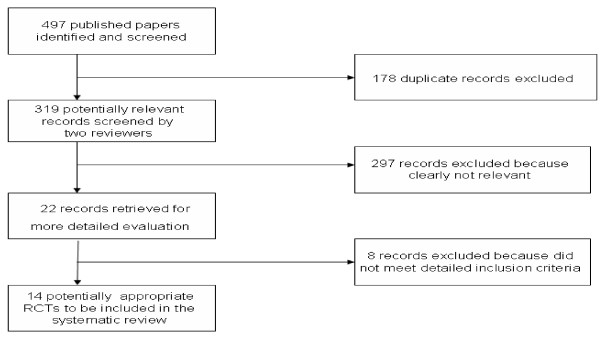
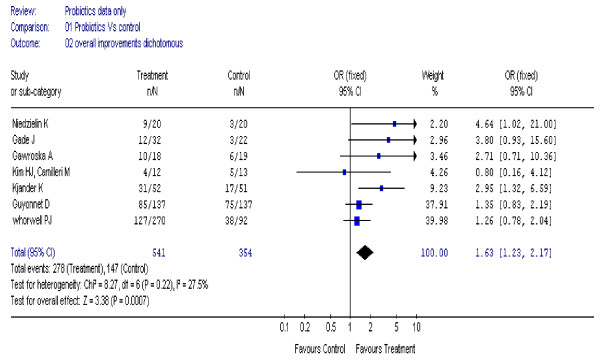
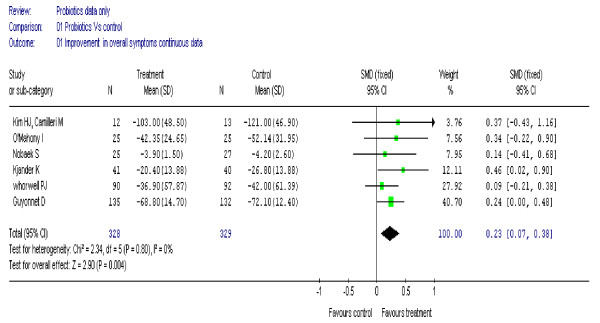
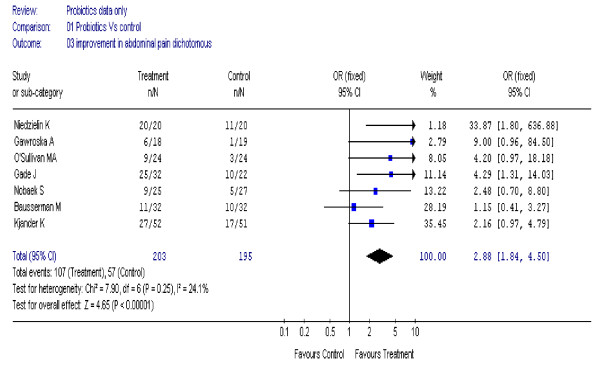
BACKGROUND: Irritable Bowel Syndrome (IBS) is a common chronic gastrointestinal disorder and the evidence for efficacy of most drug therapies in the treatment of IBS is weak. A popular alternative is probiotics, which have been used in several conditions. including IBS. Probiotics are live microbial food supplements.The aim of this systematic review and meta-analysis of randomized trials study was to evaluate the efficacy of probiotics in alleviating symptoms in patients with irritable bowel syndrome. We searched Ovid versions of MEDLINE (1950-2007), EMBASE (1980-2007), CINAHL (1982-2007), AMED (1985-2007), the Cochrane library and hand searched retrieved papers. RESULTS: We identified 14 randomized placebo controlled trials. Combined data suggested a modest improvement in overall symptoms after several weeks of treatment: for dichotomous data from seven trials the overall Odds Ratio (OR) was 1.6 (95% CI, 1.2 to 2.2); for continuous data from six trials the standardised mean difference (SMD) was 0.23 (95% CI, 0.07 to 0.38).For individual symptoms the results differed between the pooled dichotomous and pooled continuous data. Trials varied in relation to the length of treatment (4-26 weeks), dose, organisms and strengths of probiotics used. CONCLUSION: Probiotics may have a role in alleviating some of the symptoms of IBS, a condition for which currently evidence of efficacy of drug therapies is weak. However, as IBS is a condition that is chronic and usually intermittent longer term trials are recommended. Such research should focus on the type, optimal dose of probiotics and the subgroups of patients who are likely to benefit the most.
Overview
The claims and statistics of this paper haven’t been checked yet.
Free: it reads the open-access text and checks the first 5 claims that cite a source we can check. Create a free account to check every claim.
Integrity signals
Registry
Cites
Statistics
Figures
Verification
Claims the paper makes
The claims and statistics of this paper haven’t been checked yet.
Free: it reads the open-access text and checks the first 5 claims that cite a source we can check. Create a free account to check every claim.
Claims other papers make about this one
Each is checked against this paper’s own text: does it say what the citing paper says it does?
The cited source says what the claim attributes to it.
In the citing paper
“Based on the international consensus and existing evidence, probiotics are beneficial in improving overall symptoms in patients with IBS [29,30,31,32,33,34,35], but there are still contradictory reports on improvements in specific symptoms [36,37,38].”
In the citing paper
“Several systematic reviews and meta-analyses suggest that modulation of intestinal microbiota with probiotics may improve some of the symptoms of IBS (22, 79, 110, 147, 148).”
From Intestinal microbiota and immune function in the pathogenesis of irritable bowel syndrome (2013) · cites this paper as [79]
Self-check
Percentages, sums and reported differences re-computed from the paper’s own numbers.
The self-check needs the paper’s full text.
Citations
Cites
Moher, D., Cook, D. J., Eastwood, S., Olkin, I., Rennie, D., & Stroup, D. F. (1999) · The Lancet · doi:10.1016/s0140-6736(99)04149-5 · Cited by 4,826
The rand 36‐item health survey 1.0
Hays, R. D., Sherbourne, C. D., & Mazel, R. M. (1993) · Health Economics · doi:10.1002/hec.4730020305 · Cited by 2,884
O’Mahony, L., McCarthy, J., Kelly, P., Hurley, G., Luo, F., Chen, K., O’Sullivan, G. C., Kiely, B., Collins, J. K., Shanahan, F., et al. (2005) · Gastroenterology · doi:10.1053/j.gastro.2004.11.050 · Cited by 1,448
Whorwell, P. J., Altringer, L., Morel, J., Bond, Y., Charbonneau, D., O'Mahony, L., Kiely, B., Shanahan, F., & Quigley, E. M. M. (2006) · The American Journal of Gastroenterology · doi:10.1111/j.1572-0241.2006.00734.x · Cited by 799 · cited 10×
“Using continuous data in five studies [21-23,26,30] (388 participants), there was no statistically significant improvement in symptoms of flatulence, SMD 0.”
BackgroundMethodInfluentialProbiotics in prevention of antibiotic associated diarrhoea: meta-analysis
D'Souza, A. L., Rajkumar, C., Cooke, J., & Bulpitt, C. J. (2002) · BMJ · doi:10.1136/bmj.324.7350.1361 · Cited by 664 · cited 2×
“Probiotics have been used previously in different conditions [10,11].”
BackgroundNobaek, S., Johansson, M.-L., Molin, G., Ahrné, S., & Jeppsson, B. (2000) · American Journal of Gastroenterology · doi:10.1111/j.1572-0241.2000.02015.x · Cited by 653 · cited 8×
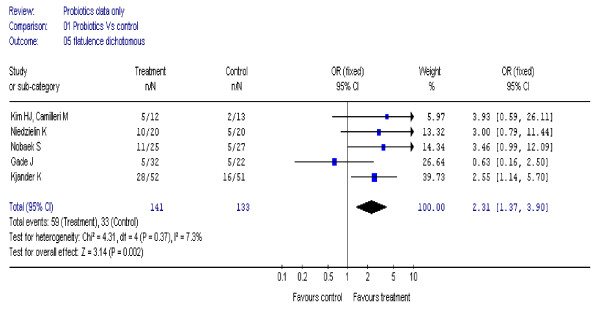
“Five studies [18,21,22,24,26] (274 participants) reported a significant improvement in symptoms of flatulence, OR 2.”
BackgroundInfluentialIrritable bowel syndrome: A technical review for practice guideline development
Drossman, D., Whitehead, W., & Camilleri, M. (1997) · Gastroenterology · doi:10.1053/gast.1997.v112.agast972120 · Cited by 566 · cited 1×
“In the West, about 15% of the population is affected at some time during their life, and it is more common in females [2].”
BackgroundNiedzielin, K., Kordecki, H., & Birkenfeld, B. (2001) · European Journal of Gastroenterology & Hepatology · doi:10.1097/00042737-200110000-00004 · Cited by 506 · cited 7×
“Five studies [18,21,22, 24 ,26] (274 participants) reported a significant improvement in symptoms of flatulence, OR 2.31 (95%CI, 1.37 to 3.9), I2 = 7% (figure 5). Using continuous data in five studies [21-23,26,30] (388 participants), there was no statistically significant improvement in symptoms of flatulence, SMD 0.…”
BackgroundInfluentialKim, H. J., Camilleri, M., Mckinzie, S., Lempke, M. B., Burton, D. D., Thomforde, G. M., & Zinsmeister, A. R. (2003) · Alimentary Pharmacology & Therapeutics · doi:10.1046/j.1365-2036.2003.01543.x · Cited by 468 · cited 10×
“There was also variation in the definition of overall symptoms in different studies: two studies included only subcategories of the IBS population (constipation – [20] or diarrhea-predominant participants [22].”
BackgroundResultInfluentialFurther validation of the IBS-QOL: a disease-specific quality-of-life questionnaire
Drossman, D. A., Patrick, D. L., Whitehead, W. E., Toner, B. B., Diamant, N. E., Hu, Y., Jia, H., & Bangdiwala, S. I. (2000) · The American Journal of Gastroenterology · doi:10.1111/j.1572-0241.2000.01941.x · Cited by 424 · cited 1×
“Whorwell [30] and O'Mahony [27] used IBS specific quality of life questionnaire [33].”
Method
Research works printed but not linked: 2
- Akehurst RL Burden of illness of irritable bowel syndrome. An interim report on behalf of Novartis Pharma AG, Basel, Switzerland 1999 Sheffield: ScHARR, University of Sheffield
- Chang L From Rome to Los Angeles – The Rome III Criteria for the Functional GI Disorders Medscape 2006 http://www.romecriteria.org/pdfs/RomeCritieraLaunch.pdf
Cited by
Items 101–200 of 334
Jafari, E., Vahedi, H., Merat, S., Momtahen, S., & Riahi, A. (2014) · PubMed · Cited by 58
Therapy options in irritable bowel syndrome
Enck, P., Junne, F., Klosterhalfen, S., Zipfel, S., & Martens, U. (2010) · European Journal of Gastroenterology & Hepatology · doi:10.1097/meg.0b013e3283405a17 · Cited by 54
Irritable bowel syndrome: a concise review of current treatment concepts
Wall, G. C., Bryant, G. A., Bottenberg, M. M., Maki, E. D., & Miesner, A. R. (2014) · World Journal of Gastroenterology · doi:10.3748/wjg.v20.i27.8796 · Cited by 56
Ludidi, S., Jonkers, D. M., Koning, C. J., Kruimel, J. W., Mulder, L., van der Vaart, I. B., Conchillo, J. M., & Masclee, A. A. M. (2014) · Neurogastroenterology & Motility · doi:10.1111/nmo.12320 · Cited by 49
Saneian, H., Pourmoghaddas, Z., Roohafza, H., & Gholamrezaei, A. (2015) · Gastroenterology and hepatology from bed to bench. · Cited by 54
Andresen, V., Keller, J., Pehl, C., Schemann, M., Preiß, J., & Layer, P. (2011) · Deutsches Ärzteblatt international · doi:10.3238/arztebl.2011.0751 · Cited by 53
Irritable Bowel Syndrome: Contemporary Nutrition Management Strategies
Mullin, G. E., Shepherd, S. J., Roland, B. C., Ireton-Jones, C. S., & Matarese, L. E. (2014) · Journal of Parenteral and Enteral Nutrition · doi:10.1177/0148607114545329 · Cited by 55
Yeun, Y.-R., & Lee, J.-J. (2014) · Archives of Pharmacal Research · doi:10.1007/s12272-014-0522-2 · Cited by 54
“Their beneficial roles in many gastrointestinal disorders such as irritable bowel syndrome (IBS) (Hoveyda et al. 2009), Y. Yeun J. Lee (&) Sahmyook Medical Center, Seoul, Republic of Korea e-mail: jj58lee@sah.co.kr Y. Yeun Department of Nursing, Kangwon National University, Samcheok, Republic of Korea inflammatory bow…”
BackgroundInfluentialNami, Y., Abdullah, N., Haghshenas, B., Biak, D. R. A., Rosli, R., & Khosroushahi, A. Y. (2014) · Journal of Medical Microbiology · doi:10.1099/jmm.0.074161-0 · Cited by 52
“, 2012), irritable bowel syndrome (Hoveyda et al., 2009), inflammatory bowel diseases (Damaskos & Kolios, 2008), chronically high cholesterol levels (Huang & Zheng, 2010), colitis (Resta-Lenert & Barrett, 2009) and colon cancer (Andersson et al.”
BackgroundIrritable bowel syndrome: new and emerging treatments
Halland, M., & Saito, Y. A. (2015) · BMJ · doi:10.1136/bmj.h1622 · Cited by 53
Revisión del papel de los probióticos en la patología gastrointestinal del adulto
Domingo, J. J. S. (2017) · Gastroenterología y Hepatología · doi:10.1016/j.gastrohep.2016.12.003 · Cited by 53
Gut microbiome, gut function, and probiotics: Implications for health
Hajela, N., Ramakrishna, B., Nair, G. B., Abraham, P., Gopalan, S., & Ganguly, N. K. (2015) · Indian Journal of Gastroenterology · doi:10.1007/s12664-015-0547-6 · Cited by 53
“A lack of specificity is seen in the outcomes of many metaanalyses and systematic reviews conducted on probiotic trials in humans, which often conclude that probiotics are generally beneficial across a wide range of strains, sample sizes, and clinical endpoints measured [52–60].”
BackgroundMarteau, P., Guyonnet, D., Lafaye de Micheaux, P., & Gelu, S. (2013) · Neurogastroenterology & Motility · doi:10.1111/nmo.12078 · Cited by 50
The gut microbiome and irritable bowel syndrome: State of art review
Salem, A., Singh, R., Ayoub, Y. K., Khairy, A. M., & Mullin, G. E. (2018) · Arab Journal of Gastroenterology · doi:10.1016/j.ajg.2018.02.008 · Cited by 50
Nobutani, K., Sawada, D., Fujiwara, S., Kuwano, Y., Nishida, K., Nakayama, J., Kutsumi, H., Azuma, T., & Rokutan, K. (2017) · Journal of Applied Microbiology · doi:10.1111/jam.13329 · Cited by 42
“Probiotic administration has shown modest efficacy for patients with IBS (McFarland and Dublin 2008; Hoveyda et al. 2009; Moayyedi et al. 2010).”
BackgroundWu, J. C. Y. (2010) · PubMed Central · Cited by 50
Choi, C. H., Kwon, J. G., Kim, S. K., Myung, S. ‐., Park, K. S., Sohn, C. ‐., Rhee, P. ‐., Lee, K. J., Lee, O. Y., Jung, H. ‐., et al. (2015) · Neurogastroenterology & Motility · doi:10.1111/nmo.12544 · Cited by 46
Oh, J. H., Jang, Y. S., Kang, D., Chang, D. K., & Min, Y. W. (2019) · Nutrients · doi:10.3390/nu11122887 · Cited by 45
König, J., & Brummer, R. J. (2014) · Beneficial Microbes · doi:10.3920/bm2013.0033 · Cited by 42
“Several meta-analyses came to the conclusion that probiotic use improves IBS symptoms and might be a promising treatment option (Hoveyda et al. , 2009; McFarland and Dublin, 2008; Nikfar et al. , 2008).”
The Rationale and Clinical Effectiveness of Probiotics in Irritable Bowel Syndrome
Ringel, Y., & Ringel-Kulka, T. (2011) · Journal of Clinical Gastroenterology · doi:10.1097/mcg.0b013e31822d32d3 · Cited by 44
Probiotics in Irritable Bowel Syndrome: The Science and the Evidence
Quigley, E. M. M. (2015) · Journal of Clinical Gastroenterology · doi:10.1097/mcg.0000000000000348 · Cited by 41
Using probiotics in the paediatric population
Marchand, V. (2012) · Paediatrics & Child Health · doi:10.1093/pch/17.10.575 · Cited by 42
“[35][36] There have been four published paediatric trials.”
BackgroundShang, X., E, F.-F., Guo, K.-L., Li, Y.-F., Zhao, H.-L., Wang, Y., Chen, N., Nian, T., Yang, C.-Q., Yang, K.-H., et al. (2022) · Nutrients · doi:10.3390/nu14122482 · Cited by 41
Šmid, A., Strniša, L., Bajc, K., Vujić-Podlipec, D., Matijašić, B. B., & Rogelj, I. (2016) · Journal of Functional Foods · doi:10.1016/j.jff.2016.04.031 · Cited by 41
Halland, M., & Talley, N. J. (2012) · Nature Reviews Gastroenterology & Hepatology · doi:10.1038/nrgastro.2012.207 · Cited by 41
Marlicz, W. M., Yung, D. E., Skonieczna‐Żydecka, K., Łoniewski, I., van Hemert, S., Łoniewska, B., & Koulaouzidis, A. (2017) · Expert Review of Gastroenterology & Hepatology · doi:10.1080/17474124.2017.1343664 · Cited by 38
Probiotics in functional bowel disorders
Hod, K., & Ringel, Y. (2016) · Best Practice & Research Clinical Gastroenterology · doi:10.1016/j.bpg.2016.01.003 · Cited by 38
EFECTOS CLÍNICOS DE LOS PROBIÓTICOS: QUÉ DICE LA EVIDENCIA
Claudia Manzano, A., Diana Estupiñán, G., & Poveda, E. (2012) · Revista chilena de nutrición · doi:10.4067/s0717-75182012000100010 · Cited by 39
Farzamnia, S., Shavakhi, A., Minakari, M., Peykar, M., Taghipour, G., Tayebi, A., Hashemi, H., & Shavakhi, S. (2014) · Advanced Biomedical Research · doi:10.4103/2277-9175.135157 · Cited by 36
“Previous studies have shown beneficial effects of probiotics in the treatment of IBS and their safety has also contributed in to their popularity.[7-9] However, the benefits are likely to be strain-specific[10] and Bifi dobacterium infantis has resulted in significant improvement in almost all IBS symptoms.”
BackgroundResultFarup, P. G., Jacobsen, M., Ligaarden, S. C., & Rudi, K. (2012) · Gastroenterology Research and Practice · doi:10.1155/2012/214102 · Cited by 33
Consenso mexicano sobre probióticos en gastroenterología
Valdovinos, M. A., Montijo, E., y Abreu, A. T. A., Heller, S., Garay, A. G. G., Nogales, D. B., Bielsa-Fernández, M. V., Bojórquez-Ramos, M. D. C., Bosques‐Padilla, F., Burguete-García, A. I., et al. (2017) · Revista de Gastroenterología de México · doi:10.1016/j.rgmx.2016.08.004 · Cited by 38
Kumar, N., Kumari, V., Ram, C., Thakur, K., & Tomar, S. K. (2018) · Applied Microbiology and Biotechnology · doi:10.1007/s00253-018-8743-9 · Cited by 36
“2016), to alleviate irritable bowel syndrome (IBS) (Hoveyda et al. 2009; Moayyedi et al. 2010), and reduction of inflammation during infectious diarrhea (Allen et al.”
BackgroundFecal Microbiota Transplantation and Its Potential Therapeutic Uses in Gastrointestinal Disorders
Heath, R. D., Cockerell, C., Mankoo, R., Ibdah, J. A., & Tahan, V. (2017) · Northern Clinics of Istanbul · doi:10.14744/nci.2017.10692 · Cited by 36
“A 2009 metaanalysis of 23 trials utilizing probiotics in patients with established IBS demonstrated a significant improvement in symptoms, prompting further investigation of altering gut microbiome to alleviate IBS symptoms [62].”
BackgroundProbiotics use to treat irritable bowel syndrome
Hosseini, A., Nikfar, S., & Abdollahi, M. (2012) · Expert Opinion on Biological Therapy · doi:10.1517/14712598.2012.707179 · Cited by 35
Probiotics Modulate Intestinal Motility and Inflammation in Zebrafish Models
Wang, T., Dai, M., Liu, F., Cao, B.-B., Guo, J. Q., Shen, J.-Q., & Li, C. (2020) · Zebrafish · doi:10.1089/zeb.2020.1877 · Cited by 34
“…probiotic supplements on humans have been suggested prophylactic and therapeutic health indications, such as prevention or treatment of diarrhea, 17,18 inflamma-tory bowel disease, irritable bowel syndrome 19,20 , and reduction of risk for neonatal late-onset sepsis and necrotizing enterocolitis.”
Probiotic treatment of irritable bowel syndrome in children
Martens, U., Enck, P., & Zieseniß, E. (2010) · PubMed Central · doi:10.3205/000096 · Cited by 38
“Beyond lactobacillus preparations that are confirmed to be effective in adult treatment of IBS [20], [21], other bacterial strains have less frequently been used, and so far only one study has investigated the effects of an inactive E.”
BackgroundResultKatiraei, P., & Bultron, G. (2011) · World Journal of Gastroenterology · doi:10.3748/wjg.v17.i23.2791 · Cited by 33
Carlson, J. L., & Slavin, J. L. (2016) · Quality Assurance and Safety of Crops & Foods · doi:10.3920/qas2015.0791 · Cited by 34
Probiotics in luminal gastroenterology: the current state of play
Andrews, J. M., & Tan, M. (2012) · Internal Medicine Journal · doi:10.1111/imj.12015 · Cited by 33
IBS and the role of otilonium bromide
Boeckxstaens, G. E., Corazziari, E. S., Mearin, F., & Tack, J. F. (2012) · International Journal of Colorectal Disease · doi:10.1007/s00384-012-1598-0 · Cited by 33
“99 to 561; number needed to treat (NNT)04) [47, 48].”
BackgroundValdovinos-García, L. R., y Abreu, A. T. A., & Valdovinos-Díaz, M. Á. (2018) · Revista de Gastroenterología de México (English Edition) · doi:10.1016/j.rgmxen.2018.10.001 · Cited by 32
Eje cerebro intestino microbiota. Importancia en la práctica clínica
Fernández, L. M. B., & Hanna-Jairala, I. (2022) · Revista de Gastroenterología del Perú · doi:10.47892/rgp.2022.422.1438 · Cited by 32
A Systematic Review of Probiotics as a Potential Intervention to Restore Gut Health in HIV Infection
Wilson, N., Moneyham, L. D., & Alexandrov, A. W. (2012) · Journal of the Association of Nurses in AIDS Care · doi:10.1016/j.jana.2012.04.004 · Cited by 32
“…irritable bowel syndrome (IBS), inflammatory bowel disease (IBD), pouchitis, small intestinal bacterial overgrowth, and lactose intolerance (Drouault-Holowacz et al., 2008; Hoveyda et al., 2009; Lin, 2004; McFarland & Dublin, 2008; Rolfe, 2000; Szajewska & Mrukowicz, 2001; Wildt et al., 2006).”
BackgroundRecommendations to Improve Quality of Probiotic Systematic Reviews With Meta-Analyses
McFarland, L. V., Hecht, G. A., Sanders, M. E., Goff, D. A., Goldstein, E. J. C., Hill, C., Johnson, S., Kashi, M. R., Kullar, R., Marco, M. L., et al. (2023) · JAMA Network Open · doi:10.1001/jamanetworkopen.2023.46872 · Cited by 32
Role of probiotics in modulating glucose homeostasis: evidence from animal and human studies
Firouzi, S., Yusof, B. N. M., Ismail, A., Majid, H. A., & Azmi, K. N. (2013) · International Journal of Food Sciences and Nutrition · doi:10.3109/09637486.2013.775227 · Cited by 31
“Although probiotics have been shown to efficiently affect several diseases (D’Souza et al., 2002; Hoveyda et al., 2009; Lee et al., 2008), an understanding on the effect of probiotics on glucose homeostasis is yet to be conclusively determined.”
BackgroundPratt, C., & Campbell, M. D. (2019) · Probiotics and Antimicrobial Proteins · doi:10.1007/s12602-019-09609-7 · Cited by 32
Probiotic Bacteria and Enteric Infections
Paton, A., Morona, R., & Paton, J. (2011) · Springer eBooks · doi:10.1007/978-94-007-0386-5 · Cited by 30
“2002; McFarland 2006) and systematic reviews (Dendukuri et al. 2005; Hoveyda et al. 2009; Pillai and Nelson 2008) show important differences in the different trials.”
BackgroundCORDINA, C., SHAIKH, I., SHRESTHA, S., & CAMILLERI‐BRENNAN, J. (2011) · Journal of Digestive Diseases · doi:10.1111/j.1751-2980.2011.00534.x · Cited by 29
Soifer, L., Peralta, D., Dima, G., & Besasso, H. R. (2010) · PubMed · Cited by 29
Do probiotic preparations for humans really have efficacy?
Mikelsaar, M., Lazăr, V., Onderdonk, A. B., & Donelli, G. (2011) · Microbial Ecology in Health and Disease · doi:10.3402/mehd.v22i0.10128 · Cited by 29
“(57) have published a systematic review and meta-analysis of randomized trials performed up to 2007 to evaluate efficacy of probiotics for alleviating Marika Mikelsaar et al.”
BackgroundAdvances and Limitations of Evidence-Based Medicine – Impact for Probiotics
Szajewska, H. (2010) · Annals of Nutrition and Metabolism · doi:10.1159/000309015 · Cited by 27
The Mexican consensus on probiotics in gastroenterology
Valdovinos, M. A., Montijo, E., y Abreu, A. T. A., Heller, S., Garay, A. G. G., Nogales, D. B., Bielsa-Fernández, M. V., Bojórquez-Ramos, M. D. C., Bosques‐Padilla, F., Burguete-García, A. I., et al. (2017) · Revista de Gastroenterología de México (English Edition) · doi:10.1016/j.rgmxen.2017.03.003 · Cited by 27
“The systematic reviews and meta-analyses of McFarland and Dublin,71 Hoveyda et al.,70 Moayyedi et al., 69 and Ortiz-Lucas et al.72 showed that probiotics were significantly better than placebo for alleviating abdominal pain, bloating, and flatulence, but they did not improve straining or the sensation of defecation ur…”
BackgroundInfluentialPedersen, S. M. M., Nebel, C., Nielsen, N. C., Andersen, H. J., Olsson, J., Simrén, M., Öhman, L., Svensson, U., Bertram, H. C., & Malmendal, A. (2011) · European Food Research and Technology · doi:10.1007/s00217-011-1599-1 · Cited by 27
Probiotics in Gastrointestinal Disorders
Quigley, E. M. M. (2010) · Hospital Practice · doi:10.3810/hp.2010.11.349 · Cited by 26
Kamiński, M., Skonieczna‐Żydecka, K., Łoniewski, I., Koulaouzidis, A., & Marlicz, W. M. (2019) · Gastroenterology Review · doi:10.5114/pg.2019.86747 · Cited by 26
Vignera, S. L., Vicari, E. S. D., Castiglione, R., Condorelli, R. A., Vicari, L. O., & Calogero, A. E. (2014) · Asian Journal of Andrology · doi:10.4103/1008-682x.131064 · Cited by 26
Camilleri, M., & Mayer, E. A. (2009) · Gastroenterology · doi:10.1053/j.gastro.2009.07.030 · Cited by 25
Scarpignato, C., Bertele', A., & Tursi, A. (2016) · Journal of Clinical Gastroenterology · doi:10.1097/mcg.0000000000000641 · Cited by 25
Bacterial Flora as a Cause or Treatment of Chronic Diarrhea
Scaldaferri, F., Pizzoferrato, M., Pecere, S., Forte, F., & Gasbarrini, A. (2012) · Gastroenterology Clinics of North America · doi:10.1016/j.gtc.2012.06.002 · Cited by 25
Probiotyki w Polsce — kiedy, jakie i dlaczego?
Szajewska, H. (2010) · Gastroenterologia Kliniczna. Postępy i Standardy · Cited by 22
Golden bifid might improve diarrhea-predominant irritable bowel syndrome via microbiota modulation
Luo, M., Liu, Q., Xiao, L., & Xiong, L. (2022) · Journal of Health Population and Nutrition · doi:10.1186/s41043-022-00302-0 · Cited by 22
“[20] also showed that probiotics could effectively alleviate the overall symptom score of IBS patients.”
BackgroundMaria-Aggeliki, K., Nikolaos, K., Kyrias, G., & Vassilis, K. (2009) · Recent Patents on Inflammation & Allergy Drug Discovery · doi:10.2174/187221309789257432 · Cited by 22
“On the other hand, there is emerging evidence that the use of probiotics may benefit both gastrointestinal in origin as well as extraintestinal conditions such as antibiotic associated diarrhoea, rota virus diarrhoea, inflammatory bowel disease, surgical infections and allergic diseases [62-75].”
BackgroundRispal, J., Escaffit, F., & Trouche, D. (2020) · Stem Cell Reviews and Reports · doi:10.1007/s12015-020-10055-0 · Cited by 21
Valdovinos-García, L. R., y Abreu, A. T. A., & Valdovinos-Díaz, M. Á. (2018) · Revista de Gastroenterología de México · doi:10.1016/j.rgmx.2018.05.004 · Cited by 21
Irritable bowel syndrome: current and emerging treatment options.
Peyton, L., & Greene, J. (2014) · PubMed Central · Cited by 22
The Future of Probiotics for Disorders of the Brain-Gut Axis
Quigley, E. M. M., & Shanahan, F. (2014) · Advances in experimental medicine and biology · doi:10.1007/978-1-4939-0897-4_19 · Cited by 20
Probiotics/Prebiotics in Viral Respiratory Infections: Implication for Emerging Pathogens
Heidari, Z., Tajbakhsh, A., Hayat, S. M. G., Moattari, A., Razban, V., Berenjian, A., Savardashtaki, A., & Negahdaripour, M. (2021) · Recent Patents on Biotechnology · doi:10.2174/1872208315666210419103742 · Cited by 20
Probiotics and Oxidative Stress
Kullisaar, T., Songisepp, E., & Zilmer, M. (2012) · InTech eBooks · doi:10.5772/33924 · Cited by 20
Manipulation of the Microbiota Using Probiotics
Grimm, V., & Riedel, C. U. (2016) · Advances in experimental medicine and biology · doi:10.1007/978-3-319-31248-4_8 · Cited by 20
The Case for a More Holistic Approach to Dry Eye Disease: Is It Time to Move beyond Antibiotics?
Tavakoli, A., & Flanagan, J. (2019) · Antibiotics · doi:10.3390/antibiotics8030088 · Cited by 20
Probiotics in Health Care: A Critical Appraisal
Quigley, E. M. M., & Shanahan, F. (2024) · Annual Review of Medicine · doi:10.1146/annurev-med-042423-042315 · Cited by 20
Probiotics and Irritable Bowel Syndrome
Korpela, R., & Niittynen, L. (2012) · Microbial Ecology in Health and Disease · doi:10.3402/mehd.v23i0.18573 · Cited by 19
“4, 5, 34 36) and two meta-analyses (37, 38) have been published to demonstrate the data regarding the use of probiotics in the treatment of IBS.”
BackgroundImplementation of systematic reviews in EFSA scientific outputs workflow
O'Connor, A. M. C., Löveï, G. L., Eales, J. F., Frampton, G. K., Glanville, J., Pullin, A. S., & Sargeant, J. M. (2012) · EFSA Supporting Publications · doi:10.2903/sp.efsa.2012.en-367 · Cited by 19
“…2009; Boyle et al., 2009; Braegger et al., 2011; Brenner et al., 2009; Chmielewska and Szajewska, 2010; Hempel et al., 2012; Holte et al., 2012; Hoveyda et al., 2009; Jonkers et al., 2012; Mihatsch et al., 2012; Moayyedi et al., 2010; Salari et al., 2012; Vouloumanou et al., 2009; Whelan,…”
Development of probiotic products for nutritional requirements of specific human populations
Arboleya, S., González, S., Salazar, N., Ruas‐Madiedo, P., Reyes‐Gavilán, C. G. D. L., & Gueimonde, M. (2012) · Engineering in Life Sciences · doi:10.1002/elsc.201100129 · Cited by 19
“RCTs investigating the beneficial effects in treating IBS and meta-analysis [59] agree that several probiotics tested are beneficial to varying extents, although it is unlikely that most therapies are beneficial for all patients.”
BackgroundHosseini, M. J., Ranjbar, R., Ghasemi, H., & Jalalian, H. R. (2007) · Pakistan Journal of Biological Sciences · doi:10.3923/pjbs.2007.2778.2780 · Cited by 19
Functional foods for the gut: probiotics, prebiotics and synbiotics
Drakoularakou, A., Rastall, R. A., & Gibson, G. R. (2011) · Elsevier eBooks · doi:10.1533/9780857092557.3.449 · Cited by 18
Ko, S., Ryu, B., Kim, J., Hong, B.-G., Yeo, I., Lee, B., Lee, J., & Park, J.-W. (2011) · Trials · doi:10.1186/1745-6215-12-219 · Cited by 17
“According to a recent systematic review and meta-analysis study, probiotics caused a modest improvement in the overall IBS symptoms [14].”
BackgroundSignificance of Probiotics and Prebiotics in Health and Nutrition
Jain, M., Gupta, K., & Jain, P. (2014) · Cited by 18
Andresen, V., Pehl, C., Allescher, H. ‐., Bischoff, S. C., Enck, P., Frieling, T., Haag, S., Holtmann, G., Karaus, M., Keller, J., et al. (2011) · Cited by 17
Saarela, M. (2011) · Elsevier eBooks · doi:10.1533/9780857092557.3.425 · Cited by 17
Alternative investigations for irritable bowel syndrome
Philpott, H., Nandurkar, S., Lubel, J. S., & Gibson, P. R. (2012) · Journal of Gastroenterology and Hepatology · doi:10.1111/j.1440-1746.2012.07291.x · Cited by 16
Correlating the Gut Microbiome to Health and Disease
Marques, T. M., Holster, S., Wall, R., König, J., Brummer, R. J., & de Vos, W. M. (2016) · Elsevier eBooks · doi:10.1016/b978-0-12-802304-4.00012-8 · Cited by 16
Probiotics and Health Claims: Challenges for Tailoring their Efficacy
Chassard, C., Grattepanche, F., & Lacroix, C. (2010) · Wiley eBooks · doi:10.1002/9781444329384.ch4 · Cited by 17
Probiotic vs. Placebo in Irritable Bowel Syndrome:A Randomized Controlled Trial.
Amirimani, B., Nikfam, S., Albaji, M., Vahedi, S., Nasseri‐Moghaddam, S., Sharafkhah, M., Ansari, R., & Vahedi, H. (2013) · PubMed Central · Cited by 16
Ivashkin, V. T., Drapkina, O., Ye., P., Kuchumova, S., Sheptulin, A. A., & Shifrin, O. S. (2015) · American journal of clinical medicine research · doi:10.12691/ajcmr-3-2-1 · Cited by 15
“Data on high efficacy of these medicines in IBS patients are contained in the majority of systemic reviews and metaanalyses [2,4,5,6,16].”
BackgroundProbiotics for preventing and treating infant regurgitation: A systematic review and meta‐analysis
Foster, J. P., Dahlen, H. G., Fijan, S., Badawi, N. A., Schmied, V. A., Thornton, C. E., Smith, C. A., & Psaila, K. (2021) · Maternal and Child Nutrition · doi:10.1111/mcn.13290 · Cited by 15
Treatment of irritable bowel syndrome with probiotics: growing evidence.
Bixquert, M. (2013) · PubMed Central · Cited by 15
Dietary treatment of irritable bowel syndrome
Ahmad, O. F., & Akbar, A. (2015) · British Medical Bulletin · doi:10.1093/bmb/ldu039 · Cited by 16
Eluxadoline for the treatment of diarrhoea-predominant irritable bowel syndrome
Scarpellini, E., Laterza, L., Ianiro, G., Tack, J. F., Abenavoli, L., & Gasbarrini, A. (2016) · Expert Opinion on Pharmacotherapy · doi:10.1080/14656566.2016.1182982 · Cited by 13
Jones, M. L., Martoni, C., Ganopolsky, J. G., Sulemankhil, I., Ghali, P., & Prakash, S. (2013) · Expert Opinion on Biological Therapy · doi:10.1517/14712598.2013.833601 · Cited by 13
Irritable Bowel Syndrome in Women
Roisinblit, K. C. (2012) · Journal of Midwifery & Women s Health · doi:10.1111/j.1542-2011.2012.00200.x · Cited by 13
Fujiya, M., & Kohgo, Y. (2010) · Clinical Journal of Gastroenterology · doi:10.1007/s12328-010-0154-0 · Cited by 12
Butel, M., & Waligora‐Dupriet, A. (2016) · Wiley eBooks · doi:10.1002/9781118982907.ch30 · Cited by 13
[Clinical applications of the use of probiotics in pediatrics].
Álvarez-Calatayud, G., Pérez-Moreno, J., Tolín, M., & Sánchez, C. (2013) · PubMed · doi:10.3305/nh.2013.28.3.6603 · Cited by 12
Amarante, D. (2013) · Digital Library of Theses and Dissertations (Universidade de São Paulo) · doi:10.11606/d.5.2013.tde-09082013-120311 · Cited by 10
PROBIOTIC-HUMAN IMMUNE SYSTEM INTERACTIONS
Akpınar, D. D., & Türköz, B. K. (2019) · Food and Health · doi:10.3153/fh19027 · Cited by 11
Prebiotics for irritable bowel syndrome
Quigley, E. M. M. (2009) · Expert Review of Gastroenterology & Hepatology · doi:10.1586/egh.09.46 · Cited by 9
The status of probiotics supplementation during pregnancy
Wibowo, N., Mose, J. C., Karkata, M. K., Purwaka, B. T., Kristanto, H., Chalid, M. T., Yusrawati, Y., Sitepu, M., Kaeng, J. J., Bernolian, N., et al. (2015) · Medical Journal of Indonesia · doi:10.13181/mji.v24i2.1223 · Cited by 8
Clinical Use of Probiotics: A Survey of Physicians' Beliefs and Practice Patterns
Ensminger, A., & Haque, R. S. (2011) · Journal of the American Dietetic Association · doi:10.1016/j.jada.2011.06.152 · Cited by 9
Using Role Substitution To Address The Health Workforce Shortage And To Facilitate Integration?
Leach, M. (2012) · Journal of Complementary and Integrative Medicine · doi:10.1515/1553-3840.1519 · Cited by 8
Metadata
- Authors
- Hoveyda, N., Heneghan, C., Mahtani, K. R., Perera, R., Roberts, N., & Glasziou, P.
- Affiliations
- University of Oxford (GB)
- Corresponding author
- Hoveyda, Nourieh
- Venue
- BMC Gastroenterology
- Published
- 2009-02-16
- Volume
- 9
- Issue
- 1
- Pages
- 15-15
- ISSN
- 1471-230X (ISSN-L)
- PMC
- PMC2656520
- OpenAlex
- W1984974981
- Cited by
- 297
- References
- 36
- Citations by year
- 2026: 6 · 2025: 8 · 2024: 3 · 2023: 6 · 2022: 7 · 2021: 4 · 2020: 6 · 2019: 15 · 2018: 9 · 2017: 17 · 2016: 24 · 2015: 23 · 2014: 36 · 2013: 31 · 2012: 39
- FWCI
- 5.11
- Type
- journal article
- Language
- en
- Open access
- gold
- doi.org
- Licence
- cc-by
- creativecommons.org/licenses/by/2.0 (tdm)
- Locations
- BMC Gastroenterology (publishedVersion, cc-by)
- PubMed Central (publishedVersion, cc-by)
- PubMed (publishedVersion)
- DOAJ (DOAJ: Directory of Open Access Journals) (submittedVersion)
- Funders
- Danone
- National Institute for Health and Care Research (ACF-2008-13-014)
- University College Cork
- Goddard Space Flight Center
- Topics
- Health Sciences › Medicine › Gastroenterology › Gastrointestinal motility and disorders
- Life Sciences › Agricultural and Biological Sciences › Food Science › Probiotics and Fermented Foods
- Life Sciences › Biochemistry, Genetics and Molecular Biology › Molecular Biology › Gut microbiota and health
- Keywords
- irritable bowel syndrome, probiotics, symptom relief, probiotic dosage, probiotic strains, complementary and alternative medicine
- MeSH terms
- Humans, Treatment Outcome, Probiotics, Irritable Bowel Syndrome
About these checks
Registry, retraction, Cites and statistics results are computed, not judged, with one exception: a printed reference that no index lists is read once by a model before it counts as a citation error. Claims are extracted by a model and kept only when their quote appears verbatim in the text; each cited source is then checked, with a model’s help, for whether it says what the claim relies on. Those verdicts can be wrong — read the claim’s quote and the cited source before relying on one.
Statistics and arithmetic are recomputed, not judged.
Confidence bands are shown only for fields calibrated on our annotated test set. None is calibrated yet, so no band is shown.
What counts as a claim ›How we measure confidence ›How we check this ›
Are you an author, or do you see a problem with this page? Request a review
Data sources
Bibliographic data: Semantic Scholar, OpenAlex, Crossref.
Contains information from the Semantic Scholar Academic Graph Datasets, made available under the ODC Attribution License (ODC-BY 1.0).
Semantic Scholar’s data is described in: Kinney, R., et al. (2023). The Semantic Scholar Open Data Platform. arXiv:2301.10140.
