

A systematic review and meta-analysis: probiotics in the treatment of irritable bowel syndrome
Open accessThe DOI matches its Crossref record; 36 of the 36 references it cites were found in a registry or an index.
Abstract
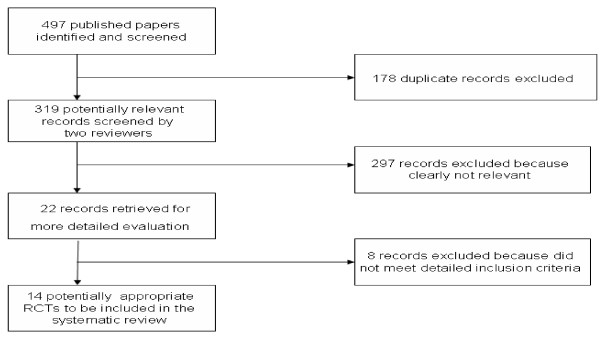
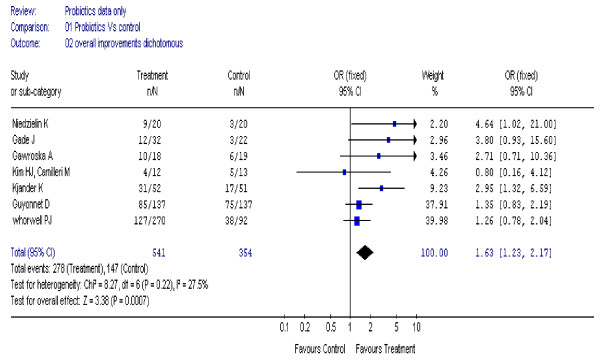
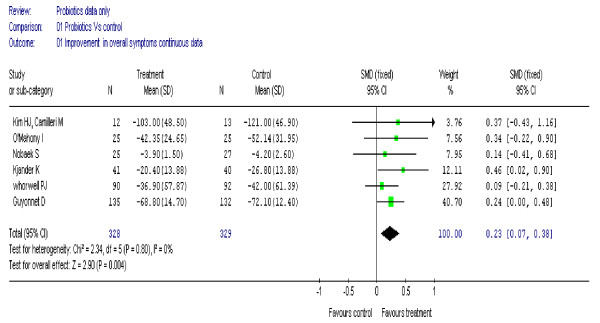
BACKGROUND: Irritable Bowel Syndrome (IBS) is a common chronic gastrointestinal disorder and the evidence for efficacy of most drug therapies in the treatment of IBS is weak. A popular alternative is probiotics, which have been used in several conditions. including IBS. Probiotics are live microbial food supplements.The aim of this systematic review and meta-analysis of randomized trials study was to evaluate the efficacy of probiotics in alleviating symptoms in patients with irritable bowel syndrome. We searched Ovid versions of MEDLINE (1950-2007), EMBASE (1980-2007), CINAHL (1982-2007), AMED (1985-2007), the Cochrane library and hand searched retrieved papers. RESULTS: We identified 14 randomized placebo controlled trials. Combined data suggested a modest improvement in overall symptoms after several weeks of treatment: for dichotomous data from seven trials the overall Odds Ratio (OR) was 1.6 (95% CI, 1.2 to 2.2); for continuous data from six trials the standardised mean difference (SMD) was 0.23 (95% CI, 0.07 to 0.38).For individual symptoms the results differed between the pooled dichotomous and pooled continuous data. Trials varied in relation to the length of treatment (4-26 weeks), dose, organisms and strengths of probiotics used. CONCLUSION: Probiotics may have a role in alleviating some of the symptoms of IBS, a condition for which currently evidence of efficacy of drug therapies is weak. However, as IBS is a condition that is chronic and usually intermittent longer term trials are recommended. Such research should focus on the type, optimal dose of probiotics and the subgroups of patients who are likely to benefit the most.
Overview
The claims and statistics of this paper haven’t been checked yet.
Free: it reads the open-access text and checks the first 5 claims that cite a source we can check. Create a free account to check every claim.
Integrity signals
Registry
Cites
Statistics
Figures
Verification
Claims the paper makes
The claims and statistics of this paper haven’t been checked yet.
Free: it reads the open-access text and checks the first 5 claims that cite a source we can check. Create a free account to check every claim.
Claims other papers make about this one
Each is checked against this paper’s own text: does it say what the citing paper says it does?
The cited source says what the claim attributes to it.
In the citing paper
“Based on the international consensus and existing evidence, probiotics are beneficial in improving overall symptoms in patients with IBS [29,30,31,32,33,34,35], but there are still contradictory reports on improvements in specific symptoms [36,37,38].”
In the citing paper
“Several systematic reviews and meta-analyses suggest that modulation of intestinal microbiota with probiotics may improve some of the symptoms of IBS (22, 79, 110, 147, 148).”
From Intestinal microbiota and immune function in the pathogenesis of irritable bowel syndrome (2013) · cites this paper as [79]
Self-check
Percentages, sums and reported differences re-computed from the paper’s own numbers.
The self-check needs the paper’s full text.
Citations
Cites
Moher, D., Cook, D. J., Eastwood, S., Olkin, I., Rennie, D., & Stroup, D. F. (1999) · The Lancet · doi:10.1016/s0140-6736(99)04149-5 · Cited by 4,826
The rand 36‐item health survey 1.0
Hays, R. D., Sherbourne, C. D., & Mazel, R. M. (1993) · Health Economics · doi:10.1002/hec.4730020305 · Cited by 2,884
O’Mahony, L., McCarthy, J., Kelly, P., Hurley, G., Luo, F., Chen, K., O’Sullivan, G. C., Kiely, B., Collins, J. K., Shanahan, F., et al. (2005) · Gastroenterology · doi:10.1053/j.gastro.2004.11.050 · Cited by 1,448
Whorwell, P. J., Altringer, L., Morel, J., Bond, Y., Charbonneau, D., O'Mahony, L., Kiely, B., Shanahan, F., & Quigley, E. M. M. (2006) · The American Journal of Gastroenterology · doi:10.1111/j.1572-0241.2006.00734.x · Cited by 799 · cited 10×
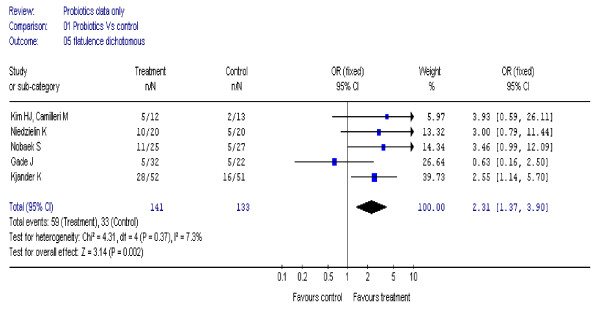
“Using continuous data in five studies [21-23,26,30] (388 participants), there was no statistically significant improvement in symptoms of flatulence, SMD 0.”
BackgroundMethodInfluentialProbiotics in prevention of antibiotic associated diarrhoea: meta-analysis
D'Souza, A. L., Rajkumar, C., Cooke, J., & Bulpitt, C. J. (2002) · BMJ · doi:10.1136/bmj.324.7350.1361 · Cited by 664 · cited 2×
“Probiotics have been used previously in different conditions [10,11].”
BackgroundNobaek, S., Johansson, M.-L., Molin, G., Ahrné, S., & Jeppsson, B. (2000) · American Journal of Gastroenterology · doi:10.1111/j.1572-0241.2000.02015.x · Cited by 653 · cited 8×
“Five studies [18,21,22,24,26] (274 participants) reported a significant improvement in symptoms of flatulence, OR 2.”
BackgroundInfluentialIrritable bowel syndrome: A technical review for practice guideline development
Drossman, D., Whitehead, W., & Camilleri, M. (1997) · Gastroenterology · doi:10.1053/gast.1997.v112.agast972120 · Cited by 566 · cited 1×
“In the West, about 15% of the population is affected at some time during their life, and it is more common in females [2].”
BackgroundNiedzielin, K., Kordecki, H., & Birkenfeld, B. (2001) · European Journal of Gastroenterology & Hepatology · doi:10.1097/00042737-200110000-00004 · Cited by 506 · cited 7×
“Five studies [18,21,22, 24 ,26] (274 participants) reported a significant improvement in symptoms of flatulence, OR 2.31 (95%CI, 1.37 to 3.9), I2 = 7% (figure 5). Using continuous data in five studies [21-23,26,30] (388 participants), there was no statistically significant improvement in symptoms of flatulence, SMD 0.…”
BackgroundInfluentialKim, H. J., Camilleri, M., Mckinzie, S., Lempke, M. B., Burton, D. D., Thomforde, G. M., & Zinsmeister, A. R. (2003) · Alimentary Pharmacology & Therapeutics · doi:10.1046/j.1365-2036.2003.01543.x · Cited by 468 · cited 10×
“There was also variation in the definition of overall symptoms in different studies: two studies included only subcategories of the IBS population (constipation – [20] or diarrhea-predominant participants [22].”
BackgroundResultInfluentialFurther validation of the IBS-QOL: a disease-specific quality-of-life questionnaire
Drossman, D. A., Patrick, D. L., Whitehead, W. E., Toner, B. B., Diamant, N. E., Hu, Y., Jia, H., & Bangdiwala, S. I. (2000) · The American Journal of Gastroenterology · doi:10.1111/j.1572-0241.2000.01941.x · Cited by 424 · cited 1×
“Whorwell [30] and O'Mahony [27] used IBS specific quality of life questionnaire [33].”
Method
Research works printed but not linked: 2
- Akehurst RL Burden of illness of irritable bowel syndrome. An interim report on behalf of Novartis Pharma AG, Basel, Switzerland 1999 Sheffield: ScHARR, University of Sheffield
- Chang L From Rome to Los Angeles – The Rome III Criteria for the Functional GI Disorders Medscape 2006 http://www.romecriteria.org/pdfs/RomeCritieraLaunch.pdf
Cited by
Hill (2014) · doi:10.1038/nrgastro.2014.66 · Cited by 9,592
“62 66 That the totality of evidence must be”
Intestinal permeability – a new target for disease prevention and therapy
Bischoff, S. C., Barbara, G., Buurman, W., Ockhuizen, T., Schulzke, J.-D., Serino, M., Tilg, H., Watson, A., & Wells, J. M. (2014) · BMC Gastroenterology · doi:10.1186/s12876-014-0189-7 · Cited by 1,755
“Possibly, the loss of particular TJ proteins such as occludin is a result of increased proteasome-mediated degradation observed in IBS triggered by low-grade inflammation and resulting in increased intestinal permeability [196].”
ResultInfluentialKelly, J. R., Kennedy, P. J., Cryan, J. F., Dinan, T. G., Clarke, G., & Hyland, N. P. (2015) · Frontiers in Cellular Neuroscience · doi:10.3389/fncel.2015.00392 · Cited by 1,110
“A number of probiotics and commensal organisms, primarily lactic acid bacteria, have been shown to ameliorate certain IBS symptoms (Hoveyda et al., 2009; Clarke et al., 2012; Ortiz-Lucas et al., 2013; Yoon et al., 2014; Didari et al., 2015).”
BackgroundIntestinal microbiota in functional bowel disorders: a Rome foundation report
Simrén, M., Barbara, G., Flint, H. J., Spiegel, B. M. R., Spiller, R. C., Vanner, S., Verdu, E. F., Whorwell, P. J., & Zoetendal, E. G. (2013) · Gut · doi:10.1136/gutjnl-2012-302167 · Cited by 939
Gastrointestinal microbiome signatures of pediatric patients with irritable bowel syndrome
Saulnier, D. M., Riehle, K., Mistretta, T., Diaz, M., Mandal, D., Raza, S., Weidler, E. M., Qin, X., Coarfa, C., Milosavljevic, A., et al. (2011) · Gastroenterology · doi:10.1053/j.gastro.2011.06.072 · Cited by 672
Fecal microbiota transplantation: Review and update
Wang, J.-W., Kuo, C.-H., Kuo, F.-C., Wang, Y.-K., Hsu, W.-H., Yu, F.-J., Hu, H.-M., Hsu, P.-I., Wang, J.-Y., & Wu, D.-C. (2019) · Journal of the Formosan Medical Association · doi:10.1016/j.jfma.2018.08.011 · Cited by 576
Human Microbiome in Health and Disease
Pflughoeft, K. J., & Versalovic, J. (2012) · Annual Review of Pathology: Mechanisms of Disease · doi:10.1146/annurev-pathol-011811-132421 · Cited by 529
Can probiotics modulate human disease by impacting intestinal barrier function?
Bron, P. A., Kleerebezem, M., Brummer, R.-J., Cani, P. D., Mercenier, A., MacDonald, T. T., Garcia-Ródenas, C. L., & Wells, J. M. (2017) · British Journal Of Nutrition · doi:10.1017/s0007114516004037 · Cited by 499
Brain gut microbiome interactions and functional bowel disorders
Mayer, E. A., Savidge, T., & Shulman, R. J. (2014) · Gastroenterology · doi:10.1053/j.gastro.2014.02.037 · Cited by 496
A Meta-Analysis of Probiotic Efficacy for Gastrointestinal Diseases
Ritchie, M. L., & Romanuk, T. N. (2012) · PLoS ONE · doi:10.1371/journal.pone.0034938 · Cited by 474
“In the past, it has been suggested that the treatment length that patients received the probiotic could be a factor in the treatment or prevention of disease and longer studies should be implemented [4,5].”
BackgroundResultInfluentialProbiotics, gut microbiota and health
Butel, M.-J. (2014) · Médecine et Maladies Infectieuses · doi:10.1016/j.medmal.2013.10.002 · Cited by 457
Thirty Years of Lactobacillus rhamnosus GG: A Review
Capurso, L. (2019) · Journal of Clinical Gastroenterology · doi:10.1097/mcg.0000000000001170 · Cited by 381
Dietary Polyphenol, Gut Microbiota, and Health Benefits
Wang, X., Qi, Y., & Zheng, H. (2022) · Antioxidants · doi:10.3390/antiox11061212 · Cited by 376
“Polyphenols promote the growth of beneficial microbes, such as Lactobacillus and Bifidobacterium, which are two major health beneficial probiotics and bring benefits to human health, such as improving gastrointestinal disorders, suppressing diarrhea and constipation [105], alleviating lactose intolerance [106], reliev…”
BackgroundMcKenzie, Y. A., Bowyer, R. K., Leach, H., Gulia, P., Horobin, J., O'Sullivan, N. A., Pettitt, C., Reeves, L. B., Seamark, L., Williams, M., et al. (2016) · Journal of Human Nutrition and Dietetics · doi:10.1111/jhn.12385 · Cited by 353
A role for the gut microbiota in IBS
Collins, S. M. (2014) · Nature Reviews Gastroenterology & Hepatology · doi:10.1038/nrgastro.2014.40 · Cited by 351
'Gut health': a new objective in medicine?
Bischoff, S. C. (2011) · BMC Medicine · doi:10.1186/1741-7015-9-24 · Cited by 338
“Probiotic intervention, however, still needs to be improved [120,121].”
The human gut microbiome: current knowledge, challenges, and future directions
Dave, M., Higgins, P. D., Middha, S., & Rioux, K. P. (2012) · Translational Research · doi:10.1016/j.trsl.2012.05.003 · Cited by 336
Fritscher-Ravens, A., Schuppan, D., Ellrichmann, M., Schoch, S., Röcken, C., Brasch, J., Bethge, J., Böttner, M., Klose, J., & Milla, P. J. (2014) · Gastroenterology · doi:10.1053/j.gastro.2014.07.046 · Cited by 329
Gut microbiota and gastrointestinal health: current concepts and future directions
Aziz, Q., Doré, J., Emmanuel, A., Guarner, F., & Quigley, E. M. M. (2013) · Neurogastroenterology & Motility · doi:10.1111/nmo.12046 · Cited by 280
Exercise influence on the microbiome–gut–brain axis
Dalton, A., Mermier, C., & Zuhl, M. (2019) · Gut Microbes · doi:10.1080/19490976.2018.1562268 · Cited by 251
The intestinal microbiome, probiotics and prebiotics in neurogastroenterology
Saulnier, D. M., Ringel, Y., Heyman, M. B., Foster, J. A., Bercik, P., Shulman, R. J., Versalovic, J., Verdu, E. F., Dinan, T. G., Hecht, G., et al. (2013) · Gut Microbes · doi:10.4161/gmic.22973 · Cited by 248
Prebiotics and probiotics; modifying and mining the microbiota
Quigley, E. M. M. (2010) · Pharmacological Research · doi:10.1016/j.phrs.2010.01.004 · Cited by 238
A review of dose-responses of probiotics in human studies
Ouwehand, A. C. (2017) · Beneficial Microbes · doi:10.3920/bm2016.0140 · Cited by 233
“For irritable bowel syndrome (IBS), Hoveyda et al. (2009) reviewing 14 studies on 12 probiotic products, concluded that the optimal dose remains to be determined though probiotics have a role in alleviating symptoms.”
Layer, P., Andresen, V., Pehl, C., Allescher, H., Bischoff, S., Claßen, M., Enck, P., Frieling, T., Haag, S., Holtmann, G., et al. (2011) · Zeitschrift für Gastroenterologie · doi:10.1055/s-0029-1245976 · Cited by 230
Irritable Bowel Syndrome, Gut Microbiota and Probiotics
Lee, B. J., & Bak, Y.-T. (2011) · Journal of Neurogastroenterology and Motility · doi:10.5056/jnm.2011.17.3.252 · Cited by 228
Ulcerative colitis and irritable bowel patients exhibit distinct abnormalities of the gut microbiota
Noor, S. O., Ridgway, K., Scovell, L., Kemsley, E. K., Lund, E. K., Jamieson, C., Johnson, I. T., & Narbad, A. (2010) · BMC Gastroenterology · doi:10.1186/1471-230x-10-134 · Cited by 227
“For example, a short term intervention with a symbiotic preparation revealed improvement in inflammation indices in patients with active UC [16], and administration of a probiotic mixture resulted in improved IBS symptoms in a six-month controlled intervention study [17].”
BackgroundKi Cha, B., Mun Jung, S., Hwan Choi, C., Song, I.-D., Woong Lee, H., Joon Kim, H., Hyuk, J., Kyung Chang, S., Kim, K., Chung, W.-S., et al. (2012) · Journal of Clinical Gastroenterology · doi:10.1097/mcg.0b013e31823712b1 · Cited by 216
“Two recent meta-analyses have suggested that probiotics may be associated with improvement in IBS symptoms.(15,16) In this study, we set out to determine the effects of a multispecies probiotic mixture on symptoms and changes in the composition of fecal microbiota in D-IBS.”
BackgroundClarke, G., Cryan, J. F., Dinan, T. G., & Quigley, E. M. (2012) · Alimentary Pharmacology & Therapeutics · doi:10.1111/j.1365-2036.2011.04965.x · Cited by 216
Grundmann, O., & Yoon, S. L. (2010) · Journal of Gastroenterology and Hepatology · doi:10.1111/j.1440-1746.2009.06120.x · Cited by 209
Evidence-based clinical practice guidelines for irritable bowel syndrome
Fukudo, S., Kaneko, H., Akiho, H., Inamori, M., Endo, Y., Okumura, T., Kanazawa, M., Kamiya, T., Sato, K., Chiba, T., et al. (2015) · Journal of Gastroenterology · doi:10.1007/s00535-014-1017-0 · Cited by 205
“yses and RCTs [68–77].”
BackgroundHorvath, A., Dziechciarz, P., & Szajewska, H. (2011) · Alimentary Pharmacology & Therapeutics · doi:10.1111/j.1365-2036.2011.04665.x · Cited by 201
Shukla, S., Shukla, A., Mehboob, S., & Guha, S. (2011) · Alimentary Pharmacology & Therapeutics · doi:10.1111/j.1365-2036.2010.04574.x · Cited by 197
Efficacy of the low FODMAP diet for treating irritable bowel syndrome: the evidence to date
Gearry, R., Skidmore, P., O'Brien, L., Wilkinson, T., & Nanayakkara, W. (2016) · Clinical and Experimental Gastroenterology · doi:10.2147/ceg.s86798 · Cited by 191
“36 However, given that each probiotic may have different characteristics, including variable effects on cytokines, host microbiota, and other potential targets, it is likely that the effects will be specific to each probiotic rather than the entire class.”
BackgroundProbiotics in the management of irritable bowel syndrome and inflammatory bowel disease
Whelan, K., & Quigley, E. M. M. (2013) · Current Opinion in Gastroenterology · doi:10.1097/mog.0b013e32835d7bba · Cited by 183
“The six systematic reviews included RCTs in children only,([21]) adults only and children or adults.([25,26])”
BackgroundProbiotics - the versatile functional food ingredients
Syngai, G. G., Gopi, R., Bharali, R., Dey, S., Lakshmanan, G. M. A., & Ahmed, G. (2015) · Journal of Food Science and Technology · doi:10.1007/s13197-015-2011-0 · Cited by 182
“38] (Hoveyda et al. 2009).”
Prebiotics and Probiotics: Their Role in the Management of Gastrointestinal Disorders in Adults
Quigley, E. M. M. (2012) · Nutrition in Clinical Practice · doi:10.1177/0884533611423926 · Cited by 175
DuPont, H. L. (2014) · Alimentary Pharmacology & Therapeutics · doi:10.1111/apt.12728 · Cited by 171
Roth, G. A., Fihn, S. D., Mokdad, A. H., Aekplakorn, W., Hasegawa, T., & Lim, S. S. (2011) · Bulletin of the World Health Organization · doi:10.2471/blt.10.079947 · Cited by 150
The effects of grape and red wine polyphenols on gut microbiota – A systematic review
Nash, V., Ranadheera, C. S., Georgousopoulou, E. N., Mellor, D. D., Panagiotakos, D. B., McKune, A. J., Kellett, J., & Naumovski, N. (2018) · Food Research International · doi:10.1016/j.foodres.2018.07.019 · Cited by 165
Evidence-based clinical practice guidelines for irritable bowel syndrome 2020
Fukudo, S., Okumura, T., Inamori, M., Okuyama, Y., Kanazawa, M., Kamiya, T., Sato, K., Shiotani, A., Naito, Y., Fujikawa, Y., et al. (2021) · Journal of Gastroenterology · doi:10.1007/s00535-020-01746-z · Cited by 163
Probiotics for weight loss: a systematic review and meta-analysis
Park, S., & Bae, J.-H. (2015) · Nutrition Research · doi:10.1016/j.nutres.2015.05.008 · Cited by 161
“To assess potential publication bias, funnel plots for each outcome were also examined [19].”
BackgroundMethodProbiotics, fibre and herbal medicinal products for functional and inflammatory bowel disorders
Currò, D., Ianiro, G., Pecere, S., Bibbò, S., & Cammarota, G. (2017) · British Journal of Pharmacology · doi:10.1111/bph.13632 · Cited by 160
“A meta-analysis by Hoveyda et al. (2009) found 14 randomized controlled trials (RCTs) of probiotics compared with placebo for IBS and showed a little amelioration of overall symptoms.”
MethodHungin, A. P. S., Mitchell, C. R., Whorwell, P., Mulligan, C., Cole, O., Agréus, L., Fracasso, P., Lionis, C., Mendive, J., Philippart de Foy, J. ‐., et al. (2018) · Alimentary Pharmacology & Therapeutics · doi:10.1111/apt.14539 · Cited by 154
Albers, R., Bourdet-Sicard, R., Braun, D., Calder, P. C., Herz, U., Lambert, C., Lenoir-Wijnkoop, I., Méheust, A., Ouwehand, A., Phothirath, P., et al. (2013) · British Journal of Nutrition · doi:10.1017/s0007114513001505 · Cited by 150
“Examples of this include the selection of children from atopic parents((43)), children in day-care centres exposed to a high infection load((44)), people complying with specific exercise regimens((18)), shift workers((45)), people suffering from irritable bowel syndrome((46)) or food intolerances((47,48)), people with…”
Sisson, G., Ayis, S., Sherwood, R. A., & Bjarnason, I. (2014) · Alimentary Pharmacology & Therapeutics · doi:10.1111/apt.12787 · Cited by 147
Disruption of the Human Gut Microbiota following Norovirus Infection
Nelson, A. M., Walk, S. T., Taube, S., Taniuchi, M., Houpt, E. R., Wobus, C. E., & Young, V. B. (2012) · PLoS ONE · doi:10.1371/journal.pone.0048224 · Cited by 127
“It is possible that specific types of microbiota disruption could predict an elevated risk of developing complications, and identify patients that may benefit from probiotic therapies available to treat microbiota disruption [41,42,43].”
BackgroundMukherjee, S., Joardar, N., Sengupta, S., & Sinha Babu, S. P. (2018) · The Journal of Nutritional Biochemistry · doi:10.1016/j.jnutbio.2018.07.010 · Cited by 124
“[279] Hoveyda N, Heneghan C, Mahtani KR, Perera R, Roberts N, Glasziou P.”
BackgroundProbiotics: progress toward novel therapies for intestinal diseases
Yan, F., & Polk, D. B. (2010) · Current Opinion in Gastroenterology · doi:10.1097/mog.0b013e328335239a · Cited by 124
Whelan, K. (2011) · Current Opinion in Clinical Nutrition and Metabolic Care · doi:10.1097/mco.0b013e32834b8082 · Cited by 120
Probiotics in digestive diseases: focus on Lactobacillus GG.
Pace, F., Pace, M., & Quartarone, G. (2015) · PubMed · Cited by 121
Probiotics and prebiotics: prospects for public health and nutritional recommendations
Sanders, M. E., Lenoir‐Wijnkoop, I., Salminen, S., Merenstein, D. J., Gibson, G. R., Petschow, B. W., Nieuwdorp, M., Tancredi, D. J., Cifelli, C. J., Jacques, P., et al. (2014) · Annals of the New York Academy of Sciences · doi:10.1111/nyas.12377 · Cited by 100
Inflammation in irritable bowel syndrome: Myth or new treatment target?
Sinagra, E., Pompei, G., Tomasello, G., Cappello, F., Morreale, G. C., Amvrosiadis, G., Rossi, F., Monte, A. I. L., Rizzo, A. G., & Raimondo, D. (2016) · World Journal of Gastroenterology · doi:10.3748/wjg.v22.i7.2242 · Cited by 120
The quest for probiotic effector molecules—Unraveling strain specificity at the molecular level
Lee, I.-C., Tomita, S., Kleerebezem, M., & Bron, P. A. (2012) · Pharmacological Research · doi:10.1016/j.phrs.2012.09.010 · Cited by 120
Intestinal microbiota and immune function in the pathogenesis of irritable bowel syndrome
Ringel, Y., & Maharshak, N. (2013) · American Journal of Physiology-Gastrointestinal and Liver Physiology · doi:10.1152/ajpgi.00207.2012 · Cited by 115
“Several systematic reviews and meta-analyses suggest that modulation of intestinal microbiota with probiotics may improve some of the symptoms of IBS (22, 79, 110, 147, 148).”
BackgroundWang, H., Gong, J., Wang, W., Long, Y., Fu, X., Fu, Y., Qian, W., & Hou, X. (2014) · PLoS ONE · doi:10.1371/journal.pone.0090153 · Cited by 103
“individual symptoms of IBS patients[11,12,13,14,15,16].”
Intestinal microbiota in pathophysiology and management of irritable bowel syndrome.
(2014) · PubMed Central · doi:10.3748/wjg.v20.i27.8886 · Cited by 106
Microbiome-Gut-Brain Axis: Probiotics and Their Association With Depression
Cepeda, M. S., Katz, E. G., & Blacketer, C. (2017) · The Journal of Neuropsychiatry and Clinical Neurosciences · doi:10.1176/appi.neuropsych.15120410 · Cited by 89
Effect of probiotic species on irritable bowel syndrome symptoms: A bring up to date meta-analysis
Ortiz-Lucas, M., Aurelio, T., Saz, P., & Sebastián, J. J. (2013) · Revista Española de Enfermedades Digestivas · doi:10.4321/s1130-01082013000100005 · Cited by 103
“(7) noted this improvement when considering dichotomous data but not when considering continuous data.”
InfluentialYuan, F., Ni, H., Asche, C. V., Kim, M., Walayat, S., & Ren, J. (2017) · Current Medical Research and Opinion · doi:10.1080/03007995.2017.1292230 · Cited by 86
Giannetti, E., Maglione, M., Alessandrella, A., Strisciuglio, C., De Giovanni, D., Campanozzi, A., Miele, E., & Staiano, A. (2017) · Journal of Clinical Gastroenterology · doi:10.1097/mcg.0000000000000528 · Cited by 102
Gut dysbiosis and irritable bowel syndrome: The potential role of probiotics
Principi, N., Cozzali, R., Farinelli, E., Brusaferro, A., & Esposito, S. (2017) · Journal of Infection · doi:10.1016/j.jinf.2017.12.013 · Cited by 103
Jensen, A. P., & Bjørnvad, C. R. (2019) · Journal of Veterinary Internal Medicine · doi:10.1111/jvim.15554 · Cited by 101
“In humanmedicine, species and strains of the genus Lactobacillus and Bifidobacterium are the most commonly used probiotics, but strains belonging to the genus Streptococcus, Bacillus, Propionibacterium, Escherichia, and Enterococcus as well as the yeast Saccharomyces are also used as probiotics.(9-27) To date, the Eur…”
McKenzie, Y. A., Thompson, J., Gulia, P., Lomer, M. C. E., & (IBS Dietetic Guideline Review Group on behalf of Gastroenterology Specialist Group of the British Dietetic Association) (2016) · Journal of Human Nutrition and Dietetics · doi:10.1111/jhn.12386 · Cited by 80
“It has been argued that meta-analysis may be superior to systematic review in the assessment of probiotic RCTs in IBS management ((25,27,30,31,33)).”
BackgroundCharbonneau, D., Gibb, R. D., & Quigley, E. M. M. (2013) · Gut Microbes · doi:10.4161/gmic.24196 · Cited by 99
Irritable bowel syndrome: Role of food in pathogenesis and management
Morcos, A. I., Dinan, T. G., & Quigley, E. M. M. (2009) · Journal of Digestive Diseases · doi:10.1111/j.1751-2980.2009.00392.x · Cited by 102
Roberts, L. M., McCahon, D., Holder, R., Wilson, S., & Hobbs, F. R. (2013) · BMC Gastroenterology · doi:10.1186/1471-230x-13-45 · Cited by 88
Szilagyi, A. (2015) · Nutrients · doi:10.3390/nu7085309 · Cited by 81
“difficile infection [53], irritable bowel syndrome [54], adjunctive treatment for ulcerative colitis [55], pediatric atopy [56], possible maternal health of pregnant women [57,58], and type 2 diabetes [59] have been found to be benefited.”
BackgroundProbiotics and irritable bowel syndrome
Dai, C. (2013) · World Journal of Gastroenterology · doi:10.3748/wjg.v19.i36.5973 · Cited by 85
Probiotic guidelines and physician practice: a cross-sectional survey and overview of the literature
Draper, K., Ley, C., & Parsonnet, J. (2017) · Beneficial Microbes · doi:10.3920/bm2016.0146 · Cited by 78
Lyra, A., Krogius-Kurikka, L., Nikkilä, J., Malinen, E., Kajander, K., Kurikka, K., Korpela, R., & Palva, A. (2010) · BMC Gastroenterology · doi:10.1186/1471-230x-10-110 · Cited by 86
“Several observations have suggested the presence of an altered GI microbiota among IBS subjects [7-13] and that probiotics may alleviate IBS symptoms [14,15] with several mechanisms of action [16].”
BackgroundKo, S.-J., Han, G., Kim, S.-K., Seo, J.-G., Chung, W.-S., Ryu, B., Kim, J., Yeo, I., Lee, B.-J., Lee, J.-M., et al. (2013) · Evidence-Based Complementary and Alternative Medicine · doi:10.1155/2013/824605 · Cited by 65
Farràs, M., Martínez-Gili, L., Portune, K. J., Arranz, S., Frost, G. S., Tondo, M., & Blanco‐Vaca, F. (2020) · Nutrients · doi:10.3390/nu12082200 · Cited by 93
Begtrup, L. M., de Muckadell, O. B. S., Kjeldsen, J., Christensen, R. D., & Jarbøl, D. E. (2013) · Scandinavian Journal of Gastroenterology · doi:10.3109/00365521.2013.825314 · Cited by 84
“It could be argued that this was rather optimistic in this population, given the observed effect sizes in metaanalyses [5,9,10].”
BackgroundResultLahner, E., Bellentani, S., Bastiani, R. D., Tosetti, C., Cicala, M., Esposito, G., Arullani, P., Annibale, B., & Study Group Primary Care in Gastroenterology of the Italian Society of Gastroenterology (2013) · United European Gastroenterology Journal · doi:10.1177/2050640613499567 · Cited by 85
Bugs and irritable bowel syndrome: The good, the bad and the ugly
Ghoshal, U. C., Park, H., & Gwee, K. (2010) · Journal of Gastroenterology and Hepatology · doi:10.1111/j.1440-1746.2009.06133.x · Cited by 88
Rogha, M., Esfahani, M. Z., & Zargarzadeh, A. H. (2014) · Gastroenterology and hepatology from bed to bench. · Cited by 93
Spiller, R., Pélerin, F., Cayzeele Decherf, A., Maudet, C., Housez, B., Cazaubiel, M., & Jüsten, P. (2016) · United European Gastroenterology Journal · doi:10.1177/2050640615602571 · Cited by 87
Can prebiotics and probiotics improve therapeutic outcomes for undernourished individuals?
Sheridan, P. O., Bindels, L. B., Saulnier, D. M. A., Reid, G., Nova, E., Holmgren, K., O’Toole, P. W., Bunn, J., Delzenne, N. M., & Scott, K. P. (2013) · Gut Microbes · doi:10.4161/gmic.27252 · Cited by 87
“This has resulted in metaanalyses averaging the efficacy results of different probiotics treatments against a specific disease.(9,92) This can generate misleading conclusions, as depending on the mechanism, the probiotic effect can be highly strain-specific.”
BackgroundMichail, S., & Kenche, H. (2011) · Probiotics and Antimicrobial Proteins · doi:10.1007/s12602-010-9059-y · Cited by 79
“Indeed, many probiotic studies suggest a favorable outcome in ameliorating symptoms of irritable bowel syndrome [10, 33, 34].”
BackgroundUnraveling the ties between irritable bowel syndrome and intestinal microbiota
Hong, S. N. (2014) · World Journal of Gastroenterology · doi:10.3748/wjg.v20.i10.2470 · Cited by 75
Brain‐Gut Axis: From Basic Understanding to Treatment of IBS and Related Disorders
Camilleri, M., & Lorenzo, C. D. (2012) · Journal of Pediatric Gastroenterology and Nutrition · doi:10.1097/mpg.0b013e31823d34c3 · Cited by 82
Sinagra, E., Morreale, G. C., Mohammadian, G., Fusco, G., Guarnotta, V., Tomasello, G., Cappello, F., Rossi, F., Amvrosiadis, G., & Raimondo, D. (2017) · World Journal of Gastroenterology · doi:10.3748/wjg.v23.i36.6593 · Cited by 81
Mazurak, N., Broelz, E., Storr, M., & Enck, P. (2015) · Journal of Neurogastroenterology and Motility · doi:10.5056/jnm15071 · Cited by 71
“Except in 2 studies,(24,26) all others pooled data and provided overall statistics and relative risk calculations.(19,20,23,25,28) One(22) did perform a systematic review instead of a meta-analysis, but never-”
Probiotics in the Management of Functional Bowel Disorders
Quigley, E. M. M. (2012) · Gastroenterology Clinics of North America · doi:10.1016/j.gtc.2012.08.005 · Cited by 77
Cayzeele-Decherf, A., Pélerin, F., Leuillet, S., Douillard, B., Housez, B., Cazaubiel, M., Jacobson, G. K., Jüsten, P., & Desreumaux, P. (2017) · World Journal of Gastroenterology · doi:10.3748/wjg.v23.i2.336 · Cited by 58
Diagnosis and management of IBS in adults.
Wilkins, T., Pepitone, C., Alex, B. K., & Schade, R. R. (2012) · PubMed · Cited by 72
Adaptation of bifidobacteria to the gastrointestinal tract and functional consequences
Sánchez, B., Ruíz, L., Gueimonde, M., Ruas‐Madiedo, P., & Margollés, A. (2012) · Pharmacological Research · doi:10.1016/j.phrs.2012.11.004 · Cited by 74
Lactobacillus reuteri DSM 17938 in the Treatment of Functional Abdominal Pain in Children: RCT Study
Jadrešin, O., Hojsak, I., Mišak, Z., Kekez, A. J., Trbojević, T., Ivković, L., & Kolaček, S. (2017) · Journal of Pediatric Gastroenterology and Nutrition · doi:10.1097/mpg.0000000000001478 · Cited by 71
Probiotics or antibiotics: future challenges in medicine
Nami, Y., Haghshenas, B., Abdullah, N., Barzegari, A., Biak, D. R. A., Rosli, R., & Khosroushahi, A. Y. (2014) · Journal of Medical Microbiology · doi:10.1099/jmm.0.078923-0 · Cited by 71
Preston, K., Krumian, R., Hattner, J., de Montigny, D., Stewart, M., & Gaddam, S. (2018) · Beneficial Microbes · doi:10.3920/bm2017.0105 · Cited by 70
Interactions of Gut Microbiota, Endotoxemia, Immune Function, and Diet in Exertional Heatstroke
Armstrong, L. E., Lee, E. C., & Armstrong, E. M. (2018) · Journal of Sports Medicine · doi:10.1155/2018/5724575 · Cited by 72
Treating irritable bowel syndrome with probiotics: the evidence
Parkes, G. C., Sanderson, J. D., & Whelan, K. (2010) · Proceedings of the Nutrition Society · doi:10.1017/s002966511000011x · Cited by 57
“More recently, there have been two systematic reviews((45,46)) and two meta-analyses((47,48)).”
BackgroundTherapeutic Effects of Lactobacillus in Treating Irritable Bowel Syndrome: A Meta-analysis
Tiequn, B., Guanqun, C., & Shuo, Z. (2015) · Internal Medicine · doi:10.2169/internalmedicine.54.2710 · Cited by 66
Review of the role of probiotics in gastrointestinal diseases in adults
Domingo, J. J. S. (2017) · Gastroenterología y Hepatología (English Edition) · doi:10.1016/j.gastre.2016.12.001 · Cited by 71
Quigley, E. M. M. (2011) · Gastroenterology Clinics of North America · doi:10.1016/j.gtc.2010.12.009 · Cited by 67
de Roos, N. M., Giezenaar, C. G. T., Rovers, J. M. P., Witteman, B. J. M., Smits, M. G., & van Hemert, S. (2015) · Beneficial Microbes · doi:10.3920/bm2015.0003 · Cited by 54
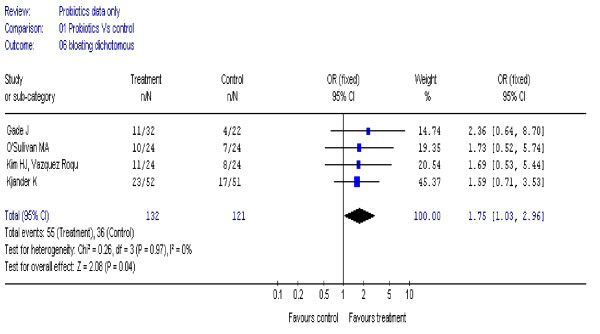
“In our study the well-known and relatively mild side effects including bloating, diarrhoea, constipation and nausea (D’Souza et al., 2002; Hoveyda et al., 2009), disappeared within three weeks of treatment.”
BackgroundFood allergy in irritable bowel syndrome: The case of non-celiac wheat sensitivity
Mansueto, P., D’Alcamo, A., Seidita, A., & Carroccio, A. (2015) · World Journal of Gastroenterology · doi:10.3748/wjg.v21.i23.7089 · Cited by 66
Study design considerations for irritable bowel syndrome clinical trials.
Miller, L. E. (2014) · PubMed Central · Cited by 65
Mari, A., Baker, F. A., Mahamid, M., Sbeit, W., & Khoury, T. (2020) · Journal of Clinical Medicine · doi:10.3390/jcm9030685 · Cited by 62
Probiotic-induced changes in the intestinal epithelium: implications in gastrointestinal disease.
Ramakrishna, B. (2009) · PubMed · Cited by 60
Metadata
- Authors
- Hoveyda, N., Heneghan, C., Mahtani, K. R., Perera, R., Roberts, N., & Glasziou, P.
- Affiliations
- University of Oxford (GB)
- Corresponding author
- Hoveyda, Nourieh
- Venue
- BMC Gastroenterology
- Published
- 2009-02-16
- Volume
- 9
- Issue
- 1
- Pages
- 15-15
- ISSN
- 1471-230X (ISSN-L)
- PMC
- PMC2656520
- OpenAlex
- W1984974981
- Cited by
- 297
- References
- 36
- Citations by year
- 2026: 6 · 2025: 8 · 2024: 3 · 2023: 6 · 2022: 7 · 2021: 4 · 2020: 6 · 2019: 15 · 2018: 9 · 2017: 17 · 2016: 24 · 2015: 23 · 2014: 36 · 2013: 31 · 2012: 39
- FWCI
- 5.11
- Type
- journal article
- Language
- en
- Open access
- gold
- doi.org
- Licence
- cc-by
- creativecommons.org/licenses/by/2.0 (tdm)
- Locations
- BMC Gastroenterology (publishedVersion, cc-by)
- PubMed Central (publishedVersion, cc-by)
- PubMed (publishedVersion)
- DOAJ (DOAJ: Directory of Open Access Journals) (submittedVersion)
- Funders
- Danone
- National Institute for Health and Care Research (ACF-2008-13-014)
- University College Cork
- Goddard Space Flight Center
- Topics
- Health Sciences › Medicine › Gastroenterology › Gastrointestinal motility and disorders
- Life Sciences › Agricultural and Biological Sciences › Food Science › Probiotics and Fermented Foods
- Life Sciences › Biochemistry, Genetics and Molecular Biology › Molecular Biology › Gut microbiota and health
- Keywords
- irritable bowel syndrome, probiotics, symptom relief, probiotic dosage, probiotic strains, complementary and alternative medicine
- MeSH terms
- Humans, Treatment Outcome, Probiotics, Irritable Bowel Syndrome
About these checks
Registry, retraction, Cites and statistics results are computed, not judged, with one exception: a printed reference that no index lists is read once by a model before it counts as a citation error. Claims are extracted by a model and kept only when their quote appears verbatim in the text; each cited source is then checked, with a model’s help, for whether it says what the claim relies on. Those verdicts can be wrong — read the claim’s quote and the cited source before relying on one.
Statistics and arithmetic are recomputed, not judged.
Confidence bands are shown only for fields calibrated on our annotated test set. None is calibrated yet, so no band is shown.
What counts as a claim ›How we measure confidence ›How we check this ›
Are you an author, or do you see a problem with this page? Request a review
Data sources
Bibliographic data: Semantic Scholar, OpenAlex, Crossref.
Contains information from the Semantic Scholar Academic Graph Datasets, made available under the ODC Attribution License (ODC-BY 1.0).
Semantic Scholar’s data is described in: Kinney, R., et al. (2023). The Semantic Scholar Open Data Platform. arXiv:2301.10140.
