

Mobile phone text messaging for promoting adherence to anti-tuberculosis treatment: a systematic review
Open accessThe DOI matches its Crossref record; 43 of the 44 references it cites were found in a registry or an index.
Abstract
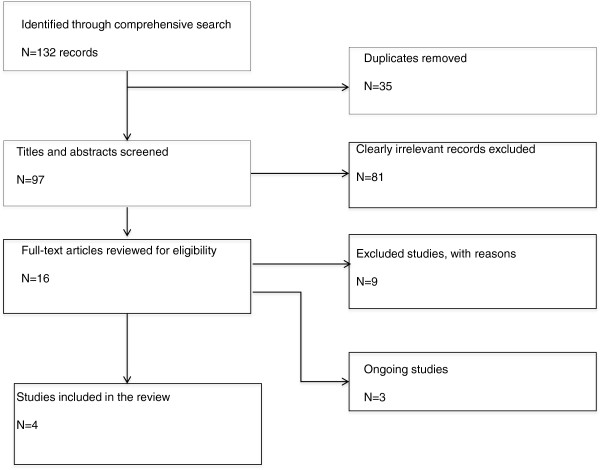
BACKGROUND: Mobile phone text messaging (SMS) has the potential to promote adherence to tuberculosis treatment. This systematic review aims to synthesize current evidence on the effectiveness of SMS interventions in improving patients' adherence to tuberculosis treatment. METHODS: We searched electronic databases (PubMed, EMBASE, Science Citation Index), reference lists of relevant articles, conference proceedings, and selected websites for eligible studies available by 15 February 2013; regardless of language or publication status. Two authors independently screened selected eligible studies, and assessed risk of bias in included studies; resolving discrepancies by discussion and consensus. RESULTS: We identified four studies that compared the outcomes of the SMS intervention group with controls. Only one of the four studies was a randomized controlled trial. This was conducted in Argentina and the SMS intervention did not significantly improve adherence to tuberculosis treatment compared to self-administration of tuberculosis treatment (risk ratio [RR] 1.49, 95% confidence intervals [CI] 0.90 to 2.42). One of the non-randomized studies, conducted in South Africa, which compared SMS reminders to directly observed therapy short course (DOTS) reported similar rates of tuberculosis cure (62.35% vs. 66.4%) and treatment success (72.94% vs. 69.4%). A second study from South Africa, utilized SMS reminders when patients delayed in opening their pill bottles and reported increased tuberculosis cure (RR 2.32, 95% CI 1.60 to 3.36) and smear conversion (RR 1.62, 95% CI 1.09 to 2.42) rates compared to DOTS. In the third non-randomized study, conducted in Kenya, use of SMS reminders increased rates of clinic attendance on scheduled days compared to standard care (RR 1.56, 95% CI 1.06 to 2.29). Using the GRADE approach, we rate the quality of the evidence as low, mainly because of the high risk of bias and heterogeneity of effects across studies. CONCLUSIONS: This systematic review indicates that there is a paucity of high-quality data on the effectiveness of SMS interventions for improving patients' adherence to tuberculosis treatment. The low quality of the current evidence implies that further studies (in particular randomized trials) on the subject are needed. In the interim, if the intervention is implemented outside research settings an impact evaluation is warranted.
Overview
The claims and statistics of this paper haven’t been checked yet.
Free: it reads the open-access text and checks the first 5 claims that cite a source we can check. Create a free account to check every claim.
Integrity signals
Registry
Cites
Statistics
Figures
Verification
Claims the paper makes
The claims and statistics of this paper haven’t been checked yet.
Free: it reads the open-access text and checks the first 5 claims that cite a source we can check. Create a free account to check every claim.
Claims other papers make about this one
Each is checked against this paper’s own text: does it say what the citing paper says it does?
The source backs part of the claim, not all of it — or backs it for a different population, condition or comparison.
In the citing paper
“A systematic review of one randomised controlled trial (RCT) in Argentina and three non-randomised controlled trials in South Africa and Kenya suggested there was low-quality evidence (due to high risk of bias and study heterogeneity) and hence inconclusive evidence on improved TB treatment adherence via mHealth interventions (78).”
From Assessing the impact of mHealth interventions in low- and middle-income countries – what has been shown to work? (2014) · cites this paper as [78]
Experimental — accuracy not yet measured
Self-check
Percentages, sums and reported differences re-computed from the paper’s own numbers.
The self-check needs the paper’s full text.
Citations
Cites
The Measurement of Observer Agreement for Categorical Data
Landis, J. R., & Koch, G. G. (1977) · Biometrics · doi:10.2307/2529310 · Cited by 81,148 · cited 1×
“The kappa statistic [24] will be used to assess agreements between the full-text screening, data extraction and risk of bias assessment by the two authors (MN and CW).”
MethodGRADE: an emerging consensus on rating quality of evidence and strength of recommendations
Guyatt, G. H., Oxman, A. D., Vist, G. E., Kunz, R., Falck-Ytter, Y., Alonso-Coello, P., & Schünemann, H. J. (2008) · BMJ · doi:10.1136/bmj.39489.470347.ad · Cited by 23,305
Global tuberculosis report (2014)
Gabbasova, L. A., & Who, E. R. E. (2014) · Cited by 12,702
GRADE guidelines: 3. Rating the quality of evidence
Balshem, H., Helfand, M., Schünemann, H. J., Oxman, A. D., Kunz, R., Brozek, J., Vist, G. E., Falck-Ytter, Y., Meerpohl, J., & Norris, S. (2011) · Journal of Clinical Epidemiology · doi:10.1016/j.jclinepi.2010.07.015 · Cited by 8,285 · cited 2×
“Finally, we used the Grading of Recommendations Assessment, Development, and Evaluation (GRADE) approach [25,26] to assess to the quality of evidence for the effectiveness of the SMS intervention.”
MethodWorld Population Prospects The 2006 Revision
Zlotnik, H. (2007) · United Nations eBooks · Cited by 7,971
Cochrane Handbook for Systematic Reviews of Interventions Version 5.0.1. The Cochrane Collaboration
Higgins, J. P. T., Green, S. R., & Higgins, J. P. T. (2008) · Cited by 7,259
What is a pilot or feasibility study? A review of current practice and editorial policy
Arain, M., Campbell, M. J., Cooper, C. L., & Lancaster, G. A. (2010) · BMC Medical Research Methodology · doi:10.1186/1471-2288-10-67 · Cited by 1,483 · cited 1×
“These studies often have numerous design issues, including small sample sizes, poor reporting, and lack of an appropriate control group [53]; Nglazi et al.”
BackgroundLester, R. T., Ritvo, P., Mills, E. J., Kariri, A., Karanja, S., Chung, M. H., Jack, W., Habyarimana, J., Sadatsafavi, M., Najafzadeh, M., et al. (2010) · The Lancet · doi:10.1016/s0140-6736(10)61997-6 · Cited by 1,278 · cited 1×
“patients can receive and reply to messages) [15-17].”
BackgroundMobile phone-based interventions for smoking cessation
Whittaker, R., McRobbie, H., Bullen, C., Rodgers, A., & Gu, Y. (2016) · Cochrane Database of Systematic Reviews · doi:10.1002/14651858.cd006611.pub4 · Cited by 1,079
Delgado-Rodríguez, M., & Llorca, J. (2004) · Journal of Epidemiology and Community Health · doi:10.1136/jech.2003.008466 · Cited by 1,064
Effectiveness of Interventions to Improve Patient Compliance: A Meta-Analysis
Roter, D. L., Hall, J. A., Merisca, R., Nordstrom, B., Cretin, D., & Svarstad, B. (1998) · Medical Care · doi:10.1097/00005650-199808000-00004 · Cited by 995 · cited 1×
“A variety of factors may impact on patient medication adherence, and thus efforts to improve medication adherence in general are more effective when they address multiple dimensions of adherence behaviours than singletarget interventions [5,6].”
BackgroundPop-Eleches, C., Thirumurthy, H., Habyarimana, J. P., Zivin, J. G., Goldstein, M. P., de Walque, D., MacKeen, L., Haberer, J., Kimaiyo, S., Sidle, J., et al. (2011) · AIDS · doi:10.1097/qad.0b013e32834380c1 · Cited by 982 · cited 2×
“Studies investigating the use of SMS interventions as an aid to promoting adherence to medication in resource-limited settings will need to take into account barriers such as low-literacy levels; language barriers; lack of access to the owner of a mobile phone given that sharing of mobile phones is common in many plac…”
BackgroundLawn, S. D., & Zumla, A. I. (2011) · The Lancet · doi:10.1016/s0140-6736(10)62173-3 · Cited by 751
Directly observed therapy for treating tuberculosis
Karumbi, J., & Garner, P. (2015) · Cochrane Database of Systematic Reviews · doi:10.1002/14651858.cd003343.pub4 · Cited by 644 · cited 2×
“Failure of patients to complete TB treatment results in infectivity, drug resistance, relapse and death [4].”
BackgroundLiang, X., Wang, Q., Yang, X., Cao, J., Chen, J., Mo, X., Huang, J., Wang, L., & Gu, D. (2011) · Diabetic Medicine · doi:10.1111/j.1464-5491.2010.03180.x · Cited by 515 · cited 1×
“Previous research has shown that SMS interventions are effective as a means to promote multiple healthy behaviors such as adherence to antiretroviral treatment [13], diabetes management and control [47], smoking cessation [48], and immunization compliance [49-51].”
Background(2006) · Globalization and Health · doi:10.1186/1744-8603-2-9 · Cited by 467
Horvath, T., Azman, H., Kennedy, G. E., & Rutherford, G. W. (2012) · Cochrane Database of Systematic Reviews · doi:10.1002/14651858.cd009756 · Cited by 428 · cited 3×
“In contrast, there is relatively more peer-reviewed literature available on the use of SMS-based platforms for improving adherence to antiretroviral treatment [13,55] A systematic review published in 2012 that included two RCTs on the use of mobile phone text messages to promote antiretroviral medication adherence fou…”
BackgroundMobile phone-based interventions for smoking cessation
Whittaker, R., McRobbie, H., Bullen, C., Borland, R., Rodgers, A., & Gu, Y. (2012) · Cochrane Database of Systematic Reviews · doi:10.1002/14651858.cd006611.pub3 · Cited by 392
Kharbanda, E. O. (2012) · JAMA · doi:10.1001/jama.2012.502 · Cited by 349 · cited 1×
“Previous research has shown that SMS interventions are effective as a means to promote multiple healthy behaviors such as adherence to antiretroviral treatment [13], diabetes management and control [47], smoking cessation [48], and immunization compliance [49-51].”
BackgroundMbuagbaw, L., Thabane, L., Ongolo-Zogo, P., Lester, R. T., Mills, E. J., Smieja, M., Dolovich, L., & Kouanfack, C. (2012) · PLoS ONE · doi:10.1371/journal.pone.0046909 · Cited by 224 · cited 2×
“aforementioned systematic review found that standardized motivational text messaging did not significantly improve adherence to antiretroviral treatment in HIV-infected patients, compared to standard care [55].”
BackgroundMahmud, N., Rodriguez, J., & Nesbit, J. (2010) · Technology and Health Care · doi:10.3233/thc-2010-0576 · Cited by 185 · cited 2×
“The study by Mahmud and colleagues [32,33] was excluded because the text messaging intervention was delivered to community healthcare workers rather than patients.”
BackgroundMobile Direct Observation Treatment for Tuberculosis Patients
Hoffman, J. A., Cunningham, J. R., Suleh, A. J., Sundsmo, A., Dekker, D. K., Vago, F., Munly, K., Igonya, E. K., & Hunt-Glassman, J. (2010) · American Journal of Preventive Medicine · doi:10.1016/j.amepre.2010.02.018 · Cited by 175 · cited 2×
“Hoffman [35,36] A pilot study in which text messages are bundled with video messages and is not possible to separate the effects of the text messages alone.”
BackgroundText4Health: Impact of Text Message Reminder–Recalls for Pediatric and Adolescent Immunizations
Stockwell, M. S., Kharbanda, E. O., Martinez, R. A., Lara, M., Vawdrey, D., Natarajan, K., & Rickert, V. I. (2012) · American Journal of Public Health · doi:10.2105/ajph.2011.300331 · Cited by 173
Directly observed therapy for treating tuberculosis
Volmink, J., & Garner, P. (2007) · Cochrane Database of Systematic Reviews · doi:10.1002/14651858.cd003343.pub3 · Cited by 142
Bosch-Capblanch, X., Abba, K., Prictor, M., & Garner, P. (2007) · Cochrane Database of Systematic Reviews · doi:10.1002/14651858.cd004808.pub3 · Cited by 141 · cited 1×
“) [6]; directly observed therapy (which involves a health care worker, community care worker or family member directly monitoring patients swallowing their TB medication) [4]; staff motivation and supervision [4]; education and counseling [7]; reminder systems and late patient tracers to help patients keep appointment…”
BackgroundPromoting adherence to treatment for tuberculosis: the importance of direct observation
Frieden, T. (2007) · Bulletin of the World Health Organization · doi:10.2471/blt.06.038927 · Cited by 140
Patient education and counselling for promoting adherence to treatment for tuberculosis
M'Imunya, J. M., Kredo, T., & Volmink, J. (2012) · Cochrane Database of Systematic Reviews · doi:10.1002/14651858.cd006591.pub2 · Cited by 131 · cited 1×
“) [6]; directly observed therapy (which involves a health care worker, community care worker or family member directly monitoring patients swallowing their TB medication) [4]; staff motivation and supervision [4]; education and counseling [7]; reminder systems and late patient tracers to help patients keep appointment…”
BackgroundPromoting adherence to treatment for tuberculosis: the importance of direct observation.
Frieden, T. R., & Sbarbaro, J. A. (2007) · PubMed · doi:10.2471/06.038927 · Cited by 125 · cited 1×
“The World Health Organization (WHO) guidelines for TB treatment recommend directly observed treatment short course (DOTS) strategy to monitor patient medication adherence [1,3].”
BackgroundThirumurthy, H., & Lester, R. (2012) · Bulletin of the World Health Organization · doi:10.2471/blt.11.099317 · Cited by 109 · cited 1×
“patients can receive and reply to messages) [15-17].”
BackgroundAhlers‐Schmidt, C. R., Chesser, A., Nguyen, T. A., Brannon, J., Hart, T. A., Williams, K. S., & Wittler, R. R. (2012) · Vaccine · doi:10.1016/j.vaccine.2012.06.058 · Cited by 82 · cited 1×
“Previous research has shown that SMS interventions are effective as a means to promote multiple healthy behaviors such as adherence to antiretroviral treatment [13], diabetes management and control [47], smoking cessation [48], and immunization compliance [49-51].”
BackgroundText messages could hasten tuberculosis drug compliance
Barclay, E. (2009) · The Lancet · doi:10.1016/s0140-6736(08)61938-8 · Cited by 79 · cited 2×
“Text-messages may also be used to notify healthcare providers that the patients have taken their medication [14,18,19].”
BackgroundMobile health to improve tuberculosis care and control: a call worth making [Review article]
Denkinger, C. M., Grenier, J., Stratis, A. K., Akkihal, A., Pant-Pai, N., & Pai, M. (2013) · The International Journal of Tuberculosis and Lung Disease · doi:10.5588/ijtld.12.0638 · Cited by 78 · cited 1×
“[54] has summarized the recent developments at the intersection of TB care and control and m-Health, including evidence from PubMed, grey literature mentioned in the reference lists of articles, and additional studies that were identified from experts in the field.”
BackgroundPerson, A. K., Blain, M. L. M., Jiang, H., Rasmussen, P. W., & Stout, J. E. (2011) · Telemedicine and e-Health · doi:10.1089/tmj.2010.0164 · Cited by 63 · cited 2×
“Studies conducted by Mohammed and colleagues [27], Person and colleagues [28,29], Kao and colleagues [30] and Batra and colleagues [31] were excluded because of the absence of an appropriate control.”
BackgroundBroomhead, S., & Mars, M. (2012) · Telemedicine and e-Health · doi:10.1089/tmj.2011.0143 · Cited by 61 · cited 3×
“Broomhead and Mars [38] conducted a retrospective analysis of a 2005 pilot study of smear positive TB patients commencing a 6-month course of anti-tuberculosis therapy in South Africa, in which health outcomes in patients given a wireless pill bottle (SIMpill®) that sends an SMS to a central server notifying it of the…”
MethodResultInfluentialMaterial incentives and enablers in the management of tuberculosis
Lutge, E. E., Wiysonge, C. S., Knight, S. E., & Volmink, J. (2012) · Cochrane Database of Systematic Reviews · doi:10.1002/14651858.cd007952.pub2 · Cited by 60 · cited 1×
“) [6]; directly observed therapy (which involves a health care worker, community care worker or family member directly monitoring patients swallowing their TB medication) [4]; staff motivation and supervision [4]; education and counseling [7]; reminder systems and late patient tracers to help patients keep appointment…”
BackgroundSelf-citationReminder systems and late patient tracers in the diagnosis and management of tuberculosis
Liu, Q., Abba, K., Alejandria, M. M., Balanag, V. M., Berba, R. P., & Lansang, M. A. D. (2008) · Cochrane Database of Systematic Reviews · doi:10.1002/14651858.cd006594.pub2 · Cited by 50
Mohammed, S., Siddiqi, O., Ali, O., Habib, A., Haqqi, F., Kausar, M., & Khan, A. J. (2012) · Journal of Telemedicine and Telecare · doi:10.1258/jtt.2012.120311 · Cited by 43 · cited 2×
“Studies conducted by Mohammed and colleagues [27], Person and colleagues [28,29], Kao and colleagues [30] and Batra and colleagues [31] were excluded because of the absence of an appropriate control.”
BackgroundMbuagbaw, L., Bonono-Momnougui, & Thabane, L. (2012) · HIV/AIDS - Research and Palliative Care · doi:10.2147/hiv.s29954 · Cited by 37
Nglazi, M. D., Bekker, L.-G., Wood, R., Hussey, G. D., & Wiysonge, C. S. (2013) · Systematic Reviews · doi:10.1186/2046-4053-2-6 · Cited by 19 · cited 1×
“We therefore conducted a review of the current best evidence for the use of mobile phone text messaging to promote patients’ adherence to TB treatment [20].”
BackgroundSelf-citationKaranja, S., Mbuagbaw, L. C. E., Ritvo, P., Law, J., Kyobutungi, C. K., Reid, G., Ram, R., Estambale, B., & Lester, R. T. (2011) · PubMed · doi:10.11604/pamj.2011.10.37.1198 · Cited by 19
Iribarren, S. (2012) · Journal of Mobile Technology in Medicine · doi:10.7309/jmtm.46 · Cited by 8 · cited 2×
“Iribarren and colleagues [40], in a pilot parallel design randomized control study among newly diagnosed TB patients commencing anti-tuberculosis treatment in Argentina, randomly assigned 19 patients to standard care (self-administration of medication) and 18 to the intervention arm.”
BackgroundPerson, A. K., Blain, M. L. M., Jiang, H., Rasmussen, P. W., & Stout, J. E. (2010) · American Journal of Respiratory and Critical Care Medicine · doi:10.1164/ajrccm-conference.2010.181.1_meetingabstracts.a3816 · Cited by 1 · cited 2×
“Studies conducted by Mohammed and colleagues [27], Person and colleagues [28,29], Kao and colleagues [30] and Batra and colleagues [31] were excluded because of the absence of an appropriate control.”
BackgroundCommunity trial of new methods in tuberculosis treatment management
Jiang, S. (2012) · doi:10.1186/isrctn46846388 · Cited by 1
Research works printed but not linked: 12
- GSMA Intelligence Global mobile penetration — subscribers versus connections 2013 https://gsmaintelligence.com/analysis/2012/10/global-mobile-penetration-subscribers-versus-connections/354
- Ahmed J Skarbek S Codlin A Khan A Mohaupt DK mHealth to improve TB care 2012 Interactive Research Development: Karachi
- Metzger P Clerizier S McCue D Murphy K Texts for Tuberculosis: Enabling Patient Advocacy 2011 http://triplehelixblog.com/2011/02/texts-for-tuberculosis-enabling-patient-advocacy/print/
- The Cochrane Collaboration Review Manager (RevMan) [Computer program]. Version 5.2 2012 Copenhagen: The Nordic Cochrane Centre
- Kao K Thimurala A Albert H Asiimwe C Kao K Thimurala A Albert H Asiimwe C Reaching the unreachable with high-tech and low-tech innovations in Uganda and Lesotho. 43rd World Conference on Ling Health of The Union, Kuala Lumpur, Malaysia 2012. Symposium abstracts, Friday 16 November 2012 Int J Tuberc Lung Dis 2012 16 12 Suppl 1 S34
- Batra S Batra S Operation ASHA: using biometrics to prevent MDR- TB. 42rd World Conference on Lung Health of The Union, Lille, France 2011 Int J Tuberc Lung Dis 2011 15 11 Suppl 3 S240 Abstract no: PC-178-29
- Mahmud N Rodriguez J Nesbit J Mobiles in Malawi: A text message-based intervention to bridge the patient-physician gap in the rural developing world Global Pulse 2010 6 1 6 20495253
- Liu X Chen R Chi J Zhang L-X Jiang S Cheng SM Use of mobile text messaging to improve tuberculosis treatment adherence in China. 43rd World Conference on Lung Health of The Union, Kuala Lumpur, Malaysia 2012 Int J Tuberc Lung Dis 2012 16 2 Suppl 1 S201 Abstract no: PC-911-15
- Hoffman J Dekker D Suleh AJ Sundsmo A Cunningham J Vago F Munly K Igonya EK Hunt-Glassman J Mobile Direct Observation Treatment (MDOT) of Tuberculosis Patients Pilot Feasibility Study in Nairobi, Kenya. Final Evaluation Report 2009 Danya International Inc http://www.danya.com/files/mdot%20final%20report.pdf
- Bridges.org Evaluation of the On Cue Compliance Service pilot: Testing the Use of SMS Reminders in the Treatment of Tuberculosis in Cape Town, South Africa 2005 Cape Town. Cape Town: Bridges.org http://healthmarketinnovations.org/sites/default/files/Evaluation%20of%20the%20On%20Cue%20Compliance%20Service%20Pilot.pdf
- Owiti P Gardner A Szkwarko D Diero L Carter EJ Mobile phone text messaging reminders to aid adherence to tuberculosis care in Eldoret, Kenya. 43rd World Conference on Lung Health of The Union, Kuala Lumpur, Malaysia 2012 Int J Tuberc Lung Dis 2012 16 12 Suppl 1 S200 Abstract no: PC-908-15
- mobiThinking: Global mobile statistics 2012 Part C Mobile marketing, advertising and messaging 2012 http://mobithinking.com/mobile-marketing-tools/latest-mobile-stats/c
Cited by
The impact of mHealth interventions: systematic review of systematic reviews
Marcolino, M. S., Oliveira, J. A. Q., D'Agostino, M., Ribeiro, A. L., Alkmim, M. B. M., & Novillo-Ortiz, D. (2018) · JMIR mHealth and uHealth · doi:10.2196/mhealth.8873 · Cited by 1,163
“mHealth is increasingly being used (1) for patient communication, monitoring, and education, (2) to reduce the burden of diseases linked with poverty, (3) to improve access to health services, clinical diagnosis, and treatment adherence, and (4) for chronic disease management [4-6].”
Mobile Text Messaging for Health: A Systematic Review of Reviews
Hall, A. K., Cole-Lewis, H., & Bernhardt, J. M. (2015) · Annual Review of Public Health · doi:10.1146/annurev-publhealth-031914-122855 · Cited by 815
“…common recommendation from review authors was the need for more rigorous study designs, including greater use of RCTs, larger and more representative sample sizes, and inclusion of different age groups, settings, contexts, and geographic locations (4, 6, 10, 11, 18, 32, 36, 38, 40, 42, 43, 47).”
BackgroundMethodResultInfluentialHall, C. S., Fottrell, E., Wilkinson, S., & Byass, P. (2014) · Global Health Action · doi:10.3402/gha.v7.25606 · Cited by 384
“A systematic review of one randomised controlled trial (RCT) in Argentina and three non-randomised controlled trials in South Africa and Kenya suggested there was low-quality evidence (due to high risk of bias and study heterogeneity) and hence inconclusive evidence on improved TB treatment adherence via mHealth inter…”
BackgroundPantoja, T., Opiyo, N., Lewin, S., Paulsen, E., Ciapponi, A., Wiysonge, C. S., Herrera, C. A., Rada, G., Peñaloza, B., Dudley, L., et al. (2017) · Cochrane Database of Systematic Reviews · doi:10.1002/14651858.cd011086.pub2 · Cited by 252
Self-citationSubbaraman, R., de Mondesert, L., Musiimenta, A., Pai, M., Mayer, K. H., Thomas, B. E., & Haberer, J. (2018) · BMJ Global Health · doi:10.1136/bmjgh-2018-001018 · Cited by 255
“Interventions in numerous African countries,(78) 79 91–94 China,(39) 95 Indonesia,(96) Thailand,(97) India(90) and Pakistan(68) have used one-way SMS reminders, or twoway SMS alone or in combination with other adherence monitoring strategies.(98) Prescheduled, automated SMS text reminders can be sent to a patient’s mo…”
Metadata
- Authors
- Nglazi, M. D., Bekker, L.-G., Wood, R., Hussey, G. D., & Wiysonge, C. S.
- Affiliations
- University of Cape Town (ZA)
- Corresponding author
- Nglazi, Mweete D
- Venue
- BMC Infectious Diseases
- Published
- 2013-12
- Volume
- 13
- Issue
- 1
- Pages
- 566-566
- ISSN
- 1471-2334 (ISSN-L)
- PMC
- PMC4219402
- OpenAlex
- W1992690625
- Cited by
- 119
- References
- 44
- Citations by year
- 2026: 3 · 2025: 3 · 2024: 3 · 2023: 6 · 2022: 8 · 2021: 8 · 2020: 12 · 2019: 14 · 2018: 16 · 2017: 10 · 2016: 7 · 2015: 18 · 2014: 10 · 2013: 1
- FWCI
- 1.44
- Type
- journal article
- Language
- en
- Open access
- gold
- doi.org
- Licence
- Locations
- BMC Infectious Diseases (publishedVersion, cc-by)
- PubMed Central (publishedVersion, cc-by)
- PubMed (publishedVersion)
- SUNScholar (Stellenbosch University) (submittedVersion)
- Funders
- International Union Against Tuberculosis and Lung Disease
- Topics
- Health Sciences › Health Professions › General Health Professions › Mobile Health and mHealth Applications
- Health Sciences › Medicine › Infectious Diseases › Tuberculosis Research and Epidemiology
- Health Sciences › Medicine › Family Practice › Medication Adherence and Compliance
- Keywords
- text messaging, SMS reminders, tuberculosis treatment adherence, tuberculosis treatment, directly observed therapy short course, tuberculosis cure, smear conversion, clinic attendance
- MeSH terms
- Argentina, Humans, Kenya, South Africa, Tuberculosis, Randomized Controlled Trials as Topic, Cell Phone, Medication Adherence, Text Messaging
About these checks
Registry, retraction, Cites and statistics results are computed, not judged, with one exception: a printed reference that no index lists is read once by a model before it counts as a citation error. Claims are extracted by a model and kept only when their quote appears verbatim in the text; each cited source is then checked, with a model’s help, for whether it says what the claim relies on. Those verdicts can be wrong — read the claim’s quote and the cited source before relying on one.
Statistics and arithmetic are recomputed, not judged.
Confidence bands are shown only for fields calibrated on our annotated test set. None is calibrated yet, so no band is shown.
What counts as a claim ›How we measure confidence ›How we check this ›
Are you an author, or do you see a problem with this page? Request a review
Data sources
Bibliographic data: Semantic Scholar, OpenAlex, Crossref.
Contains information from the Semantic Scholar Academic Graph Datasets, made available under the ODC Attribution License (ODC-BY 1.0).
Semantic Scholar’s data is described in: Kinney, R., et al. (2023). The Semantic Scholar Open Data Platform. arXiv:2301.10140.
