

Paediatric Investigators Collaborative Network on Infections in Canada (PICNIC) study of aseptic meningitis
Open accessThe DOI matches its Crossref record; 20 of the 20 references it cites were found in a registry or an index; none of the 10 sources its claims cite is checked for support yet.
Abstract
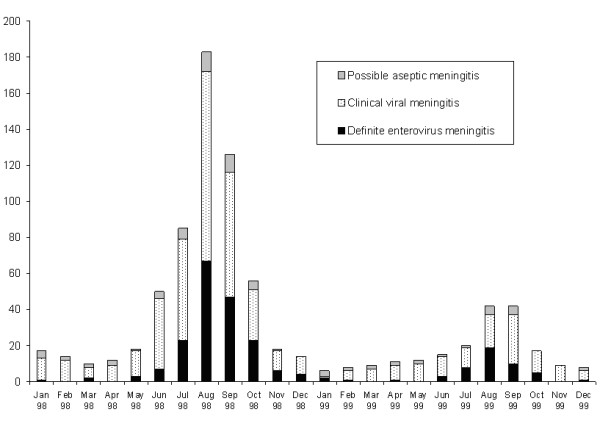
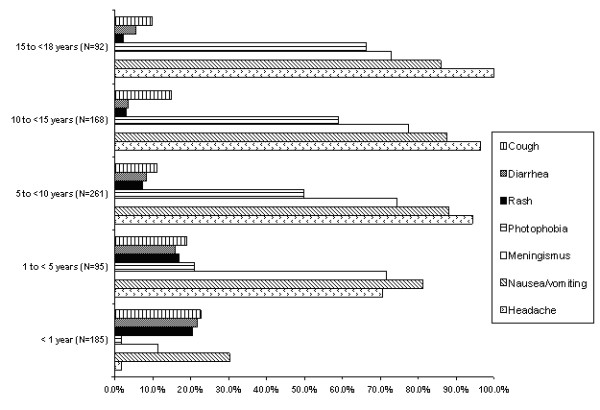
BACKGROUND: The seasonality, clinical and radiographic features and outcome of aseptic meningitis have been described for regional outbreaks but data from a wider geographic area is necessary to delineate the epidemiology of this condition. METHODS: A retrospective chart review was completed of children presenting with aseptic meningitis to eight Canadian pediatric hospitals over a two-year period. RESULTS: There were 233 cases of proven enteroviral (EV) meningitis, 495 cases of clinical aseptic meningitis and 74 cases of possible aseptic meningitis with most cases occurring July to October. Headache, vomiting, meningismus and photophobia were more common in children > or = 5 years of age, while rash, diarrhea and cough were more common in children < 5 years of age. Pleocytosis was absent in 22.3% of children < 30 days of age with proven EV meningitis. Enterovirus was isolated in cerebrospinal fluid (CSF) from 154 of 389 patients (39.6%) who had viral culture performed, and a nucleic acid amplification test for enterovirus was positive in CSF from 81 of 149 patients (54.3%). Imaging of the head by computerized tomography or magnetic resonance imaging was completed in 96 cases (19.7%) and 24 had abnormal findings that were possibly related to meningitis while none had changes that were definitely related to meningitis. There was minimal morbidity and there were no deaths. CONCLUSION: The clinical presentation of aseptic meningitis varies with the age of the child. Absence of CSF pleocytosis is common in infants < 30 days of age. Enterovirus is the predominant isolate, but no etiologic agent is identified in the majority of cases of aseptic meningitis in Canadian children.
Overview
CoChat Summary
TL;DR
This retrospective multicenter Canadian study found that aseptic meningitis in children was strongly seasonal, varied by age in presentation, and was usually due to enterovirus when an etiology was identified. Short-term outcomes were generally excellent, with minimal morbidity and no deaths, but no pathogen was identified in most cases.
Key findings
- Among 802 patients, there were 233 proven enteroviral meningitis cases, 495 clinical aseptic meningitis cases, and 74 possible cases; most cases occurred from July to October, and an Alberta outbreak in summer 1998 accounted for 52% of all cases.
- Age influenced presentation: children ≥ 5 years more often had headache, vomiting, meningismus, and photophobia (99% vs 55%), while children < 5 years more often had rash, diarrhea, or cough; mean temperature was 38.4°C in children < 5 years vs 37.8°C in those ≥ 5 years.
- In proven EV meningitis, pleocytosis was absent in 22.3% of infants < 30 days old; specifically, 32.3% of < 30-day-olds with proven EV meningitis had normal CSF WBC counts.
- Enterovirus was detected in CSF by culture in 154/389 (39.6%) tested patients and by nucleic acid amplification testing in 81/149 (54.3%); imaging was done in 96 cases (19.7%), and none had changes definitely related to meningitis. There were no deaths, and only 2/233 proven EV cases had possible sequelae.
Methods
- Retrospective chart review of children ≤ 18 years old with aseptic meningitis seen at 8 university-affiliated pediatric hospitals across Canada over 1 January 1998 to 31 December 1999.
- Cases were identified through ICD codes and classified as proven EV meningitis, meningitis with other viruses, clinical aseptic meningitis, or possible aseptic meningitis using CSF WBC thresholds, culture/NAT results, and clinician diagnosis.
- Analyses used chi-square/Fisher’s exact tests for categorical variables and Kruskal-Wallis tests for group medians.
Limitations
- The authors state the study was “not population-based,” although they believed it captured all inpatient cases at the eight pediatric sites.
- Long-term follow-up was not performed, so later sequelae were not assessed.
- Evident from the text: many patients lacked virologic testing or complete investigations, and the majority of cases had no identified etiologic agent, limiting pathogen attribution.
Model-written summary. Check it against the paper before relying on it.
Integrity signals
Registry
Cites
Statistics
Figures
Verification
Claims the paper makes
0 Valid · 0 Not valid · 6 Not checked · 43 Own results and interpretations
A result the paper reports from its own data — it cites no other source for it, so there is none to check. The quote shows it is in the paper.
In the paper
“Twenty-seven percent (43/158) of these examinations were abnormal (Table 2).”
§ Paediatric Investigators Collaborative Network on Infections in Canada (PICNIC) study of aseptic meningitis > Results > Investigations
plain- Asserted: passes — The authors put it forward as true.
- Checkable: passes — It can be checked against evidence.
- Load-bearing: unclear — It is unclear whether the paper’s conclusions depend on it.
- Based: passes — The paper gives a reason why it holds.
A result the paper reports from its own data — it cites no other source for it, so there is none to check. The quote shows it is in the paper.
In the paper
“Fourteen of the 30 CSF samples (46.7%) from patients < 30 days old and 86 of the 196 CSF samples (44.9%) from patients ≥ 30 days old with proven EV meningitis had abnormal protein (p = 0.8)”
§ Paediatric Investigators Collaborative Network on Infections in Canada (PICNIC) study of aseptic meningitis > Results > Investigations
plainn = 233- Asserted: passes — The authors put it forward as true.
- Checkable: passes — It can be checked against evidence.
- Load-bearing: unclear — It is unclear whether the paper’s conclusions depend on it.
- Based: passes — The paper gives a reason why it holds.
A result the paper reports from its own data — it cites no other source for it, so there is none to check. The quote shows it is in the paper.
In the paper
“Enteroviridae was the only family of viruses identified in CSF samples (Table 1).”
§ Paediatric Investigators Collaborative Network on Infections in Canada (PICNIC) study of aseptic meningitis > Results > Investigations
plain- Asserted: passes — The authors put it forward as true.
- Checkable: passes — It can be checked against evidence.
- Load-bearing: unclear — It is unclear whether the paper’s conclusions depend on it.
- Based: passes — The paper gives a reason why it holds.
A result the paper reports from its own data — it cites no other source for it, so there is none to check. The quote shows it is in the paper.
In the paper
“The mean temperature at presentation for children < 5 years of age was 38.4°C versus 37.8°C for those ≥ 5 years of age (P < 0.001).”
§ Paediatric Investigators Collaborative Network on Infections in Canada (PICNIC) study of aseptic meningitis > Results > Clinical presentation
plainstates an association- Asserted: passes — The authors put it forward as true.
- Checkable: passes — It can be checked against evidence.
- Load-bearing: unclear — It is unclear whether the paper’s conclusions depend on it.
- Based: passes — The paper gives a reason why it holds.
A result the paper reports from its own data — it cites no other source for it, so there is none to check. The quote shows it is in the paper.
In the paper
“Viral culture was performed on the CSF of 389 patients (48.5%) and 154 of 389 (38.7%) were positive.”
§ Paediatric Investigators Collaborative Network on Infections in Canada (PICNIC) study of aseptic meningitis > Results > Investigations
plainn = 389- Asserted: passes — The authors put it forward as true.
- Checkable: passes — It can be checked against evidence.
- Load-bearing: unclear — It is unclear whether the paper’s conclusions depend on it.
- Based: passes — The paper gives a reason why it holds.
19 more claims
Create a free account to see all 49 claims and every source verdict.
- The quote only partly states this claim. 2
- It may state two separate claims as one. 17
- Probably not a substantial claim. 10
Claims other papers make about this one
Each is checked against this paper’s own text: does it say what the citing paper says it does?
The source backs part of the claim, not all of it — or backs it for a different population, condition or comparison.
In the citing paper
“In a recent study from Canada, enterovirus was detected by PCR in 54.3% of children with aseptic meningitis having similar clinical characteristics with our patients [7].”
From Aseptic Meningitis in Children: Analysis of 506 Cases (2007) · cites this paper as [7]
Experimental — accuracy not yet measured
Citations
Cites
Principles and Practice of Infectious Diseases.
(1991) · Annals of Internal Medicine · doi:10.7326/0003-4819-114-9-818_5 · Cited by 12,025
Principles and Practice of Infectious Diseases.
(1985) · Annals of Internal Medicine · doi:10.7326/0003-4819-103-1-169_2 · Cited by 1,564
Tigertt, W. D. (1986) · The American Journal of Tropical Medicine and Hygiene · doi:10.4269/ajtmh.1986.35.3.tm0350030671b · Cited by 1,458
Neurologic Complications in Children with Enterovirus 71 Infection
Huang, C.-C., Liu, C.-C., Chang, Y.-C., Chen, C.-Y., Wang, S.-T., & Yeh, T.-F. (1999) · New England Journal of Medicine · doi:10.1056/nejm199909233411302 · Cited by 718 · cited 1×
“Enterovirus 71 has been associated with outbreaks of encephalitis, flaccid paralysis, and aseptic meningitis with a high incidence of neurological sequelae [10] and death due to cardiopulmonary failure [11], and was isolated from non-CSF sites from children in Quebec, Canada during the study period [12].”
Background(2012) · Clinical Veterinary Advisor · doi:10.1016/b978-1-4160-9979-6.00781-9 · Cited by 224
SAWYER, M. H., HOLLAND, D., AINTABLIAN, N., CONNOR, J. D., KEYSER, E. F., & WAECKER, N. J. (1994) · The Pediatric Infectious Disease Journal · doi:10.1097/00006454-199403000-00002 · Cited by 171 · cited 8×
“However, LOS ranged from 2 to 4 days at the 8 hospital sites (P 0.001).”
BackgroundMethodResultInfluentialROBINSON, C. C., WILLIS, M., MEAGHER, A., GIESEKER, K. E., ROTBART, H., & GLODÉ, M. P. (2002) · The Pediatric Infectious Disease Journal · doi:10.1097/00006454-200204000-00005 · Cited by 131 · cited 1×
“The use of nucleic acid amplification test (NAT) for enterovirus has allowed for rapid diagnosis of viral meningitis, which may decrease the use of empiric antibiotics and the length of hospital stay (LOS) [2, 4 ,5].”
MethodRorabaugh, M. L., Berlin, L. E., Heldrich, F., Roberts, K., Rosenberg, L. A., Doran, T., & Modlin, J. F. (1993) · Pediatrics · doi:10.1542/peds.92.2.206 · Cited by 111 · cited 1×
“A previous study showed that 9% of children less than 2 years of age with aseptic meningitis had coma, complex seizures, or raised intracranial pressure, but these features did not predict long-term neurological sequelae [16].”
Outcome of enterovirus 71 infections with or without stage-based management: 1998 to 2002
Chang, L., Hsia, S., Wu, C., Huang, Y., Lin, K., Fang, T.-Y., & Lin, T. (2004) · The Pediatric Infectious Disease Journal · doi:10.1097/00006454-200404000-00010 · Cited by 109
Cerebrospinal fluid values in the term neonate
AHMED, A., HICKEY, S. M., EHRETT, S., TRUJILLO, M., BRITO, F., GOTO, C., OLSEN, K., KRISHER, K., & MCCRACKEN, G. H. (1996) · The Pediatric Infectious Disease Journal · doi:10.1097/00006454-199604000-00004 · Cited by 99 · cited 1×
“Cerebrospinal protein was classified as normal if it was ≤ 0.9 grams/litre (G/L) for infants 7 ].”
BackgroundInfluential
Cited by
Enterovirus and parechovirus infection in children: a brief overview
de Crom, S. C. M., Rossen, J. W. A., van Furth, A. M., & Obihara, C. C. (2016) · European Journal of Pediatrics · doi:10.1007/s00431-016-2725-7 · Cited by 192
“seasonal pattern and the incidence is the highest in the summer and autumn [20, 21].”
BackgroundLee, B. E., & Davies, H. D. (2007) · Current Opinion in Infectious Diseases · doi:10.1097/qco.0b013e3280ad4672 · Cited by 163
Self-citationAseptic Meningitis in Children: Analysis of 506 Cases
Michos, A. G., Syriopoulou, V. P., Hadjichristodoulou, C., Daikos, G. L., Lagona, E., Douridas, P., Mostrou, G., & Theodoridou, M. (2007) · PLoS ONE · doi:10.1371/journal.pone.0000674 · Cited by 147
Aseptic Meningitis and Viral Myelitis
Irani, D. N. (2008) · Neurologic Clinics · doi:10.1016/j.ncl.2008.03.003 · Cited by 139
“EVs have been found by PCR in only about one half of CSF samples tested in large retrospective cohorts [50,51], however, raising some question about whether hospital laboratories should routinely use EV PCR for the evaluation of aseptic meningitis and at what frequency the assay should be performed.”
Archimbaud, C., Chambon, M., Bailly, J. L., Petit, I., Henquell, C., Mirand, A., Aublet‐Cuvelier, B., Ughetto, S., Beytout, J., Clavelou, P., et al. (2009) · Journal of Medical Virology · doi:10.1002/jmv.21330 · Cited by 105
King, R. L., Lorch, S. A., Cohen, D. M., Hodinka, R. L., Cohn, K. A., & Shah, S. S. (2007) · Pediatrics · doi:10.1542/peds.2007-0252 · Cited by 98
“We considered elevations in CSF white blood cell (WBC) counts in 3 ways: (1) as a continuous variable; (2) as 8 WBCs per mm3, based on literature reports suggesting that CSF WBC counts greater than this value have high sensitivity in identifying children with bacterial meningitis12,22,23; and (3) using previously publ…”
MethodTrung, N. H. D., Phuong, T. L. T., Wolbers, M., Minh, H. N. V., Thanh, V. N., Van, M. P., Thieu, N. T. V., Van, T. L., Song, D. T., Thi, P. L., et al. (2012) · PLoS ONE · doi:10.1371/journal.pone.0037825 · Cited by 100
“In Europe and North America, enteroviruses are among the most common causes of viral meningitis in children [45,46].”
BackgroundMartin, N. G., Iro, M. A., Sadarangani, M., Goldacre, R., Pollard, A. J., & Goldacre, M. J. (2016) · The Lancet Infectious Diseases · doi:10.1016/s1473-3099(16)30201-8 · Cited by 78
Infectious Etiologies of Transient Neutropenia in Previously Healthy Children
Husain, E. H., Mullah‐Ali, A., Alsharidah, S., Azab, A. F., & Adekile, A. D. (2012) · The Pediatric Infectious Disease Journal · doi:10.1097/inf.0b013e318250084a · Cited by 79
“There is one previously published report of neutropenia caused by enterovirus infection in a neonate.15 HHV6 infection has been linked with bone marrow suppression in bone marrow transplant patients16 and has been associated with neutropenia in 2 of 24 previously healthy children by Karavanaki.5 The other unique findi…”
ResultInfluentialSelf-citationSeiden, J. A., Zorc, J. J., Hodinka, R. L., & Shah, S. S. (2010) · Pediatric Emergency Care · doi:10.1097/pec.0b013e3181ce2fad · Cited by 58
“They specifically compared those infants younger than 30 days (n = 31) with those aged between 30 and 60 days (n = 19) and found that the absence of pleocytosis occurred in 32% and 21% of these patients, respectively.(8) Despite having a broader definition for CSF pleocytosis, our study cohort contained a higher propo…”
ResultVolle, R., Bailly, J.-L., Mirand, A., Pereira, B., Marque-Juillet, S., Chambon, M., Regagnon, C., Brebion, A., Henquell, C., Peigue-Lafeuille, H., et al. (2014) · The Journal of Infectious Diseases · doi:10.1093/infdis/jiu178 · Cited by 49
“Although the exact incidence of EVmeningitis is unknown, it is highest among children and young adults [27–29], 2 groups that represented 37% and 34%, respectively, of our study popu-”
Viral etiology of aseptic meningitis among children in Southern Iran
Hosseininasab, A., Alborzi, A., Ziyaeyan, M., Jamalidoust, M., Moeini, M., Pouladfar, G., Abbasian, A., & Kadivar, M. R. (2011) · Journal of Medical Virology · doi:10.1002/jmv.22056 · Cited by 45
“DOI 10.1002/jmv PCR in 54.3% of the children with aseptic meningitis [Lee et al., 2006].”
BackgroundInfluentialEchoviruses are a major cause of aseptic meningitis in infants and young children in Kuwait
Dalwai, A., Ahmad, S., & Al-Nakib, W. (2010) · Virology Journal · doi:10.1186/1743-422x-7-236 · Cited by 45
“The frequency of enteroviral AM in 92 of 387 (24%) infants and young children in Kuwait is comparable with annual surveillance data from countries such as USA, UK and some other countries [9,14,18,19] but slightly lower than that reported from other countries such as Spain and Canada [20,21].”
BackgroundResultInfluentialCharacteristics of pediatric patients with enterovirus meningitis and no cerebral fluid pleocytosis
de Crom, S. C. M., van Furth, M. A. M., Peeters, M. F., Rossen, J. W. A., & Obihara, C. C. (2012) · European Journal of Pediatrics · doi:10.1007/s00431-011-1626-z · Cited by 45
“That patients with EV meningitis and no CSF pleocytosis were younger than those with CSF pleocytosis is in support of previous studies [15, 17, 26].”
ResultTrends in the Management of Viral Meningitis at United States Children’s Hospitals
Nigrovic, L. E., Fine, A. M., Monuteaux, M. C., Shah, S. S., & Neuman, M. I. (2013) · Pediatrics · doi:10.1542/peds.2012-3077 · Cited by 43
Hudson, J. A., Broad, J., Martin, N. G., Sadarangani, M., Galal, U., Kelly, D. F., Pollard, A. J., & Kadambari, S. (2020) · Reviews in Medical Virology · doi:10.1002/rmv.2083 · Cited by 38
Adverse events following immunization: perception and evidence
Bonhoeffer, J., & Heininger, U. (2007) · Current Opinion in Infectious Diseases · doi:10.1097/qco.0b013e32811ebfb0 · Cited by 44
Cerebrospinal Fluid Enterovirus Testing in Infants 56 Days or Younger
Dewan, M., Zorc, J. J., Hodinka, R. L., & Shah, S. S. (2010) · Archives of Pediatrics & Adolescent Medicine · doi:10.1001/archpediatrics.2010.153 · Cited by 34
Clinical Prediction Rule for Distinguishing Bacterial From Aseptic Meningitis
Mintegi, S., García, S., Martín, M. J. A., Durán, I., Arana‐Arri, E., Fernandez, C. L., Benito, J., Hernández‐Bou, S., & Meningitis Group of the Spanish Society of Pediatric Emergencies (2020) · PEDIATRICS · doi:10.1542/peds.2020-1126 · Cited by 36
ASYMPTOMATIC BACTERIURIA AND PYURIA IN PREGNANCY
Rahimkhani, M., & Khavari-Daneshvar, H. (2008) · Cited by 29
Huizing, K. M. N., Swanink, C. M. A., Landstra, A. M., van Zwet, A. A., & van Setten, P. A. (2011) · The Pediatric Infectious Disease Journal · doi:10.1097/inf.0b013e31822cca1f · Cited by 29
“The current policy is to continue treatment until the results of cultures are available.(1) We studied whether the use of a rapid enterovirus molecular test in cerebrospinal fluid (CSF) significantly reduces the duration of hospitalization and the use of antibiotic therapy, thus, lowering hospital costs.”
BackgroundInfluentialBucci, S., Coltella, L., Martini, L., Santisi, A., Rose, D. U. D., Piccioni, L., Campi, F., Ronchetti, M. P., Longo, D., Lucignani, G., et al. (2022) · Frontiers in Pediatrics · doi:10.3389/fped.2022.881516 · Cited by 31
“Although CSF pleocytosis is commonly absent in infants under 30 days of age in EV-positive infants (19), its presence may be observed in about half of cases of EV meningitis (20).”
BackgroundDumaidi, K., & Al-Jawabreh, A. (2017) · PLOS ONE · doi:10.1371/journal.pone.0172357 · Cited by 25
“This high percentage of cases of HEV without pleocytosis is in congruence with other studies [24, 25], but in contradiction with others [5, 6].”
ResultNahdi, I., Boukoum, H., Abid, N., Romdane, F. B., Hammami, S., Chebel, S., Frih-Ayed, M., Guediche, M. N., Chakroun, M., Aouni, M., et al. (2011) · Journal of Medical Virology · doi:10.1002/jmv.23192 · Cited by 27
Meningitis and encephalitis in infants and children
Jan, M. M. (2012) · Saudi Medical Journal · doi:10.15537/1658-3175.5458 · Cited by 23
Enteroviral Meningitis in Neonates and Children of Mashhad, Iran
Shahroodi, M. J. G., Ghazvini, K., Sadeghi, R., & Sasan, M. S. (2016) · Jundishapur Journal of Microbiology · doi:10.5812/jjm.19955 · Cited by 21
Fortuna, D., Cárdenas, A. M., Graf, E. H., Harshyne, L. A., Hooper, D. C., Prosniak, M., Shields, J., & Curtis, M. T. (2016) · Journal of Clinical Virology · doi:10.1016/j.jcv.2016.11.007 · Cited by 23
Balasubramanian, H., Wagh, D., Rao, S. C., Keil, A. D., & McMichael, J. (2016) · Journal of Paediatrics and Child Health · doi:10.1111/jpc.13083 · Cited by 18
Cerebrospinal fluid non‐pleocytosis in pediatric enteroviral meningitis: Large‐scale review
Song, J. Y., Nam, S. O., Kim, Y. A., Kim, K. M., Lyu, S. Y., Ko, A., Kim, Y. M., Yeon, G. M., & Lee, Y. (2018) · Pediatrics International · doi:10.1111/ped.13658 · Cited by 20
Meningitis in Children: Still a Can’t-Miss Diagnosis
Skar, G. L., Flannigan, L., Latch, R. L., & Snowden, J. A. (2024) · Pediatrics in Review · doi:10.1542/pir.2023-006013 · Cited by 25
Farshadpour, F., & Taherkhani, R. (2021) · Journal of NeuroVirology · doi:10.1007/s13365-021-00973-1 · Cited by 20
Nigrovic, L. E. (2013) · Handbook of clinical neurology · doi:10.1016/b978-0-444-52910-7.00035-0 · Cited by 19
Multicenter prospective surveillance study of viral agents causing meningoencephalitis
Törün, S. H., Kaba, Ö., Yakut, N., Kadayıfçı, E. K., Kara, M., Yanartaş, M. S., Somer, A., Duramaz, B. B., Türel, Ö., Dalgıç, N., et al. (2021) · Scientific Reports · doi:10.1038/s41598-021-86687-0 · Cited by 15
Martin, N., Defres, S., Willis, L., Beckley, R., Coxon, A., Kadambari, S., Yu, L.-M., Liu, X., Galal, U., Conlin, K., et al. (2024) · Journal of Infection · doi:10.1016/j.jinf.2024.106145 · Cited by 18
Enteroviral meningitis in children in Turkey
Şensoy, G., Sel, K., Özkaya, E., Çakır, B. Ç., Vidinlisan, S., & Doğancı, L. (2009) · Open Medicine · doi:10.2478/s11536-008-0055-5 · Cited by 16
“Similarly, Lee et all [20] detected enteroviruses as the predominant pathogen in Canadian children with aseptic meningitis but no pathogen in the majority of cases, although they investigated the respiratory viruses in the samples from non-CSF sites.”
BackgroundÉpidémie estivale de méningites à entérovirus en 2005: expérience d'un service de pédiatrie générale
Dommergues, M., Harzic, M., Gobert, M.-E., Landré, C., de Truchis, A., Charara, O., & Foucaud, P. (2007) · Archives de Pédiatrie · doi:10.1016/j.arcped.2007.03.030 · Cited by 13
Initial Characteristics of Kawasaki Disease With Cerebrospinal Fluid Pleocytosis in Febrile Infants
Yeom, J. S., Park, J. S., Seo, J., et al. (2012) · Pediatric Neurology · doi:10.1016/j.pediatrneurol.2012.06.011 · Cited by 12
“Skin rash has been reported in 20% of patients <12 months with enterovirus meningitis aged [21].”
BackgroundCulture- and antigen-negative meningitis in Guatemalan children
Dueger, E. L., Asturias, E. J., & Halsey, N. A. (2008) · Revista Panamericana de Salud Pública · doi:10.1590/s1020-49892008001000004 · Cited by 9
Viral meningitis in Sudanese children: Differentiation, etiology and review of literature
Abdelrahim, N. A., Mohammed, N., Evander, M., Ahlm, C., & Fadl-Elmula, I. M. (2022) · Medicine · doi:10.1097/md.0000000000031588 · Cited by 11
“In addition, Lee et al)[66] observed normal CSF white cell counts in 22% of young infants with proven enteroviral meningitis.”
BackgroundEnterovirus Meningitis With Marked Pleocytosis
Hysinger, E. B., Mainthia, R., & Fleming, A. (2012) · Hospital Pediatrics · doi:10.1542/hpeds.2012-0008 · Cited by 9
del Valle, F. M., Calvo, C., Martínez‐Rienda, I., Cilla, A., Romero‐Gómez, M. P., Menasalvas, A. I., Reis-Iglesias, L., Rodà, D., López, M. J. P., Rabella, N., et al. (2017) · Anales de Pediatría · doi:10.1016/j.anpedi.2017.02.009 · Cited by 9
“This temporal distribution differs slightly from the distributions reported in studies conducted in other countries, where the incidence peaked in summer and fall.(8,9) We also found a biennial pattern in the circulation of HPeV-3, with a higher incidence in years 2013 and 2015 compared to 2014.”
ResultOutpatient management of children at low risk for bacterial meningitis
García, S., Echevarri, J., Arana‐Arri, E., Sota, M., Benito, J., & Mintegi, S. (2018) · Emergency Medicine Journal · doi:10.1136/emermed-2017-206834 · Cited by 10
Time trends of viral meningitis among young adults in Israel: 1978–2012
Levine, H., Mimouni, D., Zurel-Farber, A., Zahavi, A., Molina-Hazan, V., Bar‐Zeev, Y., & Huerta-Hartal, M. (2014) · European Journal of Clinical Microbiology & Infectious Diseases · doi:10.1007/s10096-014-2057-3 · Cited by 8
“Most cases are self-limited, with complete recovery within 10 days [1].”
Backgrounddel Valle, F. M., Calvo, C., Martínez‐Rienda, I., Cilla, A., Romero‐Gómez, M. P., Menasalvas, A. I., Reis-Iglesias, L., Rodà, D., Pena, M. J., Rabella, N., et al. (2017) · Anales de Pediatría (English Edition) · doi:10.1016/j.anpede.2017.02.010 · Cited by 8
Aseptic Meningitis among Children in Kuwait
Husain, E. H., Bahbahani, E., Al-Shawaf, F., El-Nabi, M. H., Shafiq, M. H., Al-Ateeqi, N., & Talib, A. A. (2008) · Medical Principles and Practice · doi:10.1159/000112965 · Cited by 5
Self-citationBacterial Meningitis in Childhood
Sadarangani, M., & Pollard, A. J. (2011) · Advances in experimental medicine and biology · doi:10.1007/978-1-4614-0204-6_16 · Cited by 7
Middleton, J., Lee, B. E., Fox, J. D., Tilley, P. A. G., & Robinson, J. L. (2008) · Journal of Medical Virology · doi:10.1002/jmv.21184 · Cited by 5
“In children, age-dependent criteria for white blood cell count (WBC) in the CSF were applied to define pleocytosis in the CSF [Lee et al., 2006].”
MethodSelf-citationWami, A. A., Hundie, G. B., Ambachew, R., Berhe, Z. G., Abrha, A., Abebe, W., Tefera, D. A., Geteneh, A., Mihret, A., & Mulu, A. (2021) · PLoS ONE · doi:10.1371/journal.pone.0258652 · Cited by 5
“Such findings were in line with other studies from South Korea [43], Palestine [30], Canada [44], and Iran [41].”
ResultVollmuth, Y., Soric, B., Beer, J., Behrends, U., Paolini, M., Blaschek, A., Meyer-Bühn, M., Klein, C., Hübner, J., Dobler, G., et al. (2026) · Infection · doi:10.1007/s15010-026-02811-0 · Cited by 3
“Aseptic meningitis of unknown etiology accounted for 58.5% of all meningitis cases, consistent with prior reports in which no causative pathogen was identified in 30–76% of children [5, 18, 19 ].”
InfluentialDifferences Between Viral Meningitis and Abusive Head Trauma
Horton, D., Burrell, T., Moffatt, M. E., Puls, H. T., Selvarangan, R., Hultman, L., & Anderst, J. D. (2022) · PEDIATRICS · doi:10.1542/peds.2021-054544 · Cited by 2
Kim, J. S., Kang, H. W., Youn, Y. M., Shim, S., Park, E. A., & Cho, S. J. (2017) · Ewha Medical Journal · doi:10.12771/emj.2017.40.3.122 · Cited by 1
“In 80% to 90% of cases of viral meningitis are caused by nonpolio enteroviruses [1].”
BackgroundInfluentialHow do I manage central nervous system infections (meningitis/encephalitis)?
Walker, A. C., Gaieski, D. F., & Johnson, N. J. (2020) · Elsevier eBooks · doi:10.1016/b978-0-323-64068-8.00054-7 · Cited by 2
Carvalho, D. B., Carolina, A., & Cancelier, L. (2007) · Cited by 1
Neuroborreliosis in Childhood Clinical, Immunological and Diagnostic Aspects
Skogman, B. H. (2008)
Álvarez, M. D., Arias, M. I. A., Alés, L. R., Isás, D. C., García, M. I. M., & Vázquez, O. M. (2011) · DOAJ (DOAJ: Directory of Open Access Journals)
Akcan, Ö. M., Kaman, A., Uysal, C., & Güner, Ş. N. (2020) · Journal of Contemporary Medicine · doi:10.16899/jcm.756560
“3% of children < 30 days of age with proven EV meningitis.[11] In a descriptive study, including 58 patients (35 neonates and 23 children) during six months (March to Seprember), it was revealed that EV PCR was positive in 37.”
BackgroundKabuga, A. I., Nejati, A., & Shahmahmoodi, S. (2021) · African Journal of Clinical and Experimental Microbiology · doi:10.4314/ajcem.v22i1.3
Etiology of viral meningitis in Aleppo-Syria: a retrospective study
Yahia, M. A. M. K., Bery, K., Alherk, M. A., & Kaddour, S. H. (2022) · International Journal of Research in Medical Sciences · doi:10.18203/2320-6012.ijrms20221576
Viral Meningitis in Sudanese Children; Differentiation, Aetiology and Review of LiteraturePreprint
Abdelrahim, N. A., Mohammed, N., Evander, M., Ahlm, C., & Fadl-Elmula, I. M. (2022) · SSRN Electronic Journal · doi:10.2139/ssrn.4180484
Sensini, A., Castronari, R., Pistoni, E., & Bistoni, F. (2014) · La Rivista Italiana della Medicina di Laboratorio - Italian Journal of Laboratory Medicine · doi:10.1007/s13631-014-0052-4
Vollmuth, Y., Soric, B., Beer, J., Behrends, U., Paolini, M., Blaschek, A., Meyer-Bühn, M., Klein, C., Hübner, J., Dobler, G., et al. (2026) · medRxiv · doi:10.64898/2026.02.15.26346341
Metadata
- Authors
- Lee, B. E., Chawla, R., Langley, J. M., Forgie, S. E., Al-Hosni, M., Baerg, K., Husain, E., Strong, J., Robinson, J. L., Allen, U., Law, B. J., Dobson, S., & Davies, H. D.
- Affiliations
- University of Alberta (CA)
- University of Calgary (CA)
- Dalhousie University (CA)
- University of Manitoba (CA)
- McGill University (CA)
- University of Saskatchewan (CA)
- University of British Columbia (CA)
- University of Toronto (CA)
- Corresponding author
- Allen, Upton
- ORCID
- Venue
- BMC Infectious Diseases
- Published
- 2006-04-10
- Volume
- 6
- Issue
- 1
- Pages
- 68-68
- ISSN
- 1471-2334 (ISSN-L)
- PMC
- PMC1458346
- OpenAlex
- W1904237056
- Semantic Scholar
- 69d7a2637d78574ad4f1b5a5e56924297f57ef95
- Cited by
- 62
- References
- 20
- Citations by year
- 2026: 2 · 2024: 2 · 2022: 5 · 2021: 4 · 2020: 3 · 2019: 1 · 2018: 2 · 2017: 4 · 2016: 5 · 2015: 1 · 2014: 3 · 2013: 2 · 2012: 5
- FWCI
- 3.32
- Type
- journal article
- Language
- en
- Open access
- gold
- doi.org
- Licence
- Locations
- BMC Infectious Diseases (publishedVersion, cc-by)
- PubMed Central (publishedVersion, cc-by)
- PubMed (publishedVersion)
- DalSpace (Dalhousie University) (publishedVersion)
- TSpace (University of Toronto) (submittedVersion)
- DOAJ (DOAJ: Directory of Open Access Journals) (submittedVersion, cc-by-sa)
- Funders
- Fondation pour la Recherche Médicale
- Topics
- Health Sciences › Medicine › Infectious Diseases › Viral Infections and Immunology Research
- Health Sciences › Medicine › Infectious Diseases › Infectious Encephalopathies and Encephalitis
- Life Sciences › Immunology and Microbiology › Microbiology › Bacterial Infections and Vaccines
- Keywords
- aseptic meningitis, enteroviral meningitis, enterovirus, cerebrospinal fluid pleocytosis, seasonal variation, pediatric infection, Canadian children
- MeSH terms
- Adolescent, Canada, Child, Child, Preschool, Disease Outbreaks, Enterovirus, Female, Humans, Infant, Male, Meningitis, Aseptic, Radiography, Retrospective Studies, Risk Factors, Seasons
About these checks
Registry, retraction, Cites and statistics results are computed, not judged, with one exception: a printed reference that no index lists is read once by a model before it counts as a citation error. Claims are extracted by a model and kept only when their quote appears verbatim in the text; each cited source is then checked, with a model’s help, for whether it says what the claim relies on. Those verdicts can be wrong — read the claim’s quote and the cited source before relying on one.
A language model drew the claims from the paper on 2026-10-11, under version 3 of the claim definition (model deepseek-v4.1-flash, prompt extract-v3).
A second model labelled each claim on 2026-10-11 (model jev-1.13-20260917, definition revision gold-guideline-v0.2).
Statistics and arithmetic are recomputed, not judged.
Confidence bands are shown only for fields calibrated on our annotated test set. None is calibrated yet, so no band is shown.
What counts as a claim ›How we measure confidence ›How we check this ›
Are you an author, or do you see a problem with this page? Request a review
Data sources
Bibliographic data: Semantic Scholar, OpenAlex, Crossref.
Contains information from the Semantic Scholar Academic Graph Datasets, made available under the ODC Attribution License (ODC-BY 1.0).
Semantic Scholar’s data is described in: Kinney, R., et al. (2023). The Semantic Scholar Open Data Platform. arXiv:2301.10140.
