

A new CYP21A1P/CYP21A2chimeric gene identified in an Italian woman suffering from classical congenital adrenal hyperplasia form
Open accessThe DOI matches its Crossref record; 25 of the 27 references it cites were found in a registry or an index.
Abstract
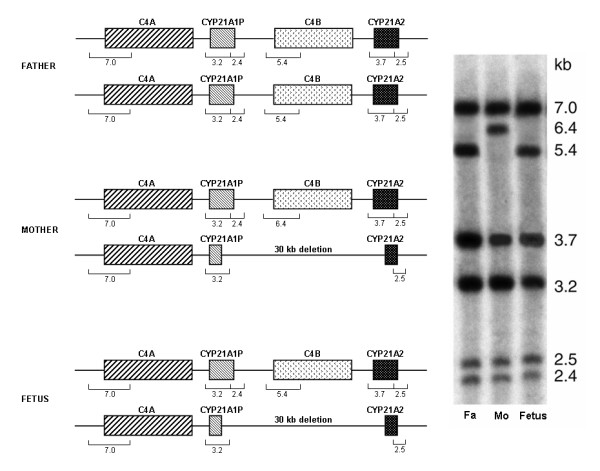
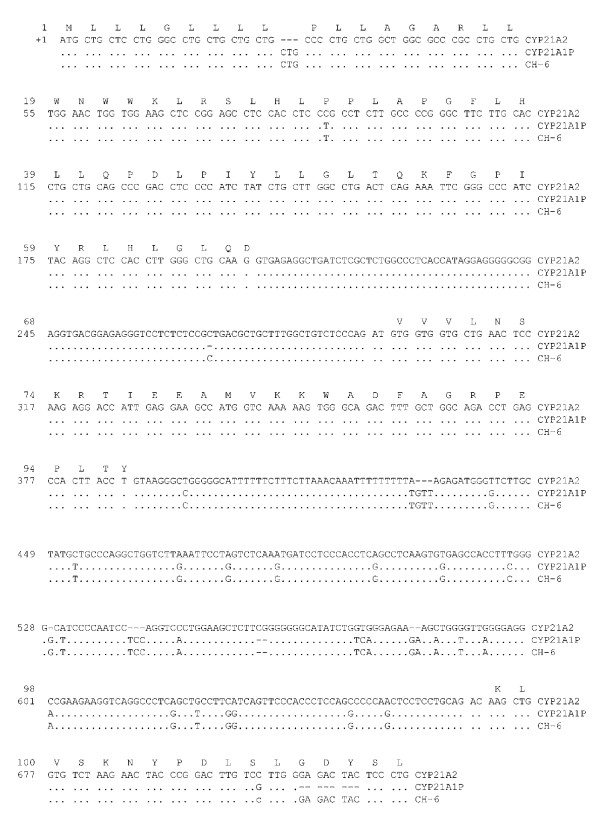
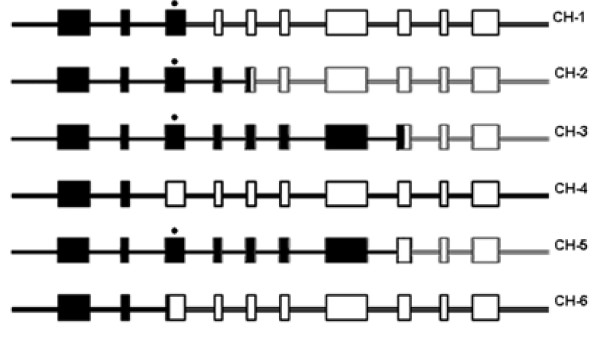
BACKGROUND: More than 90% of Congenital Adrenal Hyperplasia (CAH) cases are associated with mutations in the 21-hydroxylase gene (CYP21A2) in the HLA class III area on the short arm of chromosome 6p21.3. In this region, a 30 kb deletion produces a non functional chimeric gene with its 5' and 3' ends corresponding to CYP21A1P pseudogene and CYP21A2, respectively. To date, five different CYP21A1P/CYP21A2 chimeric genes have been found and characterized in recent studies. In this paper, we describe a new CYP21A1P/CYP21A2 chimera (CH-6) found in an Italian CAH patient. METHODS: Southern blot analysis and CYP21A2 sequencing were performed on the patient. In addition, in order to isolate the new CH-6 chimeric gene, two different strategies were used. RESULTS: The CYP21A2 sequencing analysis showed that the patient was homozygote for the g.655C/A>G mutation and heterozygote for the p.P30L missense mutation. In addition, the promoter sequence revealed the presence, in heterozygosis, of 13 SNPs generally produced by microconversion events between gene and pseudogene. Southern blot analysis showed that the woman was heterozygote for the classic 30-kb deletion producing a new CYP21A1P/CYP21A2 chimeric gene (CH-6). The hybrid junction site was located between the end of intron 2 pseudogene, after the g.656C/A>G mutation, and the beginning of exon 3, before the 8 bp deletion. Consequently, CH-6 carries three mutations: the weak pseudogene promoter region, the p.P30L and the g.655C/A>G splice mutation. CONCLUSION: We describe a new CYP21A1P/CYP21A2 chimera (CH-6), associated with the HLA-B15, DR13 haplotype, in a young Italian CAH patient.
Overview
The claims and statistics of this paper haven’t been checked yet.
Free: it reads the open-access text and checks the first 5 claims that cite a source we can check. Create a free account to check every claim.
Integrity signals
Registry
Cites
Statistics
Figures
Verification
Claims the paper makes
The claims and statistics of this paper haven’t been checked yet.
Free: it reads the open-access text and checks the first 5 claims that cite a source we can check. Create a free account to check every claim.
Claims other papers make about this one
Each is checked against this paper’s own text: does it say what the citing paper says it does?
The source backs part of the claim, not all of it — or backs it for a different population, condition or comparison.
In the citing paper
“Similarly to the neonate of the present study, CAH patients that carry in compound heterozygosity the splice IVS2-13A/C > G with the TNXA/TNXB (CAH-X CH-1) chimera generally have the most severe SW phenotype [36–38].”
From Salt-wasting congenital adrenal hyperplasia phenotype as a result of the TNXA/TNXB chimera 1 (CAH-X CH-1) and the pathogenic IVS2-13A/C > G in CYP21A2 gene (2023) · cites this paper as [37]
Experimental — accuracy not yet measured
Self-check
Percentages, sums and reported differences re-computed from the paper’s own numbers.
The self-check needs the paper’s full text.
Citations
Cites
Congenital adrenal hyperplasia due to 21-hydroxylase deficiency*
White, P. C., & Speiser, P. W. (2000) · Endocrine Reviews · doi:10.1210/edrv.21.3.0398 · Cited by 1,432
Congenital Adrenal Hyperplasia due to 21-Hydroxylase Deficiency
White, P. C. (2000) · Endocrine Reviews · doi:10.1210/er.21.3.245 · Cited by 877
Structure of human steroid 21-hydroxylase genes.
White, P. C., New, M. I., & Dupont, B. (1986) · Proceedings of the National Academy of Sciences · doi:10.1073/pnas.83.14.5111 · Cited by 569 · cited 1×
“The CYP21A2 gene and CYP21A1P pseudogene each contain 10 exons spaced over 3.1 Kb, their nucleotide sequences are 98% identical in exons and approximately 96% identical in introns [ 8 ].”
BackgroundInfluentialWhite, P. C., Grossberger, D., Onufer, B. J., Chaplin, D. D., New, M. I., Dupont, B., & Strominger, J. L. (1985) · Proceedings of the National Academy of Sciences · doi:10.1073/pnas.82.4.1089 · Cited by 490 · cited 1×
“The gene encoding 21-hydroxylase, CYP21A2, is located in the HLA class III region on the short arm of chromosome 6p21.3 [ 4 ].”
BackgroundThe structural basis of the multiple forms of human complement component C4
Tertia Belt, K., Carroll, M. C., & Porter, R. R. (1984) · Cell · doi:10.1016/0092-8674(84)90040-0 · Cited by 420 · cited 1×
“5-Kb BglII-BamHI fragment encompassing the entire CYP21A2 gene cloned in the BamHI site of bluscript SK+ plasmid [18,19].”
BackgroundWhite, P. C., New, M. I., & Dupont, B. (1984) · Proceedings of the National Academy of Sciences · doi:10.1073/pnas.81.23.7505 · Cited by 292 · cited 3×
“[16] and results very common among CAH patients of Caucasian origin.”
BackgroundResultStructure of chi hotspots of generalized recombination
Smith, G. R., Kunes, S. M., Schultz, D. W., Taylor, A., & Triman, K. L. (1981) · Cell · doi:10.1016/0092-8674(81)90333-0 · Cited by 290 · cited 1×
“The possible cause of the chimera formation is the presence of specific sequences, such as Chi-like and tandemrepetitive minisatellite consensus, which play a role in promoting genetic recombination [21].”
BackgroundBlanchong, C. A., Zhou, B., Rupert, K. L., Chung, E. K., Jones, K. N., Sotos, J. F., Zipf, W. B., Rennebohm, R. M., & Yu, C. Y. (2000) · The Journal of Experimental Medicine · doi:10.1084/jem.191.12.2183 · Cited by 187 · cited 1×
“In the Caucasian population, bimodular and monomodular RCCX organizations are present in about 69% and 17% of chromosome 6, respectively, while trimodular RCCX haplotypes have a frequency of about 14% [7].”
BackgroundYang, Z., Mendoza, A. R., Welch, T. R., Zipf, W. B., & Yu, C. Y. (1999) · Journal of Biological Chemistry · doi:10.1074/jbc.274.17.12147 · Cited by 184 · cited 1×
“The three pseudogenes, CYP21A1PTNXA and RP2, located between the two C4 loci, do not encode functional proteins [5,6].”
BackgroundTusié-Luna, M. T., & White, P. C. (1995) · Proceedings of the National Academy of Sciences · doi:10.1073/pnas.92.23.10796 · Cited by 179 · cited 2×
“In fact, the 26 or 32 Kb deletion (depending on whether C4B is the long or short gene), involving the 3' end of CYP21A1P, all of the C4B gene, and the 5' end of CYP21A2, produces a single non functional chimeric gene with its 5' and 3' ends corresponding to CYP21A1P and CYP21A2, respectively [1,11].”
Background
Cited by
Genetics of congenital adrenal hyperplasia
Krone, N., & Arlt, W. (2009) · Best Practice & Research Clinical Endocrinology & Metabolism · doi:10.1016/j.beem.2008.10.014 · Cited by 312
Single-cell transcriptomics unveils gene regulatory network plasticity
Iacono, G., Massoni-Badosa, R., & Heyn, H. (2019) · Genome Biology · doi:10.1186/s13059-019-1713-4 · Cited by 218
Baumgartner-Parzer, S., Witsch-Baumgartner, M., & Hoeppner, W. (2020) · European Journal of Human Genetics · doi:10.1038/s41431-020-0653-5 · Cited by 110
Genetics of Congenital Adrenal Hyperplasia
Hannah-Shmouni, F., Chen, W., & Merke, D. P. (2017) · Endocrinology and Metabolism Clinics of North America · doi:10.1016/j.ecl.2017.01.008 · Cited by 97
Concolino, P., & Costella, A. (2018) · Molecular Diagnosis & Therapy · doi:10.1007/s40291-018-0319-y · Cited by 96
Self-citationThe Complexities in Genotyping of Congenital Adrenal Hyperplasia: 21-Hydroxylase Deficiency
Pignatelli, D., Carvalho, B. L., Palmeiro, A., Barros, A., Guerreiro, S. G., & Macut, D. (2019) · Frontiers in Endocrinology · doi:10.3389/fendo.2019.00432 · Cited by 95
“Different chimeric CYP21A1P/CYP21A2 genes have been described in different populations, some of them in Taiwanese (45, 46, 86), and the others in patients of Caucasian origin (43, 44, 47).”
Junction Site Analysis of Chimeric CYP21A1P/CYP21A2 Genes in 21-Hydroxylase Deficiency
Chen, W., Xu, Z., Sullivan, A., Finkielstain, G. P., Van Ryzin, C., Merke, D. P., & McDonnell, N. B. (2012) · Clinical Chemistry · doi:10.1373/clinchem.2011.174037 · Cited by 86
Concolino, P., Mello, E., Zuppi, C., & Capoluongo, E. (2010) · cclm · doi:10.1515/cclm.2010.239 · Cited by 48
Self-citationChimeric CYP21A1P/CYP21A2 genes identified in Czech patients with congenital adrenal hyperplasia
Vrzalová, Z., Hrubá, Z., Hrabincová, E. S., Vrábelová, S., Votava, F., Koloušková, S., & Fajkusová, L. (2011) · European Journal of Medical Genetics · doi:10.1016/j.ejmg.2010.10.005 · Cited by 39
Genes and Pseudogenes: Complexity of the RCCX Locus and Disease
Carrozza, C., Foca, L., De Paolis, E., & Concolino, P. (2021) · Frontiers in Endocrinology · doi:10.3389/fendo.2021.709758 · Cited by 37
Self-citationMolecular diagnosis of steroid 21-hydroxylase deficiency: A practical approach
Arriba, M., & Ezquieta, B. (2022) · Frontiers in Endocrinology · doi:10.3389/fendo.2022.834549 · Cited by 30
“2 Gene Chimeras Asymmetric recombination between CYP21A2 and CYP21A2P is responsible of about 25-30% of all deficient alleles (3, 22, 23).”
BackgroundTsai, L., Cheng, C., Chuang, S.-H., & Lee, H.-H. (2011) · Analytical Biochemistry · doi:10.1016/j.ab.2011.02.016 · Cited by 30
“Genetic defects of the CYP21A2 gene in CAH may commonly lead to one of two categories of (i) small-scale conversions of the CYP21A1P sequence (commonly one of 15 mutations) and (ii) chimeras of the RCCX module, including the chimeric CYP21A1P/CYP21A2 and TNXA/TNXB genes [27–29].”
BackgroundResolving misalignment interference for NGS-based clinical diagnostics
Lee, C.-Y., Yen, H.-Y., Zhong, A. W., & Gao, H. (2020) · Human Genetics · doi:10.1007/s00439-020-02216-5 · Cited by 27
Congenital Adrenal Hyperplasia Owing to 21-Hydroxylase Deficiency
New, M. I., Lekarev, O., Mancenido, D., Parsa, A. A., & Yuen, T. (2013) · Elsevier eBooks · doi:10.1016/b978-0-12-416006-4.00003-x · Cited by 31
Cantürk, C., Baade, U., Salazar, R., Storm, N., Pörtner, R., & Höppner, W. (2011) · Clinical Chemistry · doi:10.1373/clinchem.2010.156893 · Cited by 23
Coeli, F. B., Soardi, F. C., Bernardi, R. D., de Araújo, M., Paulino, L. C., Lau, I. F., Petroli, R. J., de Lemos-Marini, S. H., Baptista, M. T., Guerra-Júnior, G., et al. (2010) · BMC Medical Genetics · doi:10.1186/1471-2350-11-104 · Cited by 23
“Novel CYP21A1P/A2 chimeric genes have been continuously described in different studies [27, 28 ].”
BackgroundGenes, pseudogenes and like genes: The case of 21-hydroxylase in Italian population
Concolino, P., Mello, E., Minucci, A., Giardina, B., & Capoluongo, E. (2013) · Clinica Chimica Acta · doi:10.1016/j.cca.2013.05.019 · Cited by 21
Self-citationNémeth, S., Riedl, S., Kriegshäuser, G., Baumgartner-Parzer, S., Concolino, P., Neocleous, V., Phylactou, L. A., Borucka-Mankiewicz, M., Onay, H., Tukun, A., et al. (2012) · Clinica Chimica Acta · doi:10.1016/j.cca.2012.09.013 · Cited by 20
Self-citationAn overview of inborn errors of metabolism manifesting with primary adrenal insufficiency
Hannah‐Shmouni, F., & Stratakis, C. A. (2018) · Reviews in Endocrine and Metabolic Disorders · doi:10.1007/s11154-018-9447-2 · Cited by 18
“Approximately 25–30% are chimeric genes due to large deletions [50, 51].”
BackgroundNeocleous, V., Fanis, P., Phylactou, L. A., & Skordis, N. (2018) · Frontiers in Endocrinology · doi:10.3389/fendo.2018.00733 · Cited by 16
CYP21A2 intronic variants causing 21-hydroxylase deficiency
Concolino, P., Rizza, R., Costella, A., Carrozza, C., Zuppi, C., & Capoluongo, E. (2017) · Metabolism · doi:10.1016/j.metabol.2017.03.003 · Cited by 18
Self-citationIdentification of CYP21A2 mutant alleles in Czech patients with 21-hydroxylase deficiency
Fajkusová (2010) · International Journal of Molecular Medicine · doi:10.3892/ijmm_00000504 · Cited by 15
Toraman, B., Ökten, A., Kalay, E., Karagüzel, G., Dinçer, T., Açıkgöz, E. G., & Karagüzel, A. (2013) · Gene · doi:10.1016/j.gene.2012.10.059 · Cited by 14
CAH-X Syndrome: Genetic and Clinical Profile
Concolino, P., & Falhammar, H. (2022) · Molecular Diagnosis & Therapy · doi:10.1007/s40291-022-00588-0 · Cited by 19
Self-citationVariations in the 3′UTR of theCYP21A2Gene in Heterozygous Females with Hyperandrogenaemia
Neocleous, V., Fanis, P., Toumba, M., Phedonos, A., Picolos, M. K., Andreou, E., Kyriakides, T. C., Tanteles, G. A., Shammas, C., Phylactou, L. A., et al. (2017) · International Journal of Endocrinology · doi:10.1155/2017/8984365 · Cited by 16
Tsai, L., Cheng, C., Hsieh, J.-P., Teng, M., & Lee, H.-H. (2009) · Clinica Chimica Acta · doi:10.1016/j.cca.2009.09.020 · Cited by 12
Variants of the CYP21A2 and CYP21A1P genes in congenital adrenal hyperplasia
Lee, H.-H. (2013) · Clinica Chimica Acta · doi:10.1016/j.cca.2012.12.030 · Cited by 12
p.H282N and p.Y191H: 2 novel CYP21A2 mutations in Italian congenital adrenal hyperplasia patients
Concolino, P., Mello, E., Patrosso, M. C., Penco, S., Zuppi, C., & Capoluongo, E. (2011) · Metabolism · doi:10.1016/j.metabol.2011.08.008 · Cited by 15
Self-citationLee, H.-H., Lee, Y., & Chao, M. (2009) · Analytical Biochemistry · doi:10.1016/j.ab.2009.11.037 · Cited by 9
“To date, at least six forms of chimeric CYP21A1P/CYP21A2 of the CYP21A1P-like gene [13] and five kinds of chimeric TNXA/TNXB [14] have been identified.”
BackgroundNeocleous, V., Fanis, P., Toumba, M., Stylianou, C., Picolos, M. K., Andreou, E., Kyriakou, A., Iasonides, M., Nicolaou, S. A., Kyriakides, T. C., et al. (2019) · Hormone and Metabolic Research · doi:10.1055/a-0957-3297 · Cited by 11
“Previous studies reported different chimeric CYP21A1P/CYP21A2 genes in Taiwanese and Italian populations [50, 51].”
ResultGao, J., & Chen, L. (2020) · Frontiers in Pediatrics · doi:10.3389/fped.2020.00464 · Cited by 6
Xu, J., & Li, P. (2019) · Clinical Biochemistry · doi:10.1016/j.clinbiochem.2019.04.008 · Cited by 5
Chang, S., & Lee, H.-H. (2010) · Genetic Testing and Molecular Biomarkers · doi:10.1089/gtmb.2010.0080 · Cited by 7
“At present, six types of chimeric CYP21A1P/ CYP21A2 genes exist in different populations (Concolino et al. , 2009).”
Kolahdouz, M., Hashemipour, M., Khanahmad, H., Rabbani, B., Salehi, M., Rabbani, A., Ansari, A., & Naseri, M. (2016) · Advanced Biomedical Research · doi:10.4103/2277-9175.178794 · Cited by 5
Fanis, P., Skordis, N., Phylactou, L. A., & Neocleous, V. (2023) · HORMONES · doi:10.1007/s42000-022-00410-w · Cited by 4
Zhang, X., Gao, Y., Lü, L., Cao, Y., Zhang, W., Wu, X., Tong, A., Chen, S., Wang, X., Mao, J., et al. (2025) · The Journal of Clinical Endocrinology & Metabolism · doi:10.1210/clinem/dgae819 · Cited by 6
Congenital adrenal hyperplasia owing to 21-hydroxylase deficiency
New, M. I., Lekarev, O., Jacob, M., Macdonald, A., Parsa, A. A., & Yuen, T. (2023) · Elsevier eBooks · doi:10.1016/b978-0-12-821424-4.00031-9 · Cited by 4
Concolino, P., Mello, E., Zuppi, C., Toscano, V., & Capoluongo, E. (2013) · Diagnostic Molecular Pathology · doi:10.1097/pdm.0b013e31825df903 · Cited by 3
Self-citationA de novo mutation in CYP21A2 gene in a case of in vitro fertilization
da Silva‐Grecco, R. L., Michelatto, D. D. P., Lincoln-de-Carvalho, C. R., Henrique, P. P., da Cunha, H. M., & de Mello, M. P. (2015) · Molecular Genetics and Metabolism Reports · doi:10.1016/j.ymgmr.2015.10.011 · Cited by 6
“The multiplex ligation-dependent probe amplification (MLPA) assay did not indicate loss of DNA discarding gene deletion but confirmed the chimeric gene.”
BackgroundInfluentialXia, Y., Yu, F., Bai, Y., Jiang, L., Shi, P., Jiang, Z., & Kong, X. (2024) · Orphanet Journal of Rare Diseases · doi:10.1186/s13023-024-03414-4 · Cited by 2
Impact of Genome Complexity of the CYP21A2 Gene on Adrenal Steroidogenesis
Chang, S. (2012) · Journal of Experimental & Clinical Medicine · doi:10.1016/j.jecm.2012.10.005 · Cited by 2
Ellaithi, M. M. H., de la Piscina, I. M., de la Hoz, A. B., de Nanclares, G. P., Alasha, M. A., Hemaida, M. A., & Castaño, L. A. (2019) · The Open Pediatric Medicine Journal · doi:10.2174/1874309901909010007 · Cited by 3
Pignatelli, D., & Pereira, S. S. (2021) · Springer eBooks · doi:10.1007/978-3-030-82591-1_2 · Cited by 1
Congenital Adrenal Hyperplasia – The Main Effect of 21-Hydroxylase Deficiency
Carvalho, B., Carvalho, F., & Carvalho, D. M. (2024) · IntechOpen eBooks · doi:10.5772/intechopen.107092 · Cited by 1
Current Aspects of Genetic Diagnosis of 21-Hydroxylase Insufficiency
Osinovskaya, N. S., Nasykhova, Y. A., Yarmolinskaya, M. I., Glavnova, O. B., & Glotov, A. S. (2021) · Doctor Ru · doi:10.31550/1727-2378-2021-20-6-73-79
“…но и множественные пато-генные варианты в цис-положении (как результат генных конверсий), а также делеции и дупликации различной про-тяженности [40], применяют метод мультиплексной лигазной реакции (multiplex ligation dependent probe amplification) с последующим разделением фрагментов на…”
Adrenal Glands - The Current Stage and New Perspectives of Diseases and Treatment
Păun, D. L., Cianci, P., & Restini, E. (2022) · IntechOpen eBooks · doi:10.5772/intechopen.102209 · Cited by 1
Xia, Y., Cui, D., Li, D., Chen, L., Chen, X., Wu, S., Mao, A., & Kong, X. (2026) · Journal of Molecular Diagnostics · doi:10.1016/j.jmoldx.2026.08.004
Metadata
- Authors
- Concolino, P., Mello, E., Minucci, A., Giardina, E., Zuppi, C., Toscano, V., & Capoluongo, E.
- Affiliations
- Università Cattolica del Sacro Cuore (IT)
- University of Rome Tor Vergata (IT)
- Azienda Ospedaliera Sant'Andrea (IT)
- Corresponding author
- Concolino, Paola
- Venue
- BMC Medical Genetics
- Published
- 2009-07-22
- Volume
- 10
- Issue
- 1
- Pages
- 72-72
- ISSN
- 1471-2350 (ISSN-L)
- PMC
- PMC2718876
- OpenAlex
- W1972604945
- Cited by
- 47
- References
- 26
- Citations by year
- 2026: 1 · 2025: 1 · 2024: 1 · 2023: 1 · 2022: 5 · 2021: 3 · 2020: 3 · 2019: 5 · 2018: 3 · 2017: 3 · 2016: 1 · 2015: 1 · 2013: 4 · 2012: 3
- FWCI
- 2.02
- Type
- journal article
- Language
- en
- Open access
- gold
- doi.org
- Licence
- Locations
- BMC Medical Genetics (publishedVersion, cc-by)
- PubMed Central (publishedVersion, cc-by)
- PubMed (publishedVersion)
- Cineca Institutional Research Information System (Tor Vergata University) (submittedVersion)
- DOAJ (DOAJ: Directory of Open Access Journals) (submittedVersion, cc-by-sa)
- IRIS Research product catalog (Sapienza University of Rome) (submittedVersion)
- Topics
- Health Sciences › Medicine › Endocrinology, Diabetes and Metabolism › Sexual Differentiation and Disorders
- Health Sciences › Medicine › Endocrinology, Diabetes and Metabolism › Adrenal Hormones and Disorders
- Life Sciences › Biochemistry, Genetics and Molecular Biology › Genetics › Genetic and Clinical Aspects of Sex Determination and Chromosomal Abnormalities
- Keywords
- congenital adrenal hyperplasia, 21-hydroxylase deficiency, HLA-B15, chromosome 6p21.3
- MeSH terms
- Adrenal Hyperplasia, Congenital, Adult, Alleles, Chimera, DNA Mutational Analysis, Female, Haplotypes, HLA-DR Antigens, Humans, Introns, Italy, Mutation, Pseudogenes, Steroid 21-Hydroxylase, Blotting, Southern, HLA-B Antigens, Polymerase Chain Reaction, White People, HLA-DR Serological Subtypes, HLA-B15 Antigen
About these checks
Registry, retraction, Cites and statistics results are computed, not judged, with one exception: a printed reference that no index lists is read once by a model before it counts as a citation error. Claims are extracted by a model and kept only when their quote appears verbatim in the text; each cited source is then checked, with a model’s help, for whether it says what the claim relies on. Those verdicts can be wrong — read the claim’s quote and the cited source before relying on one.
Statistics and arithmetic are recomputed, not judged.
Confidence bands are shown only for fields calibrated on our annotated test set. None is calibrated yet, so no band is shown.
What counts as a claim ›How we measure confidence ›How we check this ›
Are you an author, or do you see a problem with this page? Request a review
Data sources
Bibliographic data: Semantic Scholar, OpenAlex, Crossref.
Contains information from the Semantic Scholar Academic Graph Datasets, made available under the ODC Attribution License (ODC-BY 1.0).
Semantic Scholar’s data is described in: Kinney, R., et al. (2023). The Semantic Scholar Open Data Platform. arXiv:2301.10140.
