

The DOI matches its Crossref record; 114 of the 123 references it cites were found in a registry or an index.
Cytogenetic abnormalities and fragile-x syndrome in Autism Spectrum Disorder
Open accessAbstract
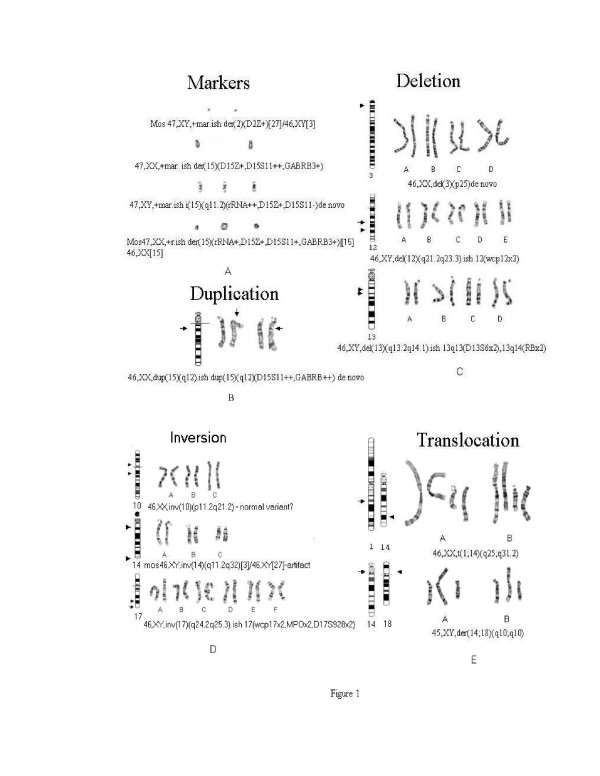
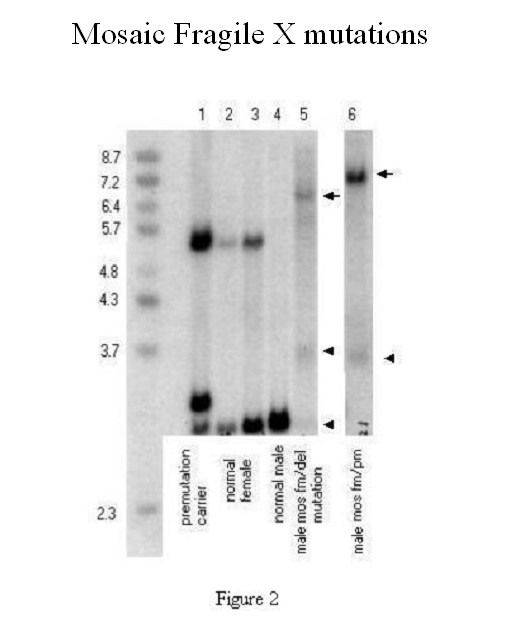
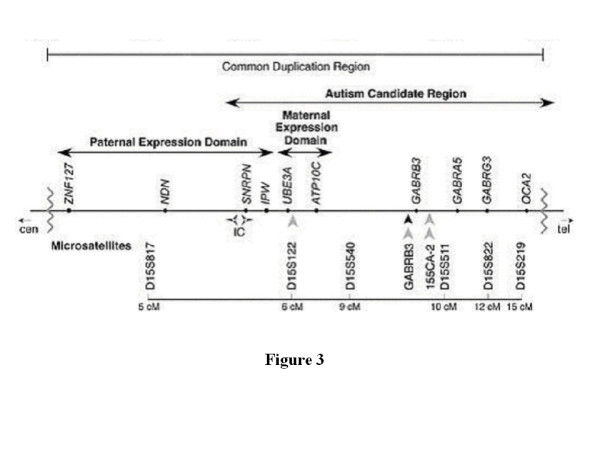
BACKGROUND: Autism is a behavioral disorder with impaired social interaction, communication, and repetitive and stereotypic behaviors. About 5-10 % of individuals with autism have 'secondary' autism in which an environmental agent, chromosome abnormality, or single gene disorder can be identified. Ninety percent have idiopathic autism and a major gene has not yet been identified. We have assessed the incidence of chromosome abnormalities and Fragile X syndrome in a population of autistic patients referred to our laboratory. METHODS: Data was analyzed from 433 patients with autistic traits tested using chromosome analysis and/or fluorescence in situ hybridization (FISH) and/or molecular testing for fragile X syndrome by Southern and PCR methods. RESULTS: The median age was 4 years. Sex ratio was 4.5 males to 1 female [354:79]. A chromosome (cs) abnormality was found in 14/421 [3.33 %] cases. The aberrations were: 4/14 [28%] supernumerary markers; 4/14 [28%] deletions; 1/14 [7%] duplication; 3/14 [21%] inversions; 2/14 [14%] translocations. FISH was performed on 23 cases for reasons other than to characterize a previously identified cytogenetic abnormality. All 23 cases were negative. Fragile-X testing by Southern blots and PCR analysis found 7/316 [2.2 %] with an abnormal result. The mutations detected were: a full mutation (fM) and abnormal methylation in 3 [43 %], mosaic mutations with partial methylation of variable clinical significance in 3 [43%] and a permutation carrier [14%]. The frequency of chromosome and fragile-X abnormalities appears to be within the range in reported surveys (cs 4.8-1.7%, FRAX 2-4%). Limitations of our retrospective study include paucity of behavioral diagnostic information, and a specific clinical criterion for testing. CONCLUSIONS: Twenty-eight percent of chromosome abnormalities detected in our study were subtle; therefore a high resolution cytogenetic study with a scrutiny of 15q11.2q13, 2q37 and Xp23.3 region should be standard practice when the indication is autism. The higher incidence of mosaic fragile-X mutations with partial methylation compared to FRAXA positive population [50% vs 15-40%] suggests that faint bands and variations in the Southern band pattern may occur in autistic patients.
Overview
The claims and statistics of this paper haven’t been checked yet.
Run the check — free, no account needed. It reads the open-access text and checks the sources it cites.
Integrity signals
Registry
Cites
Statistics
Figures
Verification
Claims the paper makes
The claims and statistics of this paper haven’t been checked yet.
Run the check — free, no account needed. It reads the open-access text and checks the sources it cites.
Claims other papers make about this one
Each is checked against this paper’s own text: does it say what the citing paper says it does?
In the citing paper
“Similarly, cytogenetic abnormalities have been reported for almost every chromosome [for a review, see Ref. (3–7) and http://projects.tcag.ca/autism/].”
From Gene × Environment Interactions in Autism Spectrum Disorders: Role of Epigenetic Mechanisms (2014) · cites this paper as [3]
Self-check
Percentages, sums and reported differences re-computed from the paper’s own numbers.
The self-check needs the paper’s full text.
Citations
Cites
Mutations of the X-linked genes encoding neuroligins NLGN3 and NLGN4 are associated with autism
Study, P. A. R. I. S., Jamain, S., Quach, H., Betancur, C., Råstam, M., Colineaux, C., Gillberg, I. C., Soderstrom, H., Giros, B., Leboyer, M., et al. (2003) · Nature Genetics · doi:10.1038/ng1136 · Cited by 1,851
Absence of expression of the FMR-1 gene in fragile X syndrome
Pieretti, M., Zhang, F., Fu, Y.-H., Warren, S. T., Oostra, B. A., Caskey, C. T., & Nelson, D. L. (1991) · Cell · doi:10.1016/0092-8674(91)90125-i · Cited by 1,476
Altered synaptic plasticity in a mouse model of fragile X mental retardation
Huber, K. M., Gallagher, S. M., Warren, S. T., & Bear, M. F. (2002) · Proceedings of the National Academy of Sciences · doi:10.1073/pnas.122205699 · Cited by 1,349
Autistic Traits in the General Population: A Twin Study
Constantino, J. N., & Todd, R. D. (2003) · Archives of General Psychiatry · doi:10.1001/archpsyc.60.5.524 · Cited by 1,317
Pervasive Developmental Disorders in preschool children
Chakrabarti, S. (2001) · JAMA · doi:10.1001/jama.285.24.3093 · Cited by 1,132
Evidence of Brain Overgrowth in the First Year of Life in Autism
Courchesne, E. (2003) · JAMA · doi:10.1001/jama.290.3.337 · Cited by 1,120
A case-control family history study of autism
Bolton, P., Macdonald, H., Pickles, A., Rios, P., Goode, S., Crowson, M., Bailey, A., & Rutter, M. (1994) · Journal of Child Psychology and Psychiatry · doi:10.1111/j.1469-7610.1994.tb02300.x · Cited by 1,094
A clinicopathological study of autism
Bailey, A. (1998) · Brain · doi:10.1093/brain/121.5.889 · Cited by 1,083
Genetics of austim: complex aetiology for a heterogeneous disorder
Folstein, S. E., & Rosen-Sheidley, B. (2001) · Nature Reviews Genetics · doi:10.1038/35103559 · Cited by 771
A Genomic Screen of Autism: Evidence for a Multilocus Etiology
Risch, N., Spiker, D., Lotspeich, L., Nouri, N., Hinds, D., Hallmayer, J., Kalaydjieva, L., McCague, P., Dimiceli, S., Pitts, T., et al. (1999) · The American Journal of Human Genetics · doi:10.1086/302497 · Cited by 684
Research works printed but not linked: 9
- Salmon B, Hallmayer J, Rogers T, Kalaydjieva L, Petersen PB, Nicholas P, Pingree C, McMahon W, Spiker D, Lotspeich L, Kraemer H, McCague P, Dimiceli S, Nouri N, Pitts T, Yang J, Hinds D, Myers RM, Risch N: Absence of linkage and linkage disequilibrium to chromosome 15q11-q13 markers in 139 multiplex families with autism. Am J Med Genet. 1999, 88: 551-6. · DOI
- Wolff DJ, Clifton K, Karr C, Charles J: Pilot assessment of the subtelomeric regions of children with autism: detection of a 2q deletion. Genet Med. 2002, 4: 10-4. 10.1097/00125817-200201000-00002. · DOI
- Lassig JP, Vachirasomtoon K, Hartzell K, Leventhal M, Courchesne E, Courchesne R, Lord C, Leventhal BL, Cook EH: Physical mapping of the serotonin 5-HT(7) receptor gene (HTR7) to chromosome 10 and pseudogene (HTR7P) to chromosome 12, and testing of linkage disequilibrium between HTR7 and autistic disorder. Am J Med Genet. 1999, 88: 472-5. 10.1002/(SICI)1096-8628(19991015)88:5<472::AID-AJMG7>3.0.CO;2-G. · DOI
- Flora Tassone, Randi Hagerman, David Iklé, Pamela Dyer, Megan Lampe, Rob Willemsen, Ben Oostra, Annette Taylor: FMRP Expression as a Potential Prognostic Indicator in Fragile X Syndrome. American Journal of Medical Genetics. 1999, 84: 250-261. · DOI
- Cohen IL, Nolin SL, Sudhalter V, Ding XH, Dobkin CS, Brown WT: Mosaicism for the FMR1 gene influences adaptive skills development in fragile X-affected males. Am J Med Genet. 1996, 64: 365-9. · DOI
- de Graaff E, de Vries BB, Willemsen R, van Hemel JO, Mohkamsing S, Oostra BA, van den Ouweland AM: The fragile X phenotype in a mosaic male with a deletion showing expression of the FMR1 protein in 28% of the cells. Am J Med Genet. 1996, 64: 302-8. 10.1002/(SICI)1096-8628(19960809)64:2<302::AID-AJMG14>3.0.CO;2-J. · DOI
- Mannermaa A, Pulkkinen L, Kajanoja E, Ryynanen M, Saarikoski S: Deletion in the FMR1 gene in a fragile-X male. Am J Med Genet. 1996, 64: 293-5. 10.1002/(SICI)1096-8628(19960809)64:2<293::AID-AJMG12>3.0.CO;2-A. · DOI
- Li SY, Chen YC, Lai TJ, Hsu CY, Wang YC: Molecular and cytogenetic analyses of autism in Taiwan. Hum Genet. 1993, 92: 441-445. 10.1007/BF00216447. · DOI
- Konstantareas MM, Homatidis S: Chromosomal abnormalities in a series of children with autistic disorder. J Autism Dev Disord. 1999, 29: 275-285. 10.1023/A:1022155201662. · DOI
Cited by
Sorted by citations
Items 201–222 of 222
Intranasal oxytocin for autism spectrum disorders (ASD)
Feng, L., Wong, J. C., Mahendran, R., Chan, E. S., & Spencer, M. D. (2014) · Cochrane Database of Systematic Reviews · doi:10.1002/14651858.cd010928
RetractedHoffman, E. J. (2012) · Springer eBooks · doi:10.1007/978-1-4419-1698-3_1329
Genomic Disorder and Gene Expression in the Developing CNS☆
Kaeser, G. E., Mirendil, H., Siddoway, B. A., Rohrback, S., Westra, C. M., & Chun, J. J. M. (2015) · Elsevier eBooks · doi:10.1016/b978-0-12-801238-3.04605-5
Conseil génétique en psychiatrie
Viot, G. (2011) · L information psychiatrique · doi:10.3917/inpsy.8707.0595
Fernandes, T. C., Custódio, R. J., Custódio, V. I. D. C., Pavaneli, P. J., & de Andrade, A. C. M. S. C. (2021) · Brazilian Journals Editora eBooks · doi:10.35587/brj.ed.0000925
Fragile X clinical features and neurobiology
Leigh, M. J., & Hagerman, R. J. (2020) · Elsevier eBooks · doi:10.1016/b978-0-12-813955-4.00022-2
Hoffman, E. J. (2021) · Springer eBooks · doi:10.1007/978-3-319-91280-6_1329
Genomic Disorder and Gene Expression in the Developing CNS
Paczkowski, C., & Chun, J. J. M. (2009) · Elsevier eBooks · doi:10.1016/b978-008045046-9.00184-4
Muellerleile, J. (2022) · Publication Server of Goethe University Frankfurt am Main (Goethe University Frankfurt) · doi:10.21248/gups.68693
Screening for Fragile X Syndrome Among Filipino Children with Autism Spectrum Disorder
Dy, A. B. C., Sumpaico-Tanchanco, L., Sy, J. C. Y., Levantino, M., & Hagerman, R. J. (2022) · Journal of Autism and Developmental Disorders · doi:10.1007/s10803-022-05707-8
Winarni, T. I., Sumekar, T. A., Sarjana, W., Hardian, H., Hagerman, R. J., & Faradz, S. M. (2022) · Intractable & Rare Diseases Research · doi:10.5582/irdr.2022.01075
The UCLA Achievement, Behavior, Cognition (ABC) Program
Martinez, R. G., Schneider, B. N., McCracken, J. T., & Peris, T. S. (2022) · Issues in clinical child psychology · doi:10.1007/978-3-031-14567-4_8
A Case Study on Autism Spectrum Disorder with Low Level Attention
-, P. S., & -, A. I. (2023) · International Journal For Multidisciplinary Research · doi:10.36948/ijfmr.2023.v05i02.2103
Chromosomal aberration detection in Iraqi children with autism
Al-Awadi, B. Q. H., Al-Aadhami, M. A. W. S., & Baqer, N. N. (2023) · Human Gene · doi:10.1016/j.humgen.2023.201229
Arum, E. R. (2023) · JELA (Journal of English Language Teaching Literature and Applied Linguistics) · doi:10.37742/jela.v5i1.103
Clinical validation of an abbreviated karyotype analysis protocol for fertility evaluation
Lee, E., Orton, K., Langton, M., Irving, J., & Evans, K. (2024) · Pathology · doi:10.1016/j.pathol.2024.04.010
Fragile X clinical features and neurobiology
Leigh, M. J., & Hagerman, R. J. (2024) · Elsevier eBooks · doi:10.1016/b978-0-443-19041-4.00036-4
Neurogenetics in the Genome Era
Chen, W.-L., Gropman, A. L., & Dobyns, W. B. (2025) · Elsevier eBooks · doi:10.1016/b978-0-443-10944-7.00048-2
Etude de gènes candidats de la région 17Q11.2 dans l'autisme et la déficience mentale
Tabagh, R. M. (2008) · theses.fr (ABES) · doi:10.70675/1b75ac3ezc71ez46f2zaa51z78f3b173c852
Morris, S. M., Ploetz, D. M., Vasa, R. A., & Wodka, E. L. (2026) · Springer eBooks · doi:10.1007/978-3-032-10099-3_40
Metadata
- Authors
- Reddy, K. S.
- Corresponding author
- Reddy, Kavita S
- Venue
- BMC Medical Genetics
- Published
- 2005-01-18
- Volume
- 6
- Issue
- 1
- Pages
- 3-3
- ISSN
- 1471-2350 (ISSN-L)
- PMC
- PMC548305
- OpenAlex
- W1493214217
- Cited by
- 222
- References
- 123
- Citations by year
- 2026: 1 · 2025: 4 · 2024: 2 · 2023: 5 · 2022: 9 · 2021: 15 · 2020: 11 · 2019: 6 · 2018: 4 · 2017: 9 · 2016: 13 · 2015: 10 · 2014: 15 · 2013: 23 · 2012: 15
- FWCI
- 5.93
- Type
- journal article
- Language
- en
- Open access
- gold
- doi.org
- Licence
- Locations
- BMC Medical Genetics (publishedVersion, cc-by)
- PubMed Central (publishedVersion)
- PubMed (publishedVersion)
- DOAJ (DOAJ: Directory of Open Access Journals) (submittedVersion)
- Topics
- Life Sciences › Biochemistry, Genetics and Molecular Biology › Genetics › Genetics and Neurodevelopmental Disorders
- Life Sciences › Neuroscience › Cognitive Neuroscience › Autism Spectrum Disorder Research
- Life Sciences › Biochemistry, Genetics and Molecular Biology › Genetics › Genomic variations and chromosomal abnormalities
- Keywords
- autism spectrum disorder, fragile X syndrome, chromosomal abnormalities, fragile X premutation, chromosome 15q11-q13, chromosome 2q37, fluorescence in situ hybridization, karyology, idiopathic autism, translocation
- MeSH terms
- Autistic Disorder, Child, Preschool, Chromosome Aberrations, Female, Fragile X Syndrome, Humans, Male, Mutation, Nerve Tissue Proteins, RNA-Binding Proteins, Molecular Epidemiology, Cytogenetic Analysis, Fragile X Messenger Ribonucleoprotein 1
About these checks
Registry, retraction, Cites and statistics results are computed, not judged, with one exception: a printed reference that no index lists is read once by a model before it counts as a citation error. Claims are extracted by a model and kept only when their quote appears verbatim in the text; each cited source is then checked, with a model’s help, for whether it says what the claim relies on. Those verdicts can be wrong — read the claim’s quote and the cited source before relying on one.
Statistics and arithmetic are recomputed, not judged.
Confidence bands are shown only for fields calibrated on our annotated test set. None is calibrated yet, so no band is shown.
What counts as a claim ›How we measure confidence ›How we check this ›
Are you an author, or do you see a problem with this page? Request a review
