

The DOI matches its Crossref record; 114 of the 123 references it cites were found in a registry or an index.
Cytogenetic abnormalities and fragile-x syndrome in Autism Spectrum Disorder
Open accessAbstract
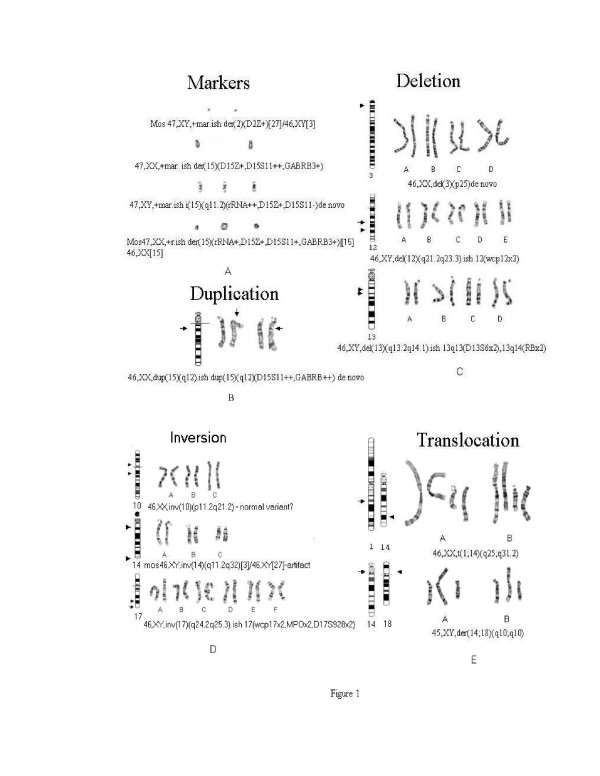
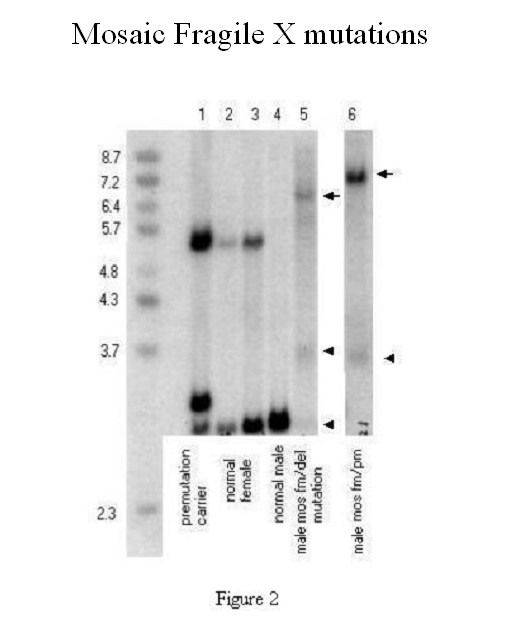
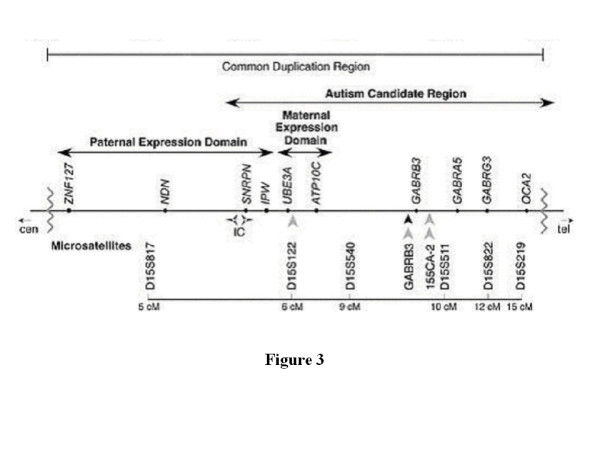
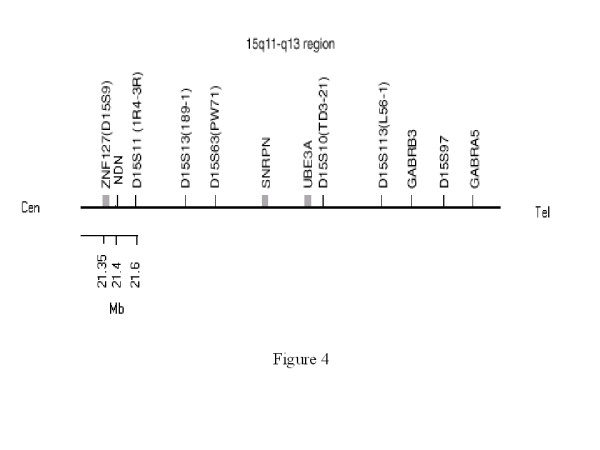
BACKGROUND: Autism is a behavioral disorder with impaired social interaction, communication, and repetitive and stereotypic behaviors. About 5-10 % of individuals with autism have 'secondary' autism in which an environmental agent, chromosome abnormality, or single gene disorder can be identified. Ninety percent have idiopathic autism and a major gene has not yet been identified. We have assessed the incidence of chromosome abnormalities and Fragile X syndrome in a population of autistic patients referred to our laboratory. METHODS: Data was analyzed from 433 patients with autistic traits tested using chromosome analysis and/or fluorescence in situ hybridization (FISH) and/or molecular testing for fragile X syndrome by Southern and PCR methods. RESULTS: The median age was 4 years. Sex ratio was 4.5 males to 1 female [354:79]. A chromosome (cs) abnormality was found in 14/421 [3.33 %] cases. The aberrations were: 4/14 [28%] supernumerary markers; 4/14 [28%] deletions; 1/14 [7%] duplication; 3/14 [21%] inversions; 2/14 [14%] translocations. FISH was performed on 23 cases for reasons other than to characterize a previously identified cytogenetic abnormality. All 23 cases were negative. Fragile-X testing by Southern blots and PCR analysis found 7/316 [2.2 %] with an abnormal result. The mutations detected were: a full mutation (fM) and abnormal methylation in 3 [43 %], mosaic mutations with partial methylation of variable clinical significance in 3 [43%] and a permutation carrier [14%]. The frequency of chromosome and fragile-X abnormalities appears to be within the range in reported surveys (cs 4.8-1.7%, FRAX 2-4%). Limitations of our retrospective study include paucity of behavioral diagnostic information, and a specific clinical criterion for testing. CONCLUSIONS: Twenty-eight percent of chromosome abnormalities detected in our study were subtle; therefore a high resolution cytogenetic study with a scrutiny of 15q11.2q13, 2q37 and Xp23.3 region should be standard practice when the indication is autism. The higher incidence of mosaic fragile-X mutations with partial methylation compared to FRAXA positive population [50% vs 15-40%] suggests that faint bands and variations in the Southern band pattern may occur in autistic patients.
Overview
The claims and statistics of this paper haven’t been checked yet.
Run the check — free, no account needed. It reads the open-access text and checks the sources it cites.
Integrity signals
Registry
Cites
Statistics
Figures
Verification
Claims the paper makes
The claims and statistics of this paper haven’t been checked yet.
Run the check — free, no account needed. It reads the open-access text and checks the sources it cites.
Claims other papers make about this one
Each is checked against this paper’s own text: does it say what the citing paper says it does?
In the citing paper
“Similarly, cytogenetic abnormalities have been reported for almost every chromosome [for a review, see Ref. (3–7) and http://projects.tcag.ca/autism/].”
From Gene × Environment Interactions in Autism Spectrum Disorders: Role of Epigenetic Mechanisms (2014) · cites this paper as [3]
Self-check
Percentages, sums and reported differences re-computed from the paper’s own numbers.
The self-check needs the paper’s full text.
Citations
Cites
Mutations of the X-linked genes encoding neuroligins NLGN3 and NLGN4 are associated with autism
Study, P. A. R. I. S., Jamain, S., Quach, H., Betancur, C., Råstam, M., Colineaux, C., Gillberg, I. C., Soderstrom, H., Giros, B., Leboyer, M., et al. (2003) · Nature Genetics · doi:10.1038/ng1136 · Cited by 1,851
Absence of expression of the FMR-1 gene in fragile X syndrome
Pieretti, M., Zhang, F., Fu, Y.-H., Warren, S. T., Oostra, B. A., Caskey, C. T., & Nelson, D. L. (1991) · Cell · doi:10.1016/0092-8674(91)90125-i · Cited by 1,476
Altered synaptic plasticity in a mouse model of fragile X mental retardation
Huber, K. M., Gallagher, S. M., Warren, S. T., & Bear, M. F. (2002) · Proceedings of the National Academy of Sciences · doi:10.1073/pnas.122205699 · Cited by 1,349
Autistic Traits in the General Population: A Twin Study
Constantino, J. N., & Todd, R. D. (2003) · Archives of General Psychiatry · doi:10.1001/archpsyc.60.5.524 · Cited by 1,317
Pervasive Developmental Disorders in preschool children
Chakrabarti, S. (2001) · JAMA · doi:10.1001/jama.285.24.3093 · Cited by 1,132
Evidence of Brain Overgrowth in the First Year of Life in Autism
Courchesne, E. (2003) · JAMA · doi:10.1001/jama.290.3.337 · Cited by 1,120
A case-control family history study of autism
Bolton, P., Macdonald, H., Pickles, A., Rios, P., Goode, S., Crowson, M., Bailey, A., & Rutter, M. (1994) · Journal of Child Psychology and Psychiatry · doi:10.1111/j.1469-7610.1994.tb02300.x · Cited by 1,094
A clinicopathological study of autism
Bailey, A. (1998) · Brain · doi:10.1093/brain/121.5.889 · Cited by 1,083
Genetics of austim: complex aetiology for a heterogeneous disorder
Folstein, S. E., & Rosen-Sheidley, B. (2001) · Nature Reviews Genetics · doi:10.1038/35103559 · Cited by 771
A Genomic Screen of Autism: Evidence for a Multilocus Etiology
Risch, N., Spiker, D., Lotspeich, L., Nouri, N., Hinds, D., Hallmayer, J., Kalaydjieva, L., McCague, P., Dimiceli, S., Pitts, T., et al. (1999) · The American Journal of Human Genetics · doi:10.1086/302497 · Cited by 684
(1997) · PubMed · Cited by 645
Direct Diagnosis by DNA Analysis of the Fragile X Syndrome of Mental Retardation
Rousseau, F., Heitz, D., Biancalana, V., Blumenfeld, S., Kretz, C., Boué, J., Tommerup, N., Hagen, C. V. D., DeLozier-Blanchet, C. D., Croquette, M., et al. (1991) · New England Journal of Medicine · doi:10.1056/nejm199112123252401 · Cited by 643
Bailey, A. J., Amaia Hervas, G., Matthews, N., Palferman, S., Wallace, S., Aubin, A., Michelotti, J., Wainhouse, C., Papanikolaou, Κ., Rutter, M. L., et al. (1998) · Human Molecular Genetics · doi:10.1093/hmg/7.3.571 · Cited by 543
The Fragile-X Premutation: A Maturing Perspective
Hagerman, P. J., & Hagerman, R. J. (2004) · The American Journal of Human Genetics · doi:10.1086/386296 · Cited by 524
Genome-Wide Scan for Autism Susceptibility Genes
Philippe, A., Martinez, M., Guilloud-Bataille, M., Gillberg, C., Rastam, M., Sponheim, E., Coleman, M., Zappella, M., Aschauer, H., Van Maldergem, L., et al. (1999) · Human Molecular Genetics · doi:10.1093/hmg/8.5.805 · Cited by 471
Serotonin Transporter: Gene, Genetic Disorders, and Pharmacogenetics
Murphy, D. L. (2004) · Molecular Interventions · doi:10.1124/mi.4.2.8 · Cited by 457
A Genomewide Screen for Autism: Strong Evidence for Linkage to Chromosomes 2q, 7q, and 16p
(2001) · The American Journal of Human Genetics · doi:10.1086/323264 · Cited by 453
Fine Mapping of Autistic Disorder to Chromosome 15q11-q13 by Use of Phenotypic Subtypes
Shao, Y., Cuccaro, M. L., Hauser, E. R., Raiford, K. L., Menold, M. M., Wolpert, C. M., Ravan, S. A., Elston, L. A., Decena, K., Donnelly, S. L., et al. (2003) · The American Journal of Human Genetics · doi:10.1086/367846 · Cited by 391
Runte, M. (2001) · Human Molecular Genetics · doi:10.1093/hmg/10.23.2687 · Cited by 391
Pickles, A. R., Bolton, P., Macdonald, H., Bailey, A., Couteur, A. S. L., Sim, C. H., & Rutter, M. L. (1995) · Europe PMC (PubMed Central) · Cited by 388
Understanding the molecular basis of fragile X syndrome
Jin, P. (2000) · Human Molecular Genetics · doi:10.1093/hmg/9.6.901 · Cited by 369
Linkage-disequilibrium mapping of autistic disorder, with 15q11-13 markers
Cook, E. H., Courchesne, R. Y., Cox, N. J., Lord, C., Gonen, D., Guter, S. J., Lincoln, A., Nix, K., Haas, R., Leventhal, B. L., et al. (1998) · The American Journal of Human Genetics · doi:10.1086/301832 · Cited by 369
Microcephaly and Macrocephaly in Autism
Fombonne, E. J., Rogé, B., Claverie, J., Courty, S., & Fremolle-Kruck, J. (1999) · Journal of Autism and Developmental Disorders · doi:10.1023/a:1023036509476 · Cited by 338
Evidence for a Susceptibility Gene for Autism on Chromosome 2 and for Genetic Heterogeneity
Buxbaum, J. D., Silverman, J. M., Smith, C. J., Kilifarski, M., Reichert, J. G., Hollander, E., LAWLOR, B. A., Fitzgerald, M., Greenberg, D. A., & Davis, K. L. (2001) · The American Journal of Human Genetics · doi:10.1086/320588 · Cited by 325
Association between a GABRB3 polymorphism and autism
Buxbaum, J. D., Silverman, J. M., Smith, C. J. W., Greenberg, D. A., Kilifarski, M., Reichert, J. G., Cook, E. H., Fang, Y., Song, C.-Y., & Vitale, R. (2002) · Molecular Psychiatry · doi:10.1038/sj.mp.4001011 · Cited by 322
Synaptic regulation of protein synthesis and the fragile X protein
Greenough, W. T., Klintsova, A. Y., Irwin, S. A., Galvez, R., Bates, K. E., & Weiler, I. J. (2001) · Proceedings of the National Academy of Sciences · doi:10.1073/pnas.141145998 · Cited by 317
Williams syndrome: From genotype through to the cognitive phenotype
Donnai, D., & Karmiloff‐Smith, A. (2000) · American Journal of Medical Genetics · doi:10.1002/1096-8628(200022)97:2 · Cited by 314
Phenotypic variation and FMRP levels in fragile X
Loesch, D. Z., Huggins, R., & Hagerman, R. J. (2004) · Mental Retardation and Developmental Disabilities Research Reviews · doi:10.1002/mrdd.20006 · Cited by 306
Rousseau, F., Heitz, D., Tarleton, J. C., MacPherson, J., Malmgren, H., Dahl, N., Barnicoat, A. J., Mathew, C. G., Mornet, É., & Tejada, I. (1994) · PubMed Central · Cited by 291
A Genomewide Screen of 345 Families for Autism-Susceptibility Loci
Yonan, A. L., Alarcón, M., Cheng, R., Magnusson, P. K. E., Spence, S. J., Palmer, A. A., Grunn, A., Juo, S. H., Terwilliger, J. D., Liu, J., et al. (2003) · The American Journal of Human Genetics · doi:10.1086/378778 · Cited by 272
(1989) · American Journal of Psychiatry · doi:10.1176/ajp.146.8.1032 · Cited by 255
Bolton, P. F., Dennis, N. R., Browne, C. E., Thomas, N. S., Veltman, M. W. M., Thompson, R. J., & Jacobs, P. (2001) · American Journal of Medical Genetics · doi:10.1002/ajmg.1551 · Cited by 246
Auranen, M., Vanhala, R., Varilo, T., Ayers, K. L., Kempas, E., Ylisaukko‐oja, T., Sinsheimer, J. S., Peltonen, L., & Järvelä, I. E. (2002) · The American Journal of Human Genetics · doi:10.1086/342720 · Cited by 241
Autism in Angelman syndrome: a population-based study
Steffenburg, S., Gillberg, C., Steffenburg, U., & Kyllerman, M. (1996) · Pediatric Neurology · doi:10.1016/0887-8994(96)00011-2 · Cited by 238
Chromosomal disorders and autism
Gillberg, C. (1998) · Journal of Autism and Developmental Disorders · doi:10.1023/a:1026004505764 · Cited by 237
Molecular genetics of autism spectrum disorder
Veenstra-VanderWeele, J. M., & Cook, E. H. (2004) · Molecular Psychiatry · doi:10.1038/sj.mp.4001505 · Cited by 224
Clinical involvement and protein expression in individuals with theFMR1 premutation
Tassone, F., Hagerman, R. J., Taylor, A. K., Mills, J. B., Harris, S. W., Gane, L. W., & Hagerman, P. J. (2000) · American Journal of Medical Genetics · doi:10.1002/(sici)1096-8628(20000313)91:2 · Cited by 216
Molecular-clinical correlations in males with an expanded FMR1 mutation
Merenstein, S. A., Sobesky, W. E., Taylor, A. K., Riddle, J. E., Tran, H. X., & Hagerman, R. J. (1996) · American Journal of Medical Genetics · doi:10.1002/(sici)1096-8628(19960809)64:2 · Cited by 213
Inherited Interstitial Duplications of Proximal 15q: Genotype-Phenotype Correlations
Browne, C. E., Dennis, N. R., Maher, E. R., Long, F., Nicholson, J. C., Sillibourne, J., & Barber, J. C. K. (1997) · The American Journal of Human Genetics · doi:10.1086/301624 · Cited by 207
Comorbidity of autistic spectrum disorders in children with Down syndrome
Kent, L., Evans, J., Paul, M., & Sharp, M. (1999) · Developmental Medicine & Child Neurology · doi:10.1017/s001216229900033x · Cited by 206
Incorporating language phenotypes strengthens evidence of linkage to autism
Bradford, Y., Haines, J. L., Hutcheson, H. B., Gardiner, M., Braun, T. A., Sheffield, V. C., Cassavant, T., Huang, W. Q., Wang, K., Vieland, V. J., et al. (2001) · American Journal of Medical Genetics · doi:10.1002/ajmg.1497 · Cited by 205
Gillberg, C., & Wahlström, J. (1985) · Developmental Medicine & Child Neurology · doi:10.1111/j.1469-8749.1985.tb04539.x · Cited by 184
Fragile X and autism: A multicenter survey
Brown, W. T., Jenkins, E. C., Cohen, I. L., Fisch, G. S., Wolf‐Schein, E. G., Gross, A. C., Waterhouse, L. H., Fein, D., MASON-BROTHERS, A., RITVO, E. R., et al. (1986) · American Journal of Medical Genetics · doi:10.1002/ajmg.1320230126 · Cited by 180
Xp deletions associated with autism in three females
Thomas, N. S., Sharp, A. J., Browne, C. E., Skuse, D., Hardie, C., & Dennis, N. R. (1999) · Human Genetics · doi:10.1007/s004390050908 · Cited by 178
Clinical and Molecular Analysis of Five(Inv) Dup(15) Patients
Robinson, W. P., Binkert, F., Giné, R., Vazquez, C., Müller, W., Rosenkranz, W., & Schinzel, A. (1993) · European Journal of Human Genetics · doi:10.1159/000472386 · Cited by 173
Mosaicism in fragile X affected males
Nolin, S. L., Glicksman, A., Houck, G. E., Brown, W. T., & Dobkin, C. (1994) · American Journal of Medical Genetics · doi:10.1002/ajmg.1320510444 · Cited by 168
Genomic imprinting and uniparental disomy in Angelman and Prader‐Willi syndromes: A review
Nicholls, R. D. (1993) · American Journal of Medical Genetics · doi:10.1002/ajmg.1320460106 · Cited by 163
Transition to young adulthood in Ullrich-Turner syndrome: Neurodevelopmental changes
Romans, S. M., Stefanatos, G. A., Roeltgen, D. P., Kushner, H., & ROSS, J. L. (1998) · American Journal of Medical Genetics · doi:10.1002/(sici)1096-8628(19980901)79:2 · Cited by 161
Clinical features of boys with fragile X premutations and intermediate alleles
Aziz, M., Stathopulu, E., Callias, M., Taylor, C. A., Turk, J., Oostra, B. A., Willemsen, R., & Patton, M. (2003) · American Journal of Medical Genetics Part B Neuropsychiatric Genetics · doi:10.1002/ajmg.b.20030 · Cited by 160
Linkage Disequilibrium at the Angelman Syndrome Gene UBE3A in Autism Families
Nurmi, E. L., Bradford, Y., Chen, Y.-H., Hall, J. L., Arnone, B., Gardiner, M., Hutcheson, H. B., Gilbert, J. R., Pericak‐Vance, M. A., Copeland‐Yates, S. A., et al. (2001) · Genomics · doi:10.1006/geno.2001.6617 · Cited by 157
Chromosomal abnormalities in a clinic sample of individuals with autistic disorder
Wassink, T. H., Piven, J., & Patil, S. R. (2001) · Psychiatric Genetics · doi:10.1097/00041444-200106000-00001 · Cited by 157
Frequency of the fragile X syndrome in infantile autism
Blomquist, H. K. S., Bohman, M., Edvinsson, S., Gillberg, C., Gustavson, K., Holmgren, G., & Wahlström, J. (1985) · Clinical Genetics · doi:10.1111/j.1399-0004.1985.tb00196.x · Cited by 154
Meguro, M., Kashiwagi, A., Mitsuya, K., Nakao, M., Kondo, I., Saitoh, S., & Oshimura, M. (2001) · Nature Genetics · doi:10.1038/ng0501-19 · Cited by 152
Validation of the diagnosis of autism in general practitioner records
Fombonne, E. J., Heavey, L., Smeeth, L. L., Rodrigues, L. C., Cook, C., Smith, P. G., Meng, L., & Hall, A. J. (2004) · BMC Public Health · doi:10.1186/1471-2458-4-5 · Cited by 145
Buxbaum, J. D., Silverman, J. M., Keddache, M. A., Smith, C. J. W., Hollander, E., Ramoz, N., & Reichert, J. G. (2003) · Molecular Psychiatry · doi:10.1038/sj.mp.4001465 · Cited by 143
Imprinting in Angelman and Prader-Willi syndromes
Jiang, Y.-H., Tsai, T., Bressler, J., & Beaudet, A. L. (1998) · Current Opinion in Genetics & Development · doi:10.1016/s0959-437x(98)80091-9 · Cited by 122
Neurobehavioral phenotype in carriers of the fragile X premutation
Johnston, C. K., D, S. E. M., Dyer-Friedman, J., Hessl, D. R., Glaser, B., Blasey, C. M., Taylor, A. K., & Reiss, A. L. (2001) · American Journal of Medical Genetics · doi:10.1002/ajmg.1561 · Cited by 119
Prevalence of the Fragile X Anomaly amongst Autistic Twins and Singletons
Bailey, A. J., Bolton, P., Butler, L., Couteur, A. S. L., Murphy, M. P., Scott, S., Webb, T., & Rutter, M. L. (1993) · Journal of Child Psychology and Psychiatry · doi:10.1111/j.1469-7610.1993.tb01064.x · Cited by 118
Nurmi, E. L., Dowd, M., Leyfer, O. T., Haines, J. L., Folstein, S. E., & Sutcliffe, J. S. (2003) · Journal of the American Academy of Child & Adolescent Psychiatry · doi:10.1097/01.chi.0000046868.56865.0f · Cited by 117
Herzing, L. B. K. (2002) · Human Molecular Genetics · doi:10.1093/hmg/11.15.1707 · Cited by 109
How Commonly Are Known Medical Conditions Associated with Autism?
Barton, M., & Volkmar, F. R. (1998) · Journal of Autism and Developmental Disorders · doi:10.1023/a:1026052417561 · Cited by 107
Pervasive developmental disorder and epilepsy due to maternally derived duplication of 15q11-q13
Gurrieri, F., Battaglia, A., Torrisi, L., Tancredi, R., Cavallaro, C., Sangiorgi, E., & Neri, G. (1999) · Neurology · doi:10.1212/wnl.52.8.1694 · Cited by 103
Hotspot for deletions in the CGG repeat region of FMR1 in fragile X patients.
de Graaff, E., Rouillard, P., Willems, P., Smits, A., Rousseau, F., & Oostra, B. (1995) · Human Molecular Genetics · doi:10.1093/hmg/4.1.45 · Cited by 102
Herzing, L. B. K., Kim, S., Cook, E. H., & Ledbetter, D. H. (2001) · The American Journal of Human Genetics · doi:10.1086/320616 · Cited by 101
Lauritsen, M. B., Mors, O. N., Mortensen, P. B., & Ewald, H. (1999) · Journal of Child Psychology and Psychiatry · doi:10.1111/1469-7610.00451 · Cited by 99
Genetic studies in autistic disorder and chromosome 15
Bass, M. P., Menold, M. M., Wolpert, C. M., Donnelly, S. L., Ravan, S. A., Hauser, E. R., Maddox, L. O., Vance, J. M., Abramson, R. K., Wright, H. H., et al. (2000) · Neurogenetics · doi:10.1007/s100489900081 · Cited by 97
Thomas, J. A., Johnson, J. P., Kraai, T. L. P., Wilson, R., Tartaglia, N. R., LeRoux, J., Beischel, L. S., McGavran, L., & Hagerman, R. J. (2003) · American Journal of Medical Genetics Part A · doi:10.1002/ajmg.a.10176 · Cited by 92
Transmission disequilibrium studies of the serotonin 5‐HT2A receptor gene (HTR2A) in autism
Veenstra-VanderWeele, J. M., Kim, S., Lord, C., Yeung-Courchesne, R., Akshoomoff, N., LEVENTHAL, B. L., Courchesne, E., & Cook, E. H. (2002) · American Journal of Medical Genetics · doi:10.1002/ajmg.10192 · Cited by 92
Autism and Autistic Behavior in Joubert Syndrome
Ozonoff, S. J., Williams, B. J., Gale, S., & Miller, J. N. (1999) · Journal of Child Neurology · doi:10.1177/088307389901401003 · Cited by 86
Chromosomal Abnormalities in a Series of Children with Autistic Disorder
Konstantareas, M. M., & Homatidis, S. (1999) · Journal of Autism and Developmental Disorders · doi:10.1023/a:1022155201662 · Cited by 81
Relationship between clinical and genetic features in “inverted duplicated chromosome 15” patients
Borgatti, R., Piccinelli, P., Passoni, D., Dalprà, L., Miozzo, M. R., Micheli, R., Gagliardi, C., & Balottin, U. (2001) · Pediatric Neurology · doi:10.1016/s0887-8994(00)00244-7 · Cited by 78
Nurmi, E. L., Amin, T. T., Olson, L. M., Jacobs, M. M., McCauley, J. L., Lam, A. Y., Organ, E. L., Folstein, S. E., Haines, J. L., & Sutcliffe, J. S. (2003) · Molecular Psychiatry · doi:10.1038/sj.mp.4001283 · Cited by 74
Mental Status and Fragile X Expression in Relation to FMR-1 Gene Mutation
Vries, B. B. A. D., Wiegers, A. M., de Graaff, E., Verkerk, A. J. M. H., Hemel, J. O. V., Halley, D. J. J., Fryns, J., Curfs, L., Niermeijer, M. F., & Oostra, B. A. (1993) · European Journal of Human Genetics · doi:10.1159/000472389 · Cited by 71
Waage-Baudet, H., Lauder, J. M., Dehart, D. B., Kluckman, K. D., Hiller, S., Tint, G. S., & Sulik, K. K. (2003) · International Journal of Developmental Neuroscience · doi:10.1016/j.ijdevneu.2003.09.002 · Cited by 70
Chromosomes in autism and related pervasive developmental disorders: a cytogenetic study
Weidmer‐Mikhail, E., Sheldon, S., & Ghaziuddin, M. (1998) · Journal of Intellectual Disability Research · doi:10.1046/j.1365-2788.1998.00091.x · Cited by 60
Jamain, S., Betancur, C., Giros, B., Leboyer, M., & Bourgeron, T. (2003) · médecine/sciences · doi:10.1051/medsci/200319111081 · Cited by 58
van den Ouweland, A. M. W., Vries, B. B. A. D., Bakker, P. L. G., Deelen, W. H., de Graaff, E., Hemel, J. O. V., Oostra, B. A., Niermeijer, M. F., & Halley, D. J. J. (1994) · American Journal of Medical Genetics · doi:10.1002/ajmg.1320510437 · Cited by 57
Auranen, M., Nieminen, T. T., Majuri, S., Vanhala, R., Peltonen, L., & Järvelä, I. E. (2000) · Molecular Psychiatry · doi:10.1038/sj.mp.4000708 · Cited by 55
A family with a grand‐maternally derived interstitial duplication of proximal 15q
Boyar, F. Z., Whitney, M., Lossie, A. C., Gray, B., Keller, K., Stalker, H., Zori, R., Geffken, G. R., Mutch, J., Edge, P., et al. (2001) · Clinical Genetics · doi:10.1034/j.1399-0004.2001.600604.x · Cited by 54
Pilot assessment of the subtelomeric regions of children with autism: Detection of a 2q deletion
Wolff, D. J., Clifton, K., Karr, C., & Charles, J. M. (2002) · Genetics in Medicine · doi:10.1097/00125817-200201000-00002 · Cited by 51
Molecular genetic analysis of the FMR-1 gene in a large collection of autistic patients
Klauck, S. M., Münstermann, E., Bieber-Martig, B., Rühl, D., Lisch, S., Schmötzer, G., Poustka, A., & Poustka, F. (1997) · Human Genetics · doi:10.1007/s004390050495 · Cited by 51
Mutation screening of the UBE3A /E6-AP gene in autistic disorder
Veenstra-VanderWeele, J. M., Gonen, D., LEVENTHAL, B. L., & Cook, E. (1999) · Molecular Psychiatry · doi:10.1038/sj.mp.4000472 · Cited by 49
Milà, M., Castellvı́-Bel, S., Sánchez, A., Lázaro, C., Villa, M., & Estivill, X. (1996) · Journal of Medical Genetics · doi:10.1136/jmg.33.4.338 · Cited by 48
Yardin, C., Esclaire, F., Laroche, C., Terro, F., Barthe, D., Bonnefont, J., & Gilbert, B. (2002) · Clinical Genetics · doi:10.1034/j.1399-0004.2002.610413.x · Cited by 46
Auranen, M., Varilo, T., Alén, R., Vanhala, R., Ayers, K. L., Kempas, E., Ylisaukko‐oja, T., Peltonen, L., & Järvelä, I. E. (2003) · Molecular Psychiatry · doi:10.1038/sj.mp.4001299 · Cited by 45
Piven, J., GAYLE, J., Landa, R. J., Wzorek, M., & Folstein, S. E. (1991) · Journal of the American Academy of Child & Adolescent Psychiatry · doi:10.1016/s0890-8567(10)80023-1 · Cited by 44
Schmucker, B., Ballhausen, W., & Pfeiffer, R. (1996) · Human Genetics · doi:10.1007/s004390050230 · Cited by 43
Rao, P. N., Klinepeter, K. L., Stewart, W. B., Jr., Hayworth, R., Grubs, R. E., & Pettenati, M. J. (1994) · Human Genetics · doi:10.1007/bf00202860 · Cited by 42
The Fragile X Marker and Autism in Perspective
Payton, J. B., Steele, M. W., Wenger, S. L., & Minshew, N. J. (1989) · Journal of the American Academy of Child & Adolescent Psychiatry · doi:10.1097/00004583-198905000-00019 · Cited by 41
Tuchman, R. F. (2003) · Neurologic Clinics · doi:10.1016/s0733-8619(03)00011-2 · Cited by 40
Lord, C., & Volkmar, F. R. (2002) · Journal of the American Academy of Child & Adolescent Psychiatry · doi:10.1097/00004583-200209000-00015 · Cited by 38
Molecular and cytogenetic analyses of autism in Taiwan
Li, S., Chen, Y.-C. J., Lai, T., Hsu, C.-Y., & Wang, Y. (1993) · Human Genetics · doi:10.1007/bf00216447 · Cited by 35
Molecular and Cytogenetic Analyses on Brazilian Youths with Pervasive Developmental Disorders
Estecio, M. R., Fett‐Conte, A. C., Varella‐Garcia, M., Fridman, C., & Silva, A. E. (2002) · Journal of Autism and Developmental Disorders · doi:10.1023/a:1017952123258 · Cited by 34
Mutation screening and transmission disequilibrium study of ATP10C in autism
Kim, S., Herzing, L. B. K., Veenstra-VanderWeele, J. M., Lord, C., Yeung-Courchesne, R., LEVENTHAL, B. L., Ledbetter, D. H., Courchesne, E., & Cook, E. H. (2002) · American Journal of Medical Genetics · doi:10.1002/ajmg.10238 · Cited by 31
Evaluation of linkage of markers on chromosome 6p with schizophrenia in Taiwanese families
Hwu, H., Lin, M., Lee, P.-C., Lee, S. F. ‐., Ouyang, W., & Liu, C. (2000) · American Journal of Medical Genetics · doi:10.1002/(sici)1096-8628(20000207)96:1 · Cited by 30
Bolton, P., Powell, J. F., Rutter, M. D., Buckle, V. J., Yates, J. R. W., Ishikawa-Brush, Y., & Monaco, A. P. (1995) · Psychiatric Genetics · doi:10.1097/00041444-199522000-00001 · Cited by 28
Brief report: Screening children with autism for fragile-X syndrome and phenylketonuria
Pueschel, S. M., Herman, R. M., & Groden, G. (1985) · Journal of Autism and Developmental Disorders · doi:10.1007/bf01531503 · Cited by 27
A man, a syndrome, a gene: Clouston's hidrotic ectodermal dysplasia (HED)
Fraser, F. C., & Kaloustian, V. M. D. (2001) · American Journal of Medical Genetics · doi:10.1002/1096-8628(20010422)100:2 · Cited by 24
Obesity and abnormal behaviour associated with interstitial deletion of chromosome 18 (q12.2q21.1).
Wilson, G. N., & Saadi, A. A. (1989) · Journal of Medical Genetics · doi:10.1136/jmg.26.1.62 · Cited by 24
Fragile X Syndrome in a Population of Autistic Children
Wright, H. H., Young, S. R., Edwards, J. G., Abramson, R. K., & DUNCAN, J. (1986) · Journal of the American Academy of Child Psychiatry · doi:10.1016/s0002-7138(09)60288-0 · Cited by 23
Gliding, H. M. D., Bolton, P., Vincent, J. B., Melmer, G., & Rutter, M. L. (1997) · Human Heredity · doi:10.1159/000154421 · Cited by 22
Calzolari, E., Aiello, V., Palazzi, P., Sensi, A., Calzolari, S., Orrico, D., Calliari, L., Holler, H., Marzi, C., Belli, S., et al. (1996) · American Journal of Medical Genetics · doi:10.1002/(sici)1096-8628(19960409)67:2 · Cited by 21
Shrimpton, A. E., Daly, K. M., & Hoo, J. J. (1999) · American Journal of Medical Genetics · doi:10.1002/(sici)1096-8628(19990528)84:3 · Cited by 20
Souery, D., Lipp, O., Rivelli, S. K., Massat, I., Serretti, A., Cavallini, M. C., Ackenheil, M., Adolfsson, R., Aschauer, H. N., Blackwood, D., et al. (1999) · American Journal of Medical Genetics · doi:10.1002/(sici)1096-8628(19991015)88:5 · Cited by 19
18q‐ Chromosomal Abnormality in a Phenotypically Normal 21/2‐year‐Old Male with Autism
Seshadri, K., Wallerstein, R. J., Burack, G. D., & Johnson, R. W. (1992) · Developmental Medicine & Child Neurology · doi:10.1111/j.1469-8749.1992.tb11406.x · Cited by 19
Abnormalities of chromosome 18 in a girl with mental retardation and autistic disorder
Ghaziuddin, M., Sheldon, S., Tsai, L. Y., & Alessi, N. E. (1993) · Journal of Intellectual Disability Research · doi:10.1111/j.1365-2788.1993.tb01288.x · Cited by 14
Elective mutism and chromosome 18 abnormality
Simons, D., Goode, S., & Fombonne, E. J. (1997) · European Child & Adolescent Psychiatry · doi:10.1007/bf00566674 · Cited by 14
Brief report: Fragile X syndrome in autistic boys
Ho, H. H., & Kalousek, D. K. (1989) · Journal of Autism and Developmental Disorders · doi:10.1007/bf02211851 · Cited by 13
Genetic analysis of psychiatric disorders associated with human chromosome 18.
Kamnasaran, D. (2003) · PubMed · Cited by 9
Rabbi‐Bortolini, E., Bernardino, A. L. F., Lopes, A. L., Ferri, A., Passos‐Bueno, M. R., & Zatz, M. (1998) · American Journal of Medical Genetics · doi:10.1002/(sici)1096-8628(19980401)76:4 · Cited by 6
Incorporating language phenotypes strengthens evidence of linkage to autism.
(2001) · PubMed · Cited by 4
[Genetic study of 20 patients with autism disorders].
Havlovičová, M., Propper, L., Novotná, D., Mušová, Z., Hrdlička, M., & Sedláček, Z. (2002) · PubMed · Cited by 1
Donnelly, S. L., Wolpert, C. M., Menold, M. M., Bass, M. P., Gilbert, J. R., Cuccaro, M. L., Delong, G. R., & Pericak-Vance, M. A. (2000) · American Journal of Medical Genetics · doi:10.1002/1096-8628(20000612)96:3
Research works printed but not linked: 9
- Salmon B, Hallmayer J, Rogers T, Kalaydjieva L, Petersen PB, Nicholas P, Pingree C, McMahon W, Spiker D, Lotspeich L, Kraemer H, McCague P, Dimiceli S, Nouri N, Pitts T, Yang J, Hinds D, Myers RM, Risch N: Absence of linkage and linkage disequilibrium to chromosome 15q11-q13 markers in 139 multiplex families with autism. Am J Med Genet. 1999, 88: 551-6. · DOI
- Wolff DJ, Clifton K, Karr C, Charles J: Pilot assessment of the subtelomeric regions of children with autism: detection of a 2q deletion. Genet Med. 2002, 4: 10-4. 10.1097/00125817-200201000-00002. · DOI
- Lassig JP, Vachirasomtoon K, Hartzell K, Leventhal M, Courchesne E, Courchesne R, Lord C, Leventhal BL, Cook EH: Physical mapping of the serotonin 5-HT(7) receptor gene (HTR7) to chromosome 10 and pseudogene (HTR7P) to chromosome 12, and testing of linkage disequilibrium between HTR7 and autistic disorder. Am J Med Genet. 1999, 88: 472-5. 10.1002/(SICI)1096-8628(19991015)88:5<472::AID-AJMG7>3.0.CO;2-G. · DOI
- Flora Tassone, Randi Hagerman, David Iklé, Pamela Dyer, Megan Lampe, Rob Willemsen, Ben Oostra, Annette Taylor: FMRP Expression as a Potential Prognostic Indicator in Fragile X Syndrome. American Journal of Medical Genetics. 1999, 84: 250-261. · DOI
- Cohen IL, Nolin SL, Sudhalter V, Ding XH, Dobkin CS, Brown WT: Mosaicism for the FMR1 gene influences adaptive skills development in fragile X-affected males. Am J Med Genet. 1996, 64: 365-9. · DOI
- de Graaff E, de Vries BB, Willemsen R, van Hemel JO, Mohkamsing S, Oostra BA, van den Ouweland AM: The fragile X phenotype in a mosaic male with a deletion showing expression of the FMR1 protein in 28% of the cells. Am J Med Genet. 1996, 64: 302-8. 10.1002/(SICI)1096-8628(19960809)64:2<302::AID-AJMG14>3.0.CO;2-J. · DOI
- Mannermaa A, Pulkkinen L, Kajanoja E, Ryynanen M, Saarikoski S: Deletion in the FMR1 gene in a fragile-X male. Am J Med Genet. 1996, 64: 293-5. 10.1002/(SICI)1096-8628(19960809)64:2<293::AID-AJMG12>3.0.CO;2-A. · DOI
- Li SY, Chen YC, Lai TJ, Hsu CY, Wang YC: Molecular and cytogenetic analyses of autism in Taiwan. Hum Genet. 1993, 92: 441-445. 10.1007/BF00216447. · DOI
- Konstantareas MM, Homatidis S: Chromosomal abnormalities in a series of children with autistic disorder. J Autism Dev Disord. 1999, 29: 275-285. 10.1023/A:1022155201662. · DOI
Cited by
Sorted by citations
Autism spectrum disorder: Definition, epidemiology, causes, and clinical evaluation
Hodges, H., Fealko, C., & Soares, N. (2020) · Translational Pediatrics · doi:10.21037/tp.2019.09.09 · Cited by 1,127
The genetics of autistic disorders and its clinical relevance: a review of the literature
Freitag, C. M. (2007) · Molecular Psychiatry · doi:10.1038/sj.mp.4001896 · Cited by 638
Autism spectrum disorders-a genetics review
Miles, J. H. (2011) · Genetics in Medicine · doi:10.1097/gim.0b013e3181ff67ba · Cited by 567
Schaefer, G. B., & Mendelsohn, N. J. (2013) · Genetics in Medicine · doi:10.1038/gim.2013.32 · Cited by 537
Leblond, C. S., Heinrich, J., Delorme, R., Proepper, C., Betancur, C., Huguet, G., Konyukh, M., Chaste, P., Ey, E., Rastam, M., et al. (2012) · PLoS Genetics · doi:10.1371/journal.pgen.1002521 · Cited by 429
Metadata
- Authors
- Reddy, K. S.
- Corresponding author
- Reddy, Kavita S
- Venue
- BMC Medical Genetics
- Published
- 2005-01-18
- Volume
- 6
- Issue
- 1
- Pages
- 3-3
- ISSN
- 1471-2350 (ISSN-L)
- PMC
- PMC548305
- OpenAlex
- W1493214217
- Cited by
- 222
- References
- 123
- Citations by year
- 2026: 1 · 2025: 4 · 2024: 2 · 2023: 5 · 2022: 9 · 2021: 15 · 2020: 11 · 2019: 6 · 2018: 4 · 2017: 9 · 2016: 13 · 2015: 10 · 2014: 15 · 2013: 23 · 2012: 15
- FWCI
- 5.93
- Type
- journal article
- Language
- en
- Open access
- gold
- doi.org
- Licence
- Locations
- BMC Medical Genetics (publishedVersion, cc-by)
- PubMed Central (publishedVersion)
- PubMed (publishedVersion)
- DOAJ (DOAJ: Directory of Open Access Journals) (submittedVersion)
- Topics
- Life Sciences › Biochemistry, Genetics and Molecular Biology › Genetics › Genetics and Neurodevelopmental Disorders
- Life Sciences › Neuroscience › Cognitive Neuroscience › Autism Spectrum Disorder Research
- Life Sciences › Biochemistry, Genetics and Molecular Biology › Genetics › Genomic variations and chromosomal abnormalities
- Keywords
- autism spectrum disorder, fragile X syndrome, chromosomal abnormalities, fragile X premutation, chromosome 15q11-q13, chromosome 2q37, fluorescence in situ hybridization, karyology, idiopathic autism, translocation
- MeSH terms
- Autistic Disorder, Child, Preschool, Chromosome Aberrations, Female, Fragile X Syndrome, Humans, Male, Mutation, Nerve Tissue Proteins, RNA-Binding Proteins, Molecular Epidemiology, Cytogenetic Analysis, Fragile X Messenger Ribonucleoprotein 1
About these checks
Registry, retraction, Cites and statistics results are computed, not judged, with one exception: a printed reference that no index lists is read once by a model before it counts as a citation error. Claims are extracted by a model and kept only when their quote appears verbatim in the text; each cited source is then checked, with a model’s help, for whether it says what the claim relies on. Those verdicts can be wrong — read the claim’s quote and the cited source before relying on one.
Statistics and arithmetic are recomputed, not judged.
Confidence bands are shown only for fields calibrated on our annotated test set. None is calibrated yet, so no band is shown.
What counts as a claim ›How we measure confidence ›How we check this ›
Are you an author, or do you see a problem with this page? Request a review
