

Characteristics of compounds that cross the blood-brain barrier
Open accessThe DOI matches its Crossref record; 50 of the 50 references it cites were found in a registry or an index.
Abstract
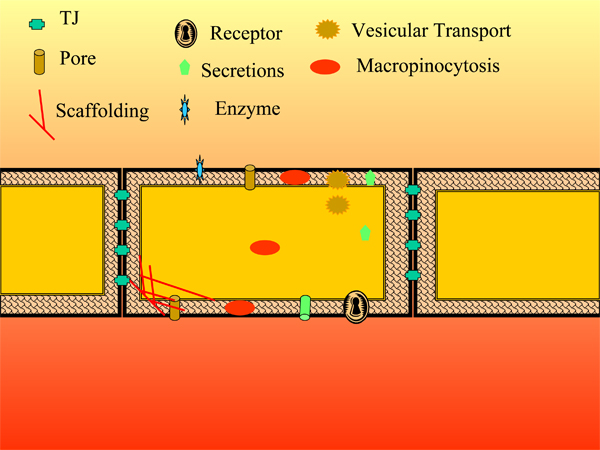
Substances cross the blood-brain barrier (BBB) by a variety of mechanisms. These include transmembrane diffusion, saturable transporters, adsorptive endocytosis, and the extracellular pathways. Here, we focus on the chief characteristics of two mechanisms especially important in drug delivery: transmembrane diffusion and transporters. Transmembrane diffusion is non-saturable and depends, on first analysis, on the physicochemical characteristics of the substance. However, brain-to-blood efflux systems, enzymatic activity, plasma protein binding, and cerebral blood flow can greatly alter the amount of the substance crossing the BBB. Transport systems increase uptake of ligands by roughly 10-fold and are modified by physiological events and disease states. Most drugs in clinical use to date are small, lipid soluble molecules that cross the BBB by transmembrane diffusion. However, many drug delivery strategies in development target peptides, regulatory proteins, oligonucleotides, glycoproteins, and enzymes for which transporters have been described in recent years. We discuss two examples of drug delivery for newly discovered transporters: that for phosphorothioate oligonucleotides and for enzymes.
Overview
The claims and statistics of this paper haven’t been checked yet.
Free: it reads the open-access text and checks the first 5 claims that cite a source we can check. Create a free account to check every claim.
Integrity signals
Registry
Cites
Statistics
Figures
Verification
Claims the paper makes
The claims and statistics of this paper haven’t been checked yet.
Free: it reads the open-access text and checks the first 5 claims that cite a source we can check. Create a free account to check every claim.
Claims other papers make about this one
Each is checked against this paper’s own text: does it say what the citing paper says it does?
The source backs part of the claim, not all of it — or backs it for a different population, condition or comparison.
In the citing paper
“Although lipophilicity is important for transmembrane diffusion through the BBB, some compounds that are too lipophilic can be discharged after crossing into the brain by the P-gp efflux transporter (Abbott, 2002; Banks, 2009).”
From A Critical Review and Meta-Analysis of Impacts of Per- and Polyfluorinated Substances on the Brain and Behavior (2022) · cites this paper as Banks, 2009
Experimental — accuracy not yet measuredIn the citing paper
“The amphipathic nature of this motif permits the crossing of biological membranes, a property that is important for traversing the blood–brain barrier and accessing cryptococcal cells that reside within the lysosome or phagolysosome of host cells114.”
From Treatment strategies for cryptococcal infection: challenges, advances and future outlook (2021) · cites this paper as [114]
In the citing paper
“BBB permeability can also be influenced by physiological factors such as efflux transporters (e.g., P-glycoprotein (P-gp)), enzymatic activity, plasma protein binding and cerebral blood flow 8.”
From Current Strategies for Brain Drug Delivery (2018) · cites this paper as [8]
Self-check
Percentages, sums and reported differences re-computed from the paper’s own numbers.
The self-check needs the paper’s full text.
Citations
Cites
Lipinski, C. A., Lombardo, F., Dominy, B. W., & Feeney, P. J. (2001) · Advanced Drug Delivery Reviews · doi:10.1016/s0169-409x(00)00129-0 · Cited by 18,139
Lipinski, C. A., Lombardo, F., Dominy, B. W., & Feeney, P. J. (1997) · Advanced Drug Delivery Reviews · doi:10.1016/s0169-409x(96)00423-1 · Cited by 11,385
FINE STRUCTURAL LOCALIZATION OF A BLOOD-BRAIN BARRIER TO EXOGENOUS PEROXIDASE
Reese, T. S., & Karnovsky, M. J. (1967) · The Journal of Cell Biology · doi:10.1083/jcb.34.1.207 · Cited by 2,629
Brain uptake of radiolabeled amino acids, amines, and hexoses after arterial injection
Oldendorf, W. (1971) · American Journal of Physiology-Legacy Content · doi:10.1152/ajplegacy.1971.221.6.1629 · Cited by 1,683
Glucagon-like peptide-1 receptor is involved in learning and neuroprotection
During, M. J., Cao, L., Zuzga, D. S., Francis, J. S., Fitzsimons, H. L., Jiao, X., Bland, R. J., Klugmann, M., Banks, W. A., Drucker, D. J., et al. (2003) · Nature Medicine · doi:10.1038/nm919 · Cited by 851 · cited 1×
“Intranasal delivery of drugs, including peptides [35], shows a great deal of promise [36].”
Self-citationLevin, V. A. (1980) · Journal of Medicinal Chemistry · doi:10.1021/jm00180a022 · Cited by 813 · cited 2×
“Levin VA: Relationship of octanol/water partition coefficient and molecular weight to rat brain capillary permeability.”
Intranasal insulin improves memory in humans
Benedict, C., Hallschmid, M., Hatke, A., Schultes, B., Fehm, H. L., Born, J., & Kern, W. (2004) · Psychoneuroendocrinology · doi:10.1016/j.psyneuen.2004.04.003 · Cited by 699 · cited 1×
“Nasal delivery of insulin, for example, has had positive effects in treating Alzheimer's disease [37,38].”
Delivery of therapeutic agents to the central nervous system: the problems and the possibilities
Begley, D. J. (2004) · Pharmacology & Therapeutics · doi:10.1016/j.pharmthera.2004.08.001 · Cited by 679 · cited 2×
“However, the endogenous compounds have poor peripheral pharmacokinetics and this limits their usefulness [3].”
Fellay, J., Marzolini, C., Meaden, E. R., Back, D. J., Buclin, T., Chave, J.-P., Decosterd, L. A., Furrer, H., Opravil, M., Pantaleo, G., et al. (2002) · The Lancet · doi:10.1016/s0140-6736(02)07276-8 · Cited by 658
Brain-immune communication pathways
Quan, N., & Banks, W. A. (2007) · Brain, Behavior, and Immunity · doi:10.1016/j.bbi.2007.05.005 · Cited by 626 · cited 1×
“These extra-barrier functions allow the BBB to influence the homeostatic, nutritive, and immune environments of the CNS and to regulate the exchange of informational molecules between the CNS and blood [4].”
Self-citationABC Transporters and the Blood-Brain Barrier
Begley, D. (2004) · Current Pharmaceutical Design · doi:10.2174/1381612043384844 · Cited by 545 · cited 2×
“Lipophilic substances of low molecular weight tend to be substrates for P-glycoprotein [12].”
Reger, M. A., Watson, G. S., Green, P. S., Baker, L. D., Cholerton, B., Fishel, M. A., Plymate, S. R., Cherrier, M. M., Schellenberg, G. D., Frey II, W. H., et al. (2008) · Journal of Alzheimer's Disease · doi:10.3233/jad-2008-13309 · Cited by 521
Triglycerides Induce Leptin Resistance at the Blood-Brain Barrier
Banks, W. A., Coon, A. B., Robinson, S. M., Moinuddin, A., Shultz, J. M., Nakaoke, R., & Morley, J. E. (2004) · Diabetes · doi:10.2337/diabetes.53.5.1253 · Cited by 512 · cited 1×
“For example, leucine regulates the transport rate of peptide transport system-1 (PTS-1) [22] and epinephrine and triglycerides affect leptin, ghrelin, and insulin transport [23-25].”
Self-citationStrategies to advance translational research into brain barriers
Neuwelt, E., Abbott, N. J., Abrey, L., Banks, W. A., Blakley, B., Davis, T., Engelhardt, B., Grammas, P., Nedergaard, M., Nutt, J., et al. (2008) · The Lancet Neurology · doi:10.1016/s1474-4422(07)70326-5 · Cited by 474 · cited 1×
“The BBB consists of several barriers in parallel, with the two that are best described being the vascular BBB, consisting primarily of the capillary bed, and the blood-cerebrospinal fluid (blood-CSF) barrier, consisting primarily of the choroid plexus [1].”
Self-citationRole of Multidrug Transporters in Pharmacoresistance to Antiepileptic Drugs
Löscher, W., & Potschka, H. (2002) · The Journal of Pharmacology and Experimental Therapeutics · doi:10.1124/jpet.301.1.7 · Cited by 409 · cited 1×
“Such individual variation has been linked to sensitivity to drugs for the treatment of AIDS and epilepsy [15,16].”
Lipid solubility and drug penetration of the blood brain barrier
Oldendorf, W. H. (1974) · Experimental Biology and Medicine · doi:10.3181/00379727-147-38444 · Cited by 373 · cited 1×
“Most drugs cross the BBB by transmembrane diffusion [9].”
Differential Permeability of the Blood–Brain Barrier to Two Pancreatic Peptides: Insulin and Amylin
Banks, W. A., & Kastin, A. J. (1998) · Peptides · doi:10.1016/s0196-9781(98)00018-7 · Cited by 340
Self-citationSARS: The First Pandemic of the 21st Century
Cherry, J. D., & Krogstad, P. (2004) · Pediatric Research · doi:10.1203/01.pdr.0000129184.87042.fc · Cited by 248
Mechanisms of the Blood–Brain Barrier Disruption in HIV-1 Infection
Toborek, M., Lee, Y. W., Flora, G., Pu, H., András, I. E., Wylegala, E., Hennig, B., & Nath, A. (2005) · Cellular and Molecular Neurobiology · doi:10.1007/s10571-004-1383-x · Cited by 228 · cited 1×
“However, the passage of immune cells across the BBB is a highly regulated process [31] and the leakage is likely a byproduct of immune cell trafficking and not the other way round [32].”
Deane, R., Sagare, A., & Zlokovic, B. (2008) · Current Pharmaceutical Design · doi:10.2174/138161208784705487 · Cited by 183
Banks, W. A., Kastin, A. J., Komaki, G., & Arimura, A. (1993) · The Journal of Pharmacology and Experimental Therapeutics · doi:10.1016/s0022-3565(25)39457-7 · Cited by 175 · cited 3×
“PONs have also been directed at the efflux transporter of PACAP27 [41].”
InfluentialSelf-citationBroadwell, R. D. (1989) · Acta Neuropathologica · doi:10.1007/bf00294368 · Cited by 171 · cited 1×
“Reviews on adsorptive endocytosis and the extracellular pathways can be found elsewhere [7,8].”
Banks, W. A., Burney, B. O., & Robinson, S. M. (2008) · Peptides · doi:10.1016/j.peptides.2008.07.001 · Cited by 165 · cited 1×
“For example, leucine regulates the transport rate of peptide transport system-1 (PTS-1) [22] and epinephrine and triglycerides affect leptin, ghrelin, and insulin transport [23-25].”
Self-citationUrayama, A., Grubb, J. H., Sly, W. S., & Banks, W. A. (2004) · Proceedings of the National Academy of Sciences · doi:10.1073/pnas.0405042101 · Cited by 165 · cited 1×
“However, it was recently discovered that the mannose-6 phosphate receptor acts as a saturable transporter at the neonatal BBB [42,43].”
Self-citationIntrathecal opioids, potency and lipophilicity
McQuay, H. J., Sullivan, A. F., Smallman, K., & Dickenson, A. H. (1989) · Pain · doi:10.1016/0304-3959(89)90118-8 · Cited by 157
The Impact of Efflux Transporters in the Brain on the Development of Drugs for CNS Disorders
Taylor, E. M. (2002) · Clinical Pharmacokinetics · doi:10.2165/00003088-200241020-00001 · Cited by 153 · cited 2×
“However, it is now known that these substances are all substrates for Pglycoprotein, a major brain-to-blood, or efflux, pump located at the BBB that prevents or greatly retards a large number of small, lipid soluble molecules from entering the CNS [12,13].”
Engelhardt, B. (2008) · Current Pharmaceutical Design · doi:10.2174/138161208784705432 · Cited by 148 · cited 1×
“However, the passage of immune cells across the BBB is a highly regulated process [31] and the leakage is likely a byproduct of immune cell trafficking and not the other way round [32].”
Enhanced Prospects for Drug Delivery and Brain Targeting by the Choroid Plexus–CSF Route
Johanson, C. E., Duncan, J. A., Stopa, E. G., & Baird, A. (2005) · Pharmaceutical Research · doi:10.1007/s11095-005-6039-0 · Cited by 141
Tyler, B. M., Jansen, K., McCormick, D. J., Douglas, C. L., Boules, M., Stewart, J. A., Zhao, L., Lacy, B., Cusack, B., Fauq, A., et al. (1999) · Proceedings of the National Academy of Sciences · doi:10.1073/pnas.96.12.7053 · Cited by 128 · cited 1×
“However, enzymatically resistant analogs such as peptide nucleic acids and phosphorothioate oligonucleotides (PONs) can cross the BBB in sufficient amounts to affect CNS function [39,40].”
Banks, W. A., Farr, S. A., Butt, W. R., Kumar, V. B., Franko, M. W., & Morley, J. E. (2001) · PubMed · Cited by 126
Self-citationUrayama, A., & Banks, W. A. (2008) · Endocrinology · doi:10.1210/en.2008-0008 · Cited by 120 · cited 1×
“For example, leucine regulates the transport rate of peptide transport system-1 (PTS-1) [22] and epinephrine and triglycerides affect leptin, ghrelin, and insulin transport [23-25].”
Self-citationNew Concepts of a Blood—Brain Barrier
(1995) · Springer eBooks · doi:10.1007/978-1-4899-1054-7 · Cited by 113
The Blood-Brain Barrier as a Cause of Obesity
Banks, W. A. (2008) · Current Pharmaceutical Design · doi:10.2174/138161208784705496 · Cited by 112 · cited 1×
“For example, decreased leptin transport is associated with peripheral leptin resistance in obesity [27] and decreased efflux of amyloid beta protein is associated with Alzheimer's disease [28].”
Self-citationPenichet, M. L., Kang, Y.-S., Pardridge, W. M., Morrison, S. L., & Shin, S.-U. (1999) · The Journal of Immunology · doi:10.4049/jimmunol.163.8.4421 · Cited by 100 · cited 1×
“The usual approach is a version of the 'Trojan horse' strategy [29].”
Vogler, C. A., Levy, B. K., Galvin, N. J., Thorpe, C., Sands, M. S., Barker, J. E., Baty, J., Birkenmeier, E. H., & Sly, W. S. (1999) · Pediatric Research · doi:10.1203/00006450-199906000-00010 · Cited by 98 · cited 1×
“As a result, enzyme given to the neonate is effective in clearance of glycosaminoglycans from the CNS [44-46].”
Gliddon, B. L., & Hopwood, J. J. (2004) · Pediatric Research · doi:10.1203/01.pdr.0000129661.40499.12 · Cited by 90 · cited 1×
“As a result, enzyme given to the neonate is effective in clearance of glycosaminoglycans from the CNS [44-46].”
Replacement therapy in Mucopolysaccharidosis type VI: advantages of early onset of therapy
Auclair, D., Hopwood, J. J., Brooks, D. A., Lemontt, J. F., & Crawley, A. C. (2003) · Molecular Genetics and Metabolism · doi:10.1016/s1096-7192(03)00007-6 · Cited by 86
Urayama, A., Grubb, J. H., Sly, W. S., & Banks, W. A. (2008) · Molecular Therapy · doi:10.1038/mt.2008.84 · Cited by 84 · cited 1×
“However, it was recently discovered that the mannose-6 phosphate receptor acts as a saturable transporter at the neonatal BBB [42,43].”
Self-citationDogrukol-Ak, D., Kumar, V. B., Ryerse, J. S., Farr, S. A., Verma, S., Nonaka, N., Nakamachi, T., Ohtaki, H., Niehoff, M. L., Edwards, J. C., et al. (2009) · Journal of Cerebral Blood Flow & Metabolism · doi:10.1038/jcbfm.2008.131 · Cited by 82
Self-citationBanks, W. A., Moinuddin, A., & Morley, J. E. (2001) · Neurobiology of Aging · doi:10.1016/s0197-4580(01)00220-2 · Cited by 77
Self-citationChanging the chemokine gradient: CINC1 crosses the blood–brain barrier
Pan, W., & Kastin, A. J. (2001) · Journal of Neuroimmunology · doi:10.1016/s0165-5728(01)00256-9 · Cited by 71 · cited 1×
“cytokine-induced neutrophil chemoattractant-1 (CINC1) at 7,800 Da [14].”
Are the Extracelluar Pathways a Conduit for the Delivery of Therapeutics to the Brain?
Banks, W. (2004) · Current Pharmaceutical Design · doi:10.2174/1381612043384862 · Cited by 58
Self-citationUrayama, A., Grubb, J. H., Banks, W. A., & Sly, W. S. (2007) · Proceedings of the National Academy of Sciences · doi:10.1073/pnas.0705611104 · Cited by 57
Self-citationGeneration and Evaluation of a CYP2C9 Heteroactivation Pharmacophore
Egnell, A.-C., Eriksson, C., Albertson, N., Houston, B., & Boyer, S. (2003) · Journal of Pharmacology and Experimental Therapeutics · doi:10.1124/jpet.103.054999 · Cited by 52
Cytokine Transport Across the Injured Blood-Spinal Cord Barrier
Pan, W., & Kastin, A. (2008) · Current Pharmaceutical Design · doi:10.2174/138161208784705450 · Cited by 44
Banks, W. A., & Kastin, A. J. (1986) · The Journal of Pharmacology and Experimental Therapeutics · doi:10.1016/s0022-3565(25)23342-0 · Cited by 40 · cited 1×
“For example, leucine regulates the transport rate of peptide transport system-1 (PTS-1) [22] and epinephrine and triglycerides affect leptin, ghrelin, and insulin transport [23-25].”
Self-citationPositron Emission Tomography Shows that Intrathecal Leptin Reaches the Hypothalamus in Baboons
McCarthy, T. J., Banks, W. A., Farrell, C. L., Adamu, S., Derdeyn, C. P., Snyder, A. Z., Laforest, R. A., Litzinger, D. C., Martin, D., Lebel, C., et al. (2002) · Journal of Pharmacology and Experimental Therapeutics · doi:10.1124/jpet.301.3.878 · Cited by 34 · cited 1×
“However, this route may be an option for large regulatory proteins with negligible brain-to-blood efflux [34].”
Self-citationDesigning Drugs for Optimal Nervous System Activity
Greig, N. H., Brossi, A. R., Pei, X., Ingram, D. K., & Soncrant, T. T. (1995) · Springer eBooks · doi:10.1007/978-1-4899-1054-7_25 · Cited by 13
Banks, W. A. (2008) · Current Pharmaceutical Design · doi:10.2174/138161208784705478 · Cited by 7
Self-citationAre the Extracellular Pathways a Conduit for the Delivery of Therapeutics to the Brain?
(2010) · BENTHAM SCIENCE PUBLISHERS eBooks · doi:10.2174/978160805206610603010153 · Cited by 5
Cited by
The blood–brain barrier and blood–tumour barrier in brain tumours and metastases
Arvanitis, C. D., Ferraro, G. B., & Jain, R. K. (2020) · Nature Reviews Cancer · doi:10.1038/s41568-019-0205-x · Cited by 1,792
Intranasal delivery of biologics to the central nervous system
Lochhead, J. J., & Thorne, R. G. (2012) · Advanced Drug Delivery Reviews · doi:10.1016/j.addr.2011.11.002 · Cited by 1,214
“Typically, only small, lipophilic molecules appreciably cross the normal, healthy BBB via transcellular passive diffusion, although some limited transport of certain peptides and peptide analogs has been reported [4].”
Current Strategies for Brain Drug Delivery
Dong, X. (2018) · Theranostics · doi:10.7150/thno.21254 · Cited by 954
Sharifi-Rad, J., Rayess, Y. E., Rizk, A. A., Sadaka, C., Zgheib, R., Zam, W., Sestito, S., Rapposelli, S., Neffe-Skocińska, K., Zielińska, D., et al. (2020) · Frontiers in Pharmacology · doi:10.3389/fphar.2020.01021 · Cited by 937
New Strategies for the Transition-Metal Catalyzed Synthesis of Aliphatic Amines
Trowbridge, A., Walton, S. M., & Gaunt, M. J. (2020) · Chemical Reviews · doi:10.1021/acs.chemrev.9b00462 · Cited by 924
Metadata
- Authors
- Banks, W. A.
- Affiliations
- Veterans Health Administration (US)
- Corresponding author
- Banks, William A
- ORCID
- Banks, William A
- Venue
- BMC Neurology
- Published
- 2009
- Volume
- 9
- Issue
- Suppl 1
- Pages
- S3
- ISSN
- 1471-2377 (ISSN-L)
- PMC
- PMC2697631
- OpenAlex
- W2029206557
- Cited by
- 710
- References
- 49
- Citations by year
- 2026: 37 · 2025: 54 · 2024: 62 · 2023: 77 · 2022: 77 · 2021: 63 · 2020: 72 · 2019: 48 · 2018: 65 · 2017: 36 · 2016: 24 · 2015: 24 · 2014: 18 · 2013: 17 · 2012: 8
- Type
- conference abstract
- Language
- en
- Open access
- gold
- doi.org
- Licence
- cc-by
- Locations
- BMC Neurology (publishedVersion, cc-by)
- PubMed Central (publishedVersion, cc-by)
- PubMed (publishedVersion)
- DOAJ (DOAJ: Directory of Open Access Journals) (submittedVersion)
- Funders
- Michael J. Fox Foundation for Parkinson's Research
- Eli Lilly and Company
- Sanofi
- Biogen
- National Institutes of Health
- National Institute on Aging
- National Institute of Neurological Disorders and Stroke
- Topics
- Life Sciences › Neuroscience › Neurology › Barrier Structure and Function Studies
- Health Sciences › Medicine › Oncology › Drug Transport and Resistance Mechanisms
- Physical Sciences › Materials Science › Biomaterials › Nanoparticle-Based Drug Delivery
- Keywords
- blood-brain barrier, membrane diffusion, brain drug delivery, plasma protein binding, cerebral blood flow, phosphorothioate oligonucleotides, enzyme delivery, peptide transporters, lipid-soluble drugs
- MeSH terms
- Animals, Biological Transport, Blood-Brain Barrier, Central Nervous System Agents, Humans, Drug Delivery Systems
About these checks
Registry, retraction, Cites and statistics results are computed, not judged, with one exception: a printed reference that no index lists is read once by a model before it counts as a citation error. Claims are extracted by a model and kept only when their quote appears verbatim in the text; each cited source is then checked, with a model’s help, for whether it says what the claim relies on. Those verdicts can be wrong — read the claim’s quote and the cited source before relying on one.
Statistics and arithmetic are recomputed, not judged.
Confidence bands are shown only for fields calibrated on our annotated test set. None is calibrated yet, so no band is shown.
What counts as a claim ›How we measure confidence ›How we check this ›
Are you an author, or do you see a problem with this page? Request a review
Data sources
Bibliographic data: Semantic Scholar, OpenAlex, Crossref.
Contains information from the Semantic Scholar Academic Graph Datasets, made available under the ODC Attribution License (ODC-BY 1.0).
Semantic Scholar’s data is described in: Kinney, R., et al. (2023). The Semantic Scholar Open Data Platform. arXiv:2301.10140.
