

Characteristics of compounds that cross the blood-brain barrier
Open accessThe DOI matches its Crossref record; 50 of the 50 references it cites were found in a registry or an index.
Abstract
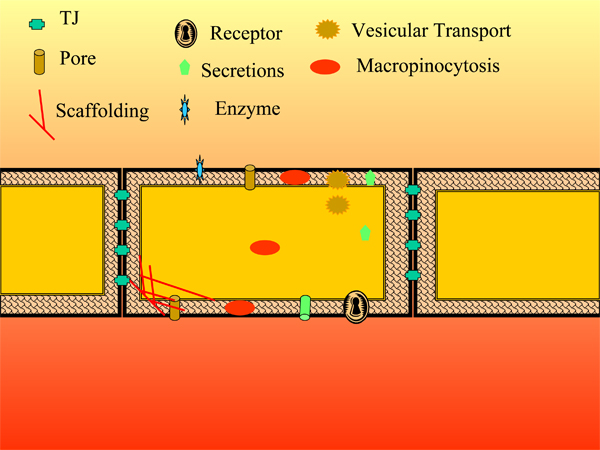
Substances cross the blood-brain barrier (BBB) by a variety of mechanisms. These include transmembrane diffusion, saturable transporters, adsorptive endocytosis, and the extracellular pathways. Here, we focus on the chief characteristics of two mechanisms especially important in drug delivery: transmembrane diffusion and transporters. Transmembrane diffusion is non-saturable and depends, on first analysis, on the physicochemical characteristics of the substance. However, brain-to-blood efflux systems, enzymatic activity, plasma protein binding, and cerebral blood flow can greatly alter the amount of the substance crossing the BBB. Transport systems increase uptake of ligands by roughly 10-fold and are modified by physiological events and disease states. Most drugs in clinical use to date are small, lipid soluble molecules that cross the BBB by transmembrane diffusion. However, many drug delivery strategies in development target peptides, regulatory proteins, oligonucleotides, glycoproteins, and enzymes for which transporters have been described in recent years. We discuss two examples of drug delivery for newly discovered transporters: that for phosphorothioate oligonucleotides and for enzymes.
Overview
The claims and statistics of this paper haven’t been checked yet.
Free: it reads the open-access text and checks the first 5 claims that cite a source we can check. Create a free account to check every claim.
Integrity signals
Registry
Cites
Statistics
Figures
Verification
Claims the paper makes
The claims and statistics of this paper haven’t been checked yet.
Free: it reads the open-access text and checks the first 5 claims that cite a source we can check. Create a free account to check every claim.
Claims other papers make about this one
Each is checked against this paper’s own text: does it say what the citing paper says it does?
The source backs part of the claim, not all of it — or backs it for a different population, condition or comparison.
In the citing paper
“Although lipophilicity is important for transmembrane diffusion through the BBB, some compounds that are too lipophilic can be discharged after crossing into the brain by the P-gp efflux transporter (Abbott, 2002; Banks, 2009).”
From A Critical Review and Meta-Analysis of Impacts of Per- and Polyfluorinated Substances on the Brain and Behavior (2022) · cites this paper as Banks, 2009
Experimental — accuracy not yet measuredIn the citing paper
“The amphipathic nature of this motif permits the crossing of biological membranes, a property that is important for traversing the blood–brain barrier and accessing cryptococcal cells that reside within the lysosome or phagolysosome of host cells114.”
From Treatment strategies for cryptococcal infection: challenges, advances and future outlook (2021) · cites this paper as [114]
In the citing paper
“BBB permeability can also be influenced by physiological factors such as efflux transporters (e.g., P-glycoprotein (P-gp)), enzymatic activity, plasma protein binding and cerebral blood flow 8.”
From Current Strategies for Brain Drug Delivery (2018) · cites this paper as [8]
Self-check
Percentages, sums and reported differences re-computed from the paper’s own numbers.
The self-check needs the paper’s full text.
Citations
Cites
Lipinski, C. A., Lombardo, F., Dominy, B. W., & Feeney, P. J. (2001) · Advanced Drug Delivery Reviews · doi:10.1016/s0169-409x(00)00129-0 · Cited by 18,139
Lipinski, C. A., Lombardo, F., Dominy, B. W., & Feeney, P. J. (1997) · Advanced Drug Delivery Reviews · doi:10.1016/s0169-409x(96)00423-1 · Cited by 11,385
FINE STRUCTURAL LOCALIZATION OF A BLOOD-BRAIN BARRIER TO EXOGENOUS PEROXIDASE
Reese, T. S., & Karnovsky, M. J. (1967) · The Journal of Cell Biology · doi:10.1083/jcb.34.1.207 · Cited by 2,629
Brain uptake of radiolabeled amino acids, amines, and hexoses after arterial injection
Oldendorf, W. (1971) · American Journal of Physiology-Legacy Content · doi:10.1152/ajplegacy.1971.221.6.1629 · Cited by 1,683
Glucagon-like peptide-1 receptor is involved in learning and neuroprotection
During, M. J., Cao, L., Zuzga, D. S., Francis, J. S., Fitzsimons, H. L., Jiao, X., Bland, R. J., Klugmann, M., Banks, W. A., Drucker, D. J., et al. (2003) · Nature Medicine · doi:10.1038/nm919 · Cited by 851 · cited 1×
“Intranasal delivery of drugs, including peptides [35], shows a great deal of promise [36].”
Self-citationLevin, V. A. (1980) · Journal of Medicinal Chemistry · doi:10.1021/jm00180a022 · Cited by 813 · cited 2×
“Levin VA: Relationship of octanol/water partition coefficient and molecular weight to rat brain capillary permeability.”
Intranasal insulin improves memory in humans
Benedict, C., Hallschmid, M., Hatke, A., Schultes, B., Fehm, H. L., Born, J., & Kern, W. (2004) · Psychoneuroendocrinology · doi:10.1016/j.psyneuen.2004.04.003 · Cited by 699 · cited 1×
“Nasal delivery of insulin, for example, has had positive effects in treating Alzheimer's disease [37,38].”
Delivery of therapeutic agents to the central nervous system: the problems and the possibilities
Begley, D. J. (2004) · Pharmacology & Therapeutics · doi:10.1016/j.pharmthera.2004.08.001 · Cited by 679 · cited 2×
“However, the endogenous compounds have poor peripheral pharmacokinetics and this limits their usefulness [3].”
Fellay, J., Marzolini, C., Meaden, E. R., Back, D. J., Buclin, T., Chave, J.-P., Decosterd, L. A., Furrer, H., Opravil, M., Pantaleo, G., et al. (2002) · The Lancet · doi:10.1016/s0140-6736(02)07276-8 · Cited by 658
Brain-immune communication pathways
Quan, N., & Banks, W. A. (2007) · Brain, Behavior, and Immunity · doi:10.1016/j.bbi.2007.05.005 · Cited by 626 · cited 1×
“These extra-barrier functions allow the BBB to influence the homeostatic, nutritive, and immune environments of the CNS and to regulate the exchange of informational molecules between the CNS and blood [4].”
Self-citation
Cited by
The blood–brain barrier and blood–tumour barrier in brain tumours and metastases
Arvanitis, C. D., Ferraro, G. B., & Jain, R. K. (2020) · Nature Reviews Cancer · doi:10.1038/s41568-019-0205-x · Cited by 1,792
Intranasal delivery of biologics to the central nervous system
Lochhead, J. J., & Thorne, R. G. (2012) · Advanced Drug Delivery Reviews · doi:10.1016/j.addr.2011.11.002 · Cited by 1,214
“Typically, only small, lipophilic molecules appreciably cross the normal, healthy BBB via transcellular passive diffusion, although some limited transport of certain peptides and peptide analogs has been reported [4].”
Current Strategies for Brain Drug Delivery
Dong, X. (2018) · Theranostics · doi:10.7150/thno.21254 · Cited by 954
Sharifi-Rad, J., Rayess, Y. E., Rizk, A. A., Sadaka, C., Zgheib, R., Zam, W., Sestito, S., Rapposelli, S., Neffe-Skocińska, K., Zielińska, D., et al. (2020) · Frontiers in Pharmacology · doi:10.3389/fphar.2020.01021 · Cited by 937
New Strategies for the Transition-Metal Catalyzed Synthesis of Aliphatic Amines
Trowbridge, A., Walton, S. M., & Gaunt, M. J. (2020) · Chemical Reviews · doi:10.1021/acs.chemrev.9b00462 · Cited by 924
Current Challenges and Opportunities in Treating Glioblastoma
Shergalis, A., Bankhead, A., Luesakul, U., Muangsin, N., & Neamati, N. (2018) · Pharmacological Reviews · doi:10.1124/pr.117.014944 · Cited by 849
“Typically, small lipophilic compounds will diffuse through the BBB; however, these properties make compounds more likely to be P-glycoprotein (Pgp) substrates or be taken up by peripheral tissues (Banks, 2009).”
Impact of microbiota on central nervous system and neurological diseases: the gut-brain axis
Ma, Q., Xing, C., Long, W., Wang, H. Y., Liu, Q., & Wang, R.-F. (2019) · Journal of Neuroinflammation · doi:10.1186/s12974-019-1434-3 · Cited by 748
Mechanism of intranasal drug delivery directly to the brain
Crowe, T. P., Greenlee, M. H. W., Kanthasamy, A. G., & Hsu, W. H. (2018) · Life Sciences · doi:10.1016/j.lfs.2017.12.025 · Cited by 721
“, glucose, leptin, ghrelin, or transferrin-bound iron) [5,6].”
Tumor-Derived Extracellular Vesicles Breach the Intact Blood–Brain Barrier via Transcytosis
Morad, G., Carman, C. V., Hagedorn, E. J., Perlin, J. R., Zon, L. I., Mustafaoglu, N., Park, T.-E., Ingber, D. E., Daisy, C. C., & Moses, M. A. (2019) · ACS Nano · doi:10.1021/acsnano.9b04397 · Cited by 560
Lochhead, J. J., Yang, J., Ronaldson, P. T., & Davis, T. P. (2020) · Frontiers in Physiology · doi:10.3389/fphys.2020.00914 · Cited by 445
Recurrent glioma clinical trial, CheckMate-143: the game is not over yet
Filley, A. C., Henriquez, M., & Dey, M. (2017) · Oncotarget · doi:10.18632/oncotarget.21586 · Cited by 386
Treatment strategies for cryptococcal infection: challenges, advances and future outlook
Iyer, K. R., Revie, N. M., Fu, C., Robbins, N., & Cowen, L. E. (2021) · Nature Reviews Microbiology · doi:10.1038/s41579-021-00511-0 · Cited by 363
Recent advances in carrier mediated nose-to-brain delivery of pharmaceutics
Bourganis, V., Kammona, O., Alexopoulos, A., & Kiparissides, C. (2018) · European Journal of Pharmaceutics and Biopharmaceutics · doi:10.1016/j.ejpb.2018.05.009 · Cited by 357
Why does the microbiome affect behaviour?
Johnson, K. V.-A., & Foster, K. R. (2018) · Nature Reviews Microbiology · doi:10.1038/s41579-018-0014-3 · Cited by 333
A Bayesian Approach to in Silico Blood-Brain Barrier Penetration Modeling
Martins, I. F., Teixeira, A. L., Pinheiro, L., & Falcao, A. O. (2012) · Journal of Chemical Information and Modeling · doi:10.1021/ci300124c · Cited by 331
A Survey of the Structures of US FDA Approved Combination Drugs
Das, P., Delost, M. D., Qureshi, M. H., Smith, D. T., & Njardarson, J. T. (2019) · Journal of Medicinal Chemistry · doi:10.1021/acs.jmedchem.8b01610 · Cited by 312
Carpenter, T. S., Kirshner, D. A., Lau, E. Y., Wong, S. E., Nilmeier, J. P., & Lightstone, F. C. (2014) · Biophysical Journal · doi:10.1016/j.bpj.2014.06.024 · Cited by 306
Diffusion of Macromolecules in the Brain: Implications for Drug Delivery
Wolak, D. J., & Thorne, R. G. (2013) · Molecular Pharmaceutics · doi:10.1021/mp300495e · Cited by 299
Bennion, B. J., Be, N. A., McNerney, M. W., Lao, V., Carlson, E. M., Valdez, C. A., Malfatti, M. A., Enright, H. A., Nguyen, T. H., Lightstone, F. C., et al. (2017) · The Journal of Physical Chemistry B · doi:10.1021/acs.jpcb.7b02914 · Cited by 280
Blood–Brain Barrier in Brain Tumors: Biology and Clinical Relevance
Mo, F., Pellerino, A., Soffietti, R., & Rudà, R. (2021) · International Journal of Molecular Sciences · doi:10.3390/ijms222312654 · Cited by 245
Current Therapeutic Advances Targeting EGFR and EGFRvIII in Glioblastoma
Padfield, E., Ellis, H. P., & Kurian, K. M. (2015) · Frontiers in Oncology · doi:10.3389/fonc.2015.00005 · Cited by 245
Jeong, S.-H., Jang, J.-H., & Lee, Y.-B. (2023) · Journal of Pharmaceutical Investigation · doi:10.1007/s40005-022-00589-5 · Cited by 256
Neuroprotective effects of resveratrol in Alzheimer disease pathology
Rege, S. D., Geetha, T., Griffin, G. D., Broderick, T. L., & Babu, J. R. (2014) · Frontiers in Aging Neuroscience · doi:10.3389/fnagi.2014.00218 · Cited by 243
“Further, to effectively penetrate the BBB, molecules must be below 500 Da in molecular weight (Banks, 2009).”
Review of Current Strategies for Delivering Alzheimer’s Disease Drugs across the Blood-Brain Barrier
Wong, K. H., Riaz, M. K., Xie, Y., Zhang, X., Liu, Q., Chen, H., Bian, Z., Chen, X., Lu, A., & Yang, Z. (2019) · International Journal of Molecular Sciences · doi:10.3390/ijms20020381 · Cited by 213
Schultz, B. G., Patten, D. K., & Berlau, D. J. (2018) · Translational Neurodegeneration · doi:10.1186/s40035-018-0110-3 · Cited by 229
Goyal, D., Shuaib, S., Mann, S., & Goyal, B. (2017) · ACS Combinatorial Science · doi:10.1021/acscombsci.6b00116 · Cited by 227
Yang, B., Li, S., Wang, H., Guo, Y., Gessler, D. J., Cao, C., Su, Q., Kramer, J., Zhong, L., Ahmed, S. S., et al. (2014) · Molecular Therapy · doi:10.1038/mt.2014.68 · Cited by 213
“A significant barrier of CNS gene-delivery is the blood brain barrier (BBB), which prevents large or hydrophilic molecules such as dopamine, chemotherapeutics and viruses from passively entering the brain [10, 11].”
Blood–Brain Barrier Breakdown in Alzheimer’s Disease: Mechanisms and Targeted Strategies
Alkhalifa, A. E., Al-Ghraiybah, N. F., Odum, J., Shunnarah, J. G., Austin, N., & Kaddoumi, A. (2023) · International Journal of Molecular Sciences · doi:10.3390/ijms242216288 · Cited by 212
“However, deviations from this cut-off point have been published [94].”
Evaluation of Recent Intranasal Drug Delivery Systems to the Central Nervous System
Crowe, T. P., & Hsu, W. H. (2022) · Pharmaceutics · doi:10.3390/pharmaceutics14030629 · Cited by 183
Development of Novel Therapeutics Targeting the Blood–Brain Barrier: From Barrier to Carrier
Li, J., Zheng, M., Shimoni, O., Banks, W. A., Bush, A. I., Gamble, J. R., & Shi, B. (2021) · Advanced Science · doi:10.1002/advs.202101090 · Cited by 202
Self-citationCurrent Strategies to Enhance Delivery of Drugs across the Blood–Brain Barrier
Teleanu, R. I., Preda, M. D., Niculescu, A.-G., Vladâcenco, O., Radu, C. I., Grumezescu, A. M., & Teleanu, D. M. (2022) · Pharmaceutics · doi:10.3390/pharmaceutics14050987 · Cited by 200
Bellotti, E., Schilling, A. L., Little, S. R., & Decuzzi, P. (2021) · Journal of Controlled Release · doi:10.1016/j.jconrel.2020.11.049 · Cited by 193
Biological barriers, and the influence of protein binding on the passage of drugs across them
Wanat, K. (2020) · Molecular Biology Reports · doi:10.1007/s11033-020-05361-2 · Cited by 178
Salameh, T. S., Rhea, E. M., Talbot, K., & Banks, W. A. (2020) · Biochemical Pharmacology · doi:10.1016/j.bcp.2020.114187 · Cited by 188
Self-citationFong, C. W. (2015) · The Journal of Membrane Biology · doi:10.1007/s00232-015-9778-9 · Cited by 178
Zhang, Q.-L., Fu, B. M., & Zhang, Z.-J. (2017) · Drug Delivery · doi:10.1080/10717544.2017.1346002 · Cited by 180
Abdelsalam, M., Ahmed, M., Osaid, Z., Hamoudi, R., & Harati, R. (2023) · Pharmaceuticals · doi:10.3390/ph16040571 · Cited by 174
Tsai, Y.-C., Vijayaraghavan, P., Chiang, W.-H., Chen, H.-H., Liu, T.-I., Shen, M.-Y., Omoto, A., Kamimura, M., Soga, K., & Chiu, H.-C. (2018) · Theranostics · doi:10.7150/thno.22482 · Cited by 183
“A small molecule drug such as mTHPC with a nonpolar nature may cross the BBB by transmembrane diffusion [54].”
Brain-Endocrine Interactions: A Microvascular Route in the Mediobasal Hypothalamus
Ciofi, P., Garret, M., Lapirot, O., Lafon, P., Loyens, A., Prévot, V., & Levine, J. E. (2009) · Endocrinology · doi:10.1210/en.2009-0584 · Cited by 160
Mechanism-based criteria to improve therapeutic outcomes in progressive multiple sclerosis
Yong, H. Y. F., & Yong, V. W. (2022) · Nature Reviews Neurology · doi:10.1038/s41582-021-00581-x · Cited by 163
Starnes, H. M., Rock, K. D., Jackson, T. W., & Belcher, S. M. (2022) · Frontiers in Toxicology · doi:10.3389/ftox.2022.881584 · Cited by 166
Liang, Y., Iqbal, Z., Lu, J., Wang, J., Zhang, H., Chen, X., Duan, L., & Xia, J. (2023) · Molecular Therapy · doi:10.1016/j.ymthe.2022.10.008 · Cited by 162
“3,4 In recent years, new strategies have been developed to facilitate the passage of drugs across the BBB, including direct intrathecal or intra-cerebroventricular injections and osmotic disruption of the BBB, but these techniques are highly invasive, and the recipients are susceptible to infection.”
Nanomaterials for Drug Delivery to the Central Nervous System
Teleanu, D. M., Negut, I., Grumezescu, V., Grumezescu, A. M., & Teleanu, R. I. (2019) · Nanomaterials · doi:10.3390/nano9030371 · Cited by 156
Challenges in drug delivery to the brain: Nature is against us
Krol, S. (2012) · Journal of Controlled Release · doi:10.1016/j.jconrel.2012.04.044 · Cited by 178
Non-Invasive Drug Delivery across the Blood–Brain Barrier: A Prospective Analysis
Niazi, S. K. (2023) · Pharmaceutics · doi:10.3390/pharmaceutics15112599 · Cited by 170
“However, these modifications often altered pharmacokinetics or diminished therapeutic efficacy, resulting in compromised treatment outcomes [25].”
Vrettos, E. I., Mező, G., & Tzakos, A. G. (2018) · Beilstein Journal of Organic Chemistry · doi:10.3762/bjoc.14.80 · Cited by 176
Vilar, S., Chakrabarti, M., & Costanzi, S. (2010) · Journal of Molecular Graphics and Modelling · doi:10.1016/j.jmgm.2010.03.010 · Cited by 149
Lawther, B. K., Kumar, S., & KROVVIDI, H. P. (2011) · Continuing Education in Anaesthesia Critical Care & Pain · doi:10.1093/bjaceaccp/mkr018 · Cited by 168
“Receptor-mediated drug delivery uses chimeric peptide technology wherein a nontransportable drug is conjugated to a transport vector, usually a modified protein- or receptor-specific monoclonal antibody, which undergoes receptor-mediated transcytosis through the BBB.”
InfluentialMolecular Mechanisms of Cancer-Induced Sleep Disruption
Walker, W. H., II, & Borniger, J. C. (2019) · International Journal of Molecular Sciences · doi:10.3390/ijms20112780 · Cited by 163
“Abbreviations 5HT Serotonin AKT Protein kinase B BBB Blood brain barrier Bcl-2 B-cell lymphoma 2 Bcl-xL B-cell lymphoma-extra large bFGF Basic fibroblast growth factor CCK Cholecystokinin CCL C-C motif chemokine ligand COX2 Cyclooxygenase-2 CRF Corticotropin releasing factor CRFR1 Corticotropin releasing factor recept…”
InfluentialCentral nervous system delivery of molecules across the blood-brain barrier
Gosselet, F., Loiola, R. A., Roig, A., Rosell, A., & Culot, M. (2021) · Neurochemistry International · doi:10.1016/j.neuint.2020.104952 · Cited by 137
“Some hydrophilic or lipophilic molecules or gas use the transcellular route directly through the BBB endothelial cells (Banks, 2009).”
Neurotoxicity induced by microcystins and cylindrospermopsin: A review
Hinojosa, M. G., Gutiérrez‐Praena, D., Prieto, A. I., Guzmán‐Guillén, R., Jos, A. M., & Cameán, A. M. (2019) · The Science of The Total Environment · doi:10.1016/j.scitotenv.2019.02.426 · Cited by 147
Biology and Models of the Blood–Brain Barrier
Hajal, C., Le Roi, B., Kamm, R. D., & Maoz, B. M. (2021) · Annual Review of Biomedical Engineering · doi:10.1146/annurev-bioeng-082120-042814 · Cited by 137
Carthy, D. J. M., Malhotra, M., O’Mahony, A., Cryan, J. F., & O’Driscoll, C. M. (2014) · Pharmaceutical Research · doi:10.1007/s11095-014-1545-6 · Cited by 164
Spontaneous penetration of gold nanoparticles through the blood brain barrier (BBB)
Sela, H., Cohen, H., Elia, P., Zach, R., Karpas, Z., & Zeiri, Y. (2015) · Journal of Nanobiotechnology · doi:10.1186/s12951-015-0133-1 · Cited by 129
Mitophagy and cGAS–STING crosstalk in neuroinflammation
Zhou, X., Wang, J., Yu, L., Qiao, G., Qin, D., Yuen-Kwan Law, B., Ren, F., Wu, J., & Wu, A. (2024) · Acta Pharmaceutica Sinica B · doi:10.1016/j.apsb.2024.05.012 · Cited by 131
Zhang, C., Moonshi, S. S., Wang, W., Ta, H. T., Han, Y., Han, F. Y., Peng, H., Král, P., Rolfe, B. E., Gooding, J. J., et al. (2018) · ACS Nano · doi:10.1021/acsnano.8b03726 · Cited by 130
Neurotheranostics as Personalized Medicines
Kevadiya, B. D., Ottemann, B. M., Thomas, M. B., Mukadam, I., Nigam, S., McMillan, J., Gorantla, S., Bronich, T. K., Edagwa, B., & Gendelman, H. E. (2019) · Advanced Drug Delivery Reviews · doi:10.1016/j.addr.2018.10.011 · Cited by 124
The Interstitial System of the Brain in Health and Disease
Shetty, A. K., & Zanirati, G. (2020) · Aging and Disease · doi:10.14336/ad.2020.0103 · Cited by 129
Vectors for Glioblastoma Gene Therapy: Viral & Non-Viral Delivery Strategies
Caffery, B., Lee, J. S., & Alexander-Bryant, A. A. (2019) · Nanomaterials · doi:10.3390/nano9010105 · Cited by 135
An Overview of Nanotechnologies for Drug Delivery to the Brain
Ayub, A., & Wettig, S. D. (2022) · Pharmaceutics · doi:10.3390/pharmaceutics14020224 · Cited by 126
Novel Central Nervous System Drug Delivery Systems
Stockwell, J., Abdi, N., Lu, X., Maheshwari, O., & Taghibiglou, C. (2014) · Chemical Biology & Drug Design · doi:10.1111/cbdd.12268 · Cited by 114
Gallego, J. A., Blanco, E. A., Husain-Krautter, S., Madeline Fagen, E., Moreno-Merino, P., del Ojo-Jiménez, J. A., Ahmed, A., Rothstein, T. L., Lencz, T., & Malhotra, A. K. (2018) · Schizophrenia Research · doi:10.1016/j.schres.2018.07.019 · Cited by 107
Dopkins, N., Nagarkatti, P. S., & Nagarkatti, M. (2018) · Immunology · doi:10.1111/imm.12903 · Cited by 122
Banks, W. A., Rhea, E. M., Reed, M. J., & Erickson, M. A. (2024) · Cell Reports Medicine · doi:10.1016/j.xcrm.2024.101760 · Cited by 127
Self-citationKamimura, H. A. S., Flament, J., Valette, J., Cafarelli, A., Badin, R. A., Hantraye, P., & Larrat, B. (2018) · Journal of Cerebral Blood Flow & Metabolism · doi:10.1177/0271678x17753514 · Cited by 109
Sokolova, V., Mekky, G., van der Meer, S. B., Seeds, M. C., Atala, A. J., & Epple, M. (2020) · Scientific Reports · doi:10.1038/s41598-020-75125-2 · Cited by 100
Immunotherapy in Glioblastoma: Current Shortcomings and Future Perspectives
Weenink, B., French, P. J., Smitt, P. A. E. S., Debets, R., & Geurts, M. (2020) · Cancers · doi:10.3390/cancers12030751 · Cited by 114
An Update on the Therapeutic Role of Alkylglycerols
Iannitti, T., & Palmieri, B. (2010) · Marine Drugs · doi:10.3390/md8082267 · Cited by 106
Natural cholinesterase inhibitors from marine organisms
Moodie, L. W. K., Sepčić, K., Turk, T., Frangež, R., & Svenson, J. (2019) · Natural Product Reports · doi:10.1039/c9np00010k · Cited by 111
Breast cancer recurrence: factors impacting occurrence and survival
Courtney, D., Davey, M. G., Moloney, B., Barry, M. K., Sweeney, K., McLaughlin, R. P., Malone, C. M., Lowery, A., & Kerin, M. J. (2022) · Irish Journal of Medical Science (1971 -) · doi:10.1007/s11845-022-02926-x · Cited by 120
DeePred-BBB: A Blood Brain Barrier Permeability Prediction Model With Improved Accuracy
Kumar, R., Sharma, A., Alexiou, A. T., Bilgrami, A. L., Kamal, M. A., & Ashraf, G. M. (2022) · Frontiers in Neuroscience · doi:10.3389/fnins.2022.858126 · Cited by 122
Brain-restricted mTOR inhibition with binary pharmacology
Zhang, Z., Fan, Q., Luo, X., Lou, K., Weiss, W. A., & Shokat, K. M. (2022) · Nature · doi:10.1038/s41586-022-05213-y · Cited by 94
Why Are the Majority of Active Compounds in the CNS Domain Natural Products? A Critical Analysis
Bharate, S. S., Mignani, S., & Vishwakarma, R. A. (2018) · Journal of Medicinal Chemistry · doi:10.1021/acs.jmedchem.7b01922 · Cited by 102
Current knowledge of environmental exposure in children during the sensitive developmental periods
Perlroth, N. H., & Branco, C. W. C. (2016) · Jornal de Pediatria · doi:10.1016/j.jped.2016.07.002 · Cited by 111
Grech, A., Tebby, C., Brochot, C., Bois, F. Y., Bado‐Nilles, A., Dorne, J. L. C. M., Quignot, N., & Beaudouin, R. (2018) · The Science of The Total Environment · doi:10.1016/j.scitotenv.2018.09.163 · Cited by 102
Blood–Brain Barrier Breakdown in Neuroinflammation: Current In Vitro Models
Brandl, S., & Reindl, M. (2023) · International Journal of Molecular Sciences · doi:10.3390/ijms241612699 · Cited by 104
Targeting Nanoparticles Across The Blood–Brain Barrier with Monoclonal Antibodies
Loureiro, J. A., Gomes, B., Coelho, M. A., Carmo Pereira, M. D., & Rocha, S. (2014) · Nanomedicine · doi:10.2217/nnm.14.27 · Cited by 98
Biomaterials-Enhanced Intranasal Delivery of Drugs as a Direct Route for Brain Targeting
Marcello, E., & Chiono, V. (2023) · International Journal of Molecular Sciences · doi:10.3390/ijms24043390 · Cited by 107
Butts, A., DiDone, L., Koselny, K., Baxter, B. K., Chabrier-Rosello, Y., Wellington, M., & Krysan, D. J. (2013) · Eukaryotic Cell · doi:10.1128/ec.00314-12 · Cited by 95
Mangraviti, A., Raghavan, T., Volpin, F., Skuli, N., Gullotti, D., Zhou, J., Asnaghi, L., Sankey, E., Liu, A., Wang, Y., et al. (2017) · Scientific Reports · doi:10.1038/s41598-017-14990-w · Cited by 93
Zielinski, M. R., Dunbrasky, D. L., Taishi, P., Souza, G., & Krueger, J. M. (2013) · Sleep · doi:10.5665/sleep.2892 · Cited by 94
Naturally Occurring Antioxidant Therapy in Alzheimer’s Disease
Collins, A. E., Saleh, T. M., & Kalisch, B. E. (2022) · Antioxidants · doi:10.3390/antiox11020213 · Cited by 102
Targeting Transporters for Drug Delivery to the Brain: Can We Do Better?
Puris, E., Fricker, G., & Gynther, M. (2022) · Pharmaceutical Research · doi:10.1007/s11095-022-03241-x · Cited by 92
Adkins, C. E., Mohammad, A. S., Terrell-Hall, T. B., Dolan, E. L., Shah, N., Sechrest, E. R., Griffith, J. I. G., & Lockman, P. R. (2016) · Clinical & Experimental Metastasis · doi:10.1007/s10585-016-9784-z · Cited by 96
Zarriello, S., Tuazon, J. P., Corey, S., Schimmel, S. J., Rajani, M., Gorsky, A., Abraham, D. I., Hammock, B. D., & Borlongan, C. V. (2018) · Progress in Neurobiology · doi:10.1016/j.pneurobio.2018.11.001 · Cited by 94
Leptomeningeal metastasis from solid tumors
Thakkar, J. P., Kumthekar, P., Dixit, K., Stupp, R., & Lukas, R. V. (2020) · Journal of the Neurological Sciences · doi:10.1016/j.jns.2020.116706 · Cited by 98
Nanostructured Lipid Carriers to Mediate Brain Delivery of Temazepam: Design and In Vivo Study
Eleraky, N. E., Omar, M. M., Mahmoud, H. A., & Abou‐Taleb, H. A. (2020) · Pharmaceutics · doi:10.3390/pharmaceutics12050451 · Cited by 94
A Systematic Review of the Biomarker S100B: Implications for Sport-Related Concussion Management
Schulte, S., Podlog, L. W., Hamson-Utley, J. J., Strathmann, F. G., & Strüder, H. K. (2014) · Journal of Athletic Training · doi:10.4085/1062-6050-49.3.33 · Cited by 88
Srinageshwar, B., Peruzzaro, S., Andrews, M., Johnson, K., Hietpas, A., Clark, B., McGuire, C., Petersen, E., Kippe, J., Stewart, A., et al. (2017) · International Journal of Molecular Sciences · doi:10.3390/ijms18030628 · Cited by 91
Adipose and skeletal muscle thermogenesis: studies from large animals
Fuller-Jackson, J.-P., & Henry, B. A. (2018) · Journal of Endocrinology · doi:10.1530/joe-18-0090 · Cited by 84
“Bloodborne factors can diffuse across the blood brain barrier via fenestrated capillaries and act directly on neurons in the arcuate nucleus (Banks 2009).”
Lochhead, J. J., Ronaldson, P. T., & Davis, T. P. (2024) · Biochemical Pharmacology · doi:10.1016/j.bcp.2024.116186 · Cited by 96
Mathew, B., Haridas, A., Uçar, G., Baysal, İ., Joy, M., Mathew, G. E., Lakshmanan, B., & Jayaprakash, V. (2016) · ChemMedChem · doi:10.1002/cmdc.201600122 · Cited by 88
PD-1/PD-L1 immune-checkpoint inhibitors in glioblastoma: A concise review
Caccese, M., Indraccolo, S., Zagonel, V., & Lombardi, G. (2019) · Critical Reviews in Oncology/Hematology · doi:10.1016/j.critrevonc.2018.12.002 · Cited by 87
The need for mathematical modelling of spatial drug distribution within the brain
Vendel, E., Rottschäfer, V., & de Lange, E. C. M. (2019) · Fluids and Barriers of the CNS · doi:10.1186/s12987-019-0133-x · Cited by 92
Advances in nanotechnology-based strategies for the treatments of amyotrophic lateral sclerosis
Wang, G., Rayner, S. L., Chung, R. S., Shi, B., & Liang, X. J. (2020) · Materials Today Bio · doi:10.1016/j.mtbio.2020.100055 · Cited by 94
Novel PEGylated Basal Insulin LY2605541 Has a Preferential Hepatic Effect on Glucose Metabolism
Moore, M. C., Smith, M. S., Sinha, V. P., Beals, J. M., Michael, M. D., Jacober, S. J., & Cherrington, A. D. (2014) · Diabetes · doi:10.2337/db13-0826 · Cited by 84
“Because of the large hydrodynamic size of LY, it might not be expected to cross the blood-brain barrier (42).”
Liposomes for the Treatment of Brain Cancer—A Review
Raju, R., Abuwatfa, W. H., Pitt, W. G., & Husseini, G. A. (2023) · Pharmaceuticals · doi:10.3390/ph16081056 · Cited by 90
“The determinants of central nervous system (CNS) penetration are subject to the influence of various factors that affect the capacity of drugs to get past the BBB to reach the brain tissue.”
InfluentialNanomaterials toward the treatment of Alzheimer’s disease: Recent advances and future trends
Zeng, H., Qi, Y., Zhang, Z., Liu, C., Peng, W., & Zhang, Y. (2021) · Chinese Chemical Letters · doi:10.1016/j.cclet.2021.01.014 · Cited by 83
Thermoreversible mucoadhesive in situ nasal gel for treatment of Parkinson’s disease
Rao, M. R. P., Agrawal, D. K., & Shirsath, C. (2016) · Drug Development and Industrial Pharmacy · doi:10.1080/03639045.2016.1225754 · Cited by 95
Osadchiy, V., Labus, J. S., Gupta, A., Jacobs, J., Ashe-McNalley, C., Hsiao, E. Y., & Mayer, E. A. (2018) · PLOS ONE · doi:10.1371/journal.pone.0201772 · Cited by 76
Metadata
- Authors
- Banks, W. A.
- Affiliations
- Veterans Health Administration (US)
- Corresponding author
- Banks, William A
- ORCID
- Banks, William A
- Venue
- BMC Neurology
- Published
- 2009
- Volume
- 9
- Issue
- Suppl 1
- Pages
- S3
- ISSN
- 1471-2377 (ISSN-L)
- PMC
- PMC2697631
- OpenAlex
- W2029206557
- Semantic Scholar
- 734a274ed2c7eb4f665b6c3f176435733ba7858e
- Cited by
- 710
- References
- 49
- Citations by year
- 2026: 37 · 2025: 54 · 2024: 62 · 2023: 77 · 2022: 77 · 2021: 63 · 2020: 72 · 2019: 48 · 2018: 65 · 2017: 36 · 2016: 24 · 2015: 24 · 2014: 18 · 2013: 17 · 2012: 8
- Type
- conference abstract
- Language
- en
- Open access
- gold
- doi.org
- Licence
- cc-by
- Locations
- BMC Neurology (publishedVersion, cc-by)
- PubMed Central (publishedVersion, cc-by)
- PubMed (publishedVersion)
- DOAJ (DOAJ: Directory of Open Access Journals) (submittedVersion)
- Funders
- Michael J. Fox Foundation for Parkinson's Research
- Eli Lilly and Company
- Sanofi
- Biogen
- National Institutes of Health
- National Institute on Aging
- National Institute of Neurological Disorders and Stroke
- Topics
- Life Sciences › Neuroscience › Neurology › Barrier Structure and Function Studies
- Health Sciences › Medicine › Oncology › Drug Transport and Resistance Mechanisms
- Physical Sciences › Materials Science › Biomaterials › Nanoparticle-Based Drug Delivery
- Keywords
- blood-brain barrier, membrane diffusion, brain drug delivery, plasma protein binding, cerebral blood flow, phosphorothioate oligonucleotides, enzyme delivery, peptide transporters, lipid-soluble drugs
- MeSH terms
- Animals, Biological Transport, Blood-Brain Barrier, Central Nervous System Agents, Humans, Drug Delivery Systems
About these checks
Registry, retraction, Cites and statistics results are computed, not judged, with one exception: a printed reference that no index lists is read once by a model before it counts as a citation error. Claims are extracted by a model and kept only when their quote appears verbatim in the text; each cited source is then checked, with a model’s help, for whether it says what the claim relies on. Those verdicts can be wrong — read the claim’s quote and the cited source before relying on one.
Statistics and arithmetic are recomputed, not judged.
Confidence bands are shown only for fields calibrated on our annotated test set. None is calibrated yet, so no band is shown.
What counts as a claim ›How we measure confidence ›How we check this ›
Are you an author, or do you see a problem with this page? Request a review
Data sources
Bibliographic data: Semantic Scholar, OpenAlex, Crossref.
Contains information from the Semantic Scholar Academic Graph Datasets, made available under the ODC Attribution License (ODC-BY 1.0).
Semantic Scholar’s data is described in: Kinney, R., et al. (2023). The Semantic Scholar Open Data Platform. arXiv:2301.10140.
