

Clean delivery practices in rural northern Ghana: a qualitative study of community and provider knowledge, attitudes, and beliefs
Open accessThe DOI matches its Crossref record; 30 of the 31 references it cites were found in a registry or an index.
Abstract
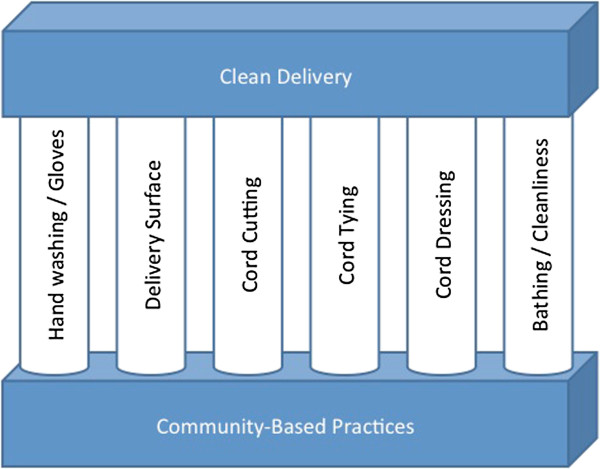
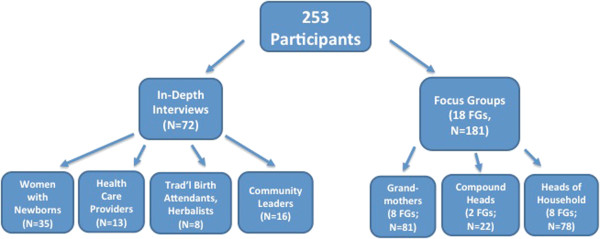
BACKGROUND: Knowledge, attitudes and practices of community members and healthcare providers in rural northern Ghana regarding clean delivery are not well understood. This study explores hand washing/use of gloves during delivery, delivering on a clean surface, sterile cord cutting, appropriate cord tying, proper cord care following delivery, and infant bathing and cleanliness. METHODS: In-depth interviews and focus group discussions were audiotaped, transcribed, and analyzed using NVivo 9.0. RESULTS: 253 respondents participated, including women with newborn infants, grandmothers, household and compound heads, community leaders, traditional birth attendants, and formally trained health care providers. There is widespread understanding of the need for clean delivery to reduce the risk of infection to both mothers and their babies during and shortly after delivery. Despite this understanding, the use of gloves during delivery and hand washing during and after delivery were mentioned infrequently. The need for a clean delivery surface was raised repeatedly, including explicit discussion of avoiding delivering in the dirt. Many activities to do with cord care involved non-sterile materials and practices: 1) Cord cutting was done with a variety of tools, and the most commonly used were razor blades or scissors; 2) Cord tying utilized a variety of materials, including string, rope, thread, twigs, and clamps; and 3) Cord care often involved applying traditional salves to the cord - including shea butter, ground shea nuts, local herbs, local oil, or "red earth sand." Keeping babies and their surroundings clean was mentioned repeatedly as an important way to keep babies from falling ill. CONCLUSIONS: This study suggests a widespread understanding in rural northern Ghana of the need for clean delivery. Nonetheless, many recommended clean delivery practices are ignored. Overarching themes emerging from this study included the increasing use of facility-based delivery, the disconnect between healthcare providers and the community, and the critical role grandmothers play in ensuring clean delivery practices. Future interventions to address clean delivery and prevention of neonatal infections include educating healthcare providers about harmful traditional practices so they are specifically addressed, strengthening facilities, and incorporating influential community members such as grandmothers to ensure success.
Overview
The claims and statistics of this paper haven’t been checked yet.
Free: it reads the open-access text and checks the first 5 claims that cite a source we can check. Create a free account to check every claim.
Integrity signals
Registry
Cites
Statistics
Figures
Verification
Claims the paper makes
The claims and statistics of this paper haven’t been checked yet.
Free: it reads the open-access text and checks the first 5 claims that cite a source we can check. Create a free account to check every claim.
Claims other papers make about this one
Each is checked against this paper’s own text: does it say what the citing paper says it does?
The source backs part of the claim, not all of it — or backs it for a different population, condition or comparison.
In the citing paper
“A study from Ghana found that 70% of mothers ignored professional advice regarding care of the umbilical cord, deferring instead to their grandmothers’ guidance [31].”
From What Prevents Quality Midwifery Care? A Systematic Mapping of Barriers in Low and Middle Income Countries from the Provider Perspective (2016) · cites this paper as [31]
Experimental — accuracy not yet measured
Self-check
Percentages, sums and reported differences re-computed from the paper’s own numbers.
The self-check needs the paper’s full text.
Citations
Cites
4 million neonatal deaths: When? Where? Why?
Lawn, J. E., Cousens, S., & Zupan, J. (2005) · The Lancet · doi:10.1016/s0140-6736(05)71048-5 · Cited by 3,670
Global, regional, and national causes of child mortality in 2008: a systematic analysis
Black, R. E., Cousens, S., Johnson, H. L., Lawn, J. E., Rudan, I., Bassani, D. G., Jha, P., Campbell, H., Walker, C. F., Cibulskis, R., et al. (2010) · The Lancet · doi:10.1016/s0140-6736(10)60549-1 · Cited by 3,058 · cited 2×
“more than one-quarter of those can be attributed to infections [1,2].”
BackgroundGhana Demographic and Health Survey 2008
Macro, I. (2009) · Cited by 1,593
Bhutta, Z. A., Darmstadt, G. L., Hasan, B. S., & Haws, R. A. (2005) · Pediatrics · doi:10.1542/peds.2004-1441 · Cited by 704 · cited 1×
“Clean delivery – including clean hands, clean delivery surface, clean cord cutting and tying, proper cord care, and bathing – is a key intervention for reducing infections in newborns [8,9].”
BackgroundLawn, J. E., & Kerber, K. J. (2006) · Cited by 544
Oestergaard, M. Z., Inoue, M., Yoshida, S., Mahanani, W. R., Gore, F. M., Cousens, S., Lawn, J. E., Mathers, C. D., & on behalf of the United Nations Inter-agency Group for Child Mortality Estimation and the Child Health Epidemiology Reference Group (2011) · PLoS Medicine · doi:10.1371/journal.pmed.1001080 · Cited by 481 · cited 1×
“high [3].”
Darmstadt, G. L., Badrawi, N., Law, P. A., Ahmed, S., Bashir, M., Iskander, I., Said, D. A., Kholy, A. E., Husein, M. H., Alam, A., et al. (2004) · The Pediatric Infectious Disease Journal · doi:10.1097/01.inf.0000133047.50836.6f · Cited by 178 · cited 3×
“Table 1 Cord Care Following Delivery Substances applied to the cord Country Authors Ash Bangladesh Alam et al., 2008 [13]; Mullany et al., 2007 [14] Boric Powder Bangladesh Moran et al., 2009 [15]; Rahman et al., 2011 [16] Coconut Oil Bangladesh Alam et al., 2008 [13]; Moran et al., 2009 [15] Cow Dung Pakistan Mull et…”
BackgroundImpact of packaged interventions on neonatal health: a review of the evidence
Haws, R. A., Thomas, A. L., Bhutta, Z. A., & Darmstadt, G. L. (2007) · Health Policy and Planning · doi:10.1093/heapol/czm009 · Cited by 160 · cited 1×
“Clean delivery – including clean hands, clean delivery surface, clean cord cutting and tying, proper cord care, and bathing – is a key intervention for reducing infections in newborns [8,9].”
BackgroundHome delivery and newborn care practices among urban women in western Nepal: a questionnaire survey
Sreeramareddy, C. T., Joshi, H. S., Sreekumaran, B. V., Giri, S., & Chuni, N. (2006) · BMC Pregnancy and Childbirth · doi:10.1186/1471-2393-6-27 · Cited by 144
Risk Factors for Umbilical Cord Infection among Newborns of Southern Nepal
Mullany, L. C., Darmstadt, G. L., Katz, J., Khatry, S. K., LeClerq, S. C., Adhikari, R. K., & Tielsch, J. M. (2006) · American Journal of Epidemiology · doi:10.1093/aje/kwj356 · Cited by 138 · cited 5×
“…al., 2008 [19] Mud Nepal Mullany et al., 2007 [14] Mustard Oil Bangladesh Alam et al., 2008 [13]; Moran et al., 2009 [15]; Rahman et al., 2011 [16]; Mullany et al., 2007 [14]; Sreeramareddy et al., 2006 [20] Shea Butter Ghana Hill et al., 2010 [10] Sunflower Seed Oil* Egypt Darmstadt et al., 2004…”
BackgroundInfluentialHousehold knowledge and practices of newborn and maternal health in Haripur district, Pakistan
Khadduri, R., Marsh, D. R., Rasmussen, B., Bari, A., Nazir, R., & Darmstadt, G. L. (2007) · Journal of Perinatology · doi:10.1038/sj.jp.7211903 · Cited by 110 · cited 1×
“…Oil Bangladesh Alam et al., 2008 [13]; Moran et al., 2009 [15] Cow Dung Pakistan Mull et al., 1990 [17] Ghee Pakistan Traverso et al., 1989 [18]; Khadduri et al., 2008 [19] Mud Nepal Mullany et al., 2007 [14] Mustard Oil Bangladesh Alam et al., 2008 [13]; Moran et al., 2009 [15]; Rahman et al.,…”
BackgroundInfluência das avós na prática do aleitamento materno
Susin, L. R. O., Giugliani, E. R. J., & Kummer, S. C. (2005) · Revista de Saúde Pública · doi:10.1590/s0034-89102005000200001 · Cited by 103
Moran, A. C., Choudhury, N., Khan, N. U. Z., Ahsan, K. Z., Wahed, T., Rashid, S. F., & Alam, A. (2009) · BMC Pregnancy and Childbirth · doi:10.1186/1471-2393-9-54 · Cited by 98 · cited 5×
“Table 1 Cord Care Following Delivery Substances applied to the cord Country Authors Ash Bangladesh Alam et al., 2008 [13]; Mullany et al., 2007 [14] Boric Powder Bangladesh Moran et al., 2009 [15]; Rahman et al., 2011 [16] Coconut Oil Bangladesh Alam et al., 2008 [13]; Moran et al., 2009 [15] Cow Dung Pakistan Mull et…”
BackgroundInfluentialStillbirths and early neonatal mortality in rural Northern Ghana
Engmann, C., Walega, P., Aborigo, R. A., Adongo, P., Moyer, C. A., Lavasani, L., Williams, J., Bose, C., Binka, F., & Hodgson, A. (2012) · Tropical Medicine & International Health · doi:10.1111/j.1365-3156.2011.02931.x · Cited by 82 · cited 1×
“[6] From 1995–2002 in the same district, 23% of early neonatal deaths and 66% of late neonatal deaths (those occurring between 7 and 28 days of life) were due to infectious causes [7].”
BackgroundSelf-citationAlam, A., Ali, N., Sultana, N., Mullany, L. C., Teela, K. C., Khan, N. U. Z., Baqui, A. H., Arifeen, S. E., Mannan, I., Darmstadt, G. L., et al. (2008) · Journal of Perinatology · doi:10.1038/jp.2008.164 · Cited by 73 · cited 6×
“Table 1 Cord Care Following Delivery Substances applied to the cord Country Authors Ash Bangladesh Alam et al., 2008 [13]; Mullany et al., 2007 [14] Boric Powder Bangladesh Moran et al., 2009 [15]; Rahman et al., 2011 [16] Coconut Oil Bangladesh Alam et al., 2008 [13]; Moran et al., 2009 [15] Cow Dung Pakistan Mull et…”
BackgroundInfluentialEffect on neonatal tetanus mortality after a culturally-based health promotion programme
Meegan, M. E., Conroy, R. M., Lengeny, S. O., Renhault, K., & Nyangole, J. (2001) · The Lancet · doi:10.1016/s0140-6736(01)05787-7 · Cited by 72
Winani, S., Wood, S., Coffey, P., Chirwa, T., Mosha, F., & Changalucha, J. (2007) · Journal of Midwifery & Women's Health · doi:10.1016/j.jmwh.2006.09.004 · Cited by 72
Trend and causes of neonatal mortality in the Kassena–Nankana district of northern Ghana, 1995–2002
Baiden, F., Hodgson, A., Adjuik, M., Adongo, P., Ayaga, B., & Binka, F. (2006) · Tropical Medicine & International Health · doi:10.1111/j.1365-3156.2006.01582.x · Cited by 68
Self-citationHill, Z. E., Manu, A. A., Tawiah‐Agyemang, C., Gyan, T., Turner, K., Weobong, B., ten Asbroek, A. H. A., & Kirkwood, B. R. (2008) · Journal of Perinatology · doi:10.1038/jp.2008.172 · Cited by 63 · cited 2×
“While such a finding has been demonstrated in the context of breastfeeding [25-28], and while research in Ghana has supported the involvement of husbands as financial decision-makers [29], to date the literature has yet to demonstrate the importance of grandmothers in preventing neonatal infection.”
BackgroundResultGrandmothers’ influence on child care
Sharma, M., & Kanani, S. (2006) · The Indian Journal of Pediatrics · doi:10.1007/bf02825822 · Cited by 60 · cited 1×
“While such a finding has been demonstrated in the context of breastfeeding [25-28], and while research in Ghana has supported the involvement of husbands as financial decision-makers [29], to date the literature has yet to demonstrate the importance of grandmothers in preventing neonatal infection.”
ResultPowell-Jackson, T., Neupane, B. D., Tiwari, S., Tumbahangphe, K., Manandhar, D., & Costello, A. M. (2009) · Advances in Health Economics and Health Services Research · doi:10.1108/s0731-2199(2009)0000021012 · Cited by 56 · cited 2×
“Incentive Programme (SDIP) [33], and the Pregnancy”
GHEE APPLICATIONS TO THE UMBILICAL CORD: A RISK FACTOR FOR NEONATAL TETANUS
Traverso, H., Kahn, A., Rahim, H., Bennett, J., Agha, S. B., Kamil, S., & Lang, M. (1989) · The Lancet · doi:10.1016/s0140-6736(89)91378-0 · Cited by 54 · cited 2×
“…et al., 2011 [16] Coconut Oil Bangladesh Alam et al., 2008 [13]; Moran et al., 2009 [15] Cow Dung Pakistan Mull et al., 1990 [17] Ghee Pakistan Traverso et al., 1989 [18]; Khadduri et al., 2008 [19] Mud Nepal Mullany et al., 2007 [14] Mustard Oil Bangladesh Alam et al., 2008 [13]; Moran et…”
BackgroundMull, D. S., Anderson, J. W., & Mull, J. D. (1990) · Social Science & Medicine · doi:10.1016/0277-9536(88)90253-5 · Cited by 53 · cited 3×
“Navrongo is the district capital, with a population of approximately 20,000.”
BackgroundNoninstitutional Births and Newborn Care Practices Among Adolescent Mothers in Bangladesh
Rahman, M., Haque, S. E., Zahan, S., & Islam, O. (2011) · Journal of Obstetric, Gynecologic & Neonatal Nursing · doi:10.1111/j.1552-6909.2011.01240.x · Cited by 35 · cited 4×
“…to the cord Country Authors Ash Bangladesh Alam et al., 2008 [13]; Mullany et al., 2007 [14] Boric Powder Bangladesh Moran et al., 2009 [15]; Rahman et al., 2011 [16] Coconut Oil Bangladesh Alam et al., 2008 [13]; Moran et al., 2009 [15] Cow Dung Pakistan Mull et al., 1990 [17] Ghee…”
BackgroundInfluentialMosha, F., Winani, S., Wood, S., Changalucha, J., & Ngasalla, B. (2006) · Tanzania Journal of Health Research · doi:10.4314/thrb.v7i3.14258 · Cited by 30
Improving Hygiene in Home Deliveries in Rural Ghana: How to Build on Current Attitudes and Practices
Hill, Z. E., Tawiah‐Agyemang, C., Okyere, E., Manu, A. A., Fenty, J., & Kirkwood, B. R. (2010) · The Pediatric Infectious Disease Journal · doi:10.1097/inf.0b013e3181f5ddb1 · Cited by 29 · cited 2×
“Table 1 Cord Care Following Delivery Substances applied to the cord Country Authors Ash Bangladesh Alam et al., 2008 [13]; Mullany et al., 2007 [14] Boric Powder Bangladesh Moran et al., 2009 [15]; Rahman et al., 2011 [16] Coconut Oil Bangladesh Alam et al., 2008 [13]; Moran et al., 2009 [15] Cow Dung Pakistan Mull et…”
BackgroundDickerson, T., Crookston, B. T., Simonsen, S. E., Sheng, X., Samen, A., & Nkoy, F. L. (2010) · The Journal of Perinatal & Neonatal Nursing · doi:10.1097/jpn.0b013e3181cc01f1 · Cited by 24
Alcohol or traditional methods versus natural drying for newborn's cord care.
Shuaib, F. M. N. E.-D., All, S. A. E.-F. A., & El-Barrawy, M. (2005) · PubMed · Cited by 20
Improving neonatal mortality in sub-Saharan Africa: any cause for optimism?
Engmann, C. (2011) · Journal of Perinatology · doi:10.1038/jp.2011.53 · Cited by 14 · cited 1×
“Given that over 40% of under 5 mortality occurs in the first 28 days of life [1] and the neonate has a 45 times higher likelihood of death in the first 28 days than from day 29 to 5 years, [12] we believe the results of this study can have a significant impact on not only neonatal and infant mortality in northern Ghan…”
BackgroundSelf-citationGrandmothers' influence on mother and child health.
Bedri, N. (1995) · PubMed · Cited by 7
Research works printed but not linked: 3
- Parlato RP Darmstadt GL Tinker A Saving Newborn Lives Tools for Newborn Health: Qualitative Research to Improve Newborn Care Practices 2004 Save the Children, Washington, DC Available at: http://resourcecentre.savethechildren.se/content/library/documents/saving-newbornlives-tools-newborn-health-qualitative-research-improve-new
- Akazili J Doctor HV Abokyi L Hodgson A Phillips JF Is there any relationship between antenatal care and place of delivery? Findings from rural northern Ghana Afr J Health Sci 2011 18 62 73
- Giugliani ERJ Kummer SC Susin LRO Influence of grandmothers on breastfeeding practices Methods 2005 39 2 141 147 15895130
Cited by
Filby, A., McConville, F., & Portela, A. (2016) · PLOS ONE · doi:10.1371/journal.pone.0153391 · Cited by 323
“A study from Ghana found that 70% of mothers ignored professional advice regarding care of the umbilical cord, deferring instead to their grandmothers’ guidance [31].”
BackgroundMunabi-Babigumira, S., Glenton, C., Lewin, S., Fretheim, A., & Nabudere, H. (2017) · Cochrane Database of Systematic Reviews · doi:10.1002/14651858.cd011558.pub2 · Cited by 214
Moyer, C. A., Adongo, P. B., Aborigo, R. A., Hodgson, A., & Engmann, C. M. (2014) · Midwifery · doi:10.1016/j.midw.2013.05.006 · Cited by 210
Self-citationUmbilical cord-care practices in low- and middle-income countries: a systematic review
Coffey, P. S., & Brown, S. C. (2017) · BMC Pregnancy and Childbirth · doi:10.1186/s12884-017-1250-7 · Cited by 137
“The intention behind applying a substance to the umbilical cord is to promote healing [7–11] and hasten the separation of the cord [7, 12–14] either by keeping the cord stump moist [10, 14, 15] or by drying it out [8, 16–20] to prevent pain/infection/bleeding [10, 12, 16, 17, 21], or to keep the “wind” (evil spirits)…”
BackgroundInfluentialMoyer, C. A., Adongo, P. B., Aborigo, R. A., Hodgson, A., Engmann, C. M., & DeVries, R. (2014) · Maternal and Child Health Journal · doi:10.1007/s10995-013-1240-y · Cited by 111
“Region of northern Ghana [38–40].”
Self-citation
Metadata
- Authors
- Moyer, C. A., Aborigo, R. A., Logonia, G., Affah, G., Rominski, S., Adongo, P. B., Williams, J., Hodgson, A., & Engmann, C.
- Affiliations
- University of Michigan (US)
- Navrongo Health Research Centre (GH)
- University of Ghana (GH)
- University of North Carolina at Chapel Hill (US)
- Corresponding author
- Moyer, Cheryl A
- Venue
- BMC Pregnancy and Childbirth
- Published
- 2012-06-15
- Volume
- 12
- Issue
- 1
- Pages
- 50-50
- ISSN
- 1471-2393 (ISSN-L)
- PMC
- PMC3482570
- OpenAlex
- W2055890459
- Cited by
- 59
- References
- 31
- Citations by year
- 2026: 2 · 2025: 2 · 2024: 1 · 2023: 2 · 2022: 2 · 2021: 8 · 2020: 4 · 2019: 2 · 2018: 2 · 2017: 6 · 2016: 8 · 2015: 3 · 2014: 8 · 2013: 7 · 2012: 2
- FWCI
- 5.62
- Type
- journal article
- Language
- en
- Open access
- gold
- doi.org
- Licence
- cc-by
- creativecommons.org/licenses/by/2.0 (tdm)
- Locations
- BMC Pregnancy and Childbirth (publishedVersion, cc-by)
- Europe PMC (PubMed Central) (publishedVersion, cc-by)
- PubMed Central (publishedVersion, cc-by)
- PubMed (publishedVersion)
- Deep Blue (University of Michigan) (submittedVersion)
- DOAJ (DOAJ: Directory of Open Access Journals) (submittedVersion, cc-by-sa)
- Greater South Information System
- Funders
- University of Michigan
- Topics
- Health Sciences › Medicine › Pediatrics, Perinatology and Child Health › Global Maternal and Child Health
- Health Sciences › Nursing › Nutrition and Dietetics › Child Nutrition and Water Access
- Health Sciences › Medicine › Obstetrics and Gynecology › Maternal and Perinatal Health Interventions
- Keywords
- neonatal infection prevention, cord care, cord-cutting, infant bathing, traditional birth attendants, grandmother, institutional delivery, rural northern Ghana
- MeSH terms
- Adult, Community Health Workers, Female, Ghana, Hand Disinfection, Health Services Research, Humans, Hygiene, Health Knowledge, Attitudes, Practice, Midwifery, Protective Clothing, Rural Population, Health Behavior, Focus Groups, Delivery, Obstetric
About these checks
Registry, retraction, Cites and statistics results are computed, not judged, with one exception: a printed reference that no index lists is read once by a model before it counts as a citation error. Claims are extracted by a model and kept only when their quote appears verbatim in the text; each cited source is then checked, with a model’s help, for whether it says what the claim relies on. Those verdicts can be wrong — read the claim’s quote and the cited source before relying on one.
Statistics and arithmetic are recomputed, not judged.
Confidence bands are shown only for fields calibrated on our annotated test set. None is calibrated yet, so no band is shown.
What counts as a claim ›How we measure confidence ›How we check this ›
Are you an author, or do you see a problem with this page? Request a review
Data sources
Bibliographic data: Semantic Scholar, OpenAlex, Crossref.
Contains information from the Semantic Scholar Academic Graph Datasets, made available under the ODC Attribution License (ODC-BY 1.0).
Semantic Scholar’s data is described in: Kinney, R., et al. (2023). The Semantic Scholar Open Data Platform. arXiv:2301.10140.
