

Necrosis related HIF-1α expression predicts prognosis in patients with endometrioid endometrial carcinoma
Open accessThe DOI matches its Crossref record; 48 of the 49 references it cites were found in a registry or an index.
Abstract
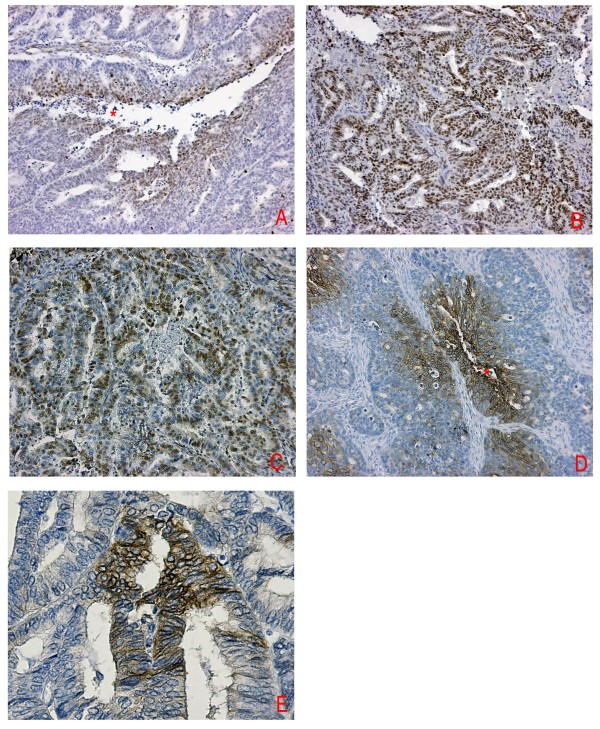
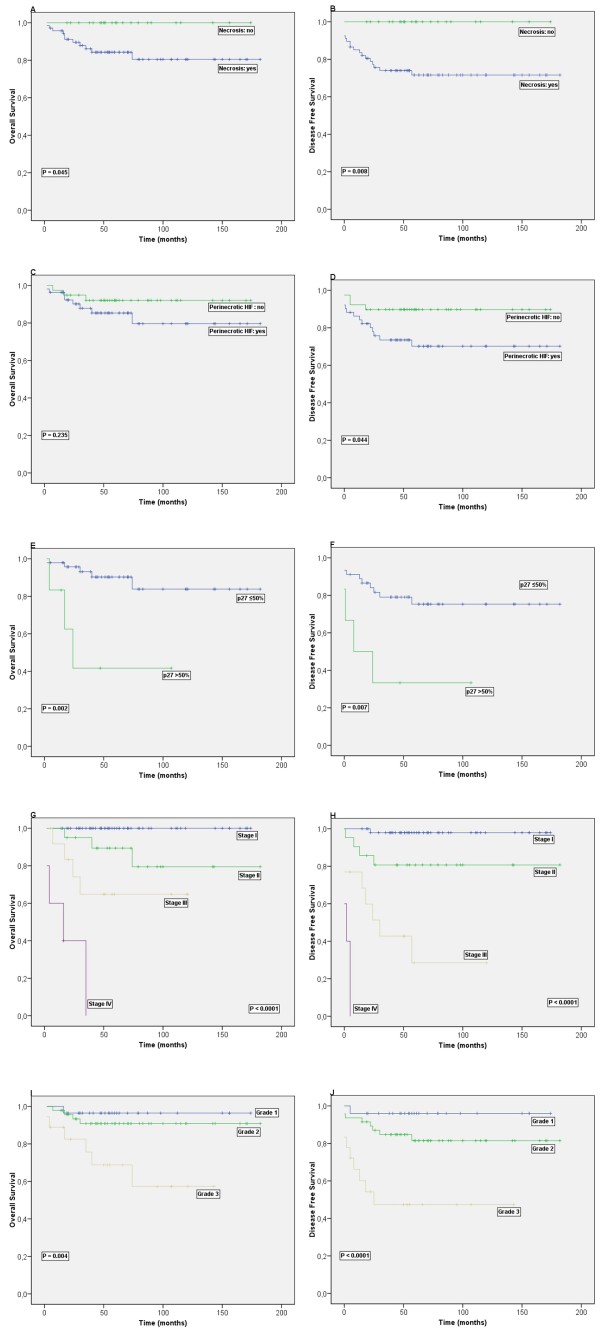
Background: Hypoxia inducible factor 1α (HIF-1α) plays an essential role in the adaptive response of cells to hypoxia and is associated with aggressive tumour behaviour. We have shown p27 kip1, which is generally reduced in endometrial cancer, to be re-expressed in hypoxic regions. This possibly contributes to survival of cancer cells. The aim of this study was to evaluate the prognostic value of HIF-1α and p27 kip expression in patients with endometrioid endometrial cancer. Methods: Expression levels of HIF-1α, CAIX, Glut-1, and p27 kip1 were analyzed by immunohistochemistry. Percentage of positive cells, staining pattern (perinecrotic, diffuse, or mixed) and presence of necrosis were noted. Results: Necrosis was correlated with shortened disease free survival (DFS) (p = 0.008) and overall survival (OS) (p = 0.045). For DFS, perinecrotic HIF-1α expression was also prognostic (p = 0.044). Moreover, high p27 kip1 expression was an additional prognostic factor for these patients with perinecrotic HIF-1α expression. In multivariate Cox regression, perinecrotic HIF-expression emerged as an independent prognostic factor. Perinecrotic HIF-1α expression was significantly associated with CAIX and Glut-1 expression, pointing towards functional HIF-1. Conclusions: In patients with endometrioid endometrial cancer, necrosis and necrosis-related expression of HIF-1α are important prognostic factors. More aggressive adjuvant treatment might be necessary to improve the outcome of patients with these characteristics.
Overview
The claims and statistics of this paper haven’t been checked yet.
Free: it reads the open-access text and checks the first 5 claims that cite a source we can check. Create a free account to check every claim.
Integrity signals
Registry
Cites
Statistics
Figures
Verification
Claims the paper makes
The claims and statistics of this paper haven’t been checked yet.
Free: it reads the open-access text and checks the first 5 claims that cite a source we can check. Create a free account to check every claim.
Claims other papers make about this one
Each is checked against this paper’s own text: does it say what the citing paper says it does?
The source backs part of the claim, not all of it — or backs it for a different population, condition or comparison.
In the citing paper
“Since necrosis is associated with extreme hypoxia, activation of HIF is commonly observed in areas surrounding necrotic regions (peri-necrotic regions), and the presence of necrosis combined with peri-necrotic HIF expression is significantly associated with poor prognosis in multiple tumor types [30, 31].”
From The HIF Axes in Cancer - Angiogenesis, Metabolism and Immune-Modulation (2025) · cites this paper as [31]
Experimental — accuracy not yet measured
Self-check
Percentages, sums and reported differences re-computed from the paper’s own numbers.
The self-check needs the paper’s full text.
Citations
Cites
Jemal, A., Siegel, R., Ward, E., Hao, Y., Xu, J., & Thun, M. J. (2009) · CA: A Cancer Journal for Clinicians · doi:10.3322/caac.20006 · Cited by 9,709
Regulation of Mammalian O 2 Homeostasis by Hypoxia-Inducible Factor 1
Semenza, G. L. (1999) · Annual Review of Cell and Developmental Biology · doi:10.1146/annurev.cellbio.15.1.551 · Cited by 1,914 · cited 2×
“Among these are growth factors, glucose transporters, glycolytic enzymes, and genes involved in gluconeogenesis, highenergy phosphate metabolism, erythropoiesis, haem metabolism, iron transport, vasomotor regulation and nitric oxide synthesis[13,15-17].”
BackgroundHIF-1: mediator of physiological and pathophysiological responses to hypoxia
Semenza, G. L. (2000) · Journal of Applied Physiology · doi:10.1152/jappl.2000.88.4.1474 · Cited by 1,822 · cited 1×
“Among these are growth factors, glucose transporters, glycolytic enzymes, and genes involved in gluconeogenesis, highenergy phosphate metabolism, erythropoiesis, haem metabolism, iron transport, vasomotor regulation and nitric oxide synthesis[13,15-17].”
BackgroundThe Pezcoller lecture: cancer cell cycles revisited.
Sherr, C. J. (2000) · PubMed · Cited by 1,441
Jiang, B. H., Semenza, G. L., Bauer, C., & Marti, H. H. (1996) · American Journal of Physiology-Cell Physiology · doi:10.1152/ajpcell.1996.271.4.c1172 · Cited by 1,213 · cited 1×
“Hypoxia inducible factor 1 (HIF-1) plays an essential role in the adaptive cellular response to hypoxia[12,13].”
BackgroundHuang, L. E., Arany, Z., Livingston, D. M., & Bunn, H. F. (1996) · Journal of Biological Chemistry · doi:10.1074/jbc.271.50.32253 · Cited by 1,190 · cited 1×
“This process is inhibited during hypoxia[ 14 ], where stabilized HIF-1α heterodimerizes with HIF-1β to transactivate target genes after nuclear translocation by binding to the consensus Hypoxia Responsive Element (HRE) 5'-RCGTG-3' in promoters and enhancers[15].”
BackgroundCREASMAN, W., ODICINO, F., MAISONNEUVE, P., QUINN, M., BELLER, U., BENEDET, J., HEINTZ, A., NGAN, H., & PECORELLI, S. (2006) · International Journal of Gynecology & Obstetrics · doi:10.1016/s0020-7292(06)60031-3 · Cited by 966
Catzavelos, C., Bhattacharya, N., Ung, Y. C., Wilson, J. A., Roncari, L., Sandhu, C., Shaw, P., Yeger, H., Morava-Protzner, I., Kapusta, L., et al. (1997) · Nature Medicine · doi:10.1038/nm0297-227 · Cited by 823 · cited 2×
“Several studies demonstrated that loss of the p27kip1 protein, as assessed by immunohistochemistry, is a negative prognostic marker in malignancies[36,37].”
Background(2000) · PubMed · Cited by 614
Creasman, W. T., Odicino, F., Maisonneuve, P., Beller, U., Benedet, J. L., Heintz, A. P. M., Ngan, H. Y. S., & Pecorelli, S. (2003) · International Journal of Gynecology & Obstetrics · doi:10.1016/s0020-7292(03)90116-0 · Cited by 579
Cited by
Interfering with Tumor Hypoxia for Radiotherapy Optimization
Telarovic, I., Wenger, R. H., & Pruschy, M. (2021) · Journal of Experimental & Clinical Cancer Research · doi:10.1186/s13046-021-02000-x · Cited by 185
Bredholt, G., Mannelqvist, M., Stefansson, I. M., Birkeland, E., Bø, T. H., Øyan, A. M., Trovik, J., Kalland, K.-H., Jonassen, I., Salvesen, H. B., et al. (2015) · Oncotarget · doi:10.18632/oncotarget.5344 · Cited by 164
“In endometrial cancer, necrosis is related to increased tumor cell proliferation, high FIGO stage, and reduced disease-specific survival [6–8].”
BackgroundPrognostic Significance of Carbonic Anhydrase IX Expression in Cancer Patients: A Meta-Analysis
van Kuijk, S. J. A., Yaromina, A., Houben, R., Niemans, R., Lambin, P., & Dubois, L. J. (2016) · Frontiers in Oncology · doi:10.3389/fonc.2016.00069 · Cited by 156
Wang, H., Zhang, C., Xu, L., Zang, K., Ning, Z., Jiang, F., Chi, H., Zhu, X., & Meng, Z. (2016) · Oncotarget · doi:10.18632/oncotarget.7935 · Cited by 116
Nanomedicine Strategies in Conquering and Utilizing the Cancer Hypoxia Environment
Pan, Y., Liu, L., Mou, X., & Cai, Y. (2023) · ACS Nano · doi:10.1021/acsnano.3c07763 · Cited by 101
Persano, L., Rampazzo, E., Puppa, A. D., Pistollato, F., & Basso, G. (2011) · The Scientific World JOURNAL · doi:10.1100/2011/736480 · Cited by 108
“Recent evidence shows that HIF-1α is also overexpressed in many human cancers and has been associated with increased patient mortality [16–22].”
The role of hypoxia inducible factor-1alpha in gynecological cancer
Seeber, L. M. S., Horrée, N., Vooijs, M., Heintz, A. P. M., van der Wall, E., Verheijen, R. H. M., & van Diest, P. J. (2010) · Critical Reviews in Oncology/Hematology · doi:10.1016/j.critrevonc.2010.05.003 · Cited by 90
Self-citationSadłecki, P., Bodnar, M., Grabiec, M., Marszałek, A., Walentowicz, P., Sokup, A., Żegarska, J., & Walentowicz‐Sadlecka, M. (2014) · BioMed Research International · doi:10.1155/2014/616850 · Cited by 87
The HIF Axes in Cancer - Angiogenesis, Metabolism and Immune-Modulation
Acuña-Pilarte, K., & Koh, M. Y. (2025) · Trends in Biochemical Sciences · doi:10.1016/j.tibs.2025.06.005 · Cited by 64
Chiu, H.-C., Li, C.-J., Yiang, G., Tsai, A. P., & Wu, M. (2019) · Journal of Clinical Medicine · doi:10.3390/jcm8040439 · Cited by 73
Expression and significance of MMP2 and HIF-1α in hepatocellular carcinoma
Wang, B., Ding, Y., Fan, P., Wang, B., Xu, J., & Wang, W. (2014) · Oncology Letters · doi:10.3892/ol.2014.2189 · Cited by 57
“Studies have shown that HIF-1α is expected to be an important indicator that contributes to predicting tumor diagnosis and recurrence, as well as in monitoring tumor invasion and metastasis (15-18).”
Expression of hypoxic markers and their prognostic significance in soft tissue sarcoma
Kim, J. I., Choi, K. U., Lee, I. S., Choi, Y. J., KIM, W. T., Shin, D. H., Kim, K., Lee, J. H., Kim, J. Y., & Sol, M. Y. (2015) · Oncology Letters · doi:10.3892/ol.2015.2914 · Cited by 51
Mouriaux, F., Sanschagrin, F., Diorio, C., Landreville, S., Comoz, F., Petit, E., Bernaudin, M., Rousseau, A. P., Bergeron, D., & Morcos, M. (2014) · Investigative Ophthalmology & Visual Science · doi:10.1167/iovs.13-13345 · Cited by 54
Overexpression of Hypoxia-Inducible Factor-1α Is a Predictor of Poor Prognosis in Cervical Cancer
Huang, M., Chen, Q., Xiao, J., Yao, T., Bian, L., Liu, C., & Lin, Z. (2014) · International Journal of Gynecological Cancer · doi:10.1097/igc.0000000000000162 · Cited by 54
“As positive control, a specimen of endometrial carcinoma with strong expression of HIF-1> was used.(17) The expression of HIF-1> was determined by 2 independent observers without knowing the information of patient’s outcome.”
Wan, J., Wu, W., Huang, Y., Ge, W., & Liu, S. (2016) · Oncology Reports · doi:10.3892/or.2016.4858 · Cited by 44
Tissue and imaging biomarkers for hypoxia predict poor outcome in endometrial cancer
Berg, A., Fasmer, K. E., Mauland, K. K., Ytre‐Hauge, S., Høivik, E. A., Husby, J. A., Tangen, I. L., Trovik, J., Halle, M. K., Woie, K., et al. (2016) · Oncotarget · doi:10.18632/oncotarget.12004 · Cited by 45
“Also in studies exploring only the nuclear expression, the prognostic value of HIF-1α is not established [11, 12].”
BackgroundKroeze, S. G. C., van Melick, H. H. E., Nijkamp, M. W., Kruse, F. K., Kruijssen, L. J. W., van Diest, P. J., Bosch, J. L. H. R., & Jans, J. J. M. (2012) · British Journal of Urology · doi:10.1111/j.1464-410x.2012.11261.x · Cited by 38
Hypoxia and hyperglycaemia determine why some endometrial tumours fail to respond to metformin
Sivalingam, V. N., Latif, A., Kitson, S., McVey, R. J., Finegan, K. G., Marshall, K. M., Lisanti, M. P., Sotgia, F., Stratford, I. J., & Crosbie, E. J. (2019) · British Journal of Cancer · doi:10.1038/s41416-019-0627-y · Cited by 36
SHARP1 Suppresses Angiogenesis of Endometrial Cancer by Decreasing Hypoxia-Inducible Factor-1α Level
Liao, Y. J., Lu, W., Che, Q., Yang, T., Qiu, H., Zhang, H., He, X., Wang, J., Qiu, M., Zou, Y., et al. (2014) · PLoS ONE · doi:10.1371/journal.pone.0099907 · Cited by 37
Rademakers, S. E., Hoogsteen, I. J., Rijken, P. F. J. W., Oosterwijk, E., Terhaard, C. H. J., Doornaert, P., Langendijk, J. A., van den Ende, P. L. A., Takes, R. P., de Bree, R., et al. (2013) · Radiotherapy and Oncology · doi:10.1016/j.radonc.2013.04.022 · Cited by 37
“A perinecrotic HIF-1a expression was a negative prognostic factor compared to a diffuse pattern in studies in breast cancer and endometrial carcinoma [21,37] and regarded as a sign of tumor aggressiveness.”
BackgroundGranular necrosis: a distinctive form of cell death in malignant tumours
Samaratunga, H., Delahunt, B., Srigley, J. R., Berney, D. M., Liang Cheng, C., Evans, A. J., Furusato, B., Leite, K. R. M., MacLennan, G. T., Martignoni, G., et al. (2020) · Pathology · doi:10.1016/j.pathol.2020.06.002 · Cited by 27
Costa, A. F., Tasso, M. G., Mariano, F. V., Soares, A. B., Chone, C. T., Crespo, A. N., Fresno, M., Llorente, J. L., Suarez, C. M., de Araújo, V. C., et al. (2012) · Histopathology · doi:10.1111/j.1365-2559.2011.04128.x · Cited by 28
“This pattern of expression has also been associated with more aggressive tumours.(26,33) In contrast, with diffuse HIF-1a expression, major downstream effects have been reported to be lacking, leading to the hypothesis that this expression pattern might be regulated by oxygen-independent mechanisms.”
BackgroundInfluentialThe recent progress of the mechanism and regulation of tumor necrosis in colorectal cancer
Zhang, X., & Chen, L. (2015) · Journal of Cancer Research and Clinical Oncology · doi:10.1007/s00432-015-1997-z · Cited by 26
Su, P., Yu, L., Mao, X., & Sun, P. (2022) · Frontiers in Oncology · doi:10.3389/fonc.2022.881252 · Cited by 31
“The expression of HIF-1a is an important prognostic factor in patients with EC and is related to myometrial invasion, histological grade, and recurrence after radiotherapy (59, 60).”
BackgroundAbouhashem, N. S., Ibrahim, D. A., & Mohamed, A. M. (2016) · Annals of Diagnostic Pathology · doi:10.1016/j.anndiagpath.2016.01.004 · Cited by 24
“Further studies on other prognostic factors could identify the need for adjuvant treatment and development of new treatment modalities [5].”
BackgroundResultvan Brussel, A. S. A., Adams, A. L. L., Vermeulen, J. F., Oliveira, S., van der Wall, E., Mali, W. P. T. M., van Diest, P. J., & Henegouwen, P. M. P. V. B. E. (2013) · Breast Cancer Research and Treatment · doi:10.1007/s10549-013-2635-6 · Cited by 24
“Since many different types of cancers are hypoxic and express CAIX [39–41], Fig.”
BackgroundSubcellular FIH-1 expression patterns in invasive breast cancer in relation to HIF-1α expression
Hyseni, A., van der Groep, P., van der Wall, E., & van Diest, P. J. (2011) · Cellular Oncology · doi:10.1007/s13402-011-0053-5 · Cited by 28
The Role of Hypoxia in Endometrial Cancer
Salinas-Vera, Y. M., Gallardo‐Rincón, D., Ruíz‐García, E., Silva-Cázares, M. B., de la Peña-Cruz, C. S., & López‐Camarillo, C. (2021) · Current Pharmaceutical Biotechnology · doi:10.2174/1389201022666210224130022 · Cited by 24
Zhou, S., Liu, R. R., Yuan, K., Yi, T., Zhao, X., Huang, C., & Wei, Y. (2012) · Mass Spectrometry Reviews · doi:10.1002/mas.21362 · Cited by 22
Zhu, P., Shen, L., Ren, Q., Zeng, Q., & Xiaocui, H. (2020) · Frontiers in Oncology · doi:10.3389/fonc.2020.587420 · Cited by 23
Chen, Z., Wu, H., Huang, S., Li, W., Zhang, S., Zheng, P., Zhou, X., Liu, W., & Zhang, D. (2015) · Cancer Biomarkers · doi:10.3233/cbm-150474 · Cited by 19
“Although hypoxia induces autophagy via BNIP3 as a pro-deathmechanism, this progress has always been claimed to be a prosurvival mechanism promoting tumor progression by removing of potentially toxic damaged proteins and organelles [28].”
BackgroundJin, Y., Wang, H., Ma, X., Liang, X., Liu, X., & Wang, Y. (2015) · PLoS ONE · doi:10.1371/journal.pone.0127229 · Cited by 17
Poor outcome in hypoxic endometrial carcinoma is related to vascular density
Reijnen, C., van Weelden, W. J., Arts, M. S. J. P., Peters, J. P., Rijken, P. F. J. W., de Vijver, K. K. V., Santacana, M., Bronsert, P., Bulten, J., Hirschfeld, M., et al. (2019) · British Journal of Cancer · doi:10.1038/s41416-019-0461-2 · Cited by 16
Expression of Glut-1 in Normal Endometrium and Endometrial Lesions: Analysis of 336 Cases
Němejcová, K., Rosmusová, J., Bártů, M., Důra, M., Tichá, I., & Dundr, P. (2016) · International Journal of Surgical Pathology · doi:10.1177/1066896916683510 · Cited by 14
Carbogen gas and radiotherapy outcomes in prostate cancer
Yip, K., & Alonzi, R. (2012) · Therapeutic Advances in Urology · doi:10.1177/1756287212452195 · Cited by 12
“…effectors have been found to be of prognostic significance in radiotherapy studies across a range of tumour sites [Haber et al. 1998; Birner et al. 2000; Airley et al. 2001; Cooper et al. 2003; Hoskin et al. 2003; De Schutter et al. 2005; Eckert et al. 2010; Jans et al. 2010; Seeber et al. 2010].”
BackgroundStegeman, H., Rademakers, S. E., Span, P. N., Takes, R. P., van der Kogel, A. J., Kaanders, J. H. A. M., & Bussink, J. (2013) · Head & Neck · doi:10.1002/hed.23446 · Cited by 14
“Primary tumors with perinecrotic expression of HIF-1a have a worse prognosis compared to tumors with a diffuse expression pattern.(35,36) Recent data from our own laboratory indicate that the pattern more than the extent of expression of CAIX predicts prognosis in patients with HNSCC.”
BackgroundZhang, Y., Bao, X., Wang, Y., Li, L., Liu, L., & Wu, Q. (2025) · Biomarker Research · doi:10.1186/s40364-025-00836-5 · Cited by 10
Kim, G., Bhattarai, P. Y., & Choi, H. S. (2019) · Archives of Pharmacal Research · doi:10.1007/s12272-019-01122-3 · Cited by 9
Geetha, A. V. S., Harithpriya, K., Ganesan, K., & Ramkumar, K. M. (2025) · Current Oncology · doi:10.3390/curroncol32020106 · Cited by 10
Al‐Sharaky, D. R., Abdou, A. G., Wahed, M. M. A., & Kasem, H. A. (2016) · JOURNAL OF CLINICAL AND DIAGNOSTIC RESEARCH · doi:10.7860/jcdr/2016/19576.7805 · Cited by 12
Inoue, A., Yamaguchi, K. D., Kurata, Y., Murakami, R., Abiko, K., Hamanishi, J., Kondoh, E., Baba, T., Kido, A., Konishi, I., et al. (2017) · Journal of Gynecologic Oncology · doi:10.3802/jgo.2017.28.e62 · Cited by 5
Mhawech-Fauceglia, P. Y., Wang, D., Samrao, D., Meneses, T., Godoy, H. E., Ough, F., Lele, S., Liu, S., & Pejovic, T. B. (2012) · BMJ Open · doi:10.1136/bmjopen-2012-001450 · Cited by 4
More, M., Varankar, S., Naik, R. R., Dhake, R. D., Ray, P., Bankar, R., Mali, A. M., Subbalakshmi, A. R., Chakraborty, P., Jolly, M. K., et al. (2022) · Cells Tissues Organs · doi:10.1159/000526432 · Cited by 2
“Table S5) [Sowter et al., 2001; Imai et al., 2003; Seeber et al., 2010; Du et al., 2012; Lu et al., 2013; Balamurugan, 2016; Chanmee et al., 2016; D’Ignazio et al., 2016; Han et al., 2016; Schaefer et al., 2017; Jolly et al., 2018].”
Prädiktive und prognostische Marker beim Endometriumkarzinom
Steiner, E., Einenkel, J., Schmidt, D., & Horn, L.-C. (2012) · Der Onkologe · doi:10.1007/s00761-012-2289-8 · Cited by 4
Çerçi, S. S., Yalçın, Y., Bozkurt, K. K., Erdemoglu, E., Tatar, B., & Erdemoğlu, E. (2015) · PubMed · Cited by 2
Sun, Q., Wu, J. T., Wang, G., Niu, H., Cao, J., Chen, Z., & Yang, W. (2024) · Translational Cancer Research · doi:10.21037/tcr-24-1042 · Cited by 1
Handayani, S. I., Rahmiati, R., Rahmadi, L., Rosmalena, R., & Prasasty, V. D. (2018) · Biomedical & Pharmacology Journal · doi:10.13005/bpj/1492 · Cited by 1
Atta, I. S. (2019) · Journal of Microscopy and Ultrastructure · doi:10.4103/jmau.jmau_54_18 · Cited by 1
Renal cellcarcinoma: advances in minimally invasive treatments and outcome prediction
Kroeze, S. G. C. (2012) · Utrecht University Repository (Utrecht University)
Immunohistochemistry as Biomarker Platform in Endometrial Cancer
Nam, J., Park, J., Baek, M., Han, J.-H., Han, W.-S., & Ko, A.-R. (2015) · Biomarkers in disease · doi:10.1007/978-94-007-7681-4_42
Glucose transporter-1 (GLUT-1) expression in endometrial lesions
YAMAGUCHI, T., Kawahara, A., TAIRA, T., Hideyuki, A. B. E., Naito, Y., Sanada, S., Ota, S., Ushijima, K., Kamura, T., & Kage, M. (2012) · 日本臨床細胞学会雑誌 · doi:10.5795/jjscc.51.267
Kroeze, S. G. C., van Melick, H. H. E., Nijkamp, M. W., Kruse, F. K., Kruijssen, L. J. W., van Diest, P. J., Bosch, J. L. H. R., & Jans, J. J. M. (2013) · Tijdschrift voor Urologie · doi:10.1007/s13629-013-0002-3
Immunohistochemistry as Biomarker Platform in Endometrial Cancer
Nam, J., Park, J., Baek, M., Han, J.-H., Han, W.-S., & Ko, A.-R. (2014) · Springer eBooks · doi:10.1007/978-94-007-7744-6_42-1
Zinovkin, D. A., & Nadyrov, E. A. (2015) · Health and Ecology Issues · doi:10.51523/2708-6011.2015-12-3-10
Tie1 et la transition endothélio-mésenchymateuse
Garcia, J. (2013) · theses.fr (ABES) · doi:10.70675/063d32edz5c5cz44e7zb912z0fa2bc96180b
Metadata
- Authors
- Seeber, L. M., Horrée, N., van der Groep, P., van der Wall, E., Verheijen, R. H., & van Diest, P. J.
- Affiliations
- University Medical Center Utrecht (NL)
- ORCID
- Verheijen, René HM
- Venue
- BMC Cancer
- Published
- 2010-06-19
- Volume
- 10
- Issue
- 1
- Pages
- 307-307
- ISSN
- 1471-2407 (ISSN-L)
- PMC
- PMC2909981
- OpenAlex
- W2014648810
- Cited by
- 55
- References
- 49
- Citations by year
- 2025: 3 · 2024: 1 · 2023: 1 · 2022: 2 · 2021: 2 · 2020: 2 · 2019: 5 · 2018: 1 · 2017: 1 · 2016: 7 · 2015: 8 · 2014: 6 · 2013: 5 · 2012: 8
- FWCI
- 1.61
- Type
- journal article
- Language
- en
- Open access
- gold
- doi.org
- Licence
- Locations
- BMC Cancer (publishedVersion, cc-by)
- PubMed Central (publishedVersion, cc-by)
- PubMed (publishedVersion)
- DOAJ (DOAJ: Directory of Open Access Journals) (submittedVersion)
- Funders
- KWF Kankerbestrijding
- Topics
- Life Sciences › Biochemistry, Genetics and Molecular Biology › Cancer Research › Cancer, Hypoxia, and Metabolism
- Health Sciences › Medicine › Obstetrics and Gynecology › Endometrial and Cervical Cancer Treatments
- Life Sciences › Biochemistry, Genetics and Molecular Biology › Cancer Research › Breast Cancer Treatment Studies
- Keywords
- HIF-1α, endometrioid endometrial cancer, tumor necrosis, p27, CAIX, GLUT1, prognostic factors, disease-free survival, overall survival, tumor hypoxia
- MeSH terms
- Carbonic Anhydrase IX, Adult, Aged, Aged, 80 and over, Hypoxia, Antigens, Neoplasm, Carbonic Anhydrases, Female, Humans, Immunoenzyme Techniques, Middle Aged, Necrosis, Biomarkers, Tumor, Survival Rate, Endometrial Neoplasms, Carcinoma, Endometrioid, Intracellular Signaling Peptides and Proteins, Cyclin-Dependent Kinase Inhibitor p27, Glucose Transporter Type 1, Hypoxia-Inducible Factor 1, alpha Subunit
About these checks
Registry, retraction, Cites and statistics results are computed, not judged, with one exception: a printed reference that no index lists is read once by a model before it counts as a citation error. Claims are extracted by a model and kept only when their quote appears verbatim in the text; each cited source is then checked, with a model’s help, for whether it says what the claim relies on. Those verdicts can be wrong — read the claim’s quote and the cited source before relying on one.
Statistics and arithmetic are recomputed, not judged.
Confidence bands are shown only for fields calibrated on our annotated test set. None is calibrated yet, so no band is shown.
What counts as a claim ›How we measure confidence ›How we check this ›
Are you an author, or do you see a problem with this page? Request a review
Data sources
Bibliographic data: Semantic Scholar, OpenAlex, Crossref.
Contains information from the Semantic Scholar Academic Graph Datasets, made available under the ODC Attribution License (ODC-BY 1.0).
Semantic Scholar’s data is described in: Kinney, R., et al. (2023). The Semantic Scholar Open Data Platform. arXiv:2301.10140.
