

Necrosis related HIF-1α expression predicts prognosis in patients with endometrioid endometrial carcinoma
Open accessThe DOI matches its Crossref record; 48 of the 49 references it cites were found in a registry or an index.
Abstract
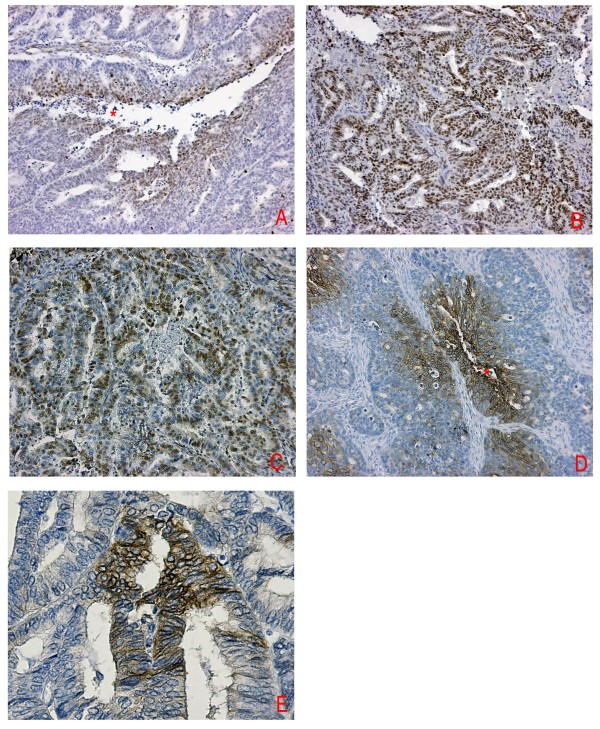
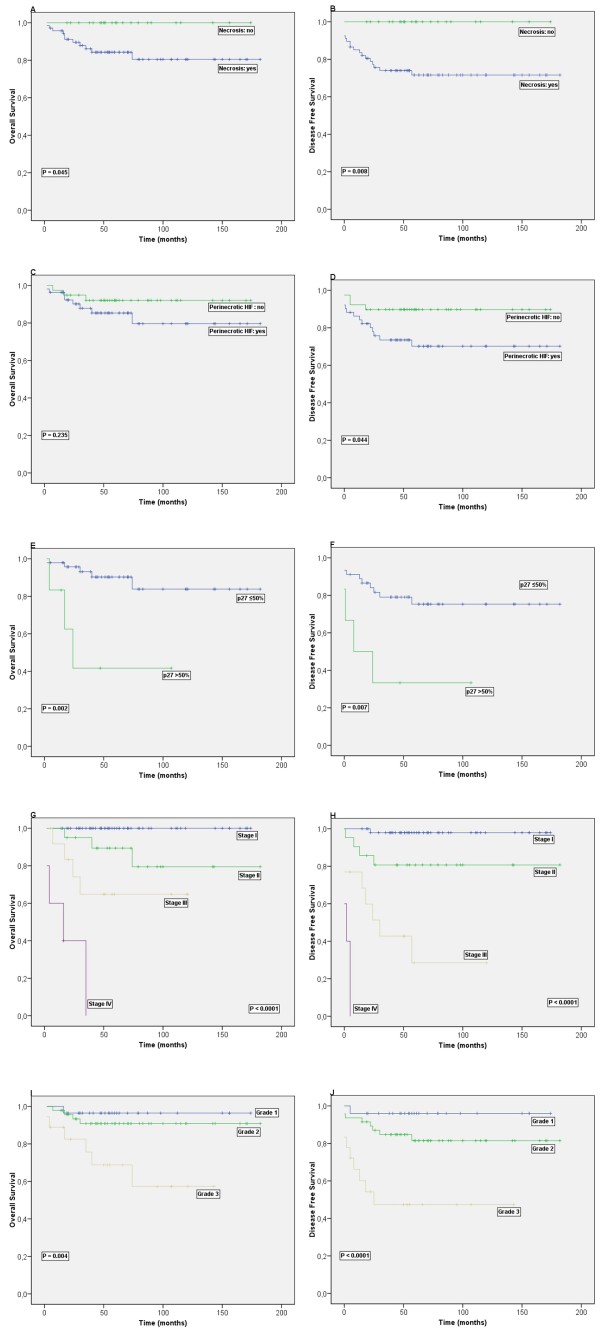
Background: Hypoxia inducible factor 1α (HIF-1α) plays an essential role in the adaptive response of cells to hypoxia and is associated with aggressive tumour behaviour. We have shown p27 kip1, which is generally reduced in endometrial cancer, to be re-expressed in hypoxic regions. This possibly contributes to survival of cancer cells. The aim of this study was to evaluate the prognostic value of HIF-1α and p27 kip expression in patients with endometrioid endometrial cancer. Methods: Expression levels of HIF-1α, CAIX, Glut-1, and p27 kip1 were analyzed by immunohistochemistry. Percentage of positive cells, staining pattern (perinecrotic, diffuse, or mixed) and presence of necrosis were noted. Results: Necrosis was correlated with shortened disease free survival (DFS) (p = 0.008) and overall survival (OS) (p = 0.045). For DFS, perinecrotic HIF-1α expression was also prognostic (p = 0.044). Moreover, high p27 kip1 expression was an additional prognostic factor for these patients with perinecrotic HIF-1α expression. In multivariate Cox regression, perinecrotic HIF-expression emerged as an independent prognostic factor. Perinecrotic HIF-1α expression was significantly associated with CAIX and Glut-1 expression, pointing towards functional HIF-1. Conclusions: In patients with endometrioid endometrial cancer, necrosis and necrosis-related expression of HIF-1α are important prognostic factors. More aggressive adjuvant treatment might be necessary to improve the outcome of patients with these characteristics.
Overview
The claims and statistics of this paper haven’t been checked yet.
Free: it reads the open-access text and checks the first 5 claims that cite a source we can check. Create a free account to check every claim.
Integrity signals
Registry
Cites
Statistics
Figures
Verification
Claims the paper makes
The claims and statistics of this paper haven’t been checked yet.
Free: it reads the open-access text and checks the first 5 claims that cite a source we can check. Create a free account to check every claim.
Claims other papers make about this one
Each is checked against this paper’s own text: does it say what the citing paper says it does?
The source backs part of the claim, not all of it — or backs it for a different population, condition or comparison.
In the citing paper
“Since necrosis is associated with extreme hypoxia, activation of HIF is commonly observed in areas surrounding necrotic regions (peri-necrotic regions), and the presence of necrosis combined with peri-necrotic HIF expression is significantly associated with poor prognosis in multiple tumor types [30, 31].”
From The HIF Axes in Cancer - Angiogenesis, Metabolism and Immune-Modulation (2025) · cites this paper as [31]
Experimental — accuracy not yet measured
Self-check
Percentages, sums and reported differences re-computed from the paper’s own numbers.
The self-check needs the paper’s full text.
Citations
Cites
Jemal, A., Siegel, R., Ward, E., Hao, Y., Xu, J., & Thun, M. J. (2009) · CA: A Cancer Journal for Clinicians · doi:10.3322/caac.20006 · Cited by 9,709
Regulation of Mammalian O 2 Homeostasis by Hypoxia-Inducible Factor 1
Semenza, G. L. (1999) · Annual Review of Cell and Developmental Biology · doi:10.1146/annurev.cellbio.15.1.551 · Cited by 1,914 · cited 2×
“Among these are growth factors, glucose transporters, glycolytic enzymes, and genes involved in gluconeogenesis, highenergy phosphate metabolism, erythropoiesis, haem metabolism, iron transport, vasomotor regulation and nitric oxide synthesis[13,15-17].”
BackgroundHIF-1: mediator of physiological and pathophysiological responses to hypoxia
Semenza, G. L. (2000) · Journal of Applied Physiology · doi:10.1152/jappl.2000.88.4.1474 · Cited by 1,822 · cited 1×
“Among these are growth factors, glucose transporters, glycolytic enzymes, and genes involved in gluconeogenesis, highenergy phosphate metabolism, erythropoiesis, haem metabolism, iron transport, vasomotor regulation and nitric oxide synthesis[13,15-17].”
BackgroundThe Pezcoller lecture: cancer cell cycles revisited.
Sherr, C. J. (2000) · PubMed · Cited by 1,432
Jiang, B. H., Semenza, G. L., Bauer, C., & Marti, H. H. (1996) · American Journal of Physiology-Cell Physiology · doi:10.1152/ajpcell.1996.271.4.c1172 · Cited by 1,213 · cited 1×
“Hypoxia inducible factor 1 (HIF-1) plays an essential role in the adaptive cellular response to hypoxia[12,13].”
BackgroundHuang, L. E., Arany, Z., Livingston, D. M., & Bunn, H. F. (1996) · Journal of Biological Chemistry · doi:10.1074/jbc.271.50.32253 · Cited by 1,190 · cited 1×
“This process is inhibited during hypoxia[ 14 ], where stabilized HIF-1α heterodimerizes with HIF-1β to transactivate target genes after nuclear translocation by binding to the consensus Hypoxia Responsive Element (HRE) 5'-RCGTG-3' in promoters and enhancers[15].”
BackgroundCREASMAN, W., ODICINO, F., MAISONNEUVE, P., QUINN, M., BELLER, U., BENEDET, J., HEINTZ, A., NGAN, H., & PECORELLI, S. (2006) · International Journal of Gynecology & Obstetrics · doi:10.1016/s0020-7292(06)60031-3 · Cited by 966
Catzavelos, C., Bhattacharya, N., Ung, Y. C., Wilson, J. A., Roncari, L., Sandhu, C., Shaw, P., Yeger, H., Morava-Protzner, I., Kapusta, L., et al. (1997) · Nature Medicine · doi:10.1038/nm0297-227 · Cited by 823 · cited 2×
“Several studies demonstrated that loss of the p27kip1 protein, as assessed by immunohistochemistry, is a negative prognostic marker in malignancies[36,37].”
Background(2000) · PubMed · Cited by 614
Creasman, W. T., Odicino, F., Maisonneuve, P., Beller, U., Benedet, J. L., Heintz, A. P. M., Ngan, H. Y. S., & Pecorelli, S. (2003) · International Journal of Gynecology & Obstetrics · doi:10.1016/s0020-7292(03)90116-0 · Cited by 579
Bos, R., van der Groep, P., Greijer, A. E., Shvarts, A., Meijer, S., Pinedo, H. M., Semenza, G. L., van Diest, P. J., & van der Wall, E. (2003) · Cancer · doi:10.1002/cncr.11246 · Cited by 500 · cited 6×
“In the present study, the cut off value for prognostic value of HIF-1α was 35%, much higher than in other studies where the cut off varied between 1% and 5%[6,41].”
BackgroundMethodResultInfluentialLoncaster, J. A., Harris, A. L., Davidson, S. E., Logue, J. P., Hunter, R. D., Wycoff, C. C., Pastorek, J., Ratcliffe, P. J., Stratford, I. J., & West, C. (2001) · PubMed · Cited by 482
Hypoxic gene expression and metastasis
Le, Q.-T., Denko, N. C., & Giaccia, A. J. (2004) · Cancer and Metastasis Reviews · doi:10.1023/b:canc.0000031768.89246.d7 · Cited by 468 · cited 1×
“Hypoxia is an important issue in carcinogenesis because it renders a more aggressive phenotype with increased invasiveness and proliferation, formation of metastases and poorer survival[4-8].”
BackgroundGreijer, A., van der Groep, P., Kemming, D., Shvarts, A., Semenza, G., Meijer, G., van de Wiel, M., Belien, J., van Diest, P., & van der Wall, E. (2005) · The Journal of Pathology · doi:10.1002/path.1778 · Cited by 440 · cited 2×
“Among these are growth factors, glucose transporters, glycolytic enzymes, and genes involved in gluconeogenesis, highenergy phosphate metabolism, erythropoiesis, haem metabolism, iron transport, vasomotor regulation and nitric oxide synthesis[13,15-17].”
Background(2002) · PubMed · Cited by 385
Giatromanolaki, A. N., Koukourakis, M. I., Sivridis, E., Pastorek, J., Wykoff, C. C., Gatter, K. C., & Harris, A. L. (2001) · PubMed · Cited by 379
Oxygen Sensing, Hypoxia-Inducible Factor-1 and the Regulation of Mammalian Gene Expression
Ratcliffe, P. J., O’rourke, J. F., Maxwell, P. H., & Pugh, C. W. (1998) · Journal of Experimental Biology · doi:10.1242/jeb.201.8.1153 · Cited by 371
Shimizu, S., Eguchi, Y., Kamiike, W., Itoh, Y., Hasegawa, J., Yamabe, K., Otsuki, Y., Matsuda, H., & Tsujimoto, Y. (1996) · PubMed · Cited by 361
Hypoxia and Anemia: Factors in Decreased Sensitivity to Radiation Therapy and Chemotherapy?
Harrison, L., & Blackwell, K. (2004) · The Oncologist · doi:10.1634/theoncologist.9-90005-31 · Cited by 349 · cited 1×
“Besides, hypoxic malignant cells are more resistant to radiotherapy and chemotherapy[9-11].”
BackgroundThe hypoxia-inducible factor-1α is a negative factor for tumor therapy
Unruh, A., Ressel, A., Mohamed, H. G., Johnson, R. S., Nadrowitz, R., Richter, E., Katschinski, D. M., & Wenger, R. H. (2003) · Oncogene · doi:10.1038/sj.onc.1206385 · Cited by 334
(2002) · PubMed · Cited by 296
No consent should be needed for using leftover body material for scientific purposesForAgainst
van Diest, P. J., & Savulescu, J. (2002) · BMJ · doi:10.1136/bmj.325.7365.648 · Cited by 265
Vleugel, M. M., Greijer, A. E., Shvarts, A., van der Groep, P., van Berkel, M., Aarbodem, Y., van Tinteren, H., Harris, A. L., van Diest, P. J., & van der Wall, E. (2005) · Journal of Clinical Pathology · doi:10.1136/jcp.2004.019885 · Cited by 227 · cited 9×
“No double staining was performed as this was done previously in breast cancer, and no further topographic analysis of staining was performed[7].”
BackgroundMethodInfluentialSivridis, E., Giatromanolaki, A., Gatter, K. C., Harris, A. L., Koukourakis, M. I., & for the Tumor and Angiogenesis Research Group (2002) · Cancer · doi:10.1002/cncr.10774 · Cited by 218 · cited 3×
“In endometrial cancer, there are some conflicting data concerning the prognostic relevance of HIF-1α, probably due to varying methodology and patient groups[ 27-30 ].”
BackgroundResultInfluentialBirner, P., Gatterbauer, B., Oberhuber, G., Schindl, M., Rössler, K., Prodinger, A., Budka, H., & Hainfellner, J. A. (2001) · Cancer · doi:10.1002/1097-0142(20010701)92:1<165::aid-cncr1305>3.0.co;2-f · Cited by 195 · cited 1×
“HIF-1α overexpression has further been shown to be correlated with a poorer survival in cancers of the brain[24], cervix[25] and ovary[26].”
BackgroundLax, S. F., Kurman, R. J., Pizer, E. S., Wu, L., & Ronnett, B. M. (2000) · The American Journal of Surgical Pathology · doi:10.1097/00000478-200009000-00002 · Cited by 159 · cited 1×
“Although necrosis is a strong independent prognostic factor for endometrial carcinoma, its clinical use may be limited because of a moderate reproducibility[45-47].”
BackgroundKurokawa, T., Miyamoto, M., Kato, K., Cho, Y., Kawarada, Y., Hida, Y., Shinohara, T., Itoh, T., Okushiba, S., Kondo, S., et al. (2003) · British Journal of Cancer · doi:10.1038/sj.bjc.6601186 · Cited by 142 · cited 1×
“Hypoxia is an important issue in carcinogenesis because it renders a more aggressive phenotype with increased invasiveness and proliferation, formation of metastases and poorer survival[4-8].”
BackgroundScholten, A. N., Smit, V. T. H. B. M., Beerman, H., van Putten, W. L. J., & Creutzberg, C. L. (2004) · Cancer · doi:10.1002/cncr.20040 · Cited by 130 · cited 2×
“The prognostic value of necrosis is in concordance with previous results by Scholten et al.[45] who showed that necrosis is a significant prognostic factor in Stage I-III endometrioid endometrial carcinoma.”
BackgroundResultOsada, R., Horiuchi, A., Kikuchi, N., Yoshida, J., Hayashi, A., Ota, M., Katsuyama, Y., Mellilo, G., & Konishi, I. (2007) · Human Pathology · doi:10.1016/j.humpath.2007.02.010 · Cited by 128 · cited 1×
“HIF-1α overexpression has further been shown to be correlated with a poorer survival in cancers of the brain[24], cervix[25] and ovary[26].”
BackgroundMasciullo, V., Sgambato, A., Pacilio, C., Pucci, B., Ferrandina, G., Palazzo, J., Carbone, A., Cittadini, A. R. M., Mancuso, S., Scambia, G., et al. (1999) · PubMed · Cited by 127
Prognostic significance of erythropoietin expression in human endometrial carcinoma
Acs, G., Xu, X., Chu, C., Acs, P., & Verma, A. (2004) · Cancer · doi:10.1002/cncr.20244 · Cited by 100 · cited 3×
“Discussion Hypoxia and its key regulator HIF-1α have been shown to play an important role in endometrial carcinogenesis[23], but contradictory results have been published as to the prognostic value of HIF-1α overexpression in endometrial carcinoma[27-30], while expression patterns have been ignored.”
BackgroundPedersen, M. W. B., Holm, S., Lund, E. L., Hojgaard, L., & Kristjansen, P. E. G. (2001) · Neoplasia · doi:10.1038/sj.neo.7900133 · Cited by 86 · cited 1×
“Previous breast cancer studies[6,7] showed that in hypoxic conditions, HIF-1α expression is seen perinecrotically, with induction of its target genes carbonic anhydrase 9 (CAIX), that plays a role in pH regulation[18] and Glut-1, a transmembrane glucose transporter [19,20].”
BackgroundStimulation of Glucose Transport by Hypoxia: Signals and Mechanisms
Behrooz, A., & Ismail-Beigi, F. (1999) · Physiology · doi:10.1152/physiologyonline.1999.14.3.105 · Cited by 85 · cited 1×
“Previous breast cancer studies[6,7] showed that in hypoxic conditions, HIF-1α expression is seen perinecrotically, with induction of its target genes carbonic anhydrase 9 (CAIX), that plays a role in pH regulation[18] and Glut-1, a transmembrane glucose transporter [19,20].”
BackgroundExpression of survivin, PTEN and p27 in normal, hyperplastic, and carcinomatous endometrium
Erkanlı, S., Kayaselçuk, F., KUSCU, E., BAGIS, T., Bolat, F. A., Haberal, A., & Demirhan, B. (2006) · International Journal of Gynecological Cancer · doi:10.1111/j.1525-1438.2006.00541.x · Cited by 76
Role of bicarbonate in the regulation of intracellular pH in the mammalian ventricular myocyte
Vaughan-Jones, R. D., & Spitzer, K. W. (2002) · Biochemistry and Cell Biology · doi:10.1139/o02-157 · Cited by 70 · cited 1×
“Previous breast cancer studies[6,7] showed that in hypoxic conditions, HIF-1α expression is seen perinecrotically, with induction of its target genes carbonic anhydrase 9 (CAIX), that plays a role in pH regulation[18] and Glut-1, a transmembrane glucose transporter [19,20].”
BackgroundGreijer, A. E., de Jong, M. C., Scheffer, G. L., Shvarts, A., van Diest, P. J., & van der Wall, E. (2005) · Analytical Cellular Pathology · doi:10.1155/2005/236045 · Cited by 62 · cited 1×
“Besides, hypoxic malignant cells are more resistant to radiotherapy and chemotherapy[9-11].”
BackgroundIncreased expression of hypoxia-inducible factor 1α in type I and type II endometrial carcinomas
Pansare, V. M., Munkarah, A. R., Schimp, V. L., Arabi, H., Saed, G. M., Morris, R. T., & Ali‐Fehmi, R. (2006) · Modern Pathology · doi:10.1038/modpathol.3800718 · Cited by 58 · cited 3×
“In endometrial cancer, there are some conflicting data concerning the prognostic relevance of HIF-1α, probably due to varying methodology and patient groups[ 27-30 ].”
BackgroundTumor hypoxia and the cell cycle: implications for malignant progression and response to therapy.
Green, S. L., & Giaccia, A. J. (1998) · PubMed · Cited by 58
Hypoxia and Angiogenesis in Endometrioid Endometrial Carcinogenesis
Horrée, N., van Diest, P. J., van der Groep, P., Sie-Go, D. M. D. S., & Heintz, A. P. M. (2007) · Analytical Cellular Pathology · doi:10.1155/2007/434731 · Cited by 50 · cited 6×
“In a previous study from our group[23] we showed that diffuse HIF-1α expression was associated with the highest microvessel density (MVD); perinecrotic and mixed patterns were associated with an intermediate MVD (p < 0.”
BackgroundMethodInfluentialSelf-citationWatanabe, J., Sato, H., Kanai, T., Kamata, Y., Jobo, T., Hata, H., Fujisawa, T., Ohno, E., Kameya, T., & Kuramoto, H. (2002) · British Journal of Cancer · doi:10.1038/sj.bjc.6600434 · Cited by 48 · cited 1×
“Only one study showed a correlation between p27kip1 expression and prognosis in endometrial cancer[43].”
BackgroundStrongly reduced expression of the cell cycle inhibitor p27 in endometrial neoplasia
Bamberger, A., Riethdorf, L., Milde‐Langosch, K., Bamberger, C. M., Thuneke, I., Erdmann, I., Schulte, H. M., & Löning, T. (1999) · Archiv für Pathologische Anatomie und Physiologie und für Klinische Medicin · doi:10.1007/s004280050361 · Cited by 40 · cited 1×
“It has been shown that p27kip1 expression is strongly reduced in endometrial cancer[33,34].”
Backgroundp27 and Cyclin D1 Abnormalities in Uterine Papillary Serous Carcinoma
Schmitz, M. J., Hendricks, D. T., Farley, J. H., Taylor, R. R., Geradts, J., Rose, G. S., & Birrer, M. J. (2000) · Gynecologic Oncology · doi:10.1006/gyno.2000.5814 · Cited by 36 · cited 1×
“It has been shown that p27kip1 expression is strongly reduced in endometrial cancer[33,34].”
BackgroundSagae, S., Saito, T., Satoh, M., Ikeda, T., Kimura, S., Mori, M., Sato, N., & Kudo, R. (2004) · Oncology · doi:10.1159/000082917 · Cited by 35 · cited 1×
“Although necrosis is a strong independent prognostic factor for endometrial carcinoma, its clinical use may be limited because of a moderate reproducibility[45-47].”
BackgroundHuang, L., Chao, S., Hwang, J.-L., & Chou, Y. (2002) · Gynecologic Oncology · doi:10.1006/gyno.2002.6666 · Cited by 29 · cited 1×
“Loss of p27kip1 expression has been reported for a number of human tumour types and has been correlated with poor prognosis and tumour aggressiveness[36,42].”
BackgroundMasciullo, V., Susini, T., Zamparelli, A., Bovicelli, A., Minimo, C., Massi, D., Taddei, G., Maggiano, N., Iaco, P. D., Ceccaroni, M., et al. (2003) · PubMed · Cited by 29
Horrée, N., Gort, E. H., van der Groep, P., Heintz, A. P. M., Vooijs, M., & van Diest, P. J. (2007) · The Journal of Pathology · doi:10.1002/path.2244 · Cited by 28 · cited 5×
“After a cooling down period of 20 minutes the slides were incubated with the primary antibody (Kip1/p27, BD Transduction Laboratories; dilution 1:500, overnight 4°C) followed by the secondary antibody (Powervision, ImmunoVision Technologies, Brisbane, CA, USA; ready to use, 30 minutes) as before[ 35 ].”
BackgroundMethodResultInfluentialSelf-citationThe Role of p27 in Endometrial Carcinoma
Nycum, L. R., Smith, L. M., Farley, J. H., Kost, E. R., Method, M. W., & Birrer, M. J. (2001) · Gynecologic Oncology · doi:10.1006/gyno.2001.6144 · Cited by 27 · cited 1×
“This is in line with the outcome of others[38,39,44].”
ResultHypoxia contributes to development of recurrent endometrial carcinoma
Pijnenborg, J. M. A., Wijnakker, M., Spijkers-Hagelstein, J. A. P., Delvoux, B., & Groothuis, P. G. (2007) · International Journal of Gynecological Cancer · doi:10.1111/j.1525-1438.2007.00893.x · Cited by 23
Cited by
Interfering with Tumor Hypoxia for Radiotherapy Optimization
Telarovic, I., Wenger, R. H., & Pruschy, M. (2021) · Journal of Experimental & Clinical Cancer Research · doi:10.1186/s13046-021-02000-x · Cited by 185
Bredholt, G., Mannelqvist, M., Stefansson, I. M., Birkeland, E., Bø, T. H., Øyan, A. M., Trovik, J., Kalland, K.-H., Jonassen, I., Salvesen, H. B., et al. (2015) · Oncotarget · doi:10.18632/oncotarget.5344 · Cited by 164
“In endometrial cancer, necrosis is related to increased tumor cell proliferation, high FIGO stage, and reduced disease-specific survival [6–8].”
BackgroundPrognostic Significance of Carbonic Anhydrase IX Expression in Cancer Patients: A Meta-Analysis
van Kuijk, S. J. A., Yaromina, A., Houben, R., Niemans, R., Lambin, P., & Dubois, L. J. (2016) · Frontiers in Oncology · doi:10.3389/fonc.2016.00069 · Cited by 156
Wang, H., Zhang, C., Xu, L., Zang, K., Ning, Z., Jiang, F., Chi, H., Zhu, X., & Meng, Z. (2016) · Oncotarget · doi:10.18632/oncotarget.7935 · Cited by 116
Nanomedicine Strategies in Conquering and Utilizing the Cancer Hypoxia Environment
Pan, Y., Liu, L., Mou, X., & Cai, Y. (2023) · ACS Nano · doi:10.1021/acsnano.3c07763 · Cited by 101
Metadata
- Authors
- Seeber, L. M., Horrée, N., van der Groep, P., van der Wall, E., Verheijen, R. H., & van Diest, P. J.
- Affiliations
- University Medical Center Utrecht (NL)
- ORCID
- Verheijen, René HM
- Venue
- BMC Cancer
- Published
- 2010-06-19
- Volume
- 10
- Issue
- 1
- Pages
- 307-307
- ISSN
- 1471-2407 (ISSN-L)
- PMC
- PMC2909981
- OpenAlex
- W2014648810
- Cited by
- 55
- References
- 49
- Citations by year
- 2025: 3 · 2024: 1 · 2023: 1 · 2022: 2 · 2021: 2 · 2020: 2 · 2019: 5 · 2018: 1 · 2017: 1 · 2016: 7 · 2015: 8 · 2014: 6 · 2013: 5 · 2012: 8
- FWCI
- 1.61
- Type
- journal article
- Language
- en
- Open access
- gold
- doi.org
- Licence
- Locations
- BMC Cancer (publishedVersion, cc-by)
- PubMed Central (publishedVersion, cc-by)
- PubMed (publishedVersion)
- DOAJ (DOAJ: Directory of Open Access Journals) (submittedVersion)
- Funders
- KWF Kankerbestrijding
- Topics
- Life Sciences › Biochemistry, Genetics and Molecular Biology › Cancer Research › Cancer, Hypoxia, and Metabolism
- Health Sciences › Medicine › Obstetrics and Gynecology › Endometrial and Cervical Cancer Treatments
- Life Sciences › Biochemistry, Genetics and Molecular Biology › Cancer Research › Breast Cancer Treatment Studies
- Keywords
- HIF-1α, endometrioid endometrial cancer, tumor necrosis, p27, CAIX, GLUT1, prognostic factors, disease-free survival, overall survival, tumor hypoxia
- MeSH terms
- Carbonic Anhydrase IX, Adult, Aged, Aged, 80 and over, Hypoxia, Antigens, Neoplasm, Carbonic Anhydrases, Female, Humans, Immunoenzyme Techniques, Middle Aged, Necrosis, Biomarkers, Tumor, Survival Rate, Endometrial Neoplasms, Carcinoma, Endometrioid, Intracellular Signaling Peptides and Proteins, Cyclin-Dependent Kinase Inhibitor p27, Glucose Transporter Type 1, Hypoxia-Inducible Factor 1, alpha Subunit
About these checks
Registry, retraction, Cites and statistics results are computed, not judged, with one exception: a printed reference that no index lists is read once by a model before it counts as a citation error. Claims are extracted by a model and kept only when their quote appears verbatim in the text; each cited source is then checked, with a model’s help, for whether it says what the claim relies on. Those verdicts can be wrong — read the claim’s quote and the cited source before relying on one.
Statistics and arithmetic are recomputed, not judged.
Confidence bands are shown only for fields calibrated on our annotated test set. None is calibrated yet, so no band is shown.
What counts as a claim ›How we measure confidence ›How we check this ›
Are you an author, or do you see a problem with this page? Request a review
Data sources
Bibliographic data: Semantic Scholar, OpenAlex, Crossref.
Contains information from the Semantic Scholar Academic Graph Datasets, made available under the ODC Attribution License (ODC-BY 1.0).
Semantic Scholar’s data is described in: Kinney, R., et al. (2023). The Semantic Scholar Open Data Platform. arXiv:2301.10140.
