

Adaptation to HIF-1 deficiency by upregulation of the AMP/ATP ratio and phosphofructokinase activation in hepatomas
Open accessThe DOI matches its Crossref record; 36 of the 36 references it cites were found in a registry or an index.
Abstract
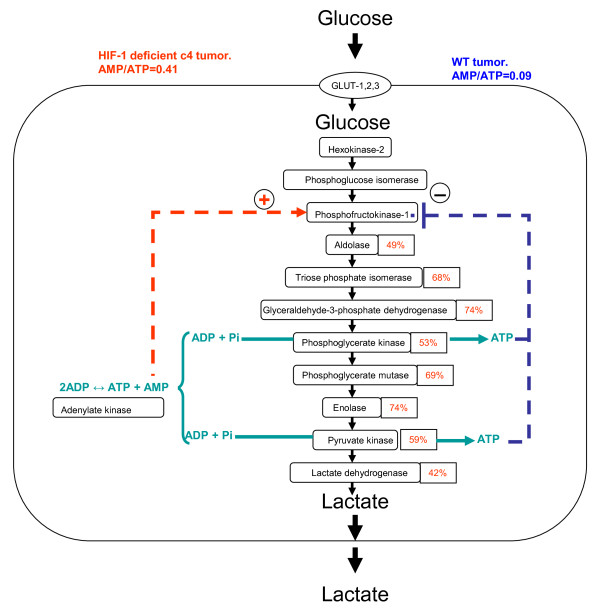
Background: HIF-1 deficiency has marked effects on tumour glycolysis and growth. We therefore investigated the consequences of HIF-1 deficiency in mice, using the well established Hepa-1 wild-type (WT) and HIF-1β-deficient (c4) model. These mechanisms could be clinically relevant, since HIF-1 is now a therapeutic target. Methods: Hepa-1 WT and c4 tumours grown in vivo were analysed by 18 FDG-PET and 19 FDG Magnetic Resonance Spectroscopy for glucose uptake; by HPLC for adenine nucleotides; by immunohistochemistry for GLUTs; by immunoblotting and by DIGE followed by tandem mass spectrometry for protein expression; and by classical enzymatic methods for enzyme activity. Results: HIF-1β deficient Hepa-1 c4 tumours grew significantly more slowly than WT tumours, and (as expected) showed significantly lower expression of many glycolytic enzymes. However, HIF-1β deficiency caused no significant change in the rate of glucose uptake in c4 tumours compared to WT when assessed in vivo by measuring fluoro-deoxyglucose (FDG) uptake. Immunohistochemistry demonstrated less GLUT-1 in c4 tumours, whereas GLUT-2 (liver type) was similar to WT. Factors that might upregulate glucose uptake independently of HIF-1 (phospho-Akt, c-Myc) were shown to have either lower or similar expression in c4 compared to WT tumours. However the AMP/ATP ratio was 4.5 fold higher (p < 0.01) in c4 tumours, and phosphofructokinase-1 (PFK-1) activity, measured at prevailing cellular ATP and AMP concentrations, was up to two-fold higher in homogenates of the deficient c4 cells and tumours compared to WT (p < 0.001), suggesting that allosteric PFK activation could explain their normal level of glycolysis. Phospho AMP-Kinase was also higher in the c4 tumours. Conclusions: Despite their defective HIF-1 and consequent down-regulation of glycolytic enzyme expression, Hepa-1 c4 tumours maintain glucose uptake and glycolysis because the resulting low [ATP] high [AMP] allosterically activate PFK-1. This mechanism of resistance would keep glycolysis functioning and also result in activation of AMP-Kinase and growth inhibition; it may have major implications for the therapeutic activity of HIF inhibitors in vivo. Interestingly, this control mechanism does not involve transcriptional control or proteomics, but rather the classical activation and inhibition mechanisms of glycolytic enzymes.
Overview
The claims and statistics of this paper haven’t been checked yet.
Free: it reads the open-access text and checks the first 5 claims that cite a source we can check. Create a free account to check every claim.
Integrity signals
Registry
Cites
Statistics
Figures
Verification
Claims the paper makes
The claims and statistics of this paper haven’t been checked yet.
Free: it reads the open-access text and checks the first 5 claims that cite a source we can check. Create a free account to check every claim.
Claims other papers make about this one
Each is checked against this paper’s own text: does it say what the citing paper says it does?
The cited source doesn’t support the claim as written.
In the citing paper
“There was an accumulation of glycolytic intermediates, with a block of conversion of fructose-1,6-bisphosphate (Fru-1,6-BP) to dihydroxyacetone phosphate (DHAP) at the level of aldolase [58] rather than the earlier step of conversion of fructose-6-phosphate (Fru-6P) to Fru-1,6BP by PFK observed in c4 cells and tumors [16].”
From HIF-1-Independent Mechanisms Regulating Metabolic Adaptation in Hypoxic Cancer Cells (2021) · cites this paper as [16]
Checked by a reasoning model — may be wrong.
Experimental — accuracy not yet measuredThe source backs part of the claim, not all of it — or backs it for a different population, condition or comparison.
In the citing paper
“Although in normal cells HIF-1 signalling occupies a central role in orchestrating the adaptive response of glycolysis to hypoxia, loss of HIF-1 in cancer cells and solid tumours paradoxically does not perturb the glycolytic phenotype [15,16,29].”
From HIF-1-Independent Mechanisms Regulating Metabolic Adaptation in Hypoxic Cancer Cells (2021) · cites this paper as [16]
Experimental — accuracy not yet measuredThe cited source says what the claim attributes to it.
In the citing paper
“there is evidence that hypoxic cancer cells can adapt metabolically to HIF-1 inhibition, which would provide a potential route for drug resistance.”
From HIF-1-Independent Mechanisms Regulating Metabolic Adaptation in Hypoxic Cancer Cells (2021) · cites this paper as [16]
The cited source says what the claim attributes to it.
In the citing paper
“Several preclinical models of HIF-1-deficient tumours initially undergo a period of slow growth before subsequently demonstrating accelerated growth, suggesting the development of resistance and escape mechanisms from the inhibition of HIF-1 [13,14,15,16].”
From HIF-1-Independent Mechanisms Regulating Metabolic Adaptation in Hypoxic Cancer Cells (2021) · cites this paper as [16]
The cited source says what the claim attributes to it.
In the citing paper
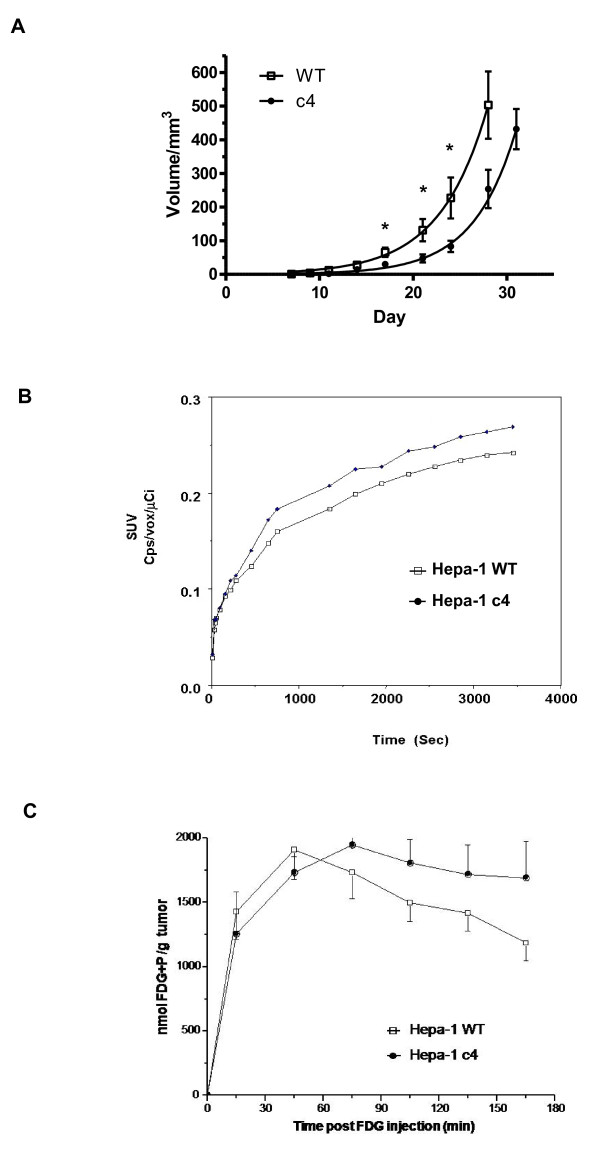
“Nonetheless, assessment of glucose uptake using FDG-PET showed no difference between Hepa c4 and Hepa WT tumours, suggesting that glycolysis in c4 tumours was unaffected by the loss of the HIF-1 pathway [16].”
From HIF-1-Independent Mechanisms Regulating Metabolic Adaptation in Hypoxic Cancer Cells (2021) · cites this paper as [16]
4 more claims about this paper
Create a free account to see every claim other papers make about this one.
Self-check
Percentages, sums and reported differences re-computed from the paper’s own numbers.
The self-check needs the paper’s full text.
Citations
Cites
Bradford, M. M. (1976) · Analytical Biochemistry · doi:10.1016/0003-2697(76)90527-3 · Cited by 255,302
Kim, J.-W., Tchernyshyov, I., Semenza, G. L., & Dang, C. V. (2006) · Cell Metabolism · doi:10.1016/j.cmet.2006.02.002 · Cited by 3,905 · cited 9×
“Antibodies for PDK1 and PDK2 were supplied and assays performed by Professor Mary Sugden using E1a as a standard.”
InfluentialThe M2 splice isoform of pyruvate kinase is important for cancer metabolism and tumour growth
Christofk, H. R., Vander Heiden, M. G., Harris, M. H., Ramanathan, A., Gerszten, R. E., Wei, R., Fleming, M. D., Schreiber, S. L., & Cantley, L. C. (2008) · Nature · doi:10.1038/nature06734 · Cited by 2,820 · cited 1×
“It was also recently shown [29] that replacement of PKM2 by normal PKM1 abolished the Warburg effect (aerobic glycolysis) in cancer cells, so overexpression of PKM2 in c4 cells might have accounted for their elevated glycolysis.”
HIF-1 mediates adaptation to hypoxia by actively downregulating mitochondrial oxygen consumption
Papandreou, I., Cairns, R. A., Fontana, L., Lim, A. L., & Denko, N. C. (2006) · Cell Metabolism · doi:10.1016/j.cmet.2006.01.012 · Cited by 2,267 · cited 5×
“Antibodies for PDK1 and PDK2 were supplied and assays performed by Professor Mary Sugden using E1a as a standard.”
Influentialc-Myc Target Genes Involved in Cell Growth, Apoptosis, and Metabolism
Dang, C. V. (1999) · Molecular and Cellular Biology · doi:10.1128/mcb.19.1.1 · Cited by 1,715
Hypoxia, HIF1 and glucose metabolism in the solid tumour
Denko, N. C. (2008) · Nature Reviews Cancer · doi:10.1038/nrc2468 · Cited by 1,707
Fantin, V. R., St-Pierre, J., & Leder, P. (2006) · Cancer Cell · doi:10.1016/j.ccr.2006.04.023 · Cited by 1,635 · cited 1×
“Three plausible candidate enzymes that have been shown to play roles in the regulation of glycolysis in various cancer tissues would be PK, PFK-1 and LDH [ 23-25 ].”
AMP-activated protein kinase induces a p53-dependent metabolic checkpoint
Jones, R. G., Plas, D. R., Kubek, S., Buzzai, M., Mu, J., Xu, Y., Birnbaum, M. J., & Thompson, C. B. (2005) · Molecular Cell · doi:10.1016/j.molcel.2005.03.027 · Cited by 1,619 · cited 1×
“The high AMP and low ATP in c4 cells are also likely to have another significant consequence: they will tend to activate AMP-activated protein kinase (AMP-K), an important metabolic control enzyme that coordinates cellular proliferation with carbon source availability [ 35 ].”
Understanding the control of metabolism
(1997) · Choice Reviews Online · doi:10.5860/choice.34-6252 · Cited by 1,231
Corton, J. M., Gillespie, J. G., Hawley, S. A., & Hardie, D. G. (1995) · European Journal of Biochemistry · doi:10.1111/j.1432-1033.1995.0558k.x · Cited by 1,230 · cited 1×
“AMP-K activation is enhanced both by low ATP concentrations and by high AMP concentrations [ 36 ].”
Maxwell, P. H., Dachs, G. U., Gleadle, J. M., Nicholls, L. G., Harris, A. L., Stratford, I. J., Hankinson, O., Pugh, C. W., & Ratcliffe, P. J. (1997) · Proceedings of the National Academy of Sciences · doi:10.1073/pnas.94.15.8104 · Cited by 1,084 · cited 6×
“However, in many cases after a period of slow growth, HIF-1 deficient tumours have shown the ability to accelerate their growth [ 3 ,4] but the mechanisms for escape from inhibition of HIF-1 function are poorly understood.”
InfluentialSelf-citationHypoxia-inducible factor 1: oxygen homeostasis and disease pathophysiology
Semenza, G. L. (2001) · Trends in Molecular Medicine · doi:10.1016/s1471-4914(01)02090-1 · Cited by 930
Pyruvate kinase type M2 and its role in tumor growth and spreading
Mazurek, S., Boschek, C. B., Hugo, F., & Eigenbrodt, E. (2005) · Seminars in Cancer Biology · doi:10.1016/j.semcancer.2005.04.009 · Cited by 812 · cited 2×
“PKM2, the embryonic form of pyruvate, might also play a role [ 23 ].”
HIF and c-Myc: Sibling Rivals for Control of Cancer Cell Metabolism and Proliferation
Gordan, J. D., Thompson, C. B., & Simon, M. C. (2007) · Cancer Cell · doi:10.1016/j.ccr.2007.07.006 · Cited by 803
Transcription Factor HIF-1 Is a Necessary Mediator of the Pasteur Effect in Mammalian Cells
Seagroves, T. N., Ryan, H. E., Lu, H., Wouters, B. G., Knapp, M., Thibault, P., Laderoute, K., & Johnson, R. S. (2001) · Molecular and Cellular Biology · doi:10.1128/mcb.21.10.3436-3444.2001 · Cited by 634 · cited 2×
“The report that HIF-1a deficient transformed astrocytes also have low ATP levels and normal rates of lactate formation [30] suggests that they too may use this mechanism to maintain their glycolytic flux despite probable downregulation of HIF-1 induced glycolytic enzyme expression.”
Is Akt the “Warburg kinase”?—Akt-energy metabolism interactions and oncogenesis
Robey, R. B., & Hay, N. (2009) · Seminars in Cancer Biology · doi:10.1016/j.semcancer.2008.11.010 · Cited by 540 · cited 10×
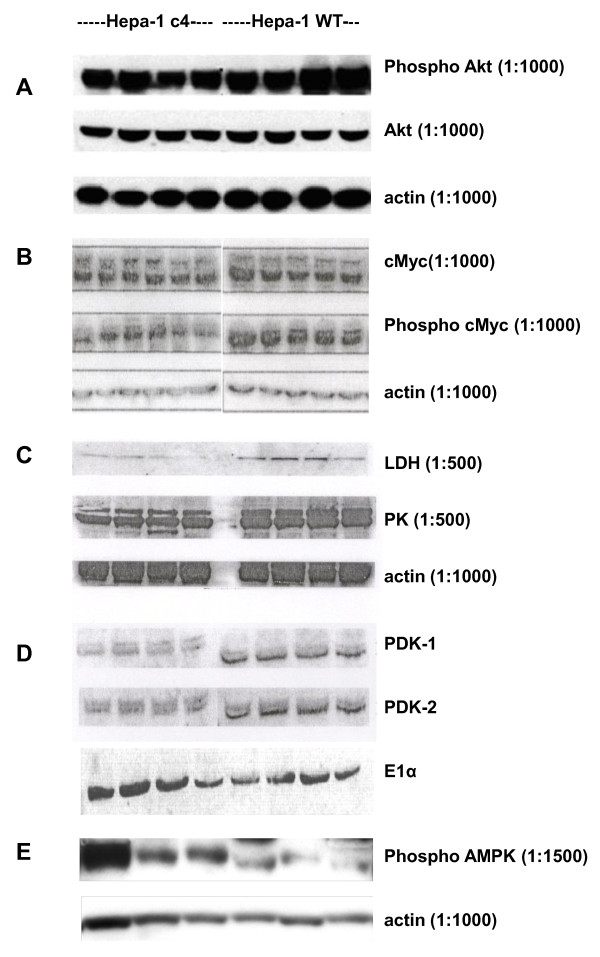
“However, western blotting showed less expression of phospho-Akt and no change in total Akt in c4 tumours (Figure 3A).”
InfluentialKim, J.-W., Zeller, K. I., Wang, Y., Jegga, A. G., Aronow, B. J., O'Donnell, K. A., & Dang, C. V. (2004) · Molecular and Cellular Biology · doi:10.1128/mcb.24.13.5923-5936.2004 · Cited by 371
Minchenko, A., Leshchinsky, I., Opentanova, I., Sang, N., Srinivas, V., Armstead, V., & Caro, J. (2002) · Journal of Biological Chemistry · doi:10.1074/jbc.m110978200 · Cited by 370
Airley, R. E., Loncaster, J. A., Davidson, S. E., Bromley, M., Roberts, S. K., Patterson, A. V., Hunter, R. D., Stratford, I. J., & West, C. (2001) · PubMed · Cited by 361
Self-citationWood, S. M., Gleadle, J. M., Pugh, C. W., Hankinson, O., & Ratcliffe, P. J. (1996) · Journal of Biological Chemistry · doi:10.1074/jbc.271.25.15117 · Cited by 292 · cited 1×
“The c4 cells were originally derived from the murine hepatoma line Hepa1c2c7 (Hepa-1 WT) [ 11 ].”
Airley, R. E., Loncaster, J., Raleigh, J. A., Harris, A. L., Davidson, S. E., Hunter, R. D., West, C. M. L., & Stratford, I. J. (2003) · International Journal of Cancer · doi:10.1002/ijc.10904 · Cited by 221 · cited 1×
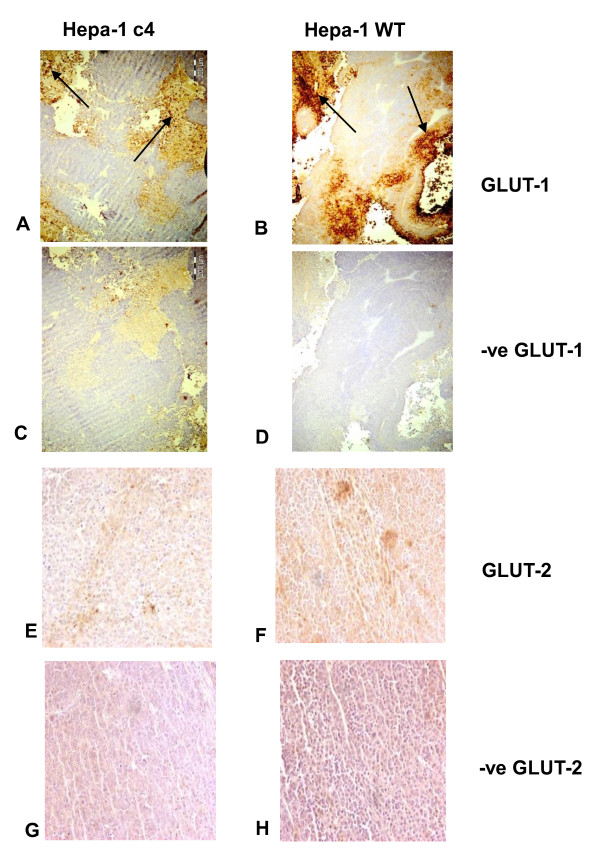
“Immunostaining for GLUT-1 and GLUT-2 expression was performed on serial sections as described in [16,17].”
Self-citationBoard, M., Humm, S., & Newsholme, E. A. (1990) · Biochemical Journal · doi:10.1042/bj2650503 · Cited by 203 · cited 2×
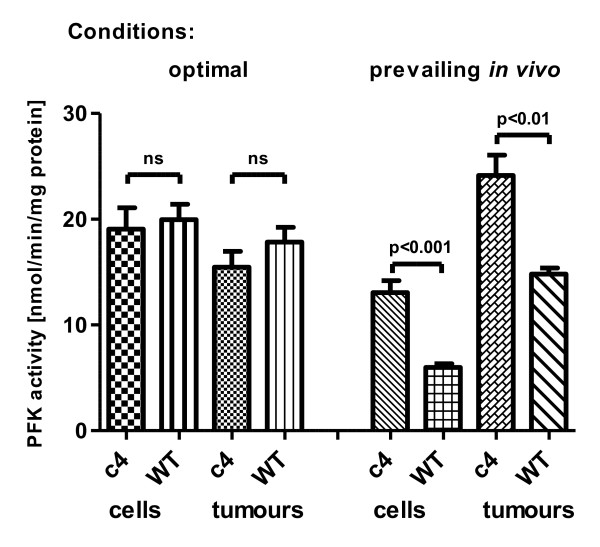
“Assay of PFK-1 (obtained by homogenizing WT and c4 cells) in the presence of optimal adenine nucleotide concentrations [13] had shown no significant difference between WT and c4 cells (Table 2).”
Kaelin, W. G., & Thompson, C. B. (2010) · Nature · doi:10.1038/465562a · Cited by 197 · cited 4×
“The HIF-1 pathway, which among other things promotes growth and angiogenesis, is also considered essential for the Warburg effect [7] and is activated in many cancers.”
InfluentialAdenylate as a Metabolic Regulator
Ramaiah, A., Hathaway, J. A., & Atkinson, D. E. (1964) · Journal of Biological Chemistry · doi:10.1016/s0021-9258(18)91181-6 · Cited by 188
Iles, R. A., Stevens, A. N., Griffiths, J. R., & Morris, P. G. (1985) · Biochemical Journal · doi:10.1042/bj2290141 · Cited by 174 · cited 1×
“AMP is extensively bound to tissue proteins [31], and since some high-affinity binding sites are likely to become saturated, the three-fold higher total AMP content of c4 tumours might correspond to an even greater difference in free cytosolic AMP.”
Self-citationRas transformation requires metabolic control by 6-phosphofructo-2-kinase
Telang, S., Yalcin, A., Clem, A. L., Bucala, R., Lane, A. N., Eaton, J. W., & Chesney, J. (2006) · Oncogene · doi:10.1038/sj.onc.1209709 · Cited by 168 · cited 1×
“Recent evidence [37] showing that Ras may induce 6phosphofructo-2-kinase/fructose-2,6-bisphosphatase, Golinska et al.”
(2002) · PubMed · Cited by 101
Self-citationAkt and Hypoxia-Inducible Factor-1 Independently Enhance Tumor Growth and Angiogenesis
Arsham, A. M., Plas, D. R., Thompson, C. B., & Simon, M. C. (2004) · Cancer Research · doi:10.1158/0008-5472.can-03-2239 · Cited by 88
Williams, K. J., Telfer, B. A., Airley, R. E., Peters, H. P., Sheridan, M. R., van der Kogel, A. J., Harris, A. L., & Stratford, I. J. (2002) · Oncogene · doi:10.1038/sj.onc.1205047 · Cited by 81
Self-citationTHOMAS, S., MOONEY, P. J. F., Burrell, M. M., & Fell, D. A. (1997) · Biochemical Journal · doi:10.1042/bj3220119 · Cited by 79 · cited 1×
“Metabolic control analysis of the glycolytic pathway suggests that control by ATP levels will be more important than control via changes in the expression of PFK-1 [32], and in several studies [reviewed in [33]] forced over-expression of PFK-1 has not led to faster glycolytic flux.”
Leek, R. D., Stratford, I., & Harris, A. L. (2005) · Cancer Research · doi:10.1158/0008-5472.can-04-2184 · Cited by 53 · cited 1×
“This wellestablished model has been used in several previous studies [3,4,8-10].”
Self-citationCreighton-Gutteridge, M., Cardellina, J. H., Stephen, A. G., Rapisarda, A., Uranchimeg, B., Hite, K., Denny, W. A., Shoemaker, R. H., & Melillo, G. (2007) · Clinical Cancer Research · doi:10.1158/1078-0432.ccr-06-2301 · Cited by 51 · cited 2×
“HIF-1 is currently a target for anticancer drug development [5, 6 ], with the aim of inhibiting tumour growth.”
Inhibiting the Hypoxia Response for Cancer Therapy: The New Kid on the Block
Koh, M. Y., Spivak-Kroizman, T. R., & Powis, G. (2009) · Clinical Cancer Research · doi:10.1158/1078-0432.ccr-09-1650 · Cited by 26 · cited 2×
“HIF-1 is currently a target for anticancer drug development [5,6], with the aim of inhibiting tumour growth.”
McSheehy, P. M. J., Leach, M. O., Judson, I. R., & Griffiths, J. R. (2000) · PubMed · Cited by 25
Self-citationPerrett, D. I., BHUSATE, L. L., Patel, J., & Herbert, K. E. (1991) · Biomedical Chromatography · doi:10.1002/bmc.1130050506 · Cited by 20
Self-citationTroy, H., Chung, Y.-L., Mayr, M., Ly, L., Williams, K., Stratford, I., Harris, A., Griffiths, J., & Stubbs, M. (2006) · Metabolomics · doi:10.1007/s11306-005-0009-8 · Cited by 15 · cited 7×
“Failure to find HIF-1b in the cell nucleus also rules out HIF pathways involving HIF-2a or HIF-3a, since both are thought to act in the nucleus as complexes with HIF-1b .W e have also previously shown [ 10 ] that the HIF-1-associated Hypoxia Response Elements (HREs) for phosphoglycerate kinase and lactate dehydrogenas…”
InfluentialSelf-citation
Research works printed but not linked: 1
- 26. Berg JM, Tymoczko JL, Stryer L: Biochemistry. 6 edition. WH Freeman, New York; 2007, 763.
Cited by
Masson, N., & Ratcliffe, P. J. (2014) · Cancer & Metabolism · doi:10.1186/2049-3002-2-3 · Cited by 298
“Further analysis indicated that the enhanced glycolytic flux was associated with allosteric activation of PFK-1 by an increase in the AMP/ATP ratio in the HIF-1β deficient cells [101].”
BackgroundFOXO3a from the Nucleus to the Mitochondria: A Round Trip in Cellular Stress Response
Fasano, C., Disciglio, V., Bertora, S., Lepore Signorile, M., & Simone, C. (2019) · Cells · doi:10.3390/cells8091110 · Cited by 236
“The AMP/ATP and NAD+/NADH ratios are the energetic and redox sensors, respectively, of metabolic and oxidative stress signaling [156,157].”
BackgroundHIF-1-Independent Mechanisms Regulating Metabolic Adaptation in Hypoxic Cancer Cells
Lee, S.-H., Golinska, M., & Griffiths, J. R. (2021) · Cells · doi:10.3390/cells10092371 · Cited by 169
Self-citationSimões, R. V., Serganova, I. S., Kruchevsky, N., Leftin, A., Shestov, A. A., Thaler, H. T., Sukenick, G., Locasale, J. W., Blasberg, R. G., Koutcher, J. A., et al. (2015) · Neoplasia · doi:10.1016/j.neo.2015.08.005 · Cited by 163
“The slight decrease of β-NTP levels detected in 4T1 cells (compared with initial values; Table S1, Study C) could also reflect an attempt of the metastatic phenotype to maintain a high glycolytic flux by removing ATP-induced inhibition on phosphofructokinase [37].”
BackgroundHypoxia enhances lipid uptake in macrophages: Role of the scavenger receptors Lox1, SRA, and CD36
Crucet, M., Wüst, S. J. A., Spielmann, P., Lüscher, T. F., Wenger, R. H., & Matter, C. M. (2013) · Atherosclerosis · doi:10.1016/j.atherosclerosis.2013.04.034 · Cited by 127
“partially oxygen-regulated in Hepa1C4 cells, suggesting that residual HIF-b activity and/or HIF-b-independent signaling pathways contribute to hypoxia-inducible gene expression in these cells [30,32,33].”
Background
Metadata
- Authors
- Golinska, M., Troy, H., Chung, Y.-L., McSheehy, P. M., Mayr, M., Yin, X., Ly, L., Williams, K. J., Airley, R. E., Harris, A. L., Latigo, J., Perumal, M., Aboagye, E. O., Perrett, D., Stubbs, M., & Griffiths, J. R.
- Affiliations
- Cancer Research UK Cambridge Center (GB)
- St George's, University of London (GB)
- Institute of Cancer Research (GB)
- Novartis (Switzerland) (CH)
- University of Manchester (GB)
- University of Huddersfield (GB)
- John Radcliffe Hospital (GB)
- Hammersmith Hospital (GB)
- Queen Mary University of London (GB)
- Corresponding author
- Stubbs, Marion
- Griffiths, John R
- ORCID
- Venue
- BMC Cancer
- Published
- 2011-05-25
- Volume
- 11
- Issue
- 1
- Pages
- 198-198
- ISSN
- 1471-2407 (ISSN-L)
- PMC
- PMC3123325
- OpenAlex
- W2170955124
- Cited by
- 29
- References
- 36
- Citations by year
- 2026: 4 · 2024: 2 · 2023: 1 · 2022: 5 · 2021: 2 · 2020: 2 · 2019: 1 · 2018: 1 · 2015: 3 · 2014: 3 · 2013: 5
- FWCI
- 0.87
- Type
- journal article
- Language
- en
- Open access
- gold
- doi.org
- Licence
- Locations
- BMC Cancer (publishedVersion, cc-by)
- Europe PMC (PubMed Central) (publishedVersion, cc-by)
- PubMed Central (publishedVersion, cc-by)
- PubMed (publishedVersion)
- Research Explorer (The University of Manchester) (publishedVersion)
- University of Huddersfield Repository (University of Huddersfield) (acceptedVersion)
- DOAJ (DOAJ: Directory of Open Access Journals) (submittedVersion)
- Research Portal (King's College London) (submittedVersion)
- Funders
- Cancer Research UK (10337, 11562)
- British Heart Foundation (FS/08/002/24537)
- Topics
- Life Sciences › Biochemistry, Genetics and Molecular Biology › Cancer Research › Cancer, Hypoxia, and Metabolism
- Life Sciences › Biochemistry, Genetics and Molecular Biology › Molecular Biology › Metabolism, Diabetes, and Cancer
- Life Sciences › Biochemistry, Genetics and Molecular Biology › Molecular Biology › Cancer and biochemical research
- Keywords
- ARNT, hepatocellular carcinoma, AMP/ATP ratio, phosphofructokinase-1, glucose uptake, GLUT1, AMPK, c-Myc, Akt, tumor growth
- MeSH terms
- Adaptation, Biological, Adenosine Monophosphate, Adenosine Triphosphate, Adenylate Kinase, Allosteric Regulation, Animals, Enzyme Activation, Glucose, Glycolysis, Carcinoma, Hepatocellular, Liver Neoplasms, Mice, Nude, Up-Regulation, Phosphofructokinases, Proteomics, Cell Proliferation, Glucose Transport Proteins, Facilitative, Mice, Hypoxia-Inducible Factor 1
About these checks
Registry, retraction, Cites and statistics results are computed, not judged, with one exception: a printed reference that no index lists is read once by a model before it counts as a citation error. Claims are extracted by a model and kept only when their quote appears verbatim in the text; each cited source is then checked, with a model’s help, for whether it says what the claim relies on. Those verdicts can be wrong — read the claim’s quote and the cited source before relying on one.
Statistics and arithmetic are recomputed, not judged.
Confidence bands are shown only for fields calibrated on our annotated test set. None is calibrated yet, so no band is shown.
What counts as a claim ›How we measure confidence ›How we check this ›
Are you an author, or do you see a problem with this page? Request a review
Data sources
Bibliographic data: Semantic Scholar, OpenAlex, Crossref.
Contains information from the Semantic Scholar Academic Graph Datasets, made available under the ODC Attribution License (ODC-BY 1.0).
Semantic Scholar’s data is described in: Kinney, R., et al. (2023). The Semantic Scholar Open Data Platform. arXiv:2301.10140.
