

Fibroblast growth factor 19 expression correlates with tumor progression and poorer prognosis of hepatocellular carcinoma
Open accessThe DOI matches its Crossref record; 36 of the 36 references it cites were found in a registry or an index.
Abstract
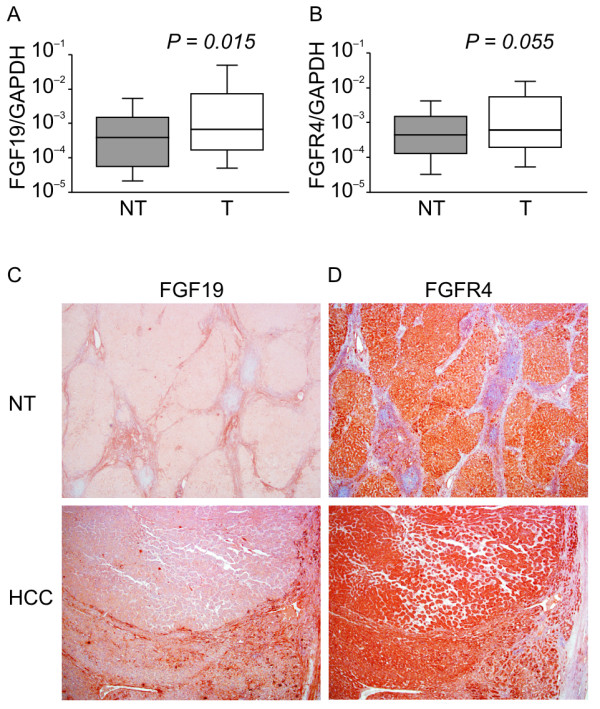
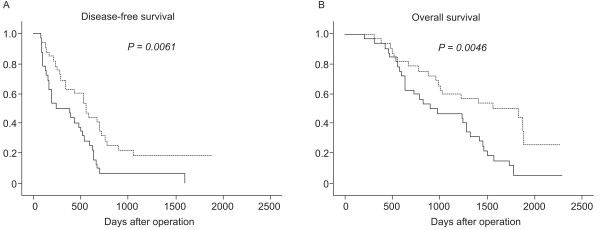
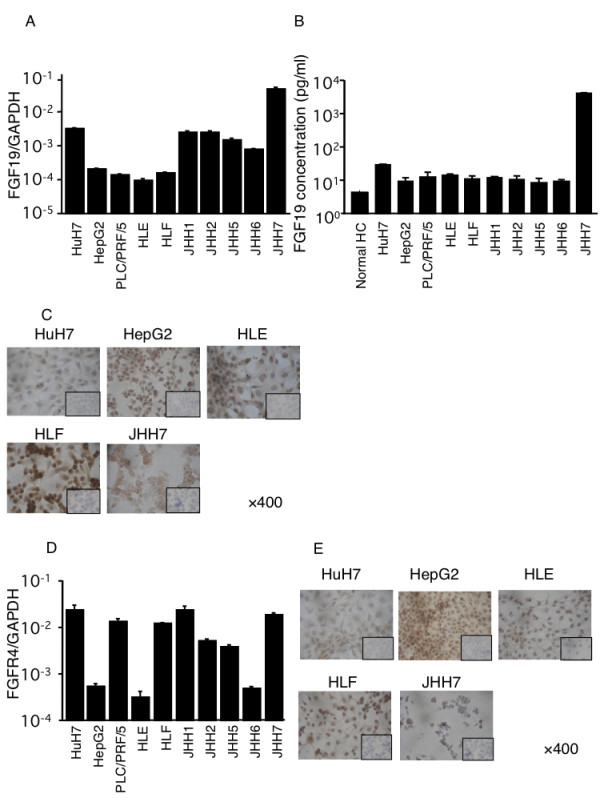
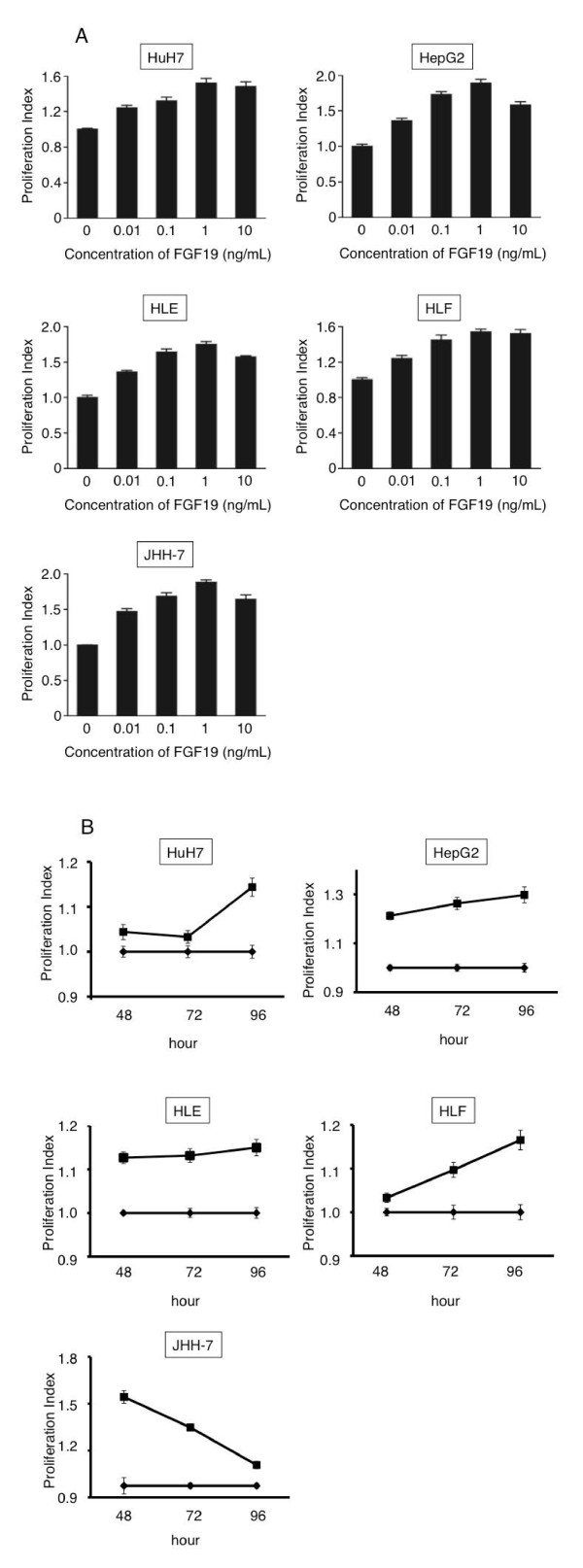
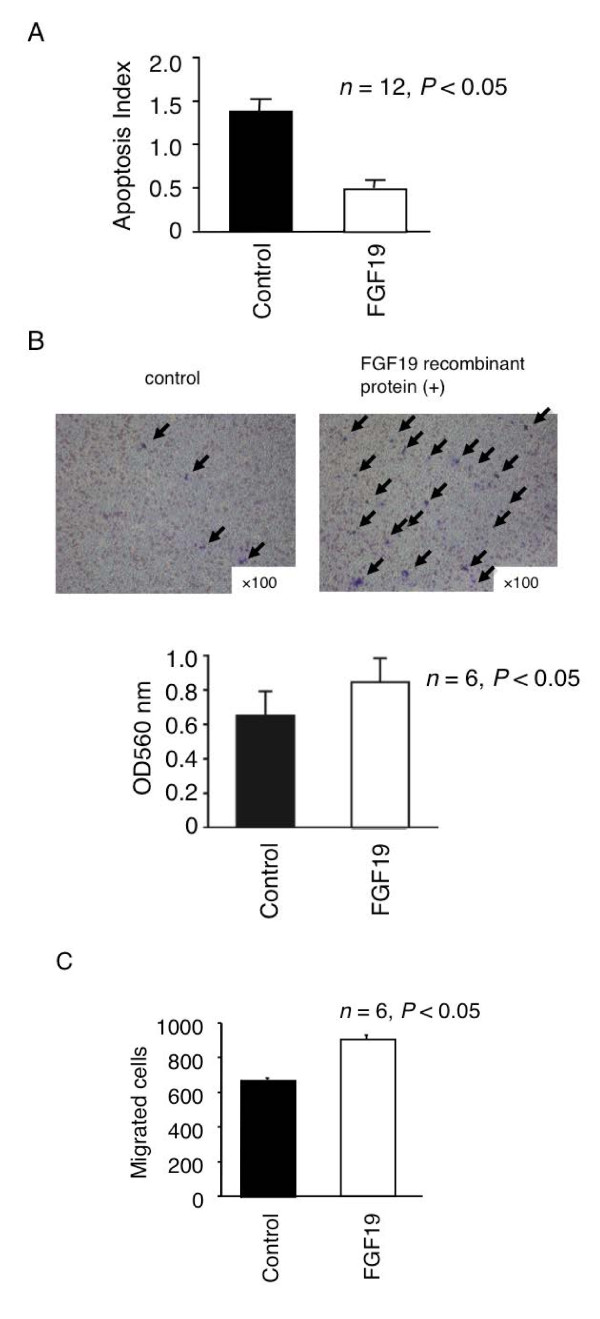
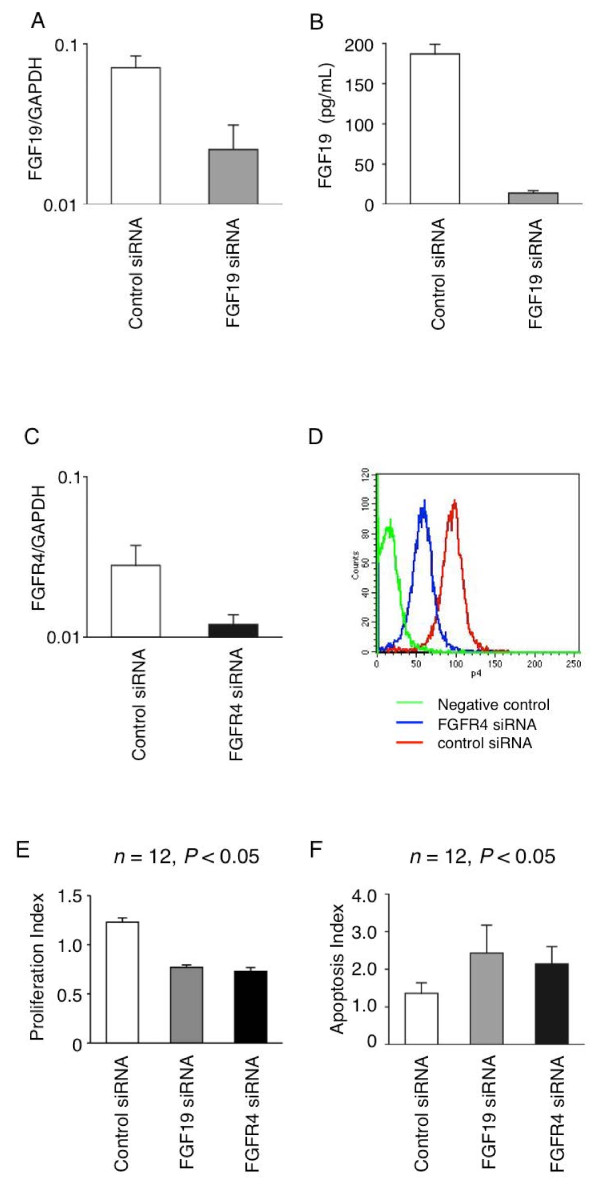
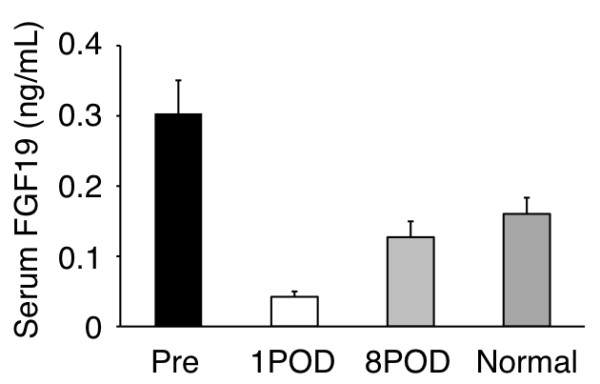
Background: Although fibroblast growth factor 19 (FGF19) can promote liver carcinogenesis in mice, its involvement in human hepatocellular carcinoma (HCC) has not been well investigated. FGF19, a member of the FGF family, has unique specificity for its receptor FGFR4. This study aimed to clarify the involvement of FGF19 in the development of HCC. Methods: We investigated human FGF19 and FGFR4 expression in 40 hepatocellular carcinoma specimens using quantitative real-time reverse transcription polymerase chain reaction (RT-PCR) analysis and immunohistochemistry. Moreover, we examined the expression and the distribution of FGF19 and FGFR4 in 5 hepatocellular carcinoma cell lines (HepG2, HuH7, HLE, HLF, and JHH7) using RT-PCR and immunohistochemistry. To test the role of the FGF19/FGFR4 system in tumor progression, we used recombinant FGF19 protein and small interfering RNA (siRNA) of FGF19 and FGFR4 to regulate their concentrations. Results: We found that FGF19 was significantly overexpressed in HCCs as compared with corresponding noncancerous liver tissue (P < 0.05). Univariate and multivariate analyses revealed that the tumor FGF19 mRNA expression was an independent prognostic factor for overall and disease-free survival. Moreover, we found that the FGF19 recombinant protein could increase the proliferation (P < 0.01, n = 12) and invasion (P < 0.01, n = 6) capabilities of human hepatocellular carcinoma cell lines and inhibited their apoptosis (P < 0.01, n = 12). Inversely, decreasing FGF19 and FGFR4 expression by siRNA significantly inhibited proliferation and increased apoptosis in JHH7 cells (P < 0.01, n = 12). The postoperative serum FGF19 levels in HCC patients was significantly lower than the preoperative levels (P < 0.01, n = 29). Conclusions: FGF19 is critically involved in the development of HCCs. Targeting FGF19 inhibition is an attractive potential therapeutic strategy for HCC.
Overview
The claims and statistics of this paper haven’t been checked yet.
Free: it reads the open-access text and checks the first 5 claims that cite a source we can check. Create a free account to check every claim.
Integrity signals
Registry
Cites
Statistics
Figures
Verification
Claims the paper makes
The claims and statistics of this paper haven’t been checked yet.
Free: it reads the open-access text and checks the first 5 claims that cite a source we can check. Create a free account to check every claim.
Claims other papers make about this one
Each is checked against this paper’s own text: does it say what the citing paper says it does?
The cited source says what the claim attributes to it.
In the citing paper
“However, the therapeutic potential of FGF19 has been hindered by its effect on potential occurrence of HCC, since mice expressing an FGF19 transgene developed liver tumors while tumor FGF19 hepatic mRNA expression was an independent prognostic factor for overall and disease-free survival [259,260].”
From Gut-pancreas-liver Axis as a target for treatment of NAFLD/NASH (2020) · cites this paper as [260]
Self-check
Percentages, sums and reported differences re-computed from the paper’s own numbers.
The self-check needs the paper’s full text.
Citations
Cites
Management of Hepatocellular Carcinoma: An Update Δσ
Bruix, J., & Sherman, M. (2011) · Hepatology · doi:10.1002/hep.24199 · Cited by 8,103
Management of Hepatocellular Carcinoma *
Bruix, J., & Sherman, M. (2005) · Hepatology · doi:10.1002/hep.20933 · Cited by 5,857
Hepatocellular Carcinoma: Epidemiology and Molecular Carcinogenesis
El–Serag, H. B., & Rudolph, K. L. (2007) · Gastroenterology · doi:10.1053/j.gastro.2007.04.061 · Cited by 5,415 · cited 1×
“Curative therapies of surgical treatment, including hepatic resection and liver transplantation, improve the chances of survival of patients with HCC [2-4].”
BackgroundGlobal cancer statistics in the year 2000
Parkin, D. M. (2001) · The Lancet Oncology · doi:10.1016/s1470-2045(01)00486-7 · Cited by 2,445
Ornitz, D. M., & Itoh, N. (2001) · Genome biology · doi:10.1186/gb-2001-2-3-reviews3005 · Cited by 2,305
Cellular signaling by fibroblast growth factor receptors
Eswarakumar, V. P., Lax, I., & Schlessinger, J. (2005) · Cytokine & Growth Factor Reviews · doi:10.1016/j.cytogfr.2005.01.001 · Cited by 1,929 · cited 1×
“Fibroblast growth factor (FGF) signaling plays an important role in a variety of processes, including proliferation, cellular differentiation, wound repair, and angiogenesis [7-9].”
BackgroundReceptor Specificity of the Fibroblast Growth Factor Family
Ornitz, D. M., Xu, J., Colvin, J. S., McEwen, D. G., MacArthur, C. A., Coulier, F., Gao, G., & Goldfarb, M. (1996) · Journal of Biological Chemistry · doi:10.1074/jbc.271.25.15292 · Cited by 1,871 · cited 1×
“FGF19 is currently unique in displaying apparent specificity for FGFR4 [23,24].”
BackgroundImamura, H., Matsuyama, Y., Tanaka, E., Ohkubo, T., Hasegawa, K., Miyagawa, S., Sugawara, Y., Minagawa, M., Takayama, T., Kawasaki, S., et al. (2003) · Journal of Hepatology · doi:10.1016/s0168-8278(02)00360-4 · Cited by 1,589 · cited 1×
“The prognosis for most patients remains poor after surgery for multicentric recurrence and intrahepatic metastasis [5,6].”
BackgroundEvolution of the Fgf and Fgfr gene families
Itoh, N., & Ornitz, D. M. (2004) · Trends in Genetics · doi:10.1016/j.tig.2004.08.007 · Cited by 1,096 · cited 1×
“Fibroblast growth factor (FGF) signaling plays an important role in a variety of processes, including proliferation, cellular differentiation, wound repair, and angiogenesis [7-9].”
BackgroundHolt, J. A., Luo, G., Billin, A. N., Bisi, J., McNeill, Y. Y., Kozarsky, K. F., Donahee, M., Wang, D. Y., Mansfield, T. A., Kliewer, S. A., et al. (2003) · Genes & Development · doi:10.1101/gad.1083503 · Cited by 696 · cited 1×
“Previous studies have reported that FGF19 and hepatocyte FGFR4 regulate biosynthesis in the bile duct by repression of CYP7A1 [25].”
BackgroundFu, L., John, L. M., Adams, S. H., Yu, X. X., Tomlinson, E., Renz, M., Williams, P. M., Soriano, R., Corpuz, R., Moffat, B., et al. (2004) · Endocrinology · doi:10.1210/en.2003-1671 · Cited by 579 · cited 1×
“Further, FGF19 reportedly increases the metabolic rate, reduces body weight, and reverses diabetes in both high-fat-fed mice and leptin-deficient mice [26].”
BackgroundCommon and Distinct Elements in Cellular Signaling via EGF and FGF Receptors
Schlessinger, J. (2004) · Science · doi:10.1126/science.1105396 · Cited by 443 · cited 1×
“Fibroblast growth factor (FGF) signaling plays an important role in a variety of processes, including proliferation, cellular differentiation, wound repair, and angiogenesis [7-9].”
BackgroundA Mouse Model of Hepatocellular Carcinoma
Nicholes, K., Guillet, S., Tomlinson, E., Hillan, K., Wright, B., Frantz, G. D., Pham, T. A., Dillard-Telm, L., Tsai, S. P., Stephan, J.-P., et al. (2002) · The American Journal of Pathology · doi:10.1016/s0002-9440(10)61177-7 · Cited by 359 · cited 1×
“On the other hand, ectopic expression of FGF19 in mice promotes hepatocyte proliferation, hepatocellular dysplasia, and neoplasia [27].”
BackgroundFGFR1 is fused with a novel zinc-finger gene, ZNF198, in the t(8;13) leukaemia/lymphoma syndrome
Xiao, S., Nalabolu, S. R., Aster, J. C., Ma, J., Abruzzo, L., Jaffe, E. S., Stone, R., Weissman, S. M., Hudson, T. J., & Fletcher, J. A. (1998) · Nature Genetics · doi:10.1038/ng0198-84 · Cited by 323 · cited 1×
“It has been reported that amplification or overexpression of FGFs is associated with the pathogenesis of malignant neoplasms, such as leukemias and sarcomas as well as stomach, pancreas, bladder, colon, breast, and prostate cancer [10-15].”
BackgroundCancer progression and tumor cell motility are associated with the FGFR4 Arg(388) allele.
Bange, J., Prechtl, D., Cheburkin, Y. V., Specht, K., Harbeck, N., Schmitt, M., Knyazeva, T., Müller, S., Gärtner, S., Sures, I., et al. (2002) · PubMed · Cited by 317
Omeprazole is an aryl hydrocarbon-like inducer of human hepatic cytochrome P450
Diaz, D., Fabrev, I., Daujat, M., Aubert, B. S., Bories, P., Michel, H., & Maurel, P. (1990) · Gastroenterology · doi:10.1016/0016-5085(90)90963-2 · Cited by 308 · cited 1×
“Primary cultures of human hepatocytes were prepared and cultured as described in previous papers [31].”
MethodDesnoyers, L. R., Pai, R., Ferrando, R. E., Hötzel, K., Le, T., Ross, J., Carano, R., D'Souza, A., Qing, J., Mohtashemi, I., et al. (2008) · Oncogene · doi:10.1038/sj.onc.1210623 · Cited by 264
Hepatocellular carcinoma: Current management and future trends
Carr, B. I. (2004) · Gastroenterology · doi:10.1053/j.gastro.2004.09.036 · Cited by 240 · cited 1×
“Curative therapies of surgical treatment, including hepatic resection and liver transplantation, improve the chances of survival of patients with HCC [2-4].”
BackgroundChen, Y.-J., Yeh, S.-H., Chen, J.-T., Wu, C.-C., Hsu, M.-T., Tsai, S.-F., Chen, P.-J., & Lin, C.-H. (2000) · Gastroenterology · doi:10.1053/gast.2000.9373 · Cited by 229 · cited 1×
“The prognosis for most patients remains poor after surgery for multicentric recurrence and intrahepatic metastasis [5,6].”
BackgroundRichelda, R., Ronchetti, D., Baldini, L., Cro, L., Viggiano, L., Marzella, R., Rocchi, M., Otsuki, T., Lombardi, L., Maiolo, A. T., et al. (1997) · Blood · doi:10.1182/blood.v90.10.4062 · Cited by 206 · cited 1×
“It has been reported that amplification or overexpression of FGFs is associated with the pathogenesis of malignant neoplasms, such as leukemias and sarcomas as well as stomach, pancreas, bladder, colon, breast, and prostate cancer [10-15].”
BackgroundHo, H. K., Pok, S., Streit, S., Ruhe, J. E., Hart, S., Lim, K. S., Loo, H. L., Aung, M. O., Lim, S. G., & Ullrich, A. (2009) · Journal of Hepatology · doi:10.1016/j.jhep.2008.08.015 · Cited by 192 · cited 2×
“, reported that one third of HCC patients exhibited increased FGFR4 mRNA expression in the matched tumor/normal tissue [29].”
BackgroundShimokawa, T., Furukawa, Y., Sakai, M., Li, M., Miwa, N., Lin, Y., & Nakamura, Y. (2003) · PubMed · Cited by 190
Mitsuhashi, N., Shimizu, H., Ohtsuka, M., Wakabayashi, Y., Ito, H., Kimura, F., Yoshidome, H., Kato, A., Nukui, Y., & Miyazaki, M. (2003) · Hepatology · doi:10.1053/jhep.2003.50204 · Cited by 183 · cited 1×
“Further, a number of molecular markers with prognostic significance have been identified in HCC [32].”
BackgroundSelf-citationWang, J., Stockton, D. W., & Ittmann, M. (2004) · Clinical Cancer Research · doi:10.1158/1078-0432.ccr-04-0408 · Cited by 155 · cited 1×
“translocation, and truncation of FGF receptor (FGFR) and a variety of human neoplasms such as myeloma, breast, stomach, colon, bladder, and cervical cancer have also been reported [16-21].”
BackgroundHarmer, N. J., Pellegrini, L., Chirgadze, D., Fernandez-Recio, J., & Blundell, T. L. (2004) · Biochemistry · doi:10.1021/bi035320k · Cited by 124 · cited 1×
“FGF19 is currently unique in displaying apparent specificity for FGFR4 [23,24].”
BackgroundUse of RNA interference to target cyclin E-overexpressing hepatocellular carcinoma.
Li, K., Lin, S., Brunicardi, F. C., & Seu, P. (2003) · PubMed · Cited by 120
Jung, C., Yoo, J., Jang, Y. J., Kim, S. S., Chu, I., Yeom, Y. I., Choi, J. Y., & Im, D. (2006) · Hepatology · doi:10.1002/hep.21137 · Cited by 116 · cited 1×
“RNAi has been effectively used in target-directed therapies in a range of diseases and in the silencing of tumor genes by systemically administered siRNA in vivo [33-35].”
BackgroundGowardhan, B., Douglas, D. A., Mathers, M. E., McKie, A. B., McCracken, S. R., Robson, C. N., & Leung, H. Y. (2005) · British Journal of Cancer · doi:10.1038/sj.bjc.6602274 · Cited by 115 · cited 1×
“It has been reported that amplification or overexpression of FGFs is associated with the pathogenesis of malignant neoplasms, such as leukemias and sarcomas as well as stomach, pancreas, bladder, colon, breast, and prostate cancer [10-15].”
BackgroundSystemic siRNA-Mediated Gene Silencing
Duxbury, M. S., Matros, E., Ito, H., Zinner, M. J., Ashley, S. W., & Whang, E. E. (2004) · Annals of Surgery · doi:10.1097/01.sla.0000140755.97224.9a · Cited by 110 · cited 1×
“RNAi has been effectively used in target-directed therapies in a range of diseases and in the silencing of tumor genes by systemically administered siRNA in vivo [33-35].”
BackgroundInvolvement of the FGFR4 Arg388 allele in head and neck squamous cell carcinoma
Streit, S., Bange, J., Fichtner, A., Ihrler, S., Issing, W. J., & Ullrich, A. (2004) · International Journal of Cancer · doi:10.1002/ijc.20204 · Cited by 109 · cited 1×
“translocation, and truncation of FGF receptor (FGFR) and a variety of human neoplasms such as myeloma, breast, stomach, colon, bladder, and cervical cancer have also been reported [16-21].”
BackgroundFunctional FGFR4 Gly388Arg Polymorphism Predicts Prognosis in Lung Adenocarcinoma Patients
Spinola, M., Leoni, V., Pignatiello, C., Conti, B., Ravagnani, F., Pastorino, U., & Dragani, T. A. (2005) · Journal of Clinical Oncology · doi:10.1200/jco.2005.17.350 · Cited by 102 · cited 1×
“translocation, and truncation of FGF receptor (FGFR) and a variety of human neoplasms such as myeloma, breast, stomach, colon, bladder, and cervical cancer have also been reported [16-21].”
BackgroundZaharieva, B. M., Simon, R., Diener, P., Ackermann, D., Maurer, R. E., Alund, G., Knönagel, H., Rist, M., Wilber, K., Hering, F., et al. (2003) · The Journal of Pathology · doi:10.1002/path.1481 · Cited by 100 · cited 1×
“It has been reported that amplification or overexpression of FGFs is associated with the pathogenesis of malignant neoplasms, such as leukemias and sarcomas as well as stomach, pancreas, bladder, colon, breast, and prostate cancer [10-15].”
BackgroundMcLeskey, S. W., Ding, I., Lippman, M. E., & Kern, F. G. (1994) · PubMed · Cited by 93
Qian, Z. R., Sano, T., Asa, S. L., Yamada, S., Horiguchi, H., Tashiro, T., Li, C. C., Hirokawa, M., Kovács, K., & Ezzat, S. (2004) · The Journal of Clinical Endocrinology & Metabolism · doi:10.1210/jc.2003-031489 · Cited by 91 · cited 1×
“translocation, and truncation of FGF receptor (FGFR) and a variety of human neoplasms such as myeloma, breast, stomach, colon, bladder, and cervical cancer have also been reported [16-21].”
BackgroundRuohola, J. K., Viitanen, T. P., Valve, E. M., Seppänen, J., Loponen, N., Keskitalo, J. J., Lakkakorpi, P. T., & Härkönen, P. L. (2001) · PubMed · Cited by 65
Radiologic diagnosis of hepatocellular carcinoma
Ishiguchi, T., Shimamoto, K., Fukatsu, H., Yamakawa, K., & Ishigaki, T. (1996) · Seminars in Surgical Oncology · doi:10.1002/(sici)1098-2388(199605/06)12:3<204::aid-ssu11>3.0.co;2-x · Cited by 17 · cited 8×
“The human HCC cell lines HuH7, HepG2, HLE, HLF, PLC/PRF/5, JHH1, JHH2, JHH5, JHH6, and JHH7 were obtained from the Health Science Research Resources Bank (Osaka, Japan).”
MethodInfluential
Cited by
The Fibroblast Growth Factor signaling pathway
Ornitz, D. M., & Itoh, N. (2015) · WIREs Developmental Biology · doi:10.1002/wdev.176 · Cited by 2,050
Schulze, K., Imbeaud, S., Letouzé, E., Alexandrov, L. B., Calderaro, J., Rebouissou, S., Couchy, G., Meiller, C., Shinde, J., Soysouvanh, F., et al. (2015) · Nature Genetics · doi:10.1038/ng.3252 · Cited by 1,803
Bile acids and nonalcoholic fatty liver disease: Molecular insights and therapeutic perspectives
Arab, J. P., Karpen, S. J., Dawson, P. A., Arrese, M., & Trauner, M. (2017) · Hepatology · doi:10.1002/hep.28709 · Cited by 634
“Indeed, the FGF-19/FGFR4 pathway seems to be of prognostic importance in human liver cancer.((78)) Thus, ileumderived FGF15/FGF19 exhibits the potential of being an oncogenic driver and could contribute to HCC development in the setting of chronic liver injury, but more data are needed to understand the metabolic and…”
BackgroundTherapeutic potential of the endocrine fibroblast growth factors FGF19, FGF21 and FGF23
Degirolamo, C., Sabbà, C., & Moschetta, A. (2016) · Nature Reviews Drug Discovery · doi:10.1038/nrd.2015.9 · Cited by 424
Bile acids in glucose metabolism and insulin signalling — mechanisms and research needs
Ahmad, T. R., & Haeusler, R. A. (2019) · Nature Reviews Endocrinology · doi:10.1038/s41574-019-0266-7 · Cited by 337
Metadata
- Authors
- Miura, S., Mitsuhashi, N., Shimizu, H., Kimura, F., Yoshidome, H., Otsuka, M., Kato, A., Shida, T., Okamura, D., & Miyazaki, M.
- Affiliations
- Chiba University (JP)
- Corresponding author
- Mitsuhashi, Noboru
- Venue
- BMC Cancer
- Published
- 2012-02-06
- Volume
- 12
- Issue
- 1
- Pages
- 56-56
- ISSN
- 1471-2407 (ISSN-L)
- PMC
- PMC3293719
- OpenAlex
- W2013424084
- Cited by
- 193
- References
- 36
- Citations by year
- 2026: 8 · 2025: 9 · 2024: 11 · 2023: 7 · 2022: 19 · 2021: 18 · 2020: 21 · 2019: 17 · 2018: 16 · 2017: 10 · 2016: 15 · 2015: 19 · 2014: 12 · 2013: 7 · 2012: 4
- FWCI
- 5.40
- Type
- journal article
- Language
- en
- Open access
- gold
- doi.org
- Licence
- Locations
- BMC Cancer (publishedVersion, cc-by)
- Europe PMC (PubMed Central) (publishedVersion, cc-by)
- PubMed Central (publishedVersion, cc-by)
- PubMed (publishedVersion)
- DOAJ (DOAJ: Directory of Open Access Journals) (submittedVersion)
- Institutional Repositories DataBase (IRDB) (submittedVersion)
- Funders
- Japan Society for the Promotion of Science (24591994)
- Topics
- Life Sciences › Biochemistry, Genetics and Molecular Biology › Molecular Biology › Fibroblast Growth Factor Research
- Health Sciences › Medicine › Hepatology › Hepatocellular Carcinoma Treatment and Prognosis
- Health Sciences › Medicine › Hepatology › Liver physiology and pathology
- Keywords
- FGF19, FGFR4, hepatocellular carcinoma, tumor progression, prognostic factors, cell proliferation, tumor invasion, apoptosis, therapeutic target
- MeSH terms
- Aged, Female, Fibroblast Growth Factors, Carcinoma, Hepatocellular, Humans, Liver Neoplasms, Male, Middle Aged, Neoplasm Invasiveness, Neoplasm Proteins, Prognosis, RNA, Messenger, Multivariate Analysis, Survival Analysis, Apoptosis, Disease Progression, Cell Line, Tumor, Cell Proliferation, Receptor, Fibroblast Growth Factor, Type 4
About these checks
Registry, retraction, Cites and statistics results are computed, not judged, with one exception: a printed reference that no index lists is read once by a model before it counts as a citation error. Claims are extracted by a model and kept only when their quote appears verbatim in the text; each cited source is then checked, with a model’s help, for whether it says what the claim relies on. Those verdicts can be wrong — read the claim’s quote and the cited source before relying on one.
Statistics and arithmetic are recomputed, not judged.
Confidence bands are shown only for fields calibrated on our annotated test set. None is calibrated yet, so no band is shown.
What counts as a claim ›How we measure confidence ›How we check this ›
Are you an author, or do you see a problem with this page? Request a review
Data sources
Bibliographic data: Semantic Scholar, OpenAlex, Crossref.
Contains information from the Semantic Scholar Academic Graph Datasets, made available under the ODC Attribution License (ODC-BY 1.0).
Semantic Scholar’s data is described in: Kinney, R., et al. (2023). The Semantic Scholar Open Data Platform. arXiv:2301.10140.
