

Fibroblast growth factor 19 expression correlates with tumor progression and poorer prognosis of hepatocellular carcinoma
Open accessThe DOI matches its Crossref record; 36 of the 36 references it cites were found in a registry or an index.
Abstract
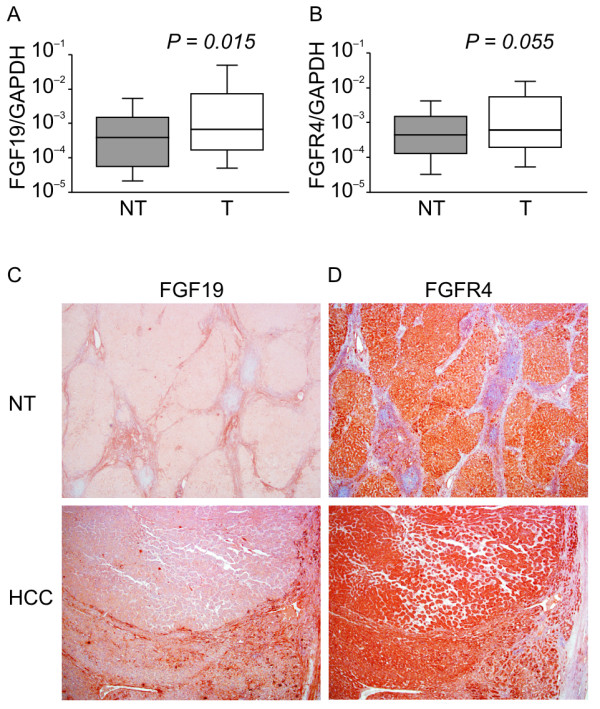
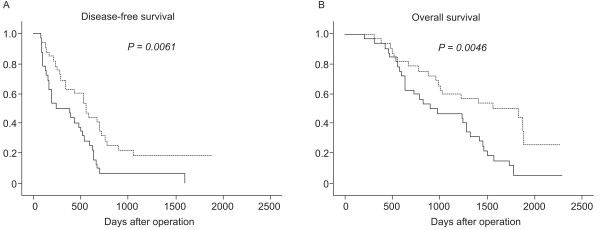
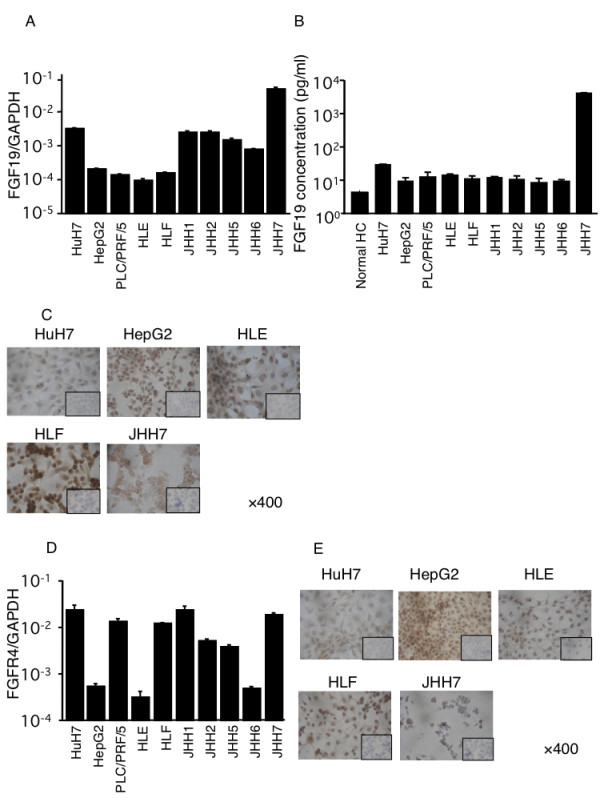
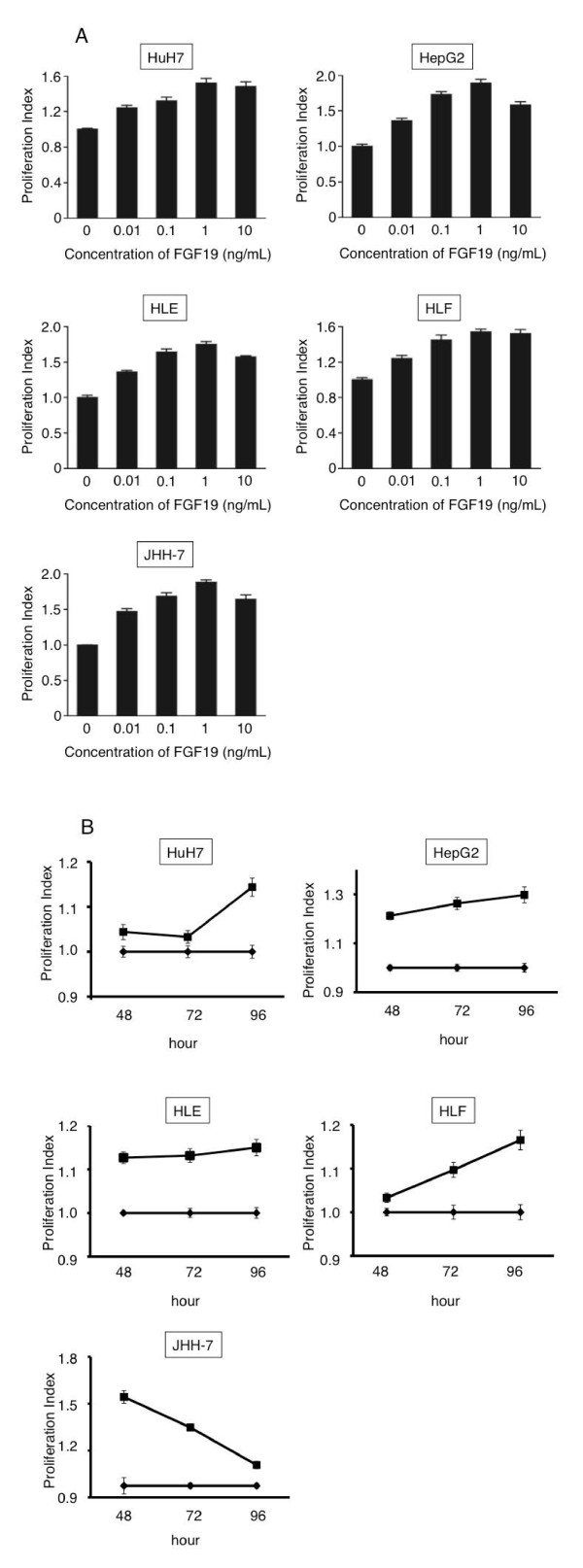
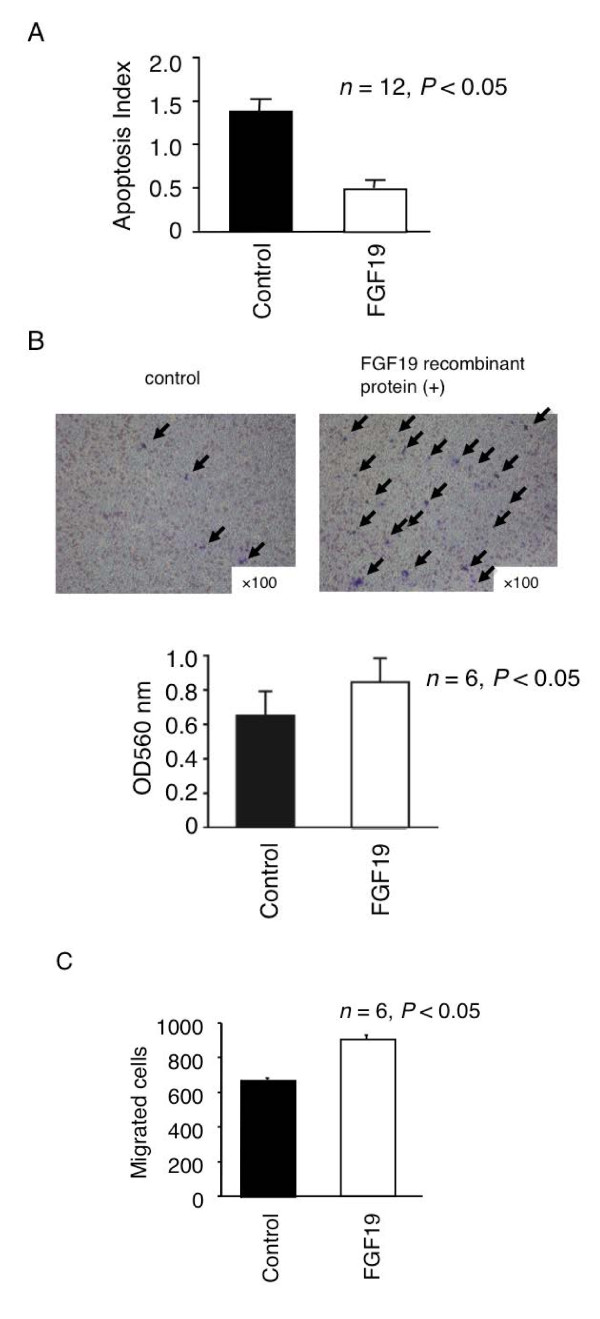
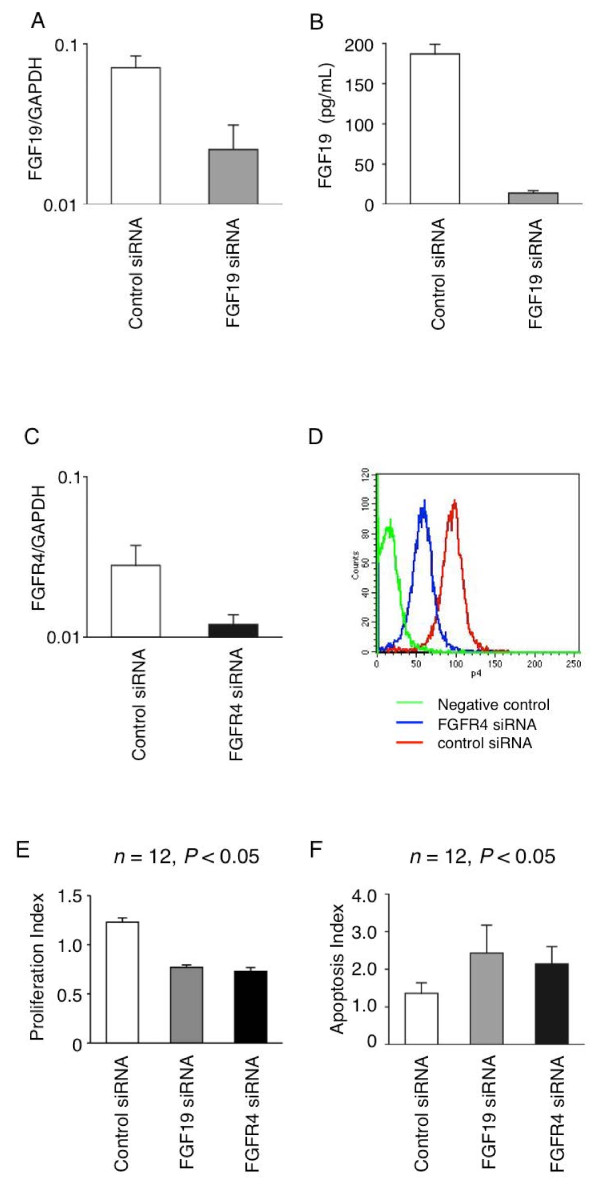
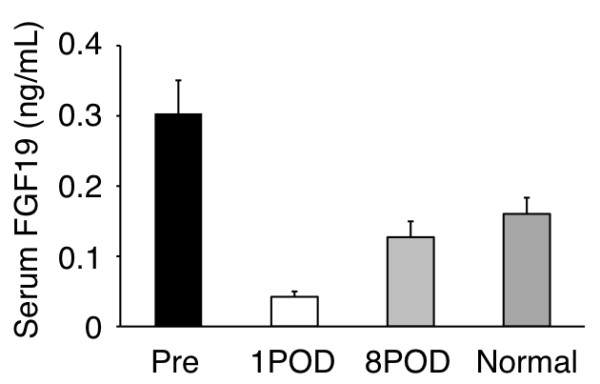
Background: Although fibroblast growth factor 19 (FGF19) can promote liver carcinogenesis in mice, its involvement in human hepatocellular carcinoma (HCC) has not been well investigated. FGF19, a member of the FGF family, has unique specificity for its receptor FGFR4. This study aimed to clarify the involvement of FGF19 in the development of HCC. Methods: We investigated human FGF19 and FGFR4 expression in 40 hepatocellular carcinoma specimens using quantitative real-time reverse transcription polymerase chain reaction (RT-PCR) analysis and immunohistochemistry. Moreover, we examined the expression and the distribution of FGF19 and FGFR4 in 5 hepatocellular carcinoma cell lines (HepG2, HuH7, HLE, HLF, and JHH7) using RT-PCR and immunohistochemistry. To test the role of the FGF19/FGFR4 system in tumor progression, we used recombinant FGF19 protein and small interfering RNA (siRNA) of FGF19 and FGFR4 to regulate their concentrations. Results: We found that FGF19 was significantly overexpressed in HCCs as compared with corresponding noncancerous liver tissue (P < 0.05). Univariate and multivariate analyses revealed that the tumor FGF19 mRNA expression was an independent prognostic factor for overall and disease-free survival. Moreover, we found that the FGF19 recombinant protein could increase the proliferation (P < 0.01, n = 12) and invasion (P < 0.01, n = 6) capabilities of human hepatocellular carcinoma cell lines and inhibited their apoptosis (P < 0.01, n = 12). Inversely, decreasing FGF19 and FGFR4 expression by siRNA significantly inhibited proliferation and increased apoptosis in JHH7 cells (P < 0.01, n = 12). The postoperative serum FGF19 levels in HCC patients was significantly lower than the preoperative levels (P < 0.01, n = 29). Conclusions: FGF19 is critically involved in the development of HCCs. Targeting FGF19 inhibition is an attractive potential therapeutic strategy for HCC.
Overview
The claims and statistics of this paper haven’t been checked yet.
Free: it reads the open-access text and checks the first 5 claims that cite a source we can check. Create a free account to check every claim.
Integrity signals
Registry
Cites
Statistics
Figures
Verification
Claims the paper makes
The claims and statistics of this paper haven’t been checked yet.
Free: it reads the open-access text and checks the first 5 claims that cite a source we can check. Create a free account to check every claim.
Claims other papers make about this one
Each is checked against this paper’s own text: does it say what the citing paper says it does?
The cited source says what the claim attributes to it.
In the citing paper
“However, the therapeutic potential of FGF19 has been hindered by its effect on potential occurrence of HCC, since mice expressing an FGF19 transgene developed liver tumors while tumor FGF19 hepatic mRNA expression was an independent prognostic factor for overall and disease-free survival [259,260].”
From Gut-pancreas-liver Axis as a target for treatment of NAFLD/NASH (2020) · cites this paper as [260]
Self-check
Percentages, sums and reported differences re-computed from the paper’s own numbers.
The self-check needs the paper’s full text.
Citations
Cites
Management of Hepatocellular Carcinoma: An Update Δσ
Bruix, J., & Sherman, M. (2011) · Hepatology · doi:10.1002/hep.24199 · Cited by 8,103
Management of Hepatocellular Carcinoma *
Bruix, J., & Sherman, M. (2005) · Hepatology · doi:10.1002/hep.20933 · Cited by 5,857
Hepatocellular Carcinoma: Epidemiology and Molecular Carcinogenesis
El–Serag, H. B., & Rudolph, K. L. (2007) · Gastroenterology · doi:10.1053/j.gastro.2007.04.061 · Cited by 5,415 · cited 1×
“Curative therapies of surgical treatment, including hepatic resection and liver transplantation, improve the chances of survival of patients with HCC [2-4].”
BackgroundGlobal cancer statistics in the year 2000
Parkin, D. M. (2001) · The Lancet Oncology · doi:10.1016/s1470-2045(01)00486-7 · Cited by 2,445
Ornitz, D. M., & Itoh, N. (2001) · Genome biology · doi:10.1186/gb-2001-2-3-reviews3005 · Cited by 2,305
Cellular signaling by fibroblast growth factor receptors
Eswarakumar, V. P., Lax, I., & Schlessinger, J. (2005) · Cytokine & Growth Factor Reviews · doi:10.1016/j.cytogfr.2005.01.001 · Cited by 1,929 · cited 1×
“Fibroblast growth factor (FGF) signaling plays an important role in a variety of processes, including proliferation, cellular differentiation, wound repair, and angiogenesis [7-9].”
BackgroundReceptor Specificity of the Fibroblast Growth Factor Family
Ornitz, D. M., Xu, J., Colvin, J. S., McEwen, D. G., MacArthur, C. A., Coulier, F., Gao, G., & Goldfarb, M. (1996) · Journal of Biological Chemistry · doi:10.1074/jbc.271.25.15292 · Cited by 1,871 · cited 1×
“FGF19 is currently unique in displaying apparent specificity for FGFR4 [23,24].”
BackgroundImamura, H., Matsuyama, Y., Tanaka, E., Ohkubo, T., Hasegawa, K., Miyagawa, S., Sugawara, Y., Minagawa, M., Takayama, T., Kawasaki, S., et al. (2003) · Journal of Hepatology · doi:10.1016/s0168-8278(02)00360-4 · Cited by 1,589 · cited 1×
“The prognosis for most patients remains poor after surgery for multicentric recurrence and intrahepatic metastasis [5,6].”
BackgroundEvolution of the Fgf and Fgfr gene families
Itoh, N., & Ornitz, D. M. (2004) · Trends in Genetics · doi:10.1016/j.tig.2004.08.007 · Cited by 1,096 · cited 1×
“Fibroblast growth factor (FGF) signaling plays an important role in a variety of processes, including proliferation, cellular differentiation, wound repair, and angiogenesis [7-9].”
BackgroundHolt, J. A., Luo, G., Billin, A. N., Bisi, J., McNeill, Y. Y., Kozarsky, K. F., Donahee, M., Wang, D. Y., Mansfield, T. A., Kliewer, S. A., et al. (2003) · Genes & Development · doi:10.1101/gad.1083503 · Cited by 696 · cited 1×
“Previous studies have reported that FGF19 and hepatocyte FGFR4 regulate biosynthesis in the bile duct by repression of CYP7A1 [25].”
Background
Cited by
The Fibroblast Growth Factor signaling pathway
Ornitz, D. M., & Itoh, N. (2015) · WIREs Developmental Biology · doi:10.1002/wdev.176 · Cited by 2,050
Schulze, K., Imbeaud, S., Letouzé, E., Alexandrov, L. B., Calderaro, J., Rebouissou, S., Couchy, G., Meiller, C., Shinde, J., Soysouvanh, F., et al. (2015) · Nature Genetics · doi:10.1038/ng.3252 · Cited by 1,803
Bile acids and nonalcoholic fatty liver disease: Molecular insights and therapeutic perspectives
Arab, J. P., Karpen, S. J., Dawson, P. A., Arrese, M., & Trauner, M. (2017) · Hepatology · doi:10.1002/hep.28709 · Cited by 634
“Indeed, the FGF-19/FGFR4 pathway seems to be of prognostic importance in human liver cancer.((78)) Thus, ileumderived FGF15/FGF19 exhibits the potential of being an oncogenic driver and could contribute to HCC development in the setting of chronic liver injury, but more data are needed to understand the metabolic and…”
BackgroundTherapeutic potential of the endocrine fibroblast growth factors FGF19, FGF21 and FGF23
Degirolamo, C., Sabbà, C., & Moschetta, A. (2016) · Nature Reviews Drug Discovery · doi:10.1038/nrd.2015.9 · Cited by 424
Bile acids in glucose metabolism and insulin signalling — mechanisms and research needs
Ahmad, T. R., & Haeusler, R. A. (2019) · Nature Reviews Endocrinology · doi:10.1038/s41574-019-0266-7 · Cited by 337
Targeting the alternative bile acid synthetic pathway for metabolic diseases
Jia, W., Wei, M., Rajani, C., & Zheng, X. (2021) · Protein & Cell · doi:10.1007/s13238-020-00804-9 · Cited by 325
Molecular therapies for HCC: Looking outside the box
Faivre, S., Rimassa, L., & Finn, R. S. (2020) · Journal of Hepatology · doi:10.1016/j.jhep.2019.09.010 · Cited by 326
Matsuki, M., Hoshi, T., Yamamoto, Y., Ikemori‐Kawada, M., Minoshima, Y., Funahashi, Y., & Matsui, J. (2018) · Cancer Medicine · doi:10.1002/cam4.1517 · Cited by 266
Luo, X.-Y., Wu, K.-M., & He, X.-X. (2021) · Journal of Experimental & Clinical Cancer Research · doi:10.1186/s13046-021-01968-w · Cited by 202
“Fibroblast growth factor 19 (FGF19) and its receptor, fibroblast growth factor receptor 4 (FGFR4), are overexpressed in HCC and promote HCC progression by inhibiting apoptosis and promoting proliferation and invasion [72, 73].”
BackgroundFGF19/FGFR4 signaling contributes to the resistance of hepatocellular carcinoma to sorafenib
Gao, L., Wang, X., Tang, Y., Huang, S., Hu, C.-A. A., & Teng, Y. (2017) · Journal of Experimental & Clinical Cancer Research · doi:10.1186/s13046-016-0478-9 · Cited by 179
Tan, L., Wang, J., Tanizaki, J., Huang, Z., Aref, A. R., Rusan, M., Zhu, S.-J., Zhang, Y., Ercan, D., Liao, R. G., et al. (2014) · Proceedings of the National Academy of Sciences · doi:10.1073/pnas.1403438111 · Cited by 174
FGF19–FGFR4 Signaling in Hepatocellular Carcinoma
Raja, A., Park, I., Haq, F., & Ahn, S.-M. (2019) · Cells · doi:10.3390/cells8060536 · Cited by 153
“Notably, the role of FGF19 at expression level is also frequently reported in HCC prognosis [43,44].”
BackgroundLenvatinib May Drastically Change the Treatment Landscape of Hepatocellular Carcinoma
Kudo, M. (2018) · Liver Cancer · doi:10.1159/000487148 · Cited by 135
Hnf1b controls pancreas morphogenesis and the generation of Ngn3+ endocrine progenitors
De Vas, M. G., Kopp, J. L., Heliot, C., Sander, M., Cereghini, S., & Haumaitre, C. (2015) · Development · doi:10.1242/dev.110759 · Cited by 134
“, 1998), several recent studies showed that Fgfr4 positively regulates proliferation and has anti-apoptotic effects in models of liver, prostate and gastric cancer (Drafahl et al., 2010; Ho et al., 2009; Miura et al., 2012; Ye et al., 2011).”
BackgroundMetabolic Spectrum of Liver Failure in Type 2 Diabetes and Obesity: From NAFLD to NASH to HCC
Kim, H.-M., Lee, D. S., An, T. H., Park, H., Kim, W. K., Bae, K., & Oh, K. (2021) · International Journal of Molecular Sciences · doi:10.3390/ijms22094495 · Cited by 147
“The β-Klotho proteins are also increased in liver and serum of patients with HCC [321,322].”
BackgroundAltered Microbiota Diversity and Bile Acid Signaling in Cirrhotic and Noncirrhotic NASH-HCC
Sydor, S., Best, J., Messerschmidt, I., Manka, P., Vilchez-Vargas, R., Brodesser, S., Lucas, C., Wegehaupt, A., Wenning, C., Aßmuth, S., et al. (2020) · Clinical and Translational Gastroenterology · doi:10.14309/ctg.0000000000000131 · Cited by 127
“This finding is of particular interest because FGF19 expression is known to correlate with tumor progression and poorer prognosis in HCC and is associated with wnt/b-catenin signaling (25,26).”
BackgroundEmma, M. R., Iovanna, J. L., Bachvarov, D., Puleio, R., Loria, G. R., Augello, G., Candido, S., Libra, M., Gulino, A., Cancila, V, et al. (2016) · Cell Death & Disease · doi:10.1038/cddis.2016.175 · Cited by 126
Non-cell-autonomous activation of IL-6/STAT3 signaling mediates FGF19-driven hepatocarcinogenesis
Zhou, M., Yang, H., Learned, R. M., Tian, H., & Ling, L. (2017) · Nature Communications · doi:10.1038/ncomms15433 · Cited by 123
Fibroblast Growth Factor 15/19: From Basic Functions to Therapeutic Perspectives
Somm, E., & Jornayvaz, F. R. (2018) · Endocrine Reviews · doi:10.1210/er.2018-00134 · Cited by 116
Hepatokines and adipokines in NASH-related hepatocellular carcinoma
Kücükoglu, Ö., Sowa, J., Mazzolini, G. D., Syn, W., & Canbay, A. E. (2020) · Journal of Hepatology · doi:10.1016/j.jhep.2020.10.030 · Cited by 120
Llovet, J. M., Vogel, A., Madoff, D. C., Finn, R. S., Ogasawara, S., Ren, Z., Mody, K., Li, J. J., Siegel, A. B., Dubrovsky, L., et al. (2022) · CardioVascular and Interventional Radiology · doi:10.1007/s00270-021-03031-9 · Cited by 127
“Similarly, FGF signaling is implicated in development and progression of HCC [16, 17].”
BackgroundLiu, T., Song, X., Khan, S., Li, Y., Guo, Z., Li, C., Wang, S., Dong, W., Liu, W., Wang, B., et al. (2019) · International Journal of Cancer · doi:10.1002/ijc.32563 · Cited by 109
“Moreover, the FGF19 recombinant protein could promote proliferation and invasion capabilities, and inhibit apoptosis in human hepatocellular carcinoma cell lines.(111) These results indicate that targeting FXRFGF19 is an attractive potential therapeutic strategy for hepatocellular carcinoma.”
BackgroundZhao, H., Lv, F., Liang, G., Huang, X., Wu, G., Zhang, W., Yu, L., Shi, L., & Teng, Y. (2015) · Oncotarget · doi:10.18632/oncotarget.6185 · Cited by 115
“In contrast, decreasing FGF19 and FGFR4 expression by siRNA significantly inhibits proliferation, invasion and increases apoptosis [24].”
BackgroundLang, L., & Teng, Y. (2019) · Cells · doi:10.3390/cells8010031 · Cited by 109
“There is no doubt that elevated FGF19–FGFR4 signaling is associated with HCC progression, especially for metastasis [26,40].”
BackgroundFGFR4: A promising therapeutic target for breast cancer and other solid tumors
Levine, K. M., Ding, K., Chen, L., & Oesterreich, S. (2020) · Pharmacology & Therapeutics · doi:10.1016/j.pharmthera.2020.107590 · Cited by 112
Wunsch, E., Milkiewicz, M., Wasik, U., Trottier, J., Kempińska-Podhorodecka, A., Elias, E., Barbier, O., & Milkiewicz, P. (2015) · Scientific Reports · doi:10.1038/srep13462 · Cited by 98
Mesenchymal stem cell-derived exosomes facilitate nasopharyngeal carcinoma progression.
Shi, S., Zhang, Q., Xia, Y., You, B., Shan, Y., Bao, L., Li, L., You, Y., & Gu, Z. (2016) · PubMed Central · Cited by 113
Emerging role of fibroblast growth factors 15/19 and 21 as metabolic integrators in the liver
Cicione, C., Degirolamo, C., & Moschetta, A. (2012) · Hepatology · doi:10.1002/hep.25929 · Cited by 94
“Moreover, in HCC patients, FGF19 expression is upregulated and correlates with poor prognosis, thus indicating that FGF19 inhibition could offer protection against tumor progression.(37) Accordingly, a recent study highlighted a cross-talk between FGF19/FGFR4 and b-catenin, thus suggesting that inactivation of FGF19 a…”
BackgroundHyeon, J., Ahn, S., Lee, J. J., Song, D. H., & Park, C.-K. (2013) · Digestive Diseases and Sciences · doi:10.1007/s10620-013-2609-x · Cited by 103
“[13] reported significant correlation between FGF19 mRNA expression and pathological stage.”
BackgroundRoles of FGFs As Paracrine or Endocrine Signals in Liver Development, Health, and Disease
Itoh, N., Nakayama, Y., & Konishi, M. (2016) · Frontiers in Cell and Developmental Biology · doi:10.3389/fcell.2016.00030 · Cited by 92
“These findings indicate that FGF15/19 functions as an autocrine/paracrine factor in human HCC (Miura et al., 2012).”
BackgroundRonca, R., Giacomini, A., Rusnati, M., & Presta, M. (2015) · Expert opinion on therapeutic targets · doi:10.1517/14728222.2015.1062475 · Cited by 89
“FGF1 Breast, pancreatic, prostate cancer [142-144] FGF2 Melanoma, bladder, prostate, breast, pancreatic, small cell lung cancer [63,142,145-148] FGF3 Bladder, mammary, gastric, and non-small cell lung cancer [149-152] FGF4 Lymphoma, hepatocellular carcinoma, ovarian, breast cancer [149,152-155] FGF5 Glioblastoma multi…”
Dissecting the Role of the FGF19-FGFR4 Signaling Pathway in Cancer Development and Progression
Liu, Y., Cao, M., Cai, Y., Li, X., Zhao, C., & Cui, R. (2020) · Frontiers in Cell and Developmental Biology · doi:10.3389/fcell.2020.00095 · Cited by 101
“FGF19 is highly expressed in HCC, and patients with low FGF19 expression have prolonged 5-year survival rates compared to those patients with high FGF19 expression (Miura, 2012).”
BackgroundIleal FGF 15 contributes to fibrosis‐associated hepatocellular carcinoma development
Uriarte, I., Latasa, M. U., Carotti, S., Fernandez‐Barrena, M. G., Garcia‐Irigoyen, O., Elizalde, M., Urtasun, R., Vespasiani‐Gentilucci, U., Morini, S., de Mingo, A., et al. (2015) · International Journal of Cancer · doi:10.1002/ijc.29287 · Cited by 88
Nonsteroidal FXR Ligands: Current Status and Clinical Applications
Gege, C., Hambruch, E., Hambruch, N., Kinzel, O., & Kremoser, C. (2019) · Handbook of Experimental Pharmacology · doi:10.1007/164_2019_232 · Cited by 83
Hoshida, Y., Fuchs, B. C., & Tanabe, K. K. (2012) · Current Cancer Drug Targets · doi:10.2174/15680096112091129 · Cited by 96
Fibroblast growth factor signaling in liver carcinogenesis
Sandhu, D. S., Baichoo, E., & Roberts, L. R. (2014) · Hepatology · doi:10.1002/hep.26679 · Cited by 83
“Conversely, suppression of FGF19 or FGFR4 expression inhibits proliferation and increases apoptosis.(29) Ectopic expression of FGF19 in mice also promoted hepatocellular proliferation, dysplastic changes, and liver carcinogenesis.”
BackgroundHoshi, T., Miyano, S. W., Watanabe, H., Sonobe, R. M. K., Seki, Y., Ohta, E., Nomoto, K., Matsui, J., & Funahashi, Y. (2019) · Biochemical and Biophysical Research Communications · doi:10.1016/j.bbrc.2019.02.015 · Cited by 84
Thrombocytosis and Hepatocellular Carcinoma
Carr, B. I., & Guerra, V. (2013) · Digestive Diseases and Sciences · doi:10.1007/s10620-012-2527-3 · Cited by 83
Hepatocellular Carcinoma: Current Drug Therapeutic Status, Advances and Challenges
Zheng, S., Chan, S. W., Liu, F., Liu, J., Chow, P. K. H., Toh, H. C., & Hong, W. (2024) · Cancers · doi:10.3390/cancers16081582 · Cited by 93
“…was observed in those with HCC Recently, through the Chinese Liver Cancer Atlas (CLCA) project, deep whole genome sequencing was performed on 494 HCC - HBV in Chinese poor prognosis [21,24,25]. pathways %), %), JAK-STAT enriched in CTNNB1 (WNT/ -catenin), TERT, CDKN2A, SMARCA2, and HGF alterations.”
Targeting FGF19/FGFR4 Pathway: A Novel Therapeutic Strategy for Hepatocellular Carcinoma
Repana, D., & Ross, P. J. (2015) · Diseases · doi:10.3390/diseases3040294 · Cited by 81
“apoptosis whilst decreasing FGF19 and FGFR4 expression with small interfering RNA (siRNA) had the opposite results [30].”
BackgroundResultInfluentialAngiogenesis in the progression from liver fibrosis to cirrhosis and hepatocelluar carcinoma
Li, H. (2020) · Expert Review of Gastroenterology & Hepatology · doi:10.1080/17474124.2021.1842732 · Cited by 79
Intrahepatic recurrence of hepatocellular carcinoma after resection: an update
Tampaki, M., Papatheodoridis, G., & Cholongitas, Ε. (2021) · Clinical Journal of Gastroenterology · doi:10.1007/s12328-021-01394-7 · Cited by 82
Jin, L., Yang, R., Geng, L., & Xu, A. (2023) · Annual Review of Pharmacology and Toxicology · doi:10.1146/annurev-pharmtox-032322-093904 · Cited by 71
Targeted Therapy and Personalized Medicine
Saeed, R. F., Awan, U. A., Saeed, S., Mumtaz, S., Akhtar, N., & Aslam, S. (2023) · Cancer treatment and research · doi:10.1007/978-3-031-27156-4_10 · Cited by 75
Triglycerides in Nonalcoholic Fatty Liver Disease: Guilty Until Proven Innocent
Semova, I., & Biddinger, S. B. (2021) · Trends in Pharmacological Sciences · doi:10.1016/j.tips.2020.12.001 · Cited by 76
Gut-pancreas-liver Axis as a target for treatment of NAFLD/NASH
Svegliati-Baroni, G., Patrício, B., Lioci, G., Macedo, M. P., & Gastaldelli, A. (2020) · International Journal of Molecular Sciences · doi:10.3390/ijms21165820 · Cited by 66
Chattopadhyay, I., Gundamaraju, R., Jha, N. K., Gupta, P. K., Dey, A., Mandal, C. C., & Ford, B. M. (2022) · Disease Markers · doi:10.1155/2022/2941248 · Cited by 68
“FGF19 induces proliferation and invasion of hepatocellular carcinoma cell lines [110].”
BackgroundJNK-mediated disruption of bile acid homeostasis promotes intrahepatic cholangiocarcinoma
Manieri, E., Folgueira, C., Rodríguez, M. E., Leiva‐Vega, L., Esteban-Lafuente, L., Chen, C., Cubero, F. J., Barrett, T., Cavanagh, J., Seruggia, D., et al. (2020) · Proceedings of the National Academy of Sciences · doi:10.1073/pnas.2002672117 · Cited by 70
“An example is represented by fibroblast growth factor 15/19 (FGF15/19) that is expressed in the liver during the development of hepatocellular carcinoma and intrahepatic cholangiocarcinoma (20, 21).”
BackgroundTan, W., Zhang, K., Chen, X., Yang, L., Zhu, S., Wei, Y., Xie, Z., Chen, Y., & Shang, C. (2022) · Journal of Advanced Research · doi:10.1016/j.jare.2022.03.012 · Cited by 63
Galun, D., Srdić‐Rajić, T., Bogdanović, A., Loncar, Z. M., & Žuvela, M. (2017) · Journal of Hepatocellular Carcinoma · doi:10.2147/jhc.s106529 · Cited by 61
Personalized therapy for hepatocellular carcinoma: Where are we now?
Chan, S. L., Wong, A. M., Lee, K., Wong, N., & Chan, A. K. C. (2016) · Cancer Treatment Reviews · doi:10.1016/j.ctrv.2016.02.008 · Cited by 61
Chuma, M., Uojima, H., Numata, K., Hidaka, H., Toyoda, H., Hiraoka, A., Tada, T., Hirose, S., Atsukawa, M., Itokawa, N., et al. (2020) · Cancers · doi:10.3390/cancers12020293 · Cited by 58
“Currently, several new TKIs are widely utilized in the treatment of HCC, and several clinical trials of the combination of TKIs and immune checkpoint inhibitors are being conducted.”
Is Fibroblast Growth Factor Receptor 4 a Suitable Target of Cancer Therapy?
Heinzle, C. F., Erdem, Z., Paur, J., Grasl‐Kraupp, B., Holzmann, K., Grusch, M., Berger, W., & Marian, B. (2014) · Current Pharmaceutical Design · doi:10.2174/13816128113199990594 · Cited by 64
“Accordingly, the serum level of FGF19 in HCC patients was significantly lower postoperatively than preoperatively [125].”
BackgroundCui, G., Martin, R. C. G., Jin, H., Liu, X., Pandit, H., Zhao, H., Cai, L., Zhang, P., Li, W., & Li, Y. (2018) · Journal of Experimental & Clinical Cancer Research · doi:10.1186/s13046-018-0781-8 · Cited by 61
New landscapes and horizons in hepatocellular carcinoma therapy
Cervello, M., Emma, M. R., Augello, G., Cusimano, A., Giannitrapani, L., Soresi, M., Akula, S. M., Abrams, S. L., Steelman, L. S., Gulino, A., et al. (2020) · Aging · doi:10.18632/aging.102777 · Cited by 64
“[75] demonstrated that FGF19 was highly expressed in HCC tissues compared to normal liver tissues and that its expression correlated with”
BackgroundLatasa, M. U., Salis, F., Urtasun, R., García‐Irigoyen, O., Elizalde, M., Uriarte, I., Santamaría, M., Feo, F., Pascale, R. M., Prìeto, J., et al. (2012) · PLoS ONE · doi:10.1371/journal.pone.0052711 · Cited by 59
“FGF19 has been recently identified as a new growth factor capable of inducing the proliferation of HCC cells and as a driver gene in hepatocarcinogenesis [32,56,57].”
BackgroundUpdates on novel pharmacotherapeutics for the treatment of nonalcoholic steatohepatitis
Yang, Y., Xie, L. H., Zhang, N., Zhou, D., Liu, T., & Wu, J. H. (2022) · Acta Pharmacologica Sinica · doi:10.1038/s41401-022-00860-3 · Cited by 57
“Attention has been paid to the fact that excessive activation of intestinal FXR triggers a steady increase of fibroblast growth factor-19 (FGF19), which is a key driver of hepatocyte proliferation and may contribute to HCC progression in cirrhotic patients [48, 49].”
BackgroundFibroblast growth factor 15/19 expression, regulation, and function: An overview
Guthrie, G. J., Vonderohe, C. E., & Burrin, D. G. (2022) · Molecular and Cellular Endocrinology · doi:10.1016/j.mce.2022.111617 · Cited by 59
Serum Endocan as a Novel Prognostic Biomarker in Patients with Hepatocellular Carcinoma
Ozaki, K., Toshikuni, N., George, J., Minato, T., Matsue, Y., Arisawa, T., & Tsutsumi, M. (2014) · Journal of Cancer · doi:10.7150/jca.7691 · Cited by 56
“The expression levels of these factors in tumors and sera have been shown to be predictive of recurrence and survival (3, 4).”
BackgroundGut-liver axis: Pathophysiological concepts and medical perspective in chronic liver diseases
Rodrigues, S. G., der Merwe, V., Krag, A. A., & Wiest, R. (2024) · Seminars in Immunology · doi:10.1016/j.smim.2023.101859 · Cited by 58
HMGA1 induces FGF19 to drive pancreatic carcinogenesis and stroma formation
Chia, L., Wang, B., Kim, J., Luo, L., Shuai, S., Herrera, I., Chen, S. Y., Li, L., Xian, L., Huso, T. H., et al. (2023) · Journal of Clinical Investigation · doi:10.1172/jci151601 · Cited by 57
Hepatocellular Carcinoma: Old and Emerging Therapeutic Targets
Pessino, G., Scotti, C., Maggi, M., & Immuno-Hub Consortium (2024) · Cancers · doi:10.3390/cancers16050901 · Cited by 53
“All these data confirm the therapeutic relevance of this family of targets.”
Darweish, M. M., Abbas, A., Ebrahim, M., & Al-Gayyar, M. M. H. (2014) · Journal of Pharmacy and Pharmacology · doi:10.1111/jphp.12229 · Cited by 49
Platelets contribute to growth and metastasis in hepatocellular carcinoma
Bihari, C., Rastogi, A., Shasthry, S. M., Bajpai, M., Bhadoria, A. S., Rajesh, S., Mukund, A., Kumar, A., & Sarin, S. K. (2016) · Apmis · doi:10.1111/apm.12574 · Cited by 57
FGF19/SOCE/NFATc2 signaling circuit facilitates the self-renewal of liver cancer stem cells
Wang, J., Zhao, H., Zheng, L., Zhou, Y. J., Wu, L., Xu, Y., Zhang, X., Yan, G., Sheng, H., Xin, R., et al. (2021) · Theranostics · doi:10.7150/thno.56369 · Cited by 57
“High levels of FGF19 have been associated with poor outcome in HCC patients [10, 33].”
BackgroundCervello, M., Bachvarov, D. R., Lampiasi, N., Cusimano, A., Azzolina, A., McCubrey, J. A., & Montalto, G. (2013) · PLoS ONE · doi:10.1371/journal.pone.0065569 · Cited by 51
“[45] are the observations that tumor FGF19 mRNA expression was an independent prognostic factor for overall and disease-free survival, and moreover, serum FGF19 levels significantly decreased in HCC patients after curative hepatectomy.”
BackgroundPersonalized Clinical Trials in Hepatocellular Carcinoma Based on Biomarker Selection
Zhang, B., & Finn, R. S. (2016) · Liver Cancer · doi:10.1159/000367763 · Cited by 49
Dark and bright side of targeting fibroblast growth factor receptor 4 in the liver
Gadaleta, R. M., & Moschetta, A. (2021) · Journal of Hepatology · doi:10.1016/j.jhep.2021.07.029 · Cited by 48
Li, Y., Zhang, W., Doughtie, A., Cui, G., Li, X., Pandit, H., Yang, Y., Li, S., & Martin, R. C. G. (2016) · Oncotarget · doi:10.18632/oncotarget.10750 · Cited by 49
“These findings are consistent with recent reports that FGF19 and FGFR4 may function within the liver to promote growth and proliferation in HCC [18, 26].”
BackgroundResultOrchestration of hepatocellular carcinoma development by diverse liver cancer stem cells
Yamashita, T., & Kaneko, S. (2014) · Journal of Gastroenterology · doi:10.1007/s00535-014-0951-1 · Cited by 50
“FGF and Wnt signaling has also been implicated in the development of HCC [60–63], with the latter shown to regulate the selfrenewal of hepatoblasts and liver CSCs [20, 31, 64–68].”
BackgroundMellor, H. R. (2014) · Liver International · doi:10.1111/liv.12462 · Cited by 45
Systematic evaluation of circulating inflammatory markers for hepatocellular carcinoma
Chan, S. L., Chan, A. W. H., Chan, A. K. C., Jian, P., Mo, F. K. F., Chan, C. M. L., Mok, K. K. S., Liu, C., Chong, C. C. N., Chan, A. T. �., et al. (2016) · Liver International · doi:10.1111/liv.13218 · Cited by 46
Role of fibroblast growth factor receptor 4 in cancer
Tang, S., Hao, Y., Yao Zong, Y. U. A. N., Liu, R. R., & Chen, Q. (2018) · Cancer Science · doi:10.1111/cas.13759 · Cited by 43
“Fibroblast growth factor 19 has been reported to promote the development of hepatocellular carcinoma (HCC).(15) Recombinant FGF19 can increase proliferation, and also inhibit apoptosis in HCC cell lines, while siRNA‐mediated knockdown of FGF19 has the opposite effect.”
BackgroundThe Liver under the Spotlight: Bile Acids and Oxysterols as Pivotal Actors Controlling Metabolism
Lefort, C., & Cani, P. D. (2021) · Cells · doi:10.3390/cells10020400 · Cited by 42
“However, FGF19 has also been associated with an increased risk of developing cancer [193,194].”
BackgroundJiao, J., Zhao, X., Liang, Y., Tang, D., & Pan, C. (2015) · Biochemical and Biophysical Research Communications · doi:10.1016/j.bbrc.2015.09.021 · Cited by 42
Adeniji, N., & Dhanasekaran, R. (2020) · Current Hepatology Reports · doi:10.1007/s11901-020-00553-7 · Cited by 45
Kaibori, M., Sakai, K., Ishizaki, M., Matsushima, H., Velasco, M. A. D., Matsui, K., Iida, H., Kitade, H., Kwon, A., Nagano, H., et al. (2016) · Oncotarget · doi:10.18632/oncotarget.10077 · Cited by 47
“However, previous reports showed that FGF19 copy number gain correlated well with levels of RNA and protein expression in HCC [18] [19].”
BackgroundSerum fibroblast growth factor 19 serves as a potential novel biomarker for hepatocellular carcinoma
Maeda, T., Kanzaki, H., Chiba, T., Ao, J., Kanayama, K., Maruta, S., Kusakabe, Y., Saito, T., Kobayashi, K., Kiyono, S., et al. (2019) · BMC Cancer · doi:10.1186/s12885-019-6322-9 · Cited by 43
Lenvatinib combined with nivolumab in advanced hepatocellular carcinoma-real-world experience
Wu, W., Lin, T.-Y., Chen, M., Hung, Y., Liu, C., Lee, R., Huang, Y., Chao, Y., & Chen, S. (2022) · Investigational New Drugs · doi:10.1007/s10637-022-01248-0 · Cited by 46
“Cumulative evidence disclosed that the activation of FGF pathway signaling had an essential role in developing and worsening HCC [18].”
BackgroundFutami, T., Okada, H., Kihara, R., Kawase, T., Nakayama, A., Suzuki, T., Kameda, M., Shindoh, N., Terasaka, T., Hirano, M., et al. (2016) · Molecular Cancer Therapeutics · doi:10.1158/1535-7163.mct-16-0188 · Cited by 41
“These data indicate that the immunohistochemical staining of tumor FGF19 or measurement of serum FGF19 could be a stratification method for FGF19-overexpressing HCC patients.”
BackgroundResultInfluentialQuantitative liver proteomics identifies FGF19 targets that couple metabolism and proliferation
Massafra, V., Milona, A., Vos, H. R., Burgering, B. M. T., & van Mil, S. W. C. (2017) · PLoS ONE · doi:10.1371/journal.pone.0171185 · Cited by 45
Efficacy and safety of obeticholic acid in liver disease—A systematic review and meta-analysis
Kulkarni, A. V., Tevethia, H. V., Arab, J. P., Cândia, R., Premkumar, M., Kumar, P., Sharma, M., Reddy, D. N., & Padaki, N. R. (2021) · Clinics and Research in Hepatology and Gastroenterology · doi:10.1016/j.clinre.2021.101675 · Cited by 44
The Role of FGF19 and MALRD1 in Enterohepatic Bile Acid Signaling
Wang, L. X., Frey, M. R., & Kohli, R. (2022) · Frontiers in Endocrinology · doi:10.3389/fendo.2021.799648 · Cited by 45
“FGF19 is an independent negative prognostic factor for survival (78).”
BackgroundA call to ARMS: targeting the PAX3-FOXO1 gene in alveolar rhabdomyosarcoma
Olanich, M. E., & Barr, F. G. (2013) · Expert Opinion on Therapeutic Targets · doi:10.1517/14728222.2013.772136 · Cited by 39
“Moreover, neutralizing or high-affinity monoclonal antibodies against FGFR4 have been generated, and strategies to target FGF19 -- the ligand of FGFR4 -- are under investigation [125-127].”
BackgroundFibroblast Growth Factor 15/19 in Hepatocarcinogenesis
Álvarez‐Sola, G., Uriarte, I., Latasa, M. U., Urtasun, R., Bárcena‐Varela, M., Elizalde, M., Jiménez, M., Rodríguez‐Ortigosa, C. M., Corrales, F. J., Fernández‐Barrena, M. G., et al. (2017) · Digestive Diseases · doi:10.1159/000450905 · Cited by 42
Paur, J., Nika, L., Maier, C., Moscu‐Gregor, A., Kostka, J., Huber, D., Mohr, T. T., Heffeter, P., Schrottmaier, W. C., Kappel, S., et al. (2015) · Hepatology · doi:10.1002/hep.28023 · Cited by 40
“One of the major functions of FGF19 appears to be the preferential stimulation of FGFR4, which is known to augment the aggressive behavior of malignant hepatocytes.(41) One of the big challenges in the development of targeted anticancer therapeutics is to predict patients’ response, whether being definable through amp…”
BackgroundKang, H. J., Haq, F. U., Sung, C. O., Choi, J., Hong, S., Eo, S., Jeong, H. J., Shin, J., Shim, J. H., Lee, H. C., et al. (2018) · Liver Cancer · doi:10.1159/000488541 · Cited by 45
Perturbations of Fibroblast Growth Factors 19 and 21 in Type 2 Diabetes
Roesch, S. L., Styer, A. M., Wood, G. C., Kosak, Z., Seiler, J. L., Benotti, P. N., Petrick, A. T., Gabrielsen, J. D., Strodel, W. E., Gerhard, G. S., et al. (2015) · PLoS ONE · doi:10.1371/journal.pone.0116928 · Cited by 38
“Taken together, these data provide evidence that FGF21 and the FGF19-BA pathway are significantly perturbed in severe diabetes and could represent suitable targets for the development of a new class of treatments for diabetes provided that the pro-oncogenic effects of FGF19 could be curtailed [24,25].”
BackgroundBuhmeida, A. S., Dallol, A., Merdad, A. A., Al-Maghrabi, J. A., Gari, M. A., Abu-Elmagd, M. M., Chaudhary, A., Abuzenadah, A. M., Nedjadi, T., Ermiah, E., et al. (2013) · Tumor Biology · doi:10.1007/s13277-013-1374-y · Cited by 37
“Understanding the role of the FGF19–FGFR4 signaling axis in breast cancer is important because FGF19 inhibition is an attractive potential therapeutic strategy for cancer [23].”
BackgroundEmerging roles of FGF signaling in hepatocellular carcinoma.
Zheng, N., Wei, W., & Wang, Z. P. (2016) · PubMed · Cited by 36
Targeting fibroblast growth factor 19 in liver disease: a potential biomarker and therapeutic target
Liu, W., Xie, D.-M., Zhu, G., Huang, G., Lin, Y.-Q., Wang, L., Shi, K., Hu, B., Braddock, M., Chen, Y., et al. (2014) · Expert Opinion on Therapeutic Targets · doi:10.1517/14728222.2014.997711 · Cited by 38
“Recently, there was increasing interest in roles of FGF19-FGFR4 axis in cell proliferation in response to HCC and a study evaluating the expression of human FGF19 and FGFR4 in HCC specimens suggests that FGF19 may play an important role in the development of HCC [48].”
BackgroundOxysterols and Gastrointestinal Cancers Around the Clock
Kovač, U., Skubic, C., Bohinc, L., Rozman, D., & Režen, T. (2019) · Frontiers in Endocrinology · doi:10.3389/fendo.2019.00483 · Cited by 37
“FGF19 expression is upregulated in HCC samples and correlates with poor prognosis (102).”
BackgroundSystemic Therapy for Advanced Hepatocellular Carcinoma: Current Stand and Perspectives
Girardi, D. M., Sousa, L. P., Miranda, T. A., Haum, F. N. C., Pereira, G. C. D. B., & Pereira, A. A. L. (2023) · Cancers · doi:10.3390/cancers15061680 · Cited by 39
“(FGFR4) are critically involved in the development of HCC by inhibiting apoptosis and promoting proliferation and invasion [102].”
BackgroundChen, Z., Bao, X., Zhu, Q., Xia, Q.-H., Jiang, S., Cao, R., Shi, L.-H., Qi, D., Li, X., & Cai, L. (2013) · International Journal of Medical Sciences · doi:10.7150/ijms.6868 · Cited by 33
“It is suggested that FGF19/FGFR4 system plays a critical role in HCC progression [32].”
BackgroundInsights Into Mechanisms of Tumor and Immune System Interaction: Association With Wound Healing
Ponomarev, А. V., & Shubina, I. Z. (2019) · Frontiers in Oncology · doi:10.3389/fonc.2019.01115 · Cited by 40
“Serum VEGF levels in patients with HCC were significantly higher than those of healthy donors (195).”
BackgroundInfluentialZhong, Z., Shi, L., Fu, T., Huang, J., & Pan, Z. (2022) · Journal of Medicinal Chemistry · doi:10.1021/acs.jmedchem.2c00255 · Cited by 34
Lin, X., Yosaatmadja, Y., Kalyukina, M., Middleditch, M., Zhang, Z., Lu, X., Ding, K., Patterson, A. V., Smaill, J. B., & Squire, C. J. (2019) · ACS Medicinal Chemistry Letters · doi:10.1021/acsmedchemlett.9b00196 · Cited by 31
Molecularly targeted therapy for advanced hepatocellular carcinoma - a drug development crisis?
Thillai, K., Ross, P., & Sarker, D. (2016) · World Journal of Gastrointestinal Oncology · doi:10.4251/wjgo.v8.i2.173 · Cited by 32
Potential of Intestine-Selective FXR Modulation for Treatment of Metabolic Disease
van Zutphen, T., Bertolini, A., de Vries, H. D., Bloks, V. W., de Boer, J. F., Jonker, J. W., & Kuipers, F. (2019) · Handbook of experimental pharmacology · doi:10.1007/164_2019_233 · Cited by 33
FGF5 is expressed in melanoma and enhances malignancyin vitroandin vivo
Ghassemi, S., Vejdovszky, K., Sahin, E., Ratzinger, L., Schelch, K., Mohr, T. T., Peter‐Vörösmarty, B., Brankovic, J., Lackner, A., Leopoldi, A., et al. (2017) · Oncotarget · doi:10.18632/oncotarget.21184 · Cited by 34
“FFPE, formalin-fixed paraffin-embedded; FGF, fibroblast growth factor; FGFR, fibroblast growth factor receptor; GFP, green fluorescent protein; HCC, hepatocellular carcinoma; IHC, immunohistochemistry; MAPK, Mitogenactivated protein kinase; NFAT, nuclear factor of activated T-cells; NSCLC, non-small cell lung cancer;…”
Background
Metadata
- Authors
- Miura, S., Mitsuhashi, N., Shimizu, H., Kimura, F., Yoshidome, H., Otsuka, M., Kato, A., Shida, T., Okamura, D., & Miyazaki, M.
- Affiliations
- Chiba University (JP)
- Corresponding author
- Mitsuhashi, Noboru
- Venue
- BMC Cancer
- Published
- 2012-02-06
- Volume
- 12
- Issue
- 1
- Pages
- 56-56
- ISSN
- 1471-2407 (ISSN-L)
- PMC
- PMC3293719
- OpenAlex
- W2013424084
- Cited by
- 193
- References
- 36
- Citations by year
- 2026: 8 · 2025: 9 · 2024: 11 · 2023: 7 · 2022: 19 · 2021: 18 · 2020: 21 · 2019: 17 · 2018: 16 · 2017: 10 · 2016: 15 · 2015: 19 · 2014: 12 · 2013: 7 · 2012: 4
- FWCI
- 5.40
- Type
- journal article
- Language
- en
- Open access
- gold
- doi.org
- Licence
- Locations
- BMC Cancer (publishedVersion, cc-by)
- Europe PMC (PubMed Central) (publishedVersion, cc-by)
- PubMed Central (publishedVersion, cc-by)
- PubMed (publishedVersion)
- DOAJ (DOAJ: Directory of Open Access Journals) (submittedVersion)
- Institutional Repositories DataBase (IRDB) (submittedVersion)
- Funders
- Japan Society for the Promotion of Science (24591994)
- Topics
- Life Sciences › Biochemistry, Genetics and Molecular Biology › Molecular Biology › Fibroblast Growth Factor Research
- Health Sciences › Medicine › Hepatology › Hepatocellular Carcinoma Treatment and Prognosis
- Health Sciences › Medicine › Hepatology › Liver physiology and pathology
- Keywords
- FGF19, FGFR4, hepatocellular carcinoma, tumor progression, prognostic factors, cell proliferation, tumor invasion, apoptosis, therapeutic target
- MeSH terms
- Aged, Female, Fibroblast Growth Factors, Carcinoma, Hepatocellular, Humans, Liver Neoplasms, Male, Middle Aged, Neoplasm Invasiveness, Neoplasm Proteins, Prognosis, RNA, Messenger, Multivariate Analysis, Survival Analysis, Apoptosis, Disease Progression, Cell Line, Tumor, Cell Proliferation, Receptor, Fibroblast Growth Factor, Type 4
About these checks
Registry, retraction, Cites and statistics results are computed, not judged, with one exception: a printed reference that no index lists is read once by a model before it counts as a citation error. Claims are extracted by a model and kept only when their quote appears verbatim in the text; each cited source is then checked, with a model’s help, for whether it says what the claim relies on. Those verdicts can be wrong — read the claim’s quote and the cited source before relying on one.
Statistics and arithmetic are recomputed, not judged.
Confidence bands are shown only for fields calibrated on our annotated test set. None is calibrated yet, so no band is shown.
What counts as a claim ›How we measure confidence ›How we check this ›
Are you an author, or do you see a problem with this page? Request a review
Data sources
Bibliographic data: Semantic Scholar, OpenAlex, Crossref.
Contains information from the Semantic Scholar Academic Graph Datasets, made available under the ODC Attribution License (ODC-BY 1.0).
Semantic Scholar’s data is described in: Kinney, R., et al. (2023). The Semantic Scholar Open Data Platform. arXiv:2301.10140.
