

Waist circumference, abdominal obesity, and depression among overweight and obese U.S. adults: national health and nutrition examination survey 2005-2006
Open accessThe DOI matches its Crossref record; 56 of the 56 references it cites were found in a registry or an index.
Abstract
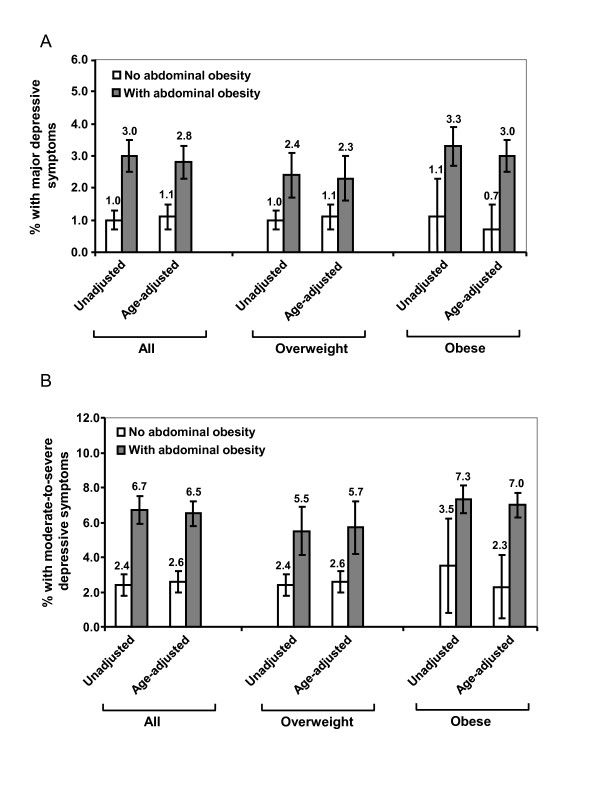
BACKGROUND: Obesity is associated with an increased risk of mental illness; however, evidence linking body mass index (BMI)-a measure of overall obesity, to mental illness is inconsistent. The objective of this study was to examine the association of depressive symptoms with waist circumference or abdominal obesity among overweight and obese U.S. adults. METHODS: A cross-sectional, nationally representative sample from the 2005-2006 National Health and Nutrition Examination Survey was used. We analyzed the data from 2,439 U.S. adults (1,325 men and 1,114 nonpregnant women) aged ≥ 20 years who were either overweight or obese with BMI of ≥ 25.0 kg/m2. Abdominal obesity was defined as waist circumference of > 102 cm for men and > 88 cm for women. Depressive symptoms (defined as having major depressive symptoms or moderate-to-severe depressive symptoms) were assessed by the Patient Health Questionnaire-9 diagnostic algorithm. The prevalence and the odds ratios (ORs) with 95% confidence intervals (CIs) for having major depressive symptoms and moderate-to-severe depressive symptoms were estimated using logistic regression analysis. RESULTS: After multivariate adjustment for demographics and lifestyle factors, waist circumference was significantly associated with both major depressive symptoms (OR: 1.03, 95% CI: 1.01-1.05) and moderate-to-severe depressive symptoms (OR: 1.02, 95% CI: 1.01-1.04), and adults with abdominal obesity were significantly more likely to have major depressive symptoms (OR: 2.18, 95% CI: 1.35-3.59) or have moderate-to-severe depressive symptoms (OR: 2.56, 95% CI: 1.34-4.90) than those without. These relationships persisted after further adjusting for coexistence of multiple chronic conditions and persisted in participants who were overweight (BMI: 25.0-< 30.0 kg/m2) when stratified analyses were conducted by BMI status. CONCLUSION: Among overweight and obese U.S. adults, waist circumference or abdominal obesity was significantly associated with increased likelihoods of having major depressive symptoms or moderate-to-severe depressive symptoms. Thus, mental health status should be monitored and evaluated in adults with abdominal obesity, particularly in those who are overweight.
Overview
The claims and statistics of this paper haven’t been checked yet.
Free: it reads the open-access text and checks the first 5 claims that cite a source we can check. Create a free account to check every claim.
Integrity signals
Registry
Cites
Statistics
Figures
Verification
Claims the paper makes
The claims and statistics of this paper haven’t been checked yet.
Free: it reads the open-access text and checks the first 5 claims that cite a source we can check. Create a free account to check every claim.
Claims other papers make about this one
Each is checked against this paper’s own text: does it say what the citing paper says it does?
The source backs part of the claim, not all of it — or backs it for a different population, condition or comparison.
In the citing paper
“The odds of depression are higher when evaluating the waist-to-hip ratio [16,17] which provides a better estimate of visceral adiposity and metabolic dysfunction than BMI [18].”
From The menace of obesity to depression and anxiety prevalence (2022) · cites this paper as [16]
Experimental — accuracy not yet measured
Self-check
Percentages, sums and reported differences re-computed from the paper’s own numbers.
The self-check needs the paper’s full text.
Citations
Cites
The PHQ-9: Validity of a brief depression severity measure
Kroenke, K., Spitzer, R. L., & Williams, J. B. W. (2001) · Journal of General Internal Medicine · doi:10.1046/j.1525-1497.2001.016009606.x · Cited by 44,910
A New Equation to Estimate Glomerular Filtration Rate
Levey, A. S., Stevens, L. A., Schmid, C. H., Zhang, Y. (., Castro, A. F., Feldman, H. I., Kusek, J. W., Eggers, P., Van Lente, F., Greene, T., et al. (2009) · Annals of Internal Medicine · doi:10.7326/0003-4819-150-9-200905050-00006 · Cited by 25,603 · cited 1×
“For kidney disease, we estimated glomerular filtration rate using the CKD-EPI (Chronic Kidney Disease Epidemiology Collaboration) equation [38], and participants with a glomerular filtration rate of < 60 mL/min/1.”
MethodChobanian, A. V., Bakris, G. L., Black, H. R., Cushman, W. C., Green, L. A., Izzo, J. L., Jones, D. W., Materson, B. J., Oparil, S., Wright, J. T., et al. (2003) · Hypertension · doi:10.1161/01.hyp.0000107251.49515.c2 · Cited by 13,271 · cited 1×
“According to the Joint National Committee on Prevention, Detection, Evaluation, and Treatment of High Blood Pressure reports [37], participants who were on antihypertension medications or had systolic blood pressure ≥ 140 mmHg or diastolic blood pressure ≥ 90 mmHg were defined as having hypertension.”
MethodPrevalence and Trends in Obesity Among US Adults, 1999-2008
Flegal, K. M. (2010) · JAMA · doi:10.1001/jama.2009.2014 · Cited by 7,580 · cited 1×
“The prevalence of obesity, defined as a body mass index (BMI) of ≥ 30 kg/m(2), was 32% in the United States during 2001-2004 and increased slightly to 34% during 2005-2006 [2].”
BackgroundThe PHQ-9: A New Depression Diagnostic and Severity Measure
Kroenke, K., & Spitzer, R. L. (2002) · Psychiatric Annals · doi:10.3928/0048-5713-20020901-06 · Cited by 5,898 · cited 3×
“Their scores for each item were then added to produce a total depression severity score, and the cutoff point of ≥ 10 was used to identify participants as having moderate-to-severe depressive symptoms [34,35].”
BackgroundMethodDepression, chronic diseases, and decrements in health: results from the World Health Surveys
Moussavi, S., Chatterji, S., Verdes, E., Tandon, A., Patel, V., & Ustun, B. (2007) · The Lancet · doi:10.1016/s0140-6736(07)61415-9 · Cited by 4,070 · cited 1×
“, associated with great burden of diseases and increased mortality, disability, and reduced quality of life) [16,17].”
BackgroundGuh, D. P., Zhang, W., Bansback, N., Amarsi, Z., Birmingham, C. L., & Anis, A. H. (2009) · BMC Public Health · doi:10.1186/1471-2458-9-88 · Cited by 3,855 · cited 1×
“The health impact of obesity is tremendous, as shown by an increased risk for multiple chronic diseases and conditions including hypertension, diabetes, hypercholesterolemia, coronary heart disease, asthma, arthritis, cancers, and many others [3-5].”
BackgroundFox, C. S., Massaro, J. M., Hoffmann, U., Pou, K. M., Maurovich-Horvat, P., Liu, C.-Y., Vasan, R. S., Murabito, J. M., Meigs, J. B., Cupples, L. A., et al. (2007) · Circulation · doi:10.1161/circulationaha.106.675355 · Cited by 2,882 · cited 1×
“In fact, studies have consistently shown that abdominal visceral fat is more pathogenic than subcutaneous fat on metabolic risk profiles [24,25] and that fat distribution (central adiposity vs general obesity, or visceral vs subcutaneous fat) is differentially associated with depressive symptoms [20,26,27].”
BackgroundWang, Y., Beydoun, M. A., Liang, L., Caballero, B., & Kumanyika, S. K. (2008) · Obesity · doi:10.1038/oby.2008.351 · Cited by 1,518 · cited 1×
“The continuing increases in BMI and waist circumference in the United States [54,55] and the projected increases in the prevalence of overweight and obesity [1,56] suggest that mental health status should be screened, monitored, and evaluated especially in people with abdominal obesity.”
BackgroundValidity of the brief patient health questionnaire mood scale (PHQ-9) in the general population
Martin, A., Rief, W., Klaiberg, A., & Braehler, E. (2006) · General Hospital Psychiatry · doi:10.1016/j.genhosppsych.2005.07.003 · Cited by 1,379 · cited 1×
“Using a structured mental health professional interview as the criterion standard, a PHQ-9 score of ≥ 10 had a sensitivity of 88% and a specificity of 88% for major depression, and, regardless of diagnostic status, typically represents clinically significant depression [34-36].”
Method
Research works printed but not linked: 1
- Centers for Disease Control and Prevention The Third National Center for Health Statistics: National Health and Nutrition Examination Survey (NHANES III 1988-94) reference manuals and reports [CD-ROM] 1996 National Center for Health Statistics, Bethesda, MD
Cited by
Items 101–200 of 213
Shams‐White, M., Chui, K. K. H., Deuster, P. A., McKeown, N. M., & Must, A. (2020) · Obesity · doi:10.1002/oby.22675 · Cited by 18
Zhang, H., Chen, R., Ma, A., Li, W.-X., Zhao, X., Pang, T., Wen, H., Qu, H., & Xu, X. (2024) · Journal of Affective Disorders · doi:10.1016/j.jad.2024.08.075 · Cited by 16
Influence of body mass index on the choice of therapy for depression and follow‐up care
Boudreau, D. M., Arterburn, D. E., Bogart, A., Haneuse, S., Theis, M. K., Westbrook, E. O., & Simon, G. (2013) · Obesity · doi:10.1002/oby.20048 · Cited by 17
“The causal pathway is likely bidirectional—obese adults are at greater risk of depression (4-7) and vice versa.”
BackgroundDepression and Its Associated Factors Among Rural Diabetic Residents
Lee, C., Chang, C., Pan, M.-Y., Hsu, T.-H., & Chen, M. (2016) · Journal of Nursing Research · doi:10.1097/jnr.0000000000000143 · Cited by 19
“Some studies have indicated that patients with type2 DM who also experience depression are more likely to have poor glycemic control, an abnormal waist circumference (WC), a lower quality of life, and less adherence to self-care activities, including taking antidiabetes medication, exercising, smoking cessation, diet…”
BackgroundResultInfluentialAdverse birth outcomes and the risk of dental caries at age 3 years
Soares, F. C., Dahllöf, G., Hjern, A., & Julihn, A. (2020) · International Journal of Paediatric Dentistry · doi:10.1111/ipd.12617 · Cited by 14
What is the Importance of Body Composition in Obesity-related Depression?
Köksal, Ü. İ., Ertürk, Z., Köksal, A. R., Özşenel, E. B., & Kaptanogullari, O. H. (2017) · Eurasian Journal of Medicine · doi:10.5152/eurasianjmed.2017.16129 · Cited by 17
“It has been shown that depressive symptoms increase with increased waist circumference (WC), waistto-hip ratio (WHR), visceral fat percentage, and adipocytokine levels [8, 9, 12].”
BackgroundSong, J.-H., Koh, T. H., Park, O., Kwon, D., Kang, S., Kwak, K., & Park, J. (2019) · Annals of Occupational and Environmental Medicine · doi:10.35371/aoem.2019.31.e10 · Cited by 12
Effects of auricular therapy to body composition in young asian women
Hsieh, C.-H., Tseng, T., Huang, M.-Y., & Chuang, P. (2017) · MATEC Web of Conferences · doi:10.1051/matecconf/201711901016 · Cited by 13
“Many studies have shown that excess weight and obesity, especially abdominal obesity, are associated with numerous chronic health problems, increased mortality rates of cardiovascular or cancer, and depressive symptoms or moderate-to-severe depressive symptoms [1-3].”
BackgroundHuang, Y., Zhao, D., Yang, Z., Wei, C., & Qiu, X. (2025) · BMC Psychiatry · doi:10.1186/s12888-025-06631-8 · Cited by 15
“Previous research has established a correlation between central obesity and depression [67, 12, 70].”
Goonesekera, S. D., Fang, S. C., Piccolo, R. S., Florez, J. C., & McKinlay, J. B. (2015) · PLoS ONE · doi:10.1371/journal.pone.0122808 · Cited by 13
Prevalence of dyslipidemia in school children of Kashmir valley
Parray, I. A., Parry, M. A., & Latief, M. (2016) · Diabetes & Metabolic Syndrome Clinical Research & Reviews · doi:10.1016/j.dsx.2016.01.023 · Cited by 12
Esmaeilzadeh, S., Farzizadeh, R., Kalantari, H.-A., Mahmoudi, A., Bilehsavar, O. Y., & Mehranpour, A. (2016) · Eating and Weight Disorders - Studies on Anorexia Bulimia and Obesity · doi:10.1007/s40519-016-0320-6 · Cited by 17
“Thus, in line with other studies, mental health status may be monitored and evaluated in these age groups using abdominal obesity [11, 42, 44] and may be protected by efficient PA prescription [53, 56].”
BackgroundResultTabassum, F., & Batty, G. D. (2013) · PLoS ONE · doi:10.1371/journal.pone.0067764 · Cited by 12
Diet and the Gut Microbiota – How the Gut
Tuohy, K. M., Venuti, P., Cuva, S., Furlanello, C., Gasperotti, M., Mancini, A., Ceppa, F., Cavalieri, D., Filippo, C. D., Vrhovšek, U., et al. (2014) · Elsevier eBooks · doi:10.1016/b978-0-12-407825-3.00015-0 · Cited by 10
Ahn, S. H., Son, S. M., & Kim, H. K. (2012) · 대한지역사회영양학회지 · doi:10.5720/kjcn.2012.17.4.463 · Cited by 10
The Relationship between Body Mass Index (BMI) and Depression According to the rs16139NPY Gene.
Dolatian, A., Arzaghi, S. M., Qorbani, M., & Pishva, H. (2017) · PubMed Central · Cited by 12
Gynecological cancer and metabolic screening of 1001 elderly Brazilian women
Bagnoli, V. R., da Fonseca, Â. M., Massabki, J. O. P., Ariê, W. M. Y., Azevedo, R. S., Veiga, E. C. D. A., Soares, J. M., & Baracat, E. C. (2019) · Revista da Associação Médica Brasileira · doi:10.1590/1806-9282.65.10.1275 · Cited by 11
Obesity: the modern view of a problem
Ачкасов, Е., Рапопорт, С. И., Runenko, S. D., & Razina, A. O. (2016) · Clinical Medicine (Russian Journal) · doi:10.18821/0023-2149-2016-94-5-333-338 · Cited by 12
The effect of abdominal fat parameters on percutaneous nephrolithotomy success
Çakmak, Ö., Tarhan, H., Çimen, S., Ekin, R. G., Akarken, İ., Öztekin, Ö., Can, E., Süelözgen, T., & İlbey, Y. Ö. (2016) · Canadian Urological Association Journal · doi:10.5489/cuaj.3484 · Cited by 9
Depression, anxiety, and their relation with clinical parametersand androgen levels in hirsute women
İrak, L., Yavuz, H. C., Dogan, B. A., Mete, T., Berker, D. S., & Güler, S. (2016) · TURKISH JOURNAL OF MEDICAL SCIENCES · doi:10.3906/sag-1405-72 · Cited by 10
“(24) found that waist circumference or abdominal obesity was significantly associated with an increased likelihood of developing major symptoms of depression or moderate-to-severe symptoms of depression among overweight and obese adults in the United States.”
BackgroundSwann, O. G., Breslin, M. C., Kilpatrick, M., O’Sullivan, T. A., Mori, T. A., Beilin, L. J., Lin, A. P., & Oddy, W. H. (2020) · British Journal Of Nutrition · doi:10.1017/s0007114520003426 · Cited by 11
Motivational Factors Predict Weight Loss in Rural Adults
Reed, J. R., Yates, B. C., Houfek, J. F., Briner, W., Schmid, K. K., & Pullen, C. H. (2015) · Public Health Nursing · doi:10.1111/phn.12213 · Cited by 10
“Demographic characteristics (age, gender, education, work status) and sleep and physical activity (PA) are frequently included as covariates in weight loss studies and thus were also included in this study (Sutin, Ferrucci, Zonderman, & Terracciano, 2011; Zhao et al., 2011).”
BackgroundPsychological impact of obesity in children
Ahmed, I., Hussein, R., & Mohammed, R.-E. (2020) · The Scientific Journal of Al-Azhar Medical Faculty Girls · doi:10.4103/sjamf.sjamf_98_19 · Cited by 12
“[20] reported that WC or central obesity was associated with increased incidence of depression in adults with obesity.”
Nutritional Status of Depressive Patients
Othman, R. B., Mziou, O., Gamoudi, A., Smida, A., Souissi, C., Loukil, I., Mahjoub, F., Berriche, O., & Henda, J. (2018) · Journal of Diabetes & Metabolism · doi:10.4172/2155-6156.1000786 · Cited by 10
“[23] found that in overweight or obese adults, abdominal obesity was significantly associated with an increased likelihood of having severe depressive symptoms.”
BackgroundJaber, M. H., Kahwaji, H., Nasr, S., Baz, R., Kim, Y., & Fakhoury, M. (2024) · Advances in experimental medicine and biology · doi:10.1007/978-981-97-4402-2_18 · Cited by 9
Nayak, A., & Nachane, H. B. (2020) · Journal of Postgraduate Medicine · doi:10.4103/jpgm.jpgm_541_18 · Cited by 11
“[18] Waist-to-hip ratio (WHR), BMI, and abdominal girth have been shown to significantly correlate with scores on depression and anxiety scales, but no literature is available for its role in postnatal depression.[19] The correlation between obesity and depression has been shown to be bidirectional, and depression can…”
BackgroundKong, X., & Wang, W. (2024) · Journal of Affective Disorders · doi:10.1016/j.jad.2024.12.081 · Cited by 7
Wade, T. W., Oberhelman, S. S., Angstman, K. B., Sawchuk, C. N., Meunier, M. R., Angstman, G. L., & Rohrer, J. E. (2014) · Psychosomatics · doi:10.1016/j.psym.2014.05.012 · Cited by 9
Romanelli, R. J., Sudat, S. E. K., Huang, Q., Ma, J., Venditti, E. M., Greenwood, D. A., Pressman, A. R., & Azar, K. M. J. (2019) · Translational Behavioral Medicine · doi:10.1093/tbm/ibz118 · Cited by 7
Clinical Practice Guideline for the Management of Overweight and Obesity in Adults in Saudi Arabia
Alshaikh, A., Al-Jedai, A. H., Alfadda, A. A., Al-Robayan, A. A., Bawahab, A., Abo’ouf, S., Sultan, A., Alhozali, A. M., Bawazeer, M. A., Sheshah, E., et al. (2022) · International Journal of Clinical Medicine · doi:10.4236/ijcm.2022.1312045 · Cited by 9
Yusufov, M., Kopeski, L. M., Silverman, A. L., & Björgvinsson, Þ. (2020) · Journal of Affective Disorders · doi:10.1016/j.jad.2020.12.029 · Cited by 8
Rydin, A. O., Milaneschi, Y., Lamers, F., Quax, R., van de Bunt, N., Koloi, A., Doornbos, B., & Penninx, B. W. J. H. (2025) · Brain Behavior and Immunity · doi:10.1016/j.bbi.2025.106120 · Cited by 9
Majdizadeh, G., Beytollahi, M., Djazayery, A., & Movahedi, A. (2024) · International Journal of Preventive Medicine · doi:10.4103/ijpvm.ijpvm_59_23 · Cited by 6
“[52] These differences could be due to the difference in the sample size and different measurement tools for measuring mental health disorders as well as the age groups.”
BackgroundAspectos psicológicos de la obesidad en adultos
Lopera, D. A. T., & Restrepo, M. (2015) · Revista de Psicología Universidad de Antioquia · doi:10.17533/udea.rp.21619 · Cited by 42
Chu, J. E., Lee, J. M., Cho, H., & Park, Y. J. (2013) · Journal of Nutrition and Health · doi:10.4163/jnh.2013.46.3.261 · Cited by 6
Thermogenesis-based interventions for obesity and Type 2 diabetes mellitus
Wimalawansa, S. J. (2013) · Expert Review of Endocrinology & Metabolism · doi:10.1586/eem.13.13 · Cited by 8
Haynes, P. L., Apolinar, G. R., Mayer, C., Kobayashi, U., Silva, G. E., Glickenstein, D. A., Thomson, C. A., & Quan, S. F. (2021) · Obesity Science & Practice · doi:10.1002/osp4.479 · Cited by 6
Metabolic syndrome in psychiatric patients (comparative study)
Soltan, M., Mousa, F., Dessoki, H. H., Kateb, S. M. E., & Ezzat, A. A. (2017) · Egyptian Journal of Psychiatry · doi:10.4103/ejpsy.ejpsy_24_17 · Cited by 8
“Childhood (Halfon et al., 2013) and adult obesity is associated with an increased risk for depression (Scott, 2008; Zhong, 2010; Zhao, 2011).”
BackgroundRen, Y., Wang, B., Liu, X., Li, Z., Yuan, W., Sun, Y., & Miao, M. (2013) · International Journal of Impotence Research · doi:10.1038/ijir.2013.48 · Cited by 5
Pharmaceutical Side Effects and the Sex Differences in Depression and Distress
Do, D., & Schnittker, J. (2022) · American Journal of Preventive Medicine · doi:10.1016/j.amepre.2022.01.036 · Cited by 6
Hawkins, J., Watkins, D. C., Allen, J. O., & Mitchell, J. A. (2018) · Preventive Medicine Reports · doi:10.1016/j.pmedr.2018.10.022 · Cited by 5
Vera-Ponce, V. J., Zeñas-Trujillo, G. Z., Loayza-Castro, J. A., Valencia, J. G., Zuzunaga-Montoya, F. E., Valladares-Garrido, M. J., Paucar, C. R. I., & Cruz-Vargas, J. A. D. L. (2023) · Endocrine and Metabolic Science · doi:10.1016/j.endmts.2023.100141 · Cited by 4
Depressive symptoms and obesity: Assessing and addressing the black dog in the room
Hickman, I. J., Davis, A. C., Whelan, M., Eakin, E., & Reeves, M. M. (2012) · Nutrition & Dietetics · doi:10.1111/j.1747-0080.2012.01644.x · Cited by 5
Characteristics of depression in obese people living in an insecure environment
Stolic, R. V., Mihailović, B., Celic, D., Nikolic, G., Stolic, D., Sovtic, S., Trajkovic, G., Sipic, M. V., & Lazic, S. (2010) · Indian Journal of Medical Sciences · doi:10.4103/0019-5359.99859 · Cited by 4
“[10] This preliminary study has shown that depression was more pronounced in patients with a greater degree abdominal obesity as confirmed by Zhao et al.[11] Other studies that have attempted to elucidate the association of obesity and depression had many procedural and methodological differences.”
Result(2021) · The Egyptian Journal of Community Medicine · doi:10.21608/ejcm.2021.202262 · Cited by 6
“The socioeconomic levels are classified depending on the quartiles of the calculated score into very low (0-21), low (22-42), middle (43-63), and high (64-84).”
BackgroundAssociation between depressive symptoms and pericardial fat in healthy older men and women
Miller, N. E., & Steptoe, A. (2022) · Scientific Reports · doi:10.1038/s41598-022-17888-4 · Cited by 5
Relação bilateral entre excesso de peso e transtornos mentais
dos Santos, M. M., do Nascimento, F. F., Cabral, S. D. M. R., de Oliveira, E. S., dos Santos, R. M., & Carvalho, L. D. S. (2018) · Revista Brasileira em Promoção da saúde · doi:10.5020/18061230.2018.6740 · Cited by 4
Taş, H. İ., Ertekin, H., Yıldızoğlu, Ç. A., & Ertekin, Y. H. (2019) · Kafkas Journal of Medical Sciences · doi:10.5505/kjms.2019.83798 · Cited by 7
“Özellikle abdominal obezitenin koroner arter hastalıkları ve depres-yon için önemli bir risk faktörü olduğu, depresif semp-tomların viseral yağ oranlarında artışa sebep olduğu bildirilmiştir 18,19,20 .”
Ma, N., Alifu, J., Meng, G., Ma, J., Wang, H., Meng, X., & Liu, X. (2025) · Diabetology & Metabolic Syndrome · doi:10.1186/s13098-025-01881-8 · Cited by 4
“Zhao’s team found that abdominal obesity was significantly associated with an increased likelihood of developing severe or moderate depressive symptoms [28].”
Food habits and associated risk factors of depressed patients with cardiovascular disease
Aljuhani, H. E., Alshammari, G. M., AlHadi, A. N., Alabdulkarem, K. B., Albader, O. S. M., Baig, M. B., & Yahya, M. A. (2022) · PLoS ONE · doi:10.1371/journal.pone.0263519 · Cited by 4
Subjective experiences of physical activity and forecasting bias during behavioral weight loss
Crane, N. T., Martinelli, M., Forman, E. M., & Butryn, M. L. (2021) · Obesity Science & Practice · doi:10.1002/osp4.568 · Cited by 4
Choi, Y. S. (2014) · Journal of the Korea Academia-Industrial cooperation Society · doi:10.5762/kais.2014.15.8.5159 · Cited by 3
“또한 우울과 스트레스는 일반인 에게도 복부비만, 과체중등 대사증후군을 유발[8]하기도 하며, 식욕감퇴 등 식습관과 영양에 변화를 가져와 영양 섭취의 취약성을 유도하고, 이는 또다시 우울과 스트레 스를 야기하며, 순환한다[9].”
Diagnosis of Major Depressive Disorders: Clinical and Biological Perspectives
Fakhoury, M. (2017) · Springer eBooks · doi:10.1007/978-981-10-6577-4_4 · Cited by 5
Javaheri, F. S. H., Ostadrahimi, A., Nematy, M., Arabi, S. M., Rahmani, K., & Amini, M. (2023) · Nutritional Neuroscience · doi:10.1080/1028415x.2023.2261680 · Cited by 4
“Zhao et al. [29] showed that obesity is a risk factor for depression and that obese women are at a higher risk of depression.”
BackgroundChen, L., Tian, A., Liu, Z., Zhang, M., Pan, X., He, C., Liu, W., & Chen, P. (2020) · medRxiv · doi:10.1101/2020.01.20.20017723 · Cited by 4
Aychiluhm, S. B., Ross, A. G., Isaac, V., Thapa, S., & Ahmed, K. Y. (2025) · BMC Medicine · doi:10.1186/s12916-025-04538-5 · Cited by 8
“Moreover, central obesity is strongly linked with adverse health outcomes: several studies demonstrate associations with mental disorders such as depression and anxiety [67] as well as chronic physical conditions, including hypertension, type 2 diabetes, and cardiovascular diseases [30, 68, 69].”
Adeomi, A. A., Obiajunwa, C., Oduntan, O., & Ogbukwo, E. (2021) · PubMed Central · doi:10.11604/pamj.2021.39.94.23567 · Cited by 2
Shi, C., He, C., Qin, L., & Bai, W. (2025) · Frontiers in Psychiatry · doi:10.3389/fpsyt.2025.1530940 · Cited by 3
“Notably, AIP has been strongly associated with the onset of prediabetes mellitus (Pre-DM) and DM, with elevated AIP levels re fl ecting the severity of IR (14, 15).”
Is obesity a risk factor for impaired cognition in young adults with low birth weight?
Lundgren, M., Morgården, E., & Gustafsson, J. (2013) · Pediatric Obesity · doi:10.1111/j.2047-6310.2013.00188.x · Cited by 2
“The relationship between obesity and attentiondeficit/hyperactivity disorder (ADHD) is well known (28) and associations between BMI and self-esteem/ depression have also been shown (29).”
BackgroundHale, J. (2014) · Digital Commons (Liberty University) · Cited by 2
Altunoğlu, E., Müderrisoğlu, C., Erdenen, F., Ülgen, E., & Memiş, İ. (2015) · Istanbul Medical Journal · doi:10.5152/imj.2015.35403 · Cited by 2
“Obesity, particularly abdominal obesity, is associated with an increased risk of outcomes such as cardiovascular or cancer mortality (5).”
BackgroundInsulin Resistance, Glucose Regulation, Obesity, and Mood
Keegan, R. J., & Naumovski, N. (2016) · Springer eBooks · doi:10.1007/978-981-287-206-7_64 · Cited by 4
Park, J. M., Lee, Y., & Lee, D. (2021) · The National Medical Journal of India · doi:10.4103/0970-258x.323443 · Cited by 2
The relationship of diet quality and body composition with depression level in young women
Yardımcı, H., & Demir, G. (2022) · Acta Scientiarum Health Sciences · doi:10.4025/actascihealthsci.v45i1.60410 · Cited by 2
Relationship between antipsychotic medication, obesity and cognitive functions
Łopuszańska, U., & Makara‐Studzińska, M. (2017) · Current Problems of Psychiatry · doi:10.1515/cpp-2017-0020 · Cited by 2
“The existing scientific reports indicate that persons with mental disorders, particularly suffering from schizophrenia, schizoaffective disorders, mood disorders, single and bipolar disorders, have greater tendency to deposit fat tissue in the abdominal area, and this tendency is further enhanced with antipsychotic me…”
BackgroundDepression and anxiety screening among school students and its relation to weight status
Alswat, K. A., Al-shehri, A. D., Aljuaid, T. A., Alzaidi, B. A., & Alasmari, H. (2018) · Minerva Psichiatrica · doi:10.23736/s0391-1772.18.01976-3 · Cited by 1
Bahadır, F. E., Demirel, Ö. Ü., Yavuz, M., Firat, O., Yogurtcu, I., Govdeli, Y., & Furuncuoğlu, Y. (2025) · Endocrine and Metabolic Science · doi:10.1016/j.endmts.2025.100231 · Cited by 1
Mohammadi, T., Orouei, S., Parastouei, K., Shahraki, H. R., Parandeh, A., Amini, H., & Raei, M. (2025) · Journal of Food Science · doi:10.1111/1750-3841.70342 · Cited by 2
Stellefson, M., Wang, M., Yao, Y., Campbell, O., & Sivalingam, R. (2025) · International Journal of Environmental Research and Public Health · doi:10.3390/ijerph22081207 · Cited by 1
“The current study adjusted for a broad set of chronic health conditions (i.e., heart attack/coronary heart disease, asthma, depressive disorder, diabetes, arthritis, multimorbidity) and disease-specific behavioral risk factors [48].”
Relative fat mass and cardiovascular risk in Chinese adults: a nationwide prospective cohort study
Wang, F., Li, X., Wang, L., & Zheng, J. (2025) · Nutrition Journal · doi:10.1186/s12937-025-01267-6 · Cited by 2
“Waist circumference (WC) measurement is now considered the gold standard for assessing abdominal obesity due to its strong correlation with visceral fat mass [12–14].”
Adam, G. K., Alharbi, H. Y., Alwabili, A., & Adam, I. (2026) · BMC Public Health · doi:10.1186/s12889-026-27126-5 · Cited by 1
“This result presents a contradictory finding relative to much of the literature: some studies have shown a positive association [39–41], whereas others have shown no association [42].”
Rioli, G., Mattei, G., Bonamici, C., Mancini, S., Alboni, S., Cannazza, G., Sena, P., Roncucci, L., Pingani, L., Ferrari, S., et al. (2022) · PubMed Central · doi:10.23750/abm.v93i4.12463 · Cited by 2
İslamiyet’te Beslenme Kültürü ve Kişilik Yapısına Etkisi
Pehlivan, T., Yavaş, G., & NASSAN, M. (2023) · İlahiyat Akademi · doi:10.52886/ilak.1212210 · Cited by 1
Park, S. K., Oh, C., Ryoo, J., & Jung, J. Y. (2024) · Nutritional Neuroscience · doi:10.1080/1028415x.2024.2352194 · Cited by 1
“Waist circumference and abdominal adiposity were significantly associated with the increased likelihood of depressive symptoms [32].”
Energy Dynamics in the Metabolic Syndrome: Underpinnings of an Evolving Global Catastrophe
Thorp, K. E., Thorp, E. M., & BS, F. W. (2024) · The Gazette of Medical Sciences · doi:10.46766/thegms.endocrinol.24051901
Nunggraeni, D. R., & Sulchan, M. (2015) · Journal of Nutrition College · doi:10.14710/jnc.v4i3.10093 · Cited by 1
“Hal tersebut karena obesitas yang terjadi pada masa remaja dapat meningkatkan faktor risiko terjadinya obesitas saat dewasa(2) dan berefek pada kesehatan dalam jangka panjang, seperti hipertensi, diabetes, hiperkolesterolemia, dan penyakit jantung koroner.(3) Berdasarkan data dari Riskesdas tahun 2013 menunjukkan bahw…”
BackgroundDennison, M., Sisson, S. B., Stephens, L. D., Morris, A. S., Aston, C. E., Dionne, C. P., KNEHANS, A. W., & Dickens, R. D. (2019) · PubMed · Cited by 2
Silva, D. A., Coutinho, E. S. F., de Figueiredo, R. C., Molina, M. D. C. B., Mill, J. G., de Faria, C. P., Nunes, M. A., Moreno, A. B., Giatti, L., Barreto, S. M., et al. (2020) · Journal of Affective Disorders · doi:10.1016/j.jad.2020.12.091 · Cited by 2
Vera-Ponce, V. J., Torres-Malca, J. R., Valencia, J. G., Espinoza-Rojas, R., Zuzunaga-Montoya, F. E., Zeñas-Trujillo, G. Z., Cruz-Ausejo, L., & Cruz-Vargas, J. A. D. L. (2023) · F1000Research · doi:10.12688/f1000research.128266.1 · Cited by 1
The Expectation of Emotional Strength and its Impact on African American Women's Weight
Rivers, N. L. (2015) · ScholarWorks (Walden University) · Cited by 1
The association between sleep and obesity and its impact on health and wellbeing
Araghi, M. (2014) · University of Birmingham Institutional Research Archive (University of Birmingham) · Cited by 1
Badanie związku nadwagi i otyłości z obrazem klinicznym wybranych rodzajów depresji
Buzuk, G. (2014) · Biblioteka Uniwersytetu Medycznego w Poznaniu · Cited by 1
Iparraguirre, J. L., & SzeLam, S. (2012) · Nature Precedings · doi:10.1038/npre.2012.6897.1
Clinical strategies for managing the overweight neurology patient
Cheskin, L. J., Sonzone, C. M., & Davis, L. (2012) · Neurology Clinical Practice · doi:10.1212/cpj.0b013e31824c6ccd
Brooks, K. M. (2014) · Journal of Exercise, Movement, and Sport (SCAPPS refereed abstracts repository) · Cited by 1
Cezaretto, A. (2016) · Digital Library of Theses and Dissertations (Universidade de São Paulo) · doi:10.11606/t.6.2016.tde-26052015-091135 · Cited by 1
SP ZOZ MSW im. prof. L. Bierkowskiego
Buzuk, G. (2014)
Kheirouri, S. (2014) · International Neuropsychiatric Disease Journal · doi:10.9734/indj/2014/9044 · Cited by 1
The effect of emotional and genetic factors on nutritional status in a school-based population
Llopis, E. (2015) · TDX (Tesis Doctorals en Xarxa)
Psychosocial presentation of revisional and primary bariatric surgery patients
van Vuuren, M. J. (2016) · Queensland University of Technology · doi:10.5204/thesis.eprints.99501
Obesity and Depression among Asian Indians in the United States: Findings from the MASALA Study
Din, N., & Kanaya, A. M. (2015)
Singh, K. N. (2017) · Queensland University of Technology · doi:10.5204/thesis.eprints.110807 · Cited by 1
McGregor, C. C. (2018) · University of North Texas Digital Library (University of North Texas) · doi:10.12794/metadc1157585
Cortisol Level Related Glucose Intolerance in Adult with Obese Central
Hasan, N., Hadju, V., Jafar, N., & Thaha, R. M. (2020) · Journal of Health Science and Prevention · doi:10.29080/jhsp.v3i3s.299
“Also, obesity, especially central obesity, often occurs in adults[2].”
BackgroundWinters-Miner, L. A. (2014) · Elsevier eBooks · doi:10.1016/b978-0-12-411643-6.00020-x
RELAÇÃO BILATERAL ENTRE EXCESSO DE PESO E TRANSTORNOS MENTAIS
dos Santos, M. M., do Nascimento, F. F., Cabral, S. D. M. R., de Oliveira, E. S., dos Santos, R. M., & Carvalho, L. D. S. (2021) · doi:10.22533/at.ed.53821080712
Insulin Resistance, Glucose Regulation, Obesity, and Mood
Keegan, R. J., & Naumovski, N. (2015) · Springer eBooks · doi:10.1007/978-981-4560-53-5_64-1
Anxiety-depressive disorders in obese patients
Velychko, V. I., Lahoda, D. O., & Danylchuk, G. (2022) · Diabetes Obesity Metabolic Syndrome · doi:10.57105/2415-7252-2022-5-03
Ra, J. S. (2023) · Osong Public Health and Research Perspectives · doi:10.24171/j.phrp.2023.0089 · Cited by 2
Metadata
- Authors
- Zhao, G., Ford, E. S., Li, C., Tsai, J., Dhingra, S., & Balluz, L. S.
- Affiliations
- National Center for Chronic Disease Prevention and Health Promotion (US)
- Centers for Disease Control and Prevention (US)
- Corresponding author
- Zhao, Guixiang
- Venue
- BMC Psychiatry
- Published
- 2011-08-11
- Volume
- 11
- Issue
- 1
- Pages
- 130-130
- ISSN
- 1471-244X (ISSN-L)
- PMC
- PMC3163524
- OpenAlex
- W2170192024
- Semantic Scholar
- 54a4305da35ccd3462097ec8ea5590cfe46c1bcd
- Cited by
- 214
- References
- 56
- Citations by year
- 2026: 4 · 2025: 13 · 2024: 16 · 2023: 12 · 2022: 13 · 2021: 11 · 2020: 17 · 2019: 10 · 2018: 11 · 2017: 12 · 2016: 21 · 2015: 22 · 2014: 19 · 2013: 19 · 2012: 13
- FWCI
- 16.04
- Type
- journal article
- Language
- en
- Open access
- gold
- doi.org
- Licence
- Locations
- BMC Psychiatry (publishedVersion, cc-by)
- Europe PMC (PubMed Central) (publishedVersion, cc-by)
- PubMed Central (publishedVersion, cc-by)
- PubMed (publishedVersion)
- DOAJ (DOAJ: Directory of Open Access Journals) (submittedVersion, cc-by-sa)
- Funders
- Centers for Disease Control and Prevention
- National Center for Chronic Disease Prevention and Health Promotion
- Topics
- Health Sciences › Medicine › Public Health, Environmental and Occupational Health › Obesity, Physical Activity, Diet
- Social Sciences › Psychology › Clinical Psychology › Eating Disorders and Behaviors
- Health Sciences › Medicine › Public Health, Environmental and Occupational Health › Obesity and Health Practices
- Keywords
- waist circumference, abdominal obesity, depressive symptoms, depression, obesity, overweight, body mass index, mental health
- MeSH terms
- Adult, Cross-Sectional Studies, Depression, Female, Humans, Male, Middle Aged, Nutrition Surveys, Obesity, Severity of Illness Index, United States, Prevalence, Overweight, Waist Circumference, Obesity, Abdominal
About these checks
Registry, retraction, Cites and statistics results are computed, not judged, with one exception: a printed reference that no index lists is read once by a model before it counts as a citation error. Claims are extracted by a model and kept only when their quote appears verbatim in the text; each cited source is then checked, with a model’s help, for whether it says what the claim relies on. Those verdicts can be wrong — read the claim’s quote and the cited source before relying on one.
Statistics and arithmetic are recomputed, not judged.
Confidence bands are shown only for fields calibrated on our annotated test set. None is calibrated yet, so no band is shown.
What counts as a claim ›How we measure confidence ›How we check this ›
Are you an author, or do you see a problem with this page? Request a review
Data sources
Bibliographic data: Semantic Scholar, OpenAlex, Crossref.
Contains information from the Semantic Scholar Academic Graph Datasets, made available under the ODC Attribution License (ODC-BY 1.0).
Semantic Scholar’s data is described in: Kinney, R., et al. (2023). The Semantic Scholar Open Data Platform. arXiv:2301.10140.
