

Waist circumference, abdominal obesity, and depression among overweight and obese U.S. adults: national health and nutrition examination survey 2005-2006
Open accessThe DOI matches its Crossref record; 56 of the 56 references it cites were found in a registry or an index.
Abstract
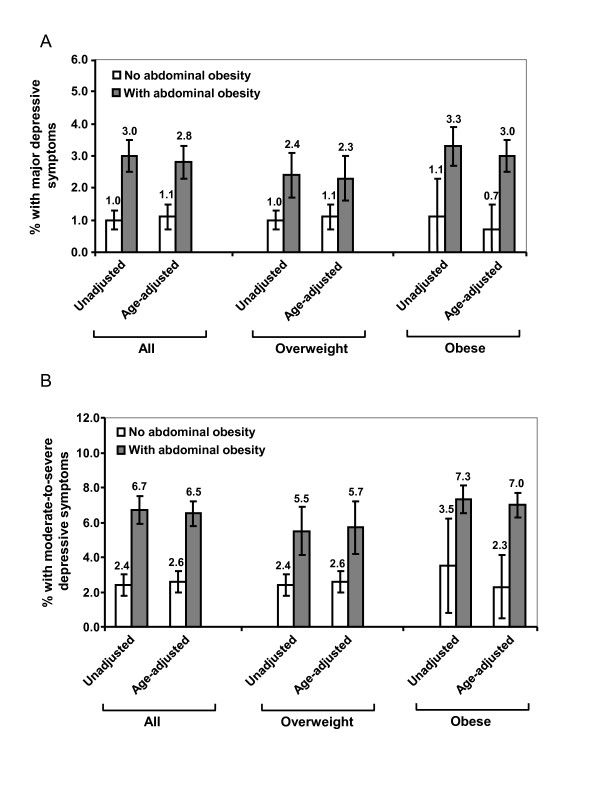
BACKGROUND: Obesity is associated with an increased risk of mental illness; however, evidence linking body mass index (BMI)-a measure of overall obesity, to mental illness is inconsistent. The objective of this study was to examine the association of depressive symptoms with waist circumference or abdominal obesity among overweight and obese U.S. adults. METHODS: A cross-sectional, nationally representative sample from the 2005-2006 National Health and Nutrition Examination Survey was used. We analyzed the data from 2,439 U.S. adults (1,325 men and 1,114 nonpregnant women) aged ≥ 20 years who were either overweight or obese with BMI of ≥ 25.0 kg/m2. Abdominal obesity was defined as waist circumference of > 102 cm for men and > 88 cm for women. Depressive symptoms (defined as having major depressive symptoms or moderate-to-severe depressive symptoms) were assessed by the Patient Health Questionnaire-9 diagnostic algorithm. The prevalence and the odds ratios (ORs) with 95% confidence intervals (CIs) for having major depressive symptoms and moderate-to-severe depressive symptoms were estimated using logistic regression analysis. RESULTS: After multivariate adjustment for demographics and lifestyle factors, waist circumference was significantly associated with both major depressive symptoms (OR: 1.03, 95% CI: 1.01-1.05) and moderate-to-severe depressive symptoms (OR: 1.02, 95% CI: 1.01-1.04), and adults with abdominal obesity were significantly more likely to have major depressive symptoms (OR: 2.18, 95% CI: 1.35-3.59) or have moderate-to-severe depressive symptoms (OR: 2.56, 95% CI: 1.34-4.90) than those without. These relationships persisted after further adjusting for coexistence of multiple chronic conditions and persisted in participants who were overweight (BMI: 25.0-< 30.0 kg/m2) when stratified analyses were conducted by BMI status. CONCLUSION: Among overweight and obese U.S. adults, waist circumference or abdominal obesity was significantly associated with increased likelihoods of having major depressive symptoms or moderate-to-severe depressive symptoms. Thus, mental health status should be monitored and evaluated in adults with abdominal obesity, particularly in those who are overweight.
Overview
The claims and statistics of this paper haven’t been checked yet.
Free: it reads the open-access text and checks the first 5 claims that cite a source we can check. Create a free account to check every claim.
Integrity signals
Registry
Cites
Statistics
Figures
Verification
Claims the paper makes
The claims and statistics of this paper haven’t been checked yet.
Free: it reads the open-access text and checks the first 5 claims that cite a source we can check. Create a free account to check every claim.
Claims other papers make about this one
Each is checked against this paper’s own text: does it say what the citing paper says it does?
The source backs part of the claim, not all of it — or backs it for a different population, condition or comparison.
In the citing paper
“The odds of depression are higher when evaluating the waist-to-hip ratio [16,17] which provides a better estimate of visceral adiposity and metabolic dysfunction than BMI [18].”
From The menace of obesity to depression and anxiety prevalence (2022) · cites this paper as [16]
Experimental — accuracy not yet measured
Self-check
Percentages, sums and reported differences re-computed from the paper’s own numbers.
The self-check needs the paper’s full text.
Citations
Cites
The PHQ-9: Validity of a brief depression severity measure
Kroenke, K., Spitzer, R. L., & Williams, J. B. W. (2001) · Journal of General Internal Medicine · doi:10.1046/j.1525-1497.2001.016009606.x · Cited by 44,910
A New Equation to Estimate Glomerular Filtration Rate
Levey, A. S., Stevens, L. A., Schmid, C. H., Zhang, Y. (., Castro, A. F., Feldman, H. I., Kusek, J. W., Eggers, P., Van Lente, F., Greene, T., et al. (2009) · Annals of Internal Medicine · doi:10.7326/0003-4819-150-9-200905050-00006 · Cited by 25,603 · cited 1×
“For kidney disease, we estimated glomerular filtration rate using the CKD-EPI (Chronic Kidney Disease Epidemiology Collaboration) equation [38], and participants with a glomerular filtration rate of < 60 mL/min/1.”
MethodChobanian, A. V., Bakris, G. L., Black, H. R., Cushman, W. C., Green, L. A., Izzo, J. L., Jones, D. W., Materson, B. J., Oparil, S., Wright, J. T., et al. (2003) · Hypertension · doi:10.1161/01.hyp.0000107251.49515.c2 · Cited by 13,271 · cited 1×
“According to the Joint National Committee on Prevention, Detection, Evaluation, and Treatment of High Blood Pressure reports [37], participants who were on antihypertension medications or had systolic blood pressure ≥ 140 mmHg or diastolic blood pressure ≥ 90 mmHg were defined as having hypertension.”
MethodPrevalence and Trends in Obesity Among US Adults, 1999-2008
Flegal, K. M. (2010) · JAMA · doi:10.1001/jama.2009.2014 · Cited by 7,580 · cited 1×
“The prevalence of obesity, defined as a body mass index (BMI) of ≥ 30 kg/m(2), was 32% in the United States during 2001-2004 and increased slightly to 34% during 2005-2006 [2].”
BackgroundThe PHQ-9: A New Depression Diagnostic and Severity Measure
Kroenke, K., & Spitzer, R. L. (2002) · Psychiatric Annals · doi:10.3928/0048-5713-20020901-06 · Cited by 5,898 · cited 3×
“Their scores for each item were then added to produce a total depression severity score, and the cutoff point of ≥ 10 was used to identify participants as having moderate-to-severe depressive symptoms [34,35].”
BackgroundMethodDepression, chronic diseases, and decrements in health: results from the World Health Surveys
Moussavi, S., Chatterji, S., Verdes, E., Tandon, A., Patel, V., & Ustun, B. (2007) · The Lancet · doi:10.1016/s0140-6736(07)61415-9 · Cited by 4,070 · cited 1×
“, associated with great burden of diseases and increased mortality, disability, and reduced quality of life) [16,17].”
BackgroundGuh, D. P., Zhang, W., Bansback, N., Amarsi, Z., Birmingham, C. L., & Anis, A. H. (2009) · BMC Public Health · doi:10.1186/1471-2458-9-88 · Cited by 3,855 · cited 1×
“The health impact of obesity is tremendous, as shown by an increased risk for multiple chronic diseases and conditions including hypertension, diabetes, hypercholesterolemia, coronary heart disease, asthma, arthritis, cancers, and many others [3-5].”
BackgroundFox, C. S., Massaro, J. M., Hoffmann, U., Pou, K. M., Maurovich-Horvat, P., Liu, C.-Y., Vasan, R. S., Murabito, J. M., Meigs, J. B., Cupples, L. A., et al. (2007) · Circulation · doi:10.1161/circulationaha.106.675355 · Cited by 2,882 · cited 1×
“In fact, studies have consistently shown that abdominal visceral fat is more pathogenic than subcutaneous fat on metabolic risk profiles [24,25] and that fat distribution (central adiposity vs general obesity, or visceral vs subcutaneous fat) is differentially associated with depressive symptoms [20,26,27].”
BackgroundWang, Y., Beydoun, M. A., Liang, L., Caballero, B., & Kumanyika, S. K. (2008) · Obesity · doi:10.1038/oby.2008.351 · Cited by 1,518 · cited 1×
“The continuing increases in BMI and waist circumference in the United States [54,55] and the projected increases in the prevalence of overweight and obesity [1,56] suggest that mental health status should be screened, monitored, and evaluated especially in people with abdominal obesity.”
BackgroundValidity of the brief patient health questionnaire mood scale (PHQ-9) in the general population
Martin, A., Rief, W., Klaiberg, A., & Braehler, E. (2006) · General Hospital Psychiatry · doi:10.1016/j.genhosppsych.2005.07.003 · Cited by 1,379 · cited 1×
“Using a structured mental health professional interview as the criterion standard, a PHQ-9 score of ≥ 10 had a sensitivity of 88% and a specificity of 88% for major depression, and, regardless of diagnostic status, typically represents clinically significant depression [34-36].”
Method
Research works printed but not linked: 1
- Centers for Disease Control and Prevention The Third National Center for Health Statistics: National Health and Nutrition Examination Survey (NHANES III 1988-94) reference manuals and reports [CD-ROM] 1996 National Center for Health Statistics, Bethesda, MD
Cited by
The menace of obesity to depression and anxiety prevalence
Fulton, S., Décarie-Spain, L., Fioramonti, X., Guiard, B., & Nakajima, S. (2022) · Trends in Endocrinology & Metabolism · doi:10.1016/j.tem.2021.10.005 · Cited by 441
“The odds of depression are higher when evaluating the waist-to-hip ratio [16,17] which provides a better estimate of visceral adiposity and metabolic dysfunction than BMI [18].”
Singh, M. (2014) · Frontiers in Psychology · doi:10.3389/fpsyg.2014.00925 · Cited by 337
Pereira-Miranda, E., Costa, P. R. F., Queiroz, V. A. O., Pereira-Santos, M., & Santana, M. L. P. (2017) · Journal of the American College of Nutrition · doi:10.1080/07315724.2016.1261053 · Cited by 335
Metabolic disturbances connecting obesity and depression
Hryhorczuk, C., Sharma, S., & Fulton, S. E. (2013) · Frontiers in Neuroscience · doi:10.3389/fnins.2013.00177 · Cited by 322
Dietary fiber and its associations with depression and inflammation
Swann, O. G., Kilpatrick, M., Breslin, M., & Oddy, W. H. (2020) · Nutrition Reviews · doi:10.1093/nutrit/nuz072 · Cited by 185
Sex Differences in Depression: Does Inflammation Play a Role?
Derry, H. M., Padin, A. C., Kuo, J. L., Hughes, S., & Kiecolt-Glaser, J. K. (2015) · Current Psychiatry Reports · doi:10.1007/s11920-015-0618-5 · Cited by 179
Association between screen time and depression among US adults
Madhav, K. C., Sherchand, S. P., & Sherchan, S. (2017) · Preventive Medicine Reports · doi:10.1016/j.pmedr.2017.08.005 · Cited by 171
HIV Infection and Obesity: Where Did All the Wasting Go?
Tate, T., Willig, A. L., Willig, J. H., Raper, J. L., Moneyham, L., Kempf, M.-C., Saag, M. S., & Mugavero, M. J. (2012) · Antiviral Therapy · doi:10.3851/imp2348 · Cited by 167
“[18–20] ART regimen-level data included third drug by class (NRTI, NNRTI, PI, boosted PI) and composition of the NRTI backbone.”
MethodEl‐Serag, H. B., Hashmi, A., Garcia, J. M., Richardson, P., Alsarraj, A., Fitzgerald, S. J., Vela, M. F., Shaib, Y. H., Abraham, N. S., Velez, M. E., et al. (2013) · Gut · doi:10.1136/gutjnl-2012-304189 · Cited by 152
Riddle, D. L., & Stratford, P. W. (2013) · Arthritis Care & Research · doi:10.1002/acr.21692 · Cited by 145
“, either WOMAC function or pain scores), sex (2 levels: female, male) (38), depression (2 levels: depressed, not depressed) (39), and number of comorbidities (40).”
BackgroundHorn, S. R., Long, M. M., Nelson, B. W., Allen, N. B., Fisher, P. A., & Byrne, M. L. (2018) · Brain, Behavior, and Immunity · doi:10.1016/j.bbi.2018.06.016 · Cited by 129
Nousen, E. K., Franco, J. G., & Sullivan, E. L. (2013) · Neuroendocrinology · doi:10.1159/000355632 · Cited by 123
Raman, J., Smith, E., & Hay, P. (2013) · Journal of Obesity · doi:10.1155/2013/240128 · Cited by 118
Fowler, S. P. G. (2016) · Physiology & Behavior · doi:10.1016/j.physbeh.2016.04.047 · Cited by 116
“Increasing abdominal adiposity with aging has been associated with increased visceral fat [59], which in turn has been associated with increased inflammation [60], cardiometabolic risk [61,62], and risk of type 2 diabetes [60,63], depression [64,65], cognitive impairment [66], incidence of coronary heart disease [67,6…”
BackgroundFilho, A. J. M. C., Lima, C. N. D. C., Vasconcelos, S. M. M., de Lucena, D. F., Maes, M. H. J., & Macêdo, D. S. (2017) · Progress in Neuro-Psychopharmacology and Biological Psychiatry · doi:10.1016/j.pnpbp.2017.04.035 · Cited by 116
“…also impairs adherence to treatment and beneficial changes in lifestyle, representing an additional risk factor for the worsening of obesity and its pathological complications, particularly cardiovascular disease (Roberts et al., 2003; Simon et al., 2006; Zhao et al., 2011; Hamer et al., 2012).”
BackgroundDepression subtypes and obesity in adults: A systematic review and meta‐analysis
Silva, D. A., Coutinho, E. D. S. F., Ferriani, L. O., & Viana, M. C. (2020) · Obesity Reviews · doi:10.1111/obr.12966 · Cited by 104
Fowler, S. P., Williams, K., & Hazuda, H. P. (2015) · Journal of the American Geriatrics Society · doi:10.1111/jgs.13376 · Cited by 117
Leptin, Abdominal Obesity, and Onset of Depression in Older Men and Women
Milaneschi, Y., Simonsick, E. M., Vogelzangs, N., Strotmeyer, E. S., Yaffe, K., Harris, T. B., Tolea, M. I., Ferrucci, L., Penninx, B. W. J. H., & Health, A. (2012) · The Journal of Clinical Psychiatry · doi:10.4088/jcp.11m07552 · Cited by 94
“INTRODUCTION Increasing evidence suggests a causal link between adiposity, particularly abdominal obesity, and depression (1-3).”
Distinguishing Selection Bias and Confounding Bias in Comparative Effectiveness Research
Haneuse, S. (2016) · Medical Care · doi:10.1097/mlr.0000000000000011 · Cited by 93
Obesity as pleiotropic risk state for metabolic and mental health throughout life
Leutner, M., Dervic, E., Bellach, L., Klimek, P., Thurner, S., & Kautzky, A. (2023) · Translational Psychiatry · doi:10.1038/s41398-023-02447-w · Cited by 93
“Our findings are thus in line with previous reports of increased occurrence of depression in obesity also when controlling for other chronic disorders as well as sociodemographic characteristics [37].”
ResultBreymeyer, K. L., Lampe, J. W., McGregor, B. A., & Neuhouser, M. L. (2016) · Appetite · doi:10.1016/j.appet.2016.08.008 · Cited by 96
“3 times more likely to experience moderate to severe depression or twice as likely to experience major depression compared to obese and overweight individuals without abdominal obesity (Zhao et al., 2011).”
BackgroundInfluentialLow fitness is associated with abdominal adiposity and low-grade inflammation independent of BMI
Wedell-Neergaard, A.-S., Eriksen, L., Grønbæk, M., Pedersen, B. K., Krogh-Madsen, R., & Tolstrup, J. (2018) · PLOS ONE · doi:10.1371/journal.pone.0190645 · Cited by 82
Food and Mood: the Corresponsive Effect
AlAmmar, W. A., Albeesh, F. H., & Khattab, R. Y. (2020) · Current Nutrition Reports · doi:10.1007/s13668-020-00331-3 · Cited by 107
Durcan, L., Wilson, F., Conway, R. P., Cunnane, G., & O'Shea, F. D. (2012) · The Journal of Rheumatology · doi:10.3899/jrheum.120595 · Cited by 84
Stoeckel, L. E., Murdaugh, D. L., Cox, J. E., Cook, E. W., & Weller, R. E. (2013) · Brain Imaging and Behavior · doi:10.1007/s11682-012-9201-4 · Cited by 73
“Another limitation is that although we excluded participants for using antidepressant medication, which would have excluded some individuals with depression, we did not assess for the presence of depression or depressive symptoms, which have a high comorbidity with obesity (Zhao et al. 2011) and may relate to greater…”
Zhang, L., Yin, J., Sun, H., Dong, W., Liu, Z., Yang, J., & Liu, Y. (2024) · Journal of Affective Disorders · doi:10.1016/j.jad.2024.05.153 · Cited by 78
Kim, M. S., Ryabets-Lienhard, A., Dao-Tran, A., Mittelman, S. D., Gilsanz, V., Schrager, S. M., & Geffner, M. E. (2015) · The Journal of Clinical Endocrinology & Metabolism · doi:10.1210/jc.2014-4033 · Cited by 70
Trends in Psychiatry and Psychotherapy
(2020) · Trends in Psychiatry and Psychotherapy · doi:10.47626/2237-6089 · Cited by 70
Evaluation of Nutritional Status of Patients with Depression
Kaner, G., Soylu, M., Yüksel, N., İnanç, N., Ongan, D., & Başmısırlı, E. (2015) · BioMed Research International · doi:10.1155/2015/521481 · Cited by 86
Adolescent-Onset Depression: Are Obesity and Inflammation Developmental Mechanisms or Outcomes?
Byrne, M. L., O’brien-simpson, N. M., Mitchell, S., & Allen, N. B. (2015) · Child Psychiatry & Human Development · doi:10.1007/s10578-014-0524-9 · Cited by 82
Vargas, H. O., Nunes, S. O. V., Barbosa, D. S., Vargas, M. M., Cestari, A., Dodd, S., Venugopal, K., Maes, M., & Berk, M. (2014) · Life Sciences · doi:10.1016/j.lfs.2014.02.033 · Cited by 65
“The findings of our study do not fully corroborate previous results that waist circumference or abdominal obesity was associated with an increased likelihood of having major or moderate-to-severe depressive symptoms (Zhao et al., 2011).”
ResultAtypical features in depression: Association with obesity and bipolar disorder
Łojko, D., Buzuk, G., Owecki, M., Ruchała, M., & RYBAKOWSKI, J. K. (2015) · Journal of Affective Disorders · doi:10.1016/j.jad.2015.06.020 · Cited by 62
“In a national survey of overweight and obese adults in the US, waist circumference and abdominal obesity were significantly associated with increased likelihoods of having major depressive symptoms or moderate-to-severe depressive symptoms (Zhao et al., 2011).”
BackgroundFleury, N., Geldenhuys, S., & Gorman, S. (2016) · International Journal of Environmental Research and Public Health · doi:10.3390/ijerph13100999 · Cited by 69
The relationship between depression and relative fat mass (RFM): A population-based study
Zhu, X., Yue, Y., Li, L., Zhu, L., Cai, Y., & Shu, Y. (2024) · Journal of Affective Disorders · doi:10.1016/j.jad.2024.04.031 · Cited by 62
Abdominal obesity is associated with impaired cognitive function in euthymic bipolar individuals
Lackner, N., Bengesser, S. A., Birner, A., Painold, A., Fellendorf, F. T., Platzer, M., Reininghaus, B., Weiss, E. M., Mangge, H., McIntyre, R. S., et al. (2016) · The World Journal of Biological Psychiatry · doi:10.3109/15622975.2015.1046917 · Cited by 59
The association between weight-adjusted-waist index and depression: Results from NHANES 2005–2018
Li, M., Yu, X., Zhang, W., Yin, J., Zhang, L., Luo, G., Liu, Y., & Yang, J. (2023) · Journal of Affective Disorders · doi:10.1016/j.jad.2023.11.073 · Cited by 65
Depressive symptoms in obesity: Relative contribution of low-grade inflammation and metabolic health
Delgado, I., Huet, L., Dexpert, S., Beau, C., Forestier, D., Ledaguenel, P., Aubert, A., Sauvant, J., Aouizerate, B., Magne, E., et al. (2018) · Psychoneuroendocrinology · doi:10.1016/j.psyneuen.2018.02.030 · Cited by 65
Kendzor, D. E., Chen, M., Reininger, B. M., Businelle, M. S., Stewart, D. W., Fisher-Hoch, S. P., Rentfro, A. R., Wetter, D. W., & McCormick, J. B. (2014) · BMC Public Health · doi:10.1186/1471-2458-14-176 · Cited by 55
Westley, C. J., AMDUR, R. L., & Irwig, M. S. (2015) · The Journal of Sexual Medicine · doi:10.1111/jsm.12937 · Cited by 62
Musich, S. A., MacLeod, S., Bhattarai, G. R., Wang, S. S., Hawkins, K., Bottone, F. G., & Yeh, C. S. (2016) · Gerontology and Geriatric Medicine · doi:10.1177/2333721415622004 · Cited by 62
“Depression rates in our study were similar to those reported in the literature for older obese adults (Centers for Disease Control and Prevention, 2005- 2006; Simon et al., 2006; Zhao et al., 2011).”
ResultMental Health and Obesity: A Meta-Analysis
Magallares, A., & Ribeiro, J. L. P. (2013) · Applied Research in Quality of Life · doi:10.1007/s11482-013-9226-x · Cited by 70
“As stated previously, while some studies find a negative link between HRQoL and BMI (Zhao et al. 2011), others suggest that obesity can be a protective factor that prevents individuals from developing mental health problems (Palinkas et al. 1996).”
BackgroundMetabolic disorder and obesity in 5027 Brazilian postmenopausal women
Bagnoli, V. R., da Fonseca, Â. M., Ariê, W. M. Y., Neves, E. M. D., Azevedo, R. S., Sorpreso, I. C. E., Soares, J. M., & Baracat, E. C. (2014) · Gynecological Endocrinology · doi:10.3109/09513590.2014.925869 · Cited by 52
“Other studies also reached the same results [8,13,14].”
ResultYou, Q., Jiang, Q., Li, D., Wang, T., Wang, S., & Cao, S. (2021) · European Spine Journal · doi:10.1007/s00586-021-06994-y · Cited by 67
“While BMI has been widely used to reflect obesity until now, we had to admit that it had some drawbacks, especially when it came to distinguishing between fat mass and lean tissue [41, 42].”
Ressler, I. B., Grayson, B. E., Ulrich‐Lai, Y. M., & Seeley, R. J. (2015) · American Journal of Physiology-Endocrinology and Metabolism · doi:10.1152/ajpendo.00182.2014 · Cited by 59
Lotfi, K., Keshteli, A. H., Saneei, P., Afshar, H., Esmaillzadeh, A., & Adibi, P. (2022) · Frontiers in Nutrition · doi:10.3389/fnut.2022.843155 · Cited by 52
Nigatu, Y. T., Bültmann, U., & Reijneveld, S. A. (2015) · BMC Public Health · doi:10.1186/s12889-015-1682-9 · Cited by 48
Yosaee, S., Soltani, S., Esteghamati, A., Motevalian, S. A., Tehrani-Doost, M., Clark, C. C. T., & Jazayeri, S. (2020) · Nutrition · doi:10.1016/j.nut.2019.110601 · Cited by 46
“Mood disorders, particularly depression, are among the 306 leading causes of morbidity in obese subjects (4, 5).”
BackgroundYuenyongchaiwat, K. (2016) · Brazilian Journal of Physical Therapy · doi:10.1590/bjpt-rbf.2014.0160 · Cited by 46
Cardiometabolic index is associated with increased depression: A population-based study
Cheng, L. L., Wu, Q., & Wang, S. (2024) · Journal of Affective Disorders · doi:10.1016/j.jad.2023.12.073 · Cited by 45
Obesity: Current Global and Russian Trends
Razina, A. O., Runenko, S. D., & Ачкасов, Е. Е. (2016) · Annals of the Russian academy of medical sciences · doi:10.15690/vramn655 · Cited by 55
Relationship between Body Image and Psychological Well-being in Patients with Morbid Obesity.
Yazdani, N., Hosseini, S. V., Amini, M., Sobhani, Z., Sharif, F., & Khazraei, H. (2018) · PubMed Central · Cited by 87
Tang, R., Fan, Y., Luo, M., Zhang, D., Xie, Z., Huang, F., Wang, Y., Liu, G., Wang, Y., Lin, S., et al. (2022) · Frontiers in Endocrinology · doi:10.3389/fendo.2022.814872 · Cited by 51
Gorman, S., Lucas, R. M., Aidan, A.-H., Fleury, N., & Feelisch, M. (2017) · Photochemical & Photobiological Sciences · doi:10.1039/c6pp00274a · Cited by 48
Chrząstek, Z., Guligowska, A., Sołtysik, B. K., Pigłowska, M., Borowiak, E., Kostka, J., & Kostka, T. (2021) · Nutrients · doi:10.3390/nu13020515 · Cited by 44
“WC has been also associated with prevalence of depression symptoms [39].”
BackgroundPsychological Disturbances and Quality of Life in Obese and Infertile Women and Men
Kocełak, P., Chudek, J. T., Naworska, B., Bąk‐Sosnowska, M., Kotlarz, B., Mazurek, M., Madej, P., Skrzypulec‐Plinta, V., Skałba, P., & Olszanecka‐Glinianowicz, M. (2012) · International Journal of Endocrinology · doi:10.1155/2012/236217 · Cited by 49
Abdominal volume index: a predictive measure in relationship between depression/anxiety and obesity
Hadi, S., Momenan, M., Cheraghpour, K., Hafizi, N., Pourjavidi, N., Malekahmadi, M., Foroughi, M., & Alipour, M. (2020) · African Health Sciences · doi:10.4314/ahs.v20i1.31 · Cited by 41
Chen, J., Mortensen, K., & Bloodworth, R. F. (2014) · Health Education & Behavior · doi:10.1177/1090198114531781 · Cited by 48
“Since depression is a common comorbidity of other diseases, such as heart disease, diabetes, and obesity (Katon, 2008; Katon et al., 2008; Rugulies, 2002; Zhao et al., 2011), lower activation as a result of depression may adversely affect the treatment of other diseases (Katon, 2008; Katon et al.”
BackgroundCardiometabolic Risk in US Army Recruits and the Effects of Basic Combat Training
Pasiakos, S. M., Karl, J. P., Lutz, L. J., Murphy, N. E., Margolis, L. M., Rood, J. C., Cable, S. J., Williams, K. W., Young, A., & McClung, J. P. (2012) · PLoS ONE · doi:10.1371/journal.pone.0031222 · Cited by 38
Calcaterra, V., Rossi, V., Magenes, V. C., Baldassarre, P., Grazi, R., Loiodice, M., Fabiano, V., & Zuccotti, G. (2024) · Frontiers in Pediatrics · doi:10.3389/fped.2024.1368283 · Cited by 46
Wang, Y., Zhang, X., Li, Y., Gui, J., Mei, Y., Yang, X., Liu, H., Guo, L., Li, J., Lei, Y., et al. (2023) · Frontiers in Psychiatry · doi:10.3389/fpsyt.2023.1153316 · Cited by 35
Obesidade e transtornos mentais: construindo um cuidado efetivo
Melca, I. A., & Fortes, S. (2014) · Revista Hospital Universitário Pedro Ernesto · doi:10.12957/rhupe.2014.9794 · Cited by 64
Murata, Y., Narisawa, Y., Shimono, R., Ohmori, H., Mori, M., Ohe, K., Mine, K., & Enjoji, M. (2016) · Journal of Affective Disorders · doi:10.1016/j.jad.2016.11.046 · Cited by 32
“Several epidemiological studies demonstrated that obesity is a risk factor for the development of depression (Dong et al., 2004; Hamer et al., 2012; Roberts et al., 2003; Simon et al., 2006; Zhao et al., 2011).”
BackgroundZhang, L., Li, J., Zhang, L., Guo, L., Hong, L., Yan, W., & Li, D. (2019) · Medicine · doi:10.1097/md.0000000000014747 · Cited by 36
Borisenkov, M. F., Popov, S. V., Pecherkina, A. A., Dorogina, O. I., Александровна, М. Е., Vetosheva, V. I., Gubin, D. G., Solovieva, S. V., Turovinina, E. F., & Symaniuk, E. E. (2020) · European Eating Disorders Review · doi:10.1002/erv.2731 · Cited by 38
Gomes, S. R. B. S., von Schantz, M., & Leocádio-Miguel, M. A. (2023) · Sleep Medicine · doi:10.1016/j.sleep.2023.01.002 · Cited by 38
Optimizing the exercise prescription for depression: the search for biomarkers of response
Medina, J. L., Jacquart, J., & Smits, J. A. (2015) · Current Opinion in Psychology · doi:10.1016/j.copsyc.2015.02.003 · Cited by 30
“and is often associated with depression [16,17], it is important to note the observed IL-6 elevations appear to be specific to the state of depression rather than the high levels of body mass index across many study samples [18].”
BackgroundQi, R., Sheng, B., Zhou, L., Chen, Y., Sun, L., & Zhang, X. (2023) · Nutrients · doi:10.3390/nu15122721 · Cited by 34
Obesity and symptoms and quality of life indicators of individuals with disabilities
Salem, R., Bamer, A. M., Alschuler, K. N., Johnson, K. L., & Amtmann, D. (2013) · Disability and health journal · doi:10.1016/j.dhjo.2013.10.003 · Cited by 32
Haregu, T., Lee, J. T., Oldenburg, B. F., & Armstrong, G. (2020) · Preventing Chronic Disease · doi:10.5888/pcd17.190420 · Cited by 36
Heidari‐Beni, M., Azizi-Soleiman, F., Afshar, H., Khosravi‐Boroujeni, H., Keshteli, A. H., Esmaillzadeh, A., & Adibi, P. (2020) · Eastern Mediterranean Health Journal · doi:10.26719/emhj.20.132 · Cited by 37
“Our results are in agreement with some findings (27) but in contrast with others (28).”
ResultKim, M. S., Dao-Tran, A., Davidowitz, E., Tseng, T., Gilsanz, V., Ryabets‐Lienhard, A., Nguyen, E., & Geffner, M. E. (2016) · Hormone Research in Paediatrics · doi:10.1159/000444169 · Cited by 31
Millender, E., Barile, J. P., Bagneris, J. R., Harris, R. M., Faria, L. D., Wong, F. Y., Crusto, C. A., & Taylor, J. Y. (2020) · Archives of Psychiatric Nursing · doi:10.1016/j.apnu.2020.09.014 · Cited by 27
Armstead, C. A., Hébert, J. R., Griffin, E. K., & Prince, G. M. (2013) · Journal of Black Psychology · doi:10.1177/0095798413494404 · Cited by 27
“0 kg/m2 (Flegal, Carroll, Kit, & Ogden, 2012; Ogden et al., 2012; Zhao et al., 2011).”
BackgroundInfluentialEmotional psychopathology and increased adiposity: Follow‐up study in adolescents
Aparicio, E., Canals, J., Voltas, N., Hernández‐Martínez, C., & Arija, V. (2013) · Journal of Adolescence · doi:10.1016/j.adolescence.2012.12.003 · Cited by 35
“depressive symptoms (Ahlberg et al., 2002; Needham et al., 2010; Zhao et al., 2011).”
BackgroundResultInfluentialObesity in women who have experienced intimate partner violence
Alhalal, E. (2018) · Journal of Advanced Nursing · doi:10.1111/jan.13797 · Cited by 24
Weight changes in Portuguese patients with depression: which factors are involved?
Correia, J., & Ravasco, P. (2014) · Nutrition Journal · doi:10.1186/1475-2891-13-117 · Cited by 30
“However, we found that the majority of patients (87%) were sedentary and only 13% had any physical activities, such as the WHO recommendations of ≥30 minutes of moderate physical activity 5 days a week or 20 minutes of intense physical activity 3 days a week [1,30-33].”
BackgroundControversies about a common etiology for eating and mood disorders
Rossetti, C., Halfon, O., & Boutrel, B. (2014) · Frontiers in Psychology · doi:10.3389/fpsyg.2014.01205 · Cited by 30
Park, S., Joo, Y. H., McIntyre, R. S., & Kim, B. (2013) · Psychosomatics · doi:10.1016/j.psym.2013.12.010 · Cited by 24
“org Furthermore, waist circumference is associated with severity of depressive symptoms and may represent a critical risk factor in the pathogenesis of depression.(41,48,49) Another significant result in our study is the association between hsCRP and depression.”
BackgroundMocking, R. J. T., Lok, A., Assies, J., Koeter, M. W. J., Visser, I., Ruhé, H. G., Bockting, C., & Schene, A. H. (2013) · PLoS ONE · doi:10.1371/journal.pone.0082980 · Cited by 22
Obesity: the modern approach to the problem
Razina, A. O., Achkasov, E. E., & Runenko, S. D. (2015) · Obesity and metabolism · doi:10.14341/omet201613-8 · Cited by 48
Hsu, F., Yuan, M., Bowden, D. W., Xu, J., Smith, S. C., Wagenknecht, L. E., Langefeld, C. D., Divers, J., Register, T. C., Carr, J. J., et al. (2016) · Journal of Diabetes and its Complications · doi:10.1016/j.jdiacomp.2016.08.012 · Cited by 24
“Other studies reported significant associations between waist-hip ratio and WC with depression (Rivenes et al., 2009; Zhao et al., 2011), suggesting a role for abdominal adiposity in the regulation of mood.”
BackgroundZhang, G., Zhang, H., Fu, J., & Zhao, Y. (2024) · Lipids in Health and Disease · doi:10.1186/s12944-024-02177-y · Cited by 21
“Additionally, waist circumference (WC), an indicator used to assess abdominal obesity, cannot accurately differentiate between subcutaneous fat and visceral fat [6].”
BackgroundZheng, Y., Sun, Q., Chen, K., Yan, W., Pan, C., Lu, J., Dou, J., Lü, Z., Ba, J., Wang, B., et al. (2014) · PLoS ONE · doi:10.1371/journal.pone.0109765 · Cited by 24
Concurrent trajectories of BMI and mental health patterns in emerging adulthood
Mumford, E. A., Liu, W., Hair, E. C., & Yu, T. (2013) · Social Science & Medicine · doi:10.1016/j.socscimed.2013.08.036 · Cited by 26
de Carvalho‐Ferreira, J. P., Cipullo, M. A. T., Caranti, D. A., Masquio, D. C. L., Andrade-Silva, S. G., Pisani, L. P., & Dâmaso, A. R. (2012) · Trends in Psychiatry and Psychotherapy · doi:10.1590/s2237-60892012000400008 · Cited by 26
“Subjects are classified into the following categories: no concern (0-10), mild (11-19), moderate (20-30), and severe (31-63).”
BackgroundMethodKhandoker, A. H., Luthra, V., Abouallaban, Y., Saha, S., Ahmed, K. I. U., Mostafa, R., Chowdhury, N., & Jelinek, H. F. (2017) · Frontiers in Physiology · doi:10.3389/fphys.2017.00501 · Cited by 22
“BMI and abdominal obesity (measured by WC) have recently been associated with arterial stiffness in different populations in Europe and the US (Budimir et al., 2012; Urbina et al., 2012) and suicidal ideation among US Adult Women (Zhao et al., 2011).”
BackgroundInfluentialIt Weigh(t)s on You: Everyday Discrimination and Adiposity Among Latinos
Molina, K. M., Estrella, M. L., Rivera‐Olmedo, N., Frisard, C., Lemon, S. C., & Rosal, M. C. (2018) · Obesity · doi:10.1002/oby.22248 · Cited by 22
Dietary fiber: An ingredient against obesity
Requena, M. C., AguilarGonzlez, C., Prado‐Barragán, L. A., Cunha, M., Correia, M. D. C. D. B., Esquivel, J. C. C., & Herrera, R. (2016) · Emirates Journal of Food and Agriculture · doi:10.9755/ejfa.2015-07-521 · Cited by 32
Nighttime lights, urban features, household poverty, depression, and obesity
Liao, Y.-A., Garcia-Mondragon, L., Konaç, D., Liu, X., Ing, A., Goldblatt, R., Yu, L., & Barker, E. D. (2022) · Current Psychology · doi:10.1007/s12144-022-02754-3 · Cited by 22
“Excess visceral fat can lead to inflammation, metabolic and cardiovascular diseases, and depression (Després, 2007; Fontana et al., 2007; Zhao et al., 2011).”
BackgroundZhang, X., Wang, Y., Yang, X., Li, Y., Gui, J., Mei, Y., Liu, H., Guo, L.-L., Li, J., Lei, Y., et al. (2024) · BMC Psychiatry · doi:10.1186/s12888-024-05806-z · Cited by 21
“Although many previous studies [31, 65, 66] have reported a relationship between obesity and depressive symptoms, almost no research has investigated the predictive ability of indicators for depressive symptoms.”
BackgroundYamamoto, S., Matsushita, Y., Nakagawa, T., Honda, T., Hayashi, T., Noda, M., & Mizoue, T. (2016) · PLoS ONE · doi:10.1371/journal.pone.0149436 · Cited by 21
Fat Distribution and Major Depressive Disorder in Late Adolescence
Coryell, W. H., Butcher, B. D., Burns, T. L., Dindo, L. N., Schlechte, J., & Calarge, C. A. (2015) · The Journal of Clinical Psychiatry · doi:10.4088/jcp.14m09169 · Cited by 19
The Association Between Depression and Obesity Among Adults in the Eastern Province, Saudi Arabia
Almarhoon, F. H., Almubarak, K. A., Alramdhan, Z. A., Albagshi, R. S., Alotayriz, J. K., & Alqahtani, A. H. (2021) · Cureus · doi:10.7759/cureus.18794 · Cited by 24
Association between sleep quality and central obesity among southern Chinese reproductive-aged women
Li, B., Liu, N., Guo, D., Li, B., Liang, Y., Huang, L., Wang, X., Su, Z., Zhang, G., & Wang, P. (2021) · BMC Women s Health · doi:10.1186/s12905-021-01407-0 · Cited by 22
The “Jolly Fat” Effect in Middle-Aged Korean Women
Yim, G., Ahn, Y., Cho, J., Chang, Y., Ryu, S., Lim, J.-Y., & Park, H. (2017) · Journal of Women s Health · doi:10.1089/jwh.2016.6254 · Cited by 18
Associations between Overall and Abdominal Obesity and Suicidal Ideation among US Adult Women
Zhao, G., Li, C., Ford, E. S., Tsai, J. H., Dhingra, S. S., Croft, J. B., McKnight-Eily, L. R., & Balluz, L. S. (2012) · Journal of Obesity · doi:10.1155/2012/263142 · Cited by 17
“Hindawi Publishing Corporation Journal of Obesity Volume 2012, Article ID 263142, 9 pages doi:10.1155/2012/263142”
BackgroundInfluentialSelf-citationAldossari, K. K., Shubair, M. M., Al-Ghamdi, S. H., Alzahrani, J. M., Alajmi, M., Alshahrani, S. M., Alsalamah, M. A., Al-Khateeb, B. F., Bahkali, S., & El‐Metwally, A. (2021) · Saudi Journal of Biological Sciences · doi:10.1016/j.sjbs.2021.02.008 · Cited by 21
Upadhyaya, K., Sharma, P. K., Akhtar, A., & Sah, S. P. (2022) · Journal of Medicinal Food · doi:10.1089/jmf.2021.k.0141 · Cited by 16
“18,19 Therefore, a properly managed balanced diet can expectedly attenuate the progression of depressive signs and symptoms.”
Obesity and Depression: Common Link and Possible Targets
Jitte, S., Keluth, S., Bisht, P., Wal, P., Singh, S., Murti, K., & Kumar, N. (2024) · CNS & Neurological Disorders - Drug Targets · doi:10.2174/0118715273291985240430074053 · Cited by 15
Oliveira, R. F. S., Leão, C., Silva, A. F., Clemente, F. M., Santamarinha, C. T., Nobarı, H., & Brito, J. P. (2022) · International Journal of Environmental Research and Public Health · doi:10.3390/ijerph19116851 · Cited by 16
Metadata
- Authors
- Zhao, G., Ford, E. S., Li, C., Tsai, J., Dhingra, S., & Balluz, L. S.
- Affiliations
- National Center for Chronic Disease Prevention and Health Promotion (US)
- Centers for Disease Control and Prevention (US)
- Corresponding author
- Zhao, Guixiang
- Venue
- BMC Psychiatry
- Published
- 2011-08-11
- Volume
- 11
- Issue
- 1
- Pages
- 130-130
- ISSN
- 1471-244X (ISSN-L)
- PMC
- PMC3163524
- OpenAlex
- W2170192024
- Semantic Scholar
- 54a4305da35ccd3462097ec8ea5590cfe46c1bcd
- Cited by
- 214
- References
- 56
- Citations by year
- 2026: 4 · 2025: 13 · 2024: 16 · 2023: 12 · 2022: 13 · 2021: 11 · 2020: 17 · 2019: 10 · 2018: 11 · 2017: 12 · 2016: 21 · 2015: 22 · 2014: 19 · 2013: 19 · 2012: 13
- FWCI
- 16.04
- Type
- journal article
- Language
- en
- Open access
- gold
- doi.org
- Licence
- Locations
- BMC Psychiatry (publishedVersion, cc-by)
- Europe PMC (PubMed Central) (publishedVersion, cc-by)
- PubMed Central (publishedVersion, cc-by)
- PubMed (publishedVersion)
- DOAJ (DOAJ: Directory of Open Access Journals) (submittedVersion, cc-by-sa)
- Funders
- Centers for Disease Control and Prevention
- National Center for Chronic Disease Prevention and Health Promotion
- Topics
- Health Sciences › Medicine › Public Health, Environmental and Occupational Health › Obesity, Physical Activity, Diet
- Social Sciences › Psychology › Clinical Psychology › Eating Disorders and Behaviors
- Health Sciences › Medicine › Public Health, Environmental and Occupational Health › Obesity and Health Practices
- Keywords
- waist circumference, abdominal obesity, depressive symptoms, depression, obesity, overweight, body mass index, mental health
- MeSH terms
- Adult, Cross-Sectional Studies, Depression, Female, Humans, Male, Middle Aged, Nutrition Surveys, Obesity, Severity of Illness Index, United States, Prevalence, Overweight, Waist Circumference, Obesity, Abdominal
About these checks
Registry, retraction, Cites and statistics results are computed, not judged, with one exception: a printed reference that no index lists is read once by a model before it counts as a citation error. Claims are extracted by a model and kept only when their quote appears verbatim in the text; each cited source is then checked, with a model’s help, for whether it says what the claim relies on. Those verdicts can be wrong — read the claim’s quote and the cited source before relying on one.
Statistics and arithmetic are recomputed, not judged.
Confidence bands are shown only for fields calibrated on our annotated test set. None is calibrated yet, so no band is shown.
What counts as a claim ›How we measure confidence ›How we check this ›
Are you an author, or do you see a problem with this page? Request a review
Data sources
Bibliographic data: Semantic Scholar, OpenAlex, Crossref.
Contains information from the Semantic Scholar Academic Graph Datasets, made available under the ODC Attribution License (ODC-BY 1.0).
Semantic Scholar’s data is described in: Kinney, R., et al. (2023). The Semantic Scholar Open Data Platform. arXiv:2301.10140.
