

The DOI matches its Crossref record; 60 of the 61 references it cites were found in a registry or an index; none of the 56 sources its claims cite is checked for support yet.
Meta-review of the effectiveness of computerised CBT in treating depression
Open accessAbstract
BACKGROUND: Several computerised cognitive behaviour therapy (cCBT) packages are now available to treat mild to moderate depression with or without anxiety. These have been usually been reviewed alongside cCBT for a wide range of psychological problems. Here, we single out the results of these reviews for the most common mental disorder, mild to moderate depression. The aim of this paper is to evaluate the quality of existing reviews and to enable reliable comparisons of alternative computer packages for the same patient group. METHODS: A thorough search and analysis of reviews of efficacy of cCBT published between 1999 and February 2011. RESULTS: The search yielded twelve systematic reviews from ten studies covering depression. Their methodology is appraised and selected findings are presented here. CONCLUSIONS: The meta-review supports the efficacy of cCBT for treatment of depression; however there is limited information on different approaches, whose relative cost-effectiveness remains to be demonstrated. Suggestions are made for future studies in the field.
Overview
AI snapshot
Written from the paper’s full text.
TL;DR
This meta-review appraises systematic reviews of computerised CBT (cCBT) for mild to moderate depression and finds broadly supportive evidence for efficacy, especially for MoodGYM, Beating the Blues, and Colour Your Life. However, it concludes there is limited information to compare alternative cCBT packages, and their relative cost-effectiveness remains to be demonstrated.
Key findings
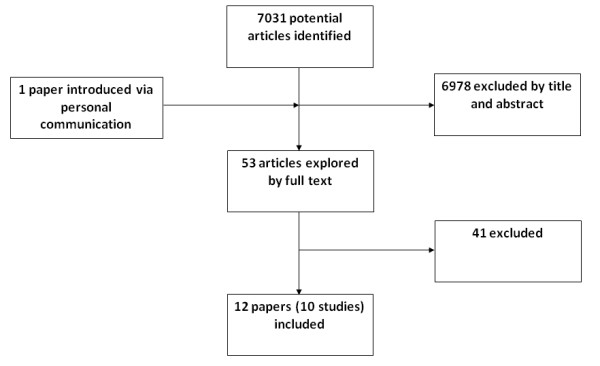
- The search identified 7031 studies; after screening, 12 papers covering 10 reviews of cCBT for depression with or without anxiety in adults were included.
- Reviews broadly agreed that cCBT is no less effective than therapist-led CBT, reduces therapist time, is more effective than treatment as usual, and is equally or less effective than bibliotherapy.
- MoodGYM, Beating the Blues, and Colour Your Life were reported to improve depressive symptoms; ODIN had moderate or no significant effect, and evidence for Overcoming Depression was judged insufficient.
- The only published cost-effectiveness estimate cited was for Beating the Blues at £1250 per quality-adjusted life-year; included reviews varied in databases searched from 1 to 17 (median 5), with an average of two years between searches and publication.
Methods
- Design: meta-review of systematic reviews examining efficacy of cCBT for depression with or without anxiety in adults, limited to English-language publications from 1999 to February 2011.
- Data sources: Medline, Embase, CINAHL (EBSCO), British Nursing Index, Cochrane Library, and PsycINFO, plus papers suggested via personal communications; PRISMA guided the approach and CASP was used for data extraction.
- Analysis: narrative synthesis and critical appraisal of included reviews, with findings summarised by cCBT package where the reviews named them; no new primary meta-analysis was conducted.
Limitations
- Stated: there is limited information to compare alternative cCBT packages, relative cost-effectiveness remains to be demonstrated, included reviews provided minimal information about individual packages, and their conclusions were based on only a small number of RCTs per package.
- Stated: reviews varied in rigour and scope, with an average of two years between searches and publication dates; 22 reviews were excluded for not describing their methodology, and some authors had declared interests or took largely uncritical approaches.
- Evident from the text: this is a review of reviews rather than primary trial evidence, it is restricted to English-language publications and searches ending February 2011, and the included reviews covered heterogeneous interventions, populations, and outcome measures.
Model-written summary. Check it against the paper before relying on it.
Integrity signals
Registry
Cites
Statistics
Figures
Verification
Claims the paper makes
27 Not checked yet · 9 Own result · 8 Own interpretation · 4 No basis given · 2 Own method
In the paper
“This estimate comes from what, according to Kaltenthaler et al [9], is the only published paper on cost effectiveness of cCBT.”
§ Meta-review of the effectiveness of computerised CBT in treating depression > Results > Economic aspects
What the sources say
- Not checked yetcites [9] Kaltenthaler E, Brazier J, De Nigris E, Tumur I, Ferriter M, Beverly C, Parry G, Rooney G, Sutcliffe P: Computerized cognitive behavior theraphy for depression and anxiety update: A systematic review and economic evaluation. Health Technology Assessment. 2006, 10: 1-70. source
plain- Asserted: passes — The authors put it forward as true.
- Checkable: passes — It can be checked against evidence.
- Load-bearing: unclear — It is unclear whether the paper’s conclusions depend on it.
- Based: passes — The paper gives a reason why it holds.
None of the sources cited for this claim have been checked yet.
In the paper
“there is not enough data with good quality to support Overcoming Depression [8-11]”
§ Meta-review of the effectiveness of computerised CBT in treating depression > Results > Clinical effectiveness
What the sources say
- Not checked yetcites [8] Kaltenthaler E, Shackley P, Stevens K, Beverley C, Parry G, Chilcott J: A systematic review and economic evaluation of computerised cognitive behaviour therapy for depression and anxiety. Health Technology Assessment. 2002, 6: 1-100. 10.1007/978-94-010-0481-7_1. source
- Not checked yetcites [9] Kaltenthaler E, Brazier J, De Nigris E, Tumur I, Ferriter M, Beverly C, Parry G, Rooney G, Sutcliffe P: Computerized cognitive behavior theraphy for depression and anxiety update: A systematic review and economic evaluation. Health Technology Assessment. 2006, 10: 1-70. source
- Not checked yetcites [10] Kaltenthaler E, Parry G, Beverley C: Computerized cognitive behaviour therapy: A systematic review. Behavioural and Cognitive Psychotherapy. 2004, 32: 31-55. 10.1017/S135246580400102X. source
- Not checked yetcites [11] Kaltenthaler E, Parry G, Beverley C, Ferriter M: Computerised cognitive-behavioural therapy for depression: Systematic review. British Journal of Psychiatry. 2008, 193: 181-184. 10.1192/bjp.bp.106.025981. source
plain- Asserted: passes — The authors put it forward as true.
- Checkable: passes — It can be checked against evidence.
- Load-bearing: passes — The paper’s conclusions depend on it.
- Based: passes — The paper gives a reason why it holds.
A result the paper reports from its own data — it cites no other source for it, so there is none to check. The quote shows it is in the paper.
In the paper
“As discussed above, the reviews varied in their rigour and scope (Additional file 3).”
§ Meta-review of the effectiveness of computerised CBT in treating depression > Results > Methodology of reviews
plain- Asserted: passes — The authors put it forward as true.
- Checkable: passes — It can be checked against evidence.
- Load-bearing: unclear — It is unclear whether the paper’s conclusions depend on it.
- Based: passes — The paper gives a reason why it holds.
None of the sources cited for this claim have been checked yet.
In the paper
“Beating the Blues is judged to be effective [8-11]”
§ Meta-review of the effectiveness of computerised CBT in treating depression > Results > Clinical effectiveness
What the sources say
- Not checked yetcites [8] Kaltenthaler E, Shackley P, Stevens K, Beverley C, Parry G, Chilcott J: A systematic review and economic evaluation of computerised cognitive behaviour therapy for depression and anxiety. Health Technology Assessment. 2002, 6: 1-100. 10.1007/978-94-010-0481-7_1. source
- Not checked yetcites [9] Kaltenthaler E, Brazier J, De Nigris E, Tumur I, Ferriter M, Beverly C, Parry G, Rooney G, Sutcliffe P: Computerized cognitive behavior theraphy for depression and anxiety update: A systematic review and economic evaluation. Health Technology Assessment. 2006, 10: 1-70. source
- Not checked yetcites [10] Kaltenthaler E, Parry G, Beverley C: Computerized cognitive behaviour therapy: A systematic review. Behavioural and Cognitive Psychotherapy. 2004, 32: 31-55. 10.1017/S135246580400102X. source
- Not checked yetcites [11] Kaltenthaler E, Parry G, Beverley C, Ferriter M: Computerised cognitive-behavioural therapy for depression: Systematic review. British Journal of Psychiatry. 2008, 193: 181-184. 10.1192/bjp.bp.106.025981. source
plaindirect- Asserted: passes — The authors put it forward as true.
- Checkable: passes — It can be checked against evidence.
- Load-bearing: unclear — It is unclear whether the paper’s conclusions depend on it.
- Based: passes — The paper gives a reason why it holds.
The paper states this without a source or data behind it here, so there is nothing to check it against. The quote shows it is in the paper.
In the paper
“however there is limited information on different approaches”
- Also stated in: § Discussion · plain
“Yet there is limited information available to compare alternative packages”
§ Meta-review of the effectiveness of computerised CBT in treating depression > Abstract > Conclusions
plain- Asserted: passes — The authors put it forward as true.
- Checkable: passes — It can be checked against evidence.
- Load-bearing: passes — The paper’s conclusions depend on it.
- Based: passes — The paper gives a reason why it holds.
- Also stated in: § Discussion · plain
None of the sources cited for this claim have been checked yet.
In the paper
“There was an average of two years between the searches and the publication dates of the reviews”
§ Meta-review of the effectiveness of computerised CBT in treating depression > Results > Methodology of reviews
plain- Asserted: passes — The authors put it forward as true.
- Checkable: passes — It can be checked against evidence.
- Load-bearing: unclear — It is unclear whether the paper’s conclusions depend on it.
- Based: passes — The paper gives a reason why it holds.
A result the paper reports from its own data — it cites no other source for it, so there is none to check. The quote shows it is in the paper.
In the paper
“The search yielded twelve systematic reviews from ten studies covering depression.”
- Also stated in: § Results · plain
“Twelve papers covering ten reviews of the effectiveness of cCBT for depression with or without anxiety in adults were included (Table 1 and additional file 3)”
§ Meta-review of the effectiveness of computerised CBT in treating depression > Abstract > Results
plain- Asserted: passes — The authors put it forward as true.
- Checkable: passes — It can be checked against evidence.
- Load-bearing: passes — The paper’s conclusions depend on it.
- Based: passes — The paper gives a reason why it holds.
- Also stated in: § Results · plain
None of the sources cited for this claim have been checked yet.
In the paper
“reviews have concluded that MoodGYM was effective in reducing symptoms of depression [9,11,13,14,18,19]”
§ Meta-review of the effectiveness of computerised CBT in treating depression > Results > Clinical effectiveness
What the sources say
- Not checked yetcites [9] Kaltenthaler E, Brazier J, De Nigris E, Tumur I, Ferriter M, Beverly C, Parry G, Rooney G, Sutcliffe P: Computerized cognitive behavior theraphy for depression and anxiety update: A systematic review and economic evaluation. Health Technology Assessment. 2006, 10: 1-70. source
- Not checked yetcites [11] Kaltenthaler E, Parry G, Beverley C, Ferriter M: Computerised cognitive-behavioural therapy for depression: Systematic review. British Journal of Psychiatry. 2008, 193: 181-184. 10.1192/bjp.bp.106.025981. source
- Not checked yetcites [13] Andersson G, Cuijpers P: Internet-based and other computerized psychological treatments for adult depression: a meta-analysis. Cognitive Behaviour Therapy. 2009, 38: 196-205. 10.1080/16506070903318960. source
- Not checked yetcites [14] Griffiths KM, Christensen H: Review of randomised controlled trials of Internet interventions for mental disorders and related conditions. Clinical Psychologist. 2006, 10: 16-29. 10.1080/13284200500378696. source
- Not checked yetcites [18] Wade AG: Use of the internet to assist in the treatment of depression and anxiety: A systematic review. Primary Care Companion to the Journal of Clinical Psychiatry. 2010, 12: e1-e11.
- Not checked yetcites [19] Titov N: Internet-delivered psychotherapy for depression in adults. Current Opinion in Psychiatry. 2011, 24: 18-23. 10.1097/YCO.0b013e32833ed18f. source
plaindirect- Asserted: passes — The authors put it forward as true.
- Checkable: passes — It can be checked against evidence.
- Load-bearing: passes — The paper’s conclusions depend on it.
- Based: passes — The paper gives a reason why it holds.
A result the paper reports from its own data — it cites no other source for it, so there is none to check. The quote shows it is in the paper.
In the paper
“Reviews also varied in terms of the intervention programmes and target populations covered.”
§ Meta-review of the effectiveness of computerised CBT in treating depression > Results > Methodology of reviews
plain- Asserted: passes — The authors put it forward as true.
- Checkable: passes — It can be checked against evidence.
- Load-bearing: unclear — It is unclear whether the paper’s conclusions depend on it.
- Based: passes — The paper gives a reason why it holds.
In the paper
“the cost of one package, Beating the Blues, per quality-adjusted life-year is estimated to be £1250.”
§ Meta-review of the effectiveness of computerised CBT in treating depression > Results > Economic aspects
What the sources say
- Not checked yetcites [9] Kaltenthaler E, Brazier J, De Nigris E, Tumur I, Ferriter M, Beverly C, Parry G, Rooney G, Sutcliffe P: Computerized cognitive behavior theraphy for depression and anxiety update: A systematic review and economic evaluation. Health Technology Assessment. 2006, 10: 1-70. source
hedged- Asserted: passes — The authors put it forward as true.
- Checkable: passes — It can be checked against evidence.
- Load-bearing: unclear — It is unclear whether the paper’s conclusions depend on it.
- Based: passes — The paper gives a reason why it holds.
- Probably not a substantial claim. 17
- It may state two separate claims as one. 8
A result the paper reports from its own data — it cites no other source for it, so there is none to check. The quote shows it is in the paper.
In the paper
“The number of electronic data-bases included varied from 1 to 17 (median: 5).”
§ Meta-review of the effectiveness of computerised CBT in treating depression > Results > Methodology of reviews
plain- Asserted: passes — The authors put it forward as true.
- Checkable: passes — It can be checked against evidence.
- Load-bearing: fails — The paper’s conclusions may not depend on it.
- Based: passes — The paper gives a reason why it holds.
Probably not a substantial claim. The paper’s conclusions may not depend on it. It may state two separate claims as one.
In the paper
“The diagnosis of interest of one review was depression only [16]”
§ Meta-review of the effectiveness of computerised CBT in treating depression > Results > Methodology of reviews
What the sources say
- Not checked yetcites [16] Garcia-Lizana F, Munoz-Mayorga I: Telemedicine for depression: a systematic review. Perspectives in Psychiatric Care. 2010, 46: 119-126. 10.1111/j.1744-6163.2010.00247.x. source
plain- Asserted: passes — The authors put it forward as true.
- Checkable: passes — It can be checked against evidence.
- Load-bearing: fails — The paper’s conclusions may not depend on it.
- Based: passes — The paper gives a reason why it holds.
Probably not a substantial claim. The paper’s conclusions may not depend on it.
In the paper
“but others included conditions such as anxiety disorders or broader categories, such as 'mental health problems'; thus results include for example obsessive compulsive disorder, insomnia and eating disorders [14].”
§ Meta-review of the effectiveness of computerised CBT in treating depression > Results > Methodology of reviews
What the sources say
- Not checked yetcites [14] Griffiths KM, Christensen H: Review of randomised controlled trials of Internet interventions for mental disorders and related conditions. Clinical Psychologist. 2006, 10: 16-29. 10.1080/13284200500378696. source
plain- Asserted: passes — The authors put it forward as true.
- Checkable: passes — It can be checked against evidence.
- Load-bearing: unclear — It is unclear whether the paper’s conclusions depend on it.
- Based: passes — The paper gives a reason why it holds.
It may state two separate claims as one.
In the paper
“Some had a broader definition of the intervention than cCBT; for example they looked at 'self-help approaches' [14].”
§ Meta-review of the effectiveness of computerised CBT in treating depression > Results > Methodology of reviews
What the sources say
- Not checked yetcites [14] Griffiths KM, Christensen H: Review of randomised controlled trials of Internet interventions for mental disorders and related conditions. Clinical Psychologist. 2006, 10: 16-29. 10.1080/13284200500378696. source
plain- Asserted: passes — The authors put it forward as true.
- Checkable: passes — It can be checked against evidence.
- Load-bearing: fails — The paper’s conclusions may not depend on it.
- Based: passes — The paper gives a reason why it holds.
Probably not a substantial claim. The paper’s conclusions may not depend on it.
A result the paper reports from its own data — it cites no other source for it, so there is none to check. The quote shows it is in the paper.
In the paper
“The most commonly-searched databases were Medline, PsycINFO and the Cochrane Library.”
§ Meta-review of the effectiveness of computerised CBT in treating depression > Results > Methodology of reviews
plain- Asserted: passes — The authors put it forward as true.
- Checkable: passes — It can be checked against evidence.
- Load-bearing: fails — The paper’s conclusions may not depend on it.
- Based: passes — The paper gives a reason why it holds.
Probably not a substantial claim. The paper’s conclusions may not depend on it.
The paper states this without a source or data behind it here, so there is nothing to check it against. The quote shows it is in the paper.
In the paper
“Thirty-one other papers were excluded for reasons such as having a focus other than efficacy of cCBT on depression.”
§ Meta-review of the effectiveness of computerised CBT in treating depression > Discussion
plain- Asserted: passes — The authors put it forward as true.
- Checkable: passes — It can be checked against evidence.
- Load-bearing: fails — The paper’s conclusions may not depend on it.
- Based: passes — The paper gives a reason why it holds.
Probably not a substantial claim. The paper’s conclusions may not depend on it.
None of the sources cited for this claim have been checked yet.
In the paper
“Kaltenthaler et al. [8,9] undertook two reviews for the National Institute of Health Research Health Technology Assessment Board; these comprised a wide range of computerised interventions based on CBT, and were also the basis for two other publications [10,11].”
§ Meta-review of the effectiveness of computerised CBT in treating depression > Results > Included reviews
What the sources say
- Not checked yetcites [8] Kaltenthaler E, Shackley P, Stevens K, Beverley C, Parry G, Chilcott J: A systematic review and economic evaluation of computerised cognitive behaviour therapy for depression and anxiety. Health Technology Assessment. 2002, 6: 1-100. 10.1007/978-94-010-0481-7_1. source
- Not checked yetcites [9] Kaltenthaler E, Brazier J, De Nigris E, Tumur I, Ferriter M, Beverly C, Parry G, Rooney G, Sutcliffe P: Computerized cognitive behavior theraphy for depression and anxiety update: A systematic review and economic evaluation. Health Technology Assessment. 2006, 10: 1-70. source
- Not checked yetcites [10] Kaltenthaler E, Parry G, Beverley C: Computerized cognitive behaviour therapy: A systematic review. Behavioural and Cognitive Psychotherapy. 2004, 32: 31-55. 10.1017/S135246580400102X. source
- Not checked yetcites [11] Kaltenthaler E, Parry G, Beverley C, Ferriter M: Computerised cognitive-behavioural therapy for depression: Systematic review. British Journal of Psychiatry. 2008, 193: 181-184. 10.1192/bjp.bp.106.025981. source
plain- Asserted: passes — The authors put it forward as true.
- Checkable: passes — It can be checked against evidence.
- Load-bearing: unclear — It is unclear whether the paper’s conclusions depend on it.
- Based: passes — The paper gives a reason why it holds.
It may state two separate claims as one.
The paper states this without a source or data behind it here, so there is nothing to check it against. The quote shows it is in the paper.
In the paper
“They met all the criteria for inclusion in this meta-review, more than any of the other papers examined.”
§ Meta-review of the effectiveness of computerised CBT in treating depression > Results > Included reviews
plain- Asserted: passes — The authors put it forward as true.
- Checkable: passes — It can be checked against evidence.
- Load-bearing: fails — The paper’s conclusions may not depend on it.
- Based: passes — The paper gives a reason why it holds.
Probably not a substantial claim. The paper’s conclusions may not depend on it. It may state two separate claims as one.
In the paper
“Griffiths and Christensen [14] looked at all Internet interventions for mental disorders.”
§ Meta-review of the effectiveness of computerised CBT in treating depression > Results > Included reviews
What the sources say
- Not checked yetcites [14] Griffiths KM, Christensen H: Review of randomised controlled trials of Internet interventions for mental disorders and related conditions. Clinical Psychologist. 2006, 10: 16-29. 10.1080/13284200500378696. source
plain- Asserted: passes — The authors put it forward as true.
- Checkable: passes — It can be checked against evidence.
- Load-bearing: fails — The paper’s conclusions may not depend on it.
- Based: passes — The paper gives a reason why it holds.
Probably not a substantial claim. The paper’s conclusions may not depend on it.
A result the paper reports from its own data — it cites no other source for it, so there is none to check. The quote shows it is in the paper.
In the paper
“By singling out the evidence pertaining to depression we have revealed reasonably consistent inferences drawn by from ten systematic reviews (twelve papers) of varying quality and relevance.”
§ Meta-review of the effectiveness of computerised CBT in treating depression > Discussion
plain- Asserted: passes — The authors put it forward as true.
- Checkable: passes — It can be checked against evidence.
- Load-bearing: passes — The paper’s conclusions depend on it.
- Based: passes — The paper gives a reason why it holds.
Probably not a substantial claim.
A result the paper reports from its own data — it cites no other source for it, so there is none to check. The quote shows it is in the paper.
In the paper
“Even the included reviews provided minimal information about individual packages”
§ Meta-review of the effectiveness of computerised CBT in treating depression > Discussion
plain- Asserted: passes — The authors put it forward as true.
- Checkable: passes — It can be checked against evidence.
- Load-bearing: passes — The paper’s conclusions depend on it.
- Based: passes — The paper gives a reason why it holds.
Probably not a substantial claim.
In the paper
“Spek et al [12] performed a meta-analysis to explore the effectiveness of internet-based CBTs.”
§ Meta-review of the effectiveness of computerised CBT in treating depression > Results > Included reviews
What the sources say
- Not checked yetcites [12] Spek V, Cuijpers P, NykIicek I, Riper H, Keyzer J, Pop V: Internet-based cognitive behaviour therapy for symptoms of depression and anxiety: A meta-analysis. Psychological Medicine. 2007, 37: 319-328. 10.1017/S0033291706008944. source
plain- Asserted: passes — The authors put it forward as true.
- Checkable: passes — It can be checked against evidence.
- Load-bearing: fails — The paper’s conclusions may not depend on it.
- Based: passes — The paper gives a reason why it holds.
Probably not a substantial claim. The paper’s conclusions may not depend on it.
None of the sources cited for this claim have been checked yet.
In the paper
“equally or less effective than bibliotherapy [8,10]”
§ Meta-review of the effectiveness of computerised CBT in treating depression > Results > Clinical effectiveness
What the sources say
- Not checked yetcites [8] Kaltenthaler E, Shackley P, Stevens K, Beverley C, Parry G, Chilcott J: A systematic review and economic evaluation of computerised cognitive behaviour therapy for depression and anxiety. Health Technology Assessment. 2002, 6: 1-100. 10.1007/978-94-010-0481-7_1. source
- Not checked yetcites [10] Kaltenthaler E, Parry G, Beverley C: Computerized cognitive behaviour therapy: A systematic review. Behavioural and Cognitive Psychotherapy. 2004, 32: 31-55. 10.1017/S135246580400102X. source
plain- Asserted: passes — The authors put it forward as true.
- Checkable: passes — It can be checked against evidence.
- Load-bearing: unclear — It is unclear whether the paper’s conclusions depend on it.
- Based: passes — The paper gives a reason why it holds.
It may state two separate claims as one.
What the paper did — it cites no source for this, so there is none to check. The quote shows it is in the paper.
In the paper
“The search was restricted to publications in English, since the cCBT packages of interest use the English language.”
§ Meta-review of the effectiveness of computerised CBT in treating depression > Methods
plain- Asserted: passes — The authors put it forward as true.
- Checkable: passes — It can be checked against evidence.
- Load-bearing: passes — The paper’s conclusions depend on it.
- Based: passes — The paper gives a reason why it holds.
Probably not a substantial claim.
In the paper
“which is a particular limitation in a rapidly-advancing field [20].”
§ Meta-review of the effectiveness of computerised CBT in treating depression > Results > Methodology of reviews
What the sources say
- Not checked yetcites [20] Marks IM, Cuijpers P, Cavanagh K, van Straten A, Gega L, Andersson G: Meta-analysis of computer-aided psychotherapy: Problems and partial solutions. Cognitive Behaviour Therapy. 2009, 38: 83-90. 10.1080/16506070802675239. source
plain- Asserted: passes — The authors put it forward as true.
- Checkable: passes — It can be checked against evidence.
- Load-bearing: fails — The paper’s conclusions may not depend on it.
- Based: passes — The paper gives a reason why it holds.
Probably not a substantial claim. The paper’s conclusions may not depend on it.
What the paper did — it cites no source for this, so there is none to check. The quote shows it is in the paper.
In the paper
“To verify the methodology of articles, authors were consulted via email when necessary.”
§ Meta-review of the effectiveness of computerised CBT in treating depression > Methods
plain- Asserted: passes — The authors put it forward as true.
- Checkable: passes — It can be checked against evidence.
- Load-bearing: fails — The paper’s conclusions may not depend on it.
- Based: passes — The paper gives a reason why it holds.
Probably not a substantial claim. The paper’s conclusions may not depend on it.
None of the sources cited for this claim have been checked yet.
In the paper
“The PRISMA statement guided the approach [6] and the Critical Appraisal Skills Programme (CASP) tool [7] was used to extract data from the papers identified.”
§ Meta-review of the effectiveness of computerised CBT in treating depression > Methods
What the sources say
- Not checked yetcites [6] Moher D, Liberati A, Tetzlaff J, Altman DG: Reprint--Preferred Reporting Items for Systematic Reviews and Meta-Analyses: The PRISMA Statement. Physical Therapy. 2009, 89: 873- source
- Not checked yetcites [7] The Public Health Resource Unit: 10 questions to help you make sense of reviews. OXFORD, access date: 15:08:2010, [ http://www.phru.nhs.uk/Doc_Links/S.Reviews%20Appraisal%20Tool.pdf ]
plain- Asserted: passes — The authors put it forward as true.
- Checkable: passes — It can be checked against evidence.
- Load-bearing: fails — The paper’s conclusions may not depend on it.
- Based: passes — The paper gives a reason why it holds.
Probably not a substantial claim. The paper’s conclusions may not depend on it. It may state two separate claims as one.
The paper states this without a source or data behind it here, so there is nothing to check it against. The quote shows it is in the paper.
In the paper
“However, conventional CBT is delivered face-to-face, meaning that the resources which would be needed to treat everyone who could potentially benefit for depression are vast.”
§ Meta-review of the effectiveness of computerised CBT in treating depression > Background
hedgeddirect- Asserted: passes — The authors put it forward as true.
- Checkable: passes — It can be checked against evidence.
- Load-bearing: passes — The paper’s conclusions depend on it.
- Based: passes — The paper gives a reason why it holds.
Probably not a substantial claim. It may state two separate claims as one.
A conclusion the paper draws from its own results — it cites no other source for it, so there is none to check. The quote shows it is in the paper.
In the paper
“but the effect size of each intervention as well as the costs need to be compared before superior efficacy for cCBT can be claimed”
§ Meta-review of the effectiveness of computerised CBT in treating depression > Discussion
plain- Asserted: passes — The authors put it forward as true.
- Checkable: fails — It may be too vague to check against evidence.
- Load-bearing: passes — The paper’s conclusions depend on it.
- Based: passes — The paper gives a reason why it holds.
Probably not a substantial claim. It may be too vague to check against evidence. It may state two separate claims as one.
A conclusion the paper draws from its own results — it cites no other source for it, so there is none to check. The quote shows it is in the paper.
In the paper
“The finding that cCBT reduces therapist time could have important implications for service organisation and costs”
§ Meta-review of the effectiveness of computerised CBT in treating depression > Discussion
hedgeddirect- Asserted: passes — The authors put it forward as true.
- Checkable: fails — It may be too vague to check against evidence.
- Load-bearing: passes — The paper’s conclusions depend on it.
- Based: fails — The paper may give no reason why it holds.
Probably not a substantial claim. It may be too vague to check against evidence. The paper may give no reason why it holds.
The paper relies on this without support.
Many cCBT packages compete in a market for sales and profits.
“many cCBT packages compete in a market for sales and profits.”
The paper relies on this without support.
The quality and comprehensiveness of scope of existing reviews on cCBT for depression have not been studied yet.
“There have been different reviews on the topic, but their quality and comprehensiveness of their scope has not been studied yet.”
Claims other papers make about this one
Each is checked against this paper’s own text: does it say what the citing paper says it does?
In the citing paper
“there is increasing evidence for the effectiveness of treatments that are delivered via the Internet [19-23]”
From Long-Term Results of a Web-Based Guided Self-Help Intervention for Employees With Depressive Symptoms: Randomized Controlled Trial (2014) · cites this paper as [23]
Self-check
Percentages, sums and reported differences re-computed from the paper’s own numbers.
Each contradiction between two passages listed here was confirmed by an independent check.
Rated minor: it would not touch a result — a value no result rests on, a p-value that stays on the same side of the significance level, or a conflict that is clerical, resolved elsewhere in the paper, or outside its own findings.
In the paper
“The initial search identified 7031 studies, from which 6978 were excluded by screening the title and abstract. The remaining 52 papers were obtained and read;”
§ Meta-review of the effectiveness of computerised CBT in treating depression > Results
Reported 52 · recomputed 53
Rated minor: it would not touch a result — a value no result rests on, a p-value that stays on the same side of the significance level, or a conflict that is clerical, resolved elsewhere in the paper, or outside its own findings.
In the paper
§ Meta-review of the effectiveness of computerised CBT in treating depression > Results
“Kaltenthaler et al., 2002 [8]; 2004 [9]”
§ Meta-review of the effectiveness of computerised CBT in treating depression > References
“9. Kaltenthaler E Brazier J De Nigris E Tumur I Ferriter M Beverly C Parry G Rooney G Sutcliffe P Computerized cognitive behavior theraphy for depression and anxiety update: A systematic review and economic evaluation Health Technology Assessment 2006 10 1 70 16959169”
Citations
Cites
Reprint—Preferred Reporting Items for Systematic Reviews and Meta-Analyses: The PRISMA Statement
Moher, D., Liberati, A., Tetzlaff, J., Altman, D. G., & and the PRISMA Group (2009) · Physical Therapy · doi:10.1093/ptj/89.9.873 · Cited by 2,486
Internet-based cognitive behaviour therapy for symptoms of depression and anxiety: A meta-analysis
SPEK, V., CUIJPERS, P., NYKLÍČEK, I., RIPER, H., KEYZER, J., & POP, V. (2007) · Psychological Medicine · doi:10.1017/s0033291706008944 · Cited by 1,586
Internet-Based and Other Computerized Psychological Treatments for Adult Depression: A Meta-Analysis
Andersson, G., & Cuijpers, P. (2009) · Cognitive Behaviour Therapy · doi:10.1080/16506070903318960 · Cited by 1,368
Andrews, G., Cuijpers, P., Craske, M. G., McEvoy, P., & Titov, N. (2010) · PLoS ONE · doi:10.1371/journal.pone.0013196 · Cited by 1,311
National Collaborating Centre for Mental Health
Veale, D. M. (2006) · Research Portal (King's College London) · Cited by 941
Delivering interventions for depression by using the internet: randomised controlled trial
Christensen, H. (2004) · BMJ · doi:10.1136/bmj.37945.566632.ee · Cited by 928 · cited 1×
“Since we were engaged in a study of MoodGYM, which is a publicly-available cCBT programme developed by the Centre for Mental Health Research at the Australian National University [4,5], we wanted to place this study in the context of relevant literature concerning both MoodGYM and other similar programmes which are al…”
MethodPsychiatric morbidity among adults living in private households, 2000
Singleton, N., Bumpstead, R., O'Brien, M. S., Lee, A., & Meltzer, H. (2003) · International Review of Psychiatry · doi:10.1080/0954026021000045967 · Cited by 896
Newman, M. G., Szkodny, L. E., Llera, S. J., & Przeworski, A. (2011) · Clinical Psychology Review · doi:10.1016/j.cpr.2010.09.008 · Cited by 480
Computer‐Aided Psychotherapy for Anxiety Disorders: A Meta‐Analytic Review
Cuijpers, P., Marks, I. M., van Straten, A., Cavanagh, K., Gega, L., & Andersson, G. (2009) · Cognitive Behaviour Therapy · doi:10.1080/16506070802694776 · Cited by 429
Waller, R., & Gilbody, S. (2009) · Psychological Medicine · doi:10.1017/s0033291708004224 · Cited by 393
Cited by
Sorted by citations
Facebook language predicts depression in medical records
Eichstaedt, J. C., Smith, R. J., Merchant, R. M., Ungar, L. H., Crutchley, P., Preoţiuc-Pietro, D., Asch, D. A., & Schwartz, H. A. (2018) · Proceedings of the National Academy of Sciences · doi:10.1073/pnas.1802331115 · Cited by 643
Davies, E. B., Morriss, R., & Glazebrook, C. (2014) · Journal of Medical Internet Research · doi:10.2196/jmir.3142 · Cited by 499
Taylor, S. J., Pinnock, H., Epiphaniou, E., Pearce, G., Parke, H. L., Schwappach, A., Purushotham, N., Jacob, S., Griffiths, C. J., Greenhalgh, T., et al. (2014) · Health Services and Delivery Research · doi:10.3310/hsdr02530 · Cited by 431
Technologies for global health
Howitt, P. J., Darzi, A. W., Yang, G., Ashrafian, H., Atun, R. A., Barlow, J. G., Blakemore, A. I. F., Bull, A. M. J., Car, J., Conteh, L., et al. (2012) · The Lancet · doi:10.1016/s0140-6736(12)61127-1 · Cited by 405
Usefulness of telepsychiatry: A critical evaluation of videoconferencing-based approaches
Chakrabarti, S. (2015) · World Journal of Psychiatry · doi:10.5498/wjp.v5.i3.286 · Cited by 292
Metadata
- Authors
- Foroushani, P. S., Schneider, J., & Assareh, N.
- Affiliations
- University of Nottingham (GB)
- Venue
- BMC Psychiatry
- Published
- 2011-08-12
- Volume
- 11
- Issue
- 1
- Pages
- 131-131
- ISSN
- 1471-244X (ISSN-L)
- PMC
- PMC3180363
- OpenAlex
- W2168940134
- Semantic Scholar
- 88a51a7585c5e7c1fe2ce1d1afdb03ece0cad8b2
- Cited by
- 132
- References
- 60
- Citations by year
- 2026: 3 · 2025: 3 · 2024: 3 · 2023: 4 · 2022: 6 · 2021: 11 · 2020: 10 · 2019: 6 · 2018: 9 · 2017: 9 · 2016: 15 · 2015: 14 · 2014: 18 · 2013: 13 · 2012: 8
- FWCI
- 16.68
- Type
- journal article
- Language
- en
- Open access
- gold
- doi.org
- Licence
- Locations
- BMC Psychiatry (publishedVersion, cc-by)
- Europe PMC (PubMed Central) (publishedVersion, cc-by)
- PubMed Central (publishedVersion, cc-by)
- PubMed (publishedVersion)
- DOAJ (DOAJ: Directory of Open Access Journals) (submittedVersion)
- Funders
- British Occupational Health Research Foundation
- Topics
- Social Sciences › Psychology › Applied Psychology › Digital Mental Health Interventions
- Social Sciences › Psychology › Experimental and Cognitive Psychology › Anxiety, Depression, Psychometrics, Treatment, Cognitive Processes
- Social Sciences › Psychology › Clinical Psychology › Psychological Treatments and Assessments
- Keywords
- depression, mild to moderate depression, treatment efficacy, systematic reviews, cost-effectiveness
- MeSH terms
- Anxiety, Depression, Humans, Research Design, Review Literature as Topic, Therapy, Computer-Assisted, Cognitive Behavioral Therapy
About these checks
Registry, retraction, Cites and statistics results are computed, not judged, with one exception: a printed reference that no index lists is read once by a model before it counts as a citation error. Claims are extracted by a model and kept only when their quote appears verbatim in the text; each cited source is then checked, with a model’s help, for whether it says what the claim relies on. Those verdicts can be wrong — read the claim’s quote and the cited source before relying on one.
A language model drew the claims from the paper on 2026-10-10, under version 3 of the claim definition (model deepseek-v4.1-flash, prompt extract-v3).
A second model labelled each claim on 2026-10-10 (model jev-1.13-20260917, definition revision gold-guideline-v0.2).
Statistics and arithmetic are recomputed, not judged.
Confidence bands are shown only for fields calibrated on our annotated test set. None is calibrated yet, so no band is shown.
What counts as a claim ›How we measure confidence ›How we check this ›
Are you an author, or do you see a problem with this page? Request a review
