

Understanding the acceptability of e-mental health - attitudes and expectations towards computerised self-help treatments for mental health problems
Open accessThe DOI matches its Crossref record; 22 of the 26 references it cites were found in a registry or an index.
Abstract
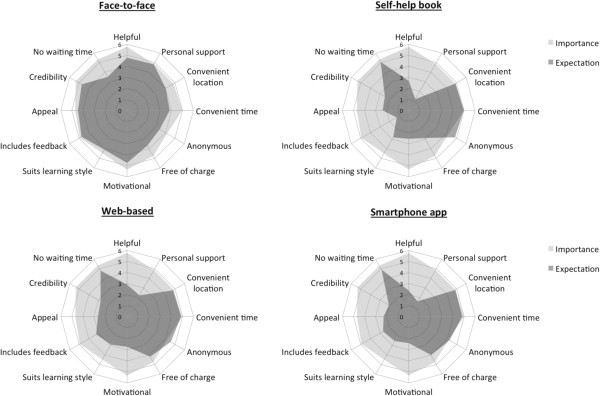
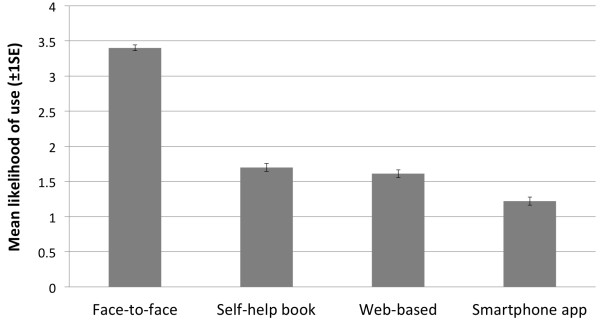
BACKGROUND: E-mental health and m-mental health include the use of technology in the prevention, treatment and aftercare of mental health problems. With the economical pressure on mental health services increasing, e-mental health and m-mental health could bridge treatment gaps, reduce waiting times for patients and deliver interventions at lower costs. However, despite the existence of numerous effective interventions, the transition of computerised interventions into care is slow. The aim of the present study was to investigate the acceptability of e-mental health and m-mental health in the general population. METHODS: An advisory group of service users identified dimensions that potentially influence an individual's decision to engage with a particular treatment for mental health problems. A large sample (N = 490) recruited through email, flyers and social media was asked to rate the acceptability of different treatment options for mental health problems on these domains. Results were analysed using repeated measures MANOVA. RESULTS: Participants rated the perceived helpfulness of an intervention, the ability to motivate users, intervention credibility, and immediate access without waiting time as most important dimensions with regard to engaging with a treatment for mental health problems. Participants expected face-to-face therapy to meet their needs on most of these dimensions. Computerised treatments and smartphone applications for mental health were reported to not meet participants' expectations on most domains. However, these interventions scored higher than face-to-face treatments on domains associated with the convenience of access. Overall, participants reported a very low likelihood of using computerised treatments for mental health in the future. CONCLUSIONS: Individuals in this study expressed negative views about computerised self-help intervention and low likelihood of use in the future. To improve the implementation and uptake, policy makers need to improve the public perception of such interventions.
Overview
The claims and statistics of this paper haven’t been checked yet.
Free: it reads the open-access text and checks the first 5 claims that cite a source we can check. Create a free account to check every claim.
Integrity signals
Registry
Cites
Statistics
Figures
Verification
Claims the paper makes
The claims and statistics of this paper haven’t been checked yet.
Free: it reads the open-access text and checks the first 5 claims that cite a source we can check. Create a free account to check every claim.
Claims other papers make about this one
Each is checked against this paper’s own text: does it say what the citing paper says it does?
The source backs part of the claim, not all of it — or backs it for a different population, condition or comparison.
In the citing paper
“The various AI-augmented applications presented in this review have achieved encouraging positive mental health outcomes, while leveraging and supporting the benefits of online platforms, including scalability, versatility, cost-effectiveness, and personalization (8, 9, 95–97).”
From Examining the role of AI technology in online mental healthcare: opportunities, challenges, and implications, a mixed-methods review (2024) · cites this paper as [9]
Experimental — accuracy not yet measuredThe cited source says what the claim attributes to it.
In the citing paper
“Previous studies have reported that many people prefer face-to-face therapy over E-MH programs [8-10], despite viewing online programs as having advantages such as convenience [8].”
In the citing paper
“Also, interventions developed and tested may not have been reported as a scientific study; a well-known phenomenon in a field that is arguably driven by commercial developers as opposed to clinical-academic researchers (Kumar et al., 2013;Meurk, Leung, Hall, Head, & Whiteford, 2016;Musiat et al., 2014).”
From eHealth interventions for family carers of people with long term illness: A promising approach? (2018) · cites this paper as Musiat et al., 2014
In the citing paper
“These methodological variations further limit the evidence about effects (and adverse events) of eHealth interventions for carers (Musiat, Goldstone, & Tarrier, 2014;Alvarez-Jimenez et al., 2014).”
From eHealth interventions for family carers of people with long term illness: A promising approach? (2018) · cites this paper as Musiat, Goldstone, & Tarrier, 2014
Self-check
Percentages, sums and reported differences re-computed from the paper’s own numbers.
The self-check needs the paper’s full text.
Citations
Cites
Computer-based psychological treatments for depression: A systematic review and meta-analysis
Richards, D., & Richardson, T. (2012) · Clinical Psychology Review · doi:10.1016/j.cpr.2012.02.004 · Cited by 1,442
Dropout from Internet‐based treatment for psychological disorders
Melville, K. M., Casey, L. M., & Kavanagh, D. J. (2010) · British Journal of Clinical Psychology · doi:10.1348/014466509x472138 · Cited by 597 · cited 1×
“Hence, this is likely to be an overestimate given the high dropout rates often observed in computerised intervention trials (for a review, see [16]).”
BackgroundInternet-administered cognitive behavior therapy for health problems: a systematic review
Cuijpers, P., van Straten, A., & Andersson, G. (2008) · Journal of Behavioral Medicine · doi:10.1007/s10865-007-9144-1 · Cited by 555
Brouwer, W., Kroeze, W., Crutzen, R., de Nooijer, J., de Vries, N. K., Brug, J., & Oenema, A. (2011) · Journal of Medical Internet Research · doi:10.2196/jmir.1639 · Cited by 455
Waller, R., & Gilbody, S. (2009) · Psychological Medicine · doi:10.1017/s0033291708004224 · Cited by 393 · cited 2×
“The authors conclude that “acceptability is high among those who make it as far as participating in studies, but initial uptake rates suggest that this may not be the whole picture” ([17], p.”
BackgroundHedman, E., Andersson, G., Ljótsson, B., Andersson, E., Rück, C., Mörtberg, E., & Lindefors, N. (2011) · PLoS ONE · doi:10.1371/journal.pone.0018001 · Cited by 285 · cited 1×
“[26,27]) and therefore could be an alternative treatment for those not willing or able to access face-to-face treatments.”
BackgroundKaltenthaler, E., Sutcliffe, P., Parry, G., Beverley, C., Rees, A., & Ferriter, M. (2008) · Psychological Medicine · doi:10.1017/s0033291707002607 · Cited by 267 · cited 1×
“Within randomised controlled trials, high acceptability of computerised mental health interventions has been reported, but these results primarily stem from individuals who completed a course of treatment [15].”
BackgroundHesser, H., Gustafsson, T., Lundén, C., Henrikson, O., Fattahi, K., Johnsson, E., Westin, V. Z., Carlbring, P., Mäki-Torkko, E., Kaldo, V., et al. (2012) · Journal of Consulting and Clinical Psychology · doi:10.1037/a0027021 · Cited by 257 · cited 1×
“medically unexplained conditions, such as tinnitus [5] or irritable bowel syndrome [6].”
BackgroundEffectiveness of E-self-help interventions for curbing adult problem drinking: a meta-analysis
Riper, H., Spek, V., Boon, B., Conijn, B., Kramer, J., Martin-Abello, K., & Smit, F. (2011) · Journal of Medical Internet Research · doi:10.2196/jmir.1691 · Cited by 240 · cited 1×
“Electronic and mobile mental health interventions (e-mental health/m-mental health) are available for depression and anxiety [1,2], eating disorders [3], substance use disorders [4], and”
BackgroundMusiat, P., & Tarrier, N. (2014) · Psychological Medicine · doi:10.1017/s0033291714000245 · Cited by 188
Self-citationAcceptability of Internet Treatment of Anxiety and Depression
Gun, S. Y., Titov, N., & Andrews, G. (2011) · Australasian Psychiatry · doi:10.3109/10398562.2011.562295 · Cited by 174 · cited 1×
“[19] conducted a survey with non-health professionals and health professionals and both professionals and lay people reported being slightly positive towards computerised therapy.”
BackgroundBeattie, A., Shaw, A., Kaur, S., & Kessler, D. (2009) · Health Expectations · doi:10.1111/j.1369-7625.2008.00531.x · Cited by 170 · cited 2×
“Although it is relatively well established that mental health service users highly value the personal component of face-toface therapy [21], it is possible that the high importance ratings found in this study are somewhat an artefact of directly comparing self-help treatments against face-toface therapy.”
BackgroundResultAn Empirical Examination of Client Attitudes Towards Online Counseling
Young, K. S. (2005) · CyberPsychology & Behavior · doi:10.1089/cpb.2005.8.172 · Cited by 170
Computer-based treatment for anxiety and depression: is it feasible? Is it effective?
Proudfoot, J. G. (2004) · Neuroscience & Biobehavioral Reviews · doi:10.1016/j.neubiorev.2004.03.008 · Cited by 158
Beintner, I., Jacobi, C., & Taylor, C. B. (2012) · European Eating Disorders Review · doi:10.1002/erv.1130 · Cited by 139 · cited 1×
“Electronic and mobile mental health interventions (e-mental health/m-mental health) are available for depression and anxiety [1,2], eating disorders [3], substance use disorders [4], and”
BackgroundCan't surf, won't surf: The digital divide in mental health
Ennis, L., Rose, D., Denis, M., Pandit, N., & Wykes, T. (2012) · Journal of Mental Health · doi:10.3109/09638237.2012.689437 · Cited by 127
Wootton, B. M., Titov, N., Dear, B. F., Spence, J., & Kemp, A. (2011) · PLoS ONE · doi:10.1371/journal.pone.0020548 · Cited by 116 · cited 3×
“[13], it appears that participants consider self-help interventions less likely to be helpful.”
BackgroundInfluentialMayo-Wilson, E., & Montgomery, P. (2013) · Cochrane Database of Systematic Reviews · doi:10.1002/14651858.cd005330.pub4 · Cited by 112
Hind, D., O’Cathain, A., Cooper, C. L., Parry, G. D., Isaac, C. L., Rose, A., Martin, L., & Sharrack, B. (2010) · Psychology & Health · doi:10.1080/08870440902842739 · Cited by 101
Pros and cons of online cognitive–behavioural therapy
Andersson, G., & Cuijpers, P. (2008) · British Journal of Psychiatry · doi:10.1192/bjp.bp.108.054080 · Cited by 101
Carper, M. M., McHugh, R. K., & Barlow, D. H. (2013) · Administration and Policy in Mental Health and Mental Health Services Research · doi:10.1007/s10488-011-0377-5 · Cited by 92 · cited 3×
“The authors concluded that increasing ‘observability’ is key to increase adoption rates [20].”
BackgroundInfluentialWhitfield, G., & Williams, C. (2004) · Behavioural and Cognitive Psychotherapy · doi:10.1017/s1352465804001031 · Cited by 83 · cited 1×
“Despite the increasing evidence base for the efficacy of such interventions, the transition and implementation of these into clinical practice is remarkably slow [7].”
BackgroundEveritt, H. A., Moss-Morris, R. E., Sibelli, A., Tapp, L., Coleman, N. S., Yardley, L., Smith, P. W., & Little, P. S. (2010) · BMC Gastroenterology · doi:10.1186/1471-230x-10-136 · Cited by 80
Guided self-help versus pure self-help for perfectionism: A randomised controlled trial
Pleva, J., & Wade, T. D. (2007) · Behaviour Research and Therapy · doi:10.1016/j.brat.2006.08.009 · Cited by 78
Linville, D., Brown, T., & O'Neil, M. (2012) · Eating Disorders · doi:10.1080/10640266.2012.635557 · Cited by 65
Net-effect? Online psychological interventions
Lauder, S., Chester, A., & Berk, M. (2007) · Acta Neuropsychiatrica · doi:10.1111/j.1601-5215.2007.00261.x · Cited by 18
Research works printed but not linked: 3
- National Institute for Health and Clinical Excellence Depression in adults: The treatment and management of depression in adults. CG90 2009 London: National Institute for Health and Clinical Excellence 35977056
- National Institute for Health and Clinical Excellence Generalised anxiety disorder and panic disorder (with or without agoraphobia) in adults. CG113 2011 London: National Institute for Health and Clinical Excellence
- eMarketer Nearly Half of UK Consumers Will Use Smartphones This Year 2013 Retrieved November 15, 2013, from http://www.emarketer.com/Article/Nearly-Half-of-UK-Consumers-Will-Use-Smartphones-This-Year/1009956
Cited by
O’Brien (2019) · doi:10.1186/s12913-016-1423-5 · Cited by 463
Karyotaki, E., Ebert, D. D., Donkin, L., Riper, H., Twisk, J., Burger, S., Rozental, A., Lange, A., Williams, A. D., Zarski, A. C., et al. (2018) · Clinical Psychology Review · doi:10.1016/j.cpr.2018.06.007 · Cited by 303
Hennemann, S., Beutel, M. E., & Zwerenz, R. (2017) · Journal of Health Communication · doi:10.1080/10810730.2017.1284286 · Cited by 274
Ebert, D. D., Berking, M., Cuijpers, P., Lehr, D., Pörtner, M., & Baumeister, H. (2015) · Journal of Affective Disorders · doi:10.1016/j.jad.2015.01.056 · Cited by 268
Mobile mental health: a challenging research agenda
Olff, M. (2015) · European Journal of Psychotraumatology · doi:10.3402/ejpt.v6.27882 · Cited by 258
Metadata
- Authors
- Musiat, P., Goldstone, P., & Tarrier, N.
- Affiliations
- King's College London (GB)
- Corresponding author
- Musiat, Peter
- ORCID
- Musiat, Peter
- Venue
- BMC Psychiatry
- Published
- 2014-04-11
- Volume
- 14
- Issue
- 1
- Pages
- 109-109
- ISSN
- 1471-244X (ISSN-L)
- PMC
- PMC3999507
- OpenAlex
- W2034792075
- Cited by
- 273
- References
- 24
- Citations by year
- 2026: 8 · 2025: 18 · 2024: 18 · 2023: 25 · 2022: 29 · 2021: 35 · 2020: 33 · 2019: 22 · 2018: 39 · 2017: 14 · 2016: 19 · 2015: 10 · 2014: 3
- FWCI
- 23.74
- Type
- journal article
- Language
- en
- Open access
- gold
- doi.org
- Licence
- Locations
- BMC Psychiatry (publishedVersion, cc-by)
- Europe PMC (PubMed Central) (publishedVersion, cc-by)
- PubMed Central (publishedVersion, cc-by)
- PubMed (publishedVersion)
- Research Portal (King's College London) (publishedVersion, other-oa)
- Funders
- South London and Maudsley NHS Foundation Trust
- National Institute for Health and Care Research
- King's College London
- Topics
- Social Sciences › Psychology › Applied Psychology › Digital Mental Health Interventions
- Health Sciences › Medicine › Psychiatry and Mental health › Mental Health Treatment and Access
- Health Sciences › Medicine › Public Health, Environmental and Occupational Health › Telemedicine and Telehealth Implementation
- Keywords
- e-mental health, acceptability, attitudes toward technology, treatment uptake, perceived helpfulness, waiting time, face-to-face therapy, public perception, mental health treatment gap
- MeSH terms
- Adolescent, Adult, Aged, Attitude, Mental Disorders, Female, Humans, Male, Mental Health, Mental Health Services, Middle Aged, Patient Acceptance of Health Care, Self Care, Therapy, Computer-Assisted, Health Behavior, Remote Consultation, Young Adult
About these checks
Registry, retraction, Cites and statistics results are computed, not judged, with one exception: a printed reference that no index lists is read once by a model before it counts as a citation error. Claims are extracted by a model and kept only when their quote appears verbatim in the text; each cited source is then checked, with a model’s help, for whether it says what the claim relies on. Those verdicts can be wrong — read the claim’s quote and the cited source before relying on one.
Statistics and arithmetic are recomputed, not judged.
Confidence bands are shown only for fields calibrated on our annotated test set. None is calibrated yet, so no band is shown.
What counts as a claim ›How we measure confidence ›How we check this ›
Are you an author, or do you see a problem with this page? Request a review
Data sources
Bibliographic data: Semantic Scholar, OpenAlex, Crossref.
Contains information from the Semantic Scholar Academic Graph Datasets, made available under the ODC Attribution License (ODC-BY 1.0).
Semantic Scholar’s data is described in: Kinney, R., et al. (2023). The Semantic Scholar Open Data Platform. arXiv:2301.10140.
