

The rise of assertive community interventions in South Africa: a randomized control trial assessing the impact of a modified assertive intervention on readmission rates; a three year follow-up
Open accessThe DOI matches its Crossref record; 21 of the 21 references it cites were found in a registry or an index.
Abstract
BACKGROUND: Many countries have over the last few years incorporated mental health assertive interventions in an attempt to address the repercussions of deinstitutionalization. Recent publications have failed to duplicate the positive outcomes reported initially which has cast doubt on the future of these interventions. We previously reported on 29 patients from a developing country who completed 12 months in an assertive intervention which was a modified version of the international assertive community treatment model. We demonstrated reduction in readmission rates as well as improvements in social functioning compared to patients from the control group. The obvious question was, however, if these outcomes could be sustained for longer periods of time. This study aims to determine if modified assertive interventions in an under-resourced setting can successfully maintain reductions in hospitalizations. METHODS: Patients suffering from schizophrenia who met a modified version of Weidens' high frequency criteria were randomized into two groups. One group received a modified assertive intervention based on the international assertive community treatment model. The other group received standard care according to the model of service delivery in this region. Data was collected after 36 months, comparing readmissions and days spent in hospital. RESULTS: The results demonstrated significant differences between the groups. Patients in the intervention group had significantly less readmissions (p = 0.007) and spent less days in hospital compared to the patients in the control group (p = 0.013). CONCLUSION: Modified assertive interventions may be successful in reducing readmissions and days spent in hospital in developing countries where standard care services are less comprehensive. These interventions can be tailored in such a way to meet service needs and still remain affordable and feasible within the context of an under-resourced setting.
Overview
The claims and statistics of this paper haven’t been checked yet.
Free: it reads the open-access text and checks the first 5 claims that cite a source we can check. Create a free account to check every claim.
Integrity signals
Registry
Cites
Statistics
Figures
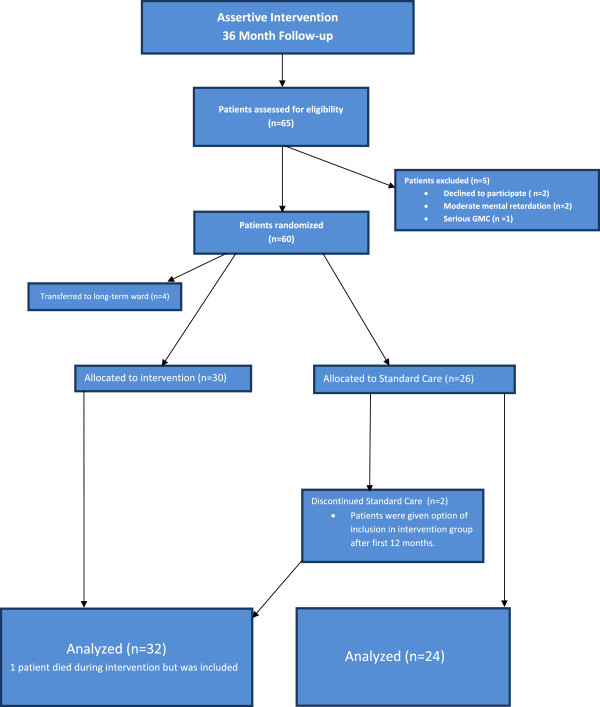
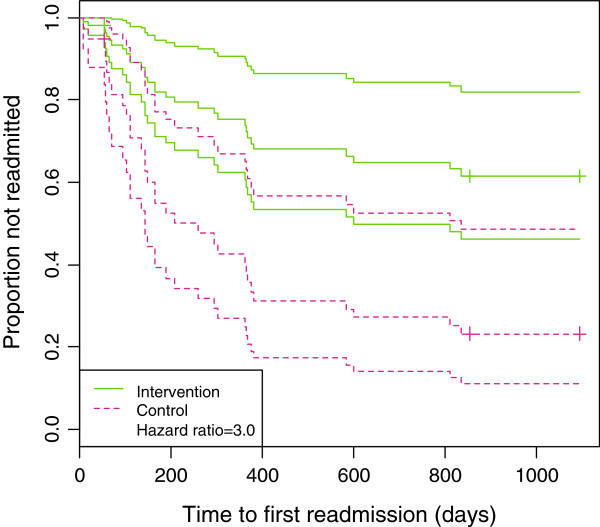
Verification
Claims the paper makes
The claims and statistics of this paper haven’t been checked yet.
Free: it reads the open-access text and checks the first 5 claims that cite a source we can check. Create a free account to check every claim.
Claims other papers make about this one
Each is checked against this paper’s own text: does it say what the citing paper says it does?
The cited source says what the claim attributes to it.
In the citing paper
“International findings tend to show a positive association between the implementation of community-based mental health care and improved outcomes, including reductions in psychiatric symptoms (e.g.Priebe et al. 2015), substance misuse (e.g. Lee et al. 2015) and improvements in psychosocial outcomes (e.g.Botha et al. 2014).”
From Effect of community mental health care programs in Australia: A systematic review (2020) · cites this paper as Botha et al. 2014
Self-check
Percentages, sums and reported differences re-computed from the paper’s own numbers.
The self-check needs the paper’s full text.
Citations
Cites
1 retracted
Assertive community treatment for people with severe mental disorders
Marshall, M., & Lockwood, A. (1998) · Cochrane Database of Systematic Reviews · doi:10.1002/14651858.cd001089 · Cited by 589
RetractedTreatment and prevention of mental disorders in low-income and middle-income countries
Patel, V., Araya, R., Chatterjee, S., Chisholm, D., Cohen, A., De Silva, M., Hosman, C., McGuire, H., Rojas, G., & van Ommeren, M. (2007) · The Lancet · doi:10.1016/s0140-6736(07)61240-9 · Cited by 930 · cited 1×
“called for scaling up of cost-effective community based mental-health services in middle and low-income countries citing successes in countries such as India, Chile and China, where interventions had been modified to meet the resources and needs of the community [15].”
BackgroundPetersen, L., Jeppesen, P., Thorup, A., Abel, M.-B., Øhlenschlæger, J., Christensen, T. Ø., Krarup, G., Jørgensen, P., & Nordentoft, M. (2005) · BMJ · doi:10.1136/bmj.38565.415000.e01 · Cited by 599
Program fidelity in assertive community treatment: Development and use of a measure.
Teague, G. B., Bond, G. R., & Drake, R. E. (1998) · American Journal of Orthopsychiatry · doi:10.1037/h0080331 · Cited by 520
McHugo, G. J., Drake, R. E., Teague, G. B., & Xie, H. (1999) · Psychiatric Services · doi:10.1176/ps.50.6.818 · Cited by 324 · cited 1×
“One study even reported a standard care service with a higher fidelity score than the ACT group it was being compared with [13].”
ResultAssertive Community Treatment: Twenty-Five Years of Gold
Dixon, L. (2000) · Psychiatric Services · doi:10.1176/appi.ps.51.6.759 · Cited by 261 · cited 3×
“The approach has been well researched and tested over the last twenty years, with many countries reporting on a range of outcomes, such as readmission rates, patient satisfaction, degrees of symptomatology and social functioning [4-6,3,2,7].”
BackgroundAssessment and Treatment Selection for “Revolving Door” Inpatients with Schizophrenia
Weiden, P. J., & Glazer, W. M. (1997) · Psychiatric Quarterly · doi:10.1023/a:1025499131905 · Cited by 138 · cited 1×
“To be included as high frequency users (HFUs), subjects had to fulfil the inclusion criteria, which was modified from Weiden’s HFU-criteria (see List of criteria below) to accommodate local admission patterns and ensure the appropriate service users were targeted [19].”
MethodLessons learned in developing community mental health care in Africa
HANLON, C., WONDIMAGEGN, D., & ALEM, A. (2010) · World Psychiatry · doi:10.1002/j.2051-5545.2010.tb00308.x · Cited by 114 · cited 1×
“5% of African countries have community-based mental health services and only 50% have existing mental health policies [14].”
BackgroundAssertive community treatment in the Netherlands: a randomized controlled trial
Sytema, S., Wunderink, L., Bloemers, W., Roorda, L., & Wiersma, D. (2007) · Acta Psychiatrica Scandinavica · doi:10.1111/j.1600-0447.2007.01021.x · Cited by 108 · cited 4×
“Both Sytema and Killaspy reported on the fact the newly established teams may initially produce positive outcomes that could tail off over time [8,11].”
BackgroundInfluentialThe rise and fall of assertive community treatment?
Burns, T. (2010) · International Review of Psychiatry · doi:10.3109/09540261003661841 · Cited by 98 · cited 8×
“One of the common criticisms has been that control groups have been poorly defined [1].”
BackgroundResultInfluential
Cited by
Intensive case management for severe mental illness
Dieterich, M., Irving, C. B., Park, B., & Marshall, M. (2010) · Cochrane Database of Systematic Reviews · doi:10.1002/14651858.cd007906.pub2 · Cited by 490
Kohrt, B. A., Asher, L., Bhardwaj, A., Fazel, M., Jordans, M. J. D., Mutamba, B. B., Nadkarni, A., Pedersen, G. A., Singla, D. R., & Patel, V. (2018) · International Journal of Environmental Research and Public Health · doi:10.3390/ijerph15061279 · Cited by 347
“For services provided to persons with psychosis, in most studies, the lay community workers and non-mental health professionals received specialist input or supervision by psychiatrists or expert therapists [75,77,79,83,84,102].”
BackgroundIntensive case management for severe mental illness
Dieterich, M., Irving, C. B., Bergman, H., Khokhar, M. A., Park, B., & Marshall, M. (2017) · Cochrane Database of Systematic Reviews · doi:10.1002/14651858.cd007906.pub3 · Cited by 271
Tricco, A. C., Antony, J., Ivers, N. M., Ashoor, H. M., Khan, P. A., Blondal, E., Ghassemi, M., MacDonald, H., Chen, M. H., Ezer, L. K., et al. (2014) · Canadian Medical Association Journal · doi:10.1503/cmaj.140289 · Cited by 166
Asher, L., Patel, V., & De Silva, M. J. (2017) · BMC Psychiatry · doi:10.1186/s12888-017-1516-7 · Cited by 163
“In five studies, in South Africa, India, Iran and Turkey, individuals were supported to access community resources and organisations including legal benefits, employment opportunities, and non-governmental organisations (NGO) [41, 43–47].”
BackgroundMethodResultInfluentialSaran, A., White, H., & Kuper, H. (2020) · Campbell Systematic Reviews · doi:10.1002/cl2.1070 · Cited by 160
Hanlon, C. (2017) · Epidemiology and Psychiatric Sciences · doi:10.1017/s2045796016001013 · Cited by 57
“In the best resourced PRIME country, South Africa (an upper middle-income country), specialist mental health care is mostly accessible to the community and the role of primary care has been to receive back-referrals from specialists and to provide a recovery-oriented psychosocial group intervention (Brooke-Sumner et a…”
BackgroundJacob, N., & Coetzee, D. J. (2018) · South African Medical Journal · doi:10.7196/samj.2017.v108i3.12904 · Cited by 56
Luo, X., Law, S., Wang, X., Shi, J., Zeng, W., Ma, X., Chow, W., Liu, S., Zhao, W., Liu, X., et al. (2018) · Psychological Medicine · doi:10.1017/s0033291718001629 · Cited by 45
“With this backdrop of controversy taking place in western, high-income countries, there are notable ACT research in other parts of the world, in culturally and economically diverse settings, such as the RCTs in Japan (Ito et al., 2011) and South Africa (Botha et al., 2014), and non-RCTs in Singapore (Low et al., 2013)…”
BackgroundBaandrup, L., Rasmussen, J. Ø., Klokker, L., Austin, S. F., Bjørnshave, T., Bliksted, V., Fink‐Jensen, A., Fohlmann, A., Hansen, J. P., Nielsen, M. K., et al. (2015) · Nordic Journal of Psychiatry · doi:10.3109/08039488.2015.1074285 · Cited by 43
“The body of evidence was identified from the most recent NICE guideline (46) and a metaanalysis (78), supplemented by additional relevant RCTs identified during the updated literature search (79,80).”
BackgroundBrooke‐Sumner, C., Lund, C., & Petersen, I. (2014) · African Journal of Disability · doi:10.4102/ajod.v3i1.146 · Cited by 34
“In South Africa, recent studies have shown the potential for assertive community treatment (nurse- or social worker-led) (Botha et al. 2010; Botha et al. 2014) and group-based family therapy (nurse-led) (Asmal et al. 2013).”
BackgroundBrooke‐Sumner, C., Lund, C., Selohilwe, O., & Petersen, I. (2016) · Social Work in Mental Health · doi:10.1080/15332985.2016.1220439 · Cited by 30
Jain, P., Purohith, A. N., Kanakode, R., Praharaj, S. K., Bhandary, R. P., & Sharma, P. (2022) · Asian Journal of Psychiatry · doi:10.1016/j.ajp.2022.103102 · Cited by 28
Effect of community mental health care programs in Australia: A systematic review
O'Donnell, R., Savaglio, M., Vicary, D., & Skouteris, H. (2020) · Australian Journal of Primary Health · doi:10.1071/py20147 · Cited by 19
Tomita, A. M., Burns, J. K., King, H., Baumgartner, J. N., Davis, G. P., Mtshemla, S., Nene, S., & Susser, E. (2016) · Social Work in Health Care · doi:10.1080/00981389.2015.1088926 · Cited by 17
Ndounga‐Diakou, L. A., Ntoumi, F., Ravaud, P., & Boutron, I. (2016) · Journal of Clinical Epidemiology · doi:10.1016/j.jclinepi.2016.10.008 · Cited by 16
Risk factors for readmission among a cohort of psychiatric inpatients in Lilongwe, Malawi
Barnett, B. S., Kusunzi, V., Magola, L., Borba, C. P. C., Udedi, M. M., Kulisewa, K., & Hosseinipour, M. C. (2019) · International Journal of Psychiatry in Clinical Practice · doi:10.1080/13651501.2019.1699116 · Cited by 12
“Assertive treatment in the community, carried out by treatment teams that visit the patient’s home, reduced the risk of readmission (Gillis et al. 1990; Botha et al. 2008, 2014), increased outpatient clinic attendance and saved the South African healthcare system money (Gillis et al. 1990).”
BackgroundEngelbrecht, R., Plastow, N. A., Botha, U. A., Niehaus, D., & Koen, L. (2018) · Disability and Rehabilitation · doi:10.1080/09638288.2018.1453873 · Cited by 12
Self-citationYe, X., Zeng, F., Wang, Y., Ding, R., Zhao, M., Zhu, D., & He, P. (2023) · Psychiatric Quarterly · doi:10.1007/s11126-023-10029-8 · Cited by 15
“Participants and Design There were some differences in diagnoses across studies, with two studies including participants with schizophrenia or schizoaffective disorder [44, 45], two studies including participants with schizophrenia, schizoaffective disorder or bipolar disorder [42, 43], and the remaining twenty studie…”
BackgroundMethodResultInfluentialBotha, U. A., Koen, L., Mazinu, M., Jordaan, E., & Niehaus, D. J. H. (2016) · Community Mental Health Journal · doi:10.1007/s10597-016-0069-4 · Cited by 8
“Also, previous studies in this setting have successfully demonstrated reduction in DIH in high frequency users (HFUs) when more comprehensive, assertive approaches are used (Botha et al. 2014).”
Self-citationWhite, H., Saran, A., & Kuper, H. (2018) · doi:10.51744/cip12 · Cited by 15
Schizophrenia and schizoaffective disorder: Length of stay and associated factors
Goga, L. Y., & Marais, B. (2024) · South African Journal of Psychiatry · doi:10.4102/sajpsychiatry.v30i0.2237 · Cited by 14
“33 While community psychiatric services in our setting are lacking, there also exists a shortage of specialised psychiatric hospitals, with a reduction of bed numbers over the years.”
BackgroundReeves, L. E., Weinstock, L. M., Epstein-Lubow, G. P., Metrik, J., & Gaudiano, B. A. (2021) · Journal of Psychiatric Practice · doi:10.1097/pra.0000000000000517 · Cited by 6
The Association between Acne Vulgaris and Stress among Adolescents in Kenjeran, Surabaya
Ollyvia, Z. Z., Febriyana, N., Damayanti, D., & Ardani, I. G. A. I. (2021) · Jurnal Psikiatri Surabaya · doi:10.20473/jps.v10i1.23483 · Cited by 5
Botha, H. F., Koen, L., Niehaus, D. J. H., Vava, Y., Moxley, K., & Botha, U. A. (2020) · South African Journal of Psychiatry · doi:10.4102/sajpsychiatry.v26i0.1523 · Cited by 7
Self-citationMatsea, T., Ryke, E. H., & Weyers, M. (2021) · Journal of Social Work Practice · doi:10.1080/02650533.2021.1952964 · Cited by 4
“A study conducted in South Africa showed potential for assertive community treatment delivered by nurses and social workers (Botha et al., 2014).”
BackgroundVega-Martínez, S., Pabón‐Carrasco, M., Bola-Saiz, G., Marichalar‐Mendía, X., & Unanue-Arza, S. (2026) · Community Mental Health Journal · doi:10.1007/s10597-026-01607-8 · Cited by 3
Madison to Manipal: A narrative review of modified assertive community treatment programs
Jain, P., Praharaj, S. K., Purohith, A. N., Yesodharan, R., Bhandary, R. P., & Sharma, P. (2023) · Asian Journal of Psychiatry · doi:10.1016/j.ajp.2023.103746 · Cited by 3
Coetzee, D., Koen, L., Niehaus, D. J. H., & Botha, U. A. (2022) · South African Journal of Psychiatry · doi:10.4102/sajpsychiatry.v28i0.1821 · Cited by 3
Self-citationNiv, N., Issa, F., Goldberg, R., Khandekar, P., McGraw, K., Reston, J. T., Ford, S. C., Katz, I. R., & Resnick, S. G. (2025) · Schizophrenia Bulletin · doi:10.1093/schbul/sbaf035 · Cited by 4
“40 This intervention was modified by increasing the caseloads to 80 patients per team given limited resources.”
Sánchez-Balsa, A., & Sobrido, M. (2023) · Cadernos Brasileiros de Terapia Ocupacional · doi:10.1590/2526-8910.ctoar252332993 · Cited by 1
Latif, A., Lewis, M., Yadegarfar, G., Ullah, S., Khan, Z., Khan, Z., Qazi, A., Canvin, K., Fonseka, N., & Farooq, S. (2026) · Journal of Mental Health · doi:10.1080/09638237.2026.2672342 · Cited by 1
“…and cognitive therapies (Hegde & Aminabhavi, 2020), comprehensive family therapy (CFT) (Ran et al., 2015), assertive community treatment (Botha et al., 2014), and additional treatments like Electro Convulsive Therapy (Subedi et al., 2016) have been used for SMI in higher income…”
Community Based Pasung Release on Schizophrenia
Agustini, T. D., Karimah, A., & Sajogo, I. (2021) · Jurnal Psikiatri Surabaya · doi:10.20473/jps.v10i1.20638 · Cited by 3
Tsikou, K., Nikolaidi, S., Trivellas, D., Vasilopoulos, F., Galanis, D., Mavreas, V., Stylianidis, S., & Konstantakopoulos, G. (2025) · International Journal of Social Psychiatry · doi:10.1177/00207640251336739 · Cited by 1
“Marshall & Lockwood, 1998; Salkever et al., 1999) and admission rates (Aagaard & Kølbæk, 2016; Botha et al., 2010; Botha et al., 2014; Clausen et al., 2016).”
Risk Factors Associated With Readmissions of Hospitalized Mentally Ill Patients
Rady, H. E. A. E. A., & El-Nady, M. T. (2017) · IOSR Journal of Nursing and health Science · doi:10.9790/1959-0603026674 · Cited by 4
“It increases the cost of the health care system and workload of the mental health care workers[10].”
BackgroundVava, Y., Koen, L., Niehaus, D. J. H., Botha, H. F., & Botha, U. A. (2022) · South African Journal of Psychiatry · doi:10.4102/sajpsychiatry.v28i0.1764 · Cited by 3
Self-citationvan Rensburg, A. J., & Brooke‐Sumner, C. (2025) · South African Health Review · doi:10.61473/001c.143071 · Cited by 2
Cossie, Q. Z. (2015) · Open University of Cape Town (University of Cape Town)
Sánchez-Balsa, A., & Sobrido, M. (2023) · Cadernos Brasileiros de Terapia Ocupacional · doi:10.1590/2526-8910.ctoar252332992
Metadata
- Authors
- Botha, U. A., Koen, L., Galal, U., Jordaan, E., & Niehaus, D. J.
- Affiliations
- Stellenbosch University (ZA)
- South African Medical Research Council (ZA)
- Corresponding author
- Botha, Ulla A
- Venue
- BMC Psychiatry
- Published
- 2014-02-27
- Volume
- 14
- Issue
- 1
- Pages
- 56-56
- ISSN
- 1471-244X (ISSN-L)
- PMC
- PMC3974055
- OpenAlex
- W2126476553
- Cited by
- 39
- References
- 21
- Citations by year
- 2026: 2 · 2025: 3 · 2024: 1 · 2023: 4 · 2022: 3 · 2021: 4 · 2020: 3 · 2019: 1 · 2018: 5 · 2017: 3 · 2016: 5 · 2015: 2 · 2014: 2
- FWCI
- 4.72
- Type
- journal article
- Language
- en
- Open access
- gold
- doi.org
- Licence
- Locations
- BMC Psychiatry (publishedVersion, cc-by)
- Europe PMC (PubMed Central) (publishedVersion, cc-by)
- PubMed Central (publishedVersion, cc-by)
- PubMed (publishedVersion)
- Open University of Cape Town (University of Cape Town) (submittedVersion, cc-by)
- SUNScholar (Stellenbosch University) (submittedVersion)
- Topics
- Social Sciences › Psychology › Clinical Psychology › Psychiatric care and mental health services
- Health Sciences › Medicine › Psychiatry and Mental health › Schizophrenia research and treatment
- Social Sciences › Sociology and Political Science › Homelessness and Social Issues
- Keywords
- assertive community treatment, schizophrenia, hospital readmission, length of hospital stay, deinstitutionalization, community mental health services, resource-limited settings, South Africa, long-term follow-up
- MeSH terms
- Adolescent, Adult, Community Mental Health Services, Deinstitutionalization, Developing Countries, Female, Follow-Up Studies, Humans, Male, Middle Aged, Patient Readmission, Schizophrenia, South Africa, Young Adult
About these checks
Registry, retraction, Cites and statistics results are computed, not judged, with one exception: a printed reference that no index lists is read once by a model before it counts as a citation error. Claims are extracted by a model and kept only when their quote appears verbatim in the text; each cited source is then checked, with a model’s help, for whether it says what the claim relies on. Those verdicts can be wrong — read the claim’s quote and the cited source before relying on one.
Statistics and arithmetic are recomputed, not judged.
Confidence bands are shown only for fields calibrated on our annotated test set. None is calibrated yet, so no band is shown.
What counts as a claim ›How we measure confidence ›How we check this ›
Are you an author, or do you see a problem with this page? Request a review
Data sources
Bibliographic data: Semantic Scholar, OpenAlex, Crossref.
Contains information from the Semantic Scholar Academic Graph Datasets, made available under the ODC Attribution License (ODC-BY 1.0).
Semantic Scholar’s data is described in: Kinney, R., et al. (2023). The Semantic Scholar Open Data Platform. arXiv:2301.10140.
