

The individual and societal burden of chronic pain in Europe: the case for strategic prioritisation and action to improve knowledge and availability of appropriate care
Open accessThe DOI matches its Crossref record; 122 of the 122 references it cites were found in a registry or an index.
Abstract
BACKGROUND: Chronic pain is common in Europe and elsewhere and its under treatment confers a substantial burden on individuals, employers, healthcare systems and society in general. Indeed, the personal and socioeconomic impact of chronic pain is as great as, or greater, than that of other established healthcare priorities. In light of review of recently published data confirming its clinical and socioeconomic impact, this paper argues that chronic pain should be ranked alongside other conditions of established priority in Europe. We outline strategies to help overcome barriers to effective pain care resulting in particular from deficiencies in education and access to interdisciplinary pain management services. We also address the confusion that exists between proper clinical and scientific uses of opioid medications and their potential for misuse and diversion, as reflected in international variations in the access to, and availability of, these agents. DISCUSSION: As the economic costs are driven in part by the costs of lost productivity, absenteeism and early retirement, pain management should aim to fully rehabilitate patients, rather than merely to relieve pain. Accredited education of physicians and allied health professionals regarding state-of-the-art pain management is crucial. Some progress has been made in this area, but further provision and incentivization is required. We support a tiered approach to pain management, whereby patients with pain uncontrolled by non-specialists are able to consult a physician with a pain competency or a specialist in pain medicine, who in turn can recruit the services of other professionals on a case-by-case basis. A fully integrated interdisciplinary pain service should ideally be available to patients with refractory pain. Governments and healthcare systems should ensure that their policies on controlled medications are balanced, safeguarding public health without undue restrictions that compromise patient care, and that physician education programmes support these aims. SUMMARY: Strategic prioritization and co-ordinated actions are required nationally and internationally to address the unacceptable and unnecessary burden of uncontrolled chronic pain that plagues European communities and economies. An appreciation of the 'return on investment' in pain management services will require policymakers to adopt a long-term, cross-budgetary approach.
Overview
The claims and statistics of this paper haven’t been checked yet.
Free: it reads the open-access text and checks the first 5 claims that cite a source we can check. Create a free account to check every claim.
Integrity signals
Registry
Cites
Statistics
Figures
Verification
Claims the paper makes
The claims and statistics of this paper haven’t been checked yet.
Free: it reads the open-access text and checks the first 5 claims that cite a source we can check. Create a free account to check every claim.
Claims other papers make about this one
Each is checked against this paper’s own text: does it say what the citing paper says it does?
The cited source says what the claim attributes to it.
In the citing paper
“Given the complexity of chronic pain and living with chronic pain, a multidisciplinary treatment approach for pain management, aimed at supporting people in coping with physiological as well as psychological challenges, is recommended [2,6,7].”
From Short-Term Findings From Testing EPIO, a Digital Self-Management Program for People Living With Chronic Pain: Randomized Controlled Trial (2023) · cites this paper as [2]
The cited source says what the claim attributes to it.
In the citing paper
“Chronic pain conditions are common and can be disabling and distressing [1,2].”
From Short-Term Findings From Testing EPIO, a Digital Self-Management Program for People Living With Chronic Pain: Randomized Controlled Trial (2023) · cites this paper as [2]
The cited source says what the claim attributes to it.
In the citing paper
“Chronic pain is highly prevalent worldwide and associated with major personal and societal burden.1–5”
The cited source says what the claim attributes to it.
In the citing paper
“Given this intricacy, chronic pain is optimally managed by treatments that address not only biological factors [2,3], but also psychological and social influences and consequences.”
From Digital Self-Management in Support of Patients Living With Chronic Pain: Feasibility Pilot Study (2020) · cites this paper as [3]
Self-check
Percentages, sums and reported differences re-computed from the paper’s own numbers.
The self-check needs the paper’s full text.
Citations
Cites
Survey of chronic pain in Europe: Prevalence, impact on daily life, and treatment
Breivik, H., Collett, B., Ventafridda, V., Cohen, R., & Gallacher, D. (2006) · European Journal of Pain · doi:10.1016/j.ejpain.2005.06.009 · Cited by 5,486 · cited 10×
“At least half of people with chronic pain report that it interferes with their work [1,11,26].”
InfluentialSelf-citationClassification of chronic pain
Merskey, H. (1994) · Medical Entomology and Zoology · Cited by 3,048
The Economic Costs of Pain in the United States
Gaskin, D. J., & Richard, P. (2012) · The Journal of Pain · doi:10.1016/j.jpain.2012.03.009 · Cited by 2,359 · cited 4×
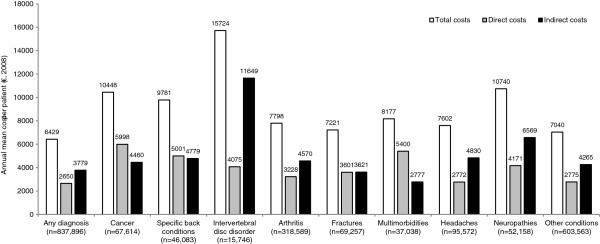
“Country (pricing year) Ireland (2008) [30] Sweden (2008) [43] Denmark (2010) [41] United States (2010) [42]”
InfluentialClinical Guidelines for the Use of Chronic Opioid Therapy in Chronic Noncancer Pain
Chou, R., Fanciullo, G. J., Fine, P. G., Adler, J. A., Ballantyne, J. C., Davies, P., Donovan, M. I., Fishbain, D. A., Foley, K. M., Fudin, J., et al. (2009) · The Journal of Pain · doi:10.1016/j.jpain.2008.10.008 · Cited by 2,192
Dagenais, S., Caro, J., & Haldeman, S. (2008) · The Spine Journal · doi:10.1016/j.spinee.2007.10.005 · Cited by 2,046 · cited 1×
“Recent studies [30,41-43] have confirmed previous evidence of the enormous indirect socioeconomic costs due to chronic pain [4,38,44-47].”
Prevalence of pain in patients with cancer: a systematic review of the past 40 years
van den Beuken-van Everdingen, M. H. J., de Rijke, J. M., Kessels, A. G., Schouten, H. C., van Kleef, M., & Patijn, J. (2007) · Annals of Oncology · doi:10.1093/annonc/mdm056 · Cited by 1,923
EFNS guidelines on the pharmacological treatment of neuropathic pain: 2010 revision
Attal, N., Cruccu, G., Baron, R., Haanpää, M., Hansson, P., Jensen, T. S., & Nurmikko, T. (2010) · European Journal of Neurology · doi:10.1111/j.1468-1331.2010.02999.x · Cited by 1,873 · cited 3×
“Numerous other national and international guidelines for the pharmacological treatment of noncancer and cancer pain exist [58-65].”
Koes, B. W., van Tulder, M., Lin, C.-W. C., Macedo, L. G., McAuley, J., & Maher, C. (2010) · European Spine Journal · doi:10.1007/s00586-010-1502-y · Cited by 1,300
Caraceni, A., Hanks, G., Kaasa, S., Bennett, M. I., Brunelli, C., Cherny, N., Dale, O., De Conno, F., Fallon, M., Hanna, M., et al. (2012) · The Lancet Oncology · doi:10.1016/s1470-2045(12)70040-2 · Cited by 1,243
Opioid Epidemic in the United States
Manchikanti, L. (2012) · Pain Physician · doi:10.36076/ppj.2012/15/es9 · Cited by 1,180
Research works printed but not linked: 17
- 5. International Association for the Study of Pain and delegates of International Pain Summit 2010: Declaration that Access to Pain Management Is a Fundamental Human Right, 2010. [http://www.iasp-pain.org/Content/ NavigationMenu/Advocacy/DeclarationofMontr233al/default.htm; accessed 27 December 2013].
- 9. OPENMinds: Pain in Europe -a public health priority. A strategy to better diagnose and manage chronic pain and the responsible use of opioids. Cambridge: Mundipharma; 2011.
- 41. Christensen J, Bilde L, Gustavsson A: Socio-economic consequences of pain- intensive diseases in Denmark. Danish Institute for Health Services Research: Copenhagen; 2011.
- 50. Gouveia M, Augusto M: Indirect costs of chronic pain in Portugal, Presentation at Societal Impact of Pain Conference. Copenhagen, Denmark; 2012 [www.sip-platform.eu]
- 54. World Health Organization: Cancer pain relief, with a guide to opioid availability. 2nd edition. Geneva: WHO; 1996.
- 57. World Health Organization: Scoping document for WHO Guidelines for the pharmacological treatment of persisting pain in adults with medical illnesses (document GRC-08-04-0052A). Geneva: WHO; 2012.
- 60. British Pain Society: Opioids for persistent pain: Good practice. A consensus statement prepared on behalf of the British Pain Society, the Faculty of Pain Medicine of the Royal College of Anaesthetists, the Royal College of General Practitioners and the Faculty of Addictions of the Royal College of Psychiatrists. London: British Pain Society; 2010.
- 61. British Pain Society: Cancer pain management: A perspective from the British Pain Society, supported by the Association for Palliative Medicine and the Royal College of General Practitioners. London: British Pain Society; 2010.
- 74. Committee on Education of the EFIC® (European Federation of IASP® Chapters): The Pain Management Core Curriculum for European Medical Schools. Diegen, Belgium: EFIC®; 2013.
- 75. Kress HG, Battelli D, Briggs E, Gordon D, Kopf A, Ribeiro S, Puig M: The provision of pain education within undergraduate medical schools across Europe, Poster presented at the 8th Congress of the European Federation of IASP Chapters (EFIC®). Florence, Italy; 2013. October 9-12,2013, Abstract no. 1128.
- 76. Deutsche Schmerzgesellschaft e.V. Endlich: Schmerzmedizin wird Pflichtfach. 2012 [Press release available at http://idw-online.de/de/news477678. Last accessed 29 Dec 2013].
- 79. European Federation of IASP Chapters: Educational support grant for Eastern European countries -guidelines. EFIC; 2012 [www.efic.org/index.asp? sub=1502d13E4PiYt1] (Accessed 27 December 2013).
- 80. Goebel A, Barker CH, Turner-Stokes L, et al: Complex regional pain syndrome in adults: UK guidelines for diagnosis, referral and management in primary and secondary care. London: Royal College of Physicians; 2012.
- Eriksen J: Long-term/chronic non-cancer pain. Epidemiology, health-care utilization, socioeconomy and aspects of treatment. 2004, Copenhagen, Denmark: DMedSci thesis monograph, Copenhagen University
- Überall MA, Müller-Schwefe G, Nolte T, Kletzko H: Das Projekt zur integrierten Versorgung Rückenschmerz – IVR. Schmerztherapie. 2009, 25: 1-7.
- Überall MA: Wenn aus einer Vision Wirklichkeit wird. Schmerzmedizin. 2012, 28: 2-
- International Association for the Study of Pain: Recommendations for pain treatment services. 2009, IASP, [ http://www.iasp.org ]
Cited by
Items 401–500 of 709
La stigmatisation de la douleur chronique : un survol théorique et empirique
Lévesque-Lacasse, A., & Cormier, S. (2020) · Douleurs Évaluation - Diagnostic - Traitement · doi:10.1016/j.douler.2020.04.013 · Cited by 6
Pharmacological Management of Chronic Pain: How to Deal with the Catch-22 Situation
Andresen, T., Niesters, M., Dahan, A., Morlion, B., O'brien, T. V., & Drewes, A. (2021) · Journal of Current Medical Research and Opinion · doi:10.15520/jcmro.v4i02.382 · Cited by 5
“If untreated chronic pain is underrecognized by politicians and health authorities this may lead to uncertainties and malpractice, and lead to serious chronic health problems [73].”
BackgroundThe impact of musculoskeletal pain on the work functions and quality of life of office workers
Mutlu, S., & Yılmaz, E. B. (2025) · Work · doi:10.1177/10519815251332851 · Cited by 7
“11,12 Most of fi ce workers suffer from musculoskeletal problems due to inappropriate of fi ce environments and static, inactive working conditions.”
Decoding Pain: Next‐Generation In Vitro Systems for Mechanistic Insights and Drug Discovery
Khosrowshahi, D., Lagae, L., & Bolander, J. (2025) · The FASEB Journal · doi:10.1096/fj.202501025rr · Cited by 6
Briggs, A. M., Siegfried, N., Waller, R., O'Connell, N. E., Romero, L., Klem, N.-R., Ampiah, P. K., Belton, J. L., Blyth, F., Morgan, S. D., et al. (2025) · BMJ Open · doi:10.1136/bmjopen-2025-105315 · Cited by 5
Zimmermann, H., Botrel, T., Quémeneur, C., Bloc, S., & Laumonerie, P. (2026) · Regional Anesthesia & Pain Medicine · doi:10.1136/rapm-2026-107899 · Cited by 5
Martinsen, L., Østerås, N., Moseng, T., & Tveter, A. T. (2022) · BMJ Open · doi:10.1136/bmjopen-2022-066248 · Cited by 5
Medvedeva, L. A., & Zagorulko, O. I. (2022) · Russian Journal of Pain · doi:10.17116/pain20222004145 · Cited by 5
Do lifestyle factors influence pain prognosis? A 1-year follow-up study
Louis, M., Berquin, A. D., & Steyaert, A. (2023) · British Journal of Pain · doi:10.1177/20494637231152975 · Cited by 6
“These results were expected, given that chronic pain negatively impacts QoL.(2)”
ResultAhmed, A., McHenry, N., Gulati, S., Shah, I., & Sheth, S. G. (2023) · Journal of Clinical Medicine · doi:10.3390/jcm12155030 · Cited by 5
“These inherent clinician biases are in part driven by certain risk factors attributed to higher odds of an opioid use disorder, including mental health illness, history of substance abuse, and alcohol and tobacco use disorders [23,24].”
BackgroundTibbs, G. R., Uprety, R., Warren, J. D., Beyer, N. P., Joyce, R. L., Ferrer, M. A., Mellado, W., Wong, V. S. C., Goldberg, D. C., Cohen, M. W., et al. (2023) · British Journal of Anaesthesia · doi:10.1016/j.bja.2023.06.067 · Cited by 5
Ryan, E., Hannigan, A., Grol-Prokopczyk, H., May, P., & Purtill, H. (2023) · European Journal of Pain · doi:10.1002/ejp.2215 · Cited by 5
“Negative effects of pain include isolation, disability, and reduced quality of life (Breivik et al., 2013; Cohen et al., 2021).”
BackgroundDelage, N., Cantagrel, N., Soriot‐Thomas, S., Frost, M., Deleens, R., Giniès, P., Eschalier, A., Corteval, A., Laveyssière, A., Phalip, J., et al. (2024) · JMIR mhealth and uhealth · doi:10.2196/54579 · Cited by 5
“The overall cost of chronic pain is estimated to be approximately €441 billion (US $468 billion) in Europe and US $560 to $635 billion in the United States [6-8].”
BackgroundKillingmo, R. M., Rysstad, T. L., Maas, E. T., Pripp, A. H., Aanesen, F., Tingulstad, A., Tveter, A. T., Øiestad, B. E., & Grotle, M. (2024) · BMC Musculoskeletal Disorders · doi:10.1186/s12891-024-08132-3 · Cited by 5
“The economic burden of musculoskeletal disorders is substantial, comprising both direct costs related to healthcare utilization and indirect costs related to productivity loss [3, 4].”
Developing the Network Pain Rehabilitation Limburg: a feasibility study protocol
Lamper, C., Kroese, M., Köke, A. J. A., Ruwaard, D., Verbunt, J., & Huijnen, I. P. J. (2019) · BMJ Open · doi:10.1136/bmjopen-2018-025962 · Cited by 6
“Almost 90% of individuals with chronic pain had experienced it for over 2 years.(3) The most reported chronic pain complaint was chronic musculoskeletal pain (CMP).”
BackgroundAfonso, A. S., Gálvez, R., Paremés, E., Navarro, A. M., Ochoa, D., & Pérez, C. (2022) · Pain Practice · doi:10.1111/papr.13176 · Cited by 8
Pilet, C., Galinski, M., & Lafont, S. (2023) · Journal of Transport & Health · doi:10.1016/j.jth.2023.101613 · Cited by 5
Yang, S., Zhong, S., Fan, Y., Zhu, Y., Xu, N., Liao, Y., Fan, G., Liao, X., & He, S. (2023) · Frontiers in Neuroscience · doi:10.3389/fnins.2023.1158712 · Cited by 5
“, and imposes a huge economic burden on individuals and society (Breivik et al., 2013; Cohen et al., 2021).”
BackgroundChiesa, M., Nicolini, G., & Buoli, M. (2024) · Medicina · doi:10.3390/medicina60020292 · Cited by 5
Chronic Pain, Dopamine and Depression: Insights from Research on Fibromyalgia
Ledermann, K., & Martin-Söelch, C. (2021) · IntechOpen eBooks · doi:10.5772/intechopen.82576 · Cited by 6
“With an estimated prevalence up to 40%, chronic pain is regarded as a major health problem with approximated direct and indirect costs reaching to 5% of the gross national product in western European countries [3].”
Delouya, S., Crosnier, G., Lacombe, J., Desericourt, C., & Milon, J. (2019) · La Presse Médicale · doi:10.1016/j.lpm.2019.07.038 · Cited by 5
Burden of disease of chronic pain in Ecuador
Lasalvia, P., Gil-Rojas, Y., & Rosselli, D. (2023) · Expert Review of Pharmacoeconomics & Outcomes Research · doi:10.1080/14737167.2023.2193689 · Cited by 5
“In studies in Ireland, Sweden, and Denmark, productivity losses accounted for 29–59% of total costs [41].”
BackgroundA proposal for the organization of the referral of patients with chronicnon-specific low back pain
Itz, C. J., Huygen, F. J. P. M., & van Kleef, M. (2016) · Current Medical Research and Opinion · doi:10.1080/03007995.2016.1220933 · Cited by 7
“Breivik et al.32 state that it is unrealistic that all patients with chronic pain should be seen by numerous different health care providers.”
BackgroundSheridan, K., MacNamara, Á., Whyte, E. F., & O’Connor, S. (2025) · Pain Research and Management · doi:10.1155/prm/4608906 · Cited by 5
“Chronic pain requires multidimensional treatments to reduce burden and optimise quality of life [4, 5].”
McCartney, H., Main, A., Ibrar, M., Kaur, H., Weir, N., & Maguire, R. (2024) · JMIR Research Protocols · doi:10.2196/51311 · Cited by 4
“Due to the prevalence of the condition and its consequent impact on health care, chronic pain has a significant economic burden [1,8] with the estimated costs to the economy reaching billions in the United Kingdom [9,10] and other countries within Europe [11].”
BackgroundValidation of the Danish version of the knowledge and attitudes survey regarding pain
Jørgensen, J. B., & Clement, S. L. (2024) · Scandinavian Journal of Pain · doi:10.1515/sjpain-2023-0140 · Cited by 4
Tadesse, M. A., Ashagrie, H. E., Getahun, A. B., & Berhe, Y. W. (2024) · BMC Cancer · doi:10.1186/s12885-024-12359-7 · Cited by 4
“Hence, multimodal analgesia in combination with strong opioids is vital in cancer pain management [30].”
BackgroundKumar, S., Koschmeder, K. T., Coffman, A. R., Glass, N. A., Keffala, V. J., Igram, C. M., Pugely, A. J., & Olinger, C. R. (2024) · North American Spine Society Journal (NASSJ) · doi:10.1016/j.xnsj.2024.100330 · Cited by 4
“Current literature indicates that clinical health psychologists with expertise in ACT can help patients who are experiencing chronic pain learn how to live in a manner that is consistent with what matters to them [ 1 , 3 , 7 , 18 ].”
BackgroundThe Suitability of End Point Designs for Health Technology Assessment in Chronic Pain Studies
Rycroft, C. E., Hirst, M., Dunlop, W., Pirk, O., Mullins, D. C., & Akehurst, R. L. (2015) · Value in Health · doi:10.1016/j.jval.2015.07.001 · Cited by 4
“In European countries, pain is estimated to cost economies between 1% and 10% of gross domestic product (GDP) [1].”
InfluentialHormazabal, F., Lavanderos, L. P., & Malpartida, A. (2020) · Kybernetes · doi:10.1108/k-07-2019-0469 · Cited by 4
Acute and chronic pain: a better understanding of its pathophysiology to better treat our patients
Allegri, M., & Cavaliere, F. (2020) · Minerva Anestesiologica · doi:10.23736/s0375-9393.20.15334-3 · Cited by 4
Green, C., Eldabe, S. S., Taylor, R. S., Zahra, M., & Eggington, S. (2021) · Neuromodulation Technology at the Neural Interface · doi:10.1111/ner.13405 · Cited by 4
Opioid analgesics prescribing trends 2010–2019 in Slovenia: National database study
Lipovec, N. Č. (2024) · Human Psychopharmacology Clinical and Experimental · doi:10.1002/hup.2891 · Cited by 4
Jaksch, W., Likar, R., Folkes, E., Machold, K. P., Herbst, F., Pils, K., Stippl, P., Lettner, S., Alfons, M., Crevenna, R., et al. (2017) · Wiener Medizinische Wochenschrift · doi:10.1007/s10354-017-0563-5 · Cited by 5
Impact of opioid dose reduction on individuals with chronic pain: results of an online survey
Twillman, R. K., Hemmenway, N., Passik, S. D., Thompson, C., Shrum, M., & DeGeorge, M. (2018) · Journal of Pain Research · doi:10.2147/jpr.s175402 · Cited by 4
McParland, J. L., Andrews, P., Kidd, L., Williams, L., & Flowers, P. (2021) · Health Psychology and Behavioral Medicine · doi:10.1080/21642850.2020.1863809 · Cited by 5
Pain self‐management: theory and process for clinicians
McGillion, M. H., LeFort, S. M., Webber, K., Stinson, J., & Lalloo, C. (2022) · Wiley eBooks · doi:10.1002/9781119701170.ch25 · Cited by 5
Gromala, D., Tong, X., Shaw, C., & Jin, W. (2018) · IGI Global eBooks · doi:10.4018/978-1-5225-5469-1.ch056 · Cited by 6
Dierks, M., Lander, J., & Hawkins, M. (2022) · MDPI eBooks · doi:10.3390/books978-3-0365-4922-4 · Cited by 5
Rosén, A., Helgeland, E., & Pedersen, T. Ø. (2022) · Dental Clinics of North America · doi:10.1016/j.cden.2022.07.005 · Cited by 4
Çakmak, N. C. S., Çalışkan, N., & Koğar, H. (2024) · Work · doi:10.3233/wor-230512 · Cited by 4
“Chronic pain causes many physical, social, and psychological problems in patients [2, 3, 9].”
Remde, A., DeTurk, S., & Wojda, T. R. (2019) · IntechOpen eBooks · doi:10.5772/intechopen.82618 · Cited by 4
“Chronic pain in general has an enormous influence on the emotional, physical and social function of patients and society at large and effects about 100 million people in the US alone [28, 29].”
BackgroundGatchel, R. J., & McGeary, D. (2020) · Wiley eBooks · doi:10.1002/9781119057840.ch152 · Cited by 4
Delivering equitable pain care: Lessons from the Scottish Service Model for Chronic Pain
Macgregor, C., Seenan, C., & Blane, D. (2023) · British Journal of Pain · doi:10.1177/20494637231180485 · Cited by 4
Mechanisms and clinical progress of spinal cord stimulation in refractory chronic pain: an overview
Zhong, B., Shi, X., Yuan, X., & Liu, Y. (2026) · Frontiers in Neurology · doi:10.3389/fneur.2025.1687276 · Cited by 4
Lamper, C., Huijnen, I. P. J., Kroese, M., Köke, A. J. A., Brouwer, G., Ruwaard, D., & Verbunt, J. (2022) · PLoS ONE · doi:10.1371/journal.pone.0273030 · Cited by 4
Grau‐Sánchez, J., Afonso, A. S., Villoria, J., Carnaval, T., Porto, M. F., Zapata, L., Flores-García, M., Segura, E., Garrido-Pedrosa, J., Rodríguez‐Fornells, A., et al. (2023) · BMJ Open · doi:10.1136/bmjopen-2023-074948 · Cited by 3
Friehs, T., Milde, C., Glombiewski, J. A., & Κube, T. (2023) · European Journal of Pain · doi:10.1002/ejp.2216 · Cited by 3
“It is followed by huge socioeconomic burdens through high healthcare costs, job loss, absenteeism and presenteeism (Breivik et al., 2013).”
BackgroundIntegrated care for adults with chronic musculoskeletal disorders: a scoping review protocol
Chala, M. B., Elliott, J. B., Baker, G. R., Walton, D. M., Steele, M., & Schabrun, S. M. (2024) · JBI Evidence Synthesis · doi:10.11124/jbies-23-00534 · Cited by 3
Chronic and Acute Pain and Adverse Economic Outcomes in a 9/11-Exposed Cohort
Brite, J., Maqsood, J., Yu, S., Alper, H., & Cone, J. E. (2024) · International Journal of Environmental Research and Public Health · doi:10.3390/ijerph21111490 · Cited by 3
de Oliveira‐Souza, A. I. S., Kempe, M., Grimmelsmann, S., Tavares, L. F., de Castro‐Carletti, E. M., Andrade, A. V., Dennett, L., von Piekartz, H., Fuentes, J., & Armijo-Olivo, S. L. (2024) · Experimental Physiology · doi:10.1113/ep091884 · Cited by 3
Pope, N., Drumm, N., Birnie, K. A., Noel, M. E., Berryman, C. F., Ferencz, N., Killackey, T., MacNeil, M., Zientek, D., Surry, V., et al. (2025) · Children · doi:10.3390/children12070911 · Cited by 3
“This work adds new understanding of caregiver identity, self-care, and digital needs, aligning with national and global priorities to enhance equitable, family-centred pediatric pain care [18,20,21].”
Freij, K. W., Agbor, F. B. A. T., Kinnie, K. R., Srinivasasainagendra, V., Quinn, T. L., Tiwari, H. K., Sorge, R. E., Goodin, B. R., & Aroke, E. N. (2025) · Western Journal of Nursing Research · doi:10.1177/01939459251355097 · Cited by 3
“7,8 Even though chronic pain is rarely the sole or direct cause for receiving disability benefits in the United States, 9 a 2021 retrospective claim analysis of California workers’ compensation revealed that employees lost a median of 27 workdays due to temporal disability from low back pain.”
van Dijk, H., Köke, A. J. A., Elbers, S., van Gessel, C., de Vries, R., Zitter, I., Smeets, R., & Wittink, H. M. (2025) · BMJ Open · doi:10.1136/bmjopen-2024-098115 · Cited by 3
Ahonen, T. J., Rinne, M. K., Grutschreiber, P., Mätlik, K., Airavaara, M., Schaarschmidt, D., Lang, H., Reiss, D. J., Xhaard, H., Gavériaux‐Ruff, C., et al. (2018) · European Journal of Medicinal Chemistry · doi:10.1016/j.ejmech.2018.02.074 · Cited by 4
Nagakura, Y. (2018) · Drug Development Research · doi:10.1002/ddr.21429 · Cited by 3
McParland, J. L., Gasteen, A., & Steultjens, M. P. M. (2020) · Journal of Health Psychology · doi:10.1177/1359105320967423 · Cited by 3
“Moderate or severe chronic pain can have a significant impact on an individual’s daily activities, including their working lives (Breivik et al., 2013).”
BackgroundGebhardt, A., Langius‐Eklöf, A., Andermo, S., & Arman, M. (2021) · Nursing Open · doi:10.1002/nop2.980 · Cited by 3
“BMJ, 305(6846), 160– 164. https://doi.org/10.1136/bmj.305.6846.160 Breivik, H., Eisenberg, E., O'Brien, T., & Openminds. (2013). The individual and societal burden of chronic pain in Europe: The case for strategic prioritisation and action to improve knowledge and availability of appropriate care. BMC Public Health, 1…”
BackgroundInfluentialBig Data and Chronic Pain: A New Era for Neuromodulation?
Matis, G. (2021) · Interventional Pain Medicine and Neuromodulation · doi:10.5812/ipmn.114140 · Cited by 3
Sheng, X., Yue, H., Zhang, Q., Chen, D., Qiu, W., Tang, J., Fan, T., Gu, J., Jiang, B.-C., Qiu, M., et al. (2021) · Trials · doi:10.1186/s13063-021-05652-4 · Cited by 3
“Chronic pain following FBSS can always interfere with physical, emotional, and social components of life, resulting in a considerable financial burden on the society [3].”
BackgroundSchenk, S., Genent, D., Hartenstein‐Pinter, A., Zernikow, B., & Wager, J. (2022) · Der Schmerz · doi:10.1007/s00482-021-00617-7 · Cited by 3
Economic Costs of Pain in the Spanish Working Population
Sarria-Santamera, A., Kuntuganova, A., & Alonso, M. (2022) · Journal of Occupational and Environmental Medicine · doi:10.1097/jom.0000000000002497 · Cited by 3
“Work productivity losses, measured as indirect costs, represent an estimated 80% of overall costs, a result that is in line with other studies consulted,(15,23,24) although differs from others that reflect a greater percentage of direct costs.(25) A significant increase in indirect costs has been found in studies obta…”
MethodResultAn Italian Twin Study of Non-Cancer Chronic Pain as a Wide Phenotype and Its Intensity
Fagnani, C., Toccaceli, V., Tenti, M., Medda, E., Ferri, M., Stazi, M. A., & Raffaeli, W. (2022) · Medicina · doi:10.3390/medicina58111522 · Cited by 3
“CP, in fact, leads to several biological, physical, and psychosocial consequences contributing to the load for patients, health care systems, and societies [5].”
BackgroundElisei, L., Moraes, T. R., Malta, I., Rodríguez, J. O., V, Marzo, V. D., & Galdino, G. (2023) · Cannabis and Cannabinoid Research · doi:10.1089/can.2022.0291 · Cited by 3
“10 Thus, nonpharmacological treatments, such as physical exercise, are increasingly valued for pain control.”
Contactless photoplethysmography for assessment of small fiber neuropathy
Marcinkevičs, Z., Rubīns, U., Aglinska, A., Logina, I., Glazunovs, D., & Grabovskis, A. (2023) · Frontiers in Physiology · doi:10.3389/fphys.2023.1180288 · Cited by 3
van der Veer, S. N., Ali, S. M., Yu, Z., McBeth, J., Chiarotto, A., James, B., & Dixon, W. G. (2024) · PAIN Reports · doi:10.1097/pr9.0000000000001131 · Cited by 3
van Charldorp, T. C., Strick, M., de Grauw, J. C., Brugman, S., van de Burgt, Y., Winkens, L. H. H., Meye, F. J., Rijsdijk, M., & Willemen, H. L. D. M. (2024) · PEC Innovation · doi:10.1016/j.pecinn.2024.100350 · Cited by 4
“Chronic pain not only reduces a patient's quality of life, but also impacts employers, healthcare systems and society at large - creating a large socioeconomic burden [4].”
BackgroundConnolly, M. P., Kotsopoulos, N., Vermeersch, S. J., Patris, J., & Cassiman, D. M. (2021) · Orphanet Journal of Rare Diseases · doi:10.1186/s13023-021-01966-3 · Cited by 4
Shacklock, M., Rade, M., Poznic, S., Marčinko, A., Fredericson, M., Kröger, H., Kankaanpaa, M. J., & Airaksinen, O. (2022) · Physiotherapy Theory and Practice · doi:10.1080/09593985.2022.2037797 · Cited by 3
“Sciatica from lumbar radiculopathy is a common painful and burdensome health problem (Breivik, Eisenberg, and O’Brien, 2013; Endean, Palmer, and Coggon, 2011; Konstantinou and Dunn, 2008) for which society requires effective treatment that is low cost, safe and easily applied.”
BackgroundMapping of Nervous System Diseases via MicroRNAs
(2016) · CRC Press eBooks · doi:10.1201/b19229 · Cited by 3
Vibroacoustic treatment and self-care for managing the chronic pain experience: An operational model
Campbell, E. A. (2019) · Jyväskylä University Digital Archive (University of Jyväskylä) · Cited by 8
Exercise for chronic musculoskeletal pain: time to prescribe with precision
Arora, N. K., Donath, L., Miller, C. T., Owen, P. J., Neason, C., Verhagen, E. A. L. M., Anderson, N., Mavros, Y., Harwood, A. E., Sewry, N. A., et al. (2025) · BMJ Open Sport & Exercise Medicine · doi:10.1136/bmjsem-2025-003076 · Cited by 3
Experiences of occupational therapists within an ACT-based interdisciplinary pain management program
Haage, M., & Tjörnstrand, C. (2024) · Scandinavian Journal of Occupational Therapy · doi:10.1080/11038128.2024.2361635 · Cited by 2
“Effective pain rehabilitation benefits both individuals and society [8].”
Nøst, T. H., Skurtveit, S. O., Odsbu, I., Pedersen, L., Borchgrevink, P. C., & Handal, M. (2024) · Scandinavian Journal of Pain · doi:10.1515/sjpain-2024-0059 · Cited by 3
Schrems, B. M. (2025) · Nursing Philosophy · doi:10.1111/nup.70039 · Cited by 2
Targeting pain with deep brain stimulation: Insights into the thalamus and associated structures
Bouali‐Benazzouz, R., Fossat, P., & Benazzouz, A. (2025) · Deep Brain Stimulation · doi:10.1016/j.jdbs.2025.12.001 · Cited by 2
Yapıcı, F. (2026) · Journal of Clinical Medicine · doi:10.3390/jcm15145557 · Cited by 2
“Indirect costs—lost productivity, early retirement, disability claims and caregiver burden—are rarely quantified but clearly substantial [61,83,84].”
Implementação de atendimento ambulatorial para dor crônica: resultados preliminares
de Castro, S., Cavalcanti, I. L., Barrucand, L., Pinto, C. I., Assad, A. R., & Verçosa, N. (2019) · Brazilian Journal of Anesthesiology · doi:10.1016/j.bjan.2019.01.002 · Cited by 2
Backhaus, I., Mannocci, A., & Torre, G. L. (2019) · Current Pharmaceutical Biotechnology · doi:10.2174/1389201020666190717095443 · Cited by 2
Maria, A. (2020) · Advances in Dentistry & Oral Health · doi:10.19080/adoh.2019.11.555833 · Cited by 4
Kelečić, I. L. (2024) · Journal of Applied Health Sciences · doi:10.24141/1/9/2/11 · Cited by 2
Improved Synthesis and Preparation of Analogues of a Pain-Relieving Pyridin-2(1H)-one
Artola, A., Dallel, R., Anizon, F., Moreau, P., Frazier, T., Murail, P., & Giraud, F. (2024) · Synthesis · doi:10.1055/s-0043-1763758 · Cited by 2
Riedl, D., Kirchhoff, C., Egle, U. T., Nolte, T., Tschuggnall, M., Rumpold, G., Kantner-Rumplmair, W., Grote, V., Fischer, M. J., & Lampe, A. (2025) · Diagnostics · doi:10.3390/diagnostics15070839 · Cited by 3
“CP is one of the leading causes worldwide for “years lived with disability” [5] and also has a severe socio-economic impact: in Europe, the mean annual costs associated with CP range between 3 and 10% of the gross domestic product [6].”
Ali, S. M., Elsayed, S., Lee, R. R., Firth, J., McCarthy, D., Dixon, W. G., & van der Veer, S. N. (2025) · British Journal of Pain · doi:10.1177/20494637251343227 · Cited by 2
“1,2 Similar to the global trends, the prevalence of chronic pain has been increasing in the United Kingdom, which is estimated to be affecting 28 million adults.”
Legierse, I. P., van Middendorp, H., Borgonjen, M., Bronkhorst, E. M., Pisters, M. F., Vissers, K. C. P., & Steegers, M. A. H. (2025) · Pain Practice · doi:10.1111/papr.70047 · Cited by 2
Unfolding the Hidden Potential of Venomics for Chronic Pain
Gazerani, P. (2017) · Future Neurology · doi:10.2217/fnl-2017-0001 · Cited by 2
Alderman, C. P., Soulsby, N. R., Ward, T. S., & Bisiani, L. (2018) · Journal of Pharmacy Practice and Research · doi:10.1002/jppr.1419 · Cited by 2
Pain management training in undergraduate medical education
Fong, S., & Morley-Forster, P. (2018) · University of Western Ontario Medical Journal · doi:10.5206/uwomj.v87i1.1790 · Cited by 2
Luca, A. (2019) · FARMACIA · doi:10.31925/farmacia.2019.1.16 · Cited by 2
“Pain remains a significant public health concern with a personal and socio-economic impact that is comparable to the one cardiovascular disease and cancer have [8, 19, 33].”
BackgroundResponses after spinal interventions in a clinical pain practice – a pragmatic observational study
Måwe, L., Thorén, L. M., & Kvarstein, G. (2020) · Scandinavian Journal of Pain · doi:10.1515/sjpain-2019-0126 · Cited by 2
Kavchak, A. J. E., Hegedus, T., Mani, R., & Baxter, D. G. (2020) · Physical Therapy Reviews · doi:10.1080/10833196.2020.1807803 · Cited by 2
ÖZTÜRK, Z., & ÜNAL, A. K. (2023) · Meriç Uluslararası Sosyal ve Stratejik Araştırmalar Dergisi · doi:10.54707/meric.1254567 · Cited by 2
Popović, D., Ninić, N., Vojnović, L., Simić-Panić, D., & Knežević, A. (2023) · Acta Medica Medianae · doi:10.5633/amm.2023.0302 · Cited by 2
“It is estimated that over 20% of Europeans suffer from chronic pain (3).”
BackgroundPain in context: the effect of goal competition on pain-related fear and avoidance
Claes, N. (2016) · Ghent University Academic Bibliography (Ghent University) · Cited by 3
Armstrong, C. (2017) · DUT Open Scholar (Durban University of Technology) · doi:10.51415/10321/2654 · Cited by 3
“The majority of patients with acute spinal pain have at least one recurrent episode in the following year and most continue to have episodes of significant pain and disability (Nicholas, Linton, Watson and Main, 2011; Breivik et al., 2013), leading to a chronic presentation (Balague et al.”
BackgroundResultInfluentialLino, C., Neuwersch-Sommeregger, S., Likar, R., & Bartolo, P. D. (2021) · Research Square · doi:10.21203/rs.3.rs-1123107/v1 · Cited by 2
Cristea, I. A., Georgescu, R., & Fodor, L. A. (2019) · PsyArXiv (OSF Preprints) · doi:10.31234/osf.io/fxa8h · Cited by 2
Ledermann, K., Piccolo, M., Recabarren, R. E., Blanc, J., Martin-Söelch, C., & Sprott, H. (2023) · Research Square · doi:10.21203/rs.3.rs-2581714/v1 · Cited by 2
Gkikas, S., Kyprakis, I., & Tsiknakis, M. (2025) · arXiv (Cornell University) · doi:10.48550/arxiv.2507.21886 · Cited by 2
“Similar patterns are observed in Europe, where chronic pain leads to direct healthcare and indirect socioeconomic costs amounting to up to 10% of the gross domestic product [5].”
Kang, H.-S., Hwang, S.-D., & Jun, S.-E. (2019) · Journal of Korean Academy of Psychiatric and Mental Health Nursing · doi:10.12934/jkpmhn.2019.28.3.271 · Cited by 1
Metadata
- Authors
- Breivik, H., Eisenberg, E., & O’Brien, T.
- Affiliations
- Oslo University Hospital (NO)
- Technion – Israel Institute of Technology (IL)
- Cork University Hospital (IE)
- Corresponding author
- Breivik, Harald
- Venue
- BMC Public Health
- Published
- 2013-12
- Volume
- 13
- Issue
- 1
- Pages
- 1229-1229
- ISSN
- 1471-2458 (ISSN-L)
- PMC
- PMC3878786
- OpenAlex
- W2033770456
- Semantic Scholar
- d2c8ecc54ed3ec364965534f713a5f81f9a6c226
- Cited by
- 643
- References
- 121
- Citations by year
- 2026: 29 · 2025: 48 · 2024: 57 · 2023: 63 · 2022: 72 · 2021: 70 · 2020: 78 · 2019: 60 · 2018: 46 · 2017: 58 · 2016: 32 · 2015: 18 · 2014: 10
- FWCI
- 25.29
- Type
- journal article
- Language
- en
- Open access
- gold
- doi.org
- Licence
- Locations
- BMC Public Health (publishedVersion, cc-by)
- PubMed Central (publishedVersion, cc-by)
- PubMed (publishedVersion)
- NORA - Norwegian Open Research Archives (submittedVersion, cc-by)
- Lenus, The Irish Health Repository (Dr Steevens Hospital Library) (submittedVersion)
- Funders
- Mundipharma International
- Topics
- Health Sciences › Medicine › Anesthesiology and Pain Medicine › Pain Management and Opioid Use
- Health Sciences › Health Professions › Physical Therapy, Sports Therapy and Rehabilitation › Musculoskeletal pain and rehabilitation
- Health Sciences › Medicine › Anesthesiology and Pain Medicine › Anesthesia and Pain Management
- Keywords
- chronic pain, socioeconomic burden, undertreatment of pain, pain management services, multidisciplinary pain management, physician training, productivity loss, absenteeism, early retirement
- MeSH terms
- Europe, Health Priorities, Health Services Accessibility, Humans, Patient Education as Topic, Cost of Illness, Chronic Pain
About these checks
Registry, retraction, Cites and statistics results are computed, not judged, with one exception: a printed reference that no index lists is read once by a model before it counts as a citation error. Claims are extracted by a model and kept only when their quote appears verbatim in the text; each cited source is then checked, with a model’s help, for whether it says what the claim relies on. Those verdicts can be wrong — read the claim’s quote and the cited source before relying on one.
Statistics and arithmetic are recomputed, not judged.
Confidence bands are shown only for fields calibrated on our annotated test set. None is calibrated yet, so no band is shown.
What counts as a claim ›How we measure confidence ›How we check this ›
Are you an author, or do you see a problem with this page? Request a review
Data sources
Bibliographic data: Semantic Scholar, OpenAlex, Crossref.
Contains information from the Semantic Scholar Academic Graph Datasets, made available under the ODC Attribution License (ODC-BY 1.0).
Semantic Scholar’s data is described in: Kinney, R., et al. (2023). The Semantic Scholar Open Data Platform. arXiv:2301.10140.
