

The individual and societal burden of chronic pain in Europe: the case for strategic prioritisation and action to improve knowledge and availability of appropriate care
Open accessThe DOI matches its Crossref record; 122 of the 122 references it cites were found in a registry or an index.
Abstract
BACKGROUND: Chronic pain is common in Europe and elsewhere and its under treatment confers a substantial burden on individuals, employers, healthcare systems and society in general. Indeed, the personal and socioeconomic impact of chronic pain is as great as, or greater, than that of other established healthcare priorities. In light of review of recently published data confirming its clinical and socioeconomic impact, this paper argues that chronic pain should be ranked alongside other conditions of established priority in Europe. We outline strategies to help overcome barriers to effective pain care resulting in particular from deficiencies in education and access to interdisciplinary pain management services. We also address the confusion that exists between proper clinical and scientific uses of opioid medications and their potential for misuse and diversion, as reflected in international variations in the access to, and availability of, these agents. DISCUSSION: As the economic costs are driven in part by the costs of lost productivity, absenteeism and early retirement, pain management should aim to fully rehabilitate patients, rather than merely to relieve pain. Accredited education of physicians and allied health professionals regarding state-of-the-art pain management is crucial. Some progress has been made in this area, but further provision and incentivization is required. We support a tiered approach to pain management, whereby patients with pain uncontrolled by non-specialists are able to consult a physician with a pain competency or a specialist in pain medicine, who in turn can recruit the services of other professionals on a case-by-case basis. A fully integrated interdisciplinary pain service should ideally be available to patients with refractory pain. Governments and healthcare systems should ensure that their policies on controlled medications are balanced, safeguarding public health without undue restrictions that compromise patient care, and that physician education programmes support these aims. SUMMARY: Strategic prioritization and co-ordinated actions are required nationally and internationally to address the unacceptable and unnecessary burden of uncontrolled chronic pain that plagues European communities and economies. An appreciation of the 'return on investment' in pain management services will require policymakers to adopt a long-term, cross-budgetary approach.
Overview
The claims and statistics of this paper haven’t been checked yet.
Free: it reads the open-access text and checks the first 5 claims that cite a source we can check. Create a free account to check every claim.
Integrity signals
Registry
Cites
Statistics
Figures
Verification
Claims the paper makes
The claims and statistics of this paper haven’t been checked yet.
Free: it reads the open-access text and checks the first 5 claims that cite a source we can check. Create a free account to check every claim.
Claims other papers make about this one
Each is checked against this paper’s own text: does it say what the citing paper says it does?
The cited source says what the claim attributes to it.
In the citing paper
“Given the complexity of chronic pain and living with chronic pain, a multidisciplinary treatment approach for pain management, aimed at supporting people in coping with physiological as well as psychological challenges, is recommended [2,6,7].”
From Short-Term Findings From Testing EPIO, a Digital Self-Management Program for People Living With Chronic Pain: Randomized Controlled Trial (2023) · cites this paper as [2]
The cited source says what the claim attributes to it.
In the citing paper
“Chronic pain conditions are common and can be disabling and distressing [1,2].”
From Short-Term Findings From Testing EPIO, a Digital Self-Management Program for People Living With Chronic Pain: Randomized Controlled Trial (2023) · cites this paper as [2]
The cited source says what the claim attributes to it.
In the citing paper
“Chronic pain is highly prevalent worldwide and associated with major personal and societal burden.1–5”
The cited source says what the claim attributes to it.
In the citing paper
“Given this intricacy, chronic pain is optimally managed by treatments that address not only biological factors [2,3], but also psychological and social influences and consequences.”
From Digital Self-Management in Support of Patients Living With Chronic Pain: Feasibility Pilot Study (2020) · cites this paper as [3]
Self-check
Percentages, sums and reported differences re-computed from the paper’s own numbers.
The self-check needs the paper’s full text.
Citations
Cites
Survey of chronic pain in Europe: Prevalence, impact on daily life, and treatment
Breivik, H., Collett, B., Ventafridda, V., Cohen, R., & Gallacher, D. (2006) · European Journal of Pain · doi:10.1016/j.ejpain.2005.06.009 · Cited by 5,486 · cited 10×
“At least half of people with chronic pain report that it interferes with their work [1,11,26].”
InfluentialSelf-citationClassification of chronic pain
Merskey, H. (1994) · Medical Entomology and Zoology · Cited by 3,048
The Economic Costs of Pain in the United States
Gaskin, D. J., & Richard, P. (2012) · The Journal of Pain · doi:10.1016/j.jpain.2012.03.009 · Cited by 2,359 · cited 4×
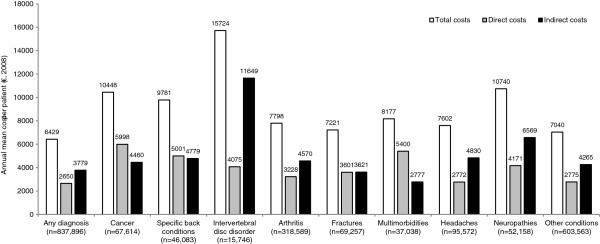
“Country (pricing year) Ireland (2008) [30] Sweden (2008) [43] Denmark (2010) [41] United States (2010) [42]”
InfluentialClinical Guidelines for the Use of Chronic Opioid Therapy in Chronic Noncancer Pain
Chou, R., Fanciullo, G. J., Fine, P. G., Adler, J. A., Ballantyne, J. C., Davies, P., Donovan, M. I., Fishbain, D. A., Foley, K. M., Fudin, J., et al. (2009) · The Journal of Pain · doi:10.1016/j.jpain.2008.10.008 · Cited by 2,192
Dagenais, S., Caro, J., & Haldeman, S. (2008) · The Spine Journal · doi:10.1016/j.spinee.2007.10.005 · Cited by 2,046 · cited 1×
“Recent studies [30,41-43] have confirmed previous evidence of the enormous indirect socioeconomic costs due to chronic pain [4,38,44-47].”
Prevalence of pain in patients with cancer: a systematic review of the past 40 years
van den Beuken-van Everdingen, M. H. J., de Rijke, J. M., Kessels, A. G., Schouten, H. C., van Kleef, M., & Patijn, J. (2007) · Annals of Oncology · doi:10.1093/annonc/mdm056 · Cited by 1,923
EFNS guidelines on the pharmacological treatment of neuropathic pain: 2010 revision
Attal, N., Cruccu, G., Baron, R., Haanpää, M., Hansson, P., Jensen, T. S., & Nurmikko, T. (2010) · European Journal of Neurology · doi:10.1111/j.1468-1331.2010.02999.x · Cited by 1,873 · cited 3×
“Numerous other national and international guidelines for the pharmacological treatment of noncancer and cancer pain exist [58-65].”
Koes, B. W., van Tulder, M., Lin, C.-W. C., Macedo, L. G., McAuley, J., & Maher, C. (2010) · European Spine Journal · doi:10.1007/s00586-010-1502-y · Cited by 1,300
Caraceni, A., Hanks, G., Kaasa, S., Bennett, M. I., Brunelli, C., Cherny, N., Dale, O., De Conno, F., Fallon, M., Hanna, M., et al. (2012) · The Lancet Oncology · doi:10.1016/s1470-2045(12)70040-2 · Cited by 1,243
Opioid Epidemic in the United States
Manchikanti, L. (2012) · Pain Physician · doi:10.36076/ppj.2012/15/es9 · Cited by 1,180
Research works printed but not linked: 17
- 5. International Association for the Study of Pain and delegates of International Pain Summit 2010: Declaration that Access to Pain Management Is a Fundamental Human Right, 2010. [http://www.iasp-pain.org/Content/ NavigationMenu/Advocacy/DeclarationofMontr233al/default.htm; accessed 27 December 2013].
- 9. OPENMinds: Pain in Europe -a public health priority. A strategy to better diagnose and manage chronic pain and the responsible use of opioids. Cambridge: Mundipharma; 2011.
- 41. Christensen J, Bilde L, Gustavsson A: Socio-economic consequences of pain- intensive diseases in Denmark. Danish Institute for Health Services Research: Copenhagen; 2011.
- 50. Gouveia M, Augusto M: Indirect costs of chronic pain in Portugal, Presentation at Societal Impact of Pain Conference. Copenhagen, Denmark; 2012 [www.sip-platform.eu]
- 54. World Health Organization: Cancer pain relief, with a guide to opioid availability. 2nd edition. Geneva: WHO; 1996.
- 57. World Health Organization: Scoping document for WHO Guidelines for the pharmacological treatment of persisting pain in adults with medical illnesses (document GRC-08-04-0052A). Geneva: WHO; 2012.
- 60. British Pain Society: Opioids for persistent pain: Good practice. A consensus statement prepared on behalf of the British Pain Society, the Faculty of Pain Medicine of the Royal College of Anaesthetists, the Royal College of General Practitioners and the Faculty of Addictions of the Royal College of Psychiatrists. London: British Pain Society; 2010.
- 61. British Pain Society: Cancer pain management: A perspective from the British Pain Society, supported by the Association for Palliative Medicine and the Royal College of General Practitioners. London: British Pain Society; 2010.
- 74. Committee on Education of the EFIC® (European Federation of IASP® Chapters): The Pain Management Core Curriculum for European Medical Schools. Diegen, Belgium: EFIC®; 2013.
- 75. Kress HG, Battelli D, Briggs E, Gordon D, Kopf A, Ribeiro S, Puig M: The provision of pain education within undergraduate medical schools across Europe, Poster presented at the 8th Congress of the European Federation of IASP Chapters (EFIC®). Florence, Italy; 2013. October 9-12,2013, Abstract no. 1128.
- 76. Deutsche Schmerzgesellschaft e.V. Endlich: Schmerzmedizin wird Pflichtfach. 2012 [Press release available at http://idw-online.de/de/news477678. Last accessed 29 Dec 2013].
- 79. European Federation of IASP Chapters: Educational support grant for Eastern European countries -guidelines. EFIC; 2012 [www.efic.org/index.asp? sub=1502d13E4PiYt1] (Accessed 27 December 2013).
- 80. Goebel A, Barker CH, Turner-Stokes L, et al: Complex regional pain syndrome in adults: UK guidelines for diagnosis, referral and management in primary and secondary care. London: Royal College of Physicians; 2012.
- Eriksen J: Long-term/chronic non-cancer pain. Epidemiology, health-care utilization, socioeconomy and aspects of treatment. 2004, Copenhagen, Denmark: DMedSci thesis monograph, Copenhagen University
- Überall MA, Müller-Schwefe G, Nolte T, Kletzko H: Das Projekt zur integrierten Versorgung Rückenschmerz – IVR. Schmerztherapie. 2009, 25: 1-7.
- Überall MA: Wenn aus einer Vision Wirklichkeit wird. Schmerzmedizin. 2012, 28: 2-
- International Association for the Study of Pain: Recommendations for pain treatment services. 2009, IASP, [ http://www.iasp.org ]
Cited by
Items 301–400 of 709
Dinsdale, A., Forbes, R., Thomas, L. C., & Treleaven, J. M. (2021) · Journal of Oral Rehabilitation · doi:10.1111/joor.13267 · Cited by 13
Engi, Z., Benkő, R., Soós, G., Szok, D., Csenki, M., Csüllög, E., Balog, A., Csupor, D., Viola, R., Doró, P., et al. (2022) · European Journal of Pain · doi:10.1002/ejp.2011 · Cited by 12
“Surveys in different European countries estimated up to 30% of the participants reporting chronic pain (Breivik et al., 2013; Häuser et al., 2015).”
BackgroundBattaglia, M., Groenewald, C. B., Campbell, F. A., Scaini, S., Koninck, Y. D., Stinson, J., & Quinn, P. D. (2023) · Journal of Psychopharmacology · doi:10.1177/02698811221144635 · Cited by 12
“Proposals on how to address this gap from both North-American and European perspectives (Breivik et al., 2013; Elman et al., 2011; Goesling et al., 2018) converge on better education, such as adding pain medicine into the core psychiatric residency training curriculum (Elman et al., 2011).”
BackgroundLeiguarda, C., Coronel, M. F., Montaner, A. D., Villar, M. J., & Brumovsky, P. R. (2017) · Neuroscience Letters · doi:10.1016/j.neulet.2017.12.032 · Cited by 12
Hampton, A. J. D., Hadjistavropoulos, T., & Gagnon, M. M. (2018) · Pain · doi:10.1097/j.pain.0000000000001345 · Cited by 16
Chronischer Schmerz bei Kindern und Jugendlichen: eine ökonomische Betrachtung
Ruhe, A., Wager, J., Linder, R., Meusch, A., Pfenning, I., & Zernikow, B. (2020) · Der Schmerz · doi:10.1007/s00482-020-00446-0 · Cited by 14
Health literacy in individuals with knee pain—a mixed methods study
Sylwander, C., Wahl, A. K., Andersson, M. L. E., Haglund, E., & Larsson, I. (2023) · BMC Public Health · doi:10.1186/s12889-023-16585-9 · Cited by 11
“Since KOA is one of the most common musculoskeletal diseases [28], and 25–35% of adults live with chronic pain [29], studying HL in a group with the onset symptom of knee pain is essential to gain knowledge of how best to facilitate health promotive work [2, 22].”
BackgroundMarcuzzi, A., Klevanger, N. E., Aasdahl, L., Gismervik, S., Bach, K., Mork, P. J., & Nordstoga, A. L. (2024) · JMIR Human Factors · doi:10.2196/55716 · Cited by 15
“Patients with persistent pain are often work-disabled and might need specialist assessment, which further increases health care and societal costs [4].”
BackgroundLeoni, M. L. G., Micheli, F., Abbott, D. M., Cascella, M., Varrassi, G., Sansone, P., Gazzeri, R., Rocco, M., & Mercieri, M. (2024) · Pain and Therapy · doi:10.1007/s40122-024-00639-w · Cited by 11
“Chronic spinal pain is a leading cause of disability among adults worldwide with detrimental effects on quality of life and burdensome costs for healthcare systems [1].”
BackgroundChronic back pain and mental disorders
Volel, B. A., Petelin, D. S., & Олегович, Р. Д. (2019) · Neurology neuropsychiatry Psychosomatics · doi:10.14412/2074-2711-2019-2s-17-24 · Cited by 11
The Use of Scrambler Therapy in Treating Chronic Pain Syndromes: A Systematic Review
Karri, J. V., Marathe, A. S., Smith, T. J., & Wang, E. J. (2022) · Neuromodulation Technology at the Neural Interface · doi:10.1016/j.neurom.2022.04.045 · Cited by 11
Likar, R., Perruchoud, C., Kampusch, S., Köstenberger, M., Sator, S., Stremnitzer, C., Wolf, A., & Neuwersch-Sommeregger, S. (2023) · Der Schmerz · doi:10.1007/s00482-022-00686-2 · Cited by 13
Zhang, J., Song, C., Wang, M., Zhang, G.-Q., Wang, B., Chen, X., Lin, P., Zhu, Y., Sun, Z., Wang, Y., et al. (2023) · Journal of Pharmaceutical Analysis · doi:10.1016/j.jpha.2023.06.008 · Cited by 11
“Chronic pain is a major health issue affecting approximately one-third of population in the Western countries, which reduces quality of life and costs an annual economic burden of approximately 600 billion USD [1].”
BackgroundDeprescribing NSAIDs: The Potential Role of Community Pharmacists
Amedi, D., & Gazerani, P. (2024) · Pharmacy · doi:10.3390/pharmacy12040116 · Cited by 11
“Pain is a complex, multidimensional phenomenon with chronic pain being a significant global health burden [13–16], affecting 19% of adults in Europe [17].”
BackgroundManagement of chronic non-cancer pain by primary care physicians: A qualitative study
Rufener, L., Akré, C., Rodondi, P., & Dubois, J. (2024) · PLoS ONE · doi:10.1371/journal.pone.0307701 · Cited by 11
“For example, prevalence studies have shown the association of chronic pain with lower socioeconomic status, with an unclear relation of cause and consequence [1, 4, 6, 7].”
BackgroundCritchlow, S., Hirst, M., Akehurst, R. L., Phillips, C. J., Philips, Z., Sullivan, W., & Dunlop, W. (2016) · Journal of Medical Economics · doi:10.1080/13696998.2016.1229671 · Cited by 11
Gouvinhas, C., Veiga, D., Mendonça, L., Sampaio, R., Azevedo, L. F., & Castro‐Lopes, J. M. (2017) · Pain Research and Treatment · doi:10.1155/2017/8402413 · Cited by 13
Prosocial behaviour helps to ease physical pain: Longitudinal evidence from Britain
Macchia, L., Farmer, J., & Kubzansky, L. D. (2023) · Journal of Psychosomatic Research · doi:10.1016/j.jpsychores.2023.111325 · Cited by 12
Gooberman‐Hill, R., Wylde, V., Bertram, W., Moore, A. J., Pinedo‐Villanueva, R., Sanderson, E., Dennis, J. A., Harris, S. R. S., Judge, A., Noble, S., et al. (2023) · Programme Grants for Applied Research · doi:10.3310/watm4500 · Cited by 12
Individual differences and health in chronic pain: are sex-differences relevant?
Suso‐Ribera, C., Martínez‐Borba, V., Martín-Brufau, R., Suso-Vergara, S., & García‐Palacios, A. (2019) · Health and Quality of Life Outcomes · doi:10.1186/s12955-019-1182-1 · Cited by 11
“Current estimates of this disease range from 20 to 30% globally [2, 3] and this disease has become one the leading causes of sick leave and physical disability both in the United States of America and Europe [4, 5].”
BackgroundEthical challenges in argumentation and dialogue in a healthcare context
Snaith, M., Nielsen, R. Ø., Kotnis, S. R., & Pease, A. (2020) · Argument & Computation · doi:10.3233/aac-200908 · Cited by 14
Ortega-Jiménez, P., Sola, H. D., Salazar, A., Dueñas, M., del Reguero, L., & Failde, I. (2020) · Journal of Clinical Medicine · doi:10.3390/jcm9113666 · Cited by 11
“One important problem related to adherence is that there is no suitable standard for its evaluation in patients with CP [10,13].”
BackgroundHEME: a neglected player in nociception?
Chiabrando, D., Fiorito, V., Petrillo, S., Bertino, F., & Tolosano, E. (2021) · Neuroscience & Biobehavioral Reviews · doi:10.1016/j.neubiorev.2021.01.011 · Cited by 12
Grid-climbing Behaviour as a Pain Measure for Cancer-induced Bone Pain and Neuropathic Pain
Falk, S., Gallego-Pedersen, S., & Petersen, N. (2017) · In Vivo · doi:10.21873/invivo.11102 · Cited by 11
Roslyakova, T., Falco, M.-A., & Gauchet, A. (2021) · Psychology & Health · doi:10.1080/08870446.2020.1856844 · Cited by 10
“However, the group format is economical in terms of the time and practitioner resources required in ‘real life’ practice, given the increasing number of CP patients and the difficulties experienced in European hospitals (Breivik et al., 2013).”
BackgroundTerhorst, Y., Braun, L., Titzler, I., Buntrock, C., Freund, J., Thielecke, J., Ebert, D., & Baumeister, H. (2020) · BMJ Open · doi:10.1136/bmjopen-2019-034271 · Cited by 10
Long-term opioid therapy and mental health comorbidity in patients with chronic pain
Vogt, S., Pfau, G., Vielhaber, S., Haghikia, A., Hachenberg, T., & Brinkers, M. (2023) · Pain Medicine · doi:10.1093/pm/pnad004 · Cited by 11
Smart, K. M. (2023) · BMC Medical Education · doi:10.1186/s12909-023-04733-z · Cited by 11
“Approximately 20–30% of the adult populations of Europe and United States of America are affected by chronic (typically ≥ 3 months in duration) pain [44–47].”
BackgroundOpioids and Dementia in the Danish Population
Pourhadi, N., Janbek, J., Gasse, C., Laursen, T. M., Waldemar, G., & Jensen‐Dahm, C. (2024) · JAMA Network Open · doi:10.1001/jamanetworkopen.2024.45904 · Cited by 10
Heleno, E., Andias, R., Neto, M., & Silva, A. G. (2021) · Journal of Geriatric Physical Therapy · doi:10.1519/jpt.0000000000000327 · Cited by 10
Chronic pain, somatic unexplained complaints and multimorbidity: A mutimorbidity painful syndrome?
de Siqueira, S. R. D. T., de Siqueira, J. T. T., & Teixeira, M. J. (2020) · Medical Hypotheses · doi:10.1016/j.mehy.2020.109598 · Cited by 10
Cáceres‐Matos, R., Gil‐García, E., Rivera‐Sequeiros, A., & López‐Millán, J. M. (2021) · Journal of Advanced Nursing · doi:10.1111/jan.14877 · Cited by 11
Lamper, C., Huijnen, I. P. J., de Mooij, M. A. C., Köke, A. J. A., Verbunt, J., & Kroese, M. (2021) · International Journal of Environmental Research and Public Health · doi:10.3390/ijerph182111661 · Cited by 12
Bath, B. L., & Lovo, S. (2015) · Journal of Pain Research · doi:10.2147/jpr.s81485 · Cited by 10
Shin, S. M. (2017) · The Korean journal of pain · doi:10.3344/kjp.2017.30.2.142 · Cited by 10
Tveter, A. T., Øiestad, B. E., Rysstad, T. L., Aanesen, F., Tingulstad, A., Småstuen, M. C., & Grotle, M. (2020) · BMC Musculoskeletal Disorders · doi:10.1186/s12891-020-03354-7 · Cited by 10
Predictors of postoperative pain using PROMIS pain interference two-years following knee surgery
Karsalia, M., Zhang, T., Aneizi, A. A., Foster, M. J., Schneider, M. B., Sajak, P. M. J., Nadarajah, V., Meredith, S. J., & Henn, R. F. (2021) · Journal of Orthopaedics · doi:10.1016/j.jor.2021.05.017 · Cited by 10
Söderlund, A., Löfgren, M., & Stålnacke, B.-M. (2018) · The Spine Journal · doi:10.1016/j.spinee.2017.11.014 · Cited by 9
Striebel, J., Ruppen, W., & Schneider, T. (2023) · Pain Management · doi:10.2217/pmt-2023-0037 · Cited by 9
A 5000-year overview of the history of pain through ancient civilizations to modern pain theories
Vincenot, M., Poisbeau, P., Morel-Ferland, N., Dumas, G. A., & Léonard, G. (2025) · PAIN Reports · doi:10.1097/pr9.0000000000001241 · Cited by 14
“76 In industrialized countries, 1 of every 4 adults experiences chronic pain 10,17,18 ; this condition poses a substantial public health challenge and imposes a significant societal burden.”
McCartney, H., Main, A., Weir, N., Kaur, H., Ibrar, M., & Maguire, R. (2025) · Journal of Medical Internet Research · doi:10.2196/66457 · Cited by 9
“This has resulted in a significant economic impact, with estimated costs of chronic pain to the economy reaching billions around the world [6-8].”
Mind the Gaps: A Qualitative Study Combining Patients’ and Nurses’ Reflections on Pain Care
Gjesdal, K., Dysvik, E., & Furnes, B. (2019) · SAGE Open Nursing · doi:10.1177/2377960819868865 · Cited by 9
Andersen, A. H., Illés, Z., & Roessler, K. K. (2022) · Journal of Religion and Health · doi:10.1007/s10943-022-01658-7 · Cited by 12
“Living with a severe, chronic, and non-malignant illness impacts all areas of a patient’s life (Breivik et al., 2013), often provides a reduced quality of life (Dennison et al.”
BackgroundKavchak, A. J. E., Einhorn, L., Groover, M. K., Naze, G. S., & Baxter, D. G. (2022) · Disability and Rehabilitation · doi:10.1080/09638288.2022.2130447 · Cited by 10
Killingmo, R. M., Tveter, A. T., Pripp, A. H., Tingulstad, A., Maas, E. T., Rysstad, T. L., & Grotle, M. (2024) · BMJ Open · doi:10.1136/bmjopen-2023-080567 · Cited by 9
Pfeifer, A.-C., Schröder-Pfeifer, P., Schiltenwolf, M., Vogt, L., Schneider, C., Platen, P., Beck, H., Wippert, P., Engel, T., Wochatz, M., et al. (2025) · Archives of Physical Medicine and Rehabilitation · doi:10.1016/j.apmr.2024.12.015 · Cited by 9
Amir, R., Leiba, R., & Eisenberg, E. (2018) · Pain Practice · doi:10.1111/papr.12738 · Cited by 13
Self-citationAbordaje no farmacológico del dolor
Bazterrica, I. A., Galán-Martín, M. Á., & Montero-Cuadrado, F. (2020) · FMC - Formación Médica Continuada en Atención Primaria · doi:10.1016/j.fmc.2019.09.009 · Cited by 14
Cáceres‐Matos, R., Gil‐García, E., Vázquez-Santiago, S., & Cabrera‐León, A. (2021) · Pain Management Nursing · doi:10.1016/j.pmn.2021.10.006 · Cited by 9
Lie, M. U., Pedersen, L. M., Heuch, I., Winsvold, B. S., Gjerstad, J., Hasvik, E., Nygaard, O. P., Grotle, M., Matre, D., Zwart, J., et al. (2022) · Frontiers in Genetics · doi:10.3389/fgene.2021.757632 · Cited by 9
“Low back pain (LBP) is the leading cause of years lived with disability in Western countries (Global Burden of Disease Study, 2020) and represents a large economic burden (Maniadakis and Gray, 2000; Breivik et al., 2013; Olafsson et al., 2018).”
BackgroundHansen, C. A., Ernst, M. T., Smith, C., & Abrahamsen, B. (2023) · Journal of Pain Research · doi:10.2147/jpr.s388674 · Cited by 9
“Introduction Chronic non-cancer pain (CNCP)(1) is a highly prevalent worldwide public health challenge; in Europe, it affects approximately 20% of all adults.(2) It has been assessed that 1.”
BackgroundLundberg, G., & Gerdle, B. U. C. (2015) · Disability and Rehabilitation · doi:10.3109/09638288.2015.1035459 · Cited by 11
“the perspectives of socioeconomic costs [9], disability [32], and prolonged/lifelong individual suffering [10].”
BackgroundPain acceptance levels of patients with chronic pain
Çınar, H. G., Yılmaz, D., & Akin, E. S. (2020) · Medicine · doi:10.1097/md.0000000000019851 · Cited by 11
“Therefore, chronic pain affects the quality of life negatively and may appear with depressive symptoms and significant deficiencies.([4,8,9]) Another concept that varies among individuals is pain acceptance.”
BackgroundGamble, A., Ahmed, A. M. A., Rahim, S. H., & Hartman, J. (2020) · Torture Journal · doi:10.7146/torture.v30i2.119199 · Cited by 13
Abboud, C., Brochoire, L., Drouet, A., Hossain, M. A., Hleihel, W., Gundlach, A. L., & Landry, M. (2021) · PAIN Reports · doi:10.1097/pr9.0000000000000937 · Cited by 9
“Unfortunately, chronic pain and its comorbidities are poorly managed clinically, with 40% of patients not receiving adequate treatment.(7,8,70,71) In the brain, changes in the excitation–inhibition balance alter how neurons and microcircuits integrate and respond to chronic nociceptive information.”
BackgroundBeetsma, A. J., Paap, D., Pool, G., Reezigt, R. R., de Ruiter, E., Hobbelen, H. J. S. M., & Reneman, M. F. (2024) · Disability and Rehabilitation · doi:10.1080/09638288.2024.2367602 · Cited by 11
“Persistent musculoskeletal (MSK) pain is a leading cause of disability worldwide, placing unsustainable strain on health systems [1] and imposing a significant burden on those affected by persistent MSK pain [2–5].”
Lierde, E. V., Goubert, L., Lammens, T., Brahim, L. B., den Bussche, E. V., & Vervoort, T. (2020) · Clinical Journal of Pain · doi:10.1097/ajp.0000000000000801 · Cited by 8
Health Care Professionals’ Attitudes Toward Patients with Chronic Pain: Scale Development Study
Çakmak, N. C. S., Çalışkan, N., & Kan, A. (2022) · Pain Management Nursing · doi:10.1016/j.pmn.2022.08.004 · Cited by 8
Tomé‐Pires, C., Aragonès, E., Rambla, C., López-Cortacans, G., Sánchez‐Rodríguez, E., Caballero, A., & Miró, J. (2023) · Frontiers in Psychology · doi:10.3389/fpsyg.2023.1099419 · Cited by 9
“Chronic pain is a major health problem that can have deleterious effects on individuals’ physical, social and psychological functioning (Breivik et al., 2013; Burke et al., 2015; Dueñas et al., 2016).”
BackgroundYang, X., Zhong, S., Yang, S., He, M., Xu, X., He, S., Fan, G., & Liu, L. (2023) · JMIR Serious Games · doi:10.2196/48354 · Cited by 8
Tsui, J. I., Rossi, S. L., Cheng, D. M., Bendiks, S., Vetrova, M., Blokhina, E. A., Winter, M. R., Gnatienko, N., Bačkonja, M., BRYANT, K. J., et al. (2024) · PLoS ONE · doi:10.1371/journal.pone.0297948 · Cited by 9
Manage My Pain: A Patient-Driven Mobile Platform to Prevent and Manage Chronic Postsurgical Pain
Weinrib, A., Azam, M. A., Latman, V. V., Janmohamed, T., Clarke, H. A., & Katz, J. D. (2017) · Advances in healthcare information systems and administration book series · doi:10.4018/978-1-5225-2958-3.ch004 · Cited by 8
Disease-specific knowledge in individuals with and without chronic conditions
Gellert, P. R., Ernsting, C., Salm, F., Oedekoven, M., Kanzler, M., & Kuhlmey, A. (2017) · Journal of Public Health · doi:10.1007/s10389-017-0855-7 · Cited by 8
“Improving knowledge was referred as key to improving knowledge of the burden of pain and its management (Breivik et al. 2013).”
BackgroundPredictors of early postoperative pain interference following orthopaedic surgery
Kator, J. L., Aneizi, A. A., Nadarajah, V., Sajak, P. M. J., Zhan, M., Gilotra, M. N., Akabudike, N. M., Packer, J. D., & Henn, R. F. (2020) · Journal of Orthopaedics · doi:10.1016/j.jor.2020.11.009 · Cited by 8
Wassinger, C. A., & Sole, G. (2021) · Physiotherapy Theory and Practice · doi:10.1080/09593985.2021.1949766 · Cited by 11
“Chronic musculoskeletal pain is a substantial public health problem causing great individual and societal costs related to medical management and lost wages (Breivik, Eisenberg, and O’Brien, 2013; Gaskin and Richard, 2012).”
BackgroundKorogod, N., Steyaert, A., Nonclercq, O., Opsommer, E., & Berquin, A. D. (2022) · BMC Musculoskeletal Disorders · doi:10.1186/s12891-021-04944-9 · Cited by 8
“Some work suggested that this might be feasible: a statistical tool based on pain intensity, duration and interference as well as depression predicting the evolution of LBP was also valid for headache, orofacial pain [31] and MSKP (but with different cutoff scores) [32].”
BackgroundInfluentialNonopioid analgesics discovery and the Valley of Death: EMA401 from concept to clinical trial
Smith, M. T. (2022) · Pain · doi:10.1097/j.pain.0000000000002675 · Cited by 8
“10,25 Chronic pain is often difficult to alleviate adequately with clinically used analgesic and/or adjuvant agents because of lack of efficacy and/or dose-limiting side effects.”
Rambla, C., Aragonès, E., Pallejà-Millán, M., Tomé‐Pires, C., López-Cortacans, G., Sánchez‐Rodríguez, E., & Miró, J. (2023) · BMC Musculoskeletal Disorders · doi:10.1186/s12891-023-06357-2 · Cited by 8
“The sustained upward trend of musculoskeletal pain from 1990 is expected to continue due to increasing life expectancy, elderly population, sedentary lifestyle and obesity [2], with a significant burden of suffering and disability in patients and important repercussions in the health systems and society [3, 4].”
BackgroundMcHenry, N., Ahmed, A., Shah, I., Freedman, S. D., Nee, J. W., Lembo, A. J., & Sheth, S. G. (2022) · Pancreas · doi:10.1097/mpa.0000000000002180 · Cited by 8
How effective and efficient are different exercise patterns in reducing back pain?
Müller, G., Lyssenko, L., Giurgiu, M., Pfinder, M., Clement, M., Kaiserauer, A., Heinzel‐Gutenbrunner, M., Kohlmann, T., & Bös, K. (2020) · European Journal of Physical and Rehabilitation Medicine · doi:10.23736/s1973-9087.20.05975-4 · Cited by 8
Retrospective analysis of the financial break-even point for intrathecal morphine pump use in Korea
Kim, E. K., Shin, J. Y., Castañeda, A. M., Lee, S. J., Yoon, H., Kim, Y. C., & Moon, J. Y. (2017) · The Korean journal of pain · doi:10.3344/kjp.2017.30.4.272 · Cited by 8
Chronic Pain: Clinical Updates and Perspectives
Galvez-Sánchez, C. M., & Montoro, C. I. (2022) · Journal of Clinical Medicine · doi:10.3390/jcm11123474 · Cited by 12
Klausen, M. D., Lindberg, L., Johansen, S. K., Rathleff, M. S., & Lyng, K. D. (2025) · Musculoskeletal Care · doi:10.1002/msc.70108 · Cited by 9
“Furthermore, data from the US show that the socioeconomic costs exceed the combined costs of cardiovascular disease and cancer (Breivik et al. 2013; Gaskin and Richard 2012).”
LoMartire, R., Johansson, P., & Frumento, P. (2023) · Journal of Pain · doi:10.1016/j.jpain.2023.06.009 · Cited by 7
Ali, S. M., Selby, D., Bourke, D., Bravo, R., Chiarotto, A., Firth, J., James, B., Parker, B., Dixon, W. G., & van der Veer, S. N. (2023) · Digital Health · doi:10.1177/20552076231194544 · Cited by 7
Blake, H., Chaplin, W. J., Wainwright, E. M., Taylor, G. T., McNamee, P., McWilliams, D. F., Abbott-Fleming, V., Holmes, J. A., Fecowycz, A., Walsh, D. A., et al. (2023) · JMIR Research Protocols · doi:10.2196/51474 · Cited by 9
“…vocationally active adults in the workforce is important for reducing health and social inequalities because employment is inversely related to pain severity [31] and worklessness is associated with poorer physical and mental health [8,32,33], social exclusion [34], and all-cause mortality [35].”
Meijs, S., Andreis, F. R., Janjua, T. A. M., Graven‐Nielsen, T., & Jensen, W. (2024) · Pain · doi:10.1097/j.pain.0000000000003354 · Cited by 7
Nøst, T. H., Steinsbekk, A., Bratås, O., & Grønning, K. (2016) · Trials · doi:10.1186/s13063-016-1462-6 · Cited by 7
The Economic Utility of Clinical Psychology in the Multidisciplinary Management of Pain
Giusti, E. M., Pietrabissa, G., Manzoni, G. M., Cattivelli, R., Molinari, E., Trompetter, H. R., Schreurs, K. M. G., & Castelnuovo, G. (2017) · Frontiers in Psychology · doi:10.3389/fpsyg.2017.01860 · Cited by 9
“Direct medical expenses and indirect costs due to losses in work productivity exceed $200 billion in the US (Ma et al., 2014; Park et al., 2016) and are a major source of concern in Europe (Breivik et al., 2013).”
BackgroundImplementing a chronic pain ambulatory care: preliminary results
de Castro, S., Cavalcanti, I. L., Barrucand, L., Pinto, C. I., Assad, A. R., & Verçosa, N. (2019) · Brazilian Journal of Anesthesiology (English Edition) · doi:10.1016/j.bjane.2019.01.003 · Cited by 7
Kepelbagaian Pelajar dan Sekolah: Satu Kajian Kes di Negeri Pahang
Ahmad, A. R., Saleha, A., Jelas, Z. M., & Seman, A. A. (2010) · Jurnal Pendidikan Malaysia · Cited by 16
Afonso, A. S., Gálvez, R., Mosquera, E. P., Navarro, A. M., Ochoa, D., & Pérez, C. (2022) · Medicina · doi:10.3390/medicina58050627 · Cited by 7
Musculoskeletal signs in female homecare personnel: A longitudinal epidemiological study
Lundberg, G., & Gerdle, B. U. C. (2017) · Work · doi:10.3233/wor-172609 · Cited by 9
Cary, M. A., & Gyurcsik, N. C. (2020) · British Journal of Pain · doi:10.1177/2049463720942535 · Cited by 7
Olsen, U., Lindberg, M. F., Denison, E., Rose, C. J., Gay, C., Aamodt, A., Brox, J. I., Skare, Ø., Furnes, O. N., Lee, K. A., et al. (2020) · BMJ Open · doi:10.1136/bmjopen-2020-037674 · Cited by 7
Technological Interventions for Pain Management
Suso-Ribera, C., Castilla, D., Martínez-Borba, V., Jaén, I., Botella, C., Baños, R. M., & García-Palacios, A. (2022) · Comprehensive Clinical Psychology · doi:10.1016/b978-0-12-818697-8.00009-1 · Cited by 6
Maraschini, A., Tenti, M., Raffaeli, W., Iannucci, L., Gargiulo, L., Burgio, A., Minelli, G., Fagnani, C., Medda, E., Ferri, M., et al. (2025) · International Journal of Environmental Research and Public Health · doi:10.3390/ijerph22091395 · Cited by 7
“Despite this impact, CP remains often inadequately managed, and affected subjects are less likely to access mental health services than those who are not affected, leading to unnecessary suffering, diminished quality of life, and higher social and healthcare costs [21,22].”
Burmistr, I., Zaslansky, R., Dmytrіiev, D., & Kopf, A. (2025) · European Journal of Pain · doi:10.1002/ejp.70185 · Cited by 6
“Direct comparisons between studies are challenging due to variations in methods, outcome measures, healthcare systems, as well as potential country-specific differences in the prevalence, intensity and types of chronic pain conditions (Breivik et al. 2013).”
InfluentialImmune Competence and Pain: A Narrative Review
Coaccioli, S., Sarzi‐Puttini, P., Fornasari, D., Schweiger, V., Zis, P., Viswanath, O., & Varrassi, G. (2024) · Current Pain and Headache Reports · doi:10.1007/s11916-024-01282-y · Cited by 6
“Similar figures are reported in Europe, with approximately 25–35% of the population affected from CP and higher rates of 40% reported in Italy, France and Ukraine [3].”
Arévalo‐Martínez, A., Barbosa‐Torres, C., Manso, J. M. M., Cordero, P. C., Sánchez, M. E. G.-B., & Díaz‐Muñoz, C. L. (2024) · Healthcare · doi:10.3390/healthcare12151465 · Cited by 6
Furlan, A. D., Irvin, E., Kim, J., Eerd, D. V., Carnide, N., Munhall, C., Fortune, M., Mahood, Q., & van Tulder, M. W. (2014) · Cochrane Database of Systematic Reviews · doi:10.1002/14651858.cd011062 · Cited by 6
Schirmer, D., Karri, J. V., & Abd-Elsayed, A. A. (2020) · Springer eBooks · doi:10.1007/978-3-030-40449-9_37 · Cited by 7
Improved potency of pyridin-2(1H)one derivatives for the treatment of mechanical allodynia
Visseq, A., Descheemaeker, A., Hérault, K., Giraud, F., Abrunhosa‐Thomas, I., Artola, A., Anizon, F., Dallel, R., & Moreau, P. (2021) · European Journal of Medicinal Chemistry · doi:10.1016/j.ejmech.2021.113748 · Cited by 6
Han, Y., Valentini, E., & Halder, S. (2022) · Annual International Conference of the IEEE Engineering in Medicine and Biology Society (EMBC) · doi:10.1109/embc48229.2022.9871353 · Cited by 6
“Around 40% of adults are affected by chronic pain in Europe [1].”
BackgroundIn search of conditioned pain: an experimental analysis
Kang, S., Ryckeghem, D. M. L. V., Vlaeyen, J. W. S., Paepe, A. L. D., & Crombez, G. (2023) · Pain · doi:10.1097/j.pain.0000000000002964 · Cited by 6
Lew, H. Y. F., & Xin, X. H. (2020) · Pain Medicine · doi:10.1093/pm/pnaa223 · Cited by 7
Chronic Non-Cancer Pain Management Capacity in Karachi
Lakha, S. F., Pennefather, P., Agboatwalla, M., Siddiqui, S. Z., Badr, H. E.-S., & Mailis, A. (2017) · Pain and Therapy · doi:10.1007/s40122-017-0072-7 · Cited by 6
Veiga, D., Mendonça, L., Sampaio, R., Castro‐Lopes, J. M., & Azevedo, L. F. (2018) · Pain Medicine · doi:10.1093/pm/pny275 · Cited by 7
“There is a strong case for the development of suitable guidelines on opioid prescription and adequate underand postgraduate training on pain management as part of all physicians’ curricula [2,4].”
BackgroundParsons, B., Freynhagen, R., Schug, S. A., Whalen, E., Ortiz, M., Brown, P. B., & Knapp, L. E. (2019) · Journal of Pain Research · doi:10.2147/jpr.s199203 · Cited by 6
Jaén, I., Suso‐Ribera, C., Castilla, D., Zaragozá, I., García‐Palacios, A., & Palones, J. L. G. (2019) · BMJ Open · doi:10.1136/bmjopen-2019-033586 · Cited by 6
Metadata
- Authors
- Breivik, H., Eisenberg, E., & O’Brien, T.
- Affiliations
- Oslo University Hospital (NO)
- Technion – Israel Institute of Technology (IL)
- Cork University Hospital (IE)
- Corresponding author
- Breivik, Harald
- Venue
- BMC Public Health
- Published
- 2013-12
- Volume
- 13
- Issue
- 1
- Pages
- 1229-1229
- ISSN
- 1471-2458 (ISSN-L)
- PMC
- PMC3878786
- OpenAlex
- W2033770456
- Semantic Scholar
- d2c8ecc54ed3ec364965534f713a5f81f9a6c226
- Cited by
- 643
- References
- 121
- Citations by year
- 2026: 29 · 2025: 48 · 2024: 57 · 2023: 63 · 2022: 72 · 2021: 70 · 2020: 78 · 2019: 60 · 2018: 46 · 2017: 58 · 2016: 32 · 2015: 18 · 2014: 10
- FWCI
- 25.29
- Type
- journal article
- Language
- en
- Open access
- gold
- doi.org
- Licence
- Locations
- BMC Public Health (publishedVersion, cc-by)
- PubMed Central (publishedVersion, cc-by)
- PubMed (publishedVersion)
- NORA - Norwegian Open Research Archives (submittedVersion, cc-by)
- Lenus, The Irish Health Repository (Dr Steevens Hospital Library) (submittedVersion)
- Funders
- Mundipharma International
- Topics
- Health Sciences › Medicine › Anesthesiology and Pain Medicine › Pain Management and Opioid Use
- Health Sciences › Health Professions › Physical Therapy, Sports Therapy and Rehabilitation › Musculoskeletal pain and rehabilitation
- Health Sciences › Medicine › Anesthesiology and Pain Medicine › Anesthesia and Pain Management
- Keywords
- chronic pain, socioeconomic burden, undertreatment of pain, pain management services, multidisciplinary pain management, physician training, productivity loss, absenteeism, early retirement
- MeSH terms
- Europe, Health Priorities, Health Services Accessibility, Humans, Patient Education as Topic, Cost of Illness, Chronic Pain
About these checks
Registry, retraction, Cites and statistics results are computed, not judged, with one exception: a printed reference that no index lists is read once by a model before it counts as a citation error. Claims are extracted by a model and kept only when their quote appears verbatim in the text; each cited source is then checked, with a model’s help, for whether it says what the claim relies on. Those verdicts can be wrong — read the claim’s quote and the cited source before relying on one.
Statistics and arithmetic are recomputed, not judged.
Confidence bands are shown only for fields calibrated on our annotated test set. None is calibrated yet, so no band is shown.
What counts as a claim ›How we measure confidence ›How we check this ›
Are you an author, or do you see a problem with this page? Request a review
Data sources
Bibliographic data: Semantic Scholar, OpenAlex, Crossref.
Contains information from the Semantic Scholar Academic Graph Datasets, made available under the ODC Attribution License (ODC-BY 1.0).
Semantic Scholar’s data is described in: Kinney, R., et al. (2023). The Semantic Scholar Open Data Platform. arXiv:2301.10140.
