

A central storage facility to reduce pesticide suicides - a feasibility study from India
Open accessThe DOI matches its Crossref record; 32 of the 32 references it cites were found in a registry or an index.
Abstract
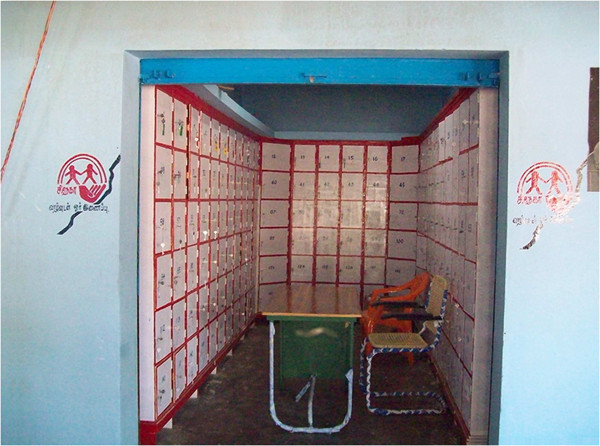
BACKGROUND: Pesticide suicides are considered the single most important means of suicide worldwide. Centralized pesticide storage facilities have the possible advantage of delaying access to pesticides thereby reducing suicides. We undertook this study to examine the feasibility and acceptability of a centralized pesticide storage facility as a preventive intervention strategy in reducing pesticide suicides. METHODS: A community randomized controlled feasibility study using a mixed methods approach involving a household survey; focus group discussions (FGDs) and surveillance were undertaken. The study was carried out in a district in southern India. Eight villages that engaged in floriculture were identified. Using the lottery method two were randomized to be the intervention sites and two villages constituted the control site. Two centralized storage facilities were constructed with local involvement and lockable storage boxes were constructed. The household survey conducted at baseline and one and a half years later documented information on sociodemographic data, pesticide usage, storage and suicides. RESULTS: At baseline 4446 individuals (1097 households) in the intervention and 3307 individuals (782 households) in the control sites were recruited while at follow up there were 4308 individuals (1063 households) in the intervention and 2673 individuals (632 households) in the control sites. There were differences in baseline characteristics and imbalances in the prevalence of suicides between intervention and control sites as this was a small feasibility study.The results from the FGDs revealed that most participants found the storage facility to be both useful and acceptable. In addition to protecting against wastage, they felt that it had also helped prevent pesticide suicides as the pesticides stored here were not as easily and readily accessible. The primary analyses were done on an Intention to Treat basis. Following the intervention, the differences between sites in changes in combined, completed and attempted suicide rates per 100,000 person-years were 295 (95% CI: 154.7, 434.8; p < 0.001) for pesticide suicide and 339 (95% CI: 165.3, 513.2, p < 0.001) for suicide of all methods. CONCLUSIONS: Suicide by pesticides poisoning is a major public health problem and needs innovative interventions to address it. This study, the first of its kind in the world, examined the feasibility of a central storage facility as a means of limiting access to pesticides and, has provided preliminary results on its usefulness. These results need to be interpreted with caution in view of the imbalances between sites. The facility was found to be acceptable, thereby underscoring the need for larger studies for a longer duration. TRIAL REGISTRATION ISRCTN: ISRCTN04912407.
Overview
The claims and statistics of this paper haven’t been checked yet.
Free: it reads the open-access text and checks the first 5 claims that cite a source we can check. Create a free account to check every claim.
Integrity signals
Registry
Cites
Statistics
Figures
Verification
Claims the paper makes
The claims and statistics of this paper haven’t been checked yet.
Free: it reads the open-access text and checks the first 5 claims that cite a source we can check. Create a free account to check every claim.
Claims other papers make about this one
Each is checked against this paper’s own text: does it say what the citing paper says it does?
The source backs part of the claim, not all of it — or backs it for a different population, condition or comparison.
In the citing paper
“Restricting access to the most available and lethal means for suicide, such as firearms, lowered suicide rates using the restricted method,(127–137) and lowered overall suicide rates when the method was sufficiently widely used.(127, 130–135)”
From Improving Suicide Prevention Through Evidence-Based Strategies: A Systematic Review (2021) · cites this paper as [129]
Experimental — accuracy not yet measuredThe source backs part of the claim, not all of it — or backs it for a different population, condition or comparison.
In the citing paper
“Pesticides are highly lethal, the leading suicide method worldwide, and the decline in suicide deaths worldwide is largely due to restricting access to pesticides where those deaths happen, namely in rural China,(138, 158) India(129) and Sri Lanka.(159)”
From Improving Suicide Prevention Through Evidence-Based Strategies: A Systematic Review (2021) · cites this paper as [129]
Experimental — accuracy not yet measured
Self-check
Percentages, sums and reported differences re-computed from the paper’s own numbers.
The self-check needs the paper’s full text.
Citations
Cites
The world report on violence and health
Krug, E. G., Mercy, J. A., Dahlberg, L. L., & Zwi, A. B. (2002) · The Lancet · doi:10.1016/s0140-6736(02)11133-0 · Cited by 9,110
Hoffman, J. S. (2003) · Injury Prevention · doi:10.1136/ip.9.1.93 · Cited by 1,737
The global distribution of fatal pesticide self-poisoning: Systematic review
Gunnell, D., Eddleston, M., Phillips, M. R., & Konradsen, F. (2007) · BMC Public Health · doi:10.1186/1471-2458-7-357 · Cited by 969 · cited 1×
“[2] surmised that at least 233,997 to 325,907 suicides per year are by pesticide poisoning.”
BackgroundSuicide mortality in India: a nationally representative survey
Patel, V., Ramasundarahettige, C., Vijayakumar, L., Thakur, J., Gajalakshmi, V., Gururaj, G., Suraweera, W., & Jha, P. (2012) · The Lancet · doi:10.1016/s0140-6736(12)60606-0 · Cited by 936 · cited 2×
“[12] in a nationally representative study from India reported that suicides in 49% men and 44% women were primarily through pesticide poisoning which is much higher than data provided by the government [13].”
BackgroundSelf-citationRisk factors for suicide in China: a national case-control psychological autopsy study
Phillips, M. R., Yang, G., Zhang, Y., Wang, L., Ji, H., & Zhou, M. (2002) · The Lancet · doi:10.1016/s0140-6736(02)11681-3 · Cited by 928 · cited 4×
“Phillips MR, Yang G, Zhang Y, Wang L, Ji H, Zhou M: Risk factors for suicide in China: a national case–control psychological autopsy study.”
BackgroundInfluentialSchmidtke, A., Bille‐Brahe, U., Deleo, D., Kerkhof, A., Bjerke, T., Crepef, P., Haring, C., Hawton, K., Lönnqvist, J., Michel, K., et al. (1996) · Acta Psychiatrica Scandinavica · doi:10.1111/j.1600-0447.1996.tb10656.x · Cited by 783
Violence by intimate partners.
Heise, L., & García‐Moreno, C. (2002) · Cited by 576
Methods of suicide: international suicide patters derived from the WHO mortality database
Ajdacic-Gross, V. (2008) · Bulletin of the World Health Organization · doi:10.2471/blt.07.043489 · Cited by 557 · cited 1×
“Mortality data on international suicide patterns revealed that in Asia, rural Latin American countries and Portugal, pesticide suicide was a major problem, notably among women [3].”
BackgroundPesticide poisoning in the developing world—a minimum pesticides list
Eddleston, M., Karalliedde, L., Buckley, N., Fernando, R., Hutchinson, G., Isbister, G., Konradsen, F., Murray, D., Piola, J. C., Senanayake, N., et al. (2002) · The Lancet · doi:10.1016/s0140-6736(02)11204-9 · Cited by 496
The impact of pesticide regulations on suicide in Sri Lanka
Gunnell, D., Fernando, R., Hewagama, M., Priyangika, W. D. D., Konradsen, F., & Eddleston, M. (2007) · International Journal of Epidemiology · doi:10.1093/ije/dym164 · Cited by 378 · cited 2×
“Gunnell [8] recommends that the most practical suicide prevention strategy would be to reduce access to organophosphate pesticides which combined with public education would prove an effective pesticide suicide prevention strategy.”
Background
Research works printed but not linked: 2
- 13. National Crimes Records Bureau: Suicides in India. In: Accidental Death and Suicides in India. Ministry of Home Affairs; 2011. Downloaded from: http://ncrb.nic.in/CD-ADSI2009/suicides-09.pdf. Accessed on 3rd July 2012.
- 33. Vijayakumar, L., Jeyaseelan, L., Kumar, S., Mohanraj, R., Devika, S. & Manikandan, S. (2013). A central storage facility to reduce pesticide suicides -a feasibility study from India. BMC PUBLIC HEALTH, 13 (1), https://doi.org/10.1186/1471-2458-13-850. Persistent Link: http://hdl.handle.net/11343/265097 License: CC BY
Cited by
Suicide prevention strategies revisited: 10-year systematic review
Zalsman, G., Hawton, K., Wasserman, D., van Heeringen, K., Arensman, E., Sarchiapone, M., Carli, V., Höschl, C., Barzilay, R., Balazs, J., et al. (2016) · The Lancet Psychiatry · doi:10.1016/s2215-0366(16)30030-x · Cited by 1,765
Improving Suicide Prevention Through Evidence-Based Strategies: A Systematic Review
Mann, J. J., Michel, C. A., & Auerbach, R. P. (2021) · American Journal of Psychiatry · doi:10.1176/appi.ajp.2020.20060864 · Cited by 655
The global burden of fatal self-poisoning with pesticides 2006-15: Systematic review
Mew, E. J., Padmanathan, P., Konradsen, F., Eddleston, M., Chang, S.-S., Phillips, M. R., & Gunnell, D. (2017) · Journal of Affective Disorders · doi:10.1016/j.jad.2017.05.002 · Cited by 530
“Although evidence of the effectiveness of pesticide safe storage (e.g. in locked boxes or village storage facilities) is at present limited (Vijayakumar et al., 2013; World Health Organisation, International Association for Suicide Prevention, 2006, World Health Organisation, 2016), there is now a…”
BackgroundBonvoisin, T., Utyasheva, L., Knipe, D., Gunnell, D., & Eddleston, M. (2020) · BMC Public Health · doi:10.1186/s12889-020-8339-z · Cited by 201
Aggarwal, S., Patton, G., Reavley, N., Sreenivasan, S. A., & Berk, M. (2017) · International Journal of Social Psychiatry · doi:10.1177/0020764017700175 · Cited by 147
“For example, a central pesticide storage facility was proven to be an effective measure in reducing completed and attempted suicide in Southern India (Vijayakumar et al., 2013).”
BackgroundPage, A., Liu, S., Gunnell, D., Astell-Burt, T., Feng, X., Wang, L., & Zhou, M. (2017) · Journal of Affective Disorders · doi:10.1016/j.jad.2016.10.047 · Cited by 141
Pearson, M., Metcalfe, C., Jayamanne, S., Gunnell, D., Weerasinghe, M., Pieris, R., Priyadarshana, C., Knipe, D. W., Hawton, K., Dawson, A. H., et al. (2017) · The Lancet · doi:10.1016/s0140-6736(17)31961-x · Cited by 104
The national suicide prevention strategy in India: context and considerations for urgent action
Vijayakumar, L., Chandra, P. S., Kumar, M. S., Pathare, S., Banerjee, D., Goswami, T., & Dandona, R. (2021) · The Lancet Psychiatry · doi:10.1016/s2215-0366(21)00152-8 · Cited by 116
“14 However, more data are needed to fully understand the implications of COVID-19 on suicide deaths in India, as newspaper reports are known to show reporting bias.”
InfluentialSelf-citationSuicide Prevention in the Southeast Asia Region
Vijayakumar, L., Daly, C., Arafat, S. M. Y., & Arensman, E. (2020) · Crisis · doi:10.1027/0227-5910/a000666 · Cited by 76
Self-citationFleischmann, A., Arensman, E., Berman, A., Carli, V., De Leo, D., Hadlaczky, G., Howlader, S., Vijayakumar, L., Wasserman, D., & Saxena, S. (2016) · Global Mental Health · doi:10.1017/gmh.2015.27 · Cited by 68
“…the services of nongovernmental organizations, awareness raising in schools, community education around selfimmolation and training of gatekeepers (Vijayakumar et al. 2004, 2013; Vijayakumar & Armsom, 2005; Ahmadi & Ytterstad, 2007; Wasserman et al. 2015; WHO, 2014a); however, there is need for…”
BackgroundSelf-citationSall, J., Brenner, L., Millikan Bell, A. M., & Colston, M. J. (2019) · Annals of Internal Medicine · doi:10.7326/m19-0687 · Cited by 67
“A randomized controlled feasibility study examined the effect of providing centralized storage facilities for pesticides versus no intervention in 4 villages in India (73).”
BackgroundSuicide in India: a complex public health tragedy in need of a plan
Armstrong, G., & Vijayakumar, L. (2018) · The Lancet Public Health · doi:10.1016/s2468-2667(18)30142-7 · Cited by 67
Self-citationArmstrong, G., Vijayakumar, L., Pirkis, J., Jayaseelan, M., Cherian, A. V., Sørensen, J. B., Arya, V., & Niederkrotenthaler, T. (2019) · BMJ Open · doi:10.1136/bmjopen-2019-030836 · Cited by 68
Self-citationAggarwal, S. (2015) · British Medical Bulletin · doi:10.1093/bmb/ldv018 · Cited by 71
“succeeded in testing the feasibility of a centralized pesticide storage facility as well as its usefulness in reducing pesticide suicides in a southern state in India.(25) However, long-term monitoring systems to test the effectiveness of such measures, evaluation of degree of substitution of restricted methods by oth…”
Hagaman, A. K., Khadka, S., Lohani, S., & Kohrt, B. A. (2017) · Social Psychiatry and Psychiatric Epidemiology · doi:10.1007/s00127-017-1433-6 · Cited by 60
“Integrating police, health professionals, and community health workers in crisis response teams has shown early efficacy in LMIC [65], along with strategies for integrating mental health into primary care [66], and controlling access to means [67, 68].”
Reifels, L., Mishara, B. L., Dargis, L., Vijayakumar, L., Phillips, M. R., & Pirkis, J. (2018) · Suicide and Life-Threatening Behavior · doi:10.1111/sltb.12503 · Cited by 43
“Two studies (Vijayakumar and Satheesh-Babu, 2009; Vijayakumar et al., 2013) were limited in their ability to assess suicide method substitution (i.e., shifts from suicides by pesticide ingestion to suicides by other methods).”
BackgroundMethodSelf-citationHagaman, A. K., Khadka, S., Wutich, A., Lohani, S. P., & Kohrt, B. A. (2018) · Culture Medicine and Psychiatry · doi:10.1007/s11013-018-9585-8 · Cited by 44
Epidemiología del suicidio en adolescentes y jóvenes en Ecuador
Gerstner, R., Soriano, I., Sanhueza, A., Caffe, S., & Kestel, D. (2018) · Revista Panamericana de Salud Pública · doi:10.26633/rpsp.2018.100 · Cited by 88
Improving Suicide Prevention Through Evidence-Based Strategies: A Systematic Review
Mann, J. J., Michel, C. A., & Auerbach, R. P. (2023) · FOCUS The Journal of Lifelong Learning in Psychiatry · doi:10.1176/appi.focus.23021004 · Cited by 39
“Pesticides are highly lethal and are the leading suicide method worldwide, and the decline in suicide deaths worldwide is largely due to Am J Psychiatry 00:0, nn 2021 ajp.psychiatryonline.org 9 restriction of access to pesticides where those deaths occur most, namely, in rural China (138, 158), India (129), and Sri La…”
Behavior Characteristics and Risk Factors for Suicide Among the Elderly in Rural China
Liu, B.-P., Qin, P., & Jia, C.-X. (2017) · The Journal of Nervous and Mental Disease · doi:10.1097/nmd.0000000000000728 · Cited by 34
Pathare, S., Shields‐Zeeman, L., Vijayakumar, L., Pandit, D., Nardodkar, R., Chatterjee, S., Kalha, J., Krishnamoorthy, S., Jain, N., Kapoor, A., et al. (2020) · Trials · doi:10.1186/s13063-020-04472-2 · Cited by 34
Self-citationStartling suicide statistics in India: Time for urgent action
Singh, O. P. (2022) · Indian Journal of Psychiatry · doi:10.4103/indianjpsychiatry.indianjpsychiatry_665_22 · Cited by 29
Sun, S., & Jia, C.-X. (2014) · PLoS ONE · doi:10.1371/journal.pone.0104333 · Cited by 33
“It has been discussed that with restriction of a certain suicide method being reinforced, a replacement effect [7,12,21,48,52,56] may show up as suicides by other methods correspondingly increase, though a study in Denmark [13] claimed that restriction of lethal suicide means such as firearms resulted in apparent decl…”
BackgroundResultDoty, B., Bass, J., Ryan, T., Zhang, A. W., & Wilcox, H. C. (2022) · BMJ Open · doi:10.1136/bmjopen-2021-055000 · Cited by 35
Suicide research in India: An overview of four decades
Rappai, R., Cherian, A. V., Lukose, A., & Vijayakumar, L. (2020) · Asian Journal of Psychiatry · doi:10.1016/j.ajp.2020.102191 · Cited by 26
Self-citationEcologies of Suffering: Mental Health in India
Jadhav, S., Jain, S., Kannuri, N. K., Bayetti, C., & Barua, M. (2015) · UCL Discovery (University College London) · Cited by 23
Suicide Prevention Through Restricting Access to Suicide Means and Hotspots
Chen, Y., Wu, K. C., Wang, Y., & Yip, P. S. F. (2016) · Wiley eBooks · doi:10.1002/9781118903223.ch35 · Cited by 26
Ongeri, L., Nyawira, M., Kariuki, S. M., Bitta, M. A., Schubart, C. D., Penninx, B. W. J. H., Newton, C. R. J. C., & Tijdink, J. K. (2023) · BJPsych Open · doi:10.1192/bjo.2023.7 · Cited by 28
Mohanraj, R., Kumar, S., Manikandan, S., Kannaiyan, V., & Vijayakumar, L. (2014) · International Review of Psychiatry · doi:10.3109/09540261.2014.924094 · Cited by 19
“…randomized, controlled community feasibility study to assess the acceptability ISSN 0954–0261 print/ISSN 1369–1627 online © 2014 Institute of Psychiatry DOI: 10.3109/09540261.2014.924094 and effectiveness of community storage facilities (CSF) for pesticides in Tamil Nadu (Vijayakumar et al., 2013).”
BackgroundMethodSelf-citationSuicide Prevention in Low‐ and Middle‐Income Countries
Vijayakumar, L., & Phillips, M. R. (2016) · Wiley eBooks · doi:10.1002/9781118903223.ch29 · Cited by 26
Self-citationVijayakumar, L., Pathare, S., Jain, N., Nardodkar, R., Pandit, D., Krishnamoorthy, S., Kalha, J., & Shields‐Zeeman, L. (2020) · BMJ Open · doi:10.1136/bmjopen-2020-038636 · Cited by 19
Self-citationChan, L. F., Chin, S. J., Loo, T. H., Panirselvam, R. R., Chang, S., Chang, H. Y., Mokhzani, A. R. B., Rahman, F. H. A., Utyasheva, L., & Eddleston, M. (2023) · BMC Psychiatry · doi:10.1186/s12888-023-04974-8 · Cited by 22
“A previous study from India (n = 7753) suggested that centralized pesticide storage in locked boxes was feasible and may play a role in preventing rural pesticide suicides [34] Such study, of note was a relatively small study and indicated that many pesticide users opted not to use the facility.”
BackgroundChanging profile of suicide methods in India: 2014–2021
Arya, V., Page, A., Vijayakumar, L., Onie, S., Tapp, C., John, A. M., Pirkis, J., & Armstrong, G. (2023) · Journal of Affective Disorders · doi:10.1016/j.jad.2023.08.010 · Cited by 20
Self-citationMikhail, A., Tanoli, O., Légaré, G., Dubé, P., Habel, Y., LESAGE, A. D., Low, N. C. P., Lamarre, S., Singh, S., & Rahme, E. (2018) · Crisis · doi:10.1027/0227-5910/a000545 · Cited by 17
Pesticide Poisoning Among Children in India: The Need for an Urgent Solution
Varghese, P., & Erickson, T. B. (2022) · Global Pediatric Health · doi:10.1177/2333794x221086577 · Cited by 15
“7,14 (3) Young children are primarily exposed accidentally to pesticides,5-7,14 which is in contrast to adolescents and adults who intentionally poison themselves to induce self-harm and commit suicide.”
BackgroundSuicide Prevention: Beyond Mental Disorder
Vijayakumar, L. (2016) · Indian Journal of Psychological Medicine · doi:10.4103/0253-7176.194916 · Cited by 18
“This simple and cost‐effective community intervention has the potential to reduce pesticide suicides.[10]”
BackgroundSelf-citationSuicide attempts and deaths in older persons in Ghana: A media surveillance approach
Quarshie, E. N., Asante, K. O., Andoh–Arthur, J., Asare‐Doku, W., & Navelle, P. L. (2018) · Current Psychology · doi:10.1007/s12144-018-9932-5 · Cited by 11
“Some countries (e.g., Sri Lanka, India, etc.) have recorded significant reductions in suicide rates in their agricultural sector following the implementation of these strategies (Vijayakumar et al. 2013; Weerasinghe et al. 2018; Hawton et al. 2009).”
BackgroundSuicide at a distance: The paradox of knowing self-destruction
Balayannis, A., & Cook, B. R. (2015) · Progress in Human Geography · doi:10.1177/0309132515587469 · Cited by 15
“The findings of the pilot suggest promising outcomes for reducing high suicide rates in the state (Vijayakumar et al., 2013).”
Background“Suicide among children and adolescents in India: Understanding the urgent need for action”
Ramakrishnan, T., Alexander, A. C., Cherian, A. V., Pandian, R. D., & Menon, V. (2024) · Asian Journal of Psychiatry · doi:10.1016/j.ajp.2024.104014 · Cited by 7
Shank, L. M., Smolenski, D. J., Boyd, C. C., Bellanti, D. M., Nair, R., Cowansage, K. K., Libretto, S., Frazier, K., Evatt, D. P., & Kelber, M. S. (2025) · Injury Prevention · doi:10.1136/ip-2024-045611 · Cited by 8
“55 While we focused on findings from studies that used advanced statistical techniques, such as synthetic controls, to compare intervention effects to a comparison group, the lack of randomisation across studies presents a risk for selection bias in the comparison.”
Vijayakumar, L., Phillips, M. R., Silverman, M. M., Gunnell, D., & Carli, V. (2016) · World Bank, Washington, DC eBooks · doi:10.1596/978-1-4648-0426-7_ch9 · Cited by 11
Self-citationVijayakumar, L., Pathare, S., Jain, N., Pandit, D., Lohumi, I., Kalha, J., & Shields‐Zeeman, L. (2025) · The British Journal of Psychiatry · doi:10.1192/bjp.2025.10431 · Cited by 10
“18 While bans remain a critical long-term goal, community storage offers a feasible short-term strategy in India while advocacy for regulation continues.”
Self-citationZhu, R., Ma, Z., Jia, C.-X., & Zhou, L. (2019) · Journal of Geriatric Psychiatry and Neurology · doi:10.1177/0891988719862625 · Cited by 6
Despite historic bans, south Asia still struggles with pesticide suicides
Sarkar, S. (2023) · BMJ · doi:10.1136/bmj.p678 · Cited by 5
Response to Reifels et al., Suicide and Life‐Threatening Behavior
Knipe, D. W., & Eddleston, M. (2019) · Suicide and Life-Threatening Behavior · doi:10.1111/sltb.12546 · Cited by 6
Banning toxic pesticides is effective at preventing suicides in South Asia
Eddleston, M. (2023) · BMJ · doi:10.1136/bmj.p1838 · Cited by 4
Eddleston, M., & Weerasinghe, M. (2026) · The British Journal of Psychiatry · doi:10.1192/bjp.2026.10576 · Cited by 2
Suicide and suicide behavior: A qualitative study in Telangana, India
Rawat, S., Rajkumari, S., Saraswathy, K. N., Joshi, P. C., Latha, M. S., Kumar, K. S., Raghu, S., & Mahajan, C. (2025) · Transcultural Psychiatry · doi:10.1177/13634615241296321 · Cited by 2
“…structure and gendered roles on suicide behavior (Lasrado et al., 2016), and the reasons for farmer suicide (Dongre & Deshmukh 2012), as well as the feasibility of using centralized pesticide storage facilities as a suicide-prevention strategy (Mohanraj et al., 2014; Vijayakumar et al., 2013).”
Utilization of Boxes for Pesticide Storage in Sri Lanka
Pieris, R., Weerasinghe, M., Abeywickrama, T., Manuweera, G. K., Eddleston, M., Dawson, A. H., & Konradsen, F. (2017) · Journal of Agromedicine · doi:10.1080/1059924x.2017.1283280 · Cited by 2
Suicide Prevention: It's Time to Connect, Communicate, and Care
Reddy, M. S. S., & Vijay, M. S. (2016) · Indian Journal of Psychological Medicine · doi:10.4103/0253-7176.194918 · Cited by 2
Letter to the Editor: Problems with studying community-level pesticide storage to prevent suicide
Sethi, A., & Eddleston, M. (2021) · Trials · doi:10.1186/s13063-021-05052-8 · Cited by 2
Vijayakumar, L., & Balaji, M. (2022) · Springer eBooks · doi:10.1007/978-3-030-41319-4_44-1 · Cited by 1
Self-citationVijayakumar, L., & Balaji, M. (2022) · Springer eBooks · doi:10.1007/978-3-030-42003-1_44 · Cited by 3
Self-citationMannix, C., & Mannix, R. (2023) · JAMA Psychiatry · doi:10.1001/jamapsychiatry.2023.4313 · Cited by 1
Kanapathy, R., Agampodi, T. C., Eddleston, M., Konradsen, F., Pearson, M., Sanjula, B., Malalasekara, C., Naseer, N., Agampodi, S. B., & Weerasinghe, M. (2024) · BMJ Open · doi:10.1136/bmjopen-2023-082688 · Cited by 1
Limiting pesticide access to minimize suicide incidence
Shrivastava, S. R., Shrivastava, P., & Ramasamy, J. (2017) · Annals of Tropical Medicine and Public Health · doi:10.4103/1755-6783.196834 · Cited by 1
“[3] Subsequent annual analysis suggested much better results with almost 85% reduction in the incidence of suicides, predominantly due to the thorough community engagement in the entire process.[3,6] Further, there is a definitive plan to expand the intervention in all those regions with pesticides intake being the pr…”
Sreedaran, P., Jayasudha, N., Murty, S., & Ruben, J. P. (2020) · Indian Journal of Social Psychiatry · doi:10.4103/ijsp.ijsp_103_19 · Cited by 1
Troubling Suicide: Law, Medicine and Hijra Suicides in India
Rao, M. (2017) · TSpace (University of Toronto) · Cited by 2
Podlogar, T. (2015) · Psihološka obzorja · doi:10.20419/2015.24.437
The Role of Green Chemistry in the Management of Self-harm and Suicides by Hazardous Chemicals
Utembe, W., & Tlotleng, N. (2024) · Integrated science · doi:10.1007/978-3-031-64288-3_6 · Cited by 1
Saving lives, one voice at a time
Donnelly, A. (2025) · Nature Mental Health · doi:10.1038/s44220-025-00492-6
Chan, L. F., Chin, S. J., Loo, T. H., Panirselvam, R. R., Chang, S.-S., Chang, H. Y., Mokhzani, A. R. B., Rahman, F. H. A., Utyasheva, L., & Eddleston, M. (2024) · Figshare · doi:10.6084/m9.figshare.26600554
Psychosocial Aspects of Geriatric Suicide: An Overview
Thumbochetty, G., Ramani, J., & Sousa, A. D. (2026) · Springer eBooks · doi:10.1007/978-981-95-2121-0_21
Metadata
- Authors
- Vijayakumar, L., Jeyaseelan, L., Kumar, S., Mohanraj, R., Devika, S., & Manikandan, S.
- Affiliations
- Voluntary Health Services Hospital (IN)
- Christian Medical College, Vellore (IN)
- Samarth (IN)
- Corresponding author
- Vijayakumar, Lakshmi
- Venue
- BMC Public Health
- Published
- 2013-09-16
- Volume
- 13
- Issue
- 1
- Pages
- 850-850
- ISSN
- 1471-2458 (ISSN-L)
- PMC
- PMC3847561
- OpenAlex
- W1990607590
- Cited by
- 64
- References
- 32
- Citations by year
- 2026: 2 · 2025: 4 · 2024: 4 · 2023: 7 · 2022: 5 · 2021: 3 · 2020: 6 · 2019: 4 · 2018: 6 · 2017: 9 · 2016: 8 · 2015: 4 · 2014: 2
- FWCI
- 5.19
- Type
- journal article
- Language
- en
- Open access
- gold
- doi.org
- Licence
- Locations
- BMC Public Health (publishedVersion, cc-by)
- Europe PMC (PubMed Central) (publishedVersion, cc-by)
- PubMed Central (publishedVersion, cc-by)
- PubMed (publishedVersion)
- Minerva Access (University of Melbourne) (submittedVersion, cc-by)
- Griffith Research Online (submittedVersion, cc-by)
- Topics
- Social Sciences › Psychology › Clinical Psychology › Suicide and Self-Harm Studies
- Life Sciences › Pharmacology, Toxicology and Pharmaceutics › Toxicology › Pesticide Exposure and Toxicity
- Health Sciences › Medicine › Public Health, Environmental and Occupational Health › Agriculture and Farm Safety
- Keywords
- pesticide suicide, suicide prevention, floriculture, pesticide poisoning, community-based intervention, feasibility, acceptability, India, South India, suicide rates
- MeSH terms
- Suicide Prevention, Adolescent, Adult, Family Characteristics, Feasibility Studies, Female, Humans, India, Male, Middle Aged, Pesticides, Safety, Security Measures, Suicide, Attempted, Focus Groups, Product Packaging, Young Adult
About these checks
Registry, retraction, Cites and statistics results are computed, not judged, with one exception: a printed reference that no index lists is read once by a model before it counts as a citation error. Claims are extracted by a model and kept only when their quote appears verbatim in the text; each cited source is then checked, with a model’s help, for whether it says what the claim relies on. Those verdicts can be wrong — read the claim’s quote and the cited source before relying on one.
Statistics and arithmetic are recomputed, not judged.
Confidence bands are shown only for fields calibrated on our annotated test set. None is calibrated yet, so no band is shown.
What counts as a claim ›How we measure confidence ›How we check this ›
Are you an author, or do you see a problem with this page? Request a review
Data sources
Bibliographic data: Semantic Scholar, OpenAlex, Crossref.
Contains information from the Semantic Scholar Academic Graph Datasets, made available under the ODC Attribution License (ODC-BY 1.0).
Semantic Scholar’s data is described in: Kinney, R., et al. (2023). The Semantic Scholar Open Data Platform. arXiv:2301.10140.
