

A central storage facility to reduce pesticide suicides - a feasibility study from India
Open accessThe DOI matches its Crossref record; 32 of the 32 references it cites were found in a registry or an index.
Abstract
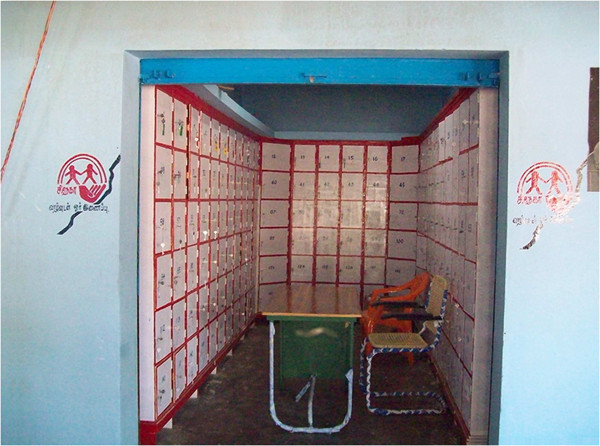
BACKGROUND: Pesticide suicides are considered the single most important means of suicide worldwide. Centralized pesticide storage facilities have the possible advantage of delaying access to pesticides thereby reducing suicides. We undertook this study to examine the feasibility and acceptability of a centralized pesticide storage facility as a preventive intervention strategy in reducing pesticide suicides. METHODS: A community randomized controlled feasibility study using a mixed methods approach involving a household survey; focus group discussions (FGDs) and surveillance were undertaken. The study was carried out in a district in southern India. Eight villages that engaged in floriculture were identified. Using the lottery method two were randomized to be the intervention sites and two villages constituted the control site. Two centralized storage facilities were constructed with local involvement and lockable storage boxes were constructed. The household survey conducted at baseline and one and a half years later documented information on sociodemographic data, pesticide usage, storage and suicides. RESULTS: At baseline 4446 individuals (1097 households) in the intervention and 3307 individuals (782 households) in the control sites were recruited while at follow up there were 4308 individuals (1063 households) in the intervention and 2673 individuals (632 households) in the control sites. There were differences in baseline characteristics and imbalances in the prevalence of suicides between intervention and control sites as this was a small feasibility study.The results from the FGDs revealed that most participants found the storage facility to be both useful and acceptable. In addition to protecting against wastage, they felt that it had also helped prevent pesticide suicides as the pesticides stored here were not as easily and readily accessible. The primary analyses were done on an Intention to Treat basis. Following the intervention, the differences between sites in changes in combined, completed and attempted suicide rates per 100,000 person-years were 295 (95% CI: 154.7, 434.8; p < 0.001) for pesticide suicide and 339 (95% CI: 165.3, 513.2, p < 0.001) for suicide of all methods. CONCLUSIONS: Suicide by pesticides poisoning is a major public health problem and needs innovative interventions to address it. This study, the first of its kind in the world, examined the feasibility of a central storage facility as a means of limiting access to pesticides and, has provided preliminary results on its usefulness. These results need to be interpreted with caution in view of the imbalances between sites. The facility was found to be acceptable, thereby underscoring the need for larger studies for a longer duration. TRIAL REGISTRATION ISRCTN: ISRCTN04912407.
Overview
The claims and statistics of this paper haven’t been checked yet.
Free: it reads the open-access text and checks the first 5 claims that cite a source we can check. Create a free account to check every claim.
Integrity signals
Registry
Cites
Statistics
Figures
Verification
Claims the paper makes
The claims and statistics of this paper haven’t been checked yet.
Free: it reads the open-access text and checks the first 5 claims that cite a source we can check. Create a free account to check every claim.
Claims other papers make about this one
Each is checked against this paper’s own text: does it say what the citing paper says it does?
The source backs part of the claim, not all of it — or backs it for a different population, condition or comparison.
In the citing paper
“Restricting access to the most available and lethal means for suicide, such as firearms, lowered suicide rates using the restricted method,(127–137) and lowered overall suicide rates when the method was sufficiently widely used.(127, 130–135)”
From Improving Suicide Prevention Through Evidence-Based Strategies: A Systematic Review (2021) · cites this paper as [129]
Experimental — accuracy not yet measuredThe source backs part of the claim, not all of it — or backs it for a different population, condition or comparison.
In the citing paper
“Pesticides are highly lethal, the leading suicide method worldwide, and the decline in suicide deaths worldwide is largely due to restricting access to pesticides where those deaths happen, namely in rural China,(138, 158) India(129) and Sri Lanka.(159)”
From Improving Suicide Prevention Through Evidence-Based Strategies: A Systematic Review (2021) · cites this paper as [129]
Experimental — accuracy not yet measured
Self-check
Percentages, sums and reported differences re-computed from the paper’s own numbers.
The self-check needs the paper’s full text.
Citations
Cites
The world report on violence and health
Krug, E. G., Mercy, J. A., Dahlberg, L. L., & Zwi, A. B. (2002) · The Lancet · doi:10.1016/s0140-6736(02)11133-0 · Cited by 9,110
Hoffman, J. S. (2003) · Injury Prevention · doi:10.1136/ip.9.1.93 · Cited by 1,737
The global distribution of fatal pesticide self-poisoning: Systematic review
Gunnell, D., Eddleston, M., Phillips, M. R., & Konradsen, F. (2007) · BMC Public Health · doi:10.1186/1471-2458-7-357 · Cited by 969 · cited 1×
“[2] surmised that at least 233,997 to 325,907 suicides per year are by pesticide poisoning.”
BackgroundSuicide mortality in India: a nationally representative survey
Patel, V., Ramasundarahettige, C., Vijayakumar, L., Thakur, J., Gajalakshmi, V., Gururaj, G., Suraweera, W., & Jha, P. (2012) · The Lancet · doi:10.1016/s0140-6736(12)60606-0 · Cited by 936 · cited 2×
“[12] in a nationally representative study from India reported that suicides in 49% men and 44% women were primarily through pesticide poisoning which is much higher than data provided by the government [13].”
BackgroundSelf-citationRisk factors for suicide in China: a national case-control psychological autopsy study
Phillips, M. R., Yang, G., Zhang, Y., Wang, L., Ji, H., & Zhou, M. (2002) · The Lancet · doi:10.1016/s0140-6736(02)11681-3 · Cited by 928 · cited 4×
“Phillips MR, Yang G, Zhang Y, Wang L, Ji H, Zhou M: Risk factors for suicide in China: a national case–control psychological autopsy study.”
BackgroundInfluentialSchmidtke, A., Bille‐Brahe, U., Deleo, D., Kerkhof, A., Bjerke, T., Crepef, P., Haring, C., Hawton, K., Lönnqvist, J., Michel, K., et al. (1996) · Acta Psychiatrica Scandinavica · doi:10.1111/j.1600-0447.1996.tb10656.x · Cited by 783
Violence by intimate partners.
Heise, L., & García‐Moreno, C. (2002) · Cited by 576
Methods of suicide: international suicide patters derived from the WHO mortality database
Ajdacic-Gross, V. (2008) · Bulletin of the World Health Organization · doi:10.2471/blt.07.043489 · Cited by 557 · cited 1×
“Mortality data on international suicide patterns revealed that in Asia, rural Latin American countries and Portugal, pesticide suicide was a major problem, notably among women [3].”
BackgroundPesticide poisoning in the developing world—a minimum pesticides list
Eddleston, M., Karalliedde, L., Buckley, N., Fernando, R., Hutchinson, G., Isbister, G., Konradsen, F., Murray, D., Piola, J. C., Senanayake, N., et al. (2002) · The Lancet · doi:10.1016/s0140-6736(02)11204-9 · Cited by 496
The impact of pesticide regulations on suicide in Sri Lanka
Gunnell, D., Fernando, R., Hewagama, M., Priyangika, W. D. D., Konradsen, F., & Eddleston, M. (2007) · International Journal of Epidemiology · doi:10.1093/ije/dym164 · Cited by 378 · cited 2×
“Gunnell [8] recommends that the most practical suicide prevention strategy would be to reduce access to organophosphate pesticides which combined with public education would prove an effective pesticide suicide prevention strategy.”
BackgroundKonradsen, F., van der Hoek, W., Cole, D. C., Hutchinson, G., Daisley, H., Singh, S., & Eddleston, M. (2003) · Toxicology · doi:10.1016/s0300-483x(03)00339-1 · Cited by 322 · cited 1×
“Limiting access to lethal means and methods of selfharm, referred to as “means restriction”, has increasingly been found to be a useful suicide prevention strategy [4,19,20].”
BackgroundSuicides in young people in rural southern India
Aaron, R., Joseph, A., Abraham, S., Muliyil, J., George, K., Prasad, J., Minz, S., Abraham, V. J., & Bose, A. (2004) · The Lancet · doi:10.1016/s0140-6736(04)15896-0 · Cited by 298 · cited 1×
“This fact, coupled with data from previous epidemiological studies [15,16] in rural Tamil Nadu, helped us arrive at an estimate of nearly 10/1000.”
ResultAre risk factors for suicide universal? A case‐control study in India
Vijayakumar, L., & Rajkumar, S. (1999) · Acta Psychiatrica Scandinavica · doi:10.1111/j.1600-0447.1999.tb00985.x · Cited by 284 · cited 1×
“Typically the most common reasons for suicides were financial crisis and debts, unhappy family relations and problems in the family, alcoholic husbands and failure in love [26-28].”
BackgroundSelf-citationDomestic violence and its mental health correlates in Indian women
Kumar, S., Jeyaseelan, L., Suresh, S., & Ahuja, R. C. (2005) · British Journal of Psychiatry · doi:10.1192/bjp.187.1.62 · Cited by 272 · cited 1×
“Typically the most common reasons for suicides were financial crisis and debts, unhappy family relations and problems in the family, alcoholic husbands and failure in love [26-28].”
BackgroundSelf-citationMaris, R. W. (2002) · The Lancet · doi:10.1016/s0140-6736(02)09556-9 · Cited by 259
Deaths from pesticide poisoning: a global response
Bertolote, J. M., Fleischmann, A., Eddleston, M., & Gunnell, D. (2006) · British Journal of Psychiatry · doi:10.1192/bjp.bp.105.020834 · Cited by 252 · cited 1×
“O considers that the single most important means of suicide worldwide is by ingestion of pesticides and accounts for 1/3 of all suicides [1].”
BackgroundRisk factors for suicide in rural south India
Manoranjitham, S. D., Rajkumar, A. P., Thangadurai, P., Prasad, J., Jayakaran, R., & Jacob, K. S. (2010) · British Journal of Psychiatry · doi:10.1192/bjp.bp.108.063347 · Cited by 200 · cited 1×
“Typically the most common reasons for suicides were financial crisis and debts, unhappy family relations and problems in the family, alcoholic husbands and failure in love [26-28].”
BackgroundSuicide rates in rural Tamil Nadu, South India: Verbal autopsy of 39 000 deaths in 1997–98
Gajalakshmi, V., & Peto, R. (2007) · International Journal of Epidemiology · doi:10.1093/ije/dyl308 · Cited by 155 · cited 2×
“Over 80% of cases of deliberate self harm and suicides by ingestion of pesticides were reported in studies from, rural Tamil Nadu and West Bengal, [15,17].”
BackgroundResultReaching for the bottle of pesticide—A cry for help. Self-inflicted poisonings in Sri Lanka
Konradsen, F., van der Hoek, W., & Peiris, P. (2005) · Social Science & Medicine · doi:10.1016/j.socscimed.2005.08.020 · Cited by 124 · cited 12×
“Mohamed F, Manuweera G, Gunnel D, Azher S, Eddleston M, Dawson A, Konradsen F: Pattern of pesticide storage before pesticide self poisoning in rural Sri Lanka.”
BackgroundInfluentialClaim No Easy Victories: Evaluating the Pesticide Industry’s Global Safe Use Campaign
Murray, D. L., & Taylor, P. (2000) · World Development · doi:10.1016/s0305-750x(00)00059-0 · Cited by 92
Kuri-Morales, P. A., Emberson, J., Alegre-Díaz, J., TAPIA-CONYER, R. C., Collins, R., Peto, R., & Whitlock, G. (2009) · BMC Public Health · doi:10.1186/1471-2458-9-9 · Cited by 62
Community uptake of safe storage boxes to reduce self-poisoning from pesticides in rural Sri Lanka
Konradsen, F., Pieris, R., Weerasinghe, M., van der Hoek, W., Eddleston, M., & Dawson, A. H. (2007) · BMC Public Health · doi:10.1186/1471-2458-7-13 · Cited by 61 · cited 2×
“Further, the boxes were not always kept locked [10].”
BackgroundChang, S.-S., Lu, T.-H., Sterne, J. A., Eddleston, M., Lin, J.-J., & Gunnell, D. (2012) · BMC Public Health · doi:10.1186/1471-2458-12-260 · Cited by 57 · cited 1×
“[25] while reporting on pesticide suicides in Taiwan said that higher pesticide suicide rates were evident in places where a larger proportion of people worked in agriculture.”
BackgroundPattern of pesticide storage before pesticide self-poisoning in rural Sri Lanka
Mohamed, F., Manuweera, G., Gunnell, D., Azher, S., Eddleston, M., Dawson, A., & Konradsen, F. (2009) · BMC Public Health · doi:10.1186/1471-2458-9-405 · Cited by 53 · cited 1×
“[18] in Sri Lanka found that over 76% of patients admitted with intentional pesticide ingestion had stored the pesticides either inside or immediately outside the house.”
BackgroundPesticide self-poisoning: thinking outside the box
Konradsen, F., Dawson, A. H., Eddleston, M., & Gunnell, D. (2007) · The Lancet · doi:10.1016/s0140-6736(07)60085-3 · Cited by 52 · cited 1×
“[10,11] reported that lockable boxes were beneficial as it protected the pesticides from exposure to sun and rain and reduced the risk of theft.”
BackgroundHawton, K., Ratnayeke, L., Simkin, S., Harriss, L., & Scott, V. (2009) · BMC Public Health · doi:10.1186/1471-2458-9-69 · Cited by 51 · cited 2×
“[9] found that, the introduction of individual lockable boxes for storing pesticides in farming households in Sri Lanka was acceptable.”
BackgroundHigh Rates of Suicide and Attempted Suicide Using Pesticides in Nickerie, Suriname, South America
Graafsma, T., Kerkhof, A., Gibson, D., Badloe, R., & van de Beek, L. M. (2006) · Crisis · doi:10.1027/0227-5910.27.2.77 · Cited by 43 · cited 1×
“Limiting access to lethal means and methods of selfharm, referred to as “means restriction”, has increasingly been found to be a useful suicide prevention strategy [4,19,20].”
BackgroundPrevention of Deaths from Intentional Pesticide Poisoning
Mishara, B. L. (2007) · Crisis · doi:10.1027/0227-5910.28.s1.10 · Cited by 39 · cited 1×
“Studies from Asia have found that pesticide suicides are impulsive acts, undertaken during stressful life events and majority of them do not suffer from mental disorders [4-6].”
BackgroundPearson, M., Konradsen, F., Gunnell, D., Dawson, A. H., Pieris, R., Weerasinghe, M., Knipe, D. W., Jayamanne, S., Metcalfe, C., Hawton, K., et al. (2011) · BMC Public Health · doi:10.1186/1471-2458-11-879 · Cited by 37 · cited 1×
“[22] have reported on a large effectiveness study of individual storage boxes underway in rural Sri Lanka wherein 44,000 households will be participating in a randomized controlled trial and followed up over a three year period.”
BackgroundDoes ‘No Pesticide’ Reduce Suicides?
Vijayakumar, L., & Satheesh-Babu, R. (2009) · International Journal of Social Psychiatry · doi:10.1177/0020764008095340 · Cited by 37
Self-citationDeliberate self‐harm and suicide by pesticide ingestion in the Sundarban region, India
Banerjee, S., Chowdhury, A. N., Schelling, E., Brahma, A., Biswas, M. K., & Weiss, M. G. (2009) · Tropical Medicine & International Health · doi:10.1111/j.1365-3156.2008.02199.x · Cited by 27 · cited 1×
“Over 80% of cases of deliberate self harm and suicides by ingestion of pesticides were reported in studies from, rural Tamil Nadu and West Bengal, [15,17].”
BackgroundTrends in solids/liquids poisoning suicide rates in Taiwan: a test of the substitution hypothesis
Lin, J., & Lu, T. (2011) · BMC Public Health · doi:10.1186/1471-2458-11-712 · Cited by 14
Research works printed but not linked: 2
- 13. National Crimes Records Bureau: Suicides in India. In: Accidental Death and Suicides in India. Ministry of Home Affairs; 2011. Downloaded from: http://ncrb.nic.in/CD-ADSI2009/suicides-09.pdf. Accessed on 3rd July 2012.
- 33. Vijayakumar, L., Jeyaseelan, L., Kumar, S., Mohanraj, R., Devika, S. & Manikandan, S. (2013). A central storage facility to reduce pesticide suicides -a feasibility study from India. BMC PUBLIC HEALTH, 13 (1), https://doi.org/10.1186/1471-2458-13-850. Persistent Link: http://hdl.handle.net/11343/265097 License: CC BY
Cited by
Suicide prevention strategies revisited: 10-year systematic review
Zalsman, G., Hawton, K., Wasserman, D., van Heeringen, K., Arensman, E., Sarchiapone, M., Carli, V., Höschl, C., Barzilay, R., Balazs, J., et al. (2016) · The Lancet Psychiatry · doi:10.1016/s2215-0366(16)30030-x · Cited by 1,765
Improving Suicide Prevention Through Evidence-Based Strategies: A Systematic Review
Mann, J. J., Michel, C. A., & Auerbach, R. P. (2021) · American Journal of Psychiatry · doi:10.1176/appi.ajp.2020.20060864 · Cited by 655
The global burden of fatal self-poisoning with pesticides 2006-15: Systematic review
Mew, E. J., Padmanathan, P., Konradsen, F., Eddleston, M., Chang, S.-S., Phillips, M. R., & Gunnell, D. (2017) · Journal of Affective Disorders · doi:10.1016/j.jad.2017.05.002 · Cited by 530
“Although evidence of the effectiveness of pesticide safe storage (e.g. in locked boxes or village storage facilities) is at present limited (Vijayakumar et al., 2013; World Health Organisation, International Association for Suicide Prevention, 2006, World Health Organisation, 2016), there is now a…”
BackgroundBonvoisin, T., Utyasheva, L., Knipe, D., Gunnell, D., & Eddleston, M. (2020) · BMC Public Health · doi:10.1186/s12889-020-8339-z · Cited by 201
Aggarwal, S., Patton, G., Reavley, N., Sreenivasan, S. A., & Berk, M. (2017) · International Journal of Social Psychiatry · doi:10.1177/0020764017700175 · Cited by 147
“For example, a central pesticide storage facility was proven to be an effective measure in reducing completed and attempted suicide in Southern India (Vijayakumar et al., 2013).”
Background
Metadata
- Authors
- Vijayakumar, L., Jeyaseelan, L., Kumar, S., Mohanraj, R., Devika, S., & Manikandan, S.
- Affiliations
- Voluntary Health Services Hospital (IN)
- Christian Medical College, Vellore (IN)
- Samarth (IN)
- Corresponding author
- Vijayakumar, Lakshmi
- Venue
- BMC Public Health
- Published
- 2013-09-16
- Volume
- 13
- Issue
- 1
- Pages
- 850-850
- ISSN
- 1471-2458 (ISSN-L)
- PMC
- PMC3847561
- OpenAlex
- W1990607590
- Cited by
- 64
- References
- 32
- Citations by year
- 2026: 2 · 2025: 4 · 2024: 4 · 2023: 7 · 2022: 5 · 2021: 3 · 2020: 6 · 2019: 4 · 2018: 6 · 2017: 9 · 2016: 8 · 2015: 4 · 2014: 2
- FWCI
- 5.19
- Type
- journal article
- Language
- en
- Open access
- gold
- doi.org
- Licence
- Locations
- BMC Public Health (publishedVersion, cc-by)
- Europe PMC (PubMed Central) (publishedVersion, cc-by)
- PubMed Central (publishedVersion, cc-by)
- PubMed (publishedVersion)
- Minerva Access (University of Melbourne) (submittedVersion, cc-by)
- Griffith Research Online (submittedVersion, cc-by)
- Topics
- Social Sciences › Psychology › Clinical Psychology › Suicide and Self-Harm Studies
- Life Sciences › Pharmacology, Toxicology and Pharmaceutics › Toxicology › Pesticide Exposure and Toxicity
- Health Sciences › Medicine › Public Health, Environmental and Occupational Health › Agriculture and Farm Safety
- Keywords
- pesticide suicide, suicide prevention, floriculture, pesticide poisoning, community-based intervention, feasibility, acceptability, India, South India, suicide rates
- MeSH terms
- Suicide Prevention, Adolescent, Adult, Family Characteristics, Feasibility Studies, Female, Humans, India, Male, Middle Aged, Pesticides, Safety, Security Measures, Suicide, Attempted, Focus Groups, Product Packaging, Young Adult
About these checks
Registry, retraction, Cites and statistics results are computed, not judged, with one exception: a printed reference that no index lists is read once by a model before it counts as a citation error. Claims are extracted by a model and kept only when their quote appears verbatim in the text; each cited source is then checked, with a model’s help, for whether it says what the claim relies on. Those verdicts can be wrong — read the claim’s quote and the cited source before relying on one.
Statistics and arithmetic are recomputed, not judged.
Confidence bands are shown only for fields calibrated on our annotated test set. None is calibrated yet, so no band is shown.
What counts as a claim ›How we measure confidence ›How we check this ›
Are you an author, or do you see a problem with this page? Request a review
Data sources
Bibliographic data: Semantic Scholar, OpenAlex, Crossref.
Contains information from the Semantic Scholar Academic Graph Datasets, made available under the ODC Attribution License (ODC-BY 1.0).
Semantic Scholar’s data is described in: Kinney, R., et al. (2023). The Semantic Scholar Open Data Platform. arXiv:2301.10140.
