

No increase in new users of blood glucose-lowering drugs in Norway 2006–2011: a nationwide prescription database study
Open accessThe DOI matches its Crossref record; 19 of the 19 references it cites were found in a registry or an index.
Abstract
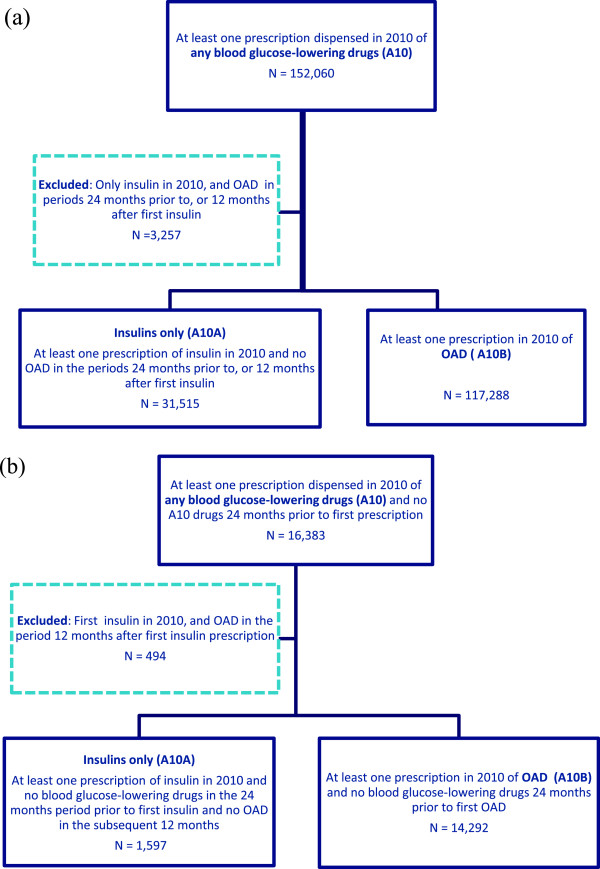
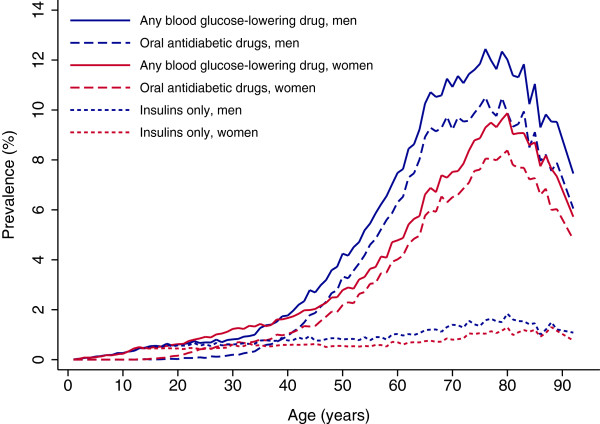
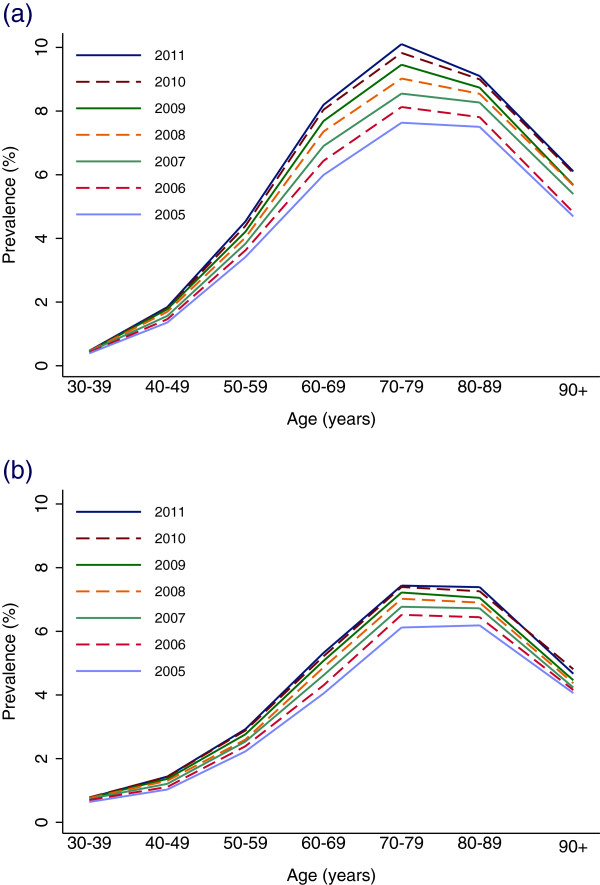
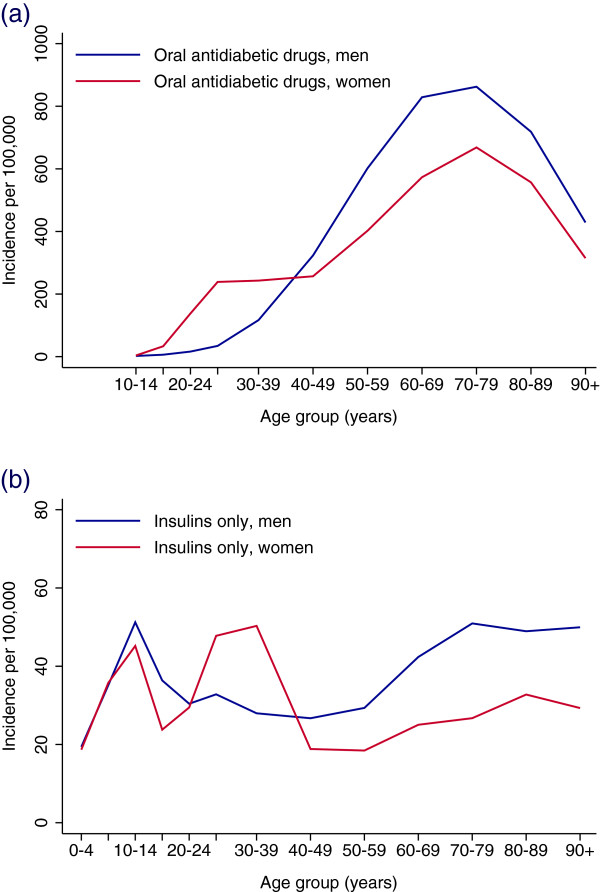
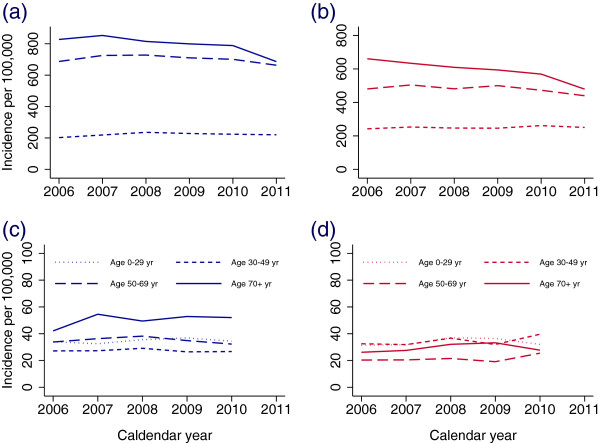
BACKGROUND: National estimates for the occurrence of diabetes are difficult to obtain, particularly time trends in incidence. The aim was to describe time trends in prevalent and incident use of blood glucose-lowering drugs by age group and gender in Norway during 2005-2011. METHODS: Data were obtained from the nationwide Norwegian Prescription Database. We defined prevalent users of "insulins only" as individuals having no oral antidiabetic drugs (OAD) dispensed from a pharmacy during the previous 24 months or in the subsequent 12 months. Incident users had no blood glucose-lowering drugs dispensed in the previous 24 months; incident "insulins only" users also had no OAD in the subsequent 12 months. RESULTS: In 2011, 3.2% of the population had blood glucose-lowering drugs dispensed, and the incidence rate was 313 per 100,000 person years. The prevalence of OAD use increased from 1.8% in 2005 to 2.4% in 2011; however a decreasing trend in incidence of OAD use was observed, particularly in those aged 70 years and older. In 2010, 0.64% of the population had insulins only dispensed, with an overall incidence rate in the total population of 33 per 100,000 person years which was stable over time. CONCLUSIONS: In this nationwide study, we found that although the prevalent use of OAD had increased in recent years, incident use was stable or had decreased. This may indicate that the increase in diabetes occurrence in Norway is levelling off, at least temporarily.
Overview
The claims and statistics of this paper haven’t been checked yet.
Free: it reads the open-access text and checks the first 5 claims that cite a source we can check. Create a free account to check every claim.
Integrity signals
Registry
Cites
Statistics
Figures
Verification
Claims the paper makes
The claims and statistics of this paper haven’t been checked yet.
Free: it reads the open-access text and checks the first 5 claims that cite a source we can check. Create a free account to check every claim.
Claims other papers make about this one
Each is checked against this paper’s own text: does it say what the citing paper says it does?
The cited source says what the claim attributes to it.
In the citing paper
“Type 2 diabetes is a complex disease [1,2] with an increasing prevalence worldwide [3,4].”
Self-check
Percentages, sums and reported differences re-computed from the paper’s own numbers.
The self-check needs the paper’s full text.
Citations
Cites
Global estimates of the prevalence of diabetes for 2010 and 2030
Shaw, J. E., Sicree, R. A., & Zimmet, P. Z. (2010) · Diabetes Research and Clinical Practice · doi:10.1016/j.diabres.2009.10.007 · Cited by 7,216 · cited 1×
“Background Diabetes constitutes a major public health challenge and numerous studies suggest that the prevalence is increasing in most countries [1].”
Asunción, M., Calvo, R. M., San Millán, J. L., Sancho, J., Avila, S., & Escobar-Morreale, H. F. (2000) · The Journal of Clinical Endocrinology & Metabolism · doi:10.1210/jcem.85.7.6682 · Cited by 1,318
Reporting Participation in Epidemiologic Studies: A Survey of Practice
Morton, L. M., Cahill, J., & Hartge, P. (2006) · American Journal of Epidemiology · doi:10.1093/aje/kwj036 · Cited by 461
Norwegian Childhood Diabetes Study Group, Skrivarhaug, T., Stene, L. C., Drivvoll, A. K., Strøm, H., & Joner, G. (2014) · Diabetologia · doi:10.1007/s00125-013-3090-y · Cited by 166
Self-citationFuru, K. (2009) · Norsk Epidemiologi · doi:10.5324/nje.v18i2.23 · Cited by 164 · cited 2×
“The strength of this study is the complete coverage of the Norwegian population [8].”
Dale, A. C., Vatten, L. J., Nilsen, T. I., Midthjell, K., & Wiseth, R. (2008) · BMJ · doi:10.1136/bmj.39582.447998.be · Cited by 114 · cited 9×
“We did not have mortality data in our study but others have shown a secular decrease in mortality from ischaemic heart disease among patients with diabetes in Norway [12], suggesting that this could have contributed to the observed increasing prevalence with concurrent decline in incidence.”
InfluentialSelf-citationThe gap between guidelines and practice in the treatment of type 2 diabetes
Jenssen, T. G., Tonstad, S., Claudi, T., Midthjell, K., & Cooper, J. G. (2008) · Diabetes Research and Clinical Practice · doi:10.1016/j.diabres.2007.12.025 · Cited by 73 · cited 1×
“Studies from Norway in the period 1995–2005 report that 20-35% of prevalent patients are treated by diet only [13-15].”
Self-citationEvans, J. M. M., Barnett, K. N., Ogston, S., & Morris, A. D. (2007) · Diabetologia · doi:10.1007/s00125-006-0585-9 · Cited by 62
Polycystic Ovary Syndrome in Adolescents: Current and Future Treatment Options
Mastorakos, G. P., Lambrinoudaki, I. V., & Creatsas, G. K. (2006) · Pediatric Drugs · doi:10.2165/00148581-200608050-00004 · Cited by 58
The incidence of Type 1 (insulin-dependent) diabetes mellitus 15?29 years in Norway 1978?1982
Joner, G., & S�vik, O. (1991) · Diabetologia · doi:10.1007/bf00405087 · Cited by 56 · cited 1×
“In the only previous Norwegian study of Type 1 diabetes incidence in individuals over 15 years of age from Norway, Joner & Søvik estimated an incidence of 17/100,000 person years in the age group 15–29 years during 1978–1982 [21].”
Research works printed but not linked: 3
- WHO Collaborating Centre for Drug Statistics Methodology, Guidelines for ATC Classification and DDD assignment Oslo, 2012. WHO Collaborating Centre for Drug Statistics Methodology 2013 Norwegian Institute of Public Health (available from: http://www.whocc.no/filearchive/publications/1_2013guidelines.pdf)
- WHO Collaborating Centre for Drug Statistics Methodology, ATC classification index with DDDs Oslo, 2012. WHO Collaborating Centre for Drug Statistics Methodology 2013 Norwegian Institute of Public Health (available from: http://www.whocc.no/atc_ddd_publications/atc_ddd_index/)
- Gudbjornsdottir S Eliasson B Cederholm J Zethelius B Svensson AM Samuelsson P Annual Report of the Swedish Diabetes Register, 2011 [In Swedish] 2012 The Swedish Diabetes Register available from: https://www.ndr.nu/pdf/NDR_rapport2011_LR.pdf
Cited by
Trends in incidence of total or type 2 diabetes: systematic review
Magliano, D. J., Islam, R. M., Barr, E. L. M., Gregg, E. W., Pavkov, M. E., Harding, J. L., Tabesh, M., Koye, D. N., & Shaw, J. E. (2019) · BMJ · doi:10.1136/bmj.l5003 · Cited by 346
Holmen, H., Torbjørnsen, A., Wahl, A. K., Jenum, A. K., Småstuen, M. C., Årsand, E., & Ribu, L. (2014) · JMIR mHealth and uHealth · doi:10.2196/mhealth.3882 · Cited by 294
“Type 2 diabetes is a complex disease [1,2] with an increasing prevalence worldwide [3,4].”
BackgroundSelf-citationNorhammar, A., Bodegård, J., Nyström, T., Thuresson, M., Eriksson, J. W., & Nathanson, D. (2016) · Diabetologia · doi:10.1007/s00125-016-3971-y · Cited by 129
“Some describe an increased prevalence of diabetes [8, 12–17]; the majority report a stable incidence [12, 13, 15, 16, 18], some an increasing incidence [19, 20] and one a decreasing incidence [8].”
BackgroundMata‐Cases, M., Franch‐Nadal, J., Real, J., & Mauricio, D. (2016) · BMJ Open · doi:10.1136/bmjopen-2016-012463 · Cited by 102
Liatis, S., Dafoulas, G., Kani, C., Politi, A., Litsa, P., Sfikakis, P. P., & Makrilakis, K. (2016) · Diabetes Research and Clinical Practice · doi:10.1016/j.diabres.2016.06.018 · Cited by 90
Ruiz, P. L., Stene, L. C., Bakken, I. J., Håberg, S. E., Birkeland, K. I., & Gulseth, H. L. (2018) · Diabetologia · doi:10.1007/s00125-018-4681-4 · Cited by 75
Self-citationSteffensen, I., Frølich, W., Dahl, K. H., Iversen, P. O., Lyche, J. L., Lillegaard, I. T., & Alexander, J. (2017) · Food and Chemical Toxicology · doi:10.1016/j.fct.2017.11.044 · Cited by 51
Prescription Patterns of Antidiabetic Treatment in the Elderly. Results from Southern Italy
Orlando, V., Guerriero, F., Putignano, D., Monetti, V. M., Tari, D. U., Farina, G., Illario, M., Iaccarino, G., & Menditto, E. (2015) · Current Diabetes Reviews · doi:10.2174/1573399811666150701120408 · Cited by 28
“A similar trend in incidence of ADs use in patients aged 70 years and older was observed in a nationwide prescription database study carried out in Norway over 2006-2011 [19].”
BackgroundBruno, G., Gruden, G., & Songini, M. (2016) · Acta Diabetologica · doi:10.1007/s00592-015-0835-8 · Cited by 26
“Previous experiences with the prescription data source showed a bimodal pattern of incidence with a first peak close to puberty and a second peak in the fifth decade of life, likely due to misclassification of type 1 with insulin-treated type 2 diabetes [58, 59].”
Wendt, K., Kristiansen, R., Krohg‐Sørensen, K., Gregersen, F. A., & Fosse, E. T. (2017) · BMJ Open · doi:10.1136/bmjopen-2017-016210 · Cited by 30
“9%).(23) As the population in Norway is ageing, the number of patients with diabetes with peripheral arterial disease is likely to further increase.”
BackgroundDavies, T. T., Graue, M., Igland, J., Tell, G. S., Birkeland, K. I., Peyrot, M. F., & Haltbakk, J. (2018) · Diabetic Medicine · doi:10.1111/dme.13790 · Cited by 26
Self-citationCost of diabetes in Norway 2011
Sørensen, M., Arneberg, F., Liné, T., & Berg, T. J. (2016) · Diabetes Research and Clinical Practice · doi:10.1016/j.diabres.2016.10.012 · Cited by 34
Self-citationBonora, E., Cataudella, S., Marchesini, G., Miccoli, R., Vaccaro, O., Fadini, G. P., Martini, N., & Rossi, E. (2021) · Nutrition Metabolism and Cardiovascular Diseases · doi:10.1016/j.numecd.2021.04.017 · Cited by 26
Jermendy, G., Kiss, Z., Rokszin, G., Abonyi‐Tóth, Z., Wittmann, I., & Kempler, P. (2019) · Diabetes Research and Clinical Practice · doi:10.1016/j.diabres.2019.107788 · Cited by 24
Huetson, P., Palmer, J. L., Levorsen, A., Fournier, M., Germé, M., & McLeod, E. J. (2015) · Journal of Medical Economics · doi:10.3111/13696998.2015.1038271 · Cited by 19
Sense of mastery as mediator buffering psychological distress among people with diabetes
Bennetter, K. E., Clench‐Aas, J., & Raanaas, R. K. (2016) · Journal of Diabetes and its Complications · doi:10.1016/j.jdiacomp.2016.03.022 · Cited by 17
Iversen, H. H., Helland, Y., Bjertnæs, Ø. A., & Skrivarhaug, T. (2018) · BMC Health Services Research · doi:10.1186/s12913-018-3591-y · Cited by 16
Bratke, H., & Sivertsen, B. (2021) · Journal of Pediatric Endocrinology and Metabolism · doi:10.1515/jpem-2021-0041 · Cited by 13
Iversen, H. H., Bjertnæs, Ø. A., Helland, Y., & Skrivarhaug, T. (2019) · Patient Related Outcome Measures · doi:10.2147/prom.s232166 · Cited by 15
“6% of the population) have type 1 diabetes according to calculations based on the Norwegian Prescription Database.(3) Adolescence is a period when diabetes may become a daily struggle against Correspondence: Hilde Hestad Iversen Division of Health Services, Norwegian Institute of Public Health, PO Box 222 Skoyen, Oslo…”
InfluentialVeyhe, A. S., Andreassen, J., Halling, J., Grandjean, P., Petersen, M. S., & Weihe, P. (2019) · Journal of Clinical & Translational Endocrinology · doi:10.1016/j.jcte.2019.100187 · Cited by 17
“Strøm and colleagues [31] analysed the Norwegian Prescription Database for the use of blood glucose-lowering drugs.”
BackgroundNaseribafrouei, A., Eliassen, B.-M., Melhus, M., Svartberg, J. B., & Broderstad, A. R. (2018) · International Journal of Circumpolar Health · doi:10.1080/22423982.2018.1463786 · Cited by 16
“lowering medications [3], and the annual number of new users of glucose-lowering medications in Norway levelled off in recent years [4].”
BackgroundBrügel, M., Carlier, C., Reyes‐Castellanos, G., Callon, S., Carrier, A., & Bouché, O. (2022) · Digestive and Liver Disease · doi:10.1016/j.dld.2022.08.023 · Cited by 17
Iversen, H. H., Bjertnæs, Ø. A., & Skrivarhaug, T. (2019) · BMJ Open · doi:10.1136/bmjopen-2019-032201 · Cited by 6
Epidemiology of Type 1 Diabetes
Stene, L. C., & Tuomilehto, J. (2016) · Wiley eBooks · doi:10.1002/9781118924853.ch3 · Cited by 10
Self-citationFamilial tendency as a determinant of tooth loss during long‐term periodontal therapy
Fardal, Ø., Skau, I., & Grytten, J. I. (2019) · Journal Of Clinical Periodontology · doi:10.1111/jcpe.13219 · Cited by 7
Teigland, T., Igland, J., Tell, G. S., Haltbakk, J., Graue, M., Fismen, A., Birkeland, K. I., Østbye, T., Peyrot, M. F., & Iversen, M. M. (2022) · BMC Endocrine Disorders · doi:10.1186/s12902-022-01068-6 · Cited by 5
“There was a peak in prevalence at approximately 78 years, while there was a trend of decreasing incidence of users of GLD in the older segment of the general population [4].”
BackgroundResultSelf-citationNaseribafrouei, A., Eliassen, B.-M., Melhus, M., Svartberg, J. B., & Broderstad, A. R. (2018) · Rural and Remote Health · doi:10.22605/rrh4623 · Cited by 6
Midthassel, T. C., & Hansen, A. H. (2021) · PLoS ONE · doi:10.1371/journal.pone.0261471 · Cited by 6
“In recent years incident use of oral antidiabetic drugs was stable or decreasing, which may indicate that the increase in diabetes incidence in Norway is levelling off [4].”
BackgroundBratke, H., Lønning, K. J., & Sivertsen, B. (2020) · Pediatric Diabetes · doi:10.1111/pedi.13119 · Cited by 7
“65% in the Norwegian population.(26) Also, the different percentage of male vs female students with type 1 diabetes (0.”
BackgroundEpidemiology of Type 1 Diabetes
Stene, L. C., & Tuomilehto, J. O. (2024) · Wiley eBooks · doi:10.1002/9781119697473.ch4 · Cited by 10
Self-citationDiabetic foot ulcer teams in Norwegian hospitals
Robberstad, M., Bentsen, S. B., Berg, T. J., & Iversen, M. M. (2017) · Tidsskrift for Den norske legeforening · doi:10.4045/tidsskr.16.1001 · Cited by 4
Self-citationFismen, A., Igland, J., Teigland, T., Tell, G. S., Østbye, T., Haltbakk, J., Graue, M., Birkeland, K. I., Peyrot, M. F., & Iversen, M. M. (2021) · BMJ Open Diabetes Research & Care · doi:10.1136/bmjdrc-2020-002000 · Cited by 6
Self-citationNorum, J., & Svee, T. E. (2016) · Journal of Pregnancy and Child Health · doi:10.4172/2376-127x.1000268 · Cited by 3
Teigland, T., Igland, J., Blytt, K. M., Haltbakk, J., Birkeland, K. I., Østbye, T., Kirkevold, M., & Iversen, M. M. (2025) · BMC Geriatrics · doi:10.1186/s12877-025-06685-z · Cited by 1
“In our study population, those using “insulin only” were likely to have type 1 diabetes [25], representing 2.7% of the total sample.”
InfluentialSelf-citationSiri, S. R. A. (2014) · NVA (Nasjonalt vitenarkiv) · Cited by 1
Er diabetesepidemien i ferd med å snu?
Rosness, T. A. (2014) · Tidsskrift for Den norske legeforening · doi:10.4045/tidsskr.14.1273
Uthaikhaifar, N. C., Iakunchykova, O. P., Cook, S., & Warren‐Gash, C. (2024) · BMJ Public Health · doi:10.1136/bmjph-2023-000644
Teigland, T., Igland, J., Tell, G. S., Haltbakk, J., Graue, M., Fismen, A.-S., Birkeland, K. I., Østbye, T., Peyrot, M. F., & Iversen, M. M. (2022) · Figshare · doi:10.6084/m9.figshare.20069989
Self-citationTeigland, T., Igland, J., Tell, G. S., Haltbakk, J., Graue, M., Fismen, A.-S., Birkeland, K. I., Østbye, T., Peyrot, M. F., & Iversen, M. M. (2022) · Figshare · doi:10.6084/m9.figshare.20069992
Self-citation
Metadata
- Authors
- Strøm, H., Selmer, R., Birkeland, K. I., Schirmer, H., Berg, T. J., Jenum, A. K., Midthjell, K., Berg, C., & Stene, L. C.
- Affiliations
- Norwegian Institute of Public Health (NO)
- Oslo University Hospital (NO)
- University Hospital of North Norway (NO)
- OsloMet – Oslo Metropolitan University (NO)
- Norwegian University of Science and Technology (NO)
- Corresponding author
- Strøm, Hanne
- ORCID
- Venue
- BMC Public Health
- Published
- 2014-05-29
- Volume
- 14
- Issue
- 1
- Pages
- 520-520
- ISSN
- 1471-2458 (ISSN-L)
- PMC
- PMC4045953
- OpenAlex
- W2108017238
- Cited by
- 39
- References
- 19
- Citations by year
- 2025: 1 · 2024: 2 · 2022: 4 · 2021: 4 · 2020: 1 · 2019: 6 · 2018: 5 · 2017: 3 · 2016: 8 · 2015: 2 · 2014: 3
- FWCI
- 4.29
- Type
- journal article
- Language
- en
- Open access
- gold
- doi.org
- Locations
- BMC Public Health (publishedVersion)
- PubMed Central (publishedVersion, cc-by)
- PubMed (publishedVersion)
- BIBSYS Brage (BIBSYS (Norway)) (submittedVersion)
- NORA - Norwegian Open Research Archives (submittedVersion, other-oa)
- NORA - Norwegian Open Research Archives (submittedVersion, cc-by)
- Funders
- Diabetesforbundet
- Topics
- Health Sciences › Medicine › Endocrinology, Diabetes and Metabolism › Diabetes Treatment and Management
- Health Sciences › Medicine › Endocrinology, Diabetes and Metabolism › Diabetes, Cardiovascular Risks, and Lipoproteins
- Health Sciences › Medicine › Endocrinology, Diabetes and Metabolism › Diabetes Management and Research
- Keywords
- diabetes mellitus, oral antidiabetic drugs, insulin, incidence trends, prevalence, temporal trends, age and gender differences, older adults, medication dispensing, Norway
- MeSH terms
- Adolescent, Adult, Aged, Aged, 80 and over, Child, Child, Preschool, Diabetes Mellitus, Female, Humans, Hyperglycemia, Hypoglycemic Agents, Infant, Insulin, Male, Middle Aged, Norway, Drug Prescriptions, Databases, Factual, Age Distribution, Sex Distribution, Young Adult
About these checks
Registry, retraction, Cites and statistics results are computed, not judged, with one exception: a printed reference that no index lists is read once by a model before it counts as a citation error. Claims are extracted by a model and kept only when their quote appears verbatim in the text; each cited source is then checked, with a model’s help, for whether it says what the claim relies on. Those verdicts can be wrong — read the claim’s quote and the cited source before relying on one.
Statistics and arithmetic are recomputed, not judged.
Confidence bands are shown only for fields calibrated on our annotated test set. None is calibrated yet, so no band is shown.
What counts as a claim ›How we measure confidence ›How we check this ›
Are you an author, or do you see a problem with this page? Request a review
Data sources
Bibliographic data: Semantic Scholar, OpenAlex, Crossref.
Contains information from the Semantic Scholar Academic Graph Datasets, made available under the ODC Attribution License (ODC-BY 1.0).
Semantic Scholar’s data is described in: Kinney, R., et al. (2023). The Semantic Scholar Open Data Platform. arXiv:2301.10140.
