

'Change means sacrificing a good life': perceptions about severity of type 2 diabetes and preventive lifestyles among people afflicted or at high risk of type 2 diabetes in Iganga Uganda
Open accessThe DOI matches its Crossref record; 59 of the 59 references it cites were found in a registry or an index.
Abstract
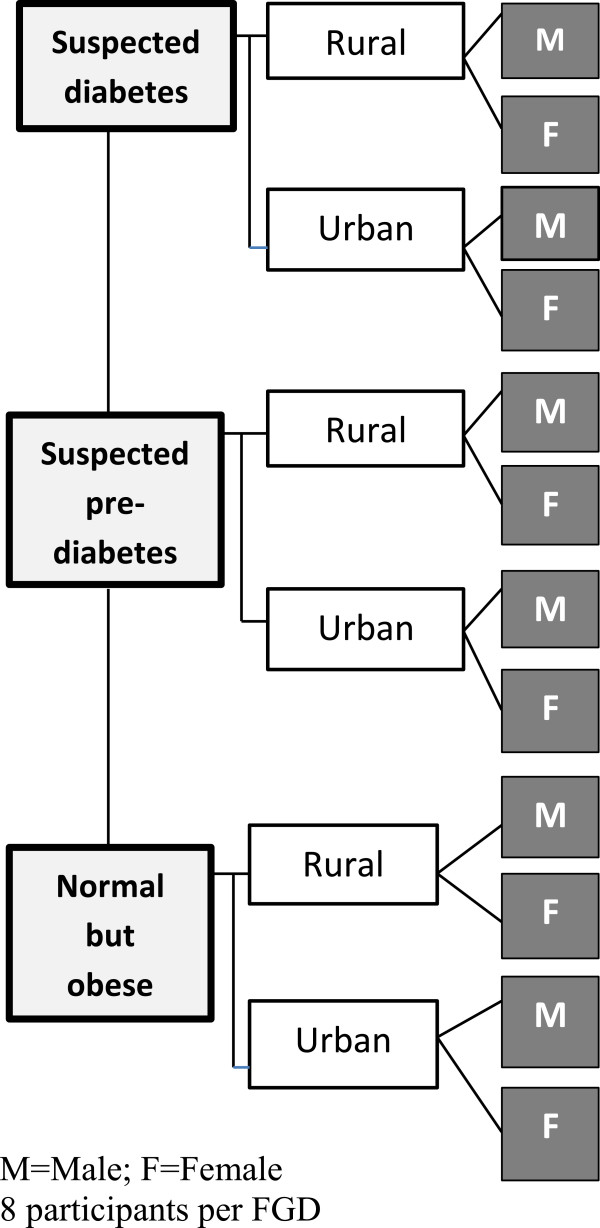
BACKGROUND: Interventions for prevention of type 2 diabetes ought to be acceptable to target communities. We assessed perceptions about type 2 diabetes and lifestyle change among people afflicted or at high risk of this disease in a low income setting in Iganga Uganda. METHODS: Twelve focus group discussions (FGDs) of eight participants each were conducted, balancing rural and peri-urban (near the Municipality) residence and gender. The FGDs involved people with suspected type 2 diabetes (based on fasting plasma glucose (FPG), people with suspected pre-diabetes and obese people with normal FPG. Content analysis was conducted. RESULTS: Diabetes was perceived to be a very severe disease. Its severity was attributed to its incurability and its numerous health effects. Men were also concerned about reduced sexual performance. However, participants' strong concerns about the severity of diabetes were not reflected in their perceptions about the risk factors and lifestyles associated with it. While people with diabetes perceive obesity as 'sickness', those without diabetes perceive it as a sign of 'success'. Although participants are willing to change their diet, they mention numerous barriers including poverty, family size, and access to some foods. Because of their good taste, reduction of high risk foods like sugar and fried food is perceived as 'sacrificing a good life'. Increments in physical activity were said to be feasible, but only in familiar forms like domestic work. An over-arching theme emerged that 'lifestyle changes are viewed as sacrificing a good life'. CONCLUSIONS: Health promotion should target both community norms and individual awareness regarding obesity, physical activity and diet, and should address the notion that obesity and unhealthy foods represent a good life. Health educators should plan with clients on how to overcome barriers and misconceptions to lifestyle change, leveraging the pervasive perception of type 2 diabetes as a severe disease to motivate change.
Overview
The claims and statistics of this paper haven’t been checked yet.
Free: it reads the open-access text and checks the first 5 claims that cite a source we can check. Create a free account to check every claim.
Integrity signals
Registry
Cites
Statistics
Figures
Verification
Claims the paper makes
The claims and statistics of this paper haven’t been checked yet.
Free: it reads the open-access text and checks the first 5 claims that cite a source we can check. Create a free account to check every claim.
Claims other papers make about this one
Each is checked against this paper’s own text: does it say what the citing paper says it does?
The source backs part of the claim, not all of it — or backs it for a different population, condition or comparison.
In the citing paper
“In rural low-income communities of eastern Uganda, poverty and large household sizes constitute prominent food environment barriers for adults living with type 2 diabetes (57). Local subsistence farmers mainly rely on home-grown sweet potatoes as staple food, while animal products such as chicken, fish and eggs are financially unaffordable for most big families (43).”
From Implementation and translation of evidence-based dietary strategies for type 2 diabetes in resource-limited settings: a scoping review based on the CFIR framework (2026) · cites this paper as [57]
Experimental — accuracy not yet measured
Self-check
Percentages, sums and reported differences re-computed from the paper’s own numbers.
The self-check needs the paper’s full text.
Citations
Cites
Graneheim, U. H., & Lundman, B. (2004) · Nurse Education Today · doi:10.1016/j.nedt.2003.10.001 · Cited by 20,772 · cited 4×
“An over-arching descriptive theme was then derived from the themes [34].”
MethodInfluentialCohen, L., Manion, L., & Morrison, K. (2007) · Routledge eBooks · doi:10.4324/9780203029053 · Cited by 20,105
Motivational interviewing: preparing people for change.
Miller, W. R., & Rollnick, S. (2002) · Guilford Press eBooks · Cited by 7,915
Pan, X.-R., Li, G.-W., Hu, Y.-H., Wang, J.-X., Yang, W.-Y., An, Z.-X., Hu, Z.-X., Juan-Lin, Xiao, J.-Z., Cao, H.-B., et al. (1997) · Diabetes Care · doi:10.2337/diacare.20.4.537 · Cited by 4,320
Unwin, N. C. (2006) · Cited by 1,661
Research Methods in Education: An Introduction
Wiersma, W., & Jurs, S. G. (1980) · Cited by 1,459
Toward a theory-based analysis of behavioral maintenance
Rothman, A. J. (2000) · Health Psychology · doi:10.1037/0278-6133.19.suppl1.64 · Cited by 783
Beaglehole, R., Epping-Jordan, J., Patel, V., Chopra, M., Ebrahim, S., Kidd, M., & Haines, A. (2008) · The Lancet · doi:10.1016/s0140-6736(08)61404-x · Cited by 684 · cited 1×
“A major shift in the health systems of low income countries is therefore necessary, to integrate prevention for non-communicable diseases [2,3].”
BackgroundNon-communicable diseases in sub-Saharan Africa: what we know now
Dalal, S., Beunza, J. J., Volmink, J., Adebamowo, C., Bajunirwe, F., Njelekela, M., Mozaffarian, D., Fawzi, W., Willett, W., Adami, H.-O., et al. (2011) · International Journal of Epidemiology · doi:10.1093/ije/dyr050 · Cited by 631
Schellenberg, E. S., Dryden, D. M., Vandermeer, B., Ha, C., & Korownyk, C. (2013) · Annals of Internal Medicine · doi:10.7326/0003-4819-159-8-201310150-00007 · Cited by 520 · cited 2×
“of type 2 diabetes have been known for decades [4-6].”
BackgroundObesity in South Africa: challenges for government and health professionals
Kruger, H. S., Puoane, T., Senekal, M., & van der Merwe, M.-T. (2005) · Public Health Nutrition · doi:10.1079/phn2005785 · Cited by 231 · cited 1×
“Indeed some studies have shown that the majority of obese persons deny, are not aware, or underestimate their condition [52-54].”
BackgroundNetto, G., Bhopal, R., Lederle, N., Khatoon, J., & Jackson, A. (2010) · Health Promotion International · doi:10.1093/heapro/daq012 · Cited by 191 · cited 1×
“health promotion in Africa that addresses barriers to change and a shift in paradigm to balance current and future health concerns [60] and in a way that promotes satisfaction with the process [61].”
BackgroundPerceptions of healthy and desirable body size in urban Senegalese women
Holdsworth, M., Gartner, A., Landais, E., Maire, B., & Delpeuch, F. (2004) · International Journal of Obesity · doi:10.1038/sj.ijo.0802739 · Cited by 180
Orleans, C. T. (2000) · Health Psychology · doi:10.1037/0278-6133.19.suppl1.76 · Cited by 174
Booth, A. O., Lowis, C., Dean, M., Hunter, S. J., & McKinley, M. C. (2013) · Primary Health Care Research & Development · doi:10.1017/s1463423612000412 · Cited by 169 · cited 1×
“They include: Healthy diets, physical activity and regular check-ups on health parameters (body weight, blood sugar, blood pressure, blood lipids, and adherence to therapy) [7,8].”
BackgroundDeterminants of delay in care‐seeking for febrile children in eastern Uganda
Rutebemberwa, E., Källander, K., Tomson, G. B., Peterson, S. S., & Pariyo, G. W. (2009) · Tropical Medicine & International Health · doi:10.1111/j.1365-3156.2009.02237.x · Cited by 162 · cited 2×
“A social-ecological model that blends individual targeted health promotion with community approaches is necessary [56].”
BackgroundSelf-citationYoon, U., Kwok, L. L., & Magkidis, A. (2012) · Metabolism · doi:10.1016/j.metabol.2012.07.009 · Cited by 149
Health transition in Africa: practical policy proposals for primary care
Maher, D., & Sekajugo, J. (2010) · Bulletin of the World Health Organization · doi:10.2471/blt.10.077891 · Cited by 145 · cited 1×
“A major shift in the health systems of low income countries is therefore necessary, to integrate prevention for non-communicable diseases [2,3].”
BackgroundGiri, A., Khatiwada, P., Shrestha, B., & KC, R. (2013) · Globalization and Health · doi:10.1186/1744-8603-9-1 · Cited by 143
Mayega, R. W., Guwatudde, D. Y., Makumbi, F. E., Nakwagala, F. N., Peterson, S., Tomson, G. B., & Östenson, C. (2013) · PLoS ONE · doi:10.1371/journal.pone.0072554 · Cited by 135 · cited 1×
“1 mmol/l as determined in the prior survey referred to [28].”
BackgroundSelf-citationHeath Beliefs of UK South Asians Related to Lifestyle Diseases: A Review of Qualitative Literature
Lucas, A., Murray, E., & Kinra, S. (2013) · Journal of Obesity · doi:10.1155/2013/827674 · Cited by 124 · cited 2×
“Several studies show that social norms strongly influence healthy lifestyles [45,46].”
BackgroundMayega, R. W., Makumbi, F. E., Rutebemberwa, E., Peterson, S., Östenson, C., Tomson, G. B., & Guwatudde, D. Y. (2012) · PLoS ONE · doi:10.1371/journal.pone.0047632 · Cited by 116 · cited 2×
“Participants were selected from those in a prior population survey that assessed prevalence of type 2 diabetes and pre-diabetes in the same area [21].”
BackgroundMethodSelf-citationOverweight, Obesity, and Perception of Body Image Among Slum Residents in Nairobi, Kenya, 2008–2009
Ettarh, R., Van de Vijver, S., Oti, S., & Kyobutungi, C. (2013) · Preventing Chronic Disease · doi:10.5888/pcd10.130198 · Cited by 115 · cited 1×
“Indeed some studies have shown that the majority of obese persons deny, are not aware, or underestimate their condition [52-54].”
BackgroundA Review of the Health Beliefs and Lifestyle Behaviors of Women with Previous Gestational Diabetes
Jones, E. J., Roche, C. C., & Appel, S. J. (2009) · Journal of Obstetric, Gynecologic & Neonatal Nursing · doi:10.1111/j.1552-6909.2009.01051.x · Cited by 113 · cited 1×
“Many studies show that the main barriers to lifestyle change are insufficient knowledge about risk and lack of willpower [57-59].”
BackgroundAngermayr, L., Melchart, D., & Linde, K. (2010) · Annals of Behavioral Medicine · doi:10.1007/s12160-010-9206-4 · Cited by 96 · cited 1×
“The success of individual-targeted lifestyle interventions depends on realistic goal setting [12,13], yet current approaches to health education are often provider centred [5,14,15].”
BackgroundCardiovascular risk and attitudes to lifestyle: what do patients think?
Silagy, C. A., Muir, J., Coulter, A., Thorogood, M., & Roe, L. (1993) · BMJ · doi:10.1136/bmj.306.6893.1657 · Cited by 87 · cited 1×
“Two studies, one in the Middle East and another in the United Kingdom (UK) also showed a lower risk perception about obesity among overweight persons [37,38] but contrasting findings were shown in a study among minorities in America [39,40].”
ResultPawlak, R., & Colby, S. (2009) · Nutrition Research and Practice · doi:10.4162/nrp.2009.3.1.56 · Cited by 84 · cited 6×
“Our findings also contrasted with those from two studies in North America where participants preferred structured exercises [50,51], a difference attributed to norms regarding physical activity.”
ResultInfluentialChronicity and control: framing ‘noncommunicable diseases’ in Africa
Whyte, S. R. (2012) · Anthropology and Medicine · doi:10.1080/13648470.2012.660465 · Cited by 84 · cited 2×
“While the recommended behaviours are well known, there is inadequate information on forms of these behaviours that are feasible within the normative contexts of communities in sub-Saharan Africa [18].”
BackgroundKiawi, E., Edwards, R., Shu, J., Unwin, N. C., Kamadjeu, R. M., & Mbanya, J. C. (2006) · PubMed · doi:10.25405/ncl.34623768 · Cited by 83
Obesity management: what brings success?
Lagerros, Y. T., & Rössner, S. (2013) · Therapeutic Advances in Gastroenterology · doi:10.1177/1756283x12459413 · Cited by 82 · cited 2×
“Studies in Africa have demonstrated a social desirability for overweight especially among women (‘big is beautiful’) [4,41-43].”
BackgroundBradley, H., & Puoane, T. R. (2007) · PubMed · Cited by 75
Bhanji, S., Khuwaja, A. K., Siddiqui, F., Azam, I., & Kazmi, K. A. (2011) · BMC Public Health · doi:10.1186/1471-2458-11-363 · Cited by 69 · cited 1×
“Indeed some studies have shown that the majority of obese persons deny, are not aware, or underestimate their condition [52-54].”
BackgroundBehavioural interventions for type 2 diabetes: an evidence-based analysis.
(2009) · Europe PMC (PubMed Central) · Cited by 69
Jones, E. J., Appel, S. J., Eaves, Y. D., Moneyham, L. L., Oster, R. A., & Ovalle, F. (2012) · Journal of Obstetric, Gynecologic & Neonatal Nursing · doi:10.1111/j.1552-6909.2012.01339.x · Cited by 64 · cited 6×
“Our findings also contrasted with those from two studies in North America where participants preferred structured exercises [50,51], a difference attributed to norms regarding physical activity.”
ResultInfluentialFattening practices among Moroccan Saharawi women.
Rguibi, M. A., & Belahsen, R. (2006) · PubMed · Cited by 59
Chronic Disease Management in Sub-Saharan Africa: Whose Business Is It?
Bischoff, A., Ekoe, T., Perone, N., Slama, S., & Loutan, L. (2009) · International Journal of Environmental Research and Public Health · doi:10.3390/ijerph6082258 · Cited by 57 · cited 1×
“be implemented in sub-Saharan Africa by optimizing human resources and health service delivery in culturally relevant ways [10,11].”
BackgroundObesity and gender differences in the risk of type 2 diabetes mellitus in Uganda
Lasky, D., Becerra, E., Boto, W. M. O., Otim, M., & Ntambi, J. M. (2002) · Nutrition · doi:10.1016/s0899-9007(01)00726-2 · Cited by 56 · cited 1×
“A crossectional study in Kampala and Mukono Districts in 2002 estimated the prevalence of type 2 diabetes to be 8% among people aged ≥35 years [19].”
BackgroundPenn, L., Dombrowski, S. U., Sniehotta, F. F., & White, M. (2013) · BMJ Open · doi:10.1136/bmjopen-2013-002949 · Cited by 55 · cited 2×
“Studies from the UK also reported embarrassment from formal gym activities or concern about ability to meet targets [16].”
BackgroundInterest in healthy living outweighs presumed cultural norms for obesity for Ghanaian women
Duda, R. B., Jumah, N. A., Hill, A. G., Seffah, J. D., & Biritwum, R. B. (2006) · Health and Quality of Life Outcomes · doi:10.1186/1477-7525-4-44 · Cited by 55
Stern, R., Puoane, T. R., & Tsolekile, L. P. (2010) · PubMed · Cited by 43
Cooper, M., Harding, S., Mullen, K., & O’Donnell, C. A. (2012) · Ethnicity and Health · doi:10.1080/13557858.2012.740003 · Cited by 39
Miller, S. T., & Marolen, K. N. (2012) · The Science of Diabetes Self-Management and Care · doi:10.1177/0145721712437558 · Cited by 35 · cited 1×
“Our findings also contrasted with those from two studies in North America where participants preferred structured exercises [50,51], a difference attributed to norms regarding physical activity.”
ResultPerceived risk factors of cardiovascular diseases and diabetes in Cameroon
Awah, P. K., Kengne, A. P., Fezeu, L., & Mbanya, J. C. (2007) · Health Education Research · doi:10.1093/her/cym037 · Cited by 35 · cited 2×
“What people perceive as un-healthy foods are consistent with those from two studies in Africa [22,24] but ruralperi-urban differences were noted.”
BackgroundResultMuhihi, A. J., Gimbi, D., Njelekela, M. A., Shemaghembe, E., Mwambene, K., Chiwanga, F. S., Malik, V., Wedick, N. M., Spiegelman, D. L., Hu, F. B., et al. (2013) · Globalization and Health · doi:10.1186/1744-8603-9-26 · Cited by 34 · cited 1×
“None of the FGDs mention ‘refined starchy foods’ like polished rice or maize flour as unhealthy, despite the increasing access to such foods in rural Africa [48].”
BackgroundTreatment of the Obese Patient in Primary Care: Targeting and Meeting Goals and Expectations
Bray, G., Look, M., & Ryan, D. (2013) · Postgraduate Medicine · doi:10.3810/pgm.2013.09.2692 · Cited by 33 · cited 1×
“The success of individual-targeted lifestyle interventions depends on realistic goal setting [12,13], yet current approaches to health education are often provider centred [5,14,15].”
BackgroundBaldwin, A. S., Rothman, A. J., Weg, M. W. V., & Christensen, A. J. (2012) · Health Psychology · doi:10.1037/a0029937 · Cited by 32 · cited 1×
“Regardless of the reasons, the widespread perception that diabetes is a severe disease offers an entry point for ‘persuasion approaches’ to health education [36].”
BackgroundGilstrap, L. G., Malhotra, R. K., Peltier-Saxe, D., Slicas, D., Pineda, E., Culhane-Herman, C., Cook, N. L., Fernandez-Golarz, C. P., & Wood, M. J. (2013) · Journal of Women s Health · doi:10.1089/jwh.2012.3854 · Cited by 30 · cited 1×
“The success of individual-targeted lifestyle interventions depends on realistic goal setting [12,13], yet current approaches to health education are often provider centred [5,14,15].”
BackgroundDraper, C. E., Nemutandani, S. M., Grimsrud, A., Rudolph, M. J., Kolbe-Alexander, T. L., de Kock, L., & Lambert, E. V. (2010) · Rural and Remote Health · doi:10.22605/rrh1467 · Cited by 26 · cited 1×
“Four exploratory studies in Africa (including one in Eastern Uganda) focused on awareness about type 2 diabetes and its behavioural risk factors [11,22-24] but their scope did not include community perceptions about preventive behaviours.”
BackgroundJohnson, M., Everson-Hock, E., Jones, R., Woods, H. B., Payne, N., & Goyder, E. (2011) · Diabetes Research and Clinical Practice · doi:10.1016/j.diabres.2011.06.004 · Cited by 25 · cited 1×
“Several studies show that social norms strongly influence healthy lifestyles [45,46].”
BackgroundBishop, J. A., Irby, M. B., Isom, S. P., Blackwell, C. S., Vitolins, M. Z., & Skelton, J. A. (2013) · Family & Community Health · doi:10.1097/fch.0b013e318282b2d3 · Cited by 22 · cited 1×
“Our findings also contrasted with those from two studies in North America where participants preferred structured exercises [50,51], a difference attributed to norms regarding physical activity.”
ResultRisk factors of coronary heart disease: attitude and behaviour in family practice in Saudi Arabia
Khattab, M. S., Abolfotouh, M. A., ALAKIJA, W., Al-Humaidi, M. A., & Wahat, S. A. (1999) · Eastern Mediterranean Health Journal · doi:10.26719/1999.5.1.35 · Cited by 20
Nelson, B. B., Chung, P. J., DuPlessis, H. M., Flores, L., Ryan, G. W., & Kataoka, S. (2011) · PubMed · Cited by 18
Perceptions of diabetes in rural areas of Eastern Uganda
Rutebemberwa, E., Katureebe, S. K., Gitta, S. N., Mwaka, A. D., & Atuyambe, L. M. (2013) · Curationis · doi:10.4102/curationis.v36i1.121 · Cited by 18 · cited 3×
“What people perceive as un-healthy foods are consistent with those from two studies in Africa [22,24] but ruralperi-urban differences were noted.”
BackgroundResultSelf-citationDietary Recommendations for the Prevention of Type 2 diabetes: What Are They Based on?
Carter, P., Khunti, K., & Davies, M. J. (2012) · Journal of Nutrition and Metabolism · doi:10.1155/2012/847202 · Cited by 18
Implementing a Community Intervention Program for Health Promotion
Brenner, B. L. (2002) · Social Work in Health Care · doi:10.1300/j010v35n01_02 · Cited by 16
Motivational Interviewing to Reduce Cardiovascular Risk in African American and Latina Women
Witt, D., Lindquist, R. A., Treat‐Jacobson, D., Boucher, J. L., Konety, S., & Savik, K. (2013) · Western Journal of Nursing Research · doi:10.1177/0193945913493014 · Cited by 12 · cited 1×
“[31].”
Health and lifestyle survey: community's attitudes to health and barriers toward lifestyle change.
Zeiny, N. A. E. (2000) · PubMed · Cited by 4
[Management of type 2 diabetes in subsaharan Africa: update and perspective].
Carmoi, T., Verret, C., Debonne, J.-M., & Klotz, E. (2007) · PubMed · Cited by 2
Evolution of the human life cycle
Bogin, B., & Smith, B. H. (1996) · American Journal of Human Biology · doi:10.1002/(sici)1520-6300(1996)8:6
Research works printed but not linked: 4
- Stuckler D Siegel K Responding to the global challenge of chronic disease, Oxford Univer 2011 1 New York Oxford University Press Inc
- Turyatemba J Iganga-Mayuge DSS at the Helm of Research Makerere University School of Graduate Studies 2011
- Mayega RW Guwatudde D Makumbi F Nakwagala FN Peterson S Tomson G Ostenson CG Diabetes and pre-diabetes among persons aged 35 to 60 years in eastern Uganda: prevalence and associated factors PLoS One 2013 8 8 e72554 10.1371/journal.pone.0072554 23967317 PMC3743823 · DOI
- WHO Geneva W Increasing Physical Activity: A Guide for population level approaches 2007 Geneva WHO
Cited by
Self-management of diabetes in Sub-Saharan Africa: a systematic review
Stephani, V., Opoku, D., & Beran, D. (2018) · BMC Public Health · doi:10.1186/s12889-018-6050-0 · Cited by 172
“regarding the sugar-level of food) [19, 24, 28].”
BackgroundSkoglund, G., Nilsson, B. B., Olsen, C. F., Bergland, A., & Hilde, G. (2022) · BMC Public Health · doi:10.1186/s12889-022-12885-8 · Cited by 137
“challenging [34, 36, 45, 48, 51, 53], describing it as a feeling of sacrificing the good life [45].”
BackgroundInfluentialMusinguzi, G., Anthierens, S., Nuwaha, F., Geertruyden, J. V., Wanyenze, R. K., & Bastiaens, H. (2018) · International Journal of Hypertension · doi:10.1155/2018/8307591 · Cited by 100
“The current health service delivery system has a number of gaps ranging from lack of preventive services for NCDs to lack of essential supplies for managing NCDs [24].”
BackgroundKirunda, B. E., Fadnes, L. T., Wamani, H., den Broeck, J. V., & Tylleskär, T. (2015) · BMC Public Health · doi:10.1186/s12889-015-2506-7 · Cited by 90
“In addition, studies in Africa have reported a social norm of acceptability, or even preference for overweight and obesity particularly among women and it is perceived to be associated with affluence [51–54].”
BackgroundPiloya-Were, T., Sunni, M., Ogle, G. D., & Moran, A. (2016) · Current Opinion in Endocrinology, Diabetes & Obesity · doi:10.1097/med.0000000000000262 · Cited by 38
Metadata
- Authors
- Mayega, R. W., Etajak, S., Rutebemberwa, E., Tomson, G., & Kiguli, J.
- Affiliations
- Makerere University (UG)
- Karolinska Institutet (SE)
- Corresponding author
- Mayega, Roy W
- Venue
- BMC Public Health
- Published
- 2014-08-21
- Volume
- 14
- Issue
- 1
- Pages
- 864-864
- ISSN
- 1471-2458 (ISSN-L)
- PMC
- PMC4148963
- OpenAlex
- W2027932614
- Cited by
- 32
- References
- 59
- Citations by year
- 2026: 1 · 2025: 2 · 2024: 2 · 2023: 5 · 2022: 1 · 2021: 5 · 2020: 2 · 2019: 2 · 2018: 4 · 2017: 3 · 2016: 2 · 2015: 3
- FWCI
- 2.15
- Type
- journal article
- Language
- en
- Open access
- gold
- doi.org
- Licence
- Locations
- BMC Public Health (publishedVersion, cc-by)
- Europe PMC (PubMed Central) (publishedVersion, cc-by)
- PubMed Central (publishedVersion, cc-by)
- PubMed (publishedVersion)
- Funders
- Styrelsen för Internationellt Utvecklingssamarbete
- International Development Research Centre
- Karolinska Institutet
- African Population and Health Research Center
- Topics
- Health Sciences › Medicine › Endocrinology, Diabetes and Metabolism › Diabetes Management and Education
- Health Sciences › Medicine › Endocrinology, Diabetes and Metabolism › Diabetes, Cardiovascular Risks, and Lipoproteins
- Health Sciences › Medicine › Public Health, Environmental and Occupational Health › Obesity and Health Practices
- Keywords
- type 2 diabetes, prediabetes, obesity, physical activity, diet, barriers to lifestyle change, community norms, health promotion
- MeSH terms
- Adult, Attitude to Health, Communication Barriers, Diabetes Mellitus, Type 2, Female, Humans, Life Style, Male, Middle Aged, Perception, Poverty, Rural Population, Severity of Illness Index, Uganda, Health Behavior
About these checks
Registry, retraction, Cites and statistics results are computed, not judged, with one exception: a printed reference that no index lists is read once by a model before it counts as a citation error. Claims are extracted by a model and kept only when their quote appears verbatim in the text; each cited source is then checked, with a model’s help, for whether it says what the claim relies on. Those verdicts can be wrong — read the claim’s quote and the cited source before relying on one.
Statistics and arithmetic are recomputed, not judged.
Confidence bands are shown only for fields calibrated on our annotated test set. None is calibrated yet, so no band is shown.
What counts as a claim ›How we measure confidence ›How we check this ›
Are you an author, or do you see a problem with this page? Request a review
Data sources
Bibliographic data: Semantic Scholar, OpenAlex, Crossref.
Contains information from the Semantic Scholar Academic Graph Datasets, made available under the ODC Attribution License (ODC-BY 1.0).
Semantic Scholar’s data is described in: Kinney, R., et al. (2023). The Semantic Scholar Open Data Platform. arXiv:2301.10140.
